Saturday, March 21, 2026


China Floats Second Cruise Ship and Orders Ships for International Market
Chinese cruise ship float-out
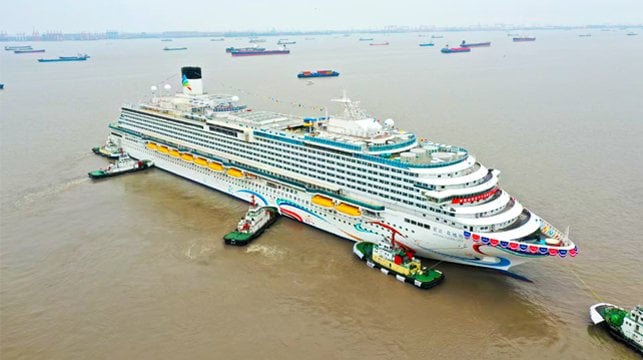
China's second large, domestically built, cruise ship was floated from the dry dock (Adora)

Published Mar 20, 2026 6:47 PM by The Maritime Executive


China marked the next milestone in its efforts at expanding the domestic cruise industry with the float-out of its second large domestically built cruise ship. Built for China’s Adora Cruises, the ship will enter service this year, and the company reported it intends to order two more cruise ships and take an option for a third newbuild.

The second cruise ship, named Adora Flower City, is an enlarged version of the first domestically built ship, which was based on a design developed by Carnival Corporation and Fincantieri. As is typical in the cruise industry, the design was enlarged to increase passenger capacity and add amenities. The Adora Flower City will be 141,900 gross tons when completed, with a length of 341 meters (1,119 feet), compared to the first cruise ship, Adora Magic City, which is 136,200 gross tons with a length of 324 meters (1,063 feet).

The extra 17 meters (56 feet), the company says, gives the ship a more elegant and slender look. The space permitted them to increase the number of passenger cabins to 2,130 (5,232 maximum passenger capacity) compared to the first ship, which has 2,125 passenger cabins (5,246 maximum passenger capacity), and to redesign the cabins. They highlight the extra size permitted by doubling the size of the central atrium and a redesign of public spaces.

The Adora Flower City will feature 26 restaurants and bars, a theater, a gym/spa, enlarged shopping mall, and children’s spaces. Adora says it is a comprehensive upgrade from the first ship, both in space and technology, including interactive technology in the cabins. The design features a flower theme in keeping with the vessel’s name and association with Guangzhou in Southern China, which is known as the Flower City. Adora reports that it increased the essence of the Chinese culture and the Chinese cruise experience aboard the ship.

The company also entered into a memorandum of understanding with China State Shipbuilding Corporation for the design and construction of two additional cruise ships and an option for a third newbuild. CSSC’s Shanghai Waigaoqiao Shipbuilding built the company’s first two cruise ships. It said the new ships will be a Chinese design with the goal of delivering the first ship by 2030.
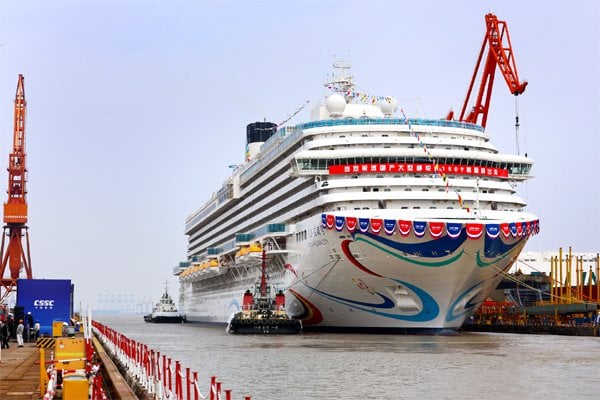
 

The ship was floated last weekend and today moved out of the dry dock to the outfitting berth (Adora)


The Adora Flora City is reported to be 95 percent complete. It was floated last Saturday, March 14, and underwent incline testing, and the loading for test and release of the 18 lifeboats before being floated out to the outfitting berth. CSSC highlights the complexity of the construction, noting the ship has over 4,700 kilometers of cabling, nearly 40,000 square meters of public space, and thousands of systems with more than 20,000 pieces of equipment and over 25 million components.

Construction for the second cruise ship began in August 2022. CSSC highlights that it shortened the construction period by eight months compared to Adora Magic City. It says efficiency was improved by more than 20 percent during the construction.


The new ship is scheduled to start sea trials in May. It will be delivered in late 2026 and will homeport at the Guangzhou Nansha International Cruise Home Port in southern China near Hong Kong. The Adora Magic City is homeported in central China at Shanghai, and the former Costa cruise ship, now Adora Mediterranea, mostly sails from Xiamen. 

The company reports the new ships will permit it to continue to plan its overseas homeport operations. It said it will accelerate the pace of Chinese cruise expansion to the international markets.

 

White House Gives Foreign Shipowners Access to Domestic Trade for 60 Days

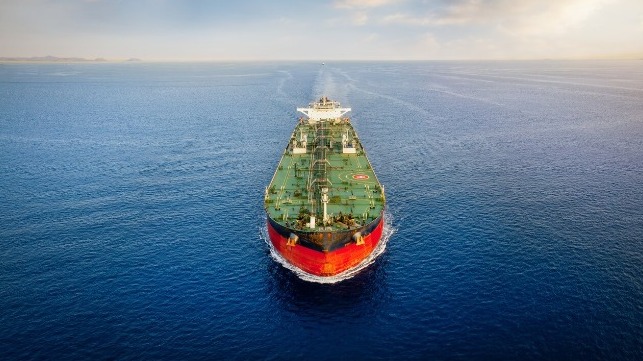
tanker
iStock

Published Mar 18, 2026 3:02 PM by The Maritime Executive


The Trump administration has temporarily waived the Jones Act for select liquid bulk and dry bulk cargoes, allowing foreign seafarers and shipowners greater latitude to work within the United States. Energy market analysts expect that the move will reduce fuel prices by several cents per gallon in specific coastal markets, particularly diesel and jet fuel on the West Coast, the region most exposed to Asian fuel demand and least well-supplied with domestic crude and products. 

"Distillates should see the largest impact. [East and West Coast] distillate premiums were already elevated, making these flows economically viable and helping boost volumes on these routes," said energy consultancy Sparta in a research note. "The waiver alone likely won't unlock gasoline flows unless [low-emissions blend] spreads widen."

U.S. shipping interests have expressed opposition to the waiver.

"The law sets a high bar: this waiver exists solely to address an immediate threat to military operations, not to displace American workers or reward foreign operators. Every vessel movement under this waiver must be publicly disclosed and justified according to federal law. We will be watching closely — and so will the American public," said the American Maritime Partnership in a statement. 

"The breadth of this waiver is especially concerning, as it will unnecessarily impact transportation markets where domestic vessel capacity is not lacking. Allowing foreign vessels to transport cargo on U.S. waterways will introduce the price volatility of today’s international market into our domestic commerce, creating instability in our thriving domestic supply chain and undermining American jobs while having no appreciable effect on the price of gasoline," warned the American Waterways Operators, the voice of the inland transport industry.  

"America's maritime labor unions are deeply concerned about the Administration's broad Jones Act waiver, which undermines our national security, weakens military readiness, and hands critical maritime work to foreign vessel operators," said the AMO, MM&P, MEBA and SIU in a statement. "To be clear, this decision will not provide meaningful relief at the gas pump.  . . . Any marginal savings will not reach consumers but will instead reward foreign shipping interests."

Uniquely, the waiver includes permission for foreign bulk carriers to move fertilizer and coal between U.S. ports, the first exception for dry bulk transport in recent memory. The Mississippi River system has no deepwater channel for deep sea tonnage above Baton Rouge, so foreign-flag bulkers cannot compete in the Western Rivers market - but they could theoretically compete with Intracoastal Waterway barge services along the Gulf Coast, and with rail transport in other markets.

"Farmers applaud President Trump for temporarily waiving Jones Act regulations to allow more ships to bring critical fuel and fertilizer materials to America’s ports. Spring planting season is already underway and the jump in fertilizer and fuel costs, as well as the threat of shortages, sent shockwaves across rural America at a time when farmers are already grappling with low commodity prices and high inflation," said the American Farm Bureau in a statement.  

In a waiver outcome predicted by Jones Act shipping stakeholders, the Act's critics have called for permanent loosening of cabotage rules, at least for specific circumstances and markets.  

"[The National Propane Gas Association] has long urged Congress and Administrations, past and present, to recognize the benefits of easing the shipping restrictions imposed by the Jones Act. The current 60-day waiver provides a unique test case for the propane industry and may demonstrate the potential value of a seasonal Jones Act waiver during prolonged supply disruptions, peak harvest, and heating season," the NPGA said in a statement. 

"There have been calls for this for two decades now. Let's get rid of [the Jones Act]," said longtime, outspoken opponent Colin Grabow of the Cato Institute in an interview Wednesday. "It's antiquated, it hurts communities . . . it just doesn't make sense to have anymore."


Israel Strikes Iranian Naval Vessels on the Caspian Sea

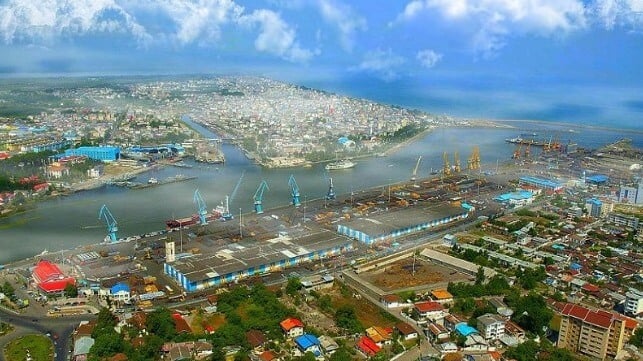
Waterfront at Bandar-e-Anzali (Wikimedia / CC BY SA 3.0)

Published Mar 18, 2026 10:54 PM by The Maritime Executive


The Israeli Defense Forces have attacked vessels at Bandar Anzali, a port on Iran's Caspian Sea coast, according to Israeli media and local bystander reports. It is the first strike in the area since the start of the U.S.-Israeli-Iranian conflict on February 28. 

According to Israeli outlet i24, the strike targeted Iranian naval vessels, not merchant tonnage. CNN reporter Barak Ravid reports that more than five Iranian warships were targeted in the strike. 

Israel has not formally confirmed the attack, but Defense Minister Israel Katz promised "significant surprises" in the conflict on Wednesday. On the same day, Israel also hit Iran's South Pars gas processing complex, the cornerstone if the Iranian power-generation system - prompting a fierce counterattack on Ras Laffan, the world's largest LNG plant.

Bandar Anzali is a known arms-trafficking hub for weapons shipments between Russia and Iran. The two countries have an extensive defense procurement relationship, trading drones, missiles and other advanced weapons systems for use in Russia's war in Ukraine and Iran's Mideast conflicts. Until now, it has remained largely untouched, though Ukraine has launched strikes on Iran-linked shipping on the Caspian before. 

The strikes have raised questions about reported Russian supply lines for the Iranian military, particularly for Shahed-136-type attack drones. Iran originated this inexpensive, mass-production-ready design and sold it to Russia in the early days of the invasion of Ukraine; the Russian military is now supplying uprated, more accurate Shahed guidance components back to Iran for use against U.S. troops and other targets, according to the Wall Street Journal. 

Caspian Sea


NTSB: Bulker Grounded Due to “Expectation Bias" and Lack of Communications

Bulker Algoma Verity
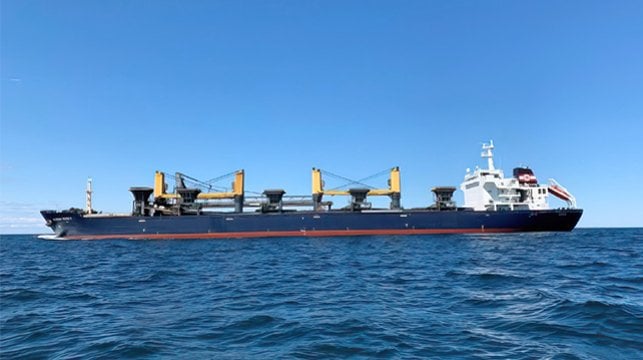
Algoma Verity grounded in 2025 because the pilot was working based on expectations and poor communications says the NTSB (The CSL Group)

Published Mar 19, 2026 8:58 PM by The Maritime Executive


The National Transportation Safety Board released its final report on the grounding of a bulker near Philadelphia in the Delaware River, saying it believes the pilot made errors based on his expectations instead of what was actually happening with the vessel. Further, it cites poor communications as part of the lack of bridge resource management.

The incident happened on the evening of January 8, 2025, as the Algoma Verity (50,259 dwt), a modern self-unloader bulker, was transiting north on the Delaware River with a cargo of salt. The ship had held about 12 miles downriver from Philadelphia, waiting for tidal conditions so that it would have a slack/high tide when it reached its terminal about 22 miles upriver from Philadelphia. Visibility was good, but there was a gusty wind reaching up to 22 knots, and the ship was mostly moving after evening twilight.

The first pilot during the transit reported the ship was “handling like a deep-draft ship,” reports the NTSB. He warned the second pilot, who took over the trip, that the vessel “needed a lot of rudder to steer” and to start turns early and check the swing early. The second pilot told the NTSB he found the Algoma Verity difficult to handle. He thought the ship naturally wanted to “dive to port.” It appears he did not discuss that with the master or bridge crew.

The NTSB concludes that this created a bias in the pilot’s mind and that he acted on these expectations as opposed to how the ship was behaving at the moment. They also found there was relatively little communication between the pilot and the master or the bridge crew.

By the time the vessel reached the Walt Whitman Bridge, which crosses the Delaware, it was already slightly outside the channel to starboard, but the pilot said that was acceptable due to river depth. He was also expecting that a bend in the river and a flood current would push the vessel to port.

At 1812 the vessel’s bow was 290 feet outside the channel when it began to slow, and the pilot said he heard a “rumble.” The master reported a “jerk.” The ship grounded at 1814, but the tug and pilot were able to keep it moving and prevent it from getting stuck.

Over the next few minutes, the master repeatedly expressed concern about the ship’s position outside the channel. It was making about 6.5 knots, and the master pointed out a red channel buoy to which the pilot again said the ship would be fine. At 1829, the ship went hard aground. They would find that four ballast tanks and a fuel tank were flooded with river water, and the ship sustained an estimated $6.6 million in damages. It would take three days to refloat the vessel.

The NTSB found several conditions that contributed to the grounding. They concluded the ship was likely squatting when it was making 9 knots in the river with a 38.5-foot draft. The pilot was expecting a tidal current near the Ben Franklin Bridge that he thought would push the ship toward port. The NTSB believes, based on conditions, that the current was likely weaker than predicted. The wind was likely having more effect on the vessel because of the hoppers and cranes in the unloading system.

They found, based on expectations, that the pilot was likely overcompensating and maneuvered the vessel outside the channel. The lack of communication and good bridge resource management is cited when unexpected actions or deviations occurred; the NTSB says they should have been discussed between the crew and pilot. They say that it would ensure a mutual understanding of the situation and could prevent unrecoverable errors.

The master told the NTSB that he was about to take the conn from the pilot when the second grounding began. It was 45 seconds before the ship was at a full stop, and the reaction was coming too late.

The NTSB concludes that good communications and bridge resource management would help manage against the expectation bias. It also calls for training that reinforces active questioning of factors in the operational environment. 

Mystery Grows as Denmark Continues to Detain Iranian Boxhip

containership linked to Iranian interests
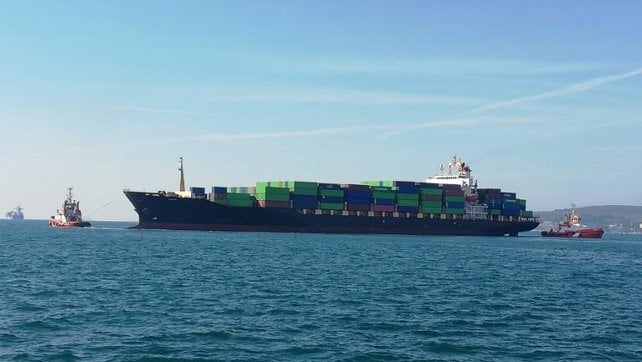
Denmark has been holding a containership linked to Iran for a month saying it is part of an ongoing police investigation (2022 photo courtesy of VesselFinder)

Published Mar 18, 2026 4:36 PM by The Maritime Executive


Four weeks after stopping a containership that was suspected of not being correctly registered, Danish authorities continue to hold the vessel but are declining requests for information. The ship was reportedly searched and underwent a Port State inspection, and on Wednesday, March 18, observers spotted the ship on the move, being relocated to another Danish port.

The containership Nora (37,100 dwt) was anchored off Denmark in mid-February, when the Danish authorities detained the ship on suspicion that it was operating under a false flag. The Danish Maritime Authority reported that the vessel stated it was under the Comoros as its flag State. The Comoros, however, informed the Danish Maritime Authority that the ship was not registered in its registry. 

On February 15, the ship’s registered owners were suddenly changed to a company in Iran, and it declared it had been sailing under the Iranian flag since the first of the month. The ship had previously, in 2025, also claimed to be registered in Aruba, which was believed to be another false flag.

Three weeks ago, the Danish Maritime Authority told The Maritime Executive, “The ship is detained until a flag state provides documentation to the Danish Maritime Authority that the ship is registered and fully certified.”

The Danish Maritime Authority also reported that it carried out a Port State control inspection of the ship on February 19. It was the first recorded since 2022, but it reported that no significant safety deficiencies were found. However, it said that the ship was still not fully certified, and the detention was therefore being maintained.

The ship had been held at anchor in the Kattegat, but without explanation, on March 5, it was moved into the Port of Aarhus. Media reports indicated the ship was being searched by the authorities, and TV 2 Denmark spotted a Hazmat truck entering the port. Later, the ship was moved to an anchorage off Aarhus.

Today, March 18, TV2 filmed the ship as it got underway around midday. It was being accompanied by a Danish patrol boat and two tugs. In the afternoon, it docked in the Danish port of Kalundborg.

Questions to the Danish Maritime Authority and the National Police were referred to the National Special Crime Unit (NSK) for updates. NSK responded, “We have an ongoing police operation associated with the ship,” and declined additional details.

The Nora was outbound in the Baltic from Saint Petersburg, Russia, which it had called at on several occasions in the past. Built in 2003 and with a capacity of 2,500 TEU, until last October, it was sailing under the name Cerus. In addition to not having a registered inspection since 2022, the vessel’s classification was withdrawn in August 2025 by Bureau Veritas, reportedly for “Non-compliance with conditions of class / recommendations.”

The United States sanctioned the ship in July 2025 as part of a network including more than 50 vessels, it said, which were part of the vast shipping empire controlled by Mohammad Hossein Shamkhani, the son of Ali Shamkhani, a top political advisor to the Supreme Leader of Iran. The father was reportedly killed along with the Supreme Leader last month at the start of hostilities with Iran. The U.S. asserted last year that the fleet of ships controlled by Hossein was transporting oil and petroleum products from Iran and Russia, as well as other cargo, to buyers around the world, generating tens of billions of dollars in profit.
 

Top photo of Cerus in 2022 by Ida - courtesy of VesselFinder

Video: OOCL Boxship Docks in California with Collapsed Container Stack

stack collapse on containership
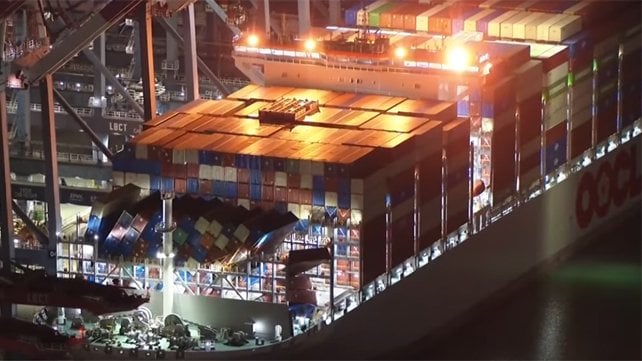
OOCL ship docked in Long Beach showing the results of the stack collapse in the Pacific (CBS LA TV News / YouTube)

Published Mar 19, 2026 1:39 PM by The Maritime Executive


Two weeks after suffering a container stack collapse in the Pacific Ocean, the ultra-large containership OOCL Sunflower was escorted into the Port of Long Beach on Wednesday, March 18, with her forward-most row collapsed and missing boxes. Recovery efforts to begin removing the collapsed and damaged boxes were expected to start as early as Thursday.

The ship, which is one of the newest in the Orient Overseas Container Line’s fleet, reported high seas while transiting the Pacific near the Aleutian Islands. The reports said the collapse occurred on March 3 near the southwestern tip of the Aleutian Islands. Media reports are saying the vessel encountered 20-foot seas.

The initial estimate was that 57 boxes had been lost overboard, but it has now been lowered to at least 32 containers. TV news images showed the entire forward row leaning to port with several boxes appearing to have been crushed. The damage appears to have been limited to the single row at the bow of the vessel.

The vessel arrived off Southern California several days ago and reported it had been in the anchorage since at least Monday. The U.S. Coast Guard inspected the damage, and additional lashings were added in an attempt to further secure the tipped boxes. The Coast Guard was concerned the boxes could topple as the ship was maneuvered into its berth and has established a 100-yard safety zone around the ship.


Delivered by Dalian COSCO KHI Ship Engineering Co. (DACKS) in January, the ship is the third in a new series being built for OOCL. It is 367 meters (1,204 feet) in length and 165,321 dwt with a capacity of 16,828 TEU. It was sailing from China with its last stop in Taiwan on February 23 before beginning the circle route to California.

The World Shipping Council highlights the decline in overboard losses, saying they were down to just 576 containers in 2024. The recent high-profile incidents with the large containerships happened as several ships were taking the route around South Africa and encountered heavy winter weather in August and September 2024. However, a feeder ship operating for Hapag-Lloyd lost a reported 85 containers as it hit the swells exiting the Port of Casablanca in February 2026. Heavy weather around the UK caused incidents in December and again in January, while a containership sought refuge in Spain after two rows collapsed in January.

Under the new regulations enacted by the International Maritime Organization, the masters of the vessels are responsible for prompt reporting to the authorities. They must also notify nearby vessels of the potential danger of boxes in the water. They are also required to notify their flag state and provide a damage assessment. In the case of the OOCL Sunflower, the crew advised that safety concerns limited their abilities and that the full assessment would be made once the vessel arrived in port. 


Cuba's Fragile Power Grid Finds a Powerful New Partner

  • The recent extended blackout in Cuba, following a weekslong US oil blockade, has served to deepen Cuba's energy alliance with China.

  • China is significantly increasing its support for Cuba's energy transition, including a massive ramp-up in solar equipment exports and pledges to help build nearly 100 solar parks and the island’s largest wind farm.

  • Despite China's growing support, the energy transition Cuba has outlined is estimated to require $8 billion to $10 billion in investment, a sum the country lacks, suggesting there are limits to China's generosity.

Cuba finally reconnected its power supply on Tuesday after an extended blackout swept the island as the United States tried to choke off the island’s energy supply. Blackouts lasted nearly 30 hours as Donald Trump engineered an oil blockade and publicly ruminated about whether he would have the “honor of taking Cuba.” But the move, rather than isolating Cuba, may have just deepened its ties with China.

Cuba, which is already beleaguered with an obsolete and fragile power system, saw its grid collapse under the weight of the weekslong oil blockade. The Caribbean island nation’s energy system uses about 100,000 barrels of oil a day to power aging and ‘decrepit’ thermal power plants that the country received from the former Soviet Union. 

Cuban leadership has not publicly stated what caused the island’s power grid to go dark on Monday, but the issues are likely to persist as the United States’ aggression continues. Once energy was restored 29 hours later, President Miguel Diaz-Canel blasted Washington’s "almost daily public threats against Cuba." 

The Trump administration has been vocal about its desire to oust the communist leader. However, experts warn that this would merely topple the figurehead of a country teetering on the edge of humanitarian collapse without actually doing anything to dismantle its political system. On Tuesday, Diaz-Canel wrote on social media that United States officials “intend to announce plans to take over the country, its resources, its properties, and even the very economy they seek to suffocate in order to force us to surrender.”

But while Cuba may be David to the United States’ Goliath, it has one very powerful ally. “As the Trump administration steps back from U.S. climate commitments and reinvests in fossil fuels, China is flexing its dominance in renewable energy, using offers of equipment, expertise and financing as geopolitical levers,” the Washington Post wrote in a Wednesday report.

This alliance could prove critical to rebuilding a stronger, more resilient, and more independent energy grid powered by domestically generated renewable energies rather than fossil fuel imports. Cuba has struggled to reach its own goals of renewable energy expansion and integration over the past decade, with renewables contributing just 9 percent of the national energy mix at present, but increased support from China could change that. 

China has been exporting solar equipment for years now, but their trade relationship has massively ramped up in recent years and is predicted to continue its growth trajectory. According to British energy think tank Ember, China shipped $5 million worth of solar equipment to Cuba in 2023. In 2025 the figure was $117 million – a 2,240 percent increase. China has also pledged to help Cuba build nearly 100 solar parks by 2028, and many of these projects – more than half, according to authorities – have already come online. China is also backing the construction of the island’s largest wind farm, La Herradura 1.

But there may be limits to China’s generosity, and those limits may fall far short of what Cuba needs to wean itself off of its imperilled import dependencies once and for all. Ricardo Torres, an energy economist at the American University in Washington, explained, “The energy transition outlined by the government would require investments of around $8 billion to $10 billion over the next decade… Cuba simply does not have that kind of money, and China will not pay for everything.”

However, Cuba provides a strategic alliance for China, which reportedly has installed spy stations on the island that is just 90 miles away from the United States at its closest point. In February, a spokesman for the Chinese Embassy in Washington said that China’s energy cooperation with Cuba has achieved “fruitful results” and will continue going forward. “We oppose unwarranted interference by external forces and reject any actions that deprive the Cuban people of their right to subsistence and development,” spokesman Liu Pengyu told The Washington Post.

By Haley Zaremba for Oilprice.com 


Two Russian Cargoes Offer Temporary Relief for Cuba's Energy Emergency

Cuba is set to soon receive two Russian cargoes of crude and diesel amid the U.S. energy blockade that has caused an unprecedented power crisis in the country.  

The shipments from Russia, which considers Cuba as one of few “friendly countries”, could test the U.S. resolve to continue isolating energy shipments for the island. If the tankers en route to Cuba do arrive in the coming days, they would be the first Russian oil and fuel shipments to the country this year. 

The tanker Anatoly Kolodkin, sanctioned by the U.S., the EU, and the UK, is mid-voyage in the Atlantic under Russian flag and expected to arrive at the island in about 10 days, Jorge Piñón, an expert at the University of Texas Energy Institute, told The Associated Press.


The Anatoly Kolodkin is estimated to carry about 730,000 barrels of crude oil, which has to be processed into fuels in order to help alleviate Cuba’s power crisis, which culminated earlier this week in a 29-hour nationwide blackout.

According to Piñón, the shipment on Anatoly Kolodkin could be processed into about 180,000 barrels of diesel, which would power Cuba for about 10 days. 

A second shipment, of Russian diesel, is on the Sea Horse vessel with a Hong Kong flag and is about 958 nautical miles from Matanzas, Cuba, Piñón told AP. If the cargo ends up in Cuba, it could be also used to ease the supply shortages in critical sectors such as agriculture. 

Last month, Russia said it plans to send soon oil and oil products to Cuba as part of humanitarian aid.

Cuba’s worsening economic and humanitarian situation has gone from bad to worse as the U.S., which now controls Venezuela’s oil sales, is banning shipments to Cuba.      

Venezuela was a key oil and fuel supplier to Cuba and was also among Russia’s “friendly countries”, until U.S. forces captured Nicolas Maduro in early January and took control over the country’s oil sales. 

By Tsvetana Paraskova for Oilprice.com 

UK Tracks Russian Tanker as US Tightens the Rules on Oil to Cuba

English and Russian warships in English Channel
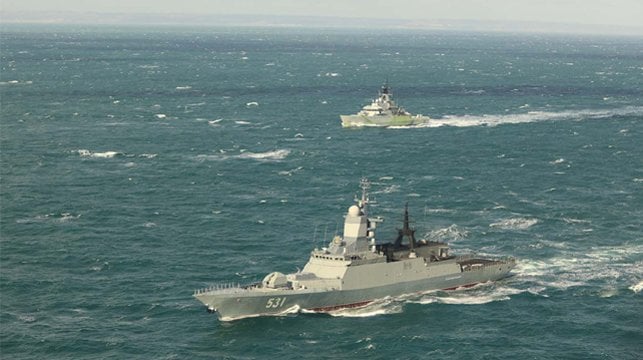
UK Royal Navy reported it monitored a Russian warship escorting one of the tankers through the English Channel (Royal Navy)

Published Mar 20, 2026 3:29 PM by The Maritime Executive


Close attention is being paid to two tankers, which observers suspected were heading toward Cuba in a Russian effort to provide some relief to the fuel-starved island. The Trump administration is continuing its efforts toward regime change by imposing a near-total ban on support to the island and its communist government.

The UK Royal Navy reported yesterday, March 19, that it had been tracking a Russian-flagged tanker managed by Sovcomflot and its warship escort. The tanker Anatoly Kolodkin is thought to be Russia’s attempt to support Cuba. It loaded with 730,000 barrels of Russian crude at Primorsky at the beginning of the month, according to Kpler data. Their analysts report the ship could reach the Caribbean as early as next week and arrive at Cuba within 10 days.

The Royal Navy reported that it dispatched Portsmouth-based HMS Mersey along with a Wildcat helicopter to track the tanker’s transit through the English Channel. The warship reportedly completed a 48-hour monitoring effort as the tanker left the Channel and headed into the Atlantic. The Royal Navy reports the tanker was accompanied through the Channel by the Russian Steregushchiy-class frigate RFN Soobrazitelny. The frigate, however, turned back eastwards, reports the Royal Navy.

The tanker Anatoly Kolodkin (118,316 dwt) is under U.S., UK, and EU sanctions. Someone aboard the vessel appears to have a sense of humor. Knowing they are being watched, the AIS destination has been reading “Atlantis.” At one point, it said USA. Kpler and many others believe the ship is heading for Matanzas, Cuba.

Asked about the situation during his testimony at the U.S. Senate Armed Services Committee hearing Thursday, Commander of Southern Command, Marine General Francis Donovan confirmed the U.S. is also tracking the tanker. He called it a “replenishment ship” and said the U.S. also believes it is scheduled to make a port call in Cuba. He asserted that even if the ship delivers its cargo, it would have no significant impact on Cuba’s current shortages. Most analysts agree that, after refining, which would take time, they suggest that at most it buys Cuba two weeks.

Donovan told the Senate hearing that his command is not currently rehearsing any military intervention in Cuba.  The New York Times, however, reports that two U.S. Coast Guard vessels are believed to be on patrol around the island to deter any activity. Earlier in the year, it is believed the Coast Guard approached another tanker and scared it away to the Dominican Republic.

Similarly, a Chinese-owned product tanker named Sea Horse now appears to have been intimidated not to approach Cuba. The vessel is believed to be carrying Russian diesel, and last month, the suspicion was that it was bound for Cuba. It stopped in the mid-Atlantic, and its AIS now shows it is going to Venezuela. Reuters, citing data from LSEG ship-tracking, believes the product tanker has made a sharp turn to the south and is going to Trinidad. Windward Maritime AI, however, points out that the Sea Horse has been using various deception methods. It turned off its AIS and at another point listed itself as “not under command.” If it were going to Cuba, it would be days away, but the suspicion is that it stopped to find a new buyer for its cargo.

The Trump administration has at times been reported to be considering humanitarian relief for Cuba while continuing its overall pressure campaign. They had said fuel might be permitted to ensure the water supply continues. At the beginning of the week, Cuba experienced an island-wide power failure linked to the fuel shortages.

The U.S. Treasury on Thursday, however, also closed what seems to have been a loophole that could have benefited Cuba. Last week, the Treasury said it was temporarily suspending the restrictions on Russian oil to let cargoes loaded before March 11 be sold before April 11 in an effort to ease the pressure on the energy markets due to the attacks on Iran. At the time, the only restriction was against sales related to Iran, but now the U.S. has added Cuba and North Korea to the restrictions.

For now, it is a wait-and-see if either tanker will attempt to reach Cuba.