Monday, April 13, 2026


The Lebanon Conspiracy: Massacres, Negotiations, and a New Order

by  | Apr 13, 2026 |

Israel’s latest war on Lebanon is not only being waged from the air. It is being reinforced politically from within, as Beirut moves in step with US-Israeli efforts to isolate Hezbollah and weaken Iran’s negotiating position.

In a previous article, we examined the seven messages that Israeli Prime Minister Benjamin Netanyahu sought to communicate through mass killings in Lebanon.

These messages were aimed at reshaping regional dynamics, asserting deterrence, and forcing new political realities on the ground.

Those massacres have already resulted in hundreds of Lebanese killed and more than a thousand wounded, alongside vast destruction of civilian infrastructure, according to Lebanese civil defense figures.

The scale and intensity of the violence were not incidental, however. They were meant to create urgency, fear, and ultimately, compliance.

At the time, we argued that Israel’s actions were part of a broader attempt to impose a new regional order through blood. Since then, new developments have confirmed that this military escalation was coordinated with parallel political moves – specifically, an effort to separate the Iran-US negotiation track in Pakistan from the war on Lebanon.

This separation is not a technical detail. It is the core of the current geopolitical struggle.

As Israeli bombs continue to fall across Lebanon, Netanyahu announced that he had instructed his government to begin direct negotiations with Lebanon “as soon as possible,” emphasizing that these talks would focus on disarming Hezbollah and establishing “peaceful relations.”

This shift did not occur in a vacuum. It followed one of the deadliest waves of Israeli attacks on Lebanon in years, and it came at a moment when Iran had explicitly linked its participation in the Islamabad talks to a ceasefire in Lebanon.

In other words, Israel escalated militarily while simultaneously opening a political channel designed to bypass Iran’s conditions.

What makes this strategy particularly consequential, however, is not Israel’s role alone – but the response from Beirut.

From the outset of the Israeli war on Lebanon, the government of Prime Minister Nawaf Salam has taken steps that align closely with US and Israeli objectives.

Rather than framing the conflict primarily as Israeli aggression, key Lebanese officials have emphasized the need to rein in the resistance, repeatedly raising the issue of Hezbollah’s weapons and the necessity of placing all arms under state control.

This position is not neutral. It reflects a political choice. More importantly, it creates the very framework that Israel seeks to impose: one in which the central issue is no longer occupation, aggression, or civilian massacres, but rather the “problem” of resistance itself.

The Lebanese government’s willingness to engage in direct negotiations with Israel – something historically avoided outside the narrow framework of indirect or mediated contacts – marks a dangerous precedent.

Even if framed as conditional or tactical, such engagement constitutes an implicit political recognition of Israel at a moment when Lebanese civilians are still being buried under the rubble of Israeli strikes.

This contradiction is not lost on domestic actors.

According to Al Mayadeen, figures affiliated with Hezbollah have sharply criticized the government’s direction, with some describing it as a betrayal of the highest order. The criticism reflects a deeper fear that Lebanon is being pulled into a political track that will ultimately serve to delegitimize the resistance and reshape the country’s internal balance of power.

This concern is reinforced by the sequence of events itself. Lebanon has not yet received a formal date from the United States to begin negotiations, according to Al Mayadeen’s correspondent in Beirut. Lebanese officials have insisted that a ceasefire must precede any talks, yet Israel has made clear that its objective is precisely the opposite: to use negotiations as a tool to impose new realities, including Hezbollah’s disarmament.

At the same moment, Iran has made its stance unmistakably clear. Its delegation has conditioned participation in the Islamabad talks on linking any ceasefire to a full halt of Israeli operations in Lebanon. Iranian officials have gone further, emphasizing that no long-term arrangement is possible without ending Israeli aggression altogether.

This creates a direct clash of political visions. On one side, Iran is attempting to integrate Lebanon into a broader regional settlement that preserves the role of resistance as a central actor. On the other hand, the United States, Israel, and their regional allies are working to fragment that framework – isolating Lebanon, sidelining Hezbollah, and reasserting a US-led order.

In this context, the behavior of the Lebanese government cannot be understood as independent.

Beirut’s political establishment has long operated within a system shaped by external pressures, particularly from Washington and its regional allies. The current moment is no exception. The push toward negotiations, the emphasis on disarmament, and the political framing of the conflict all reflect a broader alignment with the pro-American camp.

This camp is facing a strategic dilemma. Its inability to impose a decisive outcome on Iran – whether militarily or economically – has already shifted the balance of power. The Strait of Hormuz crisis, the resilience of the Iranian state, and the failure to neutralize Hezbollah have all exposed the limits of US influence.

Allowing Lebanon to be included in an Iran-led negotiating framework would deepen that shift.

It would effectively marginalize pro-Western actors in Beirut and open the door to a new regional arrangement in which Iran holds significant leverage. For Washington, Tel Aviv, and their allies, this is an unacceptable outcome.

Thus, the current strategy: bombard Lebanon, then rush into negotiations with the Lebanese government itself.

This dual approach is not contradictory. It is deliberate. The massacres create pressure. The negotiations create an alternative political pathway – one that excludes Iran and reframes the conflict around disarmament and normalization.

Crucially, both Israel and segments of the Lebanese political establishment share a common objective: the weakening, and ultimately the defeat, of Hezbollah. Direct talks are only the first step.

In the ideal scenario envisioned by the US and Israel, this process would evolve into an international consensus – possibly through the United Nations – that formally delegitimizes Hezbollah and, by extension, all forms of armed resistance. Such a shift would not only reshape Lebanon internally but would also strike at the core of the broader resistance axis.

But such scenarios rarely unfold as planned.

The main obstacle remains Iran’s insistence on linking Lebanon to any broader agreement. As long as this linkage holds, attempts to isolate Lebanon will face significant resistance – not only from Tehran but from actors within Lebanon itself.

The outcome of this struggle will not be confined to Lebanon.

It will determine whether the region moves toward a fragmented order dominated by US-backed states, or toward a new balance in which resistance movements and their allies retain a decisive role.

Dr. Ramzy Baroud is a journalist, author and the Editor of The Palestine Chronicle. He is the author of six books. His forthcoming book, ‘Before the Flood,’ will be published by Seven Stories Press. His other books include ‘Our Vision for Liberation’, ‘My Father was a Freedom Fighter’ and ‘The Last Earth’. Baroud is a Non-resident Senior Research Fellow at the Center for Islam and Global Affairs (CIGA). His website is www.ramzybaroud.net
Pennsylvania’s Abolitionist Organizers Win Victory Against Mandatory Life Without Parole

The Pennsylvania Supreme Court ruling is part of a nationwide trend to challenge life without parole sentences.
April 12, 2026

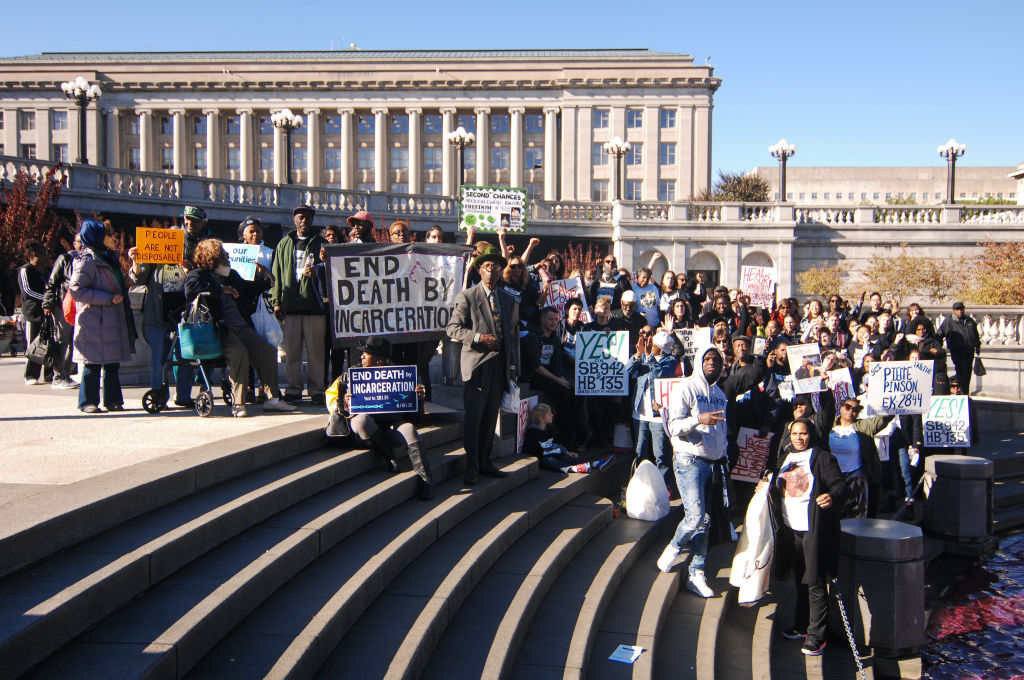
Hundreds rallied to end life without the possibility of parole in Harrisburg, Pennsylvania, on October 23, 2019.Cory Clark / NurPhoto via Getty Images

In late March, Pennsylvania’s Supreme Court issued a momentous ruling overturning mandatory life sentences for people convicted of felony murder, also known as second-degree murder. Activists and advocates hailed the ruling as a victory that was years in the making and has the potential to impact the lives of more than a thousand people in the state, a majority of whom are Black.

Those sentenced to life without parole (LWOP) are, by definition, never allowed to go before a parole board and can only ever win freedom if the governor of their state grants them clemency. The ACLU calls LWOP sentences “permanent removal from society with no chance of reentry, no hope of freedom,” and therefore, “short of execution, the harshest imaginable punishment.” It’s no wonder activists involved in ending LWOP refer to it as “death by incarceration.”

Five states — Pennsylvania, Iowa, Louisiana, Mississippi, and North Carolina — require mandatory life sentences without the possibility of parole for felony murder convictions. According to the Center for Constitutional Rights, Pennsylvania has the nation’s highest per capita rate of people serving death by incarceration sentences. Such a conviction — in spite of its name — doesn’t mean the person accused is directly responsible for a death. One can also be convicted of a felony murder if one’s actions indirectly and unintentionally resulted in someone’s death.

That was the case for a Black man named Derek Lee, who in 2014 was involved in a robbery where his accomplice’s actions resulted in a death. Because of Pennsylvania’s mandatory sentencing law, Lee was condemned to spend the rest of his life in prison. The Abolitionist Law Center filed an appeal on his behalf, resulting in the historic Pennsylvania Supreme Court ruling that mandatory LWOP for second-degree murder was in violation of the state constitution’s prohibition on cruel punishment.

“All of us who do this work know people who have been in for 20, 30, 40, 50 years even,” said Kris Henderson, co-founder and co-executive director of Amistad Law Project and founding member of the Coalition to Abolish Death by Incarceration (CADBI). “Many people who could come home today, would be an asset to their communities … but there’s just really no mechanism for them to come home right now.”


These Women Face Death by Incarceration, But They’re Organizing for Their Lives
A new report highlights the experiences those sentenced to death by incarceration in Pennsylvania’s women’s prisons. By Victoria Law , Truthout April 21, 2023


Following the court ruling, Pennsylvania’s lawmakers have 120 days to create a mechanism ensuring the state’s compliance so that people like Lee have recourse. Henderson hopes that “the legislature will pass a bill that will allow all people who are serving death by incarceration for felony murder to have a chance to come home, that they will all be parole eligible after a certain number of years.”

People who are sentenced to LWOP are often very young when they begin serving their sentences. That was the case with Phillip Ocampo, who, according to his mother Lorraine Haw, was only 18 years old when he was arrested and has served 32 years in Pennsylvania prisons. “If this Supreme Court ruling hadn’t happened, he was basically going to be in prison for the rest of his life,” said Haw.

The groundwork for the court ruling was laid more than a decade ago when CADBI was founded. Henderson recalled it was a time when Philadelphia had been home to “this anti-carceral, anti-prison movement for years and years. And so many of us had been working together for years in different sorts of configurations at different moments.”

CADBI’s co-founders began by sending letters to people in prison serving LWOP sentences, urging them to send family members and loved ones to an organizing meeting. “Hundreds of people showed up,” said Henderson. “Hundreds of people who didn’t know anything about a movement to abolish death by incarceration, didn’t know anything about organizing in general.”

Among them was Ocampo’s mother. “We’ve gone in front of lawmakers, we’ve gone to legislators, we’ve gone inside prisons to talk about it. We’ve held rallies,” said Haw. Ocampo is her only child and Haw has made it her life’s goal to free him and others like him. “It was hard at the beginning because every time I talked about my son, I would have to cry. But I’m not there only for my son. I’m there for everybody that’s in the same situation as he is.”

Thomas Schilk is a writer and artist serving a LWOP sentence in Pennsylvania. In an interview, his sister Joanne Schilk said, “My brother always wants people to know … although he did not kill anyone or [have] the intent to kill anyone, he did real harm, which he believes he should be accountable for.” She feels that after 42 years in prison, “he has taken accountability for his crime and has proven to be deserving of a second chance at freedom.”

Like Haw, Joanne Schilk has been active with CADBI for years, attending rallies, making legislative visits, and lobbying state lawmakers to end LWOP sentences as well as supporting medical parole and compassionate release bills. “I helped recruit people from other counties such as Bucks and Lancaster to give them a voice and to encourage involvement, to lean on lawmakers by being a voice for their loved ones serving life sentences,” she said.

That activism, together with sympathetic people in positions of power, paved the way for the Supreme Court ruling. Pennsylvania Gov. Josh Shapiro, who filed an amicus brief in support of Lee’s appeal, was formerly the state attorney general and had been directly involved in commuting life sentences. In Philadelphia, where more than 500 people are serving LWOP, District Attorney Larry Krasner has also publicly expressed support for an end to mandatory life sentences.

“I thought my eyeballs were going to be swollen from so much crying,” said Haw, recalling how she felt when the Pennsylvania Supreme Court ruling was announced. “I was so ecstatic, and I couldn’t believe it.”

Schilk concurred, saying, “I absolutely could not believe that something had finally happened in such a huge way. I felt like I couldn’t breathe, I was so happy. I just sobbed and shook.”

The reliance on LWOP sentences nationwide is in flux, caught in a tug-of-war between abolitionist grassroots activists and “tough-on-crime” politicians. Even in states where such sentences are not mandatory, LWOP can be applied to people who did not intend to kill or whose accomplices committed the murder in question. According to a 2025 report by The Sentencing Project, 16 percent of people in prison nationwide — that’s about 200,000 people — are serving life sentences. The proportion of those with LWOP sentences is up 68 percent from 2003.

Yet, since 2005, the U.S. Supreme Court ruled in several cases that life sentences for people convicted as juveniles were unconstitutional (although the court’s new conservative majority has taken the court in the opposite direction).

After the U.S. Supreme Court’s rulings on juvenile lifers, hundreds of incarcerated Pennsylvanians were able to come home, and according to Henderson, some among them are now involved in the movement to end LWOP for everyone. “They were leaders when they were incarcerated, and now are leaders at home, literally as executive directors of organizations, working for different organizations, really helping lead our movement,” said Henderson.

The Pennsylvania Supreme Court ruling is part of a nationwide trend to challenge life sentences without parole. In 2018, California changed how it applies LWOP sentences, requiring intent to murder. As a result, hundreds of people had their sentences reduced. However, thousands remain stuck behind bars, including Dortell Williams, a prominent essayist and activist. Efforts to soften and overturn LWOP sentences have stalled in the state. States like New York and Minnesota are also in the midst of reforms to LWOP sentencing.

Meanwhile, in Pennsylvania, hundreds of families await the possibility of their loved ones being released. “Our hope,” said Henderson, “is that the legislature acts, and acts quickly, to allow all these people to be able to come home.”

When asked what she would do if her son were released, Haw said, “I tell everybody, the day my son comes home, y’all better go see him and get your ‘hellos’ and your ‘goodbyes,’ because I plan to hide my son for two weeks to keep him for me, just me, just him and I, to catch up on all the years that I didn’t get to have him.”

Schilk is also hopeful about her brother’s potential release. “Finally, there is a real chance for our loved ones to make a case for themselves and to be given a fair sentence for their release from prison,” she said.

This article is licensed under Creative Commons (CC BY-NC-ND 4.0), and you are free to share and republish under the terms of the license.


Sonali Kolhatkar

Sonali Kolhatkar is a monthly contributor to Truthout. She is an award winning multimedia journalist and author. She is the host and executive producer of Rising Up With Sonali, a nationally syndicated weekly television and radio program airing on Pacifica stations and Free Speech TV. She was most recently Senior Editor at YES! Media covering race, economy, and democracy, and is currently Senior Correspondent for the Economy for All Project at the Independent Media Institute, and a monthly columnist for OtherWords, a project of the Institute for Policy Studies. Her writings have been published in LA Times, Salon, The Nation, In These Times, Truthdig, and more. Her books include Talking About Abolition: A Police-Free World is Possible (Seven Stories, 2025), Rising Up: The Power of Narrative in Pursuing Racial Justice (City Lights, 2023), and Bleeding Afghanistan: Washington, Warlords, and the Propaganda of Silence (Seven Stories, 2006). Her first novel, Queen of Aarohi will publish in 2027 by Red Hen Press. Her website is www.SonaliKolhatkar.com.
US-Israeli Strikes on Iran’s Universities Signal Higher Ed No Longer Off-Limits


Even if the ceasefire holds and the war comes to an end, Iran’s academia will bear great costs and long-term impacts.
Published
April 11, 2026

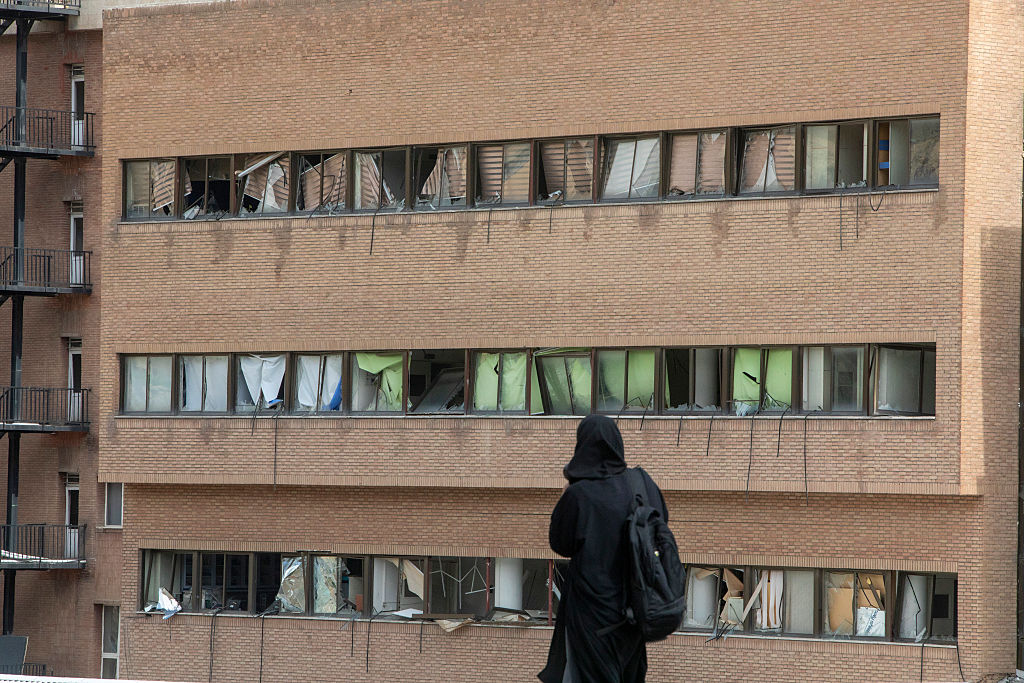
The Shahid Beheshti University seen destroyed after a missile strike the previous day, on April 4, 2026, in Tehran, Iran.Majid Saeedi / Getty Images

Throughout their war on Iran, the U.S. and Israel broke many norms of military engagement, such as systematically targeting academic institutions in Iran. Universities became a major casualty, and explicit acknowledgements by Israeli leaders and some U.S. public figures clarified that these institutions were not collateral damage, but rather, intended targets. There are no definitive figures as to the number of higher education institutes targeted, but Iran’s science minister, Hossein Simaei Saraf, has said more than 30 universities have been bombed.

“It is truly unbelievable that in the 21st century, in the age of human rights, in the age of international law and international humanitarian law, civilian locations and civilians are being targeted,” Simaei Saraf told reporters upon inspecting the ruins of the Laser and Plasma Research Institute at Shahid Beheshti University in Tehran on April 4.

“It is regrettable that our adversary has gone back to the Stone Age rather than us coming from the Stone Age,” he said, a reference to Donald Trump’s infamous threat against Iran. Simaei Saraf added that the international community is deprived of Iran’s human potential when the country’s scientific centers become targets in military campaigns.

Founded in 1960 as the National University of Iran, Shahid Beheshti University (SBU) is known for its robust law, literature, and architecture departments. The U.K.-based QS World University Rankings has ranked Shahid Beheshti University 214th in Asia among 1,534 universities listed regionally. Mir-Hossein Mousavi, a former presidential candidate and leader of the 2009 Green Movement who has been under house arrest since 2011, is an SBU alumnus.

The most shocking incident in this string of attacks was the bombing of Tehran’s Sharif University of Technology, often referred to as Iran’s MIT. In the early hours of April 6, U.S.-Israeli airstrikes on the southern parts of the iconic campus destroyed several buildings, including the Philosophy of Science Group, High-Performance Computing Center, and Information and Communication Technology Center.

Sixty years after its founding, Sharif University has established itself as an internationally renowned center for research and academic collaboration. At the height of tensions between Iran and the United States in the late 2000s, it hosted several American Nobel Prize recipients, including the 2005 economics laureate Thomas Schelling, 1976 physics laureate Burton Richter, and 1993 physics laureate Joseph Hooton Taylor Jr. to give speeches to students.

These scientists, as well as other U.S. academics who visited the college over the years, often said they left the campus astonished by the passion they had seen among Iranian students and their widespread appreciation for American thinkers, a glimpse into academic life in Iran that is often neglected in U.S. media reports.

Sharif University of Technology is known for some of its distinguished alumni, including Maryam Mirzakhani, the late Stanford University scientist and the first female recipient of the Fields Medal, the highest international honor in mathematics. But the university as a whole has gained a reputation for its selective admission process and elite public image.

Of nearly 1 million high school graduates applying to undergraduate programs every year through a nationwide university entrance exam known as “konkour,” only between 800 and 1,000 applicants end up being admitted to Sharif University. Over the years, it has also become known internationally as one of the pedigrees of Iran’s brain drain, with a large number of its alumni leaving the country every year in search of better opportunities overseas.

Rep. Yassamin Ansari of Arizona, the first Iranian American Democrat in Congress, told Truthout she hopes science and higher education leaders, as well as every member of Congress, denounces these attacks.


“Destroying universities and civilian infrastructure will have long-lasting consequences for Iran’s 90 million people and could amount to war crimes under international law.”

“These strikes are devastating and completely unjustified. Universities like Sharif University have produced some of the most brilliant and successful Iranian Americans in our country,” she said. “Destroying universities and civilian infrastructure will have long-lasting consequences for Iran’s 90 million people and could amount to war crimes under international law.”

Shortly before Sharif University was targeted, the bombing of Iran University of Science and Technology (IUST) had sent shockwaves throughout the country. Founded in 1929, the university comes in 77th in Times Higher Education’s ranking of universities in Asia, a fortnightly magazine that publishes the most authoritative rankings of world universities.

When IUST’s School of Railway Engineering was founded in 1997, it was reportedly the first such academic department in the Middle East. The university’s sprawling campus in Tehran’s Narmak neighborhood hosts 19 libraries.

Universities in Iran and the United States have tried to maintain their ties over the years of diplomatic bitterness splitting the two governments. Cultural and academic exchanges were not always totally disrupted, and goodwill delegations of professors and academic administrators have traveled between the two countries in a bid to bridge the gaps.

In June 2015, a group of senior U.S. higher education representatives was sent to Iran by the Institute of International Education (IIE), led by IIE’s then-president Allan E. Goodman. IIE described the event as a “historic new chapter in educational relations.” Some of the Iranian institutions the group visited included Shahid Beheshti University and Isfahan University of Technology, both of which were bombed in the war.

But even with this history of engagement under difficult circumstances and in the face of pushback by hawkish politicians on both sides, U.S. universities have largely been silent on the tide of destruction affecting their Iranian counterparts.

Since coming to office, Trump has kicked off a full-throated assault on higher education in the U.S., including cuts to diversity, equity, and inclusion initiatives that facilitated the extension of opportunities to underrepresented demographics on campus, and bringing multimillion-dollar lawsuits against elite universities.

These policies came after universities, buoyed along by corporate media smears, cracked down on students protesting Israel’s genocide in Gaza. Pressure from the Trump administration coercing academic institutions into compliance has likely played a role in the lack of student-led resistance against the U.S. government’s war of aggression in the Middle East.

“The lack of outcry, including from U.S. universities, reflects how Israel’s annihilation of Gaza’s higher education system has normalized the targeting of universities.”

“The lack of outcry, including from U.S. universities, reflects how Israel’s annihilation of Gaza’s higher education system has normalized the targeting of universities,” said Annelle Sheline, a former foreign affairs officer at the State Department and a research fellow at Quincy Institute for Responsible Statecraft. “In addition, U.S. universities have been largely cowed by Trump and would be unlikely to risk drawing his ire by criticizing his administration’s bombing of Iranian universities.”

“While I sincerely hope that the U.S. will no longer attack Iran, I expect that the memory of America bombing several of their most prestigious universities will linger for decades,” she told Truthout.

Alumni and former affiliates of the attacked Iranian universities, many of whom now work abroad, took to social media to recount their memories of studying at the prestigious institutions. There have been some expressions of concern from student groups and nonprofits, but world leaders and international organizations have largely been silent.

In a statement on April 8, Oxford Iranian Society condemned the attacks, as well as other U.S.-Israeli airstrikes on Iran’s civilian infrastructure such as medical research centers, which are considered to be war crimes.

“There is a bitter and unforgivable cruelty in seeing these universities — centers of learning, debate, and resistance to authoritarianism — reduced to ruins by those who claim to come as liberators,” the statement read. “We stand in solidarity with the students whose education and lives have been upended by both violence from abroad and tyranny at home.”

Truthout reached out to the United Nations’ cultural and educational agency’s senior leadership team for an interview. UNESCO declined to comment and instead referred us to a brief statement in which it expressed its “grave concern over recent developments affecting higher education institutions in the Middle East.” The statement doesn’t include any specific reference to the attacks on Iranian schools.

Iranian universities have often been the scene of dynamic student debates, and have served as a space for interrogation of government authorities. Every year on the first day of the school year in mid-September, Iranian presidents would visit one of Tehran’s top universities and give speeches to large crowds. They also listen to the remarks and answer the questions of a select number of student speakers, and, in some cases, are exposed to caustic words from the podium.

It is likely that by appearing on campuses typically more hostile to the government, these politicians hoped to create a public impression of their tolerance and fair-mindedness. Still, they’ve had to run the gauntlet of opprobrium by unapologetic students.

On other occasions, Iranian students have shown their resistance in more audacious ways. In December 2006, former President Mahmoud Ahmadinejad visited Amir Kabir University of Technology to address the university community. The event was disrupted on multiple occasions when students in attendance chanted slogans such as “death to the dictator” and burnt Ahmadinejad’s portrait.

Student supporters of Ahmadinejad countered by chanting revolutionary slogans, and the former president was forced to take long pauses several times in the tense atmosphere. Eventually, Ahmadinejad’s security team used stun grenades to contain the crisis.

Sahar Maranlou, a lecturer in law at Royal Holloway, University of London, believes that turning schools into military targets could lead to fear, interruption in research, weakened academic networks, and stronger incentives for the most mobile faculty members and students to leave.

“The scholasticide framework, similar to Gaza, is particularly relevant here as the systematic destruction of education and intellectual life, not just through buildings being bombed, but through the erasure of entire academic ecosystems such as students, scholars, research, and the conditions that make knowledge possible,” Maranlou told Truthout.

Media reports documented Israel’s destruction of all 12 universities in the Gaza Strip in just the first 100 days of the genocide. At least 87 public libraries and archives — including the Central Archives of Gaza — were bombed, and more than 97 percent of schools have been damaged or destroyed.


“Even limited or symbolic strikes at universities carry disproportionate significance. They signal that higher education itself is no longer off-limits.”

“Therefore, even limited or symbolic strikes at universities carry disproportionate significance. They signal that higher education itself is no longer off-limits,” Maranlou added.

Iran’s academia will bear significant costs even if the ceasefire holds and the war comes to an end. In a country where education is one of the main pathways to success — especially for women, who make up nearly 60 percent of university graduates — the long-term repercussions are expected to be grim.

“Despite some of the policies of the Islamic Republic, including the dismissal of students and professors for political reasons, the relatively low tuition fees and the commitment of faculty members has allowed nearly 5 million students to graduate annually, and with over 339,000 graduates in STEM, Iran ranks fifth globally,” Peyman Jafari, an Iranian American historian at the College of William & Mary, said in an interview with Truthout.

“After the war, the government’s shrinking budget due to reconstruction, rising inflation and continuing sanctions will probably lead to lower rates of investment in higher education. Higher tuition fees and lower income levels will be a serious obstacle to student enrollment, particularly from the lower classes,” he added.

This article is licensed under Creative Commons (CC BY-NC-ND 4.0), and you are free to share and republish under the terms of the license.


Kourosh Ziabari

Kourosh Ziabari is a journalist and media studies researcher. A contributor to Foreign Policy and New Lines Magazine, he has earned a master’s degree in political journalism from Columbia University Graduate School of Journalism. In 2022, he received the Professional Excellence Award from the Foreign Press Correspondents Association. In 2022, Kourosh became the first journalist from Iran to be selected for the World Press Institute fellowship with the University of St. Thomas, Minnesota, since 1979. He was a finalist for three Kurt Schork Awards in International Journalism in 2020, 2021 and 2022 and has reported from the United Nations on a Dag Hammarskjold Fund for Journalists fellowship. He was a 2016/17 Chevening Scholar with the UK’s Foreign and Commonwealth Office.
In Memphis, Investors Benefit From AI Boom While the Public Bears Its Cost

The people most enthusiastic about the construction of AI data centers are often the least likely to live next to them.
April 11, 2026

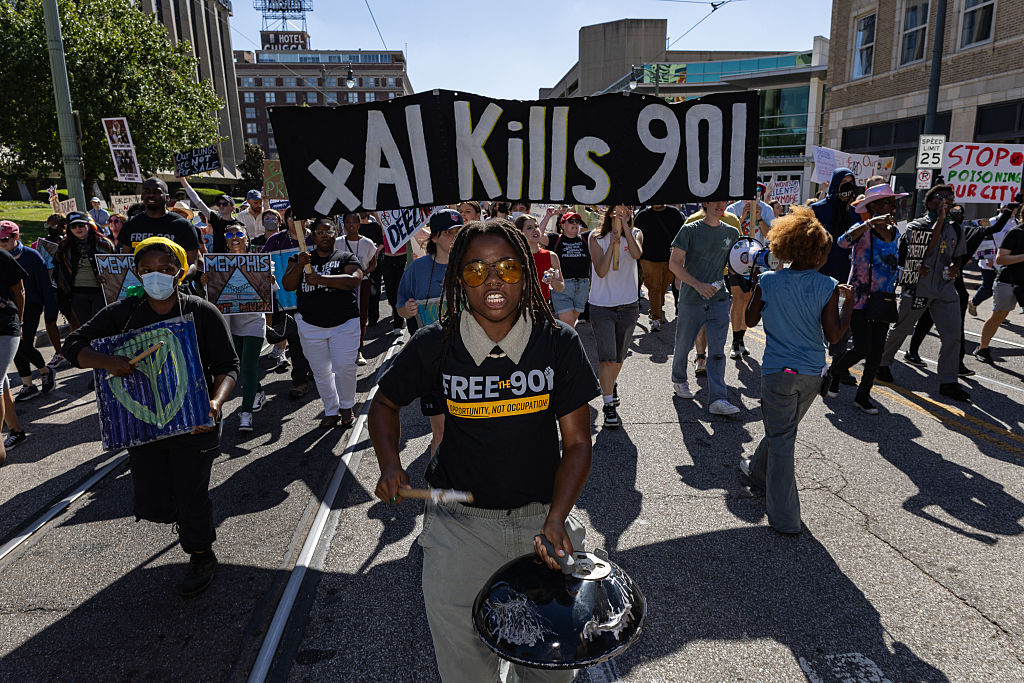
Protesters march through downtown Memphis, Tennessee, in opposition to the increase of federal law enforcement agents, the coming deployment of the National Guard and xAI, an AI company owned by Elon Musk that is locally based, during the "Get Out of Memphis" protest on October 4, 2025.Austin Johnson / AFP via Getty Images

In Memphis, Tennessee, questions about AI data centers are rising nearly as quickly as their price tags.

Recent reporting shows that Elon Musk’s artificial intelligence company xAI now has properties in Memphis appraised at roughly $3.4 billion, a staggering valuation that will shape how much the company contributes in property taxes and how local officials frame its economic impact. At first glance, that number sounds like a victory. It’s like the kind of headline elected leaders use to signal growth, innovation, and momentum. But beneath the billions lies a more urgent and unsettling question: Who is benefiting from this boom, and who is being asked to bear its costs?

xAI’s rapid expansion in Memphis (including a newly announced $659 million investment to grow its supercomputer facility) is being framed as a transformative economic opportunity. But that expansion is not confined to Memphis. It is part of a broader regional footprint that now stretches just across the state line into Southaven, Mississippi, where officials have approved the use of gas turbines to power xAI’s operations despite significant public opposition. What’s happening in Mississippi is not separate from Memphis — it is an extension of the same strategy. The corporation aims to scale production wherever regulation is flexible and resistance can be managed. Taken together, these developments reveal a pattern that is all too familiar in historically Black Memphis communities like Whitehaven and Westwood: Massive corporate investment is presented as progress, while the environmental, health, and long-term economic risks are minimized, obscured, or outright ignored.

Even the economic case deserves closer scrutiny. Proponents of Musk’s project point to projected tax revenues and the symbolic prestige of becoming an “AI hub.” But there hasn’t been enough transparent accounting of how those benefits will be distributed or whether they will meaningfully reach the communities most directly impacted. Data centers and AI infrastructure projects are notoriously capital-intensive but not labor-intensive. They generate headlines and valuations, not necessarily jobs. And the jobs that do exist often require specialized technical expertise that residents have not been systematically prepared for or positioned to access. This is abundantly true in Memphis, where years of handwringing about the labor market doesn’t match the demand of science, engineering, and technology.

In other words, billions can flow into a region without fundamentally transforming the economic realities of people who live there, especially when companies can secure major tax breaks while creating as few as 15 jobs. Those incentives don’t just limit employment, they also divert critical and crucial revenue away from local communities. It leaves residents bearing the environmental and economic burden without a fair return on the investment. Moreover, in a region where hundreds of workers have recently been laid off following the closure of a major facility in Southaven, the promise of economic stability tied to corporate investment is ringing very hollow.


Big Tech Data Centers Compound Decades of Environmental Racism in the South
The American South has long been a site of both corporate extraction and fierce political resistance.  By Jai Dulani , Truthout  September 20, 2025

At the same time, the costs are not hypothetical.

Recent findings from the Environmental Protection Agency indicate that the Memphis facility has been operating without required air pollution permits, raising serious concerns about air quality and regulatory compliance. When a corporation of this scale is found to be out of compliance with environmental protections, it is not simply a bureaucratic issue — it is a public health issue. It is about what people breathe, what children are exposed to, and what long-term risks are quietly accumulating in neighborhoods that already face disproportionate environmental burdens.

Moreover, if even a federal regulatory body operating under a deregulatory political climate is raising concerns, then it is reasonable to ask whether the full extent of the harm is being adequately measured or adequately disclosed.

For residents of Whitehaven (where I live and pastor), Westwood, and surrounding communities, this is not an abstract policy debate. It is a question of proximity. It is a question of power. It is a question of whether the places people call home are being treated as communities to be protected or as sites to be leveraged.

Because one thing that has become increasingly clear is that the people most enthusiastic about these developments are often the least likely to live next to them.

That contradiction should give us pause.

If a project is truly beneficial, it should not require distancing its champions from its consequences. Yet time and again, we see the same formula: We see corporate leaders, investors, and political advocates promote large-scale industrial or technological developments as engines of opportunity, while the physical and environmental realities of those developments are concentrated in communities with the least political leverage to resist them.

This is not new. It is the modern iteration of an old story.


Economic development that does not center environmental protection, public health, and equitable access to opportunity is not development. It is extraction.

From industrial corridors to waste sites to energy infrastructure, Black communities in the U.S. South have long been positioned as expendable in the pursuit of economic growth. What is new is the language. Today, the rhetoric is not about factories or refineries but about data, innovation, and artificial intelligence. The branding has changed. The underlying pattern has not. We can literally follow the “red lines.”

Memphis is now being asked to believe that becoming a hub for artificial intelligence will secure its economic future. But economic development that does not center environmental protection, public health, and equitable access to opportunity is not development. It is extraction.

And extraction, by definition, leaves something depleted.

To be clear, this is not an argument against innovation in general. Memphis, like any city, should be able to participate in and benefit from emerging industries. The question is not whether development should happen, but how it happens — and who gets to shape its terms.

Right now, the balance is off.

Corporate expansion is moving faster than community engagement. Regulatory concerns are emerging after operations are already underway. Economic promises are being made without clear accountability mechanisms to ensure they are fulfilled. And communities are being asked to accept risk without having substantial enough power to negotiate benefit.

That is not partnership. That is imposition.

If Memphis is to pursue a future in AI and advanced technology, it must do so with a fundamentally different framework. That means rigorous enforcement of environmental standards, not retroactive compliance after violations occur. It means transparent agreements that guarantee local hiring, workforce development, and community investment, not vague assurances of economic uplift. It means giving residents a real voice in decisions that affect their neighborhoods, not treating public input as a procedural formality.

It also means asking a more honest question about what kind of future Memphis is trying to build.

Because if the pursuit of being seen as “innovative” requires sacrificing the health, stability, and dignity of its most vulnerable communities, then the cost is too high, no matter how large the valuation. And valuations, after all, are not neutral. They measure the worth of assets. They do not measure the worth of people.

The $3.4 billion figure attached to xAI’s Memphis properties tells us something about how the market values land, infrastructure, and technological capacity. It does not tell us whether the air is safer, whether the water is cleaner, whether families feel more secure, or whether communities are more empowered.


Do we value investment figures, or the lives and livelihoods of the people those investments affect?

Those are the metrics that matter. And right now, those metrics remain uncertain at best and alarming at worst.

Memphis stands at a crossroads. It can continue down a path where corporate expansion is pursued with minimal oversight and maximal optimism for investors, hoping that the promised benefits will eventually materialize. Or it can choose a more deliberate path. One that demands accountability, centers community voices, and refuses to treat environmental risk as the price of economic participation.

The difference between those paths is not simply policy. It is morality. Because at its core, this is a question about what and who we value.

Do we value the appearance of progress, or the reality of justice? Do we value investment figures, or the lives and livelihoods of the people those investments affect? Do we value being at the forefront of technological advancement, or ensuring that advancement does not come at the expense of those who have historically been pushed to the margins?

Memphis has an opportunity to answer those questions differently. And if we find the political courage and moral imagination to do so — as some local groups are already doing — we can lead the way in building a future that is both environmentally responsible and economically just.

It will require leadership willing to resist the temptation to auction off communities for the promise of corporate gain, leadership willing to say that economic development must be both profitable and principled, leadership willing to insist that the future cannot be built on the quiet erosion of the present.

Because whatever artificial intelligence may become, there is nothing artificial about the consequences communities are already facing.

And those consequences will outlast any headline, any valuation, and any corporate promise that fails to reckon with the full cost of doing business.


This article is licensed under Creative Commons (CC BY-NC-ND 4.0), and you are free to share and republish under the terms of the license.

Earle J. Fisher

Rev. Earle J. Fisher, Ph.D., is a scholar, pastor, organizer, and public intellectual committed to Black liberation, civic empowerment, and institutional transformation. He serves as Senior Pastor of Abyssinian Baptist Church in Memphis, Tennessee, where he has cultivated a vibrant model of Black faith, cultural expression, and prophetic social witness. Under his leadership, Abyssinian has become a nexus for community organizing, political education, and spiritual formation throughout South Memphis and Whitehaven. Dr. Fisher is the Founder of UPTheVote901, a nonpartisan, Black-led voter empowerment initiative designed to increase political power, information and representation across Memphis and Shelby County bridging the academy, church, and broader public square. Dr. Fisher serves as Associate Professor of Religious Communication and Africana Studies and the Inaugural Dean of Chapel at LeMoyne-Owen College, where he leads Chapel Soul Sessions and advances work at the intersection of Africana intellectual traditions, public theology, and liberative pedagogy. He also teaches at Rhodes College, Memphis Theological Seminary, Claflin University, and Brite Divinity School. The author of The Rev. Albert Cleage Jr. and the Black Prophetic Tradition, Dr. Fisher is a sought-after speaker and commentator whose work amplifies marginalized voices and challenges systems that undermine Black political, spiritual, and cultural agency.
Watch: Zohran Mamdani Disses Trump-Israel War on Iran With Legendary Tupac Lyric

“Tupac said it decades ago, it continues to be true.”


New York City Mayor Zohran Mamdani visits employees at Citi Field prior to the game between the Arizona Diamondbacks and New York Mets on April 9, 2026 in Queens.
(Photo by Caean Couto/Getty Images)

Brett Wilkins
Apr 10, 2026
COMMON DREA,S

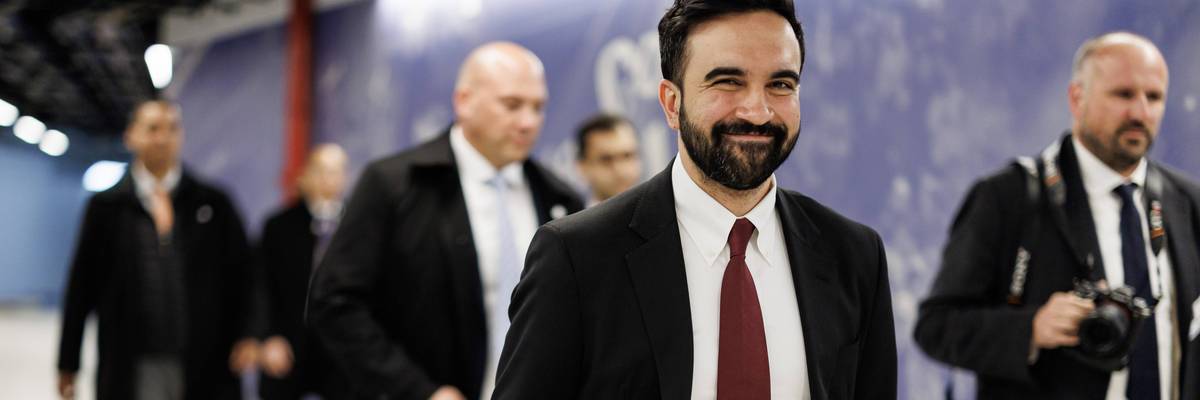
He may prefer Biggie over Tupac, but New York City Mayor Zohran Mamdani gave a nod to the latter’s immortal observation on misplaced national priorities during an interview in which he condemned the US-Israeli war against Iran.

“I’ve made clear my very deep opposition to this war in Iran,” Mamdani told Richard Gaisford in a “Talk to Al Jazeera” segment aired Thursday on the Qatari news network. “It is an opposition not just of a procedural nature or a political nature, but frankly of a moral nature.”


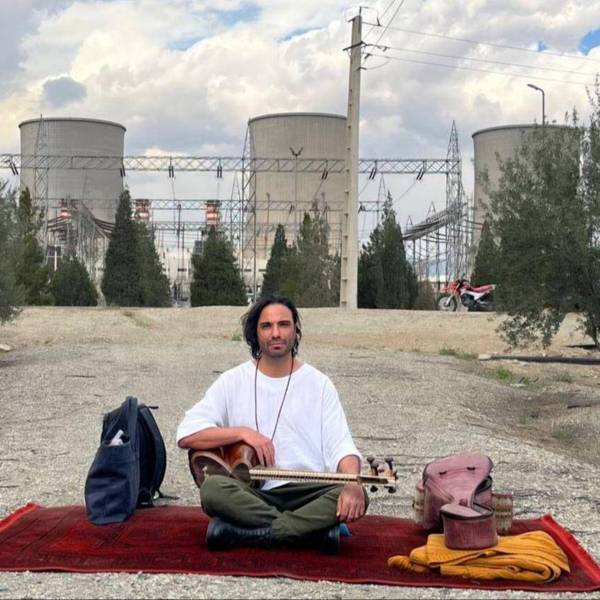
Famed Iranian Musician Holds Sit-In to Shield Power Plant From War Criminal Trump

“We are speaking about a war that has killed thousands of civilians, a war that is deeply unpopular across this city and across this country,” Mamdani said. “Not just because of what we are seeing it result in, but also because it is utilizing tens of billions of dollars to kill people, money that could otherwise be spent on making life easier for people across this city and this country.”

“The very things that I often speak about that are necessary for working class New Yorkers that we are told are impossible or unrealistic, they would cost a fraction of this tens of billions that we’re seeing,” the mayor asserted.

Gaisford asked Mamdani if he is frustrated that “$900 million a day [is] being spent on the war, when you have projects that cost much less that can make a difference.”

“I think it should frustrate all of us, you know what I mean?” the democratic socialist mayor replied. “Tupac said it decades ago, it continues to be true, about the fact that we always seem to have money for war but not to feed the poor. And that is not the way politics should be; that is not what Americans want politics to be.”

Mamdani was referring to Tupac Shakur’s 1993 track “Keep Ya Head Up,” which contains the lyrics, “You know, it’s funny when it rains it pours/They got money for wars, but can’t feed the poor.”

Shakur’s 1998 song “Changes” also feels relevant today, as the slain rapper asks, “Can’t a brother get a little peace?/It’s war on the streets and the war in the Middle East/Instead of war on poverty, they got a war on drugs so the police can bother me.”

Watch Mamdani’s interview with Gaisford here:


Join the Citizens’ Movement to Impeach Tyrant Trump

He is a dangerously unstable, egomaniacal, eruptive personality, wielding the most lethal powers of anyone on Earth. He needs to go.


A man holds a sign reading “Impeach Trump” as he takes part in the “No Kings” national day of protest in Howell, Michigan, on March 28, 2026.
(Photo by Jeff Kowalsky / AFP via Getty Images)

Ralph Nader
Apr 11, 2026
Common Dreams

This week two events (1) the citizens’ “Expert Legal Symposium,” and (2) Rep. John Larson’s introduction on April 6, 2026 of House Resolution 1155 “Impeaching Donald J. Trump, President of the United States, for high crimes and misdemeanors in violation of his constitutional oath of office to preserve, protect, and defend the Constitution of the United States” may spark the rise of citizen movement to impeach President Donald Trump. Already a majority want him out!

Rep. Larson (D-Conn.) is a mainstream Democrat serving his 14th term of office. The 13 articles in his H. Res 1155, drafted with constitutional law specialist Bruce Fein, portray the violations of the most lawless president in American history. Trump’s dictatorship is rapidly intensifying (though his support is dropping in the polls). Trump regularly boasts that “I can do whatever I want as president,” “Nothing can stop me,” and “This is only the beginning.”


Over 1 Million Americans Say Impeach and Remove Trump Ahead of ‘No Kings 3’ Rallies

84% of Democrats and 55% of Independents Support Impeaching Trump a Third Time

Chronically lying Tyrant Trump is an open, clear, and present danger to our Republic. He is driven by a fact-deprived, perilous, megalomaniacal, and vengeful personality.

The citizens’ symposium, first of its kind held inside the House of Representatives, gathered experts and advocates for Trump’s removal from office to provide the legal case, highlighting three planks. They were:President Trump’s usurpation of the congressional war power;
The credible fear that President Trump will obstruct, interfere with, or invoke the Insurrection Act to outright cancel the 2026 midterm elections; and
Trump’s “industrial scale bribery and extortion.”

Audience questions following each panel expanded on the presentations. You can see the entire four-and-a-half hours on C-SPAN: https://www.c-span.org/program/public-affairs-event/activists-lawyers-and-others-discuss-possibility-of-additional-trump-impeachment-proceedings/677013.

Participants at the symposium exhibited a strong sense of urgency, not just from Trump’s escalating war crimes but from the lassitude of Congress, whose bipartisan leadership never considered canceling their two-week recess to address the burgeoning violent outlawry pouring from the White House, most prominently illegally blowing apart Iran and indirectly Lebanon.

The event was co-sponsored by Essential Information, RootsAction, and Free Speech for People with participants from Public Citizen and the Cato Institute.

The Republican Trump lapdogs continue to betray, with historic cowardliness, the people of America.

FOR TRUMP, IT IS ONLY GOING TO RAPIDLY GET WORSE, MUCH WORSE. The strongest critics of Trump can’t keep up with his onslaught, understating his foreign and domestic crimes. He is a dangerously unstable, egomaniacal, eruptive personality, wielding the most lethal powers of anyone on Earth.

Not receiving the Nobel Peace Prize, which he craves, by asserting falsely that he had ended eight wars since January 2025, Trump told the dumbfounded prime minister of Norway, “your Country decided not to give me the Nobel Peace Prize” so he no longer felt “an obligation to think purely of Peace.” That was Trump’s signal that he was going to be engaging in wars. What’s the street language here—a head case in the White House.

Trump constantly creates or fails to address catastrophes. Recall, his calling the climate crisis “a hoax,” that Covid-19 is just like getting a cold, losing valuable time in 2020, costing many American lives. Trump stereotypes journalists as “deranged and demented,” as he extorts millions of dollars from television networks via grossly malicious lawsuits.

The question is why 77.3 million voters support a man few would want as a friend, co-worker, or neighbor, much less a boss with the power of life, death, deprivation, and tyranny over them.

Having pardoned over 690 convicted violent criminals and additional fraudsters, he lets it be known that his loyal, extremist supporters can do what he wants and expect to be pardoned.

Credit Trump with teaching us how weak our democratic institutions are to thwart the US fascist dictatorship emerging from the 2024 election. He taught us, with luminous exceptions, that the media, the academic world, the legal profession, the labor unions, the retired military (brass who despise Trump and his norm-busting secretary of defense), and the civic community, among other constituencies, have not risen to the urgent need to counter tyrant Trump. He has issued one illegal executive order after another and then transgressed beyond those dictates in fits of fearsome rage.

He also reminds us that there has been a price to pay for pushing aside civic education, teaching civic history, skills, and providing students with “learning by doing” in their community or neighborhood. Decade after decade of vocational and rote teaching for multiple-choice testing ignores critical norms of moral restraint and accountability. No wonder they atrophy.

Two examples illustrate how low our standards have fallen. President Dwight D. Eisenhower’s chief of staff, Sherman Adams, a former governor of New Hampshire, had to resign after a press report that he accepted a vicuna coat as a gift from a textile industrialist friend. Later, in 1984, Sen. Gary Hart, competing for the Democratic presidential nomination against Vice President Walter Mondale, was photographed with a young lady—not his wife—on a small sailboat off Miami (he denied an affair). The norms of that time pushed him to quit the race.

Fast forward. Any one of Trump’s many vile transgressions would have stopped anyone from being a candidate, much less getting elected President. He is a daily chronic liar about serious matters and his business and political record as well as about people he dislikes; he is a convicted felon (and was under four criminal indictments); a draft dodger; a mocker of people with disabilities; serial adulterer; he consorted with pedophiles; he is an intense racist and brutal misogynist; and a business crook who cheats workers, consumers, and creditors. He openly committed many violations of federal statutes in his first term, when he also defied over 125 congressional subpoenas (Nixon was about to be impeached for defying two in 1973-1974); and he is an inciter of violence at his rallies and in his remarks. The list goes on.

The question is why 77.3 million voters support a man few would want as a friend, co-worker, or neighbor, much less a boss with the power of life, death, deprivation, and tyranny over them. That question is best answered by the so-called leaders of the Democratic Party, who, instead of landsliding this loser, this crusher of decency and truth, lost both the popular and electoral college presidential vote.

A mere switch of 240,000 votes in Pennsylvania, Michigan, and Wisconsin in 2024 would have sent Trump back to golfing at Mar-a-Lago. That could have been achieved had the Democrats really championed raising the stagnant federal minimum wage to $15 per hour instead of the $7.25 per hour still today (that would help 25 million workers) and cracking down on corporate greedhounds stealing from consumers and lobbying against raising the Social Security benefits, frozen since 1971, paid for by raising the limit of Social Security taxes on higher income people (over 60 million people benefiting).

(For many more vote-getting compacts shunted aside by the dominant corporate Democrats and their corporate-conflicted consultants, see winningamerica.net).


OPINION 
ROBERT REICH

How to impeach Trump — for real this time

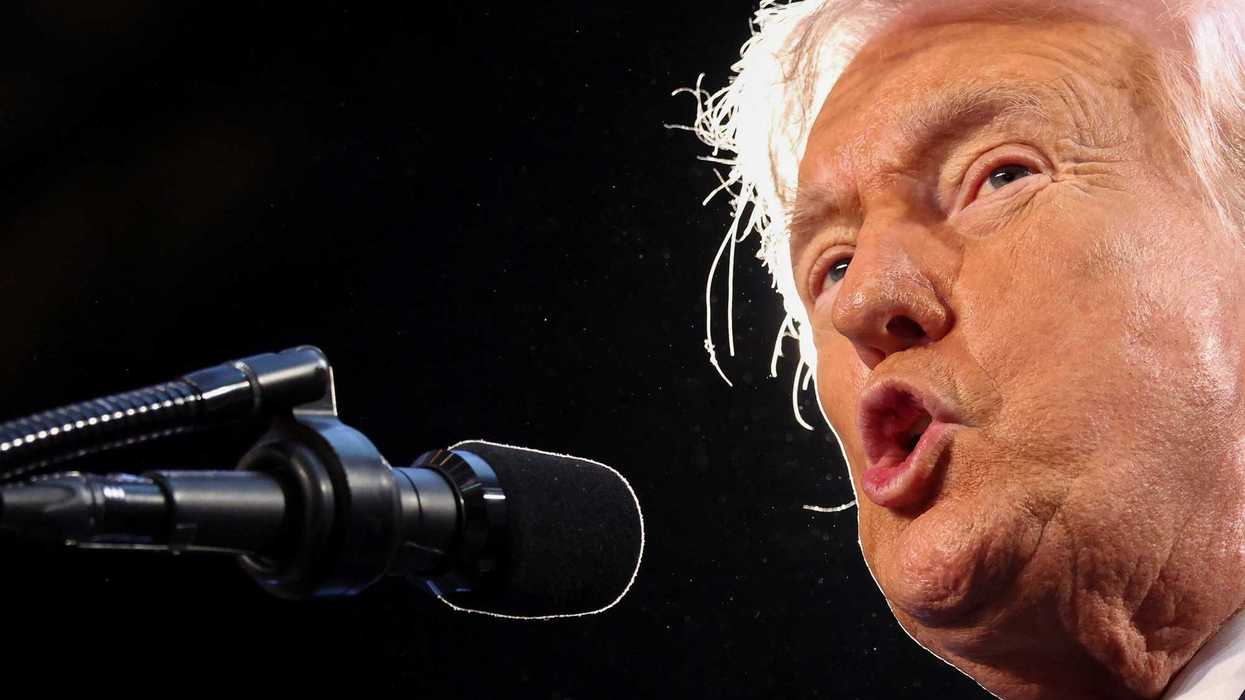
U.S. President Donald Trump delivers remarks to members of the Republican Party, at Trump National Doral Miami in Miami, Florida, U.S., March 9, 2026. REUTERS/Kevin Lamarque

April 13, 2026 
ALTERNET

Speaking at a January 6 retreat for House Republicans, Trump stated, “You gotta win the midterms ‘cause, if we don’t win the midterms, it’s just gonna be — I mean, they’ll find a reason to impeach me. I’ll get impeached.”

This was before Trump’s agents murdered Renee Good and Alex Pretti in Minneapolis, before the Justice Department released more Epstein files, before Trump’s disastrous war in Iran, before Trump threatened death to the entire Iranian civilization, before a gallon of gas hit $4 or more, before other prices also began rising because of the blockage of the Strait of Hormuz, and before additional price hikes associated with Trump’s tariffs had kicked in.

It was also before Trump’s polls slid to record lows, before the MAGA faithful began complaining that Trump had betrayed his promise to avoid foreign entanglements, and before a slew of special elections in which Democratic candidates have won Republican districts (and even when they didn’t win, lost by far smaller margins than Trump won by in 2024).

Until recently I thought impeaching Trump and convicting him in the Senate was a pipe dream. I was concerned that even talk of impeachment at this stage might distract attention from the affordability crisis brought on by Trump and could even fortify Republican charges of Democratic “extremism.”

No longer.


The president of the United States is stark-raving mad. He’s a clear and present danger to America and the world. The American public is beginning to see it.

We’ve got to do whatever we legally can to remove him from office. The 25th Amendment would be useful if Trump’s Cabinet and key advisers had any integrity, but they don’t. They’re ambitious, unprincipled traitors.

Which leaves impeachment.


You may be skeptical. After all, he’s already been impeached twice, to no avail. How can the third time be the charm?

Because it seems likely that Democrats will retake control of the House and the Senate in this fall’s midterm elections (unless Trump prevents free and fair elections).

And because it’s also possible that there will be enough votes in the Senate starting next January to convict Trump of impeachable offenses and send him packing.


I understand how difficult this may seem. Both times Trump was impeached in the House, he was saved by the Constitution’s requirement that two-thirds of the Senate (67 senators, assuming all 100 are present) convict in order to remove a president.

The highest Senate vote count against Trump came in 2021, and it was 10 votes short of the constitutional requirement. Fifty-seven senators, including seven Republicans, voted to convict him of inciting an insurrection at the U.S. Capitol. It was the most bipartisan impeachment vote in U.S. Senate history, but it still fell well short of the 67 votes needed to convict Trump.

So why do I think it’s possible now? Because public sentiment has swung further against Trump now than it was in 2021. And it’s likely to swing even further against him, because he’s going out of his mind at a rapid rate.

The way to accomplish this is to defeat enough incumbent Republican senators who are up for reelection in 2026 to create a Democratic majority in that chamber, totaling some 54 votes, and pressure at least 13 Republicans up for reelection in 2028 to vote to convict him.


That’s not impossible. In the upcoming midterms it’s likely that Maine Republican Senator Susan Collins will be replaced by a Democrat (either Janet Mills or Graham Platner). I also assume that former North Carolina Governor Roy Cooper will replace Republican Senator Thom Tillis, who’s retiring.

And I’d like to believe that the good people of Ohio will see the light and reelect Sherrod Brown over Jon Husted, the dullard who was appointed to fill the remainder of JD Vance’s term.

James Talarico could take the Texas Republican Senate seat now occupied by John Cornyn. In Alaska, I’d put odds on Mary Peltola defeating incumbent Republican Senator Dan Sullivan. In Nebraska, assume that Dan Osborn prevails over incumbent Republican Senator Pete Ricketts. And so on.

Republican senators last elected in 2022 who will be on the ballot in November 2028 include some who are vulnerable because they’re in swing states, such as North Carolina’s Ted Budd and Wisconsin’s Ron Johnson; or are in states that could be competitive, such as Indiana’s Todd Young; or are vulnerable to internal party shifts, such as Louisiana’s John Kennedy and South Carolina’s Tim Scott.

Those vulnerabilities mean that their constituents could push them to vote to convict Trump in an impeachment, or else threaten to vote against them in 2028.

So it’s possible to get the 67 Senate votes, my friends. And it’s absolutely necessary that we try.

The vast No Kings demonstrations should be considered a prelude to targeting enough Republican Senate incumbents and open races to flip the Senate this fall, and pressuring Republicans up for reelection in 2028 to do their constitutional duty.

Now is the time to show the size and intensity of America’s commitment to removing Trump from office, for the good of us all.

Robert Reich is a professor of public policy at Berkeley and former secretary of labor. His writings can be found at https://robertreich.substack.com/.


AOC: Iran Deal “Changes Nothing” on Need to Impeach Trump for Genocidal Threat

Trump “threatened a genocide against the Iranian people, and is continuing to leverage that threat,” she said.
April 8, 2026

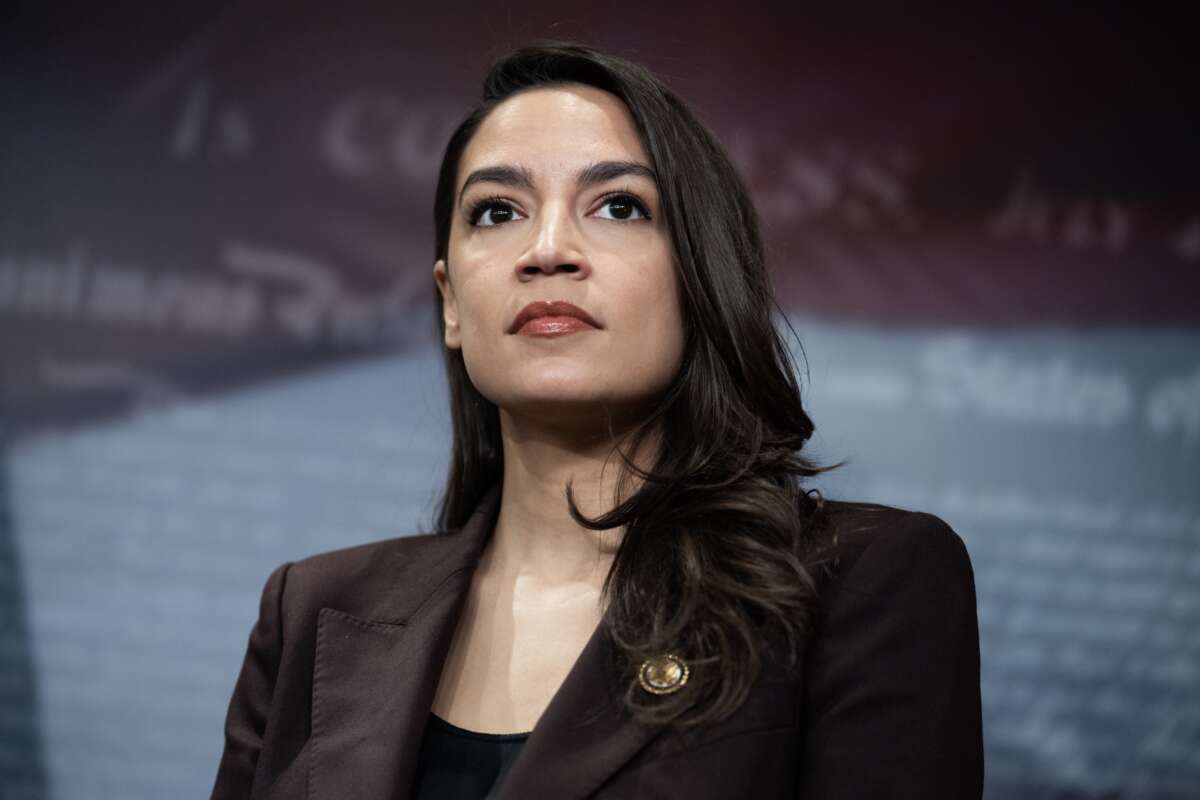
Rep. Alexandria Ocasio-Cortez (D-New York) attends a news conference with Sen. Bernie Sanders (I-Vermont) to announce the Artificial Intelligence Data Center Moratorium Act in the U.S. Capitol on Wednesday, March 25, 2026.Tom Williams / CQ-Roll Call, Inc via Getty Images

Rep. Alexandria Ocasio-Cortez (D-New York) has reiterated that the call for President Donald Trump to be impeached or removed from office remains as urgent as ever after his genocidal threat toward Iran, regardless of the president’s announcement of a temporary ceasefire on Tuesday evening.

In a post on X, Ocasio-Cortez said the deal “changes nothing.”

“The President has threatened a genocide against the Iranian people, and is continuing to leverage that threat,” the lawmaker wrote. “He has launched a massive war of enormous risk and of catastrophic consequence without reason, rationale, nor Congressional authorization — which is as clear a violation of the Constitution as any.”

On Tuesday, just an hour and a half before his deadline to decimate Iran’s civilian infrastructure, Trump announced that the U.S. and Iran had agreed to a two-week ceasefire, with the potential to negotiate a long term end to the bombardments. During the pause in fighting, the U.S. would cease its bombardments of Iran, while Iran would reopen traffic through the Strait of Hormuz.

The announcement came after Trump had, earlier on Tuesday, threatened to destroy all of Iran. “A whole civilization will die tonight, never to be brought back again,” he said.

The statement was swiftly met with a deluge of calls for Trump to be impeached or removed via the 25th Amendment, which allows the president’s cabinet to declare him unfit. Over 70 lawmakers joined the calls, with the comment being so alarming that even far right figures like Candace Owens and Alex Jones called for Trump’s removal.

But the calls seemed to lose momentum after the threat didn’t come to pass on Tuesday, and as Democratic leaders declined to demand his removal. Some Democrats and liberal commentators even mocked Trump, taunting him with the “TACO” insult, standing for “Trump always chickens out,” or criticized him for the deal after it was announced.

Rep. Yassamin Ansari (D-Arizona), who is Iranian, said that it was callous to taunt Trump for not following through on his threats of genocide.

“I do not appreciate anyone — Democrat or Republican — taking this moment to make TACO jokes to say Trump ‘chickened out,’” Ansari said. “The president was threatening genocide against 90 million Iranians. I’m grateful there’s a ceasefire & scores of innocent people didn’t die tonight.”

Ocasio-Cortez said that it’s important that Democrats keep their foot on the gas. She said that Trump’s corruption and profit-seeking are also clear cases for Trump to be ousted.

“All of these incidents, and plenty more, have clearly driven our country past the threshold for impeachment or invocation of the 25th amendment. We cannot risk the world nor the wellbeing of our nation any longer,” she wrote. “Whether by his Cabinet or Congress, the President must be removed from office. We are playing with the brink.”

Ocasio-Cortez was one of the lawmakers calling for Trump’s removal on Tuesday, saying that his “civilization” threat was a “threat of genocide” that “merits removal from office.”

“The President’s mental faculties are collapsing and cannot be trusted,” she said. “To every individual in the President’s chain of command: You have a duty to refuse illegal orders. That includes carrying out this threat.”

As the lawmaker warned, the ceasefire is indeed already in danger. Just hours after the announcement of the ceasefire, Israel bombarded Lebanon with its most intense attack in decades, leveling buildings across the country, including in the densely populated capital of Beirut.

Israel and the Trump administration claimed that Lebanon was not included in the deal, but Pakistan, which was the key intermediary between the U.S. and Iran for the deal, said that it was. Meanwhile, in retaliation, Iranian state media reported that Iran has once again halted all traffic through the strait because of Israel’s strikes on Lebanon.


Top Democrats Make Momentum Behind Trump Impeachment Screech to a Halt

Rather than calling for impeachment, Schumer criticized Trump for what he said was worsening Iran’s “nuclear ambition.”

By Sharon Zhang , 
April 10, 2026
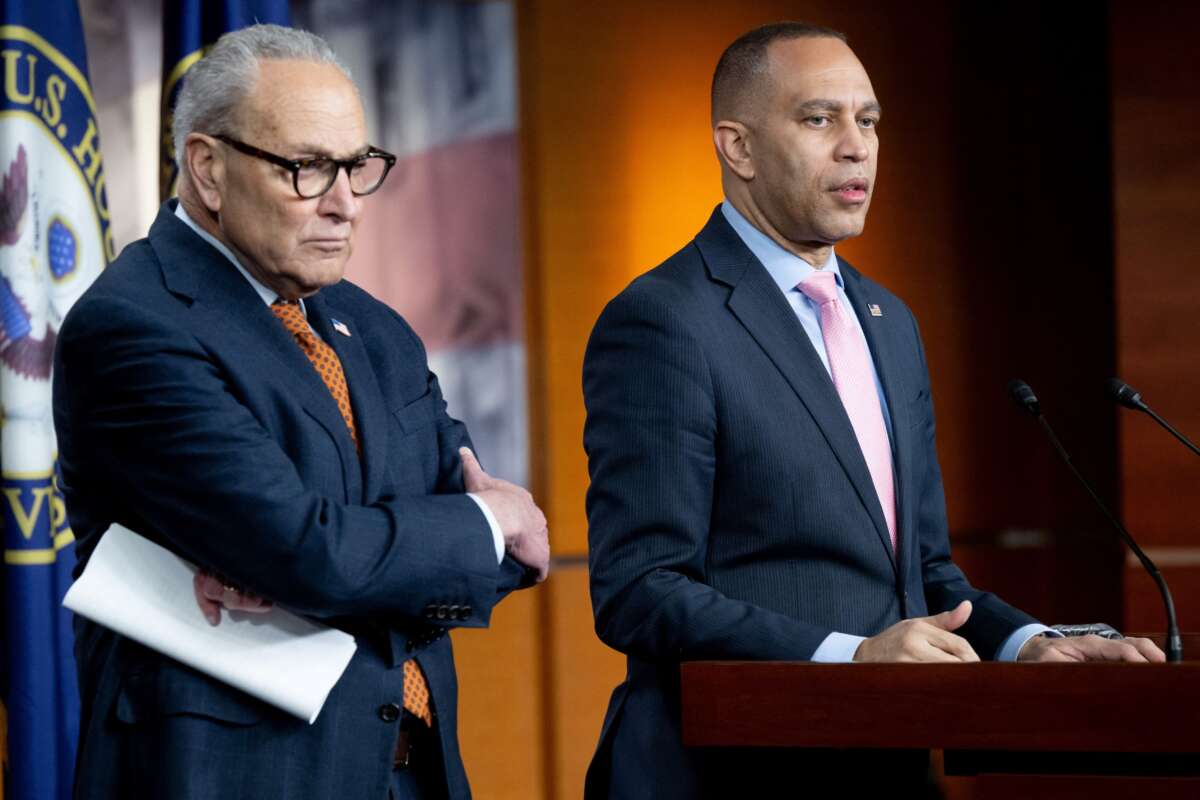
U.S. Senate Minority Leader Chuck Schumer and U.S. House Minority Leader Hakeem Jeffries hold a press conference on Capitol Hill in Washington, D.C., on January 8, 2026.SAUL LOEB / AFP via Getty Images

Truthout is a vital news source and a living history of political struggle. If you think our work is valuable, support us with a donation of any size.

Awave of momentum behind impeaching President Donald Trump for his genocidal threats toward Iran on Tuesday came to a screeching halt by the end of the week as Democratic leaders like Senate and House minority leaders Chuck Schumer (New York) and Hakeem Jeffries (New York) hand-wrung over such a process being a “distraction,” reporting says.

After Trump threatened that “a whole civilization will die tonight” on Tuesday morning, over 70 lawmakers, including a handful of senators, called for Trump to be impeached or be removed via the 25th Amendment over the threat. His threat was so beyond the pale that even far right figures like Candace Owens and Tucker Carlson criticized him, and called for an end to the war.

This was the biggest wave of calls for impeachment during Trump’s second term yet, coming as speculation flew over what horrors Trump would unleash upon the country of 93 million people — amid a war in which the U.S. and Israel have killed over 1,700 civilians thus far, including at least 254 children, according to human rights group Human Rights Activists News Agency.

But the calls likely won’t lead to consequences for Trump any time soon. Time reported on Friday that “[b]oth paths — impeachment or the 25th Amendment — are, to the mind of party Leadership, a distraction from their planned midterm campaign focused on high costs and unchecked corruption.”

Neither Jeffries nor Schumer has called for impeachment or removal in response to the threat. Their refusal to act is sure to ignite further fury as the Democratic Party still manages to garner worse approval ratings than Republicans due to widespread views that the party is weak and ineffective.

On Wednesday, Schumer, a longtime supporter of Israel, held a press conference criticizing Trump for the war and the ceasefire — making critiques not necessarily of the concept of war with Iran itself, but of the way that Trump is going about it.

“The Iranian regime is still standing. Not just standing, but now emboldened,” he said. “Iran’s nuclear ambition, worse. The bottom line is that Iran still has its nuclear stockpile. Its nuclear ambitions are still unchecked, if not accelerated.” He said that the Senate would undertake a war powers resolution next week — far past Trump’s deadline for civilization-wide annihilation that ultimately did not come to pass on Tuesday.

Party leaders evidently believe an impeachment effort highlighting Trump’s horrific war would fail, and thus isn’t worth trying — even as Rep. Al Green (D-Texas) pointed out that introducing articles of impeachment is a way to demonstrate the gravity of the situation. Jeffries directly stated he wouldn’t be backing an impeachment effort, saying: “I don’t want to get out ahead of that discussion … we want to be able to do [impeachment] in an informed way.”

Time further reported: “A failed impeachment effort, a party leader suggested privately, risks being framed as tacit approval of the President’s conduct, while also diverting attention from the party’s core economic message on affordability and health care — issues party leaders believe resonate more directly with voters.”

This belief simply isn’t true, and ignores the support that Democrats could gain by taking a principled stance.

Trump’s approval has been driven to new lows amid his war on Iran, which has broken records for unpopularity. Polling for IMEU Policy Project and Demand Progress by Data for Progress recently found that 43 percent of voters say they are less likely to vote for Republicans due to the war, demonstrating a huge swath of voters that the Democrats could appeal to by staking out an anti-war stance.

Further, affordability issues are directly tied to the war, with the U.S. and Israel’s aggression prompting the retaliatory closure of the Strait of Hormuz, causing energy costs — and costs of goods downstream from that — to soar. Republicans are reportedly even considering enacting further cuts to health care subsidies in order to pay for the White House’s towering $200 billion supplemental funding request for the war.