Monday, March 09, 2026

DEI

BHP Australia boss in running to lead Woodside

BHP Australia President Geraldine Slattery. Credit: Geraldine Slattery | LinkedIn

Global miner BHP’s Australia President Geraldine Slattery is among the contenders for the top job at Woodside Energy, Bloomberg reported on Friday, citing people familiar with the situation.

Woodside is expected to name a replacement for Meg O’Neill soon, after she unexpectedly left the company in December to lead BP, a role she formally begins in April.

“As has been disclosed, Woodside’s board intends to announce a permanent CEO appointment in the first quarter of 2026. We do not comment on market speculation,” a Woodside spokeswoman said, when asked whether Slattery had been formally interviewed for the role.

Acting CEO Liz Westcott and two other internal candidates are also in the running for the CEO job, said MST Marquee analyst Saul Kavonic.

BHP declined to comment and Slattery did not respond to a request for comment at the time of writing.

Slattery headed BHP’s petroleum division before it was acquired by Woodside.

(By Helen Clark and Melanie Burton; Editing by Sonali Paul)

WHY GOLD IS BOOMING

China’s central bank extends gold buying to 16th month

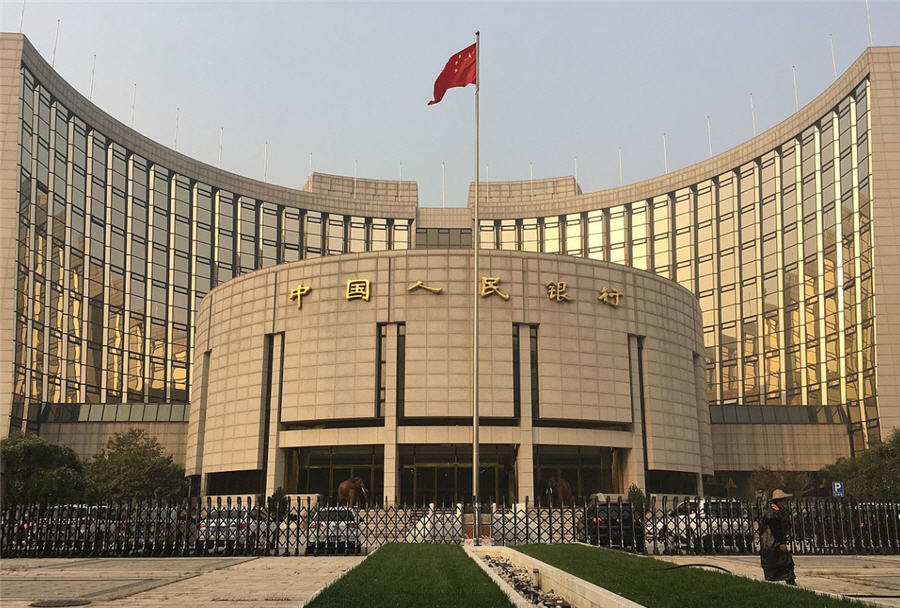
The People’s Bank of China headquarters in Beijing – Image courtesy of Wikimedia Commons

China’s central bank kept purchasing gold for a 16th straight months, with its holdings totalling 74.22 million fine troy ounces by the end of February, versus the previous month’s 74.19 million.

The value of China’s gold reserves stood at $387.59 billion at the end of last month, up from $369.58 billion a month earlier, data from the People’s Bank of China showed on Saturday.

(By Qiaoyi Li, Engen Tham and Dylan Duan; Editing by Himani Sarkar)

Argentina says Taca-Taca copper project represents $5.25B investment


ALL CAPITALI$M IS STATE CAPITALI$M


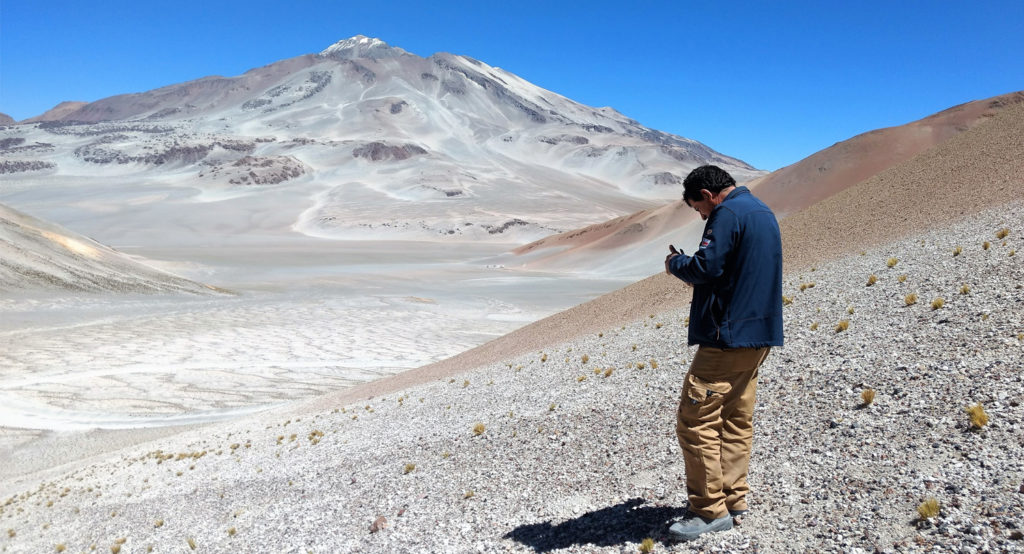
The Taca Taca project (Image courtesy of First Quantum Minerals.)

First Quantum Minerals has estimated a total investment of $5.25 billion at its Taca-Taca copper project in Argentina, the country’s foreign minister Pablo Quirno said on social media on Monday, following a meeting with the company’s CEO Tristan Pascall.

He added that 4,000 jobs are expected to be created during construction, with another 2,000 when the project is operational. Canada-based First Quantum is preparing to apply for the government’s RIGI investment incentive scheme, Quirno also said.

(By Aida Pelaez-Fernandez and Daina Beth Solomon)


Trafigura inks 10-year lithium deal with Smackover


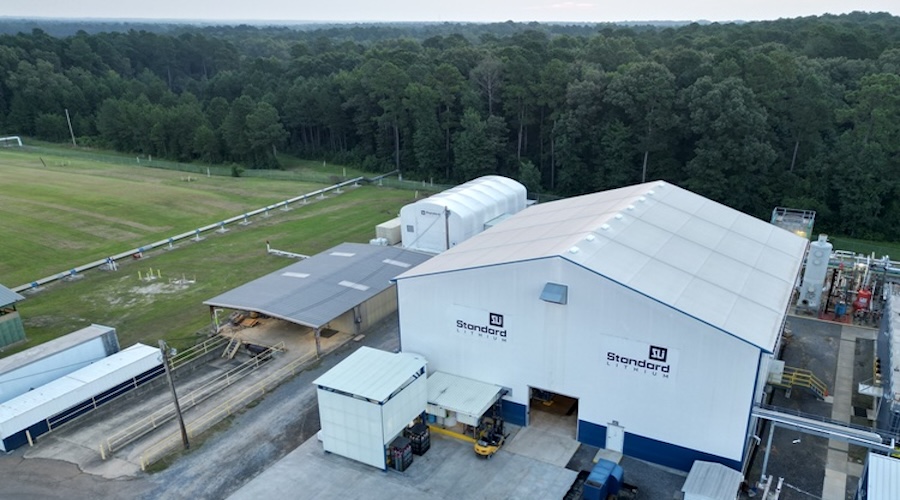
LANXESS demonstration plant near El Dorado, Arkansas. (Image courtesy of Standard Lithium.)

Commodities trader Trafigura has signed a binding take-or-pay agreement with Smackover Lithium to purchase battery-grade lithium carbonate from the South West Arkansas (SWA) project in the US.

Smackover Lithium, a joint venture between Standard Lithium (TSX-V, NYSE: SLI) and Norway’s Equinor (NYSE: EQNR), will supply Trafigura with 8,000 tonnes a year of lithium carbonate over a ten-year period, totalling 80,000 tonnes.

The SWA project targets initial production of 22,500 tonnes a year of battery-grade lithium carbonate in its first pahse, with potential for future expansion. The Trafigura agreement covers more than 40% of that targeted volume.

Smackover Lithium aims to make a final investment decision this year and start production in 2028.

The project will use direct lithium extraction technology to recover lithium from brine resources in the Smackover Formation in southern Arkansas.

Trafigura said the agreement supports the development of domestic supply of a critical mineral widely used in battery manufacturing and emerging technologies.

“We are pleased to have signed this offtake agreement with Smackover Lithium, further strengthening our North American critical minerals footprint,” said Gonzalo De Olazaval, Trafigura’s head of metals and minerals.

“The SWA project is expected to provide a reliable source of battery-grade lithium carbonate produced in the United States, enhancing domestic supply chains. We look forward to collaborating with Smackover Lithium on this strategic project and delivering this material to customers across North America and globally.”

Demand-supply gap

Standard Lithium chief executive officer David Park said the agreement marks a key step as the project advances toward development.

“The execution of the offtake agreement is the culmination of months of collaboration and negotiation and represents an important step toward a final investment decision and construction,” Park said.

The agreement comes as analysts warn the lithium market could tighten sooner than expected as demand from electric vehicles and energy storage accelerates.

Wood Mackenzie research director Allan Pedersen said demand could exceed 13 million tonnes by 2050 under an accelerated energy transition scenario, more than double base-case projections, with supply deficits emerging as early as 2028 unless the industry invests up to $276 billion in new capacity.


California lithium company to go public in $4.7 billion SPAC deal


California lithium and power developer Controlled Thermal Resources will go public on the Nasdaq through a $4.7 billion merger with blank-check firm Plum Acquisition Corp IV, the companies said on Monday.

The listing has been CTR’s goal since at least 2021 and is part of a plan to attract investment from US President Donald Trump’s administration.

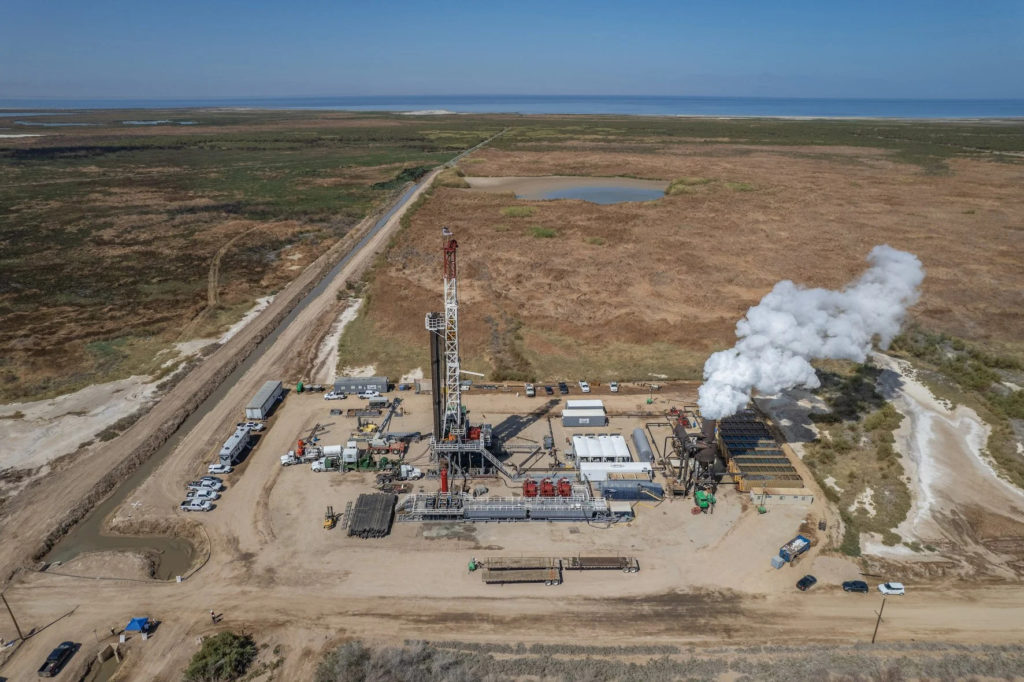
The deal will bring in $300 million for CTR, funds that will be used to develop its Hell’s Kitchen lithium and geothermal power project, located in the Salton Sea region, roughly 160 miles (258 km) southeast of Los Angeles.

Deals by special purpose acquisition companies (SPAC) have bounced back on Wall Street after years of muted activity, with companies turning to the alternative route to list. SPACs are shell firms that raise money through an IPO to merge with a private business and take it public.

The deal is expected to close in the second half and the combined company is expected to be listed on the Nasdaq under the ticker symbol “CTRH.”

CTR plans to extract superhot brines from deep beneath the Salton Sea and use the heat to generate steam for electricity production. Lithium will then be extracted from the brine before being reinjected back underground using so-far unproven direct lithium extraction technology.

CTR plans to use that technology developed by privately held Aquatech, which counts private equity firm Cerberus as a minority investor.

CTR’s project, which was added to a fast-track permitting list by the Trump administration, is expected to produce 50 megawatts of power by 2028 and 25,000 metric tons per year of lithium by 2029.

Energy-intensive data centers, which are vital physical infrastructure for artificial intelligence, are driving US power demand to record highs.

CTR aims to also produce zinc, manganese and potash from the Salton Sea brine.

“We have focused on diversification. We wanted to get away from just lithium,” CEO Rod Colwell told Reuters. Colwell and his family will remain the company’s largest shareholders once the listing is complete.

CTR signed lithium supply deals with General Motors and Stellantis several years ago. Those remain in place, but the volumes for the contracts may change, Colwell said, although he declined to provide details.

CTR’s faced a lawsuit from Earthworks over concerns about water use. A state court ruled last year against the environmental group, which is appealing.

Hall Chadwick advised CTR while Cohen & Company Capital Markets was Plum IV’s adviser.

(By Arasu Kannagi Basil and Ernest Scheyder; Editing by Shinjini Ganguli, Sriraj Kalluvila and Deepa Babington)


Venezuela acting government sends mining reform bill to legislature


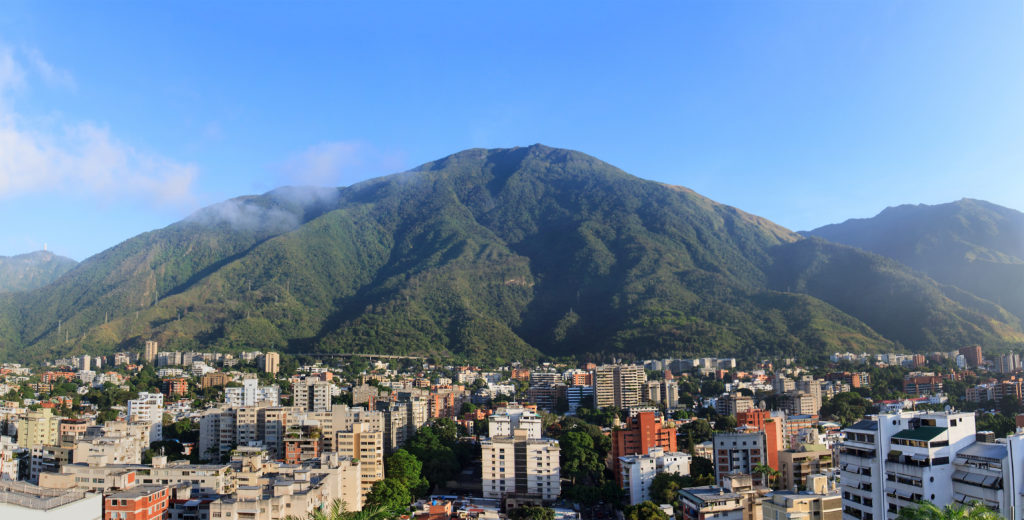
Caracas skyline, Venezuela. Stock image.

Venezuela’s ruling party-controlled National Assembly on Monday approved a mining law expected to open the sector to private and foreign investment, the latest salvo in a package of US-backed changes to the still-sanctioned country’s economy.

The administration of US President Donald Trump has supported a series of moves by Acting President Delcy Rodriguez to attract investors and stabilize the country since a January US raid that captured President Nicolas Maduro, with Trump repeatedly praising Rodriguez for cooperating with the US.

A draft of the law seen by Reuters but not yet made public repeals a 1999 mining regulation law, allows foreign and domestic companies to exploit gold, diamonds and rare earths and increases concessions from 20 years to 30 years.

Though mineral deposits remain the property of the state, disputes will be resolved through international arbitration, according to the draft, which also creates new tax calculations for mining projects.

The law, which must be subject to two debates before it can pass, is likely to be approved given the socialist party’s control of the legislature.

It was backed by lawmakers in an initial vote despite abstentions from at least one opposition party, which complained that lawmakers had received the draft just before the session began and had not had time to review it.

Rodriguez’s brother Jorge Rodriguez, who heads the National Assembly, rejected the complaint, saying all legislators had received the draft at the same time.

US Interior Secretary Doug Burgum sounded an optimistic note about the law during a visit to Venezuela last week, saying it will create opportunities for companies and that Rodriguez has promised to ensure their security.

The day after Burgum concluded his visit, the US issued a license authorizing certain transactions involving Venezuelan-origin gold, allowing transactions with state-owned mining company Minerven and its subsidiaries, so long as contracts are governed by US law.

Rodriguez has hailed a recent oil reform, which lowered taxes, expanded the oil ministry’s decision power and granted autonomy for private producers, among other measures, as a model for the mining changes.

Venezuela owes billions of dollars to industrial conglomerates, oil and mining companies after deep waves of nationalizations two decades ago, including to Crystallex, Gold Reserve and Rusoro Mining.

Exploration has not yet taken place in Venezuela to confirm reserves of rare earths, a grouping of 17 metals used to make magnets that turn power into motion.

 South Africa

Merafe Resources posts profit plunge as soaring power costs shut smelters


Glencore Magareng chrome mine South Africa (Image courtesy of Glencore).

South Africa’s Merafe Resources reported a 72% slide in full-year profit on Monday, after suspending operations at its ferrochrome smelters due to high electricity costs.

Merafe’s headline earnings per share fell to 12.2 South African cents in the year ended December 31, 2025, from 42.9 South African cents previously.

The company, which operates a ferrochrome joint venture with Glencore, idled its plants in April 2025 citing soaring power costs and increased competition from Chinese smelters.

As a result, ferrochrome output from the Glencore-Merafe joint venture fell 63% to 112,000 metric tons in fiscal 2025. Production costs rose 14% during the year, mainly due to lower output.

South African smelters are struggling to compete with Chinese rivals amid power tariffs that have surged more than 900% since 2008, putting thousands of jobs at risk.

In January, South Africa’s energy regulator approved a 35% reduction in electricity tariffs for Merafe and fellow producer Samancor, allowing Merafe to restart its largest plant, the Lion smelter, last month.

On February 27, state power utility Eskom offered a further 29% tariff cut to the distressed smelters, pending regulatory approval.

(By Nelson Banya; Editing by Sumana Nandy and Tom Hogue)

PUTIN'S BANDITS

Hungary detains Ukraine convoy carrying over $80M in cash and gold

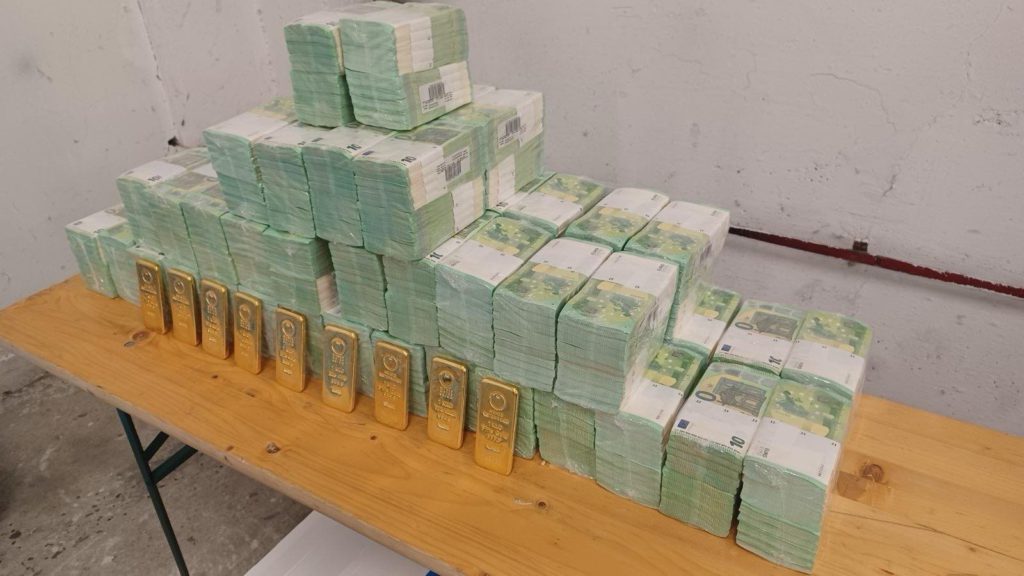
Photo showing cash and gold seized by the “Ukrainian gold convoy action”. Image source: Government of Hungary | Facebook

Hungary detained seven Ukrainian nationals transporting over $80 million in cash and gold through the country, authorities said, prompting Kyiv to accuse Budapest of unlawfully seizing the funds and taking its people hostage.

Hungary’s National Tax and Customs Administration (NAV) said the group was stopped during what officials described as the “Ukrainian gold convoy operation,” after authorities intercepted two armoured vehicles travelling from Austria to Ukraine.

Hungarian officials said they were surprised by the large amount of cash found with the Ukrainian men, who were reportedly wearing military tactical uniforms at the time of their detention.

According to authorities, the convoy was carrying about $40 million, €35 million and 9 kilograms of gold (worth about $1.5 million at current prices) when it was halted on suspicion of money laundering.

The Hungarian government, through its Facebook account, released on Friday a video and several photographs of the operation showing stacks of cash and gold bars laid out on tables.

Péter Szijjártó, Hungarian Minister for Foreign Affairs and Trade, said the individuals were detained due to “legitimate concerns” that the money and gold belonged to the Ukrainian war mafia. Since January, Ukrainians have reportedly transported about $900 million and €420 million in cash through Hungary, as well as 146 kilograms of gold bars, Szijjártó added.

Balázs Orbán, the Political Director of the Hungarian Prime Minister, raised his concerns about the amount of money passing through the country. “Whose money is this? What was it meant to finance? Who benefits from it?” Orbán wrote on X.

Hungarian authorities said they have launched a criminal investigation and are working with counter-terrorism forces, noting that one of the detained individuals was a former Ukrainian intelligence general.

They added that the seven Ukrainians have been expelled from the country, though the fate of the seized cash and gold remains unclear.

‘Taking hostages’

Ukraine’s foreign minister, Andrii Sybiha, condemned the move. “This is state terrorism and racketeering,” he wrote on X, and later alleged that the detention was part of “Hungary’s blackmail and electoral campaign.”

The foreign ministry also warned Ukrainian citizens to avoid travelling to Hungary for the time being due to the seizure.

The Ukrainian government said its national police also opened criminal proceedings against Hungary on “illegal deprivation of liberty” or “kidnapping” of bank employees.

According to Sybiha, the detainees were employees of state-owned lender Oschadbank conducting a routine transfer of foreign currency and precious metals between banks, as Ukraine’s airspace remains closed due to Russia’s invasion.

The incident has further strained relations between the two countries, already at odds over the suspension of Russian oil shipments through the Druzhba pipeline and Hungary’s opposition to additional European Union financial aid for Ukraine.


Endeavour Mining reports fatality at Burkina Faso mine


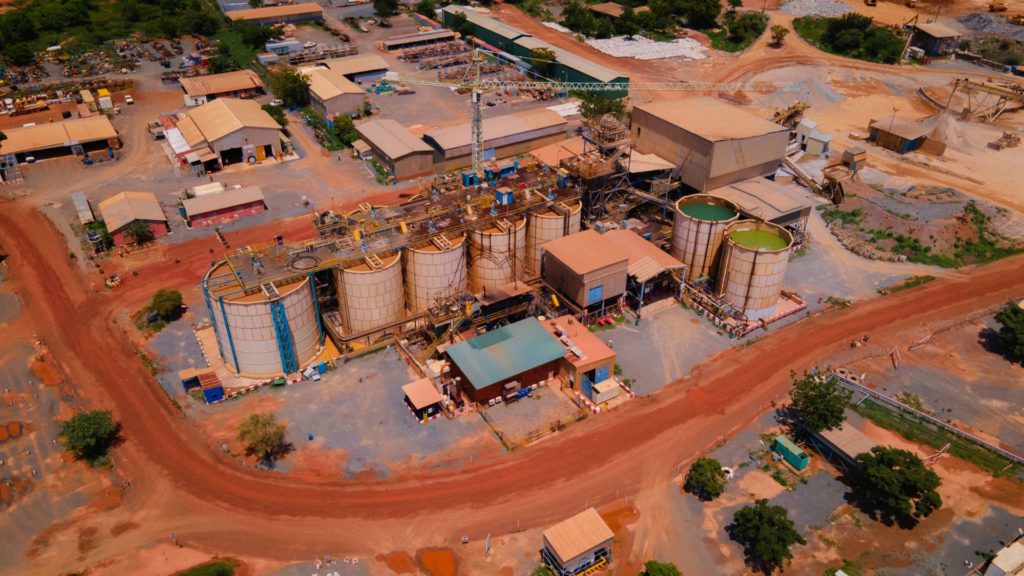
Carbon-in-leach plant at Mana. Credit: Endeavour Mining

Endeavour Mining (LSE, TSX: EDV) says a contractor died last Friday at its Mana mine in Burkina Faso due to injuries sustained during maintenance activities.

Mining and processing activities on the site remain uninterrupted, while a comprehensive internal investigation into the incident is being conducted, the gold miner said in a press release on Monday.

Endeavour Mining fell as much as 3% in Toronto. By midday, the stock traded at around C$83.90 apiece with a market capitalization of C$20 billion ($14.7 billion).

One of the cornerstone assets in Endeavour’s West Africa-focused portfolio, the Mana mine has been in operation for over a decade, producing more than 2.1 million oz. of gold during that span. It started out as an open-pit operation and recently transitioned into underground.

In addition to Mana, the company also operates the Houndé mine located 60 km to the south. Both are owned 85% by Endeavour, with the Burkina Faso government owning the remaining 15%.

BAN DEEP SEA MINING

TMC says consolidated permit application passes US compliance


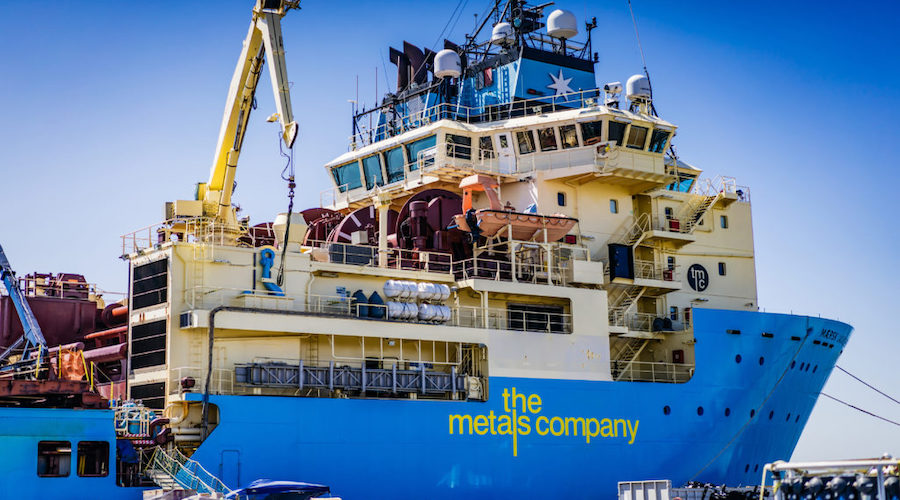
TMC submitted its consolidated application earlier this year. (Image courtesy of Richard Baron | The Metals Company.)

Deep-sea mining hopeful TMC the metals company (Nasdaq: TMC) took a key step forward in the US regulatory process for securing its permit to explore and extract minerals from the Pacific Ocean floor.

In a press release on Monday, TMC said its application for an exploration licence and commercial recovery permit has been deemed to be “in substantial compliance” by the National Oceanic and Atmospheric Administration (NOAA) within its new regulations.

In January, the NOAA revised the Deep Seabed Hard Mineral Resources Act — the federal law regulating deep-sea mining exploration in international waters — to essentially combine the exploration licence and commercial recovery permitting processes. Previously, deep-sea mining companies had to follow a two-step sequential process.

The revision was first proposed in July 2025 after President Donald Trump signed an executive order aimed at bolstering the deep-sea mining industry, part of a broader push to counter China’s control on the critical minerals supply chain.

Shortly after, TMC, through its US subsidiary, submitted a consolidated application, becoming the first company to do so under the streamlined process. The application replaces the one it filed in April 2025 under the old regulations.

65,000 km2 area

“NOAA’s determination reflects the depth of work our team and partners have put into understanding this resource and how it can be responsibly developed,” Gerard Barron, chairman and CEO of TMC, stated in the press release.

For years, the Vancouver-based company has been preparing to mine part of the Pacific Ocean between Hawaii and Mexico known as the Clarion-Clipperton Zone, looking to tap into the seafloor polymetallic nodules that contain essential battery metals such as manganese, nickel, copper and cobalt contained in the

“After more than a decade of environmental research, successful offshore trials and commercial-scale metallurgical processing, we believe polymetallic nodules can provide a new and lower-impact source of critical metals for the US,” Barron said.

TMC’s consolidated application covers a commercial recovery area of approximately 65,000 km2, more than double the 25,000 km2 from its previous application. According to TMC, the licensed area contains an estimated resource of 619 million tonnes of wet nodules and potential exploration upside of an additional 200 million tonnes.

Shares of TMC rose as much as 4% to $6.00 apiece in New York, giving the company a market capitalization of $2.42 billion.

Greenpeace opposition

TMC’s efforts to mine the ocean floor has long faced opposition from industry groups for its potential impacts on the natural environment, and its application for the consolidated licences has placed the company under further scrutiny.

Environmental group Greenpeace International, which previously fought with TMC on the issue in 2023, said on Monday that the company’s application for “unilateral” deep-sea mining licences from the Trump administration violates its existing contracts under international law.

Seabed mining beyond national jurisdiction is currently regulated by the International Seabed Authority (ISA), which was created by the United Nations Convention on the Law of the Sea. However, ISA has spent years formalizing deep-sea mining rules to no avail due to unresolved differences over acceptable levels of dust, noise and other factors from the practice.

In its statement, Greenpeace urges the ISA to take action against TMC, including considering not renewing the contract, alleging the company of breaching the “core contractual obligations under the United Nations Convention on the Law of the Sea.”

CRIMINAL CAPITALI$M

Phoenix Copper fires chair, CFO over secret payments

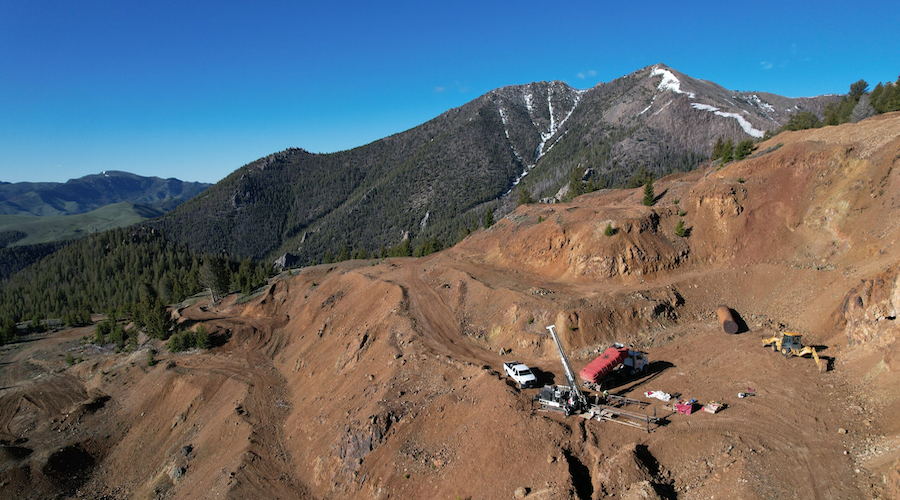
The Empire Copper Reserve project in Idaho. (Image courtesy of Phoenix Copper.)

Phoenix Copper (AIM: PXC) has dismissed its executive chairman and chief financial officer after an internal investigation uncovered undisclosed related-party payments and unauthorized transactions tied to fundraising activities.

The US-focused copper miner said Monday that former executive chairman Marcus Edwards-Jones and CFO Richard Wilkins were removed after the board determined about $1.765 million had been paid between 2016 and 2025 to Lloyd Edwards-Jones, a corporate finance advisory firm owned by Edwards-Jones. 

The company said the payments were made by Wilkins in connection with fundraising transactions without the knowledge or approval of the board, and Wilkins shared in the proceeds.

Phoenix said the transactions qualified as related-party dealings under AIM rules but were never disclosed or approved by independent directors or the company’s nominated adviser.

The probe also uncovered an additional £610,000 (about $815,000) in unauthorized payments. Some funds were transferred to an intermediary linked to bond financing without board approval, while others were made despite explicit instructions from directors not to proceed.

Both former executives have indicated they are willing to cooperate with efforts to recover the funds, the company said.

Independent non-executive director Catherine Evans has stepped in as interim chair and is working with CEO Ryan McDermott to strengthen governance and financial controls. Phoenix has also appointed an interim CFO to oversee completion of its 2025 audit.

Auditor Crowe UK has been informed of the findings. The company said it does not currently expect its historical financial statements to require restatement, aside from disclosing the payments as related-party transactions in its 2025 accounts.

Phoenix added that its working capital position remains tight. After reviewing cash flow and implementing cost reductions, the company said its existing cash balance should fund operations until the end of the second quarter of 2026.