Friday, April 10, 2026


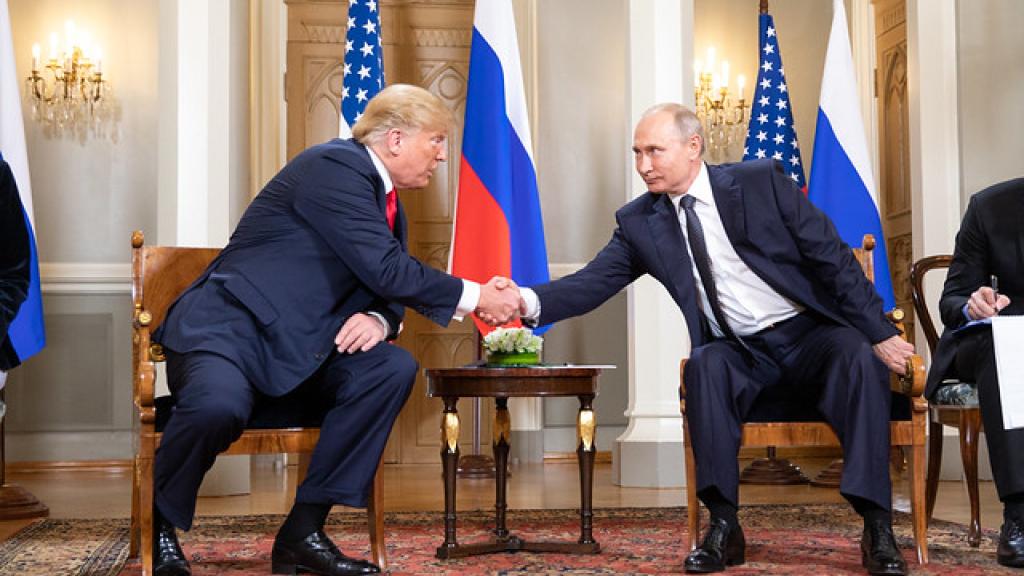
Trump, Putin and Ukraine: Towards a division of spheres of influence at the expense of the people


Trump White House Archived

First published at CADTM.

Since the start of his second term, Donald Trump has been redefining US international strategy according to a brutal logic of power relations between major powers. Whilst stepping up aggressive policies in the Middle East and the Americas, his administration has embarked on a strategic repositioning vis-à-vis Russia.

Far from being presented as the central enemy of the world order, Moscow is now treated as a secondary adversary with whom an arrangement might be possible. Washington’s objective is clear: to prevent Russia from further strengthening its alliance with China, regarded as the United States’ main systemic rival. This marks a departure from his first term and from that of Joe Biden from 2021 to 2024.

Strategic documents published by the Trump administration between December 2025 and early 2026 confirm this shift. Russia is described therein as a “persistent but manageable” threat, whilst European leaders are accused of exaggerating the danger it poses and harbouring unrealistic expectations regarding the outcome of the war in Ukraine. At the same time, Washington claims it wants to negotiate a swift end to the war under its auspices.

This shift paves the way for a scenario with far-reaching consequences: a deal between imperialist powers — the United States and Russia — that will be at the expense of the Ukrainian people.

Trump’s policy towards Russia

Since the start of his second term, Donald Trump has secured an agreement from Vladimir Putin that, beyond verbal protests, he will not react to acts of aggression and war perpetrated by Washington against Moscow’s allies, be it Venezuela or Iran, or in relation to the total blockade of Cuba in place since late January 2026.1 Trump has marked a shift from the policy adopted during his first term, in which he treated China and Russia as equals, viewing them as adversaries seeking to challenge the Washington-dominated international order.

Trump is sending a message to Putin that he is prepared to accept Moscow’s use and abuse of force in its geographical sphere, particularly in Ukraine, just as Washington does in the Americas, the Middle East and elsewhere. Trump asserts his right to use force anywhere in the world and effectively recognises Putin’s right to do the same within a more limited sphere corresponding to part of the territory of the former Russian Empire of the Tsarist era and the former Soviet Union. This follows the classic logic of an implicit division of spheres of influence between major imperialist powers.

Trump has reduced direct US military support for Ukraine by shifting the burden of this support to his Western European allies within NATO. In January 2026, he invited Moscow and its allies in Belarus and Hungary to join his World Peace Council.

On 5 March 2026, Trump announced that he was temporarily allowing Russia to export its oil to India without sanctions, with India either consuming it or re-exporting it to other parts of the world, including Europe. One of the unspoken reasons is to persuade Russia to confine itself to issuing verbal protests against the massive aggression by Washington and Israel against Iran, its ally.

Trump in full

Trump reveals a number of positions regarding Europe, Russia and Ukraine in the document on the new national security strategy released on 3 December 2025. He considers that the EU and the UK “enjoy a significant hard power advantage over Russia by almost
every measure, save nuclear weapons”2 and that European leaders are exaggerating the threat posed by Russia.

The Trump administration’s document continues:

As a result of Russia’s war in Ukraine, European relations with Russia are now deeply attenuated, and many Europeans regard Russia as an existential threat.

From the way the text is written, one can infer that Trump is telling European governments that Russia does not pose an existential threat to them. On certain occasions, Trump has described Russia as an existential threat, but this is not the case in either the National Security Strategy published in December 2025 or the National Defence Strategy published in late January 2026.

Trump believes that the EU and the UK must adopt a different approach to that taken so far in negotiations with Russia regarding the latter’s demands. This is particularly clear in the following passage:

The Trump Administration finds itself at odds with European officials who hold unrealistic expectations for the war perched in unstable minority governments, many of which trample on basic principles of democracy to suppress opposition.

It should be noted that Trump claims that European governments are suppressing patriotic parties, i.e. the neo-fascist far right.

Trump’s text continues:

A large European majority wants peace, yet that desire is not translated into policy, in large measure because of those governments’ subversion of democratic processes.

And he adds:

This is strategically important to the United States precisely because European states cannot reform themselves if they are trapped in political crisis.

This means that Trump is declaring that it is in the United States’ interest for patriotic parties (i.e. far-right and neo-fascist) to be in government, which, according to the current administration, would resolve the political crisis.

There is, of course, in the passage above, a very clear rejection of the German, French, British, Spanish, Danish, Polish and other governments. Conversely, this strengthens the position of Hungarian Prime Minister Viktor Orbán and Slovak Prime Minister Robert Fico, whom Marco Rubio, the US Secretary of State, visited in February 2026 following the Munich Security Conference. It should be noted that both these governments are in favour of easing sanctions against Putin’s Russia and have expressed their support for Trump.

Regarding relations between the EU, the UK, Russia and Ukraine, it is clear that Trump wants to remain at the centre of the diplomatic game:

Managing European relations with Russia will require significant U.S. diplomatic engagement, both to reestablish conditions of strategic stability across the Eurasian landmass, and to mitigate the risk of conflict between Russia and European states.

It can also be inferred from the previous passage that, given the military superiority of the EU countries and the UK over Russia, the rebalancing should be in Russia’s favour. The same idea is found in the following passage:

It is a core interest of the United States to negotiate an expeditious cessation ofhostilities in Ukraine, in order to stabilize European economies, prevent unintended escalation or expansion of the war, and reestablish strategic stability with Russia, as well as to enable the post-hostilities reconstruction of Ukraine to enable its survival as a viable state.

In the passage above, Trump reaffirms that he wants a swift end to hostilities and puts pressure on the EU, the UK and Ukraine to make concessions to Russia, all under Washington’s auspices.

Trump’s policy towards Ukraine

Trump has no regard for the Ukrainian people’s right to defend their sovereignty. Yet if the February 2022 invasion was largely thwarted, it is because the Ukrainian people resisted and demonstrated their commitment to their country’s sovereignty. Had the Ukrainian people not overwhelmingly supported the resistance, the arms sent by Western powers to the authorities in Kyiv would not have been enough to thwart Putin’s initial plan, which was to march his army into Kyiv, change the regime and seize a significant portion of Ukrainian territory, starting with the east of the country. 

Stating this must go hand in hand with a critique of the neoliberal and chauvinistic nationalist policies of Volodymyr Zelensky’s right-wing government, and with a condemnation of NATO and the imperialist ambitions of Trump and the Europeans regarding Ukraine. It is also important to point out that Ukraine is not an imperialist power.

Trump couldn’t care less about international law and believes he can use force to seize control of Venezuela’s or Iran’s oil resources after launching a military attack on those countries. He believes that Putin’s Russia, within its immediate sphere of influence, can do the same as long as it does not harm US interests in Eastern Europe. Trump is prepared to strike a deal with Putin at the expense of the Ukrainian people. 

Putin may retain or seize control of part of Ukraine’s territory, population and natural resources if US companies secure corresponding benefits in the rest of Ukrainian territory. On this condition, Washington would be prepared to protect the weakened Ukrainian authorities and the territory over which they retain control, provided that the authorities in Kyiv allow US companies to amass maximum profits

What Trump is proposing is an agreement between two predatory imperialist powers, the US and Russia, which agree to flout the right of peoples to self-determination and to exercise sovereignty over their territories and the natural resources found therein. The European imperialist powers are largely sidelined by Trump, even though they too seek to promote their own interests and those of their large private corporations, which covet Ukraine’s natural resources, land and market.

Trump’s stance on Russia

Trump believes that previous administrations made the mistake of encouraging the formation of an alliance between Russia and China, which has strengthened China’s position. Trump wishes to separate Russia from China or, at the very least, weaken the ties between these two powers. 

Washington, which identifies China as its primary and systemic adversary, is therefore attempting to reduce Russia’s inclination to strengthen its ties with China.3 The 2025 NSS regards Russia as a serious but strategically secondary military adversary, to be contained without elevating it to the status of a civilisational enemy, in order to concentrate US resources (military and economic) on combating China.

The Kremlin’s reaction to the publication of the NSS 2025

Dmitry Peskov, the Russian president’s spokesperson, commented on the National Security Strategy document during an interview on 7 December 2025 with the Russian state journalist Pavel Zarubin for the Rossiya 1 channel, which was widely reported by Russian media outlets such as Interfax, Fontanka and TASS: 

The adjustments made to the US national security strategy largely correspond to our vision.

The full press release published by the Russian online media outlet Fontanka.ru on 7 December 2025 states:

Peskov commented on the new US national security strategy. The adjustments made to the US national security strategy largely correspond to the Russian government’s vision. This is how Dmitry Peskov, the Kremlin spokesperson, commented on the update to the document to journalist Pavel Zarubin. The President’s spokesperson expressed the hope that the new strategy would enable Washington and Moscow to continue their constructive collaboration on the Ukrainian issue. The updated strategy was published on Friday 5 December by the administration of US President Donald Trump. Relations with Europe and the conflict in Ukraine feature prominently in the document. It is also emphasised that NATO must not be an “endlessly expanding alliance”. Peskov stressed that the implementation of this concept must be closely monitored.

The Interfax news agency, for its part, wrote on 7 December 2025:

The Kremlin has welcomed the wording regarding NATO in the US National Security Strategy. Medvedev sees the new US National Security Strategy as an attempt to improve relations with Russia. The Kremlin welcomes the wording in the updated US National Security Strategy concerning the freeze on NATO enlargement, but will closely monitor the practical implementation of this document. 

It should be noted that Dmitry Medvedev is Deputy Chairman of the Russian Security Council and Chairman of the ruling United Russia party.

The shift in Washington’s characterisation of Russia between Trump I and Trump II

In the National Defence Strategy 2026 published at the end of January 2026 (NDS 2026), Russia is identified as “a persistent but manageable threat” to NATO, a shift in Russia’s favour compared with the more alarming characterisations in previous documents, which described Russia as a “revisionist power” during Trump’s first term in 2017, and as an “immediate threat to the international order” and an “acute threat” in 2022, during Joe Biden’s presidency. The Biden administration’s 2022 NSS asserted that Russia “has shattered the peace in Europe”.

In the strategic language of the US government, “revisionist power” refers to a state seeking to alter the rules, institutions or balance of power of the existing US-dominated international order. In documents from the first Trump administration and the Biden presidency, Russia and China were portrayed as revisionist powers.

Here are some extracts from the NDS 2026 concerning Russia:

the Russian military threat is primarily focused on Eastern Europe’, ‘Moscow is in no position to make a bid for European hegemony. European NATO dwarfs Russia in economic scale, population, and, thus, latent military power... 

Fortunately, our NATO allies are substantially more powerful than Russia — it is not even close. Germany’s economy alone dwarfs that of Russia.

Common ground between Trump and Putin

Despite their geopolitical rivalries, Donald Trump and Vladimir Putin share a significant set of ideological and political positions.

Both are characterised by staunch anti-Communism and unreserved support for the capitalist system, including its most brutal forms of exploitation of labour and natural resources.

Trump and Putin are nationalists who assert the primacy of the rights of the dominant nation to which they belong. Trump supports white supremacists and asserts the primacy of US interests over those of foreign nations, which he does not hesitate to treat in racist terms. Putin espouses Great Russian chauvinism and denounces Lenin for the ‘creation’ (sic) of Ukraine and the recognition of its right to secede from the USSR in the early 1920s.

They also advocate an energy policy based on the intensive exploitation of fossil fuels, thereby contributing to the worsening of the ongoing global ecological catastrophe.

On the social front, their positions converge towards homophobic stances and hostility towards the rights of LGBTQIA+ people, accompanied by the promotion of conservative values underpinned by a reactionary vision of Christianity.

On the international stage, both Trump and Putin favour the use of military force to impose their political and economic objectives, in defiance of international law. This approach is accompanied by determined support for the rapid and massive expansion of the arms industries, as well as the increased use of military power.

Their foreign policies are also based on the repeated use of questionable or unfounded pretexts to justify the use of force. Furthermore, both cultivate a great-power chauvinism and an exaggerated nationalism, characteristics of authoritarian political projects.

Furthermore, they maintain close ties with European far-right forces, which in turn express strong sympathy towards them.

Trump offers full support to the Israeli government led by Benjamin Netanyahu, who is a neo-fascist and responsible for genocide in Gaza. Putin, for his part, maintains cordial relations with Netanyahu and continues Russian exports to Israel — coal, oil and grain — without calling into question existing trade agreements.

Putin has also agreed in principle to the creation of a World Council chaired by Trump and wants Russia to be a member. In this context, he is calling on the United States to lift the freeze on Russian assets so that Russia can pay the $1 billion membership fee required to become a permanent member of this body, which is entirely illegitimate.

Both Trump and Putin make extensive and controversial use of the term ‘genocide’, whilst refusing to acknowledge or condemn the genocide of the Palestinian people. Trump thus claims that the government in Pretoria is responsible for a ‘genocide of whites’ in South Africa, whilst Putin maintains that the government in Kyiv is carrying out genocide against the Russian populations in Ukraine.

Beyond these ideological and geopolitical convergences, Trump and Putin also display marked similarities in their approach to exercising and conceiving of power. Both favour a highly personalised style of leadership, centred on the figure of a leader presented as the direct embodiment of the nation and its will. Their political discourse regularly relies on rhetoric pitting ‘the people’ against political, media or economic elites, accused of betraying national interests. 

In this context, they display marked distrust of multilateral institutions and international law when these are perceived as obstacles to their strategic objectives. Furthermore, their political practices are accompanied by constant criticism of media deemed hostile and intensive use of communication strategies aimed at circumventing or delegitimising institutional checks and balances. These elements contribute to embedding their political projects within a highly personalised, imperialist and neo-fascist authoritarian conception of power.

What are the differences between Trump and Putin?

One difference worth highlighting lies in their approach to war and the direct use of military force. Trump is convinced that it is possible to win conflicts without committing US troops to the ground for any length of time, by prioritising technological superiority, strikes from a distance and military operations of limited duration, with virtually no US casualties. Trump’s illusion was shattered in his war against Iran in February–April 2026.

Conversely, Putin chose a different strategy with the massive military invasion of Ukraine in 2022, involving the deployment of very large ground forces and resulting in extremely high human casualties on both the Russian and Ukrainian sides.

Another fundamental difference concerns the position of their respective states within the global hierarchy of capitalism. Trump leads the world’s principal capitalist and imperialist economic and military power, the US. Putin, for his part, heads a secondary capitalist imperialist power, one that is weakened and in relative decline, but which remains a major strategic player due to its possession of a nuclear arsenal broadly comparable to that of the United States.

Finally, their geopolitical ambitions differ in the scale of their intervention. Trump’s imperialist policy targets the entire globe, while Putin’s focuses primarily on the post-Soviet space and its immediate periphery, even though Russia has attempted to extend its influence into other regions, such as Syria — where it has, however, suffered a setback with the fall of Bashar al-Assad’s regime.

Do Trump and the US military-industrial complex have an interest in a swift end to the war in Ukraine?

At this stage in 2026, contrary to his claims during the election campaign or at the start of his term, ending the war in Ukraine is not a priority for Trump, for several reasons.

Indeed, the continuation of the war lends greater credibility to the US argument for persuading its European NATO allies to continue significantly increasing their military spending, which boosts arms exports by major US private companies.

Furthermore, Washington has secured an agreement with European NATO countries that is highly favourable to its interests. These countries purchase from the US the weapons they supply to Ukraine, which are being used at an intensive rate for as long as the active conflict continues. Trump has virtually brought an end to new direct arms supplies to Ukraine.

The continuation of the war also partly diverts attention from the aggressions perpetrated by the United States under Trump’s command in the rest of the world.

The continuation of the war in Ukraine and the strain this places on the Russian economy and its population prevents Putin from deploying military forces to other continents, except in a few African countries in the form of a Russian private army.

Finally, on 5 March 2026, Trump eased sanctions against Russia regarding oil sales. When combined with the rise in global fuel prices resulting from the war in the Middle East instigated by Washington and Israel, Putin’s Russia is seeing an increase in its export revenues, which helps sustain the war of aggression against Ukraine.

Conclusion

Ultimately, Trump’s policy towards Russia follows the classic logic of great-power rivalry: to curb the growing rapprochement between Moscow and China, to keep the United States at the centre of the diplomatic arena, and to make European countries bear the main cost of the war in Ukraine. Behind the official rhetoric calling for a swift end to hostilities, Washington does not necessarily have an interest in an immediate peace.

In this context, the prospect of a deal between Washington and Moscow at the expense of the Ukrainian people cannot be ruled out. The ideological and political similarities between Trump and Putin — a commitment to authoritarian capitalism, great-power nationalism, aggressive military imperialism, contempt for international law and proximity to far-right forces — facilitate such a logic of power relations between states.

Beyond their rivalries and differences in power, the two leaders share the same worldview. In such a scenario, the peoples — and in particular the Ukrainian people — risk becoming the main victims of a new geopolitical balance based on the division of spheres of influence.

But we must not rule out a possible shift in Trump’s stance in the future. If he fails to achieve his aims in negotiations with Putin, he is capable of adopting a much tougher stance and portraying Russia as a far more serious threat than is suggested in the documents we have just analysed.

What is certain is that the negotiations between Trump and Putin do not take into account the interests and rights of the people. We must build solidarity between peoples from the ground up in order to strengthen resistance to the rise of neo-fascism and the increase in imperialist aggression, wherever it comes from.

The author would like to thank Sushovan Dhar, Antoine Larrache and Maxime Perriot for proofreading this text.

  • 1

    Russia sent an oil tanker to Cuba, which arrived at the port of Matanzas in late March 2026 with a cargo of oil sufficient to meet the country’s needs for around a fortnight. It is the first oil tanker to reach Cuba since January 2026. Trump allowed this to happen despite the total embargo imposed on oil deliveries to the island’s authorities. This is likely a gesture by Trump towards Moscow in connection with the ongoing war in the Middle East.

  • 2

    Extract from the National Security Strategy document published in December 2025, p. 25 (NSS 2025). https://www.whitehouse.gov/wp-content/uploads/2025/12/2025-National-Security-Strategy.pdf?internal=true

  • 3

    Since the start of the war in Ukraine, Russia has become increasingly economically dependent on China, particularly for its energy exports and technology imports, casting doubt on Washington’s objective of weakening the Moscow-Beijing alliance.

Kyiv books tentative diplomatic coup with Iran war forays

Kyiv (Ukraine) (AFP) – When the US-Israeli war with Iran began at the end of February, it was widely assumed that Moscow would be one of the conflict's key winners.


Issued on: 10/04/2026 - RFI

Zelensky has sought to clinch security deals and exchange Ukrainian drone expertise for air defence missiles © Handout / UKRAINIAN PRESIDENTIAL PRESS SERVICE/AFP

Higher oil prices, a distracted Washington and a sudden need for Western air defence systems in the Gulf were seen as a boost to Moscow's four-year invasion of Ukraine.

But in Kyiv, officials and analysts say a flurry of high-level visits by President Volodymyr Zelensky and the inking of security accords across the Middle East amount to a diplomatic coup that have given the embattled country outsized clout in a region recently seen as aligned with Russia.

"Ukraine is for the first time -- and to some countries' surprise -- acting as a state that can provide security services, that can, as experts say, export defence and security expertise," Volodymyr Fesenko, a respected political observer in Kyiv, told AFP.

That is a marked turnaround from 2022 when an under-equipped Kyiv went on bended knee to the United States and Europe to appeal for sophisticated air defence systems, advanced battle tanks, and as many artillery shells as they could get their hands on.

The rapid proliferation of drones has made many of those weapons less relevant, and spurred Ukrainian rag-tag arms producers to become global leaders in drone warfare and anti-drone systems.

'Moscow extremely upset'

Kyiv's forces neutralise hundreds of the Iranian-designed drones launched by Russia every day, and as Iran started firing off drones across the Middle East in retaliation for the US-Israeli attacks, Zelensky quickly deployed more than 200 of his anti-drone experts to at least four states.

Zelensky himself paid high-profile visits to Saudi Arabia, the United Arab Emirates, Qatar, Jordan and Syria -- becoming one of the first foreign leaders to visit the region during the war.

"Moscow is extremely upset with Ukraine's rapid strengthening of ties with the Gulf countries in the wake of Iranian air terror," Ukrainian Foreign Minister Andriy Sybiga said on social media.

"They understand that Ukraine's unique experience has dramatically changed its role in the region," he added.

Sybiga said Russia and its close ally Iran had taken to spreading disinformation about Ukrainian anti-drone units to undermine Kyiv's diplomatic reach -- like that Iran had struck a depot housing Ukrainian anti-drone systems in the United Arab Emirates.

Despite Ukraine managing to give itself a surprise role in the conflict, the question remains what material benefit it can extract besides some good publicity.

"Frankly, in the Gulf countries you can simply ask for money," political analyst Taras Zagorodniy suggested to AFP in a telephone interview.

"This is a way to scale our own technologies and attract additional resources, because we need money to support our technologies and investments," Zagorodniy, Managing Partner of the National Anti-Crisis Group think tank, added.

Details of the defence agreements struck with several states in the region have not been made public.

Zelensky had previously proposed swapping Ukrainian drone warfare technology for the advanced air defence missile ammunition -- though that idea appeared to gain little traction.

No 'breakthrough'

The Ukrainian leader has also suggested that improved ties with the Gulf could help place broader pressure on Russia to halt its invasion.

But analysts have warned that these overtures do not amount to a breakthrough -- yet.

For one, the impact of the two-week truce agreed between the United States and Iran is unclear.

Zelensky has said Ukrainian anti-drone units will remain in the Middle East but the long-term demand for Ukrainian war tech remains in question.

The region has largely refrained from criticising Russia's invasion and has not hit Moscow with sanctions. Many states seek good relations with both sides to play a mediating role -- hosting talks or brokering the return of children.

"It is premature to speak of a breakthrough. This is not even a step -- rather a first cautious move in the right direction," former Ukrainian diplomat Vadym Triukhan wrote in a recent analysis.

To be a "game changer" for Kyiv, the pace of engagement needed to be kept up.

"If this tempo is not lost, then within a few months it will be quite realistic to reach multi-year, multibillion contracts," Triukhan wrote.

© 2026 AFP


Ukrainians shot down Iran's drones in the Gulf — what does Kyiv get in return?


By Sasha Vakulina
Published on 

Ukraine’s president announced that Ukrainian experts in the Middle East have already shot down Iranian drones in “several countries” with domestically produced interceptors.

Ukrainian military personnel have already successfully shot down Iranian Shahed-type drones targeting countries in the Middle East, President Volodymyr Zelenskyy revealed in his first public acknowledgement of Kyiv's specialists' first results in the Gulf region.

Zelenskyy said Ukrainian experts on the ground are part of a broader Kyiv’s effort "to help partners counter the same weapons used by Russia in Ukraine."

Ukraine’s president made these remarks to reporters on Wednesday, but the briefing content was embargoed until Friday.

Zelenskyy said Ukrainian forces took part in active operations using domestically produced interceptor drones.

"We sent our military experts to the Middle East, including specialists in interceptor drones and electronic warfare. We demonstrated to some countries how to work with interceptors," he said, revealing for the first time Kyiv’s strategy following the cooperation agreements with the Gulf countries.

"Did we destroy Iranian Shaheds? Yes, we did. Did we do it in just one country? No, in several. And in my view, this is a success."

Zelenskyy said Ukraine’s military presence on the ground is "not about a training mission or exercises, but about support in building a modern air defence system that can actually work."

"In those countries that opened up their air defence systems to us, our experts were able to very quickly advise how to make those systems stronger."

"In some cases, we directly shared our experience in actual defence. In any case, all of this has had a very positive outcome, and it commands respect for Ukraine," Zelenskyy stated.

Ukraine’s agreements with the Gulf states

Kyiv signed 10-year agreements with three Gulf countries: Saudi Arabia, the UAE and Qatar, where Ukrainian companies will work with the armed forces of these countries to protect specific facilities, Zelenskyy said at the Wednesday briefing.

"My task is to negotiate volumes, services, and types of weaponry," he stated.

Zelenskyy also confirmed that the talks are currently under way with Oman, Kuwait and Bahrain.

In return for Kyiv’s support and expertise, Ukraine will receive "various things," according to Zelenskyy.

"In some cases, it involves interceptors to protect our energy infrastructure; in others, there are financial arrangements."

He said that ultimately these agreements will strengthen Ukraine’s energy stability.

"There are also supplies of oil and diesel for Ukraine. In some cases, we receive crude oil that will be delivered to refineries in Europe for processing. In others, we are talking about finished products – diesel," Zelenskyy explained.

“So in essence, we are helping strengthen their security in exchange for contributions to our country’s resilience – and this is far more than simply receiving money.

Zelenskyy said earlier that Ukrainian military personnel are also participating in consultations on the functioning of the Strait of Hormuz.


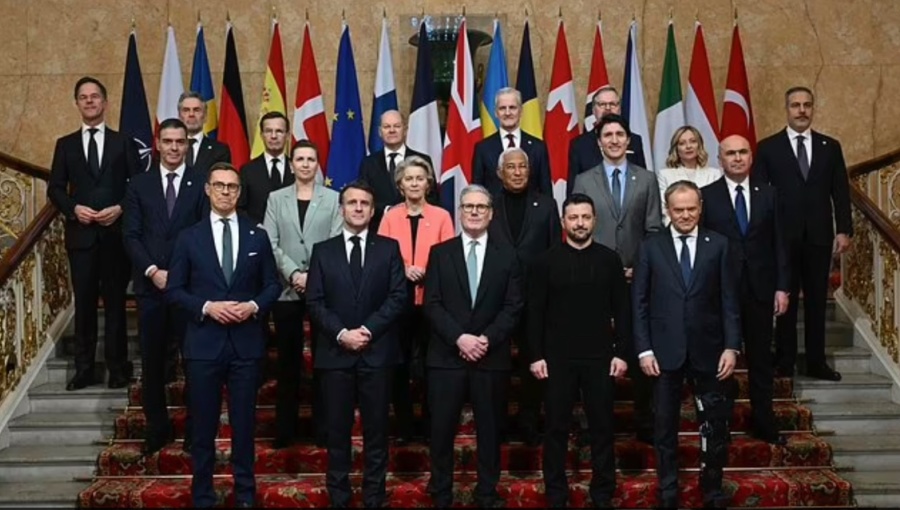
Zelenskiy proposes a new European version of NATO

Zelenskiy proposes a new European version of Nato that includes
As NATO weakens, Ukrainian President Volodymyr Zelenskiy has proposed the creation of a new European security structure that would include Ukraine. / bne IntelliNewsFacebook
By Ben Aris in Berlin April 10, 2026

Ukrainian President Volodymyr Zelenskiy has proposed the creation of a new European-centred security bloc that would include Ukraine, the EU, the UK, Turkey and Norway, as concerns mount over the future of US support for Nato.

US President Donald Trump has threatened to take the US out of Nato twice in the last month, after he called on Nato allies to join his armada in the Gulf to open the Strait of Hormuz by force and was rebuffed. As IntelliNews reported, that has brought Nato to the brink of breaking up. Trump claims that he has the authority to nix US’ membership in the alliance, but under US law only Congress can vote to exit the treaty.

Speaking amid reports of a potential US withdrawal from the alliance, Zelenskiy said Europe needed to take greater responsibility for its own defence. He suggested that a broader coalition, anchored by Ukraine’s military capabilities, could provide a credible deterrent against Russia.

“Without Ukraine and Turkey, Europe will not have an army comparable to the Russian one. With Ukraine, Turkey, Norway, and Britain, you will control security at sea – and not just one,” Zelenskiy said. He added that he remained confident Ukraine would ultimately join the EU.

Since taking office, Trump has aggressively pushed for European Nato allies to increase their spending from 2% of GDP mandated by the Welsh Nato summit in 2015 to 5% by 2035 agreed at the Nato summit in the Hague last year. This year all Nato members reached the 2% of GDP spending level for the first time with Poland spending the most, 4.3% of GDP, as it attempts to build the largest conventional army in Europe.

Despite the pledges, the US has withdrawn from supplying Ukraine with weapons directly under the Trump administration and Europe has been unable to offset the end of US weapons deliveries to Ukraine which fell in the last year. The US now provides Ukraine with weapons under the Prioritised Ukraine Requirements List (PURL) programme, where Europe pays for them.

The proposal for a new Nato comes as Kyiv seeks strong security guarantees as part of the ongoing ceasefire talks with Russia. The White House has offered a US security deal, but Trump made it explicit this month, the deal won’t go through until Bankova gives up the remaining parts of the Donetsk region in the Donbas that the Armed Forces of Ukraine (AFU) still control. That is a red line for Zelenskiy, who continues to refuse until not only the US deal is signed, but also ratified by Congress, giving it the status of an international treaty the president can’t undo.

Ukrainians have become more ambivalent towards membership in the alliance, torn between the need for security assurances and lingering scepticism about the bloc’s effectiveness. According to a recent poll, 68.9% of Ukrainians support joining Nato, but only 54.7% say they trust the alliance, while 41.5% express distrust. Support for the idea of reacquiring nuclear weapons has also begun to rise, as another way to prevent Russia’s re-invasion in the future.

Survey findings suggest that perceptions of Nato are closely tied to its tangible actions during the war. Some 18.5% of respondents said their level of trust depended primarily on the practical assistance provided by the alliance. Other significant factors included protection for Ukraine, cited by 13.3%, and the provision of security guarantees, identified by 11.8%.

At the same time, dissatisfaction with Nato’s conduct during the conflict remains a key driver of scepticism. As IntelliNews reported, the strategy from the start has been “some, but not enough” supplies to ensure Ukraine doesn’t lose the war, but not enough so it can actually win. That formula has perpetuated the war and ensures the maximum casualties. It also means that the Western allies have withheld supplies of their most powerful weapons, long-range missiles like Germany’s Taurus in particular. Many Ukrainians view the alliance as having acted too slowly and indecisively, and as failing to do enough to counter Russian aggression.

Zelenskiy has long lobbied for Nato membership, but has been repeatedly rebuffed, most notably at the Nato summit in Vilnius in July 2023. He also put Nato membership at the top of his “victory plan” list in December 2024 to the outgoing Biden administration, but was ignored again.

As part of the 27-point peace plan (27PPP) thrashed out at the  Moscow meeting on December 3 last year between Russian President Vladimir Putin and the US envoys, it was proposed that Ukraine join the EU in 2027 as a compromise. The EU founding treaty also contains a collective security clause, Article 42/7, that requires all members to come to the military assistance of any member that is attacked. However, most EU members have rejected the idea of an accelerated membership of Ukraine in the EU.

Zelenskiy’s remarks highlight a growing debate in Europe over the continent’s long-term security architecture and the extent to which it can rely on transatlantic support


Mirror and mismatch: China and the global politics of the far-right


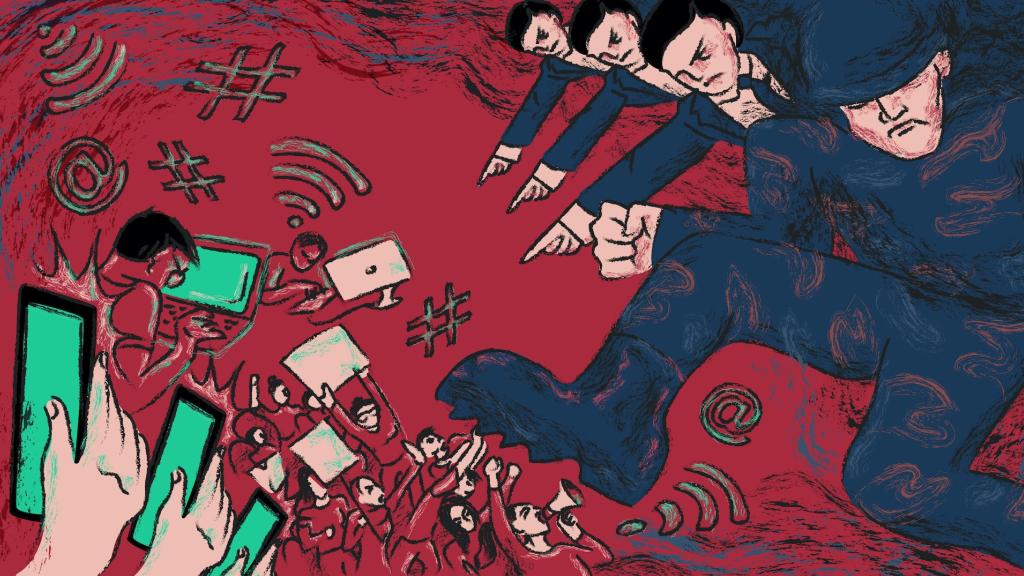
China and the far right TNI

First published at Transnational Institute.

The far-right label is not easily applied in China, but nevertheless there is a rising tide of xenophobia, militaristic nationalism, racism, anti-feminism, and social conservatism in Chinese online discourse and sometimes within the state. The global fight against fascism requires movements worldwide to connect with grassroots activists within China and among the diaspora pushing for liberatory futures.

Is there a far right in China? What are its characteristics? How does it coincide with or differ from the far right elsewhere?

It can be tricky to talk about ‘left’ and ‘right’ as ideological labels in China because of the political and moral baggage associated with them. As the ruling party is nominally ‘communist’ and has historically referred to dissidents as ‘rightists’ (youpai 右派), the public tends to use ‘left’ and ‘right’ as a shorthand for describing attitudes towards the regime: ‘left’ as supporting the establishment and ‘right’ as being against it, such as the liberal intellectuals (ziyoupai 自由派) advocating constitutionalism and liberal democracy.

Members of the Chinese intelligentsia and the wider online public, however, increasingly recognise that both pro-regime and anti-regime camps are themselves divided into left and right orientations. The debate among intellectuals about Trump and Trumpism, broadly described as ziyoupai, in particular revealed the schism between left-leaning and right-leaning liberals. This has led some observers to identify a far-right (jiyou 极右) current within Chinese dissidence, characterised by racism, libertarianism and the rejection of progressive social movements.1

Academic discussions usually describe xenophobia, militaristic nationalism, Islamophobia, racism, anti-feminism, and social conservatism as right-wing. However, given the baggage of ‘left’ and ‘right’ in Chinese political culture, supporters of the regime rarely consider themselves to be ‘right-wing’, even if their views are overtly racist, misogynistic, chauvinist, and xenophobic. Anti-Americanism is typically considered to be on the ‘left’ given the anti-imperialist association. For example, known for his hawkish stance towards the US and Japan, Ai Yuejie, formerly a professor of military thought, is revered among some online communities self-identifying as ‘far left’ (jizuo 极左) or ‘Maoist left (maozuo 毛左). One of his best-known quotes, which his fans cite as a motto, encapsulates the principle of ‘might makes right’: ‘Dignity lies only at the tip of the sword; truth exists only within the range of artillery’. This means that those who are labelled as ‘far left’ in popular culture may in fact espouse militaristic, ultranationalist, and authoritarian ideologies more commonly associated with the right.

Interestingly, while conservative Chinese nationalists are unlikely to self-identify as right-wing, many are now comfortable with describing themselves as ‘conservative’. In other words, ‘progressive’ and ‘conservative’ are generally used in line with international conventions.

So, after this lengthy preface, yes, there are far-right discourses and ideological currents in China, both among nationalists and dissidents, even though supporters of the regime may consider themselves to be leftists. Like the far right elsewhere, these coalesce around racial nationalism and the backlash against social-justice movements. For conservative nationalists, feminism, LGBTQ movements, labour movements, and other forms of human rights activism are also de-legitimatised as instruments of ‘Western imperialism’, exemplifying the appropriation of the anti-imperialist language. This is not limited to China, but also seen in other countries in the Global South, and indeed in the Global North as well.2 In my forthcoming book, I highlight the transversal convergence across not only conventional geopolitical, but also ideological, boundaries in the post-liberal conjuncture, where we often see ideological cross-fertilisation in any number of ways.3

Reactionary politics everywhere do not have a coherent agenda. They may be rejecting similar things (whether immigrants or ‘wokeism’) but with very different proposals. Compared to the traditionalists or libertarians who have a stronger influence in the US, Chinese conservative and authoritarian techno-nationalist discourse is less concerned with safeguarding ‘traditional values’ than with upholding techno-scientific reason against the chaos and moral decay attributed to ‘postmodernism’, while remaining favourable towards globalisation and state capitalism. If the Silicon Valley techno-libertarianism is about ‘the government should do nothing to hinder technological progress’,4 then for the Chinese techno-authoritarians, the government should do everything to pursue and guide technological progress. They share a common aversion to democratic processes and progressive movements, along with various forms of racism and misogyny. However, both official and popular nationalisms in China are rooted in postcolonial developmentalism, where political sovereignty is most important, and the ethics of cultivating a neoliberal and entrepreneurial self is tied to the project of national development.

How about the Chinese state? And how is this influenced by what’s happening elsewhere in the world?

This is another reason for why it is difficult to talk about China in discussions of the far right. The Chinese state presents itself as anti-imperialist and, of course, socialist. The fact that there are no elections and no political movements allowed outside the official apparatus also contributes to China’s marginalisation in far-right studies, which tend to prioritise electoral politics. In a wonderful article on the global politics of the far right, Anievas and Saull talk about a set of ‘common enabling conditions’ that ‘laterally connect Modi’s India and Bolsonaro’s Brazil with the “UKIPisation” of Britain and ‘Trumpification’ of America insofar as the neoliberal-driven de-industrialisation of the “advanced” capitalist powers was internationally entwined with the large-scale processes of “accumulation by dispossession” most dramatically experienced by such “late” state-led industrialisers like the BRIC states and, most notably, China’.5 The article and the special issue it introduces, however, engage little with China itself beyond how its portrayal as a threat enable far-right politics in the US. Unlike Modi-ism or Erdoğan-ism, the one-party system and the socialist state probably make the usual frameworks and languages of analysis inadequate or a poor fit when it comes to China's relationship with the global politics of the far right.

We can indeed situate Xiism within broader contestations of the ‘liberal international order’ from other emerging powers such as India and Türkiye.6 Rather than being an external challenger, China has been integral to both the relatively stable hegemony of global neoliberalism in the 1990s and 2000s, and to the intensification of the post-liberal contestations we now witness. This represents a partial and selective rejection of some aspects of the liberal international order, such as the normative hierarchy that tends to stigmatise or impose ‘symbolic disempowerment’ on nations or subjects considered illiberal,7 which co-exists with embracing other aspects, such as globalisation, multilateralism, and the United Nations (UN) system. In contrast to the anti-globalism of the Western far right, Kumral notes that for emerging powers, neoliberal globalisation continues to be seen as ‘opportunities for upward mobility for national economies in international stratification’.8 She argues that Modi and Erdoğan synthesise neoliberalism with developmentalism, offering ‘selective redistributionist policies that target the poorest sections’, providing the rising middle class with a ‘master development narrative of a rising Turkey/India in a period of global hegemonic transformation’ and a re-imagining of past empires.9 Xiism runs parallel to these projects in many aspects, being embedded in the ‘common enabling conditions’ mentioned earlier, including the shifting economic power relations and capitalism’s ‘spatial fix’ of manufacturing jobs, which has contributed to different attitudes towards globalisation in the North and the South. As Eli Friedman puts it, if the social ‘dissolution wrought by neoliberal capitalism has revitalized fascism in the West, it has been similarly important in the rise of ethnonationalist dictatorship in China’.10

Intersecting with these economic processes is postcolonial identity politics, which often takes the form of civilisational discourses that assert one’s identity and cultural particularities against ‘Western hegemony’ or ‘cultural imperialism’. This is not particularly new. For example, the Guomindang’s (the Nationalist Party) conservative revolution in the 1930s was doing very much the same: justifying authoritarianism and social conservatism through claims about cultural authenticity and resistance to Western imperialism.11 However, in contemporary China and shaped by the post-Cold War international order, we also see arguments about security in addition to those about authenticity. Certain values or movements are framed both as ‘not ours’ (not Chinese) and as instruments of regime-change attempts threatening national security. Among the cultural elites, conservative intellectuals in China have been influenced by figures such as Samuel Huntington and Carl Schmitt in their articulation of China as a ‘civilizational state’. Drawing heavily on Huntington and in an explicitly gendered language, Gan Yang, a prominent conservative philosopher based at Tsinghua University, characterised the earlier pursuit by Türkiye and Russia of ‘Westernised’ modernisation as ‘self-castration’, whereby they lose their own racial-civilisational identity.12 Jiang Shigong, another state-adjacent intellectual and a Schmittian legal theorist, argues that the prevailing discourse of ‘integrating with the world’ in the 1990s and 2000s means that ‘we’ have lost ‘our civilisational impulse and political will to defend ourselves’.13 Ironically, again, these prominent intellectuals of conservative civilisationism, such as Gan Yang, Jiang Shigong, and Zhang Weiwei, are known as the ‘new left’ despite their affinities with European and US conservative thought.

As I have recently argued,14 civilisational discourse becomes a vehicle for claiming difference internationally and suppressing difference domestically. At the international level, Xi’s ‘Global Civilisation Initiative’ advocates diversity and warns against ‘imposing one’s values and models onto others’. Domestically, assimilationist ethnic policy is accompanied with the re-centring of zhonghua minzu (Chinese nation or race-nation)15 and zhonghua wenming (Chinese civilisation) as key concepts in the country’s political discourse. Under the slogan of ‘forging a strong communal consciousness of the Chinese nation’, assimilationist policies seek to erase and securitise difference, while turning a depolitcised, exoticised version of ethnic difference into resources for tourism and consumerism. These policies scale back a range of preferential policies that ethnic minorities used to enjoy, infringe on cultural and religious rights, and remove minority languages as medium of instruction in formal education.16 At the same time, we see abundant scenes of minority ‘singing and dancing’ in domestic and external propaganda as a display of ‘diversity’ and ‘unity’, which reduces living religious and cultural traditions to exoticised patriotic performances.17 With the rise of ecotourism, as Guldana Salimjan argues, the rebranding of Indigenous lands as Han ecotourist destinations to appreciate ‘untainted nature’ is marked by land dispossession and labour injustice.18

What about in terms of social media and internet discourse? Do we see similar threads of xenophobia, misogyny, and reactionary social violence in Chinese social media that we see in other parts of the world?

Absolutely. My previous work has focused extensively on the transnational circulation of far-right narratives and tropes in the digital sphere.19 A lot of this is misinformation and conspiracy theories about demographic and cultural crises of ‘the West’. So, when internet users in China deploy the same imaginaries about ‘Western civilisation’ being undermined by ‘non-white’ immigrants and ‘woke’ ideologies as Western far-right actors, it’s about the decline of ‘the other’, told as a cautionary tale with a sense of geopolitical Schadenfreude. The cautionary tale serves to bolster ethnonationalist anxieties and delegitimise domestic social movements in a fashion of “this must never happen in China’. We have seen the rise of grassroots Islamophobic influencers or muhei (穆黑), who mobilise both globally, circulating scripts of Islamophobia, and more locally rooted patterns of prejudice.20

Many of the anti-immigration narratives are about portraying crises of ‘the other’, although they sometimes extend to China’s own immigration policy (statistically China has one of the lowest shares of foreign-born residents worldwide). The online backlash against the new regulations on foreigners’ permanent residency in 2020 provides one such example. Apart from ‘racist coverage of African immigrant communities in Guangzhou’,21 the backlash also features themes that reflect certain locally specific grammars of grievance. This includes the longstanding perception that foreigners get special preferential treatment, and the discontent with unequal status among Chinese citizens themselves due to the hukou system — which produces an unequal citizenship regime that disadvantages rural migrant workers, who are often excluded from urban social citizenship and welfare provisions or included but on a differential basis.22 While this institution is unique to China, it is commonly observed in the affective politics of right-wing populism that grievances about inequalities or marginalisation are weaponised and channelled towards hatred against the ethnocultural other. Han supremacist narratives online also frequently frame ethnic minorities in China as undeservingly privileged and Han males as being victimised.23

In the more recent backlash against China’s newly introduced K-visa, which is intended to attract talent in the fields of science, technology, engineering and mathematics (STEM), we also see that blatant racism is entangled with socioeconomic anxieties. Ultranationalist influencers are spreading a wave of misinformation that claims that Indians were already ‘studying the visa’ and would come to China in large numbers, taking an already shrinking number of graduate jobs. These online posts reproduce racist stereotypes about Indians having ‘fake diplomas’ or ‘lack of hygiene’, while also tapping into widespread anxieties about economic slowdown and the lack of job opportunities. On the previous point about ideological fusion, some defenders of the Chinese regime on X (formerly Twitter) use an apparently socialist rhetoric to justify anti-immigration ethnonationalism, claiming that China is a socialist ‘ethno-state’, and that multiculturalism and immigration are the products of neoliberalism.24

Feminism has emerged as one of the most powerful mobilising issues in China’s digital sphere. Like reactionary movements elsewhere, the rise of misogyny and anti-feminism is a reaction to the growing influence of feminism and gender-related debates in public discourse. Some online communities known as the Chinese manosphere, and the techno-nationalist discourse I discussed earlier, have a strong misogynist undertone. Furthermore, anti-feminism is often geopoliticised. Feminists are stigmatised by anti-feminist nationalists as agents of ‘foreign hostile forces’ or as ‘connected to Islamists’,25 exemplifying the kind of right-wing intersectionality26 that fuses different and often contradictory talking points (Islamophobia and anti-feminism) that we also see elsewhere.

An interesting political slur that has gained currency among nationalist influencers in recent years is zhiren 殖人, supposedly meaning a colonial or ‘mentally colonised’ person. Critics of the regime in general, but feminists and queer activists in particular, are often labelled zhiren. It is of course a longstanding and widespread phenomenon to discredit social groups who hold dissenting political views by calling them traitors, collaborators, or otherwise ‘anti-national’. However, I read the explicit invocation of colonial here as symptomatic of a newly emerging and distinctively post-liberal sensibility (different from, say, anti-imperialism in the Maoist era) as the moral authority of the liberal order erodes. Rather than (or in addition to) denouncing perceived external hierarchies, the accusation of coloniality is turned inwards to target the internal other, whose identification with progressive values is recast as colonial subservience and national betrayal.27

How does Chinese popular discourse and the official state discourse respond to the demonisation of China by some elements of the right in the West?

Demonisation feeds into victimhood nationalism, which is useful in distracting attention from debates on concrete issues to moralised narratives about injury and humiliation.28 However, popular or official nationalism does not consider demonisation to be only from elements of the right. Sinophobia from the right tends to more blatant forms of racism, as seen in Trump’s rhetoric about ‘kung flu’ and ‘China virus’ during the COVID-19 pandemic. This of course invited strong reactions and led to the a ‘narrative battle’ of blame games with US and China accusing each other of causing the virus.29 But nationalists equally resent ‘demonisation’ from the centre and progressive liberals, which is seen as condescending and rooted in a sense of moral superiority. Some might regard this as more despicable than animosity based on straightforward racism or strategic calculation. Indeed, conservative nationalists largely favoured Trump over the Democratic candidate in both the 2016 and 2024 elections.30 In a global survey conducted by the European Council on Foreign Relations after Trump’s re-election but before he assumed office, more Chinese respondents saw his return a ‘good thing’ for US citizens, for the world and for China than those who saw it a ‘bad thing’ or were neutral.31

For conservative nationalists, apart from ideological affinities regarding gender and ethnicity, it is believed that since both US parties are anti-China, Trump is at least less interested in ‘preaching’ liberal values abroad or funding the ‘zhiren’ in China (a talking point used by some nationalist influencers during the 2024 US election). Trump’s newly released National Security Strategy in fact echoes Chinese techno-nationalist views in this respect: it criticises the liberal universalist agenda of promoting democracy and no longer approaches the US–China rivalry through the framework of democracy versus authoritarianism, but as a matter of strategic and geo-economic calculus.32 The competition might be ruthless, yet they share the same post-liberal political sensibilities.

Samuel Huntington, a US conservative, and John Mearsheimer, an International Relations (IR) neo-realist, have both been highly influential in shaping Chinese international thought in both intellectual and popular spaces. Convinced that all US actors are ‘anti-China’ anyway, Chinese nationalists consider strategic competition (realist IR) or ‘clashes of civilization’ (Huntington) to be more reasonable and honest grounds for hostility than the neoconservative or liberal internationalists’ moralised interpretation of world order. Leaving aside the factor of great power rivalry, far-right European leaders are well-regarded in popular and official discourse. Victor Orbán is a clear example, and Georgia Meloni has also been given favourable coverage in both state and social media.

Is there resistance to these trends of reactionary nationalism? What form does it take?

Yes. Resistance comes from a range of different positions: progressive liberals, feminists, queer activists, anticolonial internationalists, dissident Marxists, or dissident Maoists who speak an older form of Maoist language.33 As I mentioned before, digital feminism has been thriving within China’s online public sphere even though the space for offline mobilisation has diminished. Feminist discourses in China are extremely diverse, including currents that are, for example, neoliberal, trans-exclusive, or classist. There is no monolithic picture. However, feminist voices form one of the most distinctive digital counter-publics that offer an alternative to state-sanctioned or grassroots narratives of masculinist nationalism. One of the surprisingly lively spaces is podcasting. Some of the most successful podcasts are led by women who are critical and culturally progressive. Their popularity among younger and well-educated urban women have also brought commercial sponsorship and partnerships.

Despite stringent censorship, the digital ecosystem remains decentralised, allowing the existence of anonymous, informal, and non-institutionalised forms of publication. Yawen Li has, for example, detailed some of the initiatives of anticolonial internationalists in China, who run publications or WeChat accounts focused on colonialism, patriarchy, capitalist exploitation, and resistance across the world.34 From Ukraine to Palestine, Chinese internationalists refuse to align their expression of solidarity with the geopolitical interests of either China or ‘the West’. Jing Wang has written about how Chinese Muslims strategically voice dissent online in the shadow of both censorship and anti-Muslim sentiments.35 For many ordinary internet users, non-engagement with such racist, misogynist, and ultranationalist messaging is also a form of resistance.

There is also the incredible growth of diaspora Chinese communities engaged in feminist, anti-racist, decolonial, and anti-authoritarian activism, especially after the ‘whitepaper movement’ of late 2022.36 These growing spaces of transnational activism draw on feminist ethics of care and solidarity, challenging and critiquing patriarchal power structures and the dualistic geopolitical imaginary of ‘authoritarian China’ versus the ‘free world’ that shaped earlier forms of pro-democratic advocacy among the diaspora.37 In an ongoing project on digital counter-publics and transnational Chinese feminism, my collaborators and I have been working with queer feminist Chinese organisers across Europe, Japan, and North America to understand how they theorise and practise transnational solidarity beyond binaries and rooted in the interconnections of different structures of domination. Chinese diaspora activists have also done extraordinary work in mobilising for Palestine’s liberation and against genocide through collectives such as the Palestine Solidarity Action Network (PSAN). Their work provides a transnational analysis of connections between settler-colonial violence in Palestine and Xinjiang, standing against US imperialism without glossing over Chinese authoritarianism and colonialism.

How can we build global alliances against the far right that better integrate Chinese perspectives?

I think it’s essential to build global alliances that better integrate Chinese perspectives. The starting point would be listening to and building alliances with grassroots organisations from within China and in the diaspora. As I have said, there are many creative forms of resistance to authoritarian and conservative nationalism within China and among the diaspora. The Western left space is not particularly used to hearing voices that are critical of both Western imperialism and non-Western authoritarianism, as well as drawing linkages between them. Sometimes, the concern about racism and not wanting to encourage imperialist foreign policies leads to an unwillingness to engage with criticisms of the Chinese state, including those from Chinese nationals and from minoritised groups in China.

Yao Lin conceptualises this as what he calls ‘interregimatic missolidarisation’. By this he means an ostensibly supportive relationship that does not really correspond to struggles against injustice or oppression within a different regime. This is not only due to cultural or linguistic distance, but also because of the ways in which different structures give rise to different forms of injustice, creating both experiential and discursive barriers to transnational solidarity.38 Our conversations with diaspora Chinese organisers engaged in anti-racist, queer, feminist, and decolonial work reflect this. Their lived experiences are often exoticised or dismissed by ‘mainstream’ civil society, and they find it easier to connect with or be understood by other immigrant groups.

This also brings to mind Shadi Mokhatari’s critique of the ‘uncritical anti-imperialist solidarities’ and the victimhood politics of the ‘anti-imperialist-branding states’. Here again, allegedly anti-imperialist actors mis-solidarise with the oppressor, conflate the state with citizens at large, as well as essentialist notions of culture, and disregard the agency of the oppressed.39 A particular strand of decolonial discourse has been characterised by this kind of misguided anti-imperialism and cultural essentialism. In The Politics of Decolonial Investigations, for example, Walter Mignolo argues that countries like China and Russia are leading the process of ‘de-Westernization’ and ‘civilizational resurgence’ against ‘neoliberal globalism.40 This vision of the so-called ‘multipolar civilizational order’ bears a disturbing resemblance to that of the European far right, where racial-civilisational categories are defined in terms of ontological and epistemological difference and ‘indigenous’ civilisational identity is placed in opposition to the ‘globalist’ order.41

For me, then, solidarity requires calling out this misplaced equation of geopolitical opposition with decolonisation or emancipation. It requires listening to and understanding the lived experiences of activists from across the Global South who are organising against authoritarianism and imperialism. Historically speaking, and in the aftermath of 1989, overseas Chinese pro-democracy politics tended to be aligned with the right in Europe and the US. But this is changing. Younger diaspora groups are now looking for new languages and imaginaries, creating decentralised spaces of resistance and solidarity. They are already building transnational alliances against the far right in many ways. What remains is for established left-wing movements to recognise, engage with, and support these emergent transnational practices.

  • 1

    Wang, D 王大卫. (2023) ‘当代中国极右、中右、中左、极左的相互关系 [The relationship between the far right, the centre right, the centre left, and the far left in contemporary China]’. 中国民主季刊 China Journal of Democracyhttps://chinademocrats.org/?p=945

  • 2

    Zhang, C. (2023) ‘Postcolonial nationalism and the global right’. Geoforum, 144: 103824; Altinors, G., Chacko, M. D., Davidson, M., Kazharski, A, Valluvan, S. and Zhang, C. (forthcoming) ‘The uses and abuses of the anticolonial in global reactionary politics.’ International Political Sociology. 

  • 3

    Zhang, C. (2026, forthcoming) Easting the West: Theorizing the postliberal conjuncture from China. Oxford: Oxford University Press. 

  • 4

    Bronzwaer, S. (2025) ‘Het Westen Is Superieur En Moet Altijd Winnen, Vindt Palantir. Zo Kijkt Dit Invloedrijke Techbedrijf Naar de Wereld.’ NRC Handelsblad, 10 October. https://www.nrc.nl/nieuws/2025/10/10/het-westen-is-superieur-en-moet-altijd-winnen-vindt-palantir-zo-kijkt-dit-invloedrijke-techbedrijf-naar-de-wereld-a4908882

  • 5

    Anievas, A. and Saull, R. (2023) ‘The far-right in world politics/world politics in the far-right’. Globalizations, 20(5): 715–30, p. 721. 

  • 6

    Borrowed from Møller Mulvad, Xiism can be understood as an emergent and contested hegemonic project reflecting the current approach of China’s party-based power bloc to global order and domestic politics. See Mulvad, A. (2019) ‘Xiism as a hegemonic project in the making: Sino-Communist ideology and the political economy of China’s rRise.’. Review of International Studies, 45(3): 449–70. Broadly speaking, this includes further concentration of power, a shift from integrating into the existing capitalist world system to actively reshaping it, and a re-assertation of ethno-civiliszationism that I will turn to below. 

  • 7

    Bettiza, G., Bolton, D., & Lewis, D. (2023) ‘Civilizationism and the ideological contestation of the liberal international order.’ International Studies Review25(2), viad006.

  • 8

    Kumral, S. (2023) ‘Globalization, crisis and right-wing populists in the global south: The cases of India and Turkey’. Globalizations, 20(5):752–781, p. 754. 

  • 9

    Ibid., p. 774.

  • 10

    Friedman, E. (2024) ‘The cost of China’s prosperity’, Boston Review, 24 September. https://www.bostonreview.net/articles/the-cost-of-chinas-prosperity/

  • 11

    Tsui, B. (2019) China’s Conservative Revolution. Cambridge: Cambridge University Press.

  • 12

    Gan, Y. 甘阳 (2008) ‘如何避免‘自宫式’的现代化 [How to avoid self-castration style modernisation]’, 9 June. https://www.aisixiang.com/data/19119.html

  • 13

    Jiang, S. 强世功 (2022) 中國香港:文明視野中的新邊疆 [China’s Hong Kong: The new frontier between civilizations]. Hong Kong: Joint Publishing, p. 328.

  • 14

    Zhang, C. (2025) ‘(Un)Civilizing the Paris Olympics opening ceremony: Competing narratives of civilization, “coloniality,” and transversal alignment’. Global Studies Quarterly, 5(3). https://doi.org/10.1093/isagsq/ksaf098

  • 15

    Leibold, J. and Chen, J. (2025) ‘Han-centrism and multiethnic nation-building in China and Taiwan: A comparative study since 1911’. Nationalities Papers, 53(5): 983–1000.

  • 16

    Roche, G. and Leibold, J. (2020) “‘China’s second-generation ethnic policies are already here’.” Made in China Journal, 5(2): 31–35.

  • 17

    Anonymous. (2021). ‘You shall sing and dance: contested ‘safeguarding’of Uyghur Intangible Cultural Heritage’. Asian Ethnicity22(1), 121-139. 

  • 18

    Salimjan, G. (2023) ‘Ecotourism as racial capitalism: Ecological civilisation in settler-colonial Xinjiang’. Inner Asia, 25(1): 91–110. 

  • 19

    Zhang, C. (2020) ‘Right-wing populism with Chinese characteristics? Identity, otherness and global imaginaries in debating world politics online’. European Journal of International Relations, 26(1): 88–115; Zhang, C. (2024) ‘Race, gender, and occidentalism in global reactionary discourses’. Review of International Studies, 1–23. https://doi.org/10.1017/s0260210524000299

  • 20

    Stroup, D. R. (2024) ‘Loathsome Hui parasites: Islamophobia, ethnic chauvinism, and popular responses to the 2020 Wuhan coronavirus outbreak’. Ethnic and Racial Studies, 47(5): 1057–1084.

  • 21

    Speelman, T. (2023) ‘How China’s online nationalists constrain policymaking – the case of foreigners’ permanent residency reform’. Journal of Contemporary China, 32(144): 879–896. 

  • 22

    Zhang, C. (2018) ‘Governing neoliberal authoritarian citizenship: Theorizing Hukou and the changing mobility regime in China’. Citizenship Studies, 22(8): 855–881.

  • 23

    Zhang, C and Zheng, M. (forthcoming) ‘The tyranny of meritocratic nationalism: unpacking the online backlash against a Tibetan cyberstar’. Nationalities Papers

  • 24

    E.g. https://x.com/zhao_dashuai/status/1982779314463527318

  • 25

    Huang, Q. (2023) ‘Anti-Feminism: four strategies for the demonisation and depoliticisation of feminism on Chinese social media’. Feminist Media Studies, 23(7): 3583–3598.

  • 26

    Ravecca, P., Schenck, M., Fonseca, B., & Forteza, D. (2023) ‘What are they doingright? Tweeting right-wing intersectionality in Latin America’. Globalizations20(1), 38–59.

  • 27

    Zhang, ‘(Un)Civilizing the Paris Olympics’.

  • 28

    Zhang, C. (2022) ‘Contested disaster nationalism in the digital age: Emotional registers and geopolitical imaginaries in COVID-19 narratives on Chinese social media’. Review of International Studies, 48(2): 219–242.

  • 29

    Jaworsky, B. N., & Qiaoan, R. (2021) ‘The Politics of Blaming: the Narrative Battle between China and the US over COVID-19’. Journal of Chinese Political Science26(2): 295–315.

  • 30

    Hernández, J. C., & Zhao, I. (2017) ‘‘Uncle Trump’ Finds Fans in China’. The New York Times, 9 November. https://www.nytimes.com/2017/11/09/world/asia/trump-china-fans.html(external link); Qian, Z. K., & Pun, N. (2025) ‘Mirror China: Chinese nationalism, American populism and their ideological transference’. Inter-Asia Cultural Studies26(3): 439-455.

  • 31

    Ash, T. G., Krastev, I., & Leonard, M. (2025) ‘Alone in a Trumpian world: The EU and global public opinion after the US elections’. European Council on Foreign Relations (ECFR), 14 January. https://ecfr.eu/publication/alone-in-a-trumpian-world-the-eu-and-global-public-opinion-after-the-us-elections/

  • 32

    National Security Strategy of the United States of America. November 2025. https://www.whitehouse.gov/wp-content/uploads/2025/12/2025-National-Security-Strategy.pdf

  • 33

    Self-identified Maoists or maozuo may be pro-regime or dissident. The pro-regime ones are sometimes labeled “royalist” (baohuangpai 保皇派). The aforementioned Ai Yuejin, for example, was adamant that he was a royalist. Dissident Maoists consider the CCP today to be revisionist, counterrevolutionary, and imperialist. The “royalists” have pushed back against the “China is imperialist” thesis (known as zhongdilun 中帝论) and sought to frame grassroots labour and feminist movements in China as an instrument of capitalist imperialism. 

  • 34

    Li, Y. (2024) ‘Spectres of Anticolonial Internationalism in Contemporary China’. Made in China Journal9(1): 60–67.

  • 35

    Wang, J. (2024) ‘Networked Islamic counterpublic in China: Digital media and Chinese Muslims during global pandemic of COVID-19’. new media & society26(6): 3068-3087.

  • 36

    The ‘white paper movement’ refers to a wave of protests in late 2022, in China and across the Chinese diaspora, in which participants held up blank sheets of paper to call for an end to stringent zero-COVID policies. Some of these protests also voiced broader demands for freedom and democratic rights.

  • 37

    Li, P. (2021) ‘From the “Chinese national character” debates of yesterday to the anti-China foreign policy of today’. Made in China Journal6(3): 47–53.

  • 38

    Lin, Y. (2025) ‘Interregimatic solidarity and antiauthoritarian resilience’. International Feminist Journal of Politics, 27(4): 761-784. 

  • 39

    Mokhtari, S. (2025) ‘The Reverse Savages, Victims, Saviours metaphor of human rights’. Review of International Studies, 1-22.

  • 40

    Mignolo, W. D. (2021) The politics of decolonial investigations. Duke University Press.

  • 41

    Davidson, M. (2025) ‘On the concept of the pluriverse in Walter Mignolo and the European New Right’. Contemporary Political Theory24(3): 469–489.