Showing posts sorted by relevance for query AVIAN FLU. Sort by date Show all posts

Saturday, January 27, 2024

Avian flu is devastating farms in California’s ‘Egg Basket’ as outbreaks roil poultry industry


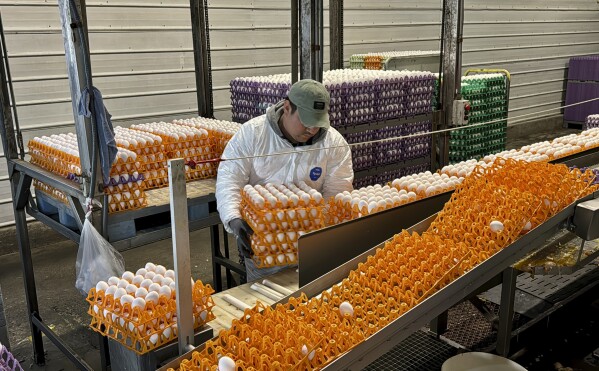
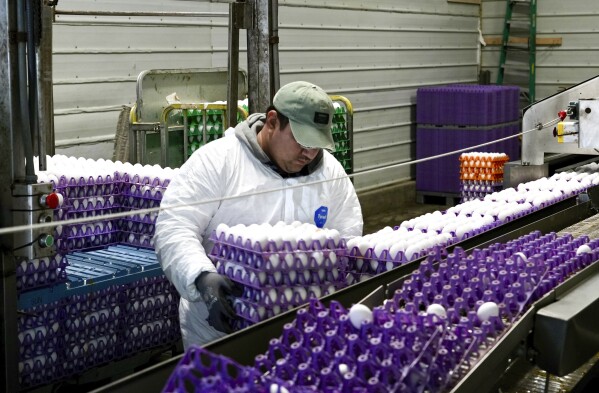
A worker moves crates of eggs at the Sunrise Farms processing plant in Petaluma, Calif., on Thursday, Jan. 11, 2024, which has seen an outbreak of avian flu in recent weeks. 

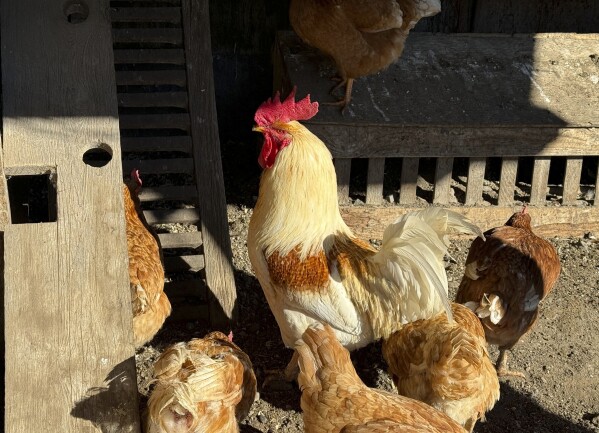
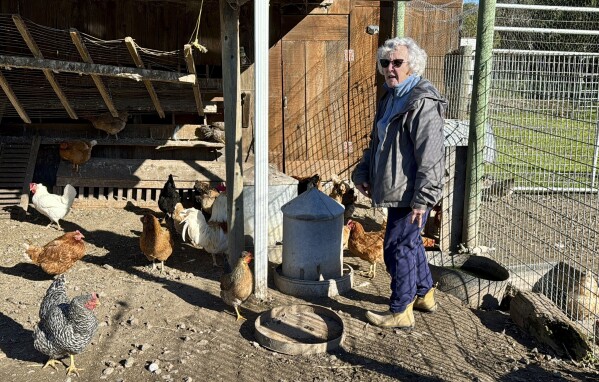
Ettamarie Peterson holds a chicken at her farm in Petaluma, Calif. on Thursday, Jan. 11, 2024. She’s concerned her flock of 50 hens could be infected with avian flu. Jan. 11, 2024. A year after the bird flu led to record egg prices and widespread shortages, the disease known as highly pathogenic avian influenza is wreaking havoc in California, which escaped the earlier wave of outbreaks that that devastated poultry farms in the Midwest. 

A worker moves crates of eggs at the Sunrise Farms processing plant in Petaluma, Calif., on Thursday, Jan. 11, 2024, which has seen an outbreak of avian flu in recent weeks. A year after the bird flu led to record egg prices and widespread shortages, the disease known as highly pathogenic avian influenza is wreaking havoc in California, which escaped the earlier wave of outbreaks that that devastated poultry farms in the Midwest. 


BY TERRY CHEA
 January 26, 2024Share

PETALUMA, Calif. (AP) — Last month, Mike Weber got the news every poultry farmer fears: His chickens tested positive for avian flu.

Following government rules, Weber’s company, Sunrise Farms, had to slaughter its entire flock of egg-laying hens — 550,000 birds — to prevent the disease from infecting other farms in Sonoma County north of San Francisco.

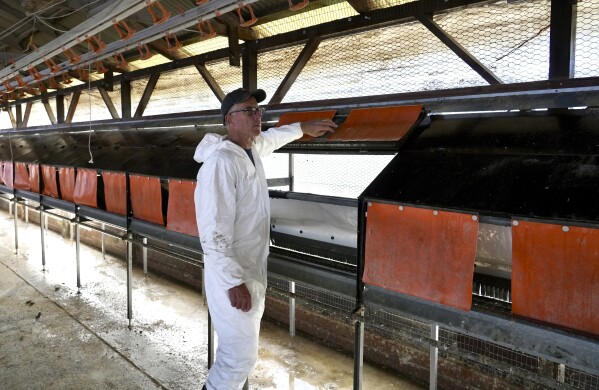
“It’s a trauma. We’re all going through grief as a result of it,” said Weber, standing in an empty hen house. “Petaluma is known as the Egg Basket of the World. It’s devastating to see that egg basket go up in flames.”

A year after the bird flu led to record egg prices and widespread shortages, the disease known as highly pathogenic avian influenza is wreaking havoc in California, which escaped the earlier wave of outbreaks that devastated poultry farms in the Midwest.

The highly contagious virus has ravaged Sonoma County, where officials have declared a state of emergency. During the past two months, nearly a dozen commercial farms have had to destroy more than 1 million birds to control the outbreak, dealing an economic blow to farmers, workers and their customers.

Merced County in Central California also has been hit hard, with outbreaks at several large commercial egg-producing farms in recent weeks.

Experts say bird flu is spread by ducks, geese and other migratory birds. The waterfowl can carry the virus without getting sick and easily spread it through their droppings to chicken and turkey farms and backyard flocks through droppings and nasal discharges.

California poultry farms are implementing strict biosecurity measures to curb the spread of the disease. State Veterinarian Annette Jones urged farmers to keep their flocks indoors until June, including organic chickens that are required to have outdoor access.

“We still have migration going for another couple of months. So we’ve got to be as vigilant as possible to protect our birds,” said Bill Mattos, president of the California Poultry Federation.

The loss of local hens led to a spike in egg prices in the San Francisco Bay Area over the holidays before supermarkets and restaurants found suppliers from outside the region.

While bird flu has been around for decades, the current outbreak of the virus that began in early 2022 has prompted officials to slaughter nearly 82 million birds, mostly egg-laying chickens, in 47 U.S. states, according to the U.S. Department of Agriculture. Whenever the disease is found the entire flock is slaughtered to help limit the spread of the virus.

The price of a dozen eggs more than doubled to $4.82 at its peak in January 2023. Egg prices returned to their normal range as egg producers built up their flocks and outbreaks were controlled. Turkey and chicken prices also spiked, partly due to the virus.

“I think this is an existential issue for the commercial poultry industry. The virus is on every continent, except for Australia at this point,” said Maurice Pitesky, a poultry expert at the University of California, Davis.

Climate change is increasing the risk of outbreaks as changing weather patterns disrupt the migratory patterns of wild birds, Pitesky said. For example, exceptional rainfall last year created new waterfowl habitat throughout California, including areas close to poultry farms.

In California, the outbreak has impacted more than 7 million chickens in about 40 commercial flocks and 24 backyard flocks, with most of the outbreaks occurring over the past two months on the North Coast and Central Valley, according to the USDA.

Industry officials are worried about the growing number of backyard chickens that could become infected and spread avian flu to commercial farms.

“We have wild birds that are are full of virus. And if you expose your birds to these wild birds, they might get infected and ill,” said Rodrigo Gallardo, a UC Davis researcher who studies avian influenza.

Gallardo advises the owners of backyard chickens to wear clean clothes and shoes to protect their flocks from getting infected. If an unusual number of chickens die, they should be tested for avian flu.

Ettamarie Peterson, a retired teacher in Petaluma, has a flock of about 50 chickens that produce eggs she sells from her backyard barn for 50 cents each.

“I’m very concerned because this avian flu is transmitted by wild birds, and there’s no way I can stop the wild birds from coming through and leaving the disease behind,” Peterson said. “If your flock has any cases of it, you have to destroy the whole flock.”

Sunrise Farms, which was started by Weber’s great-grandparents more than a century ago, was infected despite putting in place strict biosecurity measures to protect the flock.

“The virus got to the birds so bad and so quickly you walked in and the birds were just dead,” Weber said. “Heartbreaking doesn’t describe how you feel when you walk in and perfectly healthy young birds have been just laid out.”

After euthanizing more than half a million chickens at Sunrise Farms, Weber and his employees spent the Christmas holiday discarding the carcasses. Since then, they’ve been cleaning out and disinfecting the hen houses.

Weber hopes the farm will get approval from federal regulators to bring chicks back to the farm this spring. Then it would take another five months before the hens are mature enough to lay eggs.

He feels lucky that two farms his company co-owns have not been infected and are still producing eggs for his customers. But recovering from the outbreak won’t be easy.

“We have a long road ahead,” Weber said. “We’re going to make another run of it and try to keep this family of employees together because they’ve worked so hard to build this into the company that it is.”

PHOTOS: Avian flu is devastating farms in California’s ‘Egg Basket’ as outbreaks roil poultry industry


Aerial view of the Sunrise Farms processing plant in Petaluma, Calif. on Thursday, Jan. 11, 2024, which has seen an outbreak of avian flu in recent weeks. A year after the bird flu led to record egg prices and widespread shortages, the disease known as highly pathogenic avian influenza is wreaking havoc in California, which escaped the earlier wave of outbreaks that that devastated poultry farms in the Midwest.

Eggs are cleaned and disinfected at the Sunrise Farms processing plant in Petaluma, Calif., on Thursday, Jan. 11, 2024, which has seen an outbreak of avian flu in recent weeks. A year after the bird flu led to record egg prices and widespread shortages, the disease known as highly pathogenic avian influenza is wreaking havoc in California, which escaped the earlier wave of outbreaks that that devastated poultry farms in the Midwest. 

Chickens stand in a holding pen at Ettamarie Peterson’s farmin Petaluma, Calif. on Thursday, Jan. 11, 2024. There are concerns that the flock of 50 hens could be infected with avian flu. A year after the bird flu led to record egg prices and widespread shortages, the disease known as highly pathogenic avian influenza is wreaking havoc in California, which escaped the earlier wave of outbreaks that that devastated poultry farms in the Midwest.

Aerial view of Ettamarie Peterson’s farm, where she has a flock of about 50 chickens that produce eggs she sells. She’s concerned her flock could be infected with avian flu. Petaluma, Calif. on Thursday, Jan. 11, 2024. A year after the bird flu led to record egg prices and widespread shortages, the disease known as highly pathogenic avian influenza is wreaking havoc in California, which escaped the earlier wave of outbreaks that that devastated poultry farms in the Midwest. 

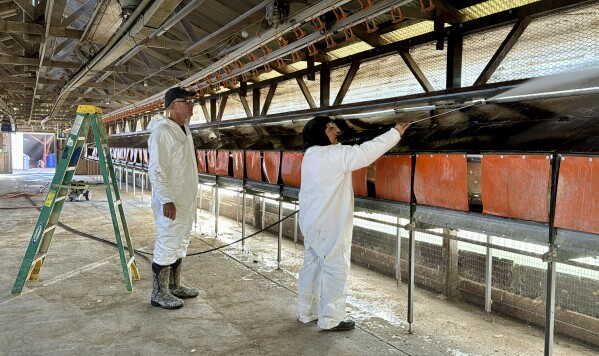
Mike Weber watches an employee clean a hen house at his egg farm in Petaluma, Calif. on Thursday, Jan. 11, 2024. His company Sunrise Farms had to euthanize 550,000 chickens after avian flu was detected among the flock. A year after the bird flu led to record egg prices and widespread shortages, the disease known as highly pathogenic avian influenza is wreaking havoc in California, which escaped the earlier wave of outbreaks that that devastated poultry farms in the Midwest.
A worker moves crates of eggs at the Sunrise Farms processing plant in Petaluma, Calif., on Thursday, Jan. 11, 2024, which has seen an outbreak of avian flu in recent weeks. A year after the bird flu led to record egg prices and widespread shortages, the disease known as highly pathogenic avian influenza is wreaking havoc in California, which escaped the earlier wave of outbreaks that that devastated poultry farms in the Midwest.
Mike Weber stands in an empty hen house at Sunrise Farms, which had to euthanize 550,000 chickens after avian flu was detected among the flock in Petaluma, Calif. Thursday, Jan. 11, 2024. A year after the bird flu led to record egg prices and widespread shortages, the disease known as highly pathogenic avian influenza is wreaking havoc in California, which escaped the earlier wave of outbreaks that that devastated poultry farms in the Midwest. 
Ettamarie Peterson stands in a holding pen with chickens at her farm in Petaluma, Calif. on Thursday, Jan. 11, 2024. She’s concerned her flock of 50 hens could be infected with avian flu. A year after the bird flu led to record egg prices and widespread shortages, the disease known as highly pathogenic avian influenza is wreaking havoc in California, which escaped the earlier wave of outbreaks that that devastated poultry farms in the Midwest. 
A worker moves crates of eggs at the Sunrise Farms processing plant in Petaluma, Calif. on Thursday, Jan. 11, 2024, which has seen an outbreak of avian flu in recent weeks. 
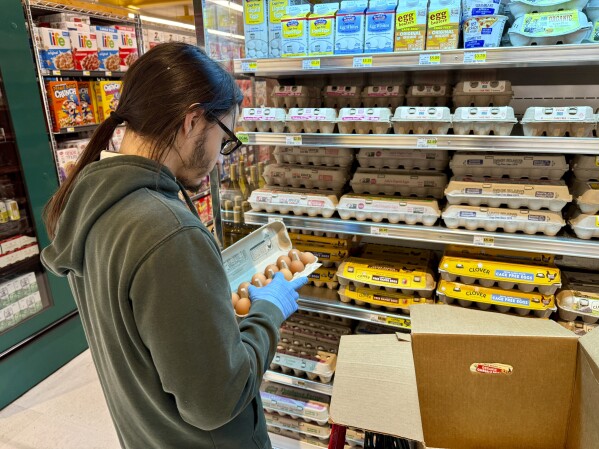
A grocery store employee stocks cartons of eggs for display at a Petaluma Market in Sonoma County, on Thursday, Jan. 11, 2024, where avian flu infections shut down a cluster of egg farms in recent months.

PHOTOS BY TERRY CHEA


Thursday, May 16, 2024

 State officials not planning to test wastewater in New Mexico for avian flu

IRRESPONSIBLE & LAZY

Danielle Prokop
Thu, May 16, 2024 

An aeration basin at the Southside Water Reclamation Plant in Albuquerque. A CDC contractor tested for the presence of COVID-19 at this and four other sewer systems in New Mexico. New Mexico health officials say there are no plans at this time to test for avian flu in wastewater.
 (Courtesy Albuquerque Bernalillo County Water Utility Authority)

Experts around the country have called on federal officials to use wastewater testing for the avian influenza strain H5N1, which has broken out in more than 33 dairies across eight states, including New Mexico.

While there are only two documented cases of viral crossover to humans documented in the U.S. since 2022, scientists said that wastewater testing is a crucial tool in watching for emerging threats to public health, including avian flu.

Marc Johnson, a virologist at the University of Missouri, developed a probe to track avian flu in wastewater over a year ago, as he was concerned about avian flu spread in U.S. birds in 2022.

“What wastewater does is gives you an unbiased readout of a community. It will tell you what is circulating, whether it’s showing up in the clinic or not,” he said.

Testing for virus material in wastewater is often cheaper than commercial tests, because states are already collecting the samples, and it just means adding an additional test. He said the federal government or other health agencies could implement a probe and test for H5N1 in sewage. The fact that it has spread so widely in cows before, is cause for concern.

“I just want to know where we’re at. I am astounded that this got this far, and no one noticed,” Johnson said.

The H5N1 probe is currently not being used in his job, which includes wastewater surveillance for SARC-coV-2 and other influenza strains in wastewater in Missouri.

Instead, many communities are using flu probes, which would pick up all variants of Influenza A, including the specific avian flu strain H5N1. But that means even if detected, avian flu would be indistinguishable from other strains.

Without more specific testing, health officials “don’t know whether the signal was actually H5N1 or something else,” Johnson explained.

There’s a need to know how widespread avian influenza is, he said, and the current plan isn’t cutting it.

“Since we’ve already demonstrated our lack of ability to track this lineage using our standard surveillance, it seems prudent to expand the other types of surveillance,” Johnson said.

New Mexico health officials have no plans to implement further wastewater testing for H5N1, said State Public Health Veterinarian Erin Phipps with the Department of Health.

New Mexico has not been asked to be involved in any wastewater-testing plans for avian flu at this point, Phipps said, “although I am aware of many conversations happening amongst many different entities about wastewater.”

There is no standardized probe for avian flu, yet. Researchers from Baylor College of Medicine and University of Texas Health Sciences Center published preliminary findings using their own probe last week. They found H5N1 in wastewater samples from nine Texas cities.

“A variant analysis suggests avian or bovine origin but other potential sources, especially humans, could not be excluded,” the study stated. The data still needs peer-review.

Johnson, who is not involved with the Texas study, said there’s still more to learn from testing for the avian flu in wastewater.

“Most sewersheds in the United States are closed, and you don’t get a lot of wild bird feces in the sewage. But the concern that probes are detecting milk that’s been poured down the drain, or dairy byproducts, is legitimate,” he said. “You won’t know whether it’s circulating in humans or not just from wastewater.”

After several days’ delay, the Centers for Disease Control and Prevention launched a dashboard Tuesday, showing national wastewater data for Influenza A, since the past two weeks have shown higher levels of Influenza A in wastewater.

The data can’t tell us specifically how much of that is caused by the bird flu strain H5N1, which is currently indistinguishable from other types of Influenza A.

New Mexico has insufficient data to make any determination on Influenza A levels, according to the dashboard.
Protections for workers

The state has set up additional personal protective equipment for farmworkers in Curry County — where eight herds were confirmed to have been infected by avian flu — as well as in public health offices and the New Mexico State University Extension Office.

Local offices in Curry and Roosevelt counties were also supplied with tests for workers, as well as antiviral treatments for any positive cases.

Anyone who’s been exposed or had contact with an animal that is suspected or confirmed to have avian flu and has symptoms could be tested quickly, Phipps said.

While risk to the general public is still low, she said, people who come in close contact with birds or cows have a higher risk. If experiencing cold or flu-like symptoms and conjunctivitis — that’s a reddening of eyes — they can reach the department, she said, and test for avian flu.

Thursday, April 21, 2022

Quebec duck farm says it has to kill 150,000 birds, lay off 300 staff due to avian flu


By Morgan Lowrie The Canadian Press
Posted April 20, 2022 

Avian flu has made a comeback of sorts. Detected in Southern Ontario, Quebec, Alberta and Saskatchewan, it has prompted concern from experts. Wildlife pathologist Dr. Brian Stevens speaks about the latest development regarding Avian flu in Canada. – Apr 12, 2022


A Quebec duck-farming operation says three of its facilities have been devastated by avian flu, forcing it to slaughter 150,000 birds and lay off nearly 300 employees.

It will likely take six to 12 months and possibly several million dollars to fully restore the company’s operations, Angela Anderson of Brome Lake Ducks said in an interview Wednesday.

Brome Lake Ducks announced its first case of avian flu on April 13. Anderson said the virus was detected after employees at one of its sites noticed some of the birds getting sick and contacted a veterinarian, who recommended testing.

READ MORE: Avian flu cases identified among flock at handful of Quebec farms

While only three of the company’s 13 sites were affected by the H5N1 virus, one of them contained all the company’s breeding stock, including 400,000 Pekin duck eggs that were ordered destroyed by the Canadian Food Inspection Agency.

Once birds that are in the pipeline at unaffected facilities are processed, the company will have to lay off staff because there will be no more ducks coming in, she said.

“Yesterday, I spent all of my day going to 11 different sites to inform almost 300 employees that they had no more jobs in four to five weeks,” Anderson said, adding that the number doesn’t include numerous tradespeople and delivery truck drivers who serve the operation.

“The situation is extremely emotional and extremely difficult.”

Veterinarian Jean-Pierre Vaillancourt of Universite de Montreal says the highly pathogenic H5N1 bird flu represents the highest-risk strain that Quebec farmers have ever faced.

READ MORE: Canada’s food industry making adjustments amid large bird flu outbreak

“We’ve been monitoring high-path (avian influenza) since 1959, and we’ve never had it in Quebec, so this is a first right now,” Vaillancourt said in an interview Wednesday.

Avian influenza, he added, has been present in wild birds for years but has not posed a significant risk because the level of contamination in the environment has always been low.

This strain, however, is stronger and more contagious, which means more virus is circulating, Vaillancourt said. The strain also has a longer incubation period than previous strains, leading to birds being potentially contagious for days before anyone realizes they are sick, he said.

He said the virus can enter a facility through contact with wild birds, adding that it can also be brought in on straw and litter, or even on the shoes of people who have walked near a pond where birds gather. While he said farmers shouldn’t panic, they need to be careful and implement biosecurity protocols.

WATCH: Bird flu outbreak: Can humans contract the virus? Expert weighs in

Vaillancourt said that while it doesn’t pose much of a risk to humans, it’s so contagious that all animals on an infected farm need to be destroyed on-site to stop it from spreading. Left unchecked, the virus can kill half or more of the animals in a flock, he said.

Quebec’s first bird flu cases were detected in wild geese earlier this month, and several other provinces have already reported outbreaks in wild and domestic populations. As of Wednesday morning, the Canadian Food Inspection Agency had confirmed the presence of flu in four sites in Quebec, all in the Estrie region east of Montreal.

Anderson said it will not be easy restarting operations at Brome Lake Ducks, which is one of the biggest duck producers in Canada. She said insurance doesn’t cover animal mortality, adding that while there is some compensation from Canada’s food inspection agency, it doesn’t come close to covering the losses.

New animals will also have to be sourced from Europe, which is hit by its own avian flu problems.

Anderson said she’s hoping different levels of government will compensate the company for its losses and help it get back on its feet. While the company has faced other challenges, including a major fire in 2016, she said this is the biggest yet.

“Problems we can deal with, but this one is extremely difficult and the hill that we have to climb is very steep.”

Vaillancourt said climate change is likely playing a part in the evolution of deadlier viruses, because changing temperatures affect bird migrations, leading some wild birds to visit areas they had not visited before. Breeders, he said, need to be prepared for more viruses in the years to come.

“There’s a new reality, and this is not a one-year thing,” he said.

Avian flu confirmed in wild bird samples from southern Manitoba


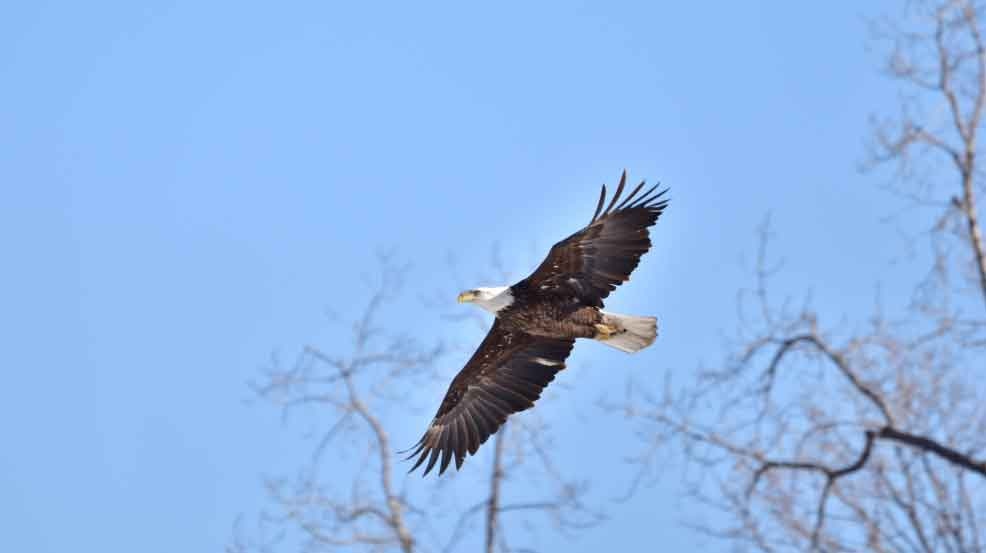
The Canadian Wildlife Health Cooperative confirmed the cases after samples from several snow geese were collected near Waskada and a single sample from a bald eagle was collected in the Dauphin area. (File Image: Robert Burton)

Katherine Dow
CTV News Winnipeg 
Editorial Producer
Published April 20, 2022

WINNIPEG -

The province has confirmed the presence of avian influenza was found in two different wild bird samples in Manitoba.

The province said in a news release Wednesday the Canadian Wildlife Health Cooperative confirmed the cases after samples from several snow geese were collected near Waskada and a single sample from a bald eagle was collected in the Dauphin area.

The province said a sample from each location tested positive for the highly pathogenic avian influenza subtype H5N1.

RELATED STORIES
Why one animal welfare organization wants you to take down your birdfeeders

It noted no cases of avian influenza were detected in poultry flocks in Manitoba.

Cases of HPAI and H5N1 were previously confirmed in other provinces and across the United States, including in North Dakota and Minnesota along the route for spring migratory birds returning to Manitoba.

PROVINCE RECOMMENDS EXTRA PRECAUTIONS


The province said the risk of avian flu to human health is low, and there are no known cases of transmission of this strain from birds to humans in North America.

Still, the province said people should not touch dead birds or other wildlife with their bare hands. Protective eyewear and masks are recommended as an additional precaution. The province advises thorough hand washing before and after with soap and water or an alcohol-based hand sanitizer.

If a dead bird has to be handled, the province said you should wear gloves and the dead bird should be placed in a plastic bag.

The province also said this strain does not pose a food safety risk. Manitoba poultry and eggs are safe to eat when properly handled and cooked, the province said.

Officials also ask Manitobans to contact them if they observe clusters of six or more dead wild waterfowl like ducks or geese or other water birds, any number of dead raptors or avian scavengers like ravens or crows, or large groups of dead birds. Anyone who sees this can call the province’s tip line at 1-800-782-0076.

SMALL FLOCKS AT HIGH RISK

Additionally, Manitoba Agriculture said small flocks are considered at high risk for HPAI infection as they often have access to outdoor pens and free-range. Small flock owners are encouraged to confine their birds indoors if possible during wild bird migration.

Meanwhile, Manitoba’s poultry farmers are urged to follow strict biosecurity protocols like taking precautions with farm visitors and service companies.


B.C. poultry farmers uniquely equipped to respond to avian flu

Protecting flocks from flu

Poultry farmers in British Columbia are under pressure to protect their flocks as a highly contagious strain of avian flu sweeps over North America.

Ray Nickel, spokesman for the B.C. Poultry Association Emergency Operations Centre, says they’ll use the lessons learned to prevent infections after two severe outbreaks since 2004 that forced them to cull millions of birds.

The H5N1 strain of avian flu is highly pathogenic and can cause serious disease and death in birds, says the Canadian Food Inspection Agency.

Nickel, a commercial poultry farmer in Abbotsford and member of the BC Chicken Marketing Board, said farmers are worried aftera case of avian flu was confirmed on a North Okanagan farm last week.

"It's so virulent, and there's a degree of concern that we have for our animals because the impact is so severe," he said. "I feel for my peers in the other provinces that are experiencing it in a more significant way than we are at this point, but it does elicit an amount of fear in us that just isn't very comfortable."

Outbreaks of the same strain have also been detected in Newfoundland and Labrador, Nova Scotia, Ontario, Saskatchewan and Alberta.

The Canadian Food Inspection Agency said last week this has been an unprecedented year globally for avian flu.It said it believes migratory birds are responsible for the outbreaks, and expects there will be more cases as flocks continue to fly north for the summer.

Previous outbreaks in B.C. and elsewhere in Canada led to the destruction of millions of birds. The most serious was a 2004 outbreak in the Fraser Valley, where the H7N3 strainspread to 42 commercial farms and 11 backyard coops, prompting federal officials to order a cull of about 17 million birds.

Nickel said B.C. operations are uniquely equipped to respond to potential outbreaks because of their past experiences.

“We know what it looks like. The good part is knowing what to expect, but on the other hand, nobody wants to go through this."

The B.C. Egg Marketing Board said there are 578 poultry farms in the province and about 80 per cent of those are located in the Fraser Valley, which sits in the path of Pacific Flyway, a main bird migration route.

Because B.C.'s industry is concentrated in the Fraser Valley, Nickel said farmers need to take on more responsibility to prevent the spread of the flu.

Avian flu is spread through contact with an infected bird or its feces or nasal secretions. Farm birds that go outside are most at risk because they can come in direct contact with infected wild birds or their feces. Humans can also inadvertently carry the infection into a barn on their shoes or clothing.

Nickel said biosecurity and emergency management measures introduced after the 2004 outbreak helped to control the spread of the virus in 2009 and 2014. Each outbreak has allowed the province and its farmers to improve and refine its response, he said.

The association has an emergency response team that operates using an incident command structure, similar to fire and police services, allowing the team to respond quickly when flu is found, he said. Protocols include strict procedures around locked gates, changing clothing and footwear, and monitoring entrances and exits.

"It’s a very regimented procedure that takes place," he said. "B.C. is the only province that has a mandatory biosecurity program provincially. Everyone across the country has biosecurity measures that they put in place, but because of 2004, B.C. developed a mandatory provincial one that is enforced by the marketing board.”

When Agriculture Minister Lana Popham announced the discovery of avian flu in the North Okanagan farm last week, she said the Canadian Food Inspection Agency was leading the response to the outbreak, which includes testing, mapping, surveillance and disposal of animals.

“All poultry producers, including backyard poultry owners, are advised to increase their biosecurity practices and to be vigilant and monitor for signs of avian influenza in their flocks," she said.

B.C.'s deputy chief veterinarian also issued an order requiring all commercial poultry flocks in the province with more than 100 birds to be moved indoors until the spring migration ends in May, the Agriculture Ministry said.

The order said the H5N1 strain of avian influenza was detected in wild birds around Metro Vancouver earlier this year and because waterfowl are considered the main source of the virus, steps must be taken to limit their exposure to commercial poultry.

Agriculture and Agri-Food Canada said the food industry is making adjustments to maintain supplies of poultry and eggs in the face of a large outbreak.

The CFIA said no human cases have been detected in Canada and the illness is not considered a significant health concern for healthy people who are not in regular contact with infected birds.

Hundreds of geese slaughtered as bird flu grips France's Dordogne

Issued on: 20/04/2022 - 

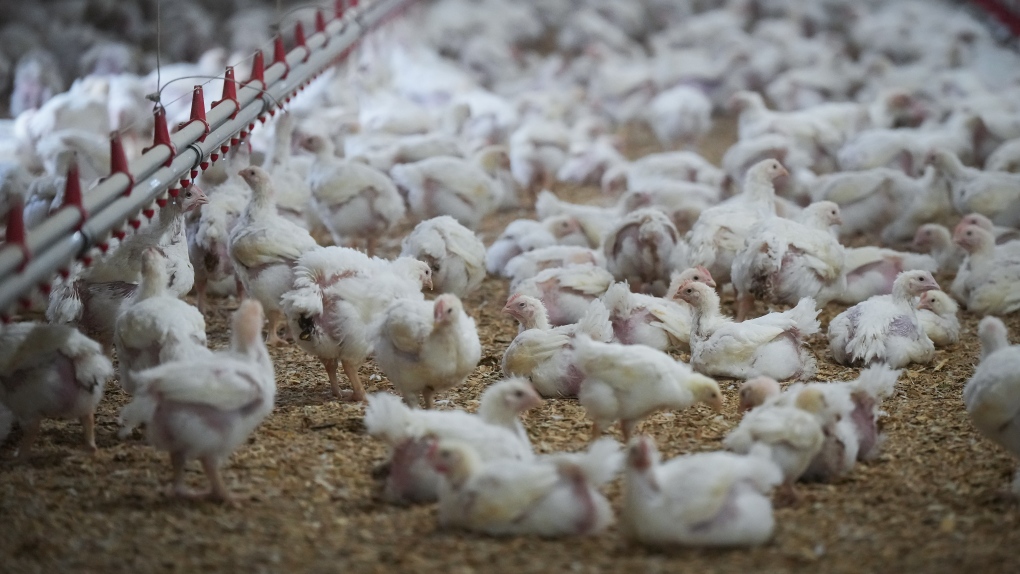
The Chamber of Agriculture has suggested that producers located within 20 kilometres of a bird flu outbreak quickly transport their healthy animals for
force-feeding and slaughter. 

REUTERS - Regis Duvignau

A bird flu outbreak in France’s Dordogne region has led authorities to consider new zoning rules and the premature slaughter of healthy animals to create stocks for the summer.

Over the past two weeks 37 outbreaks have been identified in the south-western department, Chamber of Agriculture figures show.

France Bleu Périgord said the first case was detected on 2 April in a goose farm in Saint-Geniès, in the Périgord Noir area of Dordogne.

Other cases were then found in the Périgord Vert at an experimental goose farm managed by the Chamber of Agriculture and the NGO Asseldor in the town of Coulaures.

“The flagship farm of the goose industry" had been “tragically” hit by bird flu in the Dordogne said secretary general of the Chamber of Agriculture, Pierre-Henri Chanquoi

Double whammy

Some 700 geese were slaughtered in Coulaures in what chamber vice president Yannick Frances described as a “double punishment" given the farm, created in 1992, also housed a flock of breeders.

“They allowed us to have goslings for the whole sector, and the Dordogne sector represents almost the entire national production,” Frances said.

France orders poultry lockdown as bird flu spreads across Europe

There are still "two flocks of breeding geese" in the Dordogne with stocks of eggs and chicks, Frances said, adding the challenge now was to “contain the epidemic to preserve them as much as possible”.

The Chamber of Agriculture has suggested that producers located within 20 kilometres of an outbreak quickly transport their healthy animals for force-feeding and slaughter.
It also recommends setting up localised "sanitary vacuums" around the outbreaks to allow production to resume.

The last time bird flu was detected in the Dordogne was in the winter of 2015-2016.

Thursday, January 02, 2025

BC Teen Hospitalized for Bird Flu Shows 'Worrisome' Change in People

NEWSWEEK
Published Jan 01, 2025 

Canadian teen who contracted the H5N1 bird flu in early November has fully recovered after a prolonged battle with the disease.

However, genetic analysis of the virus that infected her revealed alarming mutations that could potentially enhance the virus's ability to target human cells and cause severe illness.

Why It Matters

The discovery, published in the New England Journal of Medicine, has raised concerns about the evolving nature of H5N1 and its increasing threat to human health.

With 66 human cases reported in the U.S. in 2024, experts are increasingly worried about the virus's evolving potential and its implications for future outbreaks.

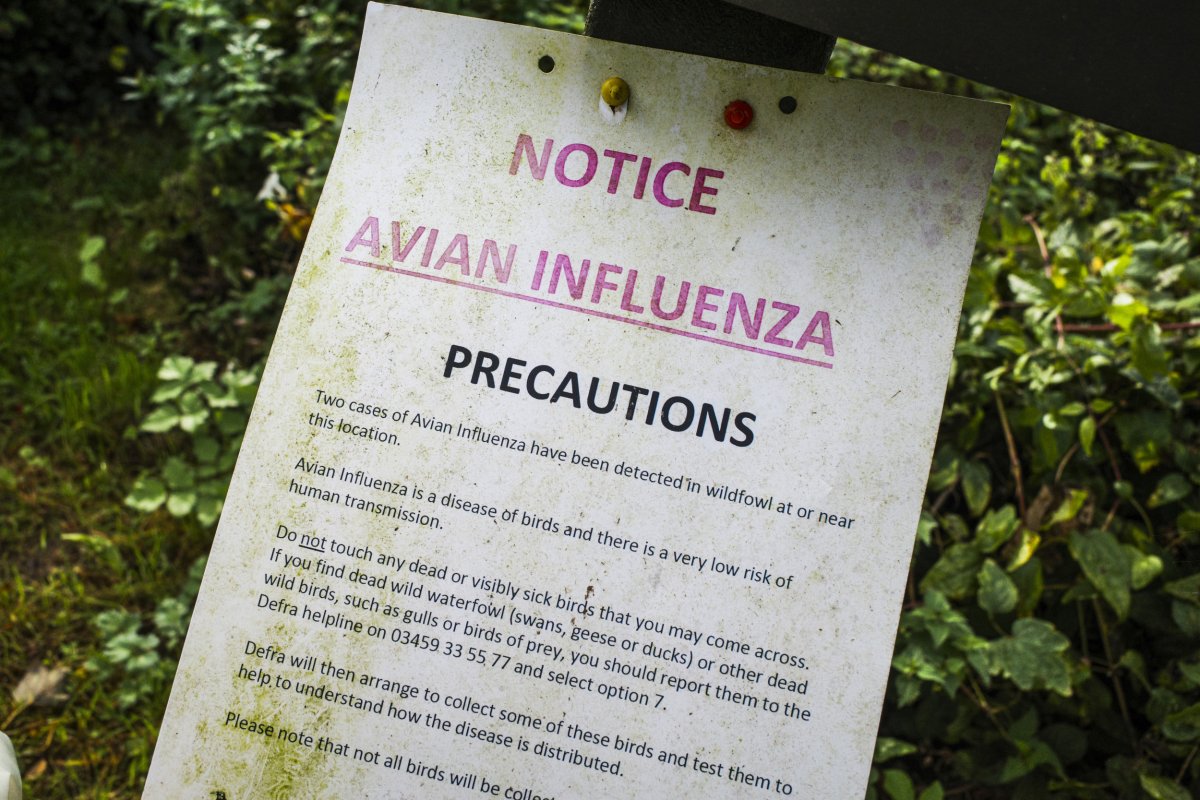
Notices are displayed at Swanpool Nature Reserve warning of cases of bird flu on November 7, 2022, in Falmouth, Cornwall, England. A Canadian teen who contracted H5N1 bird flu in November 2024 has fully recovered
Hugh R Hastings/Getty Images

What To Know

The 13-year-old girl, who had a history of asthma and obesity, arrived at a local emergency room on November 4 with conjunctivitis and fever. After being discharged without treatment, her condition worsened over the next few days, leading to respiratory distress and other complications. She was hospitalized on November 7, and by the following day, was transferred to a pediatric ICU, suffering from severe respiratory failure, pneumonia and acute kidney injury.

Despite being negative for common seasonal flu strains, she tested positive for influenza A and H5N1, leading doctors to suspect bird flu. Her condition continued to deteriorate, requiring intubation and ECMO life support. She was treated with three antiviral medications, and because of concerns about a cytokine storm, underwent plasma exchange therapy.

By November 16, her viral load had dropped significantly, and she was free of the virus after eight days of intensive care. Genetic sequencing of the virus revealed mutations in the strain she had contracted, specifically the D1.1 version of H5N1, which is closely related to the virus found in wild birds. The mutations appeared to enhance the virus's ability to replicate in human cells, suggesting a troubling potential for increased severity in human infections.

Other cases of H5N1 infection in the U.S., particularly those involving dairy cows and poultry, have shown the same mutated strain. Researchers believe these mutations likely emerged in the patients themselves rather than circulating in the environment, the Los Angeles Times reported.

Read more Bird Flu

What People Are Saying

Jennifer Nuzzo, director of the Pandemic Center at Brown University, told the L.A. Times: "It is worrisome because it indicates that the virus can change in a person and possibly cause a greater severity of symptoms than initial infection."

Dr. Paul Offit, a vaccine and infectious disease expert at Children's Hospital of Philadelphia, told NBC News: "I think if there were clear and definitive evidence that the virus has mutated to the point that it can bind to the binding receptors in the upper respiratory tract, meaning the lining of the nose, the lining of the throat, the lining of the windpipe and therefore reproduce itself in the upper respiratory tract, that would be worrisome. But that's not what the report said."
What Happens Next

The discovery of the mutations in the H5N1 virus calls for further surveillance and research to track how the virus may evolve in human hosts. Public health experts are urging increased monitoring of both animal and human cases to detect any potential for further mutations that could pose a greater threat to global health.

Researchers are also calling for more robust response strategies in case the virus continues to adapt in ways that enhance its ability to cause severe disease.

B.C. teen with Canada's first human case of avian flu no longer in ICU

Chickens are seen at a poultry farm in Abbotsford, B.C., on Thursday, November 10, 2022. (Darryl Dyck / The Canadian Press)

Andrew Weichel
CTVNewsVancouver.ca Journalist
 Jan. 1, 2025 

The B.C. teenager who became infected with Canada's first human case of H5N1 avian influenza was transferred out of intensive care and taken off supplemental oxygen last month.

While health officials have not provided any updates on the case since November, new details were published Tuesday(opens in a new tab) in the New England Journal of Medicine, in a report signed by doctors from the Public Health Agency of Canada, the B.C. Centre for Disease Control, and B.C. Children's Hospital.

The patient – described as a 13-year-old girl with mild asthma – was initially taken to an undisclosed emergency department on Nov. 4 with a fever and conjunctivitis.

She was sent home without treatment, only to be brought back to hospital three days later in "respiratory distress," according to the case report. The teenager was then transferred to the ICU at B.C. Children's, suffering from pneumonia, acute kidney injury, thrombocytopenia, leukopenia and respiratory failure.

RELATED STORIES
These are Dr. Theresa Tam's top health concerns for Canada in 2025
Cat food that caused bird-flu death of Oregon pet was distributed in B.C.: officials
'On edge': Fraser Valley farmers hardest hit in Canada by avian flu

She remained in intensive care until Dec. 4, when she was transferred to the hospital's pediatric ward. By Dec. 18, she no longer required supplemental oxygen.

Provincial officials announced the child's infection on Nov. 9 – after the presence of the H5 influenza virus was confirmed through testing – and launched an investigation into how and where she acquired the disease.

The government did not share any personal details on the patient at that time, except that she is from B.C.'s Fraser Valley. The report published in the New England Journal of Medicine this week indicates both the patient and her family consented to releasing additional details on her case.

The Ministry of Health told CTV News it could not provide any further information on Wednesday, including whether the child remains in hospital.

Provincial health officer Dr. Bonnie Henry announced the findings of the government's investigation(opens in a new tab) on Nov. 29, confirming they had found "no evidence of transmission" from the child, and "no evidence of other cases" in B.C. either.

The source of the teenager's infection was never established, however, despite the testing of dozens of animal and environmental samples, all of which came back negative. Henry said the investigation was closed, at least temporarily, for lack of additional leads.

Genome sequencing did indicate the virus was the same one "circulating among poultry and wild birds" in both B.C. and Washington state since October, and "recently detected in a severe human infection in Louisiana," according to an appendix posted with the case report on Tuesday.

The doctors also noted there was evidence of a "worrisome" genetic mutation that "may increase binding to human airway receptors."

There have been 66 human cases of H5N1 confirmed across the U.S. so far, including 11 in Washington state, according to the U.S. Centers for Disease Control, which considers the overall public health risk to be "low." There have been outbreaks of the virus among poultry in all 50 states.

B.C.'s Ministry of Health advises anyone who has been exposed to sick or dead animals, or who works on a farm where avian influenza has been detected, to watch for flu-like symptoms. If those symptoms develop within 10 days of exposure, officials recommend telling a health-care provider.

With files from CTV News Vancouver’s Kaija Jussinoja and Michele Brunoro


B.C. teen with avian flu off oxygen, no longer infectious, Canadian health officials tell medical journal

Source of 13-year-old girl's exposure hasn't been determined, says letter to New England Journal of Medicine

A photo of an emergency department at a hospital, with the words 'BC Children's Emergency' visible on a red wall.
A letter sent to the New England Journal of Medicine and signed by Canadian health officials details the human case of H5N1 in Canada and says the 13-year-old girl who was admitted to the pediatric intensive care unit at British Columbia Children's Hospital in November last year is no longer considered infectious. (Justine Boulin/CBC)

A letter sent to the editor of The New England Journal of Medicine signed by Canadian health officials says the British Columbia teenager who tested positive for avian flu has been taken off supplemental oxygen and is no longer infectious. 

The letter, which was published Tuesday and provides a summary and timeline of the case, was signed by doctors from the B.C. Centre for Disease Control, B.C. Children's Hospital, the Public Health Agency of Canada, and B.C.'s agriculture ministry.

It says the patient was a 13-year-old girl who went to a B.C. emergency room on Nov. 4 with a fever and conjunctivitis in her eyes.

The teen, who is described as having a history of mild asthma and an elevated body mass index, was initially discharged without treatment, but developed a cough, vomiting and diarrhea before she returned on Nov. 7 in respiratory distress.

The report says the girl was transferred the next day to the pediatric intensive care unit at British Columbia Children's Hospital for treatment, which included temporary tracheal intubation.

WATCH | B.C. authorities don't know where human case of avian flu originated: 

Cause of B.C. teen's H5N1 avian flu infection still unknown, health officials say

1 month ago
Duration1:54
B.C.'s top doctor says they still don't know how a teenager became sick with a strain of avian flu. The update comes as another case has been identified in a child in California. As Michelle Ghoussoub reports, officials stress the risk of transmission to humans remains low.

Additional information posted to the journal's website says the patient was deemed no longer infectious on Nov. 29 and no longer required supplemental oxygen as of Dec. 18.

It also indicates both the girl and her family consented to releasing additional details on her case and notes that, to date, the source of her H5N1 exposure has not yet been determined.

It says there have been no secondary cases of transmission of the virus in the girl's home or at the hospital. 

A colourized electron microscope image provided by the U.S. National Institute of Allergy and Infectious Diseases in 2024 shows avian influenza A virus (bird flu) particles, red/yellow, grown in cultured cells.
This colourized electron microscope image provided by the U.S. National Institute of Allergy and Infectious Diseases in 2024 shows the red and yellow particles of avian influenza A virus, or bird flu, grown in cultured cells. (CDC/NIAID/The Associated Press)

The teen's infection, which was announced in November, was the first human case of H5N1 avian flu acquired in Canada. The Ministry of Health had said the teen is from the Fraser Health region, which includes several of Vancouver's eastern and southern suburbs and the Fraser Valley. 

B.C.'s commercial poultry sector has been damaged by avian flu outbreaks in recent years. The most recent data posted to the Canadian Food Inspection Agency website says more than 8.5 million birds have been "impacted" in the province since the spring of 2022.

Most of the outbreaks reported in recent months in the province have been in the Fraser Valley, located within the Fraser Health region.

WATCH | WHO wants closer surveillance of animals amid avian flu spread: 

WHO says 'much stronger' H5N1 surveillance needed in animal populations

1 month ago
Duration0:48
Dr. Maria Van Kerkhove, the World Health Organization's director of epidemic and pandemic preparedness, is calling for increased surveillance globally of animal populations that are known to be susceptible to H5N1, including wild birds, poultry, swine and cattle.

The investigation of the case of the teenager in B.C. with H5 avian flu included testing of pets, birds and other animals from nearby premises as well as environmental testing of soil and water, according to the province.

It determined that the strain the teen contracted closely matches the strain found in wild birds in the Fraser Valley area in October and was not directly related to outbreaks at poultry farms in B.C.

'A terrible virus'

The letter sent to The New England Journal of Medicine says that the H5N1 virus can cause severe human illness.

"Evidence for changes to [protein structures] that may increase binding to human airway receptors is worrisome," the letter concludes.

WATCH | Doctor speaks about potential for human spread of avian flu: 

What’s the potential for avian flu to infect humans — and can we handle it?

3 days ago
Duration5:55
A housecat has died in the United States after eating raw pet food and contracting H5N1 bird flu. Epidemiologist Dr. Christopher Labos tells CBC News the risk of any individual pet getting avian flu is still low, but what is concerning is the easier it becomes for it to infect different types of animals, ‘the easier it will ultimately become for this virus to infect humans.'

Dr. Isaac Bogoch, an infectious disease specialist at Toronto General Hospital, said the letter and the symptoms it talked about were consistent with other reports on human cases of avian influenza over the past two decades.

"If you look at how severe this infection was, I think it's pretty fair to say that this is a terrible virus," he told CBC News.

"And also, for lack of a better word, a very vigorous host response and significant inflammatory response to this virus."

Bogoch said the virus wasn't yet being readily transmitted from human to human, but urged authorities to take precautions.

"We really have to ensure that there's as few mammals as possible infected with this virus," he said. "So we don't give it opportunities to mutate in a way that it is more readily transmitted between humans."

With files from the CBC's Shaurya Kshatri

Monday, August 14, 2023


H5N1
New research shows that a devastating new virus is one of the worst outbreaks in history: ‘[This is] uncharted territory’

Sara Klimek
Sun, August 13, 2023 


COVID-19 isn’t the only virus that has significantly impacted the planet in the past few years. Avian flu (H5N1), which has devastated the poultry industry and caused a 70% increase in egg prices in the past year, has impacted more than just domesticated species.
What’s happening?

New research indicates that the flu, which has killed off hundreds of thousands of wild birds, is one of the most devastating disease outbreaks in history. Vox reported that the disease has spread across five continents and hundreds of species, including endangered ones like the California condor, which classifies it as a “panzootic” — a pandemic among animals.

Avian flu typically causes death only among domesticated birds, like ducks and chickens, killing up to 90% of the flock within an outbreak. But this time, it’s different.

“What we’re seeing right now is uncharted territory,” Andrew Ramey, a wildlife geneticist at the U.S. Geological Survey (USGS), told Vox. The biology of the virus has caused it to attack wild species and even mammals.

“It’s causing a high amount of mortality in a huge breadth of wild birds, which is not something that has been seen before,” commented Wendy Puryear, a molecular virologist at Tufts University. This is because the current avian flu virus has adapted to spread disease outside poultry farms and infect even more species in its wake.

Why is avian flu concerning?

The current avian flu outbreak, which emerged in North America in the winter of 2021, has killed or forced farmers to cull upward of half a billion birds worldwide. The number of wild birds affected by the outbreak is more difficult to track since governments lack the resources to test every dead bird. “We haven’t seen these kinds of numbers with an influenza outbreak in wild birds previously, ever,” Puryear said to Vox.

The avian flu is particularly problematic for biologists studying endangered and small bird populations, such as Michigan’s threatened Caspian terns and the California condor. Nearly half of all bird species globally are declining due to habitat loss or change, predation, and invasive species. The avian flu is just another hurdle to restoring their population numbers.

Scientists are also wary of the potential impact on humans since the virus already shows massive evolutionary potential. Although in its current form, the H5N1 is unlikely to cause a pandemic, it can mutate and could potentially infect humans later in time, Vox reported.

What is being done to combat avian flu?

More effort is being taken to track the spread of the avian flu worldwide diligently and to sample regions where the flu may be present. In turn, the surveillance should give poultry farmers more heads-up for when the flu is expected in the area so that appropriate biosecurity measures can be taken.

Birders and naturalists can also play a role in tracking the spread of the virus. Citizen science programs like iNaturalist have a feature to track dead birds; the information is then shared with appropriate organizations.

The biggest question, though, is how the poultry industry will adapt to the virus and persistent biosecurity threats in the coming years. Compact rearing operations only serve to spread viruses uncontrollably — and it’s likely the direct fault of increased demand for meat and eggs and unsustainable poultry production, as an expert cited in the Vox article suggested.

“It’s useful to remember that wild birds are the victims here,” Nichola Hill, an infectious disease ecologist at the University of Massachusetts Boston, said, as reported by Vox. “They spread HPAI but are not the original source. My motto has become: Bird flu sucks, blame chicken nuggets.