Europe marks International Women's Day in a context of increasing global conflict
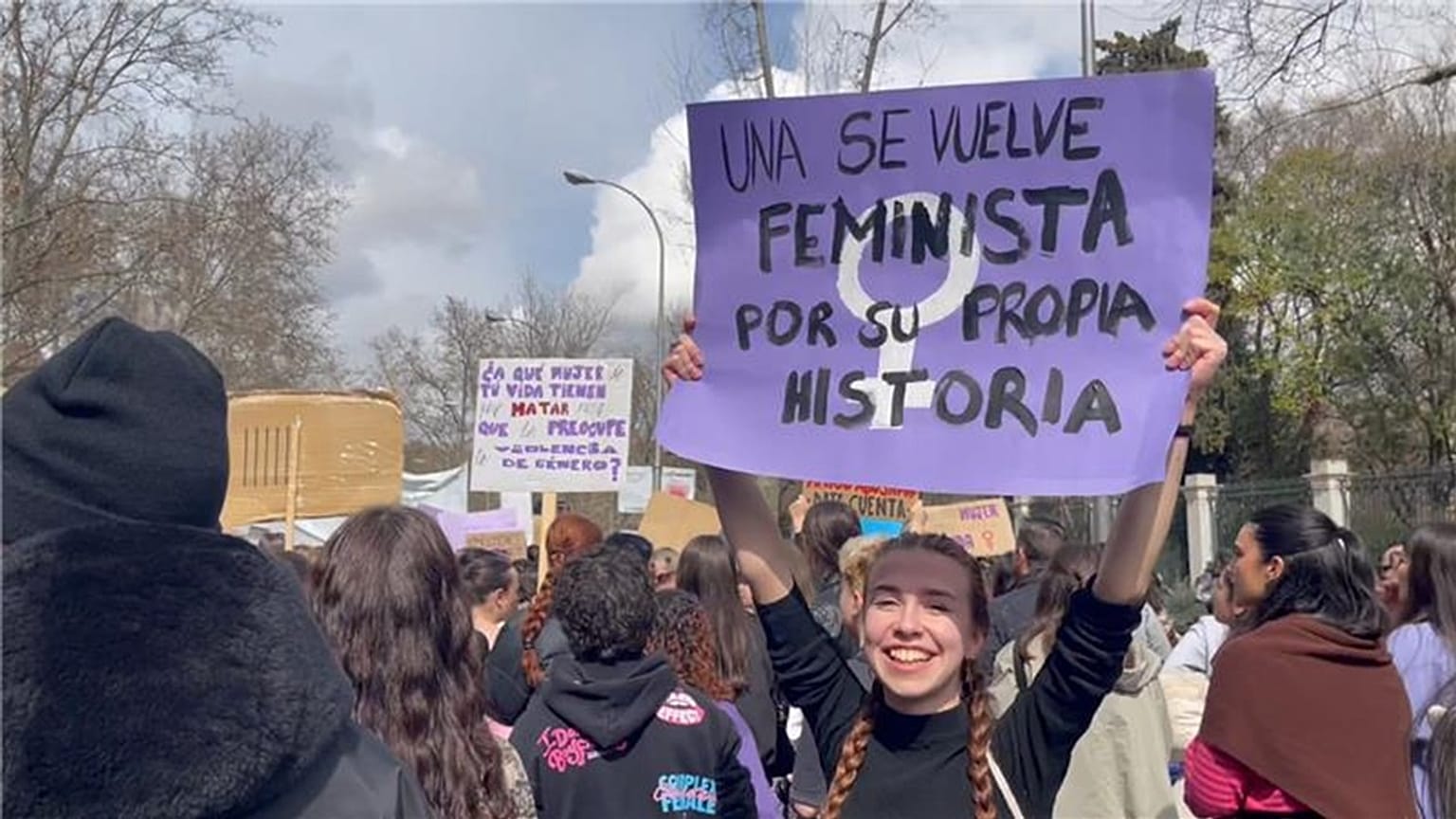
Protesters across Europe marked International Women’s Day on Sunday by taking part in marches and demonstrations that underscored efforts to combat discrimination and accelerate the drive for gender parity.
Crowds gathered in the streets across Europe on Sunday to mark international women's day with demands for ending inequality and gender-based violence.
Women protested against violence, for better access to gender-specific health care, equal pay and other issues in which they don't get the same treatment as men.
Roughly 20,000 people attended a march for International Women’s Day in Berlin. German news agency dpa reported Sunday that the crowd was double the amount police had expected. Speakers at the event decried violence against women in Germany, as well as gender discrimination. In Barcelona, an attendance of over 22,000 was also recorded.
Officially recognised by the United Nations in 1977, International Women’s Day is commemorated in different ways and to varying degrees in places around the world. Protests are often political — and at times violent — rooted in women’s efforts to improve their rights as workers.
2026 will mark the 115th year of International Women's Day. This years' theme is “Give to Gain,” with a focus on fundraising for organisations focused on women's issues and less tangible forms of giving such as teaching peers, celebrating women and “challenging discrimination.” Women worldwide hold 64% of the legal rights that men have, according to United Nations data.
International Women’s Day is a global celebration — and a call to action — marked by demonstrations, mostly of women, around the world, ranging from combative protests to charity runs. Some celebrate the economic, social and political achievements of women, while others urge governments to guarantee equal pay, access to health care, justice for victims of gender-based violence and education for girls.
It is an official holiday in more than 20 countries, including Afghanistan, Burkina Faso, Ukraine, Russia and Cuba, the only one in the Americas. In the United States, March is celebrated as Women’s History Month.
Call to action in times of conflict
From Brussels to Madrid, many are also raising awareness this year for women's rights issues in the context of a world increasingly afflicted by conflict.
Protesters expressed solidarity with women affected by war in Ukraine, Iran, Gaza and elsewhere. According to the United Nations, women in conflict-affected areas are disproportionately affected by gender-based violence.
Thousands of people came out in cities across Spain on Sunday to denounce violence against women and the war in the Middle East sparked by US-Israeli strikes.
Demonstrations took place in Madrid, Barcelona, Valencia, Seville, Granada, Bilbao, and San Sebastian, among other cities.
"No to war" and "Anti-fascist feminists against imperialist war" were among the slogans written on signs at the protests.
Madrid also saw separate demonstrations for transgender rights and for the legalisation and regulation of prostitution.
"It is within our power to stop the war, to stop the barbarity, and to win rights. We proclaim ourselves in defence of peace, in defence of the Iranian people, in defence of Iranian women," Yolanda Diaz, second vice president, told the press at the rally.
Socialist Prime Minister Pedro Sanchez has drawn the ire of the US administration after he refused the use of Spain's military bases for strikes against Iran, which he called an "extraordinary mistake" and "not in accordance with international law."
US President Donald Trump lashed out at Sanchez's government, threatening to sever all trade with the EU and NATO member, which he called "a loser."
France marks International Women's Day amid concern over rise of far right
Some 100 organisations have called on people across France to take to the streets on Sunday to defend women's rights, warning that the rise of the far right threatens hard-won freedoms.
Issued on: 08/03/2026 - RFI

People are urged to join marches in some 150 towns – including Paris, Bordeaux, Lille and Marseille as well as smaller places such as Saint-Malo – to mark International Women’s Day.
In Paris, the main procession will set off at 2pm from Stalingrad in the north-east of the city and head towards Place de la République via Gare du Nord.
"The far right means a rollback of rights for everyone – and particularly for women," said Anne Leclerc of the National Collective for Women's Rights (CNDF). "You only have to look at what is happening in the United States under Donald Trump – it's a laboratory."
Since returning to the White House last year, the US president has introduced measures restricting abortion rights and dismantled anti-discrimination policies.
"When conservatism rises, the first rights to come under attack are those of women and those linked to sexuality," said Sarah Durocher of the Mouvement français pour le planning familial (French family planning organisation).
"We're on alert" in France, she warned, with associations reporting growing difficulties in accessing abortion services due to a lack of funding and the closure of some local clinics.
“When conservatism rises, the first rights to come under attack are those of women and those linked to sexuality,” added Durocher.
“We’re on alert,” she said. “Associations are reporting growing difficulties in accessing abortion services because of a lack of funding and the closure of some local clinics.”
Violence against women
Demonstrators will also protest against persistent sexual and sexist violence.
Recent official data found deadly violence by current or former partners increased in 2024, with more than three femicides or attempted femicides every day.
France has unveiled a framework bill with 53 measures aimed at curbing violence against women, but campaigners say stronger action is needed.
They are demanding an annual budget of 3 billion euros and a broader law covering prevention, education, support for victims and punishment for perpetrators.
“Our legislation is incomplete and lacks a coherent thread,” said Suzy Rojtman of the National Collective for Women’s Rights. “It is time to shift up a gear and finally show a genuine political will to tackle this violence.”
Pay gap concerns
The marches will also highlight the gender pay gap as France prepares to transpose a European Union directive on pay transparency into national law.
The marches will also highlight the gender pay gap, with the deadline approaching for France to transpose into law the EU directive on pay transparency. According to France's national statistics institute INSEE, women in the private sector earned on average 21.8 percent less than men in 2024 – a gap largely attributed to part-time working patterns and lower-paid professions predominantly held by women.
The gap is largely linked to part-time work and lower-paid professions that are more often held by women.
The Nemesis collective, a far-right women’s identitarian group, has said it will hold a separate rally in the west of Paris after some march organisers tried to have the group barred.
Organisers accused the group of “hijacking” feminism “for racist ends”.
Leclerc said Nemesis holding a separate rally was “a relief”.
“Our demonstrations promote values that they do not share,” she said.
Last year, organisers said 120,000 people took part in the Paris march and 250,000 across France. Police figures put the turnout in the capital at 47,000, nearly double the previous year’s count.
(with AFP)
European leaders react to International Women's Day
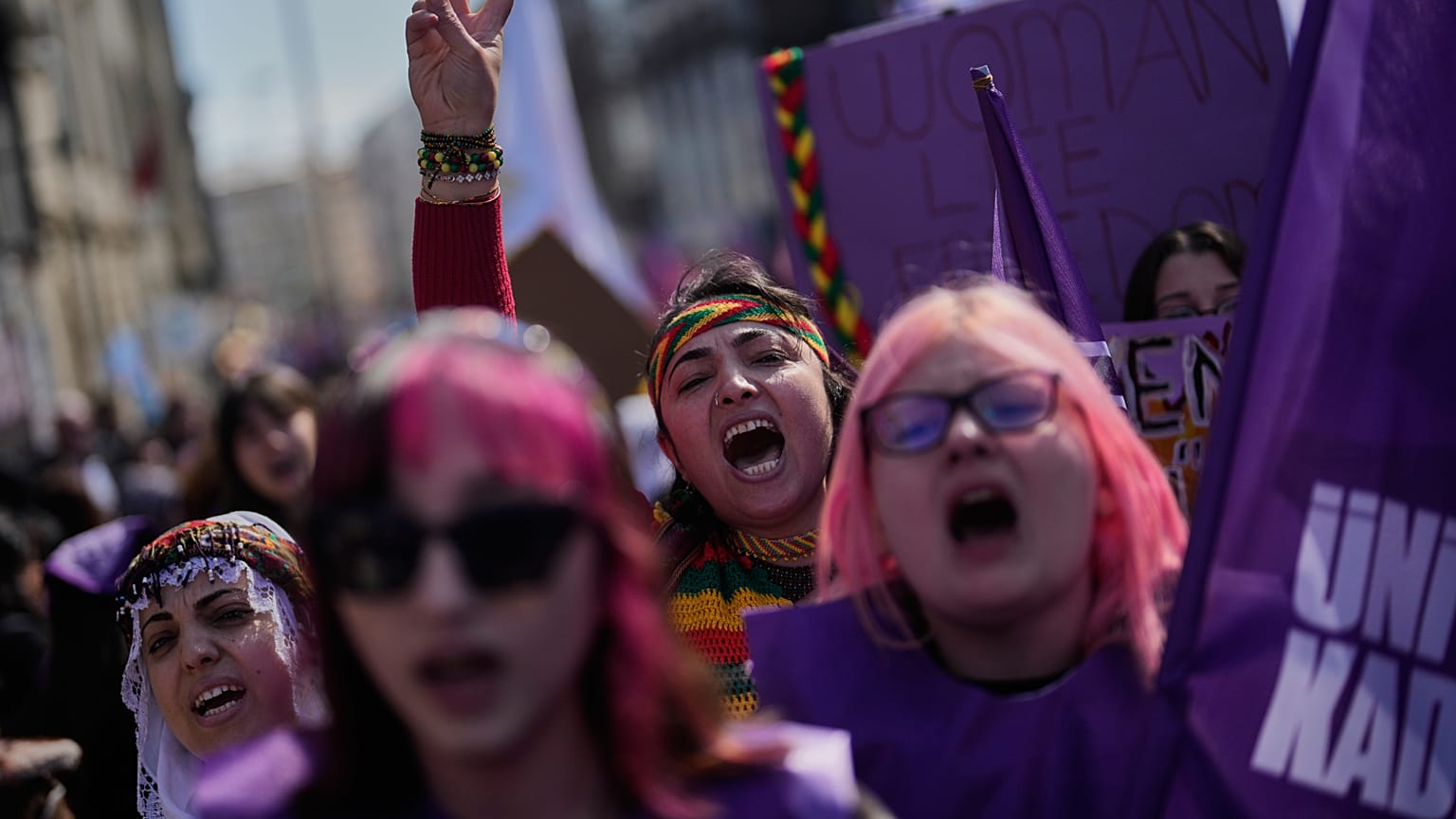
Figures including Ursula von der Leyen, Volodymyr Zelenskyy, Pedro Sánchez and Giorgia Meloni praised women’s contributions and called for continued progress on equality.
Strength, equality and responsibility. These were the three concepts that resonated between European leaders on the 8 March, also known as International Women's Day.
As world conflicts try to steal the headlines, heads of state took to social media to celebrate this day, and remind us of the importance it holds.
The president of the European Commission, Ursula von der Leyen, tribute to girls and women everywhere who continue to fight oppression, calling on them to find the power within themselves and never back down.
Another call to action was made by Ukrainian president Vlodymyr Zelenskyy, who called on women to defend their country and thanked them for the strength they bring to the battlefield and day to day life.
Although they still face obstacles, more than 70,000 women served in Ukraine’s military in 2025, a 20% increase compared with 2022, including over 5,500 deployed directly on the front line, according to Ukraine’s Defence Ministry.
Spain's leader Pedro Sánchez posted a video saying his government will "not let hate substitute rights," and that the feminism movement must keep moving forward despite the banalisation of gender-based violence and online harassment.
Italian prime minister Giorgia Meloni took to the web to tell that the "8 March reminds us all of a responsibility that applies not just to one day, but every day: to continue building an Italy in which no woman has to choose between freedom, work, family, and personal fulfilment."
Other high profile European figures, such as the president of the European Council, António costa, and the general-secretary of the UN, António Guterres, reminded the world that "equality benefits everyone" and that "investing in women and girls is one of the surest ways to make the world a better place."
Six decades of feminism
On International Women’s Day, Lynne Segal surveys over sixty years of thinking and activity and draws some lessons for the way forward.
Early on, International Women’s Day always had ties to socialism. The Socialist Party of America declared the first National Woman’s Day on 28th February 1909; the following year the German Marxist Clara Zetkin called for a day to celebrate women at the International Conference of Working Women, which took place on 19th March 1911. Finally, in the footsteps of women in Russia striking for “bread and peace”, 8th March, 1917, Women’s Day shifted, and has remained on that day, with women’s protests that year helping to ignite the Russian Revolution later that year.
These celebrations all occurred during the decades of first–wave feminism, between the late 19th and early 20th century. In Britain, the Suffragettes, headed up by the Women’s Social and Political Union (WSPU), launched numerous rallies and resistance demanding women’s rights to vote, work, and hold public office. Their bravery is applauded today, despite the violence of some of their activism, including bombings and arson attacks on property. Women’s franchise was brought in line with men’s rights in 1928, after which feminism would begin to fade from the political scene in the conservative mid-century.
Hence, when second-wave feminism burst onto the scene at the close of the 1960s, it seemed to appear out of the blue, with its sudden energy and high hopes eager to change the world higher. I was part of that wave, after arriving as a single mother in Britian in 1970. Like other women I had already imbibed the rebellious spirit of the late 1960s, with talk of sexual liberation and equality for all, but with pervasive sexism, even misogyny also prevalent.
By the 1970s, it was the newly emerging feminists of second wave liberation who would prove the buoyant heirs of Sixties radicalism, soon with new demands on every front: better lives for mothers, more childcare provision and men’s sharing of domestic tasks; better training, job opportunities and equal treatment for women at work. We called for an end to rape and violence against women, along with an overall cultural shift to dignify and celebrate the strength and autonomy of women everywhere. We read Simone de Beauvoir’s The Second Sex, on the age-old cultural subordination of women, soon highlighted and expanded in the powerful writing of newly minted feminists.
From the USA, Shulamit Firestone, Adrienne Rich, Grace Paley, Barbara Ehrenreich, Ursula Le Guin and grassroots activists were inspiring the women’s groups at home and elsewhere, variously emphasising the importance of solidarity, collectivity and the creativity and significance of women working for a better world for all.
In the UK, it was Juliet Mitchell, Sheila Rowbotham and many others sharing their thoughts on the need for emancipation from male dominance, at that time usually hoping to align women with broader socialist goals. Meanwhile, black feminists such as Toni Morrison, Alice Walker, Audre Lord and Angela Davis, along with Amrit Wilson, Margaret Busby, and others such as the Brixton Black Women’s group began to be widely read and influential in shifting most progressive political outlooks.
However, a decade later, as the right came to power first in Britain under Thatcher in 1979, then Reagan in the USA the following year, we began to see a retreat from the widespread hopes of Seventies feminism. This accompanied greater emphasis on women’s difference from men with the growth of “cultural feminism”, less interested in issues of equality and power while applauding women’s distinct feminine traits of nurturing and eco-consciousness, as exemplified in the writing of radical feminists such as Susan Griffin, from the USA. Feminism in the 1980s also included women’s growing peace activism, exemplified at Greenham Common, where women camped out for over a decade opposing the US nuclear missiles installed there. Some Black and Asian women’s groups also flourished in the 1980s, including The Southall Black Sisters.
For those who think in terms of waves of feminism, a “third wave” was seen as emerging in the 1990s, with renewed emphasis on exploring women’s extensive diversity, whether as black, working class, third world, Islamic, queer, or other distinct identities and difference. Greater theoretical abstraction was now appearing in feminist theorizing, most prominently, if aways controversially, in the writing of the US philosopher Judith Butler, deploying post-structuralist reflections on language and meaning in her book Gender Trouble. Butlercomplicated all forms of identity politics, stressing instead the culturally inflected ways we come to enact our expected identities, leaving them contingent rather than fixed, but always open to subversive performances or resistance.
However, while feminist thinking became more influential in parts of academia, a more distorted and dismissive view of movement feminism was evident in the media, presenting it as dull and obsolete. As Angela McRobbie and others noted, glamorous media images of professional women were being widely promoted by the close of the twentieth century, with programs celebrating women’s new freedoms, concerned only with the struggle for success and excitement plus the pursuit of ‘Mr Right’, as in Sex and the City or Friends in the 1990s.
Some feminists began studying this new form of media-promoted ‘aspirational feminism’, especially evident once powerful figures, such as Hilary Clinton, Teresa May or Michelle Obama proclaimed themselves feminist, from the heart of the neoliberal order, while urging more women to aspire to be winners in a capitalist world. The iconic figurehead was Facebook’s one and only female chief, Sheryl Sandberg, producing what she called “a sort of feminist manifesto” in her bestselling Lean In: Women, Work, and the Will to Lead in 2013, with its celebration of ‘top girls’ and regret over most women’s supposed lack of ambition.
What this strange new brand of feminism worked to disguise was a reality where life was getting tougher for so many women, becoming even more precarious and underpaid in jobs now essential for their survival, while having less time to care, even for their own dependents, given harsh welfare cuts, worsening especially from 2010. Before her tragically early death, the young British journalist Dawn Foster wrote Lean Out, rightly accusing Sandberg of encouraging women’s “complicity in the economic structures that perpetuate inequality”.
So where are we now, almost six decades on from those hopes of women’s liberation? There is no doubt that today more women have a stronger voice, some with access to significant power, with apparently more choices than ever.
Yet, just as firmly we also see the very opposite in the lives of other women. This stems from the rising individualism and above all the significantly greater inequality we have seen over recent decades of near total subservience to neoliberal market logics, attentive only to profits, with more women, young, and especially old, living in poverty, worsening over the last 15 years. Moreover, the ubiquitous cultural landscape of sexism and belittlement of women we condemned, with women judged by their looks, has far from disappeared. We don’t need to witness Epstein’s world, or the continuing rise in rape figures, to be reminded of that.
Hence, goals feminists fought for and seemed to win, beginning with a new appreciation of and support for mothers and the work of caring have disappeared. We find real misery experienced by many mothers today, many simply unable to cope with the extra burdens placed on them. This connects with women, often working long hours in paid work, having little time to care – affecting not only mothers, but those caring for the sick, disabled or fragile elderly.
Women still shoulder more of the responsibilities for caring, as I discussed in my last book Lean on Me: A Politics of Radical Care. So far, with some exceptions at municipal level, Starmer’s Labour Party has done little to address this, while threatening rights to protest. In our ultra-competitive era, earlier ideas of collectivity and shared caring, so important for Seventies feminists, have almost – but not quite – disappeared. Today, women’s poverty still exceeds that of men, especially in single-parent households and the old. Shockingly, women’s life expectancy overall has dropped three years over the last decade.
More positively, there is greater concern with green issues today, as articulated by feminist economists here such as Ann Pettifor or Sue Himmelweit, along with the growth of the Green Party – attracting many women. Many feminists are also actively opposing racism and cruelty towards migrants, evident in the work of feminist human rights and anti-racist activists, along with the legacies of Black Lives Matter. Confronting the rise of the right, including both Trump and Netanyahu, we have the forceful speech and writing of iconic figures such as Sara Roy in India, the Canadian writer Naomi Klein, or Judith Butler from the USA. Indeed, as Butler shows, the right’s attacks on women’s equality and what they call ‘gender ideology’ is what fuels populist reactionary rhetoric generally.
Feminist activists might well feel undermined today, confronting the ongoing kleptocratic behaviour of the few billionaires now dominating global markets, plus the continuation of reckless military violence on several fronts, including Israel’s genocidal violence in Gaza. Yet feminist resilience remains, in some ways taking us back to those women who created Women’s Day over a century ago.
The lessons we must retain are the importance of inclusiveness and alliance in the face of conservative political backlash. Everything is to be gained by recognizing women’s rich diversity, alongside men’s, and working together for a more caring, peaceful, egalitarian and greener world. Nothing is to be gained by divisiveness or targeting distinct groups of people as ‘the problem’. Feminism needs an inclusive agenda, including trans women, while insisting that women’s interests remain at the heart of all our politics.
Lynne Segal is the author of several books. Her latest, Lean on Me: A Politics of Radical Care, is published by Verso.
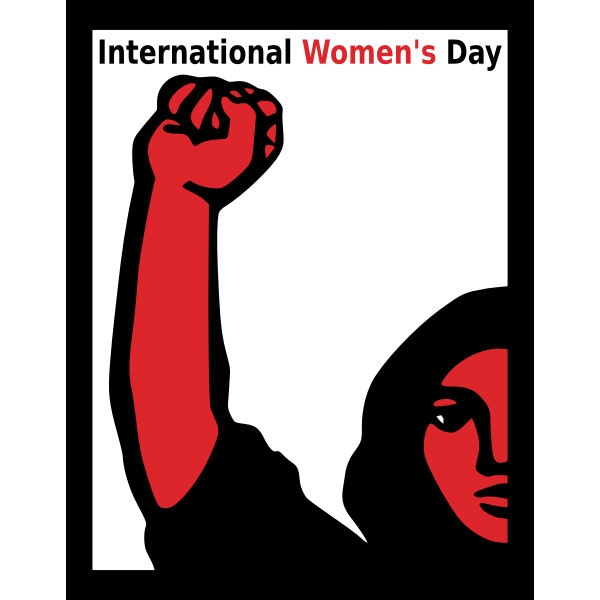
Image: https://freesvg.org/international-womens-day Licence: CC0 1.0 Universal CC0 1.0 Deed
Making Trouble: International Women’s Day 2026
To celebrate International Women’s Day 2026, Bryn Griffiths, Labour Hub’s presenter of the Labour Left Podcast celebrates the outstanding contribution that the socialist feminist guests have made to the show over the last few years.
The title of this article is taken from Professor Lynne Segal’s book of the same name Making Trouble: Life and Politics, a title that definitely captures the contributions of the shows women guests.
Beyond the Fragments
In addition to making trouble Lynne Segal is best known for her socialist feminist classic Beyond the Fragments: Feminism and the Making of Socialism, co-authored with Sheila Rowbotham and Hilary Wainwright.
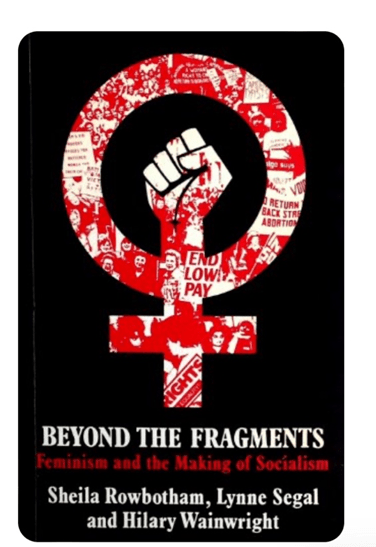
Back in 1980, young socialist feminists instructed me, as a new student at Sussex University, to read this seminal book and it made a huge impression upon me. Lynne and I returned to the book on the podcast. The book has so much to offer today as we grapple with intersectionality and the different forms of socialist organisation we will need if we are going to avoid the many pitfalls of ‘top-down’ Leninism. I am not a supporter of Your Party but those that have taken the plunge would do well to have a listen to Lynne on the podcast and read Beyond the Fragments. The challenges socialists face when we are trying to pull the threads of different struggles together are far from new.
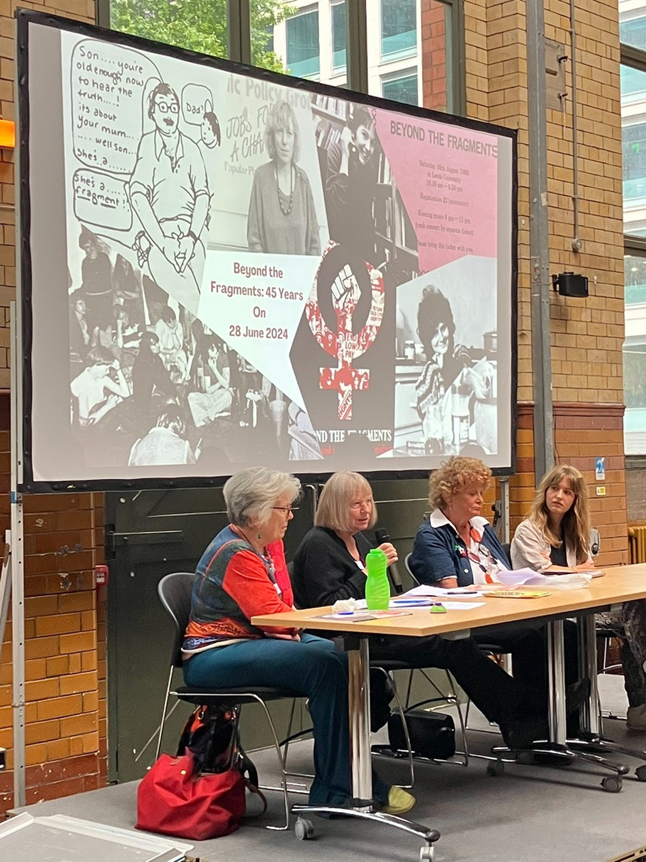
The authors of Beyond the Fragments (pictured l-r) Hilary Wainright, Sheila Rowbotham, Lynne Segal and conference organiser Rachel Collet at an event to mark the forty-fifth anniversary of the book’s publication.
Class Heroes
Regular listeners to the Labour Left Podcast will know that each show ends by giving the guest the daunting task of identifying the class hero who has most influenced their politics. To balance up our hall of fame I invited Lynne to nominate four women to rebalance the over generous representation of our male heroes. On International Women’s Day every one of Lynne’s nominations deserves our close attention.
Lynne nominated her Beyond the Fragments co-author Sheila Rowbotham and referred us to her book Daring to Hope: My Life in the 1970s. Moving across the Atlantic, Lynne nominated her late friend Barbara Ehrenreich who was a prominent figure in the Democratic Socialists of America. In 1976 she wrote a must read classic piece for International Women’s Day entitled What is Socialist Feminism? Lynne brought us up to date with Naomi Klein the Canadian author, social activist, and filmmaker known for her political analyses, support of eco-feminism and organized labour, and criticism of corporate globalization, fascism and capitalism. Finally, Lynne added Francesca Albanese the United Nations Special Rapporteur on the occupied Palestinian territories. There can be no woman alive today more deserving of our recognition on International Women’s Day 2026 than Francesca Albanese. As an activist within Britain’s Jewish Bloc on all our big pro-Palestinian protests, Lynne holds Albanese’s work close to her heart.
Palestine
Palestine is of course the issue of our age and Rachel Shabi’s podcast appearance brought a unique perspective to the issue because of her Jewish Iraqi background. Rachel became known to many of us for her work with Jeremy Corbyn and Momentum during Labour’s antisemitism crisis. In the face of an avalanche of unfair attacks from supporters of the Israeli Government, the left did not always get it right. Rachel’s appearance on the Labour Left Podcast remains invaluable for those that want to understand The Truth Behind Antisemitism and how we can fight it. Since her podcast appearance, Rachel has been a consistent supporter of the Palestinian people and she has helped us all navigate the complex territory of how we stand with the Palestinian people whilst being clear in our opposition to antisemitism. Rachel wrote an extremely helpful piece The Mamdani masterclass on antisemitism.
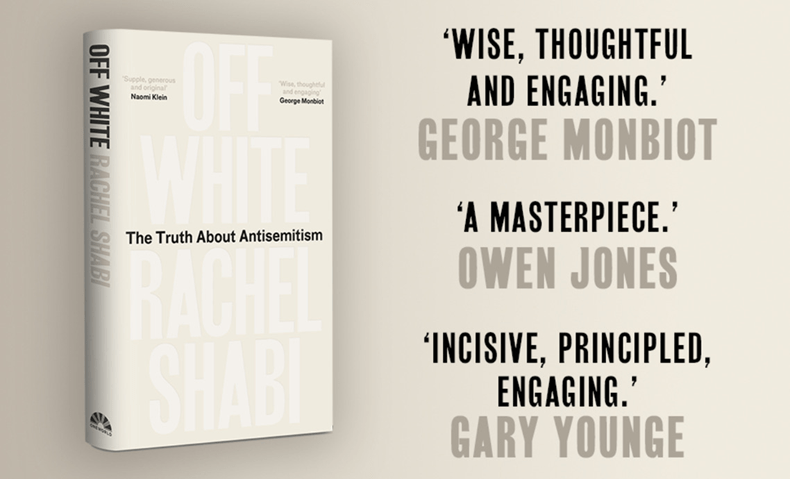
Rachel Shabi ended her appearance on the Labour Left Podcast by nominating Ella Shohat, a fellow Iraqi Jew and supporter of the Palestinian people, as her class hero.
Colonialism
Professor Corinne Fowler appeared on the Labour Left Podcast to discuss her book Our Island Stories: Ten Walks through Rural Britain and its Hidden History of Empire. Back in 2019, Corinne was seconded to the National Trust to lay the foundations for a new training and interpretation programme about our country houses’ colonial connections. As part of her secondment, she co-authored an academic report for the National Trust which brought together much of the existing academic and peer-appraised writing on the Trust’s properties’ many links to colonialism.
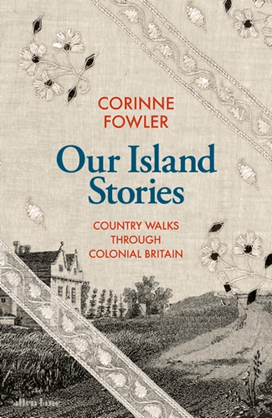
To say that the populist right weren’t quite ready to embrace the filling of the gaps in our history doesn’t quite capture the moment. The ‘war on woke’ warriors kicked off to defend their history from above and make sure that everybody else’s history remained silent.
Boiling Farage’s Blood
Nigel Farage talked of the “trashing of our nation” and the Daily Telegraph responded to the peer-appraised, academic report by announcing that the National Trust was “at war with the past.” As if that wasn’t enough, the unfortunately named Tory Common Sense Group declared the ‘Battle of Britain’. Have a listen to Corinne’s appearance on the Labour Left Podcast and find out for yourself why she boils Nigel Farage’s blood!
Corinne Fowler ended her appearance on the podcast by adding Bharti Parmar who accompanied Corrine on her walk to discover cotton’s colonial politics.
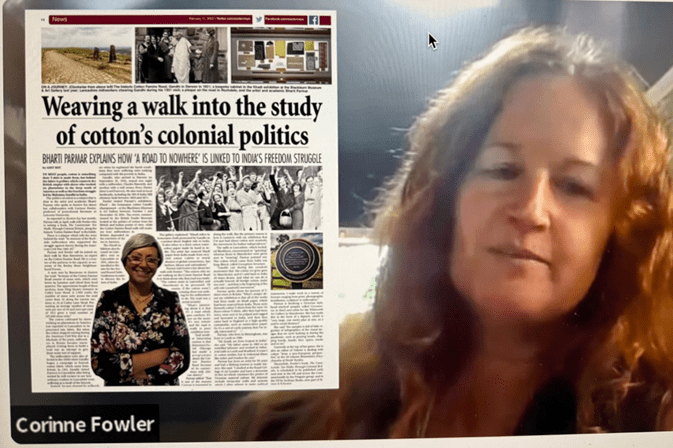
Corrine Fowler nominates Bharti Parmar to the Labour Left Podcast class heroes hall of fame.
Back in 2023, the first ever guest on the Labour Left Podcast was Liz Davies KC. Liz came to prominence back in the 1980s as a Labour councillor as the Chair of Islington Council’s brand-new Women’s Committee. I’ll leave it to Finola Brophy Liz’s former Head of Women’s Unit to describe Liz’s ground-breaking socialist feminist role:
“Liz Davies was a fantastic Women’s Committee Chair, always strategic, supportive and passionate about women’s equality and all equality issues. Liz was the champion of cutting-edge multi-agency domestic violence work training the police, producing a domestic violence handbook; creating women’s action plans for each service with achievable targets, producing and circulating the Islington Women’s Information Handbook listing hundreds of organizations standing up for the Women’s Equality Unit. A big issue reflected lesbian and gay families and the production of materials for schools. I also remember the wonderful celebration of International Women’s Day that took place every March.”
Blair Goes Ballistic
Listen to Liz’s appearance on the Labour Left Podcast to find out what she did to make Tony Blair “go ballistic” and why one of her fellow Labour National Executive Committee members saw fit to call her a “cancer”.
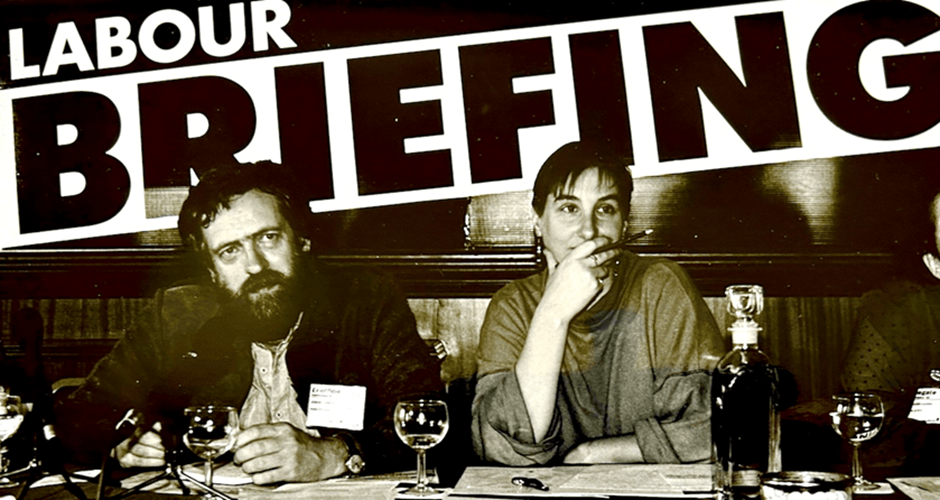
Liz Davies, the very first Labour Left Podcast guest, pictured with Jeremy Corbyn MP in happier times when they were both in the Labour Party speaking at a Labour Briefing fringe meeting in the 1990s. Photo: Bryn Griffiths.
Following Liz Davies’s appearance on the Labour Left Podcast,, two of her women successors on Labour’s National Executive Rachel Garnham and Hilary Schan, made their appearances.
Racism
Bell Ribeiro-Addy MP made her Labour Left Podcast appearance in the immediate aftermath of her short-lived 2025 bid for the post of the Deputy Leader of the Labour Party. She entered Parliament in 2019 as the Corbyn period drew to a close, alongside numerous other new excellent socialists such as Nadia Whittome, Apsana Begum and Kim Johnson.
Before becoming an MP in her own right, she was the Chief of Staff to Diane Abbott, Britain’s first Black MP and the Mother of the House. She cut her political teeth as the Black Students Officer of the National Union of Students, fighting racism and seeking to implement the NUS policy of no platform for fascists. Anti-racism is at the centre of Bell’s intersectional feminism.
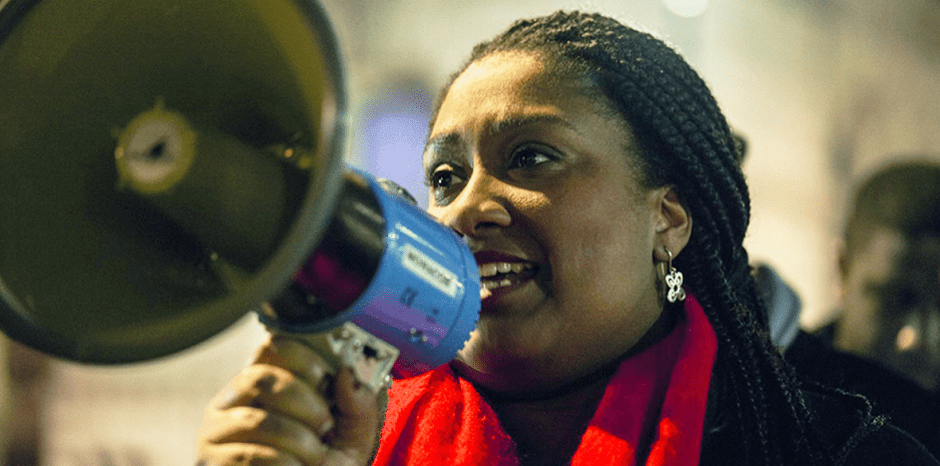
Bell Ribeiro-Addy MP
Democracy
I wanted Rachel Garnham to appear on the Labour Left Podcast so we could discuss her role as the Chair of the ever-important Campaign for Labour Party Democracy (CLPD). The episode is an education for those who want to understand the decades-long struggle for members’ democratic rights that has occurred in the party since the CLPD’s creation in 1973.
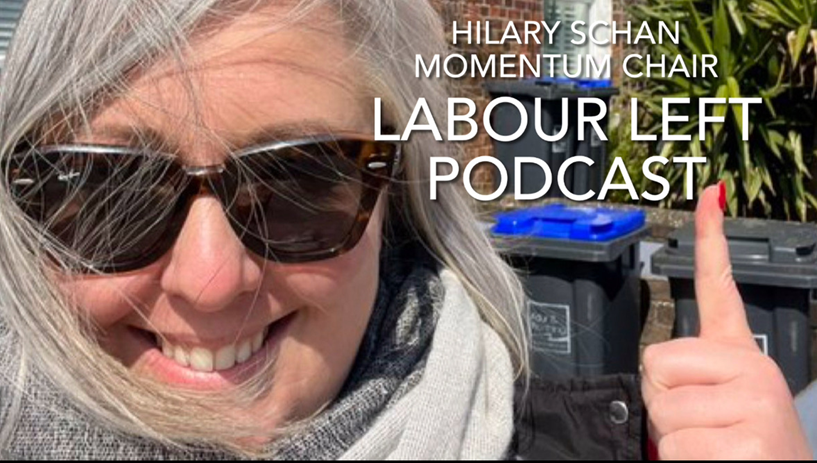
Hilary Schan made her appearance on the Labour Left Podcast while she was still the Chair of Momentum. Hilary explained how Worthing Labour Party had delivered a political earthquake and seized control of the council for Labour. It’s a story which ended with the effective destruction of the local Party as the very architects of the Party’s success were excluded from the possibility of parliamentary selection.
Finally, a big mention to Rachel Godfrey Wood my socialist sister and the National Organiser of Momentum who appeared on the show in the run-up to Labour’s General Election victory in 2024. The podcast took place in a period when McSweeney’s Labour Together’sfactional brutality was at its zenith. Hilary Schan, our former Chair, had recently left the Labour Party but the podcast was not all doom and gloom: we ended by mapping out a positive socialist case for staying within Labour. The Labour right was behaving more factionally than ever before, so we needed to get organised. Voting Labour to get rid of the Tories was the start but we think you need to do much more than that. I still hope you will be convinced by Rachel’s case for Momentum. The task of influencing the Labour Government’s direction and fighting the highly factional Labour right is a task which is too big to face alone – so click here to join Momentum .
It’s been an honour to interview this stellar list of socialist feminist women. Talking to them has never failed to broaden my political understanding of the tasks that lie ahead for the left in our country. On International Women’s Day 2026, I urge you to explore the back catalogue, listen to our wonderful socialist sisters and learn!
Postscript
The vicious factional behaviour of people like Morgan McSweeney and his shadowy Labour Together has led many thousands of Labour members to leave the party and a number of my Labour Left Podcast guests have unfortunately been among them. I have huge respect for all the women guests who have appeared on the show but personally I remain firmly within Labour to contest the political territory which exists in a Party which has twelve trade unions affiliated to it. My job, as I see it, is to save the Labour Party from people like Labour Together and Peter Mandelson so Labour can defeat Nigel Farage’s Reform at the next General Election in 2029.
You can watch the podcast on YouTube, Apple Podcasts here, Audible here, Substack here and listen to it on Spotify here. You can even ask Alexa to play the Labour Left Podcast. If your favourite podcast site isn’t listed, just search for the Labour Left Podcast and it should be there.
Bryn Griffiths is an activist in Colchester Labour Party and North Essex World Transformed. He is the Vice-Chair of Momentum and sits on the Campaign for Labour Party Democracy’s Executive. Bryn hosts Labour Hub’s spin off – the Labour Left Podcast.
Main image: https://www.goodfon.com/holidays/wallpaper-zhenskiy-den-pozdravlyayu-8.html Licence: Attribution-NonCommercial 4.0 International CC BY-NC 4.0 Deed. All other images are used with kind permission.

No comments:
Post a Comment