Why women are disappearing from Europe’s tech workforce

Workplace culture is the biggest reason why women are leaving their tech jobs, a new report shows.
Women make up less than one in five tech workers in Europe, according to a new report that warns the gender gap could widen even further without action, especially in the age of artificial intelligence (AI).
In 2025, women accounted for 19 percent of employees in core tech roles across Europe, down 3 percent from the year before, according to a new report by consulting firm McKinsey & Company.
The decline suggests that efforts to address the persistent lack of representation have failed to make meaningful progress, the report said.
“As AI reshapes roles and value creation in tech, existing gender gaps could widen without deliberate action,” the report said.
The warning comes as organisations in the United States and Europe have begun scaling back diversity, equity and inclusion (DEI) initiatives that, throughout much of the 2010s, encouraged women to enter traditionally male-dominated fields such as science, technology, engineering and mathematics (STEM).
Where does the gender gap start?
The research analysed 4 million LinkedIn profiles in tech roles across the European Union and combined them with data from the Organisation for Economic Co‑operation and Development and workforce data from AI hiring platform Findem.
Women start to drop off from tech-adjacent fields almost immediately after leaving school, the report found. Girls slightly outperform boys in STEM topics in primary and secondary school, but only 32 percent of all female students decide to enrol in a tech-related bachelor’s degree.
Among those who pursue advanced education, women are slightly more likely than men to get a PhD in a STEM field. Yet, only 19 percent of all tech workers are women.
Another big hurdle for women is career progression. Women’s participation in the tech labour force drops by up to 18 percentage points before they reach managerial roles, leaving women with just 13 percent of management positions in tech companies.
These early losses “compound the gender gap at the leadership level,” the report continued, since only 8 percent of executive or corporate roles are held by women.
The divide is sharper in some tech fields than others. Software companies have a 15 percentage-point gap between the number of women with entry-level jobs and those who eventually reach corporate leadership.
Concentrated in fewer roles
Women are also clustered in a narrow set of tech jobs that are being hit with layoffs.
They make up 39 percent of employees in product management and 54 percent in design. However, the report notes these positions rarely lead to executive leadership and represent a small portion of Europe’s overall tech force.
Even in fields where women are concentrated, they often have limited influence over the direction, governance and design of the broader tech sector, the report found.
Women are also underrepresented in AI, the report warned. Men are capturing a larger share of entry-level jobs in AI, data, and analytics.
This trend is concerning during the AI boom, the report said, because it risks a “narrowing of perspectives at precisely the levels at which bias, accountability and societal impact must be addressed.”
The report found that women are also struggling with the tech gender gap in countries that tend to be stronger on gender equality on average, such as Finland and Sweden. Women represent 36 percent and 23 percent of tech workers, respectively.
Why women leave tech
Workplace culture is the main reason why women leave their tech jobs, the report found.
McKinsey’s survey said just under half of women experienced sexism or bias in the past year, while 82 percent said they had to prove themselves more than their male colleagues.
That’s because women often feel isolated in their roles, since they are often the ‘only one’ in the room, the report continued.
Women are also more likely than men to take on additional unpaid work at their jobs, such as resolving team conflicts or coordinating events, because they are considered “the social glue” of their teams.
On average, a woman takes on 200 hours a year of this type of “office housework,” the report found.
Policies designed to support parents, such as flexible or remote work arrangements, can also slow career progression for some women, the report found.
How companies can close the gap
Improving workplace culture is the most effective way to reduce the gender gap, because it is the strongest predictor of whether women remain in tech roles, the report said.
Companies should set clear representation targets and review them quarterly, the report urged.
It also suggests tying career advancement decisions to an individual’s output, which will “help level the playing field” for women.
Mentorship should also be a wider focus within companies. Pairing mid-career women with senior leaders can provide role models and clearer pathways to leadership, the report advised, adding that Europe should also invest in AI-driven reskilling as “a new on-ramp” to get women in tech.
Women could capture many of the mid-level and senior roles that will be opening up due to the AI restructuring of the workforce with “targeted reskilling and deliberate advancement pathways.”
Organisations could do this either by helping mid-career women already in tech move into adjacent mid or senior-level AI roles or by creating more roads from the product and design fields into executive roles.
“Accelerating women into these future-critical roles is not a side agenda; it is one of Europe’s most tangible levers to build the leadership AI now demands and to strengthen innovation, governance, and competitiveness across the region,” the report added.
From cancer tests to COVID vaccines: the women reshaping Europe’s health in a male-dominated field
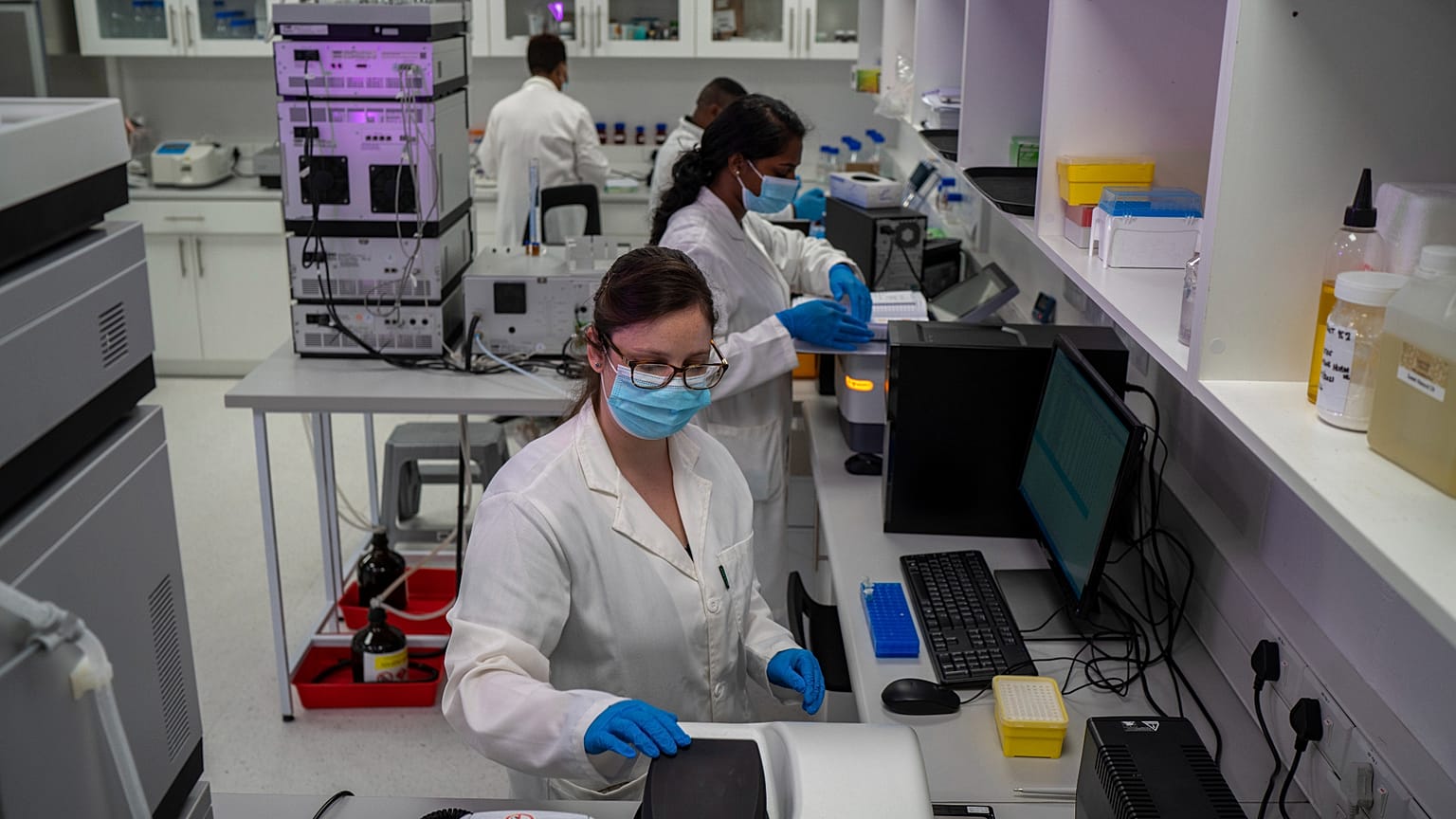
Despite a surge in female scientists across the continent, women account for just 13 percent of European inventors.
When thinking about female inventors, the most common name to come to mind is probably Marie Curie.
For experts in the technology field, Ada Lovelace may ring a bell, and Rosalind Franklin may sound familiar among medicine professionals. However, the list is still narrow.
"Gender gaps still run through the entire innovation system — from the day you sign up to university, to the day you become a team leader or open your own start-up,” Roberta Romano-Götsch, chief sustainability officer and spokesperson at the European Patent Office (EPO), told Euronews Health.
The share of women inventors in Europe stood at just 13.8 percent in 2022, according to a new report by the European Patent Office. While this represents a steady increase from two percent in the late 1970s and 13 percent in 2019, the progress is stagnant.
“The pace is too slow and far from being balanced,” Romano-Götsch added.
Several names can be added to the list, European women working in medicine and biotechnology, who are responsible for some of the most groundbreaking advances of recent years.
Rochelle Niemeijer developed a portable artificial intelligence-driven test kit to quickly diagnose bacterial infections.
Laura van't Veer and her team created a gene-based test for breast cancer that evaluates tumour tissue for risk of cancer recurrence. It allows care providers to separate high-risk patients who actually require chemotherapy, and low-risk patients who can be spared the potentially damaging side effects of toxic chemical treatments.
Katalin Karikó, winner of the Nobel Prize in Physiology or Medicine in 2023, developed a way to modify messenger ribonucleic acid (mRNA) for safe use in the human body. This paved the way for its use in COVID‑19 and other vaccines, as well as prospective therapies for cancer and heart disease.
Women’s research, especially on health, tends to address women-specific problems – aiming to close the gaps in areas such as endometriosis, menstrual health, and menopause, which remain largely understudied.
“Missing women inventors can narrow technological progress and inclusivity, and this is more than an equality challenge, it's a competitiveness challenge,” said Romano-Götsch.
In life sciences, such as pharmaceuticals, biotechnology, and food chemistry, the share of female representation exceeds 30 percent, the highest of all fields, the EPO report found.
Women's shares tend to be higher in more science-based fields and closer to public universities and laboratories, the report noted.
The leaky pipeline
Women are not absent in science. The latest data show that the number of women working as scientists and engineers in the European Union has risen from 3.4 million in 2008 to 5.2 million in 2014, reaching 7.9 million in 2024.
In medical and health sciences, women make up 54 percent of all researchers, the highest share among all research and development fields.
The “leaky pipeline” is a widely used metaphor in discussions about gender equality in science and engineering.
According to the EPO, it describes the persistent pattern: women’s representation is highest at earlier stages of education and training, and declines progressively at successive career transitions, so that women remain under-represented in senior roles and leadership positions.
The report noted that the inventive potential of women’s research is comparable to that of men, suggesting that the gender gaps in patenting among science, technology, engineering, and mathematics (STEM) doctoral graduates cannot be explained by differences in ability or output.
What barriers do women face?
The EPO identified several obstacles women encounter across their academic and research careers that can push them away from entrepreneurship.
Although women’s presence in patenting increases in team settings, they remain under-represented among team leaders, a gap that shapes visibility, credit and career progress.
Romano-Götsch highlighted the “Matilda effect”, named after suffragist Matilda Joslyn Gage, which refers to the systematic under-recognition, denial, or minimisation of women’s scientific contributions.
Drawing on her experience as a mentor, she described how female work can be underevaluated or misattributed.
For example, women in the patenting context are not credited as authors in scientific publications or they are co-authors and they do not appear in the patents, she noted.
“This is a recurrent problem even today. Women contribute to the underlying knowledge but when it comes to nominating them as women inventors, they are not featured,” she said
Romano-Götsch added that closing these gaps is both a strategic imperative and a great opportunity, one that would bring access to a broader pool of talent, stronger teams, and better outcomes across research, patenting, and entrepreneurship.
“The benefits would span the entire innovation ecosystem”, she said.
Are European women closing the leadership gender gap?
Most EU countries have seen a rise in the number of women in managerial positions since 2014, but three states have registered a decrease.
International Women's Day is celebrated on 8 March, and the data appears to show that more and more women are taking on positions of authority in the corporate world.
New statistics from Eurostat say that, in 2024, 35.2% of all managerial positions in the EU were held by women, up from 31.8% in 2014.
There was a higher share of young women managers aged between 15 and 39 than in other age groups: almost 40% of managers in that age group were female.
The share decreases with age, with 34.4% of women managers aged 40 to 64 and 26.5% of those aged 65 and older.
The numbers change depending on where in the EU we’re looking, too: the largest shares of women in managerial positions were seen in Sweden (44.4%), Latvia (43.4%) and Poland (41.8%).
On the other end, the lowest rates were recorded in Cyprus (25.3%), Croatia (27.6%) and Italy (27.9%).
But the numbers are rising in the vast majority of EU countries - Luxembourg saw the largest increase in women managers since 2014, at 13.7%. It was followed by Malta (10.1%) and Cyprus (7.9%).
However, Slovenia (-3.8%), Latvia (-0.7%) and Lithuania (-0.2%) actually registered a drop in women in managerial positions during that time.
The rise in female corporate leaders comes as more and more women take on roles in traditionally male-dominated areas in the EU, such as science and engineering.
Europe in Motion previously reported that the number of female scientists and engineers in the bloc increased from 3.4 million in 2008 to 7.9 million in 2024.
The boost in female managers also follows a push by the EU to have more balanced gender representation on the boards of listed companies, specifically through the implementation of its Gender Balance on Corporate Boards Directive.
The directive sets a target for businesses to have 40% of the underrepresented sex among their non-executive directors, and 33% among all directors.
While the deadline for companies to meet these objectives is 30 June 2026, the deadline for EU members to transpose the directive into law was December 2024, meaning companies were already pushing to improve diversity in their leadership in line with the Eurostat data.
Nevertheless, regardless of managerial positions, there's still a clear employment gap between men and women: other recent figures from Eurostat show that 80.8% of men were employed full-time across the bloc in 2024, falling to 70.8% of women.
The share of women in part-time employment was significantly higher than that of men, though (27.8% vs 7.7%), and Eurostat said that the employment gap fell by 1.1% across the EU over the past decade — a trend registered in 22 EU countries.
Pay gaps, bullying, violence: Challenges for
women's rights in the EU
Issued on: 06/03/2026 -
Play (12:23 min)

On March 8, 2026, the world marks International Women's Day, to celebrate women's achievements and reinforce commitment to gender equality. In fact, this year denotes 115 years of collective action and advocacy.
On a global scale, Europe is actually very progressive. If one looks at the World Economic Forum's latest Gender Gap Index, European countries take eight spots out of the world's top 10.
In this show we explore areas that are still problematic in Europe when it comes to equality, particularly AI deepfakes and cyberbullying targeting women and girls – something that our guests are addressing at the 70th Session of the UN Commission on the Status of Women in New York.
Programme prepared by Isabelle Romero, Perrine Desplats, Oihana Almandoz, Aline Bottin and Paul Guianvarc'h
OUR GUESTS
Maria WALSHIrish MEP, European People's Party

No comments:
Post a Comment