Showing posts sorted by relevance for query GENERAL STRIKE. Sort by date Show all posts

Monday, April 29, 2019

1919 
WAS THE YEAR OF GENERAL STRIKES
 ACROSS THE WORLD
IN NORTH AMERICA THEY BEGAN WITH 
SEATTLE


Seattle General Strike - University of Washington
The Seattle General Strike of February 1919 was the first twentieth century solidarity strike in the United States to be proclaimed a “general strike.” It led off a ...
‎Seattle General Strike: Video ... · ‎Seattle General Strike: News ... · ‎Map


Seattle General Strike: Industrial Workers of The World
The Seattle General Strike is an event very important in the history of the Pacific Northwest. On February 6, 1919 Seattle workers became the first workers in ...


Setting the record straight on the 1919 Seattle General Strike | The ...
https://www.seattletimes.com/.../setting-the-record-straight-on-the-1919-seattle-general-st...
Feb 6, 2019 - In 1919, Seattle's General Strike shut down the city for 6 days — but in the 100 years since, its stories have grown a little murky.


Why the Seattle General Strike of 1919 should inspire a new .
theconversation.com/why-the-seattle-general-strike-of-1919-should-inspire-a-new-ge...
Feb 6, 2019 - It was the Seattle General Strike of 1919, which began on Feb. 6 and lasted just five days. By many measures, the strike was a failure. It didn't ...


Seattle General Strike: Labor's Most Spectacular Revolt | Labor Notes
Feb 6, 2019 - On February 6, 1919, Seattle's workers struck—all of them. In doing so they took control of the city. The strike was in support of 35000 shipyard ...


Seattle's 1919 General Strike Ignited a Labor Movement - CityLab
https://www.citylab.com/life/2019/02/seattle-general-strike-1919-labor.../582424/
Feb 8, 2019 - The Seattle General Strike paralyzed the city for six days. After 101 of 110 local unions affiliated with the Central Labor Council voted for the ...


What the Seattle General Strike can teach workers today | Opinion
Jan 30, 2019 - As the 100th anniversary of the Seattle General Strike draws near at a time when present-day activists, advocates, everyday workers and civic ...


Seattle: The 1919 General Strike | International Socialist Review
The United States has one of the richest histories of class struggle in the world. One of the best examples is the Seattle General Strike of 1919. Unfortunately for ...


Seattle General Strike, 1919 - HistoryLink.org
Feb 4, 1999 - The Seattle General Strike began at 10 a.m. on February 6, 1919, and paralyzed the city for five days. Never before had the nation seen a labor ...


How the Seattle General Strike of 1919 shut down the city
Jan 23, 2019 - More than 65000 workers walked off the job for the Seattle General Strike of 1919. But many history students don't hear anything about it.


[PDF]The Seattle General Strike of 1919 - America in Class
For six days in February 1919, the first “general strike” in American history paralyzed the port city of Seattle, Washington. Two weeks earlier, the shipyard ...


Everything You Need to Know About the General Strike that Shut ...
inthesetimes.com/working/.../1919_seattle_general_strike_anniversary_labor_unions
Feb 6, 2019 - On February 6, 1919, the city of Seattle ground to a halt as 60,000 workers walked off the job in a general strike that would last 6 days. Workers ...


Seattle, “the Soviet of Washington” - Jacobin
Oct 3, 2018 - Decades before Amazon dominated the city, Seattle was the fiery site of labor unrest, radical action — and the US's only true general strike.


The Seattle General Strike: Robert L Friedheim: Amazon.com: Books
The Seattle General Strike [Robert L Friedheim] on Amazon.com. *FREE* shipping on qualifying offers.


100 years after Seattle 1919: Is the general strike making a comeback ...
https://www.peoplesworld.org/.../100-years-after-seattle-1919-is-the-general-strike-ma...
Feb 7, 2019 - A new film, commemorating centennial of the Great Seattle General Strike of 1919, plus a panel of experts in worker history and rights, tackled ...


1919: The Seattle general strike - Libcom.org
Sep 10, 2006 - A general strike of 100,000 workers, which saw the city shut down and all essential services provided under workers' control. The First World ...


The Seattle General Strike of 1919 | Department of History
Feb 6, 2019 - This week marked the 100-year anniversary of the Seattle General Strike, a five-day period that saw nearly half of the city's workforce walking ...


What was socialism like during the Seattle General Strike? - Big Think
Feb 25, 2019 - In February 1919, most of the various trade unions of Seattle voted to begin a general strike. Ostensibly in support of striking longshoremen, the ...


Seattle General Strike - Verso
Seattle_general_strike. Seattle General Strike. The Forgotten History of Labor's Most Spectacular Revolt. by Cal Winslow. Paperback; Ebook; Hardback.


OPINION: 1919 Seattle General Strike Exemplified Solidarity | South ...
https://southseattleemerald.com/.../opinion-1919-seattle-general-strike-exemplified-sol...
Feb 7, 2019 - by Teresa Mosqueda and April Sims This week marks the 100-year anniversary of the Seattle General Strike, a five-day solidarity work ...


The Seattle Worker February 2019: Seattle General Strike Centennial ...
Feb 19, 2019 - The Seattle local of the IWW presents a new issue of their publication, celebrating the 100 year anniversary of the Seattle general strike.


What was socialism like during the Seattle General Strike? - Big Think
Feb 25, 2019 - In February 1919, most of the various trade unions of Seattle voted to begin a general strike. Ostensibly in support of striking longshoremen, the ...


Seattle General Strike - Verso
Seattle_general_strike. Seattle General Strike. The Forgotten History of Labor's Most Spectacular Revolt. by Cal Winslow. Paperback; Ebook; Hardback.


OPINION: 1919 Seattle General Strike Exemplified Solidarity | South ...
Feb 7, 2019 - by Teresa Mosqueda and April Sims This week marks the 100-year anniversary of the Seattle General Strike, a five-day solidarity work ...


Topic: Seattle General Strike - History Day at Special Collections ...
Apr 12, 2019 - History Day at Special Collections: Topic: Seattle General Strike. Special Collections is a great resource for all your Pacific Northwest primary ...


Seattle workers general strike for fair wages, 1919 | Global Nonviolent ...
The Seattle General Strike was the first general strike in the U.S. and marked the beginning of a post-WWI era of labor conflict. Conditions for a general strike in ...


Seattle General Strike, 1919: "Nothing moved but the tide" - Freedom ...
For six euphoric days a century ago, Seattle's workers took over and ran the city. Industry barons trembled. “All of Seattle was silenced as organized labor went ...


The Seattle General Strike and the "Great Red Scare" | AHA
The first of these is on the Seattle General Strike of 1919. We begin with an archive of editorial cartoons at CUNY and two representative statements from public ...


When workers' power ran Seattle | SocialistWorker.org
Feb 6, 2019 - ONE HUNDRED years ago, workers in Seattle not only shut their city down with a general strike, but they ran it for five days, from February 6-11 ...


Book Review: Labor History: The Seattle General Strike - Vernon H ...
Book Review: Labor History: The Seattle General Strike. Show all authors. Vernon H. Jensen · Vernon H. Jensen. Professor New York State School of Industrial ...


Seattle General Strike | The American Historical Review | Oxford ...
by HG Gutman - ‎1965
Herbert G. Gutman; The Seattle General Strike, The American Historical Review, Volume 71, Issue 1, 1 October 1965, Pages 334, ...


Sunday Video: Seattle General Strike of 1919 | The Urbanist
Sep 3, 2017 - Seattle made history in 1919 with the first general strike in American history. The strike stemmed from the industrial boom of World War I during ...


Book Reviews : The Seattle General Strike. By ROBERT L ...
Book Reviews : The Seattle General Strike. By ROBERT L. FRIEDHEIM. (Seattle: University of Washington Press, 1964.) Show all authors. John E. Crow.


SEE OTD 100 YEARS AGO THE WINNIPEG GENERAL STRIKE BEGAN https://plawiuk.blogspot.com/2019/05/this-day-in-history-100-years-ago-today.html

Friday, April 10, 2026

UK

The 1926 General Strike

Jeff Slee explores an historic confrontation ahead of next month’s hundredth anniversary.

This May is the centenary of the General Strike, the biggest event in the history of the British working class. It lasted nine days, and up to 3 million workers covering all the main sections of British industry took part. There had been a general strike before, in 1842, but the working class was much smaller then.

The strike was in defence of the miners, against the demands of the mine owners for wage cuts, longer hours, and the ending of national agreements. Many of the workers involved feared that they too would be faced with similar demands from their bosses.

Britain in the 1920s

A hundred years ago, Britain was a manufacturing country. Coal was the main source of energy for homes, industry and generating electricity. Transport of people and goods – including coal – over longer distances was by rail. In towns and cities, people took buses or trams. Only the rich had cars. Millions of workers worked in the mines, transport, the docks, steel making, shipbuilding, and other engineering industries. Coal, the biggest of these industries, employed over a million miners – about one in ten of Britain’s male workforce.  All these industries were in private ownership, except for London’s docks which were run by the public sector Port of London Authority, and buses and trams which were run by local councils.

In the first quarter of the 20th century, trade unions had grown in size, organisation and militancy. Between 1900 and 1926, trade union membership rose from 2 million to 5 ½ million – at its peak in 1920 there were over 8 million trade unionists. Strikes caused the loss of many millions of working days each year. The miners’ union, the Miners’ Federation of Great Britain (MFGB) – which later became the NUM – had a membership of over ¾ million and the most industrial power of any British union.

The prelude to the General Strike

In 1925 the UK coal industry was in a downturn. The coal owners demanded that miners take wage cuts and work longer hours, and that agreements should be made at district level instead of national level. The MFGB refused, and appealed to the TUC General Council for support. The Railway and Transport unions agreed to support them, and the General Council – together with the railway and transport unions – ordered a stoppage of all movement and import and export of coal from July 31st. This was to be followed by a sympathetic strike – a generalised strike – if the coal owners imposed a lockout on the miners.

Tory Prime Minister Stanley Baldwin and his Government, working closely with the coal owners, wanted a general reduction in wages – not just in coal but for all workers. They also wanted to break the power of the TUC General Council – the TUC had created the General Council in 1921 to be their leadership, and the Government and bosses feared that it would lead co-ordinated and generalised strikes.

Faced with the threat of a widespread strike, the government and the coal owners backed down. The Government provided a nine-month subsidy to coal owners to maintain wages, which was to expire on April 30th 1926. And they set up a Royal Commission on the reorganisation of the coal industry.

The Government, knowing that they had only postponed a confrontation between themselves and coal owners – their class – and the miners and trade union movement  – the working class – used those nine months to plan and organise to win that confrontation. They built up coal stocks, including using coal imports. The Government set up an emergency civil administration system to keep transport and food and coal distribution running. This was based on ten regions each to be run by a Civil Commissioner assisted by civil servants. And they set up a strike-breaking organisation, the Organisation for the Maintenance Of Supplies (OMS).

In contrast, the TUC did not plan or organise for when the nine-months pause would end. There was no clear agreement between the General Council and the MFGB on what the aims of a strike would be, or how a decision would be taken on the terms of any proposed settlement.While the MFGB was clear on their demand of “Not a penny off the pay, not a minute on the day”, the TUC General Council never formally adopted this as their aim. They reserved the right to make a deal that would mean worse pay and conditions for the miners.

The General Strike

In April 1926 the Government’s coal subsidy ended, and the coal owners again demanded wage cuts, longer hours and the ending of national agreements. They threatened to lock out the miners if the MFGB did not agreed to these demands. On Saturday May 1st, a special TUC conference voted overwhelmingly for a general strike. The Government had prepared for a war on the working class, and when TUC representatives met them that weekend to try and reach a deal, the Prime Minister showed little interest.

So the coal owners locked out the miners, and at midnight on Monday May 3rd, the General Strike began. The General Council called out all transport workers, printers, iron and steel workers, metal and chemical workers, building workers, electrical and gas workers. From Tuesday May 4th there were no trains, buses or trams, no power, no newspapers, no building work done. From May 11th the General Council also called out shipyard workers and engineers.

The strike was enthusiastically supported and almost completely solid. For example, 99% of London Underground employees were out; the various rail companies reported that only a few percent of goods trains were running. Mass picketing was effective across the country. The Government were unable to break the strike, despite bringing in the army and navy, strengthening the police, and using young upper-class volunteers to try to keep transport running.

The TUC had not planned how the strike was to be run in cities and towns, but everywhere local trade union organisations rose to the occasion and started running the strike in their localities. In some places, this was done by Trades Councils, which were then much more numerous, strong and well-supported than now, building on a long history of local co-operation and organisation by trade unionists. In other places, this role was taken on by union Councils of Action or Joint Strike Committees which were rapidly set up and got themselves organised.

Running the strike in their localities included taking responsibility for organising mass pickets, producing local strike newspapers, and issuing permits for what transport they decided could still run.  Employers had to go to these committees to ask for permission if they wanted to move goods such as coal or foodstuffs. In a very real way this strike led to alternative working-class organs of state power at local level. The Government’s Civil Commissioners were unable to organise local services: power was with the strikers’ organisations.

For example, “in Newcastle the Government’s Commissioner” [ one of those the Government had created before the strike to run local services during the strike] “was forced to go to the Joint Strike Committee with a suggestion  for dual control of food services in view of the breakdown of the efforts of the OMS.” (Allen Hutt, The Post-War History of the British Working Class, Left Book Club 1937).

End of the Strike

By Wednesday May 12th the strike was stronger than ever, with no signs of any significant return to work and the shipyard workers and engineers having enthusiastically joined the strike the day before. But the backbone of the TUC General Council members was weaker than ever. They were frightened of the power of the strike and just wanted to find any way out. That day, the General Council met with Prime Minster Stanley Baldwin and called off the General Strike, without any concessions from the Government.

Millions of workers – dismayed by the decision of the General Council – stayed on strike on ThursdayMay 13th. The General Council resorted to issuing a statement making the completely false claims that “The General Strike… has made possible the resumption of negotiations in the coal industry, and the continuance, during negotiations, of the financial assistance given by the Government” to get union members back to work.

Some employers took the opportunity to announce wage cuts, longer hours, and victimisations of union militants, but many workers, notably on the railways, refused to return to work until the owners had withdrawn threats to their conditions and contracts.

The miners stayed out, and did not return to work until November 1926 – defeated in the  end, having to accept wage cuts and longer hours.

The General Strike and the miners’ strike following it caused 162 million working days ‘lost’ (the word used in Government statistics) to strike action in 1926. This represented more days than in all the 50 years from 1975 to now added together.

The Tory Government used their victory over the General Strike to press forward with attacks on the working class. They cut unemployment benefit and extended the clause which was used to deny unemployment benefit altogether to those workers who were deemed as “not genuinely seeking work”. The Trades Disputes and Trade Unions Act 1927 made much trade union activity illegal, including banning general strikes, all sympathetic strikes and strikes which could be considered as likely to coerce the Government directly or indirectly. Mass picketing was banned, as was the closed shop in public services.

Within the trades unions and the Labour Party, the defeat of the strike, and the demoralisation, wage cuts, unemployment and loss of union membership that followed, reinforced the dominance of those leaders who had sold out the General Strike and their approach of seeking a subservient position in a partnership with employers and the ruling class.

The Labour Party and the General Strike

The Labour Party and the trade unions were more closely linked at all levels than they are now. National Union of Railwaymen General Secretary JH Thomas (more on him later) was a member of the TUC General Council, one of those who led their efforts to avert the General Strike and then to call it off once it was under way. He was at the same time the Labour MP for Derby; he had been a minister in the short-lived 1924 Labour Government and was to become a minister in the 1929 Labour Government – one of those who betrayed the Party by forming the National Government with Liberals and Tories in 1931. Speaking for the Opposition in the House of Commons on May 3rd in the debate on the strike, he showed how far the General Council was prepared to let down the miners to avoid a strike, when he said:

“For ten days, we said to the Government: You force the coal owners to give us some terms, never mind what they are, however bad they are. Let us have something to go upon” and “in a challenge to the Constitution, God help us unless the Government won.” (Ralph Miliband, Parliamentary Socialism, p 134).

Labour leader Ramsey MacDonald said hours before the strike started: “I don’t like General Strikes”, and spent the strike talking to the Government to try and get anything that could be used to call off the strike.

Some of those in high positions of the Party took a better position. The then Labour Party women’s publication The Labour Woman in its editorial of June 1926 said:“The most important thing is that the people themselves now know and feel their own power. Genuine class-consciousness was born in the ten days of the strike… The General Strike has made a united working class.” 

And in the months that followed the defeat of the General Strike, while much of the Labour and trade union leadership left the still-striking miners to starve to defeat, Dr Marion Phillips – the Chief Woman Officer of the Labour Party – led a committee which raised £313,000 (equivalent to about £17 million now) to relieve  the suffering of mining families.

Many rank and file Labour Party members were also active trade unionists, and played their part in local organisation of the strike. Labour Party members with their local Party banners took part in union demonstrations at the start of the strike. The Independent Labour Party – a large leftish group then affiliated to the Labour Party but opposed to its leadership – “provided couriers, canteens, and entertainment, throwing their entire organisation into solidarity to support the strikers and their families” and ”ILP halls across the country became staging grounds for organising distribution” of strike bulletins (Simon Hannah, A Party with Socialists In It, p30). Aneurin Bevan, then a young miner and already a leading Labour figure in South Wales, ran the Council of Action in his home town of Tredegar.

Why the General Strike Failed

The General Strike did not fail because of any weakening of support from the working class, but because the trade union leadership did not want it. They did not want to challenge the ruling class: they just wanted to be accepted by it as junior partners. This leadership included men like Transport Workers’ leader Ernest Bevin, later to be Foreign Secretary in the Attlee Government, and NUR leader JH Thomas, who said in a speech during the strike that” I have never favoured the principle of a General Strike” and denounced “those who, on whatever side they may be, are talking of a fight to a finish.”

The militant miners’ leader A J Cook wrote later that “the only desire of some leaders was to call off the General Strike at any cost, without any guarantees for the workers, miners or others.”

The TUC General Council included many men (at that time all the union leaders were men) from very poor backgrounds who had started out as workplace militants. Some had led strikes in the past: in 1919, JH Thomas as NUR General Secretary had led a national railway strike that succeeded in defeating bosses’ demands for wage cuts, and Ben Tillett was one of the leaders of the famous 1889 London Dock Strike.

But what those leaders did not have was the understanding that the interests of the working class as a whole are opposed to the interests of the bosses’ class. They accepted the world view of the British ruling class – many boasted about how patriotic they were – and just wanted fairer pay and conditions for workers within the system, provided the system could afford it. They could and did lead strikes and argued for their own sections of workers, but did not want confrontations where the working class as a whole was up against the ruling class.

Jeff Slee is a retired rail worker and former RMT National Executive Committee member.

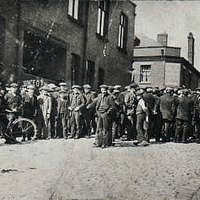
Image: Tyldesley miners outside the Miners Hall during the 1926 General Strikehttps://picryl.com/media/tyldesley-miners-outside-the-miners-hall-during-the-1926-general-strike-0b56de Licence: Public Domain Mark 1.0 Universal PDM 1.0 Deed

Wednesday, May 15, 2019


THIS DAY IN HISTORY: 100 YEARS AGO TODAY THE WINNIPEG GENERAL STRIKE BEGAN
MAY 15, 1919 remains the most important date in the history of Canadian workers to date. On that day, 35,000 Winnipeg workers, only one third of them unionized, went on strike in solidarity with the city's metal and construction trades workers who had been striking since May 1 for the right to bargain collectively with employers in their trade. The employers, themselves negotiating as a bloc, refused, insisting that they would only negotiate with individual trades. They wanted to keep their workers divided so as to keep them weak relative to the united employer class.
The day began with the non-unionized telephone operators, the "hello girls," declaring their support for the strike and refusing to work despite employer threats to fire anyone who joined the strike. Later, the "salesgirls" at Eaton's and other stores, all non-unionized, as well as a variety of other non-unionized workers in the public and private sectors joined the unions in withholding their labour. In a city of about 180,000, a majority of families counted someone who was on strike.

A Strike Committee was formed to liaise with Winnipeg city council and the mayor about what essential services would be offered in Winnipeg while the workers continued their strike for just treatment of all workers. At the council's request, the Strike Committee agreed that vehicles used by workers deemed essential would be marked "Authorized by the Strike Committee" so that strikers would not see them as scabs and perhaps harass them. The so-called Citizens' Committee of 1000, which formed to represent the interests of the city's bourgeoisie of owners and professionals, would later distort that label to suggest that the Strike Committee had usurped power to run the city from the city council. The employers were determined to give no concessions to the striking workers and indeed to break the back of unionism in Winnipeg. That would cause the Winnipeg strikers to call for general strikes in other cities in solidarity with the Winnipeg workers. Calgary and Edmonton responded to that call with month-long general strikes, though only unionists joined those two strikes.

The Winnipeg General Strike was the culmination of the frustration that most workers felt in the face of postwar unemployment accompanied by a continuation of the inflation that they experienced in wartime while their pay rates barely rose. They had managed a successful, short general strike in 1918 in the city and won concessions during a time when labour shortages and war needs weakened the position of employers. The Socialist Party, the Social Democratic Party, and the Industrial Workers of the World were all strong in Winnipeg and held huge public meetings to extol the idea of the One Big Union, an organization that would unite all workers and turn every strike into a general strike in order to strike fear into the hearts of greedy employers. The sense that World War I was a war of rival imperialists, not a just war, and that only capitalists had gained anything from it, all at the expense of working people, and continuing poverty, insecurity, and poor working conditions combined with the organizing skills of radicals persuaded most working Winnipegers that they had to take a public stand for social justice for workers.

The strike would be broken by brute state force on Bloody Saturday on June 21, 1919. But on May 15, there was a feeling of exhiliration among Winnipeg workers. They were standing shoulder to shoulder in an effort to tell their employers that they wanted either serious reforms to capital-labour relations or an end to capitalism altogether. They did not want to return to work until wage slavery had been replaced by an economy in which workers had dignity, security, and a say in how their workplace was run
ALSO SEE 


CBC INTERACTIVE HAS A COMPREHENSIVE SITE CELEBRATING WINNIPEG GENERAL STRIKE

Winnipeg strikes
Workers' demands for rights and a living wage shook the nation over 42 days in 1919


By Darren Bernhardt
May 15, 2019

The lineups were agonizingly long for the few jobs available in 1919 Winnipeg, a city teeming with a ballooning population and choked by factory smokestacks.

Afraid of losing what jobs they could get, many workers suffered through dirty, dangerous conditions and long days.

Inflation was skyrocketing and so was unemployment as Winnipeg exploded into the third-largest city in Canada, drawing in thousands of immigrants who also made it the most ethnically diverse city in the country.

These were the conditions that set the stage for the Winnipeg General Strike of 1919, an upheaval that brought few immediate gains but seeded the change that resulted in modern workers' rights.

"It was the most dramatic single event in Canadian labour history," author Donald D.C. Masters wrote in his book The Winnipeg General Strike.

The cost of living had gone up 75 per cent between 1913 and 1919. The average pay was $900 per year, yet it was estimated that $1,500 was needed to feed a family.

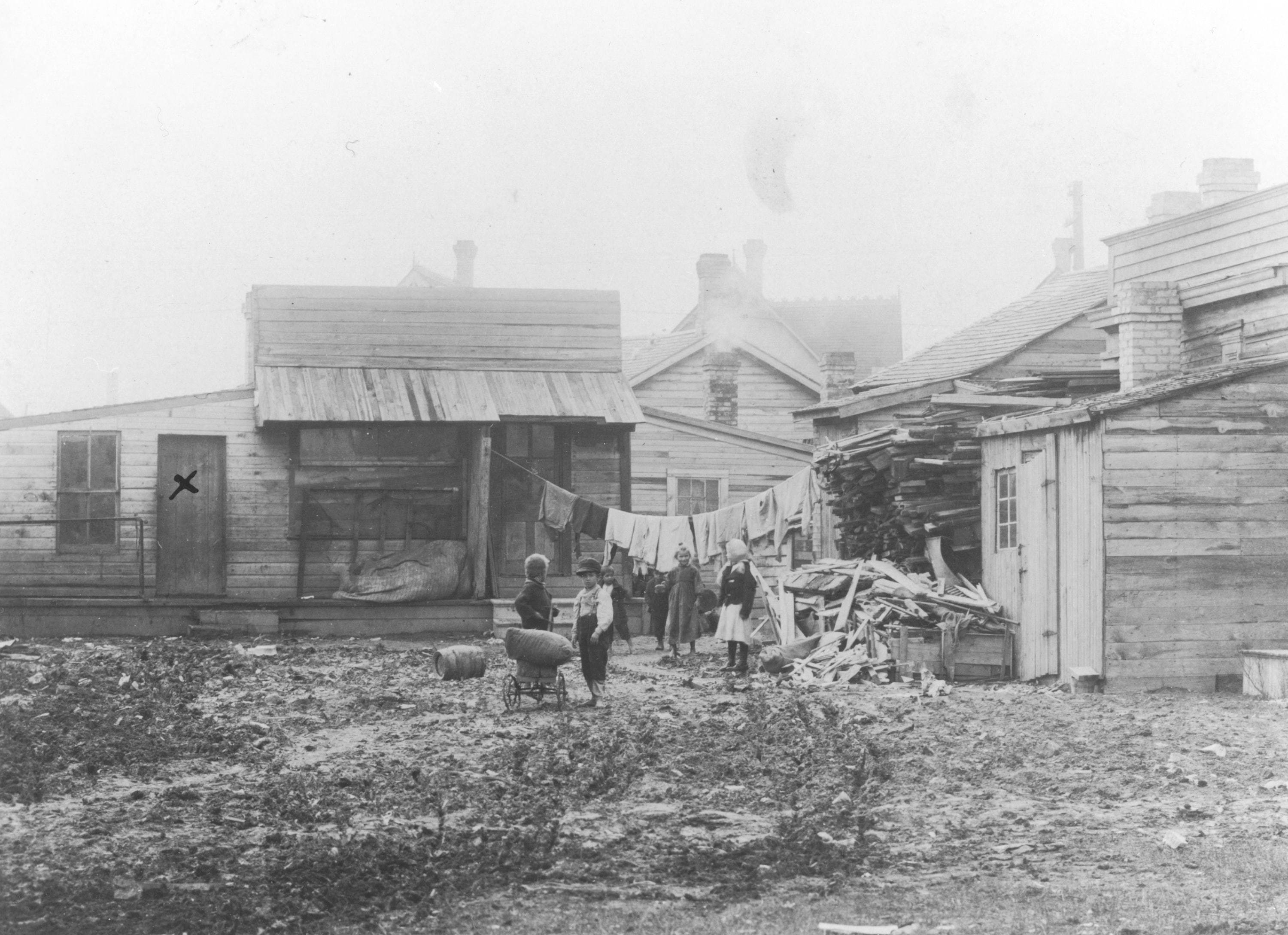
A large number of newcomers, hoping for a better life, instead found themselves salvaging scraps of wood and metal to slap together shacks in growing city slums.

"There were many impoverished people in Winnipeg. I think for many Canadians, it would be shocking to see those conditions," historian and strike expert Nolan Reilly said.


Working and living conditions were appalling for many people during the turn of the 20th century in Winnipeg.(Archives of Manitoba)


But something else also was taking root and beginning to flourish in Winnipeg —the union movement.

From 1900 to 1920, the number of unions in the city tripled and demands for a better life for workers steadily grew, said author Paul Moist, a former national president of the Canadian Union of Public Employees.

"Life was hard for the average working-class family in Winnipeg. The general strike gave voice to the frustration felt by many," he said.

"The solidarity of the city’s workers, and their decision to elect strike leaders to a range of public offices, would forever alter and define the geopolitical map of the city."

In Winnipeg in 1917, more days of work were lost to strikes than in the previous four years combined, Moist said.

And while there were gains for workers, they were modest — a few extra cents in pay.


SEE: 
 Eugene Plawiuk's account of the Edmonton general strike of 1919 which was sparked off in solidarity with the general strike in Winnipeg,.

 Eugene Plawiuk's history of the Calgary general strike of 1919, which started off as a sympathy strike for the Winnipeg general strike and soon ...

Add caption

Winnipeg general strike
 May 15, 1919 
News stories from
 May 15, 2019 


Canadian folk-rocker Bruce Cockburn be part of a free concert at Winnipeg's Old Market Square on June 8.


Radical music, graphic history, and the Winnipeg General Strike

rabble.ca


SEE THIS DAY IN HISTORY: 100 YEARS AGO TODAY THE WINNIPEG GENERAL STRIKE BEGAN