Showing posts sorted by relevance for query MKULTRA. Sort by date Show all posts

Friday, March 28, 2025


Do You Think You’ll Ever Know, Now That You Have Handed Your Mind to the Machine?


We live in a 24/7 media society of the spectacle where brainwashing is cunning and relentless, and the consuming public is consumed with thoughts and perceptions filtered through electronic media according to the needs and lies of corporate state power.

This propaganda comes in two forms: covert and overt. The latter, and most effective form, comes with a large dose of truth offered rapid-fire by celebrated, authoritative voices via prominent media. The truth is sprinkled with subtle messages that render it sterile. This has long been the case, but it is even more so in the age of images on screens and digital media where words and images flow away like water in a rapidly moving stream. The late sociologist, Zygmunt Bauman, updating Marx’s famous quote “all that is solid melts into thin air,” called this “liquid modernity.”

Welcome to Operation Pandemonium

See, these experts purport to say: What we tell you is true, but it is impossible to draw definitive conclusions. You must drink the waters of uncertainty forever lest you become a conspiracy nut. But if you don’t want to be so labelled, accept the simplest explanation for matters that disturb you – Occam’s razor, that the truest answer is the simplest – which is always the official explanation.  If this sounds contradictory, that is because it is. It is meant to be. We induce schizophrenia.

And it is, these experts suggest, because we live in a world where all knowledge is relative, and you, the individual, like Kafka’s country bumpkin, who in his parable “Before the Law,” tries to get past the doorkeeper to enter the inner sanctum of the Law but is never allowed to pass; you, the individual, must accept the futility of your efforts and accede to this dictum that declares that all knowledge is relative, which is ironically an absolute dictum. It is the Law. The Law of contradictions declared from on high.

Many writers, journalists, and filmmakers, while allegedly revealing truths about the U.S. and its allies’ criminal operations at home and abroad, have for decades slyly conveyed the message that in the end “we will never know the truth,” the real facts – that convincing evidence is lacking.

This refusal to come to conclusions is a sly tactic that keeps many careers safe while besmirching, intentionally or not, the names of serious researchers who reach conclusions based on overwhelming circumstantial evidence (the basis for most murder convictions) and detailed, sourced facts, often using the words of the guilty parties themselves, but are dismissed with the CIA weaponized term “conspiracy theorists.”

This often escapes the average person who does not read footnotes and sources, if they even read books. They read screens and the mainstream media, which should now be understood to include much of the “alternative” media. And they watch all sorts of films.

But this “we will never know” meme, this false mystery, is shrewdly and often implicitly joined to another: That we do know because the official explanation of events is true and only nut cases would believe otherwise. Propaganda by paradox. Operation chaos.

The JFK Assassination and the Release of Files

There are so many examples of this, with that of President Kennedy’s assassination being a foundational one. In this case, as with the current phony Trump release of more JFK assassination files, the ongoing “mystery” is always reinforced with the implicit or explicit presupposition that Lee Harvey Oswald killed Kennedy, but yet implying that there are more mysteries to explore forever because “people” are paranoid. (Trump’s position, as he recently told interviewer Clay Travis, is that he has always believed Oswald assassinated Kennedy, but he wonders if he may have had help.) They are paranoid not because of government and media lies, but because “popular culture” (not highbrow) has created paranoia. To spice this up, there is often the suggestion that President Kennedy was assassinated on the orders of the Mob, LBJ, Cuba, or Israel, when the facts overwhelmingly confirm it was organized and carried out by the CIA. A. O. Scott’s recent front page article in The New York Times in response to the JFK files release – “J. F. K., Blown Away, What Else Do I Have to Say?” (the title appropriately taken from a very fast-paced Billy Joel song and video) – is a perfect example of such legerdemain.

Thus the ruse to keep debating the assassination, get the latest documents, etc. to satisfy “people’s” insatiable paranoia. To pull out CIA fallback stories 2, 3, or even 4 when all else fails. Dr. Martin Schotz, the JFK researcher, rightly compares this to George Orwell’s definition of Crimestop:

‘Crimestop’ means the faculty of stopping short, as though by instinct, at the threshold of any dangerous thought. It includes the power of not grasping analogies, of failing to perceive logical errors, or misunderstanding the simplest arguments if they are inimical to [the powers that be]… and of being bored or repelled by any train of thought which is capable of leading in a heretical direction. ‘Crimestop’, in short, means protective stupidity.

It’s the crazy people’s fault, not Scott’s or those who back him up at The Times, a newspaper that has been lying about the JFK assassination from day one. The same goes for the assassinations of Malcolm X, Martin Luther King, Jr., Robert F. Kennedy, et al., and so many key events in U.S. history. It is a game of creating mental chaos by claiming we do know because the official explanation is correct but we don’t know because people have been infected with paranoia. If only people were not so paranoid! Unlike us at The Times, goes the implicit message.

The Epistemological Games of Certain Filmmakers

It is well known that people today are watching far more streaming film series and movies than they are reading books. That someone would lucubrate with pen in hand over a footnoted book on an important issue is now as rare as someone without a cell phone. The optical-electronic eye-ear screen connection rules most lives, mental and sensory. Marshall McLuhan, if a bit premature while referring in 1962 to Pierre Teilhard de Chardin – the French philosopher, paleontologist, and Jesuit priest – wrote sixty-three years ago in The Gutenberg Galaxy:

Instead of tending towards a vast Alexandrian library the world has become a computer, an electronic brain, exactly as an infantile piece of science fiction. And as our senses have gone outside us, Big Brother goes inside. [my emphasis] So, unless aware of this dynamic, we shall at once move into a phase of panic terrors, exactly befitting a small world of tribal drums, total interdependence, and superimposed co-existence.… Terror is the normal state of any oral society, for in it everything affects everything all the time.

Four years ago this month, I wrote an article – “You Know We’ll Never Know, Don’t You?” – about a new BBC documentary film series by the acclaimed British filmmaker, Adam Curtis, “Can’t Get You Out of My Head: An Emotional History of the Modern World.”

The series is a pastiche film filled with seven plus hours of fleeting, fragmented, and fascinating archived video images from the BBC archives where Curtis has worked for decades, accompanied by Curtis’s skeptical commentary about “a world where anything could be anything because there was no meaning anywhere.” These historical images jump from one seemingly disconnected subject to another to reinforce his point. He says it is “pointless to try to understand the meaning of why things happen.” He claims that we are all living as if we are “on an acid trip.”

While not on an acid trip which I have never taken, I was reminded of this recently as I watched a new documentary – Chaos: The Manson Murders (2025) – by the equally famous U.S. documentary filmmaker, Erroll Morris, a film about the CIA’s mind control operation, MKULTRA, and its use of LSD. As everyone knows, the CIA is that way-out hippie organization from Virginia that is always intent on spreading peace, love, and good vibes.

While the content of their films differs, Curtis’s wide-ranging and Morris’s focused on Manson and the book by Tom O’Neil, Chaos: Charles Manson, the CIA, and the Secret History of the Sixties, I was struck by both filmmakers tendency to obfuscate while titillating their audience with footage and information that belies their conclusions about not knowing. In this regard, Curtis is the most overt and extreme.

Morris does not use Curtis’s language, but he makes it explicit at Chaos’s end that he doesn’t believe Tom O’Neil’s argument in his well-researched book that Charles Manson was part of a CIA mind-control experiment led by the psychiatrist, Dr. Lewis Jolyon “Jolly” West. West worked in 1967 for the CIA on MKULTRA brainwashing projects in a Haight Ashbury clinic during the summer of love, using LSD and hypnosis, when Manson lived there and was often in the clinic with his followers.

On April 26, 1964, West also just “happened” to visit the imprisoned Jack Ruby, the man who killed Lee Harvey Oswald in the Dallas Police Department, and when West emerged from the meeting, he immediately declared that in the preceding 48 hours Ruby had become “positively insane” with no chance that this “unshakeable” and “fixed” lunacy could be reversed. What happened between the two men we do not know – for there were no witnesses – but one might assume West used his hypnotic skills and armamentarium of drugs that were integral to MKULTRA’s methods.

MKULTRA

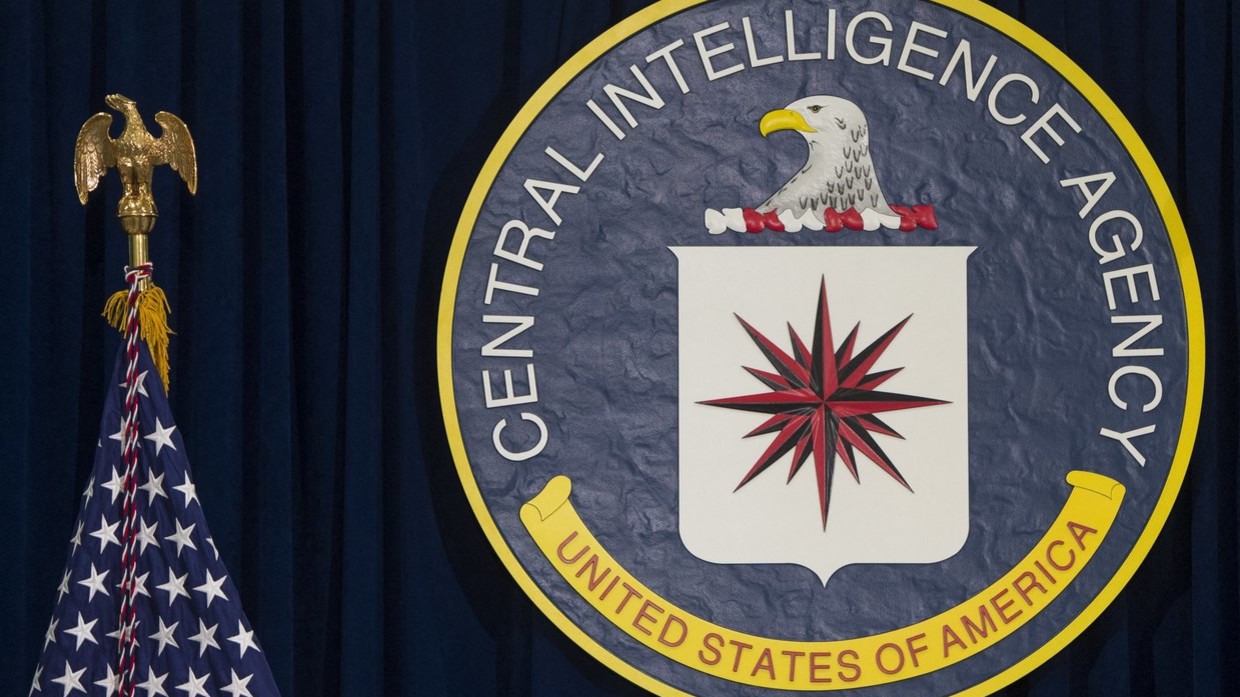
MKULTRA was a sinister and secret CIA mind-control project, officially started in 1953 but preceded by Operation Bluebird, which was renamed Operation Artichoke. These operations started right after WW II when U.S. intelligence worked with Nazi doctors to torture Russians and others to reveal secrets. They were brutal. MKULTRA was run by Dr. Sidney Gottlieb and was even worse. He was known as the “Black Sorcerer.” With the formula for LSD, the CIA had an unlimited amount of the drug to use widely, which it did. It figured prominently in MKULTRA mind control experiments along with hypnosis. Tom O’Neil sums it up thus:

The agency hoped to produce couriers who could imbed hidden messages in their brains, to implant false memories and remove true ones in people without their awareness, to convert groups to opposing ideologies, and more. The loftiest objective was the creation of hypno-programmed assassins. . . . MKULTRA scientists flouted this code [the Nuremberg Code that emerged from the Nuremberg trials of Nazis] constantly, remorselessly – and in ways that stupefy the imagination. Their work encompassed everything from electronic brain stimulation to sensory deprivation to ‘induced pain’ and ‘psychosis.’ They sought ways to cause heart attacks, severe twitching, and intense cluster headaches. If drugs didn’t do the trick, they’d try master ESP, ultrasonic vibrations, and radiation poisoning. One project tried to harness the power of magnetic fields. [my emphasis]

In 1973 during the Watergate scandal, CIA Director William Helms ordered all MKULTRA documents destroyed. Most were, but some were forgotten, and in the next few years, Seymour Hersh reported about it and the Senate Church Committee went further. They discovered records that implicated forty-four universities and colleges in the experiments, eighty institutions, and 185 researchers, Louis West among them. The evil cat and its large litter were out of the bag.

MKULTRA allegedly ended in 1973. But only the most naïve would think it did not continue under a different form. In 1964, McLuhan wrote that “the medium is the message.” The new medium that was developed in the decades since has been effectively pointed straight at the brain as you watch the screens. And the message?

Tom O’Neil’s Powerful Case

While admitting that he has not conclusively proven his thesis because he has never been able to confirm Manson and West being together, O’Neil amasses a tremendous amount of convincing circumstantial evidence in his book that makes his case very strong that they were, and that Manson’s ability to get his followers to kill for him was the result of MKULTRA mind control and the use of LSD, which he used extensively and which was introduced by the CIA and used by West. Both men had an inexhaustible amount of the mind-altering drug to use on their victims.

This is the subject of Morris’s film, wherein he interviews O’Neil on camera, who explains the extraordinary fact that Manson was able to mesmerize his followers to kill for him without remorse or shame. They “couldn’t get him out of their heads,” even many years later. This was, of course, the goal of MKULTRA – through the use of brainwashing and drugs – to create “Manchurian Candidates.” This case has much wider ramifications than the sensational 1969 Hollywood murders for which Manson and his followers were convicted; for clearly Mansion’s “family” that carried out the murders on his orders appeared in every way to be under hypnotic control. How did a two-bit, ex-con, pipsqueak, minor hanger-on musician learn to accomplish exactly what MKULTRA spent so many years working on?

Yet at the end of his film, Morris makes a concluding comment without even a nod to the possibility that O’Neil is correct. He says he doesn’t believe O’Neil. I found it very odd, jarring, as though O’Neil had been set up for this denouement, which I think he had. But at the same time I recognized it as Morris’s method of setting up and then undermining the narrative protagonists in his films that are ostensibly about getting to factual truths but never do; they are stories about how all we ever have are endless interpretations and the unknowable, confounded by human fallibility. Everything is lost in the fog of Morris’s method, which is no accident.

Frank Olson

I then found an interview that O’Neil did in 2021 in which he said he pulled out of Morris’s film proposal because Morris wanted to make a film that combined the Frank Olson story (a CIA biologist) with his about Manson. In the interview, O’Neil said he knew Eric Olson, Frank Olson’s son, who has spent a lifetime proving that the CIA murdered his father in 1953, but he didn’t explain why he pulled out of the project. However, he appears extensively throughout Chaos, being interviewed on camera by Morris, only to be undermined at the end. Why he eventually agreed to be part of the project I do not know.

I am certain he has seen Wormwood (2017), Morris’s acclaimed (they are all acclaimed) Netflix film series about the biologist/ CIA agent Frank Olson and his son, Eric Olson’s heroic lifelong quest to prove that the CIA murdered his father because he had a crisis of conscience about the agency’s use of torture, brainwashing, LSD, and U.S. biological weapons use in Korea, much of it in association with Nazis. The evidence is overwhelming that Frank Olson did not jump from a NYC hotel window in 1953 but was drugged with LSD to induce hallucinations and paranoia, smashed in the head, and thrown out by the CIA. [Read this and view this] Despite such powerful evidence available to him before making Wormwood, in another example of Morris’s method, he disagrees with Eric Olson’s decades of conclusive research that his father was murdered.

Conclusion

Filmmakers like Adam Curtis and Erroll Morris are examples of a much larger and dangerous phenomenon. Their emphases on the impossibility of knowing – this seeming void in the human mind, an endless acid trip down a road of kaleidoscopic interpretations – is much larger than them. It is deeply imbedded in today’s society. One of the few areas in which we are said to be able to know anything for certain is in the area of partisan politics. Here knowingness is the rule and the other side is always wrong. Fight, fight, fight for the home team! Here the nostalgia for “knowledge” is encouraged, as if we don’t live in a 24/7 media society of the spectacle where brainwashing is cunning and relentless, and the consuming public is consumed with thoughts and perceptions filtered through electronic media according to the needs and lies of corporate state power.

With the arrival of the electronic digital life, “knowledge” is now screening. If you don’t want to confirm McLuhan’s prediction – “as our senses have gone outside us, Big Brother goes inside” – it behooves everyone to step back into the lamplight to read and study books. And take a walk in nature without your machine. You might hear a little bird call to you.

Edward Curtin writes and his work appears widely. He is the author of Seeking Truth in a Country of LiesRead other articles by Edward, or visit Edward's website.

Wednesday, May 25, 2022


The story of how the CIA conducted secret LSD experiments on unwitting US citizens

The decade-long MK ULTRA program used unwitting candidates for mind-control tests
The story of how the CIA conducted secret LSD experiments on unwitting US citizens

After World War II, the possibility of gaining control over a person’s mind became one of the top pursuits for intelligence services. Amid never-ending spy games, the capacity to make someone tell the full truth during an interrogation, or to wipe out a subject’s personality and impose another – perhaps, a controlled one – became quite attractive to secret services.

In 1979, former US State Department officer John Marks published a book called “The Search for the ‘Manchurian Candidate’,” which focused on the CIA's mind-control experiments and is based on agency documents released under the Freedom of Information Act.

The term ‘Manchurian Candidate’ emerged from a title of a novel by Richard Condon, first published in 1959, which tells the story of a US soldier brainwashed and turned into an assassin by the Communists. Back then, the fear that America’s rivals might use such techniques was not only a fictional fantasy, but a matter of very serious concern.

This is how John Marks describes it: “In 1947 the National Security Act created not only the CIA but also the National Security Council – in sum, the command structure for the Cold War. Wartime [Office of Strategic Services] leaders like William Donovan and Allen Dulles lobbied feverishly for the Act. Officials within the new command structure soon put their fears and their grandiose notions to work. Reacting to the perceived threat, they adopted a ruthless and warlike posture toward anyone they considered an enemy – most especially the Soviet Union. They took it upon themselves to fight communism and things that might lead to communism everywhere in the world.”

‘Defensive orientation soon became secondary’

In 1975, this US Senate select committee, chaired by Democratic senator from Idaho Frank Church, looked into the possible intelligence abuses committed in the past. It was part of a so-called ‘Year of Intelligence,’ a series of investigations into the operations which included “illegal, improper or unethical activities,” as the resolution establishing the Church committee put it.

Actually, there were reasons for the US public to question the secret services’ methods. After the Watergate scandal, it was disclosed that the CIA had a direct role in what happened. While describing the CIA’s activities in his article for the New York Times, journalist Seymour Hersh mentioned other agencies’ operations targeting American citizens. The CIA itself only released the documents on the matter in 2007.

So, the Church committee had quite a lot of work to do. The members held 126 full committee meetings, 40 subcommittee hearings and interviewed some 800 witnesses. After having searched through 110,000 documents, the committee published its final report in April 1976. It also issued a document called “Alleged Assasination Plots Involving Foreign Leaders,” detailing the intelligence’s plans to kill several top figures like Patrice Lumumba and Fidel Castro.

The main report contains a huge chapter dedicated to the use of chemical and biological agents by the intelligence agencies. “Fears that countries hostile to the United States would use chemical and biological agents against Americans or America’s allies led to the development of a defensive program designed to discover techniques for American intelligence agencies to detect and counteract chemical and biological agents,” the report says, pointing that the defensive weapon soon turned into an offensive one.

The defensive orientation soon became secondary, as the possible use of these agents, to obtain information from or gain control over enemy agents, became apparent.

The report goes on to explain that the programs were so sensitive that “few people, even within the agencies” knew about their existence, and “there is no evidence that either the executive branch or Congress were ever informed.” As a result, scores of people suffered some damage and at least two of them died due to the experiments.

One grim example is the case of American tennis player Harold Blauer. In 1952, he voluntarily entered the New York State Psychiatric Institute because he was suffering from depression compounded by divorce. The institute had a classified contract with the Army for research of potential chemical warfare agents. As part of an experiment that he knew nothing about, Blauer was given a series of derivatives of a psychedelic substance called mescaline, and died. In 1987, a US court ruled that the Government had covered up its role in the man’s death. A Judge ordered the authorities to pay $700,000 to Blauer’s family.

Unwitting candidates

Since the late 1940s, the CIA ran several projects involving chemical and biological agents. From 1947 to 1953, a project called CHATTER researched “truth drugs” – something that, according to the Church commission’s report, was a response to “reports of ‘amazing results’ achieved by the Soviets.” Animals and humans underwent tests involving a plant called anabasis aphylla, an alkaloid scopolamine and ​​mescaline.

In 1950, a project dubbed BLUEBIRD was approved. Its aim was to investigate mind-control methods that prevent personnel from “unauthorized extraction of information” and that give the user the means to control an individual using special interrogation techniques. A year later, the project was rebranded as ARTICHOKE. Apart from its defensive purposes, it now included research into “offensive interrogation techniques” involving hypnosis and drugs. There’s no certain information about when the project ended. According to the Church commission’s report, the CIA insisted that ARTICHOKE had been scrapped in 1956 – however, there was evidence that the “special interrogation” it studied had been used for several more years.

There was also MKNAOMI, which investigated biological warfare agents, their storage, and devices for their diffusion. It was scrapped after president Richard Nixon put an end to America's offensive biological weapons program in 1969.

MKULTRA

The CIA’s main mind-control research program, which turned out to be a real shock when discovered, was MKULTRA, headed by Dr Sidney Gottlieb. Launched in 1953 and discontinued a decade later, the program involved testing human behavior control with the likes of radiation, electroshock, psychological and psychiatric tools, harassment substances and paramilitary devices. The project had a special branch, MKDELTA, to oversee tests conducted abroad.

For the most part, people now know about MKULTRA because it involved LSD – a psychedelic drug created in 1938 by Swiss chemist Albert Hofmann at the Sandoz Laboratories in Basel, Switzerland. On April 19, 1943, Hofmann accidentally took LSD himself and discovered how strong the effect might be (this day is now known as ‘Bicycle day,’ as Hofmann was riding a bike when he experienced the first-ever ‘trip’ on LSD, commonly known as ‘acid’). Sandoz Laboratories began marketing the drug under the name ‘Delysid’ four years later, and in 1948 it came to the US.

The CIA knew about LSD’s effects, and relied on it so much that, in 1953, there was a plan to purchase 10 kilograms of LSD, some 100 million doses worth $240,000, for experiments.

The CIA, posing as a research foundation, made deals with universities, hospitals and other institutions to get the materials and substances it needed. The tests were performed on human subjects, with or without their knowledge. Even those who volunteered to take part in the research were unaware of the real purpose behind it. The CIA considered that the secrecy aspect was needed as, in a potential operation, the targeted subject would certainly be unwitting.

Several tests involving LSD were conducted in the army. It was also used abroad during interrogations of alleged foreign spies.

The hallucinogen was also tested on prisoners, sometimes on those with drug addictions. Several volunteer inmates from “Lexington Rehabilitation Center” – a prison for addicts serving sentences for drug violations – were given hallucinogenic drugs in exchange for drugs they were addicted to.

American organized crime boss James ‘Whitey’ Bulger took part in MKULTRA in 1957, while being held in prison in Atlanta. In 2017, he described his experience in an article for the OZY media outlet. According to Bulger, he realized that he had been taking part in the CIA experiments only years later, when he read The Search for the ‘Manchurian Candidate’.

Whitey Bulger was recruited for the experiment together with several other inmates. According to his article, he was told it was a medical project aimed at finding a cure for schizophrenia. “For our participation, we would receive three days of good time for each month on the project,” Bulger wrote. “Each week we would be locked in a secure room in the basement of the prison hospital, in an area where mental patients were housed.” All the candidates were given massive doses of LSD and then tested for their reactions.

This is how Whitey Bulger described it: “Eight convicts in a panic and paranoid state. Total loss of appetite. Hallucinating. The room would change shape. Hours of paranoia and feeling violent. We experienced horrible periods of living nightmares and even blood coming out of the walls. Guys turning to skeletons in front of me. I saw a camera change into the head of a dog. I felt like I was going insane.” He said the experiments caused him long-lasting sleeping problems and nightmares.

Death of Dr Olson

In November 1953, a group of CIA employees (including Sidney Gottlieb), together with scientists from the US’ biological research center called Camp Detrick, gathered in a cabin in Maryland for a conference. The group included Dr Frank Olson, an expert in aerobiology. At some point, the CIA members decided to conduct an experiment on unwitting candidates, so Gottlieb’s deputy Robert Lashbrook added LSD to a bottle of Cointreau liqueur, which was served after dinner. Olson tasted it.

When Olson returned home, family members noticed that he was depressed. Two days later, Olson complained to his chief Vincent Ruwet about his bad condition and what he experienced. Ruwet contacted Lashbrook, and they took Olson to New York, to meet a doctor close to the CIA, who was experienced in LSD. In New York, Olson felt so bad that he even refused to fly back home to spend Thanksgiving with his family. Later, Lashbrook claimed that during the last dinner they had together, the man looked “almost the Dr Olson… before the experiment.” According to Lashbrook’s testimony, at 2:30am he was awakened by a loud “crash of glass,” and saw that Olson had fallen to his death from the window of their room on the 10th floor. Olson’s family, however, refused to believe it was a suicide, and claimed that the aerobiology expert had been murdered.

Despite all this, the tests involving unwitting people continued. The CIA employees could meet a candidate in a bar, take them to a ‘safe house’ and administer the drug through food or drink – and then wait for the reaction. Sometimes the candidates felt ill for days afterwards.

The project was scrapped in 1963. A decade later, Gottlieb destroyed most of the documents regarding MKULTRA, so its real scale will never be known.

While MKULTRA remains just a Cold War-era ghost, research into new weapons and into methods of countering them has never stopped – and will never stop, according to ex-CIA-officer-turned-whistleblower John Kiriakou, while countries all over the world are paying “billions and billions of dollars” for it.

Kiriakou believes that it’s never ethical to experiment on a human being without that person’s complete understanding of what is happening – and without an agreement to be a part of the experiment. “These things shouldn’t be secret; if they are secret, they shouldn’t be done,” he told RT. “Ethically and legally you can’t experiment on a human being without an agreement.

“When I was in college, I didn’t have enough money to pay for rent for one month. I saw an advertisement from a pharmaceutical company saying that they want to experiment with these new drugs on young healthy people that they’ll give $500 if you agree to take these drugs over the course of a weekend, and then they draw your blood and they measure the absorption rate of the medication,” Kiriakou recalls. “So I did it. It made me sleepy, I got my $500 and I went home. I knew what I was doing, I agreed to allow them to experiment on me. It was uncomfortable and I felt gross, but my eyes were open.”

When we are talking about chemical or biological research, it’s a good thing until it serves peaceful purposes, he says. “In the end, a lot of good can come of it, especially when countries are cooperating with one another,” Kiriakou concludes. “But in wartime, and especially when the public isn't informed of these things, it can be a frightening prospect, because we have to just trust in our governments not to use them offensively as weapons.”

Tuesday, January 31, 2006

Tune In, Turn On, Drop Out


This month marked the 100th birthday day of Albert Hoffman the discoverer of LSD.

Father of LSD recalls his famous bicycle trip


LSD inventor keeps on truckin' at 100 The drug was popularized by Timothy Leary, the one-time Harvard lecturer known as the “high priest of LSD,” whose “turn on, tune in, drop out” advice to students in the 1960s glamorized the hallucinogen. The film star Cary Grant and numerous rock musicians extolled its virtues in achieving true self-discovery and enlightenment.

But away from the psychedelic trips and flower children, stories emerged of people going on murder sprees or jumping out of windows while hallucinating. Heavy users suffered permanent psychological damage.

The United States banned LSD in 1966 and other countries followed suit.

Mr. Hofmann maintains that was unfair, arguing the drug was not addictive. He has repeatedly said the ban should be lifted so LSD can be used in medical research, and he took the drug himself, purportedly on an occasional basis and out of scientific interest, for several decades.

And it has been 58 years since LSD was discovered and applied to scientific and psychiatric assessment. LSD - My Problem Child by Albert Hofmann

LSD was studied extensively by Dr. Oswald from Weyburn, Saskatchewan. Boing Boing: Midcentury LSD Experiments at Canadian mental hospital Yep little old Saskatchwan.

Dr. Oswald had done earlier experimentations with mescaline which he had administered to the author Aldous Huxely.

Mescaline, LSD, Psilocybin and Personality Change

Oswald was a pioneer in LSD investigations, he was the originator of the term 'psychedelic'. The experiments conducted in Saskatchewan were the more positive aspect of LSD experimentation during the late fifties and early sixties.

Flashback: Psychiatric Experimentation With LSD in Historical Perspective

In the popular mind, d-lysergic acid diethylamide (LSD) research in psychiatry has long been associated with the CIA-funded experiments conducted by Ewen Cameron at the Allen Memorial Institute in Montreal, Quebec. Despite this reputation, a host of medical researchers in the post–World War II era explored LSD for its potential therapeutic value. Some of the most widespread trials in the Western world occurred in Saskatchewan, under the direction of psychiatrists Humphry Osmond (in Weyburn) and Abram Hoffer (in Saskatoon). These medical researchers were first drawn to LSD because of its ability to produce a “model psychosis.” Their experiments with the drug that Osmond was to famously describe as a “psychedelic” led them to hypothesize and promote the biochemical nature of schizophrenia. This brief paper examines the early trials in Saskatchewan, drawing on hospital records, interviews with former research subjects, and the private papers of Hoffer and Osmond. It demonstrates that, far from being fringe medical research, these LSD trials represented a fruitful, and indeed encouraging, branch of psychiatric research occurring alongside more famous and successful trials of the first generation of psychopharmacological agents, such as chlropromazine and imipramine.

During the 1950's and 1960's the Canadian Defense Department, and the American Defense department and the CIA funded LSD research on unsuspecting Canadian subjects. They also did joint secret studies of Biological Chemical warfare weapons on the citizens of Winnipeg, and as we are finding out now, Agent Orange tests on unsuspecting Canadian troops and citizens in Gagetown NB.

Bio-Chemical Warfare and You

The most infamous of the CIA LSD mindcontrol experiments was the work of Dr. Ewan Cameron, but he was not alone. McGill university was also implicated in the illegal and unethical treatment of prisoners and unsuspecting patients by psychiatrists using LSD as well as other behavioral modification drugs and techniques.

Canadian experiments

The experiments were even exported to Canada when the CIA recruited Albany, New York doctor Ewan Cameron, author of the psychic driving concept which the CIA found particularly interesting. In it he described his theory on correcting madness, which consisted of erasing existing memories and rebuilding the psyche completely. He commuted to Montreal every week to work at the Allan Memorial Institute and was paid $69,000 from 1957 to 1964 to carry out MKULTRA experiments there. The CIA appears to have given him the potentially deadly experiments to carry out since they would be used on non-U.S. citizens.

In addition to LSD, Cameron also experimented with various paralytic drugs as well as electroshock "therapy" at 30 to 40 times the normal power. His "driving" experiments consisted of putting subjects into drug-induced coma for months on end (up to three in one case) while playing tape loops of noise or simple repetitive statements. His experiments were typically carried out on patients who had entered the institute for minor problems such as anxiety disorders and postpartum depression, many of whom suffered permanently from his actions.

It was during this era that Cameron became known worldwide as the first chairman of the World Psychiatric Association as well as president of the American and Canadian psychiatric associations. Cameron had also been a member of the Nuremberg medical tribunal only a decade earlier.

Resources on Drug Experiments Performed by the US Government


Letter re: LSD experiments at Prison for Women, Kingston

bioethics

LSD TESTS KINGSTON PRISON FOR WOMEN 1960'S

The Canadian military funded LSD experiments on students and musicians in Montreal


Canada was the one country that was extensively doing scientific and psychiatric studies on LSD, and would later influence the American studies such as those Ken Kesey went through and documented in his novel One Flew Over the Cuckoo's Nest.

THE USE OF LSD IN THE TREATMENT OF ALCOHOLISM


In fact it was the CIA which popularized LSD in the research community and can be thanked for its becoming the popular hippie drug it would become. The Original Captain Trips

The CIA aghast at the result of its 'experiment' getting out of control later would plant phony LSD fear stories in the press of the day, Time Magazine in partiuclar, about how LSD caused people to stare at the sun and go blind or leap off buildings because they thought they could fly. The incidents may have occured, not during hippie Timothy Leary style 'trips', but when unsuspecting CIA agents had been drugged without their knowing it.

The CIA dropped LSD but continued to practice narcopolitics with guns and weapons for heroin exchanges begining with the Vietnam war and it still continues today. As well as later connections between the CIA and the Cocaine cartels in Latin America. The War on Drugs was really about the war on drugs NOT supplied by the CIA. Always has been.

The CIA and The Politics of Heroin

CIA Hawking Heroin in Baghdad?

And while Dr. Hoffman blames LSD's wayward travels as the popular Tune In , Turn On, Drop Out drug of the Leary hippie era, its scientific banishment was orchestrated deliberately by the U.S. government after MKULTRA and other CIA experiments on mind control proved failures, and the popularity of the drug was getting out of their control.

Scientific research using LSD had to be restricted if not outright banned to cover up the covert studies done by CIA funded psychiatrists or else the scientific community would find out that results of so called benign studies were something more sinister.

The effect of lysergic acid diethylamide(LSD-25) on perception with stabilized images


The Guardian reports on one of the original British scientists who studied LSD prior to the famous Timothy Leary psychedlic revolution, who wants to return to studying its impact on mental illness.

Re-opening doors of perception
Sarah Boseley reports on the psychiatrist who wants to reverse the taboo against using LSD to help troubled patients


The revival of the idea of studying the impact of LSD is because the British Home Secretary has called for an extensive review of the drug legislation in Britain.

Will Clarke go soft on LSD and Ecstasy?

Charles Clarke has ordered a sweeping review of drug laws which could lead to the effective downgrading of Ecstasy and LSD.

The Home Secretary, who caused fury by resisting demands to toughen the rules on cannabis, said the current system of classifying drugs could be torn up.

He is considering a new system which would take into account the 'social' consequences of each drug, including links to muggings and burglaries. Drugs are currently split into Class A, B and C.


In 1972 Canada like Britain plans to do today, did a comprehensive Royal Commission into the use of drugs. The Ledain commission is noted for its work around cannibis and the controversial reccomendation at the time, one that remains controversial, for the decriminalization of cannibis and recreational drugs. The study also included research on LSD.

Canada was the soul source of scientific experimentation on LSD and for access to LSD even after the U.S. banned it.

BC's Acid Flashback

Long before Timothy Leary and the Summer of Love, patients at Hollywood Hospital in New Westminster were being treated with LSD.

To Rick Doblin, New Westminster's Hollywood Hospital was a far-off place of myth and legend. It was 1972, and being a college student in Florida, he was keen to expand his mind. So he wrote to the hospital to see whether he could undergo its most famous treatment; a 12-hour trip into his consciousness, under the influence of pure Sandoz LSD.

"It was the only place left where you could have a guided LSD experience in a controlled setting," Doblin says. But the hospital told him it would cost $600, more than an 18-year-old could afford, and the trip never happened.

He never forgot about that hospital, though. After doing a PhD in public policy at Harvard, he became director of the Multidisciplinary Association for Psychedelic Studies, a Florida-based research group that designs experiments using mind-altering drugs in psychiatric therapy. Last month Doblin was in the news because the U.S. Food and Drug Administration had approved a MAPS-designed study using MDMA (better known as Ecstasy) for post-traumatic stress disorder. Now Doblin is helping create an experiment using LSD - which, like MDMA, was successfully used by therapists for years before it was outlawed. So he's set his sights once again on Hollywood Hospital - or at least the files for the thousands of patients who were treated there with LSD between 1957 and 1975

Canada remained a source of LSD for drug studies conducted in the late 1970's all were done on animals none on humans after the US Administration banned the scientific use of LSD.

DISAGGREGATION OF BRAIN POLYSOMES AFTER LSD IN VIVO Involvement of LSD-Induced Hyperthermia

RNA Synthesis in Isolated Brain Nuclei after Administration of d-Lysergic Acid Diethylamide (LSD) In Vivo


Today a new age of mind explorers, working in the computer enhanced virtual reality of the wired culture have re-discovered the positive uses of LSD. LSD: The Geek's Wonder Drug?

The earlier researchers like Dr. Timothy Leary and Richard Albert (Baba Ram Dass) who used LSD to open the doors of perception ( as Aldous Huxely refered to his experiences on a similar hallucinogen; mescaline) this generation of mind explorers has their work to build on and Dr. Leary's later interest in computers. What goes around comes around and goes around and comes around.

Todd Brendan Fahey made the Digital Leap at the close of 1994.

The synthesis of psychedelic drugs and the Internet has not been widely written of by the mainstream media, but Fahey and others believe the relationship to run deep.

John Perry Barlow remarked to Fahey, in an as-yet unpublished interview: "I'll go so far as to say, if the government succeeds in its War On (some) Drugs--if everyone who used marjiuana and LSD were to really be put in jails--America would not have an operational computer left."

This remark mirrors Timothy Leary's assertion, to Fahey in 1992, that "Steve Jobs and Steve Wozniak were barefoot, long-haired acid freaks" and that Bill Gates was known to use LSD while at Harvard.

The image “http://upload.wikimedia.org/wikipedia/en/5/56/B23.land_of_psychedelic_illuminations.jpg” cannot be displayed, because it contains errors.


Tags