Have we lost control over AI?
Frankenstein's monster is a convenient story, one that distracts us from the doctor.
Alberto Garzón
Sep 20, 2026
Ecosocialist Notebook
Leaders and engineers at major Western artificial intelligence companies say their programmes could wipe out humanity. Some argue over whether the probability is above or below 10%. But the curious thing is that these doom-laden announcements have been going on for years, and AI companies' share prices, far from falling, have risen spectacularly. What sort of system is this, in which the people warning that a technology may endanger humanity are, at the same time, the ones with the greatest financial incentive to keep developing it?
This is not to underestimate the risks of artificial intelligence, which are many and very serious. As a technology, for instance, it could replace many tasks and jobs that today support millions of families around the world. In fact, it is not clear that it has much capacity to raise productivity, nor that the system will create new jobs for those it pushes out. It is also risky to concentrate so much power in the hands of a few private companies, which have deeply penetrated the computing and security systems of the world’s leading countries. We could speak too of geopolitical risks: when we hand control of a process over to a US firm — to manage the electricity grid, say — we are also handing it a weapon that can be fired at us. And of course AI does not exist in thin air; it needs electricity, water, data centres, chips, networks and enormous quantities of materials, so that its apparent immateriality conceals an ever-larger physical infrastructure that aggravates the problem of climate change. All of this is absolutely true, and to no small degree these can be described as ways of bringing an end to the world as we know it. Yet in practice we let ourselves be swept along by the idea that AI is going to kill us in some far more outlandish fashion.
There is something odd about AI engineers being the ones to announce that it may kill us. Aside from the odd terrorist, nobody comes out publicly to say they are in a position to kill us all. That dissociation is only sustainable if we accept the premise that AI, or some part of it, has become independent as a subject and that, like Frankenstein’s creature, it is no longer under its designer’s control. And this is questionable, to say the least. Richard Seymour has already put it brilliantly: AI’s capacity to act depends on an infrastructure, a set of permissions and a set of objectives that some human being has designed and deployed. If an engineer designs a model capable of carrying out cyberattacks on companies and activates it without any safety measure—that is, without limiting the damage it can cause—then the person responsible is the creator, not the model, however sophisticated it may be. To put it in more conventional terms: AI has no consciousness, and all its internal objectives are programmed in advance. Even when unforeseen behaviours arise, political responsibility still lies with whoever decided to deploy the system without controls. In this sense, AI can kill us in the same way nuclear bombs can, that is, as an instrument of destruction, though what matters remains that behind it there is someone who has politically stamped it with that will to kill.
Although they haven't been terribly clear about how AI will kill us, I do believe the engineers genuinely mean what they are saying. All of us are watching, month after month, the enormous potential of artificial intelligence, and we know it can be used as a blessing or a curse depending on what suits. We also know that we, the users of their products, are not only working with versions inferior to the technological frontier (which they test in their laboratories) but that their full functionality is restricted for us as well. If we cannot use all the knowledge stored in those data centres — books, articles, every trace of the internet — in order to, say, design a homemade biological bomb, it is because someone has prohibited that functionality. And quite right too, I should add. But here is the point: we know the programme could go to such extremes.
When we are warned that AI may kill us, we are also being told that its “creative” and “innovative” potential has risen a great deal compared with earlier stages. And under capitalism, that is as much to say that its capacity to generate profits has multiplied, which explains the fever of multi-billion investments in AI companies. Yet, as I have already mentioned, it is not clear that productivity is rising for the economy as a whole, and therefore AI may have no positive effect on growth. And the two things — the absence of any effect on productivity and the brutal investment in the sector — cannot be sustained together for long. Hence everything points to what we really have being an immense bubble, fed by vast quantities of idle international capital and held up by explosive announcements.
It would be far more reasonable to talk about the real and immediate risks of rolling out the technology. Its growing capacity, for example, to be used as a surveillance technology in the world of work and in civil life. The worst dystopias may well come to pass if we allow our working time, and our freedom outside it, to be monitored by AI agents programmed by capital. Because AI has never been an autonomous force (except conceptually), but rather a product with owners. Those owners are billionaires who do business with the most powerful governments and companies in the world, which means they are instruments of class.
And let the reader ask themselves this: what did you think when you read the headline? Did you assume that humanity is genuinely in danger from a disembodied, abstract and all-powerful existential threat, and that, like Dr Frankenstein, we will end up dying at the hands of our own creature? That is, without doubt, the dominant narrative. But perhaps the reader has anticipated my conclusion: the problem is not that humanity is about to lose control of AI, but that a minority has always held that control, and humanity, now understood as the majority, is simply at the mercy of a handful of millionaires. So, if we are to prevent the destruction of our world and our planet, the solution is to limit the power of those who control artificial intelligence.
Apocalypse Now and Then
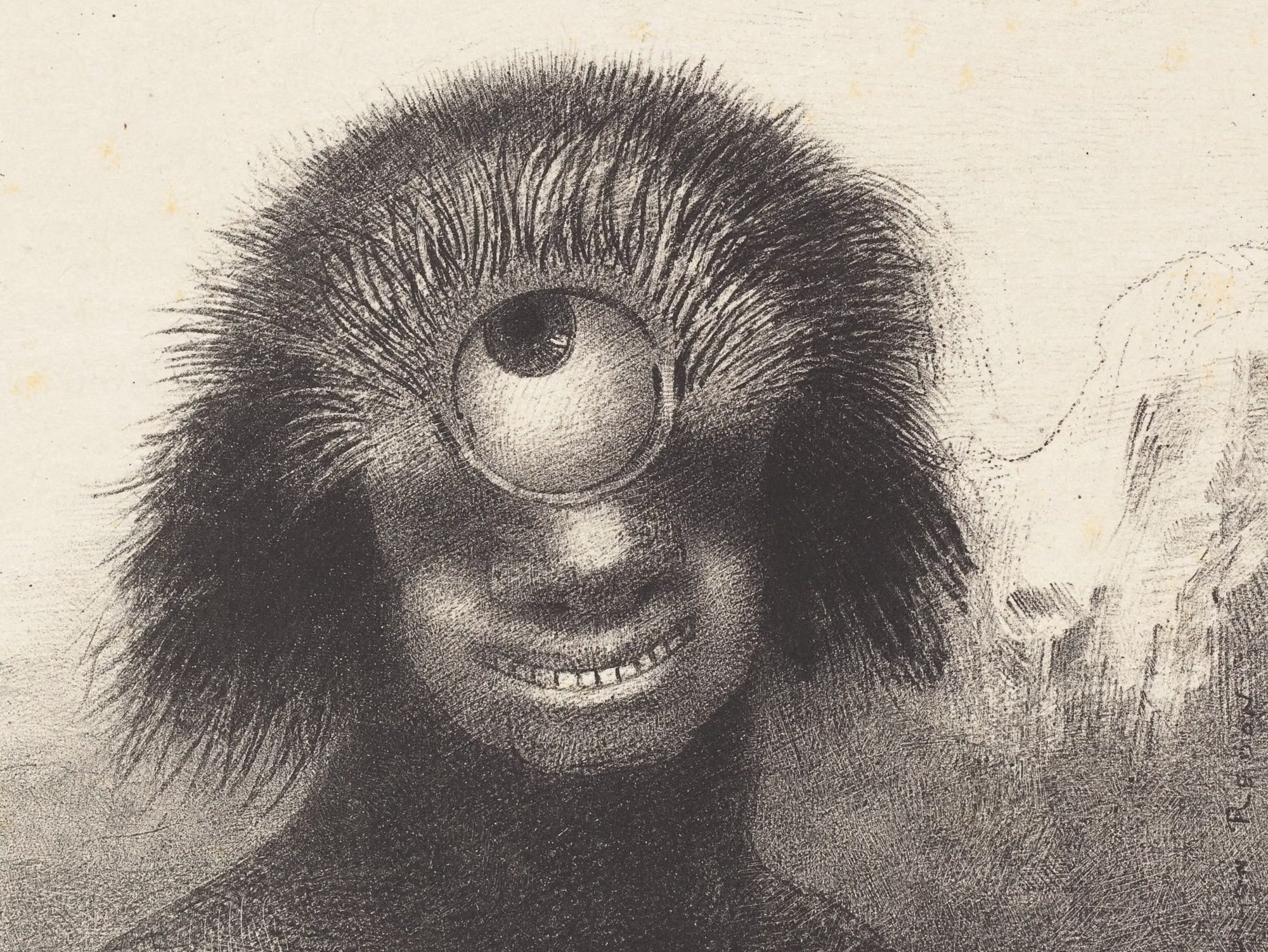
The auguries are raining down hard. Think or Sink. Comply or Die. Look Up or be Left Out. And so, with these not-so-gentle threats, it has come to pass that the Age of AI – Actual Idiocy, Actual Super Idiocy, Recursive Snowballing-Idiocy – is upon us. Heck, I’ve already used two dashes in this opening paragraph. That, as they say, is a tell. So, perhaps I haven’t written this essay at all. You’d have to use an AI app to check if it’s actually AI, and whether I’m really, or not really, or only partially me. You can no longer use your instincts. You have to use the App. Now that AI owns the em dash, what will future generations make of Emily Dickinson and her love of them? Has she been fed to the machine, too? Will they love her less? Are we being gradually locked out of language? Does it matter anymore?
For reasons that have more to do with a writer’s ego than with faith, I have always been enthralled by the first verse of The Gospel According to St John: “In the beginning was the Word, and the Word was with God, and the Word was God.” I believe this to be true. I believe that disrupting and vitiating the fundamental relationship between humans and language will undermine all semblance of social coherence.
AI has crashed into the world of literature, leaving writers, publishers, literary agents, readers, critics, teachers and students feeling the ground give way under their feet. Professors must now look at student assignments with distrust. Publishers have to evaluate new writers like detectives inspecting a potential crime scene. It’s hard to describe what this does to reading or learning. The joy and challenge of intellectual engagement has been replaced by something closed, mordant and mechanical. A taxidermists’ Shangri-La in which everything that was once alive has been skinned and stuffed, and regards you unblinkingly, with a meaningful glint in its bright, spurious eyes. It’s like looking at someone and wondering if it’s really who you think it is. Or looking in the mirror and seeing your likeness, but knowing it isn’t really you.
In time, we may forfeit that knowledge, too. Then we will no longer know who we are, or even if we are.
And when this happens to a whole society, a whole species, when we can no longer rely on instincts that have been learned over centuries, passed down from generation to generation, when we can no longer trust our hearts, our eyes or our ears, when we can no longer tell truth from falsehood or the virtual from the real, when time collapses and the past, present and future run into each other, when a million languages and cultures are pureed into glop, when an ancient social compact – whatever its limitations and flaws – is smashed beyond recognition, are we setting ourselves up for mass psychosis?
This line of thinking may open me to accusations of having fallen prey to the inevitable moral panic that ensues when we’re faced with something new and incomprehensible – the same panic that preceded the Industrial Revolution or the coming of the computer. The question is: is that all it is? Are we just living through an uncomfortable moment of transition in the evolution of human “progress”? Or is this indeed a catastrophic rupture?
Perhaps we should listen to the people who are building this glorious new technology. Last month, a young employee at Anthropic, Jacob Coxon, quit his job, saying that his conscience would not allow him to work on a project that could potentially annihilate the human race. The picture he painted of his workplace was more or less the Manhattan Project on steroids. But as we know, this time around the scientists are motivated in large part by profit and a race to “get there first”. What followed Coxon’s resignation was bewildering. The CEOs of the biggest AI companies fell over each other in their rush to discuss, disagree or concur with the whistleblower who had exposed them. Our screens blew up with videos of those billionaire oligarchs informing us in sombre, sepulchral tones that there was a fair chance that the Machine God they are in the process of consecrating could bring about the end of human civilisation.
Having established their suzerainty over our species, they reassured us that they were doing their best to mitigate the risk. They made a plea for government regulation. Their cry for help hinted at some sort of pathology. There was something a little kinky about it – a sort of Tie Me Up! Tie Me Down! vibe. Is it that, or is it just the inherent nature of capitalism? Helplessness in the face of untethered greed?
The oligarchs do seem to believe in their extinction narrative – at least enough to have built themselves bunkers at the far ends of the Earth stocked with water, food and ammunition. But extinction is not what they are selling the rest of us. (Donald Trump and tech libertarians openly call it a hoax.) Progress, glory and the good of mankind are the marrow of their sales pitch. One of them, Peter Thiel of Palantir, has even gone so far as to call critics and those calling for regulation the “Anti-Christ” who are courting the devil – by default conferring divinity on his company and its aspirations. (Yes, the same person who, when asked whether he believed that the human race should survive, famously replied “Ummm….” and went on to stutter and mumble.)
The crackle and pop eventually settled along faultlines that are familiar to tech insiders – doomers, accelerationists, skeptics. But when other voices speak up about the real, calamitous ongoing damage being done by the AI industry, they are deliberately ignored and shut out.
Interestingly, the oligarchs seem to be a lot more comfortable with Jacob Coxon than they are with some other whistleblowers. They did not rally in defence of Meredith Whittaker, now president of the Signal Foundation, who resigned from Google in 2019 after she called out its contract to build machine vision technology for US drones. Seven years later, that synthesis between the AI industry and the weapons industry is on display for all of us to see. (Cf. The US double-tap attack on a girls’ school in Minab, southern Iran, in February, in which 156 people including 120 schoolchildren were killed. No apologies were offered, because no one did it. Machine-planned murders come guilt-free. This is also true of Lavender, Gospel and Where’s Daddy?, the AI systems behind Israel’s assassination campaign against Hamas militants in Gaza, in which, according to human rights reports, the basic target unit for the locating and tracking systems was the family home.)
There was no outbreak of oligarch support when Timnit Gebru, one of the very few black women in a senior technical role in Silicon Valley, was fired from Google in 2020 for refusing to take down a research paper she had co-authored. The paper exposed the environmental costs of training large language models (LLMs) – including Google’s – and showed how they magnified and reproduced white supremacy and misogyny from the data sets they had swallowed whole. She warned that these pathologies would only be amplified as the models were scaled up and became harder to audit. Her findings were buttressed by another researcher, Abeba Birhane, who co-authored a paper called “On Hate Scaling Laws for Data-Swamps”.
Why would Whittaker and Gebru and their very specific indictments worry the oligarchs more than the prophets of all-out extinction like the AI scientist-turned-critic Geoffrey Hinton, or Jacob Coxon? Perhaps because, like a big fireworks display, Hinton and Coxon’s warnings add frisson to the atmospherics. They end up augmenting the oligarchs’ power play, which, when their companies go public, as they are set to do soon, will serve them very well indeed. Their valuations will depend on how sophisticated – and, in the case of AI weapons systems, how lethal – their models are.
*
Who are these billionaires who claim to hold the power of life and death over humanity? They give the impression that they have already disaffiliated themselves from the human race, and from this planet we call home. Are they satyrs? Half-human, half-machine? Let’s call them Cyclopes – “pees”, plural. Those giant, one-eyed, cave-dwelling shepherds from Greek and Roman mythology. (In the twenty-first century, their caves are opulent and their sheep are humans.)
Think of them as a single entity. A mutation. Cyclopes has a single head and a single pale, unblinking eye set into its forehead, way to the right of centre, which casts its jaundiced gaze on ordinary humans and sees only what miners see in a mineral-rich forest, or what dam builders see in mighty, flowing rivers. A resource to be extracted, accumulated and put on the market. Fuck the forest. Fuck the river. Fuck the human.
But unlike the silent, blundering cyclops we saw on our cinema screens recently, Cyclopes branches at the neck into several squabbling bodies that give the impression they don’t get along, but, when it comes to the End Times – or, more precisely, End Times Fascism, to borrow the title of Naomi Klein and Astra Taylor’s magnificent new book – they clearly do.
Cyclopes’ extinction orgy appeared to many industry watchers as a set piece staged to persuade an increasingly angry, agitated public how central, important, irreducible and un-roll-backable AI companies are to the US economy, and to the security and future of its people.
Asking to be regulated is an attempt to graft the industry onto the state, to shut out every last chink of daylight between the government and these corporations. The oligarchs’ hope is that this regulatory embrace will give them the blank cheque they so badly need. Because the scale of money, land, water and energy that they require can only be provided by the government. Not to put too fine a point on it, what they really want is government permission to self-regulate. Legitimacy without ceding control.
This sort of delicate manoeuvre needs to be performed like a kabuki play. It needs a villain, a bogey man, to scare an increasingly restless public, and any incoming governments who may not be as malleable as the Trump regime.
Enter, stage left, China.
To protect the US from the threat of a rising China, Cyclopes offers the US government an array of lethal autonomous weapons systems that other countries cannot dream of, as well as the fantasy of lab-grown viruses and bioweapons thus far unknown to science. To contain and align restive populations domestically, it offers the US and other friendly governments surveillance and facial-recognition systems that promise to make Israel’s Pegasus spyware look like a toy. In return, it demands unimpeded capital flows, and the promise of as much land, water and energy as it needs to service its giant data centres and supercomputers.
Translated into direct speech, it goes something like this: we’ll market ourselves as the cutting edge of human enlightenment, and the manager and disburser of human knowledge sans frontières. But in truth, we’ll be map-shaped. We’ll fuse ourselves to our nation, its economy, its intelligence grid and its security apparatus until you won’t be able to tell us apart from yourself. Except for our bank balances. In exchange, you can pretend to regulate us until we achieve our mission to colonise the moon and outer space. No frontiers, no fears. Then we’ll kick away the ladder that you so kindly lent us. We won’t even need to replace you. You simply won’t exist. We will run your people, your cities, your communications, your finance systems, your courts, your army and your police. If not us, it’ll be China that runs you.
These pleas by the major US-based AI corporations for government regulation also serve to foreclose competition by smaller players, so that when international treaties on AI are signed (as they must be), it will only be them – the handful of “regulated” corporations – whose hats will be in the ring.
The merger between corporations and countries is well on its way. The science of AI may be new. But the way it is being foisted on us is as old as colonialism itself. In India we have a history of being colonised by a company. And yes, our ruling classes invited them in, just as America’s rulers are doing now. The East India Company was eventually taken over by the British Crown. Now, of course, it’s happening in reverse. Much of India’s infrastructure is owned by two corporate conglomerates, the Adani Group and the Reliance Group, both of which are poised to dive into the AI ocean.
Cyclopes is readying itself to take over the US state. This is Alex Karp, CEO of Palantir: “I think the central risk to Palantir and America and the world is a regressive way of thinking that is corrupting and corroding our institutions.” He was annoyed by analysts who suggested that Palantir was overvalued. (I mean, how can you presume to “value” a God?) He followed up with some of that trademarked cool, rich-guy type of humour: “I love the idea of getting a drone and having light, fentanyl-laced urine spraying on analysts who’ve tried to screw us.”
And this, famously, is Sam Altman, now of Open AI, while acknowledging that AI may be steering humanity on a shortcut to hell: “… but in the meantime there will be great companies created with serious machine learning”. Or how about this, from Marc Andreessen – the uber-accelerationist who is uber-aligned with Trump, and seems to have the same uber-IQ? “Technology must be a violent assault on the forces of the unknown, to force them to bow before man… We are not victims; we are conquerors.”
2.
There are several brands of the Apocalypse, and its attendant miseries, that people are having to contend with. There is the scary extinction narrative. There is the version in which we are subjugated by a species more intelligent than ourselves. (To understand the consequences of this, think about what we have done to the other species we share our planet with; it makes extinction seem positively attractive.)
And then there is the apprehension from the world of non-tech humans – climate-change activists distraught about the carbon footprint of the AI industry; students and workers who see mass unemployment and blank futures; artists, musicians and writers, like myself, who can sense the centrifugal churning that is sucking the beating heart from our bodies and drawing the steel threads of societal control together into one clenched, mechanical fist.
How are we supposed to react? By calling for regulations? How do you discipline an industry that makes Francis Ford Coppola’s Apocalypse Now – racist tropes included – look like a current affairs documentary?
Cyclopes is Colonel Kurtz, an ageing ex-marine maddened by the cruelties of war, who rules his unhinged, blood-drenched, drugged-out empire and his native subjects in the Heart of Darkness (transplanted from Conrad’s Africa to Coppola’s Vietnam). The instruction from the US Army high command to the young officer sent to end his fellow marine’s insurrection is unambiguous: “Terminate with extreme prejudice.”
What should our slogan be? Regulate with extreme prejudice? Perhaps. Although I honestly don’t know what that means, or looks like.
It feels a little like that moment before the tsunami in 2004. Remember how, in Thailand and Indonesia, the ocean drew back from the coastline? People ran out to marvel at the miles of pristine new beach that suddenly emerged, not realising that, far out at sea, a wall of water was building up and would come crashing over them. We’re in that moment now. A towering wall of stupidity is about to inundate us.
The trail of delectable crumbs on the shining sand is luring us deeper and deeper into the ocean. It reveals magical treasures, jewelled seashells and secret castles that promise a forever honeymoon, or a moneyhoon, if that’s what you’d prefer. Pick up those shells and marvel at what they can do for you. The ugly name for them is “consumer applications”. They can be your mother, lover, therapist, doctor. They can write novels for you in a minute, in the style of your choosing, and translate them into any language you want. They can edit your films, compose your music, do your research and draft your legal documents. What they can do in the field of medicine is nothing short of a miracle. (It will not stop the poor from continuing to die of cholera, malaria and tuberculosis, or simply of hunger and poverty.) They also promise to deliver instant justice, education and democracy to you via your phone. If you swing the other way, they can improve your Nazi salute and arm you with a mental chainsaw. What’s not to love? How can you resist this? And why should you?
For all the talk of AI and authoritarianism, is it not true that some of our best, most beloved antifascist YouTubers and tireless activists (certainly in India), with tens of millions of subscribers collectively, are devoted proponents of AI? Or that the Gen-Z Cockroach uprising against the Modi government, which fell on us like rain on parched earth, rolled in on the most delightful, irreverent AI videos?
It is.
But when the threat assessment spells real danger, that window can be slammed shut in an instant. As I write this, during what is being called Season 2 of the Cockroach protests in Delhi, the internet in my neighbourhood has been shut down. During other protests in states like Kashmir and Manipur, the Indian government ordered internet shutdowns that lasted for months.
*
Cyclopes is holding up the Machine God, still in his infancy, in its bloodless arms, and inviting us to bow down before him. Trust Him and give Him your everything and, in return, He’ll give you His razzle-dazzle.
Colonisation always comes bearing shiny gifts. But AI is colonisation of a kind few of us can even imagine. It’s capitalism’s final destination.
Cyclopes is never shy about saying the quiet part out loud.
Here, again, is Peter Thiel, chairman of Palantir: “The initial founding vision was that we were going to use technology to change the whole world, to overturn the monetary system of the world… We could never win an election… because we’re in such a small minority. But maybe you could actually unilaterally change the world, without having to constantly convince people and beg people and plead with people who are never going to agree with you.”
And here’s Shlomo Kramer, CEO of the Israeli tech company Cato Networks: “It’s time to limit the First Amendment in order to protect it… We need to control the platforms, all the social platforms. We need to stack-rank the authenticity of every person that expresses themselves online and take control over what they are saying, based on that ranking.”
This entitlement, this wealth, this power, this presumption, was not given to them by God. It has been seized from us.
3.
To train its Machine God, Cyclopes needs to strip-mine and stockpile everything that human civilisation has ever achieved. It wants to mass transfer the cumulative accomplishments, the fruit of the combined labour of millions of us, over thousands of years, including literature, art, music, mathematics, chess, academic research – everything – into company holdings. It will bank this knowledge, find ways of controlling it, sanitising it, politicising it, and deciding who can have access to it and who cannot. And at what price? Let’s call it the privatisation and corporatisation of the history of human endeavour, of civilisation itself. All you need to do is allow your soul to be digitised and turned into data. What remains of you will be human sludge and slurry. Industrial effluent.
Here’s Sam Altman again: “We see a future where intelligence is a utility, like electricity or water, and people buy it from us on a meter.”
But is it truly theirs to sell?
I am one among hundreds of thousands of authors whose books Anthropic has used without permission to train its LLM. As a result of a class-action suit, I received a notice offering to throw me a couple of thousand dollars per title as a settlement. These are books that took me a lifetime of living, and several years of writing. The notice says that the company downloaded the books from two websites that host pirated PDFs, but “Anthropic denies it did anything wrong”. It offers me a claim number and a pin code. It’s like having the organs of my body harvested without my knowing. Now that the machine has been trained on my work, I fear that very soon, when I write – like myself – in a language that I have laboured for decades to make uniquely mine, I will be told that it doesn’t sound like my work. That it’s actually AI. What shall I do for the rest of my life? Dodge around my own way of writing? Find a new language? What shall we call this? Heart-mining? Brain-mining? Life-mining?
In her incisive, dagger-sharp book, Empire of AI, Karen Hao describes the ongoing, all-out plunder of land and resources, and the dragooning of workers in poor countries labouring on starvation wages to become “data capturers” to keep Cyclopes’ dreams afloat. Since there is unlikely to be enough water or electricity to feed the massive energy appetite of its companies and its $100 billion supercomputers, Cyclopes is aggressively lobbying for private nuclear plants and the rollback of safety protocols. As backup, billions of dollars are being poured into developing nonperishable sources of fusion energy, so that data centres can be moved into outer space or onto the moon.
Meanwhile, on dear, shabby old Earth, the government of India has stepped up to welcome the setting up of more energy-guzzling data centres. Six in Visakhapatnam alone, including a $15 billion hub for Google. They are being given clearance with virtually zero environmental oversight, as though they’re just buildings, warehouses. It’s an old tradition between India and the US – give us your garbage, your toxic industries, your poisoned chalice. We’ll treasure it. And as in the US, activists in India are putting their bodies on the line to stop the poisoning of the water and the air for the tens of thousands of people who live in the vicinity of the proposed “warehouses”.
Anti-data centre activists in the US are being pitted againstconstruction workers who have landed jobs building these massive facilities. These activists, fighting on behalf of local communities, are labelled as foreign-funded traitors, terrorists or left-wing extremists who are stealing jobs from decent, hardworking Americans employed by patriotic US companies. Pitting people against each other like this is a ploy so old that it stinks like a corpse at high noon. Watching it play out in Kerala, the southern state of India where I come from, is how I learned that viewing everything only through the polarising prism of the “left” or the “right” isn’t always useful.
Here’s a little story, far removed in both space and time, but one that still holds lessons for the present.
One of the first things that Kerala’s first democratically elected Communist government did in the late 1950s was to invite a big corporation to set up a rayon factory in the north of the state, upstream from the city of Calicut on the banks of the Chaliyar River. The industrialist promised that the factory would create 3,000 jobs, asking in return for government subsidies on raw materials, electricity and water. It was given bamboo from the forests nearby at one rupee per tonne, while bamboo workers, mostly indigenous people, had to buy it at one rupee for a single culm.
When the factory started production, it took in more water in one day than all of Calicut city, then dumped its poisonous effluent straight back into the river. Downstream, the city water was polluted. Fish died. Thousands of fishermen lost their livelihoods. When all the available bamboo had been consumed, they started using eucalyptus. Acres of dense, old-growth forest were clear-felled for a monoculture eucalyptus plantation. Thousands of forest dwellers, bamboo and wicker workers lost their livelihoods. But the 3,000 factory workers unionised themselves, and thrived.
Until, over time, poisonous factory fumes began to cause outbreaks of cancer and respiratory illness among the workers. They went on strike demanding compensation. The industrialist built a (private) cancer hospital. The militant factory workers held sit-ins and lockouts demanding pay hikes and other benefits. They won small, incremental victories for themselves, and went back to work.
After a few years, the eucalyptus plantation vanished, too. The factory closed down. The workers with good union jobs went on hunger strike demanding it be reopened. It never was.
This is a dilemma – almost an existential challenge – for the “data capturer” labour force around the world too.
India, with its massive population, is a data feast for Cyclopes’ insatiable appetite. The poorest of the poor, who live in outlying villages and small towns, are being conscripted to supply every conceivable kind of information that can be mined. Workers on construction sites and factory floors are required to work with cameras fixed to their heads so that AI can cannibalise their movements to train the robots that will soon replace them. The workers know they are digging their own graves, but they can’t refuse, because multitudes are waiting to take their place. Once their jobs are gone, what will the world do with the millions of “surplus people”, the fascist classification for those who consume the Earth’s limited resources but do not contribute to society? Fascists have long had their own genocidal ideas about this.
Cyclopes – or the Nerd Reich, as Gil Durán calls it in his book of that title – has at times flirted with another path. It toys in an on-again, off-again way with the idea of a Universal Basic Income (UBI). With other people’s money. Not its own. How cool and anticapitalist is that? Perhaps it should try supporting itself on a monthly UBI payment for a couple of years. Perhaps that should be step one in the Regulate with Extreme Prejudice programme.
Let’s state this for the record: everybody in the world could receive a Universal Basic Income today, right now, if wealth were more evenly distributed. You don’t need to destroy the planet to do that. And by the way, who is going to disburse the UBI? Who will decide who is eligible and who is not? Just asking. Perhaps, elaborating on Comrade Shlomo Kramer’s theme, people can be stack-ranked according to their race, caste, religion, gender, political views and obedience quotients?
Or perhaps the Indian government can lend a hand. In its recently conducted Special Intensive Revision of the country’s voter rolls, 130 million people have been deleted. Almost a tenth of the population. A nice big chunk. A civilised form of culling. They wouldn’t be eligible for a UBI, or for any rights at all. In states like Assam, some of them are employed as construction labourers to build the huge detention centres meant to house people like themselves. A government elects its people. Cyclopes controls the government. Neat.
Then there’s the well-intentioned democratic socialist version. Bernie Sanders wants the public – the North American public, at any rate – to have direct ownership of the AI companies. He suggests a one-off 50% tax on the biggest AI companies’ stock, to create a sovereign wealth fund with independent oversight. This fund would apparently be worth nearly $7 trillion, from which hundreds of billions of dollars would be paid every year directly to US citizens, as well as to health care, housing and education programmes. (Again, the trillions already exist. The political will does not. What would change?) But even in this democratic socialist option, data will still be sucked out of the South – India, Africa, South America – while the profits stay in the North.
Of course, companies should pay for data. But has it already come to this? Is getting shares in the apocalypse our only option now?
*
While there is so much debate about what AI can and cannot do for humans, there is too little talk about what it’s doing to humans. Studies have warned of a relationship between AI and cognitive decline in human beings. Human intelligence looks set to plunge in proportion with the rise of artificial intelligence. Perhaps our unused brains will atrophy, our heads will shrink and our fingers will turn into undulating prompt tentacles.
Those of us who have already lived our lives in a different kind of world know what we are losing. But what of the generation that is about to come of age? Will it have its own language, its own thoughts, its own grief? Will it have the right to strive? To fall? To fail? To be imperfect? Will it experience the impossible pain and ecstatic pleasure of solving a math equation or creating art or literature or music of its own – however flawed?
The triumph of AI will be a crime against humanness. It will bottle our brains in formaldehyde. It will destroy the world as we know it. The men who promote it and profit from it are cognisant of this, and have already made arrangements to exit into another realm.
The oligarchs are announcing the battle lines loudly, proudly: that it is us against them. They suggest, without flinching, that for Cyclopes to thrive, humanity may have to die. The young generation that is rising up to fight it understands this. I know that, earlier in this essay, I suggested we should “regulate with extreme prejudice”. But what I really want to say about those AI companies is this: terminate with extreme prejudice.
Part of this essay will be delivered as a lecture at The People’s AI Assembly on 19 October in New York City.

