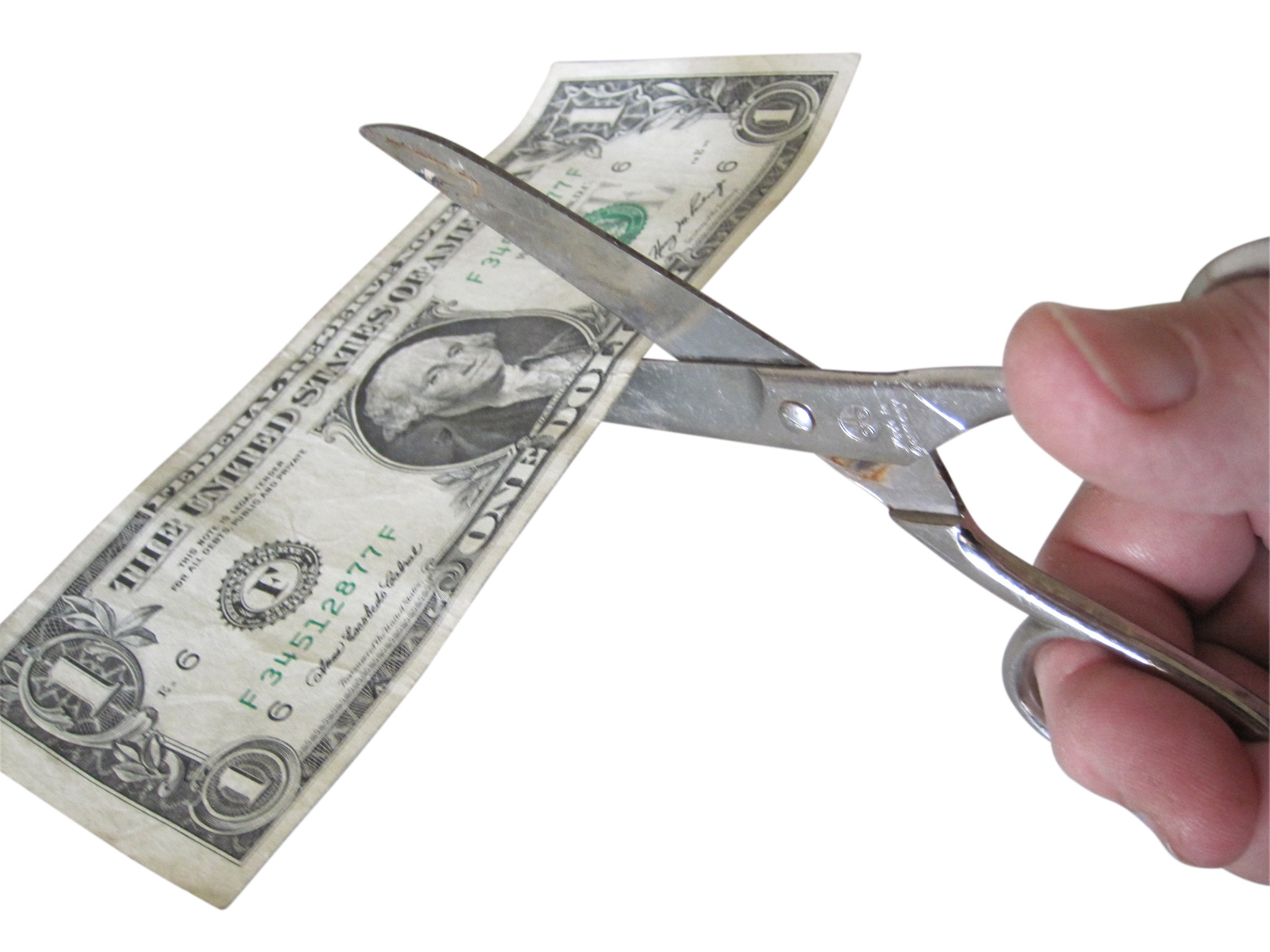
In recent decades, imperialism has been somewhat out of fashion as a subject of analysis in academic circles. Yet in the past several months, President Donald Trump had reminded everyone that U.S. imperialism is indeed alive and kicking. In fact, imperialism never went away, as leading radical economist Costas Lapavitsas points out in the exclusive interview for Truthout that follows. Lapavitsas, a professor of economics at SOAS University of London, warns us that the world is now closer than ever to world war and nuclear confrontation. His recent article in the New Left Review, “A Topography of the New Dollar Imperialism,” outlines his recent research into the growing chaos of Trump-era U.S. imperialism and its potential catastrophic consequences for the world.
C. J. Polychroniou: Imperialism was a central concept in Marxist and radical thought throughout the 20th century, but to many, globalization seemed to have made it obsolete. Today it is making a dramatic comeback, not least because of Trump, whose territorial ambitions, revival of the Monroe Doctrine, and threats against Canada, Greenland, and Panama make him look and act like a 19th-century imperial adventurer. How does imperialism remain a characteristic feature of contemporary capitalism, and how does today’s imperialism differ from the aggressive expansionism of the great powers before 1914?
Costas Lapavitsas: Imperialism never disappeared. The classical Marxist theorists — above all, Lenin, Hilferding, Bukharin, and Luxemburg — established something that remains valid: Imperialism is at root an economic phenomenon, a historically specific way of organizing accumulation and surplus extraction at the world scale, backed by coercive state power. Imperialism is embedded in capitalism.
The forms and mechanisms of imperialism, however, have changed profoundly. The imperialism of the great powers before 1914 rested on territorial possession, colonial administration, and the direct extraction of resources and value. It sprang from the fusion of industrial and banking capital within national blocs competing for territory and markets. Today’s imperialism operates through an entirely different architecture. Global production chains dominated by multinational enterprises are paired with international banks and investment funds. They operate in a hierarchical system of production and finance anchored in the U.S. dollar. The system is exploitative and coercive but relies on payment mechanisms, collateral rules, and sanctions that enforce compliance without territorial occupation. Ultimate coercion, needless to say, depends on military power and naked aggression.
Trump is a symptom of this structure under stress, not its author. U.S. productive primacy has been eroding for decades while dollar dominance remains strong. That gap is now generating global political turbulence. The territorial gestures toward Greenland and Canada, the tariff wars, and the blunt transactional dealings with other major powers do not constitute a new imperial strategy. Rather, they are the behavior of a hegemon that can no longer reproduce consent and is falling back on raw positional power. Positional power without productive foundations, and without the institutional legitimacy that once underpinned U.S. leadership, is a diminishing asset.
Can global financial capital and capital accumulation alone provide the key to understanding contemporary imperialism in its totality?
No. This needs to be said clearly, because the temptation to reduce contemporary imperialism mostly to finance is understandable given the extraordinary growth of financial power in recent decades.
Contemporary imperialism rests on the structural pairing of internationalized productive capital and global financial capital. These two forms are distinct but mutually reinforcing. A hedge fund can manage $1 billion or $1 trillion from the same offices on Wall Street; a semiconductor plant cannot double output without years of investment. Production is rigid; finance is elastic. But they interlock. Global production chains need dollar liquidity to function; financial capital needs the profit flows generated by production to have something to draw on.
The U.S. state holds this pairing together at the level of the world market primarily through its command of the dollar as world money. It guarantees settlement, enforces contracts across jurisdictions, provides crisis liquidity, and defines what counts as money globally. This is the hinge of the entire system.
And behind everything stands military power as the ultimate guarantor. The sea lanes through which the vast bulk of world trade moves are secured by U.S. naval forces. Intellectual property regimes, semiconductor chokepoints, and undersea cable systems all depend on enforceable U.S. jurisdiction — backed, when necessary, by force. Finance, production, law, and military power form a single integrated imperial apparatus. To reduce imperialism to any one of these is to mistake a pillar for the building.
In a recent publication in the New Left Review, you refer to “new dollar imperialism” and “balance-sheet imperialism.” Can you elaborate on these terms? And is this a genuinely new form of U.S. imperialism?
The terms capture the specific character of contemporary imperialism. In 1945 the United States commanded nearly half of world manufacturing output, but now its share has fallen to roughly 10 percent. Yet nearly 60 percent of global reserves remain in dollars, and roughly half of all cross-border payments are settled in dollars. The balance sheet of the Federal Reserve functions as the ultimate collateral backstop for global markets. The U.S. selectively grants to other central banks access to Federal Reserve swap lines, tying them directly to its balance sheet. This is a crucial control mechanism of the global system.
“The dollar’s position no longer derives from U.S. productive preeminence but from the institutional and coercive capacity of the U.S. state.”
And yet, as U.S. monetary dominance persists and has in some ways deepened, the productive foundations of its power have eroded dramatically. The dollar’s position no longer derives from U.S. productive preeminence but from the institutional and coercive capacity of the U.S. state to control the infrastructures through which global accumulation operates. That is the central paradox of contemporary imperialism, and it is genuinely new.
What makes the current phase especially distinctive is that since 2008, the Federal Reserve has become the underwriter of the entire global financial system. This includes not just globally active banks but also the hedge funds, pension funds, and asset managers that now account for nearly half of global financial assets. By determining which securities count as collateral and which do not, the Fed directs the hierarchy of global credit.
There is a common misunderstanding here. It is typically assumed that the power afforded to the U.S. by the dollar is clear in relations among states. But the hierarchy shows up in the hard data of global enterprise transactions. Among the world’s 500 largest manufacturing firms, U.S. enterprises hold more than half of all long-term debt while Chinese firms of comparable size carry a disproportionately high share of short-term borrowing. That gap registers the dollar hierarchy as a structural constraint on accumulation worldwide.
This power is deployed as an instrument of coercion by the U.S. government, and Iran is the starkest recent example. Before bombs fell, decades of sanctions had excluded Iran from dollar clearing, frozen its foreign assets, and severed it from the global financial system. Together with commercial sanctions, it strangled Iran’s economy and prepared the ground for military destruction.
Trump’s economic team seems to believe tariffs and a weaker dollar can restore U.S. industrial power. Is there any coherence to this project, or does it run into a fundamental contradiction at the heart of U.S. capitalism itself?
Trump and his advisers have identified a real problem, even if their diagnosis is largely wrong and their remedies incoherent. The relative industrial decline of the United States is undeniable. Chinese industrial output is now several times larger, and even labor productivity growth in the U.S. has remained persistently weak, if one sets aside the current hype around AI. Industrial output as a proportion of GDP has not grown under Trump, while public and private investment — with the important exception of AI — have been insufficient for decades. The social pressures generated by the productive weakness of U.S. capitalism, especially stagnant real wages, vast inequality, and the hollowing out of industrial communities, are what propelled Trump to power.
But the relative decline of the U.S. as a national entity is inseparable from the global rise of U.S. multinational enterprises. It was U.S. multinationals that exported productive capital, established global production chains, outsourced labor-intensive processes upstream, and financialized their own operations through share buybacks rather than domestic investment. The hollowing out of the U.S. industrial base was carried out largely by the very corporations Trump is most aggressively defending. There is no simple way of simultaneously restoring domestic industrial capacity and protecting the global privileges of U.S. multinationals. This will certainly not take place through tariffs alone.
What would actually address U.S. industrial decline is a coordinated program of public investment, a genuine reversal of financialization in favor of production-oriented finance, real wage growth, and controls on capital flows. Trump’s combination of tariffs, tax cuts for the rich, welfare reductions, and fresh deregulation of Wall Street points in precisely the opposite direction.
Many on the left have looked to China as a counterweight to U.S. imperialism, even as an anti-imperialist force. Is that a sustainable position? And does China itself qualify as imperialist?
This question has generated more heat than light on the left, and I want to answer it carefully. The reality is considerably more complex than many of the positions that tend to dominate the debate.
China is not a capitalist country similar to those at the historic core of the world economy. Market mechanisms and capitalist accumulation are pervasive and dominant at the level of production and circulation. But the Communist Party and the state apparatus retain ownership and control over the financial system, the strategic allocation of investment, the movement of capital across borders, and the commanding heights of the economy. The state-owned enterprises — the giants forming the backbone of the Chinese economy — are not analogous to large U.S. multinationals. This hybrid reality does not map cleanly onto classical categories of political economy. Analyses that ignore it, whether to romanticize China as socialist or dismiss it as just another capitalism, are inadequate.
China also faces serious internal contradictions that complicate any narrative of unstoppable rise. Its extraordinary growth rested heavily on massive investment, more than double the proportion of the U.S. But the returns to that investment have been declining significantly and labor productivity growth has slowed sharply. The economic rebalancing that is required is socially very difficult and the risks are enormous.
On the international stage, China is a productive superpower trapped inside a monetary and institutional hierarchy it did not build and cannot yet dismantle. The renminbi accounts for less than 3 percent of global reserves and cross-border payments. Chinese public debt does not serve as international collateral. Chinese enterprises settle obligations in a currency that their country does not issue, while the Chinese government accumulates reserves in its rival’s public debt. That is not the position of an ascendant imperial power that is creating a new order. It is the position of a hegemonic challenger seeking a larger voice in the rules of a system in which it remains deeply embedded.
China is neither an anti-imperialist force in any meaningful sense nor a rival imperialism symmetrical to the U.S. It is a formidable and historically novel challenger whose rise has fundamentally destabilized the existing imperial order. The left does itself no favors by projecting onto China either socialist virtues it does not possess or imperial vices that do not yet characterize its position in the world monetary system.
You have written that the current impasse raises the specter of world war, even nuclear confrontation. Should we take that seriously?
Entirely seriously. I want to be precise about the logic, because this is not rhetorical flourish but a conclusion the analysis forces upon us.
Since the Great Crisis of 2007-9, the world has entered an interregnum. The hegemonic challengers, above all China, have achieved sufficient productive and military capacity to resist subordination but lack the monetary and institutional power to rewrite the rules. The U.S. hegemon retains world money dominance and financial system supremacy but faces eroding productive primacy, rising public debt, and increasingly constrained military reach. Neither side can impose resolution; neither can accept permanent subordination.
“The configuration of the world economy echoes the rivalries among leading capitalist states before 1914. The present moment is no less perilous.”
The rapid escalation of global tensions and the ensuing militarization are not temporary disturbances. Look at what is happening in Iran. For years, sanctions and dollar exclusion strangled the Iranian economy. Then in 2025 and 2026 came open war launched by the U.S. and Israel. But the aim is not to annex territory or create a colonial administration. Rather, it is to shatter the Iranian state, control its oil resources, and create an obedient vassal of the global system. This is contemporary imperialism in practice; that is, first coercion based on the dollar and the balance sheet, then raw military violence, but not the burden of direct rule. This pattern is unlikely to remain confined to Iran. As productive challengers accumulate military capacity and the constraints on conflict dissolve, the configuration of the world economy echoes the rivalries among leading capitalist states before 1914. The present moment is no less perilous.
What makes it more dangerous still is the nuclear dimension. Capitalism has previously resolved blocked hegemonic transitions through great-power war. There is no structural mechanism that prevents it from doing so again, and this time, the arsenals exist that could end human civilization altogether. To be sure, this is a remote probability, but it is no longer negligible. Whether the drift to war continues and makes it more serious will depend crucially on popular opposition to war and the resurgent capitalist imperialism that is taking us in that direction.

No comments:
Post a Comment