Showing posts sorted by date for query WOMENS HISTORY. Sort by relevance Show all posts

Sunday, March 08, 2026


Europe marks International Women's Day in a context of increasing global conflict

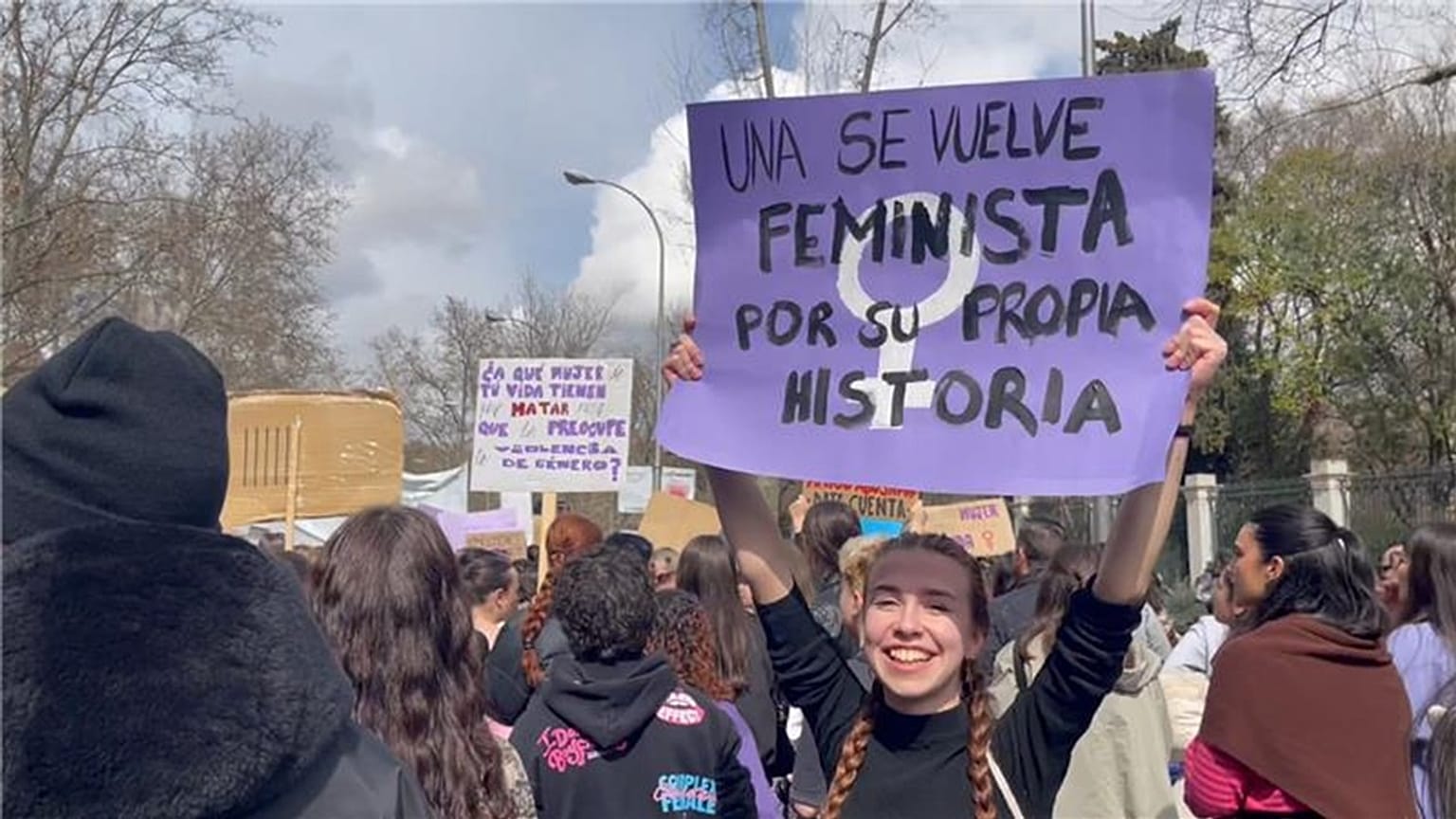
Protesters gather in Madrid for International Women's Day, 8 March, 2026.
Copyright Euronews

By Emma De Ruiter
Published on 

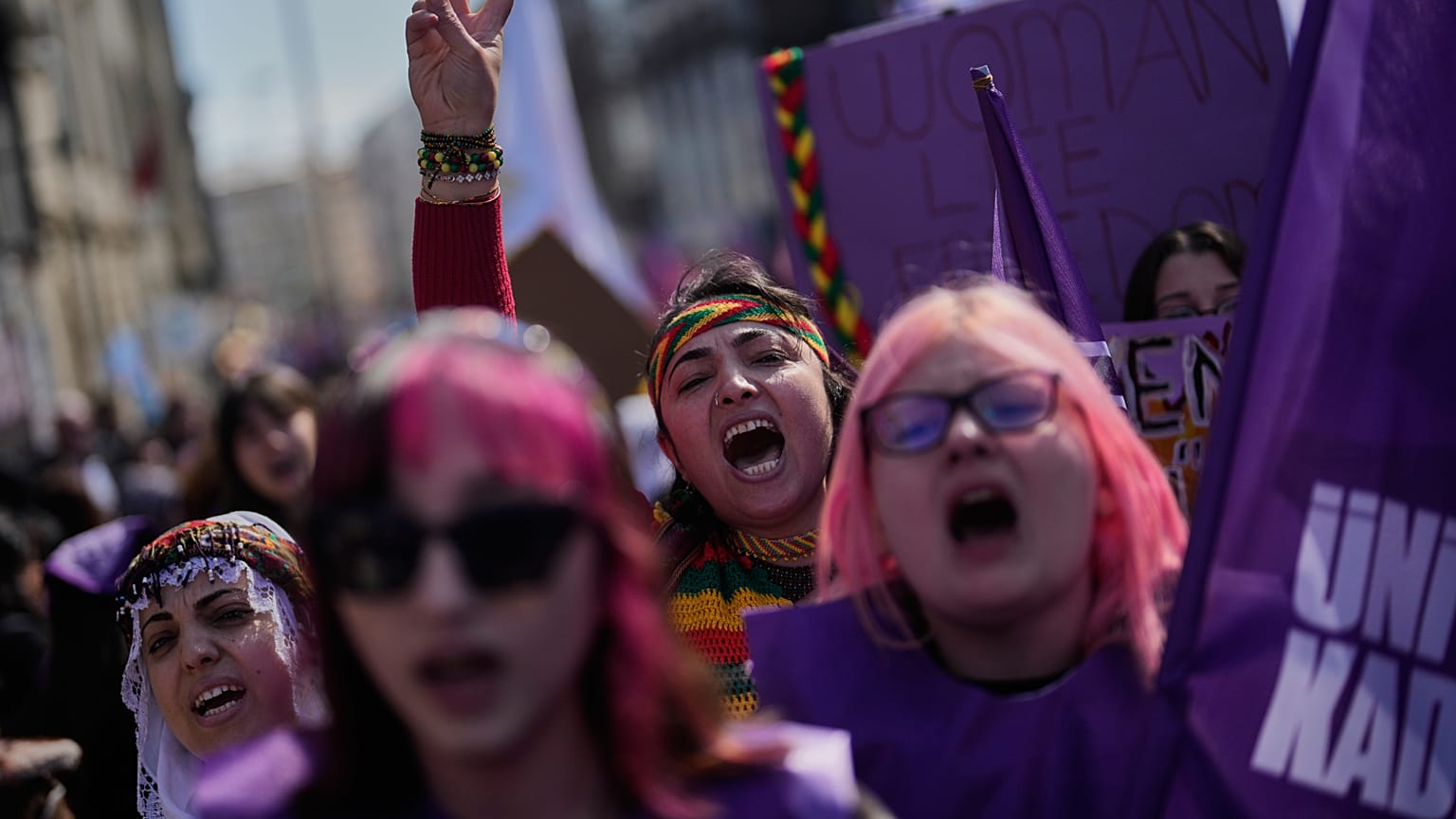
Protesters across Europe marked International Women’s Day on Sunday by taking part in marches and demonstrations that underscored efforts to combat discrimination and accelerate the drive for gender parity.

Crowds gathered in the streets across Europe on Sunday to mark international women's day with demands for ending inequality and gender-based violence.

Women protested against violence, for better access to gender-specific health care, equal pay and other issues in which they don't get the same treatment as men.

Roughly 20,000 people attended a march for International Women’s Day in Berlin. German news agency dpa reported Sunday that the crowd was double the amount police had expected. Speakers at the event decried violence against women in Germany, as well as gender discrimination. In Barcelona, an attendance of over 22,000 was also recorded.

Officially recognised by the United Nations in 1977, International Women’s Day is commemorated in different ways and to varying degrees in places around the world. Protests are often political — and at times violent — rooted in women’s efforts to improve their rights as workers.

2026 will mark the 115th year of International Women's Day. This years' theme is “Give to Gain,” with a focus on fundraising for organisations focused on women's issues and less tangible forms of giving such as teaching peers, celebrating women and “challenging discrimination.” Women worldwide hold 64% of the legal rights that men have, according to United Nations data.

International Women’s Day is a global celebration — and a call to action — marked by demonstrations, mostly of women, around the world, ranging from combative protests to charity runs. Some celebrate the economic, social and political achievements of women, while others urge governments to guarantee equal pay, access to health care, justice for victims of gender-based violence and education for girls.

It is an official holiday in more than 20 countries, including Afghanistan, Burkina Faso, Ukraine, Russia and Cuba, the only one in the Americas. In the United States, March is celebrated as Women’s History Month.

Call to action in times of conflict

From Brussels to Madrid, many are also raising awareness this year for women's rights issues in the context of a world increasingly afflicted by conflict.

Protesters expressed solidarity with women affected by war in Ukraine, Iran, Gaza and elsewhere. According to the United Nations, women in conflict-affected areas are disproportionately affected by gender-based violence.

Thousands of people came out in cities across Spain on Sunday to denounce violence against women and the war in the Middle East sparked by US-Israeli strikes.

Demonstrations took place in Madrid, Barcelona, Valencia, Seville, Granada, Bilbao, and San Sebastian, among other cities.

"No to war" and "Anti-fascist feminists against imperialist war" were among the slogans written on signs at the protests.

Madrid also saw separate demonstrations for transgender rights and for the legalisation and regulation of prostitution.

"It is within our power to stop the war, to stop the barbarity, and to win rights. We proclaim ourselves in defence of peace, in defence of the Iranian people, in defence of Iranian women," Yolanda Diaz, second vice president, told the press at the rally.

Socialist Prime Minister Pedro Sanchez has drawn the ire of the US administration after he refused the use of Spain's military bases for strikes against Iran, which he called an "extraordinary mistake" and "not in accordance with international law."

US President Donald Trump lashed out at Sanchez's government, threatening to sever all trade with the EU and NATO member, which he called "a loser."


 France marks International Women's Day amid concern over rise of far right


Some 100 organisations have called on people across France to take to the streets on Sunday to defend women's rights, warning that the rise of the far right threatens hard-won freedoms.


Issued on: 08/03/2026 - RFI

A protestor holds a sign reading "More than ever, nothing is certain" during a rally on International Women's Day in Paris, 2025. AFP - MARTIN BUREAU

People are urged to join marches in some 150 towns – including Paris, Bordeaux, Lille and Marseille as well as smaller places such as Saint-Malo – to mark International Women’s Day.

In Paris, the main procession will set off at 2pm from Stalingrad in the north-east of the city and head towards Place de la République via Gare du Nord.

"The far right means a rollback of rights for everyone – and particularly for women," said Anne Leclerc of the National Collective for Women's Rights (CNDF). "You only have to look at what is happening in the United States under Donald Trump – it's a laboratory."

Since returning to the White House last year, the US president has introduced measures restricting abortion rights and dismantled anti-discrimination policies.

"When conservatism rises, the first rights to come under attack are those of women and those linked to sexuality," said Sarah Durocher of the Mouvement français pour le planning familial (French family planning organisation).

"We're on alert" in France, she warned, with associations reporting growing difficulties in accessing abortion services due to a lack of funding and the closure of some local clinics.

“When conservatism rises, the first rights to come under attack are those of women and those linked to sexuality,” added Durocher.

“We’re on alert,” she said. “Associations are reporting growing difficulties in accessing abortion services because of a lack of funding and the closure of some local clinics.”

Violence against women


Demonstrators will also protest against persistent sexual and sexist violence.

Recent official data found deadly violence by current or former partners increased in 2024, with more than three femicides or attempted femicides every day.

France has unveiled a framework bill with 53 measures aimed at curbing violence against women, but campaigners say stronger action is needed.

They are demanding an annual budget of 3 billion euros and a broader law covering prevention, education, support for victims and punishment for perpetrators.

“Our legislation is incomplete and lacks a coherent thread,” said Suzy Rojtman of the National Collective for Women’s Rights. “It is time to shift up a gear and finally show a genuine political will to tackle this violence.”

Pay gap concerns

The marches will also highlight the gender pay gap as France prepares to transpose a European Union directive on pay transparency into national law.

The marches will also highlight the gender pay gap, with the deadline approaching for France to transpose into law the EU directive on pay transparency. According to France's national statistics institute INSEE, women in the private sector earned on average 21.8 percent less than men in 2024 – a gap largely attributed to part-time working patterns and lower-paid professions predominantly held by women.

The gap is largely linked to part-time work and lower-paid professions that are more often held by women.

The Nemesis collective, a far-right women’s identitarian group, has said it will hold a separate rally in the west of Paris after some march organisers tried to have the group barred.

Organisers accused the group of “hijacking” feminism “for racist ends”.

Leclerc said Nemesis holding a separate rally was “a relief”.

“Our demonstrations promote values that they do not share,” she said.

Last year, organisers said 120,000 people took part in the Paris march and 250,000 across France. Police figures put the turnout in the capital at 47,000, nearly double the previous year’s count.

(with AFP)


European leaders react to International Women's Day

AP Photo/Khalil Hamra
Copyright Copyright 2026 The Associated Press. All rights reserved

By Rory Elliott Armstrong
Published on 

Figures including Ursula von der Leyen, Volodymyr Zelenskyy, Pedro Sánchez and Giorgia Meloni praised women’s contributions and called for continued progress on equality.

Strength, equality and responsibility. These were the three concepts that resonated between European leaders on the 8 March, also known as International Women's Day.

As world conflicts try to steal the headlines, heads of state took to social media to celebrate this day, and remind us of the importance it holds.

The president of the European Commission, Ursula von der Leyen, tribute to girls and women everywhere who continue to fight oppression, calling on them to find the power within themselves and never back down.

Another call to action was made by Ukrainian president Vlodymyr Zelenskyy, who called on women to defend their country and thanked them for the strength they bring to the battlefield and day to day life.

Although they still face obstacles, more than 70,000 women served in Ukraine’s military in 2025, a 20% increase compared with 2022, including over 5,500 deployed directly on the front line, according to Ukraine’s Defence Ministry.

Spain's leader Pedro Sánchez posted a video saying his government will "not let hate substitute rights," and that the feminism movement must keep moving forward despite the banalisation of gender-based violence and online harassment.

Italian prime minister Giorgia Meloni took to the web to tell that the "8 March reminds us all of a responsibility that applies not just to one day, but every day: to continue building an Italy in which no woman has to choose between freedom, work, family, and personal fulfilment."

Other high profile European figures, such as the president of the European Council, António costa, and the general-secretary of the UN, António Guterres, reminded the world that "equality benefits everyone" and that "investing in women and girls is one of the surest ways to make the world a better place."


Six decades of feminism

On International Women’s Day, Lynne Segal surveys over sixty years of thinking and activity and draws some lessons for the way forward.

Early on, International Women’s Day always had ties to socialism. The Socialist Party of America declared the first National Woman’s Day on 28th February 1909; the following year the German Marxist Clara Zetkin called for a day to celebrate women at the International Conference of Working Women, which took place on 19th March 1911. Finally, in the footsteps of women in Russia striking for “bread and peace”, 8th March, 1917, Women’s Day shifted, and has remained on that day, with women’s protests that year helping to ignite the Russian Revolution later that year.

These celebrations all occurred during the decades of firstwave feminism, between the late 19th and early 20th century. In Britain, the Suffragettes, headed up by the Women’s Social and Political Union (WSPU), launched numerous rallies and resistance demanding women’s rights to vote, work, and hold public office. Their bravery is applauded today, despite the violence of some of their activism, including bombings and arson attacks on property. Women’s franchise was brought in line with men’s rights in 1928, after which feminism would begin to fade from the political scene in the conservative mid-century.

Hence, when second-wave feminism burst onto the scene at the close of the 1960s, it seemed to appear out of the blue, with its sudden energy and high hopes eager to change the world higher. I was part of that wave, after arriving as a single mother in Britian in 1970. Like other women I had already imbibed the rebellious spirit of the late 1960s, with talk of sexual liberation and equality for all, but with pervasive sexism, even misogyny also prevalent.

By the 1970s, it was the newly emerging feminists of second wave liberation who would prove the buoyant heirs of Sixties radicalism, soon with new demands on every front: better lives for mothers, more childcare provision and men’s sharing of domestic tasks; better training, job opportunities and equal treatment for women at work. We called for an end to rape and violence against women, along with an overall cultural shift to dignify and celebrate the strength and autonomy of women everywhere. We read Simone de Beauvoir’s The Second Sex, on the age-old cultural subordination of women, soon highlighted and expanded in the powerful writing of newly minted feminists.

From the USA, Shulamit Firestone, Adrienne Rich, Grace Paley, Barbara Ehrenreich, Ursula Le Guin and grassroots activists were inspiring the women’s groups at home and elsewhere, variously emphasising the importance of solidarity, collectivity and the creativity and significance of women working for a better world for all.

In the UK, it was Juliet Mitchell, Sheila Rowbotham and many others sharing their thoughts on the need for emancipation from male dominance, at that time usually hoping to align women with broader socialist goals. Meanwhile, black feminists such as Toni Morrison, Alice Walker, Audre Lord and Angela Davis, along with Amrit Wilson, Margaret Busby, and others such as the Brixton Black Women’s group began to be widely read and influential in shifting most progressive political outlooks.

However, a decade later, as the right came to power first in Britain under Thatcher in 1979, then Reagan in the USA the following year, we began to see a retreat from the widespread hopes of Seventies feminism. This accompanied greater emphasis on women’s difference from men with the growth of “cultural feminism”, less interested in issues of equality and power while applauding women’s distinct feminine traits of nurturing and eco-consciousness, as exemplified in the writing of radical feminists such as Susan Griffin, from the USA. Feminism in the 1980s also included women’s growing peace activism, exemplified at Greenham Common, where women camped out for over a decade opposing the US nuclear missiles installed there. Some Black and Asian women’s groups also flourished in the 1980s, including The Southall Black Sisters.

For those who think in terms of waves of feminism, a “third wave” was seen as emerging in the 1990s, with renewed emphasis on exploring women’s extensive diversity, whether as black, working class, third world, Islamic, queer, or other distinct identities and difference. Greater theoretical abstraction was now appearing in feminist theorizing, most prominently, if aways controversially, in the writing of the US philosopher Judith Butler, deploying post-structuralist reflections on language and meaning in her book Gender Trouble. Butlercomplicated all forms of identity politics, stressing instead the culturally inflected ways we come to enact our expected identities, leaving them contingent rather than fixed, but always open to subversive performances or resistance.

However, while feminist thinking became more influential in parts of academia, a more distorted and dismissive view of movement feminism was evident in the media, presenting it as dull and obsolete. As Angela McRobbie and others noted, glamorous media images of professional women were being widely promoted by the close of the twentieth century, with programs celebrating women’s new freedoms, concerned only with the struggle for success and excitement plus the pursuit of ‘Mr Right’, as in Sex and the City or Friends in the 1990s.

Some feminists began studying this new form of media-promoted ‘aspirational feminism’, especially evident once powerful figures, such as Hilary Clinton, Teresa May or Michelle Obama proclaimed themselves feminist, from the heart of the neoliberal order, while urging more women to aspire to be winners in a capitalist world. The iconic figurehead was Facebook’s one and only female chief, Sheryl Sandberg, producing what she called “a sort of feminist manifesto” in her bestselling Lean In: Women, Work, and the Will to Lead in 2013, with its celebration of ‘top girls’ and regret over most women’s supposed lack of ambition.

What this strange new brand of feminism worked to disguise was a reality where life was getting tougher for so many women, becoming even more precarious and underpaid in jobs now essential for their survival, while having less time to care, even for their own dependents, given harsh welfare cuts, worsening especially from 2010. Before her tragically early death, the young British journalist Dawn Foster wrote Lean Out, rightly accusing Sandberg of encouraging women’s “complicity in the economic structures that perpetuate inequality”.

So where are we now, almost six decades on from those hopes of women’s liberation? There is no doubt that today more women have a stronger voice, some with access to significant power, with apparently more choices than ever.

Yet, just as firmly we also see the very opposite in the lives of other women. This stems from the rising individualism and above all the significantly greater inequality we have seen over recent decades of near total subservience to neoliberal market logics, attentive only to profits, with more women, young, and especially old, living in poverty, worsening over the last 15 years. Moreover, the ubiquitous cultural landscape of sexism and belittlement of women we condemned, with women judged by their looks, has far from disappeared. We don’t need to witness Epstein’s world, or the continuing rise in rape figures, to be reminded of that.

Hence, goals feminists fought for and seemed to win, beginning with a new appreciation of and support for mothers and the work of caring have disappeared. We find real misery experienced by many mothers today, many simply unable to cope with the extra burdens placed on them. This connects with women, often working long hours in paid work, having little time to care – affecting not only mothers, but those caring for the sick, disabled or fragile elderly.

Women still shoulder more of the responsibilities for caring, as I discussed in my last book Lean on Me: A Politics of Radical Care. So far, with some exceptions at municipal level, Starmer’s Labour Party has done little to address this, while threatening rights to protest. In our ultra-competitive era, earlier ideas of collectivity and shared caring, so important for Seventies feminists, have almost – but not quite – disappeared. Today, women’s poverty still exceeds that of men, especially in single-parent households and the old. Shockingly, women’s life expectancy overall has dropped three years over the last decade.

More positively, there is greater concern with green issues today, as articulated by feminist economists here such as Ann Pettifor or Sue Himmelweit, along with the growth of the Green Party – attracting many women. Many feminists are also actively opposing racism and cruelty towards migrants, evident in the work of feminist human rights and anti-racist activists, along with the legacies of Black Lives Matter. Confronting the rise of the right, including both Trump and Netanyahu, we have the forceful speech and writing of iconic figures such as Sara Roy in India, the Canadian writer Naomi Klein, or Judith Butler from the USA. Indeed, as Butler shows, the right’s attacks on women’s equality and what they call ‘gender ideology’ is what fuels populist reactionary rhetoric generally.

Feminist activists might well feel undermined today, confronting the ongoing kleptocratic behaviour of the few billionaires now dominating global markets, plus the continuation of reckless military violence on several fronts, including Israel’s genocidal violence in Gaza. Yet feminist resilience remains, in some ways taking us back to those women who created Women’s Day over a century ago.

The lessons we must retain are the importance of inclusiveness and alliance in the face of conservative political backlash. Everything is to be gained by recognizing women’s rich diversity, alongside men’s, and working together for a more caring, peaceful, egalitarian and greener world. Nothing is to be gained by divisiveness or targeting distinct groups of people as ‘the problem’. Feminism needs an inclusive agenda, including trans women, while insisting that women’s interests remain at the heart of all our politics.  

Lynne Segal is the author of several books. Her latest, Lean on Me: A Politics of Radical Care, is published by Verso.

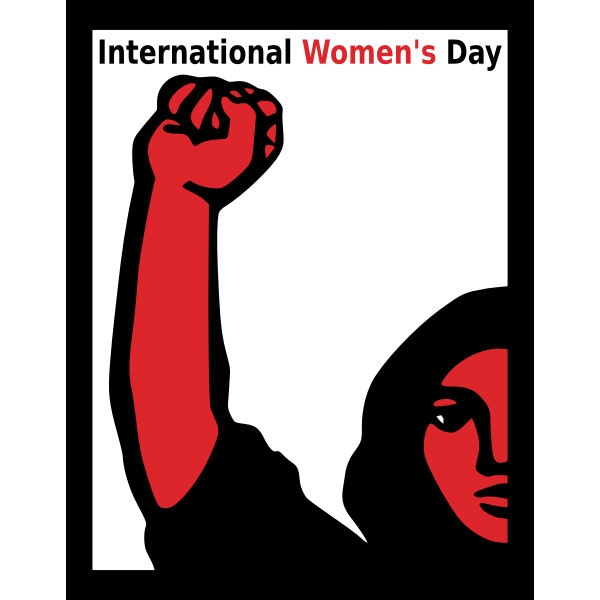
Image: https://freesvg.org/international-womens-day Licence: CC0 1.0 Universal CC0 1.0 Deed


Making Trouble: International Women’s Day 2026

To celebrate International Women’s Day 2026, Bryn Griffiths, Labour Hub’s presenter of the Labour Left Podcast celebrates the outstanding contribution that the socialist feminist guests have made to the show over the last few years.

The title of this article is taken from Professor Lynne Segal’s book of the same name Making Trouble: Life and Politics, a title that definitely captures the contributions of the shows women guests. 

Beyond the Fragments

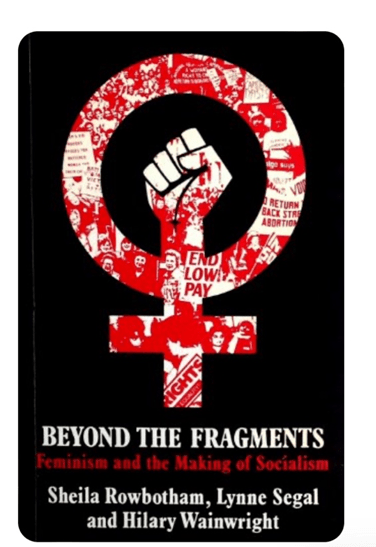
In addition to making trouble Lynne Segal is best known for her socialist feminist classic Beyond the Fragments: Feminism and the Making of Socialism, co-authored with Sheila Rowbotham and Hilary Wainwright.  

Back in 1980, young socialist feminists instructed me, as a new student at Sussex University, to read this seminal book and it made a huge impression upon me. Lynne and I returned to the book on the podcast. The book has so much to offer today as we grapple with intersectionality and the different forms of socialist organisation we will need if we are going to avoid the many pitfalls of ‘top-down’ Leninism.  I am not a supporter of Your Party but those that have taken the plunge would do well to have a listen to Lynne on the podcast and read Beyond the Fragments.  The challenges socialists face when we are trying to pull the threads of different struggles together are far from new.

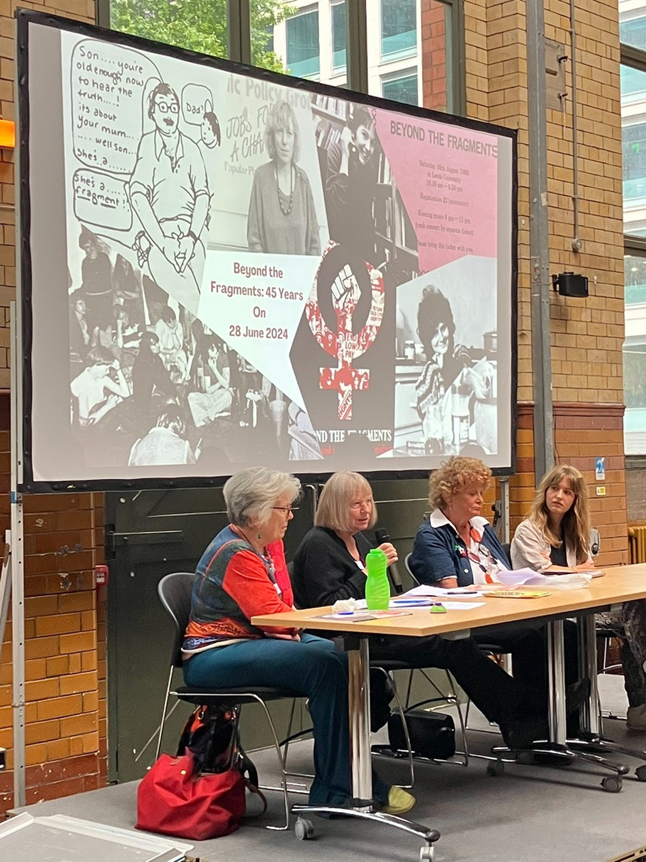
The authors of Beyond the Fragments (pictured l-r) Hilary Wainright, Sheila Rowbotham, Lynne Segal and conference organiser Rachel Collet at an event to mark the forty-fifth anniversary of the book’s publication.

Class Heroes

Regular listeners to the Labour Left Podcast will know that each show ends by giving the guest the daunting task of identifying the class hero who has most influenced their politics.  To balance up our hall of fame I invited Lynne to nominate four women to rebalance the over generous representation of our male heroes. On International Women’s Day every one of Lynne’s nominations deserves our close attention.

Lynne nominated her Beyond the Fragments co-author Sheila Rowbotham and referred us to her book Daring to Hope: My Life in the 1970s.  Moving across the Atlantic, Lynne nominated her late friend Barbara Ehrenreich who was a prominent figure in the Democratic Socialists of America. In 1976 she wrote a must read classic piece for International Women’s Day entitled What is Socialist Feminism? Lynne brought us up to date with Naomi Klein the Canadian author, social activist, and filmmaker known for her political analyses, support of eco-feminism and organized labour, and criticism of corporate globalization, fascism and capitalism. Finally, Lynne added Francesca Albanese the United Nations Special Rapporteur on the occupied Palestinian territories. There can be no woman alive today more deserving of our recognition on International Women’s Day 2026 than Francesca Albanese. As an activist within Britain’s Jewish Bloc on all our big pro-Palestinian protests, Lynne holds  Albanese’s work close to her heart.

Palestine

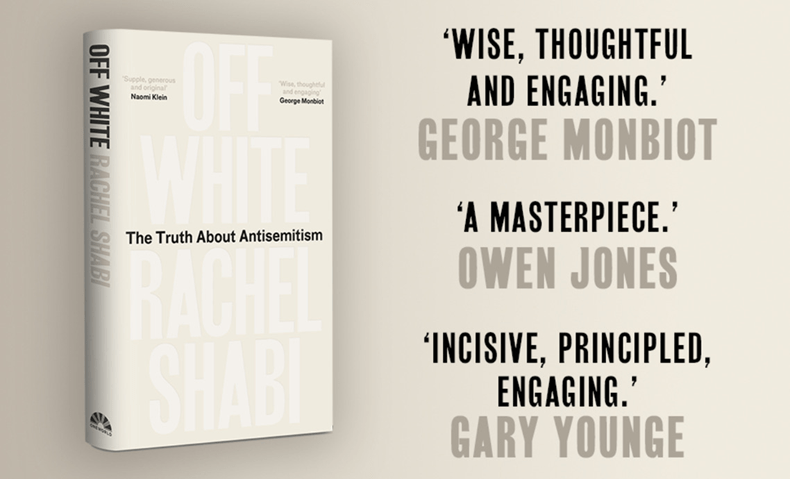
Palestine is of course the issue of our age and Rachel Shabi’s podcast appearance brought a unique perspective to the issue because of her Jewish Iraqi background. Rachel became known to many of us for her work with Jeremy Corbyn and Momentum during Labour’s antisemitism crisis.  In the face of an avalanche of unfair attacks from supporters of the Israeli Government, the left did not always get it right. Rachel’s appearance on the Labour Left Podcast remains invaluable for those that want to understand The Truth Behind Antisemitism and how we can fight it.  Since her podcast appearance, Rachel has been a consistent supporter of the Palestinian people and she has helped us all navigate the complex territory of how we stand with the Palestinian people whilst being clear in our opposition to antisemitism.  Rachel wrote an extremely helpful piece The Mamdani masterclass on antisemitism.

Rachel Shabi ended her appearance on the Labour Left Podcast by nominating Ella Shohat, a fellow Iraqi Jew and supporter of the Palestinian people, as her class hero.

Colonialism

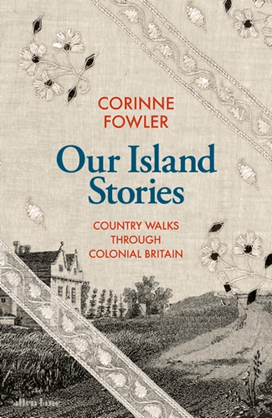
Professor Corinne Fowler appeared on the Labour Left Podcast to discuss her book Our Island Stories: Ten Walks through Rural Britain and its Hidden History of Empire.  Back in 2019, Corinne was seconded to the National Trust to lay the foundations for a new training and interpretation programme about our country houses’ colonial connections. As part of her secondment, she co-authored an academic report for the National Trust which brought together much of the existing academic and peer-appraised writing on the Trust’s  properties’ many links to colonialism.

To say that the populist right weren’t quite ready to embrace the filling of the gaps in our history doesn’t quite capture the moment. The ‘war on woke’ warriors kicked off to defend their history from above and make sure that everybody else’s history remained silent.

Boiling Farage’s Blood

Nigel Farage talked of the “trashing of our nation” and the Daily Telegraph responded to the peer-appraised, academic report by announcing that the National Trust was “at war with the past.”  As if that wasn’t enough, the unfortunately named Tory Common Sense Group declared the ‘Battle of Britain’. Have a listen to Corinne’s appearance on the Labour Left Podcast  and find out for yourself why she boils Nigel Farage’s blood!   

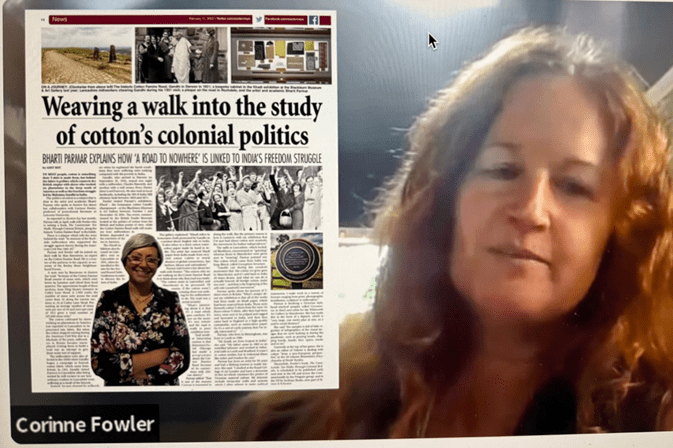
Corinne Fowler ended her appearance on the podcast by adding Bharti Parmar who accompanied Corrine on her walk to discover cotton’s colonial politics.

Corrine Fowler nominates Bharti Parmar to the Labour Left Podcast class heroes hall of fame.

Back in 2023, the first ever guest on the Labour Left Podcast was Liz Davies KC. Liz came to prominence back in the 1980s as a Labour councillor as the Chair of Islington Council’s brand-new Women’s Committee. I’ll leave it to Finola Brophy Liz’s former Head of Women’s Unit to describe Liz’s ground-breaking socialist feminist role:

“Liz Davies was a fantastic Women’s Committee Chair, always strategic, supportive and passionate about women’s equality and all equality issues. Liz was the champion of cutting-edge multi-agency domestic violence work training the police, producing a domestic violence handbook; creating women’s action plans for each service with achievable targets, producing and circulating the Islington Women’s Information Handbook listing hundreds of organizations standing up for the Women’s Equality Unit. A big issue reflected lesbian and gay families and the production of materials for schools. I also remember the wonderful celebration of International Women’s Day that took place every March.”

Blair Goes Ballistic

Listen to Liz’s appearance on the Labour Left Podcast  to find out what she did to make Tony Blair “go ballistic” and why one of her fellow Labour National Executive Committee members saw fit to call her a “cancer”.

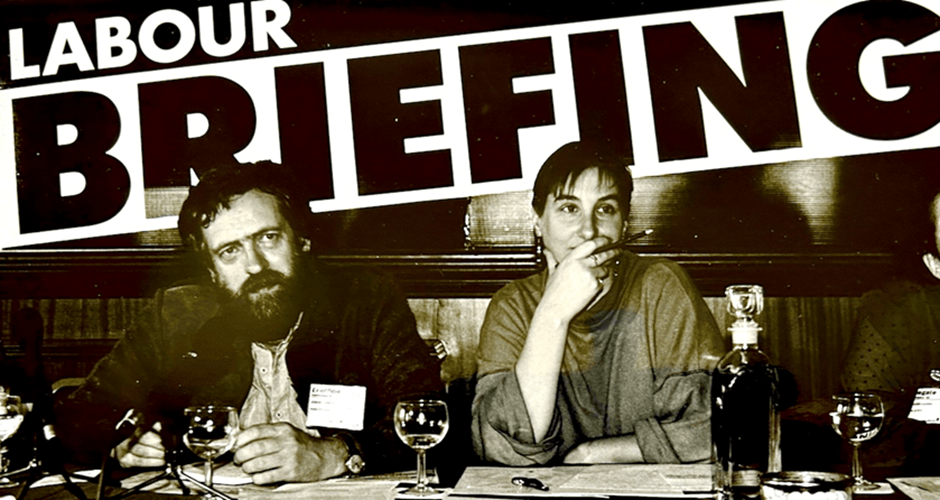
Liz Davies, the very first Labour Left Podcast guest, pictured with Jeremy Corbyn MP in happier times when they were both in the Labour Party speaking at a Labour Briefing fringe meeting in the 1990s. Photo: Bryn Griffiths.

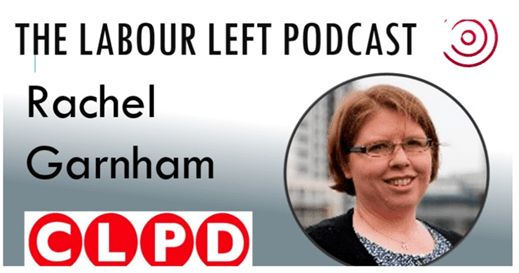
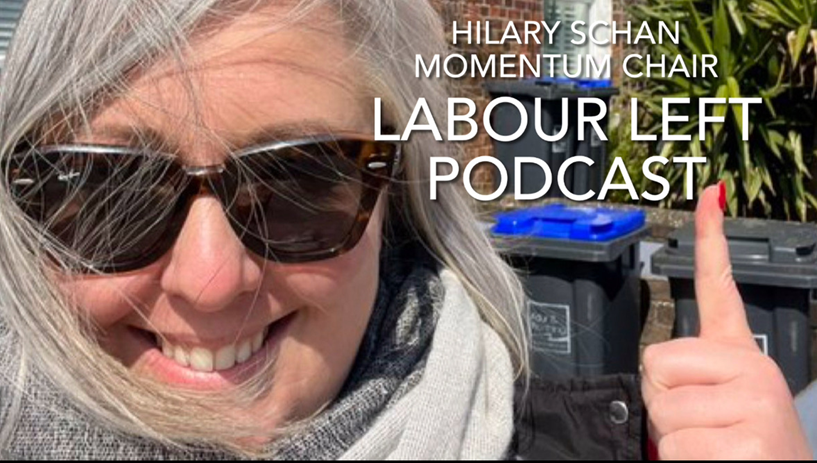
Following Liz Davies’s appearance on the Labour Left Podcast,, two of her women successors on Labour’s National Executive Rachel Garnham and Hilary Schan, made their appearances.

Racism

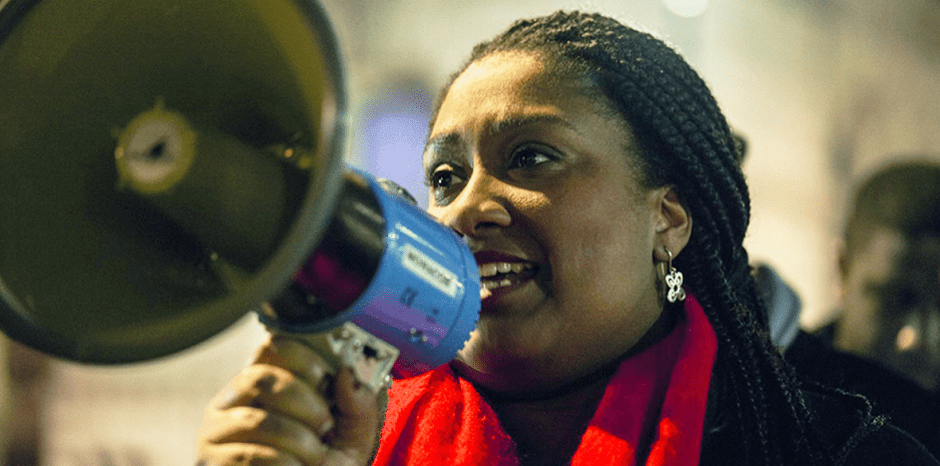
Bell Ribeiro-Addy MP made her Labour Left Podcast  appearance in the immediate aftermath of her short-lived 2025 bid for the post of the Deputy Leader of the Labour Party.  She entered Parliament in 2019 as the Corbyn period drew to a close, alongside numerous other new excellent socialists such as Nadia Whittome, Apsana Begum and Kim Johnson.

Before becoming an MP in her own right, she was the Chief of Staff to Diane Abbott, Britain’s first Black MP and the Mother of the House. She cut her political teeth as the Black Students Officer of the National Union of Students, fighting racism and seeking to implement the NUS policy of no platform for fascists. Anti-racism is at the centre of Bell’s intersectional feminism.

Bell Ribeiro-Addy MP

Democracy

I wanted Rachel Garnham to appear on the Labour Left Podcast so we could discuss her role as the Chair of the ever-important Campaign for Labour Party Democracy (CLPD). The episode is an education for those who want to understand the decades-long struggle for members’ democratic rights that has occurred in the party since the CLPD’s creation in 1973.

Hilary Schan made her appearance on the Labour Left Podcast while she was still the Chair of Momentum. Hilary explained how Worthing Labour Party had delivered a political earthquake and seized control of the council for Labour. It’s a story which ended with the effective destruction of the local Party as the very architects of the Party’s success were excluded from the possibility of parliamentary selection.

Finally, a big mention to Rachel Godfrey Wood  my socialist sister and the National Organiser of Momentum who appeared on the show in the run-up to Labour’s General Election victory in 2024. The podcast took place in a period when McSweeney’s Labour Together’sfactional brutality was at its zenith. Hilary Schan, our former Chair, had recently left the Labour Party but the podcast was not all doom and gloom: we ended by mapping out a positive socialist case for staying within Labour. The Labour right was behaving more factionally than ever before, so we needed to get organised. Voting Labour to get rid of the Tories was the start but we think you need to do much more than that. I still hope you will be convinced by Rachel’s case for Momentum. The task of influencing the Labour Government’s direction and fighting the highly factional Labour right is a task which is too big to face alone – so click here to join Momentum .

It’s been an honour to interview this stellar list of socialist feminist women. Talking to them has never failed to broaden my political understanding of the tasks that lie ahead for the left in our country.  On International Women’s Day 2026, I urge you to explore the back catalogue, listen to our wonderful socialist sisters and learn!

Postscript

The vicious factional behaviour of people like Morgan McSweeney and his shadowy Labour Together has led many thousands of Labour members to leave the party and a number of my Labour Left Podcast guests have unfortunately been among them.  I have huge respect for all the women guests who have appeared on the show but personally I remain firmly within Labour to contest the political territory which exists in a Party which has twelve trade unions affiliated to it. My job, as I see it, is to save the Labour Party from people like Labour Together and Peter Mandelson so Labour can defeat Nigel Farage’s Reform at the next General Election in 2029.

You can watch the podcast on YouTube, Apple Podcasts here, Audible here, Substack here and listen to it on Spotify here.  You can even ask Alexa to play the Labour Left Podcast. If your favourite podcast site isn’t listed, just search for the Labour Left Podcast and it should be there

Bryn Griffiths is an activist in Colchester Labour Party and North Essex World Transformed. He is the Vice-Chair of Momentum and sits on the Campaign for Labour Party Democracy’s Executive. Bryn hosts Labour Hub’s spin off – the Labour Left Podcast. 

Main image: https://www.goodfon.com/holidays/wallpaper-zhenskiy-den-pozdravlyayu-8.html Licence: Attribution-NonCommercial 4.0 International CC BY-NC 4.0 DeedAll other images are used with kind permission.

IWD

Source: Originally published by Z. Feel free to share widely.

With fierce anger burning in our hearts and an unbreakable resolve, we mourn the assassination of the courageous feminist and leftist leader and fighter Yanar Mohammed, president of the Organization of Women’s Freedom in Iraq, who was struck down by the hand of darkness in Baghdad on the morning of March 2, 2026 — as though they believed a bullet could extinguish the fire of feminist struggle and liberation. Two gunmen on motorcycles opened fire on her in front of her residence in the Al-Shaab district, in a crime whose perpetrators we all know.

The assassination of Yanar is a fully premeditated political crime targeting the feminist and leftist movements and every voice demanding justice and equality. It is a declaration of war against free women and against all who refuse to submit to the power of repression, sectarianism, and savage patriarchy.

Yanar: An Idea That Took Human Form

Yanar embodied a profound idea at the heart of class and social struggle — the idea that women’s liberation is central to any project of justice. The idea that no true equality exists without dismantling the structures of patriarchal violence protected by political, religious, and tribal authority. The idea that socialism without feminism remains incomplete, and that feminism which fails to confront class exploitation remains limited in its impact.

Yanar opened the doors of her organization to dozens of Iraqi women who sought refuge from domestic and social violence, enabling many of them to break free from forced marriage, denial of education, and deprivation of their rights. Her organization was never merely a human rights office issuing reports and statements — it was a frontline of daily life, receiving hundreds of distress calls every year from women living under crushing violence.

They Targeted Her Because She Was Dangerous to Oppression

They targeted her because she exposed violence, uncovered human trafficking networks, and opened the doors of safe houses to those cast aside by society. They targeted her because she said what no one wanted to hear: that the situation of Iraqi women has been deteriorating for decades, and that occupation and political Islam are two faces of the same coin in producing oppression. Yanar saw that the American invasion had turned Iraqi streets into zones without women, and she exposed the false choice between two options with no third alternative — either occupation or political Islam — insisting that choosing between them meant a life neither free nor dignified.

Her organization faced a campaign by the state media labeling them “those who humiliate Iraqi women,” because she openly raised the issue of human trafficking and demanded that the state recognize victims and ensure their protection. This is a familiar pattern: when a crime is exposed, those who expose it are attacked; when killing goes unaddressed, those who demand justice are accused of damaging the national reputation.

They wanted to intimidate activists and drive women back into the cage of silence. They ignored the reality that Yanar’s voice was never a single voice. It was the echo of tens of thousands of women who learned from her that freedom is seized, not granted.

The Climate That Bred the Crime: Power Is Complicit in Blood

The sectarian, nationalist, and patriarchal government of Iraq bears direct political and moral responsibility for the climate that produced this crime. The quota system that entrenched sectarian and ethnic division, shielded militias, and turned a blind eye to hate speech and violence against women is the incubator for targeting defenders of freedom.

This climate does not produce violence by accident — it manufactures it systematically through three intertwined channels: first, the religious pulpit, which reinforces the image of woman as a dependent being requiring a male guardian to govern and decide on her behalf. Second, the patriarchal media, which distorts the image of activists and portrays them as enemies of religion, family, and nation — thereby granting moral justification for killing in the minds of those who carry it out. Third, the culture of impunity that protects militias and makes political assassination a cost-free instrument.

When feminists are incited against and their reputations smeared without accountability, the bullet becomes an extension of that incitement. The killer executes what the culture of hatred produces daily from pulpits, screens, and mosques.

Impunity: Complicity in Blood

We condemn this cowardly crime and demand the killers be identified and publicly held accountable. The Iraqi Interior Minister has ordered the formation of a specialized investigative team to determine the circumstances of the crime — a step we acknowledge in form, though we will not forget that dozens of human rights and women’s rights defenders were killed in Iraq before Yanar without their killers ever being identified. Impunity is not merely a failure of the judicial system; it is a deliberate political message: activists can be killed, and no one will be held responsible.

There is no justice in a homeland where fighters are assassinated while sectarian and patriarchal structures continue to reproduce violence. Protecting activists is a political obligation that tolerates no delay, and cannot be satisfied by forming investigative committees that save face and bury files.

The Idea That Does Not Die

A bullet pierces the body. The idea endures. Yanar Mohammed was born in Baghdad and was known for her defining words: “We women are capable of knowing what is best for us, our families, and our communities.” This simple sentence is, at its core, a complete revolution against every logic of guardianship and exclusion that governs women within a patriarchal sectarian context that claims to protect them while imprisoning them.

The idea Yanar planted — the idea of liberation, full equality for women, and a socialist future — will take deeper root. It will transform into collective action, into a feminist movement more resolute in confronting violence, discrimination, exploitation, and the system that sustains them. Because every fighter who has fallen throughout the history of feminist and human struggle has not extinguished the movement — she has ignited within it a deeper anger and a stronger resolve. A single bullet does not stop a movement. It kindles within it a new conviction: that what she fought for is worth the sacrifice.

Yes to the Women’s Revolution

A revolution that links women’s liberation to the liberation of society from sectarianism, tyranny, and corruption. A revolution that insists no true equality exists as long as the sectarian constitution elevates religious law above civil law, and as long as women in Iraq lose their rights to custody, marriage, divorce, and inheritance through the decrees of clerics rather than through equal civil law. A revolution that affirms that women’s liberation is the measure of society’s progress and development.

Today we stand at a defining moment: either the movement breaks under the weight of shock, or it reorganizes itself and raises its hand higher. We choose the second. We choose organized anger over helpless despair. We choose to continue until the name Yanar Mohammed becomes a reference point for every Iraqi girl learning the meaning of resistance.

They will not silence our voices. We will raise them higher. We will not be afraid. We will not be silent. We will not compromise on the freedom of women.

Yanar did not die. Death claims bodies — but she who planted freedom in the hearts of thousands walks among us every time a woman raises her voice and refuses silence.

[Yanar Mohammed (1960 — March 2, 2026): architect, founder of the Organization of Women’s Freedom in Iraq, editor-in-chief of Al-Musawa newspaper, protector of hundreds of women in safe houses, recipient of the Gruber Foundation Women’s Rights Prize in 2008 and other international awards. She fell to the bullets of darkness — and darkness will never extinguish what she lit.]Email

A Danish leftist-feminist activist and writer of Iraqi origin, Bayan Saleh is a feminist activist, writer, and long-time leftist organizer. She co-founded the Independent Women’s Organization in Erbil in 1991, was active in the Worker-Communist Party of Iraq and the Committee for the Defense of Iraqi Women’s Rights, and represented the committee at the UNHCR in Turkey. Since 2001 she has been a member and candidate of the Danish Red-Green Alliance, and since 2003 she has served on the editorial board of Al-Hiwar Al-Mutamaddin. She coordinates the Center for Women’s Equality, is a member of Amnesty International, and has served in leading positions in the Danish Women’s Council. Bayan has led multiple projects on migrant and refugee women’s rights in Denmark, Kurdistan, and the Middle East, and frequently participates in Scandinavian and international conferences on women’s rights, migration, and equality. Her educational background includes a BSc in Agriculture (University of Mosul, Iraq), diplomas in administration and IT (Denmark), and professional qualifications in psychotherapy and family counseling. She currently works as a family counselor and project manager supporting migrant women in Denmark.

When Centering and Silencing Women No Longer Work

Pam Bondi, International Women’s Day, and the Tools of Patriarchy


The March 8, 2026, celebration of International Women’s Day feels loaded. A celebration born of the early twentieth-century women’s labor movement to bolster gender equality and reproductive rights while stopping violence and abuse against women feels hollow and in need of a massive resurgence, given current US politics. With the dissolution of women’s reproductive autonomy, the rise of pronatalism, the silencing of women harmed by sexual assault, and the ultimate silencing of women through state-sanctioned murder, it is an understatement to say we are living in dark times. Simultaneously, however, we are seeing women push back against their mistreatment; women harmed in this current environment refuse to stay silent and are swiftly and publicly speaking out against the injustices put upon them.

In the timeline of public harms against women, the most recent point (as of this writing) can be broadly located on the Epstein files and, more specifically, on Attorney General Pam Bondi’s disastrous management of the files and her cruel disregard for the women named in them. On February 11, 2026, Bondi testified at a House Judiciary Committee hearing, where she repeatedly refused to answer questions about the Epstein files, a performance widely interpreted as demonstrating fealty to her boss, President Trump.

Bait-and-switch: The Epstein Files

This was neither Bondi’s first muddled foray into the Epstein files nor her first time harming the women—many of them minors at the time of their assaults—named in the files. Releasing the Epstein files was long a rallying cry of the Republican party during the Biden presidency, centered on the notion that prominent Democrats would be named and, thus, irreparably damaged. Indeed, Trump was a repeated, vocal advocate of releasing the files. In September 2025, Bondi promised to share a “mountain of evidence,” and she released several binders, labeled The Epstein Files, Phase 1, exclusively to conservative influencers. Presumably, the intent was to curry favor with friendly journalists and pundits while also setting up prominent Democrats for humiliation. This almost immediately backfired because there was nothing of consequence in these binders; all the information in them was already publicly available. Bondi’s Phase 1 was such a debacle that other members of the Trump inner circle criticized her for it, illustrating the competitiveness of Trump’s sycophants to reach top favor.

Over the next several months, the White House, and particularly Bondi, faced unrelenting scrutiny about the files. Given how many hundreds of times the word “Trump” is named in the files, the efforts to pivot the national narrative to any other story were mostly unsuccessful. Largely bowing to press pressure, in January 2026, Trump’s Department of Justice released approximately 3.5 million additional files, and once again, it was a disaster for the White House and Bondi. Although several new names surfaced and many public figures faced increased scrutiny, the release failed to redact the names of many victim-survivors even as many attackers’ names were redacted, resulting in a whole new level of harm for the victim-survivors and impunity for attackers, who remained nameless and therefore, protected.

Bondi bamboozles the House Judiciary Committee

All of this resulted in the February testimony, when Bondi repeatedly lashed out at various members of the panel. When asked if she would apologize to the victim-survivors present in the chamber, she demurred; when pressed further, she accused the panel of theatrics; and, perhaps most egregiously, she attempted to pivot to the stock market as evidence of the Trump administration’s success, demanding that the panel owed an apology to Trump for its horrid behavior. Bondi played her hand openly, stating, “I’m going to answer the question the way I want to answer the question,” signalling to everyone her partisan contempt for the committee’s members, her disregard for Epstein’s victim-survivors, and her loyalty to Trump.

Although it may seem surprising that a woman could be so baldly insensitive to survivors of sexual assault, Bondi’s audience of one—Trump—puts her insensitivity in a larger context. Bondi is very clearly following the playbook of her boss and his mentor, Roy Cohn: Attack aggressively, never admit wrongdoing, and always claim victory. While Bondi may very well have been uncomfortable in the same physical space as Epstein’s victim-survivors, she most likely believed that as long as she was loyal to her boss, she would remain shielded from any actual retribution. We cannot assume that women will have empathy or compassion for other women just because they are women; Bondi is part of the larger patriarchal culture and therefore subject to its tenets, particularly the cruelty towards anyone deemed threatening to it.

Bondi’s disastrous performance at the hearing is an opportunity to look at the Epstein saga in a new way and may be an opportunity to reimagine International Women’s Day and the treatment of women more broadly. If we peel back the curtain of patriarchy, what we see is not a terrifying monster but rather a fearful ideology running out of gas.

To maintain dominance, those working within the context of patriarchy must lash out at anything deemed threatening. Although this is frightening and often quite harmful, we can look at it in a new way: Whatever the patriarchy and its agents deem threatening must possess some degree of agency and the capacity for power, especially to create systemic change.

The women in the gallery, sitting and standing behind Bondi, were there to represent all victim-survivors of sexual assault. Their silence in this space spoke volumes: They were present, undeterred, and not backing down. Having been harmed and marginalized for years, they are now resolutely standing strong until justice is served.

One of Epstein’s bravest victim-survivors, Virginia Giuffre, took a great risk speaking out against Epstein and his companion Ghislaine Maxwell’s abuse. Giuffre publicly named (then) Prince Andrew, leading directly to the stripping of his royal title. As of this writing, Andrew Mountbatten-Windsor is once again under investigation for crimes while in public office; pointedly, his brother, King Charles, has sought to distance himself from him, and while Mountbatten-Windsor has had his royal title and its associated trappings removed, he remains eighth in the line of succession. Giuffre worked to advocate for victims of sexual assault. After her death by suicide in 2025, her family took up her fight, and they continue to push for a law that would eliminate the statute of limitations for sexual assault.

The legal response to sexual assault is further evidence of how fundamentally women are silenced. Murder, for comparison, has no statute of limitations; it is considered such a serious offense that there are no legal time limits on bringing those who commit murder to justice, for the sake of the victim, their loved ones, and society at large. By contrast, the statute of limitations for charges of sexual assault, including the sexual assault of minors, varies by state. This poses two threats to women and girls. First, statutes of limitation send the message to all that sexual assault is legally less offensive than murder. Second, because sexual assault statutes vary by state, victim-survivors are responsible not just for their healing, but also for being aware of the vagaries of a legal system that provides them with variable rights, depending on when and where they were assaulted. This makes the conflation of sexual assault and trafficking even more harmful for those involved. In her death, Giuffre will force us to consider how we conceptualize sexual assault, including, especially, how seriously we expect our legal system to take it.

These women maneuver their vulnerability as a strength, as a way to push back against and introduce new ways to fight for women’s rights. This should serve as a crystal clear warning to Bondi, Maxwell, and Epstein’s friends.

The double-edge of patriarchal power

In Bondi’s embrace of Trump and of his deny-and-deflect ethos, she should be wary that those tools of patriarchy can be turned against her. Trump has a long history of destroying relationships with individuals who no longer serve him; while Bondi is loyal to him, what makes her think he will be loyal to her? Trump’s very public attack on Marjorie Taylor Greene is evidence enough that his loyalty is fickle, at best. When (not if) Trump dumps Bondi, the tools of patriarchy will no longer work to her advantage.

Ghislaine Maxwell, who is arguably paying Epstein’s moral and ethical debts via her prison sentence, may also be harmed further by the tools of patriarchy. Maxwell is believed to possess a great deal of information, including but not limited to Epstein’s lengthy client list, that could harm many public individuals (including Trump). When Maxwell was compelled to speak with Deputy Attorney General Todd Blanche, she was moved to a minimum-security prison in exchange. When compelled a second time, Maxwell requested clemency and, when denied, invoked her Fifth Amendment rights against self-incrimination. Thus far, Maxwell’s attempts to game the legal system are not working. Her silence also speaks volumes, especially as a warning to Trump and his administration: Let me go or continue to fight this losing battle.

What if, instead, Maxwell embraced the bravery and vulnerability of her and her former partner’s victim-survivors? She might then have the courage to speak a truth that remains unspoken. Will powerful people—Democrat and Republican alike—be taken down? Perhaps. But her continued silence is evidence that, as a nation, many remain indifferent to Maxwell’s invocation of her Fifth Amendment rights as a bargaining chip for her own self-protection.

The corporate media regularly repeat the point that being named in the Epstein files and being close to Epstein are not evidence of wrongdoing (where “wrongdoing” is limited to the sexual assault and trafficking of minors). However, it stands to reason that those who turned to Epstein for financial advice, or who socialized with him because they were in the same geographic, class, and social circles, must have, to some degree, been aware of his actions. Too many sly comments, public photographs, and email chains have been shared for those implicated to be able to deny, at the very least, any superficial awareness. This means that their own personal, professional, and financial goals were more important than the lives and well-being of dozens of young women. Many of these powerful individuals—men and women—had platforms from which they could have spoken, reached out to law enforcement, pulled some strings—and they chose not to. They chose to look away or to maneuver a plausible deniability for their own selfish gains.

Reimagining International Women’s Day

This March, I strongly urge us to celebrate women in new and different ways. The history of International Women’s Day has ebbed and flowed since it was first celebrated in February 1909, including several years when it was mostly forgotten. This trajectory is not unlike how our society has viewed women over the generations: Capable of work, of autonomy, and of peace until any of those get in the way. Celebrating women can be a superficial balm to calm people’s nerves in highly stressful times, or it can be an opportunity to reflect more deeply on what our society values and how we might explore and enrich those values in new and different ways.

Let us take this auspicious day to center and amplify women. Yes, let us celebrate women’s labor, let us continue to fight for women’s reproductive autonomy, let us continue to fight violence against women—and let us also acknowledge that the very fact that we still have to fight for these basic rights is a travesty. In addition, let us fight the very ideology of patriarchy by highlighting women’s unique strengths. Let us give more oxygen to the women who speak up and speak out in the face of injustice, and who do so with vulnerability as an act of bravery. I have no doubt that women will prevail and bring down patriarchy. The question, though, is how long it will take and at what cost? If we work to do things differently, maybe we can make that time shorter and that cost less disastrous.

Editor’s note: The Judgment of Gender: How Women Are Centered and Silenced in Pop Culture, by Allison T. Butler, will be published by The Censored Press, later this month.

First published on https://www.projectcensored.org/centering-silencing-women-pam-bondi/

Allison Butler is a Senior Lecturer, Director of Undergraduate Advising, and the Director of the Media Literacy Certificate Program in the Department of Communication at the University of Massachusetts Amherst in Amherst, MA. She is the co-author of The Media and Me: A Guide to Critical Media Literacy for Young PeopleRead other articles by Allison.


Source: Originally published by Z. Feel free to share widely.

On International Working Women’s Day in 2025, Cilia Flores, the wife of Venezuelan President Nicolás Maduro, read a poem she wrote highlighting the historic role played by Latin American women in the fight against imperialism. 

We’re not flowers the wind can pluck,
we’re roots of rebel and loyal land,
we’re grandmothers, mothers, daughters, granddaughters;
we are woman. 
Our blood pulses with the Manuelas,
Luisas, Josefas, Juanas, Cecilias,
Apacuanas, Bartolinas, Eulalias,
Martas, Anas Marías, Barbaritas
and so many others who legacy inspires,
commits, and strengthens us
to continue walking and traveling our path.
And in our hands and chests
a light is on that nobody will ever turn off:
love, peace and liberty. 

Cilia Flores, International Working Women’s Day 2025

One year later, she languishes in a cell in New York City, having been dragged out of her room and kidnapped by U.S. forces on the January 3 attack on Venezuela. The first images after her abduction showed her face bruised. We later learned she had broken ribs, 23 stitches in her forehead, and deteriorating health inside U.S. custody.

Flores is no ordinary first lady. She first rose to prominence in 1992 as a defense lawyer for a group of Venezuelan military officers who rose up against the government of Carlos Andrés Pérez, which had massacred thousands of people in the Caracazo of 1989–nationwide riots following the imposition of neoliberal austerity measures. Key among those officers was Hugo Chávez, the founder of the Bolivarian Revolution.

In 1993, Cilia founded the Bolivarian Circle of Human Rights and aligned herself with Chávez’s revolutionary movement. In 2000, having helped Chávez win consecutive presidential elections, she was elected to the legislature. By 2006, she became the president of the National Assembly, the first woman in Venezuela’s history to occupy the post. Flores held important positions in the United Socialist Party of Venezuela and became the country’s Solicitor General in 2012, a post she left to run Nicolás Maduro’s presidential campaign after President Chávez’s passing. 

Cilia married Nicolás, her longtime partner, following the election. Feeling that the title of “first lady” could not capture her importance to the Bolivarian Revolution, her husband dubbed her the primera combatiente, or first combatant. 

After working behind the scenes as a key advisor to President Maduro, she ran for election to the National Assembly and won in 2015, 2020, and 2025.

Today, she faces charges of conspiracy to import cocaine, along with possession of machine guns and destructive devices. The charges are absurd. 

In the early 1990s, back when Venezuela was a key ally of the United States, over 50% of the world’s cocaine was trafficked through the country. By 2025, as Venezuela was considered an “unusual and extraordinary threat” to the United States, that number was down to 5%. Trump’s rhetoric of Venezuela flooding the U.S. with cocaine, and his constant conflation of cocaine with fentanyl (which is neither trafficked through nor produced in Venezuela), has no basis in reality.

Now that the Trump administration controls Venezuela’s oil trade, the rhetoric on drugs has flipped. Following a visit to Venezuela, the head of U.S. Southern Command touted a new counternarcotics cooperation agreement. Was the abduction of Nicolás and Cilia sufficient to end whatever alleged narcotics operation the Venezuelan government was accused of running? It’s more likely that such operations never existed in the first place. The allegations of drug trafficking served not only to discredit the Venezuelan government and its leaders but also paved the way for the January 3 attack. 

Cilia Flores is one of the most prominent political prisoners in the world, yet most women’s rights organizations have not said a word in her defense. She is a sitting member of Venezuela’s National Assembly and played an instrumental role in the movement that greatly expanded democratic, economic, and social rights in the country. 

Cilia stands with Palestine. In a November 2023 conference in Turkey, she said, “We are witnessing a genocide… We see the victims in Gaza. We see the death of children, women, the elderly, and civilians. We see civilian victims coming out of their destroyed homes, but unable to leave the city because they are in an open-air prison.” 

Cilia brought feminism to the Bolivarian Revolution. On International Working Women’s Day in 2023, she helped launch a social mission aimed at protecting women from the worst of the economic war. At the time, she said, “Venezuelan women have shown they are the vanguard. Women make up more than half the population, but we are also mothers of the other half, so we form a whole. And in this war that Venezuela has endured, we achieved victory and are standing firm thanks to the participation of Venezuelan women, who did not just stay home taking care of children, building their families, but also took to the streets to defend the nation. Our women are patriots… and in the next scenario, whatever it may be, we will be victorious because women will be at the forefront of any battle.” 

Little did she know that the next scenario would be a prison cell in the United States.  Out of solidarity with Cilia, with Venezuelan women in general, we must make it our cause to fight for her freedom. 

Recalling her beautiful poem above, today our blood pulses with Cilia.

avatar

Medea Benjamin is the co-founder of CODEPINK and the co-founder of the human rights group Global Exchange. She has been an advocate for social justice for more than 40 years. She is the author of ten books, including Drone Warfare: Killing by Remote Control; Kingdom of the Unjust: Behind the US-Saudi Connection; and Inside Iran: The Real History and Politics of the Islamic Republic of Iran. Her articles appear regularly in outlets such as Znet, The Guardian, The Huffington Post, CommonDreams, Alternet and The Hill.


LA REVUE GAUCHE - Left Comment: Search results for WOMENS HISTORY