Saturday, March 07, 2020

American Pot entrepreneurs flocking to the Bible Belt for low taxes

1 of 7
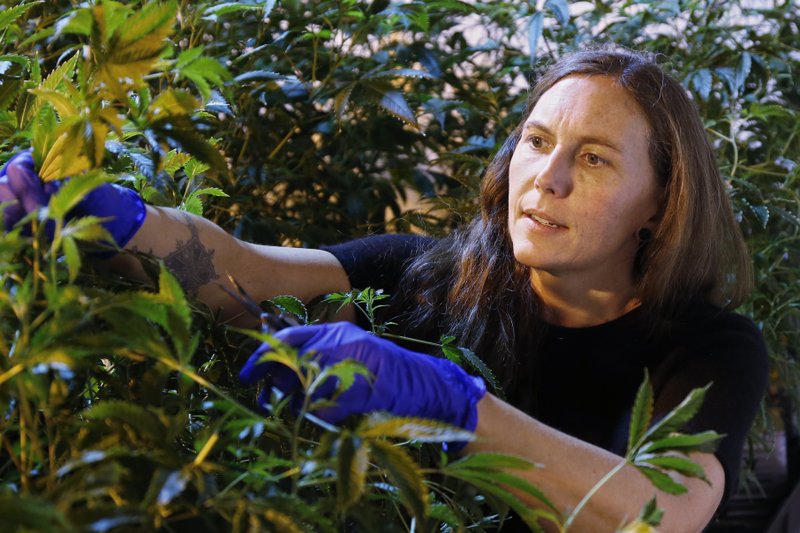
Jessica Baker takes a cutting of a plant at the Baker's marijuana nursery at Baker Medical, Wednesday, Feb. 26, 2020, in Oklahoma City. When voters in conservative Oklahoma approved medical marijuana in 2018, many thought the rollout would be ploddingly slow and burdened with bureaucracy. Instead, business is booming so much cannabis industry workers and entrepreneurs are moving to Oklahoma from states with more well-established pot cultures, like California, Colorado and Oregon. (AP Photo/Sue Ogrocki)


OKLAHOMA CITY (AP) — From their keen taste for sun-ripened pot to their first meeting at a pro-marijuana rally in college in the 1990s, everything about Chip and Jessica Baker fits the stereotype of cannabis country in Northern California, where they lived for 20 years.

Jessica, with wavy hair that falls halfway down her back, is a practicing herbalist, acupuncturist and aromatherapist who teaches classes on the health benefits of cannabis. Scruffy-bearded Chip wears a jacket with a prominent “grower” patch and hosts a marijuana podcast called “The Real Dirt.” They started their pot business in rugged Humboldt County when it was the thriving epicenter of marijuana cultivation.

But the couple bid goodbye to the weed-friendly West and moved somewhere that might seem like the last place they would end up — Oklahoma.

They’re part of a green rush into the Bible Belt that no one anticipated when Oklahoma voters approved medical marijuana less than two years ago. Since then, a combination of factors — including a remarkably open-ended law and a red state’s aversion to government regulation — have created such ideal conditions for the cannabis industry that entrepreneurs are pouring in from states where legal weed has been established for years.

Though 11 states have fully legalized marijuana for recreational use, Oklahoma’s medical law is the closest thing to it: Anyone with any ailment, real or imagined, who can get a doctor’s approval can get a license to buy. It’s not hard to do. Already, nearly 6% of the state’s 4 million residents have obtained their prescription cards. And people who want to sell pot can do it as easily as opening a taco stand.

“Oklahoma is really allowing for normal people to get into the cannabis industry, as opposed to other places where you need $20 million up front,” said Jessica Baker.

The Bakers have a marijuana farm about 40 miles (65 kilometers) from Oklahoma City, along with a dispensary, nursery and gardening shop in a working-class part of town where virtually every vacant shop and building has been snapped up by weed entrepreneurs in the last year.

When he leased his place, which had been vacant for 10 years, Chip Baker said, “to celebrate, the owner went to Hawaii for a month.”

Unlike other states, Oklahoma did not limit the number of business licenses for dispensaries, growers or processors.

In less than two years, Oklahoma has more than 2,300 pot stores, or the second most per capita in the U.S. behind only Oregon, which has had recreational marijuana sales for five years. Oklahoma has four times more retail outlets than more populous Colorado, which pioneered full legalization.


“Some of these states are regulating cannabis like plutonium,” said Morgan Fox, a spokesman for the National Cannabis Industry Association, the national trade group for marijuana businesses. “And the financial burdens that are placed on licensed businesses are so onerous, that not only is it very difficult to stay in business, but it’s also very difficult for the legal, state-regulated systems to compete with the illicit market.”

Marijuana taxes approach 50% in some California communities and are a factor in some business closings.

California requires a $1,000 application fee, a $5,000 surety bond and an annual license fee ranging from $2,500 to $96,000, depending on a dispensary’s projected revenue, along with a lengthy application process. Licenses can cost $300,000 annually.

In Oklahoma, a dispensary license costs $2,500, can be filled out online and is approved within two weeks.Arkansas, next door to Oklahoma, also has medical marijuana, but like most such states, it allows purchase only for treatment of certain diseases, such as glaucoma or post-traumatic stress disorder. It also requires a $100,000 surety bond. Louisiana, which also tightly restricts prescriptions, has only nine licensed dispensaries.

Ford Austin and his sister opened the APCO Medical Marijuana Dispensary in a gentrifying part of Oklahoma City after he gave up on plans for a California weed store. “There’s way more opportunity here,” he said.

Sarah Lee Gossett Parish, an Oklahoma attorney specializing in cannabis law, said about 15% of her cannabis clients are coming from out of state.

“I frequently receive calls from people in the cannabis industry in California,” Gossett Parish said.

People in some rural towns are worried about the Wild West atmosphere of the boom, particularly where shops with funny weed-pun names, waving banners and blinking signs have opened near schools and churches.

A Republican state legislator, Jim Olsen, has proposed a bill banning dispensaries within 1000 feet (305 meters) of a church. “While I recognize that some people do find pain relief from medical marijuana, with children we really don’t want them to think that when they reach problems in life, that marijuana is a good answer to that.”

But Republican Gov. Kevin Stitt and the GOP-controlled Legislature have shown no interest in reining in the industry since the ballot measure authorizing it passed overwhelmingly. The industry has mostly fought off local attempts at zoning.

Many communities are welcoming cannabis shops because of the sales tax revenue. In college-town Norman and in Oklahoma City, at least a half dozen businesses have joined the chambers of commerce.

“In our community, I think most businesses view them as equals,” said Scott Martin, president of the Norman Chamber of Commerce. “We’ve even had a handful of ribbon cutting ceremonies.”

Marijuana sales generated $54 million in tax revenue last year, accounted for the sharpest ever annual decline in empty mid-sized industrial properties in Oklahoma City, and booked up electricians around Tulsa outfitting new grow rooms with lights and temperature controls.


Even some longtime opponents of marijuana legalization have softened their tone.

Sheriff Chris West in Canadian County, one of many law enforcement officers who decried the 2018 legalization ballot measure, says a number of farmers he knows have decided to switch crops.

“I’ve had them call me and tell me, ‘Sheriff, we’re going to venture into this business and we’d like for you to come out and see our facility, because we want you to know what we’re doing.’ And these are longtime, good, godly, Christian families that see it as an income opportunity.”

___

Chip Baker holds a cutting of a marijuana plant at the Baker's marijuana nursery at Bakers Medical, Wednesday, Feb. 26, 2020, in Oklahoma City. When voters in conservative Oklahoma approved medical marijuana in 2018, many thought the rollout would be ploddingly slow and burdened with bureaucracy. Instead, business is booming so much cannabis industry workers and entrepreneurs are moving to Oklahoma from states with more well-established pot cultures, like California, Colorado and Oregon. (AP Photo/Sue Ogrocki)



Recently planted marijuana cuttings are pictured in a humidity dome in a nursery at Baker's Medical, Wednesday, Feb. 26, 2020, in Oklahoma City. When voters in conservative Oklahoma approved medical marijuana in 2018, many thought the rollout would be ploddingly slow and burdened with bureaucracy. Instead, business is booming so much cannabis industry workers and entrepreneurs are moving to Oklahoma from states with more well-established pot cultures, like California, Colorado and Oregon. (AP Photo/Sue Ogrocki)
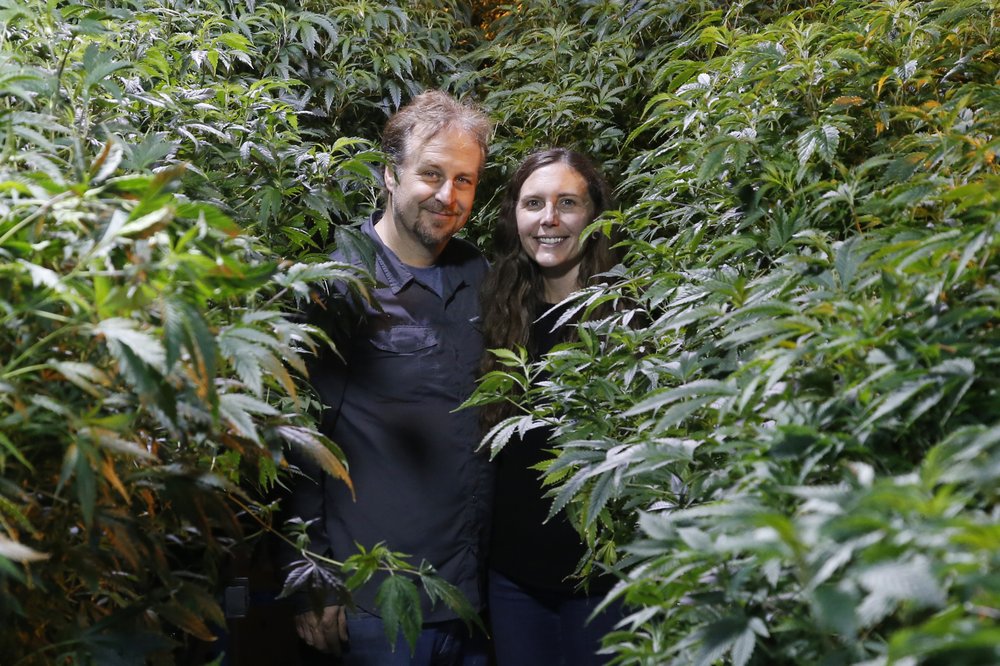

Chip and Jessica Baker pose for a photo at their marijuana nursery at Baker's Medical, Wednesday, Feb. 26, 2020, in Oklahoma City. When voters in conservative Oklahoma approved medical marijuana in 2018, many thought the rollout would be ploddingly slow and burdened with bureaucracy. Instead, business is booming so much cannabis industry workers and entrepreneurs are moving to Oklahoma from states with more well-established pot cultures, like California, Colorado and Oregon. (AP Photo/Sue Ogrocki)
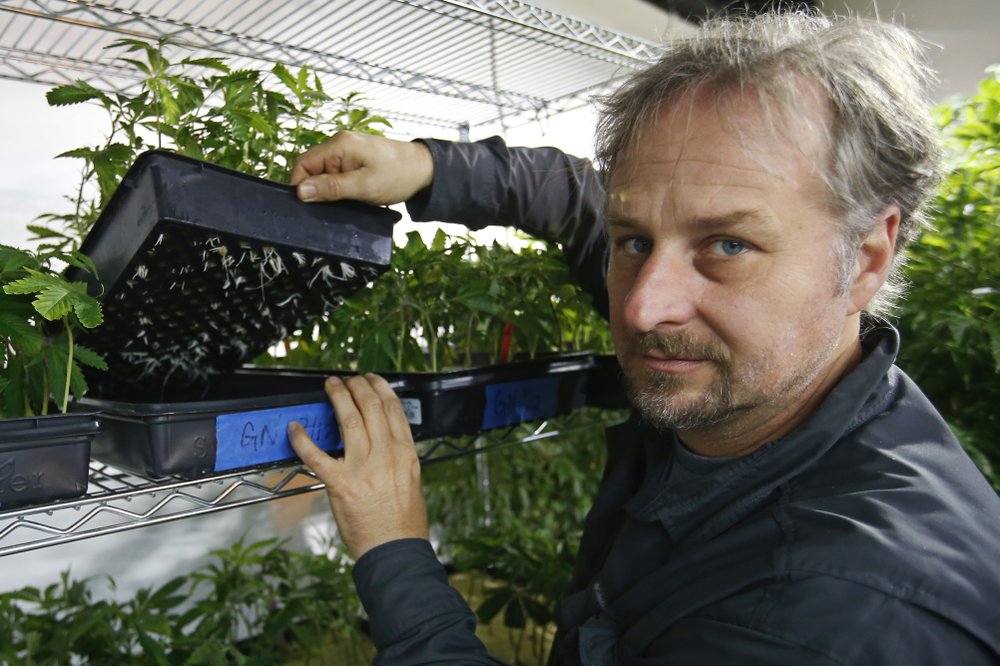
Chip Baker shows a flat of plants that have begun to root at the Baker's marijuana nursery at Baker's Medical, Wednesday, Feb. 26, 2020, in Oklahoma City. When voters in conservative Oklahoma approved medical marijuana in 2018, many thought the rollout would be ploddingly slow and burdened with bureaucracy. Instead, business is booming so much cannabis industry workers and entrepreneurs are moving to Oklahoma from states with more well-established pot cultures, like California, Colorado and Oregon. (AP Photo/Sue Ogrocki)


SpaceX launches station supplies, nails 50th rocket landing
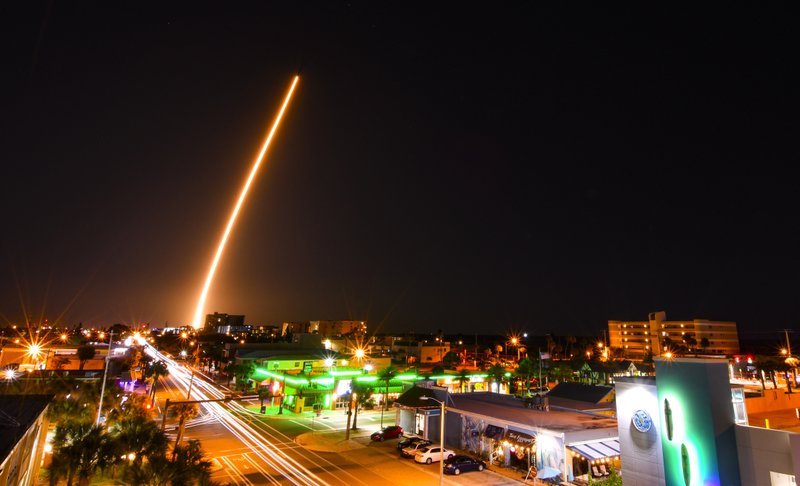
In a time exposure, a SpaceX Falcon is launched from Cape Canaveral, Fla., Friday night, March 6, 2020, with a load of supplies for the International Space Station. Cocoa Beach, Fla., is in the foreground. (Malcolm Denemark/Florida Today via AP)
In a time exposure, a SpaceX Falcon is launched from Cape Canaveral, Fla., as seen from Viera, Fla., Friday night, March 6, 2020. The Falcon rocket blasted off with 4,300 pounds (1,950 kilograms) of equipment and experiments for the International Space Station. Just minutes later, the spent first-stage booster made a dramatic midnight landing back at Cape Canaveral, its return accompanied by sonic booms. (Tim Shortt/Florida Today via AP)


CAPE CANAVERAL, Fla. (AP) — SpaceX successfully launched another load of station supplies for NASA late Friday night and nailed its 50th rocket landing.

The Falcon rocket blasted off with 4,300 pounds (1,950 kilograms) of equipment and experiments for the International Space Station. Just minutes later, the spent first-stage booster made a dramatic midnight landing back at Cape Canaveral, its return accompanied by sonic booms.

“And the Falcon has landed for the 50th time in SpaceX history!” SpaceX engineer Jessica Anderson announced amid cheers at Mission Control. “What an amazing live view all the way to touchdown.”

The Dragon capsule, meanwhile, hurtled toward a Monday rendezvous with the space station.

It’s the 20th station delivery for SpaceX, which has launched nearly 100,000 pounds (45,360 kilograms) of goods to the orbiting outpost and returned nearly that much back to Earth since it began shipments in 2012. Northrop Grumman is NASA’s other commercial shipper.

SpaceX founder and chief executive Elon Musk said it was the windiest conditions ever — 25 mph to 30 mph (40 kph to 48 kph) — for a booster landing at Cape Canaveral, but he wanted to push the envelope. The landing was the 50th successful touchdown of a SpaceX booster following liftoff, either on land or at sea.

“Envelope expanded,” Musk tweeted following touchdown.

The company’s first booster landing was in 2015, intended as a cost-saving, rocket-recycling move. Both the latest booster and Dragon capsule were recycled from previous flights.

A time exposure from Viera, Fla., shows the launch of a SpaceX Falcon from Cape Canaveral, Fla., Friday night, March 6, 2020. The rocket blasted off with 4,300 pounds (1,950 kilograms) of equipment and experiments for the International Space Station. Just minutes later, the spent first-stage booster made a dramatic midnight landing back at Cape Canaveral, its return accompanied by sonic booms. (Tim Shortt/Florida Today via AP)

Among the science experiments flying: an analysis of running shoe cushioning in weightlessness by Adidas, a water droplet study by Delta Faucet Co. striving for better showerhead water conservation, 3D models of heart and intestinal tissue, and 320 snippets of grape vines by Space Cargo Unlimited, the same Luxembourg startup that sent 12 bottles of red wine to the space station last November for a year of high-altitude aging.

The Dragon also contained treats for the two Americans and one Russian at the space station: grapefruit, oranges, apples, tomatoes, Skittles, Hot Tamales and Reese’s Pieces.

As for packing the capsule for launch, no extra precautions were taken because of the global coronavirus outbreak, according to NASA. The usual stringent precautions were taken to avoid passing along any germs or diseases to the space station crew. The doctor-approved procedures have proven effective in the past, officials noted.

In a time exposure from Cocoa Beach, Fla., a SpaceX Falcon rocket leaves a long trail after launch Friday, March 6, 2020, from Cape Canaveral, Fla. The two shorter streaks are from the first-stage booster firing on its return for a landing at Cape Canaveral. (Malcolm Denemark/Florida Today via AP)

This is the last of SpaceX’s original Dragon cargo capsules. Going forward, the company will launch supplies in second-generation Dragons, roomier and more elaborate versions built for crews.

The company aims to launch NASA astronauts this spring. The California-based SpaceX also teaming up with other companies to fly tourists and private researchers to the space station, as well as high solo orbits in the next couple years.

Everything you thought you knew about UK immigration is wrong


In the first piece of a new series, Minnie Rahman 
@MinnieRahman explains why we shouldn’t be afraid to stand up for migrants’ rights by telling the truth. And there’s no better time to do so than right now


Most people who come to live in the UK have ‘no recourse to public funds’, meaning they are not eligible for benefits ( EPA-EFE )


Myths around migration are so common that it’s difficult to tell where reality ends and the truth begins. Politicians from across the spectrum still claim that those with “legitimate concerns” have not had their voices heard, despite the fact that misconceptions around migration are predominant in the media, and that statistics show time and again that people come to the UK for a range of reasons.

Rarely does the public understand what moving to the UK is like. But every day, people’s lives, families and communities are torn apart by a tangled mess of rules, a chaotic Home Office and a hostile environment – and these are the voices we rarely hear.

The simple truth about migration is that people move. They always have and always will. But at a time when immigration reform is high on the government’s agenda, it’s vital that we challenge the myths that are so prevalent in our discourse. After Brexit, our new migration system must be based on evidence, not cynical scapegoating.

“Migrants steal jobs and bring down wages”
We hear almost daily that migrants threaten British jobs, and that migrant workers lead to a drop in wages for British workers. In reality, there is no evidence that migration drives down wages, particularly for the working class. Migrants themselves are disproportionately represented in low-wage sectors and research from the University College London has found that migration can actually lead to an increase in the wages of higher-paid workers. A recent government-commissioned report by the Migration Advisory Committee found that it is international financial forces, not migration, that impacts salaries, with all workers having done badly since the financial crisis of 2008. Real wages are still struggling to rise above where they were in the aftermath of that crisis and in many cases, migrant workers are actually leading the battle to ensure that standards rise for all workers.

Read more
Home Office hands Serco detention contract despite abuse allegations
“The new points-based system rightly rewards migrants based on merit”

The government claims that its new “points-based” migration system, introduced through the recently announced immigration bill, will “attract high-skilled workers”. But the proposals actually amount to a two-tier system which makes judgements on income, treats people as economic commodities and makes it impossible for anyone to live in the UK unless they are rich or have a PhD.

By the government’s definition of “skilled”, most of us in the country are unskilled. Take the fact that more than one in five workers in the care sector were born outside the UK, or that on average, carers earn less than £18,000. These are the people who spend their days looking after people in their hour of greatest need, a hugely emotionally and physically demanding job – yet they fall far below the salary threshold the government has set at £25,600. The proposals do nothing but make businesses and industry insecure, and risks decimating the NHS.

“Migrants abuse the welfare system”

In the same breath, people who perpetuate the false notion that migrants drive down wages often also claim that migrants are abusing our welfare system. Memes and viral Facebook posts often claim that “illegal” immigrants are always “first in the queue” for housing, benefits and are a drain on the NHS. But this couldn’t be further from the truth. As shown by the latest report from the Office for National Statistics on immigration, it’s students who make up around half of all non-EU immigration and the majority of EU nationals predominantly arrive to work.

Health tourism is almost non-existent, with the NHS spending more on stationery than on treating people who aren’t eligible for NHS care. The government’s own estimate puts the cost of deliberate misuse of the NHS by overseas visitors at 0.3 per cent of the NHS budget – the majority of this is actually British expats living overseas, who are not “ordinarily resident” in the UK and return to the UK solely to use the NHS outside of the rules.


Migrants of all kinds do pay for NHS services and have done for many years. The Immigration Health Surcharge, which is included as part of visa applications, means that migrants actually pay for the NHS twice over – £1,000 a year as part of their visa application, and then payments through their tax contributions.

In fact, most people who come to live in the UK have “no recourse to public funds”, meaning they are not eligible for benefits. Even asylum-seekers, who are barred from working, are left to live on just £5.39 per day, and struggle to support themselves and their families. What’s more, the “hostile environment” denies anyone without documentation the right to benefits, banking, driving licences and employment.


“The immigration system helps vulnerable, trafficked women”

Under current rules, anyone without documentation faces arrest or indefinite detention. When such people are trafficked and abused by employers, this means they fear coming forward to the police. The criminalisation of migration means that victims of trafficking, migrant workers and survivors of domestic abuse fear going to the police in case they’re reported to immigration enforcement. Abusers are also able to hold on to vital documentation and use it as a means to further exploit and control their victims. There is a fundamental clash within the Home Office. The same agency that is meant to protect victims of trafficking also seeks, in many cases, to remove them from the country.

An immigrant's tale: Leaving Britain to escape Brexit hostility
Show all 20


“The UK has a soft border”

The UK’s border itself is the source of one of the most pernicious myths about migration. Anti-migrant groups claim that the border is “soft” or “porous”. In fact, the UK already has extremely restrictive and draconian border controls, highlighted most clearly with the tragic case of the Essex 39. If we truly had a “soft” border, then people would not be risking their lives trying to cross the Channel in order to get here. The lack of safe and legal routes of entry into the UK ensures that those who are desperate will be pushed to extreme methods of entry. Far from being soft, our hard border regime already means that many people die on entry to the UK, or are left to the hands of those willing to exploit them.

We shouldn’t be afraid to stand up for migrants’ rights by telling the truth. The truth about migration is that those in power have failed to make the case for migrants’ rights, and have instead pandered to anti-migrant narratives. Migrants are far more than their economic contributions and are not responsible for destructive policies designed to crack down on public spending. Britain can be a place where people don’t suffer just because they move, where policy is grounded in evidence and the public are brought on board – we just have to be brave enough to ask for it.

Minnie Rahman is a writer, speaker and public affairs and campaigns manager at the Joint Council for the Welfare of Immigrants
Remains of Anglo-Saxon princess who could be the Queen’s earliest known relative discovered by scientists in Kent

Eanswythe, the daughter of King Eadbald, is believed to have founded England’s first nunnery before her life was cut short, likely as a result of bubonic plague

An Anglo-Saxon princess who was one of England’s earliest Christian saints has been identified by scientists in a church in Kent.

Some historical evidence suggests that she may be the present Queen’s earliest known relative whose remains have so far been identified.

Dating from the mid-seventh century AD, the princess was the daughter of King Eadbald (literally “the prosperous one”), the ruler of the Anglo-Saxon kingdom of Kent, who was that micro-country’s monarch from 616 (or 618) to 640.

Parts of the Kentish royal dynasty’s lineage are unclear but some interpretations of their genealogy suggests that he was the present Queen’s 40th great grandfather.

His daughter Eanswythe, whose fragmentary skeleton has just been identified, was a devout Christian who was said to have refused to marry the pagan king of northeast England; and instead decided to become a nun.

The St Eanswythe excavation in pictures
Show all 9


Although only a teenager at the time, she is believed to have founded and became abbess of what may well have been England’s first nunnery – potentially at the request of her brother, Eorcenberht, Eadbald’s successor as king.

She was the granddaughter of Bertha, a Christian queen of Kent who, along with St Augustine, was arguably the key individual responsible for helping to initiate pagan Anglo-Saxon England’s conversion to Christianity.

But tragically, Eanswythe’s life was cut short – possibly by a bubonic plague epidemic – and she died in her late teens or very early 20s.

She was and still is the patron saint of Folkestone and a local history project, aptly called “Finding Eanswythe”, is using the full panoply of modern science to rediscover the long-lost secrets of her life.

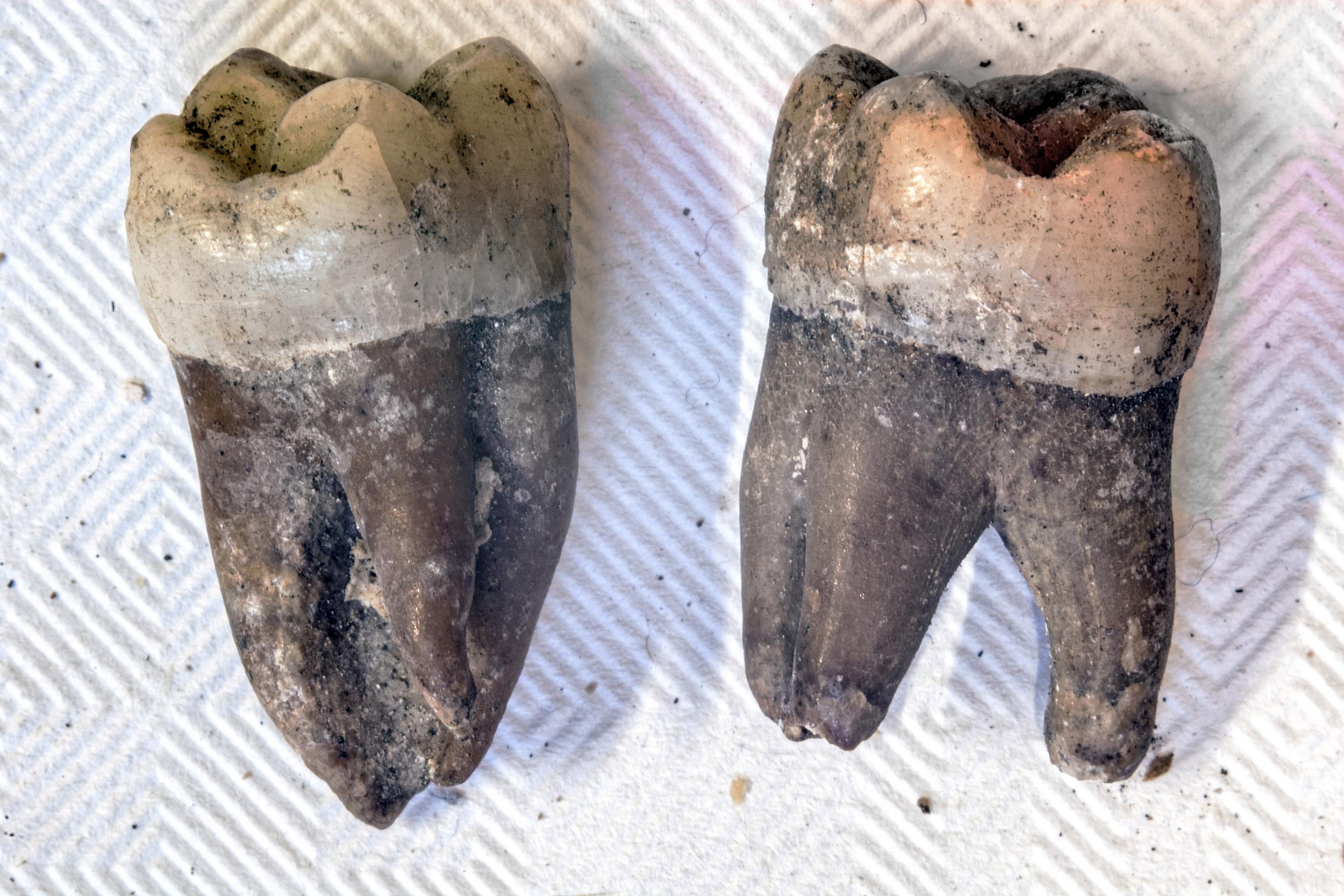
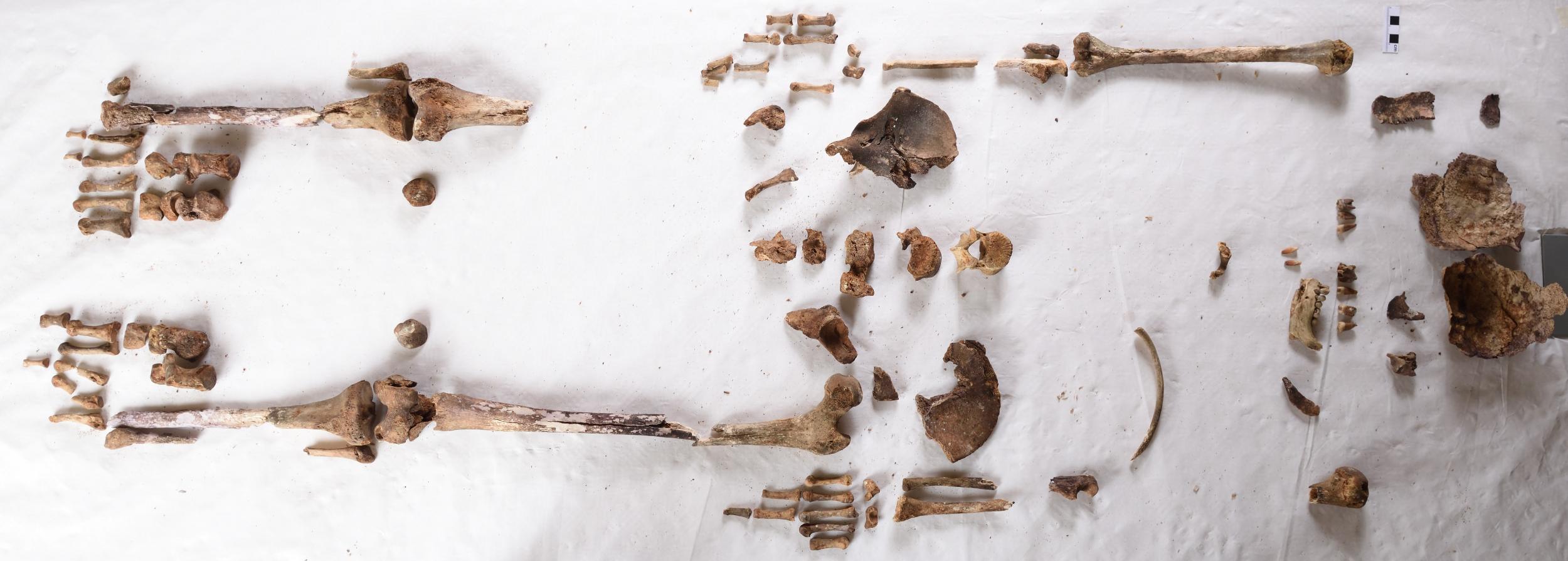
A thorough examination of her surviving teeth suggests that she ate relatively refined food. In life, her dentition appears to have been pristine – with virtually no pre-death wear and tear.

Her bones also showed very little sign of injury – apart from a potential stress fracture in one foot bone and two possible damaged finger bones.

Now the “Finding Eanswythe” project, supported by Folkstone Museum, hopes to analyse her DNA and the DNA of any pathogens in her bones to learn more about her royal lineage and to reveal whether or not she died from the plague.
Data from the royal saint’s teeth, above, were crucial to her identification (Kevin Harvey/Folkestone Museum)

Isotopic analysis will also be carried out and may reveal where she grew up and more details about her diet. Although her life was tragically short, her afterlife was rather more dramatic.

After her death, according to mediaeval accounts, she was buried in her own private chapel, overlooking the sea above Folkestone. But as coastal erosion undercut the cliffs, the abbesses who succeeded her increasingly realised that the building would eventually end up crashing into the sea below.

Some time in the eighth century her remains were removed from the stricken chapel and put into a specially built shrine in the nunnery’s main church. By the late 11 century, the nunnery had become a monastery.

However, following the Norman conquest, a castle was built around it – so, in the 12 century, the monks demanded that they be allowed to move to a new, less secular, site.

The princess’s bones were therefore disinterred again and moved, in 1138, a few hundred metres away to a brand new church, a later version of which still stands today as Folkestone’s Parish Church. There she became the centre of a local cult and was believed to be able to help cure disease. Her official saint’s day is 12 September.

But, after the mediaeval period had drawn to a close, Eanswythe’s story took a new and unexpected turn.


Icon donated by Orthodox pilgrims to St Eanswythe’s 
shrine (© Church of St Mary and St Eanswythe, Folkestone)

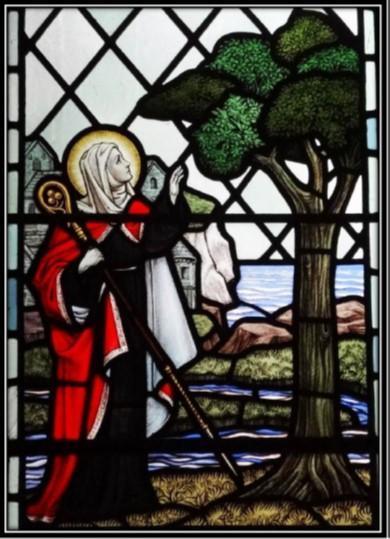
Stained glass window (depicting St Eanswythe) in the Church of St Mary
 and St Eanswythe (© Church of St Mary and St Eanswythe, Folkestone)
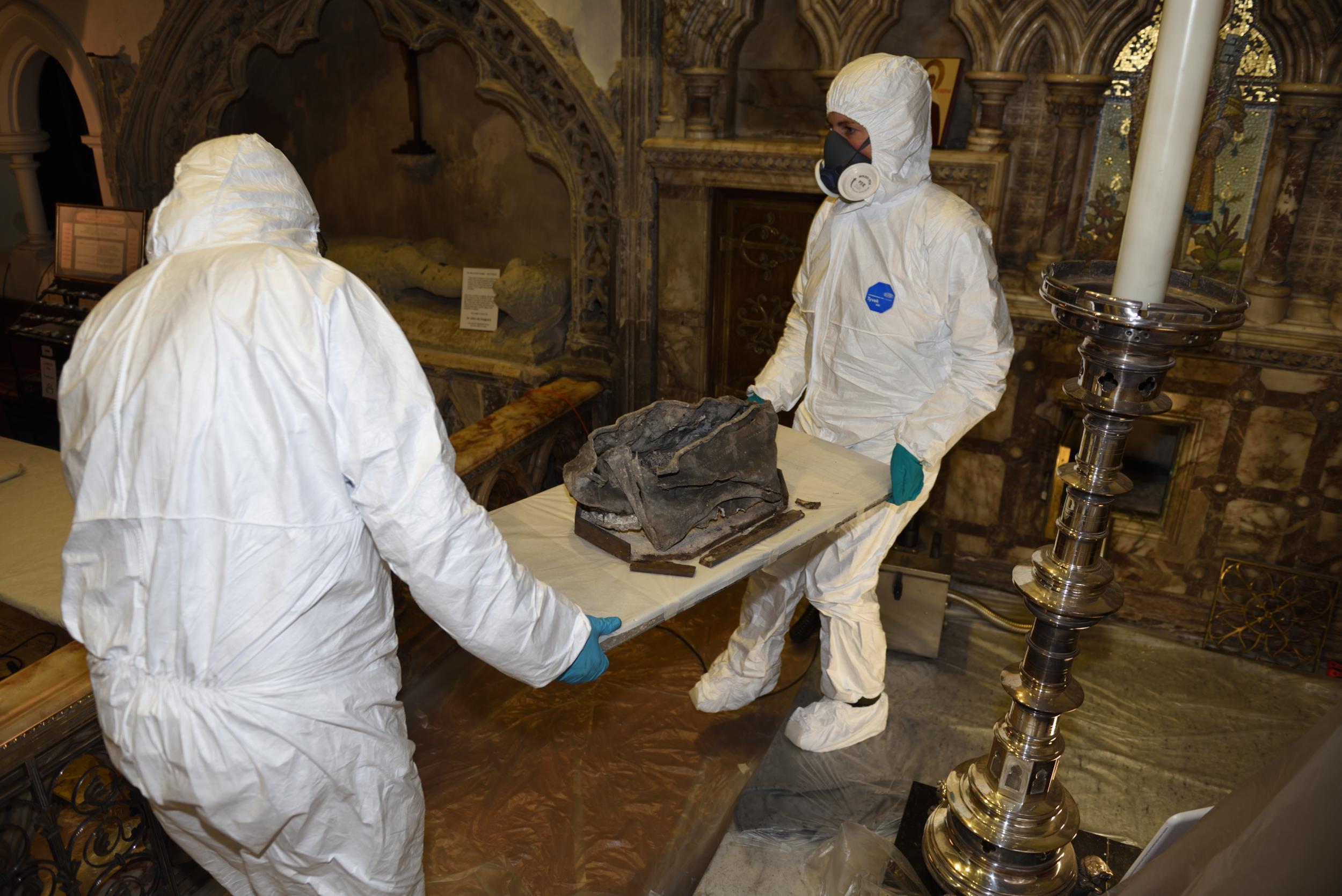
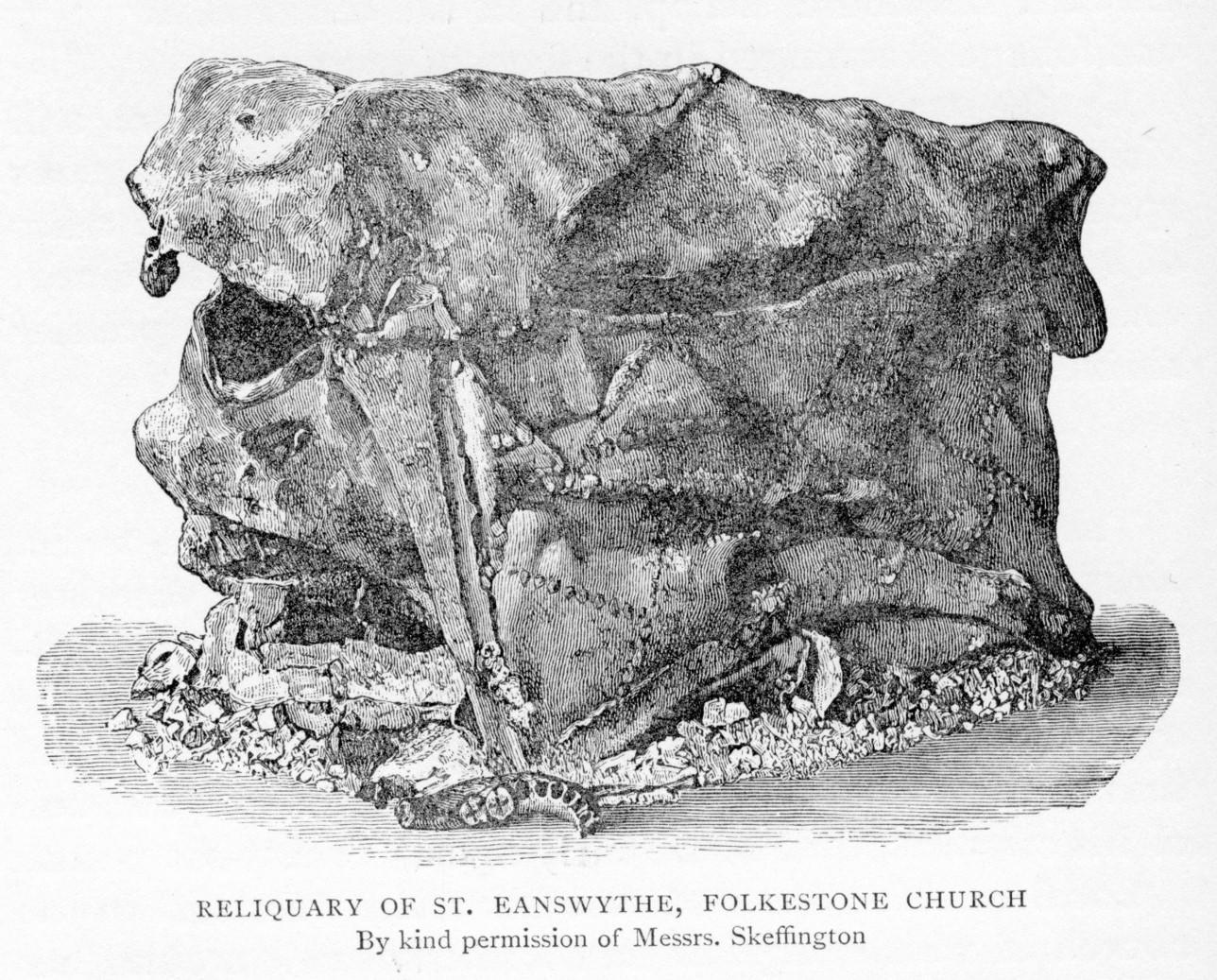
When Henry VIII broke away from the Roman Catholic Church and established the Church of England, the government became increasingly hostile to the veneration of saints. In 1535, the prior of Folkestone seems to have realised that, unless he took drastic action, government officials would seize and destroy Eanswythe’s bones. So he (or some of his monks) appear to have hurriedly forced the lead box containing them into a secret hole in the church wall and blocked it off.

The prior, or a senior church member, then showed the officials a probably gold or gem-studded reliquary, almost certainly containing just a few parts of the saint’s skull.

That box, with its diminished contents, was subsequently seized by the government and was then acquired by a member of Henry VIII’s household, a Folkestone politician and businessman called Anthony Aucher, who no doubt profited substantially by selling any gems which had adorned the reliquary.

Meanwhile, Eanswythe rested safe and secure in her dark hiding place inside the church’s north wall, just beside the altar.

Gradually her hiding place was forgotten – until, in 1885, workmen engaged in modernising the church stumbled across her remains. There was immediate speculation about the possibility that they could be the bones of St Eanswythe and the discovery was reported in newspapers worldwide.


Image of the lead container and bones found by workmen in June 1885 published in Archaeologia Cantiana in 1886 (© Kent Archaeological Society)
But in the 19th century, there was no way of confirming her identity.

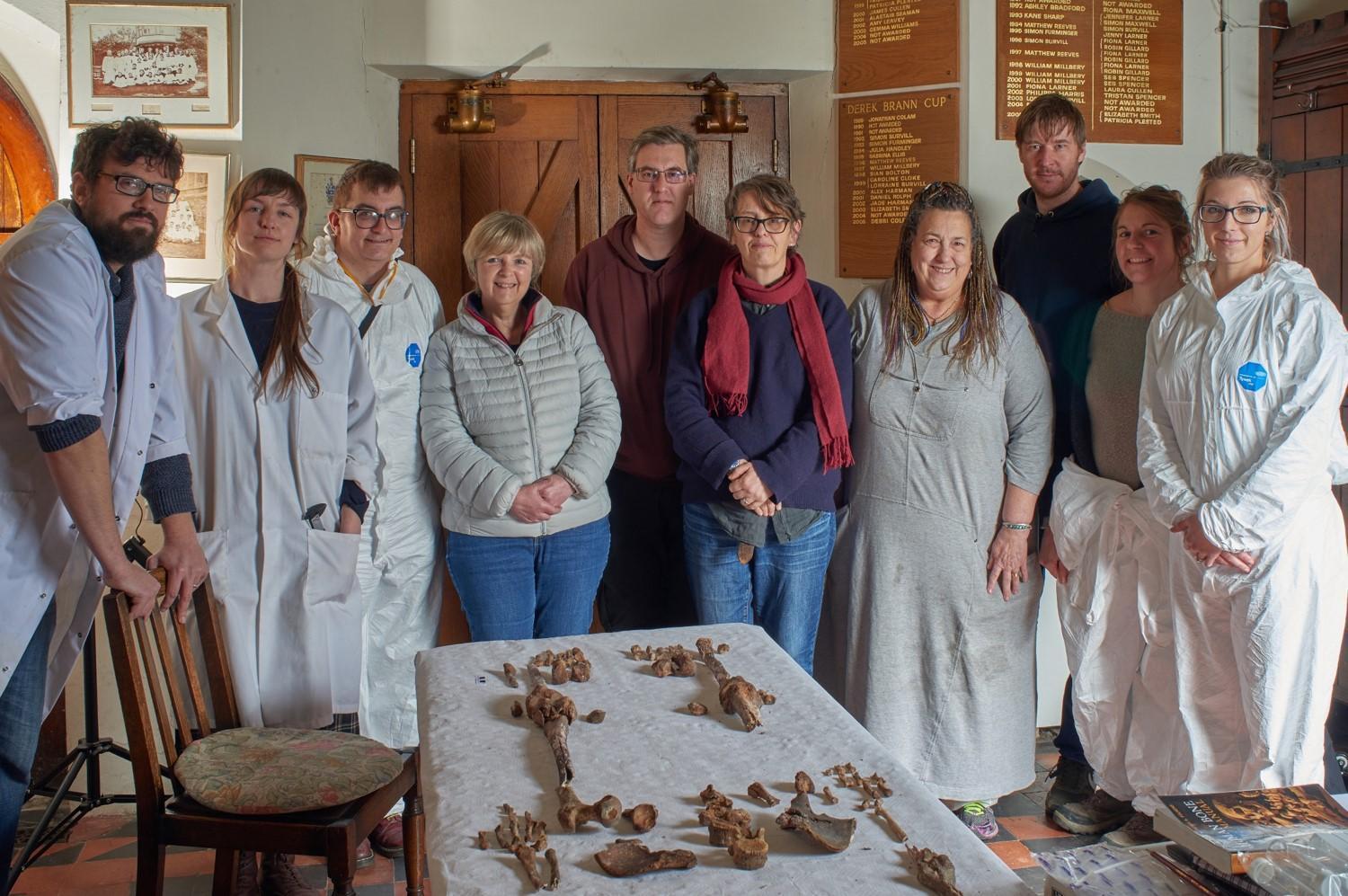
So for 132 years, the bones were stashed away in a specially constructed wall niche and once again began to fade from memory, until just three years ago a group of local historians and archaeologists decided to try to solve the mystery.

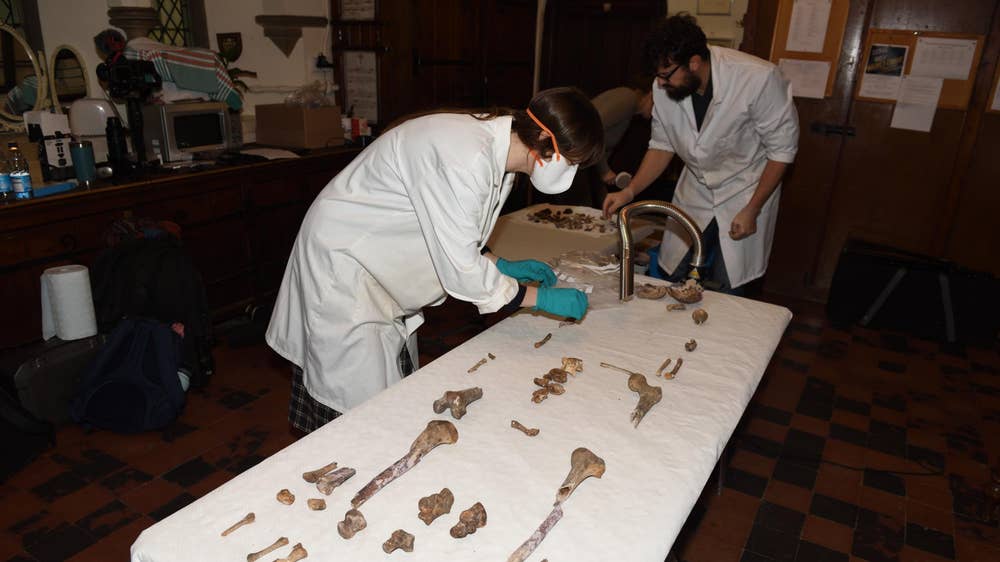
They did so by asking scientists to examine the bones in order to discover the long-dead individual’s age at death and sex – and by carrying out radiocarbon dating tests to ascertain whether the bones did indeed date from the seventh century.

The answers virtually proved that the fragmentary skeleton was indeed that of St Eanswythe.
The bones showed very little signs of distress (Mark Hourahane/Folkestone Museum)

The scientists were able to demonstrate that the individual was almost certainly female.

Medieval sources had said that she had died very young – and the scientific examination of her bones and teeth revealed that the individual had been between 17 and 21 years old when she had passed away.

The radiocarbon tests then revealed that she had died in the mid-seventh century – the exact period when Eanswythe‘s life ended.

What’s more, examination of her teeth showed virtually no pre-death scratches on her tooth enamel, a fact that suggests that she had consumed relatively little coarse food.


Throughout the medieval period, a large number of stories attached themselves to her. She was credited with at least five miracles and was venerated by people in the Folkestone area.

She was believed, for instance, to have miraculously made water run uphill (a story probably developed in order to explain an optical illusion which seemed to show a local aqueduct channelling water up a gradient). She was also credited for resurrecting a dead goose that had been stolen and eaten.

Eanswythe was also said to have miraculously lengthened a wooden beam to construct a church by calling on Christ to help when a pagan king and his gods had failed to lengthen it.


And after her death, her ghost was said to have cured a man suffering from leprosy or some other skin disease.
Read more
Excavations of medieval chapel at site linked to King Arthur

But, beyond those legends, what was her real significance?

In a sense, she symbolises the huge contribution to early English history made by high-status women. Prior to the coming of Christianity, it is not known whether Anglo-Saxon women played any major political roles.

But the coming of Christianity certainly provided one. Princesses played a major part in the conversion of England from paganism to the new faith. When Anglo-Saxon and other Christian princesses married pagan Anglo-Saxon kings, their presence often allowed Christianity to gain the upper hand and flourish.

What’s more, those royal daughters who did not marry kings and princes were established by their royal fathers or brothers as abbesses of a new type of institution – nunneries, which in turn, alongside the monasteries, began to wield substantial social and cultural influence. Many of the new abbesses (like Eanswythe) became popular saints and were revered for centuries.

St Eanswythe died some 1,360 years ago but her newly rediscovered life and times are about to captivate a new audience.

“Our identification of St Eanswythe’s skeletal remains open up the possibility of using DNA to investigate the ancestry of the Kentish and Frankish royal dynasties,” said the senior archaeologist involved in the project, Dr Andrew Richardson of the Canterbury Archaeological Trust.

“St Eanswythe was a local heroine of great relevance to local people. In mediaeval times, they saw her as their protector from disease and suffering. Researching her today will bring the people of Folkestone nearer to that history,” said the head of the Finding Eanswythe project, Dr Lesley Hardy, a historian at Canterbury Christ Church University.

The project is being largely financed by the National Lottery Heritage Fund.


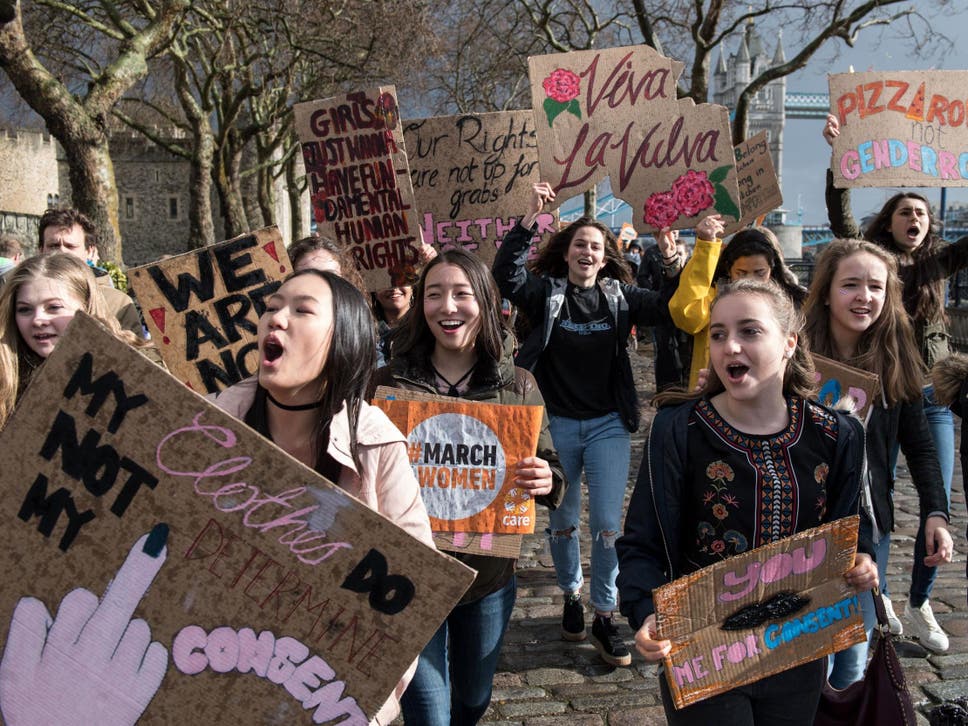
INTERNATIONAL WOMEN’S DAY: HOW IS IT CELEBRATED AROUND THE WORLD?

The day takes place on Sunday 8 March this year


International Women’s Day (IWD) will be celebrated around the world on Sunday 8 March, as people come together to champion the advancement of women’s rights and gender equality.

While the day itself carries the clear theme of female empowerment across the world, the way it’s acknowledged and celebrated differs from country to country.

Some companies offer women a half-day off work, for example, while others celebrate by giving one another flowers.

Read on to see how International Women’s Day celebrations vary across the globe.

United States

In the US, the whole of March is Women’s History Month.

This has been an ongoing celebration since February 1980 when President Jimmy Carter declared the week of 8 March as National Women’s History Week.

Within a few years, thousands of schools across the country had embraced the week as a means of achieving equality in the classroom, something that was spearheaded by the National Women’s History Alliance. It was also supported by city councils and governors, who ran events and special programmes to champion female empowerment.

The celebrations evolved and by 1986, 14 states had extended the celebrations to last for the duration of March.

Now, every year an official statement of recognition is issued by the President, known as a Presidential Proclamation, on IWD to honour the achievements of American Women.

Italy

In Italy, International Women’s Day is called La Festa della Donna.
Watch more
International Women’s Day: When and how did the annual event start?

It’s celebrated primarily by the giving of bright yellow Mimosa blossom flowers. On the day itself, bouquets of the sunshine-hued blooms are sold on almost every street corner in Italy, the idea being that people honour the women in their lives by giving them these flowers, which are viewed as a symbol of female strength and sensibility.

This floral theme also manifests in confectionery form, with some Italians choosing to celebrate IWD by making a special cake designed to resemble small blooms of the mimosa flower. Traditionally, this is a sponge cake made with citrus liqueur and topped with cream and cubes of pastry to mimic the shape of the flower.

China

In China, 8 March has been a national holiday since 1949. Many companies offer female employees a half-day on International Women’s Day so that they can spend the afternoon celebrating.

Similar to Valentine's Day, IWD in China is viewed as an opportunity to treat the women they love with special gifts.

It has, therefore, been adopted as a day for commercial opportunities, with many brands capitalising on the probability that people want to spend money on the women in their lives by launching special IWD marketing campaigns and deals.

China also celebrates Girl’s Day on 7 March, which is dedicated to championing the achievements of younger Chinese women in schools and universities.

Berlin

On 24 January 2019, Berlin’s parliament voted for International Women’s Day, known as Frauentag, to become a public holiday.

This means that workers in the German capital, the only state in the country to recognise the day as a public holiday, will get the day off on Friday.

UK

In the UK, International Women’s Day is celebrated in a number of ways, with a special focus on raising awareness of social and political issues affecting women.

Events taking place around the country this year in honour of IWD include panel talks, exercise classes and gigs, many of which aim to raise funds for specific charities dedicated to women’s rights. You can see our roundup of IWD events here.
In the past fashion brands have partnered with women’s charities to raise money through sales of special IWD garments.

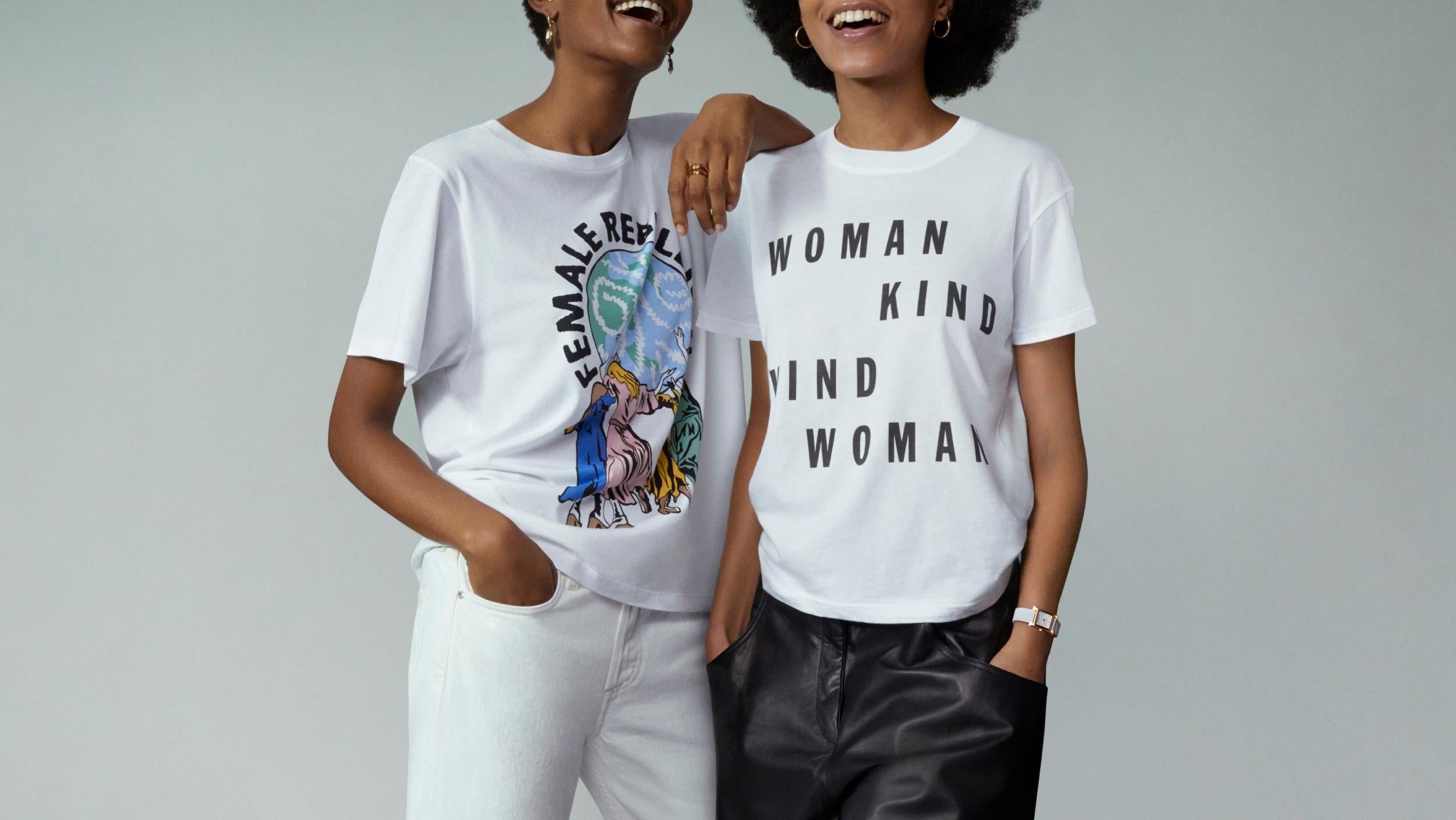
Designer T-shirts by Stella McCartney (left) and Roxanne Assoulin (right) have been launched by Net-a-Porter to raise funds for Women for Women International (Net-a-Porter)

This year, online luxury retailer Net-a-Porter, for example, has teamed up with 20 female designers, including Isabel Marant and Alexa Chung, to create a capsule collection of exclusive t-shirts with proceeds benefitting Women for Women International.

Spain

In 2018, more than five million female workers marked International Women's Day with a landmark 24-hour strike to protest against the gender pay gap, domestic violence and sexual discrimination in the workplace.

Rallies took place around the country in more than 200 locations. Those taking part were encouraged by organisers not to spend any money on the day and not participate in any domestic chores.

Last year similar protests, as organised by the feminist organisation The 8M Commission, took place.
A tiny caterpillar could be the solution to plastic pollution, scientists suggest

 by Sirena Bergman in news

Getty

While scientists and researchers work to find ways to stall the effects of climate change, it's possible that the answer to one of our problems may actually already exist in the form of a caterpillar.

In 2017, it was discovered that waxworms have the ability to eat through plastic. At the time, it was unclear how exactly this was possible and whether it could be replicated, and now researchers think they may have found a breakthrough.

A paper published earlier this week reveals that it's all about the worms' gut bacteria and microbiome. This discovery allows for the hope that an efficient method of environmentally friendly plastic degradation could be on the horizon.
Christophe LeMoine, an associate professor and chair of biology at Brandon University in Canada, told CNN:

We found that waxworm caterpillars are endowed with gut microbes that are essential in the plastic biodegradation process. This process seems reliant on a synergy between the caterpillars and their gut bacteria to accelerate polyethylene degradation.

Currently, the best way to tackle plastic pollution is recycling, but this is far from perfect.

The process of recycling itself requires the use of non-renewable energy, plus unlike other materials such as glass or metal, plastic can only be recycled a certain number of times. A single plastic water bottle will take approximately 450 years to completely break down, and this process emmits dangerous gases which contribute to climate change.

While some steps are being taken towards minimising the demand for plastic products (such as banning straws and charging for bags), the world is still currently producing nearly 300 million tons of plastic each year, much of which ends up in the ocean, leading to devastating environmental consequences.

Waxworms don't provide a perfect solution, as their excrement is somewhat toxic, but it could be a starting point for scientists looking to develop innovative ways of tackling the huge issue of plastic waste.

---30---
Nathaniel Woods executed in Alabama despite someone else confessing to the crime

by Moya Lothian-McLean in news


Getty

A black man has been executed in Alabama – despite someone else confessing to the crime and begging officers to halt the execution.

Nathaniel Woods was given a lethal injection last night after last minute appeals for his sentence to be commuted failed.

He was 44 years old.

Woods was convicted in 2005 of the murder of three policemen in Birmingham, Alabama, even though he always claimed innocence when it came to the act of shooting.

And Kerry Spencer, the man convicted alongside him, gave the same story, denying Woods was involved with the murders and saying that he acted alone.

The case has attracted widespread attention, thanks to the involvement of some high-profile campaigners who tried to prevent Woods’ execution.

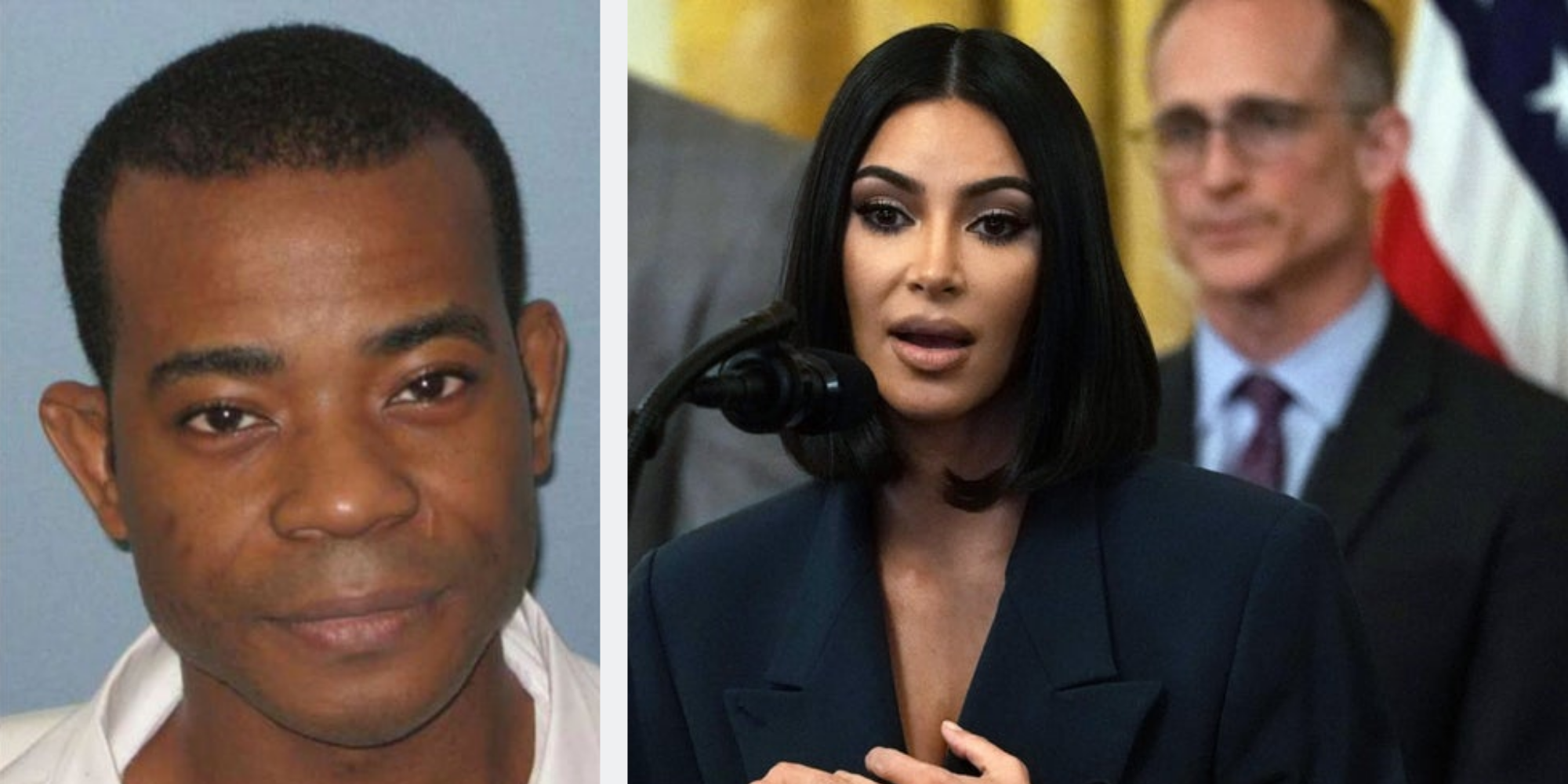
Both Kim Kardashian West and Martin Luther King III spoke up to try and stop what they called a “tragic example of injustice”.

Just before Woods’ execution, Kardashian tweeted: “The court has lifted the temporary stay of execution for #NathanielWoods. The governor will NOT save his life.

“My heart and prayers are with Nate and his family.This is a tragic example of injustice in the system – in a few minutes Nate may die for a crime he did not commit.

Nate will die for a crime another man confessed to and says Nate had nothing to do with. My heart and prayers are with Nate and his family and all the advocates who worked tirelessly to save his life”.

Following the prison’s confirmation that Woods had indeed been executed, Kim tweeted her commiserations.

Since the execution, many have been questioning Alabama’s death penalty legislation and the apparent racism present in condemning a man to death for a crime he didn’t commit.

Others have pointed out that the same punishment doesn’t seem to apply to white criminals.

Or even white policemen who don’t even receive sanctions for murdering black individuals.

And there were calls for the death penalty to be (re)abolished altogether.

Will anything be learnt from this case?


Given it's almost 60 years since the Civil Rights movement and this sort of structural inequality is still occurring: probably not.

Comments

Selene
Rest in power Nathaniel ! Yet another gross miscarriage of so called ’ justice’ and further example of the tide of racism and the car right ignoring the true facts..Please support Reprieve.org.hi and let’s stand together to fight state/ government sanctioned murder !

Reply
Selene
please excuse a few typos ! MS and typing don’t go to well together these days! That should read...reprieve.org.uk..Please at least visit their site.


AS A CATHOLIC HE GIVES HER WHAT FOR OVER INCONSTANCY AND HYPOCRISY INVOKING THE POPE, ITS RIGHT ON
Lawrence considers the contradiction between Republican Gov. Kay Ivey’s pro-life stance and her decision not to stop the execution of Nathaniel Woods in Alabama.
https://on.msnbc.com/2wCTR6K

Real-life ‘Waterworld’: Early Earth was completely covered in water with no continents, say scientists
Discovery could help scientists understand how and where single-cell organisms first emerged

Kate Ng

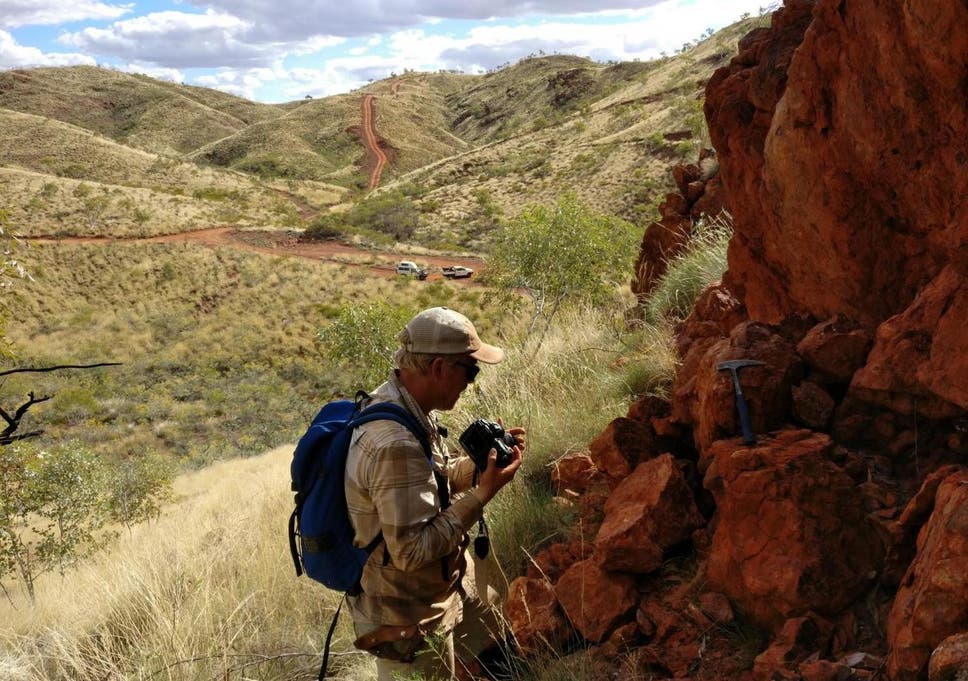
Lead author Benjamin Johnson inspects a rock outcrop near the site of an ancient hydrothermal vent in the Panorama district ( Jana Meixnerova )

The ancient Earth may once have been completely covered in water, new research suggests.

In a study published in Natural Geoscience, researchers examined a chunk of ocean crust located in northwestern Australia’s outback that is approximately 3.2 billion years old.

The geologic site, called the Panorama district, provided clues about the chemistry of ocean water from billions of years ago.

It could also help scientists understand how and where single-cell organisms first emerged on earth.

Lead author Benjamin Johnson and co-author Boswell Wing analysed data from more than 100 rock samples across the terrain to search for two different isotopes of oxygen trapped in the stone.

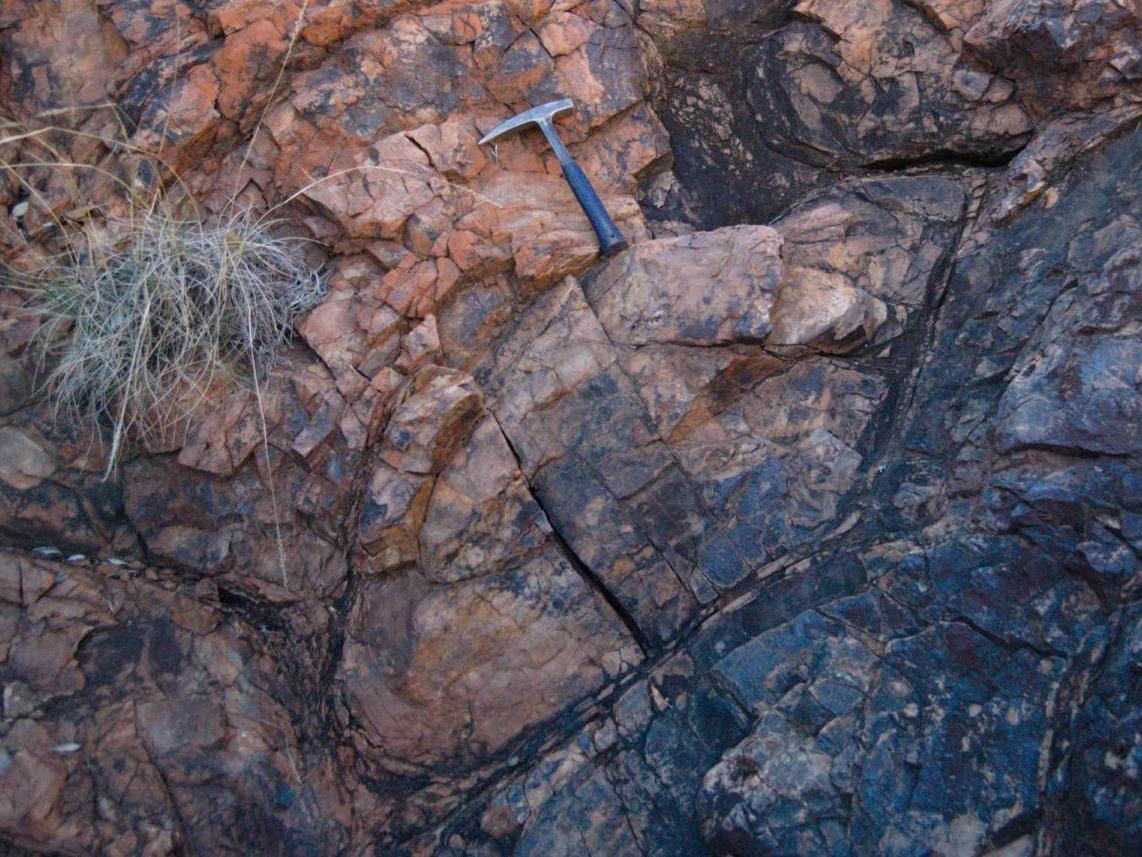
A pillow basalt formation made up an ancient seafloor 3.2 billion years ago (Benjamin Johnson)

Mr Wing, of the University of Colorado Boulder, said in a news release: “The history of life on Earth tracks available niches. If you’ve got a waterworld, a world covered by ocean, then dry niches are just not going to be available.”

Mr Johnson, who is a postdoctoral fellow in the same university, added: “Today, there are these really scrubby and rolling hills that are cut through by dry river beds. It’s a crazy place.

“There are no samples of really ancient ocean water lying around but we do have rocks that interacted with that seawater and remembered that interaction.”

He described the process as similar to analysing coffee ground to gather information about the water that was poured through them.

In their findings, the duo discovered the ratio of the two isotopes, Oxygen-18 and Oxygen-16, present in the rocks today may have been just slightly off in the seawater 3.2 billion years ago.

Mr Wing said though the mass differences seemed small, they were “super sensitive” to the presence of continents.

Independent news email

Only the best news in your inbox
Continue


Register with your social account or click here to log in
I would like to receive morning headlinesMonday - Friday plus breaking news alerts by email

The team’s theory is that the excess Oxygen-18 in the ancient seawater could be explained by the lack of soil-rich continents to absorb the heavier Oxygen-18 isotopes at the time.

However, there may have been some dry spots of land around.

Mr Wing said: “There’s nothing in what we’ve done that says you can’t have teeny, micro-continents sticking out of the oceans.

“We just don’t think that there were global-scale formation of continental soils like we have today.”

The study does not answer the question of when tectonic plates began pushing masses of rocks that eventually became continents, but Mr Wing and Mr Johnson said they plan to study younger rock formations from Arizona to South Africa to try and determine that.

Mr Johnson said: “Trying to fill that gap is really important

---30---
ON THIS DAY; MARCH 7, 1985 WE ARE THE WORLD 
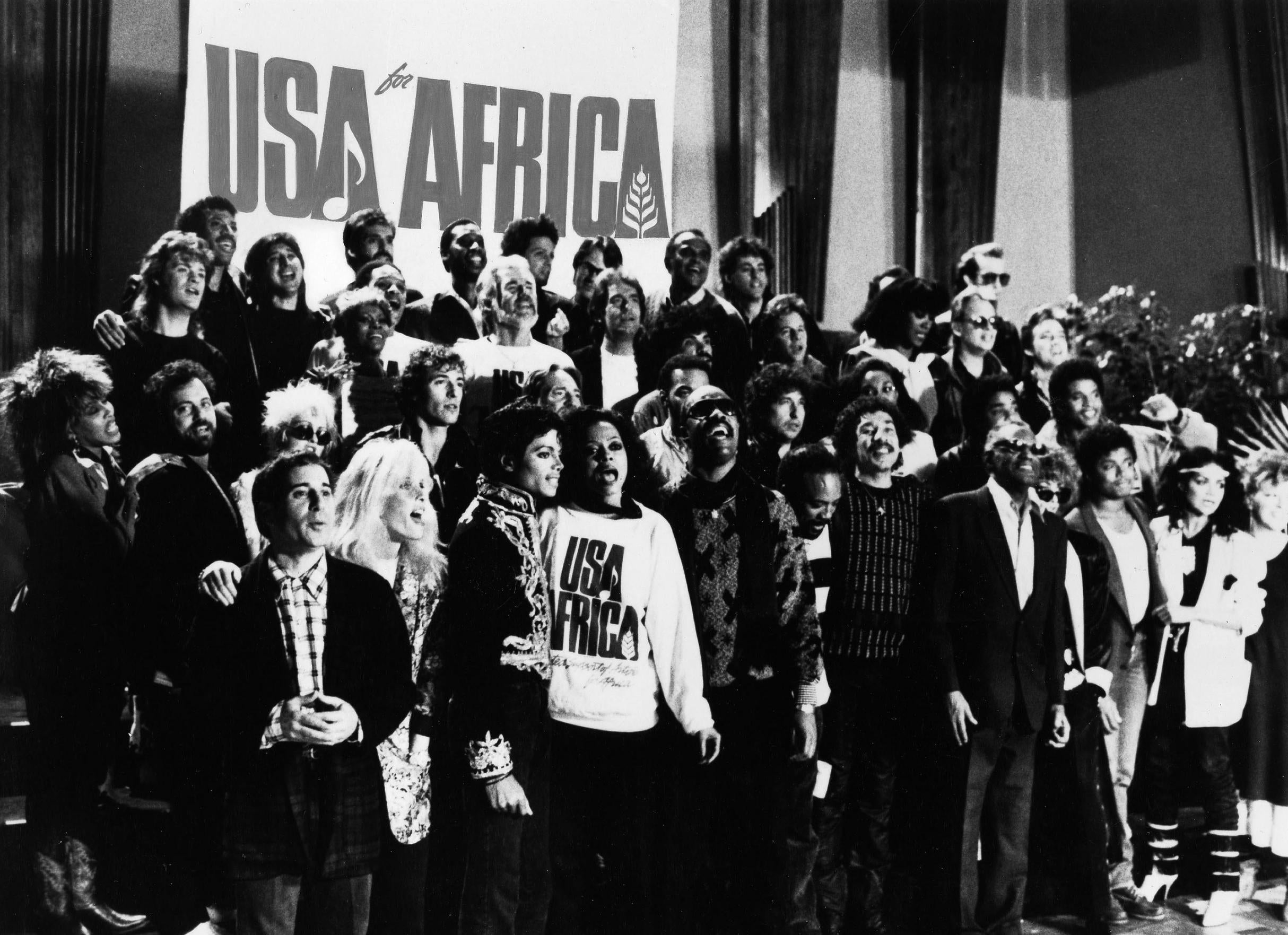
BY MICHAEL JACKSON AND LIONEL RICHIE WAS RECORDED ‘The rockers don’t like the song, we’re leaving’: The making of USA for Africa’s ‘We Are the World’

Springsteen found his own parking space as the superstars arrived in limos, Prince didn’t turn up at all, Bob Dylan blanked Al Jarreau, and Michael Jackson terrified Lionel Richie. Mark Beaumont tells the behind-the-scenes story of the biggest-selling charity single of all time, with the help of those who were there.

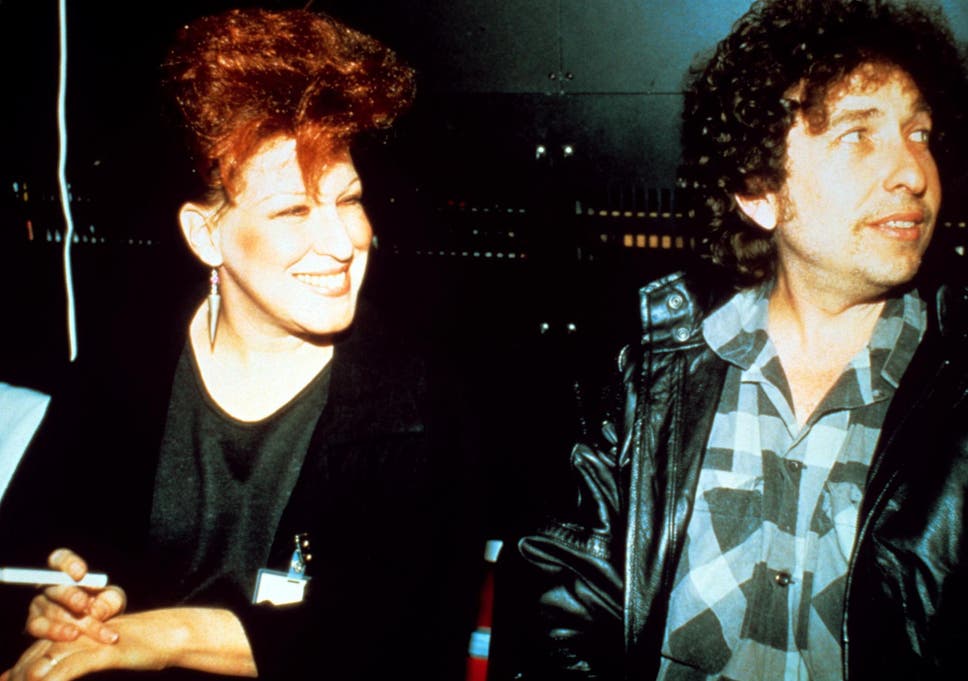
Bette Midler and Bob Dylan were among the stars on the charity single ( Rex )

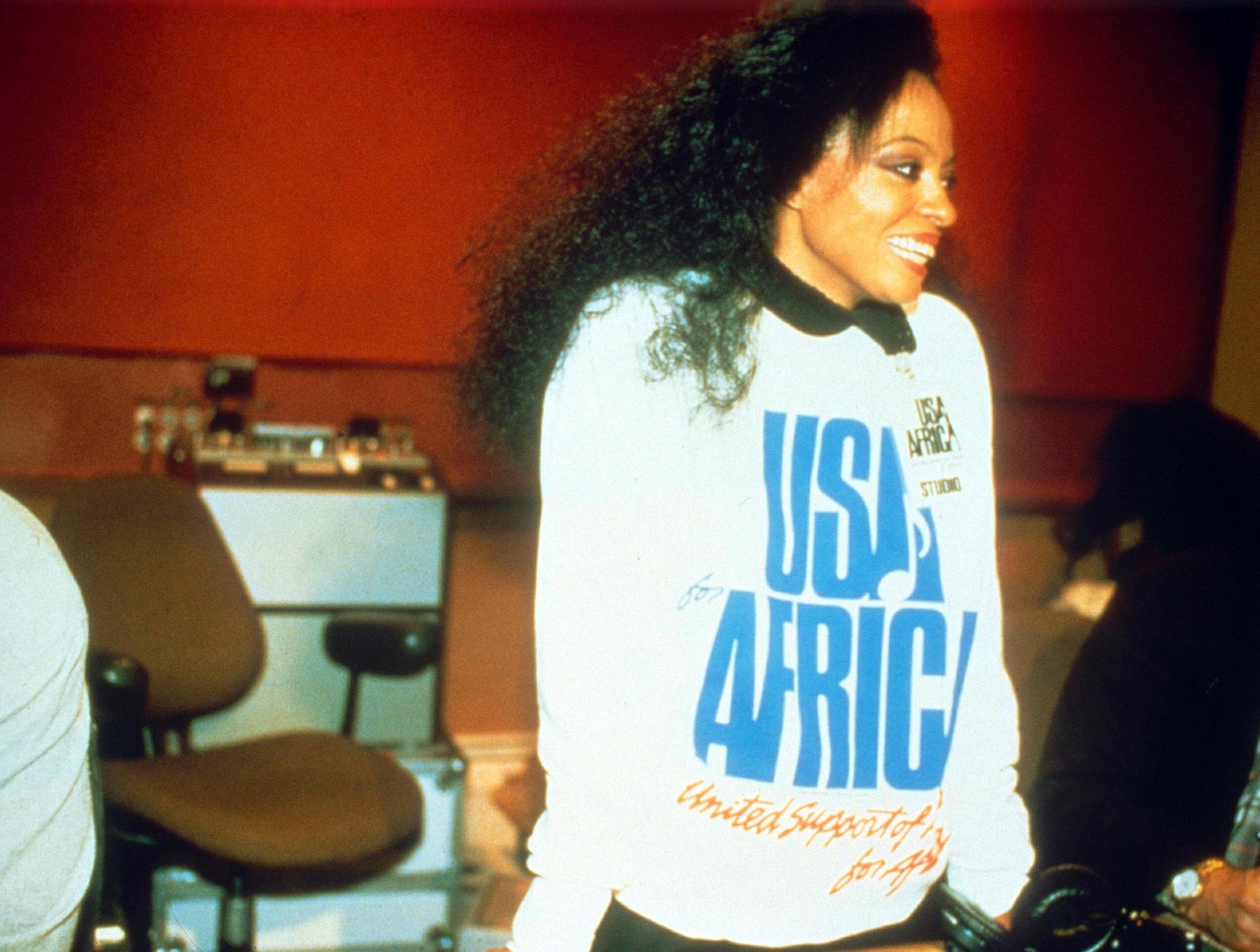
Diana Ross jumped in Bob Dylan’s lap. Billy Joel fawned over Ray Charles. Lindsey Buckingham disturbed Michael Jackson hiding in the bathroom, and Waylon Jennings stormed out when the row got too heated. When you put together, for one night only, the greatest supergroup ever constructed, even with a sign saying “check your egos at the door” at the entrance, sparks are going to fly.

Such were the scenes at A&M Recording Studios in Los Angeles on 28 January 1985, when the biggest musical stars in America – minus Madonna and Prince, plus Dan Aykroyd – convened to record “We Are the World”, the USA’s answer to Band Aid’s “Do They Know It’s Christmas?”. USA for Africa, as the band would be known, was not short of spotlight hoggers – among its ranks could be found Jackson, Dylan, Charles, Joel, Ross, Bruce Springsteen, Paul Simon, Stevie Wonder and Tina Turner. The likes of Fleetwood Mac’s Buckingham, The Jackson Five, Bette Midler and the table-thumping godfather of rock’s mid-Eighties famine relief efforts Bob Geldof were reduced to mere faces in a chorus line of 46 stars.

The song would become America’s greatest moment of musical magnanimity – selling 20 million copies, the single raised more than $63m for aid in the US and Africa, where famine in Ethiopia would claim 1.2 million lives between 1983 and 1985. In the earliest days of the collaborative charity single, “We Are the World” set an unmatchable bar – no greater collection of superstar artists have ever congregated in the same studio since. If many subsequent charity single line-ups were glittering, this one could blind.

“I think it’s pretty timeless,” says Kim Carnes, of “Bette Davis Eyes” fame, one of the 21 soloists on the song. “Wherever I go fans will inevitably say ‘you were a part of “We Are the World”, what was that like?’ People really want to know the details because the song made a huge impact.”

Initially, USA for Africa was the brainchild of songwriter and activist Harry Belafonte. Shocked by the footage of starving children beamed onto NBC, he began recruiting fellow stars in December 1984 for what he envisaged as a benefit concert for the famine relief effort. One of his first calls was to Ken Kragen, manager of around half of the highest-charting US artists in the early Eighties.

“When Belafonte called me, it was just two days before Christmas, at about one or two in the afternoon,” Kragen recalls today. As they spoke, the project morphed into a charity song in the mould of Band Aid instead. “I said, ‘Harry, Geldof showed us the way. We’ve got artists who are bigger worldwide here and I represent a couple of the biggest… let me see if we can put that together’.”

USA for Africa’s charity hit single would become America’s greatest moment of musical magnanimity – selling 20 million copies (Rex Features)

By the time he’d reached his client Lionel Richie’s house that same day Kragen had already recruited Kenny Rogers, and before he’d finished a meeting with producer Dick Clark to discuss Richie’s job hosting the 1985 American Music Awards on 28 January he’d struck on the idea of recording the song after the awards, since the event would be bringing most of America’s biggest music stars to LA. All they needed to do was convince them to swing by a studio rather than an aftershow. Little did they realise they were about to form the biggest and best supergroup of all time.

Kragen envisaged Richie writing the song with Stevie Wonder, and Richie set about trying to track Wonder down. “Lionel kept trying to get in touch with Stevie all night,” Kragen says. “The next morning, [Richie’s] wife Brenda is in a jewellery store, the day before Christmas now, and who walks in looking for gifts? It’s Stevie Wonder. He asked Brenda to help him pick out gifts and Brenda said, ‘Not unless you call my husband back.’” At the same time, Kragen caught producer Quincy Jones as he was about to board a plane to Hawaii for Christmas. “I ask him if he would produce it and he immediately says yes. I said to him, ‘Would you get Michael [Jackson] to perform on the song?’ In 30 minutes or so, Quincy calls me back and says, ‘Michael not only wants to do the song, he wants to write it with Stevie and Lionel.’”

Read more

40 years ago, The Clash shattered punk orthodoxy with London Calling

Jackson was riding high on the success of Thriller, the album that would seal his place as the biggest artist in the world, so Kragen knew he’d pulled off one of the greatest coups in pop history. “The day after Christmas, or two days after, I get a call from Belafonte. He said, ‘So Ken, have you been thinking about what we talked about?’ And I said, ‘Well, I’ve got a song written by Michael Jackson, Lionel Richie and Stevie Wonder, Quincy Jones is producing, and Kenny Rogers, Kim Carnes and Lindsey Buckingham have all agreed to be on it.’” Happy Christmas, Harry.

With only a month to go until the AMAs, Kragen and his team of 50 set about piecing the line-up together at a furious pace. “I took the Billboard charts and decided I would not go to sleep each night until I had confirmed two artists from the chart,” he says. “I would work my way down the charts. I had the number one artist, Michael Jackson. We thought we would get Prince because Sheila E was a good friend of Lionel’s, Lionel was number three, Kenny was in the top 10, we already had a big hunk of the top 10.”

The key moment was when Bruce Springsteen came on board. “John Landau was managing Bruce Springsteen and I knew John,” says Kragen. “I called John and said, ‘Can we get Bruce?’ and he said, ‘Oh my god, Bruce is finishing up two years on the road, touring constantly.’ I said, ‘John, you personally are going to be able to take credit for saving millions of lives if you get your client to do this.’ The next thing I know, on 15 January, Jon Landau called me and said, ‘Bruce Springsteen is in,’ and from that day I never made another outgoing call. All I did was answer the phone. The floodgates opened and mostly I had to turn people down. I wanted about 20 people, we ended up with 45.”

Kragen remembers Eddie Murphy’s manager rejecting the request and can’t recall Madonna’s excuse, but cites only John Denver and Joan Baez as artists he didn’t book but wished he had. “We really should have had Baez,” he says. “Jeff Bridges and I were driving out to Live Aid together on one of the rehearsal days. Jeff turns to me and says, ‘You know, Ken, I feel like the seeds that were planted by Bob Dylan and Joan Baez and others in the Sixties and lay fallow in the ‘Me’ generation of the Seventies have now, in the Eighties, broken through the ground, blossomed, and are bearing fruit.’”

Meanwhile, according to Kragen, Wonder “disappeared” to Philadelphia, so Richie co-wrote the song over a week in Jackson’s bedroom at his family home in Encino. In his autobiography Moonwalk, Jackson claimed he already had the root of the song. “I used to ask my sister Janet to follow me into a room with interesting acoustics like a closet or the bathroom,” he wrote. “I’d sing to her, just a note, a rhythm of a note ... I’d just hum from the bottom of my throat. I’d say, ‘Janet, what do you see when you hear this sound?’ And this time she said, ‘Dying children in Africa.’ ‘You’re right. That’s what I was dictating from my soul.’”

Richie told Billboard that the pair would listen to national anthems to get a feel for the enormity of the song – when they weren’t being interrupted by unexpected intruders. “I’m on the floor in Michael’s bedroom,” he said. “I don’t think he had a bed – he just slept on the floor. There’s a bunch of albums around the wall ... and I hear over my shoulder, hhhhhhhhhhhh. There was a goddamn f***ing python. A boa constrictor, a python, who cares what the hell it was. It was a big-ass, ugly-ass snake ... I was screaming. And Michael’s saying: ‘There he is, Lionel, we found him. He was hiding behind the albums.’ I said: ‘You’re out of your freaking mind.’ It took me about two hours to calm my ass back down.”

The key moment was when Bruce Springsteen came on board – then everybody wanted to join in (Rex Features)

With Jackson enthusiastically rushing out a demo, the song was finished on 21 January, the day before the initial recording session at Kenny Rogers’ Lion Share Recording Studio. Here, Jones, Jackson, Richie, Wonder (“Stevie walked in and he said, ‘OK, I’m here, let’s write the song,’” says Kragen) and a band including Toto’s David Paich laid down a guide take of the song without trying to perfect it. Quincy Jones mailed numbered cassette copies to all of the participants along with a note: “My fellow artists... In the years to come, when your children ask, ‘What did mommy and daddy do for the war against world famine?’, you can say proudly, this was your contribution.”

Meanwhile, every detail of the session was plotted in advance. “Quincy said, ‘we can’t leave anything to chance.’” Kragen remembers. “’You can’t let superstars walk into that room with the slightest uncertainty of what they’re going to do. They will fight over what parts they think are the best, where they’re going to stand. So we’re going to put on the music who sings what when.’”

In a bungalow off Sunset Boulevard, Kragen and his production team decided on a location for the session amid the utmost secrecy. “The single most damaging piece of information is where we’re doing this,” he said. “If that shows up anywhere, we’ve got a chaotic situation that could totally destroy the project. The moment a Prince, a Michael Jackson, a Bob Dylan drives up and sees a mob around that studio, he will never come in.“

In fact, it was the age-old battle between pop and rock which almost destroyed the project at the very last minute. “The night before, at the rehearsal for the American Music Awards, I was approached by the manager of one of the rock artists,” Kragen says. “He said, ‘The rockers don’t like the song and they don’t want to stand next to the non-rockers on the stage so we’re leaving.’ He didn’t tell me who, he acted like all the rockers were going to leave. I said to him, ‘Look, we’re recording tomorrow, you’re there or you’re not.’ They went to Bruce and Bruce said, ‘I came out here to save lives and feed people, I’m not going anywhere.’ If The Boss was there, you had to remain. He really saved the day.”

In the event only Prince shunned the session, with Huey Lewis taking his allotted line. Instead, he sent Sheila E as his representative while he partied the night away on Sunset. In Alan Light’s book Let’s Go Crazy, Revolution guitarist Wendy Melvoin would claim he didn’t show “because he thinks he’s a badass and he wanted to look cool, and he felt like the song for ‘We Are the World’ was horrible and he didn’t want to be around ‘all those muthaf***as’.”

“Prince’s name is actually printed on the music,” Kragen says, “because Quincy had the idea of having the two rivals, Michael and Prince, at the same microphone. It didn’t happen. Sheila E tried her best to get him there. He did call while we were recording, he reached Quincy and said, ‘Can I come over and lay down a [guitar] track?’ and Quincy said, ‘No, we’ve already done the basic tracks.’ One of the reasons Prince didn’t come was he’s used to going into a recording studio and playing all the parts. Not just him and another star, him and nobody else. So the idea of walking into a room full of superstars, plenty of the people that were there were intimidated. He went to a nightclub instead and when he came out his bodyguards beat up some paparazzi, and that made a box in the big article in the LA Times about what we did. So he was really embarrassed by that [Prince later penned B-side “Hello”, claiming paparazzi intrusion had stopped him attending]. When we decided that we were going to put out an album, Prince submitted a song right away for that.”

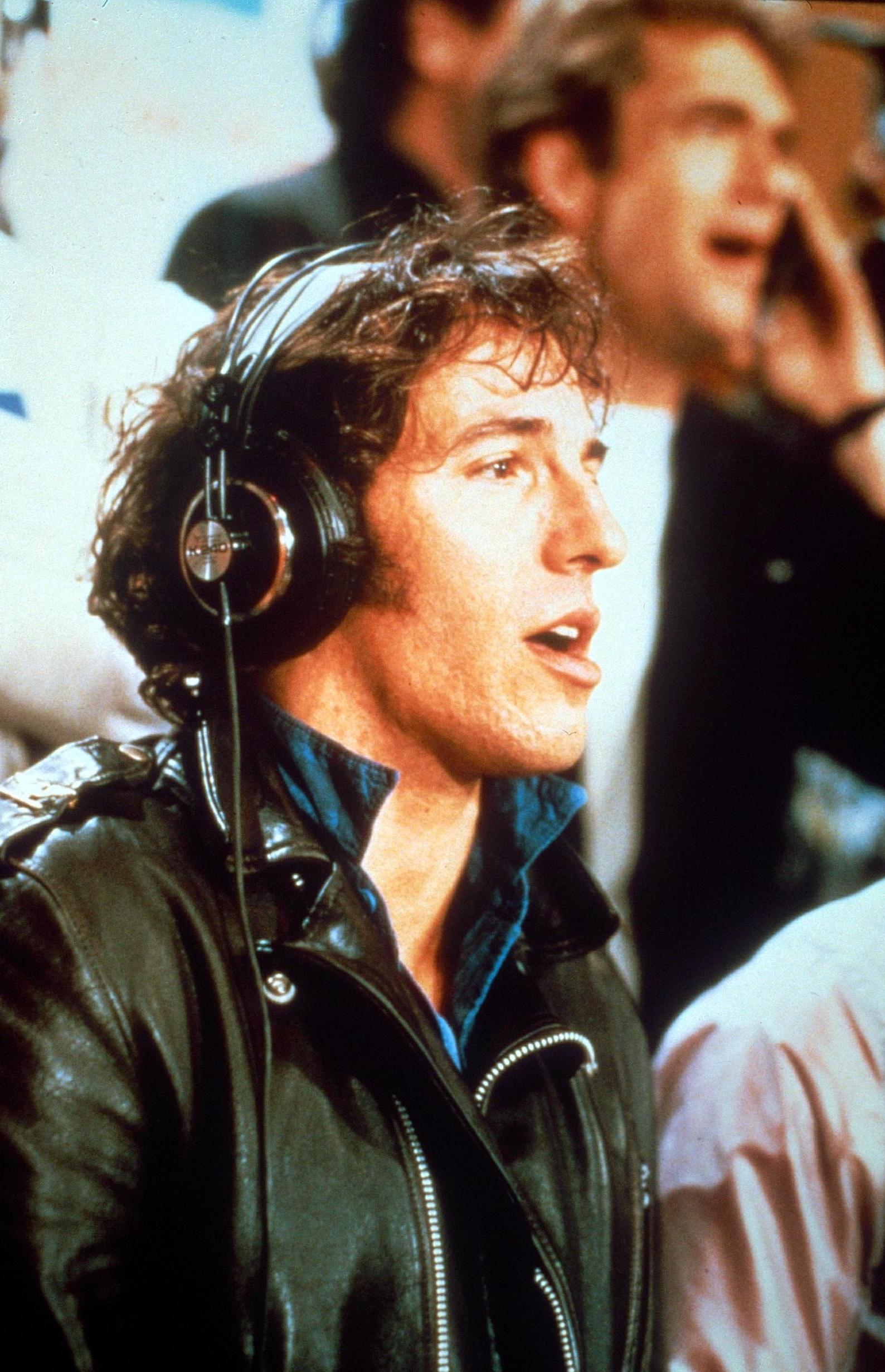
The rest of the superstar class of ’85 took their AMA limos full of bodyguards straight to A&M studios – except Springsteen. “A crowd had formed around the gates because they saw the limos arriving one after the other,” Kragen laughs. “I’m standing out there greeting the artists as they’re coming out of their cars. All of a sudden, a guy pushes his way through the crowd. He’s in cut-off gloves and a leather jacket. I recognise him immediately, it’s Bruce. He says, ‘Hey man, I got a great parking space across LaBrea...’”

Inside, the mother of all A-list bonding sessions was under way. When Ray Charles arrived, Billy Joel exclaimed, “That’s like the Statue of Liberty walking in,” and was visibly shaking when Quincy Jones introduced him to Charles: “Ray, this is the guy who wrote ‘New York State of Mind’.” When Joel explained the song was a homage to Charles, the pianists struck up a lasting friendship, recording a duet “Baby Grand” within a year. Charles also spent much of the night drinking with Waylon Jennings and Willie Nelson, a knees-up that would eventually result in Farm Aid.


If Bob Dylan seemed zoned out in the video, it’s likely because he was the focus of much attention and adulation. Diana Ross walked through the door and promptly jumped into his lap, Nelson cornered him to talk about golf and jazz-pop singer Al Jarreau got short thrift from the folk legend. “Bobby, in my own stupid way I just want to tell you I love you,” Jarreau told Dylan, who simply blanked him entirely and walked away, leaving Jarreau sobbing, “My idol!”.

Carnes had a far more pleasant Dylan experience. “He was easy to talk to,” she says, “exactly how I would have expected him to be. It was an amazing, memorable night and nobody had an ego, nobody tried to pull rank. People were really excited to be there and be part of something really monumental.”

With 500 guests, including model Christie Brinkley and actors Brooke Shields, Jane Fonda and Steve Martin, at a party on an adjoining sound stage to watch the session on a 25ft screen – as well as getting berated by Bob Geldof for guzzling the laid-on buffet during a famine – the chorus convened at 10.30pm.They were recorded first to avoid anyone leaving after performing their individual lines. After Geldof gave an introductory speech about the horrors of the famine, everyone was handed a lyric sheet and foldable chart of the music, and guided to their pre-selected X on the floor. Spirits were high. In a recording break Ray Charles asked where the bathroom was, and Stevie Wonder took his hand and guided him down the corridor, the blind leading the blind. Even Michael Jackson, recording his multi-tracked vocals as everyone else was arriving, was in jovial mood, laughing whenever he messed up a take, dancing at the microphone and allowing Jones to call him “Smelly”.

“We talked some because we were right next to each other,” Carnes says of Jackson, “but he was very, very shy, clearly a man of few words. Until the music starts and he starts singing and being Michael Jackson. Then it all goes away.” As the evening progressed, though, the occasion seemed to get the better of Jackson. Kragen recalls finding him hiding from a Time photoshoot in the lavatory. “I went looking for Michael and when I found him he was in the men’s room, curled up on the counter. Getting together with this many big stars was very intimidating.” Lindsey Buckingham also surprised him in the bathroom. “It kind of freaked him out!” he said. “He was quite nervous, just to be startled by someone walking in, and I just nodded my head.”

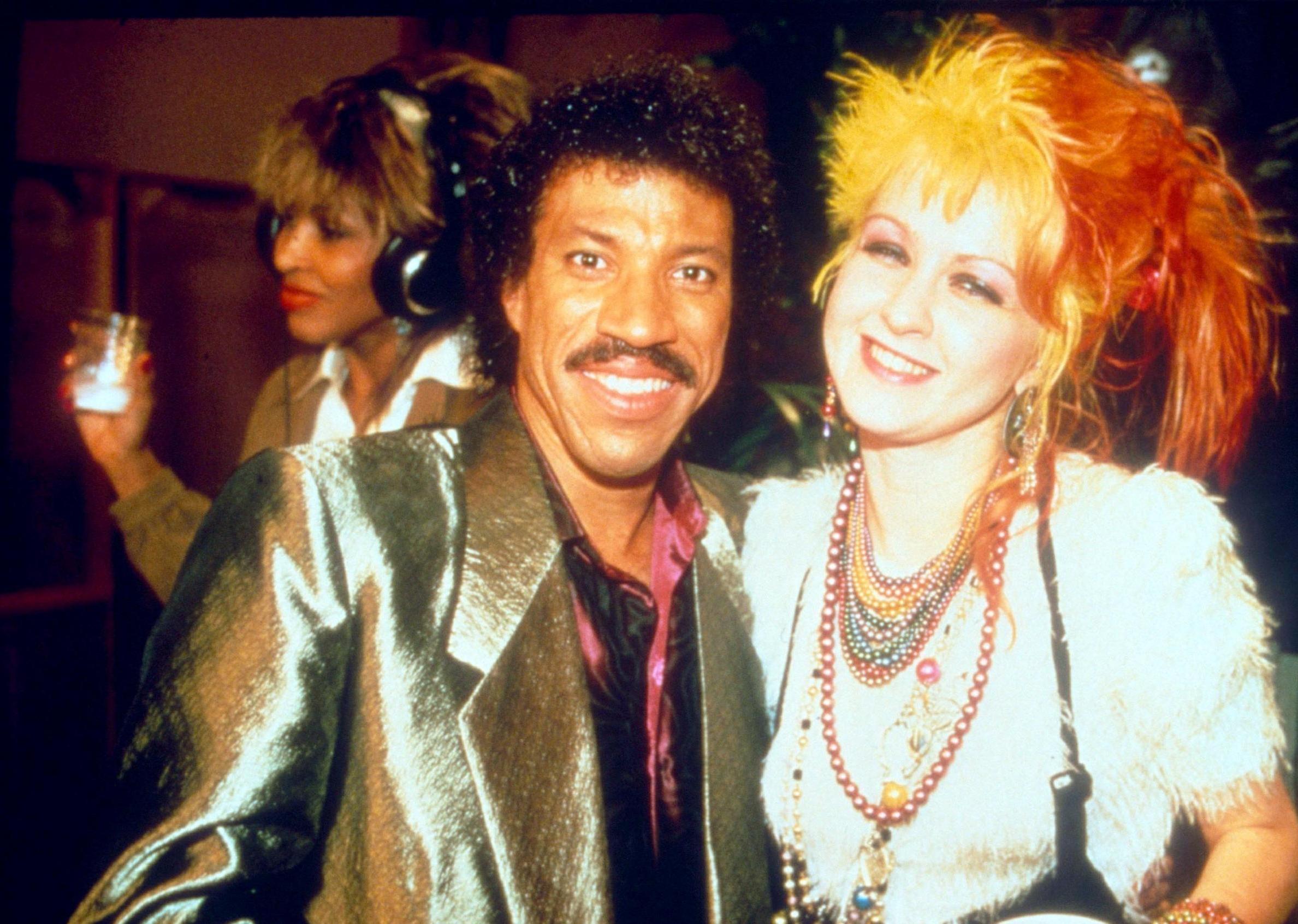
Lionel Richie and Cyndi Lauper at the recording of ‘We are the World’ (Rex Features)

As the session crept into the early hours, some frictions developed. At 1am an argument broke out over a nonsense lyric Jackson had included at the end of the chorus, “sha-lum sha-lingay”. Geldof argued that it sounded too close to an African language and that it might be considered mocking, so Stevie Wonder called a Nigerian friend to get a phrase in Swahili that would be appropriate for the song. The phrase was “willi moing-gu”, which didn’t go down well with some of the cast. “Say what!” yelled Ray Charles, “Willi what! Willi moing-gu, my ass! It’s three o’clock in the goddamn mornin’ – I can’t even sing in English no more.” Geldof pointed out that Ethiopians don’t speak Swahili and Waylon Jennings left the sessions claiming “no good old boy sings in Swahili”. When everyone voted to settle on a new line, “one world, our children”, an exhausted Tina Turner muttered, “I like sha-lum better, who cares what it means?”

With the chorus in the can by 3am – and Ray Charles also departed, declaring, “I haven’t had no good lovin’ since January” (it was January) – USA for Africa took an hour’s break. Everyone set about collecting all of the other artists’ signatures on their music charts. “People were gracious and wonderful about that,” says Carnes. “Nobody held back. Everybody wanted to get everybody’s signature. Everyone knew it was a really special night.”

At 4am, Jones set about recording the solo lines, ditching his original plan to record the singers one by one in favour of a faster method – placing 21 microphones in a U-shape and getting them all to record side by side. “Taking this kind of chance is like running through hell with gasoline drawers on,” he said. “Any talking or outside noises, laughing, giggling, even a creak in the floor, could ruin the whole thing.”
“Everybody hung around and watched,” says Carnes. “It took the song to another level of ‘just how cool is this?’”

Even as dawn approached, the camaraderie didn’t wane. Tina Turner finished her duet with Billy Joel with a celebratory cry of “fish burger!”, and there was a passing of the baton moment after the soloists wrapped up around 5am. Called in to add adornments to the chorus, Dylan seemed uncertain of his half-sung, half-spoken take. “Bob Dylan, when he was recording his solo piece, stepped up to the microphone and sounded nothing like Bob Dylan,” says Kragen. “He was so nervous because he was not used to recording with all these other stars there. Lionel, Quincy and Stevie asked everybody else to leave, they then sat down one at a time at the piano and did Dylan, did him perfectly. Particularly Stevie Wonder doing Dylan. Then Bob Dylan went to the microphone and nailed it.”
Diana Ross cried like crazy from the experience of the night (Rex Features)

Reassured, Dylan stayed in the studio to hear Springsteen steal the song with his impassioned late-chorus vocal. The Boss admitted he’d broken into a genuine sweat while singing and Jones regarded his performance a gift from God, saving the chorus from an ignominious fade-out. “Springsteen walks up to the microphone, sings his part once, kills it, just nails it, it’s so good you get shivers,” Kragen recalls. “And he turns to all of us and goes, ‘Is that OK?’”

At 8am, the remaining contributors staggered out into the LA sunshine knowing, even before the song sold out its initial run of 800,000 copies in just three days en route to the top of the charts worldwide, that they’d been part of pop history. “Everybody had left except for Quincy, Diana Ross, our arranger Tom Bahler and myself,” says Kragen, “and we were huddled in a circle on the floor of the studio, tightly hugging each other and crying like crazy from the experience of the night.”

Besides the half a million dollars that the song still raises every year – Kragen estimates the combined total exceeds $80m and grants are being distributed to this day – USA for Africa’s lasting legacy is that it set a precedent for generations to come that when the greatest causes arise, the greatest artists step up. “The whole night was filled with magic,” says Carnes today. “From start to finish, it was incredible to be part of that.”

---30---

Gecko stows away from India to English Channel island


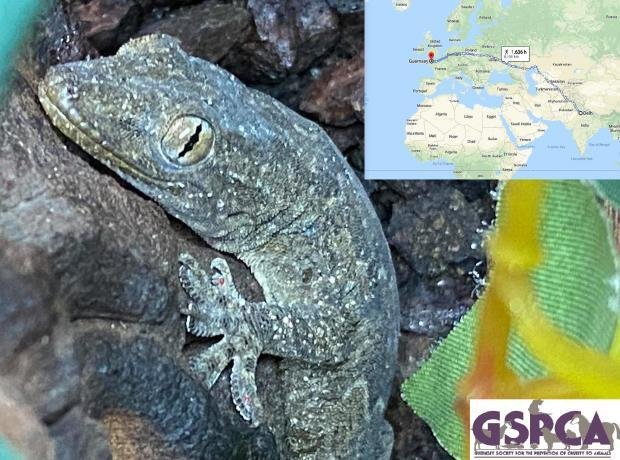
A gecko stowed away in a couple's luggage from India to Guernsey, an island in the English Channel. Photo courtesy of GSPCA

March 5 (UPI) -- Animal rescuers in Guernsey said they are taking care of a gecko that stowed away in a vacationer's luggage when they returned from India.

The Guernsey Society for the Prevention of Cruelty to Animals said a pair of locals on the English Channel island contacted rescuers recently when they returned from a trip to India and discovered the small lizard in their luggage.


The lizard, which measures about 3 inches long, is believed to be a gehyra gecko. The GSPCA said the lizard, dubbed Mr. Patel, is currently in quarantine on the advice of veterinarians.

Karen Jagger said the gecko wasn't discovered until she and her husband had been home from their India trip for about two weeks.

"We had arranged a house move and were in the process of moving to the new house," Jagger said. "I have a clothes rail at the new house and we arrived with my clothes to hang them up."

"On hanging up the first three items he fell out onto the floor," she said.

The GSPCA said Mr. Patel had traveled nearly 5,000 miles, making it the "furthest-traveled and most unusual" animal rescue.