Thursday, July 29, 2021

Firm that owns Israel's spyware company NSO to be liquidated

BY FRENCH PRESS AGENCY - 
AFP PARIS
MID-EAST
JUL 28, 2021 

A woman uses her phone in front of the building housing the Israeli company NSO Group, in Herzliya, near Tel Aviv, Israel, Aug. 28, 2016. (AFP Photo)

Aprivate equity company that owns the NSO Group, the Israeli firm at the center of the Pegasus spyware scandal, is being liquidated, a source shared.

London-based Novalpina Capital, which bought the NSO Group in 2019, is being dissolved after a dispute between its co-founders, the source told Agence France-Presse (AFP) on Wednesday.

Its liquidation leaves the future ownership of NSO unclear, just as the company is grappling with the fallout of a vast electronic espionage scandal.

Novalpina also owns the Estonian casino group Olympic Entertainment and French pharmaceutical company X.O.

The Financial Times reported that Novalpina's investors "have until Aug. 6 to decide whether to liquidate the fund with a fire sale of its assets, or appoint a third party to take control of it."

French business daily Les Echos reported that Novalpina was being liquidated to put an end to an "internal war" between its founders.

But "the espionage scandal may have been the straw that broke the camel's back," it added.

The NSO Group has been at the center of a storm this month after an international media investigation claimed its Pegasus software was used to spy on the phones of human rights activists, journalists and even heads of state.

NSO has denied any wrongdoing, labeling the allegations "false."

It insists its software is intended for use only in fighting terrorism and other crimes.

Israeli Defense Minister Benny Gantz was due to leave Wednesday for Paris, where he is set to discuss the scandal with his French counterpart Florence Parly.

French President Emmanuel Macron has changed his phone after his number appeared on a list of potential targets.

Israeli Government Visits NSO Group Amidst Spyware Claims

Meeting Comes After World Leaders Appear on Alleged 'Pegasus' Targeting List

The Israeli government paid a visit on Wednesday to NSO Group, the controversial company whose spyware has been alleged to have been covertly installed on the mobile devices of journalists and activists.

See Also: Live Webinar | Improve Cloud Threat Detection and Response using the MITRE ATT&CK Framework

Officials from Israel's Ministry of Defense visited NSO Group, according to Calcalist.co.il. The visit was pre-arranged, the publication reported, and it did not include an audit or examination of computer systems or documents.

In a statement, NSO Group says that it can "confirm that representatives from the Israeli Ministry of Defense visited our offices. We welcome their inspection. The company is working in full transparency with the Israeli authorities."

“We are confident that this inspection will prove the facts are as declared repeatedly by the company against the false allegations made against us in the recent media attacks," NSO Group says.

The visit is a sign that the latest allegations against NSO Group are in turn causing pressure on Israel. Calls have grown stronger from around the world for the country to take a closer look into NSO Group's sales of Pegasus, a powerful type of spyware that can silently infect mobile devices (see Pegasus Spyware: World Leaders Demand Israeli Probe).

France has pressed Israel to investigate. Also, four U.S. Democratic lawmakers called for the "hacker for hire" industry to be brought under control and sanction implemented for companies that sell spyware to authoritarian states.

A recent investigation unveiled by Amnesty International and Forbidden Stories, a French based nonprofit group, allege that Pegasus is sold to governments which then turn it on dissidents, journalists and activists. NSO Group maintains the software is only used for legitimate and authorized law enforcement activities, include combating crime and terrorism (see Leak of Alleged Pegasus Target List Restokes Spyware Debate).

Controversial Leak

The findings of Amnesty and Forbidden Stories were based on a leak of a list of 50,000 phone numbers. The groups say the list represents phone numbers of people who may have been targeted by Pegasus. The source of the list has not been revealed.

Forensic investigators with Amnesty's Security Lab say 37 devices connected with numbers on the list showed signs of either being targeted or infected with Pegasus.

Those attacks appear to take place using network injection techniques or possible zero-day vulnerabilities in applications such as Apple's iMessage, Photos and Music, the research contends. The attacks using iMessage appear to be so-called "zero click" attacks, which means no interaction from the user is needed to infect a device (see Spyware Exposé Highlights Suspected Apple Zero-Day Flaws).

Although it has been alleged that NSO Group's software has been misused by its clients, what elevated the situation this time is the presence of phone numbers of high-profile leaders on the list.

The numbers include presidents such as France's Emmanuel Macron, Iraq's Barham Salih and South Africa's Cyril Ramaphosa. There are also three current prime ministers: Pakistan's Imran Khan, Egypt's Mostafa Madbouly and Morocco's Saad-Eddine El Othmani. Seven former prime ministers are on the list and one king, Morocco's Mohammed VI.

NSO Group says the list does not come from the company and is not a targeting list. The company maintains that it complies with Israel's export regulations, which controls how cyber weapons are sold. NSO has said it has around 45 government customers that target around 100 people per year.


Boeing will try again to reach space station with Starliner capsule

By Paul Brinkmann


Boeing's Starliner spacecraft rolls from its processing facility at the Kennedy Space Center in Florida on July 17 before being towed to the launch pad. Photo by Joe Marino/UPI | License Photo


ORLANDO, Fla., July 29 (UPI) -- NASA's effort to commercialize its space program and Boeing's long-standing leadership role in aerospace are due for a major test Friday with the second orbital launch attempt for the company's Starliner space capsule from Florida.

Liftoff of the United Launch Alliance Atlas V rocket carrying the capsule is planned for 2:53 p.m. EDT from Complex 41 at Cape Canaveral Space Force Station.

The weather forecast for Friday, however, is 60% unfavorable for launch, according to U.S. Space Force meteorologists. The next opportunity would be Tuesday, according to Boeing.

Boeing will attempt to show that Starliner can fly astronauts safely to the International Space Station in the uncrewed test.

A streak of soot marks a Boeing Starliner capsule at Kennedy Space Center in Florida after it re-entered the atmosphere during a failed test flight in December 2019. File Photo by Joe Marino/UPI | License Photo

RELATED   Russia launches Nauka module to space station after years of delay

The company's previous Starliner test flight in December 2019 failed to reach the orbiting laboratory because of software problems, putting the Starliner program far behind SpaceX's Crew Dragon program.

If successful, Boeing's Starliner would provide similar astronaut ferrying service as SpaceX's Dragon capsule began in May 2020. But if Starliner fails again, NASA would be left -- at least temporarily -- with only SpaceX as a provider in a program designed to be competitive.

Boeing's CST-100 Starliner spacecraft is secured atop a United Launch Alliance Atlas V rocket at Cape Canaveral Space Force Station on July 17. Photo by Damon Tucci/Boeing | License Photo

"It's a very important flight for the Commercial Crew Program, having our second space transportation system available to carry crew to space," Steve Stich, NASA's manager for the commercial crew program, said Tuesday in a press conference. "This flight will test many of the important systems on the vehicle."

RELATED  NASA moves ahead with plan to support private space stations

If Boeing's spacecraft reaches the space station successfully, NASA will run a series of tests and then return the capsule Aug. 5 to a parachute-assisted landing in the western United States.

Boeing ran hundreds of simulations before and after the failed 2019 test flight, said John Vollmer, the company's program manager for Starliner.

Boeing made major changes to software and software simulations after the capsule failed to pick up the correct elapsed mission time from the rocket in 2019. That resulted in a series of mistakes as the capsule's software burned fuel needlessly, Boeing and NASA previously found.

A test mannequin named Rosie the Rocketeer is suited up for the orbital test flight of Boeing's Starliner capsule planned for Friday. Photo courtesy of Boeing | License Photo

RELATED  NASA: Boeing software team had too much power over Starliner capsule

"The biggest change in software was in the communications coding," Vollmer said. Those changes included new safeguards that would ensure the capsule would seek new communications connections if such connections were lost, and to ensure "an antenna is pointed back at Earth" after the capsule separates from the rocket, he said.

NASA classified the previous test failure as a "high visibility close call," the lowest category NASA uses for serious mission problems. Boeing agreed to a lengthy checklist of fixes and checkouts before Starliner would fly again


Boeing should be worried about the test, said Marco Cáceres, space analyst for the Teal Group based in Fairfax, Va.

"It's really clear that SpaceX has become the establishment player," Cáceres said. "NASA is getting very accustomed and comfortable with SpaceX's culture, and my gut feeling is if Boeing doesn't get this totally right, they're done, in terms of providing launch services for NASA."

And yet, NASA very much wants a second option for reaching the space station, he said.

"I think NASA is rooting for Boeing and hoping it goes well and hoping they can rely on two providers," Cáceres said. "History shows that NASA loses if there's only one big company they can rely on for something. The space program thrives with competition."

NASA also could use the leverage of having two astronaut spacecraft in negotiations with Russia, he said. NASA has been purchasing seats on Russian Soyuz spacecraft for up to $80 million to reach the space station.

"Russia has had an ace in the hole by selling Soyuz seats to NASA, but with two providers, with Boeing, there's no chance NASA would pay one penny to Russia for launch services again," Cáceres said.

Is the truth out there?


 How the Harvard-based Galileo Project will search the skies for alien technology

July 29, 2021 


Can we find alien technology? That is the ambitious goal of the Galileo Project, launched this week by Harvard astrophysicist Avi Loeb with substantial private financial backing.

The project is far from the first attempt to detect signs of civilisations beyond Earth. Loeb has been criticised in the past for his dismissive approach to previous efforts to find extraterrestrial life and his argument that an alien artefact passed through our solar system in 2017.

So why do Loeb and his collaborators think they have a chance of finding something where others have failed? There are three triggers that suggest they might.
Exoplanets, ‘Oumuamua, and UFOs

First, years of painstaking observations have shown that many stars host Earth-like planets. There is a real chance these “exoplanets” might be home to alien civilisations.

Second, five years ago, an interstellar visitor, dubbed 'Oumuamua, tumbled though our solar system. It was a skinny object about 400 metres long, and we know from its speed and trajectory that it arrived from outside our solar system. It was the first time we had ever seen an interstellar object enter our neighbourhood.

Unfortunately it caught us on the hop, and we didn’t notice it until it was on its way out. So we didn’t get a chance to have a really good look at it.

Read more: No sign of alien life 'so far' on the mystery visitor from space, but we're still looking

Scientists were divided on the question of what 'Oumuamua might be. Many thought it was simply an interstellar shard of rock, even though we had no idea how such a shard might be produced or slung our way.

Others, including Loeb, thought there was a chance it was a spacecraft from another civilisation. Some scientists felt such claims to be far-fetched. Others pointed out that science should be open-minded and, in the absence of a good explanation, we should examine all plausible solutions.

Today, the question is still hanging. We don’t know whether 'Oumuamua was a spaceship or merely an inert lump of rock.

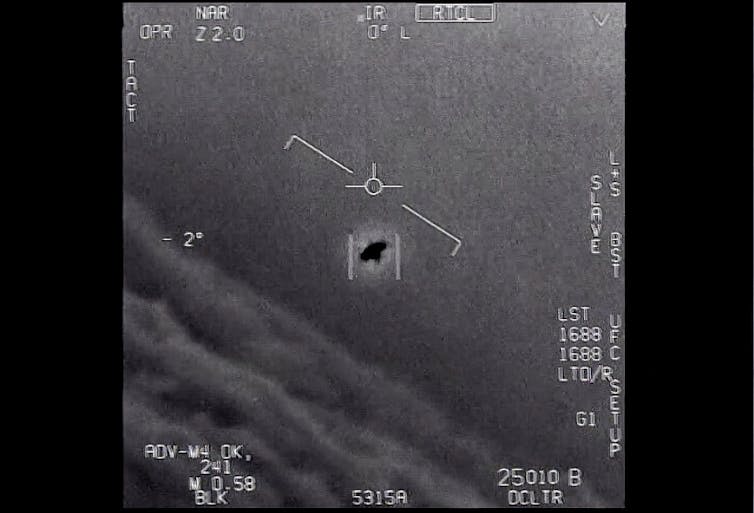
The third trigger for the Galileo Project came from the US military. In June, the Office of the US Director of National Intelligence announced that some military reports of UFOs, or UAPs (Unidentified Aerial Phenomena) as they are now known, seem real.

Specifically, the report said some UAPs “probably do represent physical objects given that a majority of UAP were registered across multiple sensors” and there was no known explanation for them

.
An image showing an unexplained object from a video released by the US Department of Defense. US Department of Defense / AAP

In other words, they aren’t meteorological phenomena, or faulty instruments, or weather balloons, or clandestine military experiments. So what are they?

Again, the question is left hanging. The report seems to rule out known technology, and suggests “advanced technology”, but stops short of suggesting it is the work of aliens.
Science to the rescue

Loeb takes the view that instead of debating whether either 'Oumuamua or UAPs provide evidence of alien intelligence, we should do what scientists are good at: get some reliable data. And, he argues, scientists are the people to do it, not politicians or military staff. As the US report says, the sensors used by the military “are not generally suited for identifying UAP”.

Few subjects divide scientists as much as the existence of aliens. On one hand, there are serious SETI (Search for Extra-terrestrial Intelligence) projects, such as Project Phoenix and Breakthrough Listen, that use the world’s largest telescopes to search for signals from some extraterrestrial intelligence.

At the other extreme, few scientists are persuaded by the fuzzy photos and dubious eyewitness accounts that seem to characterise many UFO reports.

The Galileo Project is very different from SETI searches or collections of UFO sightings. Instead, it will explicitly search for evidence of alien artefacts, either in space or on Earth.

But is it science?


Is this science? Loeb is convinced that it is. He argues the Galileo Project will bring scientific techniques and expertise to bear on one of the most important questions we can ask: are we alone? And the project will build purpose-designed equipment, optimised for the detection of alien artefacts.

Will it find anything? The odds are poor, as Loeb admits. In essence it’s a fishing expedition. But if there is a prima facie case for the existence of alien technology, then science has a duty to investigate it.

But suppose they do find something? Will we get to hear about it, or will it be locked up in some future Area 51?

The Galileo Project has promised all data will be made public, and all results will be published in peer-reviewed journals. Indeed, one of the reasons it will not use existing military data is because much of it is classified, which would restrict the project’s freedom to make the results public.

Or perhaps the project will find natural explanations for 'Oumuamua and UAPs. But even that will be a new scientific discovery, perhaps revealing new natural phenomena.

As Loeb says:

Whenever we look at the sky in a new way, we find something new. We will find something exciting no matter what.

Read more: 'WTF?': newly discovered ghostly circles in the sky can't be explained by current theories, and astronomers are excited


Author
Ray Norris
Professor, School of Science, Western Sydney University


Two women struck by lightning on summit of Snowdon

"But the advice generally is don't be on the top of a mountain when thunder and lightning is about."


Rescuers were called to the summit of Wales' highest mountain and found one woman "falling in and out of consciousness, with blood down one side of the face" while the other had minor injuries.

Samuel Osborne
News reporter @samuelosborne93
Thursday 29 July 2021 
Wales
Llanberis MRT said it had been 'very busy' this year in assisting police with 104 incidents

Two women have been taken to hospital after they were struck by lightning at the top of Snowdon.

Volunteers from Llanberis Mountain Rescue Team were called to the summit of Wales' highest mountain by North Wales Police around 1.30pm on Wednesday.
Sponsored link

When rescuers reached the women, who were part of a five-strong group by the 3,560ft (1,085m) peak, they discovered one was "falling in and out of consciousness, with blood down one side of the face".

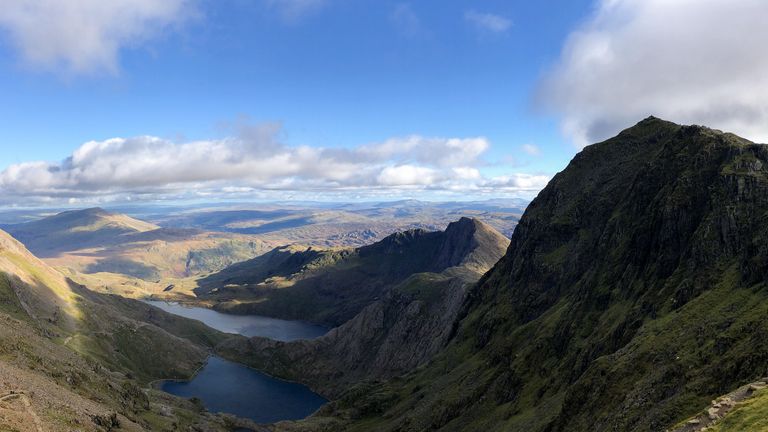
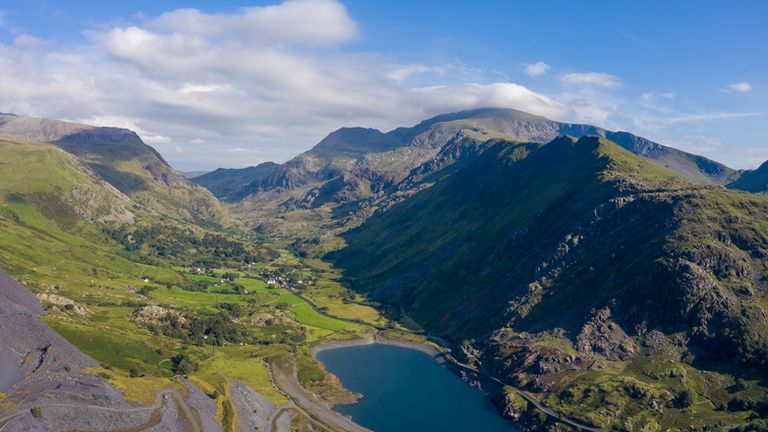
Mount Snowdon is the highest mountain in Wales, with a 3,560ft (1,085m) peak

They treated the women for the effects of a lightning strike and determined that one had minor injuries and the other more serious.

The pair were taken to Clogwyn railway station on the Snowdon Mountain Railway before being flown to hospital in Bangor by a Coastguard rescue helicopter.

Rescuers said neither woman had sustained life-threatening injuries.

"They were very lucky," rescue co-ordinator Phil Benbow told BBC News.

"But the advice generally is don't be on the top of a mountain when thunder and lightning is about.


"As a team we didn't hang around on the summit or the ridge going down."

Members of the public are cautioned to stay clear of summit areas if there are any signs of thunderstorms.

Llanberis MRT tweeted to say it had been "very busy" this year in assisting police with 104 incidents.

The team is on permanent call and relies entirely on donations from the public.

Mr Benbow added: "Our advice is when thunderstorms are forecast people should avoid mountain tops, exposed ridges and open flat areas because that it where lightning is most likely to strike.


"Get a weather forecast before you start. And make sure it's a mountain weather forecast off the Met Office."

List of mountains in the Canadian Rockies - Wikipedia

https://en.wikipedia.org/wiki/List_of_mountains_in_the_Canadian_Rockies

27 rows · Mountain/Peak Metres Feet Prominence FA Notes References 1: Mount …

  • Estimated Reading Time: 1 min

    The 150 highest summits of Canada with at least 500 metres of topographic prominence

    RankMountain peakProvinceElevationProminence
    1Mount LoganYukon5956 m 19,541 ft5247 m 17,215 ft
    2Mount Saint EliasAlaska Yukon5489 m 18,009 ft3429 m 11,250 ft
    3Mount LucaniaYukon5260 m 17,257 ft3080 m 10,105 ft
    4King PeakYukon5173 m 16,972 ft1073 m 3,520 ft
    Jul. 6 2021
    en.wikipedia.org/wiki/List_of_the_highest_major_summits_of_Canada
    en.wikipedia.org/wiki/List_of_the_highest_major_summits_of_Canada


    WATER IS LIFE
    Zimbabwe: Relocated Chiadzwa Villagers Spend 2 Months With No Water


    Pixabay, Cherie Vilneff / Pixabay
    Zimbabwe flag (File photo).

    26 JULY 2021
    New Zimbabwe (London)

    Villagera, relocated to the Agricultural Rural Development Authority (ARDA) Transau in Odzi, Mutare West to pave way for diamond mining in Marange, have spent the past two months without water after their reticulation system broke down.

    The villagers were relocated to the area in 2009 to pave way for massive diamond mining by the government and some Chinese companies.

    However, since relocation, the villagers have been facing perennial challenges including severe water shortages despite diamond mining companies in the area collecting billions of dollars in revenue from the mines.

    For the past two months, the villagers have been forced to walk for long distances in search of precious liquid after their water reticulation system, maintained by the state-entity Zimbabwe National Water Authority (ZINWA), broke down.

    ARDA Transau Relocation Development Trust (ATRDT) representative Tawanda Mufute told a Constitutional Talk Series meeting last that over 1 000 families at the farm were living at risk of communicable diseases as they had no access to water.

    The meeting was organised by a local rights group Green Governance Zimbabwe Trust (GGZT).

    ARDA Transau is a sprawling 1 200ha government-owned farm.

    "We have gone for two months without access to clean water. The situation is exposing us to water-borne diseases such as cholera and typhoid as villagers rely on unprotected sources," said Mufute.

    He said companies mining diamonds in Marange, their former homes, should take responsibility and ensure people relocated to ARDA Transau had access to health care and other basic amenities.

    "When it comes to natural resources and governance, mining companies must take responsibility and ensure communities in where they operate have access to information, health care, and other basic amenities."

    However, Mufute said companies mining diamonds in Marange had neglected the local communities and were only concerned with extracting gems for their benefit.

    A legal expert from the Zimbabwe Lawyers for Human Rights (ZLHR), Peggy Tavagadza urged the ARDA Transau villagers to actively defend their basic rights.

    She said local communities should be prepared to carry the primary burden of demanding and defending their constitutional rights.

    "There is a pending case that was filed by ZELA on behalf of the community with regards to access to water. ZLHR cannot approach the courts again hence let us wait for what the courts will say about the ARDA Transau issue," she said.

    ZELA stands for Zimbabwe Environmental Law Association.

    "There is a need for communities to assert and defend their rights. Many people always think of litigation as the first option when seeking remedies to rights violations, which is very wrong," she Tavagadza adding the government had the responsibility to provide basic to the citizens.

    "Demand the right to water from the relevant ministry because it is the responsibility of government to provide water for its citizens. The government has got the responsibility to provide basic needs for the communities."

    GGZT communications advisor, Donald Nyarota said a legal framework must be in place to protect local communities against the environmental, social, and economic costs of mining.

    "Natural resources extraction in the Global South, including Zimbabwe has failed to translate into positive economic and social impact for communities in resource-rich areas," said Nyarota.

    "Unfortunately, domestic legal frameworks are weak to, either contain human rights violations by businesses or extend benefits to communities. There is need for extensive legal reforms, contract transparency, and communities should be consulted."


    Read the original article on New Zimbabwe.

     Kenya: Millions in Need of Relief Food Amid Searing Drought

    Facebook

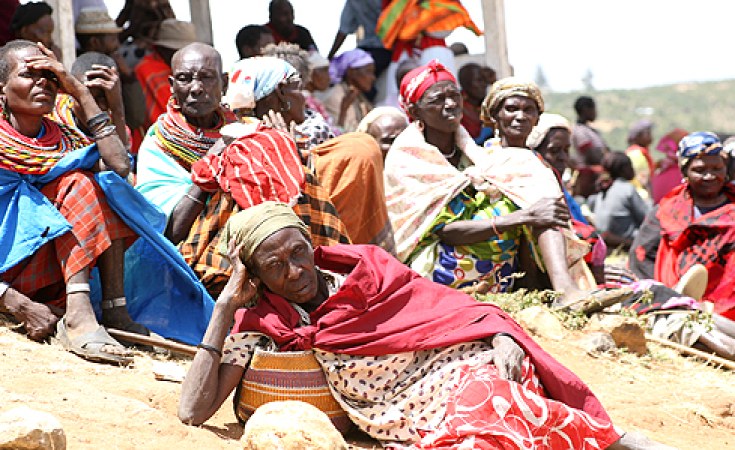
    Elderly Samburu women patiently wait for the distribution of relief food at Maral (file photo).

    It is noon in Nkaroni village, in Samburu East, and the sun is blazing down over the vast land with searing heat.

    The temperature has crossed 30 degrees Celsius mark and rising. Hungry children are clinging onto their parents' shukas (traditional wear), with their lives pegged on hope.

    The drought that has ravaged this village in Samburu County and several parts of northern Kenya since January last year has been devastating, leaving families in a desperate situation.

    More than 10 counties in Kenya's north are affected by the prolonged drought, and, according to the government, at least 2 million people are in need of clean water and food.

    Worsening by the day

    The drought in Samburu, Marsabit, Turkana, Isiolo and parts of Baringo, is worsening by the day, with desperate families trekking long distances in search of food, water and pasture for their livestock.

    Women, children and the elderly are the most affected, as the dry spell persists. Their livestock, the main source of livelihood, has been decimated.

    Scorched fields here tell the story of one of the worst droughts the northern region has faced yet, and residents here appear to have been left to their own devices.

    In Samburu, South Horr, Barseloi, Wamba, Suyan, Loonjorin, Ntepes, Archer's Post and Nachola are the worst-hit areas. A spot check by the Nation in the affected areas established a desperate situation.

    In some areas, desperate families have been waking up as early as 4am to sit on roadsides to beg for food and water from travellers.

    Scorching sun

    Throughout the day, they endure the scorching sun, and with herders, they chase after vehicles hoping to secure something to quench their thirst and fill their hungry tummies.

    Elizabeth Naserian is one of the desperate residents of Loonjorin, who has gone for days without food after the little donation she had received ran out.

    "We are hoping God will save our lives because the situation is bad. We do not have food and water. The drought has lasted several months and if the government does not come to our aid, we will die," said Naserian, a mother of five.

    Pastoralist communities from neighbouring Marsabit, Isiolo, Baringo and Turkana counties have been forced to travel several kilometres in search of water and pasture for their livestock.

    According to the National Drought Management Authority (NDMA), in Samburu alone, at least 100,000 pastoralists are at risk of starvation

    Though no deaths have been reported so far, if the situation remains unchecked it will degenerate into a disaster, residents told the Nation.

    The drought has been triggered by absence of rains for the last couple of months and the water table in the affected regions has gone down drastically.

    Likely to get worse

    Samburu NDMA County Coordinator Alex Leseketet says the situation is likely to get worse.

    Samburu East region is the worst hit, with water, pasture and food stocks having run out several months ago.

    "Samburu County is on an alert stage but the trend is really worsening very fast. In Samburu East, most wells and dams dried and people are suffering. That is why we placed the area on an alarming state list," Mr Leseketet said.

    Emaciated livestock

    Livestock prices have also dropped sharply after they became emaciated due to lack of water and pasture.

    Samburu County Special Programmes Chief Officer Daniel Lesaigor said more than 100,000 people are in dire need of relief food and water.

    He appealed for help as the available food (253 metric tonnes) can only serve a population of 36,000.

    Most school-going children, he said, have dropped out amid mass migrations in search of water.

    "We had mapped out about a population of 36,000 across the entire Samburu County in March. But as the droughts continue, we have realized more than 100,000 urgently need help," Lesaigor said.

    There is also concern that the situation may spark conflicts as groups scramble for the already scarce resources.

    Conflict among pastoralists

    The drought is exacerbating conflict among pastoralists, with fights breaking out at water points. Several people have already died in clashes over water at Komu area on Samburu-Isiolo border over the last one month.

    "The conflicts often surround access to water and pasture points. The conflicts have increased with the drought," said Samburu County Commissioner Abdirazak Jaldesa.

    There is a reported shortage of animal feed in Samburu and Isiolo counties, with some livestock farmers appealing to the government to intervene.

    Local leaders have appealed to the government and non-governmental organisations to support drought-stricken residents.

    Led by governors Moses Lenolkulal (Samburu) and Stanley Kiptis (Baringo), they said they need urgent help to save people and animals.

    "I call upon the Ministry of Devolution and other development partners to urgently help us with relief food for families affected by the drought," Mr Lenolkulal said.

    Samburu East MP Jackson Lentoijoni called for urgent interventions to stop further ethnic clashes over control of water points and grazing fields.

    "This is a critical moment and as leaders we appeal for a relief food to cushion starving locals. We are also in talks with herders find a solution on escalating attacks over access of water points," the MP said.

    ematara@ke.nationmedia.com, gondieki@ke.nationmedia.com

    Kenya: Police Should Not Arrest People Then Begin Investigations, Court Rules


    Pixabay
    (file photo).

    27 JULY 2021
    The Nation (Nairobi)
    By Brian Ocharo

    The High Court has warned the police against unlawful or arbitrary arrests of suspects as a starting point for investigations.

    Sitting in Malindi, Justice Reuben Nyakundi on Monday ruled that it's a breach of the law to take people into custody, then begin looking for evidence.

    He said this illegal act is witnessed in courts by the many applications for further detentions to gather evidence against suspects.

    "The unjustifiable and unlawful use of arrest as a starting point to commence investigations is a violation of the fundamental rights to human dignity and liberty entrenched in our constitution," said the judge.

    Justice Nyakundi noted that the propensity for the police to deprive suspects and accused persons of their liberty before the conclusion of investigations to a criminal case is one of the challenges that the courts have been struggling with.

    "The court must of necessity examine the relevant facts and circumstances of effecting an arrest of a suspect, more so those done without warrants. Not only must the suspicion be objectively justified, but a cognisable offence must be suspected. It is not enough that suspicion is of some vague conduct," he added.

    The court said police are supposed to gather evidence on a suspected offence committed, then arrest the perpetrators, but not arrest and start looking for evidence against them.

    The judge said this while delivering a ruling in a case in which five people rushed to court for anticipatory bail. They feared arrest over a land matter that's pending before the Environment and Land Court.

    Justice Nyakundi granted Omar Kahindi, Elisha Kahindi, Martin Gona, Katana Patrick and Samuel Ngolo an anticipatory bail of Sh100, 000 each.

    They said the police were planning to arrest them even before the conclusion of investigations. They argued that the matter is still active in court, adding that it should be concluded before any action is taken.

    Justice Nyakundi agreed that their arguments were well-founded in law.

    "In the instant motion, the applicants have demonstrated a prima facie case on well-founded fear that their arrest is ill-advised and likely to result in the pre-trial detention without bail," said the judge.

    He noted that there is an overriding interest on the part of the applicants to resolve the land dispute pending before the courts, which directly impacts the criminal investigations.

    "Given the concerns expressed in this application on the use of arrest against the applicants, there is a surprising lack of information on the part of the respondents," he added.

    Justice Nyakundi also noted that no evidence had been availed by the police or corresponding investigating agency on the suspicion to effect arrest without a warrant.

    "In absence of any rejoinder from the cited state agencies, there is an inference that the intended arrest albeit the good intention on their part is unlawful and arbitrary," the judge said.

    The Office of the Director of Public Prosecutions and that of the Attorney-General did not enter appearance nor file documents in response to the application.

    Read the original article on Nation.