Friday, July 30, 2021

IN MEMORIAM: MY FRIEND DANISH

 SIDDIQUI

Published July 25, 2021
A group of men, chanting pro-Hindu slogans, beat a Muslim man during protests
 sparked by a citizenship law in New Delhi, India | Reuters/Danish Siddiqui

I try to remember my first meeting with Danish at the AJK Mass Communication Research Centre of Jamia Millia Islamia, as freshly enrolled film school students in the summer of 2005.

All I have is a hazy memory of a tall fellow in a pistachio coloured, half-sleeved shirt tucked inside his jeans and a maroon backpack on his left shoulder. And oh, that he smoked and would later go on to proudly count his many sutta-converts (converts to cigarette smoking), who would join him on the terrace canteen of MCRC between training and theory classes. 

Danish was energetic, fun and hot-headed and I think everyone wanted to work on their student films with him. To have him in the crew meant one could focus more as a director on the day of the shoot. Unless, of course, you had gotten on his wrong side and he decided to not cooperate. But even then, I have a feeling he would return to the shoot within an hour of the scheduled start, making some generous comment about the ‘director’ and get to work. If you were lucky to be his friend, then he would be there for your shoot even if he was not in your official film crew. 

I cannot remember any film that I made as a student without Danish. Our final graduation film Rihhaiish (Residence, 2007) was filmed in and around Jamia Nagar in New Delhi, with a crew that consisted of our mothers, relatives and friends. In this part-autobiographic, part-political film, we poured our hearts, lives and tussles of growing up a middle-class religious minority in an increasingly majoritarian, right-wing climate in India. 

My 15-year-long friendship with Danish unfolded against each of us trying to make sense of the threat of violence that hovered over our abstracted lives. Until I joined Jamia as a postgraduate student, I dealt with my identity as an Indian Muslim woman by denying it as much as possible or limiting it to a very personal arena of family.

Danish, on the other hand, embraced his identity fully, wore it like a badge of honour and his jokes were peppered with tongue-in-cheek Islamic utterances. I too became more comfortable with myself and my history around him. 

A friend pays tribute to the Pulitzer Prize-winning Reuters photographer who lost his life in Afghanistan on July 16, while covering the fighting there

We, of course, had many arguments during and after our shoots, as we led high voltage lives in Delhi, our bodies and minds confused and consumed by the world that unfolded around us after 9/11. It bothered me even then that viral objects shot in lands faraway had started making their appearances in our phones. While we were studying how to make media and make meaning of media, as 21-year-olds we were also encountering instantaneous atrocity in the form of videos from Iraq and Afghanistan where the United States was fighting their ‘war on terror.’

I protected myself from these captures, while the ‘boys’ watched and shared. On a couple of occasions, I also preached some half-baked media effects theory about how instead of sensitising to human life and misery, these unreliable viral videos on our low-grade Nokia phones in 2005-06 were making us resilient to violent content. I must have been really annoying for we argued hard, fought loudly and then went to our respective partners to calm down.

But we soon made up, for it was hard to stay cross with Danish for long and he always promised company that was joyful, comforting and fast-paced. 

After Jamia, my friendship with Danish became less argumentative and more affectionate. We made another short film in 2009. His lens drew unanticipated sensitivity and tenderness from an otherwise stern and restrained Dr David Baker, the protagonist of the film.

Around this time, Danish moved to Mumbai and I occasionally crashed at his pad, envious of his plucky freedom and grateful for his friendship. I moved to the UK to pursue my PhD and we met every year either in Mumbai or Delhi.

He had joined Reuters as a photo journalist and was travelling frequently for high-risk assignments. In over ten years with Reuters, he captured many images of human conflict and resilience. My favourites remain the series on Kabul’s silver screens, the migrant labourers during Covid-lockdown in India, and the Rohingya exhaustion, which won him the prestigious Pulitzer prize. 

What was unique about Danish’s work was his desire to follow his subjects beyond the frame of iconic photographs and into the ebb of each crisis. He visited labourer Dayaram in a Bundelkhand village  and was relieved to find Zubair of Delhi riots convalescing in a local hospital. Danish cared enough to see that people were more than iconic photographs and fearlessly sought to represent human lives in as ethical a manner as is possible in these moments of crisis. 

It was Danish’s strong attachment to his lived community in Jamia and an imagined one in India and beyond, that made him take up many risky assignments. The dialectic of Muslim terror and Muslim persecution suffused his work and thought. His courage was a quest, a drive to dive deep into the heart of the problem of sectarian violence, if such a heart can ever be located. 

We met for the last time in March 2020, right after his coverage of the Delhi riots. I was visiting for a few weeks and he was ‘lying low’ after receiving unending umbrage from the online right-wing trolls. He described how he got that iconic photo of a man being beaten to near-death by Hindutva mobsters. It involved subterfuge, pretending to be a newsperson sympathetic to the mobsters who invited him to join them on their rampage.

When he started clicking photos that they did not wish to be captured, the mob got suspicious. They demanded his photo ID and it was his Hindu colleague who managed to lead him out of the tangle, which also involved a good amount of fast running to escape the situation. 

I was stunned as to how three decades of mediatised stories of riots that our generation has grown up with in India starting from the 1990s, had come to inhabit my friend’s body. I knew what having that body meant, one where no personal memory resides outside of the shadowy geographies of hate. He had sought to document these as a duty, and his responsibility to the weak and persecuted. 

The CAA, he pointedly told me, if it comes, will not affect us.

“It is the rickshawallah in Jamia who will have no papers to prove where his forefathers came from and where they went,” he said.  I had been worried about his health and well-being for over a year now, and our messages had lost some of the earlier political piquancy. I was sounding more and more like a mother, a sister and a politically disinterested friend. After his brief arrest in Sri Lanka in 2019, those close to him were worried about the calculated risks he was taking to report his stories.  

Last month when he mentioned his upcoming trip to Afghanistan, I was more relieved than worried, since his Covid-19 coverage in India had caused him much personal angst as well as the usual online hate.

“Afghanistan mein zyada adventure karne ki zaroorat nahin hai (No need to go on an adventure in Afghanistan),” I wrote.

“Let’s see, Afghanistan is an adventure itself,” he replied with a laughing emoji.

Two days ago, when I watched the WhatsApp videos he was making in the Humvee, I lightly chuckled at how he must be enjoying all the action, the shaky camerawork and being the star that he was. 

An avid biker himself, Danish also liked to shoot in moving vehicles. These viral videos are no longer as grainy as they were in 2005 and, at least, I could no longer argue about the veracity of these images since he was filming the violence himself. I responded with animal emojis, cloaking my anxieties with funny symbols, half-worried that anything more will encourage him to take further risks against the Taliban.

But he was already also sharing everything on Twitter, and the platform that brought him much hate also fetched him much adoration and admiration. 

As Danish’s friend who intensely felt and shared his curiosity about the experiential patterns of Muslim minority and majority contexts, I will grieve my buddy endlessly.

When we spoke a few months ago, he asked me what was keeping me so busy. When I said “writing”, he brought forth his usual dismissive, funny self: ‘Abey kitna likhogi tum [‘Dude, how much will you write’]!”

I regret not telling him then that I too had been touched by his incandescence and curiosity, and that meeting him in Jamia perhaps changed me forever. Rest in peace my beloved friend, the good fight will go on. 

Salma Siddique is a writer and researcher at Humboldt University, Berlin

Republished from The Wire

Published in Dawn, EOS, July 25th, 2021

In-Depth
The untamed market for wild animals in Pakistan
THE HERALD
PAKISTAN
A white lion cub in a private zoo in Karachi | Tahir Jamal, White Star


Chaudhry Usama Wains received a message on his Facebook page in January 2018. An aspirant for a Khyber Pakhtunkhwa Assembly seat was interested in buying a lion and wanted it delivered to a specific location in Peshawar. Wains, who deals in animals, drove from his home in Faisalabad along with an African lion and a couple of companions a few days later. As they were about to reach the designated spot, two cars approached them. Some men got out of them and took away the lion forcibly — without paying a penny for it.

Wains does not know who the lion snatchers were but he suspects that they were sent by the politician who had sought the lion’s delivery.

Politics and lions have a close association in Pakistan. Politicians who make a name for themselves often come to be known as the lions – undisputed rulers – of their respective constituencies or districts. A few of them have gone on to earn the title of Sher-e-Punjab — the lion of Punjab province; the most famous of them being a former chief minister and provincial governor, Malik Ghulam Mustafa Khar. At least one political leader, Nawaz Sharif, has been elevated by his supporters to the exalted status of a babbar sher — a lion king. When he arrives to address public gatherings, he is always greeted with cheers of dekho dekho kaun aya, sher aya, sher aya (look, who is here — a lion).

For some inexplicable reason, however, a lion is not included in the list of election symbols approved by the Election Commission of Pakistan. Nawaz Sharif’s party, Pakistan Muslim League-Nawaz (PMLN), has, therefore, settled for the next best thing – a tiger – as its election symbol. By a stroke of linguistic luck, they are still able to call their symbol a sher — a word locally used for both a lion and a tiger.

Love for shers runs high in the PMLN’s echelons. In 2009, Nawaz Sharif’s nephew Salman Shahbaz obtained a special permit from the federal government to import two Siberian tigers from Canada. His father, Shehbaz Sharif, was Punjab’s chief minister at the time.

The issuing of the permit created a big stir in the news media. Siberian tigers – scientifically called panthera tigris altaica – face a threat of going extinct and the Convention on International Trade in Endangered Species of Wild Fauna and Flora (CITES), a global covenant which Pakistan is a signatory to, prohibits their trade. The media coverage of the whole affair and the criticism it generated forced Salman Shahbaz to hand over a male tiger he had imported before the news broke to Punjab’s wildlife department which has kept it at the Murree Wildlife Park in Bansra Gali since then.

Park officials disclose that the tiger has become weak. It is also living a solitary life since its intended partner was never brought to Pakistan.

Some other shers – caged or chained – have been spotted at PMLN’s election gatherings and protest rallies. Many of the party’s candidates in past elections have also paraded lions during their campaigns to mobilise support.

More often than not, these animals have been sold and purchased by skirting around, if not entirely flouting, rules and regulations.

The latest scramble among politicians to procure lions was witnessed in the run-up to the general elections on July 25, 2018. In a phone interview, Wains says he sold as many as 12 white lions and 19 brown lions between the months of April and July this year to different PMLN candidates in various parts of Punjab and Khyber Pakhtunkhwa provinces. “I do not share the PMLN’s political ideology but the party was good for my business.”

Simba chained in his enclosure on Hamza Hussain’s rooftop in Karachi | Haniya Javed

Wains first saw a lion up-close at the house of a friend in Lahore about two and a half years ago. The animal scared him. “I had kept dogs as pets but there is a huge difference between a dog and a lion,” he says. In subsequent visits to his friend’s place, he gradually started feeling comfortable around the lion.

By December 2016, he fell so much in love with the animal that he decided to buy one for himself. He obtained an import permit and contacted a trader in South Africa who promised to send him a lion for 300,000 rupees (inclusive of delivery charges). Wains paid him around 200,000 rupees in advance – around 65 per cent of the total – as was agreed between the two. After receiving the advance money, the trader stopped taking his calls and disappeared.

In March 2017, Wains made another attempt. The deal went through successfully this time round and he received his first African lion around a month later. It was not a wild animal, according to Wains, but was bred at a farm.

Soon, he started thinking of setting up his own lion breeding farm. He spent some time learning animal farming from two other wildlife breeders – one based in his own hometown, Faisalabad, and the other operating in Karachi – who breed a variety of animals such as deer and ostrich. He then imported eight more lions and set up two farms — one in Islamabad and another in Muzaffargarh. The second one is still under construction, he says.

Wains started his lion breeding business while he was still a student. His family often reprimanded him for indulging in it, especially when he would bring some lions home. “My brothers have small children. They were terrified to let their children be close to the lions,” he says. Overtime, though, they all became supportive of his venture.

Wains has three personal profiles on Facebook. In one of them, he calls himself a zoo owner; another describes him as the CEO in Wild Pets Club; the third has a picture of a man in his early twenties. “I am [a] Wild Animals Exporter. I have all wild animals for sale. I have three offices in South Africa, Mexico and Pakistan,” reads his personal description in one of the profiles.

Wains now has several animals at his farms, including a snake, two deer – each four months old – several parrots and many big cats: a 10-month-old pair of white lions, an 11-month-old female white lion, a 10-month-old wild lion and a farm-bred one of the same age. He sells the African lions he breeds for a minimum price of 550,000 rupees (inclusive of delivery charges). Stung by what happened to him in Peshawar, he has started collecting 50 per cent of the price before making a delivery.

In August 2018, an Indian named Karthik used a Facebook forum to accuse Wains of scamming him. Karthik’s post alleged that Wains had promised to send him a lion in India via a train from Pakistan for 3,000 US dollars that were to be deposited in a bank account in Malaysia. After Karthik transferred the money in two installments, he alleged, Wains stopped responding to his calls.

Wains denies the allegations. He says he does not export lions. “It is difficult to have them cleared from the customs to take them out of the country,” he says. “You need to pay a lot of money and also procure a CITES permit from the government.” It “is a hassle” he prefers avoiding.

Atif Imtiaz with one of the white lions at the Wildlife Experience Center in Karachi | Haniya Javed

On a recent Sunday evening, Hamza Hussain climbs a flight of stairs along with two young men to enter a roofless enclosure at the top of his 350 square yard house in Karachi’s PECHS area. A three-year-old brown African messai lion is lounging in the enclosure, tied to a concrete pillar with a chain and holding a meaty bone in its mouth. It stares vacantly at Hussain and his companions. The two men want to photograph themselves with the lion. They take turns to pose just behind it. The lion looks unperturbed. It seems accustomed to people moving around it.

Hussain, who is in his mid-twenties and works as a freelance videographer and restaurateur in Karachi, purchased the animal from a dealer in Lahore when it was a small cub. He named it Simba and initially housed it in a small room – on the floor right below the enclosure – which has enough space to accommodate just a single bed and a cupboard.

Simba was born in Lahore with deformed legs (probably due to the deficiency of Vitamin D) but his deformity has been cured now. “It was very social when it first came into my house. It would sleep with me in my bed,” says Hussain.

As Simba grew up, Hussain arranged a bigger space for it. He built a 2,000 square yard facility to house it near a village in Thatta district — just outside Karachi. The lion got 1,000 square yards of space to just move about — almost double of what it needs according to WWF-Pakistan’s guidelines. Hussain now brings it home only on weekends.

He also keeps some other animals, including 35 pythons, at his Thatta facility. The smallest python is five feet long. He initially purchased 100 of them from Jay Brewer Prehistoric Pets, a company in the United States – having contacted the seller through its website – but some of them died and some others he sold.

These days, Hussain is looking for a female companion for Simba. “If I cannot find one locally, I will import it from South Africa,” he says.

Finding the animal locally should not be hard. Multiple Facebook groups offer African lions, scientifically known as Leo Panthera, for sale. Three cubs, each four months old, are available for 750,000 on one group’s page. Another group offers two brown East African cubs of messai variety for 450,000 rupees (available for delivery at any location in Pakistan with an additional charge of 15,000 rupees).

The video of a four-month-old white cub lounging on a chair in the lawn of a private property in Karachi also made rounds on social media in September this year. It was available for sale at 750,000 rupees.

Some traders are peddling – both online and offline – body parts of lions as well. Lion fat is available for use in medicine meant to relieve muscular and joint pains. A Lahore-based trading website, Bolee, has a lion claw for sale for 35,000 rupees. Another online trader displays lion nails enclosed in a silver frame and attached to a metal chain. Price: 8,000 rupees. The trader claims to have imported the nails from Kenya.

Lion hides are also being sold and purchased, reveals a report by the World Wildlife Fund (WWF) titled An Assessment of the Scale of Illegal Wildlife Trade in Pakistan. In 2016, the report states, the wholesale price of an African lion’s hide was 70,000 rupees and Sindh and Khyber Pakhtunkhwa provinces were its top markets.

A red-eared slider, non-native to Pakistan | Tahir Jamal, White Sta

These days, lions are being sighted in many neighbourhoods across Karachi. Veterinarian Isma Gheewala confirms that lion visits to her clinic in Defence area have become quite frequent. One of them is brought to her for declawing after every month and a half. Still, Summaiya Zaidi, a Karachi-based lawyer, could not believe her eyes when she saw a young lion inside a house in Defence.

She was returning home from a cinema around midnight in May this year. As her car stopped at an intersection, she saw a cub through a half-open gate. “At first I thought it was a cat but then I quickly realised that it was too big to be a cat,” she says in an email interview.

An intrigued Zaidi then started gathering more information with the objective to move a court against the practice of keeping lions inside homes. Along with another lawyer, Muhammad Ali Lakhani, she subsequently filed a petition at the Sindh High Court, seeking punishment for those who were keeping lions in captivity. The petitioners also asked the court to cancel all previously issued permits for the import, trade and possession of big cats. There is nothing much that the court could do.

The problem is that there is no law in Pakistan to prohibit the possession of a wild imported animal, says Uzma Khan, who works as a technical advisor for WWF-Pakistan. If, for instance, someone is keeping a lion as a pet inside their house and their neighbours do not like it, all they can do is go to the police and register a complaint under section 289 of the Pakistan Penal Code that pertains to “negligent conduct with respect to [an] animal”.

Zaidi and her co-petitioners wanted a lot more. They requested the court to order the federal government to set up a ‘scientific authority’ to determine whether or not importing lions was detrimental to the survival of their species. They also wanted clear court orders that those keeping lions as pets provide the animals enough space and other facilities they require to live in peace and comfort.

After a hearing this August, the court finally ruled that no permit/licence must be issued without fulfilling the requirements mentioned in the Pakistan Trade Control of Wild Fauna and Flora Act 2012.

This is exactly what Pakistani laws already require — at least on paper.

Afew years ago, Dr Farooq Sattar, a senior leader of the Muttahida Qaumi Movement, met four young men, all friends, at some exhibition in Karachi. They were holding snakes that they owned as pets. An animal enthusiast, Sattar asked them if they had more animals and how and where they were keeping them. The young men had many other animals and they were keeping them inside their own homes.

Sattar made them an offer: he will arrange a public space as a habitat for their animals but they have to make them available for people’s viewing. The young men agreed. The deal looked beneficial to them: their animals would get a large place to inhabit as compared to the cramped spaces inside their homes. Letting others share the joy of seeing the animals was a small price to pay. More importantly, their partnership with the government would help them in getting import permits and possession licences.

This is how a public park in Karachi’s Nazimabad locality came to house the Wildlife Experience Center that has many local and foreign animals — a couple of crocodiles, a vulture, a toucan, flamingos, parrots, monkeys, an owl and a falcon among others. Its biggest attraction is two white lion cubs — a male and a female. On a recent evening, they can be seen roaming around in a large enclosure at the park, separated from the viewers by a glass wall. School children can be seen visiting the park on any day. Every now and then, various activities are also arranged there around the animals. The 50th birthday of the zoo’s resident tortoise was celebrated in August this year.

Every other day as night approaches and all the visitors leave, the four friends visit the park. After they get inside, the main gate is closed and a side door in the glass wall is opened. The cubs jump out eagerly, running about and cuddling with their owners.

A vulture perched on a branch in its enclosure | Tahir Jamal, White Star

Atif Imtiaz, one of the owners of the animals, has a video that shows the cubs playing with a football. They are jumping high in the air, trying to catch the ball. In their playfulness, they look like any domesticated pet.

The cubs belong to a rare breed – falling under Appendix II of the CITES – only found in the Timbavati Nature Reserve in South Africa. They have been imported under a permit issued by the federal ministry of climate change.

The process to obtain a permit is long and runs through many tiers of the government machinery. Those interested in importing animals first have to apply to get a No-Objection Certificate from the wildlife department of their province. The official cost of a certificate is 150,000 rupees but importers allege they often end up paying around 200,000 rupees in order to expedite the process of its issuance.

Provincial wildlife departments carry out their own checks to ensure that the intending importers have sufficient and suitable facilities to keep the imported animals and that they are registered with the provincial government concerned as non-commercial entities. “The provinces are required to get an affidavit from the importers that the animals being imported will not be used for commercial purposes or even for breeding,” says Samar Khan, a wildlife conservator at the federal ministry of climate change.

After a No-Objection Certificate is issued, importers approach the ministry of climate change in Islamabad which, after having received all the required fees and other documents, including a CITES permit from the country from which the animals will be imported, issues an import permit. Each permit is valid for no more than six months. Importers place their orders to buy the animals in advance so that their permits do not expire before their consignments arrive.

Once the imported animals land in Pakistan, a doctor, designated by the provincial wildlife department, checks them and issues a certificate on the state of their health. In normal circumstances, it takes an hour for an imported animal to get out of a seaport or an airport. “Once you bring the animals in the country,” asks Hameria Aisha, a wildlife manager at WWF-Pakistan, “is there a check and balance on their sale here?” There is none.

The closest thing to a regulatory regime is a set of guidelines issued in 2011 by the National Council For Conservation of Wildlife — now merged into the federal ministry of climate change. These guidelines for the acquisition and management of big cats state that trade of these animals should only be done by registered zoos and breeding farms and not by any individuals.

These guidelines, however, have no legal value, says Uzma Khan of WWF-Pakistan. These are merely recommendations. “We tried to push them into legislation,” she says, by filing a petition at the Lahore High Court in May 2013 through actor-writer-activist Feryal Ali Gauhar.

Justice Mansoor Ali Shah, an environment-conscious judge, was chief justice of the Lahore High Court at the time. Around 14 months after the petition was filed, he set up a commission to look into the import and possession of big cats and to devise a code of conduct for their public display during political events.

In 2016, the commission recommended that the 2011 guidelines be incorporated in wildlife laws. Wildlife is a provincial subject in Pakistan. Only provincial governments have the power to enforce laws related to the poaching and trade of wild animals and punish those found in violation of those laws. Each province has different kinds of wildlife facing different kinds of threats. It makes sense, in theory, that provincial laws are tailored accordingly.
A toucan in a cage at the Wildlife Experience Center in Karachi | Tahir Jamal, White Star


In practice, this results in a situation where there is no uniform country-wide policy to deal with wildlife-related issues. While a federal law, as mentioned earlier, prohibits the possession and breeding of wild animals for any purpose other than research, education and conservation, each of the four provinces have allowed private zoos and breeding farms that may or may not have anything to do with any of the three purposes.

On top of all this, foreign trade being a federal subject requires compliance with federal laws. As far as wild animals are concerned, their trade is governed by the Pakistan Trade Control of Wild Fauna and Flora Act. This law was passed in 2012 after Salman Shahbaz managed to obtain an apparently unlawful approval to import an animal listed on Appendix I of the CITES.

The law specifies that any animal can be imported to Pakistan as long as they are not listed on Appendix I of the CITES. It also states that importers must provide a physical environment for the animals that is similar to their natural habitat.

These provisions exist in breach rather than in compliance as do the federal government’s guidelines on the inter-provincial transport and trade of wild animals. One of the major reasons for the law not being implemented is that its implementation falls in the domain of provincial governments which often do not like federal interference in their domain.

Provincial governments also do not have the resources required for law enforcement. Sometimes, their officials do not have the will and the capacity for enforcement and at other times they are simply complicit with those involved in illegal trade. “People often bypass provincial authorities,” is how Samar Khan of the climate change ministry describes the situation.

He does not agree to the suggestion that the federal government should place a blanket ban on animal trade, especially of lions, both within the country and with other countries, as long as enforcement mechanisms remain ineffective.

No problems arise during the import process, Samar Khan says. “Difficulties in law enforcement emerge when the animals are kept at home as pets.” His answer to the problem: “Existing laws should be enforced properly so the animals are not kept in captivity for commercial or breeding purposes.”

How will proper enforcement be ensured given the federal-provincial dichotomy, and the incompetence and corruption among officials responsible for compliance on the ground? He does not offer an answer.

Online trading is even harder to detect and stop. Hundreds of websites, selling exotic wildlife species, and numerous Instagram accounts and Facebook pages operate openly offering or seeking lions, turtles, snakes, scorpions and many other animals. “Law enforcers cannot ensure surveillance of every web page,” says Samar Khan, “because provincial wildlife departments are not efficient in using the Internet and information technology.”

Uzma Khan of the WWF-Pakistan agrees to the extent that wildlife departments suffer from a lack of resources, but she also believes that tracking down and blocking Internet Protocol (IP) addresses involved in animal trade is not impossible. “If wildlife departments do not have the motivation or the capacity to curb online trade, the government should involve the federal information technology and telecommunication ministry in the process,” she suggests.

The only obstacle that prevents this from happening is that laws that govern the Internet in Pakistan do not even mention wildlife trading, says Mansoor Khan, a director at the federal ministry of information technology and telecommunication. “Prevention of online trade in wildlife does not fall in our domain.”

Even if his ministry gets the mandate to do so, it will be difficult to prevent such trade in a globalised online world. Traders can easily operate websites and social media pages from territories outside the jurisdiction of Pakistani authorities. Without a concerted global effort, piecemeal, country-specific actions are never going to work.

Some recent developments suggest that global level efforts are being made in this regard. In 2017, eBay, an online marketplace, announced that it had removed about 45,000 wildlife trading listings from its website. Similarly, International Fund for Animal Welfare (IFAW), a non-profit working for animal conservation globally, launched this October what it calls a global wildlife cybercrime action plan.

The plan urges countries like Pakistan – where wildlife trade is rampant – to prioritise the detection and prevention of wildlife-related crimes both online and offline. It also suggests embedding cyber investigations into a government’s operations in the field of wildlife conservation.

“There has to be an improved customer and user awareness [through the provision of] information on wildlife poaching, online trafficking and laws around protected species,” says Tania McCrea Steele who leads the implementation of the IFAW action plan. “National governments need to block advertisements and individual users that abuse wildlife policies.”

This story was produced by the Herald, written as part of the ‘Reporting the Online Trade in Illegal Wildlife’ programme. This is a joint project of the Thomson Reuters Foundation and The Global Initiative Against Organized Crime funded by the Government of Norway. More information at http://globalinitiative.net/initiatives/digital-dangers. The content is the sole responsibility of the author and the publisher.

The writer is a freelance reporter based in Karachi.

This article was published in the Herald's November 2018 issue. 

To read more subscribe to the Herald in print.

Thursday, July 29, 2021

Donkeys and a dog at a shelter | Photos by Tahir Jamal, White Star


The thing Sara JK does every morning is to ensure that the 30 cats and 12 dogs living with her are well taken care of. Not only should they have enough food, they should also get sufficient time, space and human company to exercise their bodies and play around.


A cat at the home shelter


Sarah has named one of the cats, a white Persian, as Wobbles. It was abandoned as a kitten due to a neurological disorder that has unsteadied its walk. It trembles, and often trips, as it moves along. It also needs to be cleaned by a helper every time it relieves itself.


Sarah got her first pet, a German Shepherd, when she was very young and was heartbroken when it was stolen. “I then decided that I would not keep a dog that can be taken from me,” she says. So, since the age of eight, she has been adopting dogs from the streets.


A puppy up for adoption at the home shelter


Now 35, she quit her advertising job a few years ago to devote herself to her animal shelter. Between 5:30 pm and early morning, she looks after it all alone, though she has a small staff to help her during the day. She often skips family dinners and weddings to stay with the animals.

Sarah also spends a lot of money from her own pocket on the shelter. At times, her expenses exceed 100,000 rupees a month. “I then approach people for donations.”  


A dog rescued by Sarah


An even bigger challenge is to deal with people who despise animals. “One of my neighbours once complained to the Cantonment Board Clifton (CBC) that I keep stray animals at home. The next thing I knew was that CBC officials were at my door with guns. They wanted to kill my dogs.”

She told them off, insisting that they did not have the right to enter her house.


Dogs adopted by Sarah JK


Hafsa Arshad is the general secretary of Innocent Pets Shelter Welfare Society. A medical student, she spends her free time at a shelter the organisation runs in Saharanpur Cooperative Housing Society near Karachi’s Malir Cantt area.


Eagles resting inside a shelter RARE AND ENDANGERED HARPY EAGLES


Set up in 2017, the shelter is small – only 150 square yards – but it is brimful of cats, meowing in cages that reach up to the ceiling. Water is sprinkled on them every now and then to protect them from the summer heat. The dogs living here peacefully sleep in the open. An injured purebred lies at the entrance with a puppy cuddled next to it. “These animals are either wounded or abandoned,” says Hafsa.


A rescued dog with an amputated leg


The main problem the shelter faces is a shortage of money. Its staff often gets its salaries late and recently it cut another expense as well. “We had engaged a van on a monthly rent of 20,000 to rescue animals but we could not afford its rent,” says Hafsa. The transport is now arranged only as and when needed.


An injured dog lying near the entrace to a shelter


Ayesha Chundrigar was working as a journalist in London before she came back to Pakistan to fulfill her childhood dream of helping homeless animals. Using her savings and donations from family and friends, she set up a foundation and initially rented a property from Edhi Foundation on the northwestern outskirts of Karachi to build an animal shelter.

Since then, the shelter has switched locations four times, mainly due to the hostility of people living close by. “They pulled guns at our vets, locked our gates from outside and threw in poisoned meat to kill our dogs,” says Ayesha.


A cat available for adoption


In 2016, the shelter shifted to its current premises — a 4,500 square yards facility in Malir. It houses 500 animals, including dogs, cats, donkeys and eagles. Many of them have missing limbs; others are badly injured.


Dogs with wagging tails gather at a shelter to welcome visitors

Run entirely on donations, the shelter has 40 employees and two rescue vans. “We do not focus on saving animals alone. We want to help the environment too,” Ayesha says as she reveals that dog leashes in the shelter are produced with discarded fishing nets retrieved from the sea.

The toughest part of her work, according to Ayesha, is to see animals die. She describes how someone threw acid at two cats recently. One of them died instantly but the other writhed and wriggled with pain for three days before it was euthanised, she says. “The cat’s skin and insides were melting like ice cream.”


The writer is a staffer at the Herald.


This article was published in the Herald's June 2019 issue. To read more subscribe to the Herald in print.

Et tu, Tunisia?

Mahir Ali
Published July 28, 2021 


Mahir Ali


IN the aftermath of what came to be known a decade ago as the Arab Spring, Tunisia stood out on two counts. It was where the self-immolation of a desperate street vendor sparked popular protests that toppled a long-standing dictator and resonated across much of the Arab world. It was also where the fragile democracy subsequently cobbled together seemed just about sustainable. Until now.

In the wake of widespread protests on Sun­day against the country’s Covid-19 resp­onse and restrictions, Tunisia’s president, Kais Saied, sacked the prime minister and suspen­ded parliament. “We have taken these decisions,” he proclaimed, “until social peace ret­­­urns to Tunisia and until we save the state.”

The decision was greeted on the streets of Tunis with jubilation, although by Monday it had morphed into confrontation. Evidently, many Tunisians are pleased to see the back of the government headed by Hichem Machichi, who was backed by the largest party in parliament, Ennahda, described as ‘moderate Islamist’.

Others fear that Tunisia is heading down the same track as Egypt. The latter was among the biggest disappointments of the Arab Spring. The toppling of Hosni Mubarak led, democratically, to a Muslim Brotherhood government, which was overthrown amid protests highlighting its incompetence, leading to a military-backed regime even more repressive than that of Mubarak.

The Arab Spring’s sweetest dream goes sour.


There are significant differences, though, between Abdel Fattah el-Sisi and Saied. The latter is not a military man but an academic specialising in constitutional matters who won the 2019 presidential election as an independent. Yet, he threatened violent protesters with a military response.

The extent to which he enjoys the backing of Tunisia’s army is unknown. But the security forces, not least the police, have remained largely unreformed since the era of Zine El Abidine Ben Ali, Tunisia’s chief honcho from 1987, when he toppled Habib Bourguiba, until he fled to Saudi Arabia, the favourite destination of deposed Muslim autocrats, in 2011.

It was mainly the inadequacies of his regime as an economic manager that put paid to Ben Ali’s ambitions as president for life, while brutal curbs on the freedom of expression meant that the seething popular resentment remain unexpressed. When the anger could no longer be contained, after the death of the beleaguered fruit and vegetable seller Mohamed Bouazizi, it exploded.

The explosion was heard around the world, and resounded particularly loudly in Tunisia’s neighbourhood, where other dictators ruled. Mubarak’s ouster was an exceptionally momentous occasion, following the daily mobilisations on Tahrir Square. But the democracy that emerged was brief and it ended brutally.

The response in Egypt was at least ostensibly indigenous. In Syria, resistance to Bashar al-Assad’s regime sparked a civil war that morphed into an international conflagration that remains unresolved. Libya turned into a Nato battleground, portending long-term chaos. Saudi Arabia and the UAE, having curbed the likelihood of local eruptions, collaborated in thwarting opposition to Bahrain’s monarchy. And then they joined hands to destroy Yemen’s aspirations, which remains an ongoing project.

Tunisia’s political forces collaborated to steer clear of such outcomes. To some extent, liberals and Islamists found common cause. Ennahda thrived, but a parliamentary majo­rity remained beyond its reach. It nonetheless signed up to a new constitution recognised as relatively progressive in the Arab sphere.

Kais Saied has been accused of violating that constitution and mounting a coup. Tunisia’s future will depend on what he has in store and on whether he is backed up by forces that matter.

All too many of the conditions that catalysed the 2011 upheaval rem­ain in place, notably the level of unemployment. All too many young people are still condemned to a precarious existence, without any visible means of support. Tunisia remains keen on further assistance from the IMF, but that would inevitably entail further job losses and removal of subsidies. Transcending the neoliberal paradigm does not appear to be an option for the time being.

Recently, a Tunisian popcorn vendor was fined 60 dinars for not wearing a mask. He told his tormentors that if he had enough money for a mask, he would spend it on his children.

Tunisia’s pathetic pandemic response, which accounts for the highest per capita rate of fatalities in the region, has contributed to the popular resentment against the authorities. What is the likelihood, though, that the concentration of power in the president offers a solution?

It should be obvious before long whether or not Saied’s overreach is well-intentioned — and even if it is, the consequences may be dire. But the overall lesson for the Arab world — and, for that matter, countries everywhere — is: it’s best not to count your springs before they bear fruit.

mahir.dawn@gmail.com

Published in Dawn, July 28th, 2021
US really messed it up': PM Imran on Afghanistan situation

Dawn.com
Published July 28, 2021 -

PM Imran Khan during his appearance on PBS NewsHour opposite Judy Woodruff. 
Photo: PBS NewsHour/YouTube


Prime Minister Imran Khan has said that the United States "really messed it up in Afghanistan" as he questioned the American motive of Afghan invasion in the first place and then their subsequent attempts of seeking a political solution with the Taliban from a position of weakness.

The prime minister's remarks come as the US military and Nato are in the final stages of winding up involvement in Afghanistan, which has seen a Taliban resurgence across Afghanistan.

"I think the US has really messed it up in Afghanistan," the premier said during an appearance on PBS NewsHour, an American news programme, aired on Tuesday night.


PM Khan criticised the US for trying to "look for a military solution in Afghanistan, when there never was one".

"And people like me who kept saying that there's no military solution, who know the history of Afghanistan, we were called — people like me were called anti-American. I was called Taliban Khan."

He lamented that by the time the US realised that there was no military solution in Afghanistan, "unfortunately, the bargaining power of the Americans or the Nato (North Atlantic Treaty Organisation forces) had gone".

The prime minister said the US should have opted for a political settlement much earlier, when there were as many as 150,000 Nato troops in Afghanistan.

"But once they had reduced the troops to barely 10,000, and then, when they gave an exit date, the Taliban thought they had won. And so, therefore, it was very difficult for now to get them to compromise," he told programme host Judy Woodruff .

When the interviewer asked whether he thought the Taliban resurgence was a positive development for Afghanistan, the prime minister reiterated that the only good outcome would be a political settlement, “which is inclusive”.

“Obviously, Taliban [will be] part of that government,” he added.

'Last thing we want is a civil war in Afghanistan'


The premier described the “worst-case scenario” as being one where Afghanistan descends into a civil war. “From Pakistan's point of view, that is the worst-case scenario, because we then … we face two scenarios, one [of them being] a refugee problem,” he said.

“Already, Pakistan is hosting over three million Afghan refugees. And what we fear is that a protracted civil war would [bring] more refugees. And our economic situation is not such that we can have another influx.”

Elaborating on the second problem, he expressed concerns that the fallout of a potential civil war across the border could "flow into Pakistan”.

The prime minister explained that the Taliban were ethnic Pashtuns and “if this [civil war and violence in Afghanistan] goes on, the Pashtuns on our side will be drawn into it.”

“That … is the last thing we want,” he said.

'Extremely unfair' to allege Pakistan supported Taliban

When asked about Pakistan's alleged military, intelligence and financial support to Afghanistan, he replied: “I find this extremely unfair”.

The premier reminded Woodruff that 70,000 Pakistanis had died in the aftermath of the US war in Afghanistan, even when “Pakistan had nothing to do with what happened [in New York on September 11, 2001].”

At the time, Al Qaeda was based in Afghanistan and “there were no militant Taliban in Pakistan,” he said, maintaining that no Pakistan was involved in the attack on World Trade Centre.

“We had nothing to do with,” he repeated, regretting that the war in Afghanistan had resulted in a loss of $150 billion to Pakistan’s economy.
‘Comments on rape taken out of context deliberately’

Woodruff questioned the premier about his controversial remarks on rape, which had drawn widespread criticism and earned him rebuke from civil society, political circles and on social media.

In a June 19 interview with HBO, he had said: “"If a woman is wearing very few clothes, it will have an impact on men unless they are robots. I mean it's common sense. If you have a society where people haven't seen that sort of thing it will have an impact on them.”

As Woodruff revisited those remarks, PM Imran clarified his stance, saying that “anyone who commits rape, solely and solely, that person is responsible.”

“No matter whatever, how much ever a woman is provocative or whatever she wears, the person who commits rape, he is fully responsible. Never is the victim responsible,” he added.

The premier maintained that his comments in the HBO interview in June were taken out of context, saying that he was “simply talking about Pakistani society, where we are having a rise, a sharp rise in sex crimes.”

“So my comments were in that context,” he said.

The prime minister further said that he had specifically used the word “purdah”, referring to his earlier remarks on rape during a telethon in April.

““We have to promote a culture of veil (purdah) to avoid temptation. Delhi is called a rape capital; similarly, obscenity in Europe has shattered their family system. Therefore, the people in Pakistan should help government overcome obscenity,” he had said on the occasion.

Clarifying his position on the matter, he told Woodruff, “I used the word purdah. In Islam, purdah does not mean just clothes. And purdah is not restricted to women only, but that is for men as well. It means bringing the temptation down in a society.”

He said that he would never say “such a stupid thing" that "a person who's raped is responsible … It's always the rapist that is responsible.”

Woodruff then asked him whether he believed that importance given to religion, particularly Islam, “complicates” his ability to take a stronger stand against violence against women.

“Absolutely not,” the prime minister replied.

He said that on the contrary, Islam gave dignity and respect to women, adding that having travelled all over the world, he found that women were treated with more dignity and respect in Muslim countries.

“Look at the situation in Pakistan even now. I mean, look at the rape cases here. Compare it to Western countries. They are minuscule compared to them,” he remarked. “Yes, we have our issues … But, as far as a woman's dignity goes, … I can say, after going all over the world, this society gives more respect and dignity to women."
Deborah Lipstadt, Holocaust historian, is Biden’s pick for antisemitism envoy

Historian who claimed Trump administration paralleled rise of Nazis in 1930s Germany is Biden's choice for antisemitism envoy.

Tags: Joe Biden Antisemitism

Ron Kampeas, JTA , Jul 30 , 2021 

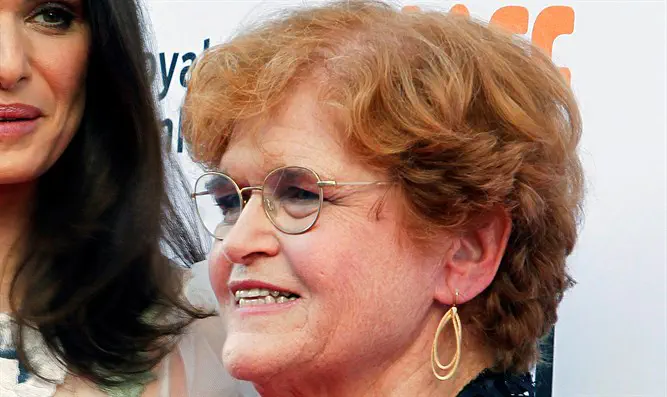
Deborah Lipstadt
REUTERS/Fred Thornhill


President Joe Biden is set to nominate Deborah Lipstadt, the Emory University Holocaust historian, to be the State Department’s antisemitism envoy.

The White House alerted top Biden supporters of the pick, which has been expected for weeks, on Thursday night, the Jewish Telegraphic Agency has learned.

Lipstadt is perhaps best known for defeating Holocaust denier David Irving after he sued her in a British court for defamation for calling him a Holocaust denier.

Her 2005 book, “History on Trial: My Day in Court with a Holocaust Denier,” was made into a 2016 movie with Rachel Weisz starring as Lipstadt.

Lipstadt, 74, has been for years a go-to expert for the media and for legislators on Holocaust issues, particularly on how the genocide’s meaning should be understood in the 21st century, and whether it had any cognates among anti-democratic forces in the current day. She twice endorsed Barack Obama for president but has been on call for her expertise across the political spectrum.

Last year, during the election, she broke a longstanding taboo on comparing present-day American politicians to the Nazis and endorsed an ad by the Jewish Democratic Council of America likening the Trump administration to 1930s Germany. Lipstadt said Holocaust analogies were still off-limits, but she could see parallels to the rise of the Nazis.

“I would say in the attacks we’re seeing on the press, the courts, academic institutions, elected officials and even, and most chillingly, the electoral process, that this deserves comparison,” she said at the time. referring to the JDCA ad. “It’s again showing how the public’s hatred can be whipped up against Jews. Had the ad contained imagery of the Shoah, I wouldn’t be here today.”

Jewish organizations, alarmed by a spike in antisemitism, have been pressing the Biden administration to name an envoy and to name a Jewish liaison to the community — another post that White House officials said would be filled soon. The Trump administration took two years to name an envoy.

Lipstadt will be the first nominee who will need to be confirmed by the Senate since Congress first created the position in 2004. Congress last year elevated the role to ambassador-level, granting the position more funding and easier access to the secretary of state and the president. If Lipstadt is confirmed, she will be the fifth person in the position.

The antisemitism monitor’s role is tracking and reporting on the phenomenon overseas, and lobbying governments to address anti-Jewish bigotry within their borders. The position does not have a domestic role, although Elan Carr, Trump’s appointee, sometimes criticized domestic actors, including J Street, the liberal Jewish Middle East policy group. His attack on J Street drew a rare rebuke from one of his predecessors, Hannah Rosenthal.
CRIMINAL CAPITALI$M
Former Nikola CEO Trevor Milton charged with fraud in US

Federal prosecutors in New York say the company founder and CEO "brazenly lied" to investors about Nikola's green vehicles to inflate market value and drive up his own earnings. The SEC has filed charges as well.


Nikola argues that the charges only affect its former CEO and founder Trevor Milton, though its stock took a pounding on Thursday too

US Federal Attorneys on Thursday announced that they had charged billionaire entrepreneur Trevor Milton with three counts of securities and wire fraud, each of which carries a maximum sentence of 20-25 years in prison.

"We charge that Milton engaged in a scheme to enrich himself by making false and misleading statements to investors," said US Attorney for the Southern District of New York Audrey Strauss as she publicly announced the charges against the founder and former CEO of the green-vehicle company Nikola.

At the time, Milton was trying to drum up investor interest as Nikola prepared to launch on the stock markets, before it was in a position to bring in any revenues from vehicle sales.

"In order to drive investor demand for Nikola's stock, Milton lied about nearly every aspect of the business," continued Strauss, whose office prepared the 49-page, three-count indictment. The indictment says the scheme occurred between November 2019, when he sought to take Nikola public, and September 2020, when he resigned as news of the investigations against him first surfaced.
What is Trevor Milton accused of?

Milton is accused of having "brazenly and repeatedly used social media, and appearances and interviews on television, podcasts, and in print, to make false and misleading claims about the status of Nikola's trucks and technology," according to Strauss — namely lying to investors about the true status of a prototype semi-truck that he claimed was "fully functional" when he knew it to be inoperable.

The billionaire businessman's claims targeted novice retail investors with no experience in the securities markets, including some who took up trading during the pandemic to make ends meet or to occupy themselves during the lockdown, according to the indictment.

Some investors were defrauded of their life savings. Prosecutors say Milton was motivated by greed, wanting to "enrich himself and elevate his stature as an entrepreneur" in order to fulfill his dream of becoming one of the world's 100 richest people.

Nikola had positioned itself as a sort of heavy-duty answer to Elon Musk's Tesla, even using the other half of renowned scientist Nikola Tesla's name, as the company looked to go public while Tesla's stock was soaring.


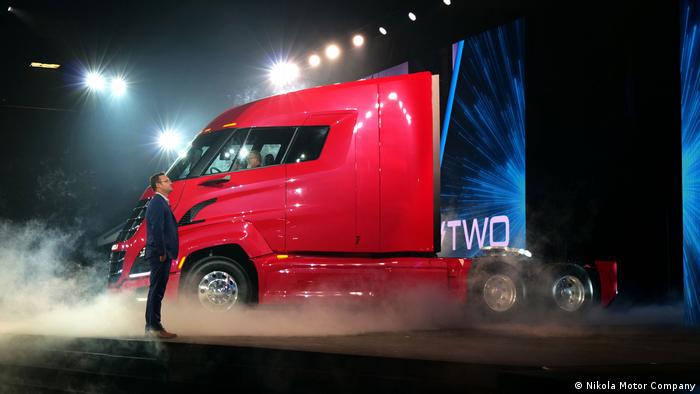
Despite glitzy launches and ceremonies, prosecutors allege Milton knew that its Two (pictured here) and Tre trucks were inoperable as he lauded them as 'fully functional'

What do Milton and his lawyers say?


Lawyers for Milton said, "Trevor Milton is innocent; this is a new low in the government's efforts to criminalize lawful business conduct." Both Milton and his lawyers claim he is the victim of a "faulty and incomplete investigation" and that he will be "exonerated."

"Trevor Milton is an entrepreneur who had a long-term vision of helping the environment by cutting carbon emissions in the trucking industry. Mr. Milton has been wrongfully accused following a faulty and incomplete investigation in which the government ignored critical evidence and failed to interview important witnesses," according to a statement released by the defendant's legal team.

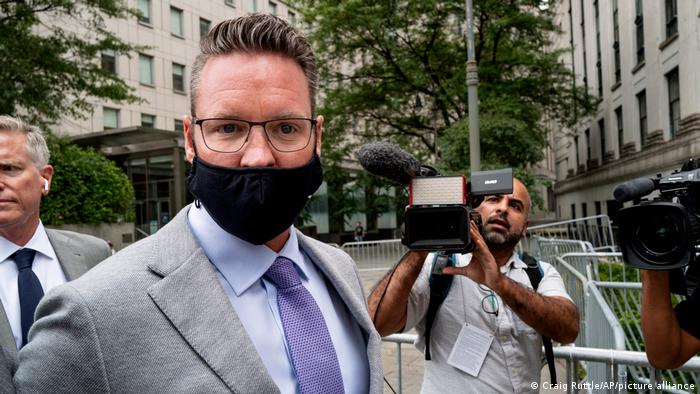
Milton was taken into custody shortly Thursday and released on $100 million (€84.1) bond after arraignment. The Utah businessman pleaded not guilty to the charges.

Federal securities laws also apply on social media, says SEC


The US Securities and Exchange Commission (SEC) filed related civil charges on Thursday as well, with SEC Director of Enforcement Gurbir Grewal noting, "Corporate officers cannot say whatever they want on social media without regard for the federal securities laws," as he spoke alongside Strauss.

Grewal, too, said that Milton had targeted novice investors, painting himself as a "different" kind of CEO, again in a manner rather reminiscent of Tesla's Musk.
How did Milton get tripped up?

Milton's undoing came shortly after what had looked like one of his biggest coups, namely winning auto giant General Motors as a partner shortly after taking Nikola public via special-purpose acquisition company (SPAC).

However, a report by Hindenburg Research just two days after the GM deal was announced said that Nikola's fairytale success was based on "an ocean of lies." The report alleged that Milton's "intricate fraud" went so far as to release videos of non-motorized prototypes rolling downhill to give the impression they were driving under their own power.

"We commend regulators for acting expediently to protect investors and hold Milton accountable for his egregious lies," said Hindenburg founder Nathan Anderson in a statement.

Nikola, which initially denied the accusations in the Hindenburg report, was not charged in any of the accused crimes and publicly stated that it had cooperated with federal attorneys. "Today's government actions are against Mr. Milton individually, and not against the company," Nikola said in a statement."

Nevertheless, Nikola shares dropped 11% in afternoon trading to $12.63, or just over one quarter of its peak value in August 2020, a month before Milton's resignation.

js/msh (AFP, AP, Reuters)