Sunday, June 25, 2023

‘All bets are off’: An uncertain future after Wagner mutiny

Speculation abounds on social media, but experts warn against drawing conclusions on the fate of the Wagner Group.

Wagner chief abandons mutiny, agrees to exile in Belarus

Al Jazeera
Published On 25 Jun 2023

Following Wagner chief Yevgeny Prigozhin’s short-lived mutiny, Russian President Vladimir Putin and his government find themselves in unchartered territory. The crisis appears to have been averted, for now, but what happens next for Russia and the Wagner Group remains uncertain.

“All bets are off,” Keir Giles, a senior consulting fellow of the Russia and Eurasia Programme at Chatham House, told Al Jazeera on Sunday.

“We simply don’t have any fixed data points that we can rely on to figure out what’s going to happen next.”

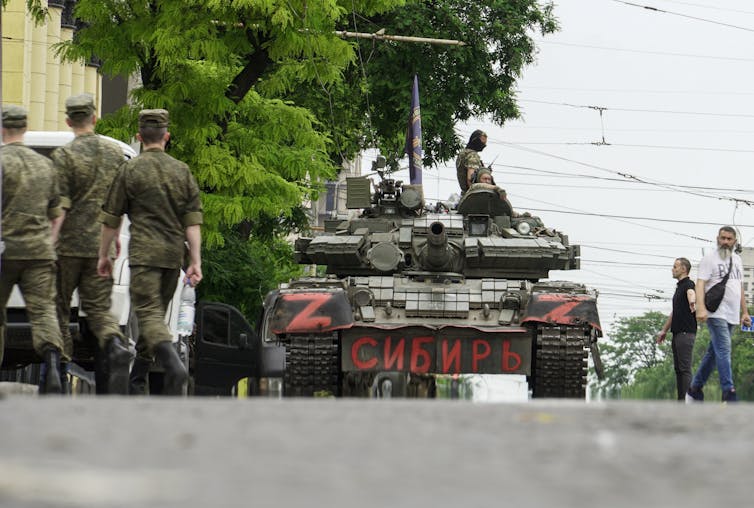
The events, which began on Saturday, appeared to take everyone but the battle-hardened mercenary group by surprise. Wagner forces rapidly took control of Rostov, one of Russia’s largest cities, where they were met with minimal resistance from local security forces and occupied the regional military headquarters.

They continued to march on Moscow before Prigozhin ordered his mercenaries to turn back 200km (124 miles) from the capital. He agreed to go into exile in Belarus after brokering a deal with the country’s President Alexander Lukashenko.

The mutiny appears to be over, but the fate of the mercenary group that has proven so influential in Ukraine, as well as Syria and many African countries, remains to be seen.

The Kremlin has publicly announced aspects of the deal, including the agreement that Prigozhin will be allowed to go to Belarus without facing criminal charges.

Lukashenko’s office said the settlement contains security guarantees for Wagner troops, but details are scant and, according to Giles, confusing.

“There are too many unanswered questions around this supposed deal that they’ve arrived at, but even the questions that do seem to be being answered make no sense,” Giles said.

Joana de Deus Pereira, a senior research fellow at RUSI Europe, told Al Jazeera that it is “crucial to exercise caution and critically analyse the information” coming out of Russia in the past 24 hours.

“Nothing is what it seems, and what it seems is not frequently what it is,” she said in an email.

Prigozhin’s uncertain future


Public challenges of the Russian president rarely end well, with many leading critics, such as opposition figure Alexey Navalny, often ending up poisoned or dying under suspicious circumstances.

“People that cross Vladimir Putin tend to have a bad track record of falling out of windows in Russia. We’ve seen them eliminated with little fanfare and in multiple, very brutal ways,” Colin Clarke, director of research at The Soufan Group, told Al Jazeera.

This is how Russian TV covered Wagner's advance

On Saturday, in a televised speech, Putin accused Prigozhin of “betrayal” and “treason” and described his actions as “a stab in the back of our troops and the people of Russia”.

“All those who prepared the rebellion will suffer inevitable punishment,” Putin said, adding, “The armed forces and other government agencies have received the necessary orders.”

Clarke said that Prigozhin’s deal with Belarus does not necessarily guarantee his safety.

“I don’t think Putin will shy away from exacting revenge and punishing Prigozhin if he thinks that that’s necessary, and I think he probably will,” he said.


Who is Prigozhin, the Wagner chief taking on Russia’s military?

Putin has also proven to not be very accepting of criticism of Russia’s “special operation” in Ukraine, and has called for a “self-purification” to rid his country of anyone who questions the invasion.

Prigozhin publicly questioned the rationale behind Russia’s full-scale invasion of Ukraine launched on February 24, 2022.

“The Ministry of Defence is trying to deceive the public and the president and spin the story that there was insane levels of aggression from the Ukrainian side and that they were going to attack us together with the whole NATO block,”, he said in a post on his Telegram channel.

Since the Lukashenko deal was struck, Putin and top Russian officials have remained tight-lipped on Prigozhin’s future.

Other leaders allied to Putin, however, have come out with criticism of the Wagner chief, including Venezuelan President Nicolas Maduro and Chechen leader Ramzan Kadyrov.

Deus Pereira believes that Prigozhin will “remain quiet for the next days” having left Rostov with much fanfare.

“This is one of his biggest objectives – he was recognised by the population,” she explained.

Prigozhin’s rhetoric following the deal may also have been a public relations exercise, according to Deus Pereira.

After the deal was struck, she said, Prigozhin claimed it was to avoid “Russian blood” being shed – and he projected an image of “dignity” that stood in contrast to the “manifestations of warlordism portrayed by Kadyrov”.

Wagner troops will not face charges, according to deal


The Russian government has said it will not prosecute Wagner fighters who took part in the mutiny, while those who did not join were to be offered contracts by the Defence Ministry.

Prigozhin ordered his troops back to their field camps in Ukraine, where they had been fighting alongside regular Russian soldiers.

On Saturday, Russian media reported Wagner troops downed several helicopters and a military communications plane. Russia’s Defence Ministry has not commented on these events.

“While Prigozhin may be the face of the group, Wagner is a product and creation of Putin’s regime to be able to operate in several scenarios with plausible deniability. This will continue, possibly under a new name,” Deus Pereira said.

Repercussions in Africa


The events of Saturday could have major repercussions in Africa, where the mercenary group has played an increasingly central role in long-running internal conflicts.

The United States has accused the group of exploiting natural resources in Mali, the Central African Republic and elsewhere to fund fighting in Ukraine.

The group has also been accused of playing an active role in Sudan – where there is an ongoing civil war.

A suspension of Wagner operations in Africa could impact the group’s finances.

However, Clarke believes that the Wagner Group’s influence abroad could help protect it from being completely isolated by the Russian government.

“It’s not possible for the Kremlin to marginalise Wagner,” he said. “Russia and Vladimir Putin depend on and, in fact, need the Wagner Group to carry out Russian foreign policy, not just in Ukraine, but around the world, in Libya, Syria, the Central African Republic, Mali and elsewhere.”

SOURCE: AL JAZEERA
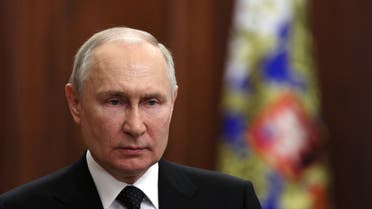
 

Prigozhin may be assassinated in Belarus as Putin ‘doesn’t forgive traitors’: Expert

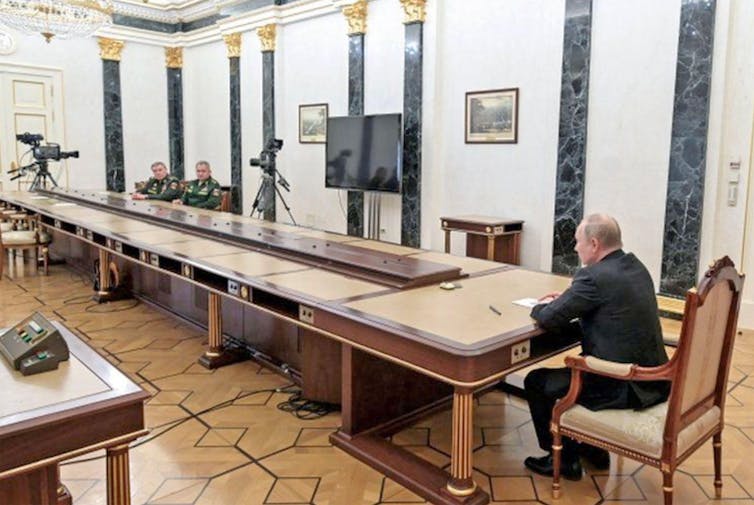
Russian President Vladimir Putin gives a televised address in Moscow, Russia, June 24, 2023. 
(Reuters)

Tuqa Khalid, Al Arabiya English
Published: 25 June ,2023

Wagner chief Yevgeny Prigozhin is not yet out of danger by going to Belarus, as Russian President Vladimir Putin will never forgive a traitor, argued expert on Russia and global fellow at the Wilson Center, Jill Dougherty.

“Putin doesn’t forgive traitors. Even if Putin says, ‘Prigozhin, you go to Belarus,’ he is still a traitor and I think Putin will never forgive that,” Dougherty told CNN.

She added that it’s possible to see Prigozhin “get killed in Belarus” but it would be a tough dilemma for Moscow because as long as he “has some type of support, he is a threat, regardless of where he is.”

For all the latest headlines follow our Google News channel online or via the app.

Dougherty said: “If I were Putin, I would be worried about those people on the streets of Rostov cheering the Wagner people as they leave.”

“Why are average Russians on the street cheering people who just tried to carry out a coup? That means that maybe they support them or they like them. Whatever it is, it’s really bad news for Putin.”

In a surprising turn of events, Prigozhin’s heavily armed mercenaries withdrew from the southern city of Rostov, ceasing their swift approach towards Moscow. This shift followed a deal that guaranteed the mercenaries' safety, prompting them to return to their bases, leaving questions regarding Putin's control over the country.

Under this deal, mediated by Belarusian President Alexander Lukashenko, Prigozhin was to relocate to Belarus. Prigozhin had led Wagner on a “march for freedom” to Moscow, targeting corrupt and inept Russian commanders he held responsible for bungling the war.

After seizing Rostov, a crucial logistical hub for Russia's invasion of Ukraine, they advanced northward, breaking through barricades. A late-night agreement reached on Saturday facilitated their withdrawal, reportedly marked by cheers, celebratory gunfire, and “Wagner” chants from the local populace.

As part of the deal, Kremlin spokesman Dmitry Peskov revealed that the charges against Prigozhin for armed mutiny would be dropped, he would move to Belarus, and the Wagner fighters wouldn't face any repercussions for their actions.

This agreement was reached due to Lukashenko's offer to mediate, approved by Putin, given his long-standing personal relationship with Prigozhin. Putin, during his Saturday address, had denounced the rebellion as a threat to Russia's existence, promising severe consequences for the instigators.


With Russia revolt over, mercenaries’ future and direction of Ukraine war remain uncertain

BY THE ASSOCIATED PRESS - 06/26/23

The rebellious mercenary soldiers who briefly took over a Russian military headquarters on an ominous march toward Moscow were gone Sunday, but the short-lived revolt has weakened President Vladimir Putin just as his forces are facing a fierce counteroffensive in Ukraine.

Under terms of the agreement that ended the crisis, Yevgeny Prigozhin, who led his Wagner troops in the failed uprising, will go into exile in Belarus but will not face prosecution.


But it was unclear what would ultimately happen to him and his forces. Few details of the deal were released either by the Kremlin or Belarusian President Alexander Lukashenko, who brokered it. Neither Prigozhin nor Putin has been heard from, and top Russian military leaders have also remained silent.

U.S. Secretary of State Antony Blinken described the weekend’s events as “extraordinary,” recalling that 16 months ago Putin appeared poised to seize the capital of Ukraine and now he has had to defend Moscow from forces led by his onetime protege.

“I think we’ve seen more cracks emerge in the Russian façade,” Blinken said on NBC’s “Meet the Press.”

“It is too soon to tell exactly where they go and when they get there, but certainly we have all sorts of new questions that Putin is going to have to address in the weeks and months ahead.”

It was not yet clear what the fissures opened by the 24-hour rebellion would mean for the war in Ukraine. But it resulted in some of the best forces fighting for Russia being pulled from the battlefield: the Wagner troops, who had shown their effectiveness in scoring the Kremlin’s only land victory in months, in Bakhmut, and Chechen soldiers sent to stop them on the approach to Moscow.

The Wagner forces’ largely unopposed, rapid advance also exposed vulnerabilities in Russia’s security and military forces. The mercenary soldiers were reported to have downed several helicopters and a military communications plane. The Defense Ministry has not commented.


“I honestly think that Wagner probably did more damage to Russian aerospace forces in the past day than the Ukrainian offensive has done in the past three weeks,” Michael Kofman, director of Russia studies at the CNA research group, said in a podcast.

Ukrainians hoped the Russian infighting could create opportunities for their army, which is in the early stages of a counteroffensive to take back territory seized by Russian forces.

“Putin is much diminished and the Russian military, and this is significant as far as Ukraine is concerned,” said Lord Richard Dannatt, former chief of the general staff of the British armed forces. “… Prigozhin has left the stage to go to Belarus, but is that the end of Yevgeny Prigozhin and the Wagner Group?”

Under terms of the agreement that stopped Prigozhin’s advance, Wagner troops who didn’t back the revolt will be offered contracts directly with the Russian military, putting them under the control of the military brass that Prigozhin was trying to oust. A possible motivation for Prigozhin’s rebellion was the Defense Ministry’s demand, which Putin backed, that private companies sign contracts with it by July 1. Prigozhin had refused to do it.

“What we don’t know, but will discover in the next hours and days is, how many of his fighters have gone with him, because if he has gone to Belarus and kept an effective fighting force around him, then he … presents a threat again” to Ukraine, Dannatt said.

Ukrainian President Volodymyr Zelenskyy said he told U.S. President Joe Biden in a phone call on Sunday that the aborted rebellion in Russia had “exposed the weakness of Putin’s regime.”

In their lightning advance, Prigozhin’s forces on Saturday took control of two military hubs in southern Russia and got within 200 kilometers (120 miles) of Moscow before retreating.

People in Rostov-on-Don cheered Wagner troops as they departed late Saturday, a scene that played into Putin’s fear of a popular uprising. Some ran to shake hands with Prigozhin as he drove away in an SUV.

Yet the rebellion fizzled quickly, in part because Prigozhin did not have the backing he apparently expected from Russian security services. The Federal Security Services immediately called for his arrest.

“Clearly, Prigozhin lost his nerve,” retired U.S. Gen. David Petraeus, a former CIA director, said on CNN’s “State of the Union.”

“This rebellion, although it had some applause along the way, didn’t appear to be generating the kind of support that he had hoped it would.”

Rostov appeared calm Sunday morning, with only tank tracks on the roads as a reminder of the Wagner fighters.

“It all ended perfectly well, thank God. With minimal casualties, I think. Good job,” said a resident, who agreed only to provide his first name, Sergei. He said the Wagner soldiers used to be heroes to him, but not now.

In the Lipetsk region, which sits on the road to Moscow, residents appeared unfazed by the turmoil.

“They did not disrupt anything. They stood calmly on the pavement and did not approach or talk to anyone,” Milena Gorbunova told the AP.

As Wagner forces moved north toward Moscow, Russian troops armed with machine guns set up checkpoints on the outskirts. By Sunday afternoon, the troops had withdrawn and traffic had returned to normal, although Red Square remained closed to visitors. On highways leading to Moscow, crews repaired roads ripped up just hours earlier in panic.

Anchors on state-controlled television stations cast the deal ending the crisis as a show of Putin’s wisdom and aired footage of Wagner troops retreating from Rostov to the relief of local residents who feared a bloody battle for control of the city. People there who were interviewed by Channel 1 praised Putin’s handling of the crisis.

But the revolt and the deal that ended it severely dented Putin’s reputation as a leader willing to ruthlessly punish anyone who challenges his authority.

Prigozhin had demanded the ouster of Defense Minister Sergei Shoigu, whom Prigozhin has long criticized in withering terms for how he has conducted the war in Ukraine.

The U.S. had intelligence that Prigozhin had been building up his forces near the border with Russia for some time. That conflicts with Prigozhin’s claim that his rebellion was a response to an attack on his field camps in Ukraine on Friday by the Russian military that he said killed a large number of his men. The Defense Ministry denied attacking the camps.

U.S. Rep. Mike Turner, who chairs the House Intelligence Committee, said Prigozhin’s march on Moscow appeared to have been planned in advance.

“Now, being a military guy, he understands the logistics and really the assistance that he’s going to need to do that,” including from some Russians on the border with Ukraine who supported him, Turner said on CBS’ “Face the Nation.”

“This is something that would have had to have been planned for a significant amount of time to be executed in the manner in which it was,” he said.

___

This story has been edited to correct the spelling of Zelenskyy’s first name, to fix AP style on Belarusian and correct the name of the CNA research group.

___

Associated Press writers Danica Kirka in London, and Nomaan Merchant in Washington, contributed to this report.

___

Follow AP coverage of the war in Ukraine at https://apnews.com/hub/russia-ukraine-war

Prigozhin Rising Classic Example of Mafia Wars, Nevzlin Says

            Staunton, June 25 – When situations are murky and perhaps especially when they involve someone analysts have gotten used to thinking is more in control of the situation than in fact is the case, there is a great danger of overthinking the situation and constructing epicycles where none is needed instead of drawing conclusions based solely on the evidence.

            To a certain extent, that is what has happened in response to the clash between Putin and Prigozhin over the last 24 hours. But by applying Occam’s razor, Israeli-based Russian businessman and commentator Leonid Nevzlin cuts through the plethora of analytic perspectives being offered (gordonua.com/blogs/leonid-nevzlin/v-rossii-klassika-mafioznyh-voyn-kak-tolko-boss-oslab-vsegda-vyhodit-vperyod-tot-kto-molozhe-agressivnee-zlee-i-hochet-vyrvat-vlast-1670220.html).

            He argues that what has just happened need not be explained by any reference to grand politics but rather by the imperatives of mafia wars, given that the Putin regime itself is less a state in the usual sense than a criminal enterprise. Indeed, Nevzlin argues, what has just happened is “a classic example” of what mafia wars are like.

            “As soon as the boss is weakened” – and Putin has been by age, time in office and mistaken decisions – someone “younger, more aggressive, angrier and desirous of power invariably comes forward” and the situation moves toward a showdown, one that may last for some time but reflects the mafia nature of the Russian state.

            From this perspective, Nevzlin says, “Prigorzhin’s rebellion isn’t so much sudden and out of nowhere but rather something that is entirely natural. Putin has shown weakness in Ukraine; now he has demonstrated the same shortcoming in his own country.” His desire to escape from this situation with his life may make even a cell at the Hague look like a good choice.
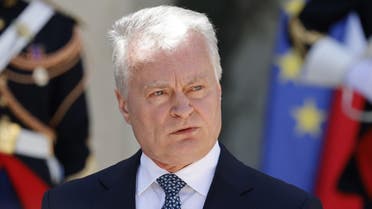


NATO needs to strengthen eastern flank if Prigozhin is in Belarus: Lithuania


Lithuania’s President Gitanas Nauseda gives a press conference following his meeting with France’s president at the Elysee Palace in Paris on May 24, 2023. (AFP)

AFP
Published: 25 June ,2023: 

Lithuania’s president warned Sunday that if Belarus is to host Wagner mercenary group chief Yevgeny Prigozhin then NATO will need to strengthen its eastern flank.

The head of state, whose Baltic country neighbors both Belarus and Russia and will host next month’s NATO summit, spoke after a state security council meeting to discuss Wagner’s aborted revolt against the Kremlin.

After Prigozhin called off his troops’ advance on Saturday, Moscow said the Wagner chief would leave Russia for Belarus and would not face charges.

“If Prigozhin or part of the Wagner group ends up in Belarus with unclear plans and unclear intentions, it will only mean that we need to further strengthen the security of our eastern borders,” Lithuanian President Gitanas Nauseda told reporters.

“I am not only talking about Lithuania here, but without a doubt the whole of NATO,” he said.

Nauseda added that Lithuania will devote more intelligence capabilities to assessing the “political and security aspects of Belarus.”

Lithuania will host next month’s NATO summit, and Nauseda said the general security plan for the meeting does not require changes following the Russian developments.

He said he believed Russian President Vladimir Putin could face even greater challenges in the future, adding: “The king is naked.”

The Wagner rebellion marked the biggest challenge yet to Putin’s long rule and Russia’s most serious security crisis since he came to power in 1999.

TOLD YA SO
Yevgeny Prigozhin’s strange march to Moscow and back

BY MARK TOTH AND JONATHAN SWEET, OPINION CONTRIBUTORS - 06/24/23 

In May, we predicted in these pages that Bakhmut would ultimately prove to be divisive, not decisive terrain for Russia. By vainly obsessing over the small mining town, Russian President Vladimir Putin was risking a massive rift between his regular military and mercenary ground forces.

Yesterday and overnight, in a series of stunning events, our prediction came true, albeit on an even larger scale than we had anticipated.

Its beginning was innocuous enough. Prigozhin, well known for his bluster and ongoing war of words against Russian Defense Minister Sergey Shoigu, furiously accused the Russian military of deliberately shelling and killing his Wagner Group paramilitary forces while they were stationed at the rear, being held in reserve for the war in Ukraine. Seemingly, that was just one more potshot at Shoigu.

But this time, Shoigu fired back. TASS, Russia’s official state-controlled news agency, quoted an unnamed Ministry of Defense spokesperson declaring, “The information spread on social networks about the attack by the Russian Armed Forces on the “rear camps of PMC “Wagner” is false.”

Yet that was not the end of it, as most observers foresaw.

Suddenly and unexpectedly, TASS sternly announced that the FSB had “initiated a criminal case,” accusing Prigozhin’s “statements” as being tantamount to “invocation of armed rebellion.” This clearly was no longer business as usual between Prigozhin and Shoigu.

Even so, by late Friday afternoon, the dispute was still largely confined to a personal feud between Prigozhin and Shoigu. Putin himself had yet to weigh in. The Kremlin’s only reaction at that point to the FSB issuing an arrest warrant for Prigozhin came from Putin’s press secretary Dmitry Peskov who confirmed that “Putin is aware of the situation.”

Prigozhin seemed to be operating under the assumption that he was in open rebellion only against Shoigu and Russia’s theater commander in Ukraine, General Valery Gerasimov. His forces marched on Rostov-on-Don and occupied the city’s military command headquarters, seizing effective control of the key Russian military supply city for the war effort in Ukraine.

The man formerly known as “Putin’s chef” seemingly avoided targeting Putin by name and only directed his ire at Shoigu and Gerasimov, while demanding their surrender either in Rostov-on-Don or in Moscow, if necessary. Thus far, at least in terms of plausible deniability, Prigozhin was involved in mutiny but not rebellion.

Putin’s taped speech, however, changed all that, turning mutiny into civil war. The Russian president accused Prigozhin of “betrayal” and characterized his actions as “a stab in the back of our country and our people.” Putin then piled on, calling it “treason” and vowed that those who “have betrayed Russia” would “be held accountable.”

Prigozhin, via his AP Wagner Telegram channel, quickly fired back. This time, in addition to Shoigu and Gerasimov, Putin was squarely in his crosshairs as well. Prigozhin defiantly said that the Russian president “had made the wrong choice. That’s worse for him. Soon we will have a new president.”

Elements of Prigozhin’s paramilitary forces were soon on the move northward from Rostov-on-Don. Their “march of justice” along the 675-mile road to Moscow rapidly reached Voronezh, a town only 325 miles south of the red crenelated walls of the Kremlin.

Moscow found itself in a panic. Improvised roadblocks were thrown up around the capital city and the Rosgvardiya — Russia’s home guard, entirely controlled by Putin — was quickly deployed. Various unconfirmed reports speculated on Telegram that Moscow had enacted its seldom used “Krepost Plan,” which allows law enforcement to secure key government sites, including FSB headquarters.

Putin reportedly fled Moscow. Forces in the largely immune wartime capital of Russia found themselves preparing to fight a very hot civil war battle against Prigozhin’s forces. And Prigozhin’s road trip to Moscow had met little organized resistance other than purported Russian air strikes. The few obstacles that were erected — buses and garbage trucks — were easily tossed aside by Prigozhin’s armored units proceeding up the M4 highway toward the capital.

The road to Moscow at this point appeared wide open. Or so it seemed until Prigozhin, in a moment of Kabuki theater organized by Belarusian President Alexander Lukashenko, suddenly reversed course and ordered his marching troops back to Rostov-on-Don.

In an announcement that first reported by Belta, a Belarusian state-controlled news agency, Prigozhin claimed he had come within 124 miles of Moscow, only to turn back. Even as we write this, there are now reports that Prigozhin’s forces are preparing to leave Rostov-on-Don. Where they are going is not yet clear.

Prigozhin either had no real plan to seize and control Moscow — and arguably, 25,000 troops stretched from Rostov-on-Don to the capital city would not be enough — or he exacted the concessions he wanted from Putin.

But at what price? Putin is unlikely to forgive Prigozhin. If a deal was made, it likely will only be a matter of time until the Wagner Group founder finds himself falling out of a window or drinking the wrong cup of tea. Or perhaps, if Prigozhin survives, he will be forced to decamp to one of his Wagner Group bases in Africa, where the bulk of his cash flow is derived from such activities as the theft of gold from Sudan and the Central African Republic.

Only one thing is certain now. We have not yet seen the last of Prigozhin, even though Putin likely still wants him dead or behind bars.

Mark Toth is an economist, entrepreneur, and former board member of the World Trade Center, St. Louis. Jonathan Sweet, a retired Army Colonel and 30-year military intelligence officer, led the U.S. European Command Intelligence Engagement Division from 2012 to 2014.
Putin seriously weakened by Wagner Group mutiny – but it was a missed opportunity for Ukraine too

‘March for justice’: Wagner Group boss Yevgeny Prigozhin poses for a picture with a supporter in the Russian city of Rostov. 
Associated Press / Alamy Stock Photo

THE CONVERSATION
Published: June 25, 2023 

Blink and you could have missed it. Within 36 hours, the challenge mounted against the Kremlin by Yevgeny Prigozhin, the leader of the mercenary private military company the Wagner Group, was over. On Friday June 23 2023, Prigozhin ordered 25,000 of his troops on to a “march for justice”, which duly set out to confront the Russian president in Moscow. The following afternoon he called it off.

At that point his troops had advanced along the M4 motorway more than halfway between Moscow and the Russian military’s southern headquarters at Rostov-on-Don. His private army was within 200km (125 miles) of the Russian capital.

The crisis was apparently averted thanks to a deal brokered by Belarusian president, Alexander Lukashenko, and confirmed by the Kremlin. But this brief episode of turmoil will have lasting repercussions for Russia and for the war in Ukraine.

The conflict between Prigozhin and the top brass of the Russian military has been going on for some time. But it escalated as the battle over Bakhmut intensified, during which Prigozhin complained more than 20,000 of his men had been killed.

Get news that’s free, independent and based on evidence.Sign up for newsletter

Back in May, Prigozhin warned of another Russian revolution. He attempted to make good on this promise four weeks later. But this was a far cry from the mass uprising of the 1917 October revolution. Instead, it was ultimately a showdown between competing factions of the Russian military-industrial complex.

Read more: Ukraine war: Yevgeny Prigozhin and the 'warrior constituency' that could threaten Putin from the right

If there is a parallel, however, it is that foreign wars were part of the background against which both the Bolshevik revolution and Prigozhin’s attempted power play occurred. And then, as now, the challenger confronted an increasingly fragile regime plagued by deep structural problems and uncertainty that any war brings.

The alleged trigger for Prigozhin’s mutiny was an apparent airstrike on his camp at the front in Ukraine by Russian forces. The airstrike itself – if indeed it happened – is an indication that the Kremlin was aware that something was afoot.

But the speed and precision with which Prigozhin moved his troops over large distances and to strategic locations – including Rostov-on-Don – indicates that this was a well-prepared operation.

It may have failed, but there will be lessons even in that for any future challenger to the Kremlin. As Lenin put it succinctly in his 1920 book Left-Wing Communism, an Infantile Disorder, without the “dress rehearsal” of 1905, the victory of the October Revolution in 1917 “would have been impossible”. That should deeply worry Putin and his inner circle.
Russia – a fragile regime exposed

More immediately, Putin has other problems to consider and take care of. The Russian president’s speech on Saturday morning was fiercely combative, vowing to crush what he called an “armed uprising”.

Within 12 hours, he had made a deal which, for now, will not see Prigozhin or any of his mercenaries punished. What’s more, Putin stood by his defence minister, Sergey Shoigu, and chief of general staff, Valery Gerasimov, throughout their rivalry with Prigozhin.

Distancing himself: Vladimir Putin, right, is reported to be considering replacing his top military commander, Valery Gerasimov, far left, and his defence minister, Sergei Shoigu. Pictorial Press Ltd / Alamy Stock Photo

But there are now indications that both of them may be replaced. Shoigu by Aleksey Dyumin, who led the operation that resulted in the Russian annexation of Crimea in 2014 and currently serves a regional governor of Tula. And Gerasimov by Sergey Surovikin, one of his current deputies, who was briefly in charge of the war in Ukraine during the autumn and winter of 2002-23.

This does not project an image of a strong leader either at home or abroad. Moreover, the fact that Putin had to cut a deal in the first place and after Prigozhin’s mercenaries advanced so close to Moscow without facing any resistance on the ground is significant. It says something about the limitations of Russia’s capacity to respond to the crisis and deploy military and security resources beyond the war in Ukraine.

This lack of resistance to Prigozhin and the apparent popular support Wagner received in Rostov-on-Don also speaks volumes about the lack of enthusiasm for the war in Ukraine among regional elites and people outside the Kremlin bubble. It also raises questions about how ordinary people might feel about a change in regime in which the choice is between Putin and Prigozhin.

The exposure of these weaknesses must also be worrying for Russia’s few remaining allies. Turkey’s president, Recep Tayyip Erdoğan, was apparently among the first foreign leaders to speak with Putin after his televised address on Saturday morning.

The Kremlin also dispatched Russia’s deputy foreign minister, Andrey Rudenko, to Beijing for talks with China’s foreign minister, Qin Gang, to “exchange views … on China-Russia relations and international and regional issues of common concern”.

Turkey and China will have viewed the turmoil in their nuclear-armed neighbour with some concern. And both they, Kazakhstan, and other Russian neighbours in central Asia, will have deepening reservations about how reliable a partner Putin can be going forward.
An opportunity missed for Ukraine

This will probably be noted by Ukraine and its western partners. Most of Kyiv’s allies generally limited themselves to statements of concern and noted that they were monitoring events as they were unfolding. The Ukrainian president, Volodymyr Zelensky, meanwhile, highlighted the chaos in Russia and the humiliation that this meant for Putin.

Lack of resistance: Wagner Group troops apparently occupied the Russian southern command base of Rostov-on-Don with little difficulty. EPA-EFE/stringer

Zelensky’s senior advisor, Mykhailo Podolyak, expressed his disappointment that Prigozhin had given up so quickly. Oleksiy Danilov (the general secretary of Ukraine’s national security council) and Ukrainian historian Georgiy Kasianov both saw Prigozhin’s mutiny as another sign of the coming fragmentation of Russia.

And this is perhaps the main point from Kyiv’s perspective. Had the chaos in Russia continued long enough, it may have created a real opportunity for further advances in a counteroffensive that Zelensky himself had to admit last week is making less progress less fast than had been envisaged.

In this sense, too, Prigozhin’s failed rebellion can be seen as an important dress rehearsal that offers valuable lessons, especially for Ukraine’s western partners.

A better equipped and trained Ukrainian military could have capitalised significantly more on even this short period of disarray in Russia. More tanks and artillery, more and better air defence systems, and more fighter aircraft would not have helped either one of the Russian war criminals – Putin and Prigozhin – to defeat the other.

But they could have brought the Kremlin closer to the point of accepting the failure of its war against Ukraine.

Authors
Stefan Wolff
Professor of International Security, University of Birmingham
Tetyana Malyarenko
Professor of International Relations, Jean Monnet Professor of European Security, National University Odesa Law Academy

Disclosure statement

Stefan Wolff is a past recipient of grant funding from the Natural Environment Research Council of the UK, the United States Institute of Peace, the Economic and Social Research Council of the UK, the British Academy, the NATO Science for Peace Programme, the EU Framework Programmes 6 and 7 and Horizon 2020, as well as the EU's Jean Monnet Programme. He is a Senior Research Fellow at the Foreign Policy Centre in London and Co-Coordinator of the OSCE Network of Think Tanks and Academic Institutions.

Tetyana Malyarenko receives funding from the Alexander von Humboldt Foundation, Germany

Ukraine war: aborted Wagner Group rebellion shows how Putin’s attempt to unify Russian forces has failed to quell factional rivalries

Insurrection: Wagner Group boss Yevgeny Prigozhin claims his troops have occupied Russian military headquarters in Rostov. 

Press service of Prigozhin, UPI/Alamy Live News

Published: June 22, 2023 
Updated: June 25, 2023 
The Conversation UK.

Even in such a fast-moving war, still some events have the ability to surprise. The decision by Wagner Group leader, Yevgeny Prigozhin, to launch an apparent coup attempt, leading his troops into Russia, where he occupied the military HQ in Rostov and was heading towards Moscow, appeared to have left the Kremlin floundering.

Then, with his troops reportedly only 200 miles from the Russian capital, Prigozhin announced they would make an about turn and return to their bases to avoid shedding Russian blood.

Under the terms of the deal, which was apparently brokered by the president of Belarus, Alexander Lukashenko, Prigozhin will go to Belarus and will not face prosecution. Nor will any of his troops who took part in the abortive uprising.

But the episode clearly unnerved the Russian president, Vladimir Putin, who had appeared on state TV on Saturday morning describing his former close associate’s move as “equivalent to armed mutiny”.

The Wagner Group have borne the brunt of much of the fiercest fighting, especially during the bloody battle for Bakhmut.

Read more: Ukraine war: Yevgeny Prigozhin and the 'warrior constituency' that could threaten Putin from the right

The reasons for Prigozhin’s apparent mutiny are not yet clear. But Prigozhin’s statements have explicitly been aimed against Russia’s military leadership and the ministry of defence. According to the Institute for the Study of War, the Wagner Group boss claimed that the Wagner Commanders’ Council made the decision to stop “the evil brought by the military leadership” who neglected and destroyed the lives of tens of thousands of Russian soldiers. This appears to be a direct reference to his claims during the Bakhmut campaign that his units were being deliberately starved of ammunition.

In the past few weeks ministry of defence – apparently with Putin’s backing – announced it would bring the Wagner Group and other irregular forces and militias under its direct control. The announcement was seen as an indication of Russia’s desperate need for manpower and the Kremlin’s desire to avoid full-scale mobilisation of the population.

It was also taken as evidence of the growing animosity between Prigozhin and defence minister, Sergei Shoigu. Prigozhin flatly refused to sign a contract, but the Akhmat group of Chechen forces became one of the first to sign up.
Changing the law

Deputy Defence Minister Nikolai Pankov’s announcement is significant. It wasn’t until Putin signed changes to defence regulations in November 2022 that the inclusion of “volunteer formations” was legalised for the first time.

Previously, Article 13 of the constitution of the Russian Federation had explicitly banned “the creation and activities of public associations, the goals and actions of which are aimed at creating armed formations”.

Article 71 of the constitution also states that issues of defence and security, war and peace, foreign policy,and international relations are the prerogative of the state, and therefore private companies cannot be involved.

The criminal code also identifies mercenary activity as a crime, including the “recruitment, financing or other material support of a mercenary” as well as the use or participation of mercenaries in armed conflict.

Putin’s amendments to the Law on Defence appear to change this. The amendments were implemented by Shoigu’s order of 15 February 2023, which set out the procedure for providing volunteer formations with weapons, military equipment and logistics as well as setting out conditions of service.

There have been signs of increasing prominence and acceptance of private forces within Russia. In April 2023, the deputy governor of Novosibirsk announced that employees of private military companies would be able to use the rehabilitation certificate issued to state military veterans of the Ukraine war to access a range of services.

There have also been reports in the Russian media that Wagner recruitment centres have opened in 42 cities across the country (the Wagner Group notoriously recruited heavily from Russian prisons.

There are a range of irregular forces operating in Ukraine, including Ramzan Kadyrov’s Chechen forces, the Kadyrovtsy, which officially come under the command of the Russian National Guard (Rosgvardiya), alongside private forces such as Wagner, Redut, Patriot and Potok.

These volunteer formations offer a more flexible force than conventional military forces which operate under a notoriously rigid chain of command.

They also provide a convenient “cut-out” for the Russian state: private groups and individuals bear the human, financial and political costs that would otherwise be borne by the government. And the Kremlin can fudge the list of official military casualties, otherwise a source of considerable public anxiety directed at the government and its leader.
A force at war with itself

But the increasing visibility of these groups in Ukraine and the public infighting between the ministry of defence and the groups’ leadership is a reminder of the system of patronage and fealty that characterises political culture in today’s Russia.

Turf wars are common, as rivals compete for resources, influence and, of course, the ear of Vladimir Putin himself. You only have to look at the insults hurled at each other by Prigozhin and Shoigu.
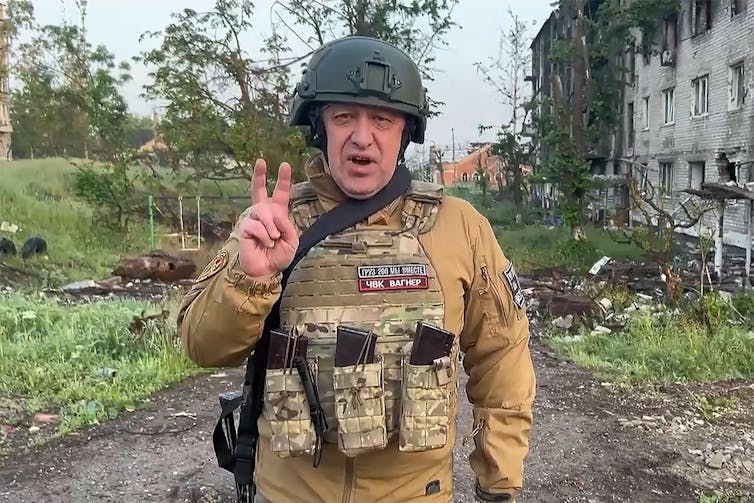
Fighting talk: Wagner Group boss Yevgeny Prigozhin, has openly criticised Russia’s military leadership for its conduct of the war. 
Press service of Prigozhin/ Credit: UPI/Alamy Live News

Prigozhin has been very vocal in his criticism of Shoigu and the Russian generals running the war, frequently accusing them of incompetence and corruption. The long-running acrimony between the pair reportedly stems from the defence minister cutting off Prigozhin’s access to profitable defence contracts.

This rivalry serves Putin’s interests to a certain extent. As long as any potential challengers are busy fighting each other, they pose little threat to his position. But it also hinders the country’s combat effectiveness as the fragmentation of forces makes command and control difficult, and means there is little unity of effort.

The move by the Russian defence ministry to bring “volunteer formations” under its control must be understood against this backdrop of fragmentation and in-fighting, as well as the ongoing conscription round. The current conscription window, which opened on April 1, closes on July 15, has a stated goal of recruiting 147,000 soldiers.

But Prigozhin’s revolt against Russia’s military leadership and his seeming open defiance of his formerly close ally Vladimir Putin will also have significant implications for Russia’s ability to react to Ukraine’s counteroffensive which will become clearer in the days and weeks ahead.

This article has been updated on June 25 to reflect the most recent events concerning Yevgeny Prigozhin and the Wagner Group.

ALSO PUBLISHED IN SOCIAL EUROPE

Author
Professor of Conflict and Security, King's College London
Disclosure statement
Tracey German is affiliated with RUSI.


The Little Putsch That Wasn't
25 June 2023: 

A TL;DRussia Special Edition
SAM GREENE
JUN 25, 2023


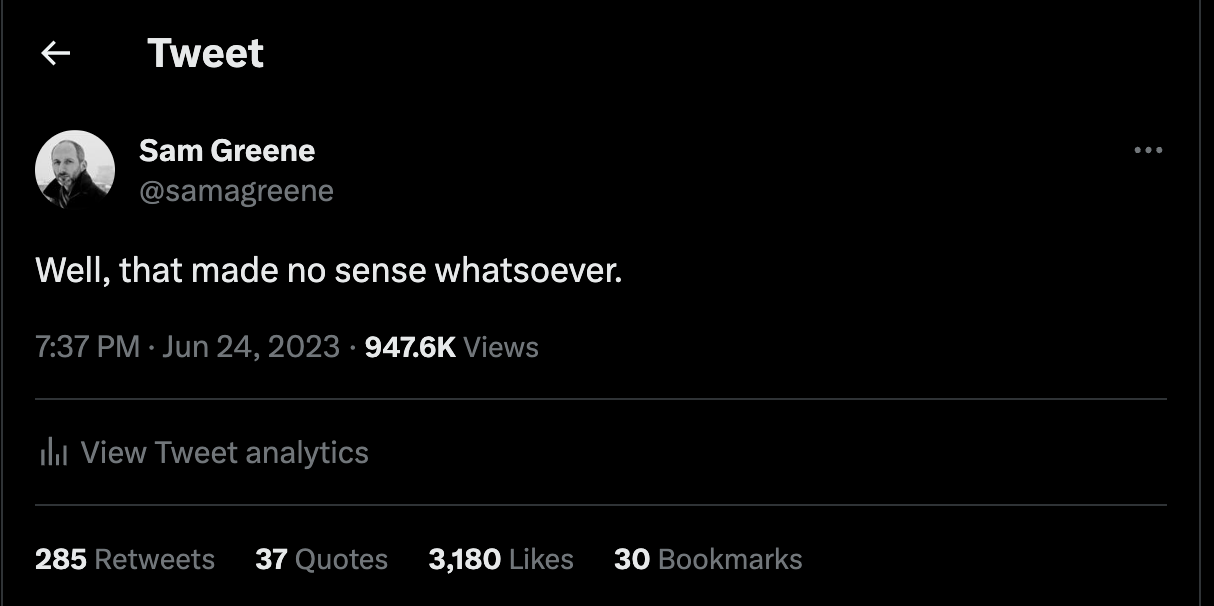
In what has become one of the most overused clichés, Pushkin once wrote that “a Russian rebellion is senseless and merciless”. Maybe it’s time to scratch that last part.

I’ll be honest: Even before it collapsed, Evgeny Prigozhin’s insurrection never made much sense to me. I said as much on Twitter when the story first broke, and I reiterated the point in the first interview I was asked to give on the uprising, for Al Jazeera English on the evening of Friday, 23 June:

I said it again to CNN in the early hours of Saturday, 24 June (and yes, they got my title wrong):


I then tried to reiterate broadly the same set of points — in a bit more detail — for NPR’s Weekend Edition the same day:

I’m sure I things wrong, of course, and I’m certain people will point my mistakes out to me in a kind and constructive manner. (I’ve already received one lengthy and rather amusing email calling me “a literate nincompoop” for failing to draw attention to the fact that this whole thing was orchestrated by “the Jews”.)

Moving on, though, it’s worth thinking a bit about the future, which I tried to do in a piece published Sunday at CEPA, arguing that the extension of Putin’s model of rent-based governance to a wartime economy was fraught with the danger of the kind of events we just witnessed. Thus:

Prigozhin has brought the Russian elite face to face with the uncertainty of their future. The path they’re currently on leads to more violence and incalculable risks. The obvious alternative – for Putin to try to break the autonomy of the elite altogether and rely exclusively on coercion to gain compliance – is hardly a happier prospect. Either way, business-as-usual is no longer an option.

It’s also worth pondering, though, what would have happened if Prigozhin had succeeded, and Putin had fallen. As I tried to summarize in yet another Twitter thread, the key question in any change of regime isn’t who has power, but how they got it, and what the resulting incentives are.

If Putin leaves office smoothly — ie, through a negotiated process, in which he cedes power without a fight — the key implication is that whoever takes power will retain the full apparatus of control that Putin currently enjoys. Thus, a negotiated handover of power would give Putin’s successor complete control over the media, the coercive apparatus, the Duma, etc etc. The economy is a different story, about which more in a bit. By contrast, a chaotic transfer of power — in which Putin is either forced out violently, or flees without time to negotiate — makes it less likely that the successor obtains full control of state apparatus. In a chaotic transition, the successor may have to battle and/or negotiate to obtain the loyalty of key parts of the system and would be wary of threats from within — yielding either greater autonomy (to buy people off) or a lot of repression to keep them in line.

The next question is how the successor is selected. Is there a process within the elite that builds consensus, or is there a mad dash to the Kremlin to see who gets there first? If the elite settles on a candidate, the successor will, again, likely enjoy a degree of power and influence similar to that wielded by Putin up to now. He would in turn be expected to provide the same wealth and privilege that the elite currently enjoy, if not more. If the elite fracture or don’t have time to settle on a candidate, the successor will have either to buy the elite into the new regime, or else push them out, with unpredictable consequences. The first few weeks and months would likely be critical. Oddly, an elite split is the most likely opportunity for some kind of a democratic opening. Facing a tenuous hold on power, or hoping to challenge the initial successor, various factions may seek a claim to public legitimacy via elections. If a fractured elite turn to the public for support, the media and political party space will pluralize — though not necessarily democratize. No one would be fully in control of the process, and whoever “wins” would still be on shaky ground.

Coming back to the economy, Putin’s control relies on tacit understandings and the elite’s faith that he can provide flows of wealth and patronage. A successor would have to reestablish that faith to gain elite compliance. Until faith in the patronage power of the successor is established, expect to see elites hoard resources and hedge their bets, potentially investing in a variety of political and media projects. Again, there is an opportunity for at least limited pluralism.

What about the public? Putin’s sway is created by the consensus around millions of kitchen tables and water coolers, predicated in part on the lack of an alternative. Not supporting Putin has thus become a mark of abnormality. A successor would not immediately be so lucky. Even if there is a managed transition that maintains the monopoly on media, politics and coercion, Putin’s departure will give Russians space to disagree about politics again, with less fear of social ostracism. Thus, even an autocratic successor would need time to reestablish control over hearts and minds, again with uncertain outcomes.

The balance of probabilities is that, after a period of time, Russia will revert to a regime very much like the one it has now, even if it looks and feels different for a while. That’s because it is easier for people to reestablish old expectations than to create new ones. But probability is not inevitability, and depending on the process of departure and succession, just about anything is possible — from civil war to gradual democratization. The key is to keep an open mind as things play out.

My point in writing all of that wasn’t that I thought Prigozhin’s putsch would be successful. Rather, I wanted to try to shift attention away from the personalities and towards the more structural questions of power and politics — and because, even as Putin has survived this challenge — that doesn’t mean that he is fully in the clear.

Stay tuned.


The Wagner Rebellion: How normal Muscovites reacted as mercenaries headed towards the capital


/ bne IntelliNews

By bne IntelliNews June 25, 2023

In the sixteen months since Russia launched its full-scale invasion of Ukraine, the closest that residents of Moscow had been to danger were a series of drone strikes that resulted in superficial damage to buildings. On 24 June, as Wagner Group mercenaries made their way down the M4 motorway towards the capital, it seemed evident that this situation was about to change.

With panic beginning to set in, Moscow Mayor Sergey Sobyanin announced the implementation of anti-terrorist measures, enabling the authorities to search any building and restrict the movement of vehicles and pedestrians on streets. In the centre of Moscow security was heightened around government buildings and military facilities. The Russian Army deployed troops and equipment to the entrances of the city, where they erected roadblocks. Farther away from Moscow, roads were excavated to impede travel towards to the capital.

However, whilst the world watched, anticipating a military standoff at the edge of Moscow that could potentially result in a coup, millions of Muscovites continued with their lives. Following President Vladimir Putin's speech at 10 am, official information on state TV was scarce, thereby limiting minute-by-minute updates to only those inclined to spend their day on apps such as Telegram. While a few individuals keenly followed the news and remained home, the vast majority carried on with their day like a normal Saturday.

Being a weekend, many of the capital’s residents spent the day at their small summer home, commonly known as a "dacha," located in the countryside near the city. The potential of conflict in the capital led the city government to postpone the annual celebratory concert for high school graduates, prompting many to organise private gatherings instead. Others, apparently unaffected by the potential of a war in central Moscow, opted to go shopping, take leisurely strolls in pleasant summer weather and dine in the capital’s bars and restaurants.

On 24 June, as Wagner mercenaries were just hours away from the capital, bne IntelliNews spoke to numerous Muscovites to discover the mood of those in the Russian capital.

“I am incredibly scared,” Maria Vinogradova, a 26-year-old teacher explained. “I can’t stop looking at Telegram, waiting to see what will happen. I’ve been flicking through videos from Rostov all morning, and I even listened to some of the voice messages posted by [Wagner head Yevgeny] Prigozhin. But I can’t just pause my life to follow the news, I have a lot of things to do this weekend.”

Maria’s outlook was common in those who spoke to bne IntelliNews – fear of what will happen, but not enough to cancel the days plans.

“I’m going out tonight, the girls I was friends with in university are going to a bar together,” Marina Solovyeva, a 31-year-old accountant, explained. “The war has been going on for over a year now. There is nothing I can do about it. Of course I am scared. But I have no power, so why should I stop having fun and living my life?”

Maria wasn't the only one planning to party. Throughout the day, bars and nightclubs in Moscow were still advertising their offers, events and DJs for the night, including in the city's most luxurious and expensive area, Patriarch Ponds. Videos and images posted on Instagram from 24 June show revellers enjoying their weekend in the same way they would on any normal day – listening to loud music, enjoying an Aperol Spritz and dancing.

Others, however, were in less of a festive mood.

“I’m tired of our military failures in Ukraine, so I’m glad Prigozhin is fighting back,” 41-year-old Ruslan Lenkov said. “Of course, I don’t want even more Russians to die, but [Chief of the General Staff] Gerasimov and [Minister of Defence] Shoigu have done a terrible job. I hope Prigozhin gets to Moscow peacefully and convinces Putin that he is wrong.”

Like many other Russians, Ruslan was conscripted the army at age 18 for his compulsory military service. He hasn’t been sent to Ukraine – and has no intentions of signing up – believing that his children are a more important priority.

“I’ve been sat at my dacha all day following the news while with our [children] running around the garden. This could be the most important day in Russian history in the 21st century.”

A few hours later Prigozhin announced that he was calling it off, and would be returning to the front with his troops that had, in his words, halted “within 200 km of Moscow.” Moscow’s troops stood down, and barriers blocking entry to the city were opened up.

“Now the danger is over, I’ll be able to go out without feeling guilty and fearful,” Maria told bne IntelliNews, following up a few hours after the initial interview. “I suspect that many others in the city will be out celebrating too.”


Vladimir Putin still needs Yevgeny Prigozhin despite Wagner's mutiny, says Marina Miron, a Russia expert from King's College London.

Tyva Will Be First Republic in Russia to Declare Independence, Zinchenko Says

            Staunton, June 25 – There is a consensus in both Russia and the West that if any republic now within the borders of the Russian Federation is to gain independence, the first will come from the North Caucasus regardless of whether others follow. Activists from other non-Russian republics sometimes challenge that but have had little success in shattering the consensus.

            That makes an argument by Oleksandr Zinchenko that the first republic to declare independence will come not be a Muslim republic from the North Caucasus but Tyva, a Buddhist one along the Mongolian border, intriguing. Could it be true? (gordonua.com/blogs/zinchenko/rf-raspadetsya-ne-pozzhe-2026-goda-pervoy-nezavisimost-obyavit-tyva-1670013.html).

            The Ukrainian historian and publicist says that the Russian Federation will fall apart “no later than in 2026” when Russians finally recognize the full scope of Putin’s misrule over them and that the first republic to declare its independence will not be Chechnya or Daghestan but Tyva.

            In the West, Tyva is known if at all for the spectacular triangle and diamond-shaped stamps it issued when it was nominally independent between World War I and the last days of World War II or for a 1991 book relating US physicist Richard Feynman’s desire to visit that land entitled Tuva or Bust!

            Zinchenko’s suggestion that Tyva will lead a parade of independence declarations in the future is not without some foundation. It is the least integrated portion of Putin’s Russia (windowoneurasia2.blogspot.com/2021/07/tyva-least-integrated-part-of-russia.html). Its Buddhism and shamanism have blocked intermarriage and assimilation (windowoneurasia2.blogspot.com/2015/06/militant-buddhism-and-shamanism-could.html and windowoneurasia2.blogspot.com/2021/06/tyvans-say-buddhism-and-shamanism.html).

            And the combination of poverty and nationalism have caused ethnic Russians to flee, leaving the population of the republic at more than 80 percent ethnic Tyvan and reflecting a Tyvan desire that eventually the Russians will be reduced to no more than five percent (windowoneurasia2.blogspot.com/2021/03/russians-flee-tuva-as-law-decays.html and windowoneurasia2.blogspot.com/2019/09/tuvins-dont-want-russians-to-form-more.html).

            But its landlocked status and the absence of a serious national movement suggests that Tyvans will press for ever more autonomy but that they are unlikely to seek independence unless and until others do, something that calls into question the prediction of the Ukrainian publicist.

Turkey: LGBTQ activists defy authorities to hold Istanbul Pride event

Organisers surprise police by holding rally in unusual locale of Sisli rather than centre of Istanbul


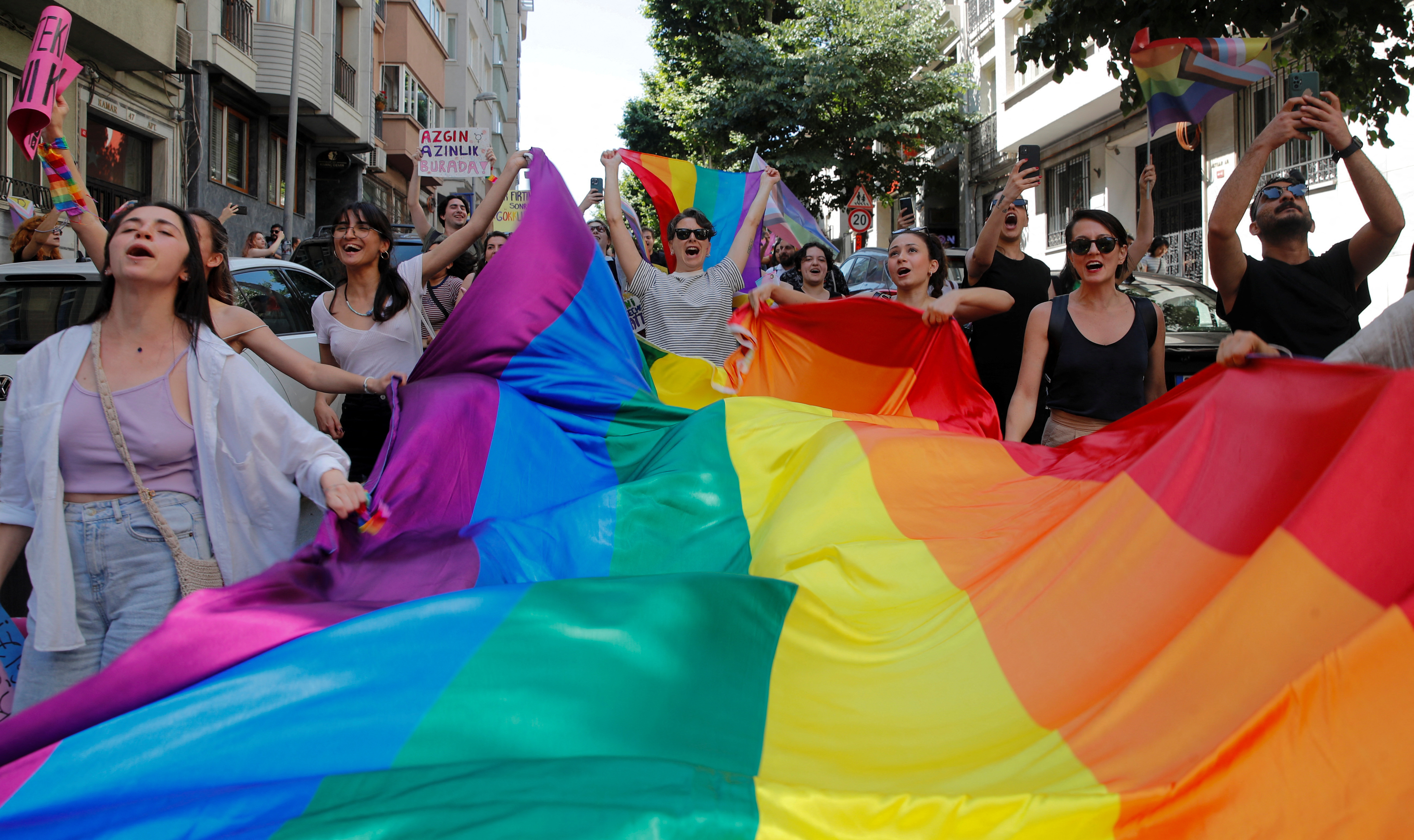
LGBTQ community members and supporters hold rainbow-coloured flags and shout slogans during the unauthorized Pride March in Istanbul, on 25 June 2023 
(AFP)

By Alex MacDonald
Published date: 25 June 2023 

Activists staged the 21st annual Istanbul Pride parade on Sunday, defying a longstanding ban on the rally by holding it in an area about 2km from the central Taksim Square.

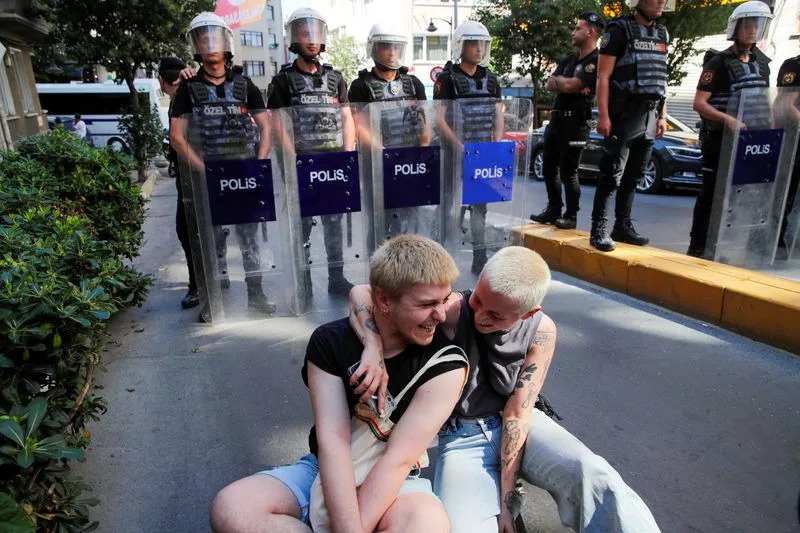
Police barricades were erected around Taksim Square, while Metro stations around the area were closed down.

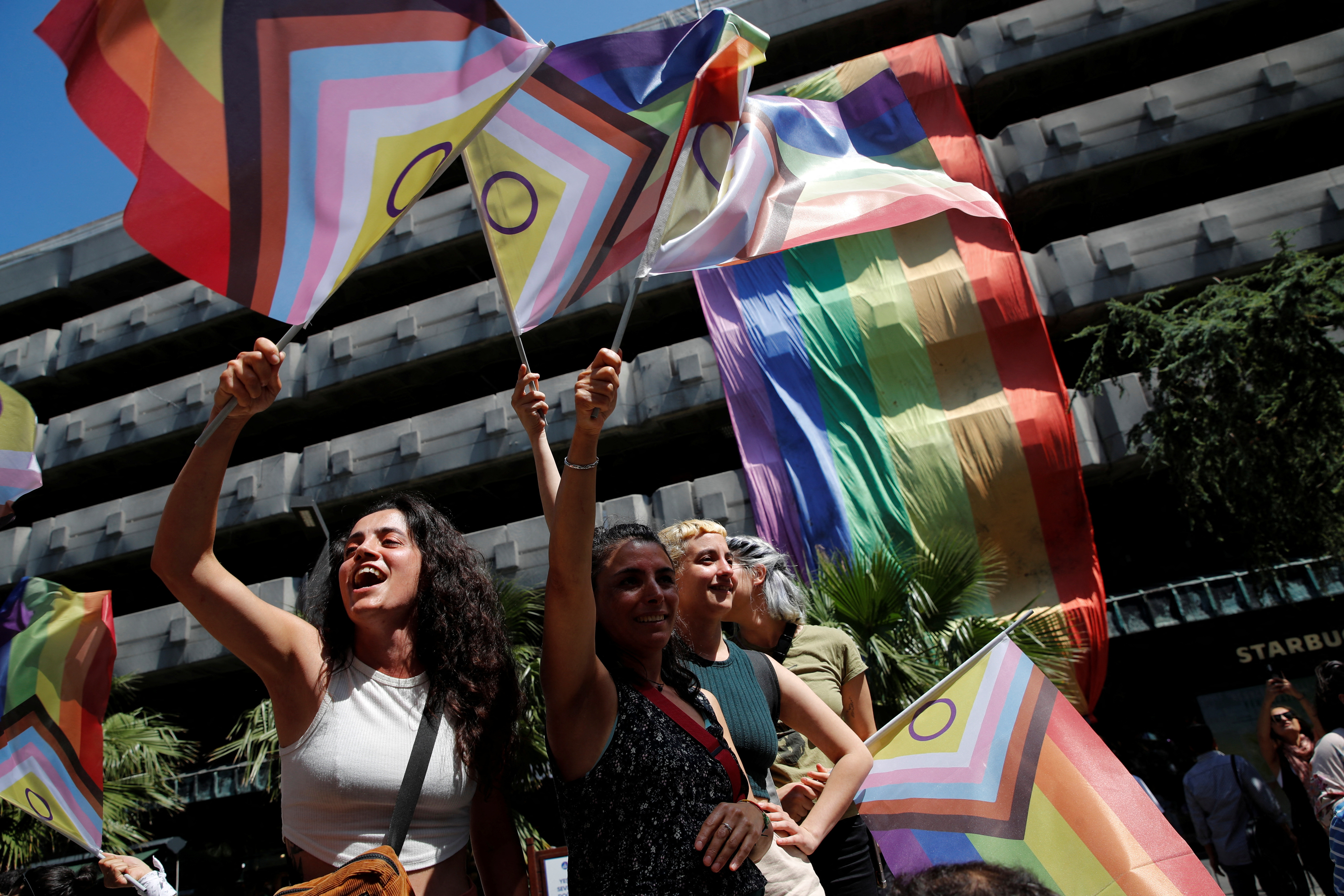
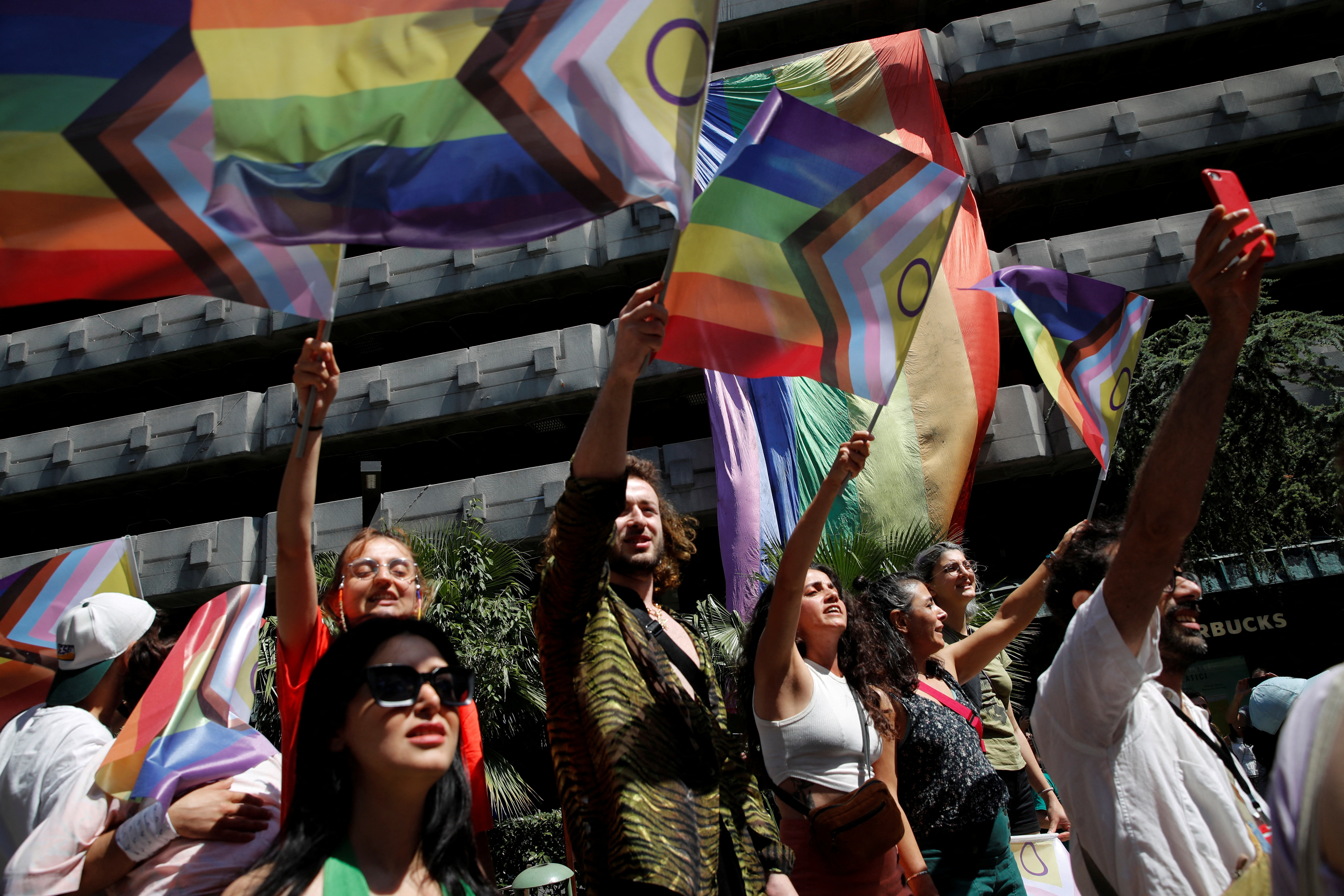
However, hundreds of activists instead rallied in the Nisantasi neighourhood of the city's Sisli district, without making a prior announcement. Activists hung a rainbow LGBTQ flag on a multi-storey car-park opposite the park where they gathered.

Those gathered chanted pro-LGBTQ and other left-wing slogans, including "Run Tayyip, run. Queers are coming!" in reference to Turkish President Recep Tayyip Erdogan, "Liberation for queers will shake the world!" and "Queers exist, Kurdistan exists!".

In a statement, the Istanbul Pride Parade Committee said they would not back down in the face of restrictions by the government and local authorities.

"We will not leave our spaces; you will get used to us. Today, despite all your prohibitions and against your wishes, we are still here," said the statement.

The organisers said state attacks on their rights were part of a wider crackdown on minorities in the country as well as on women, citing the country's withdrawal from the Istanbul Convention on violence against women in 2021 over what the government said were its pro-LGBTQ measures.


"Alongside the systematic attacks by the government against LGBTQ people, Kurds, women, refugees, sex workers, and workers, our lives are being criminalized by the ruling alliance," said the statement.

"To those who withdrew from the Istanbul Convention and criminalized us overnight, we say: We will never submit! We will not give up our lives, our existence!"

Despite the rally avoiding Taksim Square, the committee said more than 60 people were still detained by the police, who blocked roads around Mıstık Park after the rally began there. Bianet reported that some were arrested by police while sitting in cafes after the demonstration had finished.

'We don’t exist in Turkey'


The LGBTQ community in Turkey has been living in a state of anxiety for many years.

While Istanbul Pride marches had been held annually since 2003, they have been officially banned since 2015 over allegedly safety concerns.

In the period leading up to last month's parliamentary and presidential elections, Erdogan had regularly denounced LGBTQ people as a threat to the traditional family and repeatedly accused the opposition parties of being pro-LGBTQ.


His Justice and Development Party (AKP) was returned to parliament as a part of an alliance with the New Welfare Party, an Islamist party that has repeatedly called for the closure of all LGBTQ organisation in Turkey.

Last week Erdogan denounced the LGBTQ community in Turkey as "evil" in a parliamentary speech, and said neither his party or his allies would ever have "such evil in their ranks".

Although homosexuality has never been illegal in the Republic of Turkey and a number of opposition politicians are supportive of their rights, many LGBTQ people fear they could come under further pressure.

"The government uses hate speech to polarise society, and they targeted LGBTQ people a lot in last decade. Of course, the hate speech, lack of protective measures and lack of awareness from public officials encourages potential perpetrators [of violence]," said Damla Umut Uzun, a campaigner with the Turkish LGBTQ+ rights organisation Kaos GL, speaking to Middle East Eye last month.

"In the last year, many government officials including the interior minister, minister of justice,etc targeted LGBTQ people with hate speech, saying we are against traditional family values, we are perverts, we don't exist in Turkey."


Police detain 50 after Pride march in Istanbul

Turkey's LGBT+ community gather for a pride parade, in Istanbul

Reuters
Sun, June 25, 2023 


ISTANBUL (Reuters) - Turkish police detained at least 50 people on Sunday after Istanbul's LGBT community held their annual Pride march.

The government led by President Tayyip Erdogan and his Islamist-rooted AK Party has toughened its stance on LGBTQ+ freedoms. Speaking after his election victory in a runoff last month, Erdogan accused opposition parties of being "pro-LGBT".

On Sunday, police in riot gear prevented access to Istiklal Avenue, the traditional venue for Pride marches, as well as the central Taksim Square. Streets nearby were blockaded and public transport in the area was suspended.

On Sunday afternoon, hundreds of people carrying rainbow and transgender flags gathered instead in Mistik Park in the Sisli district.

They chanted slogans while organisers read a statement to mark Pride week. A big rainbow flag was hung on a multi-storey car park nearby.

Groups of people carrying rainbow flags marched in the streets of the Sisli district before organisers called on them to disperse.

Police held more than 50 people after the march, organisers said. Amnesty International's Turkey office said at least one person suffered head injuries while being detained by police.

Organisers said their community had already been targeted by Erdogan.

"We don't accept this hate and denial policy," Istanbul LGBTI+ Pride Week said in their statement.

In the coastal city of Izmir, the country's third largest, police detained at least 44 people on Sunday after authorities banned the Pride march, Istanbul LGBTI+ Pride Week said.

Homosexuality is not a crime in Turkey, but hostility to it is widespread and police crackdowns on Pride parades have become tougher over the years.

Istanbul Governor Davut Gul said on Twitter this month that any activity threatening the traditional family structure would not be allowed.

(Reporting by Bulent Usta and Dilara Senkaya; Writing by Huseyin Hayatsever; Editing by Giles Elgood)


Turkey's LGBT+ community gather for a pride parade, banned by local authorities, in central Istanbul, Turkey, June 25, 2023. 
REUTERS/Dilara Senkaya