Thursday, March 14, 2024

University of Leicester-led training centre to fuse AI into metals industry


12 March 2024

A new training centre at the University of Leicester aims to boost the metals industry with the skills in data and artificial intelligence to take on the global competition of the future.

The new £18 million Centre for Doctoral Training (CDT) in Digital Transformation of Metals Industry (DigitalMetal) has been funded by the Engineering and Physical Sciences Research Council (EPSRC), who announced £7m funding today (12 March), five partner universities (Birmingham, Leicester, Loughborough, Nottingham and Warwick) and industry.

It’s part of the UK’s biggest-ever investment in engineering and physical sciences doctoral skills, totalling more than £1 billion, announced by Science, Innovation and Technology Secretary Michelle Donelan today. 65 Engineering and Physical Sciences Research Council (EPSRC) Centres for Doctoral Training (CDTs) will support leading research in areas of national importance including the critical technologies AI, quantum technologies, semiconductors, telecoms and engineering biology.

The DigitalMetal CDT has been designed to meet a national, strategic need for training a new generation of technical leaders able to lead digital transformation of metals industry and its supply chain with the objective of increasing agility, productivity & international competitiveness of the metals industry in the UK.

It will provide postgraduate training that combines metals and alloy engineering with digital technology and AI skills, to help the UK metals and manufacturing industries to reap the benefits of ‘big data’. The vision is to deliver the future industry leaders who can rapidly take advantage of the latest discoveries in manufacturing processes through digital twinning to enable defect-free, ‘right first-time’ manufacturing at reduced costs.

The metals industry is a vital component of the UK's manufacturing economy and makes a significant contribution to key strategic sectors such as construction, aerospace and space, automotive, energy, defence and medical, directly contributing £20bn to UK GDP, and underpins over £190bn manufacturing GDP.

Professor Hongbiao Dong FREng from the University of Leicester School of Engineering, and Director of the Centre, said: “Without a new cadre of leaders in digital technologies, equipped to transform discoveries and breakthroughs in metals and manufacturing technologies into products, the UK risks entering another cycle of world-leading innovation but losing the benefits arising from exploitation to more capable and better prepared global competitors.

“For the UK metal industry to lead at a global level, we must raise its competitiveness and create robust and agile manufacturing processes and sustainable supply chains enabled by digital technology. DigitalMetal CDT is timely due to the readiness of smart digital technology and the availability of new scientific advances to help move the industry to Industry 4.0 and sustainability. Future students trained by DigitalMetal CDT will lead this important industry sector to drive economic growth, job creation and global inward investment in the current challenging post Brexit and Covid-19 economic landscape.”

Professor Sarah Davies, Pro Vice Chancellor and Head of the College of Science and Engineering said: “I am delighted that the University of Leicester will be working with the EPSRC, our four partner universities and thirty-five industrial partners to develop and deliver high-quality, exciting research training to our future scientists and engineers. The University of Leicester has a strategic commitment to nurture the next generation of researchers and this Centre for Doctoral Training, led by Professor Hongbiao Dong FREng, will train metals and manufacturing researchers and engineers with the required combination of experimental, analytical, computational, business and professional skills needed for innovation.”

Professor Charlotte Deane, Executive Chair of the Engineering and Physical Sciences Research Council, part of UK Research and Innovation, said: “The Centres for Doctoral Training announced today will help to prepare the next generation of researchers, specialists and industry experts across a wide range of sectors and industries.

“Spanning locations across the UK and a wide range of disciplines, the new centres are a vivid illustration of the UK’s depth of expertise and potential, which will help us to tackle large-scale, complex challenges and benefit society and the economy.

"The high calibre of both the new centres and applicants is a testament to the abundance of research excellence across the UK, and EPSRC’s role as part of UKRI is to invest in this excellence to advance knowledge and deliver a sustainable, resilient and prosperous nation.”

Science and Technology Secretary, Michelle Donelan, said: “As innovators across the world break new ground faster than ever, it is vital that government, business and academia invests in ambitious UK talent, giving them the tools to pioneer new discoveries that benefit all our lives while creating new jobs and growing the economy.

“By targeting critical technologies including artificial intelligence and future telecoms, we are supporting world class universities across the UK to build the skills base we need to unleash the potential of future tech and maintain our country’s reputation as a hub of cutting-edge research and development.”
Column: Tin supply trapped in resource nationalism squeeze

Reuters | March 12, 2024 | 

Tin man statue. (Stock Image)

It’s no coincidence that nickel and tin are the two strongest performers in the London Metal Exchange (LME) base metals pack so far this year.


Supply in both markets is dominated by Indonesia, where production and exports are being affected by delays in approving annual work permits.

This is a relatively new phenomenon for nickel. Indonesian production has exploded over the last few years to the point the country now accounts for more than half of global supply.

Tin has been here before. Indonesia has long been the world’s largest exporter and the flow of metal to world markets has been interrupted several times in the past when the government tightened production and export rules.

Tin’s misfortune, however, is that its supply chain is not just beholden to Indonesia’s resource nationalism but also to that of the Wa State in Myanmar.
Double trouble

Indonesian exported 78,000 metric tons of refined tin last year, equivalent to around a fifth of global demand.

Exports so far this year have slumped to just 55.4 tons, compared with 4,700 tons in January-February 2023.

The last time shipments ground to a complete halt was in August 2015, when the authorities introduced “clean and clear” rules on exports to enforce environmental standards.

This time it’s a change to the annual permitting system. It’s possible that tin may be coming under special scrutiny due to an unfolding illegal mining scandal.

The government has also made no secret of its intention to limit exports as a lever to push its tin sector further downstream.

It doesn’t seem to have worked out how to replicate its nickel strategy in the tin market yet. But the threat to the rest of the world’s tin supply is not going away.

Neither is that posed by the Wa State, the semi-autonomous region of Myanmar which controls the Man Maw mine, one of the world’s largest tin resources.

All mining was suspended in August last year to allow for an audit of reserves. The suspension has been partly lifted, opens new tab for some smaller operators, although they will pay more in export tax, according to the International Tin Association (ITA).

However, operations at Man Maw have yet to resume. The ITA suggests the delay may reflect a policy re-think around the need to replenish the Wa government’s strategic stockpile.

Amid the continuing uncertainty, one thing is clear. The ruling United Wa State Army aims to exert tighter control over the jewel in its mineral crown.

Myanmar and Indonesia are combining to squeeze global tin supply driven by the same resource nationalist impulse.

LME and Shanghai Futures Exchange tin stocks


Surplus and stocks rebuild

The tin market can likely absorb the double hit over the short term.

The ITA estimates that global supply exceeded usage by 9,700 tons last year, attesting to the slump in demand from the electronics sector, where tin is used as circuit-board soldering.

Stocks registered with the LME and the Shanghai Futures Exchange (ShFE) more than doubled to 15,400 tons over the course of 2023.

Those on the LME have recently been sliding as the halt to Indonesian shipments drags on. Headline inventory has fallen by 31% to 5,300 tons since the start of January.

Shanghai stocks, by contrast, have continued growing over the Chinese New Year holiday period and at a current 11,072 tons are the highest they have been since ShFE launched its tin contract in 2015.

The flow of raw material from the Man Maw mine in Myanmar to Chinese smelters has dropped but not as much as feared after the authorities allowed the processing of surface stocks. Many Chinese operators also built up stocks of concentrate ahead of the August suspension.

China’s production of refined tin grew by 1.8% year-on-year to 169,000 tons, according to local data provider Shanghai Metal Market.

Tin users are lucky that the current supply disruption has come after a year of low demand and restocking of both raw material and metal.

Future fragility

The question worrying the tin market is how long it will be before normal supply service is resumed in both Myanmar and Indonesia.

LME three-month tin hit a seven-month high of $27,810 per ton on Friday and, currently trading around $27,460 per ton, is now up by 9.0% on the start of the year.

Even assuming a speedy resumption of Indonesian exports and mining in Myanmar, tin supply over the next few months looks challenging.

The longer-term threat is of future supply disruption as resource nationalism drives both governments further down the road of export controls.

Tin’s use as a circuit-board solder makes it a critical mineral both for the current generation of electronics and the coming internet of things.

Yet it is one with an incredibly fragile supply chain, beholden to the politics of Indonesia and the United Wa State Army.

This year’s supply squeeze may be just a taster of things to come for tin.

(The opinions expressed here are those of the author, Andy Home, a columnist for Reuters.)

(Editing by Louise Heavens)
Amid nickel glut, Indonesia’s next president vows to keep ‘downstreaming’ policy

Reuters | March 13, 2024 |

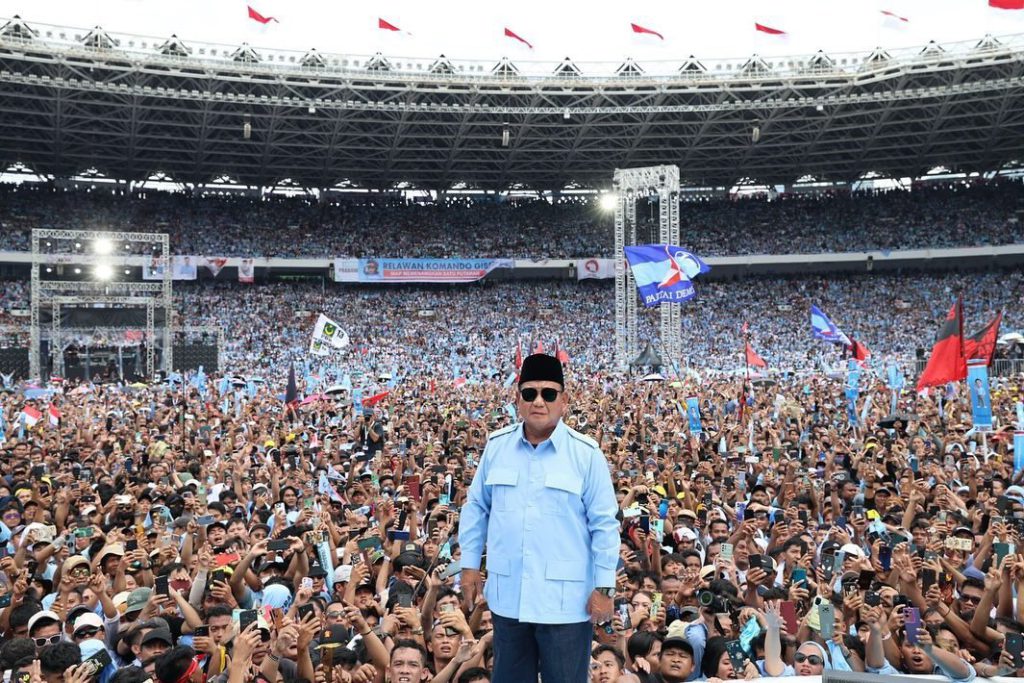
Prabowo Subianto (Image: X)

Indonesia’s incoming president, Prabowo Subianto, has pledged to continue predecessor Joko Widodo’s nickel “downstreaming” policy but faces the task of reducing oversupply while pushing to strengthen the processing industry, his advisers say.


Prabowo, said by independent pollsters to have won the Feb. 14 election, has said he will pursue the effort to extract more value from Indonesia’s vast resource wealth by halting exports of key raw materials and developing domestic processing instead.

The policy drew investments of billions of dollars from smelting firms, most of them Chinese, and boosted Indonesia’s exports.

But it led to an oversupply of processed nickel that caused a drop of 45% in prices last year, squeezing producers in Australia and elsewhere, although they have since recovered to stand up about 12% in 2024.

Experts advising Prabowo are discussing ways to stem a further decline in prices while still generating more jobs and boosting value-addition, members of his campaign team said.

“We must control supply so prices can be underpinned,” Erwin Aksa, a campaign vice-chair, told Reuters, adding that current conditions are likely to drive investors to avoid new projects.

“If there is too much oversupply and those smelters stop their operations, that would impact the whole supply chain,” he added.

Prabowo himself has not publicly detailed his nickel strategy, but told a Feb. 6 rally, “We are determined to guard Indonesia’s wealth. We want to manage and control this wealth, so the value-add can be enjoyed by all Indonesian people.”

Indonesia produced about 1.4 million tons of primary nickel last year, or about 40% of global output, data from the International Nickel Study Group showed.

“Indonesia is flooding the nickel market with low-cost supply, and we don’t think it’s going to stop anytime soon,” said S&P Global Ratings, which predicts the country will add 300,000 metric tons of smelting capacity this year.

S&P Market Intelligence expects the oversupply to continue beyond 2025, as Indonesia has excess capacity for an intermediate product, nickel pig iron (NPI).
Taking stock?

Some of Prabowo’s advisers have called for a moratorium on new smelters, allowing time to take stock of reserves and improve governance.

Last year, a miners’ association warned that reserves of high-grade nickel ore could be depleted in about six years. Recently, a government official said overall nickel ore reserves were sufficient for 30 years.

No decision has been made on a possible moratorium, however, said Eddy Soeparno, another vice-chair of Prabowo’s campaign team, while adding, “It is good to take a pause and give the policy an overview.”

Prabowo will push for further processing of NPI, helping to ease oversupply, said another campaign official, Anggawira, who goes by one name.

The main challenge was building domestic industries to consume the nickel, he said.

“When the nickel is cheaper, that would make our industries more efficient,” added Anggawira, who also chairs the Association of Indonesian Energy, Mineral, and Coal Suppliers.

(By Fransiska Nangoy; Editing by Tony Munroe and Clarence Fernandez)


Wyloo says industry will turn from LME without green nickel

Reuters | March 13, 2024 

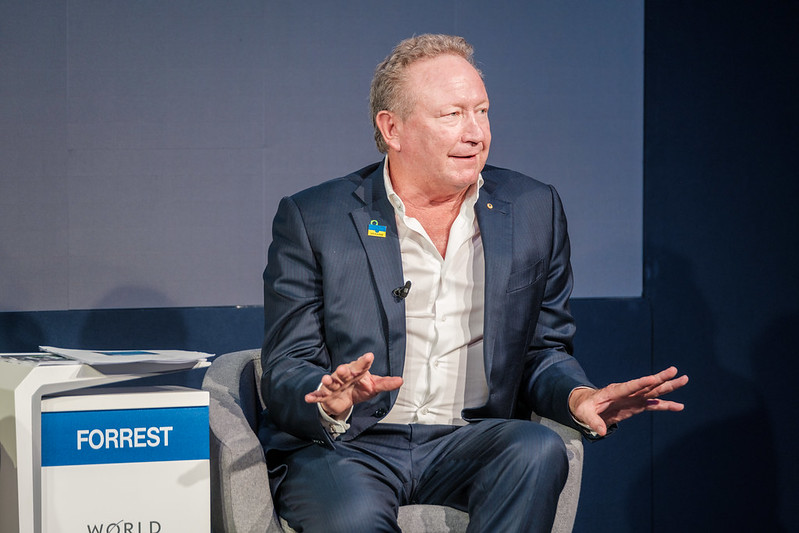
Wyloo owner Andrew Forrest. Credit: World Economic Forum

Nickel miner Wyloo, owned by Australian mining magnate Andrew Forrest, said that if the London Metal Exchange (LME) doesn’t launch a green nickel contract, the industry will have to look for another trading venue.


Forrest had told Australian media last month that the LME should classify its contracts into clean and dirty to give customers more choice. Wyloo is set in May to shutter two nickel mines in Australia that it bought last year for $504 million.

The LME said that low carbon nickel, which it classifies as producing 20 tonnes of carbon dioxide or less per tonne of nickel, could already be traded on its partner MetalsHub’s system.

“Wyloo has been contacted by several parties seeking to develop a green nickel premium, so there is clearly demand for greater transparency and differentiation between clean and dirty nickel,” Wyloo CEO Luca Giacovazzi told Reuters.

“As the world’s largest metals exchange, the LME should be leading in this area,” he said.

“If the LME is to continue to set the standard for ethical metal supply practices, it cannot afford to take no action, or the industry will look for an alternative marketplace.”

Calls for a nickel price that reflects strong environmental and governance standards have grown from high-cost producers such as Australia, where low prices have forced miners to shutter operations due to a flood of Indonesian supply, most of which is produced using coal.

(By Melanie Burton; Editing by Michael Perry)
Gold output falls in Burkina Faso as terrorist ISLAMIST INSURGENTS
attacks increase

Bloomberg News | March 12, 2024 | 

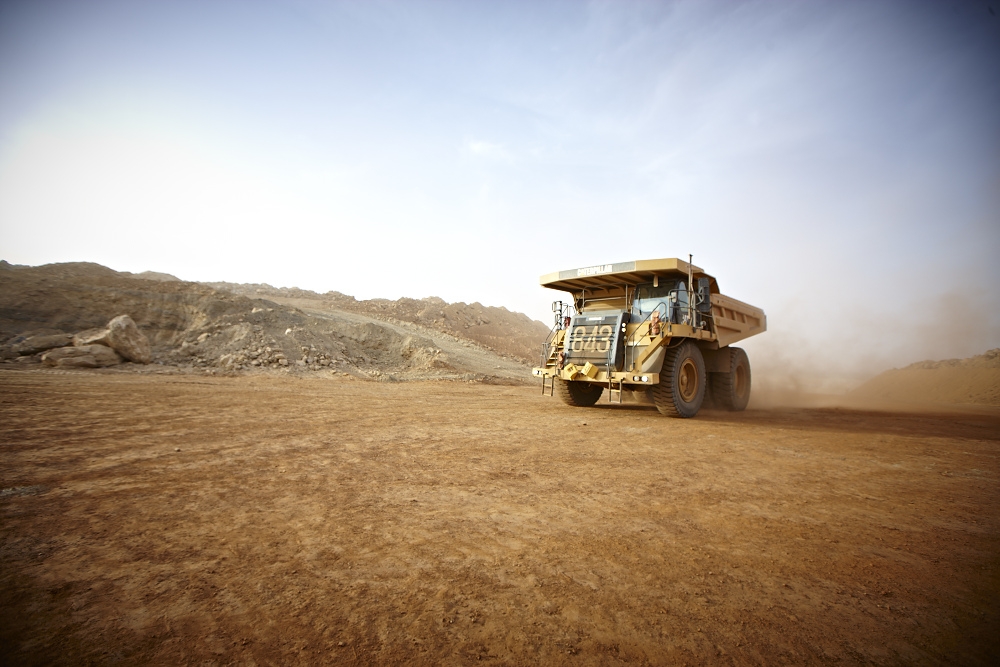
Essakane gold mine, Burkina Faso. (Image courtesy of IAMGOLD)

Gold production in Burkina Faso declined last year as deteriorating security conditions in the West African nation forced some mines to shut.


An Islamist insurgency in the Sahel, a semi-arid region stretching across the continent from Senegal to Sudan, has hit hard in Burkina Faso, which also suffered two military coups in 2022. The country — ruled by Captain Ibrahim Traore for the past 18 months — accounted for almost a quarter of people killed in terrorist attacks globally last year, according to Sydney-based Institute for Economics & Peace.


Six mining companies closed down in 2022, while one more ceased activity last year. Output of the precious metal fell 1.5% to 57.3 tons in 2023, the Ministry of Mines, Quarries and Energy said.

“2023 was a very difficult year in terms of security, with mixed economic and social consequences,” Brahim Kéré, director of forecasting and macroeconomic analysis at the ministry said in an interview. “In the gold sector, terrorist attacks have resulted in the closure of certain sites and difficulties in supplying certain mines with fuel and other materials.”

Burkina Faso last year revised its mining code to enable it receive more in royalties during boom times. The country, also suspended mineral exports by small-scale miners last month.

The companies still operating in the country include West African Resources Ltd., Endeavour Mining Plc and Iamgold Corp.

(By Tanga Kafando)
P3 PENSION FUNDS PRIVATE PARTNER
Syrah Resources to raise $65m for Mozambique, US projects

Reuters | March 12, 2024 | 

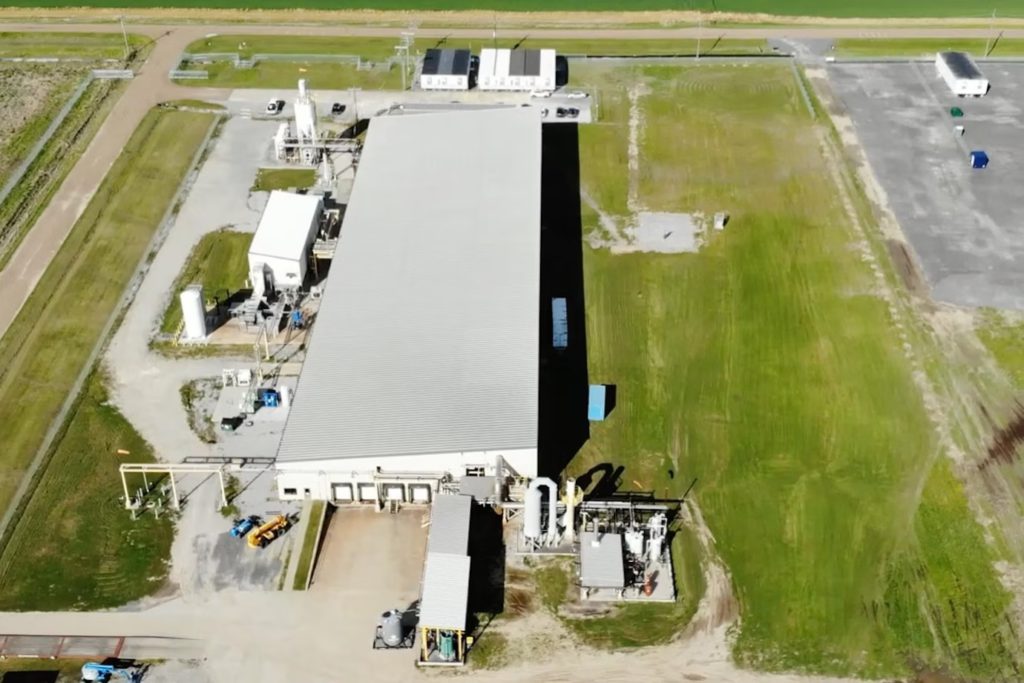
Syrah’s Vidalia facility in Louisiana. Credit: Syrah Resources

Australia’s Syrah Resources said on Wednesday it would raise A$98 million ($64.73 million) through a placement and an entitlement offer for funding its Balama graphite operations in Mozambique and its US-based Vidalia project.


Syrah’s largest shareholder and the country’s top pension fund AustralianSuper have agreed to the conversion of a 5-year unsecured convertible note issued in June 2019 and December 2023 into fresh shares in the miner, it said in a statement.

AustralianSuper had committed to subscribing for all shares under the placement and taking up its full pro-rata entitlement in the institutional entitlement offer, the company said.

The placement would be at a fixed price of A$0.55 per new share, which represented a discount of 19.1% to stock’s last closing price on March 12.

The company said it had agreed with AustralianSuper to the conversion of series 1 and 3 notes into new shares at a revised conversion price of A$0.6688 per share.

The company added that AustralianSuper’s shareholding would increase to no more than 31.9% post the completion of funding round, from around 17.8% earlier.

Around 178.2 million new shares would be issued under the placement and entitlement offer, Syrah said.

($1 = 1.5140 Australian dollars)

(By Roshan Thomas; Editing by Sherry Jacob-Phillips and Rashmi Aich)
BAD Canadian miners lag in formal carbon reduction commitments – survey

Less than a quarter have formally committed to achieving all scope-related carbon emission reductions by 2050.

By Bruno Venditti March 11, 2024 

Adobe stock image

Few Canadian mining leaders have committed to full carbon emission reductions by 2050, according to a survey by KPMG.

Decarbonization emerges as one of the industry’s foremost challenges, as the survey conducted last month with 75 mining company decision-makers revealed.

Survey respondents anticipate heightened scrutiny from investors this year regarding their decarbonization strategies.

However, the survey findings indicate that fewer than a quarter have made formal commitments to achieve all scope-related carbon emission reductions by 2050 or earlier. About a quarter have not yet made formal commitments but are actively developing emission reduction plans. Moreover, 10% lack both ESG and carbon reduction strategies, while 7% either do not intend to implement such strategies or face challenges in reducing emissions at present.

Scope 1 encompasses greenhouse gas (GHG) emissions directly owned or controlled by organizations, while scope 2 includes indirect emissions resulting from the production of purchased energy. Reducing scope 3 emissions, which traverse the company’s value chain, poses a considerable challenge.

“Many in the industry face substantial hurdles to reducing scope 3 emissions, particularly due to Canada’s limited smelting or refining capacity for critical minerals,” said Heather Cheeseman, Partner and National Mining Leader for KPMG in Canada.

Intermediary minerals produced in Canada are shipped to smelters worldwide.

“Until Canada develops smelting or refining capabilities for mined minerals, miners will encounter limitations,”

According to the survey, nine out of 10 Canadian mining leaders are optimistic about the country’s potential to emerge as a global leader in critical minerals.

However, an overwhelming majority (98%) said there is an urgent need for increased investment, government commitment, and favorable tax policies to bolster the sector’s growth.


U$ CONGRESS APPROVES DEEP SEA MINING


The Metals Company stock rises as US Bill proposes investment in seafloor mining


The Responsible Use of Seafloor Resources Act was introduced on Tuesday.

By Bruno Venditti March 13, 2024

System used to uplift nodules from seafloor to surface.
 Credit: The Metals Company

The Metals Company (Nasdaq: TMC) shares soared on Wednesday after Congresswoman Carol Miller (R-WV) and Congressman John Joyce (R-PA) introduced a Bill to increase US support for deep-sea mining.

The Responsible Use of Seafloor Resources Act calls for federal resources to be allocated towards refining polymetallic nodule materials and advises several analyses across benefit sharing, technology development, trade, and environmental and human health.

The Act calls for the government to coordinate and expedite the development of infrastructure to process and refine seafloor nodules within the United States.

It also asks the Office of Science and Technology Policy to annually submit to the President and Congress a report including quantitative and qualitative analysis of the benefits to the US of importing seafloor nodules and processing and refining nodules domestically.

“The strength of US national security and energy independence will be determined by how we choose to respond amid increasing reliance on China. This legislation is common sense and encourages the needed strategic decoupling from China that is long overdue,” said Congresswoman Miller.

China controls roughly 60% of the global critical mineral production and over 85% of the world’s refining capacity.

“Over the last two decades, the Chinese Communist Party has strategically invested in putting a stranglehold on global critical mineral supply chains. It’s vital to our security and economic interests that the CCP controlled monopoly on these materials is broken,” said Congressman Joyce.

Following the introduction of the Bill, shares of the deep-sea mining pioneer rose as much as 15%. The Metals Company has a $588 million market capitalization.

“With commercial deep-sea nodule operations expected to begin soon, Congressional action to lay the foundation for processing and refining this remarkable resource is a game-changer,” CEO Gerard Barron said in a news release.

Minerals and metals such as cobalt, nickel, copper, and manganese can be found in potato-sized nodules on the ocean floor. Reserves are estimated to be worth anywhere from $8 trillion to more than $16 trillion, and they are in areas where companies, including The Metals Company, plan to target.

Many NGOs and environmental groups, however, argue that mining the seafloor could have a devastating impact on the planet.


A recent report by the non-profit Planet Tracker says mining the seafloor for key minerals and metals could negatively impact the mining industry, resulting in $500 billion of lost value and causing damages to the world’s biodiversity estimated to be up to 25 times greater than land-based mining.


TMC Applauds U.S. Congress For Championing Seafloor Nodule Exploration and Resource Independence


Discover how TMC lauds the U.S. Congress for the ground-breaking RUSRA bill, paving the way for responsible seafloor resource management and enhancing energy security.


Israel Ojoko
14 Mar 2024 


TMC Applauds U.S. Congress For Championing Seafloor Nodule Exploration and Resource Independence

TMC, the metals company Inc. (Nasdaq: TMC), a trailblazer in uncovering the world’s largest untapped reservoir of critical battery metals, extends its commendation to the U.S. Congress.

Their recent legislative proposal, the Responsible Use of Seafloor Resources Act (RUSRA), marks a pivotal step toward securing our energy future and bolstering national security.
Seafloor Nodules: Hidden Riches Beneath the Waves

Seafloor nodules—those enigmatic clusters of minerals strewn across the ocean depths—hold immense promise.

These polymetallic nuggets harbor essential elements like nickel, cobalt, and manganese, vital for cutting-edge technologies, renewable energy, and defense applications. As the world grapples with resource scarcity, unlocking these oceanic treasures becomes imperative.

Congress Takes the Helm

The RUSRA bill, championed by House Representatives, charts a course toward responsible seafloor resource management. Its dual mandate is clear:

International Governance: The U.S. commits to collaborative stewardship of seafloor exploration. Allied partners join hands to navigate the delicate balance between extraction and environmental preservation.
Support and Refinement: Congress pledges financial, diplomatic, and logistical backing for seafloor nodule collection, processing, and refining. This strategic move aims to reduce reliance on adversarial nations and fortify our supply chains.

Gerard Barron’s Optimism

Gerard Barron, Chairman and CEO of The Metals Company, echoes the sentiment: “We stand on the cusp of commercial deep-sea nodule operations. Congress’s groundwork in establishing processing and refining protocols is a game-changer. But that’s not all—we eagerly await the Pentagon’s report, a directive from the House Armed Services Committee. This report could pave the way for a domestic refinery feasibility study, ensuring mineral independence for the U.S.”

The rising tide of support within Congress emboldens Barron. It signals multiple pathways—innovative, collaborative, and strategic—for our nation to secure critical minerals derived from these oceanic marvels.

The Ocean Beckons

As the sunken riches beckon, Congress’s resolve shines through. Seafloor nodules hold the promise of energy security, technological advancement, and a resilient future. Let us navigate these uncharted waters with purpose, unlocking the ocean’s bounty for generations to come.


The Metals Company Commends U.S. Congress on Bill to “Provide Financial, Diplomatic, or Other Forms of Support for Seafloor Nodule Collection, Processing and Refining” and Advancing International Regulations for Seafloor Resources

  • The Responsible Use of Seafloor Resources Act (RUSRA) calls for U.S. support for ‘responsible polymetallic nodule collection’ and the use of federal funding to establish domestic infrastructure to refine nodules into critical minerals for the energy transition and national defense.
  • The legislation comes as American and allied auto and battery makers struggle to secure supplies of critical battery metals that comply with guidelines for incentives under the Inflation Reduction Act, while metals demand for infrastructure and development continues to grow.
  • The bill is endorsed by a coalition of leaders across the offshore energy industry, marine mineral exploration, and global research centers.

NEW YORK, March 13, 2024 (GLOBE NEWSWIRE) -- TMC the metals company Inc. (Nasdaq: TMC) (“TMC” or the “Company”), an explorer of the world’s largest estimated undeveloped source of critical battery metals, today welcomed the introduction of legislation by members of the House of Representatives calling for the U.S. to “support international governance of seafloor resource exploration and responsible polymetallic nodule collection by allied partners” and to “provide financial, diplomatic, or other forms of support for seafloor nodule collection, processing and refining.”

Sponsors of the bill, entitled the Responsible Use of Seafloor Resources Act (RUSRA), find that the “United States is falling behind in competitiveness within supply chains for critical defense and clean energy technologies”, and recognize that “the collection of seafloor nodules is integral to ensuring the United States does not continue its over-dependence" on adversarial nations.

Gerard Barron, Chairman and CEO of The Metals Company, said, “With commercial deep-sea nodule operations expected to begin soon, Congressional action to lay the foundation for processing and refining this remarkable resource is a game-changer. Additionally, we eagerly await the forthcoming Pentagon report on nodules as directed by the House Armed Services Committee. The Pentagon’s ability and willingness to support a feasibility study for a domestic refinery could help establish mineral independence for the U.S. in nickel, cobalt and manganese. The rising wave of support within Congress gives me confidence that there are multiple pathways for the country to support and potentially fund allied supply of nodule-derived critical minerals.”

The bill, introduced by Representatives Carol Miller (R-WV) and John Joyce (R-PA), notes: “Investing in the development of mineral resources and processing infrastructure quantitatively proven to reduce ESG impacts, such as seafloor nodules, is integral to ensuring the raw materials that underpin our domestic industrial base and transition to clean energy do not have adverse planetary impacts.”

In addition to TMC, the bill is endorsed by the National Ocean Industries Association, the Breakthrough Institute, the Critical Ocean Minerals Research Center, Deep Reach Technology, Kingston Process Metallurgy Inc., Global Seabed Resources NV, Ocean Minerals LLC, Odyssey Marine Exploration, Inc. and Moana Minerals.

Over recent years, TMC has welcomed letters from congressional leaders including the House Armed Services Committee as well as former military leaders urging the Biden Administration to assess domestic processing of seafloor polymetallic nodules as a means to secure key energy transition metals and “close national security vulnerabilities.” In March of 2022, TMC Chairman and CEO Gerard Barron wrote to the Senate Energy and Natural Resources Committee, noting, “It is a geological reality that there are insufficient U.S. reserves of nickel, cobalt, and manganese to support lithium-ion battery production at scale, and that recycling will not be able to meet demand in the mid-term. TMC can provide access to enough in situ resource to fully electrify the U.S. passenger fleet (280 million EVs).”

In July of 2022, Secretary Granholm of the US Department of Energy advised, "For nickel and certain other minerals, such as manganese and cobalt, the presently known U.S. reserves and known resources fall short of satisfying projected domestic demand to meet decarbonization goals. For nickel specifically, Russia’s footprint in the nickel market and the subsequent price spikes related to the Russia-Ukraine conflict have reinforced the importance of establishing a strong domestic supply, processing, and refining base for economic development and national security. "

The newly introduced Responsible Use of Seafloor Resources Act aims to ready the United States for the commercial availability of seafloor nodules, an abundant source of critical minerals.

About The Metals Company

The Metals Company is an explorer of lower-impact battery metals from seafloor polymetallic nodules, on a dual mission: (1) supply metals for the global energy transition with the least possible negative impacts on planet and people and (2) trace, recover and recycle the metals we supply to help create a metals commons that can be used in perpetuity. The Company through its subsidiaries holds exploration and commercial rights to three polymetallic nodule contract areas in the Clarion Clipperton Zone of the Pacific Ocean regulated by the International Seabed Authority and sponsored by the governments of Nauru, Kiribati and the Kingdom of Tonga. More information is available at www.metals.co.


Northisle’s new gold resource may boost Vancouver Island project’s economics

VANCOUVER, British Columbia--()--Northisle Copper and Gold Inc. (TSX-V: NCX) (“Northisle” or the “Company”) is pleased to announce an initial mineral resource estimate (the “Resource Estimate”) for the Northwest Expo deposit at its 100% owned North Island Project, located on Vancouver Island in BC, Canada.

Sam Lee, President & CEO of Northisle stated “Today’s new resource estimate at Northwest Expo has exceeded our expectations of defining a 40 to 50 million tonne resource within the gold enriched Zone 1. Including the impact of the 88% gold and 76% copper recoveries, the average NSR value per tonne is nearly triple the NSR value in the North Island Project PEA and approximately $80/tonne at spot prices. With a relatively low strip ratio, this sets a strong basis for the rapid advancement of a potential high margin, near surface deposit that could be sequenced at the beginning of our large, long life North Island Copper and Gold project. We will be aggressively advancing development and exploration under our fully funded 2024 program.”


The initial Northwest Expo Indicated Resource contains 40.3 million tonnes grading 0.80g/t Au Eq. for 1.0 million ounces Au Eq. plus an additional 30.6 million tonnes grading 0.68g/t Au Eq. for 0.7 million ounces Au Eq. in Inferred Resources, at a 0.18g/t Au Eq. cut-off grade. Based on exploration costs by Northisle at Northwest Expo to date, this represents a discovery cost of well below $10/oz Au Eq.

As shown in Table 1 below, following the addition of the Northwest Expo deposit, the total resource for the North Island Project now comprises an Indicated Resource of approximately 2.4 bn lbs Cu and 4.9Moz Au plus Inferred Resource of approximately 1.4 bn lbs Cu and 3.0Moz Au. The Northwest Expo deposit boasts an attractive NSR value of $55/t for the Indicated resource as a whole and $67/t for the higher grade zone which represents 2-3 times the NSR value of Hushamu and Red Dog, due to higher gold grade and higher recovery rates. At spot prices NSR values are approximately $80/tonne at a 0.5 g/t Au Eq. cut off.

The near surface sizeable initial resource delineated within the gold-enriched Zone 1 at Northwest Expo provides the opportunity to optimize the development plan of the North Island Project. Trade-off studies have been launched to study the possibility for a lower capex staged approach, prioritizing the higher-grade Northwest Expo deposit with potential to concurrently focus on the higher-grade areas of the Red Dog and Hushamu deposits. These trade-off studies are expected to be completed in Q2-2024 and will form the basis for advanced economic and technical studies.


Northisle Announces an Initial Indicated Resource Estimate of 1.0 Million Ounce Au Eq. and 0.7 Million Ounce Au Eq. Inferred Resource Estimate at Northwest Expo

Highlights:

  • Sizable gold-rich initial resource delineated for the Northwest Expo target
    • Indicated Resource of 1.0Moz Au Eq. grading 0.80g/t Au Eq., which includes a higher-grade subset of 0.9Moz Au Eq. grading 0.96 g/t Au Eq.
    • Inferred Resource of 0.7Moz Au Eq. grading 0.68g/t Au Eq., which includes a higher-grade subset of 0.5Moz Au Eq. grading 0.92g/t Au Eq
    • Low strip ratio of 2.52:1 waste to mineralized material
    • Weighted average recovery rates of 88% and 76% for gold and copper, respectively
    • 2024 drill program anticipated to further improve Indicated resource grade by targeting near-surface higher grade areas to achieve a +80% ratio of Indicated to Inferred Resources
  • Low Indicated resource discovery cost for Northwest Expo of less than $10/oz Au Eq.
  • Attractive Net Smelter Revenue (“NSR”) value of $55/t for the Indicated resource as a whole and $67/t for the higher grade zone which represents 2-3 times the NSR value of the current North Island Project PEA
  • Total combined Indicated Resource at the North Island Project increases to approximately 2.5 bn lbs Cu and 4.9Moz Au plus Inferred Resource of approximately 1.4 bn lbs Cu and 3.0Moz Au
  • Significant exploration potential with step out to the south of Zone 1 and at West Goodspeed discovery to be advanced in H1 through fully funded 2024 drill program
  • Trade-off studies have commenced for a lower capex staged approach, utilizing the higher-grade Northwest Expo deposit within the context of the North Island Project