Friday, March 28, 2025

U.S. officials went door-to-door in Greenland to find anyone who wanted to be visited by the Vances. They found no one

Graig Graziosi
Fri, March 28, 2025 
The Independent


No one wants to talk to Usha Vance—at least no one in Greenland.

US officials have reportedly been traveling around the Danish-controlled territory looking for locals who wanted to receive a visit from the Second Lady, according to a report from Danish TV 2.

Greenlanders' response? No thanks.

Residents aren't the only ones snubbing the Second Lady ahead of her high-profile visit to the island; Tupilak Travel, which is based in Greenland's capital city, Nuuk, initially said it would host Usha Vance, but pulled out on Thursday.

In a post on Facebook, the company said that the US Consulate called and asked if it wanted the visit, and the company initially said yes, but then backed out.

“After closer consideration, however, we have now informed the consulate that we do not want her visit, as we cannot accept the underlying agenda and will not be part of the press show that, quite, of course, comes with it. No thanks to nice visit… Greenland belongs to the Greenlanders," the company said.

The cancellation comes on the same day that Vice President JD Vance announced that he would join his wife's upcoming trip to Greenland.

“There was so much excitement around Usha’s visit to Greenland this Friday, that I decided that I didn’t want her to have all that fun by herself, and so I’m going to join her,” Vance said in a video posted to X.

Vance, the Second Lady, National Security Adviser Mike Waltz, and Energy Secretary Christ Wright are scheduled to depart for Greenland on Friday, though those plans could change by the time the delegation departs.

The U.S. delegation was also scheduled to attend the Avannaata Qimusserua, one of the world's largest dog-sledding events, but that visit has been cancelled as well, according to USA Today.

As it currently stands, the American visitors will only be visiting the U.S. Space Force Base at Pituffik.

Greenlanders and Danish authorities aren't pleased about the trip. Denmark's Prime Minister Mette Frederiksen accused the US of exerting "unacceptable pressure" on Greenland through its planned visit.

“I have to say that it is unacceptable pressure being placed on Greenland and Denmark in this situation. And it is pressure that we will resist,” Frederiksen told Danish broadcasters DR and TV2 on Tuesday. “You cannot make a private visit with official representatives from another country, when the acting Greenlandic government has made it very clear that they do not want a visit at this time,”

Frederiksen went on to say the US delegation's arrival is "clearly not a visit that is about what Greenland needs or wants."

“President Trump is serious. He wants Greenland. Therefore, [this visit] cannot be seen independently of anything else,” Frederiksen said.

Donald Trump has repeatedly said he wants to buy Greenland or obtain it through other means, including potential military action.

Thanks to climate change driven by human burning of fossil fuels, new shipping corridors are opening up in the Arctic Circle as sea ice melts. Trade routes between Asia and Europe or Asia and the U.S. are approximately 40 percent shorter through the Arctic than by way of the Suez or Panama Canals, according to the U.S. Naval Institute.

Currently, only five countries have territory in the Arctic Circle: Canada, Russia, Norway, Denmark, by way of the semiautonomous Greenland, and the U.S. via Alaska. If the U.S. controls Greenland, it would be a major expansion of the nation's control over Arctic shipping routes.

Trump has gone so far as to say that the island is "very, very important" for U.S. “military security."

In addition to its potential military and economic strategic benefits, the Arctic may also have as of yet untapped fuel resources. According to the U.S. Geological Survey, the Arctic holds 13 percent of undiscovered oil resources and 30 percent of undiscovered natural gas, primarily all offshore.

Greenland itself is rich with rare earth minerals, which are essential components in the production of cellphones, batteries, and other consumer technologies.


'Charm offensive failed': Not one Greenlander was willing to publicly welcome Usha Vance

Travis Gettys
March 28, 2025 
RAW STORY


U.S. Vice President JD Vance talks with Irish Taoiseach (Prime Minister) Micheal Martin as he and second lady Usha Vance welcome Martin and his wife Mary O'Shea (not pictured) for breakfast, ahead of St. Patrick's Day, at the vice president's residence in Washington, D.C., U.S., March 12, 2025. REUTERS/Leah Millis

An advance team knocked on doors in Greenland’s capital Nuuk seeking someone who would welcome a visit from second lady Usha Vance, but every single person said no, according to a Danish TV report.

Vice president J.D. Vance joined his wife on the trip after she got a cold shoulder from prospective hosts, according to a report by Denmark's TV 2 that was flagged by The Hill, and the couple's plans shifted from a dogsled race in Sisimiut and meetings with Nuuk locals to a visit to a remote Space Force base.

“The Americans’ charm offensive has failed,” reported TV 2 correspondent Jesper Steinmetz. “They have finally understood what the Greenlanders here in town have been trying to tell them for a little over a week: We don’t want visitors right now.”


ALSO READ: 'Came as a surprise to me': Senators 'troubled' by one aspect of government funding bill

A senior White House official denied the report, saying the couple was happy to visit the ice-bound military base, where temperatures for March typically stay well below zero.

“This is categorically false," that official said. "The Second Lady is proud to visit the Pituffik Space Base with her husband to learn more about arctic security and the great work of the Space Base."


The vice president is expected to attack Denmark, a U.S. ally, during the visit, which comes as president Donald Trump has inflamed international tension over his threats to annex the country's autonomous territory.

Until recently, we could safely rely on the Americans, who were our allies and friends, and with whom we liked to work closely,” said Greenland prime minister Múte Bourup Egede earlier this week.

“But that time is over, we have to admit that, because the new American leadership is completely and utterly indifferent to what we have stood together on so far, because now it is only a matter of them taking over our country over our heads,” Egede added.


'P.R. disaster': J.D. Vance expected to attack Denmark on scaled-back visit to Greenland

Travis Gettys
March 28, 2025 
RAW STORY


Vice president J.D. Vance is expected to launch an attack on a U.S. ally during an unsolicited visit to Greenland with his wife.

Second lady Usha Vance had been scheduled to visit the autonomous territory in the Kingdom of Denmark with one of the couple's young sons, but her husband decided to join her on a drastically scaled-back trip after watching outrage over her trip grow amid Donald Trump's threats to take control of the world's largest island, reported CNN.

“It was a combination of a little bit of commotion from Danish leaders combined with Vance wanting to go for a while,” said a senior White House official.

The Vances departed early Friday on Air Force Two and will return later the same day after visiting the remote U.S. Space Force outpost at Pituffik, with all cultural exchange events canceled, and the vice president is expected to strike a militaristic tone against Denmark, a fellow member of the North Atlantic Treaty Organization.

“Unfortunately, Danish leaders have spent decades mistreating the Greenlandic people, treating them like second class citizens and allowing infrastructure on the island to fall into disrepair," the senior White House official said. "Expect the vice president to emphasize these points as well."

Greenlanders and their government officials had spoken openly against the second lady's planned visit, and public protests were expected in the capital Nuuk, where about a third of the island's residents live, and its second-largest city Sisimiut, where a dogsled race is taking place.

“Trump’s talk of annexation and the visit of the Vances has united Greenlanders in defiance, with Greenlanders rallying together to protest,” said Dwayne Ryan Menezes, director of the UK-based think tank Polar Research and Policy Initiative.

“The Vances clearly realized that if they visited Nuuk or Sisimiut, the strategy would backfire even more than it has," Menezes added. "It would be a PR disaster, as all footage would likely feature protestors with placards of the sort we saw earlier this month (Yankee Go Home, and Make America Go Away), and would expose to the U.S. electorate the misinformation they were fed about how enthusiastically Greenlanders wished for Greenland to join the U.S.”

Usha Vance had apparently been invited to the dogsled race by American Daybreak, a group founded by Tom Dans, who worked on Arctic issues in the first Trump administration, and organizers for the race made clear they did not specifically invite her, and local media reports indicated Sisimiut residents had planned to silently protest her visit by turning their backs on her motorcade.

“In general, I think most Greenlanders are relieved that the unofficial visit to Sisimiut and Nuuk was cancelled," said said Jakob Nordstrøm, who runs a local pilot business in Nuuk. "Personally, I think it is a big win for Greenland. Most Greenlanders welcome tourists from the United States, but obviously this was not a tourist visit."

The White House official insisted that Usha Vance's original plans was set aside because they were incompatible with the vice president's schedule, not because of the backlash.


'But Greenland has a government': CNN host confronts conservative about J.D. Vance visit


Travis Gettys
March 28, 2025 
RAW STORY


CNN

CNN's Audie Cornish redirected a conservative blogger after he justified vice president J.D. Vance's visit to Greenland.

The vice president will join his wife Usha Vance in a drastically scaled-back unsolicited visit as Greenland officials and citizens make clear they're not welcome amid president Donald Trump's threats to take control of the autonomous territory in the Kingdom of Denmark, but Vance tried to put a happy spin on the backlash.

"There was so much excitement around his visit to Greenland this Friday that I decided that I didn't want her to have all that fun by herself," the vice president said, "and so I'm going to join her."

The second lady had planned on attending a dogsled race with one of the couple's young sons, but they'll instead visit the remote, ice-locked Pituffik Space Base, which caused Daily Signal executive editor Rob Bluey and other panelists on "CNN This Morning" to chuckle.

"I'm not going to front, I want to see a Space Force outpost, too," said host Audie Cornish. "That sounds good, but Rob, I heard you laughing a bit when you heard [Vance] explain this, that he wanted to join the fun. So is this a person who needs to get out of town because of the Signal chat fubar? Or is this going over there to do his tough talk with our friends and allies? What are you looking at?"

Vance was among the participants in a group chat on the Signal app where defense secretary Pete Hegseth disclosed top-secret military plans despite a journalist's unnoticed presence, but Bluey said the vice president was advancing U.S. strategic interests by visiting the world's largest island.

"Well, Donald Trump has talked about Greenland now for months, so I don't think this has just popped up out of the blue," Bluey said. "I think it's clearly a strategic interest of his because he's worried about the influence of Russia and China in that that region, particularly for the shipping lanes in the Arctic, but also for the minerals and the natural resources in Greenland. He does not want those adversaries to necessarily take advantage of Greenland at the expense of the United States."

Cornish looked askance at her conservative panelist.

"All those things sound good," she interjected, "but Greenland has a government. Like, we're talking about it like it doesn't."

Watch below or click here.


Photos show the unique culture of Greenland, the massive ice-covered island Trump wants to acquire

Jenny McGrath
Fri, March 28, 2025 


People first arrived to Greenland over 4,000 years ago, and it has a unique culture.


Its population is mostly Inuit, though it's been part of the Danish kingdom for hundreds of years.


There are Scandinavian influences, but Inuit traditions remain strong.

US Vice President JD Vance and his wife, Usha, are traveling to Greenland this week, after the second lady's original itinerary in the Arctic island was amended.

Her initial agenda, which included watching a dog-sled race, sparked backlash because of the US government's designs on Greenland.

President Donald Trump has said the US needs to acquire Greenland — the largest island in the world and an autonomous Danish territory — for security reasons, recently saying, "I think, we'll go as far as we have to go" to control it.

Now, the Vances are only expected to visit the US military base on Greenland, a change the Danish government called "very positive."

The Vances "are proud to visit the Pituffik Space Base," JD Vance's press secretary, Taylor Van Kirk, said in a statement to Business Insider.

"As the Vice President has said, previous US leaders have neglected Arctic security, while Greenland's Danish rulers have neglected their security obligations to the island," Van Kirk added. "The security of Greenland is critical in ensuring the security of the rest of the world, and the Vice President looks forward to learning more about the island."

Greenland is known for its long, freezing winters, stunning glaciers, and fishing industry, but in many ways, it remains a frozen mystery to much of the world.

Part of that mystique is because it's been difficult for some tourists to travel to, except by cruise ship or lengthy plane rides. A new international airport is making the country more accessible, including to US residents.

Marianne A. Stenbaek, a professor of cultural studies at McGill University who studies Greenlandic art and literature, described Greenland as a "modern society with a traditional touch." That's because Denmark colonized it hundreds of years ago, but aspects of its Inuit traditions remain.

From its arts to its cuisine, Greenland has a culture all its own.

Greenland is located between Canada and Iceland, with much of the country above the Arctic Circle.

A map showing Greenland's critical minerals.Graphic by Jonathan WALTER and Valentina BRESCHI / AFP via Getty Images

The country is a little bigger than Mexico. It's also much colder. About 80% of Greenland's 836,330 square miles are buried in snow and ice. An enormous national park, the world's largest, covers much of the northeast.

The island has long made it of interest to many other countries for military purposes and as a source of natural resources, from rare minerals to natural gas and oil.

But to Greenlanders, it's simply home.

Greenland's first humans arrived over 4,000 years ago.


An 18th-century drawing of Greenland.Hulton Archive/Getty Images

Pre-Inuit groups, including members of the Saqqaq culture, came to the island around 2,500 BCE via Canada. They settled in northern, western, and southeastern Greenland. Today's Greenland Inuit population is descended from the Thule people, who moved into the country's north from Alaska through Canada around 1,000 years ago.


Between 985 and roughly 1450 CE, Vikings lived and then died out in Western Greenland. Erik the Red was the one who called the icy island Greenland. In Greenlandic, its name is Kalaallit Nunaat.

Danish-Norwegian missionary Hans Egede established a settlement in what's now Nuuk, Greenland's capital, in 1721. Over the centuries, Denmark's culture profoundly changed the country.

Greenland remained a Danish colony until 1953 and became an autonomous territory in 1979. It has its own parliament, known as the Inatsisartut.

While the country self-governs its domestic matters, Denmark retains jurisdiction over defense and foreign affairs.


More people live in Ames, Iowa, than in all of Greenland.

Customers leave a shop in western Greenland in 2007.REUTERS/Bob Strong

Around 56,000 people make Greenland their home.

Just under 90% are Inuit, though most also have some European ancestry, according to genetic testing published by the American Society of Human Genetics in 2015. Danish people make up the rest of the population. Most live in coastal cities or communities.

Residents speak Greenlandic and Danish.


Politician Aki-Matilda Hoeegh-Dam speaks Greenlandic at the Danish Parliament in Copenhagen in 2024.LISELOTTE SABROE/Ritzau Scanpix/AFP via Getty Images

Kalaallisut, also known as Greenlandic, is an Inuit language and is the official language of the country. It's widely spoken, though some groups in the east speak Tunumiit, according to the International Work Group for Indigenous Affairs.

Most residents also speak Danish, which is taught as a second language in schools.

Fishing is the country's biggest industry.

The Halibut Greenland fish processing center in 2025.Joe Raedle/Getty Images

The population has long depended on fishing for their livelihoods. However, it's not enough to support the entire country. Denmark heavily supplements its budget with about $511 million annually, according to The BBC.

"The economy has been difficult," Stenbaek said. Tourism and the country's natural resources may be its future.

Cruise ships stop by in the summer, but airports are opening around the country, too.

The cruise ship Sea Venture arrives in Ilulissat, Greenland in 2022.ODD ANDERSEN/AFP via Getty Images

Whether they're hoping to spot narwhals or want to glimpse glaciers, nature-loving tourists are drawn to Greenland.


For a long time, it was difficult to get to the island by plane. Nuuk only opened its international airport in November 2024. Before that, only a few airports had runways long enough to land large jets.

Ilulissat, which has an ice fjord on UNESCO's World Heritage list, and Qaqortoq are also getting international airports, Reuters reported. Later this year, Americans will be able to hop on a direct flight from New York to Nuuk for the first time.

To get ready for the surge of tourists, some residents are buying snowmobiles to rent out, The New York Times reported. New hotels are opening, too.

Rich in both rare earth minerals and wildlife, Greenland is divided on what to do.

Euhedral quartz crystals and cryolite fill a cavity in Greenland.Marli Miller/UCG/Universal Images Group via Getty Images

Greenland has a history of mining cryolite, which is used in aluminum smelting. A recent documentary, "The White Gold of Greenland," claimed that for over 100 years, Danish mining companies extracted billions worth of the mineral, and Greenland reaped very little of the benefit, Variety reported.

That's not a history it would want to repeat if it taps its deposits of uranium, gold, natural gas, lithium, and other resources. While some see mining as an opportunity to enrich the country, others have concerns.

"Greenlanders are very hesitant about many aspects of mining because it impacts the nature so much," Stenbaek said.

There are also worries about how it could affect the fishing industry, while residents in Narsaq are concerned about their health if a company moves forward with mining radioactive uranium at a nearby proposed site, The Guardian reported.

Colonialism turned some aspects of Greenland Scandinavian while also stamping out some of its Inuit culture.


Denmark's King Frederik and Queen Mary visit the village of Qassiarsuk in Greenland in 2024.Ida Marie Odgaard/Ritzau Scanpix/via Reuters

Danish culture is visible in Greenland's healthcare system, educational institutions, and government. "To that extent, it has had a huge impact," Stenbaek said. At the same time, authorities contributed to the loss of many aspects of the Inuits' way of life.

Between the 1950s and '70s, the Danish government forced Inuit populations to relocate from smaller settlements and communities to cities, Reuters reported. During this time, doctors implanted IUDs in thousands of Inuit girls and women, sometimes without their consent, The BBC reported. Denmark is investigating the matter and has offered counseling to those affected, AP reported last year.

Members of the Inuit community were also pressured to give up their culture and language.

"We were told to act more Danish, to speak Danish, if we wanted to be something," Nadja Arnaaraq Kreutzmann, a Nuuk resident, recently told Reuters.

Some Inuits are preserving and reclaiming their culture.

Greenlandic goldsmith Nadja Arnaaraq Kreutzmann works on a ring in her studio in Nuuk, Greenland, in 2025.Sarah Meyssonnier/Reuters

From sewing national costumes to making jewelry to carving animal tusks, Inuit people in Greenland are finding ways to continue traditional practices.

"I'm concerned if we do not give the old traditions to younger people, it'll die out within 35 years," Greenlander Vera Mølgaard told National Geographic.

Qupanuk Olsen, a new member of Greenland's Parliament, has spent over five years gaining more than 300,000 Instagram followers by highlighting the country's food and traditions.

Most Greenlanders are Lutheran, but Inuit religious practices remain.


Salik Schmidt and Malu Schmidt hold their daughter as they pose for a photo during their wedding at the Church of our Savior in Nuuk, Greenland in 2025.AP Photo/Emilio Morenatti

Some estimates put Greenland's Lutheran population at 90%, heavily influenced by Hans Egede, the missionary who came to the island in 1721. His statue stands in Nuuk, and some want it removed, saying it's a symbol of the start of colonization, the AP reported.

Many Greenlanders incorporate traditional religious practices into their services, Stenbaek said. They also sing hymns in Greenlandic, she said.

About 15,000 people live in Nuuk, Greenland's capital and biggest city.

Houses covered by snow on the coast of a sea inlet of Nuuk, Greenland, in 2025.AP Photo/Evgeniy Maloletka

The city's architecture is Scandinavian, but its artwork incorporates Inuit tales, according to Lonely Planet. That duality is Nuuk in a nutshell.

"It's very much, in many ways, like a modern Scandinavian city," Stenbaek said. "And at the same time, the Greenlandic culture, the traditional culture, is still there."

There are plenty of cafés, restaurants, and shopping for residents and tourists to visit.

A more traditional way of life survives in smaller communities.


The village of Attu in Greenland in 2024.IDA MARIE ODGAARD/Ritzau Scanpix/AFP via Getty Images

Small settlements remain along the west and east coasts, Stenbaek said. Some have fewer than 100 people.

"They live very much like they would have lived 100 years ago," Stenbaek said. That means relying on fishing and other traditional knowledge to survive.

When there are no roads, residents use boats, sleds, and helicopters to get around.

An Air Greenland passenger helicopter in 2009.Reuters/Bob Strong

In the more remote areas of the country, it's not always easy to get from place to place.

"If you have to go from settlement to settlement, it's either by boat or dog sleigh or skiing," Stenbaek said.

If the water is too icy for boats, Greenlanders might have to jump in a helicopter. There are dog sled races in Uummannaq, but it's also a practical mode of transportation in the snowy weather. The same goes for snowmobiles.

Greenland has polar nights and the midnight sun.


The northern lights appear over homes in Nuuk, Greenland, in 2025.AP Photo/Emilio Morenatti

Far north regions experience polar nights in the winter, when the sun doesn't rise above the horizon. The opposite happens in the summer, when Greenland gets nonstop daylight for a couple of months.

Both are significant to Greenlanders.

Since the sun is not visible in the winter, when spring comes it brings life back," photographer Inuuteq Storch told The Guardian in 2024. "That time of total darkness is very spiritual."

Weather rules Greenlanders' worlds.

Sisters Tukummeq and Eva-Vera in Nuuk, Greenland, in 2025.Marko Djurica/REUTERS

Greenland is a maritime culture, according to Stenbaek. "Everything depends on ice and water," she said.

In some parts of the country, winters can last through April. The temperatures can be frigid, with some regions getting down to -30 degrees Fahrenheit.

Summers in northern towns are still chilly, averaging around 41 degrees Fahrenheit, per The Guardian. Temperatures are getting warmer, though.

Lots of Greenlanders read through those long, dark nights.


Ebbe Volquardsen, a professor at the University of Nuuk, in 2017.Julia Wäschenbach/picture alliance via Getty Images

Greenland has a very literary culture, Stenbaek said. "It's an old tradition that goes back 100 years," she said. It's long been a good way to pass a polar night. Local authors are published in both Greenlandic and Danish.

There are plenty of other types of Greenlandic art, too, including theater, sculpture, and music.

"Greenlanders are very artistic," Stenbaek said.

Locals love to get outdoors, too.


A cross-country skier outside of Nuuk, Greenland, in 2025.ODD ANDERSEN/AFP via Getty Images

Plenty of Greenlanders' pastimes involve braving the cold.

"Many of them are connected directly to nature, like fishing, hunting, skiing," Stenbaek said.

Greenland is rich in biodiversity.


A southeast Greenland polar bear on a glacier in 2016.Thomas W. Johansen/NASA Oceans Melting Greenland/Handout via Reuters

The snowy landscape and arctic waters surrounding the island are habitats for musk ox, reindeer, seals, polar bears, whales, and dozens of bird species.

Berries, flowers, and cottongrass also grow in some parts of the country.

The Greenland dog is an ancient breed.


A musher walks with his Greenlandic sled dogs in 2025.Joe Raedle/Getty Images

Sled dogs aren't just companions. They're often working animals, and have a long history of surviving alongside humans. Greenland's first dogs arrived with the Thule people hundreds of years ago.

The husky-like dogs have thick coats, muscular bodies for pulling sleds, and a digestive system suited to high-fat diets, as reported by Newsweek.

Some dog sled races ban the use of other breeds, according to the Greenlandic Broadcasting Corporation.

Lamb, ox, and lots of seafood are all part of Arctic cuisine.


Muskox broth from Koks restaurant in Ilimanaq, Greenland.ODD ANDERSEN/AFP via Getty Images

Long before there were grocery stores in Greenland, locals survived by hunting and fishing. Since the island doesn't have a lot of plant life, they got their vitamin C from whale skin, The New York Times reported.

Even today, there isn't much farming in Greenland, though people do raise sheep in the south.

While supermarkets sell imported food, like milk and vegetables, they'll also stock local fare, including fish, seal, and whale. Some Greenlanders also supplement their shopping by hunting reindeer, ox, and other animals.

"In Greenland, we have the world's wildest kitchen," chef Inunnguaq Hegelund recently told NPR.

The warming world is already affecting Greenland.

An iceberg melts in Kulusuk, Greenland.AP Photo/John McConnico

As the planet heats up, Greenland has started to melt. Its glaciers are shrinking, and the permafrost is disappearing. In 2016, researchers found that the Greenland ice sheet was losing the equivalent of 110 million Olympic-sized swimming pools of water each year.

"It had an influence on roads and airports and houses when all of a sudden the earth starts to unfreeze," Stenbaek said.

It's started to change animals' migration patterns, and polar bears have had to adapt to a new way of hunting without sea ice.

It's a hotbed of scientific research.


Researchers on the Isunnguata Sermia glacier in Greenland in 2024.Sean Gallup/Getty Images

The US National Science Foundation has been studying Greenland's ice sheet for decades.

The country's location also makes it the perfect location to obtain ice cores, test cold-weather engineering, monitor climate change, and study the elusive Greenland shark.

Most Greenlanders want to break away from Denmark.


People voting during the general election in Nuuk, Greenland in 2025.Marko Djurica/Reuters

Over the years, Greenland has become increasingly independent from Denmark. In 2008, it voted for a referendum granting them more autonomy. Many want to go even further and become completely independent from the Danish kingdom.

About 80% of Greenlanders support the move, according to recent polling. Yet one longtime backer of the movement has recently become a bit more hesitant.

Aqqaluk Lynge is the former president of the Inuit Circumpolar Council, a nongovernmental organization representing Inuit people in several countries. He recently told NPR that he now supports Greenland staying tied to Denmark because "if Greenland secedes from Denmark, it will be taken by United States."

"This is surprising because Aqqaluk used to be head of much of the independence movement," Stenbaek said.

Some want to stay independent from the US, too.

A protester in Nuuk, Greenland, in 2025.CHRISTIAN KLINDT SOELBECK/Ritzau Scanpix/AFP via Getty Images

Donald Trump has repeatedly said he wants to buy Greenland. In a recent speech to the US Congress, he said that if Greenland chose to join, "we welcome you into the United States of America."

It may be one of the reasons the Democratic party, which advocates for a slow approach to independence, won in recent elections, Stenbaek said. The majority of Greenlanders, 85%, according to a recent opinion poll, don't want to become part of the US.

"Greenlanders want to remain Greenlandic," Stenbaek said.

She said she thought it was important for Greenland to strengthen connections with other countries, Canada in particular. They have a lot in common in terms of environmental concerns and large Inuit populations, she said.

"Both are Arctic countries," she said. "They would be quite strong."

The US Occupation of Greenland Began Last Night

Preserve this video of street-boy demeanor Trump Regime arrogance. It can be interpreted as an indeed creative declaration of war on Denmark/Greenland.

Listen carefully to the end. It will be historic. Interestingly, if you can not see it embedded here from my homepage (see below). But just click this link to see it on YouTube.
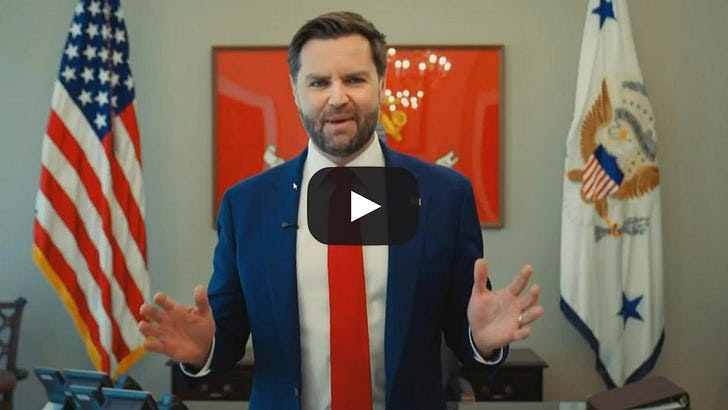
Vice-president JD Vance’s 59 seconds speech about the “fun” in Greenland that he wants to join in marks the beginning of an occupation of Greenland by that US, which Denmark’s governments since 1948 have blindly been submissive to, supported politically and militarily no matter its illegal interventions and wars, CIA worldwide, regime changes, 650 foreign bases, mass killings, genocide, country-destruction, NATO militarism and economic exploitation.

In sum, the most violent and war-addicted country on earth for more than half a century.

He invents a series of “threats” from many other countries against Greenland (and the US…). He scolds Copenhagen for having ignored Greenland’s security for far too long, and he twice elevates Greenland to a world security issue and insists that only the US can make it secure and thereby secure “the entire world.”

For equally long, some of us argued – warned – that the US was not that good – and Russia and China were not that bad. That our world was not a black-and-white world. But that was too much of an intellectual challenge. Over time, facts, analyses, conflict analysis, objective threat analyses based upon decent intelligence as well as national and international law, the UN, diplomacy – not to mention peace-making – were treated as petty issues and thrown overboard.

The Danish foreign policy kakistocracy has finally entered a situation in which they will feel what it means to be blind friends of the Evil Empire and opportunistically never prepare for the obvious: That that empire would ruthlessly pursue only its own interests and humiliate its friends (except Israel) and treat them like dirt. It allegedly gave them “protection”…

Like the rest of Europe, Denmark will now face two Cold Wars for decades ahead – one with Russia and one with the US – and in best Frederiksen-Leyden-Kallas-style, militarise itself to death. You don’t have to be a prophet to see that, like “you don’t need a weatherman to know which way the wind blows.”

The tragedy – which is now also Sweden’s and Finland’s – is that it could all have been avoided.

By independent, free thinking and research, by listening and prudent decision-makers, not servants listening only to His Master’s Voice.

Europe will now be dragged down with the decline and fall of the US/Western world. What? Oh yes, the Trump Regime will not get away with all its crystal-clear extremist imperialism, its megalomania and delusional ways: It will meet increasing worldwide resistance and fall – “one way or the other” as Trump said about getting Greenland.

I fear the price to be paid with Trump in his undoubtedly golden bunker fiddling with the red button when he hears someone say, Mr President, it is all over. It’s all over.

Do you?

Jan Oberg is a peace researcher, art photographer, and Director of The Transnational (TFF) where this article first appeared. Reach him at: oberg@transnational.orgRead other articles by Jan.


Trump's tariffs may cause toilet paper supply to unroll, Bloomberg reports

Josh Fellman
Thu, March 27, 2025 
QUARTZ

Sparse toilet paper supplies in Maryland in April 2020 - Photo: Chip Somodevilla (Getty Images)

The U.S. supply of toilet paper may come unspooled. President Donald Trump’s increased tariffs on Canadian softwood lumber could have the unintended effect of disrupting production of the bathroom essential, Bloomberg News reports.

The Trump administration’s plans to jack duties on Canadian softwood lumber to 27% — and possibly to over 50% later — may hit the availability of northern bleached softwood kraft pulp, or NBSK, a key ingredient in toilet paper and paper towels, the news agency said, citing industry participants and observers.


The import taxes on the lumber will eventually put some sawmills out of business, reducing the supply of wood chips to make pulp. That will lead to temporary closures and lower production of the ingredient, which given the finely-balanced nature of the market may result in pandemic-like shortages of the finished products and possibly higher prices.


Trump is scheduled to announce “reciprocal” tariffs on foreign products on April 2, when delayed 25% tariffs on Canadian and Mexican goods are also due to come into effect. He’s already announced 25% tariffs on all imported cars, trucks and auto parts, including those made by U.S. companies in Canada.

Import taxes on Canadian softwood lumber, now 14%, are set to rise to almost 27% this year. The 25% tariffs on most Canadian products would bump the duties to about 52% — and a “national security” probe on lumber imports could raise the charges even further.

Replacing the approximately 2 million tons of pulp now imported from Canada won’t be easy. Not only does it constitute most of the American supply, many U.S. paper plants rely on single Canadian mills because their own production processes are attuned to that specific pulp.

“They don’t buy our products for our pretty eyes,” Frederic Verreault, VP of corporate affairs at Les Chantiers de Chibougamau, a Quebec wood processor, told Bloomberg. “They buy our products because they are the best and the most integrated into their factories.”

Judge blocks Trump's Labor Department from requiring grant recipients to abandon DEI

Luc Cohen
Thu, March 27, 2025 


U.S. President Donald Trump speaks to the media in the Oval Office at the White House in Washington

(Reuters) - A U.S. judge on Thursday temporarily allowed Labor Department grant recipients to continue their diversity, equity and inclusion programs, but the judge allowed the Trump administration to bar most "equity-related grants."

The order by U.S. District Judge Matthew Kennelly in Chicago will prevent the Labor Department from requiring grantees to certify that they do not operate DEI programs that violate anti-discrimination laws for two weeks, while he considers a longer-lasting injunction against the measure.

The decision by Kennelly, an appointee of Democratic President Bill Clinton, was a partial win for Chicago Women in Trades (CWIT), a nonprofit organization that receives federal funds to train women for jobs like carpentry, welding and plumbing.

The judge agreed with CWIT's argument that the requirement that grant recipients certify they do not operate any DEI programs, even if those programs are unrelated to their federal contracts, violated their free speech rights under the U.S. Constitution's First Amendment.

"The impact of this provision on CWIT and other grantees is likely to result in self-censorship," Kennelly wrote.

Kennelly also barred the Labor Department from cutting off any grants to CWIT on the basis of Republican President Donald Trump's January 21 executive order instructing federal agencies to terminate "equity-related grants."


That portion of Kennelly's order was limited to CWIT. The judge said nationwide orders are appropriate only in rare circumstances because they can encourage plaintiffs to seek out favorable jurisdictions to bring their cases.

The Trump administration and other Republican officials have said that nationwide orders from judges improperly limit the president's powers.

Neither the Labor Department nor the Justice Department immediately responded to requests for comment.

The case is one of several challenges to Trump's larger efforts to eradicate DEI initiatives, which he and other critics say are discriminatory, from the government and the private sector.

Earlier this month, a federal appeals court said the Trump administration could temporarily ban DEI programs at federal agencies and businesses with government contracts, which had been blocked by a lower court.

These Are the Students Targeted by ICE
 So Far

Miranda Jeyaretnam
Thu, March 27, 2025 
TIME


Protestors gather to demand the release of Mahmoud Khalil, a Columbia University graduate student and Palestinian activist detained by ICE, in New York City on Mar. 10, 2025. Credit - David Dee Delgado—Getty Images

A husband and expectant father; a former high school valedictorian; an architect and adjunct professor of urban planning, and a former Fulbright Scholar with a passion for child education. All legally residing in the U.S.

They’re also just some of the targets of Immigration and Customs Enforcement in recent weeks as part of a campaign by President Donald Trump’s Administration to detain and deport noncitizens over their pro-Palestinian campus activism.


“This is the first arrest of many to come,” Trump said in a post on Truth Social, following the arrest of Palestinian graduate student Mahmoud Khalil. “If you support terrorism, including the slaughtering of innocent men, women, and children, your presence is contrary to our national and foreign policy interests, and you are not welcome here. We expect every one of America’s Colleges and Universities to comply.”

At least 300 international students who are “destabilizing” college campuses have had their visas revoked, Secretary of State Marco Rubio said at a press conference on March 27. “Maybe more, it might be more than 300 at this point,” Rubio said. “At some point I hope we run out because we’ve gotten rid of all of them, but we’re looking every day for these lunatics that are tearing things up.”

The effort has raised questions about free speech and the rights of legal noncitizens, and it’s prompted legal challenges and protests in support of the targeted students.

The effort has raised questions about free speech and the rights of legal noncitizens, and it’s prompted legal challenges and protests in support of the targeted students.

Here’s what we know about some of the students who have been targeted by ICE so far:

Alireza Doroudi


Alireza Doroudi, a 22-year-old University of Alabama doctoral student from Iran, was detained early Tuesday morning at his off-campus home, according to the Crimson White, the university’s student newspaper.

ICE records confirm that Doroudi is in ICE custody. Doroudi is being held at Pickens County Jail and no charges against Doroudi have been listed in jail records, an employee at the jail told the Crimson White, although he is not listed on the jail’s public inmate roster.

A DHS spokesperson told CBS42 that Doroudi “posed significant national security concerns” but did not provide further information. Doroudi has never been involved in organizing or participating in protests related to Students for Justice in Palestine, the group’s University of Alabama chapter said in a statement on social media.


Doroudi was studying on a F-1 student visa issued in January 2023, according to a message in a group chat obtained by the Crimson White. His visa was revoked six months after he arrived in the U.S., the message read though the reason was unspecified, but Doroudi was told by the school’s International Student and Scholar Services (ISSS) that “his case was not unusual or problematic and he could remain in the U.S. legally as long as he maintained his student status.” He has an active I-20 and Student and Exchange Visitor Information System (SEVIS) status—which allows international students entry into and nonpermanent residence in the U.S.— according to his attorney. Doroudi’s fiance created a GoFundMe to serve as his legal fund.

The university told the Crimson White that it is aware of Doroudi’s arrest, adding that international students are “valued members of the campus community” and can seek assistance from ISSS while the school continues to “follow all immigration laws and cooperate with federal authorities.”

The National Iranian American Council said in a Thursday statement that Doroudi’s arrest “comes on the heels of the baseless arrest of students and a green card holder as apparent retaliation against their speech and activism against war.”

“The cruelty appears to have been the point of these harsh arrests, spreading fear in many communities,” the council said.

Rumeysa Ozturk

Rumeysa Ozturk, a Turkish international student on a valid F-1 visa for her PhD studies at Tufts University in Boston, became another high-profile target of ICE after her arrest, which witnesses caught on video, outside her home in Somerville, Mass., on Tuesday night.

Ozturk was walking alone on a sidewalk, on her way back home after meeting friends for iftar, a meal to break fast at sunset during Ramadan, when a plainsclothes officer, wearing a hat and a hoodie, approached her, surveillance video obtained from a neighbor and posted on X on Wednesday shows. The officer grabbed Ozturk by the arms, causing her to yell out, before five other plainsclothes officers approached her. One officer pulled out a concealed badge and confiscated her cell phone. The officers told her, “We’re the police.” A person off camera could be heard saying, “You don’t look like it, why are you hiding your faces? How do I know this is the police?” while the officers—who wore cloth face masks—escorted Ozturk to a black SUV. The entire encounter lasted just under two minutes.

Ozturk obtained a degree in psychology and Turkish language and literature from Istanbul Şehir University before coming to the U.S. in 2018 on a Fulbright Scholarship to earn a master’s in developmental and child psychology from Columbia University’s Teachers College, according to her LinkedIn. Passionate about children’s media and education, her LinkedIn says, she’s published research into the representation of refugee characters in children’s animated TV, interned at a consulting firm advising entertainment studios on children’s content and development, and taught courses on media and education to high school students.

Last year, Ozturk co-authored an op-ed in Tufts’ student newspaper, The Tufts Daily, backing the Tufts Community Union Senate’s call for the university to “acknowledge the Palestinian genocide, … dislose its investments and divest from companies with direct or indirect ties to Israel.”

After she was detained, Ozturk’s attorney filed a petition asking that Ozturk remain held in Massachusetts, which was granted. Nevertheless, ICE transferred her to Central Louisiana ICE Processing Center, which is notorious for unsanitary conditions, harsh punitive measures, and “a culture of abuse,” according to CNN and the ACLU. Jeff Migliozzi, communications director for advocacy group Freedom for Immigrants, told CNN that ICE detention centers are intentionally remotely located, making them “effectively black boxes.”

“We are unaware of her whereabouts and have not been able to contact her. No charges have been filed against Rumeysa to date that we are aware of,” Ozturk’s lawyer, Mahsa Khanbabai, told the AP. The Turkish Embassy in Washington, D.C., said in a statement on X that the embassy is monitoring Ozturk’s situation and is in touch with the State Department and ICE.


Yunseo Chung

ICE cannot arrest 21-year-old Yunseo Chung, a judge ruled on Tuesday, granting a temporary restraining order against the government after her attorneys filed a lawsuit against the Trump Administration for trying to deport her in spite of her legal status.

“After the constant dread in the back of my mind over the past few weeks, this decision feels like a million pounds off of my chest. I feel like I could fly,” Chung said in a statement provided to TIME. “I’m so, so grateful to my legal team and my community of professors, students, and staff at Columbia that have given me strength at every turn.”


Photos shared by CUNY CLEAR of Columbia student Yunseo Chung, whom ICE has sought to arrest.
CUNY CLEAR

At seven years old, Chung emigrated to the U.S. with her family from South Korea and became a lawful permanent resident, according to the lawsuit. She was valedictorian at her high school and enrolled in 2022 at Columbia University, where she was studying English and gender studies.

The 21-year-old reportedly attended—but was not a leader of—a sit-in at Barnard College protesting the expulsion of students who had participated in pro-Palestinian activism on March 5, according to the lawsuit. When an apparent white supremacist bomb threat was called (later determined to be a hoax), police officers instructed protesters to exit the building. Chung was caught in the rush to exit, the lawsuit says, and was arrested, charged with obstruction of governmental administration, given a “desk appearance ticket,” and released. She was suspended from Columbia as a result of the arrest on March 7. On March 9, ICE agents searched her parents’ home in an attempt to find her, the lawsuit alleges. The agents also obtained a warrant against “harboring noncitizens” to search her Columbia dormitory. A law enforcement official told her lawyer that her permanent resident status was being revoked.

A spokesperson for the Department of Homeland Security told the Columbia Spectator, Columbia’s student newspaper, that Chung “engaged in concerning conduct, including when she was arrested by NYPD during a pro-Hamas protest at Barnard College. She is being sought for removal proceedings under the immigration laws.” Chung had previously participated in, but not organized or led, protests and events at the Gaza Solidary Encampment on Columbia’s campus last spring, according to the lawsuit. She also faced disciplinary proceedings from Columbia for vandalism after putting up posters with photos of members of Columbia’s Board of Trustees with the words, “Wanted for Complicity in Genocide.” After a review, the university found Chung had not violated any policies, the lawsuit says.

The complaint filed by Chung’s attorneys alleges that the administration is demonstrating a “pattern and practice of targeting individuals associated with protests for Palestinian rights for immigration enforcement” and described the government’s actions as an “unprecedented and unjustifiable assault on First Amendment and other rights…” As of Wednesday, the Trump Administration has not appealed the temporary restraining order.

“Yunseo no longer has to fear that ICE will spirit her away to a distant prison simply because she spoke up for Palestinian human rights,” Ramzi Kassem, one of Chung’s lawyers, said in a statement to TIME. “The court’s temporary restraining order is both sensible and fair, to preserve the status quo as we litigate the serious constitutional issues at stake not just for Yunseo, but for our society as a whole.”

Badar Khan Suri


Badar Khan Suri, an Indian citizen studying and teaching at Georgetown University on a valid J-1 visa, was detained by ICE on March 17.


Flyers in support of Badar Khan Suri at Georgetown University in Washington, D.C., on Mar. 25, 2025.Jose Luis Magana—AP

Suri, who lives in Arlington, Va., was, like Ozturk, approached by masked men outside his home after an iftar gathering. Suri’s lawyer, Nermeen Arastu, told CNN that the officers were “brandishing weapons.” The agents identified themselves as members of DHS and told Suri that the government had revoked his visa, according to a lawsuit filed for his immediate release. The lawsuit alleges that the government is seeking to deport Suri under a rarely used provision of the Immigration and Nationality Act that gives the Secretary of State the authority to deport noncitizens for whom the Secretary has “reasonable ground to believe” their presence or activities in the U.S. “would have potentially serious adverse foreign policy consequences.”

“During his time on campus, I am not aware that Dr. Suri has engaged in any illegal activity, nor has he posed a threat to the security of our campus. He has been focused on completing his research,” Joel Hellman, dean of Georgetown’s School of Foreign Service, wrote in a statement on March 21.

Suri has no criminal record and has not been charged with any crime, according to the lawsuit. Rather, the lawsuit alleges Suri has been targeted because his wife, a U.S. citizen, is of Palestinian heritage and because of her past “constitutionally protected free speech.” The couple has “long been doxxed and smeared,” the petition says, including being posted on an anonymously-run blacklisting website. Nader Hashemi, a professor of Middle East and Islamic politics at Georgetown, told Democracy Now! That Suri is “not a political activist. He was just a very serious young academic focusing on his teaching and his research.”

Department of Homeland Security spokesperson Tricia McLaughlin confirmed Suri’s detention after it was first reported by Politico. In a post on X, McLaughlin called Suri a “foreign exchange student at Georgetown University actively spreading Hamas propaganda and promoting antisemitism on social media.” McLaughlin added that Suri has “close connections to a known or suspected terrorist, who is a senior advisor to Hamas.” Suri’s wife, Mapheze Saleh, was formerly employed at Qatari-based news outlet Al Jazeera, and her father served as a political adviser to the “Prime Minister of Gaza” (the late Hamas leader Ismail Haniyeh, according to the New York Times) until 2010, according to a court declaration filed on March 20.

A federal judge ruled on March 20 that the Trump Administration could not deport Suri while his case challenging his detention is being reviewed in court. Suri was held at the Alexandria Staging Facility in Louisiana before being transferred to the Prairieland Detention Facility in Texas, which has also faced complaints about its conditions. Suri’s arrest and detention prompted protests on Wednesday by Georgetown University students and academics calling for his release.

Momodou Taal

Momodou Taal, a 31-year-old Cornell graduate student and dual U.K. and Gambian citizen, had his student visa revoked on March 14 and now faces the threat of deportation.

Taal participated in pro-Palestinian protests last year, causing him to be suspended twice and at risk of losing his student visa. He also faced backlash after posting on X: “colonised peoples have the right to resist by any means necessary” after the October 7, 2023, Hamas attack on Israel. In a Nov. 2023 interview with CNN, Taal said, “I can say clearly categorically I abhor the killing of all civilians no matter where they are and who does it. I love life. I don’t love death. That’s what I am as a human being. Why is it the association because I’m a Muslim and I’m a Black person, I have to condemn a proscribed terrorist organization before having an opinion on genocide?” Taal was banned from campus for the remainder of the spring 2025 semester after protesting at a career fair attended by defense contractors.

Taal sought to preemptively block immigration enforcement against him by filing a lawsuit against the Trump Administration on March 15. The complaint, representing Taal and two other student activists, said the plaintiffs “fear government retaliation” for engaging in “constitutionally protected expression critical of U.S. foreign policy and supportive of Palestinian human rights.”

Taal, a PhD student in Africana studies, was asked to surrender to ICE agents six days later. His attorneys, including Eric Lee, filed an emergency request blocking his detainment or deportation while the court reviews the constitutional challenge.

Around 200 students and faculty protested on Cornell’s Ithaca campus last week in support of Taal. “I wish I could be with you all in person, but the situation has got to the point where it is no longer safe,” Lee read from a statement by Taal at the start of the protest. “Momodou Taal is a test case to determine whether the government can come to your house, grab you and put you in jail for criticizing the United States government and its policies,” Lee said Wednesday after a hearing.

Mahmoud Khalil

Mahmoud Khalil was arrested at his home by ICE agents on March 8, 2025, and remains in custody as of March 27 at a Louisiana detention facility.


Protestors hold signs calling for the release of Columbia University student, Mahmoud Khalil, who was arrested for his involvement with campus protests against Israel, during a rally outside the White House on Mar. 18, 2025.Andrew Harnik—Getty Images

He was born in Syria to Palestinian refugees. Initially meant to study aviation engineering in Syria, he fled the country’s civil war to Beirut, Lebanon, and graduated from the Lebanese American University with a degree in computer science in 2018. He worked with several nonprofits in the Middle East, including Jusoor, a Syrian-American educational nonprofit, and the Syria Chevening Programme at the British Embassy in Beirut, which offers international scholarships to study in the U.K.—a role that former British diplomat Andrew Waller, and Khalil’s colleague at the time, said required an extensive background check.

Khalil moved to the U.S. in 2022 to attend Columbia’s School of International and Public Affairs, completing his master’s degree studies in December 2024. He married an American woman—making him eligible for a green card—who is eight months pregnant with their first child.

The 30-year-old was involved in several of the protests against the war in Gaza at Columbia University last spring, and he led negotiations between student protesters and university officials. Detractors say Khalil was a prominent leader of Columbia University Apartheid Divest, a student group calling for Columbia to divest from its financial ties to Israel and which has been accused of antisemitism though the group rejects the label.

Last year, Khalil was suspended for one day from Columbia after police cracked down on students occupying a campus building. He told the BBC at the time that he was acting only as a protest negotiator and had not participated in the student encampment because he had been on a student visa. The university rescinded the suspension after finding they had no evidence against him. “It shows how random the suspension was,” he said at the time. “They did that randomly, and without due process.”

The White House has alleged without evidence that Khalil distributed pro-Hamas materials at a protest and that he failed to disclose his work with the United Nations Relief and Works Agency for Palestine Refugees (UNRWA) on his green card application. The UNRWA, a U.N. agency that provides aid and relief to Palestinians in Gaza and the West Bank, was banned by Israel last year for allegedly “spreading antisemitism” and having members who took part in the October 7, 2023, Hamas attack. Khalil worked as an unpaid intern with UNRWA in 2023 but was never on staff, the agency told CNN.

A judge temporarily blocked the attempted deportation of Khalil on March 10, pending review of his case. Lawyers for Khalil also filed a lawsuit challenging his detention by ICE, and a New York judge ruled his case should be transferred to New Jersey instead of Louisiana, which the Trump Administration pushed for, as well as reaffirmed the previous ruling blocking his deportation.

Khalil and seven other students filed a lawsuit against Columbia and the House Education and Workforce Committee on March 13 in an effort to prevent the disciplinary records of students—including around the student occupation of Hamilton Hall—from being turned over to the Republican-led committee.


Ranjani Srinivasan

Ranjani Srinivasan, a 37-year-old architect, came to the U.S. from Chennai, India, as a Fulbright recipient in 2016, became a PhD candidate at Columbia in 2020, and began teaching as an adjunct professor at New York University last fall. She was in the 5th year of her doctoral degree at Columbia University’s Department of Urban Planning when ICE agents knocked at her door on March 7.

Srinivasan learned that her student visa had been revoked by the Department of State via an email on March 5. She sought help from Columbia’s international students office and was told she was in legal status, according to a letter published on political scientist Norman Finkelstein’s website. But when three ICE agents came to her Columbia University apartment without a warrant two days later, she became worried, according to the New York Times. Her roommate, an American citizen, refused to let the agents in.

Finding little recourse through the university’s hotlines, Srinivasan left for a safer location. On March 9, ICE terminated her SEVIS status and the university de-enrolled her, according to the letter. Facing the risk of detention and deportation, Srinivasan left the U.S. for Canada.

Secretary of Homeland Security Kristi Noem posted on X airport surveillance footage showing Srinivasan at LaGuardia Airport in New York. “When you advocate for violence and terrorism that privilege should be revoked and you should not be in this country,” Noem wrote in the post, adding that Srinivasan chose to “self deport.” Srinivasan’s lawyers denied the allegations against her, according to the Times.

In her letter posted to Finkelstein’s website, Srinivasan maintained that she only attended “a handful of low-level protests,” and, according to the Times, she signed several open letters related to the war in Gaza. She was arrested by police last year on the day that students occupied Hamilton Hall, but said she had only been walking through the crowd to return to her apartment. She received two summonses—for obstructing vehicular or pedestrian traffic and for refusing to disperse—but her case was dismissed, her lawyers told the Times.


"I take these lunatics' visas": Rubio admits to revoking 300 student visas over campus activism

Griffin Eckstein
Thu, March 27, 2025 
SALON


Marco Rubio Anna Rose Layden-Pool/Getty Images


Marco Rubio said the federal government is ramping up its efforts to deport college and university students who engage in pro-Palestinian activism.

In a press conference on Thursday, Rubio claimed his office has torn up more than 300 student visas on his watch. The secretary of state called student activists "lunatics" and claimed that his department will continue to revoke visas "every day."

“Every time I find one of these lunatics, I take away their visa,” Rubio told reporters in Guyana. "Go back and do it in your country."

Rubio's comments came in response to the abduction of Tufts University student Rumeysa Ozturk by plainclothes immigration officers of Immigration and Customs Enforcement. Video of the encounter went viral on Wednesday. Ozturk, a Turkish national, helped author an op-ed denouncing Israel's actions in Gaza. That act seemed to be enough to trigger Rubio's regime. Though he failed to provide specifics, Rubio said Ozturk's actions went beyond sternly worded articles.

"If you apply for a visa to enter the United States and be a student, and you tell us that the reason why you’re coming to the United States is not just because you want to write op-eds, but because you want to participate in movements that are involved in doing things like vandalizing universities, harassing students, taking over buildings, creating a ruckus, we’re not going to give you a visa,” Rubio shared.

Tricia McLaughlin, a spokesperson for Rubio’s State Department, alleged on X that Ozturk was “engaged in activities in support of Hamas.”

Ozturk is one of several high-profile student deportation cases across the country. Like Columbia University activist and legal permanent resident Khalil Mahmoud, Ozturk was quickly sent to a detention center in Louisiana. The PhD candidate was moved from Massachusetts to the southern state despite a judge's order forbidding her rendition.

“If you come into the US as a visitor and create a ruckus for us, we don't want it," Rubio said, by way of explanation.

The crackdown comes as other Trump administration officials turn up the temperature on their own mass deportation efforts. DHS Secretary Kristi Noem shared a social media video earlier this week from inside an El Salvador detention camp where hundreds of Venezuelans living inside the U.S. were sent on her office's allegations of gang affiliation.


‘Dagger through the heart’: outcry as Ice detains University of Alabama student

Sam Levin and Maya Yang
THE GUARDIAN
Thu, March 27, 2025 

An aerial view of the University of Alabama.Photograph: Jeffrey Isaac Greenberg 12+/Alamy

There was an outcry on campus at the University of Alabama on Thursday after US immigration authorities detained a doctoral student – an event which campus officials confirmed on Wednesday.

A spokesperson for the state’s flagship university said in a brief statement that a student was arrested “off campus” by federal immigration officials, but declined to comment further, citing privacy laws.

The US government’s justification for detaining the student was not immediately clear, and US Immigration and Customs Enforcement (Ice) did not respond to a request for comment late on Wednesday.

News of the arrest comes amid reports of the Trump administration increasingly targeting college students for arrest and deportation across the country, including people in the US on visas and permanent residents with green cards, raising alarms on campuses and in surrounding communities.

The Crimson White, a student newspaper at the University of Alabama, reported on the arrest, saying the targeted student was detained at their home early on Tuesday morning. The individual is Iranian and was in the US on a student visa and studying mechanical engineering, the newspaper said, identifying the student as Alireza Doroudi. The university’s College Democrats group said in a statement that Trump and Ice “have struck a cold, vicious dagger through the heart of UA’s international community”.

“Our fears have come to pass. Donald Trump, Tom Homan, and Ice have struck a cold, vicious dagger through the heart of UA’s international community,” the group said. Homan, previously Ice’s acting director, is Trump’s newest so-called “border czar”.

“As far as we know right now, Ice is yet to provide any justification for their actions, so we are not sure if this persecution is politically motivated, as has been seen in other universities across the country. Regardless, our mission to advocate for all corners of the UA community is ironclad, and forever will be,” the group added.

It was not immediately clear on Wednesday evening if the arrested student had a lawyer.

Alex House, a university spokesperson, said its international student and scholar services center was available to assist students with concerns: “International students studying at the university are valued members of the campus community.”

But House’s statement added that the university “has and will continue to follow all immigration laws and cooperate with federal authorities”.

The National Iranian American Council (NIAC) also condemned the student’s detention on Thursday, saying: “We are deeply disturbed by the arrest of Alireza Doroudi, a doctoral student at the University of Alabama, by Ice agents. At a minimum, Ice must make his whereabouts known and make clear if he has been charged with any crime. If not, he should be immediately released.

“The cruelty appears to have been the point of these harsh arrests, spreading fear in many communities. We call on the administration to halt these harsh and unjust actions and immediately release all those unjustly detained,” NIAC added.

The Alabama arrest was confirmed the same day news broke that Rumeysa Ozturk, a doctoral student at Tufts University in Boston, was detained by federal immigration agents and taken to an Ice detention center in Louisiana. Her arrest appeared to be part of the US government’s crackdown on students with ties to pro-Palestinian activism on campus last year.

The Department of Homeland Security (DHS) said Ozturk was in the US on a visa and accused her of supporting Hamas, but did not provide evidence to support its claims. Media reports noted that Ozturk, a Fulbright scholar and Turkish citizen, had in March 2024 co-written an opinion piece in the Tufts student newspaper, alongside three other authors, supporting calls for the university to “acknowledge the Palestinian genocide”.

Ozturk’s arrest has sparked widespread outrage as video circulated showing masked officers, in plainclothes, approaching her on the street and taking her into custody. A 32-year-old software engineer whose surveillance camera recorded the arrest told the Associated Press it “looked like a kidnapping”.

The Massachusetts director of Council on American-Islamic Relations, the Muslim civil rights group, said in a statement: “We unequivocally condemn the abduction of a young Muslim hijab-wearing scholar by masked federal agents in broad daylight. This alarming act of repression is a direct assault on free speech and academic freedom.”

Related: Student who sued Trump takes powerful stand against ‘constant dread’ of deportation threats

Ozturk’s lawyer told the New York Times she was heading out to break her Ramadan fast with friends when she was detained near her apartment.

Tufts’s president said the university “had no pre-knowledge of this incident and did not share any information with federal authorities prior to the event”. The university was told the student’s visa was “terminated”, the president added.

Ice records suggested Ozturk was taken to Louisiana despite a judge ordering DHS to give advanced notice if officials sought to transfer her out of state.

DHS has also faced scrutiny over its efforts to deport Mahmoud Khalil, a Palestinian activist and recent Columbia graduate, who is a green card holder. A US judge in Manhattan on Wednesday blocked immigration officials from detaining Yunseo Chung, a Columbia undergraduate, who is also a permanent resident facing threats of deportation for involvement in Gaza solidarity protests.

University of Alabama graduate student detained by ICE, school says


US  Federal immigration agents have detained a University of Alabama doctoral student who is a citizen of Iran, according to the school and ICE records.

Alireza Doroudi, a doctoral student from Iran studying mechanical engineering, is currently being held in a county jail, awaiting transfer to an immigration facility, his attorney, David Rozas, confirmed to ABC News.

A spokesperson for the Pickens County Jail in Alabama confirmed to ABC News that an Alireza Doroudi has been in their custody since Tuesday and is being held at the behest of ICE.

PHOTO: Alireza Doroudi is shown in this undated photo. (LinkedIn)

Doroudi was taken into custody by ICE at 3 a.m. Thursday at his home, his attorney said.


The Department of Homeland Security said Doroudi’s student visa was revoked and he was subsequently arrested because he "posed significant national security concerns."

Rozas, though, said in a statement to ABC News he has " not been informed of any allegations concerning significant national security issues."

No federal charges have been filed against Doroudi, according to a search of federal court records. Rozas also told ABC News that the student has "not been arrested for any crime, nor has he participated in any anti-government protests."

"He is legally present in the U.S., pursuing his American dream by working towards his doctorate in mechanical engineering," Rozas said. "He is also in the early stages of applying for an EB-1/Adjustment of Status as a researcher with extraordinary ability.“

Doroudi's LinkedIn page says he is a "trained metallurgy engineer with over ten years of academic experience in Materials Science, welding, and brazing."

He is studying at the University of Alabama with an active I-20/SEVIS status at the university, his attorney said.

"The University of Alabama recently learned that a doctoral student has been detained off campus by federal immigration authorities," the university said in a statement. "Federal privacy laws limit what can be shared about an individual student. International students studying at the University are valued members of the campus community, and International Student and Scholar Services is available to assist international students who have questions."

"UA has and will continue to follow all immigration laws and cooperate with federal authorities," it said.


PHOTO: The Autherine Lucy Clock Tower at the Malone Hood Plaza stands in front of Foster Auditorium on the University of Alabama campus in Tuscaloosa, Ala., June 16, 2019. (Bill Sikes/AP)

Doroudi is one of multiple college students to be recently detained by ICE.

Tufts University Ph.D. student Rumeysa Ozturk, a Turkish national, was arrested by immigration authorities as she was headed to meet her friends and break her fast on Tuesday.

Earlier this month, pro-Palestinian activist Mahmoud Khalil was arrested by ICE. Khalil had been one of the leaders of pro-Palestinian encampment at Columbia University last spring.

Khalil was taken from his student apartment building in lower Manhattan, and then to an immigration detention facility in Elizabeth, New Jersey, before being transferred to Louisiana

President Donald Trump claimed Khalil was a "Radical Foreign Pro-Hamas Student" and said this is the "first arrest of many to come" in a post on his Truth Social platform this month.

"We will find, apprehend, and deport these terrorist sympathizers from our country -- never to return again," he added.

Khalil and his lawyers have denied he supports Hamas or has any ties to the group.

A second student involved with the protests at Columbia University was also arrested by the Department of Homeland Security this month.

Leqaa Korda was arrested by agents from Homeland Security Investigations for allegedly overstaying her expired visa -- which terminated on Jan. 26, 2022. Korda was also allegedly arrested in 2024 for her involvement in the protests, according to DHS.

ABC News' Lucien Bruggeman contributed to this report.


ICE detains University of Alabama doctoral student as government's college crackdown continues

Patrick Smith
Thu, March 27, 2025 

A doctoral student at the University of Alabama has been arrested and detained by immigration authorities, as the Trump administration continues to target noncitizens in higher education.

The university said in a Wednesday statement that the student was recently "detained off campus by federal immigration authorities." Due to federal privacy laws, the college couldn't reveal any more about the case, but it added that international students are "valued members of the campus community."

The Crimson White, the university's newspaper, reported that the man is Iranian national Alireza Doroudi, a doctoral candidate studying mechanical engineering. He was arrested at home at 5 a.m. ET Tuesday, the newspaper reported.


Alireza Doroudi on the campus of the University of Alabama.

According to records available on ICE’s website, Doroudi is currently being held in a “detention facility.”

It is unclear why he was detained, what charges he may face, or whether he has retained a lawyer.

A Department of Homeland Security spokesperson said in an emailed statement: "ICE HSI made this arrest in accordance with the State Department’s revocation of Doroudi’s student visa. This individual posed significant national security concerns."

The University of Alabama College Democrats said in a Wednesday statement that it was aware of Doroudi's arrest and detainment, calling the news a bitter blow to the campus community.

"Our fears have come to pass. Donald Trump, Tom Homan and ICE have struck a cold, vicious dagger through the heart of UA's international community," the group said. "As far as we know right now, ICE is yet to provide any justification for their actions, so we are not sure if this persecution is politically motivated, as has been seen in other universities around the country."

The news of Doroudi's detainment comes a day after a video emerged showing Rumeysa Ozturk, a Tufts University graduate student from Turkey, being arrested in the street in Massachusetts by ICE officers. The DHS said she was arrested for "glorifying and supporting terrorists" and added that she had shown support for Hamas, the Palestinian political party and militant group.

Several other students and recent graduates have been seized or have had federal warrants issued for their arrest in recent weeks, including Palestinian activist and Columbia University graduate Mahmoud Khalil, who is being held in Louisiana and faces deportation despite holding a green card. Columbia student Yunseo Chung, a 21-year-old permanent U.S. resident, also faces a deportation order but a judge ruled this week that she cannot be detained.

This article was originally published on NBCNews.com

University of Alabama confirms immigration authorities detained student

Isaac Goffin
Wed, March 26, 2025 

University of Alabama confirms immigration authorities detained student

TUSCALOOSA, Ala. (WIAT) — The University of Alabama confirmed Wednesday evening federal immigration authorities detained a student off campus.

“The University of Alabama recently learned that a doctoral student has been detained off campus by federal immigration authorities,” the university said in a statement. “Federal privacy laws limit what can be shared about an individual student. International students studying at the University are valued members of the campus community, and International Student and Scholar Services is available to assist international students who have questions. UA has and will continue to follow all immigration laws and cooperate with federal authorities.”

The university did not provide more information, and it is unclear why the student was detained.

U.S. Immigration and Customs Enforcement, also known as ICE, is a federal agency under the U.S. Department of Homeland Security. President Donald Trump’s administration has been on an immigration crackdown since Trump took office in January. ICE reported that in the first 50 days of the Trump administration, it made 32,809 enforcement arrests.

Mahmoud Khalil, who was the lead negotiator for the Columbia University pro-Palestinian encampments, was detained by ICE agents earlier in March. Khalil, who was a lawful permanent resident at the time of his arrest, graduated from the university in December.

Khalil is in federal custody while a judge is considering where his case should be litigated. Trump said March 10 that Khalil would be the first of many foreign students deported as “terrorist sympathizers.”

The Trump administration is attempting to deport Yunseo Chung, a 21-year-old junior at Columbia University. Chung is a lawful permanent resident and has lived in the country since she was 7. She participated in pro-Palestinian demonstrations at Columbia University. A federal U.S. judge agreed to Chung’s request Tuesday to temporarily block the Trump administration from detaining her or moving her out of New York.

Federal authorities detained a Tufts University doctoral student who has been identified as Rumeysa Ozturk. A federal judge ordered Tuesday that Ozturk can stay in the U.S. for now.

The Associated Press reported that Ozturk co-authored an op-ed article in The Tufts Daily. That op-ed criticized the university’s response to its community union Senate passing resolutions demanding that Tufts “acknowledge the Palestinian genocide,” disclose its investments and divest from companies with direct or indirect ties to Israel.

“From what we have been told subsequently, the student’s visa status has been terminated, and we seek to confirm whether that information is true,” Tufts University said in a statement.

CBS 42 News will provide updates on the story as they become available.


Family calls for release of woman legally in U.S. for 50 years and now detained by ICE

Kimmy Yam
Wed, March 26, 2025


Lewelyn Dixon.


After a University of Washington lab technician and green card holder was recently detained by U.S. Immigration and Customs Enforcement, her family is speaking out.

Lewelyn Dixon, 64, who’s had legal permanent status in the U.S. for 50 years, was arrested at the airport in Seattle and placed into ICE custody after coming back from a trip to her native Philippines in late February. She has a hearing scheduled for July, but her loved ones are calling for her release, telling NBC News that she is the glue that holds the family together.

“She’s always been our go-to,” said Dixon’s niece Lani Madriaga, who described her as a mother figure. “She’s always been that.”

ICE did not immediately respond to NBC News’ request for comment.

Dixon is being held at the Northwest ICE Processing Center in Tacoma, Washington, Madriaga said, where she’s been socializing with the other detainees, translating and helping them communicate with their attorneys amid the wait before her hearing.

Dixon’s attorney, Benjamin Osorio, said that U.S. Customs and Border Protection likely spotted a decades-old embezzlement conviction on her record upon her return, which prompted the detention. Dixon, who pleaded guilty to the nonviolent offense in 2000, was ordered to pay restitution and spend 30 days in a halfway house, court documents show. In 2019, she finished paying restitution.

Dixon had been a vault teller and operations supervisor at Washington Mutual Bank, where she “removed cash from the vault on eight separate occasions” without the bank’s authorization, according to her plea agreement. In total, she removed $6,460.


Dixon never told the family about the conviction, Madriaga said, who called it her aunt’s “darkest secret.”

“If she hadn’t traveled, it wouldn’t have triggered this,” Osorio said.

And though Dixon has also long been eligible for U.S. citizenship, Osorio said, she promised her father that she would keep her Filipino status so that she could retain property and land back in the Philippines.

“She probably did not understand the risk,” Osorio said. “Otherwise, she probably would have … naturalized before she traveled.”


Lewelyn Dixon.

Dixon came to the U.S. when she was 14, immediately helping Madriaga and her siblings, who are also immigrants, settle into life in their new country.

“We stayed together. We slept in the same room. We had a bunk bed and an extra bed, and we stayed in that room during our school years,” Madriaga, 59, said. “She was very independent, and she was a good role model, making sure to have hard earned work.”

Later on, when Madriaga’s sister went through a divorce, becoming a single mom, Dixon moved to Washington state so she could be there for the children and to pitch in with rent. Madriaga went through her own divorce years later and said Dixon was also there to help with the kids.

“That was hard. She made sure she took care of my youngest one, because she was still a minor,” Madriaga said. “She’s like a second mom to her.”

At the lab, Dixon is a dedicated worker, Madriaga said. She had even scheduled herself to work a shift the night she was to get off the flight, she added. Dixon was on the cusp of her 10-year anniversary at work, during which her pension would vest. Her family members are now worried she’ll lose both her job and her pension after being away for so long.

Susan Gregg, a spokesperson at UW Medicine, would not elaborate on Dixon’s case, but said that she had worked as a lab technician at the hospital since 2015.

“UW Medicine is dedicated to the well-being of all employees and hopes Lewelyn receives due process in a timely manner,” Gregg said.

Madriaga said that the family is speaking out for their aunt and also hoping to help others protect themselves from a similar fate.

“To the people who avoided becoming a citizen like my aunt, who thought that she was protected: No. Go get your citizenship,” Madriaga said.

This article was originally published on NBCNews.com


]

 Rally held outside ICE detention center in WA for 2 union members arrested


Franque Thompson
FOX NEWS
Thu, March 27, 2025 


The Brief

Communities rallied for the release of union organizer Alfredo "Lelo" Juarez, detained by ICE, emphasizing his advocacy for farmworker rights and the circumstances of his arrest.

Juarez, facing removal despite living in the U.S. since childhood, was arrested after ICE agents stopped his car, raising concerns about targeted enforcement.

The rally also highlighted the detention of Lewelyn Dixon, a permanent resident and union member, due to a past conviction, reflecting broader fears over immigrant worker rights.

TACOMA, Wash. - Communities rallied outside the Northwest Detention Center on Thursday for the release of two union members arrested by immigration agents this month.

Farmworker, Alfredo "Lelo" Juarez, was the most recent arrest, which happened on Tuesday in Sedro-Wooley.

Grassroots organization Community to Community (C2C) used the power of social media to raise awareness and support for Juarez. The 25-year-old is a farmworker leader for C2C, as well as an organizer and member of Familias Unidas por la Justicia.

"Lelo is a labor organizer, a dedicated advocate for farmworkers and a beloved member of our community," said Tony Mellilo, President of the Northwest Washington Central Labor Council, AFL-CIO. "We demand he be released and allowed to return to his home here in NW Washington."

The backstory

According to the U.S. Immigration and Customs Enforcement, Juarez, who is a citizen of Mexico, was ordered to be "removed to his home country by an immigration judge on March 27, 2018." ICE said it conducted a joint federal law enforcement arrest in Sedro-Woolley on March 25.

His supporters said on March 25, Juarez was taking his partner to work when ICE agents stopped his car and broke his window to arrest him.

Though ICE did not specify why Juarez was being detained, ICE spokesperson David Yost said Juarez refused to comply with commands to exit his car.

Yost further wrote in a statement, "ICE does not indiscriminately conduct enforcement actions on random people. ICE conducts targeted enforcement actions that are based on intelligence-driven leads focused on aliens identified for arrest and removal from the United States. U.S. immigration laws allow aliens to pursue relief from removal. However, once they have exhausted all due process and appeals, the aliens remain subject to a final order of removal from an immigration judge and ICE must carry out that order."

The National Farm Worker Ministry said Juarez came to the United States as a child and has been an activist for farmworker rights in Washington since he was 12.

"We are quite distressed by his arrest and detention. He has lived and worked in this country for many years and is only seeking to make life better for farm workers and immigrants," said Julie Taylor, Executive Director of National Farm Worker Ministry.

In June 2015, at 15 years old, Juarez was arrested in Bellingham for driving the wrong way down a one-way street, telling officers he was 18 and without a license. Juarez later told FOX 13 Seattle, "I thought I was going to get away with it, but that was a bad mistake that I made."

During the 2015 incident, officers weren’t able to identify Juarez, so they called Border Patrol, who then sent the teen to the Northwest Detention Center. His family sued the City of Bellingham claiming racial profiling and agreed to a settlement.

Now, Juarez and his family are up against a new fight, as ICE said he will "remain in custody pending removal proceedings."

Big picture view

The family of Lewelyn Dixon is in a similar situation.

"She's been here over 50-plus years. You would think that being a permanent resident is protection," said Lani Madriaga, Dixon’s niece.

Dixon, a SEIU Local 925 member and lab technician at the University of Washington, was arrested and transferred to an ICE detention center in early March. Despite holding a green card, in 2001 Dixon was convicted of embezzlement. Madriaga said immigration attorneys told the family that was possibly the reason for her detainment.

"It's been so long that it's happened and that was a mistake," said Madriaga.

Labor leaders, rank and file union members, and community members spoke during the rally outside the Northwest Detention Center.

"Since its founding, the labor movement has been clear: a threat to one of us is a threat to all of us," said April Sims and Cherika Carter, executive officers of the Washington State Labor Council, AFL-CIO. "We will not stand by while the federal government’s cruel and chaotic attacks on immigrant workers escalate. The rights of all working people – to organize on the job, to exercise our constitutional rights of due process and protection from unlawful search and seizure – are under threat."