It’s possible that I shall make an ass of myself. But in that case one can always get out of it with a little dialectic. I have, of course, so worded my proposition as to be right either way (K.Marx, Letter to F.Engels on the Indian Mutiny)
Saturday, May 24, 2025
Polish supply chain gears up for country's first nuclear project
By Warwick Pipe
World Nuclear News, in Warsaw
Thursday, 22 May 2025
The Polish government expects a significant share of work on the country's first nuclear power plant to be awarded to local companies, but there are steps needing to be taken by the Polish supply chain, the World Nuclear Supply Chain conference in Warsaw heard.
(Image: World Nuclear Association)
In November 2022, the then Polish government selected Westinghouse AP1000 reactor technology for construction at the Lubiatowo-Kopalino site in the Choczewo municipality in Pomerania in northern Poland. An agreement setting a plan for the delivery of the plant was signed in May last year by Westinghouse, Bechtel and Polskie Elektrownie Jądrowe (PEJ) - a special-purpose vehicle 100% owned by Poland's State Treasury. The Ministry of Climate and Environment in July issued a decision-in-principle for PEJ to construct the three-unit plant. The aim is for Poland's first AP1000 reactor to enter commercial operation in 2033. The total investment costs of the project are estimated to be about PLN192 billion (USD49 billion).
The government expects Polish companies to supply at least 40% of the components and services for the country's first nuclear power plant.
"We are starting our adventure [in nuclear power]," Andrzej Sidlo, counsellor at the Polish Ministry of Industry told the event, organised by World Nuclear Association. "However, we are not starting from scratch ... we don't yet have nuclear in our energy mix, however we have a lot of experienced nuclear companies because of export projects and because of international cooperation."
Monika Silva, Deputy General Director of IGEOS Nuclear - part of the Chamber of Commerce for Energy and Environmental Protection - told those attending that, overall, Polish companies have already supplied components and services to 44 nuclear power plant projects, two nuclear laboratories and two nuclear facilities in 26 countries around the world.
In March, international law firm Baker McKenzie - which acted as a legal counsel to Korea Electric Power Cooperation in relation to all aspects of the development, financing and refinancing of the UAE's Barakah project - published a report assessing the current state of readiness of the Polish nuclear sector in respect of the construction of the country's first nuclear power plant. The report also describes the further actions needed to bring Poland closer to completing the project.
The report, using the Nuclear Energy Readiness Index, found that Poland was about 58% ready to start construction of the Choczewo plant, scoring the highest scores for the political (9/10), regulatory and social (8/10) aspects of the undertaking. The lowest score was in the technology field (3/10). Investment and systemic issues, which consist of finance, human resources, accompanying investments and preparation of public administration, received 4 points each.
"It's very surprising that we have a very high score on the Polish political readiness because we are a pretty divided country when it comes to politics," said Agnieszka Skorupinska, Partner, Head of Sustainability and Energy Transition at Baker McKenzie. "But here we all agree we need to have nuclear, so this is a very important development and very important conclusion."
However, the Baker McKenzie report found that the preparedness of the country's supply chain was low, with local companies particularly needing guidance on norms and standards.
"We did rate it rather low, but not in the sense of companies being not fit or not prepared, but simply where the first nuclear project is ... the problem they have is that they really don't know 100% what is expected from them," Silva said. "I think when the information is clear - we need you to do this and that and this will be our requirements for that product - then it will be much easier for the Polish companies to show their real potential."
She said that the Polish industry was quite divided into two distinct groups - one that is "already involved, very developed, very skilled, having all of the levels of the requirement fulfilled". The second group are those that for many years did not believe that the Polish nuclear power plant project would materialise, so now need to take steps to prepare for it.
According to a survey released earlier this year by the Polish Economic Institute, more than 70% of Polish companies said they have experience in the energy sector that can be used in a nuclear project. One-third of companies declare experience from other projects in the nuclear sector abroad. The survey questioned more than 100 Polish companies, including more than 30% of the sample from the Pomeranian Voivodeship, where the project of the first Polish nuclear power plant is being implemented. The study included companies from the construction sector (30%), engineering and construction (28%) and machinery (22%).
Most of the surveyed companies have experience in large infrastructure projects, of which almost half (45%) have worked on the construction of gas or coal-fired power plants, and almost one-third (29%) have experience in nuclear energy. The study also showed that as many as three-quarters of Polish companies have experience in implementing at least one project in the energy sector.
The factors most frequently mentioned among those attracting domestic entrepreneurs to the Polish nuclear project included the opportunity to enter the nuclear energy sector, the possibility of developing and increasing the scale of operations, increasing employee competences and obtaining valuable references, as well as the ambitious and demanding nature of the project.
The companies surveyed were also aware of possible difficulties in joining the project. They mainly indicate a lack of financial support, a competence gap, too high investment requirements and difficulty in recruiting suitably qualified employees.
Westinghouse fuel arrives at Temelin nuclear power plant
Friday, 23 May 2025
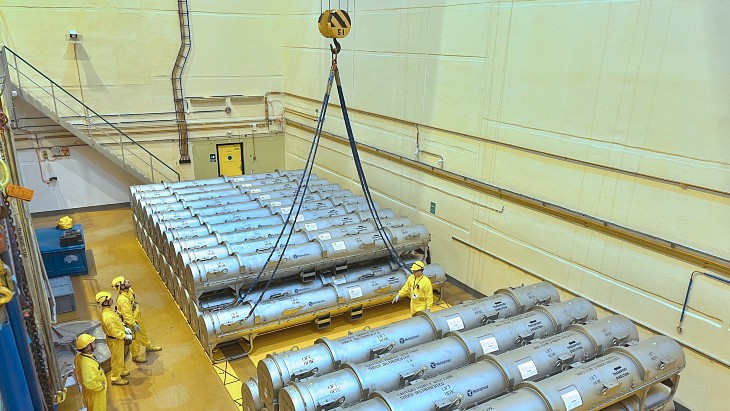
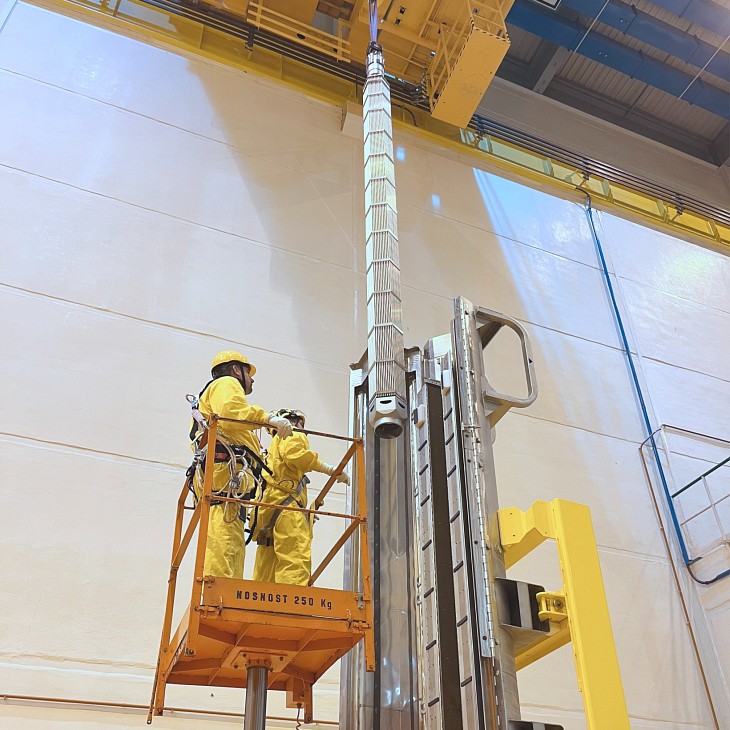
The Czech Republic has taken delivery of the first 30 fuel assemblies for the Temelin nuclear power plant from Westinghouse as it replaces its previous supplier from Russia.
(Image: CEZ)
The country's nuclear power plant operator ČEZ began work to diversify its nuclear fuel suppliers in 2018, signing a contract for the supply of fuel assemblies for the Temelin plant with Westinghouse, and France's Framatome, in 2022. The company said it is expecting new fuel from Framatome next year.
The Czech Republic currently gets about one-third of its electricity from two VVER-1000 units in operation at Temelín, which came into operation in 2000 and 2002 and four VVER-440 units at Dukovany, which began operating between 1985 and 1987.
The diversification of nuclear fuel suppliers - and increases in fuel reserves - is seen as increasing energy security among European Union countries using Russia's TVEL for fuel for their VVER reactors which were designed in the Soviet Union era. ČEZ has also contracted Westinghouse to supply the Dukovany nuclear power plant, and is in negotiations with Framatome to follow suit.
Acceptance checks are currently taking place with specialists verifying the weight of the fuel and performing visual inspections. Bohdan Zronek, director of ČEZ's nuclear energy division, said: "One of the first steps is to check the accelerometers. This is a special device that indicates inappropriate handling during transport."
(Image: ČEZ)
The company says that there had been a five-year series of analyses and tests as part of ensuring the new fuel meets the strictest safety requirements. The new fuel requires a permit from the State Office for Nuclear Safety, with ČEZ currently preparing to submit its application.
The new fuel will also enable longer fuel campaigns of 18 months at Temelin and 16 months at Dukovany, and Daniel Beneš, ČEZ chairman and CEO, said: "This is a step that significantly increases the energy security of the Czech Republic. In addition, to diversifying nuclear fuel suppliers, we also hold strategic reserves in both of our nuclear power plants."
Date set for Taiwan referendum on nuclear restart
Friday, 23 May 2025
A motion to hold a referendum on restarting the recently shut-down Maanshan nuclear power plant was passed in Taiwan's Legislative Yuan, and the Central Election Commission has now approved the proposal.
Maanshan (Image: Taipower)
The commission, which is an independent agency established to handle referendum issues, considered two referendum proposals, rejecting one relating to the the judicial death penalty process, judging that it did not fit the requirements of the Referendum Act.
However, the commission said that the referendum question on nuclear energy - 'Do you agree that the third nuclear power plant (Maanshan) will continue to operate after the competent authority agrees to confirm that there are no safety concerns?' - complied with the provisions of the Referendum Act.
"This referendum proposal is about energy policy, and it is about whether the third nuclear power plant, which stopped operating on 17 May 2025, should be put to a referendum to decide whether to continue operating. It should fall into the category of 'initiative or referendum on major policies'," it said.
It announced that the date for the referendum would be 23 August with voting from 08:00 to 16:00.
The background
Taiwan's Democratic Progressive Party (DPP) was elected to government in January 2016 with a policy of creating a "nuclear-free" Taiwan by 2025. Under this policy, Taiwan's six operable power reactors would be decommissioned as their 40-year operating licences expire. Shortly after taking office, the DPP government passed an amendment to the Electricity Act, passing its phase-out policy into law. The government aims for an energy mix of 20% from renewable sources, 50% from liquefied natural gas and 30% from coal.
As Taiwan's last operating reactor, Maanshan 2 had been providing about 3% of its electricity. On Saturday, it was disconnected from the grid and is set to be decommissioned following the expiry of its 40-year operating licence, in accordance with Taiwan's nuclear phase-out policy.
Last week, Taiwan's Legislative Yuan passed an amendment to the Nuclear Reactor Facilities Regulation Act that allows nuclear power plant operators to apply for a 20-year licence renewal beyond the existing 40-year limit, potentially extending a plant's operating lifespan to 60 years, the Central News Agency reported. The final vote saw the main opposition Kuomintang and the Taiwan People's Party push the amendment through with 60 votes in favour, defeating the ruling DPP's 51 votes.
Separately, Taipei Times reported last week that Taiwan's National Atomic Research Institute (NARI) has launched a large-scale, four-year small modular reactor research project with a budget exceeding TWD100 million (USD3.3 million). President William Lai has said he remains open to the use of advanced nuclear technologies as long as three conditions are met: nuclear safety, proper management of nuclear waste and societal consensus. Anticipating the potential commercial debut of SMRs by 2030, NARI said its goal was to provide a reference for industrial or national policies.
The vote for the referendum to be held on restarting Maanshan 2 was held just three days after it was disconnected from the grid. The proposal was passed by 58 votes to 49, and was supported by the main opposition Kuomintang and the Taiwan's People's Party.
Sweden passes bill on state aid for new reactors
Friday, 23 May 2025
Sweden's parliament - the Riksdag - has approved the government's proposals for providing state aid to companies that want to invest in new nuclear reactors in the country. The new law will enter into force later this year.
The Riksdag's East Wing (Image: Swedish Parliament)
In October 2022, Sweden's incoming centre-right coalition government adopted a positive stance towards nuclear energy. In November 2023, it unveiled a roadmap which envisages the construction of new nuclear generating capacity equivalent to at least two large-scale reactors by 2035, with up to 10 new large-scale reactors coming online by 2045.
In a bill submitted to parliament on 27 March this year, the Swedish government proposed a new law regarding state support for nuclear power investments. In the bill it proposed providing state loans to finance new reactors as well as a contract-for-difference power price mechanism.
The loans - aimed at lowering the cost of financing new nuclear - will be limited to the equivalent of four large-scale reactors (about 5000 MWe of capacity). The government noted that support may only be granted if the new reactors are located at the same location and have a total installed output of at least 300 MWe. The two-way Contracts for Difference may be entered into once a new reactor has become operational and has been licensed to produce electricity at full capacity.
The Riksdag has now approved the government's proposal. The new act on state aid enters into force on 1 August. Interested companies may apply for the aid from that date.
"This is a historic announcement that takes responsibility for public financing and tax payers' money when we enable actors to build new nuclear energy," said Minister for Financial Markets Niklas Wykman. "An expansion of nuclear power is expected to result in greater price stability and lower system costs, which helps households as well as businesses. With new nuclear reactors, we are paving the way for higher growth, more jobs and better conditions to achieve the climate transition."
The government appointed Mats Dillén in December 2023 to produce and submit proposals for models for financing and risk sharing for the construction of new nuclear power reactors. According to the mandate, the proposed models must be designed so that nuclear power with a total output of at least 2500 MWe - equivalent to the output of two large-scale reactors - must be in place by 2035 at the latest.
Dillén presented the findings of the study in August last year. His report said the investigation "identified conditions which give rise to a discrepancy between a private investor's business case for new nuclear power and the socioeconomic equivalent. It is concluded that efficiency reasons give a rationale for the state to support investments in nuclear power".
His proposed financing and risk sharing model consists of three main components that lead to a lower cost of capital that facilitates new investments in nuclear power at a low cost. The components are: state loans to finance investments in new nuclear power, which lowers the cost of capital; a two-way contract-for-difference signed between the state and the nuclear power producer; and a risk and gain-share mechanism that gives investors a minimum return on equity.
Article researched and written by WNN's Warwick Pipe
Finnish regulator on track for repository decision by year-end
Friday, 23 May 2025
Finland's Radiation and Nuclear Safety Authority has said it remains on track to complete its assessment of Posiva Oy's operating licence application for the world's first used nuclear fuel repository despite deficiencies in the materials submitted for review.
(Image: Posiva)
Radioactive waste management company Posiva submitted its application, together with related information, to the Ministry of Economic Affairs and Employment on 30 December 2021 for an operating licence for the used fuel encapsulation plant and final disposal facility currently under construction at Olkiluoto. The repository is expected to begin operations in the mid-2020s. Posiva is applying for an operating licence for a period from March 2024 to the end of 2070.
The government will make the final decision on Posiva's application, but a positive opinion by the Radiation and Nuclear Safety Authority (STUK) is required beforehand. The regulator began its review in May 2022 after concluding Posiva had provided sufficient material. The ministry had requested STUK's opinion on the application by the end of 2023. However, in January last year, STUK requested the deadline for its opinion be extended until the end of 2024. In December, the ministry extended the deadline for the regulator's opinion to 31 December 2025.
STUK has now said that there are still deficiencies in the materials submitted for review by Posiva, "which the company must correct". The regulator also noted that Posiva has made changes to its original plans, which has required updating the materials. "The updates have delayed STUK's work more than expected in the early part of the year," it said.
Although STUK's assessment of the application is in the final stages, the statement and safety assessment cannot be completed until it has assessed and approved all of Posiva's operating licence application materials.
"As soon as we receive the remaining materials we need and the supplements we requested, the assessment can be made and the statement can be completed," said STUK Project Manager Antti Tynkkynen.
"If future Posiva data updates do not cause further clarification, it is possible that the review of the licence application data will be completed well before the end of this year," STUK said.
At the repository, used fuel will be placed in the bedrock, at a depth of about 430 metres. The disposal system consists of a tightly sealed iron-copper canister, a bentonite buffer enclosing the canister, a tunnel backfilling material made of swellable clay, the seal structures of the tunnels and premises, and the enclosing rock.
Posiva announced in late August the start of a trial run - expected to take several months - of the operation of the final disposal facility, albeit still without the used fuel.
"One of the time-consuming issues has been the supervision of the test runs of the disposal facility," STUK said. "During the first quarter of 2025, STUK required Posiva to investigate the status of the systems used in the encapsulation and disposal facility and the test runs for the entire facility. STUK has not yet received most of the test run reports for the safety-classified systems and has not been able to assess the test runs as a whole."
STUK is also assessing the readiness of Posiva's organisation to start operating the final disposal facility. In the autumn of 2024, STUK began enhanced supervision of Posiva's organisation. In parallel, STUK introduced incident investigation methods at the beginning of the year in order to deepen its understanding regarding the observations it has made concerning Posiva's organisation as well as the factors underlying them. At the same time, STUK is looking for ways to plan, target and develop its own supervision.
"I find it positive that, in addition to our own estimates, the authority is taking steps to independently ensure that our operations meet all the set safety requirements," said Ilkka Poikolainen, President and CEO for Posiva.
The government granted Posiva a construction licence for the project in November 2015 and construction work on the repository started in December 2016. Once it receives the operating licence, Posiva can start the final disposal of the used fuel generated from the operation of TVO's Olkiluoto and Fortum's Loviisa nuclear power plants. The operation will last for about 100 years before the repository is closed.
Article researched and written by WNN's Warwick Pipe
WAIT, WHAT?!
Russia 'ready to keep supplying enriched uranium to USA'
Friday, 23 May 2025
World Nuclear News,
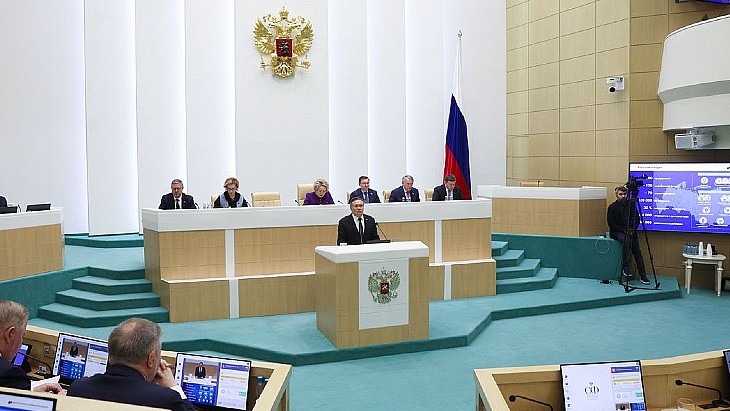
Rosatom Director General Alexey Likhachev has said the USA continues to buy enriched uranium from Russia and "in the context of the ongoing negotiations between the US and the Russian Federation ... we can expand the agenda of this cooperation".
The Rosatom director general speaking at the Federation Council (Image: Rosatom)
The comments to media, reported in multiple news outlets in Russia including the official Tass news agency, also included Likhachev saying that "despite all bans, the Americans buy it" because price-wise "it makes sense for them".
He was speaking after addressing the Federation Council of the Federal Assembly, where he set out the state of the nuclear energy sector and the state corporation's future plans, including to build 38 large, medium and small nuclear power units by 2042 and increase nuclear's share of energy generation to 25% by the mid-2040s.
He was asked during the Federation Council session about the impact of sanctions, and said that although "it doesn't make our lives easier" it had not stopped its developments - apart from in Finland - adding: "We will be present in the European market one way or another, and will cooperate in uranium supplies with the United States of America, unless another decision is made." He said that about 20% of Rosatom's overseas earnings came from "unfriendly" countries, while trade with "friendly" countries grows.
The then US President Joe Biden's Prohibiting Russian Uranium Imports Act came into force in August 2024 and lasts until 2040. Until 2028 waivers may be granted to allow the import of limited amounts of Russian-origin low enriched uranium. According to US Energy Information Administration data, while US facilities provided 28% of the uranium enrichment services - measured in separative work units, or SWU - purchased by US owners and operators in 2023, 27% came from Russia, more than any other foreign supplier.
The US legislation was followed by Russia responding by imposing a ban on exports of enriched uranium to the USA, although exemptions would be made for deliveries under one-off licences issued by the Russian Federal Service for Technical and Export Control.
Since those tit-for-tat measures were imposed there has been a change of president in the USA and there have been detailed contacts and talks between the USA and Russia relating to the Ukraine war and wider relations.
Khokhlovskoye uranium deposit
Meanwhile JSC Rusburmash, part of Rosatom's mining division, announced it had finished the construction of facilities for developing the Eastern deposit of the Khokhlovskoye uranium deposit in the Shumikhinsky District of the Kurgan Region which lies on Russia's southern border with Kazakhstan. It said that over two years "the Vostochnaya local sorption unit, an underground water intake site, utility network overpasses and process pipelines, and other facilities were built".
"Currently, the Central and Western deposits are being developed, and production has begun in the Eastern one. Further plans include developing the Far Eastern and Dyuryaginskaya deposits," said Dinis Ezhurov, General Director of JSC Dalur, which is developing the Khokhlovskoye deposit and which is the first enterprise in the country to mine uranium using the borehole in-situ leaching method.
The company said that digital tools are being used to manage the development of uranium deposits which makes it possible "to identify and evaluate the additional volume of uranium reserves ... and allow for a reliable assessment of the mining and geological conditions of the developed areas of deposits, modeling development options, conducting an accurate analysis of the work performed, promptly making decisions when analysing and forecasting the development of the deposit, geological modeling and planning".
Trump signs orders to revive US leadership in nuclear power
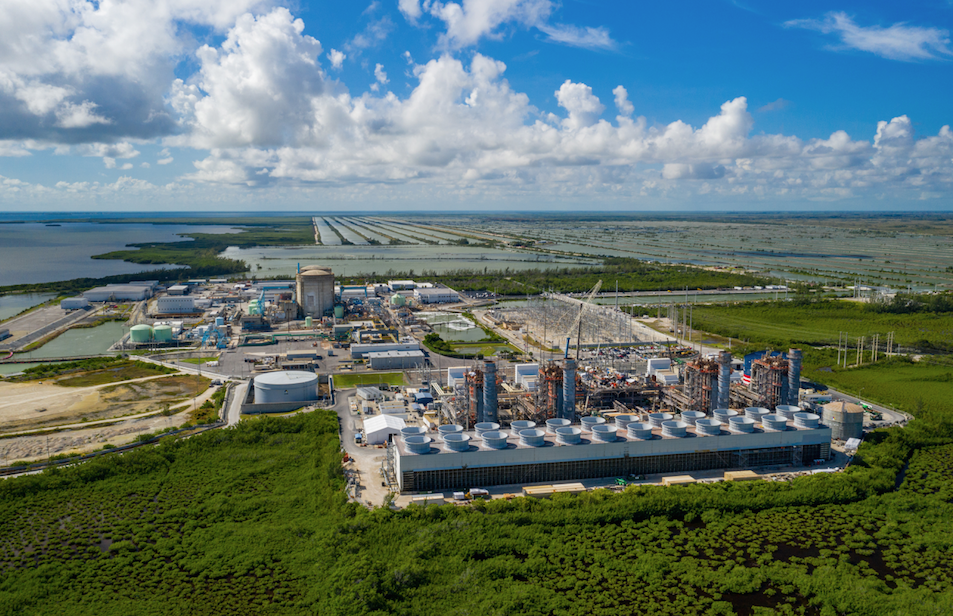
Nuclear power generation fusion station reactors in Homestead, Florida. Stock image.
President Donald Trump on Friday signed orders meant to accelerate the construction of nuclear power plants, including small, untested designs that offer the promise of rapid deployment but haven’t yet been built in the US.
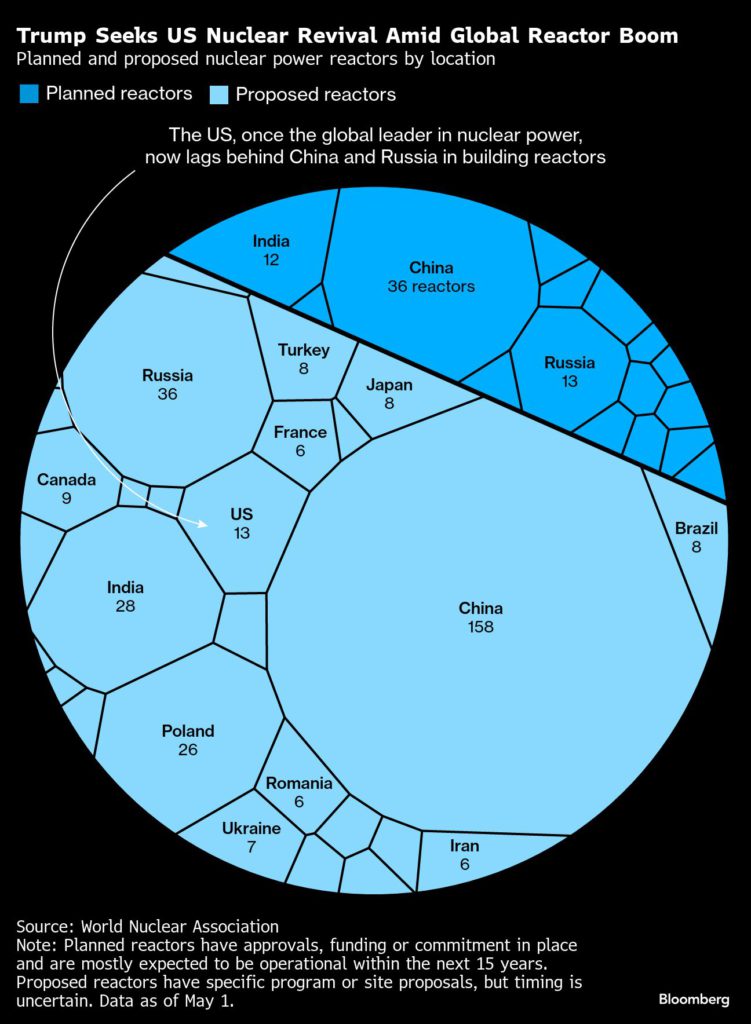
The effort is a bid to meet a coming surge in electricity demand and help the US reclaim its edge in nuclear energy. While the country was once the leader in deploying and producing nuclear power, it’s finished building only two new reactors in the last 30 years and shuttered existing plants, even as China and Russia race to deploy them.
Trump’s initiative to unleash nuclear energy could give a boost to an emission-free source of power that’s championed as a climate-friendly alternative to electricity generated by burning coal and natural gas. However, the president has cast nuclear energy as a complement, rather than a replacement, for fossil fuels.
“We’re signing tremendous executive orders today that really will make us the real power in this industry,” Trump said as he issued the directives in the Oval Office, adding that nuclear technology “has come a long way, both in safety and costs.”
Trump was joined by Interior Secretary Doug Burgum, Defense Secretary Pete Hegseth and energy industry executives including Constellation Energy Corp. CEO Joseph Dominguez and Jake DeWitte of Oklo Inc.
The initiative represents the latest bid by an American president to jump start the domestic nuclear industry, which has languished in recent decades. Former President Joe Biden last year laid out a plan to triple US nuclear capacity by 2050, and Trump’s new plan aims to quadruple it. It also comes as technology companies are clamoring for power to supply energy-hungry data centers.
The effort is likely to give a boost to companies developing small reactors, including Last Energy Inc., Oklo, TerraPower LLC and NuScale Power Corp.
One of the orders also aims to get 10 large, conventional reactors under construction by 2030, potentially benefiting Westinghouse Electric Co., whose gigawatt-scale AP1000 design was the last commercial nuclear unit built in the US and has been embraced worldwide.
Trump’s nuclear initiative also would encourage the use of government financing to support the restart of shuttered nuclear plants, target 5 gigawatts worth of upgrades at existing sites and help spur the completion of others — potentially aiding South Carolina utility Santee Cooper’s bid to resume building two reactors at its V.C. Summer plant, where soaring costs prompted the company to halt construction in 2017.
However, Trump’s nuclear push comes as lawmakers move to phase out a government subsidy that’s seen as critical to helping propel construction of new reactors and support existing plants. Developers have said the change would create a significant barrier to building nuclear plants.
Under a bill that passed the House early Thursday, new and expanded advanced nuclear projects would be eligible to receive clean energy tax credits only as long as they begin construction by the end of 2028, while tax credits for existing nuclear power plants would expire at the end of 2031.
Trump’s initiative aims to spur construction of at least one reactor at US military installations. That would allow nuclear energy to power and operate critical defense facilities and AI data centers, a senior White House official said. And, because that approach doesn’t involve commercial plants, it lets developers bypass the customary approval process through the Nuclear Regulatory Commission.
In the meantime, the NRC would also get an overhaul. Trump is ordering a reorganization of the agency and a culling of its workforce in consultation with the president’s Department of Government Efficiency cost-cutting program, along with fixed timelines for license approvals and “a wholesale revision” of its regulations.
While some developers have decried the lengthy and expensive process to secure NRC approval for proposed designs and renew licenses for existing facilities, some nuclear power advocates worry the effort may backfire by sparking regulatory upheaval and uncertainty. If new reactor designs can’t be fully vetted within the president’s proposed 18-month deadline, they warn, the models could even be rejected altogether, an outcome that would likely undermine Trump’s deployment goals.
Trump is also ordering the NRC reconsider radiation limits, saying its reliance on safety models assuming there is no safe exposure threshold has led to “a myopic policy of minimizing even trivial risks.”
Some energy experts have expressed alarm about the president’s plan to strengthen the domestic supply chain for nuclear fuel, potentially creating a market for reprocessed radioactive material and surplus plutonium stockpiles. Former US Energy Secretary Ernest Moniz this week warned that the proposal may lead “to the creation of additional stocks of weapons-usable materials.”
The president is also embracing the Energy Department’s Loan Programs Office as a potential source of financing for nuclear projects. Under Trump’s orders, the office would be directed to prioritize activities and resources for restarting shuttered plants, increasing output at existing sites, completing construction of unfinished reactors and building new advanced-nuclear units.
Constellation’s Dominguez said current permitting processes waste time, especially as data center operators and hyperscalers seek out 24/7 power supply. “We need to do this for America,” he said alongside Trump.
Reactors currently supply almost a tenth of the world’s power, including about 100 gigawatts of capacity in the US. Advocates say the industry needs to grow threefold by 2050 to help avoid the most catastrophic consequences of climate change. Like wind and solar plants, nuclear generates electricity without producing the greenhouse gas emissions that drive global warming. But reactors also have the advantage of running around the clock, delivering the non-stop power that’s in-demand from artificial intelligence companies and data center operators.
The US was at the vanguard of installing nuclear power plants for decades, but China is now the world’s top builder, with roughly 30 reactors under construction. Russia, meanwhile, has spent years honing its own technology and has exported reactors to buyers in India, Iran and elsewhere.
(By Jennifer A. Dlouhy)
Nuclear Stocks Surge on Trump Reactor Approval Plans
President Trump is expected to sign executive orders to streamline the approval process for new nuclear reactors and to strengthen U.S. nuclear fuel supply chains, aiming to boost the industry.
News of these potential orders has caused nuclear stocks, such as NuScale and Oklo, to surge significantly in after-hours trading.
The White House is considering various measures to increase U.S. nuclear capacity to 400 GW by 2050, including overhauling NRC licensing and authorizing reactor deployments on military and DOE property.
President Donald Trump is expected to sign executive orders as early as Friday to boost the nuclear energy industryby streamlining reactor approvals and reinforcing fuel supply chains, Reuters reported on Thursday afternoon.
Four sources familiar with the matter told Reuters that the forthcoming orders aim to simplify the regulatory process for approving new nuclear reactors and to strengthen nuclear fuel supply chains amid mounting concerns over U.S. dependence on foreign suppliers.
The news sent nuclear stocks soaring in the after hours session, with names like NuScale and Oklo up 13% and 17%, respectively.
As we noted less than a week ago, both names are moving forward with SMR permitting and plans. Sam Altman-backed Oklo says it is navigating what CEO Jacob DeWitte calls “good uncertainty” as potential Trump administration executive orders could accelerate Nuclear Regulatory Commission (NRC) licensing, expand military and Department of Energy (DOE) nuclear roles, and boost U.S. nuclear fuel supply chains, according to UtilityDive.
On Oklo’s Q1 2025 earnings call, DeWitte confirmed the company is engaged in a “pre-application readiness assessment” with the NRC, aiming to smooth its formal license submission for a newly upsized 75-MW reactor design in Q4 2025. The company still targets late 2027 or early 2028 for first power production at its Idaho National Laboratory (INL) site.
DeWitte noted the recent departure of OpenAI CEO Sam Altman as Oklo board chair removes a potential conflict of interest should OpenAI become a future power customer. Oklo already holds about 14 GW in nonbinding agreements with data centers and industrial operators.
The White House is weighing four nuclear-related executive orders, including directives to overhaul NRC licensing with an 18-month deadline for new applications, reconsider radiation exposure limits, and authorize military and DOE property for reactor deployments—potentially bypassing standard NRC approvals.
These efforts aim to boost U.S. nuclear capacity to 400 GW by 2050, up from about 100 GW today. While the NRC is already implementing changes from last year’s ADVANCE Act, further reforms could shorten Oklo’s expected 24- to 30-month licensing timeline.
The UtilityDive report says that Zero Hedge favorite Oklo is also among eight companies eligible for the military’s Advanced Nuclear Power for Installations program, enabling on-base reactor deployments. It’s developing nuclear fuel fabrication facilities capable of reusing spent fuel that would otherwise sit in long-term storage.
Meanwhile, as we noted on X this evening, OKLO is now up 9x since Jim Cramer said "I can't even look at it" back in October 2024.
By Zerohedge.com
DEREGULATION
US approves Utah uranium mine after two-week environmental review
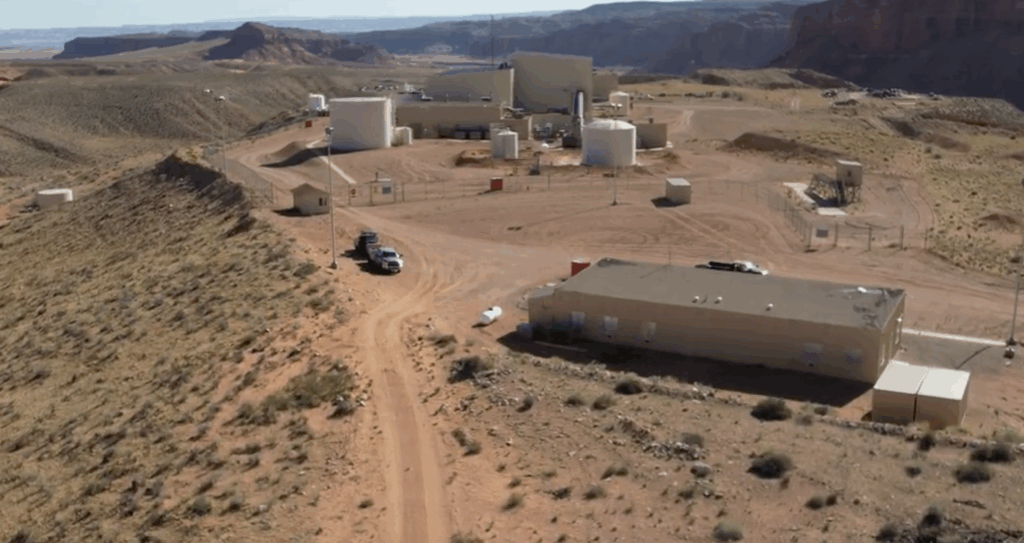
Shootaring Canyon uranium mill in Utah. Image: Screenshot from Anfield Energy presentation.
The Trump administration approved Anfield Energy’s proposed Velvet-Wood uranium mine project in Utah on Friday after a rapid 14-day environmental review as part of a new process to fast-track permitting of energy and mining projects.
Such studies typically take years because of the large potential environmental consequences of uranium mining.
The Canadian company’s project is the first approved under an emergency process for the Interior Department to permit energy facilities on federal lands. The new procedures are in response to President Donald Trump’s national energy emergency declaration, made on his first day in office in January in an effort to boost domestic energy supplies, bring down fuel prices and bolster national security.
Anfield filed its plan of operations for the mine on April 1, according to documents on an Interior Department website.
“This approval marks a turning point in how we secure America’s mineral future,” Interior Secretary Doug Burgum said in a statement. “By streamlining the review process for critical mineral projects like Velvet-Wood, we’re reducing dependence on foreign adversaries and ensuring our military, medical and energy sectors have the resources they need to thrive. This is mineral security in action.”
Anfield was not immediately available for comment.
The Velvet-Wood mine project in San Juan County will produce uranium, used in both nuclear energy and nuclear weapons production, as well as vanadium, a metal than can be used in batteries or to strengthen steel and other alloys.
It is located at the site of a previous mining operation.
(By Nichola Groom; Editing by Leslie Adler and Cynthia Osterman)
Nuclear Batteries Could Bring Power to Space and the Ocean Floor
Nuclear batteries offer a power source that can last for decades, utilizing radioactive materials and their decay to generate energy, making them ideal for remote and extreme environments.
Both the United States and China are at the forefront of developing these nuclear battery technologies, with companies like Zeno Power and Betavolt producing advanced models for various applications.
The potential applications of nuclear batteries range from powering space missions and oceanographic equipment to potentially enabling consumer electronics that require charging much less frequently.
"With great power competition rising, the ocean floor, Arctic, and lunar surface are becoming the front lines of global security and economic progress — but they remain energy deserts," says Tyler Bernstein, the Chief Executive Officer of a venture-backed nuclear battery startup called Zeno Power. Zeno Power just received $50 million in Series B funding to continue its work to develop nuclear batteries for extreme environments.“With this round of funding, we’re on track to demonstrate full-scale systems in 2026 and deliver the first commercially built nuclear batteries to power frontier environments by 2027,” Bernstein continued.
Nuclear batteries hold immense potential for frontier innovations because they can last for decades, or even a century, without needing a charge. The way that the battery powers itself is through capturing the particles emitted by radioactive materials as they decay, and harness their energy. Since these radioactive materials – such as Strontium-90, Nickel-63, and Carbon-14 – have lengthy half-lives, these batteries have enormous potential for longevity.
Zeno Power’s investing tractio is just the latest development in a long legacy of nuclear battery experimentation in the United States. The U.S. government began experimenting with nuclear batteries way back in the 1950s through NASA, and the nation led the global research and development charge for 70 years. But now, the United States is quickly being overtaken by China.
While Zeno Power is closer to getting its batteries off the ground, Chinese labs are already producing them. Early last year, China-based nuclear battery company Betavolt rolled out a tiny, coin-sized nuclear battery named BV100 with an estimated half-century lifespan thanks to its use of Nickel-63. “But this battery isn’t just a lab innovation,” reports Popular Mechanics. “It’s already being mass produced, with the intention to power technologies ranging from medical and aerospace devices to future smartphones.”
Betavolt’s technology differs from that of “traditional” (for lack of a better term) nuclear batteries. Rather than using a thermoelectric method, like NASA’s models, Betvolt’s “betavoltaic batteries” use a radioactive emitter and semiconductor absorber which is specifically designed to capture beta particles – the electrons and positrons that are emitted by the decaying Nickel-63. While this process produces less power than NASA’s thermoelectric method, their power production is reliable and incredibly long-lasting, with potential to endure a century or even longer.
Another team of researchers in China has been working on another nuclear battery with a 100-year lifespan based on Carbon-14. However, Carbon-14 is much more rare than Nickel-63, suggesting that Betavolt’s technology will be more scalable. In both cases, China seems to have enough supplies of these isotopes to make the research and development of these technologies worthwhile. “Mimicking its photovoltaic playbook for solar energy, China is building the entire supply chain for these devices within its own borders,” Popular Mechanics reports.
Meanwhile, on the other side of the Pacific Ocean, Zeno Power has “locked in a strontium-90 fuel supply” from the U.S. Department of Energy, and boasts contracts with the Department of Defense and NASA, totalling tens of millions of dollars according to reporting from Axios. The company is also collaborating with the commercial space sector, and is working with the lunar robotics company iSpace-U.S. to “develop nuclear-powered systems that can survive the extreme cold of the lunar night” according to Space News.
“Nuclear energy is having a renaissance, and Zeno is at the forefront of bringing it to places no other energy can reliably go,” said Lior Prosor, partner at Hanaco Ventures, one of Zeno’s key funders. “Zeno’s nuclear batteries will have an immediate impact in defense and space, and long-term potential to transform how energy is delivered in remote and distributed environments.”
The potential for scaling these technologies range from the high-minded (think outer space and the ocean floor) but could also lead to more practical day-to-day innovations like a cell phone that never needs to be charged. The disruptive potential is enormous and constantly evolving. Together, the United States and China are the clear frontrunners in the nuclear battery battle, but some European nations and South Korea are also making headway on their own models.
Despite bold targets and public optimism at the World Hydrogen Summit 2025, only 6% of green hydrogen projects in Northwest Europe are being implemented, and just 9% have reached final investment decision.
The absence of a functioning commodity market for green hydrogen is a major barrier.
EU governments continue to push forward with nearly €2 billion in subsidies and funding announcements, but the fundamental issues remain.
Realism is still far away in the European green hydrogen sector; the IEA reports significant constraints. It is high time to bring a more realistic approach to the forefront of our strategies.
Realism still seems to be out of reach when the world hydrogen sector has been sailing into the Port of Rotterdam, all having coffee at the World Hydrogen Summit 2025. The last day's optimism has been vented by major green hydrogen producers, technology suppliers, and a wide range of governments, led by the Dutch government and its counterparts from Oman, Algeria, Australia, and other far-fetched regions. While hearing the optimism and official strategies, realities on the ground are much more tricky—or even negative—especially when looking at real project volumes in place or the bankability of most other projected investments. While the European Union and the Dutch or German governments are pushing—via subsidies and market manipulation—a possible growth of supply and demand for green hydrogen, or its derivatives, green ammonia or methanol, market fundamentals are all red.
As stated by the OECD energy watchdog in Paris, the International Energy Agency (IEA), in its latest Northwest European Hydrogen Monitor 2025, strategies and implementation are still not in sync. In its report, which was presented by Greg Molnar, gas analyst at the IEA, at the World Hydrogen Summit 2025 in Rotterdam, Northwest Europe is at the forefront of low-emission hydrogen developments, as it accounts for 40% of total European hydrogen demand. At the same time, NW-Europe also holds vast and untapped renewable energy and carbon storage potential, mainly in the North Sea. While massive investments are being made in setting up the so-called green hydrogen backbone—a NW-European hydrogen pipeline network supported by Germany and the Netherlands—demand is still fledgling or doesn’t exist. While plans (NL, Belgium, Denmark, Germany, and the UK) promise to reach a 30–35GW electrolyzer capacity by 2030, no real progress is made. As Molnar indicated in his presentation, only 6% of the total projects mentioned or discussed at present are being implemented. At the same time, only 9% of total projects under discussion are reaching FID. The reality is that most strategies are hit by a lack of investments, a lack of demand, too-high price settings, and no or very meager bankability.
Even though the IEA officially doesn’t mention it, nor does any other green hydrogen party at present, there is no market without getting a green hydrogen commodity market working. Establishing a viable commodity market is not just a necessity—it is the backbone of the industry. Without a possible price point developed for green hydrogen and derivatives, the financial world will not be willing or interested in taking the risk. The bankability of projects that cannot show a feasible margin or projected income stream is out of order. As shown in most other commodity markets, such as crude oil, price points make a commodity financially attractive. Without a possible volatile but working commodity market, the need for long-term contracts—based on subsidy schemes or government interference—is not a strategy that should be followed.
While speaking on the sidelines of the Summit in Rotterdam, some participants also questioned the current full-scale push for green hydrogen, not green ammonia or other options. While markets are looking for low-emission or renewable energy solutions, choices are being made by politicians and others based on their assumptions, not based on technical and commercial facts. (Green) ammonia is a much easier and more functional alternative, as it doesn’t have the same transport issues, doesn’t need vast new vessels, and poses fewer risks when emitted into the air. Current developments are based on strategies that seem neither feasible nor functional, especially when looking at the price levels of green hydrogen versus other alternatives. Competitiveness is not there, and assessments indicate that it will not even reach price levels that could become commercially interesting before 2040. Enforcing green hydrogen as a fuel by increasing emission tariffs or other instruments should—especially in Europe—not be taken as an option, considering the dire state of mainstream industrial sectors and transportation within the European Union and the UK.
The IEA, as representative of its member governments, still advocates a renewed push to integrate regional markets, targeting synergies. However, as history has proven, the choices made by companies will ultimately shape the future of the European green hydrogen sector, often contrary to the perceived goals of governments or NGOs.
Still, European governments seem to be sticking to their already fledgling strategies. The European Union has allocated almost €1 billion for renewable hydrogen production projects. The latter will be mainly used as a subsidy, indicating a subsidy range of €0.20 to €1.88 per kg of green hydrogen. The EU also stated that it has selected 15 renewable hydrogen projects to receive €992 million in budget funding. This funding in five countries is slated to produce around 2.2 million tons of hydrogen over 10 years. The EU ETS system funds the total.
The market is also eagerly awaiting the next auction of the European Hydrogen Bank, which is scheduled for the end of 2025 with a budget of up to €1 billion. During the World Hydrogen Summit, Dutch Minister Hermans announced that the Netherlands and Germany agreed to invest around €600 million in the acquisition of green hydrogen, trying to push the market to become more fluent. The latter will be organized via Hintco, set up by H2 Global. The latter will be a competition-based sales process, entailing a 10-year green hydrogen purchase agreement (HPA). The latter is still interesting, as the whole process also allows for the inclusion of green ammonia and methanol.
While market participants—such as suppliers, manufacturers, and governments—maintain a clear optimistic view, the reality is still bleak. Investments are lacking, subsidies are distorting most progress, and demand is not available. It is crucial to reconsider strategies and realize that green hydrogen will be part of the solution (by 2050) but will not dent hydrocarbon or nuclear demand. The time for action is now.
By Cyril Widdershoven for Oilprice.com
Musk Defends Tesla, Warns of Consequences for Protesters
Elon Musk condemned recent politically motivated attacks against Tesla.
Despite backlash and protests—including vandalism and arson—linked to his political support of Trump and far-right parties, Musk said he has “no regrets” and emphasized his commitment to maintaining control over Tesla.
Musk tied his continued leadership at Tesla to securing “reasonable control,” rejecting the idea of remaining without a favorable pay deal.
Elon Musk has issued a stark warning to those behind violent attacks against Tesla, vowing criminal consequences for what he described as “evil” acts of politically motivated vandalism and threats.
Speaking in a virtual interview at the Qatar economic forum on Tuesday, the Tesla and SpaceX chief executive said he had taken the recent wave of violence and backlash “personally”, and was unequivocal in his condemnation of those behind them.
He said: “I’m not someone who has ever committed violence, yet massive violence was committed against my companies.”
“To damage some innocent person’s car, to threaten to kill me… What’s wrong with people?”, he added.
Musk claimed that several individuals responsible for various attacks on Tesla showrooms or cars were already facing jail time, and added: “We’re coming for you… the people that funded and organised them too will go to prison”.
Recent Elon Musk backlash
Tesla has recently faced waves of protests, both violent and peaceful, following its boss’s political interventions, including the support of president Donald Trump and far-right European parties, as well as his leadership position of the US Department of Government Efficiency (DOGE).
Some protests were performed through vandalism and arson, while certain incidents are even being reportedly treated as domestic terrorism by the FBI.
Asked whether he regretted the political movements that ignited this backlash, Musk was resolute, saying: “I did what had to be done.”
The billionaire continued by defending his commitment to his company, Tesla, whilst underlining that his tenure was conditional on maintaining what he called “reasonable control” of the firm – most notably as it ventures into building “millions of humanoid robots”.
“This is not about money,” Musk warned, when interrogated about the value of his disputed $100bn compensation package from 2018, which is under legal review. “It’s about making sure activist investors can’t oust me for political reasons. That would be unacceptable.”
Musk comments come amid speculation that Tesla’s board is weighing a new pay structure to retain him long-term. When asked if his commitment to Tesla over the next five years was independent of any future pay deal, Musk bluntly replied: “No.”
Tesla’s sales have faltered in Europe, though Musk downplayed concerns, calling it the “weakest market”, while citing strong global demand and share price performance.
He also confirmed Tesla would launch its robotaxi fleet testing in Austin next month.
Elon Musk also directly addressed the media, accusing outlets of justifying violent responses to his actions. “Shame on them”, he said.
_52327.jpg)
_48620(1)_58208_19595.jpg)
_34368.jpg)