Saturday, May 24, 2025

Burç: Erdoğan only thinks about preserving his political survival


BARIŞ BOYRAZ
NEWS DESK
Monday, 19 May 2025

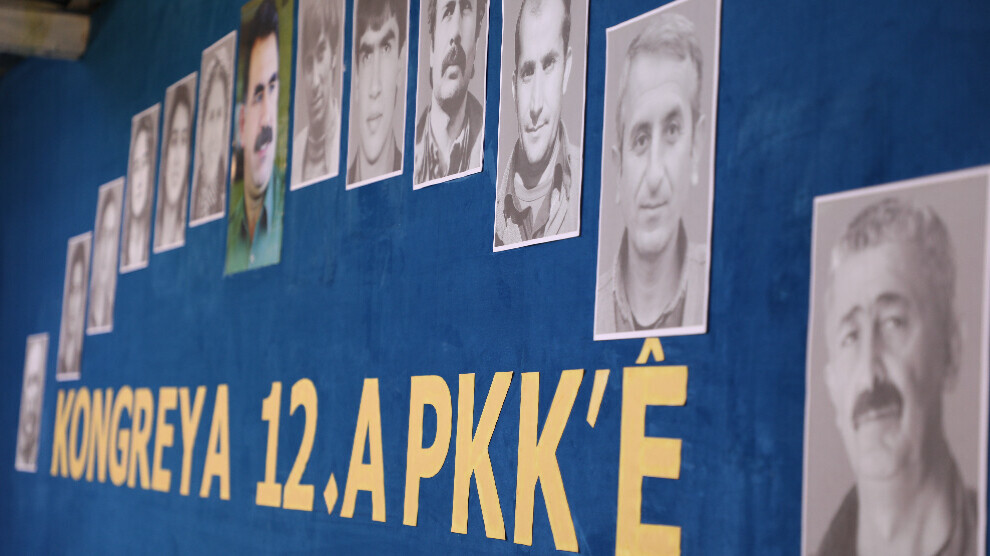
The announcement of the decisions made at the Kurdistan Workers’ Party (PKK)’s 12th Congress has brought a new dimension to the ongoing debates on resolution and political process. Held on the basis of Abdullah Öcalan’s 'Call for Peace and a Democratic Society' issued on 27 February, the congress has raised expectations of the Turkish state to take steps toward resolving the Kurdish question through democratic means.

Journalist Eyüp Burç responded to ANF’s questions on the issue.

What do the PKK’s 12th Congress decisions mean in the context of the resolution debates? How do you interpret them?

The decisions announced by the PKK mark a new phase in the ongoing process. The 'Call for Peace and a Democratic Society' made on 27 February included the decision to dissolve the PKK and end the armed struggle. This was finalized at the congress, and in a way, that call has now been fulfilled.

This development signals a new stage in the Kurdish struggle for freedom and rights, and in their process of becoming a collective and political subject. It reflects a historical turning point in the conflict that has continued since the founding of the Republic. We are now entering a phase centered entirely on democratic struggle, moving away from the dynamics of armed conflict.

Would you describe this new phase as a legal and democratic struggle?

Post-conflict periods are processes of legal and democratic struggle. Like any legitimate form of resistance, democratic struggle is also legitimate. Based on fundamental rights and freedoms, the Kurdish people’s effort to be recognized as a collective subject is entirely a lawful struggle. From the Kurdish side, it is a struggle for a cause that holds moral superiority.

Therefore, with the armed phase now effectively consigned to history, this new stage will be one of democratic struggle. A legal foundation must be established for the transition from armed resistance to democratic engagement. For this process to evolve into lasting peace, justice and legal recognition must prevail.

The overwhelming majority of political actors in Turkey have supported the current phase. Still, there is a small segment that opposes it. Some are attempting to stir controversy over terms like 'Lausanne' and 'genocide' mentioned in the PKK’s congress statement. What do those disturbed by the PKK’s decision to disarm actually want? Do they want war?

These groups see themselves as having gained a certain level of power within the century-old state structure. I believe there are still elements within both the military and civilian bureaucracy that cling to policies of denial and destruction. Beyond that, there is also a segment shaped by the official ideology that has dominated the past century.

They tried to reproduce this official narrative within universities. From academia to the media, they sought to spread and regenerate an ideology built on uniformity. Some of the objections come from people influenced by this process. I see those shaped by a century of such education and manipulation as a natural consequence.

But there are also those who deliberately distort the situation. These people are not innocent. Therefore, the dissolution decision and the transformation of the Kurds are also triggering changes among their counterparts. Out of fear of this transformation, we are seeing demagogic distortions emerge.

How would you compare the current process with previous ones?

In fact, this process has existed since 1993. For those years, the idea of resolving the issue in Turkey through means other than conflict has consistently been on the agenda. The process that began between Turgut Özal and Abdullah Öcalan, shaped through diplomatic shuttle efforts and, to some extent, ceasefires, has experienced interruptions at various stages. From this perspective, one can say that a body of experience has accumulated in Turkey regarding this issue. These past efforts have laid the groundwork for today’s developments.

What makes the current process different from previous ones?

First of all, previous processes were shaped by many factors, conjunctural, regional, and global. Certain steps were taken when these factors aligned. But fundamentally, since 1993, the Kurdish movement has undergone a paradigmatic shift. It moved away from a paradigm of independence toward one centered on coexistence, a shared homeland, and ultimately, the pursuit of democratic solutions. Since 1993, Abdullah Öcalan’s efforts for peace have played a major role in shaping this approach.

I have personally witnessed various phases of this process, both as a journalist and as a Kurd. And it is precisely because of this paradigmatic shift that the use of arms has moved away from a state-building goal and toward a process of recognition and self-defense. That transformation is directly related to the current phase.

Today, international dynamics, regional conditions, and domestic developments in Turkey all play a role. What I’m trying to say is this: since 1993, regardless of the circumstances, the Kurdish movement has consistently upheld the idea that this issue must be resolved through nonviolent means. This has been a core principle from the beginning.

Turkey, on the other hand, has been driven to this point not through internal efforts alone, but largely due to regional and international developments. In that sense, the state’s evolving approach has been shaped more by external pressures than internal convictions.

At this point, both the regional and international balance of forces, as well as Turkey’s internal situation, are compelling both sides toward a solution. That is the reality we must recognize.

Would you describe this as a necessity?

In a way, the objective conditions have brought necessity to the forefront. But subjectively, the Kurdish movement has always desired this path. The intent and effort were there from the beginning, and that must be acknowledged. However, Turkey defines this process as a 'Terror-Free Turkey.' There is a historical context to that framing as well.

Why do you think it is being called 'Terror-Free Turkey'?

In academic and international political terms, this is typically referred to as 'conflict resolution.' But to understand why it is being labeled 'Terror-Free Turkey,' we need to go back and look at the process that began with Turgut Özal.

Özal made serious efforts to solve this issue through security-based and eliminationist policies. We know about the village guard system, and the Gendarmerie Intelligence and Counter-Terrorism (JITEM) unit, along with similar mechanisms. While implementing these measures, he also came to realize that they would not lead to a solution. For this reason, Özal believed that points of resistance within the state had to be transformed.

He began by initiating changes within the National Intelligence Organization (MIT). Until that time, nearly all MIT undersecretaries had been retired generals. Generals who had not become Chief of General Staff would seek to become MIT undersecretary after retirement. Thus, the Turkish state stood on two main pillars: MİT and the military. Both had to be prepared for the process Özal wanted to initiate.

To that end, Özal began a process of civilianization within MIT. Two key figures emerged during this period: Emre Taner and Şenkal Atasagun. Both would later become MIT undersecretaries. Özal also attempted to change the prevailing traditions in the military. He abandoned seniority-based appointments and did what was necessary. In some ways, he tried to intervene in the military as well, but he was not able to achieve the desired results there.

We know that reports were written within the military stating that the Kurdish issue could not be resolved through security-focused policies. Later, just as Özal himself was pushed out, so too were commanders like Eşref Bitlis, those who were seeking a peaceful solution. However, one thing remained: the transformation initiated within MIT through civilianization.

When Erdoğan came to power, the integration process with the European Union (EU) pushed him once again toward a resolution. Erdoğan attempted to revive one of the solution models that had already been developed.

In my view, the search for a solution within the state under Erdoğan took shape around two distinct models. This is how I categorize it based on my readings and assessments. One is the model led by Emre Taner, which is more liberal and democratic. The other is led by Şenkal Atasagun, and it represents a more conservative and nationalist approach.

Lately, Şenkal Atasagun’s name has been circulating behind the scenes...

Exactly. The solution model I describe as liberal and democratic, shaped by Emre Taner, was based on the idea of clearly identifying the problem: “Let us name it, the Kurdish question, and seek a solution to that question.” It was a model that defined the issue as such.

The other model, shaped by Şenkal Atasagun, took a different approach: “If we call this a Kurdish question, it will create a corresponding Turkish question. Therefore, let’s not call it the Kurdish question. Let’s call it a terrorism problem and launch a process to resolve terrorism.”

So, the terminology itself reflected two fundamentally different approaches. One sought a solution through recognizing and naming the Kurdish question. The other avoided that recognition and instead framed it as a terrorism issue, delaying the core matter.

But doesn’t this model also shape how the issue is perceived by society? Isn’t this 'terror' framing what creates confusion in people’s minds today?

Each of these models corresponds to a political party, whether in government or in opposition. They reflect attempts either to gain or maintain power. There is also a concern about how their political future will be affected. That’s why the societal dimension of this issue has always mattered to them in the resolution process.

Statements like 'Even if it’s poison, I will drink it,' or 'I won’t just put my hand, I’ll put my whole body under the stone,' are populist slogans. If only they reflected real commitment. But in truth, these parties calculate how the issue will be perceived by the public and what kind of reaction it may provoke. Ultimately, as each side takes steps based on the needs of the state, they also do so while planning their own political future.

That’s why there has been an effort to assign the task of avoiding the creation of a 'Turkish question' to a conservative, nationalist, pro-Turkish party like the Nationalist Movement Party (MHP), or to leave the moderation of the process in its hands. Back in 2004, the resolution process was already being shaped around two models. Later, the Justice and Development Party (AKP) moved to the forefront. The process that began with the Oslo talks and later became known as the resolution process was born out of that approach.

The AKP sought to implement the project associated with Emre Taner, which we characterize as liberal and democratic. That process ended with the Dolmabahçe Agreement. Or as they put it, it was 'put into the freezer.' The moderation of the new phase was handed over to Devlet Bahçeli. By his side, as his advisor, sitting in the next room, is Şenkal Atasagun. That means the plan designed by Şenkal Atasagun is now in effect. And that is why this new process is being called “Terror-Free Turkey.”

The process is underway, but some say there are differences of opinion between Erdoğan and Bahçeli. As of today, Erdoğan seems to have effectively accepted this process. Yet, as in the past, the issue of democracy in Turkey remains a subject of ongoing debate. Do you think there is a real difference between Erdoğan and Bahçeli? Will Erdoğan’s fear of losing power keep the democracy issue on the agenda? And if it does, how might that affect the resolution process?

There is no way to resolve the Kurdish question through undemocratic means. That is absolutely clear. In my view, Erdoğan and Bahçeli have different perspectives. However, I do not believe that Erdoğan is inherently opposed to a resolution. But Erdoğan prioritizes his own political future above all else. He becomes a supporter of resolution only if it creates an opportunity that could help him win another term. Under normal conditions, I believe he would support a peaceful solution.

At the moment, his primary concern seems to be not the survival of the state, but his own political survival. His approach appears to be: “If this process can help me get re-elected, I will open the door to it. If it distances me from power, I will shut it down.” Erdoğan has swayed back and forth in this manner before.

It seems this has already been tested. During the previous resolution process, Turkey experienced a degree of democratic opening, and then Erdoğan lost the June 7 elections.

Yes, you’re right. But Erdoğan experienced a kind of entrapment. In his effort to rid the country of tutelage, he ended up replacing it with his own form of control. He promised to end corruption, yet his time in power has been marked by widespread corruption. In that sense, it wasn’t the atmosphere of democratization that weakened his power, it was his own political practice.

Therefore, there is no possible resolution to the Kurdish question outside democratic means. How else could it be solved? Without implementing decentralization, without establishing a stronger model of local governance, how can you address the Kurdish issue? There is a direct link between resolving the Kurdish question and democratization. That is why Erdoğan’s regime must come to terms with whatever consequences democratization may bring for them.

What happens if they refuse to accept this? Could it lead to a rupture between the AKP and the MHP? And how might that affect the process?

From what I observe, the way the MHP frames and approaches this issue differs somewhat from the AKP. Over the past few days, they may appear to be aligned, but the MHP defines this process as a matter of state survival.

Therefore, if the AKP, meaning Erdoğan, prioritizes his own political survival over that of the state, I believe the two parties will eventually part ways. That’s my opinion. It’s not a far-fetched assumption, because their methods and perspectives are already clearly on display.

If we analyze it from this angle, one side turns the issue into a matter of personal survival, while the other declares it a matter of state continuity. So, will a century be sacrificed for one man’s next five years in office? In such a case, I believe the alliance between the AKP and the MHP would crack. The MHP could adopt a different political stance altogether.


Kurdish-Turkish alliance could open the door to new developments

The next step lies with the Turkish people and the state. A true alliance must be built on equality, democracy, and legality.


FIRAT DICLE
NEWS DESK
Wednesday, 21 May 2025, 09:55

Historical developments are often shaped by strategic alliances and pivotal events. These moments, which carry deep historical significance, have opened paths for the advancement of collective consciousness, cultural development, and the peoples’ struggle for democracy.

In this context, the 'Call for Peace and Democratic Society' made by President Öcalan on February 27 creates, and will continue to create, historic opportunities for both the Kurdish and Turkish peoples. When we look at the broader trajectory of social history, particularly the evolution of collective consciousness and democracy, it becomes evident that each step forward in the Kurdish-Turkish alliance has brought gains to both peoples.

The Kurdish-Turkish alliance initially emerged when the Seljuks advanced into Mesopotamia and extended into Anatolia. When Sultan Sanjar arrived in Anatolia, he forged an alliance with the Kurdish Marwanid state. Through this alliance, Anatolia and Mesopotamia became accessible to the Turks. The Kurdish-Turkish alliance and fraternal bond endured for a thousand years, until 1924.

The alliance established between the Turks and the Kurds during the Turkish arrival in Anatolia paved the way for Turkish expansion into the Middle East, Europe, and Africa. This partnership with the Kurdish people played a crucial role in enabling the Turks to become a powerful historical force.

Mesopotamia, known as the cradle of civilization, has always been a region of critical importance. Alliances formed with the peoples of Mesopotamia have brought about transformative developments and will continue to do so.

Another key moment in the Kurdish-Turkish alliance was the agreement between Sultan Selim I (Yavuz Sultan Selim) and Idris Bitlisi. This alliance played a vital role in Sultan Selim’s victory over the Persian ruler Shah Ismail during the Battle of Chaldiran in 1514.

Moreover, by defeating the Mamluk state, which held the Islamic Caliphate, through the battles of Marj Dabiq in 1516 and Ridaniya in 1517, the Ottomans gained control over the territories, trade routes, and religious centers of Syria, Palestine, Egypt, and the Hijaz. This alliance paved the way for Ottoman expansion into the Middle East and Africa and played a decisive role in transferring the Islamic Caliphate from the Mamluks to the Ottomans.

This historic alliance allowed both Turks and Kurds to assume significant roles in the Islamic world and enabled them to become influential across the entire Muslim world.

The most recent Kurdish-Turkish alliance emerged during the War of Independence, when Mustafa Kemal formed a partnership with the Kurds that played a critical role in the founding of the modern Republic of Turkey. The territories outlined in the National Pact (Misak-ı Milli) were secured through this alliance, and the Turkish Republic was established through this union.

Mustafa Kemal, having studied history thoroughly, understood both the Turkish arrival in Anatolia and the acquisition of the Islamic Caliphate during the reign of Sultan Selim I. Drawing lessons from the past, he sought an alliance with the Kurds. He knew that liberating the territories occupied by Britain, Greece, Russia, and France would be extremely difficult otherwise. This is why the first phase of the “National Struggle” was launched in Kurdistan. The campaign that began in Sivas and Erzurum later continued in Anatolia through Amasya.

In other words, the roots of the “National Struggle” were in Kurdistan. Mustafa Kemal clearly understood that achieving his goals would only be possible with the support of the Kurdish people.

Through the congresses and conferences he held in Sivas and Erzurum, he secured the support of influential Kurdish figures and tribal leaders and thus initiated the War of Independence. In this framework, Antep, Urfa, Marash, Izmir, and all four corners of Anatolia were liberated.

However, this alliance was severed in 1924. The National Pact remained unfulfilled, and the Kurds were subjected to genocide.

From that point on, the borders defined by the National Pact — including Mosul, Kirkuk, and Aleppo, which are still frequently discussed today — were handed over to British and French colonial control. In truth, the Turkish people’s loss began at that moment: geographically, democratically, emotionally, and in terms of shared consciousness.

Mines were planted beneath a thousand-year-old bond of brotherhood. As the Kurds were subjected to genocide, the Turkish people began to decline, to fragment, and to lose influence on the historical stage. This erosion has continued, slowly but steadily, to the present day.

True growth is only possible by embracing diversity and advancing through inclusiveness. While the Treaty of Lausanne officially recognized the Republic of Turkey with Kurdish support, the later adoption of a rigid nation-state ideology and homogenization policies not only destroyed the thousand-year-old Kurdish-Turkish alliance, but also left the Kurds trapped in the grip of genocide and condemned the Turks to historical decline and isolation. For this reason, it is essential to study and analyze history with clarity. One must clearly understand the value of social alliances for the peoples involved.

It is precisely for this reason that President Öcalan, who sees history clearly and analyzes it with precision, made his “Call for Peace and Democratic Society” on February 27. His aim is to revive and rebuild the Kurdish-Turkish alliance that was shattered and fragmented. This initiative seeks to bring about major gains for both societies. It must be remembered that historical progress comes through social alliances.

In response to President Öcalan’s call, the Kurdistan Workers’ Party (PKK) held its 12th Congress between May 5 and 7 and declared, to both the Kurdish and Turkish peoples and to the peoples of the world, its intention to strengthen this alliance. Through this stance, the Kurdish people have expressed their will to participate in this process, alongside President Öcalan and the movement.

Now, the responsibility lies with the Turkish people and the state. Whether they will become a part of this alliance will depend on their approach and the steps they choose to take. A genuine alliance can only develop, grow, and become lasting on the basis of equal, democratic, and lawful action taken by both sides. This is the fundamental requirement of a true bond of brotherhood.

The Kurdish people, the peoples of Turkey, and indeed the peoples of the world are now watching to see what steps the Turkish state and government will take. Time will show what kind of steps the Turkish state will choose to take.
Gülçin Gever: The principles of the PKK will continue to guide our struggle

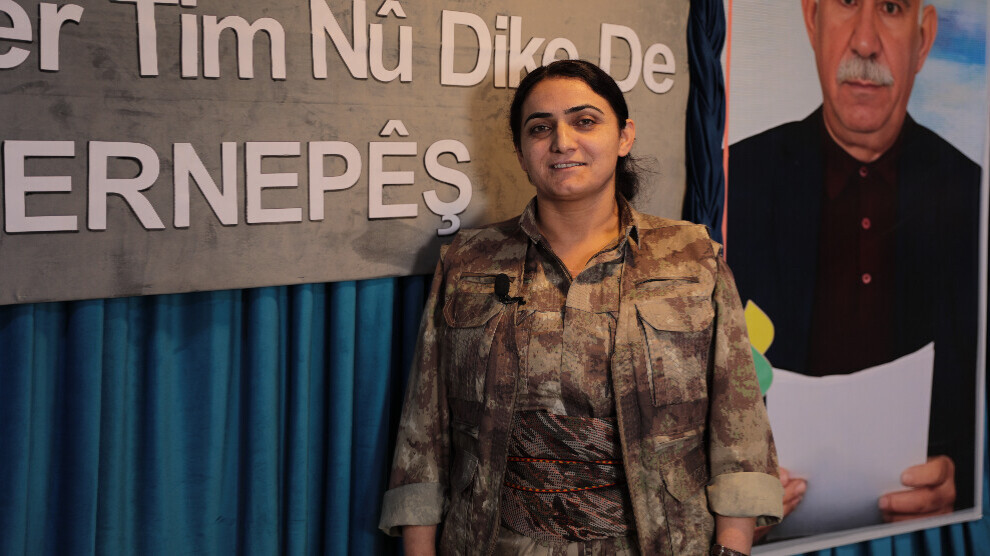
Gülçin Gever, a delegate at the 12th Congress of the PKK, stated that the initiative launched under the leadership of Abdullah Öcalan is a new hope, adding, “The principles and standards of the PKK will continue to guide our struggle.”


ANF
BEHDINAN
Friday, 23 May 2025

Gülçin Gever, a delegate at the PKK's 12th Extraordinary Congress, spoke about the decision to dissolve its armed structure and end its military struggle. Gülçin Gever stated that this decision was not the end, and that their goal was to lead the way for an equal and free society based on the paradigm of Abdullah Öcalan.

‘Every stage of the PKK has been filled with great excitement’

Emphasizing that the congress was held under extraordinary circumstances, Gever said the following: "Undoubtedly, just as the 1st Congress was of great importance in the history of the Kurdish people, the 12th Congress was held with the same excitement, the same hope, and the same feelings. The decision to dissolve the PKK was made at the congress. Undoubtedly, every process and every stage of the PKK has been filled with great excitement. When the PKK was founded in 1978, there was great excitement, enthusiasm, and morale, and at the same time, the Kurdish people's hopes for the future blossomed at that congress. At the congress where the PKK was dissolved, these hopes grew even more within the paradigm of Leader Apo (Abdullah Öcalan).

Leader Apo has been working hard for 52 years, as have thousands of our friends, for the freedom of the Kurdish people and the people of the Middle East. Today, with the dissolution of the PKK, these efforts and this paradigm are no longer limited to Kurdistan, but have become universal. This is undoubtedly a source of great excitement and hope for every member of the PKK.

‘Leader Öcalan’s ideas and paradigm have become universal’

The PKK started out for the identity and freedom of the Kurdish people and Kurdish women, but with each passing year, Leader Apo's ideas and paradigm have become more universal. With the dissolution of the PKK, actually a new era is beginning for the PKK. Under the leadership of women, a new era is beginning for Kurdish women, for women in the Middle East, and for women around the world. Actually, we should have reached this stage much earlier. This is a matter of self-criticism for us. However, the conditions we find ourselves in and the reality of the enemy prevented us from entering this stage of change and transformation earlier. This is a matter that requires self-criticism before the leader and those who have paid the price for 52 years. But now is the time for this change and transformation. Every comrade, especially those participating in this congress, has embraced this process with determination, confidence, and self-criticism.”

‘The principles and standards of the PKK will continue to guide our struggle’

Remarking that the Kurdish Freedom Movement made great sacrifices to reach this point, Gülçin Gever continued: "Our goal is to lead the way toward a democratic, equal, and free society in Kurdistan, Turkey, the entire Middle East, and the world, based on the paradigm of Leader Apo. The gains we have achieved so far must not be limited to Kurdistan but must spread throughout the world. We can say with confidence that the paradigm of Leader Öcalan, the initiative launched under his leadership, is a new hope and a bright future not only for us but for the whole world. This process is not an end; the PKK is being dissolved, but the principles and standards of the PKK will continue to guide our struggle. Leader Apo's ideas inspire and give hope to people. We aim to fulfill our duties and the role that falls upon us to ensure that our society leads a moral, political, equal, and democratic life in the coming period.

‘We paid a heavy price to reach this point’

Undoubtedly, this process did not come about easily. We paid a heavy price to reach this point, losing 45,000 martyrs. Our congress is also dedicated to the martyrs. Two of these martyrs are comrade Fuat, who participated in the PKK's 1st Congress and was one of its founders, and comrade Rıza Altun. On the occasion of the PKK's 12th Congress, I pay tribute to all the martyrs of the freedom struggle in the person of these comrades and bow before their sacrifices with respect.

Rêber Apo always says that the freedom of society lies in the freedom of women. For this reason, he created the women's freedom paradigm. In this sense, we women owe a debt to Leader Apo. The universalization of our revolution was also achieved thanks to his efforts. For this reason, we wholeheartedly congratulate the 12th Congress of the PKK, especially Leader Apo, and all our people, as well as our comrades who are still fighting on the front lines against the enemy under these difficult conditions. We wish everyone success.”

Tekoşin Cudi: The PKK is a spirit and will never end


Tekoşin Cudi, a delegate to the 12th Extraordinary Congress of the PKK, stated that the PKK is a spirit and will never end, saying, “As militants of Leader Öcalan, we will continue our struggle for a life where all peoples can live together.”


ANF
BEHDINAN
Friday, 23 May 2025, 14:18

Tekoşîn Cudi, one of the delegates at the PKK's 12th Extraordinary Congress, stated that the PKK, which has been fighting relentlessly for 52 years, has played an important role in the history of Kurdistan.

Remarking that the PKK has ended the denial of the Kurds and Kurdistan, Tekoşîn Cudi continued: "First of all, I send my greetings, love, and longing to Leader Apo (Abdullah Öcalan), and I congratulate the 12th Congress of the PKK. I remember with gratitude Comrade Fuat, Comrade Rıza, and Comrade Sırrı Süreyya Önderi, the pioneer of the peace and democracy process who lost his life, and I bow with respect before the memory of all freedom martyrs in their persons. I greet all patriotic and freedom-loving people.

The PKK has been a light for everyone against darkness. For 52 years, it has waged a relentless struggle and fought a fierce war. Heavy sacrifices have been made, and martyrs have fallen. Leader Apo has pioneered the PKK’s reality and the struggle for freedom. For mental change and transformation, for the creation of a conscientious society, for the people to uphold their values, and for people to be freed from the clutches of fascism and a new life to be established, the Leader has fought relentlessly for 52 years. This struggle continues to this day, and Leader Apo is still at the forefront. As militants of Leader Apo, we will continue our struggle to achieve our goal and purpose, and to build a democratic, equal, and free life where all peoples can live together. The PKK has played a historic and significant role in this context for 52 years.

The PKK differs from all other movements in that it has established a women's army and a women's party. A society led by women is being built. Five thousand years ago, women's culture was destroyed by the patriarchal system and women were enslaved. Leader Apo found a way for women to fight and resist again. Thousands of women joined this revolution, thousands fought in the war, and thousands gave a part of their bodies, their children, their property, and their possessions for freedom. The PKK played a crucial role in the struggle led by women and in the awakening of women's consciousness. Therefore, I can say that the PKK is a spirit and will never end. The PKK is also culture and art.

The Kurdish people could not say they were Kurds, and the name Kurdistan could not be mentioned. The PKK put an end to this denial of the Kurds. Following the end of denial, women also broke the chains of slavery alongside the PKK. The mental revolution carried out by the leader created an awakening, conscience, and search for freedom among freedom-loving and democratic people. Today, as women are used as commodities in the capitalist system, all women must take ownership of their bodies, souls, and cultures. This is primarily the responsibility of women artists, because culture and art are created by women. The leader re-created women's culture with the establishment of the PKK.

That is why the ‘Jin, Jiyan, Azadî’ (Woman, Life, Freedom) actions in Rojhilat (Eastern Kurdistan, Iran) became known throughout the world, and all women embraced them. Just as Ayşe Şan and Meryem Xan confronted great difficulties and continued Kurdish traditions by speaking Kurdish, the leader embraced this. It started with Mizgîn, continued with Delîla and Berçem. These comrades reached the pinnacle within the PKK through their voices, their art, their colors, and their armed struggle. We will fulfill our duty with great responsibility to ensure that the light created by Leader Apo in everyone's hearts spreads throughout the world and never allows darkness and fascism to prevail.”

Çiğdem Doğu: We are not dissolving our values

Çiğdem Doğu said the PKK has created a moral and cultural legacy through its martyrs.


ANF
BEHDINAN
Tuesday, 20 May 2025, 07:50

Çiğdem Doğu, a member of the Executive Council of the Kurdistan Free Women’s Community (KJK), said that they will guarantee the continuation of the values created over 52 years in the strongest, truest, most beautiful, and most free form. She emphasized: "As militants of the Kurdistan Workers’ Party (PKK), and especially as comrades who took part in this congress, our responsibility is now even greater."


The 12th Congress of the PKK was held between 5 and 7 May in the Medya Defense Areas. The final declaration and decisions were shared with the public on 12 May. At the congress, Çiğdem Doğu began her remarks by saluting President Öcalan with respect, describing him as the one who wrote the PKK as an unending novel, both living and sustaining it, and by remembering the martyrs with gratitude.

Values form the foundation of the new era

Çiğdem Doğu said: "We are holding a congress to dissolve the PKK, but the PKK, along with its great martyrs, has created immense values. In fact, it has generated a profound sense of morality, a rich culture, and a philosophy of free life. Dissolving the PKK does not mean dissolving these values. These values are the foundation of the new phase we are entering, through renewal and restructuring. I want to clearly express that these great values and our heroic martyrs will always live on. The discussions we had during the congress and the determination that has emerged reflect this truth."

We have not been defeated

Çiğdem Doğu recalled that in his 27 February call, President Öcalan said: "Like every contemporary society that has not been forcibly destroyed or suppressed, you too must dissolve yourselves." She continued: "As we dissolve the PKK, we cannot adopt the narrative imposed by the enemy through special warfare tactics, such as ‘they were defeated,’ ‘they were eliminated,’ or ‘we will dissolve them.’ The Turkish state persistently frames this as a matter of defeat and victory. But we know very well that the dissolution of the PKK arises from a reality far beyond such a framework. We have not been defeated. The PKK is not dissolving itself after 52 years because it has been defeated."

A reality witnessed for the first time

Çiğdem Doğu said: "I want to emphasize this in particular. This congress is truly historic in every sense. As President Öcalan stated, this may be the only organization to have initiated a process of transformation and change by its own will, like every modern society. As far as I know, this is a reality being witnessed for the first time in the Middle East, perhaps in thousands of years. President Öcalan mentioned this in his recent perspectives, and it was also present in his earlier evaluations. The Middle East and Kurdistan have always lagged behind and lost because they failed to transform and restructure themselves in accordance with changing conditions. That is why it is so meaningful and valuable that we are holding this congress entirely of our own free will, not due to external pressure, coercion, or the enemy’s influence, but solely in line with President Öcalan’s instructions. I believe the outcomes will have regional implications. The PKK, by dissolving itself, is leading this process. And this must be regarded as one of President Öcalan’s greatest achievements."

The PKK has been like a mother to us all

Çiğdem Doğu said: "Undoubtedly, the reality of the PKK is like an unending novel. Within this novel are many elements that must be evaluated, examined, and understood. These will be analyzed more thoroughly by all of us in time. It is very important that we understand this moment correctly as we dissolve the organization. What exactly are we dissolving? And how will we continue from here? Speaking from my own path of development, I can say this: for years, we lived, worked, and grew with our comrades in the same organization. The PKK has been like a mother to all of us. Like a mother, it taught us how to speak, how to walk, how to relate to people, how to organize, how to defend ourselves, and how to fight. It taught us how to behave, how to love, how to respect, how to build friendships, how to be comrades. We learned and lived out moral values in the PKK that we never learned in our own families. The PKK taught us these things. And it wasn’t just the militants. These values were taught to people, to all peoples, but especially to women. It taught women how to live as themselves, how to recognize their inner strength, and how to express themselves. In the context of Kurdistan and the Middle East, these are truly miraculous developments. We may have become accustomed to them within the organization, and they may have become part of our culture and daily life. But in truth, they are miraculous."

It created the ethics of freedom

Çiğdem Doğu continued: "That is why we must deeply grasp this reality. The PKK created this morality. It created the ethics of freedom. It created the philosophy of freedom. It instilled in us the very essence of freedom. As far as I remember, President Öcalan’s first comprehensive critiques of socialism date back to 1987. His analyses on women and family also belong to that year. These correspond to the period of the Third Congress. In those evaluations, we see the emergence of something beyond traditional socialism. His approach to women, internationalism, his insistence that socialism must become universal rather than remain national, his approach to nature and to women, all of these were thoroughly addressed in 1987. It was in this spirit that our first women’s movement was founded after the Third Congress.

These were the early signs of going beyond real socialism, in both theory and practice. In the political report of the Fifth Congress, President Öcalan articulated this even more powerfully. That report is a document that should be revisited often to understand what it means to transcend real socialism. It contains the seeds of everything President Öcalan is evaluating today. Since then, he has consistently surpassed the boundaries of real socialism. Alongside this, the strengthening of the women’s movement, the formation of a women’s army, the self-organization of women, and the internal transformation processes required within the party were all addressed with great effort. When we say the PKK is our mother and nurtured us, we are referring to the PKK developed by President Öcalan."

Öcalan always laid out a perspective for us

Çiğdem Doğu said: "President Öcalan has always provided a profound perspective, aiming not only to go beyond real socialism but also to overcome capitalism, feudalism, familialism, tribalism, and all forms of backwardness in gender relations. He overcame these issues himself and worked for us to do the same. His analyses have all been part of this effort to transcend those systems."

We are driving the roots even deeper

Çiğdem Doğu added: "We are dissolving the PKK, but we are deepening the values it created. By restructuring ourselves and entering a new phase, we are taking a historic step to further root and strengthen the foundational values of the PKK, values built through the sacrifices and labor of our martyrs. In this sense, we are witnessing historic moments."

We are the guarantee of what comes next

Çiğdem Doğu said: "To ensure the next phase unfolds in a healthy way, we ourselves must guarantee that the values created over the past 52 years continue in the strongest, truest, most beautiful, and most free form. We, the ones who are alive, carry this responsibility. That is why, especially as PKK militants, and even more so as comrades who participated in this congress, our responsibility is greater. The path ahead is uncertain. We are standing at a historican threshold, and it is not yet clear how we will move forward. How will this process unfold? How will the enemy respond? What kind of special warfare will be used? What physical attacks may come? There are, of course, uncertainties, dangers, and risks. How our party structure understands and responds to this phase will be critical."

Öcalan will further elaborate on these

Çiğdem Doğu concluded her remarks: "It is of historic importance that we understand and carry out this process correctly, and that we participate in the next phase with the determination, consciousness, and spirit of the PKK shaped by President Öcalan’s line. Such participation would eliminate the risks and dangers of this process. What matters now is to focus on what brings success. President Öcalan has presented a seven-point perspective. He will undoubtedly elaborate on these further. This is not the first time he has addressed these topics, but the way he has now deepened and sharpened them is remarkable. His interpretation of history, his worldview, his focus on women, society, and democratic life represent something truly new."


Şiyar Amed: A new chapter is about to begin

Şiyar Amed said that President Öcalan is reshaping the fate of the story, marking the beginning of a transformative phase.


ANF
BEHDINAN
Friday, 23 May 2025, 10:34

Şiyar Amed, one of the delegates at the 12th Extraordinary Congress of the Kurdistan Workers’ Party (PKK), stated that a greater and more significant phase is now beginning. He said, “A new phase of practical implementation is starting. A new door is opening. A new horizon is unfolding before us.”

The 12th Congress of the PKK was held between May 5 and 7 in the Medya Defense Zones. Its final declaration and the decisions taken were shared with the public on May 12. Şiyar Amed began his speech by honoring all the martyrs, particularly remembering Ali Haydar Kaytan, Rıza Altun, and Sakine Cansız with gratitude. He noted that he agreed with the concise and poignant speeches of the other delegates and pointed out that the decision to dissolve had already been explained by President Öcalan. He said, “I would just like to briefly share how I understand this process through the language of art and literature.”

He changed the fate of a people

Şiyar Amed stated that President Öcalan had changed the course of history and noted that, in literary terms, this could be described as “changing the story” or “changing the fate of the story.” He continued: “President Öcalan changed the fate of many stories, he changed the fate of a people, and he is changing the fate of humanity. During the Imralı process, he tried to explain this through mythology, literature, and art. At first, he referred to Hector and asked, ‘Why was I not Hector?’ Then he answered himself: ‘Hector fought heroically, and Anatolia fell. My not becoming Hector, my refusal to become a hero now, is the greatest heroism.’ He expressed that his goal was freedom and liberation together with the peoples of Anatolia. And today, here we are, on May 6. Together with the peoples of Turkey, with the peoples of Anatolia, and in memory of the honorable Sırrı Süreyya Önder, a monument is being created. Now, the fate of this story is changing. There are some stories whose fate is very difficult to change, but President Öcalan changed them. He never said, ‘‘This happened in the past, it has been told, and it cannot be changed. The Epic of Gilgamesh is the clearest example. In the past, we saw Enkidu as a heroic figure equal to Gilgamesh. But President Öcalan later interpreted it differently. That is, his interpretation of history was always unique. And now, through his latest interpretations, he is truly changing fate. He is completely transforming the fate of the story. We have entered such a phase.”

We will pass through new stages

Şiyar Amed added that President Öcalan always sought to reveal the essence of things. He said, “So, without taking up too much of your time, I would like to share a brief artistic story. They bring two stones and give them to two great artists, telling them, ‘Carve the stone and create a work of art.’ One of them sculpts a perfect replica. The other leaves it rough and uneven, but says, ‘Come closer.’ When they do, they see that the one who left it irregular has brought the stone to life, energy is radiating from it. President Öcalan always revealed the essence. That is true art. The greatest artist is President Öcalan. So, when he said ‘I am liberated,’ perhaps he meant that the formal structures that blocked the opening of new doors had been removed. Of course, President Öcalan has made evaluations related to the essence. None of us reject that. There are also philosophical reflections on it. Now, we have stepped through the gate of truth. Every gate leads through many stages. Our comrades also pointed this out. From now on, we will pass through many new stages.”

Time for a new beginning

Şiyar Amed concluded his remarks with another brief story reflecting the theme of transformation: “Old eagles, if they are not weary of life, break their beaks and wings against the rocks. They endure immense pain. But if they are willing to face that pain, new ones grow in their place. A new beak, new wings, and with magnificent majesty, they begin to fly again. I believe we are entering such a period, a time when we will be reborn with majesty. I feel this excitement among my comrades as well. President Öcalan has always approached everything with the concept of meaning. In this new phase we are entering, we are truly opening up new horizons in which to embody our love, our commitment, and our understanding in practice. Among Native American peoples, rather than saying ‘I love you,’ they say ‘I understand you.’ And that means ‘I love you.’ President Öcalan said that understanding is practicing. Now we are entering a period where we can practice more, and on a larger scale. As our comrades have also said, this is undoubtedly a new phase of self-criticism and a new period of practical action. A new door is opening. A new horizon is unfolding before us. I came here to share this excitement with all my comrades. With respect to all of you.”


Kurdistan National Congress (KNK) opens as Kurdish movement enters post-PKK era

At a pivotal juncture defined by the dissolution of the PKK and Abdullah Öcalan’s renewed call for peace, the 23rd Congress of the Kurdistan National Congress (KNK) convenes in the Netherlands, gathering over 300 delegates to articulate a collective vision for unity, democratic transition, and regional negotiation.


MEDYANEWS


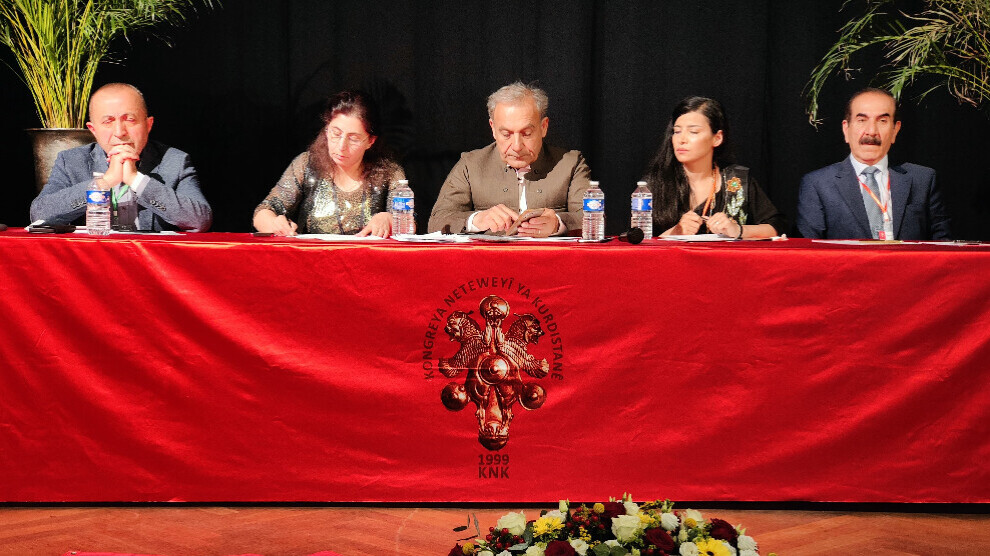
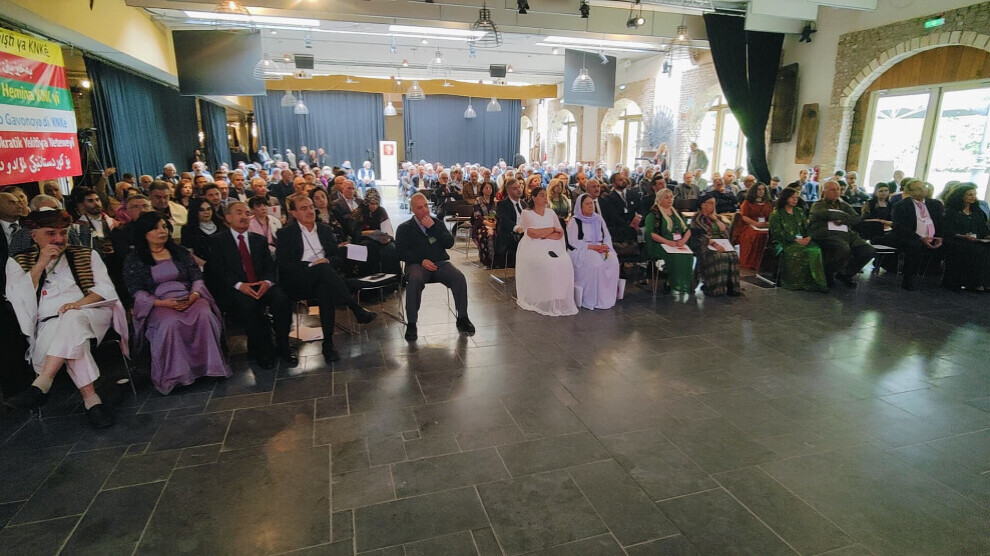
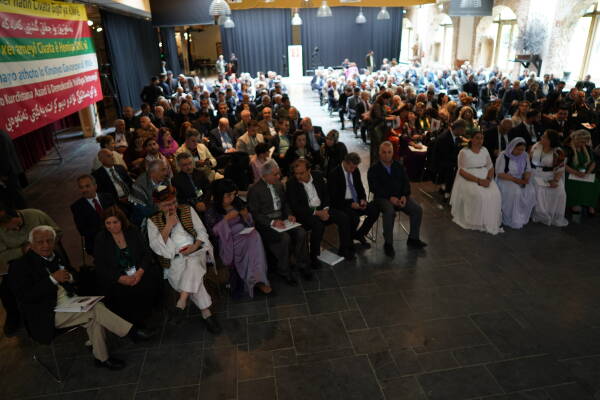
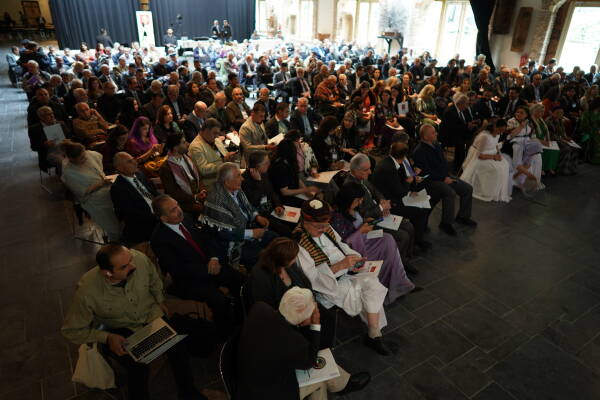
The 23rd General Congress of the Kurdistan National Congress (KNK) commenced on Friday in Barlo, the Netherlands, against the backdrop of a transformative period in modern Kurdish political history. Bringing together more than 300 delegates representing the four parts of Kurdistan and the global diaspora, the congress aims to recalibrate the movement’s strategic direction in a post-conflict context.

This year’s congress is particularly significant, taking place less than a month after the formal dissolution of the Kurdistan Workers’ Party (PKK) on 12 May 2025 and the renunciation of its decades-long armed campaign. Founded in 1999, the KNK has long functioned as a pan-Kurdish umbrella organisation committed to fostering national unity and enhancing transnational coordination across diverse political actors. Now, in the aftermath of the PKK’s disbandment, the KNK finds itself at the forefront of guiding the Kurdish national movement into a new era grounded in negotiation and diplomacy.

Related articles :

Kurdistan National Congress urges international engagement in post-PKK peace process in Turkey

PKK ends armed struggle after 40 years, entrusts transition to Öcalan

Central to this shift is the 27 February declaration by imprisoned Kurdish leader Abdullah Öcalan, who issued a wide-reaching appeal for a democratic and peaceful resolution to the Kurdish question. Öcalan’s message, which has since echoed throughout Kurdish communities and political institutions, provided the conceptual and strategic foundation for the dissolution of the PKK’s armed structure and the transition towards a civil political framework.

In a letter submitted to the congress, Cemil Bayık and Murat Karayılan, senior figures in the Kurdish freedom movement and long-serving members of the now-defunct PKK, reaffirmed their commitment to the KNK’s mission. They described Öcalan’s appeal as “historic in both its timing and scope”, and urged all Kurdish actors to rise to the occasion.

“The process initiated by Mr Öcalan is not only a response to present-day dynamics but also a forward-looking political project,” they wrote. “The decommissioning of our armed forces on 12 May signifies not an end but a transformation of the Kurdish struggle. We now enter a phase where democratic legitimacy and unity must be institutionalised through platforms such as the KNK.”

The letter further called for systematic dialogue and strategic planning among Kurdish organisations across the region and the diaspora, reiterating the need for an inclusive national conference. “This is a decisive historical moment,” the statement concluded. “KNK must lead the charge by fostering consensus, promoting solidarity, and ensuring that Kurdish political aspirations are expressed through unified, democratic means.”

The congress opened with welcoming addresses by KNK members Refîq Xefur and Dilsah Osman. Xefur paid tribute to fallen leaders of the movement and emphasised the moral responsibility to uphold their legacy. Osman, meanwhile, stressed the importance of transcending partisan boundaries, affirming: “While diversity is a natural strength, our shared struggle must always supersede individual or organisational interests.”

KNK Co-Chairs Zeynep Murad and Ahmet Karamus also delivered keynote speeches outlining the current political climate. Murad hailed the breadth of representation at the congress as a reflection of Kurdish resilience and plurality. Karamus situated the congress within a broader geopolitical analysis, citing instability in Syria, Ukraine, and the wider Middle East as both a warning and an opportunity.

“We are entering a volatile but potentially transformative period in regional affairs,” Karamus stated. “The collapse of former paradigms compels us to forge a new path, one built not on armed resistance but on strategic political engagement and unified action.”

The congress continued with the election of a new executive committee and the screening of a documentary tracing the KNK’s development over the past 26 years. Over the coming days, delegates will engage in policy deliberations and are expected to produce a final declaration outlining practical steps for the coming period.

Bayık and Karayılan send message to KNK Congress: National unity is an urgent task before us


In a joint message to the KNK Congress, Cemil Bayık and Murat Karayılan said, “The role and mission of the KNK in its founding purpose have grown even more in this process. The issue of national unity is an urgent task before all of us.”


ANF
THE HAGUE
Saturday, 24 May 2025, 14:11


The 23rd Ordinary General Congress of the Kurdistan National Congress (KNK) continued with the reading of a joint message sent by Cemil Bayık, Co-Chair of the KCK (Kurdistan Communities Union) Executive Council, and Murat Karayılan, a leading member of the PKK (Kurdistan Workers’ Party). The message sent to the KNK General Assembly stated the following:

"Dear members, friends, and comrades;

We greet the Congress Council, all participating friends, and colleagues, and wish the 23rd General Assembly of the KNK to be beneficial for our country and our people.

We would have liked to be present at the General Assembly of the KNK, of which we are proud to be members. However, as you are aware, we are unable to be among you at this time. Even though we are far away and unable to gather together at the meetings, we assure you that we will fulfill our duties in accordance with the objectives of the KNK to the best of our ability.

The Kurdistan National Congress (KNK), which has been working tirelessly for 26 years, has made the national unity of the Kurds its primary agenda since its establishment and has held numerous conferences, meetings, and other activities to this end. It has served as the diplomatic representative of the Kurdish people abroad. The primary objective of the KNK, of which we are also a member, has been to establish good relations with Kurdish political parties, organizations, institutions, civil society organizations, and political figures with the aim of developing relations among Kurds; to establish a common vision and common strategy. Today, if there is mutual dialogue and solidarity among Kurds, the KNK has been the fundamental foundation and platform for this.

Dear friends,

The Middle East, with Kurdistan at its center, has entered a new era of rapid developments. As new power balances and new relationships emerge in the Middle East, the Kurdish people are striving to play an active role in this process. To this end, it is of course essential that the Kurds develop a common strategy. This common strategy requires the Kurdish parties, organizations, institutions, and individuals in the four parts of Kurdistan and abroad to maintain constant and systematic relations, engage in joint discussions, and work together to form collective intelligence. At this stage, the KNK is carrying out this important work with dedication and has reached a point where it can be further expanded. We are fully confident that the Congress will adopt strong decisions and plans toward this end.

As is well known, Rêber (Leader) Abdullah Öcalan is conducting a dialogue process with the Turkish State on behalf of our movement in İmralı. This process is still ongoing. Our aim in conducting this process is to find a solution to the Kurdish issue through dialogue. As a movement, we believe that we have done more than our part at this stage. Now it is up to the other side. We hope that the other side will also fulfill its responsibilities and that we will reach a resolution.

The February 27 call of Rêber Apo (Abdullah Öcalan’s) and the developments that followed have directly influenced politics in the Middle East and Kurdistan, as well as strengthening the foundation for unity among Kurds. This historic call and the subsequent political developments have provided the most favorable ground for Kurds to establish a democratic national unity based on the short-, medium-, and long-term interests of our people on common platforms. Indeed, since the gains and identity of our people are under pressure and threat in almost every part of our country, the struggle to protect these gains and achieve national democratic rights has never ceased and continues. It will also further open the way for all other peoples living in our country to achieve their own rights and legal status. All social segments, especially women and youth, are the key dynamics of this process. Their participation and support will strengthen the goal of a democratic society and a democratic nation.

This call also necessitates the development of new relations with international powers, regional powers, peoples, and political actors. While developing new relations with international powers and regional actors, the Kurds must establish closer relations within themselves and form a broader and stronger unity. Our people have achieved a very important level of organization and awareness of freedom in all four parts. They have long since overcome the leaderless, unorganized, and powerless position they held in the last century. However, they will only be able to secure their rights and achieve a status commensurate with their advantages to the extent that they can unite under a common vision and strategy. The KNK is one of the most important stakeholders in this task and responsibility.

The role and mission of the KNK in its founding purpose has grown even more in this process. The Kurds have not yet fully achieved unity. The issue of national unity stands before us all as an urgent task. Rêber Apo has also emphasized this issue in his recent statements and called on everyone concerned to take action. A decision was made at the Lausanne Conference to hold a national conference. The KNK should make greater efforts in this regard and ensure that a national conference is convened within the specified framework.

In the coming period, we will continue our efforts for the national unity of the Kurds, both as members of the movement and as members of the KNK, and we will fulfill our responsibilities.

With this determination and conviction, we salute the general assembly and wish the newly elected administration success.”

23rd Ordinary Congress of the KNK begins

The 23rd Ordinary Congress of the KNK has begun. The two-day congress is attended by 300 delegates, dozens of political parties, institutional representatives, intellectuals, artists, writers, and opinion leaders.


ANF
THE HAGUE
Saturday, 24 May 2025

The 23rd Ordinary General Congress of the Kurdistan National Congress (KNK) began in the Netherlands on Saturday. The two-day congress is attended by 300 delegates from the four parts of Kurdistan, as well as dozens of political parties, institutional representatives, intellectuals, artists, writers, and opinion leaders from the United States, Japan, Canada, Australia, and European countries.

Founded in 1999, the KNK has been working for national unity and cooperation among Kurds for 26 years. The 23rd Ordinary Congress aims to comprehensively address national issues, develop joint solutions, and make strategic decisions for the future. The Congress began with the national anthem ‘Ey Raqip’ and a moment of silence.

Then, KNK members Refik Gefür and Dilşah Osman gave the opening speeches. Refik Gefür commemorated Rıza Altun and Ali Haydar Kaytan, leading members of the PKK, and Heci Ehmedi, founding member of PJAK and member of KNK. Gefür said, "The work carried out by KNK for 26 years is very valuable. The new process initiated by the call of Kurdish People's Leader Abdullah Öcalan is crucial for the consolidation of the Kurdish people's gains and their unity. We expect the Kurdish people to embrace this process in every part of the Kurdish homeland. The KNK has contributed to national unity through the meetings it has held with Kurdish parties and forces over the past 26 years. The work carried out in Europe and around the world has played a vital role in protecting the gains achieved by the Kurdish people through the sacrifices of their martyrs."

Dilşah Osman pointed out that Kurdish institutions are working in the areas of women's youth organization, diplomacy, and politics, saying, "Today, we are going through a very sensitive process as a people, and it is very important to manage this process correctly. The Kurdish people must speak with one voice in all four parts. Diversity is natural, and parties and individuals may vary, but the Kurdistan cause and issue must take precedence over the interests of everyone and every party. At this moment, we are in a hopeful period in terms of unity. We must strengthen this further. If the same ideas emerge from a meeting held in any part of Kurdistan, this is the result of 26 years of KNK work."

KNK Co-Chairs Ahmet Karamus and Zeynep Murad then delivered speeches.

Zeynep Murad greeted the delegates and said: "The participation of representatives of all segments of the Kurdish people and different parties in the congress is very valuable. This diversity will strengthen the congress with suggestions and discussions. We have entered a new process. This process began on February 27 with Kurdish leader Abdullah Öcalan ‘Call for Peace and Democratic Society’. The Kurdish people must embrace this process because it is a very important new period. We must protect our gains in Bashur (Southern Kurdistan) and Rojava (Northern Syria). In the face of the change in the Middle East, the Kurdish people must also transform themselves and evaluate new opportunities. As the Kurdish people, we must be prepared for this new process. All parties and forces must unite. We must protect the rights of our people by acting together in the face of these innovations. Unity breeds unity; this process must be further strengthened."

Ahmet Karamus stated that a new conjuncture has emerged in all four parts of Kurdistan to protect the gains made, but that new risks also exist, and assessed the situation in the world, the Middle East, and Kurdistan in particular. Ahmet Karamus stated: "The wars and conflicts involving Russia, Ukraine, Israel, Hamas, and Iran are harbingers of new developments. Finally, the changes in Syria have set an unexpected process in motion. All of this demonstrates the complex dimensions of developments in the Middle East. These developments are forcing us into a new era. As the Kurdish people, we must also be prepared for this era. In our previous assessments, we had expectations and political interpretations regarding change on the 100th anniversary of the Treaty of Lausanne. Looking at today's developments, this change is not only possible but also on the agenda. However, this is a two-sided possibility; it could lead to positive renewal, but it could also have negative consequences.

The process initiated by Mr. Abdullah Öcalan's call is very important. The politics that will be built on this call is significant and forward-looking. This call addresses not only current issues but also the search for solutions for the future. In this sense, we view this call as historically significant. Let us embrace this call in all four parts and fulfill our duties. The aim of Mr. Öcalan's call is to find solutions to problems and unite our people around a common goal, taking into account the stage reached by the Kurdish Freedom Movement in all four parts. A new process has begun, especially for Bakur (Northern Kurdistan). Regardless of its name, this process marks the beginning of a new era. In this process, all parties and all regions will have a role and responsibility. If we fail to fulfill the requirements of this process, it will be a significant shortcoming.

Following Karamus' speech, the Congress elected its presiding committee. Rebwar Raşid, Midya Abda, Rojin Mukreyan, Şex Şemal, and Yakup Mirza were elected to the committee.

A documentary presentation on the history and objectives of the KNK was then shown.

The Congress continues with speeches by the participants.


23rd Ordinary Congress of the KNK continues

National unity, dialogue between Kurds, the search for a political solution, and regional developments were discussed at today's sessions of the 23rd Ordinary Congress of the Kurdistan National Congress (KNK).

ANF
THE HAGUE
Saturday, 24 May 2025


The Kurdistan National Congress (KNK) is holding its 23rd Ordinary General Congress in The Hague with the participation of 300 delegates from the four parts of Kurdistan, as well as dozens of political parties, institutional representatives, intellectuals, artists, writers, and opinion leaders from the United States, Japan, Canada, Australia, and European countries.

Arêz Abdullah spoke on behalf of the PUK (Patriotic Union of Kurdistan), Siyamend Muani on behalf of PJAK (Party for a Free Life in Kurdistan), Jalane Hewreman on behalf of the Hewreman Platform, Adil İlyasî on behalf of Rojhilat Komel, and Yakup Mirza, a Syriac delegate, each delivered a speech.

Arêz Abdullah, on behalf of the Patriotic Union of Kurdistan (PUK), read a message sent to the KNK congress. The PUK message emphasized the importance of resolving issues with Turkey in Bakur (Northern Kurdistan) through dialogue and negotiation, and stated that a common ground must be established at the political and diplomatic levels. The message read by Arêz Abdullah stated, “The negotiation table must be operational, and a strong will for a peaceful solution must be demonstrated.” The message also noted that the PUK supports the Kurdistan Regional Government's call for the establishment of a national unity government. PUK emphasized that national unity and internal political harmony are critical for protecting the gains of the Kurdish people, stating, “In this historic process, cooperation is essential to protect the rights and status of the Kurdish people. Gains in the four parts can only be sustained through a strong partnership.”

Speaking on behalf of the Democratic Autonomous Administration of North and East Syria (DAANES), Bedran Çiya stated that Abdullah Öcalan’s February 27 ‘Call for Peace and Democratic Society’ marks the beginning of a vital period not only for Bakur but for the entire Kurdish people.

Bedran Çiya said, “If we have started talks in Damascus, it is because of the call made by Leader Apo (Abdullah Öcalan).” He noted that the participation of many political forces, opinion leaders, and parties in the national meeting held in Qamishlo demonstrated the power of this call. Çiya stated that the Kurdish people in Rojava have waged a great struggle over the past 15 years and developed a solution model. He remarked that women have been at the forefront of this process and that a model based on democratic values has taken shape. “The struggle and gains in Rojava were made possible by the sacrifices of Kurdish youth in the four parts of Kurdistan. Rojava has reached this day with the blood of Kurdish youth in the four parts. These are not just the gains of the people there, but of all the Kurdish people,” he said.

Bedran Çiya stated that the model in Rojava offers a democratic structure where different peoples and beliefs live together, and this structure was directly shaped by the thoughts and philosophy of Öcalan.

“Our struggle is not only for the Kurds. It has also become a source of hope for all the people of Syria,” said Çiya, adding that the national unity developed in Rojava should be taken as an example for all Kurdish people. He emphasized that the role of the KNK is very important and historic, and that the decisions taken and discussions held at this congress are of concern to all Kurdish people.

Sultan Öger, on behalf of the Kurdish Women's Movement, evaluated Öcalan’s call and said that the political processes developing on the basis of this call and the changes in the Middle East are a historic turning point for the Kurds. Emphasizing that unity and collective action are indispensable to protecting the gains achieved by the Kurdish people thus far and securing their status, Sultan Öger said, “We must not miss this historic opportunity. Protecting the gains achieved in the four parts and utilizing new opportunities will only be possible through joint struggle and national unity.”

Sultan Öger said that the Kurdish people are more organized and powerful than ever before, and significant progress has been made in terms of women's organization. Highlighting the importance of commemorating the martyrs and assuming historical responsibility during this process, Sultan Öger underscored the historic role that the KNK congress will play in this context.

Hikmet Serbilind, Chairman of the Kurdistan Islamic Party, emphasized that the Kurdish people have achieved gains at great cost in their century-long struggle, and called for all parties and factions to act in unison to protect these gains and achieve national unity on this basis.

Due to visa issues, KNK delegates from Bashur, Rojava, and Russia participated in the congress via video conference and delivered speeches.

The speeches of the delegates and participants continue with suggestions and discussions.

The congress will continue with sessions tomorrow.

Open call to make 30 June 'Action Global Day for the Freedom of Abdullah Öcalan'.


ANF
NEWS DESK
Saturday, 24 May 2025

The 'Freedom for Öcalan Political Solution for Kurdistan' campaign and the Vigil for Öcalan issued an open call to make 30 June 'Action Global Day for the Freedom of Abdullah Öcalan'.

The call said: "The Kurdish Freedom Movement has taken huge steps with great effort and confidence in recent months. In the midst of the turmoil in the world and especially in the Middle East, Abdullah Öcalan has made proposals for a lasting peace that will affect the regional and international context for decades. The February 27th "Call for Peace and Democratic Society" laid the foundation for a democratic and political solution to the crisis the peoples of Kurdistan and the Middle-East are facing."

The call added: "These steps were welcomed by the entire movement and its allies around the world. With the declaration of the PKK's dissolution, a new phase of struggle based on democratic modernity and coexistence has begun. These historic steps open great opportunities for peace in times of war and must be reciprocated by the opposing sides, especially the Turkish government. Therefore, it is time for regional nation-states and international powers to acknowledge the deadlock and allow political solutions to replace terms like "security concerns" and "terrorism." However, they are practicing double standards by extending their hands while continuing to repress Bakur, push for further conflicts in Syria, and allow the war to unfold in the mountains of Kurdistan. Although Europe, especially Germany, welcomes the steps taken, it continues to repress individuals in the name of 'being part of a terrorist organization'."

The call continued: "Since February 27, attacks in Kurdistan have intensified in an attempt to provoke and sabotage Abdullah Öcalan's call and the courageous practical steps taken by the Kurdish Freedom Movement. Despite some political advances, Turkey is far from meeting the demands and requirements of this historical moment. In the last month alone, the Turkish army, backed by NATO, has bombed the free mountains of Kurdistan over 1,000 times and continues its illegal cross-border operations. Regarding Abdullah Öcalan's situation, the Turkish state maintains a calculated position on visits and communication to Imrali prison and is not taking any concrete steps for his release."

This call for action aims "at putting pressure on the Turkish state and the international powers. International solidarity should support this process and play a role in the ongoing negotiations, insisting that the demands for a just political solution and lasting peace are met. Abdullah Öcalan must be released. Solidarity actions must demonstrate that serious steps must be taken now!"

On 30 June, the organizers call "for action in the spirit of comradeship, solidarity, and commitment to the struggle for Öcalan's physical freedom. We are calling on our international friends, youth, academics, trade unions, women's organisations, students and all members of society to take action! Be creative in expressing your solidarity and stand up for the physical liberation of Abdullah Öcalan and a political solution in Kurdistan!

Despite all the steps taken, the ceasefire, the congress and the openness to develop a political solution, Turkey continues its policy of repression and attack. As in the worldwide actions against the use of chemical weapons in the Free Mountains of Kurdistanm, in the different actions against the invasions in Rojava Kurdistan and for the liberation of Öcalan and all political prisoners, internationalist solidarity plays an important role in creating awareness, great support and pressure against the constant attacks on the revolution."

Videos, photos and news of actions can be sent to ocalanactiondays@proton.me

For further information: https://ocalanvigil.net/

Twitter: @vigil4ocalan

Youtube: ocalanvigil
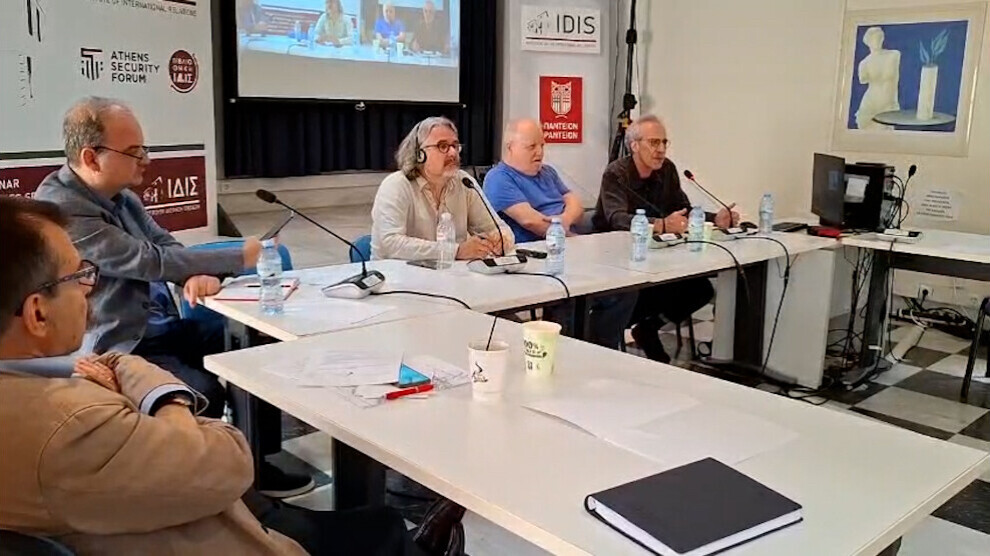
Conference in Athens: Öcalan's paradigm will be decisive in the fate of peoples in Syria

Speaking at “The Kurdish Question and Developments in the Middle East” conference in Athens, Assoc. Prof. Thomas Schmidinger said, “The paradigm of Abdullah Öcalan will be decisive in the fate of Alevis, Druze, and other communities in Syria."


MURAT BAKIR-HAKİ DERSİM
ATHENS
Saturday, 24 May 2025

The conference on “The Kurdish question and developments in the Middle East” continues in Athens. The conference is attended by PYD (Democratic Union Party) Co-Chair Xerîb Hiso, Îlham Ehmed, Co-Chair of the Department of Foreign Relations of the Democratic Autonomous Administration of North and East Syria (DAANES), Sema Begdaş, Co-Chair of the PYD Diplomatic Relations Office, as well as numerous academics, politicians, and journalists.

Call for support for the Kurds

After the lunch break, former Greek Foreign Minister Nikos Kotzias delivered a speech.

Kotzias stated that all countries should support the Kurds, who are one of the few peoples in the Middle East who are not fanatical about religion.

“There are those who say that they want to help the Kurds, but Turkey will be upset by this. Turkey can be upset if it wants to. Everyone should help the Kurds because they are striving for democratic rule in the Middle East,” said Nikos Kotzias, calling on the Greek government to support the Kurds to the end.

The second session focused on discussions about the Democratic Autonomous Administration of Rojava and the regional influence of Abdullah Öcalan. The session was moderated by Loannis Albanis.

‘The Kurds have proven their existence in Syria’

Speaking at the session, Associate Professor Thomas Schmidinger from the University of Kurdistan Hewlêr stated that Kurds organized themselves in Rojava following the call made by Kurdish leader Abdullah Öcalan in 2012 and they have been the most influential force to date. He noted that the PYD has been involved in the revolution from the very beginning and is the most inclusive party with its Arab, Assyrian, and other components. He continued: "The Kurds have proven their existence in Syria with their historic resistance in Kobanê and the price they paid. The paradigm of Kurdish People's Leader Abdullah Öcalan will be decisive in the fate of Alevis, Druze, and other communities in Syria."

Journalist Stavros Lygeros pointed out that the Turkish state is pursuing a Neo-Ottomanist agenda that includes the Kurds: “The Turkish state's efforts to assimilate the Kurdish people have come to a definitive and irreversible end.”

Journalist Petros Papakonstantinou said that despite all the obstacles posed by the Turkish state, the Kurds have taken major steps forward in Syria.

Following the speeches, the second session came to an end.

‘Syria is facing the possibility of civil war and a major crisis’

Speaking after the break, Ilham Ehmed, Co-Chair of the Department of Foreign Relations of the Autonomous Administration of North and East Syria, drew attention to the conflicts in Syria and said, "There has been a long war in Syria, and much blood has been shed. After the fall of the Baath regime, economic problems and pressure to convert women to radical Islam increased, and this issue has not been resolved. Syria is facing the possibility of civil war and a major crisis. Additionally, HTŞ is making decisions independently and not collaborating with the people."

Ehmed warned that the Syrian people will face the threat of jihadist groups and ISIS mercenaries in the coming days if government institutions are not reformed. She emphasized that Syria is made up of many peoples and faiths and cannot be reduced to a single language or a single faith. Ehmed also warned that insisting on centralizing power in Syria could lead to a major civil war and many communities may decide to act independently.

'The solution is the autonomous administration model'

Ilham Ahmed said that many countries have lifted sanctions on Syria but are waiting for a democratic and inclusive government to be formed in Syria. She drew attention to the increasing pressure on women by jihadist mercenaries, the gradual disregard for women's rights, and attempts to establish a new order, emphasizing that the solution to the problems across Syria lies in the autonomous administration model.

Referring to their talks with the Damascus regime, Ilham Ehmed emphasized that security, the economy, and the education system must be local. Stressing that a return to the Baath regime system is impossible and that an autonomous system is necessary, Ehmed stated that the threat of ISIS is still alive and that the most important force against this threat is the Syrian Democratic Forces (SDF).

Ilham Ehmed said that the process initiated by Abdullah Öcalan would affect them and the region. According to her, Öcalan’s views are vital and that the issue should be resolved at the negotiating table.

Finally, Ilham Ehmed pointed out that legal and democratic steps should be taken following the 12th PKK Congress and that the process should continue in accordance with the legal framework.

The final session of the conference will focus on regional powers and the Kurdish issue. Moderated by Sotiris Roussos, the session will feature Prof. Konstantinos Filis, Stavros Drakoularakos, Lecturer at the University of Nicosia, and Kamal Chomani, Academic at the University of Leipzig. The conference will conclude with a closing speech by Sema Begdaş, Co-Chair of the PYD Diplomatic Relations Office.
Hasan Kılıç: Abdullah Öcalan envisions a democratic future for the region

Hasan Kılıç said that Abdullah Öcalan's 27 February call reflects a far-sighted vision and described it as an effort to begin building a democratic future for the Middle East now.


ANF
NEWS DESK
Saturday, 24 May 2025

Following Abdullah Öcalan’s 27 February acll for Peace and a Democratic Society, the Kurdistan Workers’ Party (PKK) held its 12th Congress on May 5–6 and declared that the Kurdish question had reached a point where it could now be resolved through democratic politics. In this regard, the PKK announced that it had fulfilled its historical mission. While concrete steps are expected from the Turkish state in response to these developments, recent statements have included calls for the parliament to assume its responsibility in this process.

What are the conditions shaping this entire process, the 27 February call and the PKK’s congress declaration? Within these evolving circumstances, what kind of political framework is Öcalan putting forward? Political scientist Dr. Hasan Kılıç spoke to ANF about the crisis of capitalist modernity and the collapse of the old order, emphasizing the significance of the framework outlined by Öcalan in this context of transformation.

You often argue in your writings that “the liberal order is collapsing” and examine global restructuring through this perspective. In light of this, how do you interpret the 27 February call for Peace and a Democratic Society, especially in terms of the Middle East, which stands at the center of this transformation?

For quite some time, even the central institutions of capitalist modernity have debated that the current form of the system is no longer sustainable, economically, geopolitically, in terms of moral values, and in the norms it has produced. The end of the unipolar world has been discussed for decades. Meanwhile, during the neoliberal phase of capitalism, the system increasingly relied on finance capital as the primary form of capital accumulation. This path began to break down with the 2008 crisis, indicating the need for a new economic-political equation. Following the collapse of the Soviet Union, Western hegemony imposed and enforced ‘liberal norms’ across the globe. However, the rise of populist leaders, political and economic gridlocks, and the fact that class-based crises led large segments of society to shift politically toward the right, all these developments revealed that those norms could no longer resolve conflicts or establish mutual legitimacy. At the same time, experts at the International Monetary Fund (IMF) were declaring the post-World War II order to be collapsing, while the principle of ‘territorial sovereignty’, a cornerstone of that order, was rapidly losing its relevance.

In short, capitalist modernity is facing a multi-layered crisis, economic, political, cultural, and ethical, where each dimension feeds into the other. This crisis highlights the necessity of transformation in the existing world system. As a reflection of these crises, we are witnessing unprecedented levels of impoverishment and inequality in wealth distribution, the severe destruction of ecological systems, and a security-centered transformation of state structures. All these negative developments are affecting the lives of billions. Even the core institutions of capitalism have begun reporting that the current model is unsustainable and that it is paving the way for a perfect storm, a widespread rebellion of millions. This situation has triggered a global search for alternatives. For instance, discussions about a ‘Great Reset’ began at Davos, the symbolic temple of capitalism. NATO revised its strategic outlook. And in 2018, the United States (US), still the dominant global power, publicly stated that future wars would now occur between states.

Since the collapse of the Soviet Union, the ‘liberal order’ has entered a deep and comprehensive crisis. Thus, Karl Marx’s famous assertion, “Force is the midwife of every old society pregnant with the new,” has once again come into play. In its search to establish a new order, capitalism has placed violence at the center.

When capitalist modernity deploys violence to create the new, it often turns the Middle East into a testing ground. What has been unfolding in the region since October 7 reflects a dual reality: the collapse of the old orders and the ignition of a struggle to shape the new. This reality has multiple dimensions.”

What are these dimensions?

First, the Assad regime, whose foundations trace back to the Cold War, has effectively been dismantled. This marks the end of a Cold War-oriented reading of the Middle East. Second, proxy forces are rapidly being eliminated, and some non-state actors are now being offered the option of integration into the system under the new order. In other words, as violence gives birth to the new, it simultaneously brings about serious risks and threats, but also major opportunities for all actors involved. The third dimension is that capitalist modernity aims to economically, politically, geopolitically, ethically, and culturally reshape the Middle East, using it as a testing ground for a model it hopes to export globally.

Looking back on history, we see clearly that the Middle East has always been a region where capitalism failed to take root. Confronting this reality leads to two options: either the peoples of the Middle East continue to wear a suit tailored by the forces of capitalist modernity, a suit that never fits, or they cut their own path and sever the umbilical cord themselves.

It is precisely at this crossroads that Mr. Öcalan’s 27 February call for Peace and a Democratic Society takes on its full meaning. The content of the call makes it clear that two world-historical phases, real socialism and the Cold War, have come to an end. Mr. Öcalan links the emergence and development of the PKK to these global historical conditions. In doing so, he indicates that with the disappearance of the conditions that gave rise to the PKK, a new phase has now begun. From its very first sentence, the call captures the spirit of the times and the depth of global and regional transformation with remarkable clarity. Mr. Öcalan recognizes that world-historical conditions have changed and that this shift calls for a bold response. In this context, he offers a new path and a new opening for the Middle East, Turkey, and the Kurdish people. To return to my earlier point, everyone in the Middle East today is navigating the future with some form of imagined option in hand. Mr. Öcalan, however, proposes a democratic communal future for the region. Among numerous visions, such as prolonging tensions in the name of Israel’s security, imposing a new order of exploitation and stabilization for Israel’s benefit, or reviving Neo-Ottomanist fantasies, his is a radically different and transformative alternative. He demonstrates both the reality and the courage of radically deconstructing everything that belongs to the old order. He shows that, if a democratic society is built through democratic consensus in Turkey and the broader Middle East, the peoples of the region can indeed sever their own umbilical cord and shape their destiny.

Ultimately, the 27 February call is not merely a response to the chaos of the present moment. It is the product of a mind that has calculated the global trajectory and its implications for the region with sharp foresight. It is a declaration that seeks not just to respond to crisis, but to begin constructing the future here and now. For this reason, describing it as ‘the Call of the Century’ is entirely appropriate.”

Following Mr. Öcalan’s call, the PKK announced its decision to dissolve itself. In many commentaries, it is emphasized that the fronts of a Third World War are expanding. In a time when war continues and many of the democratic rights gained after the Second World War are being rolled back, does this dissolution reflect the new global conditions?

If we think about whether there is a Third World War by relying on the imagery associated with the first two world wars, we are likely to be mistaken. Interpreting today’s world conflict through the visual and symbolic representations of past wars is not the right approach. That is because each world war had concrete economic, political, social, and cultural causes.

Today, we are experiencing a recession in the same economic-political, geopolitical, ethical, and moral structures that created the first two world wars. The displacement of hegemonic power, the multiple contradictions between competing global forces, the suspension of shared values that once held societies together, the spread of violence across nearly all regions of the world, the blockage in capital accumulation, and the dramatic rise in poverty and precariusness. These are all elements of our current reality. If we think of world wars not through images but through material conditions and cause-and-effect logic, then we clearly see that we are already living in a Third World War.

This war is not one that will be won solely through violence or its instruments. Violence is only one element of the Third World War and the order that is expected to follow it. It is not an irreplaceable or irreversible element.

To interpret the PKK’s dissolution decision solely through the lens of violence would be a serious oversight. Yes, this war has violent dimensions. But the struggle for the shape of the post-war order deserves a broader, deeper analysis. In this regard, the statement accompanying the dissolution includes a highly accurate observation: this is not an end, it is a new beginning.

The correct evaluation of current conditions suggests that the decision was made with the intention of taking part in the emerging global order, and within that order, to lead a revolutionary, democratic, and socialist struggle. What we are witnessing is a response to the present conjuncture and, at the same time, a forward-looking step that offers a perspective towards the future.”

Turkey has previously gone through a peace process. However, the conditions and context have changed. As we’ve already discussed, today’s realities present a different framework. In light of this, what is the current picture, at least in the near term, for the Kurds within this new reality, one that arguably transcends Turkey itself?

The earlier peace processes should not be seen as isolated episodes that ‘happened and ended.’ They must be viewed as part of a long-term political struggle, experiences and legacies that carry forward. The differences in context simply reflect the evolving global, regional, and national conditions. Today’s global search for a new order is generating new visions for how the Middle East should be reshaped. In this regard, Mr. Öcalan approaches the issue through four interrelated layers. At the first layer, the focus is on protecting the Kurdish people and guaranteeing their rights. The second involves democratizing Turkey. The third aims to establish an alternative democratic way of life in the Middle East. And the fourth envisions a globally resonant democratic socialist alternative. From the Kurdish perspective, the most foreseeable development in the near future is the end of a century-long imposed fate in the Middle East. It is a time for strengthening and advancing Kurdish gains, political, cultural, and social, and for positioning themselves as a reference point for democratic partnership in the region (and potentially the world) through alternative governance, economic models, gender liberation, and ecological approaches.

Turning our attention back to Turkey, we see that, unlike in previous peace processes, there is currently no significant opposition from the main opposition or other segments of society. However, one of the most current and sensitive points of debate has become the Treaty of Lausanne, which has been instrumentalized by certain political circles. How do you interpret the way this debate is being framed?

First of all, the norms, ethical codes, and moral values of the so-called ‘liberal order’ have lost their validity, which makes it difficult to understand the Peace and Democratic Society Process through the lens of global precedents. Some people describe it as a case of ‘peace first, then resolution,’ while others call it an ‘atypical process.’ These differing interpretations stem from this global transformation.

That said, there are several key aspects that distinguish this process from those in the past. First, due to global and regional developments, the process is receiving more international support than previous ones. This is because many actors are now committed to building a new global order, and doing so requires integrating both the Kurds and Turkey into their future visions. Second, the state appears more consolidated in its approach to resolving the issue compared to previous attempts. While there are still opposing forces both globally and within the state itself, the number of disruptive actors seems significantly lower. Third, the Kurdish freedom struggle has reached a new level. It has already dismantled the official denialist narrative. At one point, the dominant discourse shifted to: ‘Yes, Kurds exist, but they have no rights.’ That resistance was also overcome. Then came the position: ‘Kurds exist, but only individual rights can be granted, not collective ones.’ During that phase, efforts to foster right-wing tendencies among Kurds were encouraged, but even that point has been surpassed. Today, we are in a phase where collective Kurdish identity and collective rights are actively acknowledged and asserted.

It’s important not to lose sight of this accumulated reality when engaging with contemporary debates. The Lausanne debate, in this sense, is an attempt by opponents of the process to revive frozen historical fears in order to derail current progress. Their core strategy is to frame any critique of Lausanne as an attack on the republic or the state, and to use this manufactured perception to spread opposition to the process. But in reality, there is no rejection of the Treaty of Lausanne as a historical fact. Rather, what is being challenged is the anti-democratic and anti-Kurdish hostility produced by its consequences. The actual aim is to accept Lausanne as a historical truth, but to reshape its outcomes through democratization of the republic and transformation of the state into a more democratic entity.

And let us be clear: the opponents of this process are well aware of this reality. Their concern is not historical accuracy; their goal is to preserve their comfort within the existing order, to sustain Turkish supremacy and maintain colonial relationships as they are. So, while the surface-level debate may appear to be about Lausanne, the deeper issue is about resisting the continuation of colonialism and fighting for an equal, democratic life. It is a struggle between the maintenance of a singular, authoritarian regime and the realization of a democratic Turkey. It is a confrontation between the fantasy of re-colonizing the Kurds and the shared decolonization of both Kurds and Turks.
U.S. Native Tribes File Historic Lawsuit Over Federal Indian Boarding Schools


Hundreds marched in Minneapolis at the Boarding School Survivor and Victim Memorial March on Friday. (Photo/Darren Thompson for Native News Online.)

The Wichita and Affiliated Tribes and the Washoe Tribe of Nevada and California have filed a groundbreaking 68- page lawsuit against the United States government, seeking justice for a long-overlooked tragedy: the creation and operation of the Federal Indian Boarding School Program.

The Tribes are represented by the law firms DiCello Levitt, Selendy Gay, Fields Han Cunniff, and Saltz Mongeluzzi Bendesky.

According to the lawsuit, the federal government used funds belonging to Native Nations to finance a widespread network of boarding schools designed to forcibly assimilate Native children. These institutions—operating across the United States—were modeled more like prisons than schools. Their aim was to remove children from their families and communities, strip them of their languages and traditions, and erase their cultural identities.

The complaint asks that a full accounting is made for the funds allocated to Indian boarding schools, which equate to some $23 billion in today's dollars, is made.

The complaint outlines decades of systemic abuse and trauma, including physical and sexual violence, forced labor, and the widespread loss of Native life, language, and cultural heritage. While these harms have long been known within Native communities, they were not officially documented by the U.S. government until recently.

In 2022 and 2024, under the leadership of then–Interior Secretary Deb Haaland (Laguna Pueblo) and Assistant Secretary for Indian Affairs Bryan Newlan (Bay Mills Indian Community) released two major reports following an extensive investigation into the Federal Indian Boarding School Program. These reports confirmed the U.S. government's direct involvement in the funding and operation of these institutions. Crucially, they revealed that much of the evidence surrounding this financing remains exclusively in the hands of the federal government.

The lawsuit was filed in the U.S. District Court for the Middle District of Pennsylvania, a jurisdiction that includes the site of one of the most infamous schools in the program: the Carlisle Indian Industrial School. The case seeks a full accounting of the funds used to support the boarding school system—money that was taken from tribal resources under the pretense of educating Native children.

This legal action marks a significant step toward truth, accountability, and healing. It challenges the federal government to confront its role in a program that caused generational trauma and calls for transparency regarding the misuse of Native resources.

As the complaint alleges:  

The United States Government, the trustee over Native children’s education…has  never accounted for the funds that it took, or detailed how, or even whether, those  funds were ultimately expended. It has failed to identify any funds that remain.  

The harm inflicted by the Boarding School Program endures in the broken families  and poor mental and physical health of survivors of the Boarding Schools and their  descendants. It endures in the cycles of poverty, desperation, domestic violence,  and addiction that were born of the Boarding School Program. It endures in the  silence of lost language and culture, and the quiet desperation of so many  survivors and their descendants, families that carry scars down through  generations. It endures in the missing remains and unmarked graves of the  children who died.  

The United States systematically sought to destroy Native children’s connections  to their families, homes, languages, and cultural and religious practices, which, in Native Nations’ communities, indoctrinated the children into servile positions, and  condemned Native Nations to cycles of poverty, violence, and drug addiction.

Beyond being a national disgrace, the Boarding School Program was an  undeniable violation of the United States’s longstanding, explicit, and ongoing  obligations (including, but not limited to, obligations guaranteed by treaty and  statute) as trustee tasked with providing Native children’s education.  

This trust duty was never disavowed and never ended, and the United States  continues to recognize its “responsibility for . . . education of Indian children,”1 based on a “unique and continuing trust relationship with and responsibility to the  Indian people for the education of Indian children.”2 The United States has a moral,  political, and legal responsibility to fully account for the Boarding School Program. 

"The Boarding School Program represents one of the most shameful chapters in American  history," Serrell Smokey, Chairman of the Washoe Tribe of Nevada and California, said. "Our  children were taken from us, subjected to unimaginable horrors, and forced to fund their own  suffering. This lawsuit seeks to hold the U.S. Government accountable for its actions and to  ensure that the truth is finally brought to light."

"The Boarding School Program inflicted profound and lasting harm on our communities," Amber Silverhorn-Wolfe, President of the Wichita and Affiliated Tribes, said. "We are seeking justice  not only for the survivors but also for the generations that continue to suffer from the  intergenerational trauma caused by these schools." 

The case is Wichita and Affiliated Tribes v. Burgum and was filed in the United States District  Court for the Middle District of Pennsylvania. A copy of the complaint is available online here

About The Author

Levi Rickert
Levi "Calm Before the Storm" Rickert (Prairie Band Potawatomi Nation) is the founder, publisher and editor of Native News Online. Rickert was awarded Best Column 2021 Native Media Award for the print/online category by the Native American Journalists Association. He serves on the advisory board of the Multicultural Media Correspondents Association. He can be reached at levi@nativenewsonline.net.