Saturday, May 24, 2025


Why Do Kurds Lack a Free Kurdistan?

Infographic about recent Turkish attacks in Iraqi Kurdistan

By Suare B:

Internal Fragmentation and KDP’s Complicity with Regional Powers Undermine Kurdish Aspirations

The dream of a free and independent Kurdistan remains elusive, despite the Kurds’ enduring struggle across generations and borders. While external forces—particularly the hostility of regional powers like Turkey, Iran, Iraq, and Syria—have undeniably suppressed Kurdish aspirations, internal dynamics within the Kurdish movement are equally responsible for its fragmentation and setbacks.

A Culture of Deflection: The KDP and the Politics of Blame

The Kurdistan Democratic Party (KDP), led by the Barzani family, has long dominated the political landscape of the Kurdistan Regional Government (KRG) in Iraq. However, instead of addressing systemic issues such as corruption and weak governance, KDP leadership often deflects responsibility by blaming an “external hand”—be it foreign states, international actors, or rival Kurdish factions. This strategy fosters a culture of denial, eroding public trust and stifling meaningful reform.

The KRG’s complicity in covering up atrocities committed by the Turkish regime exemplifies this deflection. Nearly 1,000 civilians have reportedly been killed by Turkish bombardments in Iraqi Kurdistan, yet the KRG, under Barzani control, has allegedly falsified death certificates, attributing these deaths to “explosions” without acknowledging Turkish aggression. This refusal to confront Turkey’s actions not only undermines justice for victims but also signals a troubling alignment with a state historically hostile to Kurdish identity.

Collaboration with Turkey: A Strategic Betrayal

The BBC documentary The Forbidden Zone exposes the extent of the KDP’s collaboration with Turkey. Hoshiar Zebari, a senior KDP spokesperson and Barzani family member, defends the party’s coordination with Turkish military operations in Iraqi Kurdistan. Zebari’s admission that the KDP possesses superior intelligence and knowledge of Kurdish terrain suggests a level of cooperation that facilitates Turkey’s campaigns against Kurdish fighters and civilians.

Under KDP leadership, Turkey has established over 160 military bases in the mountains of Iraqi Kurdistan—a feat even Saddam Hussein’s regime could not accomplish. This unprecedented Turkish presence raises a critical question: Why does the Barzani family facilitate Turkey’s invasion, given Turkey’s historical denial of Kurdish identity and rights? In contrast, the Iraqi regime, despite its own conflicts with Kurds, at least acknowledges their existence as a distinct people. The KDP’s willingness to align with Turkey over Iraq reveals a prioritization of political expediency over Kurdish unity and sovereignty.

Rojava wheat harvest expected to reach 350k tons amid drought

22-05-2025
Rudaw

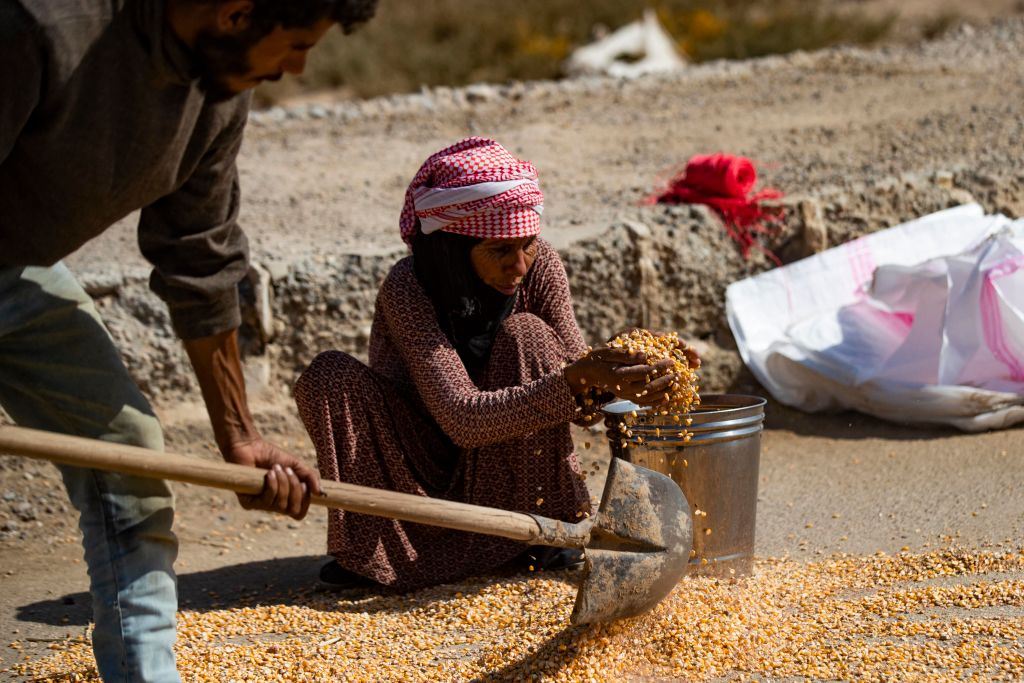
Farmers take part in the corn harvest in the Syria's Raqqa, on October 16, 2022.
 Photo: Delil Souleiman/AFP

ERBIL, Kurdistan Region - The Kurdish-led administration in northeast Syria (Rojava) anticipated on Thursday a wheat harvest of 350,000 tons for the 2025 agricultural season. The announcement comes at a critical time, as Syria faces a worsening drought and a projected drop in local wheat crops.

The Democratic Autonomous Administration of North and East Syria (DAANES) quoted the co-chair of Rojava’s General Silos and Mills Authority, Ghassan Tammo, as stating that “the expected wheat production this year is estimated at 350,000 tons” in the predominantly Kurdish region.

Tammo elaborated that 150,000 tons of wheat are expected to be produced by the al-Jazira region, which stretches across parts of Hasakah near the Turkish and Iraqi borders.

Meanwhile, DAANES-administered regions in Deir ez-Zor, Tabqa and Raqqa are expected to produce a combined total of 200,000 tons of wheat.

Tammo further emphasized the implementation of fire prevention measures to safeguard the harvest - critical in light of past fires that devastated crops and farmers’ livelihoods.

For his part, the co-chair of the Economy and Agriculture Authority in Raqqa, Ibrahim al-Shahin, added that a crisis response team has been formed under the supervision of the local council to
“ensure a rapid response to any incidents.”

The announcement comes as Syria is in the grips of a severe drought, prompting urgent warning from the United Nations Food and Agriculture Organization (FAO) that an "estimated 75 percent of local wheat crops" could fail in 2025.

The expected shortfall could result in a wheat deficit of 2.7 million metric tons, enough to feed approximately 16.3 million people for a year, Reuters quoted a FAO official as noting on Wednesday.

In recent weeks both the European Union and the United States decided to lift sanctions on Syria. These sanctions were originally imposed during the tenure of former Syrian dictator Bashar al-Assad, who was ousted in December by a coalition of opposition forces.

Syria’s new leadership is now taking steps to mitigate the crisis, including restricting water-intensive crops and promoting more efficient agricultural practices.

While the removal of sanctions won’t directly solve the drought, it opens the door for modernizing irrigation systems, increasing agricultural productivity, and improving food security.

This is especially crucial given Syria’s previous reliance on Russia, a longtime ally of Assad, for emergency wheat imports during past droughts. Reducing economic dependence on Moscow is a key goal of the new leadership’s push for sanctions relief.
Rojava delegation seeks international support in meeting with French MPs

yesterday 
Rudaw

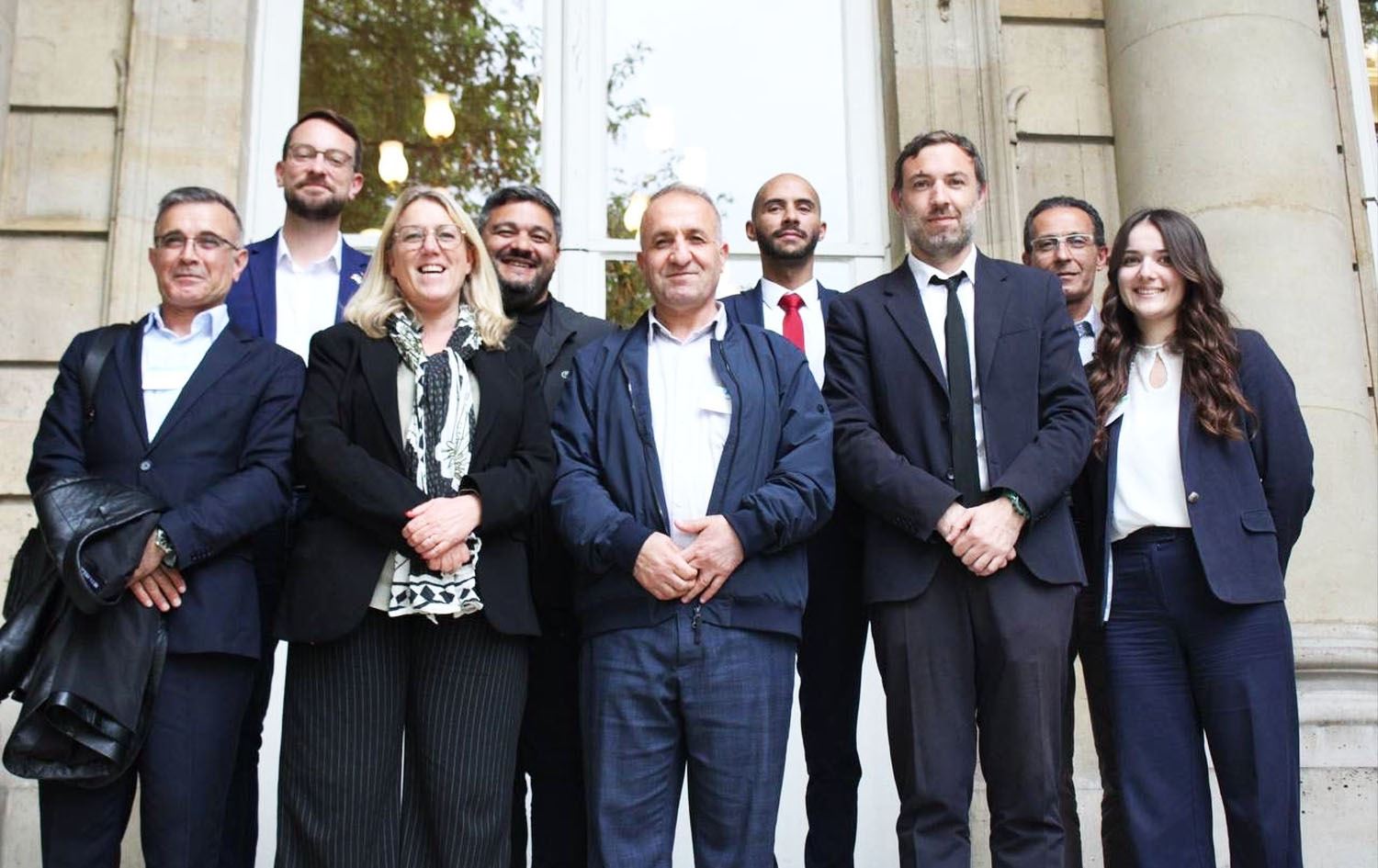
A delegation from the Kurdish administration in northeast Syria (Rojava) after a meeting with French lawmakers in Paris on May 21, 2025. Photo: Danielle Simonnet/X


ERBIL, Kurdistan Region - A delegation from the Kurdish administration in northeast Syria (Rojava) met with French lawmakers in Paris this week to strengthen support for negotiations with Damascus, according to Rojava-affiliated media.

The delegation included Bedran Ciya Kurd, an advisor to the Democratic Autonomous Administration of North and East Syria (DAANES), Karim Qamar, DAANES representative in France, and Faner Jajan, a member of the administration’s representation office in Europe, according to Hawar News Agency (ANHA).

Kurd said the meeting was part of the Rojava administration’s broader efforts to “mobilize international support to bring Syria to safety through decentralized, pluralistic democracy,” according to ANHA.

French lawmaker Danielle Simonnet, who attended the meeting, said in a post on X that Ahmad al-Omar, co-chair of the Tabqa provincial council under DAANES, told them that any lifting of sanctions against Syria “must be conditional on: the integration of all communities into the new Syria and in pursuit of all crimes recently committed against the Alawite and Druze minorities.”

The French parliamentarians called on their government to support the dialogue efforts, according to ANHA.

The Kurdish authorities have been engaged in negotiations with the interim Syrian government about their future in the country.

In late April, Kurdish political groups in Syria, in a rare unified statement, called for a decentralized, democratic system that guarantees Kurdish rights and paves the way for national dialogue.

The Syrian presidency condemned the declaration, arguing it contradicted a March 10 agreement signed by interim President Ahmed al-Sharaa and Mazloum Abdi, commander of Rojava’s de facto army the Syrian Democratic Forces (SDF), that recognizes the Kurds as an integral part of Syria, includes a nationwide ceasefire, and outlines steps to integrate the SDF into Syria’s official military and administrative structures.

Ongoing French engagement with Rojava and Syria

France has taken an active role in supporting Syria’s transition following the fall of the former regime in December.

In April, French Foreign Minister Jean-Noel Barrot met with Abdi and Elham Ahmed, co-chair of DAANES’s foreign relations office. Discussions reportedly focused on regional stability and support for dialogue between the Kurdish administration and the Syrian government.

Earlier in May, French President Emmanuel Macron received Sharaa in Paris on his first visit to Europe since taking office. The meeting reaffirmed France’s support for Syria’s political transition and respect for its territorial integrity.

Macron also said that the European Union would begin gradually lifting sanctions on Syria, contingent on progress in forming an inclusive government and safeguarding minority rights.

While maintaining cautious optimism, Paris has emphasized the need for inclusive governance and accountability for recent violence targeting minority groups.

In April, France condemned sectarian clashes south of Damascus that left over 100 dead, mostly from the Druze community.

Several Western countries, including France and Germany, have warned that the easing of sanctions must be tied to political reforms and power-sharing agreements that ensure equal representation for all ethnic and religious groups in Syria.
Rojava institutions to come under Damascus oversight: Official

yesterday 
Rudaw


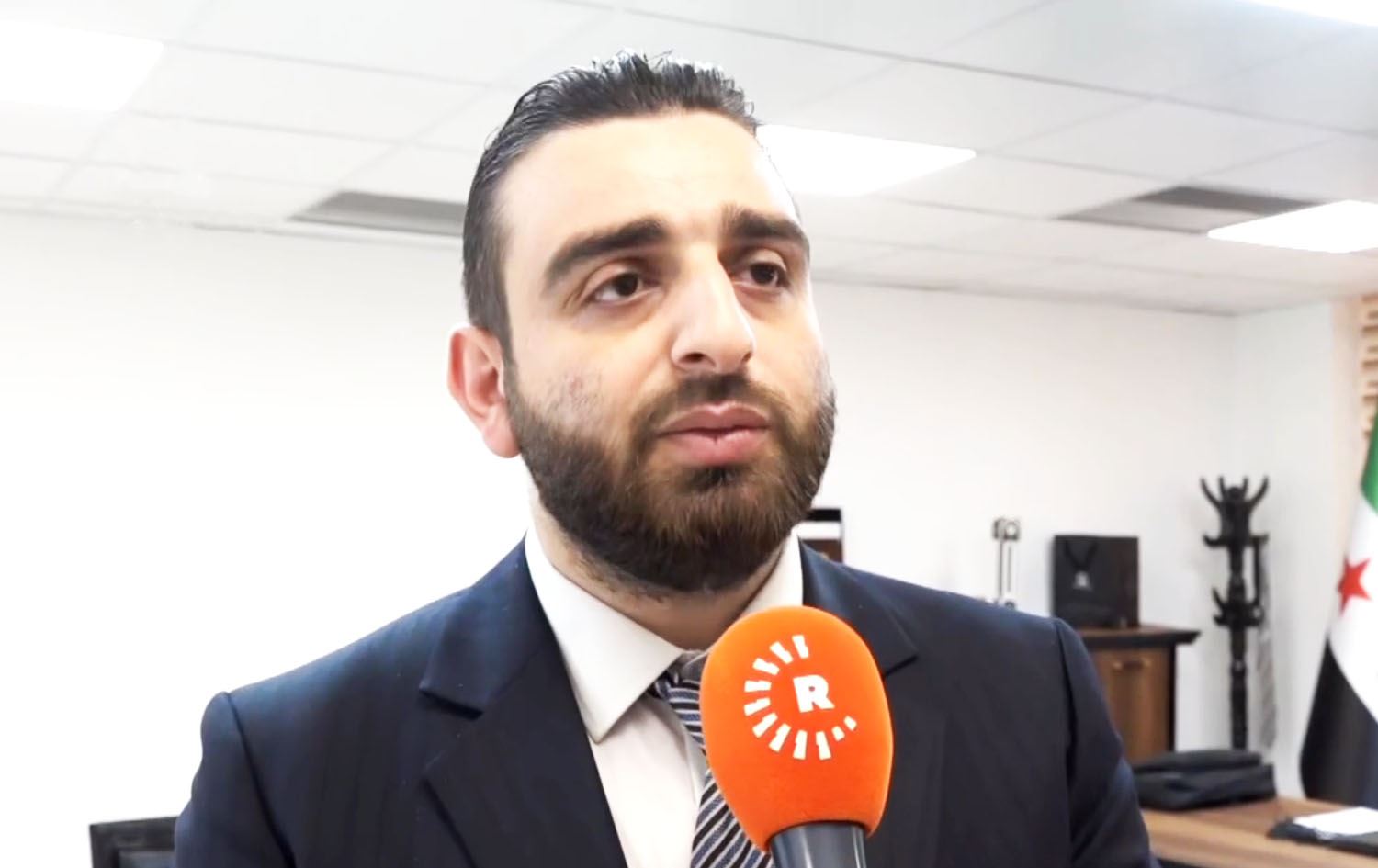
Ahmad Suleiman, public relations manager at the Syrian energy ministry, speaking to Rudaw on May 23, 2025. Photo: screengrab/Rudaw

ERBIL, Kurdistan Region - Institutions in the Kurdish-led northeast of Syria (Rojava) will remain in place but come under the supervision of relevant Syrian ministries following the expected finalization of a landmark agreement between Damascus and the Syrian Democratic Forces (SDF), a senior government official said.

"Currently, there is a central committee formed by the Presidency of the Syrian Arab Republic that is in communication to finalize the agreement between the president of the republic, Ahmad al-Sharaa, and [SDF] chief Mazloum Abdi," Ahmad Suleiman, public relations manager at the Syrian energy ministry, told Rudaw on Thursday.

He noted that the existing institutions in Rojava “will remain as they are,” but oversight will be transferred to the appropriate federal ministries.

“There will be committees from the Energy Ministry and other ministries to take over the institutions and all matters relevant to each ministry,” he said.

On March 10, Sharaa and Abdi signed an agreement that outlines steps to integrate Rojava’s civil and military institutions into the federal administration.

In early April, the SDF and Damascus reached a separate agreement that included a prisoner swap and laid the foundation for joint security oversight in Kurdish-majority neighborhoods of Aleppo previously held by the People’s Protection Units (YPG), the backbone of the SDF.
Syrian Kurds and the new constitution

09-05-2025
Rudaw
Opinions


Kurdistan flag. Photo: file/AFP


Following the change of the Baath regime in Syria, Ahmed al-Sharaa and Hay’at Tahrir al-Sham (HTS) wanted to convey the message that they would establish a political system different from the previous one. Not only would that, but the behavior of HTS would also change. Sharaa dropped his nom de guerre Abu Mohammed al-Jolani and promised to dissolve his organization as well. The majority of people were pleased with the end of family and dictatorial rule that had lasted for decades under the Baath government and Bashar al-Assad's regime. The new situation created hope that this change would end the 13-year-long internal conflict, monopoly, and civil war. Minority groups, considering the reformist rhetoric and promises of the new leadership under Sharaa, did not think the potential for diversity and political stability was far-fetched.

Many countries around the world, particularly Western nations, despite their caution, welcomed the possibility of change in Syria. Initial developments, such as efforts to rebuild infrastructure, reopen schools, and negotiations between parties strengthened hopes of a different Syria. But this optimism quickly faded as a severe inconsistency emerged between Sharaa's public statements and the actual practices of his governance. The events in Syria's coastal regions and the clashes between the government and the Druze drew international attention, and despite promises for reform, respect for the rights of minorities and various components of Syria, and the implementation of principles of governance, the announcement of the new constitution - which was drafted under Sharaa's supervision - showed a contrary image by consolidating extensive powers for the president, including control over the judiciary and security forces.

Instead of strengthening local administrations or guaranteeing minority rights, the constitutional framework has established a highly centralized state that appears to be, in some places, a copy of certain sections of the Turkish constitution, which has been utilized regarding territorial integrity and state centralization. In the sections concerning presidential powers, it resembles parts of the Iranian constitution, and even goes beyond it. In general, this has raised concerns about a return to dictatorial rule. This contradiction between reformist rhetoric and the monopolistic design of institutions has worried ethnic minorities and different religious sects in Syria and has rekindled fears of political stagnation under a different guise.

Opening Sharaa's path to Damascus

There is a debate about whether the rapid changes and events that occurred in Syria last year, resulting in the quick domino-like collapse of cities under the authority of the previous Syrian government, happened due to an international agreement or because of the internal dynamics of that country's politics, but in reality, it may be a mixture of both factors. The reason for the diminishing role of Syria's previous allies and partner states, particularly countries like Russia and Iran and other actors like Lebanon's Hezbollah, to a level that paved the way for Assad's fall, is still shrouded in mystery.

Some believe that the regime's collapse and the establishment of the HTS with Sharaa as Syria's new ruler, their quick and easy arrival in Damascus, and the sudden disappearance of Russia and Iran, was due to an agreement among the world's major powers. Others believe that other factors played a key role in this rapid collapse of Syria, such as the poor living conditions and the financial situation of army soldiers whose monthly salary was not enough to cover even a quarter of the month. Constant war and destruction for more than 13 years had created a deep sense of weariness and exhaustion among Syrian soldiers that made them unable to fight. Therefore, when cities easily fell one by one under the control of an Islamic-military force, their first reaction was to lay down their weapons, flee, and surrender.

Announcement of a transitional constitution

Now, countries around the world are dealing with Sharaa as a legitimate president and some are hopeful that Syria under his era will be a democratic and freedom-loving country that embraces diverse components and religions. However, there are also many doubts and concerns about whether it will turn out this way. The recently announced interim constitution, written for a five-year transitional period, drew considerable criticism.

Some believe that announcing a constitution after the fall of the previous regime was a necessity, but this constitution, in its form, shape, wording, and structure, is not similar to other constitutional declarations around the world. Rather, it resembles more of a statement aimed at conveying the message to the outside world that "we are drafting a constitution." Besides that, it is not known whether it is a temporary constitution or will remain in effect for a long period in practice.

The expectations before the writing of the constitution were that it should protect the rights of all components, ethnic minorities, and religions, and respect Syria's diverse demographic structure, but contrary to this, a monochromatic and single-ideology constitution was announced under the hegemony of the leaders of the HTS. It has concentrated all powers in the hands of the HTS, just as the key ministers of the current government belong to that organization. Another issue is that this constitution does not resemble in any way the interim constitutions of countries that have gone through war and had regime changes.

In reality, the ideological beliefs of Damascus's current authorities are such that they fundamentally view the constitution as something superficial, because they regard the Quran as the main constitution - whatever is in the book serves their interests, and they work with it as a constitution. This government and state is a jihadist state, not a state based on law that would work according to a constitution, so they don't need a constitution. What they have called a constitution is only so they can say they have one. From the very beginning, the committee announcing the constitution, who were responsible for writing and drafting it, were not constitution experts.

Disappointment of Kurds

The Kurds, who are the second largest national and ethnic component in Syria, quickly raised their voices against this constitution and harshly criticized its text and its drafters from several aspects.

The first point of Kurdish criticism is the framing of Syria as an Arab state. Syria's composition is multi-colored (diverse), so from their perspective, it was necessary to remove the word "Arab" from the phrase "Syrian Arab Republic" rather than keeping it as before. But in this new constitution, the Syrian state is referred to as the "Syrian Arab Republic." This is the same expression and repetition of the same one-sided ideology of Syria's previous government.

If we look at the style wording and semantics of the constitution, we see that in places where it discusses the state, it uses strong words, such as "commits to," but when it comes to discussing rights and freedoms, it uses very weak words and phrases - it "ensures" freedoms. This kind of wordsmithing is not randomly done but has purpose and intent behind it. Only in one article, Article 7, and in a secondary manner, does it discuss the diversity and rights of other components of Syria that the state "ensures."

It is also stated that the official language of the state is Arabic, which is a threat to Kurdish cultural freedom. In Syria's history, five constitutions have been written and in none of these constitutions has there been any mention of Kurds. And in this constitution, it is the same. In one article, which is Article 7, there is mention of the diversity and variety of Syria's composition, but it is unclear and is referenced in a very secondary manner.

Another important issue is the question of centralization and the devolution of power to government agencies, regions, and institutions. What was expected was that, unlike the previous government, power would not be concentrated in the hands of one person, but rather, powers would be devolved to government institutions. However, the powers that Sharaa currently has can be said to be much greater than those of Bashar al-Assad. In this way, as before, all decisions are made from Damascus, particularly by Sharaa himself, which again feeds into central authority and opposes decentralization.

The constitution has granted absolute power to the president. For example, the president can make decisions in place of parliament, and also has all military authority as the head of the army, which demonstrates that he wants to fully consolidate his power and remain in power for a long time.

The third point concerns the issue of religious freedom. There is a contradiction between the articles of the constitution itself and Sharaa’s promises and behaviors. In this constitution, Islam has been made the basis for drafting legislative laws. Restrictions on religious freedom are increasing to the extent that they now go to Christians and tell them they must become Muslims, which has resulted in the dissatisfaction of other denominations because they believe their religious rights and freedoms are not embodied in the constitution.

It is important to note that a constitution is like a chain where all texts and points are connected to each other, but in this constitution, this kind of connection doesn't exist, there are contradictions between its articles. For example, at one point it emphasizes protecting the rights of minorities and respecting different thoughts, religions, and components, but at another point it mentions that the religion of the person who becomes president must be a Muslim. This point is very important. Religious freedom is the mother of all other freedoms, but according to this constitution, a person belonging to another religion cannot become president and nominate themselves for such a position.

Regarding the issue of contradiction between words and actions, when HTS came to power, Sharaa announced in several interviews that they had not come to rule with a revolutionary mentality, but rather they would follow civil governance in which the principles of statehood and civility would be established. However, soon after these statements, when the Alawites demanded some normal rights and demands, the events in the coastal areas occurred, and later tensions with the Druze emerged. Also, when Sharaa and Mazloum Abdi, chief of the Kurdish-led Syrian Democratic Forces (SDF), reached an agreement, it was emphasized that Kurds are a main component of Syria and their rights are protected, but in the announcement of this constitution, the rights of Kurds and other components have not been explicitly recognized. When the Kurdish National Conference was held in Qamishli and several decisions were made, all the results and decisions were rejected by Sharaa’s government and declared illegitimate.

Another point concerns the issue of democracy, technocratic governance, and statehood. According to this constitution, women do not have the right to political participation, but only the right to education. If we look more closely at the points of the constitution, we see that democracy is not mentioned in any way, and women's rights are not protected in any way because they are viewed from an ideological perspective. The same applies to the rights of children and other components.

Regarding the participation of Kurds and other components in the government, the government that was formed did not include representatives of all components. Rather, all those who received power and participated in forming the government, even if they were from different components, were from their own circle. If a Kurd has participated, they only represented themselves and did not represent any Kurdish political side or component. Also, in all government meetings and conferences, no Kurd has participated as a representative of political parties. In the national conference about Syria's future, which was organized by the government some time ago, in which about 800 people participated, the majority had the same ideology as Sharaa and the future of Syria was only discussed for two hours.

In Article 52, five years have been designated as a "transitional period." In reality, this period is long, and it is still unknown what Sharaa’s purpose and goal are and what he wants to do during those five years. During that period, a committee will be formed, and that committee will form a commission to elect the members of parliament. That commission will be affiliated with Sharaa and it is clear that those close to Sharaa will be elected, and in this way, parliament will be formed. Also, amending and changing this constitution is very difficult, which is mentioned in Article 50, and it will require the approval of the president and parliament.

Next political steps for Syrian Kurds

Syria's main problem has two parts: the first part is the loss of constitutional and legal culture. Three years after the Syrian state was first established, there was a military coup. Also, ten years after the coup, the Baath party or before them Jamal Abdel Nasser, who made Syria part of the United Arab Republic, did not allow the constitution to have a role and become a culture, but they always carried out coups. Therefore, Syria's constitutional struggle must be to build a culture of constitution and law. So it is important for Kurds to participate in parliament at any opportunity despite all the above-mentioned points and disagreements. They need to participate in negotiations and not distance themselves from legislative power, and continue to obtain their rights in a democratic way.

For Kurds, this is a difficult situation, but at the same time, there are some opportunities for negotiation that should not be missed. The Kurdish National Conference was late, but it was very important that it was held. It is very important to quickly form a joint Kurdish delegation. It is not necessary to go directly to Damascus, but before going to Damascus, it should request meetings with the European Union, America, and also Turkey. They should visit Egypt, Qatar, Jordan, Saudi Arabia, and the UAE. These steps are important for protecting their rights in the constitution.

Authors:

- Kamran Hajo, head of the Kurdish National Council's (ENKS) foreign relations

- Azad Ali, writer and former head of Rudaw Research Center

- Sardar Abdullah, former member of Iraqi parliament

- Farouk Haji Mustafa, writer and the head of Barchaw organization for democracy and media development

- Kawa Azizi, ENKS member.

The views expressed in this article are those of the authors and do not necessarily reflect the position of Rudaw.
US military presence in Syria vital for stability, preventing ISIS comeback: Former diplomat

THEY ARE PROTECTING AN OIL REFINERY


RUDAW
28-04-2025
Nwenar Fatih


ERBIL, Kurdistan Region - The continued presence of American troops in Syria is critical for ensuring the country’s stability and preventing the resurgence of the Islamic State (ISIS), a former United States diplomat and United Nations official told Rudaw on Wednesday.

Peter Galbraith, who served as a US ambassador and an assistant secretary-general of the UN, emphasized the importance of having “some [American] troops there, and to have the ability to use air power to strike at Daesh [ISIS] as it reemerges."

He explained that “the situation in Syria creates new opportunities” for ISIS to make a comeback and pointed out that the number of US troops on the ground is secondary to maintaining a foothold.

“As long as there are enough [troops] to carry out the mission, to have a presence, and to coordinate airstrikes, whether it’s 2,000 or 800, that’s not hugely important,” Galbraith argued.

Following a swift offensive, a coalition of opposition groups led by Hay’at Tahrir al-Sham (HTS) on December 8 toppled the regime of former Syrian dictator Bashar al-Assad.

The US increased the number of its troops in Syria from 900 to around 2,000 late last year. Washington then described the deployment as a temporary measure to prevent ISIS from taking advantage of the changing security landscape in Syria to make a comeback.

Mazloum Abdi, the head of the Kurdish-led Syrian Democratic Forces (SDF) - which has been the US-led coalition’s main partner in the fight against ISIS in Syria - noted in January that approximately 10,000 ISIS fighters are imprisoned in Syria, with 2,000 considered "highly dangerous." He stressed the need to intensify efforts against ISIS to avoid its resurgence.

Bassam Ishaq, a US-based member of the Syrian Democratic Council's (SDC) Presidential Council, told Rudaw on Monday that the US is planning to relocate its troops in Syria to two new military bases - one near Turkey-held areas and another near the Syria-Iraq border.

The SDC serves as the SDF’s political wing.

Ishaq added that while US troops will be gradually reduced, they will remain at a minimum of 400 soldiers due to a congressional provision limiting troop withdrawal.

Since the fall of Assad, Turkey, a longtime supporter of the anti-Assad Syrian opposition, has emerged as a key ally of the new Syrian leadership, led by HTS former leader and now Syria’s interim President Ahmed al-Sharaa.

According to Galbraith, Turkey “has had direct influence on Sharaa and the HTS because it supported them.” However, he suggested that Syria’s interim President Sharaa is likely to shift farther from Turkey and closer to Arab states, which align better with Syria’s ideological and cultural values.

As for Israel, since Assad’s ouster, it has scrambled to destroy Syria’s military stockpiles. It has also sent troops across the border into a buffer zone east of the annexed Golan Heights, justifying the move as a precaution amid the political instability in Syria.

Despite the escalation, Galbraith saw a potential opportunity for peace negotiations between Syria and Israel. “This is an opportunity to reach a peace agreement,” he said, suggesting it could involve the withdrawal of Israeli troops from Syrian territory and the establishment of diplomatic relations.

Sharaa, who was appointed interim president in late January, had promised to form an "inclusive transitional government" that reflects Syria’s diversity. However, his administration has faced criticism for marginalizing minority groups, including the Kurds.

A key point of contention is the interim constitution approved by Sharaa in mid-March.

The 53-article document centers on Islamic jurisprudence, stipulates that the president must be Muslim, and sets a five-year transitional period. It also retains the country’s name as the Syrian "Arab" Republic and grants Sharaa exclusive executive powers, including the ability to appoint one-third of the legislature and select judges to the constitutional court.

Kurds were quick to condemn the constitution as "exclusionary" soon after its approval, asking for a redraft. Galbraith stressed that the Kurds should demand that Syria’s new constitution be drafted by an elected constituent assembly, not one appointed by Sharaa.

He told Rudaw that “Syrian Kurds must be clear about their demands, particularly insisting that the country’s new constitution be drafted by an elected constituent assembly and not appointed by Sharaa.”

“A constitution must come from bargaining among Syria’s diverse communities to ensure broad representation,” Galbraith said, noting that 35 to 40 percent of Syria’s population consists of Kurds, Alawites, Christians, and Druze, while 60 to 65 percent are Sunni Arabs, many of whom are secular. “This way, you won’t end up with an Islamist constitution,” he added.

Galbraith concluded, “The Kurds should insist on a democratic process and ensure that the people of Syria decide their future.”
Displaced Kurds, Yazidis fear return to Afrin: Activist


27-04-2025
RUDAW
Nwenar Fatih

ERBIL, Kurdistan Region - Kurds and Yazidis displaced from the Kurdish city of Afrin in northwest Syria are afraid to return as militia members accused of atrocities control the area, a prominent American religious freedom advocate told Rudaw.

“There’s no way they [Kurds and Yazidis] could stay if they were under these Islamists. They had to flee from the Syrian National Army [SNA] when they invaded Afrin. So all those IDPs are looking and saying, ‘wait, we’ve done this before. It didn’t go so well,’” Nadine Maenza, president of the International Religious Freedom (IRF) Secretariat and former chair of the US Commission on International Religious Freedom (USCIRF), told Rudaw on April 23.

Maenza highlighted that Syrian minorities are concerned about the centralized rule of Syrian interim President Ahmed al-Sharaa’s government.

In 2018, Turkey and its allied Syrian militias seized control of Afrin, a Kurdish enclave in northwest Syria. Thousands of Kurds fled, many moving to the nearby Shahba region, and families displaced from elsewhere in Syria moved into Afrin.

“The Syrian National Army, some of the very people that were committing the atrocities against the Yazidis, Kurds, Christians that were there and had to flee, are now, instead, he [Sharaa] couldn't get rid of them. It seems like they were put in positions, some government positions,” Maenza lamented.

International organizations have recorded numerous human rights violations against Afrin’s Kurdish population since 2018, including killings, kidnappings, looting of agricultural crops, cutting down olive trees, and imposing taxes on farmers.

Syria’s interim President Ahmed al-Sharaa visited Afrin in mid-February and met with locals, the majority of whom were Kurds. He pledged to remove armed groups and put an end to the violations, a representative from the Kurdish National Council (ENKS/KNC), who attended the meeting, told Rudaw.

Maenza said dozens of Yazidi families remain unable to return to their homes in northwest Syria, citing fears of living under officials accused of “committing atrocities”, according to her meetings with Yazidis.

“Dozens of families can't go back because they wouldn't feel safe being governed by people that committed atrocities against them. It would be like saying, you know, ISIS is now going to be the governor of your, or the mayor of your city,” she said.

Maenza stressed that locals must govern their own communities and that the SNA must not be in charge of Afrin.

In March, ENKS Afrin local council head Ahmed Hassan told Rudaw that more than 600 settler families have left Afrin, while 400 Kurdish families have returned to their homes.

The ENKS is a coalition of Kurdish political parties that is considered the main opposition in northeast Syria (Rojava).

Kurds have been increasingly returning to Afrin since the collapse of Bashar al-Assad’s regime. These Kurds had been displaced to other parts of Syria after Turkey-backed militia groups invaded the Kurdish-majority city. With the militants losing their grip on Afrin to Damascus-affiliated forces, many have been able to return.

No official Syrian government decision has been made to support the return of Afrin’s residents. Some families come back on their own, while others return through aid from the ENKS

Maenza stressed the difficulty of removing Turkish-backed militias given Turkey’s support for interim president Sharaa, despite some apparent differences between them, particularly regarding Afrin.

She noted that under Assad, Yazidis were legally classified as Muslims, marginalizing their identity and leaving them vulnerable to being labeled as “apostates”.

“Because their ID card says they're Muslims, but they're claiming to be [Yezidi]. So it just makes them all the more vulnerable to these extremists,” she said.

Regarding the international community’s reaction to Syria’s potential centralization under Sunni dominance, Maenza believes that it will be unlikely for sanctions on the conflict-hit country to be lifted.

“If he's [Sharaa] going to push away the minorities and say, nope, we're Syrian Republic, everyone else move aside, only the Sunnis sit at the front table, everyone else at the back table, it's going to send all sorts of messages to the international community. I don't see them being willing to lift sanctions anytime soon in that scenario,”she said.

Maenza stated it is in Syria’s best interest to maintain sanctions with conditions, arguing that lifting them unconditionally would leave the government without justification for making reforms, risking backlash from its base.

Several Western countries have warned that the lifting of some sanctions imposed on Assad's regime is conditional on the new authorities forming an inclusive government.
Syria’s debts to World Bank cleared by Saudi Arabia, Qatar


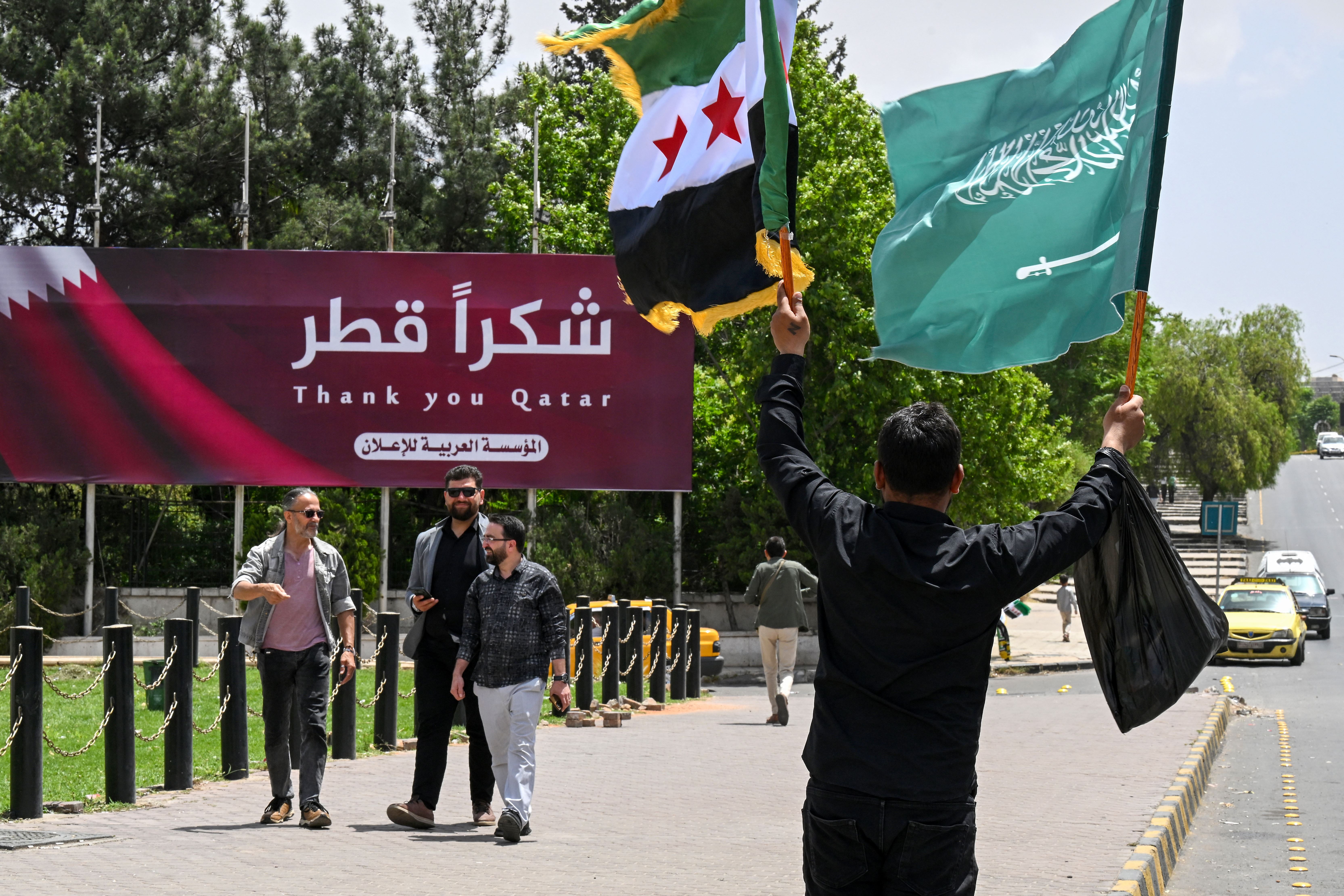
A man carries the Syrian and the Saudi flags past a billboard thanking Qatar,
 in Damascus on May 14, 2025. Photo: AFP

16-05-2025
Rudaw


ERBIL, Kurdistan Region - The World Bank Group announced on Friday that Saudi Arabia and Qatar have paid off Syria’s approximately $15.5 million debt to the bank, making Damascus eligible to receive new loans.

“Effective May 12, 2025, the arrears of approximately $15.5 million due to the International Development Association (IDA) by the Syrian Arab Republic have been cleared. The payment to clear the arrears was made by the Kingdom of Saudi Arabia and the State of Qatar,” the World Bank Group said in a statement.

“Consequently, the country’s eligibility for new operations has been reinstated, subject to compliance with applicable World Bank operational policies,” it added.

The Saudi Press Agency on April 27 published a joint statement by Saudi Arabia and Qatar, in which they announced their plan to settle Syria’s outstanding debt to the World Bank.

They also called on international and regional financial institutions to “promptly resume and expand their development engagement in Syria and to expand efforts, in line with their mandates, to improve the lives of the Syrian people and realize their aspirations for a future marked by opportunity and well-being, contributing to the broader stability and prosperity of the region.”

The World Bank suspended operations in Syria 14 years ago, when the civil war erupted. That war and years of sanctions have left Syria’s infrastructure crumbling and its economy in tatters, providing challenges for the country’s new rulers.

“IDA, the World Bank Group’s fund for the poorest countries, provides zero- or low-interest loans and grants to countries for projects and programs that boost economic growth, build resilience, and improve the lives of poor people around the world,” the World Bank Group said in its statement.

United States President Donald Trump announced during his recent visit to Saudi Arabia his intention to lift sanctions on Syria as part of a broader strategy to normalize relations with Damascus.

Several European countries have already removed some sanctions. In April, the United Kingdom lifted sanctions it had imposed on Syrian ministries, intelligence agencies, and state-affiliated media outlets during the rule of toppled dictator Bashar al-Assad.

TURKIYE 

Drilling in pastureland aims to force local migration


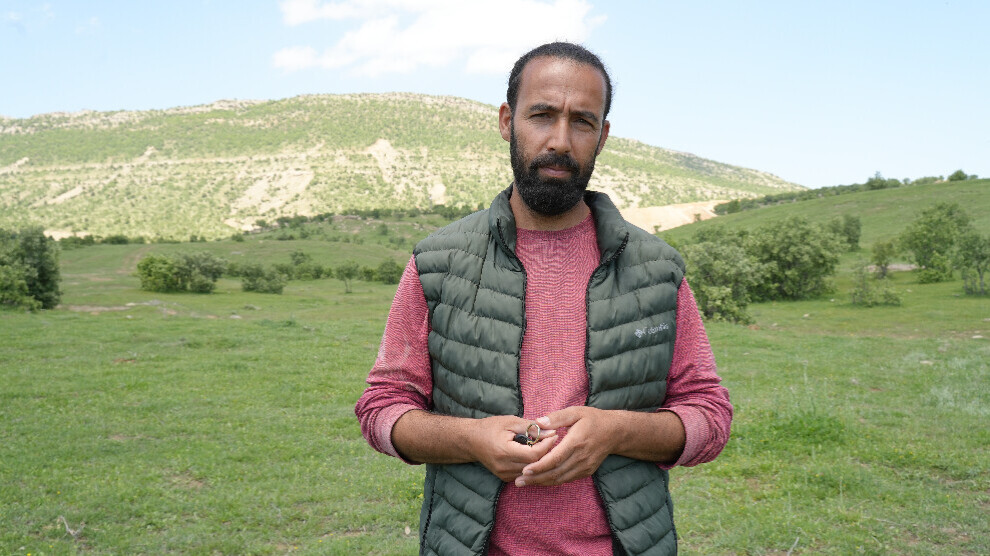
Ahmet Fidan condemned oil and mineral drilling in Lice's pasturelands.


ANF
AMED
Saturday, 24 May 2025

Oil exploration activities have been conducted by the Turkish Petroleum Corporation (TPAO) and the Turkish Petroleum International Company (TPIC) in the districts of Hani (Hezro), Silvan (Farqîn), Lice (Licê), and Kulp (Pasur) in Diyarbakır (Amed) for the past five years.

In October of last year, the company began operations in the region by cutting down trees in forested areas to open roads for drilling in Lice and Kulp. This time, the company targeted the villagers’ pasturelands.

At the container site set up at the entrance of Lice, work teams depart daily for areas where access roads have been opened. Last week, they conducted drilling operations in a pasture area in the village of Yukarı Calili (Bilyasa Jor), connected to the village of Hendek in Lice.

Drilling wells have been opened in dozens of different spots, from flatlands to the foothills of the mountains. When villagers protested, the team reportedly responded by saying: "If you try to stop the work, the soldiers will intervene. Go file a lawsuit if you want."

Four districts devastated by oil exploration

In a statement released on 26 April 2024, by the Diyarbakır Bar Association and various civil society organizations, it was revealed that more than 200 oil exploration and extraction operations have been conducted in Diyarbakır over the past five years.

The statement noted that these exploration sites were established on agricultural lands, pastures, and forest areas, resulting in the loss of 35,000 hectares of farmland.

As part of the Ministry of Energy and Natural Resources’ 'Çıralı 2B Project', seismic surveys will be carried out in many areas, and new oil drilling sites will be opened.

In addition to oil, mineral exploration continues in these districts. Drilling operations will begin based on previously collected samples.

The company, which has already cut down thousands of trees to open roads, has now begun targeting pasturelands in the hamlet of Yukarı Calili in Lice. Ahmet Fidan, one of the villagers opposing the drilling, emphasized that this was the only area where they could graze their animals. He warned that such operations would destroy all means of sustaining life in the village. He also noted that the drilling site is extremely close to the village.

Drilling wells opened in pastureland

Ahmet Fidan recalled that they were awakened by the sound of machinery a few days ago and said: "When I went outside, I saw that drilling machines had arrived along the foothills of the mountain. They had already opened underground wells as deep as one and a half meters."

Fidan said he called the village head to understand what was happening and was told that oil exploration was underway. However, when he visited the site, the teams told him they were searching for both oil and minerals.

He explained: "When I spoke with the teams, they said, ‘The military is with us. You cannot intervene. If you have objections, hire a lawyer and file a lawsuit.’ These lands are our livelihood, our living space. How can they drill in our pastures without even consulting the villagers?"

Our means of livelihood are under threat

Ahmet Fidan stated that numerous drilling wells have been opened, from the flatlands to the mountain peaks, and that the areas around the wells have been sealed with concrete. He said: "They tied ropes and dropped stones into the wells. This is the only pastureland available for our animals. If this area is destroyed, both our livelihood and living space will be lost. If it is fenced off with barbed wire, we will no longer be able to raise animals and will be forced to leave the region."

We will take legal action

Ahmet Fidan emphasized that the destruction of nature in the region has intensified with recent oil and mineral exploration. He concluded: "We do not want to be forced to leave our village. We were born here, and we want to live here. No matter what happens, we will stay. That is why we have initiated legal proceedings. These lands are being handed over to capital and corporations. We do not want anyone coming here to destroy this place. It has already been plundered enough. It is time to say stop."
Tantan: A colonial mentality lies at the root of Turkey’s win-win energy strategy

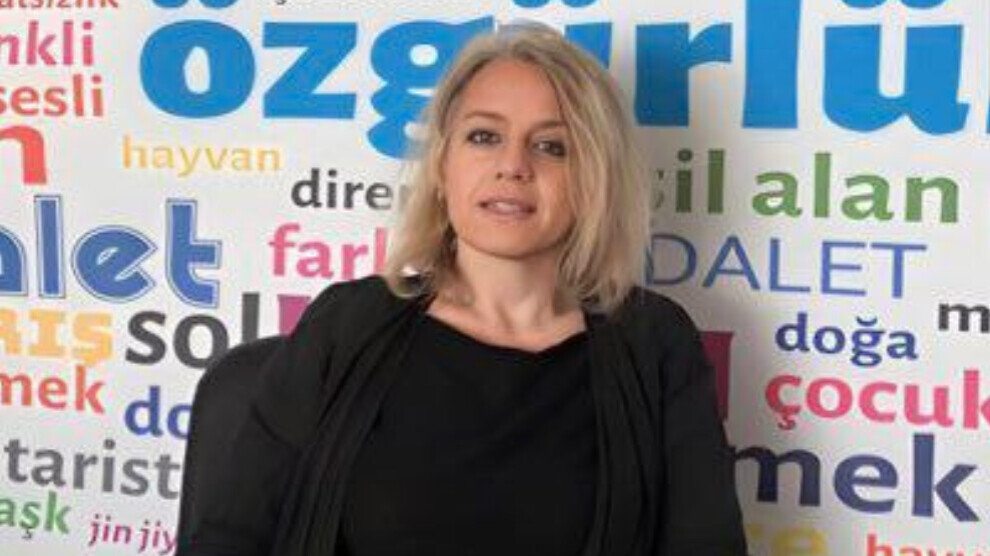
Melis Tantan said that Turkey’s energy strategy is based on colonialism and that energy has become a tool of domination for many states.

ANF
NEWS DESK
Thursday, 22 May 2025


LONG READ

The Istanbul Natural Resources Summit (INRES), held on May 2 in Istanbul under the auspices of the Ministry of Energy and Natural Resources and organized by Turkuvaz Media Group, featured presentations on Turkey’s energy investment plans in Africa and the Middle East, along with discussions of future projects.

On May 7, President Recep Tayyip ErdoÄŸan of the Justice and Development Party (AKP) attended the Mass Inauguration Ceremony for Renewable Energy Investments. In his speech, he drew attention to energy outages in parts of Europe, stated that Turkey’s energy demand is expected to rise by 50 percent, and announced $80 billion in investments by 2035. He praised the Akkuyu Nuclear Power Plant, referenced Gabar, and promised to shorten the waiting period for energy companies while addressing the difficulties they face.

Melis Tantan, Co-Spokesperson of the Ecology and Agriculture Commission of the Peoples’ Equality and Democracy Party (DEM Party), commented on both the Istanbul Natural Resources Summit and Turkey’s broader energy policy in the context of the recent inauguration events. She noted that the Natural Resources Summit held in Istanbul served as one pillar of Turkey’s international strategic cooperation with countries in the Middle East, Asia, and Africa. Tantan said, “We’ve already seen reports in the media for some time now about these international partnerships. There are frequent meetings with the United Arab Emirates, for instance, and the headlines typically read, ‘agreements signed.’ But these announcements, which are framed as diplomatic successes, are essentially energy and trade deals. While the headlines are shared, we are told nothing about the actual content of these agreements. There are talks with many countries, but we never know the details. What we do know is that the Ministry of Energy and Natural Resources has been operating under a long-term plan. In the 12th Development Plan, the objective was laid out very clearly for the 2024–2028 period. They state: ‘We will make Turkey an energy hub.’ Turkey is assigning itself the role of a connector between energy producers and those who demand it.”

Tantan explained that the summit functioned in two key dimensions. It not only emphasized Turkey’s ambition to position itself as an energy hub but also highlighted planned energy investments in various other countries. She noted, “We saw that agreements, infrastructure investments, and trade partnerships were framed in such a way that nearly every country involved was portrayed as being grateful to Turkey.”

Tantan added that the idea of turning Turkey into an energy hub had already come up in relation to the so-called Development Road project. She said, “But this plan is not limited to that project alone. What ErdoÄŸan said, and what was echoed at the summit, focused heavily on energy supply security. The message was: either we will produce the energy ourselves, or we will secure access to it from producer countries. They claim this will be done through a mutual win-win policy.”

Who actually benefits from this so-called win-win policy? Is there any gain for the people or the environment?

No, there is not. What we’re talking about here are agreements made between states and corporations. ErdoÄŸan especially says, “There is no colonialism in our history,” but Kurdistan itself is a reality that contradicts that claim. These kinds of energy and financial agreements create mutual dependency. In fact, they pave the way for colonial practices, especially with countries whose economies are weaker than Turkey’s.

For a long time, we’ve been saying that imperialist and multinational companies have exploited the lands of Turkey and Kurdistan in the name of mining and energy. But something has changed over the past decade. We’re now seeing Turkish companies, particularly those backed by the government, starting to partner with those imperialist companies. And we’re witnessing how they are opening up new spaces for themselves in the Middle East, Asia, and Africa.

In this way, Turkey is essentially telling the world, “We are part of this race too,” in the fields of energy and mining. They speak with ambition, saying, “We are the seventh-largest country in mining, and we aim to become number one.” All the investments listed at the summit are closely tied to the root causes of Turkey’s current economic crisis, because nearly all public resources have been directed into these kinds of incentives.

You mentioned that Turkey is beginning to expand into new areas in the Middle East, Asia, and Africa. How are the countries attending the summit engaging with these investment areas?

All of the countries present at the summit effectively marketed their lands. They did so through four main messages. First, they emphasized that their lands are rich in resources. Some said, “We have mineral deposits,” others said, “Our oil reserves are highly developed,” and still others highlighted that “we have large areas open for energy investments.” So the first message was about how resource-rich their territories are.

Second, countries with a heavy history of war, like Libya, Iraq, and Syria, kept repeating, “We are resolving our political issues.” Turkey has already made strategic moves in these regions and has taken sides in many of these conflicts. Syria is a well-known example. In Somalia, Turkey was praised in the media as the guarantor of peace. But in reality, Turkey’s role in that so-called peace process was linked to its forward-looking agreements and plans to search for minerals and build infrastructure in Somalia. So we can say that Turkey’s so-called peace policy in these places is actually deeply hypocritical.

Returning to how these countries negotiated: First, they said, “Our lands are rich.” Second, “Our political problems are behind us.” Third, “We are enacting legal reforms.” They declared that they are opening up their energy and mining sectors to international investment and are passing the necessary legal frameworks to ensure smooth operations. “Companies and states investing here will not face problems, you can be assured,” they said. And present at the summit were the CEOs of various energy and mining companies, listening closely to these statements. The fourth message was this: “We prioritize foreign investors. Come invest in our country and help us grow.”

ErdoÄŸan claims, “There is no colonialism in our history,” yet these countries are, in reality, offering their territories to a colonial mindset. They are effectively saying, “Let the investment come in and lift us up, even if it turns us into a state colony.” And this logic is not limited to non-Western countries; some European countries also fall into this framework. For instance, there was a recent tender in Hungary for oil exploration. The Turkish Petroleum Corporation (TPAO) won the bid and will soon begin drilling at two sites in Hungary.

In Niger, mining investments are underway, these are confirmed deals. What we previously saw reported under vague headlines like “strategic international partnerships formed, agreements signed” are now being revealed in more concrete detail. Major project planning has already taken place in many of these countries.

One of the most significant cases is Iraq. Investment there is also focused on oil. Iraq has stated openly, “We will increase crude oil production.” Recently, Veysel EroÄŸlu was appointed as the official responsible for matters related to Iraq. You might remember Veysel EroÄŸlu as the former Minister of Environment. Given that mining and renewable energy investments are on the table in Iraq, it wouldn’t be wrong to assume that they intend to utilize his prior experience in these fields.

You also mentioned Syria. What kind of activities are taking place there?

After the destruction caused by the war, Turkish construction companies took a direct role in the reconstruction process in Syria. There is also an electricity project funded by the World Bank, with Jordan and two other parties involved. Turkey is among the countries working on rebuilding Syria’s electricity infrastructure. This illustrates how peace processes, from the perspective of capital, can be incredibly profitable.

Of course, for the people, peace, the end of war, and the silencing of weapons are positive developments. But capital approaches these processes with the mindset of: “How can I profit from this? How can I invest here? How can I turn this into an advantage for myself?” In fact, the aggressive push of capital into energy, construction, and infrastructure projects in Syria offers a striking example of how so-called reconstruction efforts are leveraged, and how peace in Kurdistan could likewise be shaped in fundamentally capitalist terms rather than through genuine democratic resolution.

At the Mass Inauguration Ceremony for Renewable Energy Investments, ErdoÄŸan also spoke about this so-called win-win logic. While the summit pointed to new geographies, it seems this inauguration was aimed at domestic moves. He mentioned new investments in nuclear energy, hydroelectric power, wind, and geothermal sources, emphasized energy demand, and pointed to outages in Europe. If we repeat the question we asked about the summit, who really benefits here?

A large number of major renewable energy projects were inaugurated all on the same day. These were investments that began in 2024. In recent years, incentives have increased for so-called renewable energy, particularly wind, solar, geothermal (which involves the use of underground water), and hydroelectric power plants. Hydrocarbons are also part of the broader energy conversation, but for now, they’re not present in Turkey.

According to the 12th Development Plan, there is a clear target to drastically increase solar energy installations by 2028. But in reality, the solar energy already produced in Turkey today is sufficient to meet household energy needs across the entire country. Still, this energy is not being made available for domestic use. These projects are not designed for local consumption, they are built on a model based on storage and export.

While renewable energy is generally seen positively, especially when compared to fossil fuels, because it can meet local energy demands more sustainably, it also requires intensive mineral extraction, which brings its own set of concerns. When these energy projects are implemented through massive investments by large corporations, they tend to cause even more serious problems.

Like what?

These projects are being built on top of farmland, pastures, forests, and animal migration routes. They result in the destruction of river systems, underground water reserves, and natural water basins. In that sense, they have already strayed far from the idea of “renewable” energy. But because these massive investments are framed as development initiatives, they continue to receive widespread support.

At the summit, and in various earlier meetings, the same narrative was repeated, both by Turkey and other countries: energy demand is going to keep rising. They claim that this is due to population growth and technological advancement. Therefore, they argue, we must develop energy strategies that can meet this increasing demand.

Is energy demand really going to increase, or are these investments being made just to store and sell energy, as you mentioned?

Here’s the thing: major states and corporations claim that we cannot fully transition away from fossil fuels. They say that even if renewable investments expand, they won’t be able to meet global energy demand. Therefore, they argue, we need to create an “energy mix.” In other words, fossil fuel extraction, like oil and natural gas, and the traditional methods of energy production based on them will continue. But at the same time, they say they will invest in hydrocarbons and renewable energy sources.

This narrative actually masks a deeper truth. First, we already know that the COP (Conference of Parties) processes are more of a climate spectacle than a real solution. Every year, these summits are dominated not by voices seriously committed to halting climate destruction or cutting carbon emissions, but by nuclear and renewable energy lobbyists.

These energy mix strategies are now embedded in state policies. So what we’re seeing is this: while governments say they are protecting the climate, they continue to invest in energy projects, including fossil fuels. It’s a contradictory position.

The claim that “energy demand will increase” also reveals a telling absence, there is no real political discussion about how to reduce energy demand. This narrative of growing energy needs serves to justify more investment, expand profit margins, and create even greater opportunities for companies to accumulate wealth.

So in that sense, of course they would want energy demand to increase, driven by a Malthusian narrative that says ‘population will rise, and so will needs.’ But isn’t this a manipulation? Absolutely. No matter how much the population grows, if we had planned urbanization, planned regulation, and a planned system of energy democracy, such as energy cooperatives based on solidarity economies, then energy could be produced according to actual needs. In that model, there would be no overproduction, no surplus, and energy would not be treated as a commodity to be sold on the market. In such an economy, the idea of constantly growing energy demand simply wouldn’t exist.

But because they refuse to engage in this kind of debate, or deliberately avoid it, they insist, “Energy demand will increase, so we must invest.” The real issue here is neither climate protection nor the well-being of people and societies.

It’s about turning energy, just like water, into a tool of power in the marketplace, and in some cases, even in warfare. That has always been true for oil, but now we’re seeing the same logic applied to renewable energy. A recent example is the chip crisis triggered by competition over lithium resources. That moment served as a wake-up call for many.

Exactly like with lithium mining: ‘Let us take hold of these resources as quickly as possible so that in the event of any raw material shortage, we have the upper hand; let the world depend on us.’ That seems to be the policy. Yes, precisely. In fact, what should be a global transformation imposed by the urgency of the climate crisis has now itself become a geopolitical weapon, an instrument of international power used by states.

At the same time, many new forms of energy are also being discussed. One of the most prominent is the hydrocarbon issue, which is currently in high demand. There are already plans for major investments in this area. Another is deep-sea discharge and offshore wind energy, especially the construction of wind farms in international waters.

These initiatives are no longer limited to land. They are expanding into oceans and seas, disrupting their ecosystems and breaking their connection to the sun and air. And with that, we are also seeing a rise in efforts to extract deep-sea minerals, projects that will ultimately destroy the biodiversity and ecosystem life at the bottom of the oceans. This is one of the strategies that will likely expand even further in the coming years.