Saturday, September 20, 2025


Trump Administration’s Securitization Of Arctic Affairs And Its Implications For US Federally Funded Research – Analysis


By 

The Trump Administration is in the process of securitizing Arctic affairs. That will almost certainly have a significant impact on the future of U.S. federally funded research related to the Arctic.


Over the next four years, the U.S. Government is likely to make significant investments on priority areas for Arctic research that advance the America First Agenda. However, that will almost certainly come at the expense of areas for Arctic research that advance other policy agendas (e.g. climate change agenda). The American people should therefore expect the next version of the National Plan for Arctic Research to articulate a very different set of priority areas and underlying principles for U.S. federally funded research related to the Arctic than the current one.

Background Information

On inauguration day, President Donald Trump not only issued an executive order that directed the U.S. Ambassador to the United Nations to immediately submit a formal written notification of withdrawal from the Paris Agreement under the United Nations Framework Convention on Climate Change. He issued another executive order that directed federal agencies to fully exploit Alaskan territory purportedly for the benefit of the United States and the people of Alaska. A few months later, President Trump issued yet another executive order that directed federal agencies to develop a strategic plan to “secure arctic waterways and enable American prosperity in the face of evolving arctic security challenges and associated risks.” 

The White House then turned to Arctic research. In May, the Interagency Arctic Research Policy Committee (IARPC) of the National Science and Technology Council (NSTC) released a revised Implementation Plan (2025-2026) for the Arctic Research Plan (2022-2026). Per the IARPC, that revision superseded the Arctic Research Plan (2022–2026) produced under the Biden Administration. 

The U.S. Arctic Research Commission (USARC) took note of the new strategic plan. In July, it responded with a new report that identified the research needs for a secure and prosperous Arctic. That report not only declared that Alaska is a strategic location with natural resources that advance the national interests of the United States. It specified two of the evolving Arctic security challenges for the United States. The first is the regional expansion of Russia. The second is the regional engagement of the People’s Republic of China. 

That same month, the National Science Foundation (NSF) published a Request for Comment for the next version of the National Plan for Arctic Research. Among other things, that document declares that the United States “wants to remain a global leader in Arctic research and stewardship for many years to come.” Note the “a” instead of “the” before “global leader.” The NSF also chose not to recompete the award for a well-known nonprofit that promotes information sharing and knowledge exchange among U.S. Arctic researchers. As a consequence, the Arctic Research Consortium of the United States (ARCUS) will shut down later this month. Ironically, one of its last events will be an information session on the National Plan for Arctic Research (2027-2031) for U.S. Arctic researchers.


Securitization Process

The public record clearly shows that the Trump Administration is in the process of transforming Arctic challenges into existential threats to U.S. national security and foreign policy interests. Per the new report by USARC, Alaska is not simply a strategic location. It is a strategic location that could determine which independent state controls the world. On the basis of that argument, the Trump Administration would probably argue that Arctic affairs should not simply be managed by the U.S. Government within the standard rules of democratic politics. Instead, it should be managed beyond those rules. That seems to already be happening on the ground. Look at Greenland Affairs.

To be clear, the securitization of Arctic challenges is a double-edged sword. On the one hand, the U.S. Government will be able to resort to extraordinary measures to deal with emerging arctic challenges. On the other hand, it will likely erode the rule of law in the process. That observation begs a couple of important public policy questions that are not being asked loudly enough by U.S. Members of Congress and the American people. Specifically, it begs the normative questions of whether any Arctic challenges should be securitized and, if so, which ones should be securitized? 

The answers to those questions carry implications for the follow-on normative question of what should be the strategic objectives and key deliverables for Arctic affairs. That includes those related to Arctic research.

Research Implications

The securitization of Arctic affairs will almost certainly have a significant impact on the priority areas and overarching principles for U.S. federally funded research related to the Arctic. That includes research related to area studies, engineering, science, and technology:

  • Priority Areas: Per the Implementation Plan (2025-2026), there are four priority areas for U.S. federally funded research related to the Arctic. They include: 1) Arctic Systems Interactions; 2) Community Resilience and Health; 3) Risk Management and Hazard Mitigation; 4) Sustainable Economies and Livelihoods. However, those priority areas already appear to be changing. The USARC report introduced a different set of priority areas. They include: 1) community security; 2) economic security, 3) energy security, 4) military security. Interestingly, those priority areas appear to be loosely drawn from the securitization literature that is commonly associated with the Copenhagen School. In Security: A New Framework for Analysis, Barry Buzan, Ole Weaver, and Jaap de Wilde famously conceptualized the levels of security as economic security, environmental security, military security, political security, and societal security.
  • Overarching Principles: Per the Implementation Plan (2025-2026), there are three principles for U.S. federally funded research related to the Arctic. They include: 1) Sustained Engagement; 2) Fairness; 3) Transparency. The problem is that not all of these principles and their standard interpretations are a good fit for a securitized issue. That is because a securitized issue not only provides the necessary rationale for selecting government secrecy over government transparency. In some cases, it provides a strong rationale for selecting transactionalism over relationalism in international relations. To compound matters, the standard interpretation of the remaining principle is not well-aligned with the America First Agenda. For the Trump Administration, fairness does not mean equality nor equity. It means meritocracy. That marks a significant departure from the Biden Administration.

The American people should therefore expect the National Plan for Arctic Research (2027-2031) to articulate a very different set of priority areas and overarching principles for U.S. federally funded research related to the Arctic. That would have profound and disproportionate impacts on the people of Alaska. 

That, in turn, begs an important question of the U.S. Congressional Delegation from Alaska: Why haven’t Senator Lisa Murkowski, Senator Dan Sullivan, and Representative Nick Begich pushed for the U.S. Congress to conduct far more oversight on Arctic research over the past few months? That is a question that the people of Alaska should start asking.



Michael Walsh
Michael Walsh (@FPCommentary) is an academic researcher at the University of the Witwatersrand. He is a former member of the Communications Committee of the Arctic Research Consortium of the United States (ARCUS) and a former member of the Experts Working Group on Emerging Security Challenges co-chaired by the North Atlantic Treaty Organization (NATO) and the Partnership for Peace Consortium (PfPC).


 

Norway election: Labour narrowly holds on to power amid uncertainty


Labor Party leader Jonas Gahr Store and his wife Marit Slagsvold vote in the 2025 General Election at Uranienborg School in Oslo.

First published at Rosa-Luxemburg-Stiftung.

Norway’s parliamentary election on Monday, September 8, 2025, was an incredibly close-run race. The left bloc, led by the Labour Party, secured a narrow victory. Labour will likely continue as a single-party minority government, seeking compromises and budget agreements with other left-wing parties as well as across the political spectrum. Much remains uncertain, however, as negotiations with as many as four smaller left-wing parties are still ongoing before a new government can be formally established.

The race for the threshold

Norway’s multi-party system means that election outcomes often hinge on which parties surpass the 4 percent threshold for proportional representation. This year’s vote was no exception – in fact, it was even dubbed “the threshold election.” In the previous election, the radical-left Red Party (R) became the first newly established party in Norwegian history to pass the threshold, ensuring proportional representation in Parliament. This time, polls consistently showed the Red Party comfortably above the line, establishing itself as a permanent political force.

The real suspense centred on three other parties: the Green Party (MDG) on the left, and the Liberal Party (V) and the Christian Democratic Party (KrF) on the right. Their ability — or failure — to pass the threshold was widely seen as decisive for which bloc would secure power, and it fueled intense debate about tactical voting. The Greens in particular built their campaign almost entirely on the message that crossing the threshold was essential to keeping the far right out of government, symbolised by a campaign where prominent green politicians posed on pictures next to a massive wooden “4%” sign.

Tactical voting and a fragmented parliament

On the right, tactical voting is hardly new. Both the Liberals and Christian Democrats frequently hover around the threshold, and conservative voters are well aware that they are essential for forming a right-wing government. It is even said that some local Conservative Party (H) branches traditionally lend votes to the Liberals to ensure their survival. This year, however, the Conservatives performed unusually poorly. Having polled strongly in recent years, their support collapsed in the run-up to the election, dropping from 20.3 percent in the last election to 14.6. With fewer votes to spare, they could not bolster their allies as effectively. One key reason for their decline was the growing strength of the far-right Progress Party (FrP), which captured large numbers of Conservative voters and secured 23.9 percent of the vote.

In the end, the Green Party and the Christian Democratic Party cleared the 4 percent threshold, while the Liberals failed to do so. This secured victory for a left bloc of five parties that cleared the threshold, while the right bloc could only get three parties over the line. The Liberals will still have a parliamentary group consisting of three MPs, however — down by five — on account of winning a number of direct mandates in the counties.

Norway’s new “super PACs”

Another factor in the Conservatives’ poor performance was a heated national debate on wealth taxation. The Conservatives’ want to reduce Norway’s net wealth tax, while FrP wants to remove it completely. And of the two options, the more extreme stand seemed to be the most popular. Much of the campaign was dominated by a discussion of this tax, an issue pushed not only by right-wing parties but also by influential think tanks and lobby groups. Three self-described “super PACs” emerged, channeling large amounts of money into campaigns for the four right-wing parties while advocating for abolishing the wealth tax. These groups — “Action for Norwegian Ownership,” “Joint Action for Value Creation and Private Ownership,” and “Action for a Bourgeois Election Victory” — argued that the tax harmed Norwegian business owners, encouraged foreign takeovers, and in some cases forced entrepreneurs to sell shares to cover their tax bills.

Their narrative resonated strongly, even though only 14 percent of Norwegians pay the tax, and most of the burden falls on a small group of ultra-wealthy individuals. The “super PACs” dominated media coverage, circulating stories of struggling young entrepreneurs at risk of bankruptcy or emigration. Late in the campaign, the left finally mounted a stronger response. Asle Olsen, an oil engineer and Socialist Left Party (SV) member, launched a website called “Facts About the Net Wealth Tax,” which debunked many of the claims. He showed that the supposed hardship cases often involved companies with large surpluses and state support. Olsen accused mainstream media of neglecting their responsibility, and they seemed to listen, as they started to investigate the stories and arguments against the wealth tax themselves.

Unpopular attempts to “buy the election”

The left’s argument for keeping the tax is that, as Olsen exposed, it’s not true that it harms businesses in the way the right-wing claims. And secondly that this peculiar tax is the only way to tax the super-rich, as they are good at dodging others, like the income tax that most people pay. The Labour Party, initially cautious on this issue so as to maintain its business-friendly credentials, eventually joined the debate. Emboldened by shifting public opinion, they deployed their best guy, Finance Minister (and former NATO secretary general) Jens Stoltenberg, to defend the tax. This sharpened the contrast between the blocs and kept the issue alive in the media.

The outcome of this debate remains unclear, however. On one hand, the right succeeded in framing the tax as a threat to national ownership, embedding an Ayn Rand–style narrative of the embattled entrepreneur against an overbearing state. On the other hand, many voters grew weary of the topic, seeing it as irrelevant to everyday life. Moreover, Norway’s egalitarian ethos fits more with everyone paying their fair share and clashed with the optics of wealthy elites attempting to “buy” the election. The Christian Democrats, in particular, faced criticism for accepting large donations and then starting to claim that “Jesus would have cut the wealth tax.”

Social media and young voters

While taxation dominated much of the campaign, other issues also influenced the election, though often in less traditional ways. Media coverage frequently focused on “meta-debates” such as polling, the threshold question, and tactical voting, rather than on more substantive policy issues. Two other “meta-debates” that got significant attention were the related matters of the changing media landscape and engagement with young voters, especially young men.

A notable new trend during the campaign was the rise of social media in shaping political engagement, especially among young voters. Influencers on platforms like YouTube and TikTok interviewed top politicians, endorsed parties, or created explicitly political content. In addition to that, new influencers appeared that solely did political content to try to persuade voters, and also, of course, some politicians themselves began using these platforms innovatively, gaining significant followings.

Desperate media and a messy campaign

Traditional media followed these developments closely. For example, a group of young male YouTubers called Gutta (“the lads”) invited politicians from all parties to take part in a “20 vs. 1” interview format, in which each interviewee faced 20 disagreeing participants in a row. Although derivative of international YouTube formats and not particularly successful, the stunt drew substantial attention and commentary from mainstream media.

Mainstream media itself then began doing a lot of “stunts” and experiments to get attention in the new media reality. For instance, the public service broadcaster NRK made a series of nine interviews with the party leaders. The format — called Mørch og makta (“Mørch and power”, named after the host Erlend Mørch) — asked shocking and rude questions of the party leaders in addition to letting them present their program, and was quite successful and popular. Other large media outlets asked prominent politicians questions like how many people they had slept with and challenged them to games like “Fuck marry kill”.

All of this, in many ways desperate, silliness forced key issues in the background and made the overall campaign rather messy. Questions about youth political culture, voting behavior, and the growing appeal of right-wing movements among young men got a lot of traction. Meanwhile, issues of real concern to young people — things like climate change, housing, the rising cost of food, education, and job prospects — were often sidelined in the campaign.

Uncertain times abroad

Foreign policy played a larger role in this election than is typical in Norway. With war in Europe and instability in the United States, the Labour Party benefited from its reputation for international competence. Prime Minister Jonas Gahr Støre, a respected diplomat who served as Foreign Minister from 2005 to 2012, enjoyed renewed popularity. Along with Foreign Minister Espen Barth Eide and Finance Minister Jens Stoltenberg, the government was widely seen as experienced and trustworthy.

Stoltenberg in particular plays a peculiar role in Norwegian politics. He was prime minister for a short time from 2000 to 2001, in which he made a series of reforms that made him popular with centre-right voters. Then he was prime minister again from 2005 to 2013, leading a red-green alliance. After that he was general secretary of NATO for ten years, which put him close to the inner circles of international politics and also US President Trump.

When he made a surprising comeback as Minister of finance in February this year, Stoltenberg was a key ingredient in the turnaround the government experienced in the polls, from being seen as chaotic and haunted by several personal scandals, to competent and the best bet to lead the country through uncharted waters. By contrast, the Conservatives were less trusted on foreign affairs, and the far-right Progress Party was viewed by many voters as simply unfit to represent Norway abroad. This perception may also have pushed some voters from the Liberals to the Greens.

Foreign policy controversies

Norway’s foreign policy has not been without controversy. The government’s recognition of Palestine, alongside Spain and Ireland in May 2025, was widely popular domestically and has energised the left. However, the government faced criticism over the investments of Norway’s sovereign wealth fund in companies linked to Israel’s occupation of the Palestinian territories. After public scrutiny, the fund eventually divested from 11 Israeli firms and later from Caterpillar, provoking backlash from US Republicans, including Senator Lindsey Graham, who suggested imposing tariffs and visa restrictions in retaliation.

The Conservatives, Christian Democrats, and Progress Party accused the government of politicising the sovereign wealth fund, even though its decisions are formally made by Norges Bank, who follows clear guidelines that didn’t change during the campaign. Left-wing parties, meanwhile, called for deeper divestment, with the Red Party, Socialist Left, and Greens all campaigning on an openly pro-BDS platform. The Liberals also voiced support for Palestinian rights but had limited credibility due to their alliances with pro-Israel parties.

A new political reality

The previous election, four years ago, was shaped by a rural revolt against an unpopular right-wing coalition. The Center Party (Sp) thrived, forming a government with Labour. But that coalition became increasingly unpopular and plagued by scandals. In January 2025, the Center Party quit the government over disputes about the EU’s fourth energy market package. The Center Party hoped to re-establish itself as a more powerful force in opposition by leaving the government and tapping into sentiment opposed to ceding further sovereignty to Brussels. Labour, meanwhile, hoped that governing alone would give it greater room to maneuver.

This gamble paid off for Labour but not for the Center Party, which collapsed in this election. Prime Minister Støre staged a dramatic comeback, transforming himself from a “political dead man” into a strong leader whose popularity has now carried Labour to victory. The party now seems poised to once again govern alone, a role it has historically relished.

January’s debacle didn’t change much in the population’s view on the EU, but it did highlight the fact that the EU remains a constant issue in the Norwegian debate. Both political blocs also have parties for and against the EU, making it difficult to have a clear-cut debate about joining the union. (On the right, the Conservatives and Liberals are for the EU and the Christian Democrats and the Progress Party against, while on the left, Rødt, SV and the Center Party are against, Labour is split, and the Green Party is for). Whether or not Norway should integrate more with the EU without membership remains an ongoing debate, however, and it will be a painful one for the government in the coming years, as several of their coalition partners have conflicting views on this matter.

Changing landscape on the left

The big shock this election was that the far-right more than doubled their share of the vote, leaving Norway in a similar situation to many other European countries: ruled by a centre-left party, but with the strong far-right in second place and dominant on the right-wing of politics.

On the left, the radical left party Rødt (R) had its best election ever, winning 5.3 percent of the vote (up 0.6 percent). This success stems in large part from the party’s long-term strategy of establishing themselves as a working-class party, and a heavy focus on workers’ rights and expanding the welfare state. The Socialist Left party (SV), traditionally the bigger party on the left of Labour, performed worse this election, however, ending up just above Rødt with only 5.5 percent. The party appears to have been squeezed between a more confident Red Party and the Green Party’s campaign on tactical voting.

The main issues for the left — nature and climate, Palestine, welfare and inequality and poverty — were all taken up by Rødt, SV and the Greens, leaving them to fight for many of the same voters. This was the case despite the Green Party actually being a party of the centre, which likes to insist that it’s not part of the left bloc. Nonetheless, the party has a tendency of clarifying its position before each election, and this time it were firmly on the left, basing much of its campaign on a Green vote being a safeguard against the far-right gaining power.

In the end, then, the left bloc won the election, but still this vote has delivered a far less convincing mandate for change than the previous one. In 2021, the left secured 100 of 169 parliamentary seats, campaigning on class politics and economic reform. This year, the left holds only 88 seats compared to the right’s 81, leaving Labour reliant on difficult negotiations with its allies. With the potential instability this brings, the challenge now is not only to govern effectively but also to contain the far-right in the years ahead.

Ellen Engelstad (born 1985) is a Norwegian writer and editor at Manifest Publishing. She is the author of Syriza: The Athens Spring and the Struggle for Europe’s Soul (2016) and Rosa Luxemburg: A Biography (2019, co-written with Mímir Kristjánsson).


From hope to disillusionment: Bolivia after 20 years of the Movement Towards Socialism


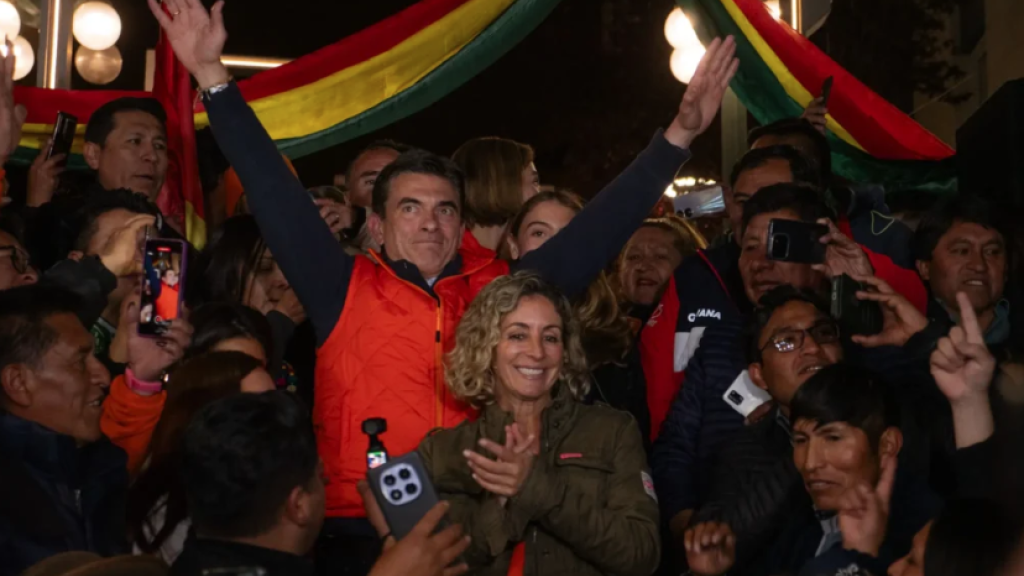
Rodrigo Paz celebrates alongside his supporters on the night of Sunday, August 17. (Benjamin Swift)

First published at NACLA.

A nearly two-decade era of Indigenous-oriented governance and anti-neoliberal politics has come to an end in Bolivia. The Movement towards Socialism (MAS) government, which launched in the early 2000s with great hopes and optimism, is closing with disappointment and economic chaos.

In a reversal as drastic as the MAS’s landslide victory in 2005, three right-wing presidential candidates — from center-right to far-right — won a combined 77 percent of the vote in the August 18 national election. Far from commanding a majority in both the Congress and Senate as it has since 2006, the MAS lost all its seats in the legislature but one.

Rodrigo Paz Pereira of the Christian Democrats, along with his popular vice-presidential candidate Edman Lara, defied opinion polls and stunned observers by surging into the lead. They will advance to a runoff vote against far-right candidate Jorge “Tuto” Quiroga on October 19.

Though Paz presented himself as a populist outsider promoting “capitalism for all,” he is hardly new to politics. He is a sitting senator representing the department of Tarija and the son of Jaime Paz Zamora, a neoliberal president from 1989 to 1993, closely tied to Bolivia’s traditional ruling elite. Yet it was his running mate, Edman Lara, who propelled Paz to first place. Lara, 39, is a former police officer from rural Cochabamba whose denunciations of police corruption have earned him a large and enthusiastic following on TikTokBolivia’s most popular social media platform.

Disenchantment with the MAS was palpable after the vote, when hundreds gathered in the streets of La Paz to celebrate Paz and Lara’s unexpected success. Zuleyka Pinto, a pharmaceutical chemist from El Alto who had knocked on doors for their campaign for months, saw their ticket as representing something new. “El MAS nunca más” (“the MAS never again”), the crowd surrounding her chanted on election night.

“The MAS no longer guaranteed any possibility of surviving economically, so people went to the other side,” says political analyst José de la Fuente, a former employee of the MAS-controlled Cochabamba departmental government. Indigenous and working-class voters “will never choose the neoliberal right,” he explains, “so many of them opted for what they thought was the middle.”

Exploding political and financial crises

Other voters heeded a call by former President Evo Morales— barred by term limits from running again — to spoil their ballots. Approximately 19 percent of ballots were marked null, nearly six times above average. Yet not all of these votes can be interpreted as support for Morales; voting is mandatory in Bolivia for those under 70, and null and blank ballots have long been used as a form of resistance against traditional party politics. Even so, with the number of null votes a whisker above perennial conservative candidate Samuel Doria Medina, Morales triumphantly declared victory, asserting on the coca growers’ radio station, “if you add in the blank ballots and the absentee vote, we’re in first place.”

Morales’s maneuvering eliminated any chance for 36-year-old MAS Senate President Andrónico Rodríguez, who ran on an independent left ticket. Once considered Morales’s political heir, Rodríguez garnered only 8.4 percent of the vote. Rodríguez had been the hope of Bolivia’s left for months, but Morales’s fierce antipathy towards him, his perceived indecisiveness in public appearances, and an unpopular vice-presidential pick all combined to sink his campaign.

With President Luis Arce deciding not to run for re-election amid low approval ratings, former Interior Minister Eduardo del Castillo ran as the MAS candidate. In a reflection of Arce and Rodriguez’s unpopularity, he scraped by with only 3.16 percent of the vote, just barely above the 3 percent threshold required to maintain the party’s legal status.

This fracturing of the left echoed the infighting that has plagued the party since 2020, when Arce — Morales’s longtime finance minister — won a resounding victory with 55 percent of the vote, one year after Morales was ousted in a coup following his unconstitutional bid for a fourth term. Morales always viewed Arce as a placeholder, believing he could run again in 2025, and soon clashed with Arce and his Vice President, David Choquehuanca, as they asserted their independence.

Now facing statutory rape charges, Morales has sought to destroy every Left rival, including his former ministers and social movement allies. Morales even turned on his closest ally: in 2023, when former Vice President Álvaro García Linera proposed mediating the MAS leadership conflict, Morales called him “my newest enemy.”

“I would have been open to supporting the MAS if it had been another person,” says Óscar Paco, a former Morales’s supporter who spoiled his ballot this time, unconvinced by the contenders, including Rodríguez. “Evo already had his moment — he should make space for young people.”

Beyond the MAS divide, disillusionment stemmed in large measure from Bolivia’s faltering economy. After 2013, falling global commodity prices and dwindling natural gas reserves eroded state revenues. The burden of costly fuel subsidies — which the MAS government failed to curb in 2010 after a near-uprising over proposed price increases that fell most heavily on the poor — has deepened the strain. Meanwhile, the dollar-pegged currency has steadily weakened, with the black-market exchange rate now about twice the official one.

As people struggled to put bread on the table — and with bread size decreasing as prices rose — memories of MAS-era social welfare gains faded from view.

The Fall of the MAS

Over two decades in power, the MAS party, which grew out of Bolivia’s powerful social movements, achieved astounding gains for poor people, particularly in its early years. Under Morales, the country’s first Indigenous president, poverty was reduced by half, natural gas contracts were boldly re-negotiated with powerful multinationals, and rural infrastructure expanded dramatically. There was hardly a village or low-income barrio that didn’t boast a new school, road, or health clinic. These advances brought the MAS unprecedented popularity and sustained its electoral dominance for 14 years.

But a steady concentration of power centered on Morales weakened the country’s grassroots movements. Social movement leaders were absorbed into the government, their loyalty ensured through perks such as union headquarters funded by the state, while critical social movement voices were sidelined. “The MAS became distant from social organizations and from ordinary people,” explains analyst de la Fuente. “It abandoned its agenda and focused only on re-election.”

MAS’s successes were not only material. For many Bolivians, the most profound transformation was the decline of everyday racism. During the 2019 protests in defense of Morales, a common refrain heard in the streets was, “we don’t want to go back to the racism of the past,” as a street vendor said through tears at a rally in La Paz.

While the government’s investments proved successful at stimulating the economy and lifting about 10 percent of the population into the middle class, they were built on the extraction of the country’s abundant natural resources — the same model in place since the Spanish invasion over 500 years ago. The boom-and-bust cycles that have plagued Bolivia ever since brought the left-wing experiment to its knees. When commodity prices collapsed after 2013, the government’s carefully accumulated reserves, among the highest in Latin America, were drained as it maintained spending to shore up political support.

Bolivia’s deeply entrenched patterns of extractivist dependence were never shaken. If anything, more advanced technologies and China’s surging demand for natural resources accelerated exploitation, leaving ecological devastation in their wake. By 2024, Bolivia ranked second only to Brazil—a country eight times its size — in tropical primary forest loss, much of it driven by soy expansion and cattle ranching in the eastern lowlands.

Corruption scandals have further eroded trust in MAS governance. One case diverted millions of dollars earmarked for Indigenous development projects; others have tainted Arce’s administration directly. “There’s been so much corruption with Arce’s current government,” says Máxima Laura, a street vendor in traditional Aymara dress and former MAS voter. His kids have profited,” she adds. Though Laura voted for Paz and Lara, she is skeptical of their promises. “I don’t believe in politicians anymore. They say one thing, but when the time comes, they change their mind.”

What’s next for the Bolivian left?

The rise of Paz and Lara, and Morales’s enduring influence, leave the Bolivian left with few immediate paths forward. Since most political parties in Bolivia revolve around individual leaders, MAS’s failure to renew its leadership does not bode well for the future.

Morales’s top-down governing style still shapes political culture at every level beyond the local. Bolivia’s Indigenous and working-class unions have long relied on charismatic male leaders, corporatist structures, and close ties between leader and base. As president, Morales famously helicoptered into rural communities almost daily, launching public projects and cultivating loyalty.

But the generational terrain has shifted. Most young Bolivians, raised in relative middle-class security thanks to the MAS’s own achievements, never experienced the poverty or struggles that defined their parents’ lives. One consequence of neoliberalism is that for many young people today, the primary focus is on individual rather than collective well-being.

According to Iveth Saravia, who coordinates a children’s foundation in El Alto, “a lot of young people talk about the need for new people, and for them that new person is Tuto.” She sees it as ironic that “Tuto” Quiroga, who served as vice-president under former dictator Hugo Banzer and briefly as president more than two decades ago, is now embraced as fresh leadership. “It’s striking how much historical memory has been lost,” she observes.

This shift also shaped how Morales’s rhetoric was received. His grand narratives of anti-imperial struggle increasingly rang hollow for younger Bolivians, whose priorities centered on more immediate, everyday concerns. The MAS discourse came to have “an ideological overemphasis,” notes de la Fuente. For him, the future of the Bolivian left lies outside the MAS: “Another left has to emerge, one that’s more mature and more savvy.” That includes more seriously addressing environmental issues, a cause the right has skillfully co-opted as the MAS — like every government before it — prioritized economic development over sustainability.

This is Bolivia’s great conundrum: how to improve living standards through value-added industries, rather than perpetuating historic patterns of resource extraction. It is, in many ways, the perennial dilemma of the Global South.

Before formally gaining power, the resurgence of the right is already taking shape through court rulings favoring key figures from the 2019 coup and subsequent massacres. In response to a rare Supreme Court order, a judge annulled charges against former interim president Jeanine Áñez for her role in the Sacaba and Senkata massacres, sending the case back to Congress for approval before it reaches the Supreme Court. Meanwhile, another judge ordered that former Santa Cruz governor Fernando Camacho be moved to house arrest and that Marco Antonio Pumari, another central figure in the coup, be released from preventive detention. “These politicized court decisions will inevitably pave the way for more political violence like the massacres Áñez oversaw,” says Thomas Becker, a human rights lawyer working with the families of 2019 massacre victims.

Yet amid the crisis, one achievement stands out. In the year of Bolivia’s bicentenary of independence from Spain, the only apparent winner in the recent election is electoral democracy itself—no small feat in a nation that has endured more coup d’etats than almost any other. This time around, Arce appears committed to a democratic transition, even at the cost of dismantling his own party and the legacy of the self-styled “government of social movements.”

But this is Bolivia: a country where social movements have repeatedly risen — against colonial powers, military dictatorships, and neoliberal governments alike — to demand a more equitable and inclusive society. It may take time, but there is little doubt they will rise again.

Linda Farthing is a journalist and independent scholar who has co-authored four books on Bolivia. She has written extensively on Latin America, including for the Guardianthe NationAl Jazeera, and Ms. Magazine.

Benjamin Swift is a journalist based in La Paz, Bolivia. His stories focus on climate change, the environment, and LGBTQIA+ themes. Find more of his work at www.bswiftcreative.com

Democratic Republic of Congo

Peace remains elusive in DRC


Monday 15 September 2025, by Paul Martial


The war continues despite the peace agreement between the Democratic Republic of Congo (DRC) and Rwanda, signed in Washington under the auspices of Trump.


From the outset, observers were cautious about the end of the conflict, due to the establishment of two parallel and closely linked peace processes.
Two peace agreements

The first, sponsored by the US, is an agreement between states, the DRC and Rwanda. It was signed on 27 June. According to the actors themselves, it is falling behind schedule, particularly on the issue of the withdrawal of Rwandan forces from Congolese territory. It is conditional on the DRC armed forces (FARDC) taking out the FDLR, a militia composed of former génocidaires whose danger is overestimated by Rwanda, which considers them an existential threat.

The second agreement, still under discussion, is the Doha agreement, this time between the DRC and the M23/AFC militia, which is heavily supported by Rwanda. It has conquered a large part of the eastern territory of the country by occupying the main cities of Goma and Bukavu. The talks are stalling. The Congolese authorities are demanding to regain their authority over the entire territory, while the M23/AFC is talking about co-management of the region. Although the M23 was initially a strictly military rebellion, it has transformed itself into a political force with the addition of the Alliance Fleuve Congo (AFC), led by Corneille Nangaa.

Parallel regime and rise of militias

This militia quickly set up a new administration to manage the conquered territories. Governors were appointed, courts were established and, more recently, a police force was created with the hiring of new civil servants. Traditional leaders opposed to this new power were removed and sometimes physically eliminated. The other thorny issue is the demobilisation of the M23 forces. These combatants are demanding to be integrated into the army. Tshisekedi, the president of the DRC, categorically refuses, considering that such integration would be a sword of Damocles hanging over his regime.

To wage war against the M23/AFC, the Congolese government has made extensive use of numerous militias operating in the region. They operate under the generic name of Wazalendo (patriots, in Kiswahili). Officially, their members have the status of ‘armed defence reserve’. In reality, the Wazalendo enjoy a great deal of independence and consider that they are not bound by the commitments made in Doha, as they were not involved in the discussions. The latter had asked to participate in the meetings, but the refusal of both the Congolese government and the M23/AFC resulted in the demands of these armed groups being ignored. The first skirmishes between Wazalendo militias and the FARDC are already appearing. The most recent took place in Uvira, causing the deaths of a dozen people.

Contrary to Trump’s claim that he has ended a thirty-year war, the conflict continues, forcing civilians, victims of abuses perpetrated on all sides, to flee into exile.

11 September 2025

Translated by International Viewpoint from l’Anticapitaliste..

Attached documentspeace-remains-elusive-in-drc_a9175.pdf (PDF - 905 KiB)
Extraction PDF [->article9175]

Democratic Republic of Congo
Rwanda-DRC: Peace agreed, people forgottenPeace agreed, people forgotten
Peace under the seal of business
The state of Africa in the new world order
Democratic Republic of Congo: a conflict with multiple implications
DRC: The need for a ceasefire

Paul Martial is a correspondent for International Viewpoint. He is editor of Afriques en Lutte and a member of the Fourth International in France.


International Viewpoint is published under the responsibility of the Bureau of the Fourth International. Signed articles do not necessarily reflect editorial policy. Articles can be reprinted with acknowledgement, and a live link if possible.
The genie of class struggle comes out of its lamp in Nepal

Friday 19 September 2025, by Daniel Tanuro


Nepal has been shaken by three days of a lightning revolt. In less than 48 hours in early September, political power was swept away like a flash in the pan by popular anger. Many official buildings and private residences of ministers were set on fire. As we write this, the military has filled the power vacuum. A very strict curfew has been decreed.


Nepalese youth have been the spearhead and backbone of the mobilizations. The causes for their anger are well documented: monstrous social inequalities, poverty, lack of prospects, corruption of the “elites,” nepotism of the three parties in power. The hopes born of the fall of the monarchy (2008) have not materialised. The two Maoist Communist parties, which were unified for a time and then separated again, have deeply integrated into the system, alongside the Nepalese Congress Party.

KP Sharma Oli, the prime minister ousted by the uprising, was a member of one of these two formations – the Communist Party of Nepal (Unified Marxist-Leninist). At first, he made fun of the youth mobilization. Failure. In a second phase, his government tried to stifle the mobilization by imposing censorship on all social networks. Another failure. In a third phase, there was only repression: when the procession of peaceful students approached the parliament, the police deployed major means: tear gas, water cannon, rubber bullets and live ammunition. About twenty young people were killed, several hundred were injured.

Contempt, censorship and repression have set off the powder keg. Some media speak of “clashes in Nepal,” but it is indeed a revolutionary uprising. As in Bangladesh, as in Sri Lanka, as in Indonesia, a fortuitous event suddenly releases an enormous accumulated social anger, which sweeps away everything in its path.

At the time of writing (13 September 2025), a precarious calm has been restored, but nothing has been settled. Little Nepal is the stake in the struggles for influence between its two big neighbours. KP Sharma Oli tipped the scales towards Beijing. Behind the scenes, India and China are manoeuvring, the former to increase its grip on the country, the latter to maintain it. Other powerful neighbours are watching closely, primarily Pakistan and Russia. In this troubled context, attempts to instrumentalize the protest movement are not excluded, on the part of India in particular.

The social movement seems to have been largely spontaneous. From a distance, prudence of judgment is required. However, there seems to be a consensus around the demands for the dissolution of the assembly, a clear break with the old system of corrupt parties and the aspiration for another development, democratic and social. It is obvious that this is not the direction in which the bourgeoisie, the army, Modi and Xi Jinping intend to go. A long-term perspective is therefore necessary, for which the youth movement and its allies will need to invent a democratic structure.

In the meantime, the autocratic cliques in power around the world are scrutinizing Nepalese events to learn lessons. Their goal is obviously to better protect themselves from the popular classes. There is no doubt that this examination is underway even in “our democracies,” because their imperialist domination implies a constant vigilance on the forms of the uprisings in the countries of the periphery. But for the time being, the lessons of Nepal are being studied especially in China, for the simple reason that China is the big loser of the events.

For the Chinese Communist Party, the issue is not only foreign policy. Xi Jinping and his comrades know that discontent with corruption and inequality could shake the Chinese government as it did that of the Nepalese “Communists.” Chinese power is much more solid, but the risk exists. It is therefore understandable that Beijing is calling as a priority, not to eradicate corruption in Nepal, but to restore “stability” there.

According to the Financial Times, corruption prosecutions in China increased by 43% in 2024 compared to 2023 (nearly 900,000 cases). The regime gives a certain publicity to this repression, in order to give itself an image of integrity, even austerity. Nevertheless, the cancer of corruption apparently continues to grow. Moreover, Chinese billionaires are like the others: they generally prefer to flaunt their wealth rather than hide it, which can only excite the discontent of the popular classes. In short, corruption, nepotism and an explosion of social inequalities could also form a potentially explosive cocktail.

The comparison ends there. Because there is a significant difference between China and Nepal before the latest events: in China, social networks and society in general are very tightly controlled by the police apparatus of power. The so-called “neighbourhood committees” are branches of the regime. Together with surveillance technology, they allow for a degree of security control that is unprecedented in history. In this system, which even the STASI of the former GDR does not come up to, any critical element is immediately spotted and nipped in the bud, before it has had a significant echo on the web.

It is an open secret that the effectiveness of China’s Big Brother arouses the discreet envy of the world’s wealthy (see Trump, for example). However, Chinese stability could be more fragile than we think, especially among the younger generations. As a reminder, young Chinese men and women were on the front line of the protests against the ultra-repressive “zero covid” policy. It’s a sign.

Napoleon is reputed to have said “you can do anything with bayonets, except sit on them.” It is certain that Xi Jinping’s surveillance devices gag the protest more surely than the Emperor’s bayonets. But probably not to the point of opening an ice age of struggles for emancipation. The class struggles will prove to be stronger than the dikes that claim to contain them.

From the point of view of class struggles, the Nepalese case confirms three things: 1) the strategic importance of the struggles against corruption and nepotism (two phenomena intimately linked to the fact that the economic closure of neoliberal capitalism is carried out through the consumption of the rich); 2) youth is indeed “the flame of the revolution” (Karl Liebknecht) and the struggle can direct this flame to the left; 3) once the genie of mass democratic and social protest has come out of its lamp, it is very difficult to lock it in...

13 September 2025

Translated by International Viewpoint from Gauche Anticapitaliste.

Attached documentsthe-genie-of-class-struggle-comes-out-of-its-lamp-in-nepal_a9179.pdf (PDF - 909.8 KiB)
Extraction PDF [->article9179]

Nepal
Nepal protests have deeper roots
Hay Days of Nepali Communists
Israel’s “selective compassion”
Migrating to uncertainty – Debt-trap and exploitation
Lessons from the Nepal earthquake: Prepare and survive


Daniel Tanuro, a certified agriculturalist and eco-socialist environmentalist, writes for “La gauche”, (the monthly of Gauche-Anticapitaliste-SAP, Belgian section of the Fourth International). He is also the author of The Impossibility of Green Capitallism, (Resistance Books, Merlin and IIRE, 2010) and Le moment Trump (Demopolis, 2018).


International Viewpoint is published under the responsibility of the Bureau of the Fourth International. Signed articles do not necessarily reflect editorial policy. Articles can be reprinted with acknowledgement, and a live link if possible.

Three Precepts Muslims Should Remember


Priyantha Kumara was a Sri Lankan export manager in a factory in Sialkot, Pakistan who was falsely accused of insulting Islam. He was beaten to death and his body was set on fire on December 3, 2021. IMAGE/Lankan

Muslims should remember three precepts:

  •     Allah is a concept – it cannot be destroyed.
  •     Muhammad is with his Allah*, so is beyond any harm.
  •     Quran is reprintable and can be replaced when haters burn Quran.

*A Quranic scripture with consoling words for bereaving believers at time of death is:

         “Indeed, we belong to Allah, and indeed, to Him we will return.

B.R. Gowani can be reached at brgowani@hotmail.comRead other articles by B.R..