Saturday, September 20, 2025

It Is Long Past Time to Block the Bombs to Israel

The people of Gaza have already waited too long, but now there can be no other course but rapid action to end US complicity in the genocide Israel is conducting with the help of US weapons funded by our tax dollars.



A building in Gaza City struck by Israeli missiles. “So now it’s time for Congress to represent the will of the people,” writes Martin, “and do its job.”
(Photo by Abdalhkem Abu Riash/Anadolu via Getty Images)


Kevin Martin
Sep 20, 2025
Common Dreams

Many people in the United States are understandably jaded by our current politics. Partisan divisions and corporate special interest domination of the agenda seemingly stymie solutions to our myriad problems, leaving ordinary citizens frustrated at our collective inability to advance sustainable solutions.

And yet, there are times when a situation is so dire, and the answer so clear, that mass common sense spreads like wildfire. This is such a time, with regard to mass public revulsion to Israel’s genocide (with a growing number of Members of Congress calling Israel’s actions a genocide, including U.S. Senator Bernie Sanders (I-VT) and forced starvation of the Palestinian population ofGaza. By all accounts, Israel could not sustain this humanitarian calamity without U.S. weaponry, and recent U.S. public opinion polls show a decisive turn against Israel’s actions.

It is long past time to block the bombs to Israel.

The Biden Administration’s support for Israel was bad, but predictably, Trump has been worse, accelerating transfers of bombs and guns with monolithic Republican, and far too much Democratic, support, in spite of Israel’s clear violations of U.S. and international law in its mass killing of civilians and denial of life-saving humanitarian aid to Gaza.

That situation is changing, as at the end of July, a majority of Democratic and Independent Senators voted to prevent two proposed weapons transfers to Israel. Not a single Republican joined them in this or the previous two rounds of votes on Joint Resolutions of Disapproval on specific weapons transfers to Israel since last November, all introduced by US Senator Bernie Sanders (I-VT). More votes of this kind will likely follow, as the Senate allows for expedited, privileged resolutions on certain matters, whereas issues are much more easily bottled up by the majority in the House of Representatives.

However, the House is far from silent on this issue, as a growing number of Democratic and (again, no Republican) Representatives have signed on as cosponsors on HR 3565, the Block the Bombs to Israel bill introduced by US Rep. Delia Ramirez (D-IL). The bill now has 47 cosponsors, and the number is steadily rising.

Over the August congressional recess, pro-peace organizers around the country raised the call to Ban the Bombs to Israel, including by protesting at congressional town hall meetings. Perhaps the most notable was that of Missouri freshman US Rep. Wesley Bell, who ousted progressive incumbent Cori Bush, who had introduced a bill advocating a ceasefire, with Bell receiving over $12 million in campaign cash from the pro-genocide organization AIPAC (American-Israel Public Affairs Committee). Security at the event forcibly removed peaceful, nonviolent protesters.

The bill is as close as we have to a de facto arms embargo on Israel, as it would ban transfers of seven specific offensive weapons systems, from bunker busting bombs to tank ammunition to white phosphorus artillery munitions. While House Speaker Mike Johnson and the Republican majority will probably not allow the bill to advance, even to consideration by a House committee, building support to Ban the Bombs to Israel can help put pressure on President Trump (who recently blurted out that Israel had lost its “total control” of Congress) to exert leverage on Israeli Prime Minister Netanyahu to end his inhumane slaughter in Gaza.

In addition to further votes on Joint Resolutions of Disapproval on specific weapons transfers to Israel, the Senate could also move privileged measures including a War Powers Resolution to prevent further support for Israel’s actions in Gaza, or an inquiry under section 502(B) of the Foreign Assistance Act for Israel’s clear violations of U.S. law. Or, the Senate could attach language such as that in the House Block the Bombs bill as an amendment to an Appropriations Bill.

None of those actions would be an easy lift, and would not be likely to pass (or override an expected presidential veto) but the reality now is the political tide has turned decisively against Israel.

Perhaps the simplest way to look at this is that advocates for peace and human rights have done their job, and the public has responded, as only 8% of Democrats approve of Israel’s actions in Gaza, with the overall number at only 32%, according to a recent Gallup poll.

So now it’s time for Congress to represent the will of the people, and do its job. It is far past time to help end the nightmare in Gaza by blocking the bombs to Israel.


Our work is licensed under Creative Commons (CC BY-NC-ND 3.0). Feel free to republish and share widely.


Kevin Martin is the president of Peace Action and Peace Action Education Fund, with over 40 years experience as a peace and justice organizer. He is helping coordinate the Cease-Fire Now Grassroots Advocacy Network.
Full Bio >


Amnesty Calls for States to “Pull the Plug” on Economy Backing Israel’s Genocide

Firms like Palantir have provided key services supporting Israeli forces’ slaughter of Palestinians, the group said.


By Sharon Zhang , 
September 19, 2025

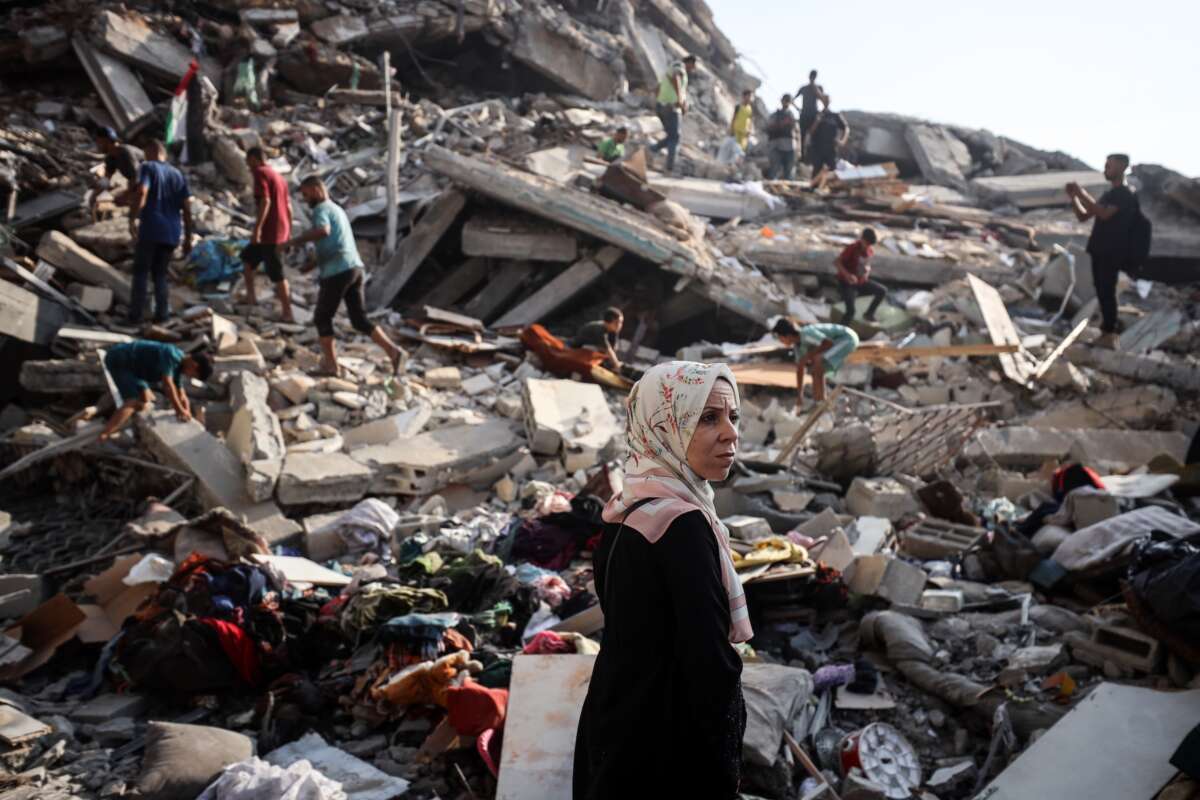
Displaced Palestinians gather in front of the rubble of a building, leveled in an overnight Israeli strike that also damages the surrounding tents used as temporary shelters, in the Rimal neighborhood of Gaza City, on September 15, 2025.Majdi Fathi / NurPhoto via Getty Images

Amnesty International is calling on economic actors to “pull the plug” on the economy supporting Israel’s genocide and apartheid in Palestine, naming 15 companies, including U.S. surveillance firm Palantir, acting as major backers.

In a report published Thursday, the human rights groups named a litany of actions that governments, companies, and other groups must take to eliminate the “political economy underpinning Israel’s international crimes.”

The report names three U.S. companies as contributors to Israel’s occupation: Arms makers Boeing and Lockheed Martin, as well as Palantir, which has close ties to the Trump administration.

It also names Israeli companies Corsight, Elbit Systems, Mekorot, Rafael Advanced Defense Systems, and Israel Aerospace Industries; as well as Chinese company Hikvision, Spanish manufacturer Construcciones y Auxiliar de Ferrocarriles, and South Korean conglomerate HD Hyundai.

The group calls on states to take actions like halting trade with and divesting from companies contributing to the genocide, and for companies to suspend contracts with Israeli forces, among other actions. It notes that the 15 companies it names in its report are a small sample of the ones making up the economy surrounding the genocide.

Democrat-Aligned PR Firm Says It Ended Contract to Create Pro-Israel Propaganda
The firm’s other pro-Israel work targeting the news media is unaffected.
By Sharon Zhang , Truthout September 17, 2025


“Human dignity is not a commodity. While Palestinian mothers in Gaza are left to watch their children waste away from starvation under Israel’s genocide, arms companies and others continue to reap substantial profits,” said Agnès Callamard, Amnesty International’s secretary general, in a statement. “Amnesty International calls on its members and supporters the world over to demand an immediate end to the political economy underpinning Israel’s international crimes.”

The report was released on the same day as the expiration of a deadline set by the UN General Assembly resolution for Israel to end its occupation of Palestine that has been completely disregarded by Israel and the U.S.

The companies named in the report have deep ties to Israel’s violence. Boeing manufactures bombs and bomb kits that Israel has used extensively in its bombardment of Gaza, while Lockheed makes the F-16s and F-35s that the Israeli military uses as a significant part of its air fleet.

Palantir, meanwhile, is a supplier of AI products and services that Israel is using as part of its vast surveillance and data collection network across Gaza. The company has a strategic partnership with the Israeli military to “significantly aid in support of war-related missions.”

The report also calls out companies it’s previously named as complicit in furthering Israel’s apartheid. Airbnb, Booking.com, Expedia, and TripAdvisor have helped maintain and support tourism listings in the occupied West Bank and Jerusalem, which are helping to develop Israeli settlements in Palestine, the group wrote in 2019.

The report follows a similar analysis by UN Special Rapporteur for the occupied Palestinian territories Francesca Albanese from July. The human rights expert named dozens of companies, including numerous U.S. firms, that are key participants in Israel’s “economy of genocide.”
‘Pure Incitement’: Google Allows Israeli Sponsored Propaganda Aimed at Global Sumud Flotilla

“It is clear that Israel is paving the ground for an attack on the flotilla. World public opinion needs to mobilize against Israel’s next war crime. Now!”


Members of the Global Sumud Flotilla wave a Palestinian flag and make a peace symbol with their hands.
(Photo by Global Sumud Flotilla)


Jon Queally
Sep 20, 2025
COMMON DREAMS

Evidence posted over the weekend online appears to show that tech giant Google has allowed the government of Israel to purchase sponsored content spots so that online users searching on the Global Sumud Flotilla will be shown inaccurate, propagandized content accusing the flotilla particpants as being allied with violent, terrorist elements.

The Sumud Flotilla—a group of international humanitarians and peace activists sailing toward the coast of Gaza with over 40 vessels in its fleet as a way to break the unlawful blockade of life-saving supplies imposed by Israel and its allies amid an ongoing genocide—has no documented connection to any terrorist organization and has made clear repeatedly that it is a completely nonviolent effort by independent groups and individuals who want to see an end to the suffering, starvation, and death taking place in the besieged Palestinian enclave.


Lemkin Institute for Genocide Prevention Backs Gaza-Bound Global Sumud Flotilla

In Arabic, sumud translates as steadfastness and resilience. On its website, the groups says, “We are a coalition of everyday people—organizers, humanitarians, doctors, artists, clergy, lawyers, and seafarers—who believe in human dignity and the power of nonviolent action.”

David Adler, an American economist and co-coordinator general of Progressive International who is traveling as part of the flotilla, posted a screenshot Saturday of search results showing the sponsored content, calling it “very terrifying.” Many others online reported getting the same results, though the appearance of the sponsored content seemed to depend on the user’s location or other variables.

Yanis Varoufakis, the former finance minister of Greece and co-founder of Progessive International, posted a similar screenshot earlier in the day, describing the coordinated ad buy as part of an escalating “smear campaign against the flotilla” by the Israeli government.


“First, they called it the Hamas Flotilla, deploying the usual tactic of slapping the Hamas logo on anyone whom they are about to murder, maim or mutilate,” said Varoufakis. “Now, with the full cooperation of Google, they are ensuring that top search results—received by anyone who Googles ‘Global Sumud Flotilla’—identify the brave women and men who are sailing to Gaza to end the blockade and genocide of 2 million people are people ‘harboring terror.’ It is clear that Israel is paving the ground for an attack on the flotilla. World public opinion needs to mobilize against Israel’s next war crime. Now!”


DropSite News noted on Satuday that a team of its journalists reported earlier this month that Google “was in the middle of a six-month, $45 million contract with Israeli Prime Minister Benjamin Netanyahu’s office to run ads and spread online propaganda, including on YouTube.”

“A search for the Global Sumud Flotilla humanitarian convoy carrying aid to break the Gaza siege shows the Israeli government’s incitement as the top result,” the outlet noted on Saturday, pointing to Adler’s post. “The campaign has also promoted content denying the Gaza famine.”

Earlier this week, Israel’s Ministry of Foreign Affairs characterized the flotilla—which has now been targeted at least twice by drone attacks—as a “jihadist initiative,” which led to immediate concerns that Israel was trying to build a case in the arena of public opinion for what would eventually be an Israeli attack on the ships or an interdiction at sea.

On Tuesday, as Common Dreams reported, the foreign ministers of 16 nations—Bangladesh, Brazil, Colombia, Indonesia, Ireland, Libya, Malaysia, Maldives, Mexico, Pakistan, Qatar, Oman, Slovenia, South Africa, Spain, and Türkiye—warned against “any unlawful or violent act against the flotilla” and called on all parties “to respect international law and international humanitarian law.”

The ministers said that “any violation of international law and human rights of the participants in the flotilla, including attacks against the vessels in international waters or illegal detention, will lead to accountability.”
‘The Howl That the World Doesn’t Hear’: A Gaza Teacher in Her Own Words

At 28, Reham Khaled has lived through eight wars of varying intensity. The current war has been the most brutal she’s known.


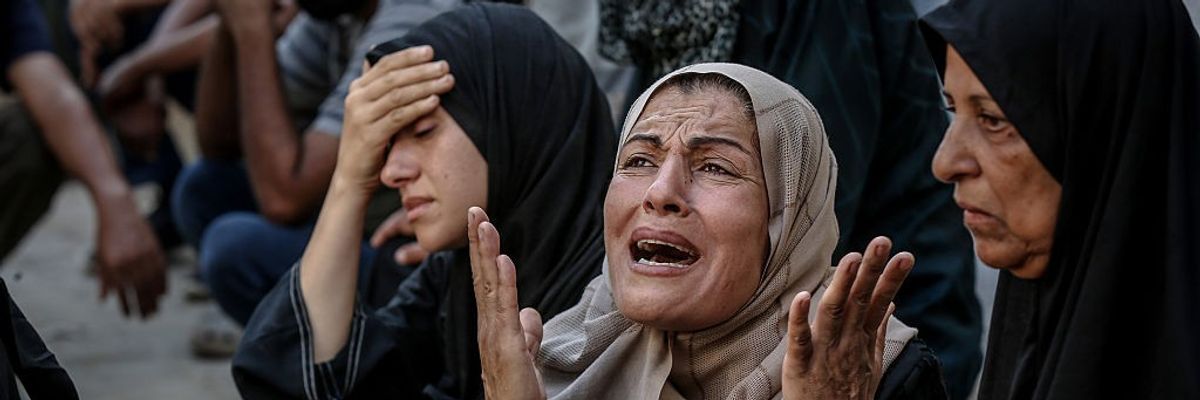
Relatives of the Palestinians, including children, who died as a result of Israeli attacks on different parts of Gaza City, mourn as the dead bodies were taken from the al-Shifa Hospital for burial in Gaza City, Gaza on August 25, 2025.
(Photo by Saeed M. M. T. Jaras/Anadolu via Getty Images)

Martha Baskin
Sep 20, 2025
Common Dreams

So begin the words of a Gaza teacher’s recent post after being forced to flee her home in the Al-Daraj neighborhood of Gaza City and the school she’d set up in a tent. A bomb tore apart the tent next to the one where Reham Khaled taught her students. Two were killed:
Pain is not a passing sensation, but a being that resides within. It has fangs and fingers. It presses on the heart, weighs down the chest, and makes the breath hesitate like a hole in the air. There is a moment, just one moment, when all the internal walls we have tried to build crumble and we reach what is called the threshold of pain. At this threshold, pain is no longer just an echo or a tremor. It turns into a howl.

Skilled at weaving the horror that is war-torn Gaza with evocative imagery of far sweeter things, Khaled says that before the bomb tore apart the tent, she and her father-in-law were dreaming of eating mangoes and chicken. “And then the rocket exploded. One moment. A collective scream. A small lake of blood begins with two children whose greatest ambition was to eat chicken and mango. It is a moment, but inside me it is years.”

Born in Gaza’s Jabalia refugee camp, her grandparents were displaced from the Palestinian village of Najd which was ethnically cleansed in 1948 when the state of Israel was created. The Israeli town of Sderot was later constructed over the site of the village, as well as the nearby village of Huj, according to Working Class History.com.

Her goal, other than giving as many students as possible the right to education, is to instill one idea in the children of Gaza “so that they may travel the world and spread peace one day.”

In Gaza, Khaled studied in UNRWA schools, the United Nations Relief and Works Agency for Palestine Refugees in the Near East, established by the UN in December 1949, to provide relief and humanitarian assistance to Palestine refugees displaced by the 1948 Arab-Israeli war.

At 28, she has lived through eight wars of varying intensity. The current war has been the most brutal she’s known. She and her extended family have been displaced 15 times.

The howl is “not a loud, audible scream”, explains Khaled, “but the howl of the soul, that subtle sound that the ear cannot pick up but shakes the entire body from within. It’s like the wind sweeping through an empty house, or the emptiness exploding in the head. In Gaza, this howl has become the secret language of everyone. The child who smiles so as not to cry in front of his mother, the mother who hides her tears from her child, the man who stands silently before the corpse of his son. They all howl from within, with a voice the world does not hear.”

A teacher of language and literature, Khaled is not overtly political and shies away from assigning blame for what is happening to her people once again. All she knows, she tells me when we exchange more messages, is that “the language of killing and violence is the biggest mistake that my people have been paying the price for two years or more.... The world is mean, cruel, and dull to the point of melting the nerves. I try to keep up with it, but I break. I try to look at it, but I find its eyes devoid of any glimmer of humanity.”

At this writing, Israeli forces have destroyed an estimated 70% of Gaza City. Airstrikes have turned entire apartment blocks and tent encampments into rubble. The Israel Defense Forces claim, without evidence, that Hamas has been using the buildings for surveillance; justifying collective punishment of Gaza City’s entire population. While collective punishment is a war crime and prohibited under the 1949 Geneva Conventions, this has done nothing to protect innocent civilians throughout Gaza from October 2023 to the present. An estimated 65,000 have been killed to date, with upwards of ten thousand trapped under the rubble.

“Howling,’ writes Khaled, “doesn’t always manifest in screams or tears. Sometimes it manifests as cold dullness. Evacuation notices drop on doors like inane announcements, read by people with blank eyes and then go on with their lives: a man arguing with his neighbor over a gallon of water, women fighting over a turn at the oven, a young man fixing a crack in the wall. It’s as if the announcement of the city’s destruction means nothing, as if the preordained mass exodus is just another rumor.”

“This isn’t true indifference,” she believes, “but another form of howling: a hidden protection against total collapse. When a person is unable to face the naked truth, they hide in the small details, clinging to crumbs to prevent their souls from disintegrating. Politics isn’t content with killing bodies; it seeks to break the inside, to make people treat their end as secondary news. It wants evacuation itself to become a habit, a weightless piece of paper, part of the daily noise.”

Israel has ordered everyone in Gaza City to evacuate to the al-Mawasi tent encampment in the south. But the camp is severely overcrowded with hundreds of thousands of displaced people from Rafah, Khan Younis, and other areas and there is no available land. Nor is it rent free, as others I am in touch with tell me. The entirety of Gaza’s most southern city, Rafah, once home to 250,000 people, was razed to the ground earlier this year. Khan Younis was razed in part, but some neighborhoods remain.

As for Khaled and her family, refusing to be broken or adhere exactly to Israeli orders, they moved to Deir al-Balah, a city about 10 miles south of Gaza City. They’re not safe there, but at least they found land to set up tents. Khaled has already started looking for a new place to establish a school. This morning she reposted a link for the school, which is backed by the Chuffed Project, a nonprofit whose goal is to support children’s education in Gaza

Her goal, other than giving as many students as possible the right to education, is to instill one idea in the children of Gaza “so that they may travel the world and spread peace one day. Plant a rose on the tip of every gun. Prevent killing. Spread love and peace and never allow war to continue for long.”

It doesn’t mean she’s not always hungry or trying to recover her voice or understand why such hell has been unleashed on her people. But that she refuses to surrender to the “twisted logic that turns life into a farce. My voice has been extinguished, not because it disappeared, but because the echo no longer returns. And my being? I’ve scattered like dust, like a ravening beast that isn’t satisfied with flesh and bones, but burrows deep within me in search of something I no longer know the name of. Yes, I’m hungry, but not just for bread. I’m hungry for the security that has become a myth, for the meaning that has become a mirage, for a slice of life that resembles life, not this mockery I live.”
Hundreds of Thousands Mobilize Worldwide to ‘Draw the Line’ for Climate Action and Justice

“From Indonesia and Turkey, to London and South Africa, activists and campaigners are raising the call to draw the line against injustice, pollution, and violence,” said 350.org.


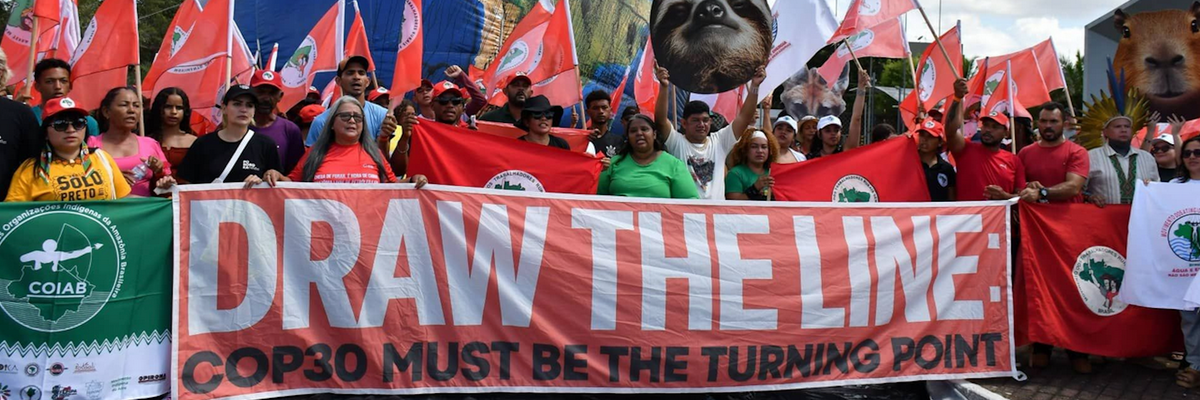
Climate defenders take part in a Draw the Line rally in Belém, Brazil—site of November’s United Nations Climate Change Conference (COP30)—on July 19, 2025.
(Photo by João Paulo Guimarães/Draw the Line)


Brett Wilkins
Sep 19, 2025
COMMON DREAMS

Ahead of this month’s United Nations General Assembly and November’s UN Climate Change Conference in Brazil, climate and social justice defenders around the world are taking part in a global week of action culminating in weekend events “to draw the line against injustice, pollution, and violence—and for a future built on peace, clean energy, and fairness.”

Hundreds of thousands of people in more than 100 countries are expected to take part in this weekend’s demonstrations, which will mark the climax of the ”Draw the Line” week of over 600 worldwide actions.

Actions are set to take place in cities including Berlin, Buenos Aires, Dhaka, Istanbul, Jakarta, Johannesburg, London, Manila, Melbourne, Mumbai, Nairobi, New Delhi, New York, Paris, São Paulo, Suva, Tokyo, Wellington, and Belém—where the UN Climate Change Conference, also known as COP30, is scheduled to kick off on November 10.

“United under a call from Indigenous leaders of the Amazon and the Pacific, people across more than 90 countries are joining marches, rallies, strikes, and creative actions to demand an end to fossil fuels, a just transition, and real climate justice,” Draw the Line said in a statement.

“The mobilizations highlight escalating climate impacts, rising food and energy costs, deadly floods and heatwaves, and growing insecurity driven by fossil fuels and conflict,” the campaign added. “Protesters are also uplifting community-led solutions: renewable energy systems, debt cancellation, fair taxation, and land rights for Indigenous peoples and traditional communities.”


According to the climate action group 350.org:
This global moment comes at a critical time when the rich and the powerful countries and corporations continue their colonial and extractivist agenda, while world leaders fail to prevent and stop the genocide taking place in Palestine, Sudan, and Congo, and the governments across the world are veering towards authoritarianism, undoing decades of progress. With every tenth of a degree of global heating, the consequences for people and ecosystems multiply, as seen in the devastating wildfires, typhoons, cloudbursts, floods, and extreme heatwaves already sweeping across continents this year.

“We are drawing the line against deceptive tactics led by rich nations and big corporations to perpetuate fossil fuel dominance and delay the equitable just transition to a fossil-free and healthy planet,” explained Lidy Nacpil, coordinator of the Asian Peoples’ Movement on Debt and Development.

“We demand a complete coal phaseout in Asia by 2035 and a rapid and just energy transition out of fossil fuels and to 100% renewable energy before 2050,” Nacpil added. “We demand the full delivery of climate finance obligations of the Global North to the Global South for urgent climate action including just transition. This is a crucial part of their reparations for historical and continuing harms to our people.”

The Draw the Line actions coincide with Disrupt Complicity Weekend of solidarity with the Boycott, Divestment, and Sanctions (BDS) movement for Palestinian rights and against Israel’s genocide, forced famine, apartheid, occupation, ethnic cleansing, and settler colonization in Palestine.


“In the current, most depraved, induced starvation phase of the US-Israeli livestreamed genocide against... Palestinians in the Gaza ghetto, Palestinian civil society stands united in calling on people of conscience and grassroots movements for racial, economic, social, climate, and gender justice worldwide to help us build a critical mass of people power to end state, corporate, and institutional complicity with Israel’s regime of settler-colonial apartheid and genocide, particularly through effective BDS actions and pressure,” BDS movement co-founder Omar Barghouti said in a statement this week.

“We are not begging for charity but calling for true solidarity, and that begins with doing no harm to our liberation struggle, at the very least, as a profound moral and legal obligation,” he added.

The Draw the Line actions come as the world is on track to overshoot the best-case 1.5°C warming target established under the landmark Paris climate agreement. Experts argue that staying below that limit significantly reduces the likelihood of catastrophic weather events, protects vulnerable ecosystems, lowers the risk of devastating food and water insecurity, and curbs climate-related economic harms.

Not only is the planet on track to exceed the 1.5°C target, a key United Nations climate report published last October warned that the world is on course for between 2.6-3.1°C of “catastrophic” heating over the next century, unless urgent action is taken to dramatically slash greenhouse gas emissions by more than half within the next decade.
How we know the right is more deadly than the left

The Conversation
September 18, 2025 

A MAGA hat is placed at a makeshift memorial for Charlie Kirk. REUTERS/Cheney Orr

By Art Jipson, Associate Professor of Sociology, and Paul J. Becker, Associate Professor of Sociology, University of Dayton.

After the Sept. 10, 2025, assassination of conservative political activist Charlie Kirk, President Donald Trump claimed that radical leftist groups foment political violence in the U.S., and “they should be put in jail.”

“The radical left causes tremendous violence,” he said, asserting that “they seem to do it in a bigger way” than groups on the right.

Top presidential adviser Stephen Miller also weighed in, saying left-wing political organizations constitute “a vast domestic terror movement.”

“We are going to use every resource we have … throughout this government to identify, disrupt, dismantle and destroy these networks and make America safe again,” Miller said.

But policymakers and the public need reliable evidence and actual data to understand the reality of politically motivated violence. From our research on extremism, it’s clear that the president’s and Miller’s assertions about political violence from the left are not based on facts.

Based on our own research and a review of related work, we can confidently say that most domestic terrorists in the U.S. are politically on the right, and right-wing attacks account for the vast majority of fatalities from domestic terrorism.
Political violence rising

The understanding of political violence is complicated by differences in definitions and the recent Department of Justice removal of an important government-sponsored study of domestic terrorists.

Political violence in the U.S. has risen in recent months and takes forms that go unrecognized. During the 2024 election cycle, nearly half of all states reported threats against election workers, including social media death threats, intimidation and doxing.

Kirk’s assassination illustrates the growing threat. The man charged with the murder, Tyler Robinson, allegedly planned the attack in writing and online.

This follows other politically motivated killings, including the June assassination of Democratic Minnesota state Rep. and former House Speaker Melissa Hortman and her husband.

These incidents reflect a normalization of political violence. Threats and violence are increasingly treated as acceptable for achieving political goals, posing serious risks to democracy and society.

Defining ‘political violence’

This article relies on some of our research on extremism, other academic research, federal reports, academic datasets and other monitoring to assess what is known about political violence.

Support for political violence in the U.S. is spreading from extremist fringes into the mainstream, making violent actions seem normal. Threats can move from online rhetoric to actual violence, posing serious risks to democratic practices.

But different agencies and researchers use different definitions of political violence, making comparisons difficult.

The FBI and Department of Homeland Security define domestic violent extremism as threats involving actual violence. They do not investigate people in the U.S. for constitutionally protected speech, activism or ideological beliefs.

Domestic violent extremism is defined by the FBI and DHS as violence or credible threats of violence intended to influence government policy or intimidate civilians for political or ideological purposes. This general framing, which includes diverse activities under a single category, guides investigations and prosecutions.

Datasets compiled by academic researchers use narrower and more operational definitions. The Global Terrorism Database counts incidents that involve intentional violence with political, social or religious motivation.

These differences mean that the same incident may or may not appear in a dataset, depending on the rules applied.

The FBI and DHS emphasize that these distinctions are not merely academic. Labeling an event “terrorism” rather than a “hate crime” can change who is responsible for investigating an incident and how many resources they have to investigate it.

For example, a politically motivated shooting might be coded as terrorism in federal reporting, cataloged as political violence by the Armed Conflict Location and Event Data Project, and prosecuted as homicide or a hate crime at the state level.
Patterns in incidents and fatalities

Despite differences in definitions, several consistent patterns emerge from available evidence.


Politically motivated violence is a small fraction of total violent crime, but its impact is magnified by symbolic targets, timing and media coverage.

In the first half of 2025, 35 percent of violent events tracked by University of Maryland researchers targeted U.S. government personnel or facilities — more than twice the rate in 2024.

Right-wing extremist violence has been deadlier than left-wing violence in recent years.


Based on government and independent analyses, right-wing extremist violence has been responsible for the overwhelming majority of fatalities, amounting to approximately 75 percent to 80 percent of U.S. domestic terrorism deaths since 2001.

Illustrative cases include:the 2015 Charleston church shooting, when white supremacist Dylann Roof killed nine Black parishioners
the 2018 Tree of Life synagogue attack in Pittsburgh, where 11 worshippers were murdered
the 2019 El Paso Walmart massacre, in which an anti-immigrant gunman killed 23 people

The 1995 Oklahoma City bombing, an earlier but still notable example, killed 168 in the deadliest domestic terrorist attack in U.S. history.

By contrast, left-wing extremist incidents, including those tied to anarchist or environmental movements, have made up about 10 percent to 15 percent of incidents and less than 5 percent of fatalities.

Examples include the Animal Liberation Front and Earth Liberation Front arson and vandalism campaigns in the 1990s and 2000s, which were more likely to target property rather than people.

Violence occurred during Seattle May Day protests in 2016, with anarchist groups and other demonstrators clashing with police. The clashes resulted in multiple injuries and arrests. Also in 2016, five Dallas police officers were murdered by a heavily armed sniper who was targeting white police officers.

Hard to count

There’s another reason it’s hard to account for and characterize certain kinds of political violence and those who perpetrate it.

The U.S. focuses on prosecuting criminal acts rather than formally designating organizations as terrorist, relying on existing statutes such as conspiracy, weapons violations, RICO provisions and hate crime laws to pursue individuals for specific acts of violence.

Unlike foreign terrorism, the federal government does not have a mechanism to formally charge an individual with domestic terrorism. That makes it difficult to characterize someone as a domestic terrorist.

The State Department’s Foreign Terrorist Organization list applies only to groups outside of the United States. By contrast, U.S. law bars the government from labeling domestic political organizations as terrorist entities because of First Amendment free speech protections.

Rhetoric is not evidence

Without harmonized reporting and uniform definitions, the data will not provide an accurate overview of political violence in the U.S.

But we can make some important conclusions.

Politically motivated violence in the U.S. is rare compared with overall violent crime. Political violence has a disproportionate impact because even rare incidents can amplify fear, influence policy and deepen societal polarization.

Right-wing extremist violence has been more frequent and more lethal than left-wing violence. The number of extremist groups is substantial and skewed toward the right, although a count of organizations does not necessarily reflect incidents of violence.

High-profile political violence often brings heightened rhetoric and pressure for sweeping responses. Yet the empirical record shows that political violence remains concentrated within specific movements and networks rather than spread evenly across the ideological spectrum. Distinguishing between rhetoric and evidence is essential for democracy.

Trump and members of his administration are threatening to target whole organizations and movements and the people who work in them with aggressive legal measures — to jail them or scrutinize their favorable tax status. But research shows that the majority of political violence comes from people following right-wing ideologies.


National Endowment for the Arts


‘Important Victory’ for Artists, Rule of Law, and Free Speech as Judge Rules Against Trump on NEA


“At a time when the government is using its full weight to try to impose ideological conformity,” said an ACLU attorney, “this order is an important reminder that the First Amendment protects us from exactly that.”


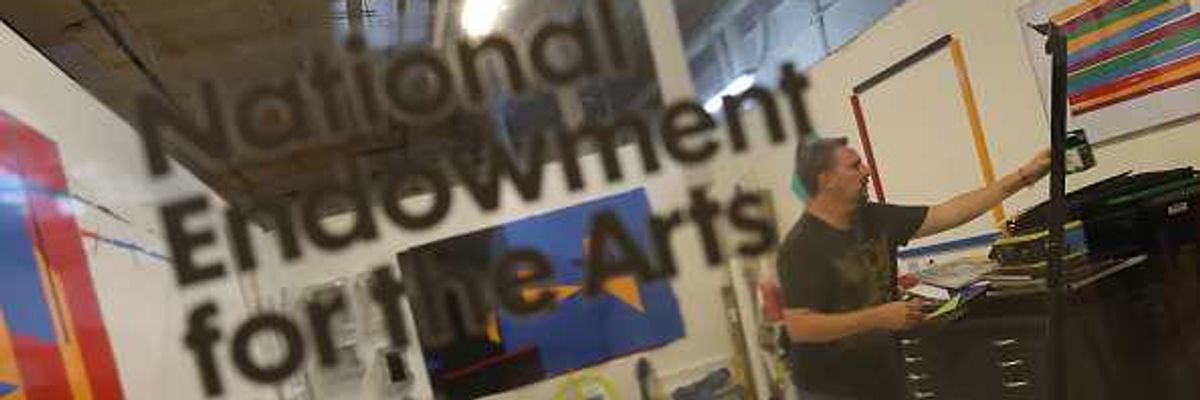
Claudio Roncoli a recipient of an award from the National Endowment for the Arts works in his studio space at the Bakehouse Art Complex on March 16, 2017 in Miami, Florida.
(Photo by Joe Raedle/Getty Images)

Jon Queally
Sep 20, 2025
COMMON DREAMS


In another judicial rebuke to President Donald Trump’s effort to harm funding for the nation’s arts, a federal judge on Friday evening ruled against the president’s insider attack on the National Endowment for the Arts by blocking grant applications from artists or organizations that don’t strictly adhere to the president’s right-wing ideology on gender.

Ruling in favor of several arts organizations that sued the NEA earlier this year over the policy change, US District Court Judge William E. Smith, appointed by President George W. Bush and serving in Rhode Island, said the grant restrictions ran afoul of federal statute and the US Constitution.
.

As the New York Times reports:
The lawsuit was filed in March by several arts organizations, including Rhode Island Latino Arts, which promotes art made by Latinos, and National Queer Theater, a New York company. It challenged new agency regulations, initially introduced in February, stating that federal funds “shall not be used to promote gender ideology,” which Mr. Trump’s order said includes “the false claim that males can identify as and thus become women and vice versa.”

In the lawsuit, the groups, which said they had all produced or supported work about transgender and nonbinary people, argued that they would effectively be barred from seeking grants “on artistic merit and excellence grounds,” which violated their rights under the First Amendment.

In his ruling, Williams called the policy that came out of Trump’s edict both “arbitrary and capricious,” one that violated not only free speech protections but also the Administrative Procedure Act (APA), which governs the EPA grant-making process.

Smith held that the NEA’s grant application review process “violates the First Amendment because it is a viewpoint-based restriction on private speech.”

Specifically, the judge said the government’s policy “offered zero explanation” to applicants “of what it means for a project to ‘promote gender ideology,’ let alone how that concept relates to artistic merit, artistic excellence, general standards of decency, or respect for the diverse beliefs and values of the American public.”

“The NEA intends to disfavor applications that promote gender ideology precisely because they promote gender ideology,” Smith stated in his judicial order. “The Final Notice therefore promises to penalize artists based on their speech.”

The lawsuit was brought four groups: Rhode Island Latino Arts (RILA), National Queer Theater (NQT), The Theater Offensive (TTO), and Theatre Communications Group (TCG).

Marta V. Martínez, RILA’s executive director, said the court’s ruling “affirms what we have always believed: the freedom to create, to express one’s truth, and to tell our stories is a right protected by the First Amendment.”

“As an organization deeply rooted in storytelling, theater, and the preservation of cultural history,” Martínez added, “we are relieved and grateful that the courts have recognized the importance of protecting artistic expression for all people, including those in LGBTQ+ communities.”

The ACLU, which had helped bring the suit on behalf of the plaintiffs, celebrated the ruling as “an important victory” for artists, free speech, and the rule of law.

“At a time when the government is using its full weight to try to impose ideological conformity, this order is an important reminder that the First Amendment protects us from exactly that,” Vera Eidelman, senior staff attorney with the ACLU’s Speech, Privacy & Technology Project. “Even when the government funds private speech, it does not get to support only those messages that parrot its views.”


Trump’s EPA pulls plug on ‘millions of dollars of research” with no explanation: report


Alexander Willis
September 20, 2025
RAW STORY


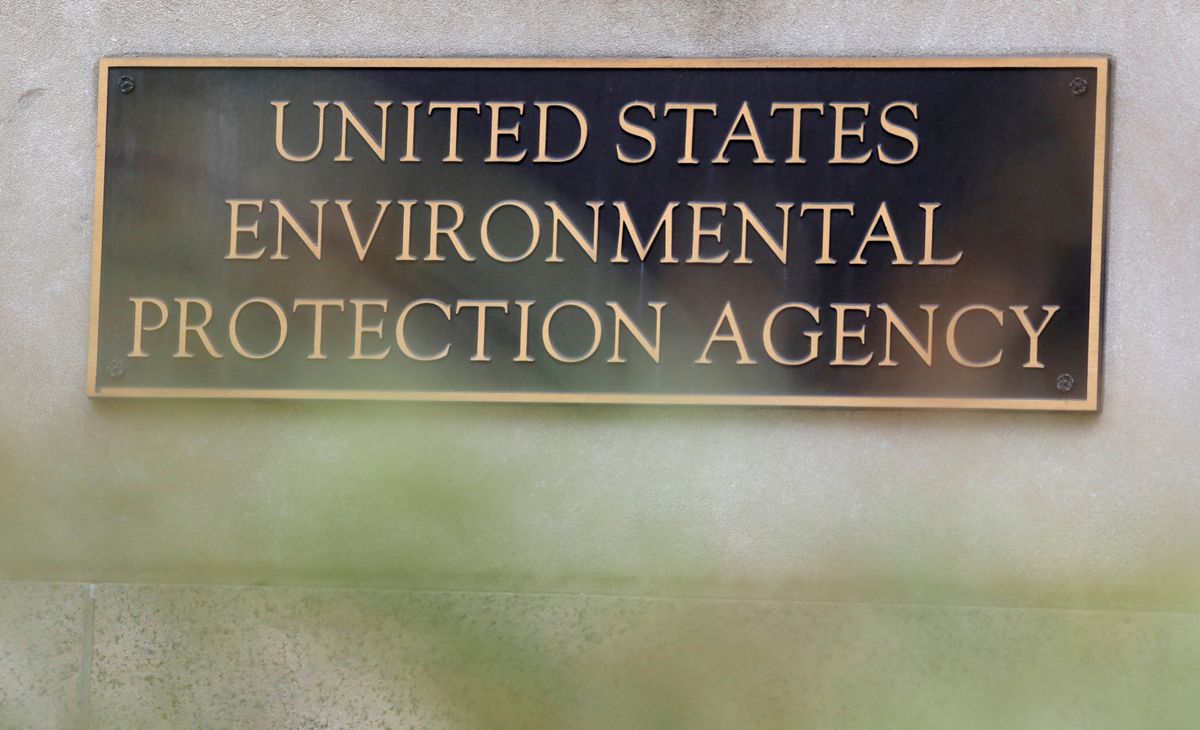
 Signage is seen at the headquarters of the United States Environmental Protection Agency (EPA) in Washington, D.C., U.S., May 10, 2021. REUTERS/Andrew Kelly/File Photo

Scientists at one of the Environmental Protection Agency’s research offices have been ordered to stop publishing studies, and with no timeline or reason for the demand afforded staff, according to two agency employees who spoke with the Washington Post in a report published Saturday.

“This represents millions of dollars of research, potentially, that’s now being stopped,” one of the agency employees told the outlet, speaking on the condition of anonymity. “[Americans] aren’t going to benefit from the release of this science.”

According to the employees, staff at the EPA’s Office of Water – which researches and implements methods to ensure drinking water is safe – were instructed to halt nearly all publications of research until further notice, instructions issued, they said, by ‘political appointees.’

More specifically, the employees said they were told not to publish research papers unless they had already been vetted through a peer review and acceptance process, the final step before a research paper’s publication, and that their research papers would also be subjected to a new review process ahead of any potential publication.

The Trump administration has acted antagonistically against the EPA, with President Donald Trump moving to roll back dozens of environmental regulations established during the Biden administration. Staff at the EPA have not taken kindly to Trump’s regulatory roll backs, having often written letters of dissent to the administration, which in turn have been followed by well over 100 EPA employees being placed on administrative leave.

The two EPA employees who spoke with the Washington Post said the order to stop publishing research papers was ‘unprecedented.’ Kyle Bennet, director of science policy at Public Employees for Environmental Responsibility, suggested the order was one rooted in a political motive, and not a scientific one.

““Science is not supposed to be political,” Bennett said, speaking with the Washington Post. “Science is supposed to transcend politics and inform decision-making at the EPA.”
Hope Grows Where Communities Plant Together – OpEd


September 19, 2025 

By Dr. Fr. John Singarayar


The morning mist still clung to the hills when Nanita heard the trucks approaching her village. At twelve years old, she had learnt to be wary of outsiders coming to their remote corner of Maharashtra. Too often, they brought promises that never bloomed.


But today felt different. These visitors carried something precious – tiny green lives wrapped in plastic bags, roots eager to find soil.

Father John stepped out first, his weathered hands already dirty from the morning’s preparation. Behind him came volunteers, their faces bright with purpose. They had driven for hours through winding mountain roads to reach this hamlet, one of eight Katkari settlements scattered across Raigad district.

“Today, we plant tomorrow,” Father John announced in broken Marathi, his words drawing smiles from the gathering crowd. Children peeked out from behind their mothers’ saris while elderly men nodded knowingly. They understood the language of trees better than most.

Nanita’s grandmother, Geeta, stepped forward. At sixty-two, her back was bent from years of gathering forest produce, but her eyes sparkled with curiosity. In her weathered hands, she received a small neem sapling—a tree her own grandmother had taught her to revere for its healing powers.

“This little one will grow tall and strong, just like you,” Geeta whispered to Nanita, passing the sapling to her granddaughter. “But first, we must teach it to love this soil.”


What happened next transformed an ordinary morning into something magical. Under the gathering monsoon clouds, an unlikely family formed. SVD priests worked alongside tribal elders, their volunteers learning from children who knew which birds nested where and which plants healed which ailments.

Ramesh, a college student from Mumbai, found himself digging beside Suresh, a Katkari farmer whose hands told stories of countless seasons. “The earth remembers every seed,” Suresh shared, his voice carrying the wisdom of generations. “We plant not just for fruit, but for the children’s children we will never meet.”

The saplings carried their own stories. Mango trees promised sweet summers decades ahead. Guava offered hope for small incomes. Medicinal tulsi plants honoured ancient knowledge passed down through whispered remedies. Bamboo shoots would grow into sturdy poles for homes, while their roots quietly prevented the soil from washing away in heavy rains.

But perhaps the most powerful moment came when young Akash, barely six, planted a jamun tree with his own small hands. His father had explained that this purple fruit tree would outlive them all, feeding his children and grandchildren. As Akash patted the soil around the tiny stem, he made a promise he did not fully understand yet—to water it, protect it, and trust in its future.

Sister Maria, who had spent fifteen years working with tribal communities, watched these exchanges with quiet joy. She remembered Pope Francis’s words from Laudato Si’—that the cry of the earth and the cry of the poor were one and the same. Here, in this simple act of planting, she saw both cries being answered.

The Katkari people were not just receiving charity. They were being recognised as what they had always been—guardians of the land, keepers of ecological wisdom that the modern world desperately needed. Their traditional knowledge guided every planting decision, from soil preparation to seasonal timing.

As the day wore on, 1,200 saplings found new homes across eight villages. But more than trees were planted. Relationships took root between urban and rural, between different faiths and cultures, and between hope and action.

Geeta found herself teaching Sister Maria which plants repelled insects naturally, while little Nanita learnt from Father John about trees that could survive droughts. Knowledge flowed like water finding its level—essential, nourishing, unstoppable.

By evening, as the volunteers prepared to return to their cities, the transformation was visible. Not in the tiny saplings, still fragile in their new soil, but in the faces around them. Children who had felt forgotten now carried themselves a little taller. Elders who had watched their forests disappear saw reason for hope again.

Ten years earlier, Pope Francis had written about caring for our common home. His words had travelled across continents and languages to reach this remote valley, where they became living reality through muddy hands and shared dreams.

Nanita stood beside her newly planted neem tree as the trucks prepared to leave. The sapling looked impossibly small against the vast sky, but she understood something profound that many adults miss—great changes begin with small acts of faith.

In twenty years, this tree would shade her children. In fifty, it would heal her grandchildren’s ailments. But today, right now, it was already changing the world by changing how she saw herself—not as someone waiting for help, but as someone with the power to heal the earth.

As Father John waved goodbye, Nanita waved back, her dirt-stained hand holding promise. Tomorrow, she would water her tree. And in that simple act, she would join countless others around the world who understand that hope is not something we wait for—it is something we plant.


Dr. Fr. John Singarayar

Dr. Fr. John Singarayar, SVD, is a member of the Society of the Divine Word, India Mumbai Province, and holds a doctorate in Anthropology. He is the author of seven books and a regular contributor to academic conferences and scholarly publications in the fields of sociology, anthropology, tribal studies, spirituality, and mission studies. He currently serves at the Community and Human Resources Development Centre in Tala, Maharashtra.

India’s Education Wars: Modi’s Blueprint Meets A People’s Revolt – OpEd


September 19, 2025 
By Debashis Chakrabarti


The Modi government has set out to remake India’s schools through the National Education Policy, a sweeping blueprint drafted in Delhi with scant consultation from the states. Presented as a visionary reform, it centralizes authority, elevates ideology, and accelerates privatization—reshaping the classroom into an instrument of power. But a counter-document, the People’s Education Policy, is gathering force, offering a radically different vision: one rooted in federalism, pluralism, and the conviction that education is not a commodity but the republic’s most essential public good.


In the summer of 2020, as India staggered through its first pandemic lockdown, the government in New Delhi quietly enacted a sweeping change. Without parliamentary debate, and with scant consultation of the country’s states, Prime Minister Narendra Modi’s cabinet introduced the National Education Policy (NEP), a document of nearly five hundred pages that claimed to chart the nation’s educational future. At a moment when millions of children were locked out of school, the government was redesigning the very system to which they would return.

The NEP, framed as a visionary reform, promised to modernize India’s classrooms, expand access to higher education, and restore pride in India’s civilizational heritage. It was presented as both a pedagogical breakthrough and a cultural rebirth. But to many educators, activists, and state leaders, it felt like something else: an attempt to consolidate ideological control over the minds of India’s youth, under the guise of reform.

Nearly five years on, a counter-document has emerged. The People’s Education Policy (PEP), drafted by an alliance of teachers’ unions and civil society organizations, positions itself not merely as a critique but as an alternative blueprint. If the NEP represents a centralized, top-down redesign of India’s classrooms, the PEP insists on a bottom-up, pluralist model, one that treats education as a public good and a democratic imperative.

The tension between the two documents is not bureaucratic. It is existential. For the world’s largest youth population, education is destiny. Whether the NEP or the PEP sets the course will shape India’s democratic future, its economic possibility, and its cultural soul.
The Politics of Control

The most striking feature of the NEP is its centralization. Education in India has historically been a contested terrain between the Union government and the states. Until 1976, it was the states alone who held constitutional responsibility. The NEP, drafted in Delhi with minimal consultation, bypasses this delicate balance. It envisions a uniform national curriculum, steered by a central authority that places the Prime Minister at the apex of a newly created National Research Foundation.


This may look efficient on paper. But in practice, it has provoked resistance. States such as Tamil Nadu, Kerala, and West Bengal have balked at the imposition, insisting on their right to craft policies suited to their linguistic and cultural landscapes. The Supreme Court, too, has weighed in, noting that states cannot be coerced into compliance. Education in India, the Court reminded, is a shared responsibility—a constitutional compact that the NEP risks unravelling.

The PEP, by contrast, proposes a return to first principles: that education be restored to the State List. Far from a radical disruption, this is a reversion to the constitutional status quo prior to 1976. In doing so, the PEP recognizes India not as a homogenous nation but as a mosaic of languages, histories, and pedagogical traditions. Federalism here is not a concession but a condition for stability.
Economics of Exclusion

The NEP’s rhetoric is expansive. It reaffirms India’s long-standing but unfulfilled commitment to spend six per cent of GDP on education. Yet the numbers tell another story. In the years since the NEP’s adoption, government spending on education has stagnated; in real terms, it has declined. The gap has been filled by private actors—elite schools, coaching centers, and an aggressively expanding EdTech industry. The result is a deepening stratification, in which the wealthy purchase pathways to success while the poor are left with underfunded public schools and rising fees.

This privatization-by-stealth is not accidental. It reflects the Modi government’s broader embrace of market logics in sectors once considered public goods. Education, in this vision, is less a right than a commodity, subject to the efficiency of the market and the discipline of competition.

The PEP, in turn, calls for a constitutional guarantee: a mandatory six per cent of GDP for education, rising to ten per cent over time. This is not merely a demand for more spending but a reassertion of principle—that education is infrastructure as vital as roads or power. By extending free education from pre-primary through secondary levels, the PEP seeks to underwrite not just access but equity, making the democratic promise of schooling tangible.
The Philosophy of Knowledge

At its heart, the debate is not about budgets or bureaucracies but about the purpose of education itself. The NEP’s philosophical ambition is the revival of an “Indian Knowledge System.” Its proponents describe this as a revalorization of ancient traditions, from Vedic mathematics to Sanskrit texts. Its critics see something else: an ideological project that privileges a Hindu-majoritarian narrative, embedding it into textbooks and curricula in ways that sideline India’s plural heritage.

The institutional design reinforces these fears. By positioning political authority at the helm of research funding, the NEP blurs the line between statecraft and scholarship. The danger is not simply indoctrination but the slow erosion of academic freedom—the subtle pressure to conform, the muffling of dissent, the narrowing of inquiry.

The PEP, conversely, defines education as the defence of autonomy: the freedom of teachers to teach without interference, the right of institutions to set curricula, the obligation to cultivate questioning rather than conformity. In this, it returns to a philosophical lineage that stretches from Vidyasagar’s secular education to B. R. Ambedkar’s insistence that education is the “militant weapon” of democracy.
Cultural Stakes

India’s classrooms have always been mirrors of its cultural tensions. In colonial times, debates over Macaulay’s Minute on Education—English versus vernacular instruction—were battles over identity and power. After independence, the Kothari Commission framed education as the key to building a modern republic, one that reconciled diversity with unity.

The NEP of Modi Government echoes high sounding ambition but risks tipping the balance toward homogenization. By promoting Hindi and Sanskrit, by insisting on centralized curricula, it marginalizes the lived languages and local traditions that sustain India’s pluralism. Cultural richness, in this model, is streamlined into a singular narrative of national pride.

The PEP resists this flattening. It insists that children learn best in their mother tongues, that curricula must reflect local contexts, that diversity is not a hurdle but a resource. This is not just pedagogy but philosophy: a recognition that India’s democracy is nourished by its multiplicity, not threatened by it.
The Cost of Choices

What is at stake in this policy duel is more than pedagogy. It is the very architecture of India’s future. The NEP promises world-class universities and employable graduates but risks producing a generation trained to obey rather than to question. The PEP demands public investment and decentralization, but if implemented, it could unleash both social mobility and intellectual creativity on a scale India has long deferred.

The contrast is between control and freedom, between a state that moulds citizens for its purposes and a people who claim education as their right. The Indian classroom has become the country’s most consequential battleground. The winner of this struggle will not only shape the republic’s children but also define what kind of republic those children will inherit.


Debashis Chakrabarti

Debashis Chakrabarti is an international media scholar and social scientist, currently serving as the Editor-in-Chief of the International Journal of Politics and Media. With extensive experience spanning 35 years, he has held key academic positions, including Professor and Dean at Assam University, Silchar. Prior to academia, Chakrabarti excelled as a journalist with The Indian Express. He has conducted impactful research and teaching in renowned universities across the UK, Middle East, and Africa, demonstrating a commitment to advancing media scholarship and fostering global dialogue.


Breaking Barriers By Deploying Artificial Intelligence-Enabled Health Technologies For The Underserved – OpEd


Credit: Citizen News Service

September 19, 2025 

By Shobha Shukla

Artificial intelligence is not only for the rich and famous but also is deployed in health technologies to serve the poorest of the poor and marginalised communities – with equity and human dignity.

With remarkable ingenuity, India is combining advanced technology with fundamental community approaches to reach the unreached with standard WHO recommended public health services. This is a real practical strategy in action which provides a pathway for other low- and middle-income countries to follow.


WHO guidelines endorsed AI-enabled X-Rays for TB screening

WHO guidelines in 2021 endorsed artificial intelligence (AI) enabled computer-aided detection of TB with X-Rays. AI-enabled computer-aided detection was non-inferior for most TB interpretation. This was game-changing moment in public health because X-Ray interpretation was no longer dependent on availability of super-specialist radiologists for expert interpretation – unless needed. In most healthcare settings, especially remote areas, radiologists are seldom available or very occupied with clinical and research workload.

AI-enabled X-Rays are changing how diagnosis happens on the ground. Taking X-Rays closer to the communities is one way to get rid of diagnostic delays, catastrophic costs, and cut down on screening time.

It takes a minute to get screened by X-Ray and get the report (from AI-enabled computer-aided detection). Then for those with presumptive TB, they can get a confirmatory TB report in next hour or so – if portable WHO and ICMR recommended molecular test Truenat is used in the same TB screening and testing camp.

Ending TB warrants not only finding all people with TB – with early and accurate diagnosis – and linking them to care – but also about breaking down those critical diagnostic logjams and bottlenecks that make healthcare services inaccessible for most marginalised

WHO as well as India’s guidelines clearly state that all those found with presumptive TB using X-Rays (or symptomatic screening) should be offered WHO recommended upfront molecular test. Those with active TB disease should get latest TB treatment therapy with social support so that they can get cured.

TB infection also stops spreading when a person with the disease is on effective treatment.

India deployed AI to find TB among the most marginalised

Following science and evidence, for 100 days (7 December 2024 to 24 March 2025), government of India launched a massive campaign to find, treat and prevent more TB among high-risk groups in 347 districts initially. During this campaign, later it was expanded to almost 500 districts out of around 800 in the nation.

As per the concept note of this 100 days #TBMuktBharat (#TBFreeIndia) government campaign, battery operated ultraportable and handheld X-Ray machines with artificial intelligence enabled computer-aided detection along with highly sensitive portable, battery-operated and laboratory independent molecular test Truenat (made in India by Molbio Diagnostics) machines were to be taken in a van closer to the TB high-risk groups.

This was game-changing shift from screening those who had TB symptoms to screening everyone in high-risk settings – because almost half of TB patients are asymptomatic if we find them with X-Ray early on.

India TB Prevalence Survey 2019-2021 showed that almost half of TB patients would not have been found if upfront X-Ray screening was not done as they were asymptomatic. Other sub-national surveys also showed similar findings.

In 100 days, Indian government’s efforts found over 285,000 asymptomatic people (among high-risk groups) with active TB disease and linked them to treatment. In 100 days, over 12 crore people were screened for TB (mostly by using X-Rays).

Not even one of the 285,000 asymptomatic people with active TB disease would have been found if upfront X-Ray was not done. “Given the success of 100 Days campaign, now it has been extended to all districts in the country,” said Dr Rajesh Kumar Sood, District TB Officer (DTO) of National TB Elimination Programme (NTEP) and District Health Officer, National Health Mission, Government of India.
Ground zero: Kangra’s efforts towards ending TB

Kangra is making records (and breaking its previous records) to do maximum AI-enabled X-Rays of high-risk people in a single day at a block level.

Debunking oft-cited notion ‘public services are difficult to reach people living in mountainous terrains’, Kangra, most populated district of Himachal Pradesh has led from the front in taking public TB services closer to the communities or at their doorstep.

Despite heavy mountain rains and thunderstorms, landslides, power-cuts, or weekends or public holidays, frontline healthcare workers have been working tirelessly to find more TB among those most-at-risk, and link those with the disease to lifesaving treatment. Finding TB early and accurately and treating TB also helps stops the spread of infection, said Dr RK Sood.

Nagrota and Yol in Nagrota Bagwan block of Kangra district made a record on 3rd September 2025 by screening 605 people on the same day – and using 1 made-in-India (ProRad) AI-enabled ultraportable handheld X-Ray machine. Usually, 100-200 people get screened on 1 X-Ray machine in a day though Kangra’s average is reaching between 200-500 X-Rays daily in recent months with accelerated efforts to find more TB.

Kangra broke its previous record of Fatehpur block of Kangra made on Sunday, 24th August 2025, when 581 people were screened on the same day by 1 X-Ray machine. Earlier, on Independence Day 2025, it was Bhawarna block of Kangra that had made a record of 471 X-Rays in a single day on 1 X-Ray machine.

“Antariksh, one of the radiographers, and other frontline healthcare workers worked from early morning hours till almost midnight to screen people for TB, offer upfront molecular test (made-in-India Truenat) to those found presumptive, and link those with active TB disease to free treatment. Those negative for TB and eligible, were offered Cy-TB test (for latent TB) and offered TB preventive therapy,” said Dr RK Sood.
Almost 100% upfront molecular testing becoming a reality

“99% of those with presumptive TB are screened with upfront molecular testing in Kangra district,” said Dr Sood. According to the latest India TB Report 2024 of Government of India, Himachal Pradesh state had 36% upfront molecular testing in 2023. India, as per the same report, had 21% upfront molecular testing in the same year. Globally, 48% of those with presumptive TB were tested with upfront molecular test in 2023.

All world leaders at United Nations High Level Meeting on TB 2023 had committed to completely replace microscopy (which majorly underperforms in diagnosing TB) with 100% upfront molecular tests by 2027. We need more accelerated progress to achieve this goal.

Kangra district has 3 ultraportable handheld X-Rays, but only 1 is AI-enabled. “National TB Elimination Programme is procuring more X-Rays and soon more will get deployed,” confirms Dr Sood. “We need more X-Rays and more trained human resource personnels to provide these services.”

Dr Sood also said that not only record-number of people are getting screened for active TB disease (and those confirmed for TB disease are being linked to treatment) but also this is the largest drive to find those with latent TB and eligible for TB preventive therapy. Those eligible are being offered the TB preventive treatment. This would help stop the spread of infection as well as stop people with latent TB from progressing to active TB disease. However, there were some initial hiccups due to supply chain issues of Cy-TB (test for latent TB) but these issues were resolved sometime back.

Dr RK Sood commended partnerships and support from different people in strengthening local TB response. For example, space to conduct X-Rays in remote settings, such as, small space inside shops or offices, is voluntarily provided by the people. It also helps fight TB stigma. Covered space becomes more important with heavy mountain rains or thunderstorms.
Women healthcare workers are changemakers

Women healthcare workers are making a big difference in spearheading the fight against TB in Kangra at all levels. Be it frontline workers like ASHA workers or others, or radiographers, nurses or other healthcare and paramedical and medical staff, said Dr Sood.
Lab on wheels in Haryana

As world leaders are slated to meet next week at the 80th United Nations General Assembly High Level Meeting on Non-Communicable Diseases (NCDs), an important initiative was launched last week by Haryana Chief Minister in India. Former head of Indian government’s HIV and TB programmes Dr Kuldeep Singh Sachdeva (and President and CMO of Molbio) was also present to grace the occasion.

9 integrated healthcare vans were flagged to reach girls and women with point-of-care diagnostics.

* Ibreast, is a US FDA approved handheld device enabling primary healthcare workers to identify breast lumps early, in just a few minutes, without any pain or radiation (made by UE Lifesciences). Haryana aims to screen 75000 women before 1st March 2026.

* Truenat, is the only WHO recommended point-of-care, decentralised, battery-operated and laboratory independent molecular test for TB – as well as over 40 other diseases including HPV (Human Papilloma Virus linked to cancers including cervical cancer). Truenat is made in India by Molbio Diagnostics, Truenat is already exported and deployed in over 90 countries globally.

* ProRad, is an ultraportable and handheld X-Ray with AI-enabled computer-aided detection for TB and other pathologies – made in India by Prognosys.

Developing vaccine or point-of-care diagnostics is not enough but deploying them at point-of-need in the Global South is critical pathway towards increasing access to lifesaving services and improving HPV-related responses on the ground.


Shobha Shukla

Shobha Shukla co-leads the editorial content of CNS (Citizen News Service) and is on the governing board of Global Antimicrobial Resistance Media Alliance (GAMA) and Asia Pacific Media Alliance for Health and Development (APCAT Media).


Impact Of The New GST 2.0 On Purchasing Power In Different Classes Of The Indian Economy – Analysis


September 19, 2025

By Dr. Nitish Kumar Arya and Tulika Singh

Introduction

The Goods and Services Tax (GST), introduced in India in 2017, represented one of the most ambitious indirect tax reforms in the country’s history. By replacing a complex system of central and state-level taxes with a unified structure, GST aimed to streamline compliance, widen the tax base, and foster greater economic efficiency.

However, the tax has often been criticized for its regressive tendencies, disproportionately affecting lower-income households. With the introduction of GST 2.0—a package of reforms emphasizing rationalized rate structures, expanded exemptions for essentials, and stronger compliance mechanisms—the debate has resurfaced regarding its implications for purchasing power across different socio-economic classes.

This article examines the impact of GST 2.0 on purchasing power in India, focusing on three broad income groups: the lower-income class, the middle class, and the affluent class.
GST 2.0: Key Features

GST 2.0 differs from the original framework in three important ways:

1. Rate Rationalization – Convergence of multiple tax slabs into fewer categories, reducing cascading effects and compliance burdens (Sankar, 2021).

2. Wider Exemptions for Essentials – Basic food, education services, and healthcare are increasingly zero-rated, shielding vulnerable households from inflationary pressures (Rani & Dutta, 2022).

3. Digital Compliance Mechanisms – Enhanced e-invoicing and AI-driven monitoring aim to reduce evasion and broaden the tax base, increasing fiscal capacity (Kumar, 2023).

Together, these reforms seek to balance efficiency with equity, yet their effect on household purchasing power depends heavily on income class.

Impact on Lower-Income Households

For the lower-income class, consumption baskets are dominated by essential goods such as food staples, fuel, and healthcare services. Studies show that earlier versions of GST disproportionately burdened these households because indirect taxes tend to be regressive (Rao, 2019). GST 2.0 attempts to mitigate this by exempting or zero-rating essential goods and services.

– Positive Impact: The exemption of cereals, pulses, and medicines improves disposable income for households in the bottom 40% of the distribution.

– Neutral/Negative Effects: Rising compliance costs passed down the value chain may still cause price inflation in semi-essential goods, such as clothing and transportation.

Empirical modeling suggests that the bottom quintile may experience a 2–3% improvement in real purchasing power under GST 2.0 compared to GST 1.0, though inflation in non-exempt segments could erode some gains (Maitra & Mukherjee, 2021).
Impact on the Middle Class

The middle class, which has more diversified consumption baskets including education, healthcare, durable goods, and services, experiences mixed outcomes under GST 2.0.

– Durable Goods and Services: Reduction of rates on appliances and household services increases affordability, positively affecting disposable income.

– Education and Healthcare: Continued exemption helps shield this group from inflationary pressures in human capital investments.

– Lifestyle Goods: Higher tax incidence on luxury or environmentally harmful goods (such as tobacco and fossil fuel products) may slightly raise costs for this group.

Overall, GST 2.0 aligns well with middle-class consumption priorities, with purchasing power likely improving by 3–4% in real terms due to reduced effective tax burdens and better price stability (Sharma & Bhatia, 2022).
Impact on the Affluent Class

For the affluent class, whose expenditure patterns emphasize discretionary consumption—luxury goods, travel, automobiles, and real estate—GST 2.0 is likely to have a modestly negative effect.

– Luxury and Sin Goods: Higher rates and cess continue to apply, consistent with principles of progressive taxation.

– Real Estate: Rationalized rates may encourage investment in housing, but the benefits are partly offset by compliance tightening.

– Wealth Diversification: Indirect taxes are unlikely to constrain wealth accumulation, but they may temper luxury spending.

As such, the affluent class sees marginal erosion in purchasing power (1–2%), reflecting policy intent to redistribute consumption burdens while maintaining revenue neutrality.
Broader Macroeconomic Implications

The distributional impacts of GST 2.0 feed into broader economic dynamics:

1. Consumption-Led Growth: With lower and middle-income groups benefiting from greater disposable incomes, aggregate demand is likely to rise, supporting inclusive growth (Patnaik & Sen, 2021).

2. Fiscal Sustainability: Improved compliance expands tax revenues, enabling higher public spending without imposing undue burdens on vulnerable groups (Kumar, 2023).

3. Inequality Reduction: By easing the regressive bias of indirect taxation, GST 2.0 narrows inequality in real consumption, though structural reforms in direct taxation remain necessary (Rao, 2019).
Challenges and Limitations

Despite improvements, several challenges remain:

– Compliance Burden on Small Enterprises: Digital filing systems may disproportionately strain micro and small businesses, indirectly raising costs for consumers.

– Inflationary Pass-Through: Even with exemptions, producers may adjust pricing strategies in ways that partially offset consumer gains.

– State-Level Variations: Since consumption baskets differ regionally, the impact on purchasing power is uneven across states, particularly in rural versus urban contexts (Sankaran, 2020).
Conclusion

GST 2.0 represents a step toward a more equitable and efficient tax system in India. By rationalizing rates and exempting essentials, it reduces regressive tendencies and enhances purchasing power for lower and middle-income households. While the affluent class faces marginally higher burdens, this outcome is consistent with redistributive fiscal principles.

The reform’s ultimate success depends on sustained compliance efficiency, transparent rate rationalization, and complementary policies in direct taxation and social spending. If implemented effectively, GST 2.0 has the potential not only to improve household welfare but also to support India’s broader developmental goals of inclusive and sustainable growth.

ReferencesKumar, A. (2023). Digital compliance and GST 2.0: Implications for India’s tax ecosystem. Economic and Political Weekly, 58(14), 45–53.
Maitra, B., & Mukherjee, A. (2021). Distributional impact of GST on Indian households: An empirical assessment. Journal of South Asian Development, 16(2), 211–234.
Patnaik, I., & Sen, P. (2021). Tax reforms and inclusive growth in India: Evidence from GST implementation. India Review, 20(3), 223–240.
Rani, K., & Dutta, S. (2022). Exemptions and equity in GST 2.0: Shielding the vulnerable. Indian Journal of Public Finance, 46(1), 12–28.
Rao, M. G. (2019). Indirect taxes and inequality in India: The GST experience. National Institute of Public Finance and Policy Working Paper.
Sankar, A. (2021). Rate rationalization under GST: Efficiency versus equity trade-offs. Asian Economic Policy Review, 16(4), 602–619.
Sankaran, K. (2020). GST and regional inequality in India. Economic Survey Research Series, 37(2), 89–108.
Sharma, R., & Bhatia, A. (2022). GST 2.0 and household purchasing power: Evidence from NSSO data. Journal of Economic Policy Research, 44(3), 301–320.


About the authors:Dr. Nitish Kumar Arya is an Assistant Professor (Economics), University Department of Economics, Bhupendra Narayan Mandal University, Madhepura, Bihar, India
Mrs. Tulika Singh is a Research Scholar, UniversityDepartment of Economics, Bhupendra Narayan Mandal University, Madhepura, Bihar, India


Dr. Nitish Kumar Arya

Dr. Nitish Kumar Arya is an Assistant Professor of Economics in the University Economics Department Bhupendra Narayan Mandal University, Madhepura, Bihar, India. He is working in Public Economics and Public policy with a special focus on contemporary economic issues.