Saturday, September 20, 2025

Far-right activists fined for racist insults against French star Aya Nakamura

Ten people linked to extreme-right group Les Natifs (The Natives) have been fined for aggravated public insult against French-Malian singer Aya Nakamura. The Paris criminal court rejected the prosecution’s request for convictions on the more serious charge of incitement to hatred.


Issued on: 18/09/2025 - RFI

Aya Nakamura is the most listened-to Francophone artist in the world, but extreme-right groups have targeted her with racist insults. © Geoffroy Van der Hasselt / AFP

Thirteen defendants went on trial in June on charges of publicly inciting racial hatred against Nakamura after they unveiled a banner on the banks of the Seine in March 2024 that read: "No way Aya, this is Paris, not the Bamako market" – a reference to Mali's capital, where the singer was born.

The stunt followed rumours Nakamura would take part in the Paris Games opening ceremony, which she did.

The group posted the image on social media platform X, where it was viewed nearly 4.5 million times.

Of the 13 defendants, only three attended the trial, and just two were present in court on Wednesday when the verdict was delivered.

The court imposed fines rather than prison sentences: two defendants were fined €3,000, one €3,000 with €1,000 suspended, four €3,000 with €2,000 suspended, and three €2,000 suspended. Three others were acquitted.

Thirteen on trial over 'racist' stunt targeting French-Malian singer Aya Nakamura
'Recognition of guilt'

The sentences were far lighter than those sought by the prosecution, which had requested up to four months in prison for the defendants, aged between 20 and 31.

The court reclassified the offence, ruling that the case did not amount to incitement to hatred on the grounds of origin, ethnicity, nationality, race or religion, as the prosecution had argued, but to aggravated public insult of a racist nature – a less serious offence.

The fact the defendants had no previous convictions and no violence was used weighed in the balance.

During the trial, the activists described the proceedings as “a political trial”. In a statement, they argued that Nakamura’s music “in no way reflects the identity of our country” and accused the state of attempting to silence dissent.

Both the singer and anti-discrimination NGOs filed complaints with the Paris prosecutor's office over the incident, which was investigated by France's anti-hate crime division.

The defendants were ordered to pay €300 in damages to Nakamura and the other plaintiffs, including anti-racism organisations SOS Racisme and Licra.

Dominique Sopo, president of SOS Racisme, welcomed the verdict as “a recognition of guilt”, despite the lighter penalties.

Repeated stunts

None of the defendants spoke after the judgment was handed down.

Les Natifs subscribe to the far-right, white nationalist "Great Replacement" conspiracy theory, according to which white Europeans are being deliberately supplanted by non-white immigrants.

They are seen as the successors to Génération identitaire – an extreme-right group dissolved in 2021.

In March, Les Natifs covered portraits of veiled women, displayed in a church in the working-class suburb of Saint-Denis, with black sheets. A month earlier, they plastered an Air Algeria office with posters reading "Re-migrate ‘light’ from France to Algeria, for a one-way ticket with no return".

Aya Nakamura: the unstoppable queen of streaming
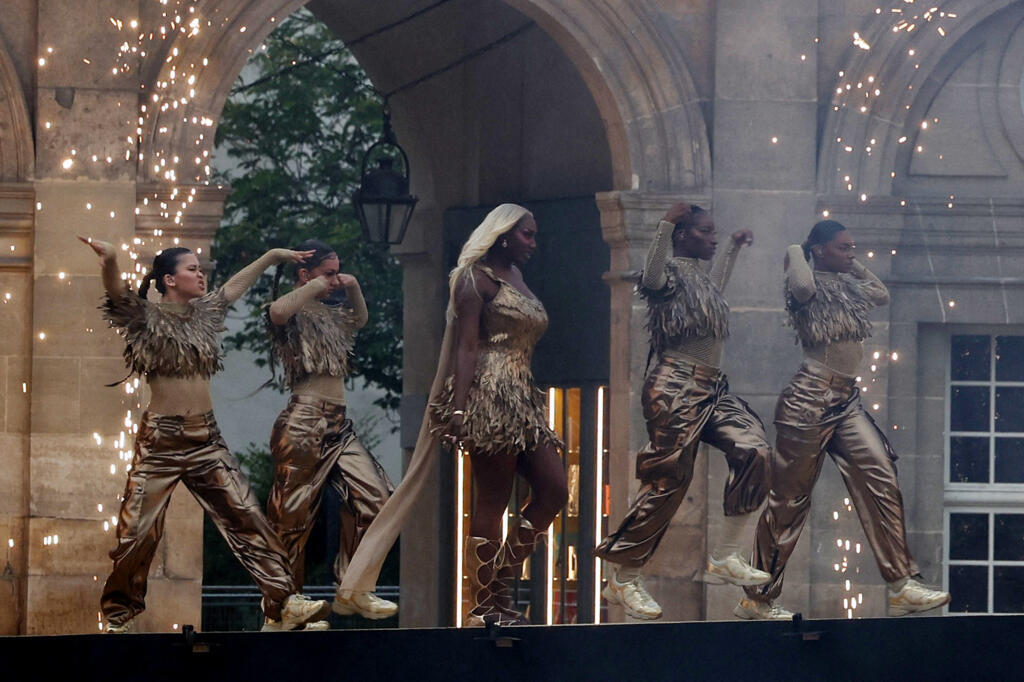
Aya Nakamura performs in front of the Académie Française at the Paris Olympic Games opening ceremony on 26 July 2024. © AFP - ESA ALEXANDER

Nakamura is the most listened-to Francophone artist in the world, with more than 6 billion streams of her songs and more than nine million monthly listeners on Spotify. But her mix of French with Arabic and Malian slang, along with her sexy look, has been criticised by conservative and far-right groups and politicians.

Ahead of her performance at the Paris Games, Marine Le Pen, figurehead of the far-right National Rally, suggested the singer’s participation would "humiliate" France. She also took aim at what she called the singer's "vulgarity" and "the fact that she doesn't sing in French".
West Africans deported by US sue Ghana for 'unlawful detention'

A group of West African nationals deported from the United States to Ghana earlier this month have filed a lawsuit against the Ghanaian government for unlawful detention. Lawyers representing the deportees report they are still being held in a military camp near Accra, even though there are no formal charges against them and the authorities say they are being returned to their home countries.


Issued on: 19/09/2025 - RFI

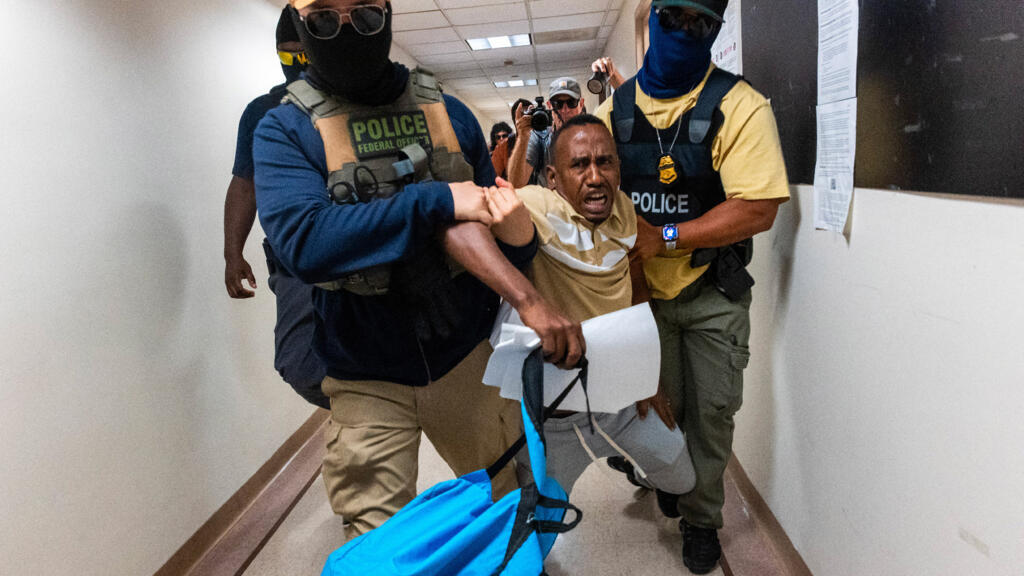
AMERIKAN GESTAPO
United States federal agents drag a man away after his hearing at an immigration court in New York. © Spencer Platt / Getty Images / AFP

By: Zeenat Hansrod

Fourteen people from various countries in West Africa landed in Ghana on 6 September, after the government in Accra agreed to take in third-country nationals expelled from the US.

Ghanaian authorities say all the deportees have since been sent back to their countries of origin. But lawyers for 11 of the deportees claim they are still being detained in a military camp.

The lawsuit alleges that Ghana is in breach of its constitution and international treaties in holding the deportees without charge and demands their release – as well as their right not to be sent to their home countries where their life is at risk.


Conflicting accounts

At the request of the deportees' families and their lawyers in the US, a Ghanaian law firm, Merton & Everett, filed a lawsuit on Wednesday for unlawful detention against Ghana's attorney general, the chief of staff of the armed forces and comptroller general of the immigration service.

Speaking to RFI, the lawyers said that they are satisfied, having cross-checked information provided by the deportees, that their clients are indeed in Ghana. They believe they are detained at Bundase military camp, 70km from Accra, under military surveillance restricting access to them.

Information about the deportees has been difficult to come by, according to Oliver Barker-Vormawor, a lawyer at Merton & Everett.

"We reached out to the Ministry of Foreign Affairs who insisted that all of them have been repatriated. We contacted the Ghana Armed Forces, which said they have no idea about the issue and said they were not holding the people," he told RFI’s Victor Cariou in Accra.

Testimonies


The West African nationals, 10 men and four women from Nigeria, Liberia, Togo, Gambia and Mali, landed in Ghana on 6 September. They said they were taken from their cells in Louisiana, in the middle of the night on 5 September, shackled in chains and put on a military cargo plane without being informed where they were being taken.

Four of them were placed in straitjackets because they refused to get on the plane without speaking to their lawyers.

According to court documents seen by RFI, three of the deportees were removed to their countries of origin between 6 and 10 September.

In a statement filed to the Accra court, a deportee from Gambia said he was placed on a flight back home on 10 September, accompanied by two Ghanaian immigration officials. He was then released, but is living in hiding because of his bisexuality, punishable by law in Gambia.

“I’d won protection from being returned to Gambia under the Convention against Torture. I told them [Ghanaian immigration officials] that I wanted to stay in Ghana for my safety,” he testified.

Being LGBTQ+ in South Africa and Senegal: one continent, worlds apart

Another deportee from Nigeria also said he feared for his life if he was forced to return. He won protection in the US from being returned to his home country and is married to a US citizen. The deportee was a politician in Nigeria and said he had been beaten up by political rivals and tortured by the police before he fled his country.

“If I go back to Nigeria, I will be tortured and possibly killed,” he said.

He claims that neither US immigration officers nor Ghanaian and Nigerian officials heeded his efforts to explain the potential danger.

“They told us they did not care and that we will be sent back to Nigeria anyway,” he said.

Out of US hands

Lawyers in the US also filed a lawsuit, on behalf of five of the deportees, to immediately halt deportations to their countries of origin.

US federal judge in Washington, Tanya S. Chutkan, ruled that now the deportees are in Ghanaian custody, her “hands are tied”.

The judge said she is alarmed and dismayed by the circumstances under which these removals are being carried out.

“It [the court] is aware of the dire consequences Plaintiffs [the deportees] face if they are repatriated… to countries where they face torture and persecution,” she wrote on Monday.


Speaking to journalist Bernard Avle on Channel One TV in Ghana on Wednesday 17 September, Foreign affairs minister, Samuel Okudzeto Ablakwa said that Ghana is not doing the US a favour, but doing fellow Africans a favour.

“The choice is theirs really. For 90 days, if they want to stay, they can stay but so far all of them have indicated that they want to go back and we’ve been facilitating that,” he added.

More deportees to come

According to the minister, another 40 West African deportees are expected in Ghana in the next few days.

Ghana is one of the five African states, along with, Rwanda, Uganda, Eswatini and South Sudan, to accept people deported from the US as part of the Trump’s administration crackdown on illegal migration.

Ghana’s opposition has demanded the immediate suspension of the pact. It also demands to see the memorandum of understanding between the US and Ghana which has not been ratified by parliament.

How Trump’s 'deportation campaign' is reshaping ties with Africa

Minister Ablakwa, insisted that his government’s decision to accept West African deportees from the US “is grounded purely on humanitarian principles and pan-African solidarity”.

“It is important to stress that Ghana has not received and does not seek any financial compensation or material benefit in relation to this understanding [with the United States],” he told journalists on Monday.

Arguing that the deal was designed to “offer temporary refuge when needed”, he rebutted critics’ claims that Accra was aligning itself with the anti-immigration administration in Washington.

“This should not be misconstrued as an endorsement of the immigration policies of the Trump administration,” he said.


Landmark WTO deal shifts course in global effort to curb overfishing

A global deal to protect fish stocks that billions of people rely on for food and jobs came into force this week after more than 20 years of talks. Governments have agreed to stop giving subsidies to boats that break rules against overfishing – but the agreement does not yet cover subsidies that build ever larger fleets.


Issued on: 20/09/2025 - RFI


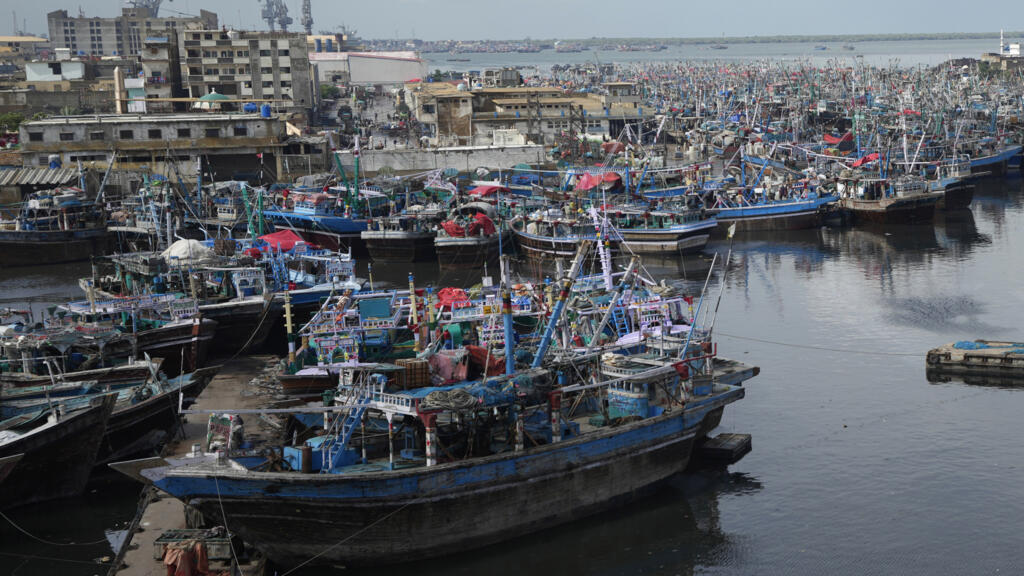
Fishing boats anchored at a fishing harbor in Karachi, Pakistan, August 2024. 
© Fareed Khan/AP

Under negotiation since 2001, the World Trade Organisation (WTO) Agreement on Fisheries Subsidies was adopted in June 2022, and enough countries ratified it for it to officially come into force on Monday, 15 September.

Subsidies to fishing fleets are a key factor in the depletion of fish stocks around the world. Critics have long argued that they incentivise boats to catch fish faster than stocks can replenish.

Around 35 percent of global fish stocks are overfished, compared to just 10 percent in 1974, according to the United Nations Food and Agriculture Organisation, and almost all stocks are fished at their maximum sustainable level.

'Game changer'

The WTO deal, the first to address an environmental issue, is a “game changer”, according to Tristan Irschlinger, an expert on the issue at the International Institute for Sustainable Development, a Canada-based think tank.

“States will no longer implement their subsidy policies in a legal vacuum – they will need to keep sustainability in mind,” he told RFI.

In 2018, states granted fisheries €30.1 billion ($35.4 billion) in public subsidies, according to one study, with China, the European Union, the United States, South Korea and Japan in the lead.

Of that sum, “governments spend around €18.7 billion ($22 billion) on harmful subsidies that contribute to overfishing and the depletion of marine resources”, said WTO Director-General Ngozi Okonjo-Iweala.

The new rules aim to address both environmental concerns and the well-being of fishing communities.

“No one has an interest in financially supporting illegal fishing, or harvesting of already overfished stocks,” Irschlinger said. But there needed to be a mechanism for countries to stop doing so, he suggested, “without losing face in front of other states”.

France defends tuna policy as critics warn of overfishing in the Indian Ocean

Rooting out illegal fishing

The first part of the WTO agreement, called Fish 1, targets illegal, unreported and unregulated (IUU) fishing practices, whether carried out deliberately or not.

“The agreement specifically targets industrial fishing activities that profit illegally because they know the risks are generally quite low,” explains Irschlinger.

IUU practices include vessels operating without authorisation or in violation of the law, such as fishing in protected waters, catching protected species, or using banned gear like dynamite.

Quantifying the effects of IUU fishing is difficult.

2009 study determined the practice accounted for between 11 and 19 percent of all fish caught globally in the 2000s — between 11 and 26 million tonnes of fish. The numbers are almost certainly much higher today.

Beyond its environmental impact and the effects on food security, IUU fishing also intersects with crime, according to French ocean conservation organisation Fondation de la Mer.

IUU is “linked to corruption, mafia practices, modern slavery and organised crime”, it said in a report on the practice last year.
Help for developing countries

The WTO agreement prohibits states from granting subsidies to vessels and operators in three cases: when fishing activities are illegal; when fish stocks are overexploited; or when fishing takes place on the high seas, which are not regulated by any single state.

The UN's High Seas Treaty, which is expected to come into force next week, will reinforce the WTO agreement, particularly through the creation of marine protected areas where some or all forms of fishing would be banned.

French Polynesia unveils world's largest marine protected zone

Developing countries are given a two-year grace period to comply with the agreement, and 17 members have pledged more than €15 million ($18 million) to a fund to help fisheries transition to more sustainable practices.

In theory the agreement would be enforced through the WTO’s Dispute Settlement Body, which resolves conflicts between states – but because the United States has blocked the appointment of judges, it has remained unable to handle new cases since 2019.

The agreement also does not specify the kinds of sanctions that could be imposed.

Aiming to avoid the need for penalties, a fisheries subsidies committee will be tasked with monitoring implementation, while states are also expected to scrutinise each other.
Looking ahead to Fish 2

There is hope that the first part of the agreement will build momentum for the second part, Fish 2, currently under negotiation, to be finalised within four years.

Fish 2 focuses specifically on fishing fleets themselves, which Irschlinger says is “the root of the problem”.

The Fondation de la Mer says that even when fishing fleets are not fishing illegally, or when stocks are not yet overfished, subsidies can still be harmful: “They often promote the development of oversized fishing fleets and encourage excessive fishing pressure, which can ultimately lead to overexploitation or even stock collapse.”

The second part of the agreement sets out a general list of prohibited subsidies, and removes the need to detect illegal fishing or assess fish stocks in order to enforce the rules. Instead it is up to states to prove that they have put management measures in place.

Fish 2 depends on ratification by the United States, which ratified Fish 1 under the previous administration.

The new administration is taking a more ambitious and hardline stance in negotiations, aligned with India and Indonesia, which argue that the text is not strict enough on states that subsidise the most.

Negotiations will likely restart in earnest in March of next year at a WTO meeting in Yaoundé, Cameroon.


Ghana Expands Inshore Exclusion Zone To Curb IUU Fishing – Analysis

By 

Ghana has adopted a new fisheries act aimed at stemming illegal, unreported and unregulated (IUU) fishing. Among other new regulations, the Ghanaian government expanded the country’s inshore exclusion zone (IEZ) from 6 to 12 nautical miles from shore.


Industrial and large-scale vessels are prohibited from fishing in a country’s IEZ, but trawlers from China and other foreign fishing trawlers routinely invade waters meant for Ghana’s artisanal fishermen.

“When the trawlers come close to the area marked solely for our men, they tend to catch a lot of the fish meant for artisanal fishers, and we end up making huge losses,” Regina Solomon, president of the National Fish Processors and Traders Association, told the Environmental Justice Foundation (EJF). “If these fishes had been left for our men to catch, we would have made much more profits buying from them and selling, thereby securing the livelihoods of both our local fishermen and we the fish processors.”

IUU fishing costs Ghana an estimated $14.4 million to $23.7 million annually. Signed into law by President John Mahama on August 19, the act aims to restore stocks of small pelagic fish — such as anchovies, sardines and mackerel, which are near collapse — stimulate the blue economy, and sustain the livelihoods of more than 200,000 artisanal fishermen and 500,000 fish processors and traders.

Addressing ‘Yellow Card’

The new law also is expected to help Ghana shed a 5-year-old European Union (EU) “yellow card” sanction over IUU fishing and address weaknesses in monitoring and enforcement.

“We need to work to immediately get the yellow card lifted, otherwise we risk getting a red card, which means fish from Ghana cannot be exported to the EU market that happens to be the largest market for the fisheries sector,” Emelia Arthur, Ghana’s minister for fisheries and aquaculture, told the Ghanaian newspaper Business and Financial Times.


Exports of tuna contribute nearly $400 million annually to the nation’s economy, Arthur told the Fisheries Committee for the West Central Gulf of Guinea. Lifting the EU warning would restore full market access and demonstrate international recognition of improved fisheries management.

Analysts lauded Ghana’s new law.

“Ghana’s approach could influence other West African nations facing similar challenges with EU trade warnings over fishing practices,” the News Ghana website wrote in an editorial. “Regional coordination may be necessary to address transboundary fishing issues and industrial vessel movements.”

The EJF said that monitoring systems and hefty penalty structures will determine whether the legislation can truly rebuild Ghana’s fisheries.

“This new law marks a turning point for Ghana’s fisheries and coastal communities,” Steve Trent, the EJF’s chief executive officer and founder, said in a statement. “It sends a clear signal of leadership, vision, and commitment to the millions of people who rely on a healthy ocean.”

Beijing’s Bad Actors

Chinese trawlers have pillaged Ghanaian waters for decades, causing the near collapse of some species and driving up prices. China is the world’s worst illegal fishing offender, according to the IUU Fishing Risk Index. In April, Ghana’s Fisheries Commission and Ministry of Fisheries and Aquaculture suspended the fishing licenses of four Chinese trawlers for fishing in restricted areas; harvesting juvenile fish; dumping unwanted fish; and saiko, the unauthorized transshipment of fish at sea.

The Chinese vessels are all flagged to Ghana but are owned by three Chinese companies, the Ghana Business News website reported. Chinese trawlers are notorious for using this practice, known as “flagging in,” in which they abuse local rules to flag a foreign-owned and -operated fishing vessel into an African registry to fish in local waters. Flagging in is a common sign that vessels engage in illegal fishing. According to the EJF, Chinese corporations own at least 90% of the industrial trawlers operating in Ghana.

IUU fishing is often linked to other sea crimes, including human trafficking, drug smuggling and piracy.

Earlier this year, Ghana suspended the fishing licenses of four Chinese vessels. The vessels were accused of saiko – the unauthorized transshipment at sea among other violations. The four vessels include Meng Xin 10, Florence 2, Long Xiang 607 and Long Xiang 608. The fishing ban will last for one year.


Africa Defense Forum

The Africa Defense Forum (ADF) magazine is a security affairs journal that focuses on all issues affecting peace, stability, and good governance in Africa. ADF is published by the U.S. Africa Command.
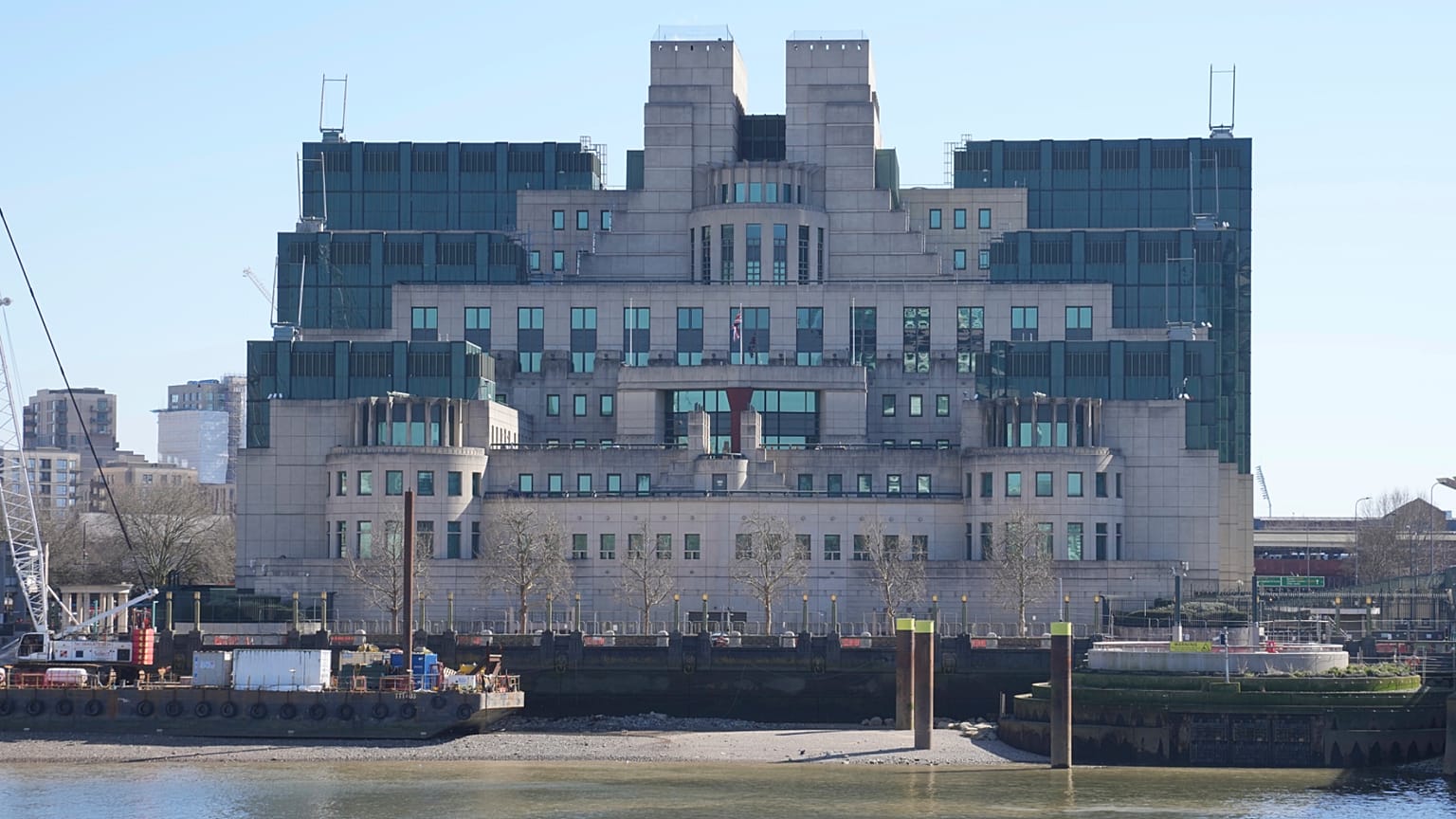
UK spy agency MI6 launches new portal to recruit foreign informants via dark web

MI6 has launched a dark web portal, Silent Courier, to recruit spies and gather information securely. The platform targets potential informants worldwide, including Russia.


Copyright AP Photo

By Estelle Nilsson-Julien
Published on 19/09/2025 - EURONEWS

Britain's foreign intelligence service, MI6, has launched a new dark web messaging portal to facilitate the exchange of information from potential foreign informants and to recruit spies worldwide, including from Russia.

"As the world changes, and the threats we're facing multiply, we must ensure the UK is always one step ahead of our adversaries," UK Foreign Secretary Yvette Cooper told domestic press ahead of the Silent Courier platform's launch.

"Our world-class intelligence agencies are at the coalface of this challenge, working behind the scenes to keep British people safe," she added.

"Now we're bolstering their efforts with cutting-edge tech so MI6 can recruit new spies for the UK - in Russia and around the world."

On Friday, MI6 posted a series of videos to promote the platform and explain how it works.

In one video, a narrator says, "For over a hundred years, the bedrock of MI6's work has been face-to-face work."

"Now we can make those connections even more securely online, using our upgraded dark web portal, Silent Courier."

"If you have access to sensitive information relating to global instability or hostile intelligence activity, you can now contact MI6 and share this securely using Silent Courier," the narrator explains.

In a separate video, MI6 instructed those who wish to make contact with the agency to use a "clean" device, deterring potential informants from using their personal phone or computer, as well as any devices belonging to family or friends.

Britain's intelligence agency also advises informants based in "high-risk countries" to use a VPN, on top of the recommended procedure, which suggests using Tor — a free, open-source web browser for private and anonymous internet browsing.
RelatedHuman spies won’t be replaced by artificial intelligence, Britain’s MI6 chief says
Britain's MI6 appoints Blaise Metreweli as its first female chief in 116-year history

Outgoing MI6 chief Richard Moore, who has helmed the spy agency for nearly five years, confirmed Silent Courier's launch during an address in Istanbul on Friday, "to those men and women in Russia who have truths to share and the courage to share them, I invite you to contact MI6.”

Moore is to be succeeded by Blaise Metreweli in October, who will become the first woman to lead the service.

The drive to recruit foreign agents is similar to a 2023 campaign led by the US' CIA, in which Washington targeted potential Russian informants in a series of social media videos.


French cultural and religious leaders warn Macron on recognition of Palestine

A group of 20 leading figures from the world of Jewish culture and religion in France have called on the French president Emmanuel Macron to ensure that France's recognition of a Palestinian state be made conditional on the release of hostages in Gaza and the dismantling of Hamas.


Issued on: 20/09/2025 - RFI
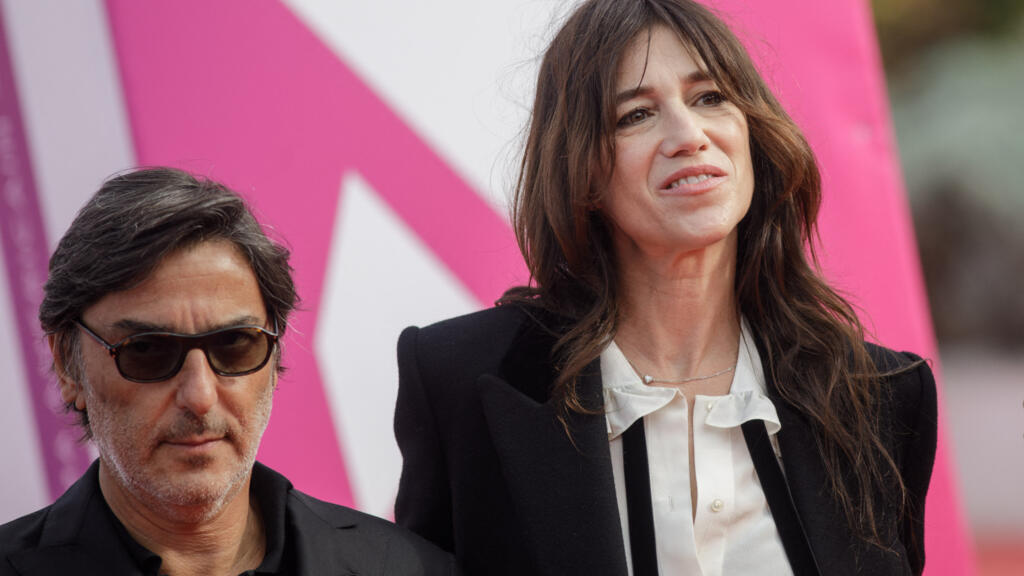
Yvan Attal (left) and Charlotte Gainsbourg (right) were among 20 cultural and religious figures in France who signed an open letter to President Emmanuel Macron urging him to insist on certain conditions before recognising a state of Palestine at the United Nations General Assembly. AFP - SAMEER AL-DOUMY

Macron is preparing to recognise a Palestinian state on Monday at the United Nations General Assembly in New York – a move that has won the backing of countries including Canada, Australia and Belgium..

In an open letter to the French newspaper Le Figaro, film stars such as Charlotte Gainsbourg and Yvan Attal as well as cartoonist Joann Sfar and TV presenter Arthur urge Macron to be categorical about his terms.

"We solemnly ask you to affirm that this recognition will only take effect after the hostages have been released and Hamas dismantled (...) Recognising a Palestinian state now will not help Palestinian civilians or contribute to the release of the hostages.

"It is at this price, and this price alone, that this gesture can contribute to peace," says the letter signed by Yonathan Arfi, the president of the Representative Council of Jewish Institutions in France, Elie Korchia, the president of the Central Consistory, Haïm Korsia, the Chief Rabbi of France and Ariel Goldman, the president of the United Jewish Social Fund.

"Otherwise, it would be a moral capitulation to terrorism," the letter adds.

On Thursday in an interview with Israel’s Channel 12 television, Macron praised Israel’s historic achievements in security but said the current strategy in Gaza was backfiring.

“You are provoking so many civilian victims and casualties that you are completely destroying Israel’s image and credibility,” he told viewers. “Not just in the region, but in public opinion everywhere.”

The French leader argued that while Hamas must be dismantled, purely military solutions would not succeed in breaking the cycle of violence.

Instead, he emphasised the importance of diplomacy – particularly on the stalled two-state solution.

'The hope of peace will vanish'

Macron also used the interview to defend his decision to officially recognise the Palestinian state which he argues would sideline Hamas.

The French president said that recognising Palestine is “the best way to isolate Hamas” and a decision that “should have been taken a long time ago”.

He accused the current Israeli government of trying to kill off the two-state option, pointing to a recent vote to resume settlement expansion in the West Bank.

“We are at the last [moment] before proposing two states becomes totally impossible,” he warned. “Now is the time to act – not tomorrow, not in 10 years. If we don’t move, the conflict will only deepen, and the hope of peace will vanish.

France's Interior Ministry clamps down on public display of Palestinian flags

A political row has erupted in France over whether town halls should be allowed to display the Palestinian flag on Monday, the day Paris will formally recognises a Palestinian state at the United Nations General Assembly.


Issued on: 19/09/2025 - RFI


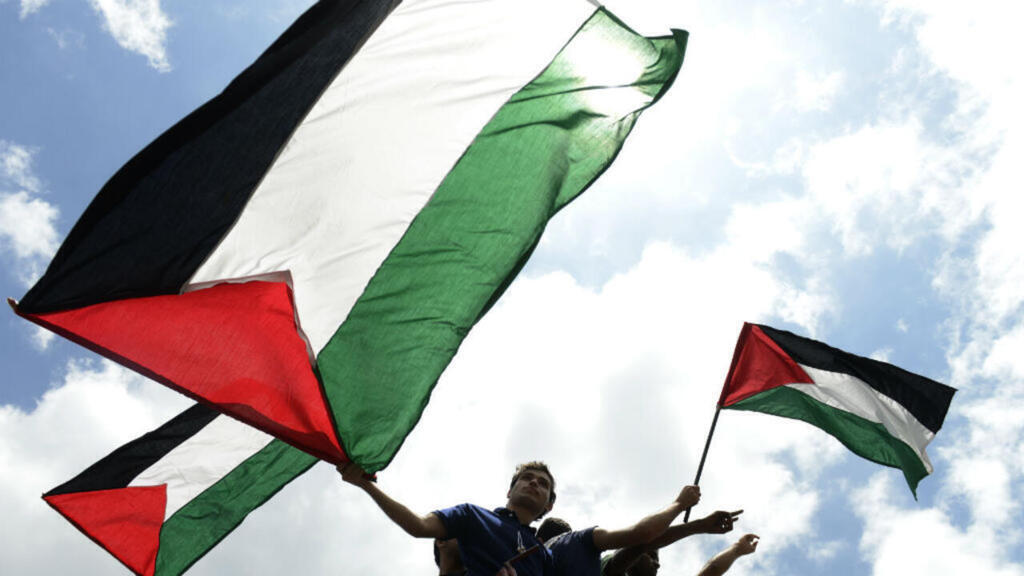
France has banned mayors from raising the Palestinian flag on public buildings on Monday, the day Paris is set to formally recognise a Palestinian state. © AFP -

The Interior Ministry has told police prefects across the country to block mayors from flying the Palestinian flag on public buildings next Monday, 22 September – the day France will formally recognise the state of Palestine.

The ministry argued that displaying the flag would breach the neutrality required of public institutions.

Prefects have been asked to take non-compliant town halls to administrative courts if necessary.

The warning comes after Socialist Party leader Olivier Faure called on mayors to raise the Palestinian flag on 22 September, when President Emmanuel Macron is due to make France’s recognition of Palestine official at the UN General Assembly in New York.

UN gathers to advance two-state solution to Israel-Palestine conflict

Several local leaders – including the mayors of Nantes and Saint-Denis – have already said they plan to raise the flag.

But the Interior Ministry insists that doing so would be “taking sides in an international conflict” and would amount to unlawful interference.

The note to prefects, signed by senior official Hugues Moutouh, also highlighted “serious risks to public order” and warned of the danger of “importing an international conflict on to national soil".

France to recognise Palestinian statehood, defying US-Israel backlash

Posting on X (formerly Twitter), Faure wrote: "Prefects do not have the power to ban demonstrations. The courts will decide if necessary. A minister who has resigned should be dealing with day-to-day business, not seeking to symbolically oppose the decision taken by the President of the Republic to recognise a Palestinian state."

(with AFP)

France warns mayors against flying Palestinian flags ahead of statehood recognition

As France prepares to recognise Palestinian statehood at the UN General Assembly next week, the French interior ministry on Friday ordered prefects to oppose the display of Palestinian flags on town halls and other public buildings to protect "the principle of neutrality". Several opposition politicians from the left have denounced the order.


Issued on: 19/09/2025 -
By: FRANCE 24
Video by: Catherine VIETTE


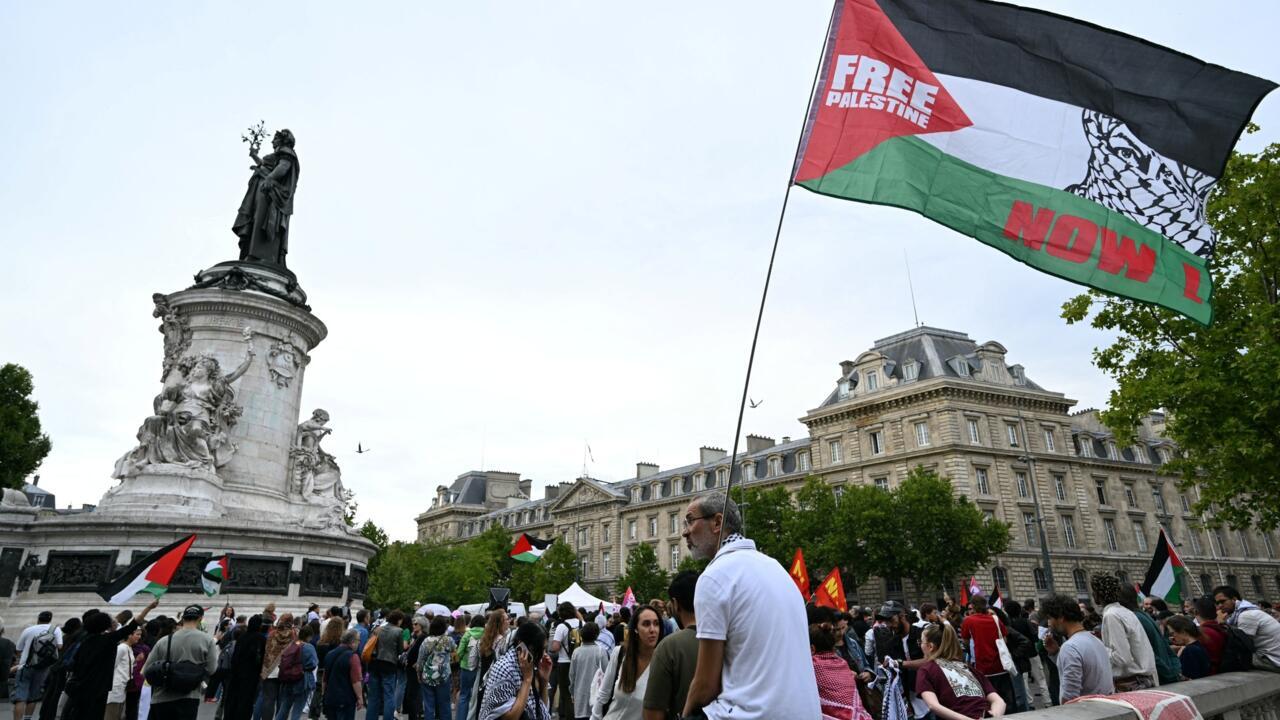
File photo of a protester with a Palestinian flag taken during a Palestinian solidarity demonstration at the Place de la République in Paris on July 29, 2025. © Bertrand Guay, AFP
02:00


France's interior ministry has ordered prefects to oppose the display of Palestinian flags on town halls and other public buildings next week when Paris is set to formally recognise the Palestinian state.

"The principle of neutrality in public service prohibits such displays," the interior ministry said in a telegram, a copy of which was seen by AFP on Friday.

Any decisions by mayors to fly the Palestinian flag should be referred to courts, the interior ministry said.

Israel's war on Gaza is a hot-button issue in France, and it is not uncommon to see flags hanging out of windows in Paris and elsewhere.

Several French mayors have already announced their intention to display the Palestinian flag on their town halls next week.

On Monday, France is set to formally recognise Palestine's statehood at the United Nations General Assembly.

Read moreTimeline: The state of Palestine’s long road to recognition

The warning from the interior ministry came after Socialist leader Olivier Faure called for the Palestinian flag to be flown on town halls on Monday, when Jewish worshippers also celebrate the Rosh Hashanah holiday, the Jewish New Year.

However, the interior ministry said any such display would amount to "taking sides in an international conflict".

"It is therefore appropriate," the telegram said, "to ask mayors who display such flags on their public buildings to cease doing so and, in the event of refusal or non-compliance" to refer those mayors' decisions to administrative courts.
'Courts will decide'

Faure, the Socialist leader, said on Friday that prefects did not have the power to ban such displays.

"The courts will decide if necessary," he said on X.

"An outgoing minister should manage day-to-day affairs, not seek to symbolically oppose the decision taken by the president to recognise a Palestinian state," Faure added, referring to Interior Minister Bruno Retailleau.

France is awaiting the announcement of the new cabinet lineup after Macron last week named his close ally Sébastien Lecornu as the new prime minister to resolve a deepening political crisis.

Several French town halls have had to remove Palestinian flags following court decisions.

In June, a court ordered the mayor of the eastern city of Besançon to remove the Palestinian flag, saying she had "violated the principle of neutrality of public services" by displaying the flag.

The mayor Anne Vignot said at the time she was "shocked" by the ruling.

"Is denouncing a massacre and supporting a starving people under bombardment no longer a cause that unites us under the banner of the Republic?" she said in a statement.

The same month the mayor of the southern city of Nice had to remove Israeli flags from the front of the town hall following a court order.

Israeli Prime Minister Benjamin Netanyahu has accused Macron of pursuing a policy of "appeasement" of the Hamas militants. Macron said Thursday that recognising the Palestinian state would isolate Hamas.

Read moreFrance bears the brunt of Israel’s isolation ire

Several other leaders have announced their intent to formally recognise the Palestinian state during the UN summit.

Since the start of the Russian invasion of Ukraine in February 2022, many French city halls have displayed the Ukrainian flags in a gesture of solidarity.

(FRANCE 24 with AFP)

‘They hit us and torture us’: Refugees accuse Libyan authorities of violence


Videos posted on social media by the NGO Refugees in Libya in early September show dozens of refugees crammed together on the floor at the detention centre in Tobruk, Libya. The videos are the latest example of the violence asylum seekers face in Libya, says our Observer, who was once detained himself.


Issued on: 19/09/2025 -
By: The FRANCE 24 Observers/
Mellit DERRE

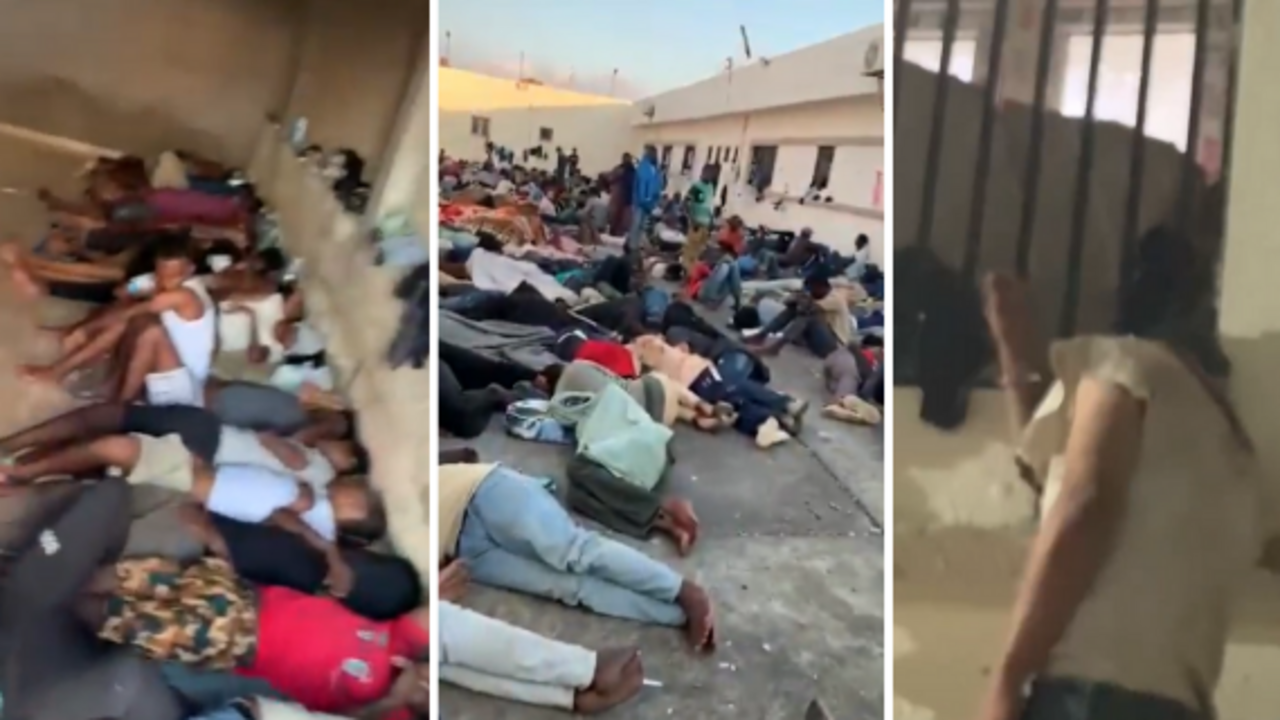
These are screenshots of videos published in early September by the NGO Refugees in Libya showing the appalling living conditions of refugees trapped in the Tobruk detention centre in Libya. © X / Refugees in Libya

This video, published on X on September 1, 2025, shows dozens of refugees lying on the bare ground, without blankets or mattresses. Source: X / Refugees in Libya
Two videos posted online by the aid organisation Refugees in Libya show the appalling conditions in Libyan migrant detention centres. The first, published on September 1, shows dozens of people crammed into a single cell. They lie silently on the ground and have no blankets or mattresses, or even shoes. More than 900 people were detained in the same location, according to Refugees in Libya. In the video, you can see at least 100.

Another video, this one published 10 days later, shows a man handcuffed to bars across a window. These images were shared by people being held in the detention centre in Tobruk, in northeastern Libya. This region is under the control of the government supported by the House of Representatives in Tobruk and Field Marshal Khalifa Haftar’s Libyan National Army.
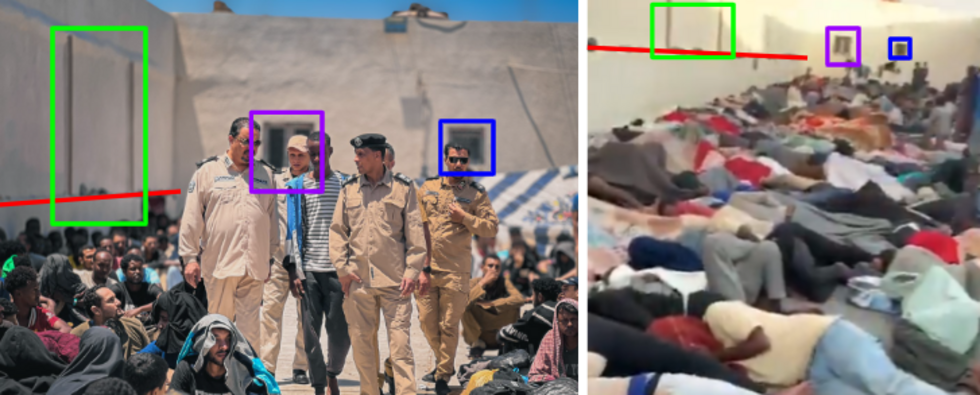
These images show the migrant detention centre in Tobruk in northeastern Libya. © Facebook / Presidency of the agency for the fight against illegal immigration in Libya - X / Refugees in Libya

The FRANCE 24 Observers team was able to establish the location where these videos were filmed. You can see the same courtyard in a post on Facebook on August 3, shared by an organisation called the Agency for the Fight against Illegal Immigration in Libya, which runs the detention centre. It was published to mark a meeting held to try to “fight against illegal immigration, smuggling and criminal activities in any form”. The caption on the post reads “📍Tobruk | Al-Butnan Centre”. In this photo, you can see the same two windows at the end of the courtyard where the refugees are sleeping. You can also see the wall to the left, which has two distinctive vertical lines on it.

Omar (not his real name) is Sudanese. He was detained in the Tobruk facility but got out after paying a large sum of money to the guards. Omar left Sudan at the beginning of the year, in the hopes of reaching Europe. However, he was arrested in Libya during the spring. Many migrants and refugees travel through Libya in their attempt to reach the European Union, especially as Tunisia has upped its efforts to block migrants from crossing its maritime border to the European Union.

"I was arrested in the street in Libya alongside other people. I was trying to reach family members in another town in Libya when I ran into the police, and I ended up in Tobruk.

There are many different nationalities in the prison. We are all trying to get to Europe but first, we have to go through Libya.”

He says that the guards asked refugees to pay enormous sums in order to leave. Essentially, they need their families to intervene and pay this ransom.

"If you are Sudanese, they want you to pay 2,500 Libyan dinars [Editor’s note: 392 euros] to get out of prison. But they ask a lot of the other nationalities for even more money. For example, if you are from Chad, Egypt, Ethiopia, Yemen, Syria, Pakistan, Bangladesh, South Sudan, or Somalia, they ask for 7,000 Libyan dinars [Editor’s note: 1100 euros]."
‘The prison is full of disease’

Omar says he spent several months in this detention centre.

“It’s a very large prison. There were hundreds of us. We didn’t have enough food or water. There were so many problems inside it.

At night, they put us in a space that was very hot and had no ventilation. No ventilation, meaning there wasn’t enough oxygen. In the morning, when they made us go out, the air was cold. It was easy to catch a cold, the flu, a fever, and all the rest of it.

At night, you aren’t allowed to speak at all. We were allowed out of the cell around 10am and, at that point, we would speak together about what was happening inside the prison.

The prison is full of diseases: scabies, pox, rashes, and fevers. There’s really everything.

It is a very difficult situation, honestly.”

‘They hit them with metal’

The NGO Refugees in Libya regularly shares images and information about the plight of refugees in Libya. They say that they receive dozens of messages every day and that the number of people detained in this centre is on the rise.

The second video documents abuse. You can see a man, who is very weak, handcuffed to one of the bars across a window, forcing him to remain standing.
This video, published on X on September 11, 2025, shows a man handcuffed to one of the bars across a window in the Tobruk detention centre. Source: X / Refugees in Libya

Omar says that he heard about this man from his contacts in the detention centre:

"They kidnapped him right from the street. They took his iPhone to unlock it using iCloud. But the man refused to open his phone. After that, they beat and tortured him. After they beat him, they put him in solitary confinement. They tortured this one man so much. They absolutely wanted to get into his telephone – that’s why they were hitting him.

Then, they handcuffed him to the window in the door. He was afraid. He had to stand up all night. Then, in the morning, they hit him and put him in solitary confinement. They continued to beat him every day in an attempt to get him to open iCloud on his phone.

They wanted his phone because it's expensive. It's probably worth 6,000 or 7,000 Libyan dinars [Editor’s note: between 940 and 1,100 euros] because it's an iPhone, so they take it by force.

For example, they don't want a Samsung that costs 400 or 600 dinars [between 60 and 100 euros]. They want the expensive things.”

While this is the only abuse that has been caught on camera, Omar says that it is far from an isolated case. He says that torture and mistreatment are part of daily life for migrants in this detention centre.

"There is an area in the prison where soldiers beat people. They hit them with metal. They hit them with anything they find in front of them. Sometimes, you are also standing in a line to get bread or water, and the line is very crowded. But if anyone steps out of line, the soldiers will start to beat that person. They beat and torture people who don’t want to go into the buildings. They also want to get any money we have."

Just like the people in Tobruk, thousands of migrants are detained across Libya in inhumane conditions. The practice of demanding money to set them free has been going on for years. In 2023, Médecins Sans Frontières (Doctors without Borders) called for the creation of humanitarian corridors for asylum seekers.

Libya has been locked in a spiral of violence and instability since the fall of former leader Muammar Gaddafi in 2011. Two different governments are running the country: the UN-recognised Government of National Unity in the west and, in the east, the House of Representatives and other followers of Marshall Haftar.

This article has been translated from the original in French.


More than 100 Sudanese refugees dead or missing in shipwrecks off Libya

At least 110 people have died or gone missing after two boats carrying mostly Sudanese refugees sunk off the coast of Tobruk, Libya.


Issued on: 18/09/2025 - RFI

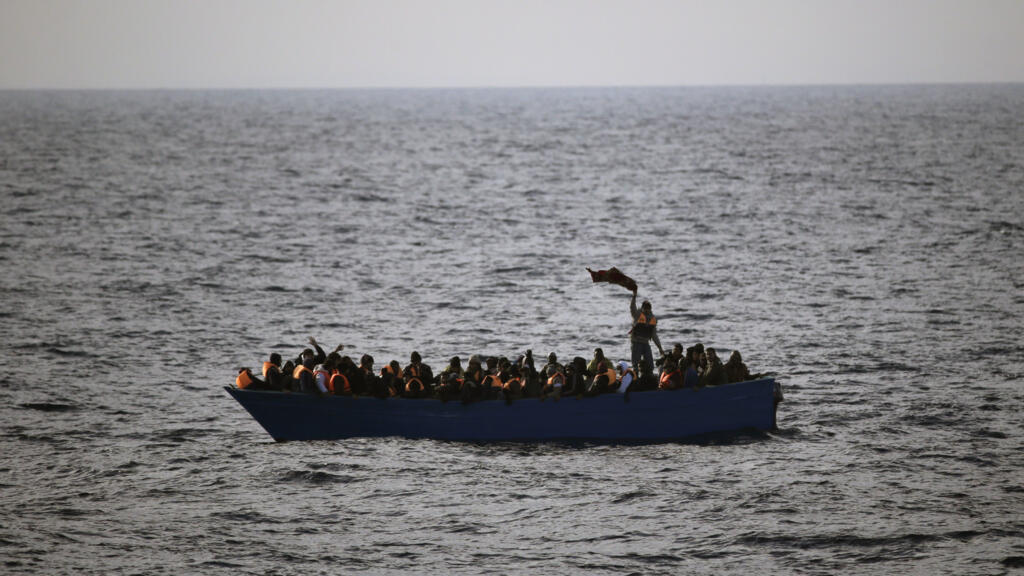
At least 456 people died along the central Mediterranean route between January 1 and September 13, according to the IOM. AP - Emilio Morenatti


The United Nations High Commissioner for Refugees (UNHCR) in Libya said Wednesday evening that only 13 people survived after a vessel carrying 74 people, mostly Sudanese refugees, capsized Sunday off the coast of Tobruk.

The International Organisation for Migration (IOM) reported another shipwreck that occurred on Saturday, in which at least 50 people died "after a vessel carrying 75 Sudanese refugees caught fire off Libya's coast".

Increasing numbers of migrants have been departing from Tobruk, in northeastern Libya, in an attempt to reach Greece.

The European border agency Frontex called it "a new migratory corridor", and the IOM has categorised it as "one of the world's most dangerous migration routes".

Desperate journeys: Ghanian youth risk death for a future in Europe

War in Sudan

After the latest tragedy, the IOM called for "urgent action… to end such tragedies at sea".

Noting the nationalities of the victims, the UNHCR called for an end to the war in Sudan.

"Because safe and legal pathways are available to only a very small number of people, the real solution is to end the war in Sudan so families can return home in safety and not take these dangerous journeys," the agency wrote.

The Sudanese army has been at war since April 2023 with the paramilitary Rapid Support Forces in a conflict that has left tens of thousands dead and displaced over 13 million people. It has been called the world's worst humanitarian crisis.

Libya became a migration transit route after the fall of dictator Moamer Kadhafi in 2011.

As of February 2025, around 867,055 migrants from 44 nationalities were living in Libya, according to IOM data, and since the start of the year, 456 people have died and 420 went missing on the maritime route.
Anti-austerity strikes and protests rock France, pressure Macron

Massive anti-austerity protests and labour strikes were held across France on Thursday, in a show of anger over President Emmanuel Macron's austerity policies. Organisers said one million people took part in the strikes and protests, while the French authorities estimated that there were 500,000 protesters.


Issued on: 18/09/2025 -
By: FRANCE 24

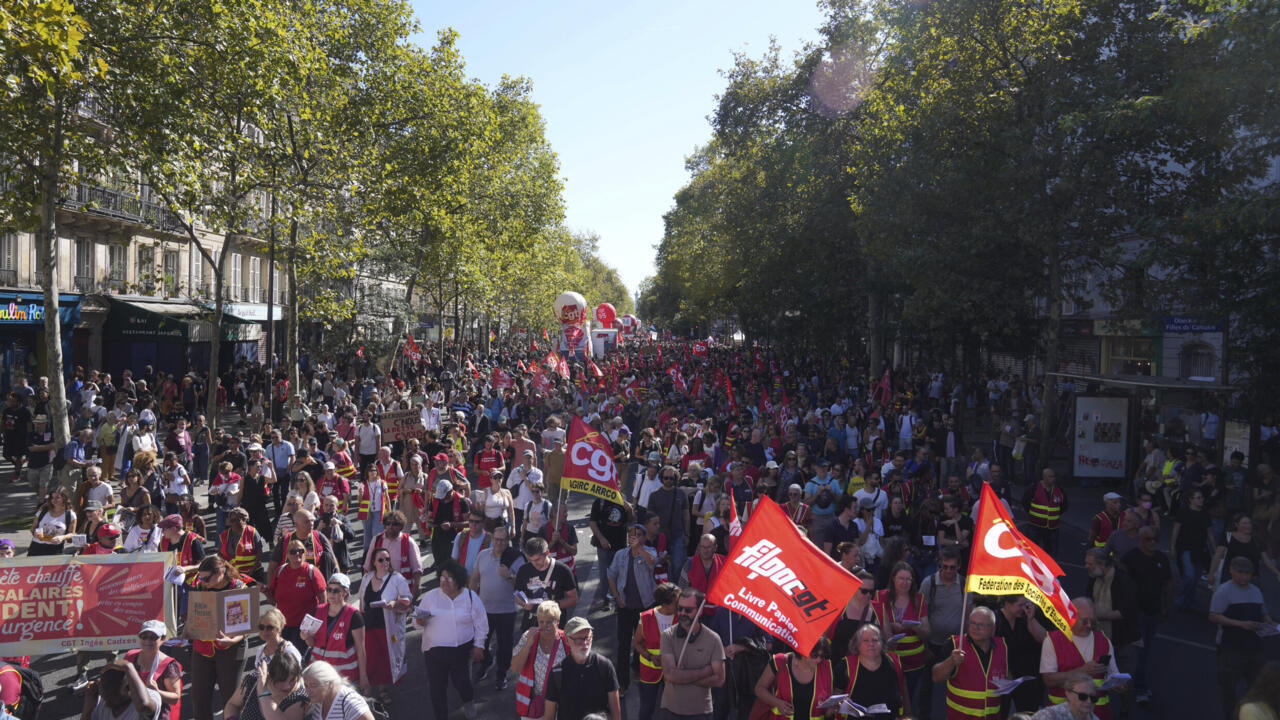
Protesters march during a demonstration called by major trade unions to oppose budget cuts, in Paris, France, Thursday, Sept. 18, 2025. © Thibault Camus, AP

Hundreds of thousands took part in anti-austerity protests across France on Thursday, urging President Emmanuel Macron and his new Prime Minister Sebastien Lecornu to acknowledge their anger and scrap looming budget cuts.

Teachers, train drivers, pharmacists and hospital staff were among those who went on strike as part of the day of protests, while teenagers blocked dozens of high schools for hours. Protesters and unions called for the previous government's fiscal plans to be scrapped, for more spending on public services, higher taxes on the wealthy and for the reversal of an unpopular change making people work longer to get a pension.

"The anger is immense, and so is the determination. My message to Mr. Lecornu today is this: it's the streets that must decide the budget," said Sophie Binet, head of the CGT union.

The CGT said 1 million people took part in the strikes and protests. Authorities estimated the number of protesters at about half that number.

There were some clashes on the margins of the rallies but the level of violence was not as high as Interior minister Bruno Retailleau had feared.

"I would like to emphasise that in almost all cases, marches and demonstrations took place under favourable conditions," he said during a briefing held shortly after the end of the Paris rally.
Unions want to pressure government on budget

Macron's new prime minister is scrambling to put together a budget for next year, as well as a new government.

On a post on X, he vowed to meet the unions again "in the coming days, adding, "The demands made by the union representatives and echoed by demonstrators in the marches are at the heart of the consultations I have initiated."

Lecornu and Macron are under pressure on one side from protesters and left-wing parties opposed to budget cuts and, on the other, from investors concerned about the deficit in the euro zone's second-largest economy. Parliament is deeply divided and none of its three main groups has a majority.

"This is a warning, a clear warning to Sebastien Lecornu," said Marylise Leon, the head of the CFDT, France's largest union. "We want a socially fair budget."

Protests hit schools, trains

One in three primary school teachers was on strike nationwide on Thursday, and nearly one in two walked off the job in Paris, the FSU-SNUipp union said.

Regional trains were heavily affected, while most of the country's high-speed TGV train lines worked, officials said. Protesters gathered to slow down traffic on a highway near the southeastern city of Toulon.

In Paris, police on several occasions threw teargas to disperse troublemakers dressed in black who hurled beer cans and stones at them. Police also stepped in to stop people targeting banks.

There were brief clashes on the margins of some of the other protests as well, including in Nantes, and in Lyon, where French media said three people were injured.
Workers angry over fiscal plans

More than 180 people have been arrested, the interior ministry said. Some 80,000 police and gendarmes were set to be deployed throughout the day, including riot units, drones and armoured vehicles.

France's budget deficit last year was close to double the EU's 3% ceiling but much as he wants to reduce that, Lecornu - reliant on other parties to push through legislation - will face a battle to gather parliamentary support for a budget for 2026.

Lecornu's predecessor, Francois Bayrou, was ousted by parliament last week over his plan for a 44 billion euro budget squeeze. The new prime minister has not yet said what he will do with Bayrou's plans, but has signalled a willingness to compromise.

(FRANCE 24 with Reuters)
Soft power: Russia revives the Intervision song contest, Cold War rival to Eurovision

Russia on Saturday hosts Intervision, an international song contest that was a regular fixture in Soviet states in the 1960s and ’70s. The revival follows Russia’s exclusion from Eurovision since its full-scale 2022 invasion of Ukraine.


Issued on: 20/09/2025 - 
FRANCE24
By: Joanna YORK


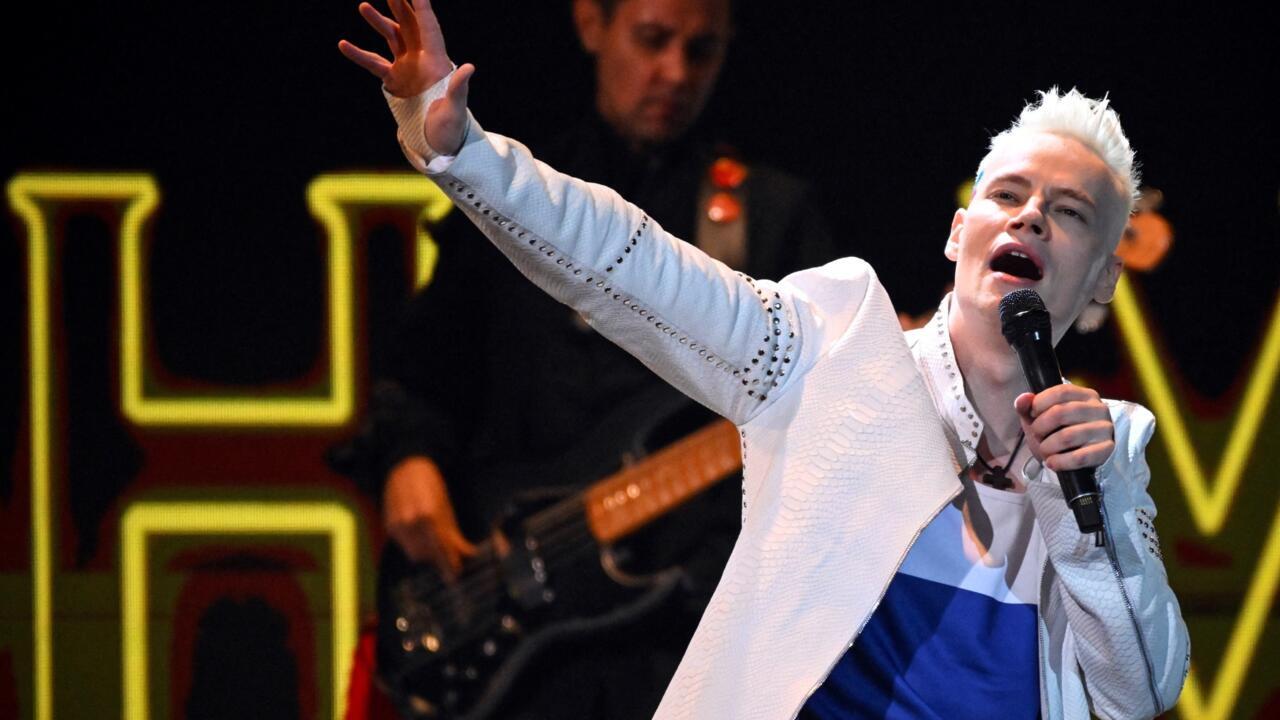
Russian pop idol Shaman (Yaroslav Dronov), performs on Moscow's Red Square on Flag Day, on August 22, 2024. © Alexander Nemenov, AFP

On Saturday night, the lights in Moscow’s 11,000-capacity Live Arena will go up on the Intervision song contest – marking the return of the Soviet-era counterpart to Europe’s pop juggernaut, Eurovision.

Compared with its heyday in the 1960s and ’70s, when Intervision was regularly held in Poland and mostly featured countries from the Eastern bloc, the 2025 revival promises a more global outlook.

The organisers of Saturday’s “spectacular show” have promised participants from around 20 countries – including Moscow’s heavyweight allies China, India and Saudi Arabia – as well as an entry from the United States.

Echoing Eurovision regulations – which ban songs with political messages – the Kremlin insists Intervision is not a political event but, rather, a forum for likeminded nations to promote “general cultural and spiritual values”.


“The Intervision competition is about talented people, not political decisions,” said Russia’s Culture Minister Olga Lyubimova.

But the line-up suggests otherwise. Russian contestant Yaroslav Dronov – who uses the stage name “Shaman” – is a prominent celebrity known for his support of the war in Ukraine and patriotic pop songs such as “Ya Russky” (I’m Russian).

Members of the jury are also far from impartial, including, for example, Colombia’s ambassador to Russia.

The event has “the hallmark of Kremlin-sponsored media and cultural projects”, says Dr Precious Chatterje-Doody, specialist in Russian foreign policy and senior lecturer at the Open University. “Despite the attempt to portray this as an inclusive international music event, it is political through and through.”
‘Legitimising the regime’

The return of Intervision comes three years after Russia’s full-scale invasion of Ukraine saw it expelled from the annual Eurovision Song Contest – a significant blow to the Kremlin’s image on the global stage.

Although Eurovision is often derided as kitsch, it is also a cultural behemoth that each year ranks among the world’s most-watched non-sporting events.

Official figures show 166 million people tuned in to the 2025 contest, which was broadcast by 37 media outlets, with online posts and videos garnering 2 billion views.

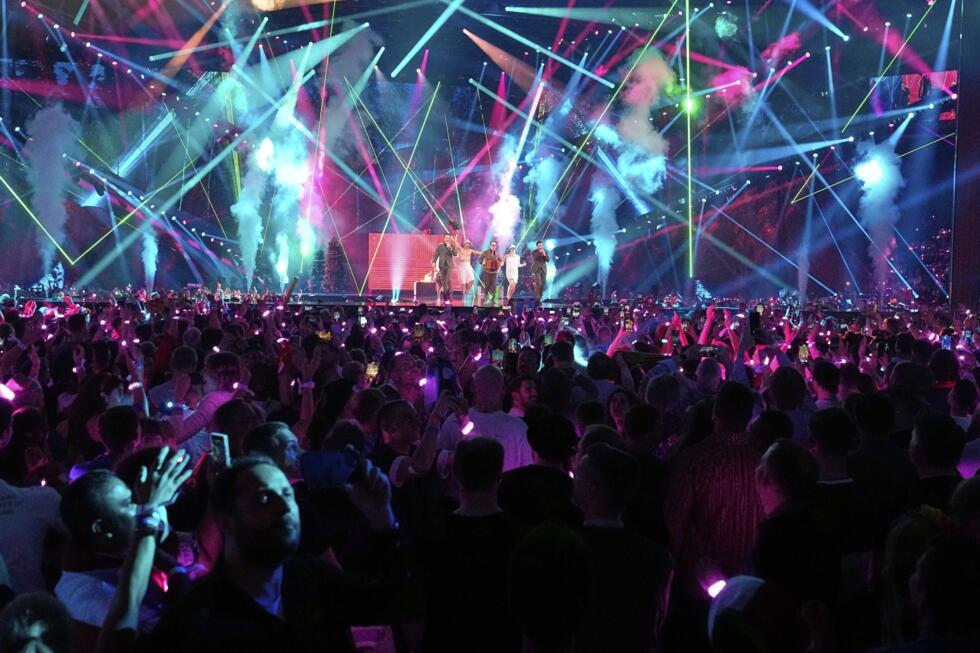
Crowds watch Sweden's KAJ perform at the Eurovision Song Contest in Basel, Switzerland, on May 17, 2025. © Martin Meissner, AP

For Moscow, Eurovision was a vehicle for “projecting soft power to the world and rewriting prevailing narratives about its values. It had a track record of sending songs that endorse peace and international harmony,” says William Lee Adams, Eurovision commentator and author of “Wild Dances: My Queer and Curious Journey to Eurovision.”

Hosting the 2009 Eurovision final in Moscow was an endeavour the Kremlin took seriously: the event was a $30 million extravaganza – then the most expensive in Eurovision history – including a stage so vast it used nearly a third of the world’s stock of LED screens.

A successful event was a way to “legitimise Putin’s regime” domestically and overseas, says Vitaly Kazakov, postdoctoral fellow at Aarhus University in Denmark and a specialist in the politics of cultural and sports events.

“It allowed the Russian political, cultural and economic elites to signal an image of domestic stability, prosperity and support for the Kremlin,” he adds.

The ‘decadent, liberal West’

Re-launching a home-grown counterpart to Eurovision gives Russia a chance to return to the global stage on its own terms.

At Intervision, “Russia can set the agenda of a music contest in opposition to the cultural initiatives of what it calls the ‘decadent, liberal West’, including Eurovision,” says Dr Ben Noble, associate professor of Russian politics at University College London.

Even before its expulsion, Russia was becoming an awkward fit at Eurovision. In 2014 – the year that Moscow illegally annexed Crimea and introduced sweeping anti-LBGT laws – Russia’s competition entry featured a pair of angelic-looking teenage twins performing on a giant see-saw.

“It was a surreal and theatrical bid for sympathy,” Adams says. “The audience booed them anyway.”

The Tolmachevy Sisters represented Russia at the Eurovision Song Contest in Copenhagen, Denmark, 2014. © Bax Lindhardt, AFP

Putin’s call for Intervision to reflect “traditional values” seems a direct rebuttal to Eurovision’s inclusive stance and the platform it gives former Soviet states – like Ukraine – to reassert their independence.

Since the full-scale invasion of Ukraine in 2022, Russia has also been banned from competing in the football World Cup and the Olympics, which Moscow tried to counterbalance by hosting the 2024 edition of the BRICS Games, an international multi-sport competition for emerging economies.

Hosting events like Intervision and the BRICS Games “remains important to the Russian authorities as a way of signalling to the Russian population and international audiences that things are ‘normal’, even despite the ongoing war,” says Kazakov.

They are also a chance for Moscow to “counter the narrative” that it is isolated on the world stage, says Noble, and to make the broader point “that Russia doesn’t just join the projects of other states – it can host its own initiatives, including international cultural events”.
‘More than half the world’

The inclusion of any Western performer at Intervison is rare – one of the only examples is the inclusion of Germany’s Boney M, which performed their disco hit Rasputin in 1979.

But this year, two Western performers will participate. R&B singer Brendan Howard, rumoured to be Michael Jackson’s son (he has denied the claims), will represent the United States while Balkan music legend Slobodan Trkulja will represent EU-candidate country Serbia.

Although Washington will not send an official delegation or take part in the jury, the US administration has not objected to Howard’s participation, according to the Russian foreign ministry.

The inclusion of two Western performers is an additional boon for Russia, says Kazakov. “It plays directly into its messaging about how the West is ‘divided’.”

According to Russian figures, the breadth of countries performing at Intervision could lead to unprecedented viewership.

The populations of the 23 participating countries make up “more than half the world”, noted Sergey Kiriyenko, chairman of the Intervision supervisory board, in comments to Russia’s Tass news agency, adding that 4.3 billion people will be able to watch the broadcast.

But how many will tune in?

Part of what makes Eurovision an enduring success is the fact that participating countries all watch at the same time and vote together, says Adams. In contrast, “there are 11 time zones between Brazil and Vietnam, both of whom are reportedly broadcasting Intervision”.

And a final word must go to the music itself. If Eurovision has carved itself a niche for flamboyant Europop that ranks highly in terms of entertainment value, what will Intervision offer as an alternative?

Putin’s call for a focus on “traditional values” could be the competition’s downfall.

“It could feel a bit too vanilla,” Adams observes.

“Those rules do not a pop banger make.”