TRUMP'S IMPOTENT
“This fragile truce must not be undermined,” said the secretary general of the Norwegian Refugee Council.
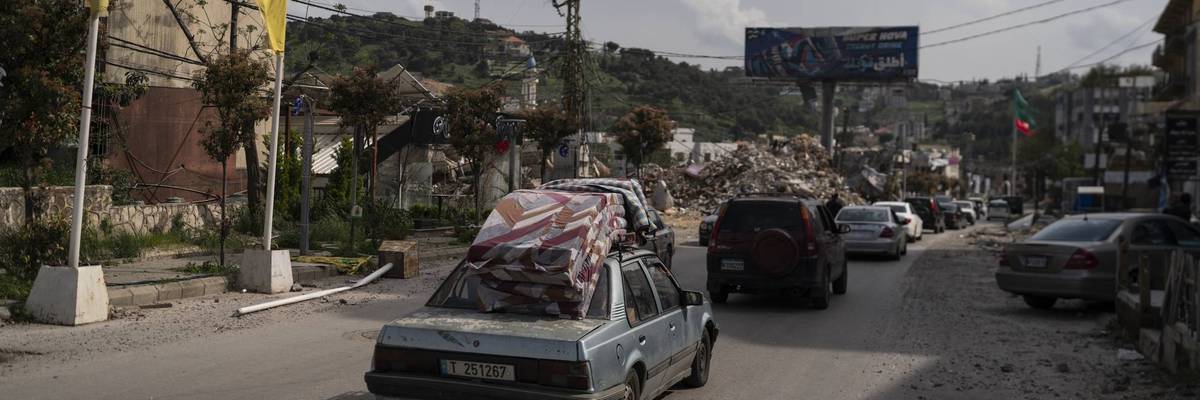
Residents return to check the aftermath of their businesses and houses on the first day of a ceasefire agreement on April 17, 2026, north of Saida in Nabatieh, Lebanon.
(Photo by Adri Salido/Getty Images)
Stephen Prager
Apr 17, 2026
COMMON DREAMS
Less than an hour after US President Donald Trump announced that Israel was “PROHIBITED” from attacking Lebanon under a 10-day ceasefire reached Friday, an Israeli drone strike reportedly killed at least one person in southern Lebanon.
Citing Lebanese media, The Times of Israel reported that an Israeli drone targeted a motorcycle between the southern towns of Khounine and Beit Yahoun. The Israel Defense Forces have not commented on the attack.
It was the latest in what the Lebanese Army said on Friday morning were “a number of violations” of the ceasefire within hours of it going into effect at midnight local time on Friday, as well as “intermittent shelling targeting a number of villages.”
Lebanon’s National News Agency reported that hours after the ceasefire went into effect, Israel struck an ambulance in the town of Khounine, near the Israeli border, which resulted in multiple casualties among the medical workers.
Israeli attacks on Lebanon since early March have killed nearly 2,300 people, according to Lebanese health officials and forced evacuation orders from Israel have resulted in the displacement of more than 1.2 million.
Trump said in a Friday social media post that under the framework reached Friday, “Israel will not be bombing Lebanon any longer. They are PROHIBITED from doing so by the U.S.A. Enough is enough!!!”
The US president has insisted that any agreement between Israel and Lebanon is separate from his ongoing two-week truce with Iran. Although Iran also announced on Friday that, following the Lebanon agreement, it stopped blocking travel through the Strait of Hormuz.
Iranian Foreign Minister Abbas Aragchi has specified that “the passage for all commercial vessels through the Strait of Hormuz is declared completely open for the remaining period of the ceasefire” between Israel and Lebanon.
Trump has claimed that the Iranian government “agreed to never close the Strait of Hormuz again,” and that the US will maintain its naval blockade of Iran.
Israel’s continued attacks on Lebanon have already put the peace deal between the US and Iran in jeopardy. After Iran briefly reopened the strait in response to the two-week ceasefire earlier this month, it began blocking travel again after Israel launched its most devastating attacks on Lebanon of the entire war, which killed hundreds of civilians.
Israel launched the attacks despite Lebanon having initially been announced as a party to the ceasefire, which Israeli Prime Minister Benjamin Netanyahu and then Trump quickly rejected.
After another agreement with Israel was reached on Friday, Lebanese President Joseph Aoun urged that the opportunity “must not be squandered because it may not come again.”
According to the US State Department, the agreement reached Friday still grants Israel the “right to take all necessary measures in self-defense, at any time, against planned, imminent, or ongoing attacks.” However, it is not clear at this time what imminent attack Friday’s strikes were intended to prevent.
Israel routinely violated its previous ceasefire with Lebanon that began in November 2024, with more than 10,000 air and land attacks over the first year, which the United Nations Interim Force in Lebanon (UNIFIL) said demonstrated a “total disregard of the ceasefire agreement.” It has done the same in Gaza, where hundreds of Palestinians have been killed since a ceasefire began in October 2025.
Netanyahu said on Friday that despite the ceasefire, Israel will continue its occupation of Southern Lebanon, where satellite images show the military has totally razed several towns and villages in what Israeli Defense Minister Israel Katz has described as a continuation of the “Gaza model,” which left most buildings in the strip totally destroyed.
Israel’s military spokesperson Avichay Adraee issued an “urgent message” to displaced Lebanese civilians following the ceasefire, urging them not to return to their homes south of the Litani River “until further notice.”
According to The Associated Press, thousands have begun heading home regardless to find their villages reduced to rubble.
“Across the country, roads are already congested with hopeful families trying to return to their homes. That alone shows how deeply people want this war to end,” said Jan Egeland, the Norwegian Refugee Council’s secretary general.
“This fragile truce must not be undermined. We cannot afford a repeat of the ineffective 2024 ceasefire, which saw countless violations. Worryingly, there are already reports of violations by the Israeli army, which also issued a warning against civilians returning to their homes south of the Litani river, home to hundreds of thousands of people,” Egeland said. “For this ceasefire to be meaningful for civilians, it must lead to a real and durable halt in hostilities.”
Apr 17, 2026
COMMON DREAMS
Less than an hour after US President Donald Trump announced that Israel was “PROHIBITED” from attacking Lebanon under a 10-day ceasefire reached Friday, an Israeli drone strike reportedly killed at least one person in southern Lebanon.
Citing Lebanese media, The Times of Israel reported that an Israeli drone targeted a motorcycle between the southern towns of Khounine and Beit Yahoun. The Israel Defense Forces have not commented on the attack.
It was the latest in what the Lebanese Army said on Friday morning were “a number of violations” of the ceasefire within hours of it going into effect at midnight local time on Friday, as well as “intermittent shelling targeting a number of villages.”
Lebanon’s National News Agency reported that hours after the ceasefire went into effect, Israel struck an ambulance in the town of Khounine, near the Israeli border, which resulted in multiple casualties among the medical workers.
Israeli attacks on Lebanon since early March have killed nearly 2,300 people, according to Lebanese health officials and forced evacuation orders from Israel have resulted in the displacement of more than 1.2 million.
Trump said in a Friday social media post that under the framework reached Friday, “Israel will not be bombing Lebanon any longer. They are PROHIBITED from doing so by the U.S.A. Enough is enough!!!”
The US president has insisted that any agreement between Israel and Lebanon is separate from his ongoing two-week truce with Iran. Although Iran also announced on Friday that, following the Lebanon agreement, it stopped blocking travel through the Strait of Hormuz.
Iranian Foreign Minister Abbas Aragchi has specified that “the passage for all commercial vessels through the Strait of Hormuz is declared completely open for the remaining period of the ceasefire” between Israel and Lebanon.
Trump has claimed that the Iranian government “agreed to never close the Strait of Hormuz again,” and that the US will maintain its naval blockade of Iran.
Israel’s continued attacks on Lebanon have already put the peace deal between the US and Iran in jeopardy. After Iran briefly reopened the strait in response to the two-week ceasefire earlier this month, it began blocking travel again after Israel launched its most devastating attacks on Lebanon of the entire war, which killed hundreds of civilians.
Israel launched the attacks despite Lebanon having initially been announced as a party to the ceasefire, which Israeli Prime Minister Benjamin Netanyahu and then Trump quickly rejected.
After another agreement with Israel was reached on Friday, Lebanese President Joseph Aoun urged that the opportunity “must not be squandered because it may not come again.”
According to the US State Department, the agreement reached Friday still grants Israel the “right to take all necessary measures in self-defense, at any time, against planned, imminent, or ongoing attacks.” However, it is not clear at this time what imminent attack Friday’s strikes were intended to prevent.
Israel routinely violated its previous ceasefire with Lebanon that began in November 2024, with more than 10,000 air and land attacks over the first year, which the United Nations Interim Force in Lebanon (UNIFIL) said demonstrated a “total disregard of the ceasefire agreement.” It has done the same in Gaza, where hundreds of Palestinians have been killed since a ceasefire began in October 2025.
Netanyahu said on Friday that despite the ceasefire, Israel will continue its occupation of Southern Lebanon, where satellite images show the military has totally razed several towns and villages in what Israeli Defense Minister Israel Katz has described as a continuation of the “Gaza model,” which left most buildings in the strip totally destroyed.
Israel’s military spokesperson Avichay Adraee issued an “urgent message” to displaced Lebanese civilians following the ceasefire, urging them not to return to their homes south of the Litani River “until further notice.”
According to The Associated Press, thousands have begun heading home regardless to find their villages reduced to rubble.
“Across the country, roads are already congested with hopeful families trying to return to their homes. That alone shows how deeply people want this war to end,” said Jan Egeland, the Norwegian Refugee Council’s secretary general.
“This fragile truce must not be undermined. We cannot afford a repeat of the ineffective 2024 ceasefire, which saw countless violations. Worryingly, there are already reports of violations by the Israeli army, which also issued a warning against civilians returning to their homes south of the Litani river, home to hundreds of thousands of people,” Egeland said. “For this ceasefire to be meaningful for civilians, it must lead to a real and durable halt in hostilities.”

No comments:
Post a Comment