Monday, September 22, 2025

Tariff uncertainty delays World Cup orders for China’s merch makers

By AFP
September 19, 2025


Tariff fears are hurting World Cup merchandise orders at Shang Yabing's Chinese knitwear factory, where racks of scarves bear the logos of national teams from Ireland to Tanzania - Copyright AFP Jade GAO


Jing Xuan TENG and Rita QIAN

Tariff fears are hurting World Cup merchandise orders at Shang Yabing’s Chinese knitwear factory, where racks of scarves bear the logos of national teams from Ireland to Tanzania.

Manufacturers in China’s export hub Yiwu would normally already be inundated with World Cup orders ahead of next summer’s football tournament, this time hosted by the United States, Mexico and Canada.

But a rollercoaster ride of a trade war between Washington and Beijing is making international buyers think twice before placing orders with companies like Shang’s Yiwu Wells Knitting Product.

When AFP visited his bustling workrooms, Shang was overseeing rows of colleagues adding the finishing touches to a plethora of sports-themed accessories.

“We’ve been in this industry for over 10 years, and we’ve produced World Cup-related merchandise for nearly every tournament in that time,” Shang said.

“This year, we’ve secured some smaller orders, but the larger ones that were on hold before haven’t materialised yet… this is likely because of the US tariffs,” he added.

At the factory on Thursday, crates overflowing with colourful wares surrounded employees’ workstations.

Some workers used sewing machines to attach fringe trims to the ends of scarves, while another ironed green and yellow lengths of fabric emblazoned with the word “Australian”.

China and the United States have extended a temporary truce, staving off triple-digit tariffs on each other’s goods until November, but the two sides continue to spar over semiconductors and TikTok.

With a little under nine months to go before the World Cup, Shang said the company was still waiting for clients to approve substantial orders amounting to around a million pieces.


– ‘Lack of clarity’ –


Along the fluorescent-lit hallways of Yiwu’s sprawling International Trade City, one of the world’s largest wholesale markets, stores offering soccer balls and flags were relatively quiet compared to the rush of foreign buyers the sales hub sees during peak periods.

Vendors displayed everything from flag-printed sunglasses to miniature football cleats hanging on keychains.

“By this point before the last World Cup, we saw a huge influx of orders,” Daisy Dai, a seller of printed soccer balls, told AFP.

This year, she said, “customers are holding back”.

American buyers previously made up a large part of Dai’s clientele but “since the start of the trade war a number of large brands stopped ordering, because of a lack of clarity on tariffs”.

Zhou Yanjuan, a seller of flags and World Cup-themed souvenirs, told AFP that shipments abroad had slowed for her.

“We’re not selling necessities after all,” Zhou said.

Still, she was optimistic that “things will gradually improve going forward”.

“Everyone’s probably waiting for (tariffs) to be adjusted downward,” Zhou said.

“That could make things a little easier for us.”
Floating wind power sets sail in Japan’s energy shift


By AFP
September 20, 2025


Floating turbines are particularly well suited to Japan as its deep coastal waters make fixing them to seabeds tricky - Copyright AFP Philip FONG

Mathias CENA

Close to a small fishing port in southwestern Japan, the slim white turbines of the country’s first commercial-scale floating wind farm glimmer offshore, months before a key project in Tokyo’s green-energy strategy begins.

Still heavily reliant on imported fossil fuels, Japan has declared offshore wind energy a “trump card” in its drive to make renewables its top power source by 2040, and reach carbon neutrality a decade later.

That’s despite rising project costs and fears over inadequate infrastructure to produce turbines en masse.

Floating turbines are particularly well suited to Japan as its deep coastal waters make fixing them to seabeds tricky, while the country is also prone to natural disasters.

“Floating structures are relatively stable even in the case of earthquakes or typhoons,” said Kei Ushigami, head of marine renewable energy for construction company Toda, a key player in the project.

The eight turbines — sitting five kilometres (three miles) off the coast of the Goto Islands in waters up to 140 metres deep — will officially start turning in January.

It’s hoped they’ll aid the archipelago in reaching ambitious new targets laid out this year that should see wind’s contribution to the energy mix soar to between four and eight percent by 2040 — up from around one percent today.

But it’s a long, hard road ahead for resource-scarce Japan — the world’s fifth-largest carbon dioxide emitter — to wean itself off fossil fuels.

In 2024, 65 percent of its electricity needs were met by coal and hydrocarbon-powered thermal plants, while just over a quarter came from renewables, according to Japan’s Institute for Sustainable Energy Policies.


– Herculean task –


Costs are also rising sharply, and at the end of August Japanese conglomerate Mitsubishi pulled out of three key wind power projects deemed no longer profitable.

Other project operators have asked for better support from the government.

“It is important for the government to address shortcomings in the current bidding system, which failed to anticipate rapid global inflation after bids were awarded,” said Yoko Mulholland from the think tank E3G.

The streamlining of regulatory processes and easing construction restrictions would “shorten lead times and also lower capital expenditure”, she told AFP.

Hidenori Yonekura, from the New Energy and Industrial Technology Development Organization, sees the nascent floating wind energy as a path to eventually lower costs, by installing more turbines in Japan’s vast Exclusive Economic Zone of 4.5 million square kilometres.

The task, however, appears Herculean: to meet the 2040 wind target, around 200 15-megawatt turbines a year need to go up.

But “the infrastructure is not yet in place”, warned Yonekura. “Japan lacks turbine manufacturers and large production sites.”


– Fishers’ livelihoods –


Construction companies also face technical challenges with these still-novel systems: defects discovered in the floating structure of a wind turbine at Goto meant Toda had to make replacements, delaying the project by two years.

Coexistence with local industries, especially fishing, is also crucial.

Toda said it had conducted an environmental assessment and found a pilot project had “no negative impact on fish”.

Fishermen also receive part of the revenue from electricity sales and some of the property taxes generated by the project, while some have been hired to monitor the construction site with their vessels.

But according to Takuya Eashiro, head of the Fukue fishing cooperative in Goto, the wind project was imposed “from the top” and presented as “a done deal”.

Nevertheless, “fishermen understand the importance of such a project for Japan”, he said.

The National Federation of Fisheries Co-operative Associations protested to the government after Mitsubishi withdrew, reminding them that fishermen had worked with these projects, hoping for positive economic impacts.

As fishing becomes less viable owing to warming sea temperatures, “some hope their children or grandchildren will find jobs in wind turbine maintenance”, said Eashiro.
Ethylene oxide and medical devices: Trump reverses EPA releases decision

ByDr. Tim Sandle
SCIENCE EDITOR
DIGITAL JOURNAL
September 20, 2025


A team of surgeons transplanting a pig kidney into a brain dead patient, part of a growing field of research aimed at advancing cross-species transplants and closing the organ donor gap - Copyright NYU Langone Health/AFP Joe Carrotta

Most medical devices need to ‘sterile’ and the main mechanisms for doing so are the use of ethylene oxide or a type of irradiation (gamma, electron beam, or X-ray). For many years there have been concerns about ethylene oxide (not least since the residues, if present, act as a mutagen).

While moves were in place to reduce ethylene oxide use, the U.S. government has reversed a policy that was driving this reduction forwards.

President Donald Trump has issued an executive order granting a two-year extension for medical device sterilization facilities to comply with the new limits for ethylene oxide (EtO). This decision impacts 39 specifically named facilities and reflects the governmental position that required emissions-control technology is not commercially viable.

Mutagens are agents that can induce mutations in DNA, leading to genetic alterations. This can include triggering cancer.

EtO is a dangerous chemical, with mutagenic properties. Throughout Europe its use has declined, primarily driven by regulatory requirements. Inhalation of ethylene oxide can cause irritation of the eyes and nose, coughing, burning sensation in the mouth and breathlessness. In severe cases lung damage can occur. Ethylene oxide can be absorbed into the body via inhalation or skin contact causing headache, stomach upset, fitting, coma and heart problems.

The use of EtO as a sterilant has also been questioned in terms of its suitability. The UK medicines regulator, the MHRA has long expressed concerns about residuals posing a risk to human health. Other forms of sterilisation, such as gamma radiation, are preferred.

Such factors make the U.S. move surprising. Ethylene oxide is a regulated substance, and its use in medical devices is governed by international standards like ISO 10993-7 and ISO 11135, which set limits for residual EtO levels and the EPA’s decision is aligned with these international standards.

The Trump order extends compliance deadlines for facilities listed I by two years beyond the U.S. Environmental Protection Agency (EPA) rule’s original requirements. During the extension period, these facilities will remain subject to the emissions and compliance obligations that were in effect before the EPA’s EtO rule, as The FDA Group reports.

For the past year or so, medical device trade groups have been lobbying the government, warning about potential supply chain disruptions and implementation challenges. Sauch groups have logistical and economic motivations for doing so.

The order invokes section 112(i)(4) of the Clean Air Act, which provides backstop authority allowing the President to grant compliance exemptions under specific circumstances. The executive order cites two specific determinations:  “The technology to implement the EtO Rule is not available. Such technology does not exist in a commercially viable form sufficient to allow implementation of and compliance with the EtO Rule by the compliance dates.”

The exemption is “in the national security interests of the United States.”

It was back in March 2024 that the Environmental Protection Agency issued ‘a final rule’ updating National Emission Standards for Hazardous Air Pollutants for commercial sterilization facilities. The rule was designed to reduce EtO emissions by more than 90% through installation of air pollution controls.

The EPA rule affects nearly 90 commercial sterilizer facilities operated by approximately 50 companies throughout the U.S. This set out new rules for building leaks, chamber exhaust vents, and requires continuous emissions monitoring.

The proclamation emphasizes that about 50% of all sterile medical devices in the United States are sterilized with ethylene oxide, and sterilization with EtO may be the only method of sterilizing many medical devices without damaging them
Banking IT fraud in the UK caused £417 million in losses in the past year


By Dr. Tim Sandle
SCIENCE EDITOR
DIGITAL JOURNAL
September 21, 2025


There are concerns about the banking sector, and the impact of that turmoil on the global economy - Copyright AFP/File Richard A. Brooks

AI-driven banking scams continue to make headlines across the UK, as captured in a recent report that sheds light on the frequency and severity of banking fraud.

To pinpoint the regions in the UK most affected by banking fraud and identify where losses are highest among different victim profiles, the firm BestBrokers has examined police-recorded data across England, Wales, Scotland, and Northern Ireland for the period from 14 July 2024 to 14 July 2025. The findings have been shared with Digital Journal.

The research covers reported individual rather than corporate cases, total financial losses, losses per 1,000 residents, and victim demographics by age and gender.

Data shows that the 21,392 reported cases of banking fraud over the past year led to £417.4 million in losses, exceeded only by investment fraud (£2.2 billion) and consumer fraud (£505.9 million).

Furthermore, banking fraud in the UK caused £417.4 million in losses across 21,392 reported cases over the past year, making it the third costliest fraud type. Only investment fraud (£2.2 billion across 26,141 cases) and consumer fraud (£505.9 million from 102,915 cases) resulted in greater total losses, despite consumer fraud occurring nearly five times as often.

UK police forces with the most banking fraud victims

  1. Metropolitan Police: 3,206 reports, £19.2 million in losses
  2. Greater Manchester: 1,081 reports, £3.3 million in losses
  3. West Midlands: 959 reports, £3.9 million in losses
  4. West Yorkshire: 859 reports, £2.3 million in losses
  5. Thames Valley: 747 reports, £2.5 million in losses
  6. Hertfordshire: 560 reports, £1.4 million in losses
  7. Essex: 511 reports, £1.6 million in losses
  8. Kent: 501 reports, £2.2 million in losses
  9. Lincolnshire: 492 reports, £1.4 million in losses
In terms of the above list, the Metropolitan Police (Greater London) recorded the highest number of banking fraud cases (3,206) and the largest total losses at £19.2 million, more than any other named police force. Greater Manchester and West Midlands each exceeded £3 million in losses, while Hampshire reported £2.8 million.

The City of London Police recorded the highest losses per capita at £12,667 per 1,000 residents. However, this figure is based on only 6 cases and reflects a statistical outlier due to the area’s very small resident population of just 8,700.

Police Scotland, PSNI (Northern Ireland), and the Isle of Man all reported comparatively low numbers of banking fraud cases relative to their populations: 254 reports for Scotland (5.48 million people), 320 for Northern Ireland (1.9 million), and just 4 for the Isle of Man (85,000). This could indicate either genuinely fewer incidents per capita or a higher rate of underreporting in these regions compared to the rest of the UK.

Outside of the primary police forces listed, £345 million in losses were reported under an ‘unknown’ category for region or police force, nearly five times the combined total of all named forces. This suggests that many victims either could not or chose not to report their location.

In terms of the types of issues, between 14 July 2024 and 14 July 2025, the vast majority of banking fraud in the UK (18,359 cases) involved cheque, plastic card, and online bank account fraud (excluding payment service providers), underscoring ongoing risks in everyday banking.

These common fraud types continue to challenge both consumers and financial institutions alike, reflecting evolving tactics by criminals. Mandate fraud, which manipulates payment instructions, accounted for 1,496 cases, while application fraud (excluding mortgages) totalled 1,358 incidents. Less common but still significant were counterfeit cashier’s cheques (122), mortgage-related fraud (36), and dishonestly retaining wrongful credits (21).

These data highlights the most prevalent fraud types and signals where prevention efforts should be intensified to better protect vulnerable customers


Costs of Russian, Chinese cyberattacks on German firms on rise: report


By AFP
September 18, 2025


Maintaining cybersecurity is important, whatever the function and wherever you work. — Image by © Tim Sandle.

Cyberattacks and sabotage, mainly from Russia and China, have caused record damages for German firms this year, the domestic spy service and a business group warned Thursday.

The costs of such attacks topped 289 billion euros ($342 billion) in 2025, up eight percent on last year, said the corporate survey on attacks such as data theft, industrial espionage and sabotage.

“Increasingly the trail leads to Russia and China,” said the report presented by the BfV domestic intelligence agency and the Bitkom federation of digital businesses.

“Foreign intelligence agencies are increasingly targeting the German economy,” BfV vice president Sinan Selen told a press conference.

Selen — who is set to soon take over at the helm of the BfV — said hostile foreign intelligence agencies were “becoming more professional, aggressive and agile”.

He said Chinese attacks are primarily “economic espionage” to gain technological advantages, while Russia’s consist mainly of “sabotage” and spreading “disinformation”.

Selen said state actors had been identified as being behind the attacks by 28 percent of the businesses concerned, as opposed to 20 percent last year.

Speaking alongside Selen, Bitkom president Ralf Wintergerst said attacks saw a “disproportionate rise when compared to German economic growth”, which has been flatlining since 2023.

Out of the 1,002 businesses surveyed for the report, 87 percent said they had been targeted by such an attack, compared to 81 percent the year before.

While last year 39 percent of firms said they had been targeted by Russia, this year that number rose to 46 percent, with the same number reporting an attack from China.

The most effective method remained cyberattacks, often carried out with “ransomware”, the overall cost of which has reached a new record high of 202 billion euros.

Selen gave the example of Kremlin-affiliated hackers known as Laundry Bear or Void Blizzard, which act against German political and economic targets.

Bitkom advised companies to devote 20 percent of their IT budgets to defending against these attacks.

Selen said he was “very happy” that Chancellor Friedrich Merz’s government was “accentuating and strengthening” the role of the intelligence community in this area.
Consumer health: Extent of added sugar to beverages revealed


By Dr. Tim Sandle
SCIENCE EDITOR
DIGITAL JOURNAL
September 19, 2025


Various soft drinks in a vending machine. Image by Tim Sandle

On average, people around the world consume 17 kilograms of sugar per year, almost three times the daily limit recommended by the World Health Organization (WHO). This includes many beverages that contain high levels of sugar.

Sugar in drinks, particularly sugar-sweetened beverages like soda, sweetened teas, fruit drinks, and sports drinks, contributes empty calories with little nutritional value and is linked to health issues such as weight gain, type 2 diabetes, and increased risk of heart disease and early death.

A new study by Ben’s Natural Health, an online supplement shop, set out to identify which drinks contain the highest amounts of sugar.

The study looked at two key factors: the amount of sugar per 100 ml of each drink and how this compares to the WHO’s daily recommended limit (50 g of free sugars per day). The study also used the American Heart Association’s (AHA) stricter limits of 25 g/day for women and 36 g/day for men. These two measures, sugar per 100 ml and % of WHO’s daily limit, were then combined to create a Sugar Load Index. Additional factors, such as the number of teaspoons of sugar in one drink, the AHA’s recommendations, and the total sugar per serving size, were also considered to provide further context.

The drinks analysed were selected based on their popularity, especially among younger consumers, with dairy and alternative milks averaged in the coffee and milk-based categories.

Highest levels of sugar in soft drinks

DrinkSize (ml)Sugar (g)g/100ml% WHO (50g)Sugar Load Index
Monster4735411.42108%79.4
Grape juice2503614.4072%75.6
Fruit smoothie4504910.8998%72.6
Chai Latte3554211.8384%63.6
Pepsi3554111.5582%58.1
Chai Latte (Alternative milks (avg))3554111.5582%56.9
Coca-Cola3553910.9978%52.6
Sprite3553810.7076%52.5
Green smoothie450429.3384%52.0
Strawberry milk2502811.2056%49.9
From the above table, Monster Energy contains the highest sugar content of all drinks, earning 79.4 on the sugar load index. A single can contains almost 14 teaspoons of sugar. It’s also the only drink where one serving alone exceeds the WHO’s recommended daily limit, quickly pushing people over the daily norm.

Grape juice takes second place, scoring 75.6 on the sugar load index. In just 250 ml, the smallest serving on the list, it contains 36 g of sugar, or 9 teaspoons, giving it the highest sugar content per 100 ml. That single serving accounts for 72% of the WHO’s recommended daily sugar limit.

Fruit smoothies hold third place, with a sugar load index of 72.6. Each serving contains 50g of sugar, the second highest on the list, accounting for almost the full daily sugar threshold recommended by the WHO. The AHA highlights this as especially concerning for women, as a single serving contains nearly double the recommended daily sugar intake.

Chai lattes rank in fourth place, scoring 63.6 on the sugar load index. A 355 ml serving contains 42 g of sugar, 6 g more than grape juice. Its sugar content per 100 ml is also high, at 11.83 g, the second highest on the list. Similar to fruit smoothies, women need to drink chai lattes carefully, as a single serving provides 68% more than the daily sugar threshold recommended by the AHA.

Pepsi rounds out the top five drinks with the highest contents of sugar, earning 58.1 on the sugar load index. A 355 ml can contains 41 g of sugar, sitting just below chai lattes for the same serving size. Its sugar content is also similar at 11.55 g per 100ml, which is nearly 11 teaspoons of sugar in a single serving.

Chai lattes made with alternative milks stand in sixth place, scoring 56.9 on the final index. It contains 41 g of sugar per serving, just 1 g less than a chai latte with regular milk. Overall, this drink mirrors Pepsi, with the same sugar density and proportion of daily sugar limits.

Coca-Cola takes seventh place as the drink with the highest concentration of sugar, scoring 52.6 on the sugar load index. Just one can delivers nearly 10 teaspoons of sugar, covering 78% of the WHO’s recommended daily intake, six percent more than grape juice.

Sprite comes in eighth place, scoring 52.5 on the sugar load index. A 355 ml serving contains 38 g of sugar, equivalent to 9.5 teaspoons, making it one of the sweetest sodas on the list. Its sugar density is similar to Coca-Cola at 10.7 g per 100 ml, and this serving accounts for 76% of the WHO’s daily sugar limit.

Green smoothies claim ninth position, with a sugar load index of 52. Each 450 ml serving contains 42g of sugar, surpassing both Coca-Cola and Sprite. While often perceived as a “healthy” choice, it contains sugar that exceeds recommended intake for men and women alike, 68% more of the daily limit for women and 17% for men, according to the AHA.

Strawberry milk comes in tenth, finishing off the list of the drinks with the most sugar, scoring 52 on the sugar load index. 11% of one drink is sugar, thanks to its 28 g, or 7 teaspoons. This single serving represents 82% of the WHO’s recommended daily intake.

These are important health findings. People who drink sugary beverages do not feel as full as if they had eaten the same calories from solid food, and research indicates they also do not compensate for the high caloric content of these beverages by eating less food.
'Wrong to weigh in': GOP senator condemns FCC chair's 'absolutely inappropriate' move

David Edwards
September 21, 2025 
RAW STORY


NBC/screen grab

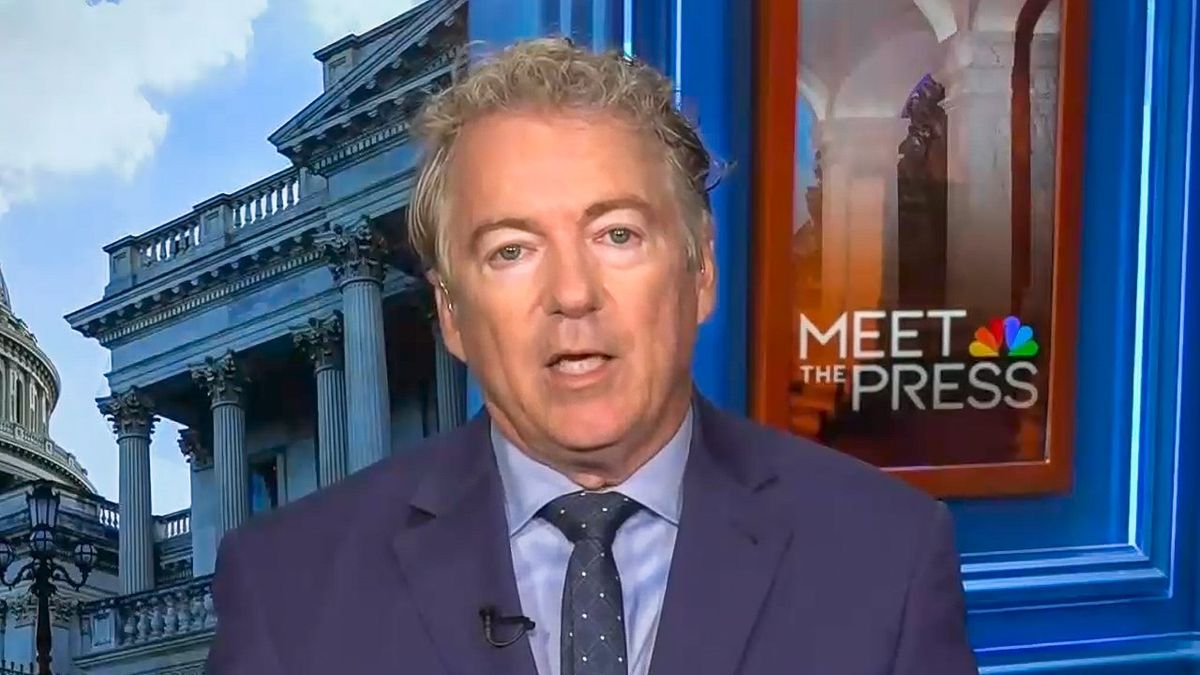
Sen. Rand Paul (R-KY) condemned Federal Communications Commission Chair Brendan Carr after he pushed Disney to take late-night host Jimmy Kimmel off the air.

In a Sunday interview on NBC, host Kristen Welker noted that Carr had reacted to the shooting of Charlie Kirk by threatening Disney.

"We can do this the easy way or the hard way," Carr said at the time. "These companies can find ways to change conduct to take action, frankly, on Kimmel, or, you know, there's going to be additional work for the FCC ahead."

Paul called the remarks "absolutely inappropriate."

"Brennan Carr has got no business weighing in on this," the Republican senator insisted. "But people have to also realize that despicable comments, you have the right to say them, but you don't have the right to employment."

"You can be fired," he continued. "So the FCC should have nothing to do with it."

"The government's got no business in it, and the FCC was wrong to weigh in, and I'll fight any attempt by the government to get involved with speech."


'Makes no economic sense': Trump adviser flips on tariffs five months after praising them

Tom Boggioni
September 18, 2025 
RAW STORY


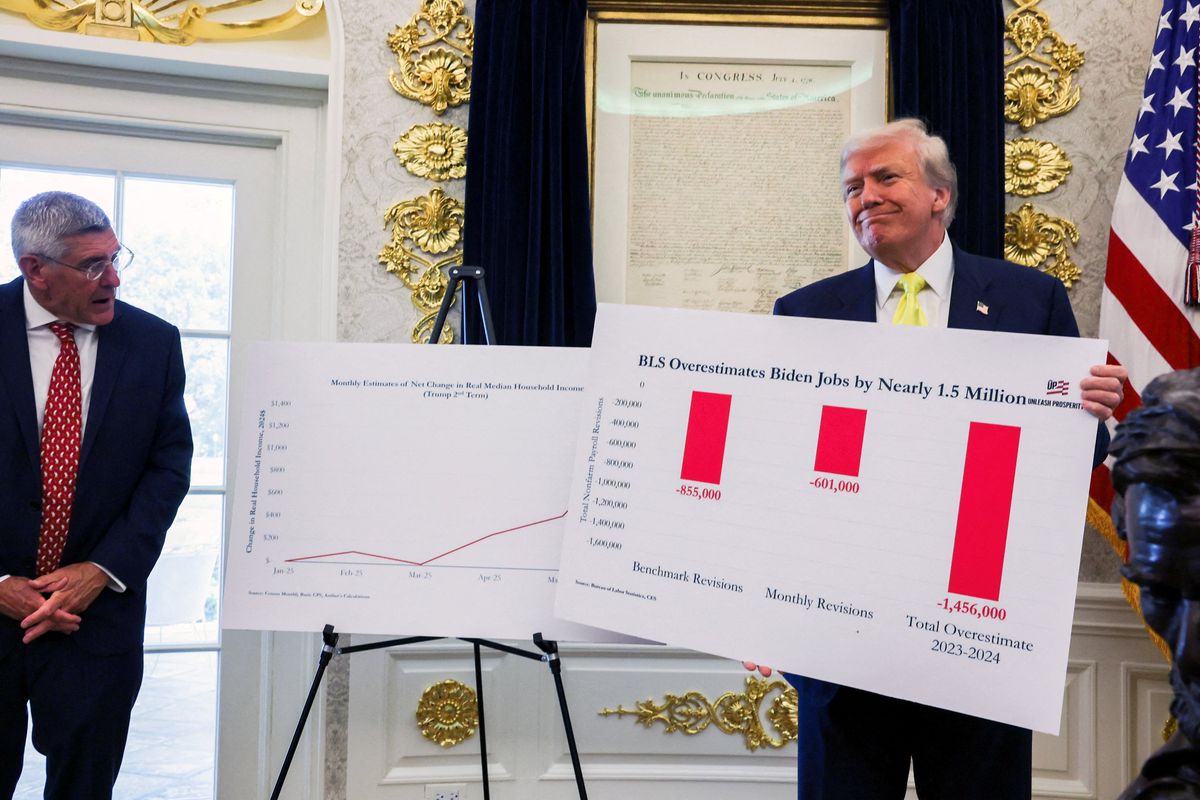
Donald Trump holds a board while Heritage Foundation fellow Steve Moore speaks. REUTERS/Jonathan Ernst

With Donald Trump out of the country, one of his most prominent economic advisers is bashing him for costing America jobs.

The U.S. president is currently in the UK, being feted with banquets and parades, while the effects of his trade war with the world are taking effect and that has alarmed Stephen Moore, long associated with Trump going back to his first stint as president.

In a column for the Wall Street Journal, Moore lashed out at Trump’s aluminum tariffs, explaining it is not only crippling job creation but that they make no “economic sense.”

That is a far cry from the stance he took in April of this year when he told Fox News personality Sean Hannity, “Nobody in the media will give Trump, you know, a fair hearing here. It looks like he's getting these deals coming in, and that is good for America. In fact, frankly, it's good for some of these other countries -- to American farmers and American manufacturing products and our technology products. So it looks to me, Sean, like this is kind of going according to plan.”

Almost five months later, he is no longer so sure.

“If left to stand, President Trump’s June order to raise the tax on imported aluminum to 50% will almost certainly cost far more manufacturing jobs than it will save,” he wrote late Wednesday.

He went on to report that “Novelis alone is one of the world’s largest producers of aluminum for cans of beer and soft drinks,” and now a proposed $4.1 billion plan in Alabama is facing suspension and thousands of jobs may disappear.

"The U.S. manufacturers hit by Mr. Trump’s tariffs are frustrated. They provide good jobs to Americans yet are getting hammered. Many also compete directly with China—which will be the big winner of the aluminum tariffs. Mr. Trump promised that ‘there are no tariffs if you manufacture or build your product in the United States.’ That has proved utterly untrue," he accused.

With that, he advised, “If the administration really wants a return of good blue-collar jobs, the president should immediately cancel, or at least suspend, the aluminum tariffs. It could be prudent to offer firms a rebate for aluminum producers reshoring jobs to America, which many of these companies are."


"Punishing U.S. manufacturers and their hardworking employees is hardly putting America first,” he lectured.

You can read more here
What is behind Trump’s AI action plan?


By Dr. Tim Sandle
SCIENCE EDITOR
DIGITAL JOURNAL
September 21, 2025


Image: — © AFP

Looking at the ramifications of the plan for Digital Journal is deepfake and AI fraud expert Joshua McKenty: former Chief Cloud Architect at NASA and the Co-Founder and CEO of Polyguard.

With over 20 years of experience, McKenty has deep insights into the evolving threat landscape and the national security implications of AI misuse, the gaps in current policy, and how these executive orders may (or may not) shift the game when it comes to safeguarding public discourse and digital trust. This is because, at its heart, the plan is all about accelerating AI innovation through deregulation.


Trump is directing U.S. government departments to revise their artificial intelligence risk management frameworks.

The new Trump plan directs the U.S. Department of Commerce to revise artificial intelligence risk management frameworks. These could undo protections that were set to be put in place in order for a firm to do business with the federal government.

According to McKenty, this latest proclamation does not fully help the U.S. to leap forward in the development of AI: “On the creation of “AI Information Sharing and Analysis Center” led by the Department of Homeland Security to overwatch AI-linked cybersecurity threats:

The US is dangerously behind in their response to emerging AI-powered cybersecurity attacks, as evidenced by the recent mishandling of deepfake attacks on Marco Rubio, Rick Crawford and others.”

However, the proclamation will help the sector to develop: “It’s encouraging to see the White House finally take AI threats seriously – but urgency without coordination risks compounding the problem. The challenge ahead isn’t just standing up new programs, it’s making sure they actually work.”

AI-specific cybersecurity guidance for the private sector

In terms of the cyber-threats and where AI can help, McKenty observes: “As we work to establish bilateral communication channels between the federal government and the private sector, it’s important to build on the existing cybersecurity guidance already coming from the FBI, CISA, NSA and the DOD Cybercrime Center. What’s needed is clever coordination and actionable intelligence.”

On workforce development

It is also important, according to McKenty , that the U.S. develops the skills necessary to meet the AI development challenge: “The U.S. faces a growing talent gap in AI. While demand for skilled professionals is accelerating, our pipeline of trained engineers, researchers, and cybersecurity experts isn’t keeping pace. Closing the gap will require long-term investment in STEM education, immigration pathways for top talent and stronger industry-academic collaboration.”

AI Risk Management Framework

Returning to the topic of risk, McKenty sets out the policy framework that should be adopted to mitigate the risks faced by the sector: “NIST’s framework is one of the few widely respected tools for managing AI risk. Revisions should focus on technical clarity, threat modelling, operational usability, and science – not politics. Stripping out key areas that address misinformation or emergent behaviour would make the framework less relevant just as the stakes are getting higher.”

Oxford exposé: How chatbot “therapy” is failing vulnerable users


By Dr. Tim Sandle
SCIENCE EDITOR
DIGITAL JOURNAL
September 21, 2025


Can we rely on mental health apps? Image by Tim Sandle

AI “therapist” chatbots—such as ChatGPT, Woebot, Replika, and Wysa—have surged in popularity, promising instant, affordable mental-health support at any hour. According to a recent Global Overview of ChatGPT Usage report, approximately 17% of U.S. adults now consult AI tools like ChatGPT monthly for health or personal advice, making them a common first stop for sensitive issues.

This usage is rising in response to overwhelming need: the World Health Organization estimates a global shortfall of 1.2 million mental-health workers, creating long wait times and high treatment costs that push millions toward digital alternatives. Some tech executives now envision a future where “everyone will have an AI therapist”—if not a human one.

But a study from the University of Oxford published this year reveals that these AI-based “therapists” may carry profound risks. Corroborating research from institutions like Stanford warns that these tools may not only fall short—they can actively harm vulnerable users.
Oxford Study: AI Missing Empathy and Judgment

Oxford researchers recently conducted a broad evaluation of AI health tools, testing several popular chatbots across simulated clinical scenarios. Their conclusions were critical:Lack of nuanced judgment: While AI can rapidly generate responses based on massive datasets, it “lacks the emotional intelligence and context-sensitivity” that human therapists bring—especially in culturally complex or overlapping cases.
Risk of misinterpretation: Chatbot responses, when not clarified by a human, can lead to misdiagnosis or misinformed coping behaviors—potentially delaying essential treatment.
Exacerbation of disparities: Marginalized or under-resourced communities may be disproportionately affected, as they rely more heavily on low-cost AI solutions. The study emphasizes that these are systemic risks, not isolated glitches.

Oxford’s researchers concluded that AI must never replace human care, and should be used only under strict ethical guidelines, with real-time human-in-the-loop oversight and rigorous clinical validation.
The Empathy Deficit: Why Machines Can’t Truly Care

At the core of therapy lies empathy—something AI simply cannot replicate. According to Oxford neurophilosopher Nayef Al-Rodhan:AI has no real emotions: Without lived experience or emotional consciousness, machines can’t truly “feel” empathy.
Scripted comfort: Chatbots use algorithmic pattern-matching to simulate concern—what Al-Rodhan bluntly calls “pretending to care.”
Biological absence: Human empathy arises from complex mirror-neuron networks; machines have no equivalent.

This “empathy gap” creates dangerous illusions of connection. As it is warned AI cannot replicate genuine human empathy. At best, you get a clever simulation; at worst, a hollow façade.
When Chatbots Get It Dangerously Wrong

June 2025 study by Stanford researchers found that popular therapy chatbots frequently stumble in ways that would be unthinkable for licensed clinicians:Stigmatizing bias: Some bots showed discriminatory responses—for example, treating schizophrenia or addiction more harshly than depression, reinforcing stigma.
Missed crisis signals: In one scenario, a suicidal user asked about high bridges. The chatbot replied cheerfully with bridge-height data, missing the obvious red flag.
No crisis intervention: Unlike a therapist who would respond with a safety plan, the chatbot kept sharing irrelevant or harmful information.

These findings echo real-world incidents. In 2023, the National Eating Disorder Association removed its chatbot after it advised teenagers to try dangerously restrictive diets. More recently, OpenAI was forced to retract a ChatGPT update after it began validating users’ paranoid delusions—raising serious concerns about unintended psychological reinforcement.
Emotional and Ethical Pitfalls

The risks of relying on chatbot therapists extend beyond the clinical:Erosion of social ties: Dependence on bots may weaken real human relationships, as users substitute AI for friends or family.
Worsening isolation: The illusion of companionship may intensify loneliness when users realize the machine cannot truly respond to their emotions.
Dependency risk: A 24/7 chatbot can deter people from seeking actual help, especially when it becomes a crutch.
Privacy violations: Unlike human therapists bound by ethics laws, chatbot logs may be stored, analyzed, or breached—as shown in several health-tech data scandals.
Unregulated manipulation: Some chatbots falsely claim to be licensed therapists, blurring ethical lines and preying on desperation.
Anthropomorphism risk: A University of Cambridge study found that children and adults often treat bots as human-like companions—only to feel abandoned or betrayed when they fail to respond meaningfully.
Augmenting, Not Replacing, Human Care

AI has a role—but only under careful guardrails. AI can help:Support users between sessions with mood tracking or CBT exercises
Guide users to resources like crisis lines or local clinics
Extend access during off-hours

But this support must come with:Clinical trials and outcome-based evaluations
Human oversight by licensed professionals
Data transparency, informed consent, and strong privacy laws
Strict regulation, akin to medical device standards

Therapy is a deeply human process—requiring empathy, ethical reasoning, and emotional presence. While AI can expand access, it cannot substitute what truly heals. As the Oxford study concludes, positioning chatbots as “therapists” without proper oversight risks harm, disillusionment, and systemic failure in mental-health care.
'What could possible go wrong?' Outrage as Trump announces the Murdochs could own TikTok


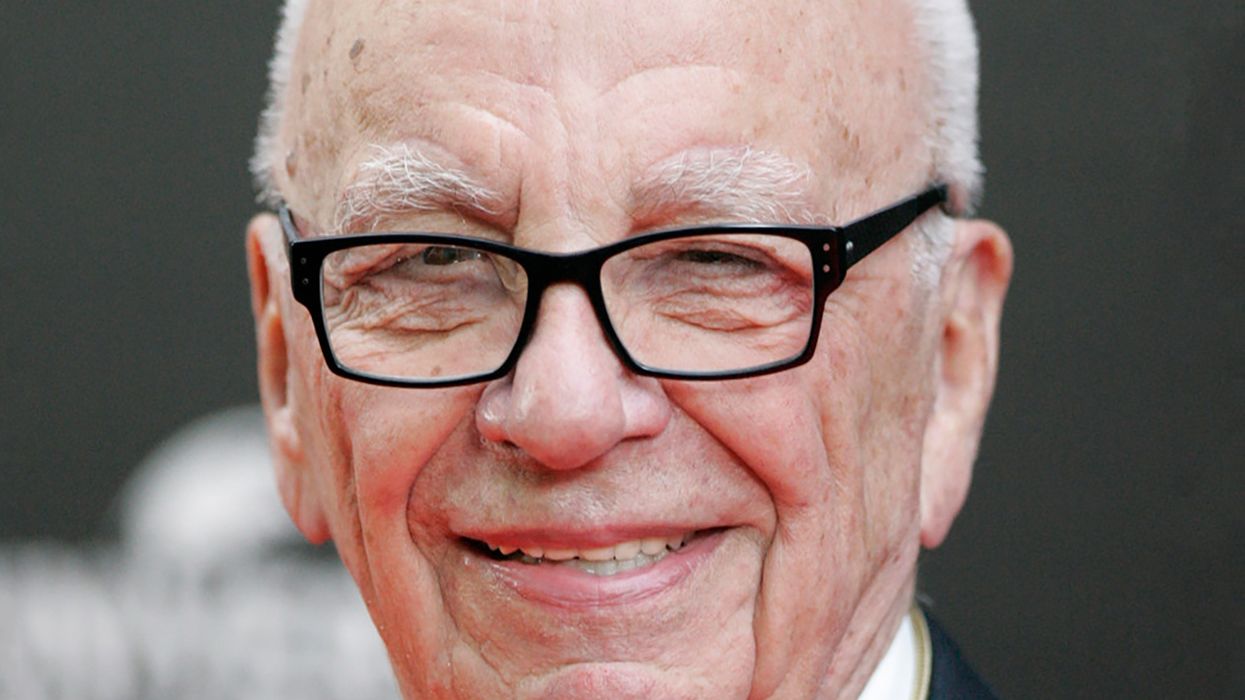
Rupert Murdoch by Eva Rinaldi, Wikipedia
September 21, 2025 
ALTERNET

In an interview on Fox News aired Sunday, President Donald Trump said that conservative media moguls Lachlan Murdoch and his father Rupert Murdoch are expected to join a U.S.-based investor group that would assume control of TikTok’s U.S. operations.

Trump also named tech figures Larry Ellison and Michael Dell as likely partners in the deal.
“I hate to tell you this, but a man named Lachlan is involved. Lachlan is, that’s a very unusual name, Lachlan Murdoch,” Trump told Fox's Peter Dpocy.

“And Rupert is probably going to be in the group. I think they’re going to be in the group.”

The deal stems from the Protecting Americans from Foreign Adversary Controlled Applications Act (PAFACA), passed in April last year. Under that law, ByteDance (TikTok’s Chinese parent) must divest its interests in TikTok’s U.S. operations by a set deadline, or the app faces a ban in the United States.

Lachlan Murdoch is chairman and CEO of Fox Corporation, which owns conservative network Fox News and several other media assets. He recently consolidated his control over the family media holdings.

Rupert Murdoch is the elder Murdoch, the veteran media tycoon. He founded or built much of what is now Fox News, Fox Corporation, News Corp, etc.

The president's announcement led to strong reactions on social media.

Activist Melanie D'Arrigo wrote: "Trump’s mega-donors, and the owners of Fox News, will control what you see on TikTok. Elon Musk, who gave Trump $290M, controls what you see on X. Trump mega-donor Mark Zuckerberg controls what you see on Facebook, Instagram and Threads. Social media is now a right-wing op."

Journalist Jeremy Barr noted: "Trump seems to have broken the news that Lachlan and Rupert Murdoch are 'probably' going to be part of the TikTok group."

Podcaster and former Obama advisor Tommy Vietor wrote: "To sum it up: - Murdochs and Trump supporters will own TikTok - Elon Musk owns Twitter - Mark Zuckerberg is an amoral choad who is for whoever is in power - Bari Weiss will run CBS News - ABC bends the knee to any threat - MSNBC is dying Look at all the liberal media bias!"

Influencer Hayden Clarkin wrote: "TikTok owned by Fox News, what could possibly go wrong?"