Monday, September 22, 2025


US $100,000 fee on H-1B visas rattles Indian tech stocks

US fee on H-1B visas rattles Indian tech stocks
/ Unsplash - engin akyurt
By bno Chennai Office September 22, 2025

US President Donald Trump’s decision to impose an annual $100,000 fee on H-1B visa holders from September 21, 2025, triggered sharp declines in technology stocks in the Indian stock market. The levy will remain in effect for 12 months and is expected to generate over $100bn for the US Treasury, aimed at cutting federal debt and financing tax reductions, state owned DD News reported.

Reports said US based companies like Microsoft and JPMorgan advised employees holding H-1B and H-4 visas to return to the US before the deadline and avoid international travel until further guidance. Both firms have not issued official statements but are seen taking precautionary steps ahead of enforcement.

Indian IT service providers, among the largest users of H-1B visas, saw their shares tumble following the announcement. Infosys dropped 4.5%, Cognizant fell 4.3%, Wipro slid 3.4%, while Accenture lost 1.3%. Market sentiment soured as investors weighed higher staffing costs and reduced flexibility in workforce deployment. Roughly 71% of H-1B holders are from India, mostly employed by companies such as Infosys, Wipro, Cognizant and Tata Consultancy Services.

The H-1B programme allows foreign professionals to work in specialised fields including technology and engineering, typically for three years with extensions up to six years. Critics argued the steep fee would curb talent mobility and dampen innovation, while supporters in Washington claimed it would prioritise highly skilled workers and discourage firms from replacing Americans with cheaper foreign staff. Employers will now also need proof of payment verified by the US Secretary of State.

ROFLMAO

Trump claims to have stopped war between Armenia and Cambodia

Trump claims to have stopped war between Armenia and Cambodia
By bne IntelliNews September 22, 2025

Just days after he told journalists he had stopped a war between Azerbaijan and Albania, US President Donald Trump again inserted a different country into the long-running Armenia-Azerbaijan conflict, claiming to have prevented a war between Armenia and Cambodia. 

Speaking at the American Cornerstone Institute Founder's Dinner, Trump credited himself with “stopping the war” between Cambodia and Armenia and warned the conflict “was only beginning and could have had serious consequences”.

Armenia has fought several rounds of hostilities with neighbouring Azerbaijan over the breakaway region of Nagorno-Karabakh, most recently in 2020. Cambodia, by contrast, has no involvement in that conflict, although it did recently come close to war with its own neighbour Thailand. 

Despite confusing the name of one of the combatants, Trump recalled the historic summit between Azerbaijani President Ilham Aliyev and Armenian Prime Minister Nikol Pashinyan in the White House on August 8. 

“They came to my office, the two leaders two great guys. One was there [in office] 22 years, one was there seven and they both said the entire term of their office, all they did was kill people on the other side. and now, they're sitting in my office. They're at the Oval Office,” Trump told the event at Mount Vernon, Virginia, which was broadcast by Fox News

“It's pretty wide and they had one over here, one over there. And slowly over the course of about an hour, they came close, and at the end of an hour we were hugging each other and holding hands,” he continued. 

“It was an amazing thing. and we settled that war that was not settleable as the expression goes. Cambodia and Armenia.” 

Trump went on to reference other international hotspots, citing India and Pakistan, Kosovo and Serbia, Israel and Iran, Egypt and Ethiopia, and — naming the correct country this time — Cambodia and Thailand. 

In his speech, the US president made it clear he was hoping for a Nobel Peace Prize, telling the audience: “I was told that if you can stop Russia and Ukraine, you should get the Nobel Prize. I said, well, what about the seven others? I should get a Nobel Prize for each." 

Previously, at a press conference in the UK on September 18, Trump mistakenly referred to Armenia as Albania while claiming to have resolved a conflict with Azerbaijan that never involved the Balkan country. The US president also struggled with the pronunciation of Azerbaijan, giving a lengthy pause before coming out with “Aber … baijan”. This was at least the third time he had made a similar error concerning the Armenia-Azerbaijan conflict. 


Erdogan accused of securing Trump White House meeting with promise to buy 300 Boeing jets

Erdogan accused of securing Trump White House meeting with promise to buy 300 Boeing jets
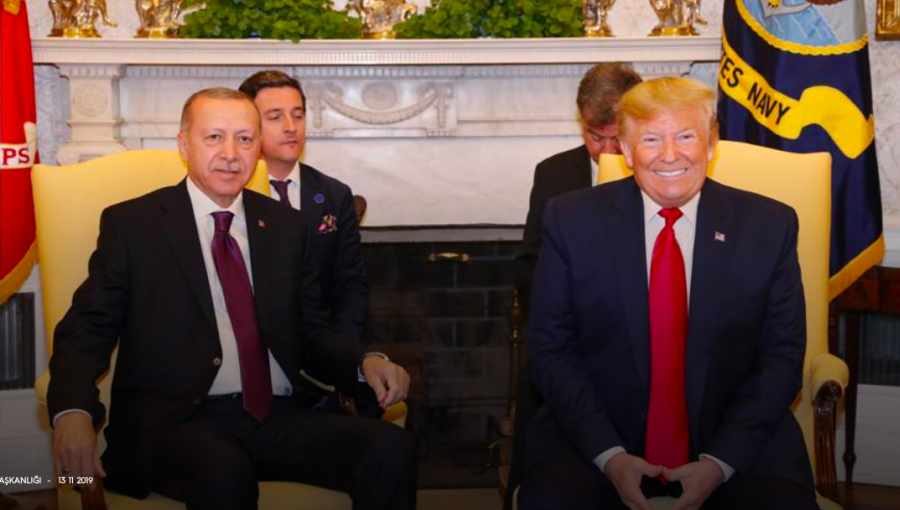
Flashback: November 2019, Erdogan with Trump in the White House. Turkey's president faces claims that he's promised to ensure Turkish Airlines buys 300 Boeing planes in return for an 'update' of this photo. / The White House
By bne IntelliNews September 22, 2025

Recep Tayyip Erdogan promised Donald Trump Jr. that Turkey will purchase 300 Boeing aircraft in exchange for the securing of a White House meeting with his father, Turkish main opposition party leader Ozgur Ozel claimed on September 19.

Two days earlier, on September 17, Ozel publicised information about how Turkey’s president on September 13 secretly hosted Donald Trump Jr. at Dolmabahce Palace in Istanbul. Briefings given by the presidency to some media outlets in the wake of Ozel’s portrayal of events indicate that such a meeting did indeed take place.

Erdogan confirms White House date at airport press call

On September 21, speaking to the press at Ataturk Airport in Istanbul before he departed for New York where the UN General Assembly will convene this week, Erdogan confirmed the meeting with the American president, scheduled for September 25.

However, he denied Ozel’s claims about the aircraft purchase being a bargaining chip. As to why his officials at Dolmabahce palace apparently registered Trump Jr. as an anonymous businessman, and did not record his name in the guest book, he did not comment.

‘Israelis setting Palestine on fire and Trump’s letting them do it’

Prior to Erdogan’s confirmation of the upcoming White House meeting, Ozel made further remarks during a September 19 rally, saying: “I recently declared that, even at a time while there are so many problems in Palestine, Tayyip Erdogan met with Trump's son, Junior Trump, on Saturday, September 13th.”
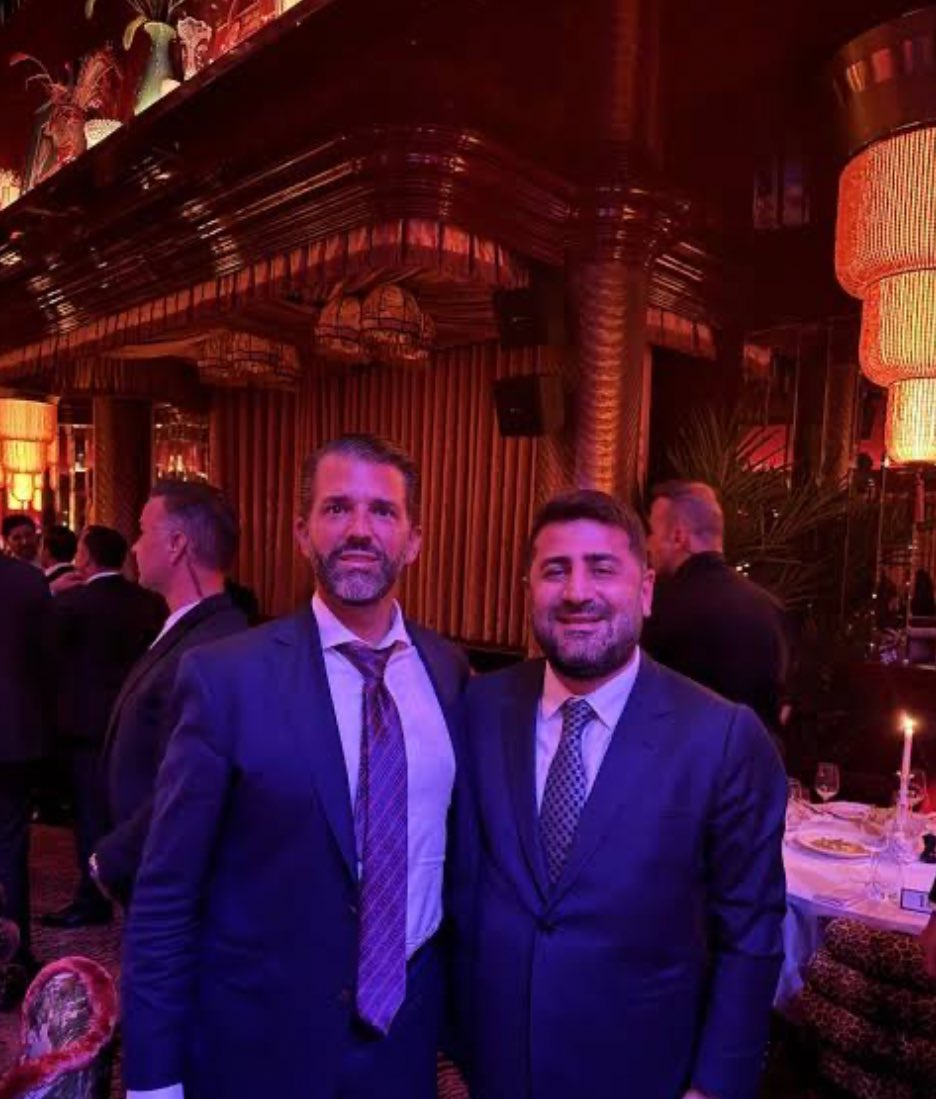
Photo: Burak Soylu (right), a local businessman, shared this photo of himself and Donald Trump Jr. (left), taken during Trump Jr.’s Istanbul trip. Soylu posted it on his Linkedin account, but later deleted it.

“Today, journalists confirmed this from the US. American sources confirmed that Erdogan met with the son at 5:30 pm last Saturday [September 13]. Turkey couldn't deny it either,” he added.

“But they wrote down the meeting as a meeting with a businessman on the programme, omitting the name of Trump [Jr]. Why is he [Erdogan] doing this? While Israel is setting Palestine on fire, it is he [President Trump] who is the one who is letting Israel do it,” Ozel also said.

‘Go and come back in a week’

“He [Erdogan] went to Istanbul with Trump's son and had a secret meeting. And during that meeting, he had an appointment made with Trump for during his trip to the US. He wanted it [this way],” Ozel continued.

“Trump’s son said, ‘Not during those days [of the UN General Assembly], let it be on the [September] 30th. Go [back to Turkey after the UN event] and come back in a week’,” Ozel further claimed, adding: “Look, just as [Erdogan’s people] couldn’t deny the meeting, they can’t deny this either. He says to Trump’s son, ‘If you make an appointment for me with Trump [for this week], I promise you 300 Boeing planes will be bought from America, live on television before the eyes of the whole world.’”

Coup permitted by Trump

Ozel also repeated an earlier allegation he has made that Erdogan carried out the “March 19th coup” with Trump’s permission.

The main opposition Republican People’s Party (CHP) refers to the judicial processes being used to target its mayors as part of a coup launched on March 19 with the detention of Istanbul mayor and main political rival to Erdogan, Ekrem Imamoglu, following an early morning police raid on his home.

Ozel invited Erdogan to clarify the details of the Trump Jr. meeting as soon as possible.

Ozel rides again

On the afternoon of September 21, it was a case of Ozel rides again. The opposition leader attended an extraordinary congress called by his party for Ankara. He repeated the claims made as regards Erdogan and Trump.

He told his audience: “This is a coup authorised by the Trump administration. What were they saying? ‘Imamoglu is a man [that is the concern] of a foreign power.’ I ask, whose side is Trump on today? Who does Trump want to see [in the White House]? Who is secretly working with Trump's son?”

Tayyip Erdogan is Trump's man

“I hereby declare to our nation that the members of the Republican People's Party are [represented by] the man of the nation, the son of the nation, the children of the nation. Tayyip Erdogan is Trump's man, Trump's team,” Ozel also said.

Netanyahu the war hero

“Unfortunately,” the main backer of the massacres in Palestine today is the Trump administration, according to Ozel. It is Trump, he said, who calls Israeli PM Benyamin Nethanyahu a war hero.

“It is Trump who mocks our minds by saying 'I will evacuate Gaza and build hotels and casinos there.' Everyone knows that his intention is [obtaining] the rich hydrocarbon fields... And, Turkey isn’t given any interest in this plan. In fact, it poses significant risks for Cyprus,” Ozel also said.

“Israel, with [Trump’s] power behind it, has launched new attacks on Gaza. Erdogan, who has got himself called a 'global leader', hasn't said a single word against Trump, and he continues in this way,” Ozel told the party gathering.

Lobbying firms ‘paid’ in arranging of Trump Jr. meeting

Returning to how the Erdogan-Trump Jr. meeting came about, Ozel said: “There's more. They sent messages to America through to Trump's son and paid lobbying firms that arranged the meeting [with him]. ‘Tell your father, if he gives us an appointment, we will buy 300 Boeings and discuss purchasing the F-16s.’”

Boeing shares put in play

“Erdogan's lobbying companies made promises to Boeing,” added Ozel, noting that Boeing's share price was then put in play when soon after Bloomberg reported: ‘Boeing may receive over 250 orders next week’,” Ozel added.

Seeking refuge in Trump

“[Erdogan] has no sensitivity to Palestine and he has to walk in Trump’s wake to maintain his power. We are aware of this. His vote [among the Turks] is falling. And rather than seeking refuge in the nation, he is seeking refuge in Trump. He is engaging in Trump-centred politics, not nation-centred politics,” Ozel concluded.

 

Mexico and Canada close ranks ahead of USMCA review


CANADA PUTS THE 'C' IN FRONT; CUSMA

Mexico and Canada close ranks ahead of USMCA review
Trump’s aggressive trade policy has forced both US neighbours into a defensive position, driving them closer together as they gear up for the USMCA review next year.
By Alek Buttermann September 22, 2025

Mexico and Canada have stepped up efforts to consolidate their bilateral relationship in anticipation of the 2026 review of the United States-Mexico-Canada Agreement (USMCA, known in Spanish as T-MEC). Their meeting in Mexico City last week, where President Claudia Sheinbaum hosted Canadian Prime Minister Mark Carney, showcased shared priorities in trade and security, but also reflected the growing uncertainty caused by Washington’s protectionist stance under President Donald Trump.

At the Palacio Nacional, both leaders unveiled a Plan of Action Mexico-Canada 2025-2028, which includes investment commitments in ports, railways, aerospace and energy. The plan also addresses security and environmental cooperation, with Ottawa noting that bilateral trade opportunities would be expanded in sectors such as construction, agriculture and energy.

Historically, economic ties between Mexico and Canada have been modest compared with those each maintains with the United States. According to the New York Times, Canada represented just 3% of Mexico’s exports last year, while Mexico accounted for only 1% of Canada’s export market. Nevertheless, both governments see scope for diversification: Mexico is pushing for greater Canadian investment in agribusiness and energy, while Canada is promoting agricultural sales and natural gas exports to Mexico.

Trump’s aggressive trade policy has placed both governments in a defensive position. But his announcement of tariffs on Mexican and Canadian goods, 25% in most cases and 50% on semi-finished metals, has been read less as an economic measure than as a negotiating tactic. The objective is not the tariffs themselves, which industries on both sides of the border have already partly absorbed, but the leverage they create in pushing Mexico and Canada to concede on migration, security and regulatory standards. In practice, the measures serve as political pressure points rather than a genuine attempt to rebalance trade.

For Sheinbaum and Carney, unity is essential. In her press conference, the Mexican leader stated that “the best way to compete with other regions of the world is to remain in the USMCA”. Carney, meanwhile, warned against “temptations of bilateralism” and advocated instead for what he called a “strategic partnership anchored in prosperity, security, inclusivity and sustainability”.

Security cooperation formed a central part of the agenda. Sheinbaum noted that Canada’s expertise in cyber security could strengthen Mexico’s investigations, while both leaders acknowledged the challenge of tackling fentanyl trafficking and precursor chemicals. These initiatives respond in part to Washington’s long-standing pressure on regional security but were presented as autonomous bilateral commitments.

Yet analysts suggest that the balance of power within the agreement remains skewed towards Washington. “When the United States treats its partners as adversaries, they begin to act like allies,” observed Daniel Trefler, an economist at the University of Toronto, in comments to the New York Times.

Consultations on the treaty have already begun in each country. According to forecasts cited by El Economista, the USMCA is likely to survive in modified form, with stricter rules of origin and reinforced labour and environmental provisions. For now, the rapprochement between Mexico and Canada signals both a defensive response to US pressure and a pragmatic bid to stabilise their own economies ahead of potentially fraught negotiations.

Maduro proposes direct talks with US as Trump mocks Venezuelan militia

Maduro proposes direct talks with US as Trump mocks Venezuelan militia
Grenell, a former US ambassador to Germany, has met with Maduro several times this year to negotiate the release of detained US citizens in exchange for Venezuelan migrants previously sent to El Salvador.
By bnl editorial staff September 22, 2025

Venezuela’s President Nicolás Maduro has extended an offer to engage in direct talks with US Special Envoy Richard Grenell, days after a US military operation targeted yet another vessel allegedly involved in drug trafficking.

The correspondence, dated September 6 and shared on Telegram by Vice President Delcy Rodríguez on September 21, was confirmed by a US source to CNN

In the letter, Maduro denied any involvement in drug trafficking, describing the allegations as “fake news” and proposing a “direct and frank conversation” with the envoy.

The missive followed US attacks on vessels in the Caribbean that resulted in the deaths of at least 11 Venezuelans, whom Washington claims were transporting narcotics. 

Additional strikes on speedboats last week have raised the death toll to over a dozen, though the White House has not released conclusive evidence confirming the identities of the victims. When asked on September 21 about receiving the letter, President Donald Trump replied, “We’ll see what happens with Venezuela.” Both Grenell’s office and Venezuelan officials declined to comment further.

The Trump administration has repeatedly accused Maduro of being one of the world’s largest drug traffickers, being the head of the "Cartel de los Soles", and alleging collaboration with Mexican cartels to supply the United States with cocaine laced with fentanyl. Last month, Washington doubled to $50mn a bounty for information leading to his arrest.

In response to the recent US Navy deployment in the Caribbean, Venezuela has conducted military exercises, showcased Russian-made fighter jets, and claimed the mobilisation of millions of militia members. In his letter, Maduro asserted that he is providing the US with “conclusive data on drug production and trafficking” that demonstrates Venezuela is free of narcotics production, and he called for peace through “constructive dialogue and mutual understanding throughout the hemisphere.”

“According to UN data, only 5% of the drugs originating in Colombia transit through Venezuela," the Venezuelan strongman stated in his letter.

“This year alone, we have neutralised more than 70% of that small percentage attempting to cross our more than 2,200-kilometre border with Colombia; this is a very important figure."

Grenell, a former US ambassador to Germany, has met with Maduro several times this year to negotiate the release of detained US citizens in exchange for Venezuelan migrants previously sent to El Salvador. Last week, he publicly advocated for de-escalation, suggesting an agreement between the US and Venezuela remains possible. However, influential hawkish members of the Trump administration such as US Secretary of State Marco Rubio reject dialogue and are said to be pushing for regime change, even by military means.

Meanwhile, Trump mocked Venezuelan citizen militia training in a post on Truth Social, sharing a video of civilians undergoing drills with military instructors. The demonstration, part of Caracas’ response to the US naval presence in the Caribbean, has circulated widely on social media.

Trump warned on September 20 that Maduro’s government would face an “incalculable” price if it failed to readmit detainees sent to the US.

Trump warns against any 'water fishing' in Venezuela after blowing up alleged drug boats

IS THAT LIKE 'AIR FLYING' ?!

David Edwards
September 21, 2025 
RAW STORY


Fox News/screen 1grab

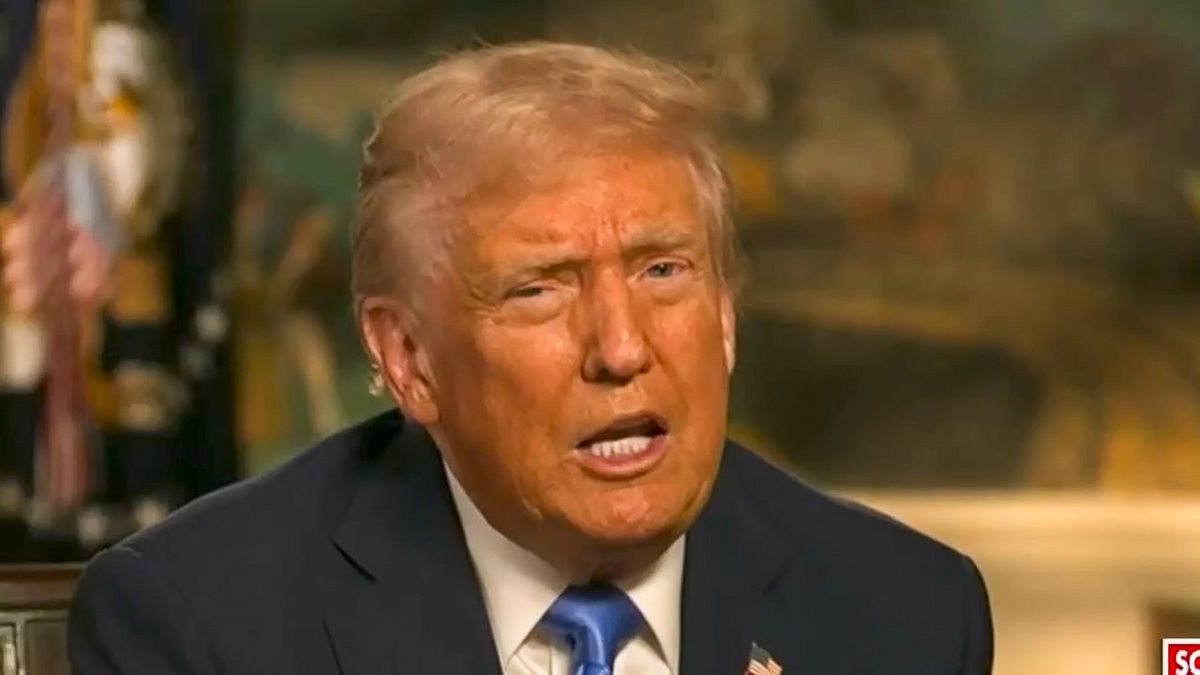
President Donald Trump suggested that the U.S. military might kill Venezuelan fishermen in an effort to target drug traffickers.

During a Sunday interview on Fox News, host Peter Doocy asked Trump if it was more dangerous to be the captain of a cartel drug boat or a late-night TV talk show host.

"They're both in trouble, although [Fox News host] Greg Gutfeld's doing great," the president replied. "We have the water drugs, I call them the water drugs, pretty much stopped."

"In fact, I think water fishing, I think almost anything we have to get into a boat right now in that area would not be doing too well," he advised. "We have to stop the drugs from coming into our country and killing our people."

"So when you feel badly for somebody that gets blown away, you have to remember they're killing thousands of people."

GUNBOAT DIPLOMACY HUBRIS

White House Releases Video of Third Caribbean Boat Strike

Alt
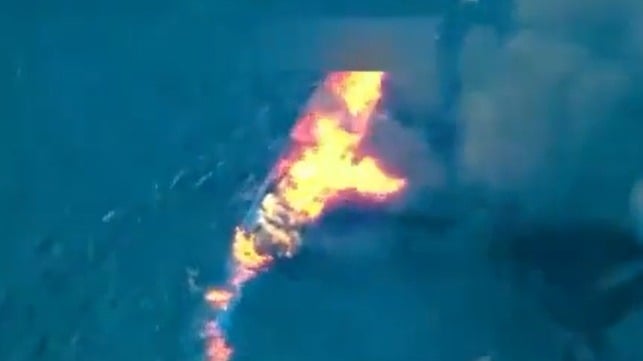
Venezuelan boat burns after a strike in international waters, Sept. 2025 (White House)

Published Sep 21, 2025 7:35 PM by The Maritime Executive


On Friday, the Trump administration announced a third strike on a suspected smuggling boat in the Caribbean, resulting in the deaths of three individuals on board. The attack brings the fatality count for the new interdiction campaign to 17 in total. 

According to a statement on the president's social media platform, Truth Social, the strike occurred in international waters in U.S. Southern Command, and no U.S. forces were harmed. The previous two attacks were reportedly carried out by drone operators working for U.S. Special Operations Command (SOCOM), without prior boarding or attempts at arrest - a departure from the previous Coast Guard-led law enforcement effort in the Caribbean. 

The strike appears to have been far from Venezuelan shores. Officials in the Dominican Republic reported Sunday that the National Drug Control Directorate (DNCD) and the Dominican Republic Navy (ARD) followed up after the U.S. air strike on the speedboat, working in conjunction with U.S. forces. The Dominican authorities reportedly seized 377 packages of cocaine at a position about 80 nautical miles south of Beata Island, closer to Dominican shores than to Venezuela. 

Lawyers within the Pentagon are reportedly concerned about what the strikes could bring for the military personnel involved, who could bear personal liability in the event that a court determined that these interdictions are unjustified. The current Authorization for Use of Military Force (AUMF), the congressional act that authorizes the White House to take lethal action abroad, dates back to 2001. It is limited to Al-Qaeda and other jihadist groups with ties to the 9/11 attacks. Some military lawyers and retired JAG officers believe that the authorization does not extend to cocaine traffickers, even if the White House has declared a Venezuelan gang to be a terrorist organization, and there is active debate over whether the president's Article II powers (as Commander in Chief of the Armed Forces) extend to lethal force against noncombatants. 

The individuals on the boats were likely fishermen with a side business in cocaine logistics, local residents on the Paria Peninsula of Venezuela told AP. With Venezuela's economy in tatters and the region's fisheries depleted, locals have few ways to make a living, and occasional trips for cocaine smugglers and human traffickers offer those with workboats a way to live well. The smuggling boats are reportedly easy to distinguish because of their large, powerful and plural outboards, which deliver far more horsepower than the equipment used by "legitimate" fishermen. 

The strikes have caused concern among the peninsula's entire fishing community, not just those engaged in illicit trade. President Donald Trump has warned that Venezuelan fishermen might not want to go out right now, and many of them agree; anecdotally, fishing activity off the coast has fallen. Venezuela's National Aquatic Institute has announced a ban on fishing more than 30 miles off of the northern Paria Peninsula, and the Venezuelan military has pledged to protect fishing interests in the area. 

"I'm afraid to go fishing because of the situation they're doing to us, because it's not anyone's fault what's happening. In reality, one goes out to work fearfully to earn their daily bread," fisherman José Machado told Telemundo.