Sunday, January 25, 2026


Laborde Products Supplies Mitsubishi Tier 4 Power for Blessey Marine

Laborde Products
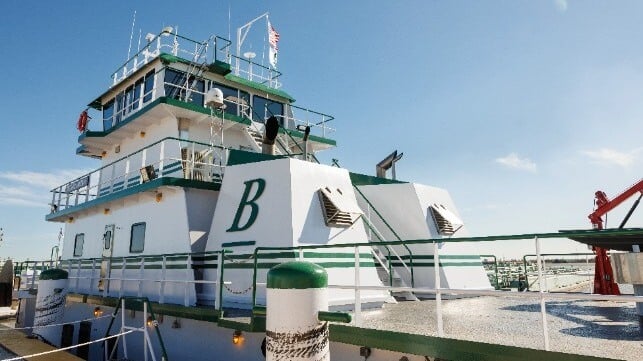
M/V Capt. Daniel Armstrong

Published Jan 25, 2026 11:39 AM by The Maritime Executive


[By: Laborde Products]

The M/V Capt. Daniel Armstrong, a new-construction 2,600-horsepower towboat and the first Tier 4 vessel in the Blessey Marine Services fleet, has entered service powered by a Mitsubishi S12R marine engine supplied and supported by Laborde Products. The vessel was christened on January 14, 2026, at Web Fleet in Channelview, TX.

The Capt. Daniel Armstrong represents a significant milestone for Blessey Marine Services as the company steps into Tier 4 propulsion for the first time. The Mitsubishi S12R platform was selected to deliver the horsepower, emissions compliance, and operational consistency required for demanding inland towing service.

During the christening ceremony, Blessey leadership reflected on the importance of guidance and support during the company’s first Tier 4 project.

Speaking directly to the transition into new emissions territory, Clark Todd, President and CEO of Blessey Marine Services, credited Laborde’s hands-on involvement throughout the process. “Brian, to your crew, to your incredible, amazing crew at Laborde Products, thank you so much for all that you’ve done in helping guide us, as this is our first venture into the Tier 4 world,” said Todd.

The vessel is named in honor of Captain Daniel Armstrong, who addressed the crowd during the ceremony and affectionately referred to the towboat as “The Beast of the Waterways,” a nod to both its power and presence on the river.

For Laborde, the project reflects the kind of careful planning and close coordination required when operators move into Tier 4 propulsion for the first time.

“Anytime an operator takes their first step into Tier 4, the details matter,” said Jared Legendre, Vice President of Sales at Laborde Products. “This project was about guiding the process and staying engaged through every phase so the Capt. Daniel Armstrong could go to work as intended.”

With the Capt. Daniel Armstrong now in service, Blessey Marine adds a Tier 4 platform built to meet current emissions standards while maintaining the power and response required for inland towing operations.

The products and services herein described in this press release are not endorsed by The Maritime Executive.


After 23 Years, Nigeria Begins Disbursing Financing to Local Shipowners

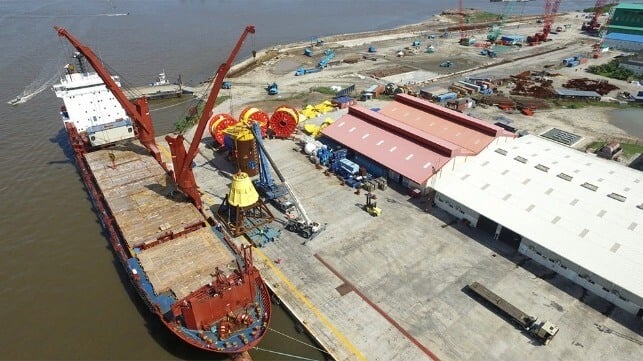
Nigeria port
File image courtesy 28london9973 / CC BY SA 4.0

Published Jan 25, 2026 1:17 PM by The Maritime Executive


Nigeria has started to disburse the cabotage vessel financing fund (CVFF), a scheme created over two decades ago to boost domestic ship-ownership. Last week, Nigeria’s Minister of Marine and Blue Economy, Adegboyega Oyetola, presided over the launch of a digital portal, which will be used for accessing the CVFF. The fund was created back in 2003, when the Coastal and Inland Shipping Act (Cabotage Act) was enacted.

The launch of the fund comes almost a year after Oyetola signaled the end of waivers given to foreign shipping companies to operate within Nigerian coastal waters. According to the country’s Cabotage Act, coastal shipping is restricted to Nigerian-owned or operated vessels. However, the government has been extending waivers to foreign vessels owing to limited local capacity.

“The era of indiscriminate waivers is ending. It is time to build Nigerian tonnage, support local employment and give indigenous operators a fair chance to succeed,” Oyetola said last year.

For the 23 years CVFF has been in place, it has amassed over $700 million. The fund has grown from the 2% mandatory deduction on cabotage-protected shipping in Nigeria. Unfortunately, local shipowners have over the years been unable to access the fund due to lack of an institutional framework for disbursement.

With the portal now launched, qualified applicants could access up to $25 million, constituting 70% of the loan. In addition, the applicant will be required to raise a minimum 15% equity contribution, while the remaining 15% will come from a participating bank. As per the CVFF framework, the Fund will be managed by the Nigerian Maritime Administration and Safety Agency (NIMASA) in collaboration with vetted lending institutions. The loan tenure will be 8 years with an interest rate of 6.5%.

“The CVFF presents a generational opportunity for Nigerian shipowners to scale, modernize fleets and compete effectively in coastal and regional trade. Shipowners must approach this fund with strong governance and bankable business plans,” commented Ladi Olubowale, President of the African Shipowners Association- Nigeria.

The CVFF disbursement also comes at a time of renewed interest by local investors to establish shipping lines and acquire vessels. Last year, the Clarion Group founded the first fully indigenous container line in Nigeria, Clarion Shipping. The company has acquired a 349 TEU capacity container feeder, Ocean Dragon, and has plans to expand its fleet to target the broader regional market in West Africa.

Last year, Nigeria welcomed its first locally owned floating production, storage and offloading (FPSO) vessel. The FPSO Emem is owned by the Nigerian shipping company Oriental Energy Resources (OER).

Top image courtesy 28london9973 / CC BY SA 4.0


President Xi Continues His Purge of Senior Chinese Officers

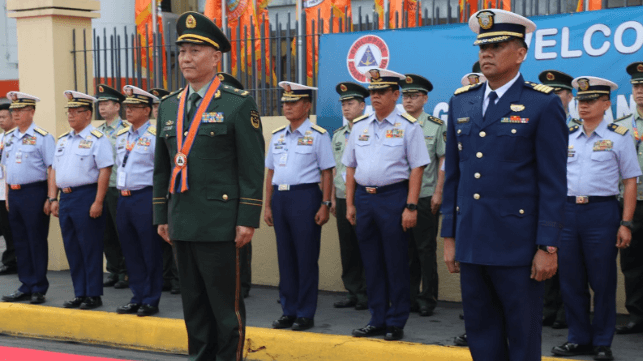
Vice Admiral Wang Zhongcai in happier times in a visit to the Philippines (PLA Navy)
Vice Admiral Wang Zhongcai (left) in happier times, on a visit to the Philippines (PLA Navy)

Published Jan 25, 2026 3:17 PM by The Maritime Executive


President X Jinping appears to have completed his purge of senior officer in the People’s Liberation Army (PLA), with a disproportionate number coming from the PLA Navy (PLAN). In what appears to be a culmination of a series of dismissals over the last 12 months, General Zhang Youxia, as Vice Chairman of the Central Military Commission (CMC) its most senior serving officer, was placed under investigation for “serious violations of discipline and law violations”. This phraseology is a common euphemism for corruption, but corruption itself is often used as euphemism for political deviancy.

General Zhang was also dismissed as a member of the Politburo. Hitherto, the general has been seen as secure in his position, being a childhood friend of President Xi and having overseen earlier phases of the purge which has now claimed him. He is also the last Chinese senior leader to have had combat experience, albeit on the losing side in the Sino-Vietnamese war of 1979, and had overseen widespread reforms of the military designed to improve its operational effectiveness.

Also dismissed on the same grounds was General Liu Zhenli, likewise a Sino-Vietnamese war veteran and a lesser member of the CMC. General Liu had been Chief of Staff for Joint Operations, in charge therefore of directing joint operations such as any potential invasion of Taiwan. He too was a thoroughbred military man, with hands-on experience as a previous commander of the PLA Ground Forces.

Speculation regarding the dismissal of these two senior officers spread last week when both failed to appear as expected at a CMC plenum on January 20. At the meeting, General Zhang’s seat was taken by General Zhang Shengmin, the PLA Rocket Force officer who has now succeeded him. General Zhang Shengmin has spent most of his career specializing in imposing party discipline within the military hierarchy. Official confirmation of the two dismissals came in an announcement on the Chin Military website.

Back last November, the Maritime Executive summarized what was then known about a purge amongst the senior ranks. Nine officers of Four Star rank were identified then as having been purged, including three senior officers from the PLA Navy (PLAN). Our assumption was that the purge had been much deeper, extending from the four-star level dismissals which were publicly announced down into the lower ranks of the military hierarchy.

The purge remains something of a mystery. The phased way it has been conducted demonstrates President Xi’s grip on power; there was no need for a sudden night of the long knives, nor fear of resistance. Many of those dismissed had only recently been promoted, and indeed had supervised the early phases of the purge. Most were considered to be members of the Fujian clique, a group considered to be closely aligned and loyal to President Xi Jinping personally.

Speculation for its purpose is two-fold: President Xi clearly felt a need to strengthen his personal authority, and there may have been professional military disagreements over whether his blunt force invasion plan was the best way to go about capturing Taiwan. A high percentage of those dismissed had previous command and staff appointments in the Eastern Theater Command, which being adjacent to Taiwan, would lead on any invasion. President Xi Jinping has consistently pushed a hardline military solution to the "Taiwan problem," investing particularly in an expansion of the PLAN's operational capability, while a group of military officers opposed to this policy is believed to have advocated instead a more nuanced approach.

Of the nine four-star officers dismissed last November, the most senior was General He Weidong, a second CMC Vice Chairman who had been a member of the 24-strong Politburo and is thought to have been the lead strategic planner for operations against Taiwan. Admiral Miao Hua had been head of the CMC's Political Work Department, the organization within the PLA responsible for upholding conformity to CPC doctrine. His deputy, General He Hongjun, unusually a senior officer from Tibet, managed to commit suicide before his dismissal was announced.

Also dismissed was Admiral Yuan Huazhi, a naval infantry officer, until recently head of the PLAN Political Works Department. Admiral Wang Houbin was dismissed from his post as commander of the PLA Rocket Force, but had been the PLAN Deputy Commander from 2019-23 and had held a senior operational post previously in the East Sea Fleet. Vice Admiral Li Hanjun, PLAN Chief of Staff, had been purged earlier in June. Perhaps the casualty of greatest significance was Lieutenant General Lin Xiangyang, commander of the Eastern Theater. The East Seas Fleet commander Vice Admiral Wang Zhongcai, was also dismissed, along with Major General Ding Laifu, commander of the 73rd Army Group, one of three such ground force formations in the Eastern Theater Command.

What is the likely impact of this deep purge, in particular its consequences for the maritime community?

Most US naval officers would conclude that such widespread changes in senior command appointments must have immediate operational impact. Historically, multiple changes in command can happen in wartime, but that is when there are plenty of proven battle-hardened replacements close at hand. In this purge, the military professionals are being replaced by officers appointed for their political loyalty.

The result is likely to be a PLA more willing to obey political directives – but less able, from a leadership and command perspective, to carry them out. ‘Wolf warriors’, as anyone who seen these ideologically committed officers and diplomats up close, are doctrinaire and inflexible, opposed to all forms of critical thinking – a faculty generally considered necessary when plans begin to go wrong, as they inevitably do once battle commences. These developments increase the likelihood of more aggressive action in the South China Sea, and the chances of an invasion of Taiwan. But they lessen the chances of such action being successful.

The opinions expressed herein are the author's and not necessarily those of The Maritime Executive.

SINOPHOBIA

Op-Ed: Chinese Drills Near Taiwan Aren't a Signal - They're a Rehearsal

PLA Navy
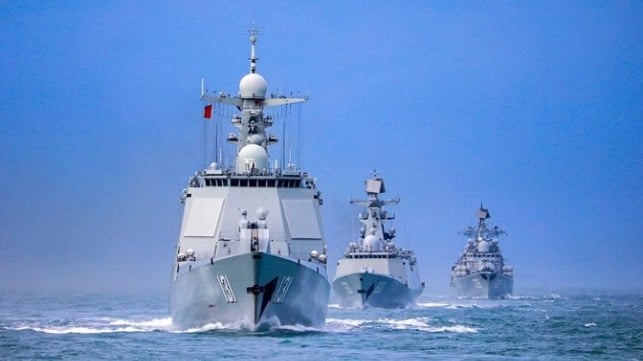
PLA Navy file image

Published Jan 25, 2026 6:37 PM by The Maritime Executive


[By Nathan Attrill]

Analyzing China’s military activity around Taiwan often invites a simple question: what triggered it? Analysts tend to assume that spikes in aircraft sorties, naval deployments or coast guard operations must be a reaction to something political in Taiwan, US actions in the region or other international events.

But a close examination of 2025 data complicates this assumption. Domestic rhythms inside China—holiday cycles, political security priorities, command availability—shape operational tempo more reliably than events in Taipei or Washington.

Put simply, the scale and persistence of Chinese military activity around Taiwan look less like signalling and more like systematic preparation for the use of force, conducted on Beijing’s own timetable.

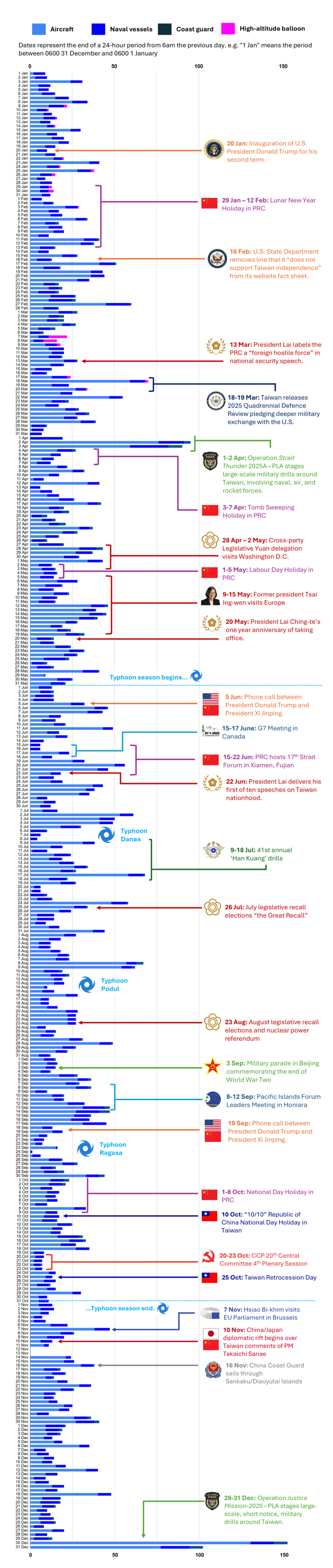
A review of military coercion data compiled throughout 2025 for ASPI’s State of the Strait—a weekly newsletter tracking Beijing’s coercion of Taiwan—highlights several striking patterns. First, true absences of Chinese military activity around Taiwan are vanishingly rare. Across the entire year, there were only two days—12 and 13 November—when no Chinese military air or maritime assets were detected around Taiwan. This underscores how deeply normalized Chinese military presence has become. Activity levels may rise or fall, but presence itself is now continuous.

Second, even while China’s military has become far more comfortable operating in poor weather, environmental constraints still matter. Air and maritime activity dropped noticeably during typhoons affecting the Taiwan Strait, including Danas, Podul and Ragasa. This confirms that even highly normalized pressure campaigns remain subject to safety and risk management of Taiwan’s typhoon season (June to November).

Third, Chinese military activity tends to dip during Chinese holiday periods and sensitive internal political moments. Chinese holidays, which usually last several days, and the fourth plenum of the Chinese Communist Party were all associated with lower observable activity.

More revealing, however, is what doesn’t show up clearly in the data. In many cases, there was no obvious connection between Taiwan-related events, US actions or international developments and subsequent increases or decreases in Chinese military activity. Days of elevated activity often occur without any clear external trigger. Conversely, politically salient events frequently pass without a discernible military response. This challenges the common analytical reflex of searching for one-to-one causal explanations.

Indeed, some of the most intense periods of Chinese military activity in 2025 were preceded not by provocation, but by noticeable lulls. Both Operation Strait Thunder and Justice Mission followed periods of relatively subdued activity. Their justifications—couched in broad language about sovereignty, deterrence and readiness—were boilerplate and non-specific. Given the complexity of joint operations, force mobilization and coordination across services, it is highly unlikely that either was triggered by a discrete Taiwanese or foreign action in the days immediately prior. The more plausible explanation is that both were executed according to internal readiness cycles and training schedules.

Electoral dynamics reinforce this interpretation. One might expect Beijing to modulate pressure in ways that favor preferred political outcomes in Taiwan. Yet Chinese military activity did not noticeably decline ahead of Taiwan’s July or August recall elections, despite the assumption that Beijing would want to avoid alienating voters and harming the Kuomintang’s prospects. The absence of adjustment suggests two things: first, that Beijing either doubts its ability to influence Taiwanese voter behavior through calibrated restraint; and second, that the Chinese military’s operational schedule takes precedence over tactical political messaging. The data suggests a tacit conclusion in Beijing that Taiwanese voters are no longer meaningfully swayed by fluctuations in Chinese military presence because that presence has become normalized.

Other patterns further support a structural explanation. High-altitude balloons, for example, appeared regularly only in the first quarter of the year. This seasonality points to atmospheric conditions and sensor-testing cycles rather than political intent. Similarly, the overall distribution of activity suggests that the Chinese military is not working to externally imposed timelines. There is no requirement to respond quickly to events abroad. Instead, the Chinese military operates on its own timetable and risk assessments, constrained by weather, holidays, training phases and readiness objectives.

This aligns closely with what has been observed since 2020. While Beijing does sometimes use military activity as a signalling tool, especially after high-profile diplomatic events, much of what appears to be signalling is better understood as ‘opportunistic justification’. Planned exercises are hurriedly or retroactively framed as responses to external developments, providing political cover rather than genuine causation. As Chinese military operations around Taiwan have become more routine, the signaling function has diminished relative to training, testing and familiarization.

China’s military activity around Taiwan and selected events in 2025. Source: Nathan Attrill/ASPI.

Earlier years illustrated this shift clearly. Between 2020 and 2022, Chinese military activity was more episodic and easier to link to discrete events. By 2023 and 2024, those links weakened as median-line crossings, eastern-flank operations and joint drills became standard practice. By 2025, the system appeared largely decoupled from external calendars. The Chinese military is preparing for contingencies on its own terms, not reacting tactically to each political development across the Taiwan Strait.

The analytical implication is significant. Attempts to attribute daily Chinese military activity to specific world events risk over-interpretation and confirmation bias. While political context still matters at the margins, the dominant drivers in 2025 were internal: force readiness, training cycles, environmental conditions and institutional schedules. Beijing does not need an excuse to operate around Taiwan and, increasingly, it does not bother to provide a convincing one.

In short, military coercion around Taiwan in 2025 reflected preparation, not provocation. The absence of clear causal links is not a failure of analysis—it is the point.

Nathan Attrill is a senior analyst at ASPI Cyber, Technology and Security program.


AI contributed no ideas to this article—Nathan Attrill.

This article appears courtesy of The Strategist and may be found in its original form here


Op-Ed: Congress Should Let Foreign Shipbuilders Help Rebuild U.S. Navy

"Congress must urgently amend outdated laws, including the Jones Act, the Buy American Act, and the Byrnes-Tollefson Amendment."

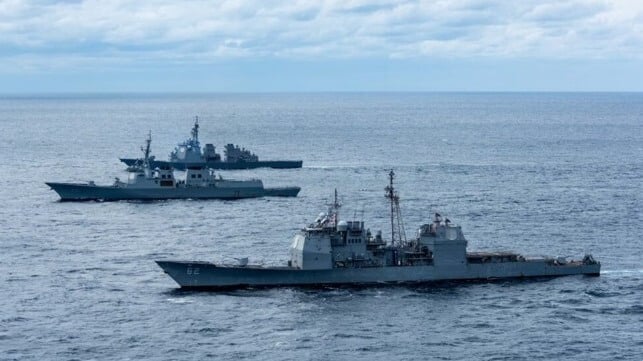
Ticonderoga-class guided-missile cruiser USS Chancellorsville (CG 62) along with Japan Maritime Self Defense Force (JMSDF) guided-missile destroyer JS Chokai (DDG 176) and Republic of Korea Navy guided-missile destroyer ROKS Sejong The Great (DDG 991)
Ticonderoga-class guided-missile cruiser USS Chancellorsville (CG 62) along with Japan Maritime Self Defense Force (JMSDF) guided-missile destroyer JS Chokai (DDG 176) and Republic of Korea Navy guided-missile destroyer ROKS Sejong The Great (DDG 991) (US

Published Jan 25, 2026 8:05 PM by CIMSEC


[By CDR Chase E. Harding, USN]

The balance of power in the Indo-Pacific is shifting rapidly as China's shipbuilding hegemony endures. With the U.S. shipbuilding base in decline, the United States must take bold action to remain a credible maritime power and uphold the rules-based order that has underpinned peace and prosperity in Asia for decades. This order could be strengthened by a trilateral collaboration that unites the United States, Japan, and South Korea in co-developing and mass-producing a new class of fast-attack missile corvettes. From the outset, these vessels would be designed with a clear value proposition for the high-end fight, while also being tailored for maritime domain awareness and maritime security. They would bolster allied naval capacity and serve as an exportable platform to support ASEAN partners on the frontlines of illicit activity, maritime coercion, grey zone warfare, and great power competition.

To realize this initiative, the United States must reform outdated laws, attract foreign direct investment into dormant shipyards, and fully leverage the industrial strength of its allies. Congressional action, including targeted exemptions from the Jones Act, Buy American Act, and the Byrnes-Tollefson amendment, will be essential to unlock collaboration at speed and scale. This bold strategy will counter the People's Liberation Army Navy's quantitative edge with a qualitatively superior, coalition-driven maritime force, restoring American sea power while promoting Indo-Pacific stability.        

The Collapse of American Maritime Power

Since the conclusion of World War II, the United States has embarked on a mission to protect global supply lines, project power abroad, and strengthen a rules-based order that would drive massive growth in the global economy —a feat not seen in human history. This dominance was mainly at sea through the efforts of the U.S. Navy, which ensured freedom of the seas and adherence to this newfound order. Eight decades later, this dominance is being challenged as the Navy sails listlessly, if not rudderless, due to shrinking budgets, failed platforms, and floundering shipyards. During World War II, the Navy had almost 1,300 ships in service; by 2003, it had less than 300.

As fleet numbers dwindled due to the peace dividend, so did America's shipyards. Since the late 1950s, U.S. shipbuilding output has declined by more than 85%, and the number of shipyards capable of producing large commercial vessels has decreased by over 80%. The U.S. has gone from building almost 5% of the world's ocean-going ships in the 1970s to just 0.1% today. For comparison, the People's Republic of China, Japan, and South Korea make up almost 90% of global shipbuilding, with the PRC building the majority.

The end of the Cold War marked the beginning of a sustained decline in America's defense shipbuilding capacity. During the Cold War, the United States operated 11 shipyards dedicated to building naval combatants, but by 2005, seven shipyards were closed, and a once proud 70,000-strong workforce reduced to less than 30,000 workers (2012 estimate). U.S. shipyards continued to decline well into the 1990s and early 2000s as subsidies ceased, the labor market shrunk, geopolitical priorities shifted, and there was a significant lack of infrastructure investment. Currently, investment is so poor that there are not enough drydocks in the U.S. to support naval expansion. For example, one of the last publicly owned shipyards, Norfolk Naval Shipyard's drydock number one, has been in use since before the Civil War. The newest publicly owned dry dock for the Navy was completed in 1962. When examining shipbuilding through a monetary investment lens, the US is woefully behind most nations, especially its primary strategic competitor. From 2010 to 2018, the PRC invested $132 billion in its shipbuilding capability, whereas the U.S. invested less than $80 million.

Shipbuilding, shipyard infrastructure, and overall investment are not the only explanations for the Navy's decline since the Cold War. The fault also lies with naval design and a failure of leadership to determine what the future Navy should look like. Programs like the Zumwalt class-guided missile destroyer and the Littoral Combat Ship (LCS) program proved to be a heavy burden to the Navy and some would say were simply the wrong ships for the wrong time. Both programs were a product of the post-Cold War shift toward power projection immediately faced significant challenges.

The Zumwalt, initially envisioned to replace the Ticonderoga-class cruiser, had cost overruns that ballooned exponentially to $8 billion per ship as the program was truncated to only three ships (for reference, a Ford-class carrier costs $13.3 billion). Additionally, the Zumwalt weapons systems, notably the 155mm Advanced Gun System (AGS) projectiles, cost $800,000 per round. The LCS program was designed to be a "multi-mission jack of all trades" platform at a relatively affordable price. This affordability was more than $28 billion for 35 ships, with the Government Accountability Office (GAO) estimating that the cost of operating and maintaining the fleet throughout its lifespan would be upwards of $60 billion. Like the Zumwalt weapon system, the LCS's combat effectiveness was inadequate. The Anti-Submarine Warfare package was canceled, and the Mine Hunting mission package was declared operational in 2023, 15 years after its development and a $700 million investment. Many high-profile incidents at sea have plagued the LCS program as a whole, leading to many being decommissioned early; a notable example is USS SIOUX CITY (LCS 11), which was transferred to Foreign Military Sales (FMS) after just five years in service.

In 2017, naval leaders shifted their focus back to building traditional guided missile frigates (FFGs) to keep pace with rising threats, notably from the PRC. The Navy opted to use the FREMM frigate design currently employed by the Italian and French Navies. With almost 85 percent similarities, the FREMM offered the U.S. Navy a reliable platform with established supply chains and interoperability with European partners. Unfortunately, shaping the FREMM design to meet Navy survivability and growth margin requirements required extensive modification. The result was a design that accounts for barely 15 percent of the original. The former Assistant Secretary for Research, Development, and Acquisition Nickolas Guertin remarked, "Sometimes, you are just better off designing a new ship. It turns out modifying someone else's design is a lot harder than it seems." Workforce shortages at U.S. shipyards and a lack of design maturity have compounded the Constellation class frigate's challenges. The lead ship was not expected to enter naval service until 2029, almost three years late, and at a cost of $1.4 billion. Meanwhile, America's strategic competitor continues to grow the world's largest Navy.

The Rise of PRC Shipbuilding Hegemony

The PRC's ascent as a shipbuilding hegemon is a testament to its meteoric rise as an economic powerhouse. China's defense industrial base, notably shipyards, has undergone an unprecedented transformation, making China the world's premier shipbuilder. With dual-use (civilian-military) shipyards, the PRC has 230 times the shipbuilding capacity of the United States, meaning it could produce 23 million tons of vessels compared to less than 100,000 tons in the U.S. The People's Liberation Army Navy (PLAN) has been one of the greatest beneficiaries of this transformation. Since the end of the Cold War, the PLAN has rapidly evolved from a mere coastal defense force to the world's largest blue water Navy.

Since 2010, the PLAN has undergone significant modernization, with over 70 percent of its fleet comprising newly commissioned vessels, including corvettes, frigates, destroyers, cruisers, submarines, and aircraft carriers. This rapid pace is evident in the larger shipbuilding apparatus, with China launching more ships than any other country in recent memory. While the PLAN's aircraft carrier program has garnered significant attention, the more critical observation is its rapid production of multiple surface combatants with advanced anti-ship missile capabilities. The Type 055 Renhai-class cruisers, Type 052D Luyang III Destroyers, the Type 054B Jiangkai III-class frigates, and the Type 056 Jiangdao Corvette represent formidable additions to China's naval arsenal. The Renhai-class, in particular, is equipped with 112 vertical launch system (VLS) cells capable of firing a variety of missies, including long-range anti-ship cruise and ballistic missiles such as the YJ-18 and YJ-21.

The type 054B represents a significant upgrade from the PLAN's Jiangkai series workhorse FFGs, each having a VLS of 32 cells and eight dedicated launchers for anti-ship cruise missiles such as the YJ-83. The smaller Jiangdao corvette, meanwhile, tailored for Anti-Submarine Warfare (ASW) operations is capable of disrupting U.S. undersea dominance in addition to "punching above its weight" when equipped with YJ-83 anti-ship cruise missiles is cause for concern.
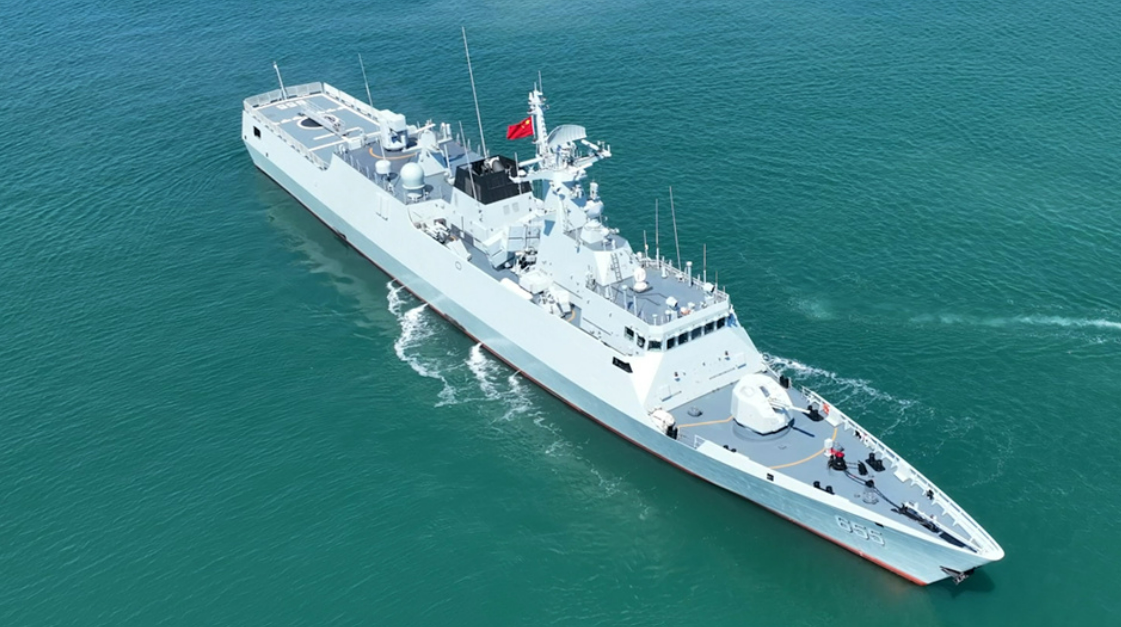

PLA Navy Type 056A corvette Huangshi (Hull 655) during a maritime training exercise in May 2025. (Photo via eng.chinamil.com.cn/by Wang Guangjie)

While it is clear that American shipbuilding capacity is at a numerical disadvantaged, a common argument persists that the U.S. has far superior quality in terms of overall ship size (measured in tonnage) and can employ far more missiles than the PLAN. While the aggregate displacement of PLAN ships is a little more than a third of the U.S. Navy, and with approximately 9,900 vertical launch system (VLS) cells compared to China's 4,200, the U.S. holds a slight "advantage." However, this gap is narrowing at an alarming rate. Beyond a VLS numbers game, the PLAN has already surpassed the U.S. fleet size, boasting over 370 ships as of 2024 compared to America's 296 ships as of 2025, and is projected to reach 475 battleforce ships by 2035. This quantitative advantage cannot be dismissed, as history has shown that numerical superiority often proves decisive in combat. In an analysis of naval engagements ranging from the Peloponnesian Wars to the Cold War, only three out of a possible 28 engagements have seen a lesser force with superior technology overcome a fleet with superior numbers.

The notion that quality will inevitably triumph over quantity is both naïve and dangerous. In some critical areas, such as anti-ship missiles, the United States is already behind: the U.S. surface fleet largely relies on the SM-6 with a range of 150 nautical miles, while the PLAN fields the YJ-18 (300 nm) and the YJ-21 hypersonic missile (est. 540-810 nm), not to mention Chinas large arsenal of anti-ship ballistic missiles. As the PRC continues to expand the worlds largest fleet while narrowing or surpassing the U.S. in key technologies, the United States must reassess its naval strategy. This begins with partnering with allies Japan and South Korea and leveraging the full weight of the trilateral alliance to co-develop and field fast-attack missile corvettes.

A Collaborative Approach

The challenges facing the United States and the shifting balance of power in the Indo-Pacific demand a fundamental reassessment of current maritime strategy. The U.S. can continue claiming it is the dominant maritime force only if it speaks historically. With declining shipbuilding capacity, failed platforms, and the PLAN's continuing naval growth, a bold new maritime strategy fostering collaboration and innovation is needed. Continuing on the current course risks ceding further power and influence to the PRC, undermining regional stability and American interests. This collaborative approach must leverage the strength and quality of our premier Asian allies, Japan and South Korea. These nations possess innate shipbuilding expertise and share a vested interest in countering the PRC's coercive and aggressive behavior.

Undeniably, the PRC has established itself as the global leader in merchant shipbuilding. In 2022, the PRC produced 1,794 ships. By 2024, it had 61.4 percent of the worldwide market, including 55 percent of backlog orders, equating to approximately 2,539 ships, positioning itself well for future shipbuilding initiatives. While Japan currently accounts for only 15 percent of the global market, it was still able to secure and fulfill orders for 587 large commercial vessels at the end of 2022. The Japanese Maritime Self-Defense Force (JMSDF) was able to procure multiple naval surface and subsurface combatants through the combined efforts of Mitsubishi Heavy Industries (MHI), Kawasaki Heavy Industries (KHI), and Japan Marine United Corporation (JMU). South Korea meanwhile accounts for 28 percent of the global market and produced 734 large commercial ships by the end of 2022. The combined efforts of both Hyundai Heavy Industries (HHI) and Hanwha Ocean enabled the South Korean Navy to procure upwards of ten naval surface vessels per year, in addition to providing a corvette/frigate export variant to the Philippines on budget and five months ahead of schedule. Meanwhile, Japan has taken a similar export approach with the inking of a deal to provide 11 Mogami class frigates to the Australian Navy. The first three will be built by Mitsubishi Heavy Industries in Japan, while the remaining eight will be homegrown by Austal in Western Australia with the first frigate expected in 2029.
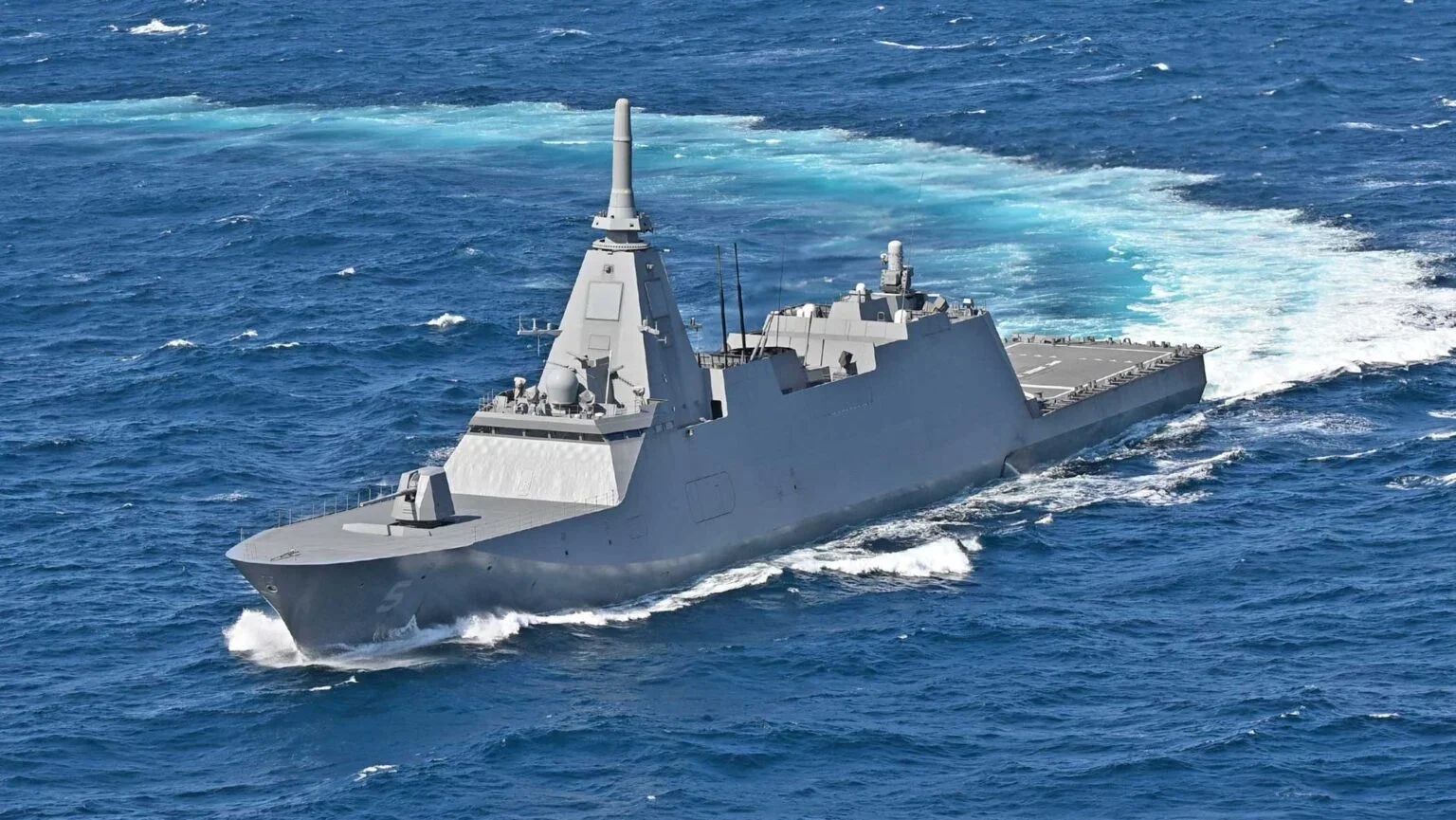

The Japan Maritime Self-Defense Force Mogami-class frigate JS Yahagi. (Photo by Japan Maritime Self-Defense Force)

Combined with U.S. production at just 0.1 percent, the tri-lateral accounts for 43.1 percent of the worldwide market. With Japanese and South Korean FDI and a renewed U.S. commitment to shipbuilding through Congressional action, the tri-lateral global market share could reach as high as 53 percent. Collaboration between industry-leading Japanese and South Korean shipyards, such as MHI and HDHI, with renewed investment in declining American shipyards, offers a rare opportunity to disrupt Chinese shipbuilding hegemony and global influence.

The Tri-Lateral Solution: A Corvette for Asia

Collaboration in shipbuilding is no easy venture for any country, let alone three. It demands a compelling vision of what future conflict will entail, what type of naval combatant is required to prevail in said conflict, and the necessary resources to build at speed and scale. The United States, in particular, is running up against the clock, resource-constrained, and recovering from programs such as the LCS, Zumwalt, and the cancelled Constellation-class frigate.

Collaborative shipbuilding presents a strategic opportunity to act as we move increasingly closer to the "Davidson window" in which the U.S., Japan, and South Korea can accelerate naval production before the PLAN consolidates its quantitative and qualitative edge. Tri-lateral collaborative shipbuilding presents a common sense approach regarding ship design, procurement, and deployment. The idea of collaborative shipbuilding utilizing the tri-lateral alliance is not unique across the literature. Varying journal articles have advocated for a "JROKUS" architecture, in which Japan and South Korea assist the United States in building ships, notably a vessel based on the Arleigh Burke-class destroyer. The U.S. provided Japan and South Korea with the fundamental design for the U.S. workhorse, the Arleigh Burke, which both countries adapted and built to meet their respective requirements. For instance, the Japanese Maritime Self-Defense Force has fielded the Maya class DDG. In contrast, the ROK Navy has developed the Sejong the Great class, which utilizes both the Aegis Combat System and an American Mk 41 Vertical Launch System (VLS) design.
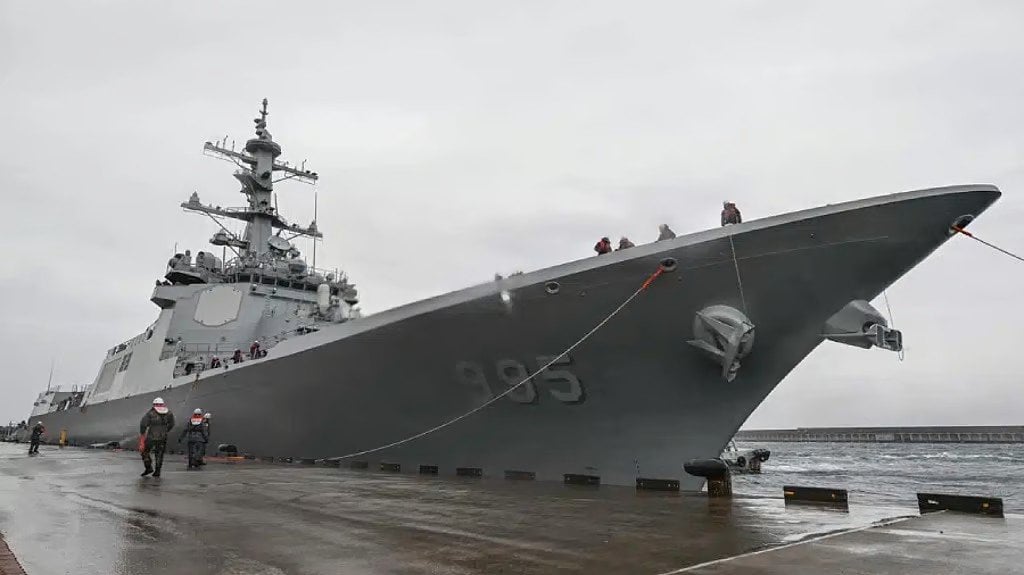

The ROK Navy Sejong the Great-class guided-missile destroyer ROKS Jeongjo the Great at Jeju Naval Base. (ROK Navy photo)

While building a class of vessels with a standard blueprint is valid, it negates cost, time, classified technology, and other special considerations. If the U.S. Navy aims to "put more players on the field," smaller, cost-effective corvettes built at scale are viable. When built in the United States, the average cost of an Arleigh Burke destroyer is upwards of $3 billion. Even if Japan or South Korea could halve those costs to $1.5 billion or less and get the ship off the assembly line more quickly, the pace of production may still be eclipsed by China's and not make a meaningful difference in the regional naval balance.

One possible design consideration is to use the Russian Steregushchiy III class as a template for a hybrid corvette design between the U.S., Japan, and South Korea. The Steregushchiy balances firepower, maneuverability, survivability, and a shallow draft within a small displacement, employing a 12-cell Redut VLS for medium-range surface-to-air missiles, anti-ship missile launchers, and layered defensive systems. Japan and South Korea could blend elements of the Steregushchiy with Japan's Mogami-class and South Korea's FFX Batch III program, integrated with the Mk 41 Vertical Launching System (VLS). The Mogami-class contributes stealth and advanced sensor capabilities, while the FFX Batch III provides survivability and flexibility to accommodate evolving mission requirements, such as maritime domain awareness systems and unmanned aerial or surface vehicles. Integration of a 24-32 cell Mk 41 VLS would provide multiple options to employ long-range surface-to-air, anti-ship, and anti-submarine missiles carried by destroyers without sacrificing the cost. Furthermore, a VLS-equipped corvette introduces a capability the PLAN does not possess at this weight class.
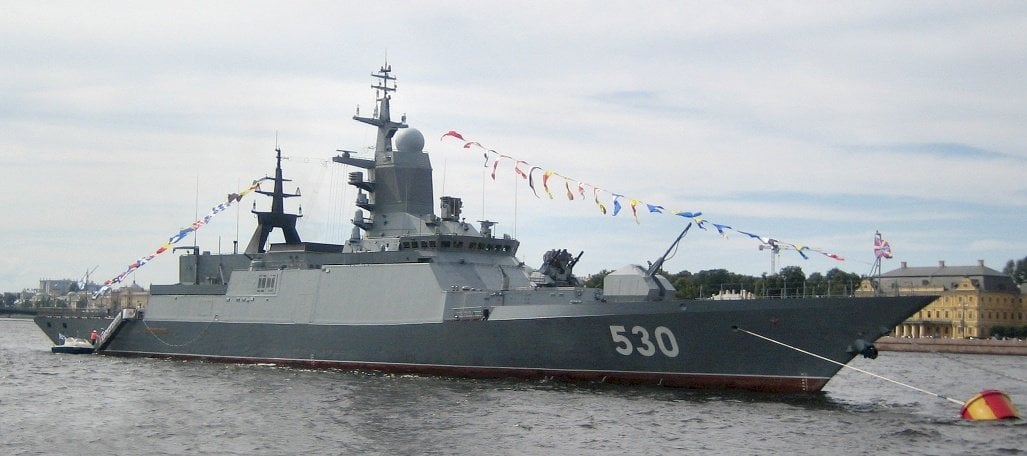

The Russian Federation Navy corvette Steregushchiy on Navy Day 2009 in the Neva River in St. Petersburg. (Photo via Wikimedia Commons)

Mass-producing such corvettes would not only distribute significant naval fires across the first island chain but would also directly expand the U.S. and allied VLS inventory at scale. Finally, each new corvette's ability to mask loadouts introduces operational uncertainty further complicating PLAN operations throughout Asia.

Pursuing a new collaborative ship design based on the input of Japan, South Korea, and regional partners does not have to be an arduous process. The European Union, specifically Italy, France, Spain, Greece, and Norway, have all agreed on a design for a European Patrol Corvette or "EPC" in which each country will utilize its supply chains, shipbuilding technologies, and common procurement strategies to build and outfit the vessel in multiple European shipyards. The seriousness of building a ship based on a new design is critical, especially given the challenges of the Constellation class, in which significant costs were incurred in design modifications.

In estimating the cost, size, and production timeline of a trilateral VLS-capable corvette, the European Patrol Corvette (EPC) provides a useful benchmark. EU member states anticipate a prototype by 2026–2027 after the critical design review was completed in 2025, with operational units expected to enter service around 2030. Projected costs, based on 2021 figures, range from €250–300 million per vessel. If the United States, Japan, and South Korea pursued a joint program leveraging Japan's Mogami-class design and South Korea's FFX Batch III program, the path from design maturity to fleet operations could reasonably fall within a 5–10 year window, depending on the agreed production scale. A target of 10–12 hulls is realistic, given Japan's current ability to deliver two Mogami-class ships annually and Hyundai Heavy Industries' steady pace of delivery for both the ROK Navy and export customers. Assuming a 10-year horizon and costs in the range of $275–325 million per ship, the trilateral initiative could field 10–12 corvettes by year twelve, with the potential for even greater output if dormant U.S. shipyards were reactivated. The projected timeline would include 0–4 years for collaboration and design, with lead ships arriving in years 4–6 (consistent with EPC estimates), followed by serial production ramping up from year six onward.

The tri-lateral alliance is strategically positioned to provide corvettes to the Association of Southeast Asian Nations (ASEAN), leveraging Asia-based shipbuilding to optimize procurement efficiency, supply chain management, and a "built-in Asia for Asia" mindset. This approach could reduce delivery times and promote collaboration amongst ASEAN nations in the corvette design process. Japan and South Korea, meanwhile, stand to gain significant strategic influence within ASEAN and the broader Indo-Pacific through this initiative. Simultaneously, U.S. participation in the tri-lateral Corvette design offers its Asian allies greater strategic flexibility while reaffirming America's commitment to ASEAN and the broader Indo-Pacific region.

Congressional and Legal Hurdles

Multiple bills have been introduced regarding the use of foreign shipyards and foreign investment, notably the bipartisan SHIPS Act sponsored by Sens. Mark Kelly (D-Arizona), Todd Young (R-Indiana), and Reps. John Garamendi (D-California) and Trent Kelly (R-Mississippi). The second bill introduced by Senator Mike Lee (R-Utah) and Senator John Curtis (R-Utah) seeks to implement the "Ensuring Naval Readiness Act." Both sets of bills introduced in 2024 and 2025 have substantial merit in providing ships for the United States. The SHIPS Act seeks to rejuvenate America's declining shipyard infrastructure amidst the rise of the PRC's posture. Specifically, the bill calls for a Strategic Commercial Fleet of 250 US-flagged commercial ships to support international commerce and supply U.S. and allied forces during times of war. During this buildup, the SHIPS Act allows for interim foreign-built vessels within this strategic fleet until US-built vessels can relieve them.

Additionally, the act will expand the U.S. shipyard industrial base for civilian-military dual-use operations (perfected by the PRC) by establishing a 25 percent tax credit for shipyard investments and financial incentives to support innovative approaches to U.S. domestic shipbuilding capabilities. The Ensuring Naval Readiness Act is more specific to the construction of U.S. combatants abroad. The bill states that to achieve a 381-ship Navy, Congress must allow the option to construct vessels, components, or modules in shipyards of Indo-Pacific nations with which the U.S. has mutual defense agreements.

While both bills have considerable merit, especially regarding the possibility of building a common fast-attack corvette among the Tri-Lateral partners, there are still significant hurdles that Congress must continue to overcome. Should the SHIPS Act and the Ensuring Naval Readiness Act be codified into law, other federal interlocking statutes remain in place that can quickly dampen any shipbuilding revolution. Notably, the Jones Act of 1920, the Buy American Act of 1933, the Defense Production Act of 1950, and the Berry Amendment. While the Ensuring Naval Readiness Act amends United States Code (USC) Title 10 section 8679 to "allow" for naval ships to be built abroad, it lacks significant substance concerning multiple federal laws. The Jones Act of 1920 requires that any ship sailing between U.S. ports be built in the United States and owned and operated by U.S. citizens or permanent residents, which complicates the goal of a strategic commercial fleet.

The Buy American Act (concerning naval combatants) requires that significant components and funds allocated to naval vessels can only be used for fabrication within the U.S. This act alone directly contradicts the Ensuring Naval Readiness Act, allowing the construction of naval combatants in foreign shipyards. Finally, the Defense Production Act of 1950 could hinder the building of ships overseas. While not explicitly limiting the construction of naval combatants abroad, it does focus significantly on strengthening the domestic industrial base, which could discourage overseas efforts in shipbuilding. Additionally, the Berry Amendment (preference given to domestically produced goods) and a 100% "Made in America" by 2033 clause within the NDAA have imposed restrictions on foreign-made components from allied nations, complicating a collaborative shipbuilding approach. Furthermore, the Byrnes-Tollefson Amendment prohibits foreign companies from constructing hulls or superstructures for navy ships, causing another detrimental hurdle to a U.S. shipbuilding revolution.

Conclusion

The strategic imperatives facing the United States, Japan, and South Korea demand immediate, decisive action to secure enduring maritime security across the Indo-Pacific. Trilateral collaboration in naval shipbuilding is no longer optional, it is necessary. Together, the alliance has a once-in-a-generation opportunity to counter China's expanding naval power, restore American shipbuilding strength, and ensure a free and open Indo-Pacific for decades to come. By pooling resources, expertise, and industrial capacity, the alliance can design and produce a fast-attack missile corvette tailored to the region's urgent needs: maritime domain awareness, deterrence, and enhanced interoperability among allies and partners. A corvette fleet, built with Asian shipyards and American innovation, will empower ASEAN partners on the frontlines of maritime coercion, illegal activities, grey-zone conflict, and Great Power Competition.

Swift legislative action must accompany this vision. Congress must urgently amend outdated laws, including the Jones Act, the Buy American Act, and the Byrnes-Tollefson Amendment, to unlock foreign direct investment, reactivate dormant U.S. shipyards, and reestablish American leadership in global shipbuilding. Streamlining procurement processes and embracing trilateral trade rules can significantly reduce costs, expedite production timelines, and position the new fleet for phased deployment before China's projected military advantage reaches its apex later this decade. This strategy offers more than ships. It redistributes burden-sharing among allies, strengthens alliance unity under the 2023 Camp David Accords, and demonstrates a clear commitment to defend freedom in the Indo-Pacific. It also signals that the United States and its allies have learned from past naval procurement failures — and are now prepared to innovate, adapt, and lead once again.

Restoring sea power through this trilateral initiative is both an opportunity and a strategic necessity. Success will reaffirm U.S., Japanese, and South Korean leadership in safeguarding the maritime commons, strengthening the global rules-based order, and securing American interests throughout the twenty-first century.

Chase Harding is a Strategic Planner at United States Forces Japan and a former Political-Military Master's Scholar at the Fletcher School of Law and Diplomacy at Tufts University. The views expressed herein are those of the author and do not necessarily reflect the official policy or position of the Department of the Navy, Department of War, or the U.S. Government.

This article appears courtesy of CIMSEC and may be found in its original form here, including extensive footnotes. 

The opinions expressed herein are the author's and not necessarily those of The Maritime Executive.
 

DNV and Partners Commence Second Low-Pressure CO2 Ship Transport Project

DNV CO2 ship transport project

Published Jan 24, 2026 12:24 PM by The Maritime Executive


[By DNV]

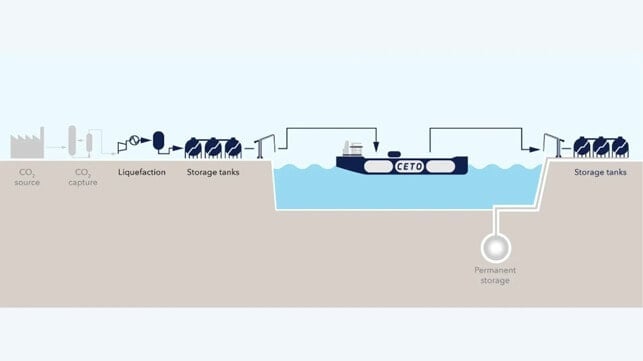
DNV, Equinor and TotalEnergies announce the start of the second phase of the CETO (CO2 Efficiently Transported via Ocean) joint industry project (JIP). Overall, the project aims to further de-risk the low-pressure CO? transport chain, with focus on CO? composition. Phase two will generate experimental data to support the development of CO? product specifications for ship-based carbon capture and storage (CCS) transport value chains at low pressure. The project is financially supported by GASSNOVA through the CLIMIT programme. 

For CCS to reach its full potential as an emissions reduction solution, the ability to transport CO? at scale will be critical. While pipelines can effectively transport CO2 over shorter distances, ship transport is necessary in cases where capture sources and storage sites are not so easily connected. A low-pressure value chain is regarded as one possible solution to enable large-scale CO? ship transport.

The commencement of CETO II follows the successful completion of the project’s first phase in July 2024. The first phase of the JIP demonstrated that shipping of CO? at low-pressure conditions is feasible, and that the technology is ready for initial deployment. However, a dedicated product specification for low-pressure CO? must still be developed, as it directly impacts chain design, material selection, and overall operations.

The prediction models typically used to define the specification at these conditions need to be calibrated using experimental data. Through its experimental campaign, the second phase of the project will generate data to support the development of CO? specifications, focusing on chemical reactions and the solubility limits of acids, to enhance the understanding of the effect of impurities in the CO? stream under conditions relevant for shipping.

Erik Mathias Sørhaug, Business Development Director CO? Shipping at DNV, said: “Better understanding of the risks related to different types of CO? compositions is essential to further develop low pressure CCS value chains. Data available on the topic is limited, so the CETO II project will work to fill the knowledge gaps in the industry. Having a means to cost-effectively transport large volumes of CO? is vital to scaling the use of CCS as an emissions reduction solution, and the outcomes of this project will help to identify the specifications needed to support reliable and robust low-pressure CO? shipping operations.

“We are pleased to continue the good collaboration with TotalEnergies and Equinor and hope new potential partners will find the JIP attractive. With additional partners onboard,  we will be able to expand the scope even further to include other key topics related to CO? carrier design and operation.”

Ola Terjeson Miljeteig, Vice President for CCS Solutions in Equinor commented: ”Equinor realizes the importance of low pressure ship transport as a competitive concept for CO2 transport and storage solutions. Investigating chemical reactions between the impurities in the CO2, as well as acid solubility in CO2 at ship transport conditions is key to be able to set a product specification for LP CO2. This JIP will give important contributions to that.”

Renaud Maillard, Vice President CO2 Techno Hub, at TotalEnergies, said: “At TotalEnergies, we aim to advance innovative CO2 capture and storage solutions through our dedicated Strategic Research & Technology Program. The second phase of CETO, focused on helping define robust CO2 specifications for low-pressure ship transport, will be a key contribution in enabling safe and efficient pathways for the industry. We are pleased to continue this collaboration with our partners.”
 

The products and services herein described in this press release are not endorsed by The Maritime Executive.

DRONE FOR GOOD

James Fisher Takes a Stake in Dive-Capable Drone Boat Venture

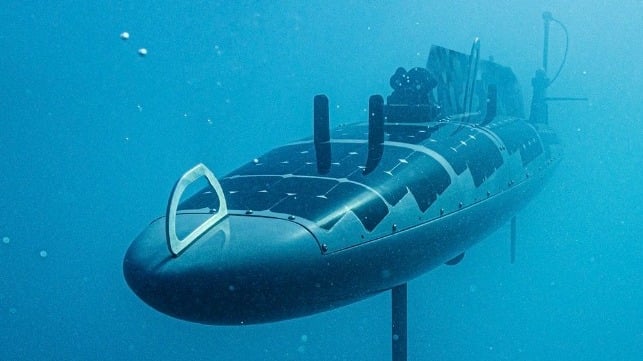
Ocean Aero's Triton drone boat in submergence mode, with sail lowered (Ocean Aero press handout)

Published Jan 20, 2026 11:23 PM by The Maritime Executive


British offshore services and shipping company James Fisher and Sons has bought a stake in the American autonomous sailing vessel startup Ocean Aero, which is developing a unique renewable energy-powered unmanned vessel.

James Fisher joined in a Series D funding round for Ocean Aero this month, taking a "strategic" minority stake in the business. Ocean Aero's focus is far from the tanker business that powers James Fisher day-to-day: it is developing a wind and solar-powered unmanned craft called Triton, which can operate below and above the surface. According to Ocean Aero, Triton can operate submerged for more than five days at a speed of two knots, acting as a submarine. In sailing mode, it can run for 30 days or more on a combination of wind a solar power. It will be fitted with a standard instrument package covering most mission sets, with room for options. A graphic user interface control system helps operators manage multiple units at once.

Triton's initial variant was produced in haze gray, and it was built with defense applications in mind. The device has a small radar cross-section to minimize the odds of detection, and a Made-in-the-USA pedigree that is important to U.S. Navy customers. James Fisher is interested in both defense and civilian applications in the offshore sector.  

"Ocean Aero’s autonomous platform complements our established marine and subsea capabilities and strengthens our ability to deliver innovative solutions for our customers across the group," said James Fisher chief digital officer Sean Huff, a former U.S. Navy special warfare diver.

The Ocean Aero device could fill an interesting role in James Fisher's diverse lineup. James Fisher is a provider of technical services in the offshore sector, serving supermajor clients. It is also a shipowner, with a fleet of vessels in coastwide trade in Europe, but it has many other interests. As a contractor to allied militaries, the company is one of the only private firms that operate deep-diving submersibles for submarine rescue, a high end nation-state capability. It also builds rebreathers and specialized systems for special forces dive teams.

"By going to market with James Fisher’s respected team of experienced professionals around the world in the defense and energy space, we will learn from them, increase our footprint, and ultimately deliver even better world-class services," said Kevin Decker, CEO at Ocean Aero. "We are already benefitting from this investment and commercial agreement."

MONOPOLY CAPITALI$M

CMA CGM on Track with Growth as it Puts 400th Owned Ship in Service

methanol-fueled containership
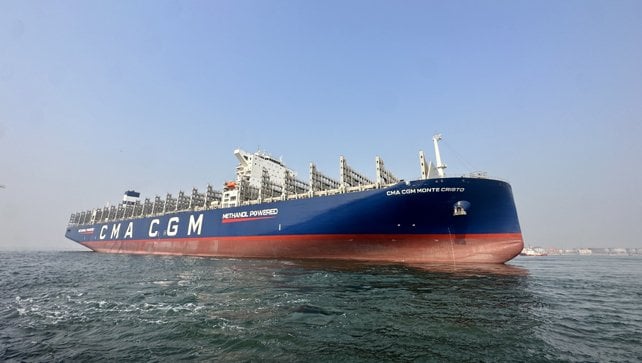
CMA CGM added its 400th owned vessel as it continues on a growth path to become the second largest container carrier (CMA CGM)

Published Jan 22, 2026 8:29 PM by The Maritime Executive


French carrier CMA CGM highlights that it will be putting its 400th owned ship (in a fleet of over 650 vessels) into service as it continues its growth strategy. The company highlighted its status as the first vessel in a new series of methanol dual-fuel vessels, and as it continues on track to surpass Maersk as the second-largest global container carrier.

CMA CGM reports that its operations serve more than 420 ports across five continents, and in 2024, it transported more than 23 million TEU. The fleet, which Alphaliner calculates at 712 containerships, is continuing to grow, with analysts last year highlighting the path to surpass Maersk’s capacity. 

Currently, the French carrier is only about 11.5 percent in capacity behind Maersk. It has a total capacity of 4,155,811 TEU, based on Alphaliners’ league tables. Maersk is currently at 4,629,755 TEU. The French carrier, however, has a strong order book with 147 vessels, according to Alphaliner, which represents an additional capacity of 1,870,454 TEU, compared to Maersk’s 79 vessels with an additional capacity of 1,033,434 TEU.

Maersk has declared its strategy calls for maintaining its current capacity for its ocean-going operations. The two carriers, however, remain far behind industry leader MSC Mediterranean Shipping Company, which, based on Alphaliners’ data, now has 976 vessels with a total capacity of 7,154,803 TEU, and with another 2.1 million TEU capacity on order.

CMA CGM highlights its new vessel, CMA CGM Monte Cristo, built at DSIC Tianjin Shipyard, China, as its 400th owned vessel. The vessel’s naming ceremony took place on January 21, and it is scheduled to enter service on January 29. It will be operating between North Asia, the Levant region of the Mediterranean, and the Adriatic Sea.

“This key milestone reflects the Group’s long-term investment strategy, built on asset ownership and the integration of advanced technologies to enhance the environmental and operational performance of its fleet,” says CMA CGM.

The ship is the first in a series of six methanol-fueled containerships. It is reported to have a maximum capacity of 16,204 TEU, including around 1,000 reefer plugs. The 156,100-dwt ship is registered in Malta and measures 366 meters (1,200 feet) and will operate with a crew of 23.

The company highlights that it is the 11th ship in its fleet capable of operating on methanol as its primary fuel. CMA CGM is nearing the halfway mark with a total of 24 methanol-fueled vessels currently on order. The group says by 2031, it will be operating around 200 dual-fuel LNG and methanol-fueled containerships as part of its strategy to be powered with low-carbon energy.