Thursday, March 05, 2026

RAGOZIN: The unholy alliance between Ukraine’s far right and the Western defence industry
RAGOZIN: The unholy alliance between Ukraine’s far right and the Western defence industry
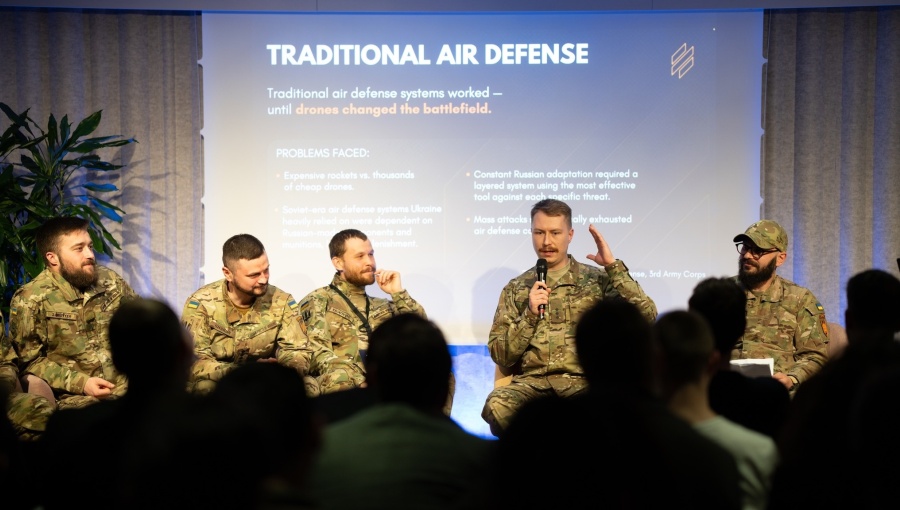
Battle-hardened commander Mykola “Makar” Zynkevich appears at a large event organised on the sides of the Munich Security Conference. / Snake Island Institute via Facebook
By Leonid Ragozin in Riga March 4, 2026

A look at Ukrainian units dealing with cutting-edge unmanned technology reveals an unholy alliance between far-right extremism and the Western defence industry. It came into the limelight during the latest Munich Security Conference, the world’s most prestigious gathering of global security practitioners and military industry bosses. 

Here is the backstory. At the end of May 2017, a group of far-right activists stormed Lviv region’s legislature and briefly detained its deputies inside the occupied building. They demanded amnesty for the veterans of the Russo-Ukrainian war who had been jailed for violent crimes inside and outside the war zone.

Only one of the attackers was charged at the end of the day — Mykola “Makar” Zynkevich of the National Corps, the political wing of the Azov Movement, as its members themselves call their vast network of large military units and paramilitary groups. 

Fast-forward seven years and the battle-hardened commander Zynkevich appears at a large event organised on the sides of the Munich Security Conference. Zynkevich's unit deals with cutting edge war technology, namely terrestrial robotic systems which aid — and may one day replace — soldiers on the battlefield.

The unit is called NC13, in which NC likely stands for Zynkevich’s political alma mater, National Corps. Number 13 is defined by the Anti-Defamation League as a white supremacist symbol Aryan Circle (A being the first and C being the third letter in the alphabet).

NC13 is part of the 3rd Detached Assault Brigade which currently makes up the core of Ukrainian army’s 3rd Corps. The brigade was founded by the political leadership of Azov Movement, which grew out of Patriot of Ukraine, a white supremacist group at the core of Azov battalion formed in 2014. Its leader, Andriy Biletsky, is now 3rd Corps commander and gets regularly listed among presidential hopefuls in the polls. 

The event on the sides of the Munich conference was organised by Snake Island Institute, a Ukrainian think-tank set up by Vladyslav Sobolevsky, formerly the chief of staff at Azov Regiment and deputy chief of staff at the National Corps, the political party. 

War beneficiaries

Back in his days as National Corps official, Sobolevsky helped to organise various protests aimed at disrupting the Paris agreements between presidents Volodymyr Zelenskiy and Vladimir Putin that led to a near-full ceasefire throughout 2020 and 2021. These protests were a part of the “No to Capitulation” campaign, announced by Azov Movement leader Andriy Biletsky in October 2019 in response to Ukraine and Russia agreeing upon the Steinmeier formula — an algorithm for the implementation of Minsk agreements proposed by German President Frank-Walter Steinmeier.

On March 12, 2020 Sobolevsky led National Corps activists who violently attacked Zelenskiy’s ally and Security Council deputy head, Serhiy Syvokho, when he attempted to present a pro-peace political platform. Two days later, Sobolevsky led a march of Azov veterans to the Russian embassy. The participants tore up a Russian flag and shot at the embassy from flare pistols in a show which helped to convince the Kremlin that Zelenskiy is helpless against far-right thugs and hence of little value as a negotiator.

The campaign against “capitulation” has succeeded in swaying Zelenskiy who effectively rejected peace on conditions that look infinitely better than what Ukraine can hope for now, after four years of Russia’s brutal all-out invasion. Under the Minsk agreements, Ukraine would have retained full sovereignty over most of its Donbas region as well as formal sovereignty over the smaller part, then de-facto controlled by Russia.

Zelenskiy made a U-turn on relations with Putin at the beginning of 2021 (it coincided with Joe Biden moving into the White House). He embarked on crossing Putin’s key red lines, clamping down on his previously untouchable Ukrainian ally Viktor Medvedchuk and launching a loud campaign to join Nato. Putin responded by starting to deploy troops on the Ukrainian border in March that year.

Despite the president succumbing to the pressure, relations between the Azov Movement and Zelensky’s administration remained tense during the buildup to the all-out invasion in 2021. That year, Sobolevsky led protests against Ukraine’s Security Service arresting a large group of Azov Movement activists in Kharkiv on charges of racketeering and extortion — a pointed attack at the movement’s fledgling business empire. The arrested activists were released at the start of the all-out invasion and went on to form the Kraken special unit under the auspices of Ukraine’s military intelligence (the HUR).

When the 3rd Detached Assault Brigade was reorganised into 3rd Corps in 2025, Kraken joined the corps. Its commanders — one of whom, Serhiy Velychko previously languished in prison in the SBU crackdown — were put in charge of the corps’ drone unit. Another Kraken commander set a drone pilot school called Killhouse Academy which ran a live FPV drone simulator show at the Munich conference event, with no one voicing objections to the propaganda of murder in its very name. 

The war in Ukraine allowed people from the far-right fringe jump on a social lift they could have never dreamed about, which makes them key beneficiaries of this conflict — along with Putin’s regime in Russia — and explains their interest in this war running for as long as possible, at best forever.

With Gopniks on board

Times have changed in a big way since 2011, when the BBC Panorama exposed neo-nazi ultras from Metallist Kharkiv accused of violence against people of colour at football matches. At the end of the programme, famous British player Rio Ferdinand called for the boycott of Euro-2012 held in Ukraine. These days, people from this very milieu are warmly welcome at major international events platforms, like the Munich conference. 

Coopting far-right extremists and football ultras as a potent street force that could either protect a political regime or help overthrow it is an old political technology. One may recall Arkan’s Tigers, a Serbian paramilitary group that threatened ethnic cleansing in Kosovo back in the 1990s. It was at least partly comprised of the Grobari (Gravediggers), the fans of Partisan Belgrade. 

Putin’s regime has been eager to engage both football fans and neo-nazi thugs since the early 2000s — just look at his administration’s dealings with BORN, a neo-nazi group responsible for assassinations of migrants and antifa activists. However many of these former Kremlin allies and FSB volunteer helpers, including people related to BORN, ended up in Ukraine in the heady days of the Maidan revolution. They deemed Ukraine to be closer to their far-right political ideals, while Putin launched a purge of the far right in Russia exactly because of their role in the Maidan revolution.

In social terms, secret services and presidential office operatives engaging with the far right are tapping into the social strata typically described in post-Soviet space as “gopniki”, the nearest English-language equivalent being chavs — low-class young men prone to gang-like behaviour and  criminal culture.

A predominantly Russian-speaking city, Kharkiv has its own word for gopniki — syavy. Two opposite paramilitary camps emerged in that city from this social strata — Patriot of Ukraine which grew into Azov movement and Oplot, a pro-Russian group that was instrumental in staging coup attempts in various Ukrainian regions in the spring of 2014. In a pattern characteristic of both Ukraine and Russia, both groups emerged at the conjunction of secret services, organised crime and far right activism.

People like Kraken founder Velychko (he coined the famous ‘Putin khuylo’ or ‘Putin is a dick’ chant when he was a leader of Metallist Kharkiv ultras), couldn’t possibly imagine that he would command a large, Nato-equipped military unit and the Western military-industrial complex would be keen to tap into his unit’s experience. 

At the Munich conference, the Snake Island Institute event was opened by former CIA chief David Petraeus. Among the event’s partners, the institute listed Alta Ares which describes itself as “a leading Nato-backed project to reshape the defence of Europe’s eastern flank”, deals with AI-powered drones and takes part in Nato drills. Danish anti-drone equipment manufacturer MyDefence and Rasmussen Global, the PR agency run by former Nato secretary-general Andres Fogh Rasmussen, were on the same list.

The war in Ukraine saw many former far-right activists turn into operators of unmanned fighting systems, primarily drones. Some of these are absolutely open about their political leanings — a fact which the Ukrainian government and its Western funders seem to be entirely okay with. For example, the 422nd drone regiment of the Ukrainian armed forces is called Luftwaffe and displays the Prussian/Nazi Iron Cross symbol on its logo.

Snake Island Institute people are also not the only ones who get hosted by major Western expert platforms like Munich conference. Take Yevhen Karas, the founder of C14 group which has “Fourteen Words” (a neo-nazi slogan) in its name and whose members were accused of conducting political assassinations after the Maidan revolution, including that of the journalist Oles Buzyna. Now a drone regiment commander, Karas was hosted by Chatham House, a leading British think-tank, last November. 

Members of the pro-Ukrainian commentariat tend to dismiss the very existence of a nazi problem in Ukraine, even as Kyiv landmark WWII Museum is currently hosting an exhibition dedicated to Russian Volunteer Corps, a far-right unit fighting on Ukraine’s side which draws inspiration from Hitler’s Russian allies of Gen. Vlasov’s Russian Liberation Army and uses the fascist Spayka symbol as its logo. The curator of the exhibition, Aleksey Lyovkin, is a frontman of M8L8TH (Hitler’s Hammer), in which 88 is a neo-nazi slogan which stands for Heil Hitler.

But none of that seems to bother the members of Western security establishment when people from this milieu appear at their prestigious event in Munich, a century after the Beer Hall Putch.

UKRAINIAN NATIONALIST ARMY OUN–UPA AND THE NAZI GENOCIDE


Portugal sells twice as many drones to Ukraine than it ever did to Russia
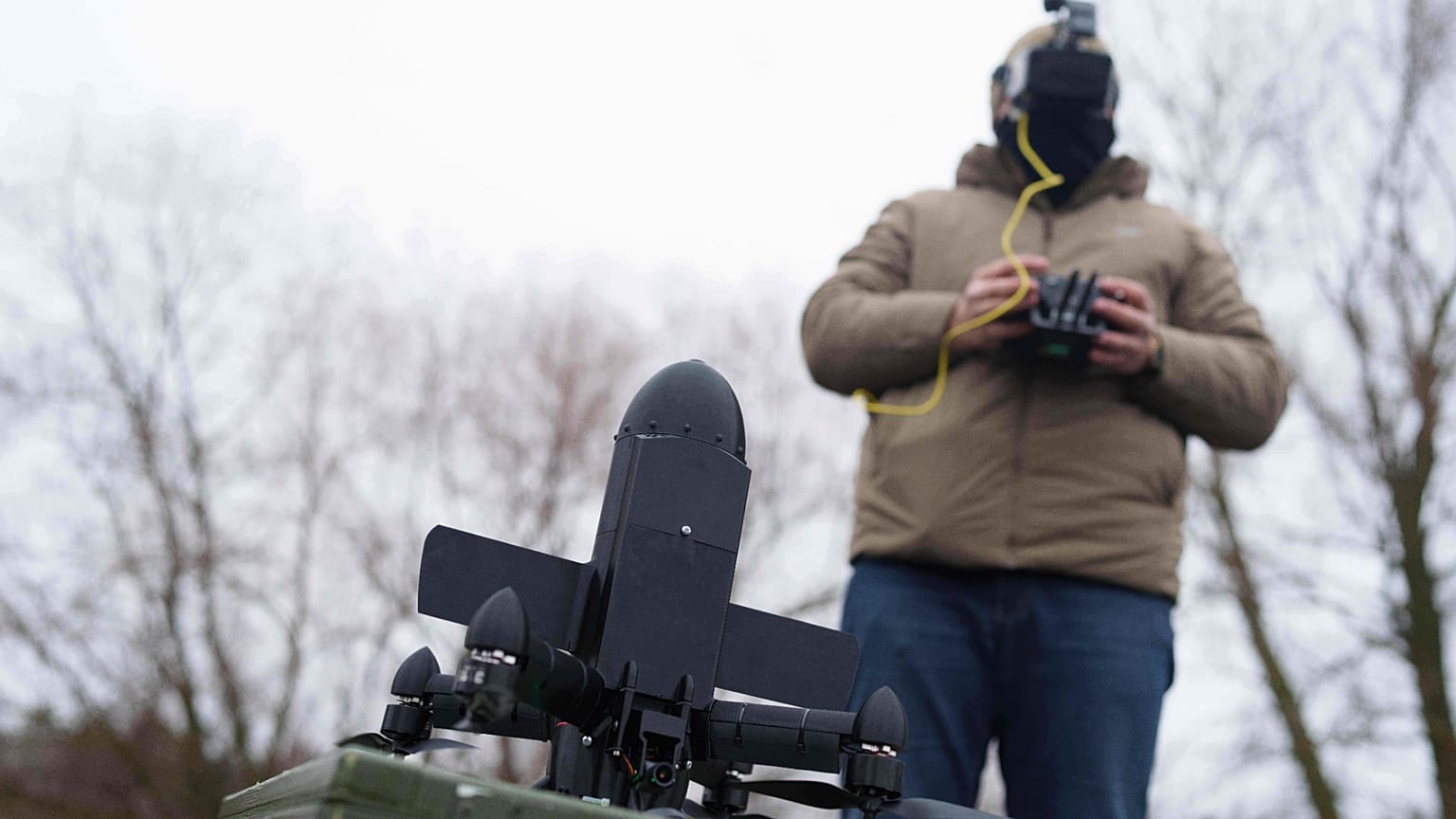
The military prepares an interception drone from the company "General Cherry" before a flight in the polygon in Ukraine on 4 December 2025.
Copyright AP Photo

By João Azevedo
Published on 

From €4 million in 2022, the year the war began, revenues have soared to €87.3 million in 2025. Portuguese exports to Ukraine, five to ten times lower before the conflict, now represent double the sales to Russia.

Portugal's drone exports to Ukraine have risen sharply since the start of the full-scale invasion of the country by Russia. Portugal is now selling more drones to Ukraine than it ever sold to Russia — and the gap is widening fast.

According to Jornal Económico, revenues from drone sales to Ukraine totalled €4 million in 2022, the year the conflict broke out, rising to €23 million in 2023 and €33 million in 2024.

Growth accelerated sharply in 2025, with revenues reaching €87.3 million. The largest Portuguese drone exporter to Ukraine is Tekever, a company based in Caldas da Rainha.

The surge has reshaped Portugal's broader trade relationships.

Ukraine climbed from 75th to 36th in the ranking of Portugal's export destinations between 2019 and 2025, while Russia fell from 34th to 50th over the same period — a decline surpassed among the top 100 destinations only by Cuba, which dropped 20 places, and Syria, which fell 19.

Before the war, Portuguese exports to Ukraine were five to ten times lower than sales to Russia.

By 2023 and 2024 that gap had narrowed to around 10%, and by 2025 Ukrainian purchases had pulled ahead to double those to Russia.

Overall, Ukrainian purchases from Portugal have jumped 110%, making Ukraine one of very few countries in the top 100 export destinations to record double- or triple-digit growth.

The trend may be further boosted by a deal signed in December between Portugal and Ukraine for the joint production of underwater drones.


Wednesday, March 04, 2026


Middle East war shows 'Europe must reinforce its autonomy', EIB chief tells Euronews


By Eleonora Vasques
Published on 

European Investment Bank chief Calviño tells Euronews a world in disarray means Europe 'must enforce its strategic autonomy' faster. Europeans worry new energy shock stemming from the war in Iran could rattle industry again.

Global uncertainty as the war in the Middle East escalates means Europe "must reinforce its strategic autonomy" from to energy to defense, according to Nadia Calviño, president of the European Investment Bank, who urged lawmakers to go faster and be bolder.

"These tensions are obviously not conducive to a framework of stability, peace and investment," she told Euronews' flagship morning show Europe Today. "The current escalation makes it more urgent than ever for Europe to reinforce its autonomy."

As Europe looks to re-arm by 2030, the EIB has emerged as a catalyst for defence spending and projects, and is facing pressure to become the equivalent of a European bank for defence stepping way from its traditional mandate.

The EIB spent 5% of its overall budget on defence, or roughly €4 billion. Still, under its current mandate, the bank is banned from investing directly in weapons or ammunition, but is allowed to finance so-called "dual use" equipment, like drones and helicopters.

While not directly involved in the US-Israeli military operation against Iran, the war comes with strings attached for Europe too, as the global energy market is rattled by Iranian strikes on the Gulf countries. This week alone, European benchmark gas prices jumped 80% in two days while brent crude edged closer to 84 dollars a barrel.

For Europe, energy has become its Achilles heel since the sudden rupture of cheap Russian gas flows after its invasion of Ukraine in 2022. Since then, the EU has sought to diversify suppliers from the United States, the Gulf and third countries like Azerbaijan.

Calviño said the difficult lessons from the war in Ukraine mean European companies have built alternative resources, but acknowledged it has been a drag on competitiveness compared to other regions like the US and China, which have access to cheaper energy and lower production costs associated to power supplies.

"European companies have shown they can adjust and can be flexible in changing conditions. Since the beginning of the war in Ukraine, Europe has become much more resilient. I am confident we can tackle this crisis too," she added.

Asked about a diplomatic clash between the US and Spain following President Donald Trump's call to impose a trade embargo on Madrid, Calviño, who served as economy minister and was a vice-president under the government of Pedro Sánchez, said she hopes for de-escalation but insisted that respecting international law is critical.

"Europe speaks with one voice in this area (trade) and we are united. We all benefit from respecting international law and contributing to global peace," she added.

"The European Union is a force for good and win-win partnerships. I am sure we will continue to try to de-escalate," she told Euronews.

On Wednesday during a speech at the annual European Investment Bank forum, Calviño said Europe has emerged as a "sanctuary" for science and rule of law.


Spiders are ‘fundamental’ for planetary health – so why are they forgotten in conservation efforts?

Almost 90% of insects and arachnids lack conservation status in the US, a new study reveals.
Copyright Canva

By Angela Symons
Published on 

Almost 90% of insects and arachnids lack conservation status in the US, a new study reveals.

Creepy crawlies are vital to the health of our planet – but gaining support for them isn’t always easy.

Insects and arachnids – spiders, scorpions and harvestmen (daddy long legs) – “don’t usually get the same attention” as “popular charismatic animals like lions and pandas”, says Laura Figueroa, assistant professor of environmental conservation at the University of Massachusetts Amherst in the US.

Back in 2017, it felt like this was beginning to shift. A study published in science journal PLOS One revealed a 75 per cent decline in flying insect biomass over a 27-year period across 63 nature reserves in Germany.

News of a pending ‘insect apocalypse’ made headlines around the world, triggering a wave of similar studies and giving momentum to insect monitoring programmes and protection initiatives.

But almost a decade on, has it made a difference?

Building on the global alarm raised by these declines, Figueroa and her graduate student, Wes Walsh, sought to investigate the state of insects and arachnids in North America – with worrying results.

‘We simply have no idea how they are doing’

The pair gathered conservation assessments for the 99,312 known insect and arachnid species in North America, north of Mexico.

They were astounded at the lack of information available.

“Almost 90 per cent – 88.5 per cent to be precise – of insect and arachnid species have no conservation status,” says Figueroa, the senior author of a paper published on 2 March in science journal PNAS.

“We simply have no idea how they are doing. Almost nothing is known about the conservation needs of most insects and arachnids in North America.”

Among the few protections that are in place, butterflies and dragonflies receive a disproportionate share, along with aquatic species important for monitoring water quality, such as mayflies, stoneflies and caddisflies.

“Arachnids, in particular, are really missing from conservation; most states don’t even protect a single species,” says Walsh, the paper’s lead author.

The researchers also found that states reliant on extractive industries like mining and fossil fuels were less likely to protect either insects or arachnids.

Why are spiders important?

Spiders are often demonised as predators but only a tiny fraction of species are actually dangerous to humans – around 25-30 out of over 50,000 – and even fewer regularly cause serious harm

Their predatory skills, however, are invaluable for controlling insect populations. They keep flies, mosquitoes, aphids and other agricultural pests in check.

As prey themselves, they provide a vital food source for birds, lizards and other predators, sending energy up the food chain.

Their presence, or lack thereof, is also a key early indicator of ecosystem health – and without them, the resulting imbalance could have disastrous cascading effects. Pest populations could explode, crops could suffer, and entire ecosystems might destabilise.

“Insects and arachnids are fundamental for human society,” says Laura Figueroa, assistant professor of environmental conservation at the University of Massachusetts Amherst in the US.

“They help with pollination and biological control of pests; they can serve as monitors of air and water quality, and they have worked their way deeply into many cultures throughout the world.”

“Insects and arachnids are more than objects of fear,” says Walsh, who has a tattoo of a spider on his arm. “We need to appreciate them for their ecological importance, and that begins with collecting more data and considering them worthy of conservation.”

Can insects benefit from lessons in bird conservation?

Currently, protections for insects and arachnids are fragmented, varying widely across different the US – and seemingly influenced by local industry.

Looking to the success of bird conservation, Figueroa notes the importance of unity.

“The research shows that you get the best conservation efforts when broad, diverse coalitions come together,” she says. “In the case of birds, it was hunters, bird watchers, nonprofit organisations and many other constituencies who banded together to reach a common goal.”


The cult of Mithras: Archaeologists find signs of ancient men-only mysterious religion in Germany

Mithras temple
Copyright ARCTEAM GmbH, Regensburg

By Nela Heidner & Tokunbo Salako
Published on 

German archaeologists have discovered new insights into Bavaria's Roman past from an ancient buried temple where Roman legionaries once worshipped the sun god Mithras.

During recent excavations in Regensburg’s old town, German archaeologists uncovered a temple dedicated to the god Mithras

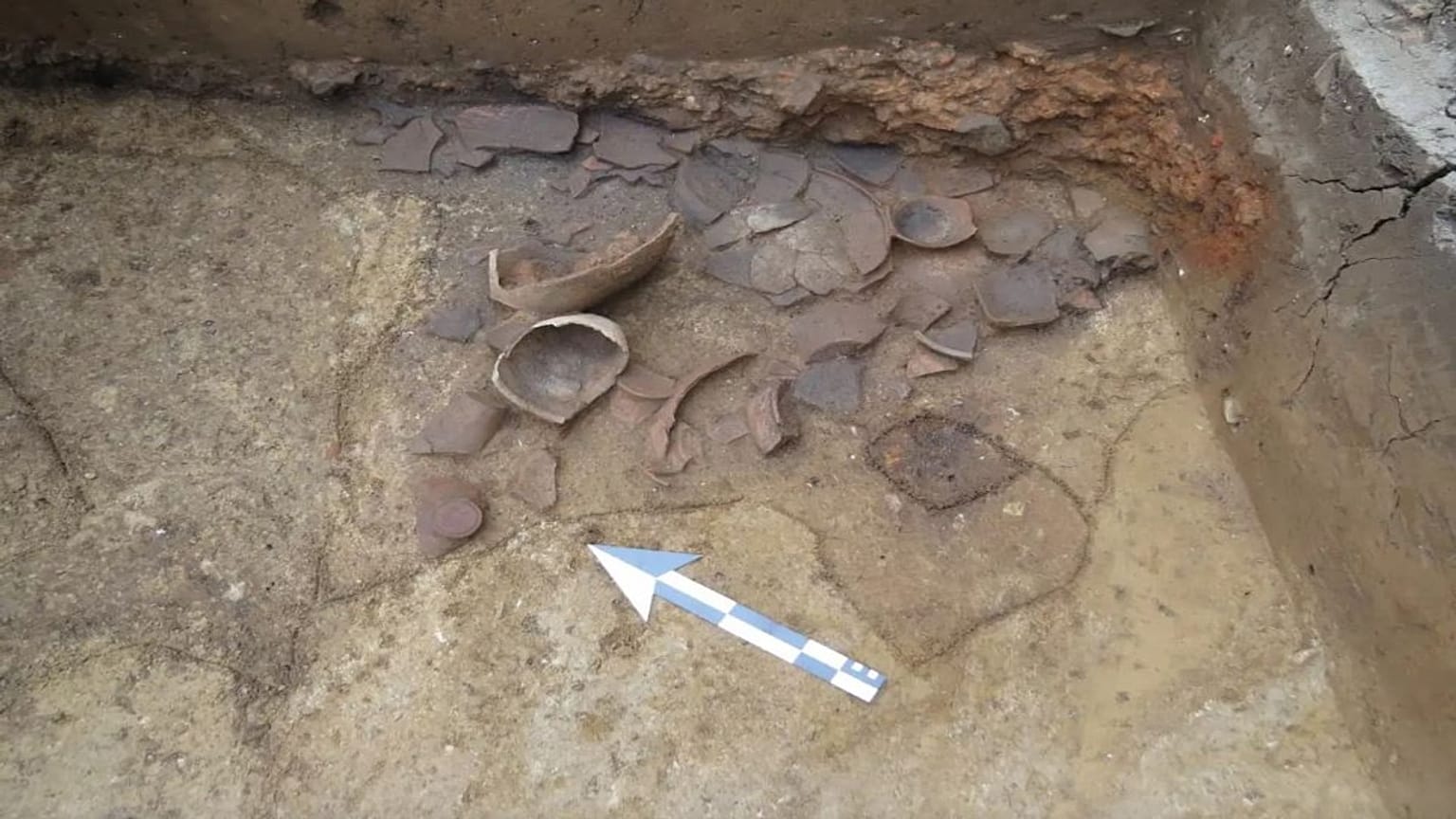
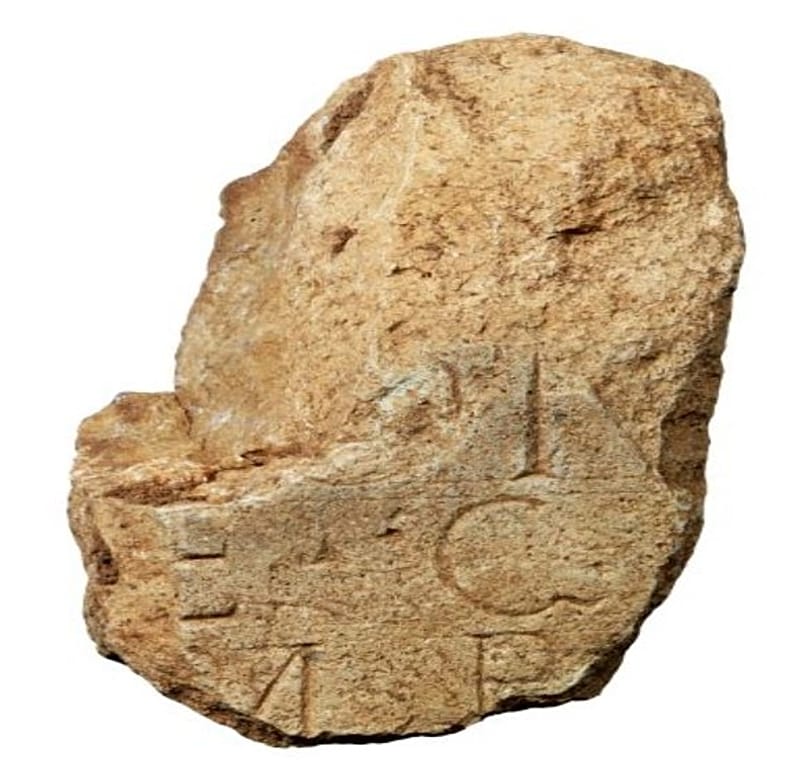
Because the building was originally constructed in wood, only a few structural remains have survived. Finds such as an inscribed votive stone and fragments of metal votive plaques, however, clearly point to its use as a place of worship.

Further evidence of the still enigmatic Mithras cult includes shards of a ceramic vessel decorated with snakes, incense chalices and handled jugs. Experts assume that ritual banquets were an integral part of the cult of Mithras.

Coins, including specimens from the reign of Emperor Hadrian (AD 117–138), make it possible to date the temple to between AD 80 and 171. This makes it the oldest of the nine Mithraea so far known in the Roman province of Raetia, in what is now Bavaria.

Raetia, a Roman province in central Europe that existed roughly from the 1st century BC to the 5th century AD, encompassed parts of what is now southern Germany, Switzerland, Austria and northern Italy.

The cult of Mithras, or Mithraism, was a mysterious religion. It was particularly widespread in military and commercial centres, and Roman legionaries were often among its followers. Only men were admitted. A local community typically consisted of around 15 to 40 members.

In ancient Persia, Mithras was called "Mitra" and was a god of covenants, loyalty and justice. The Romans turned him into a sun god. The Roman Mithras cult adopted many elements from Persian mythology, but also developed its own fundamental rituals and symbols. The motif of the "tauroctony" (from Latin taurus, bull) became central: Mithras kills the bull as an act of cosmic renewal.

The Romans had a graded system of initiation, with seven levels known to us: Corax (raven), Nymphus (bridegroom), Miles (soldier), Leo (lion), Perses (Persian), Heliodromus (sun-runner) and Pater (father), each with its own symbols, rituals and presumably tests or ordeals.

With the spread of Christianity, the secret cult disappeared.

Only now has the significance of the discovery become clear

The finds were made in the run-up to a construction project. In cities with a long history such as Regensburg, archaeologists must first be brought in before new buildings can be erected. Specialists actually made the discovery back in 2023, but only now, after intensive investigations, has its full significance become clear.

Like other Mithras temples, this roughly seven-metre-long timber structure was designed as an elongated building and partially sunk into the ground. Followers of the mystery cult probably descended via a ramp into the sanctuary.

Fragment of a votive stone with inscription; the text can no longer be deciphered.
Fragment of a votive stone with inscription; the text can no longer be deciphered. Credit: Museen der Stadt Regensburg

In the middle there was a trench-like depression, while raised platforms were built along the sides on which the faithful could sit or recline. Mithras temples were modelled on caves in their design, because one of the central motifs of the mythology is Mithras killing a bull in a cave, explained Stefan Reuter to Bavarian public broadcaster B after he analysed the finds

The temple was once illuminated by candles and oil lamps. The ceramic vessels and handled jugs that have been found suggest there were extensive ritual feasts. Analysis of the food containers is still under way. It already appears certain that high-quality food was consumed.

The finds from the temple are to be put on display at Regensburg’s Historical Museum, which is currently redesigning its Roman galleries. In the new exhibition, the Mithras sanctuary will play a prominent role.


South Korean stocks suffer worst day on record amid Iran war shocks

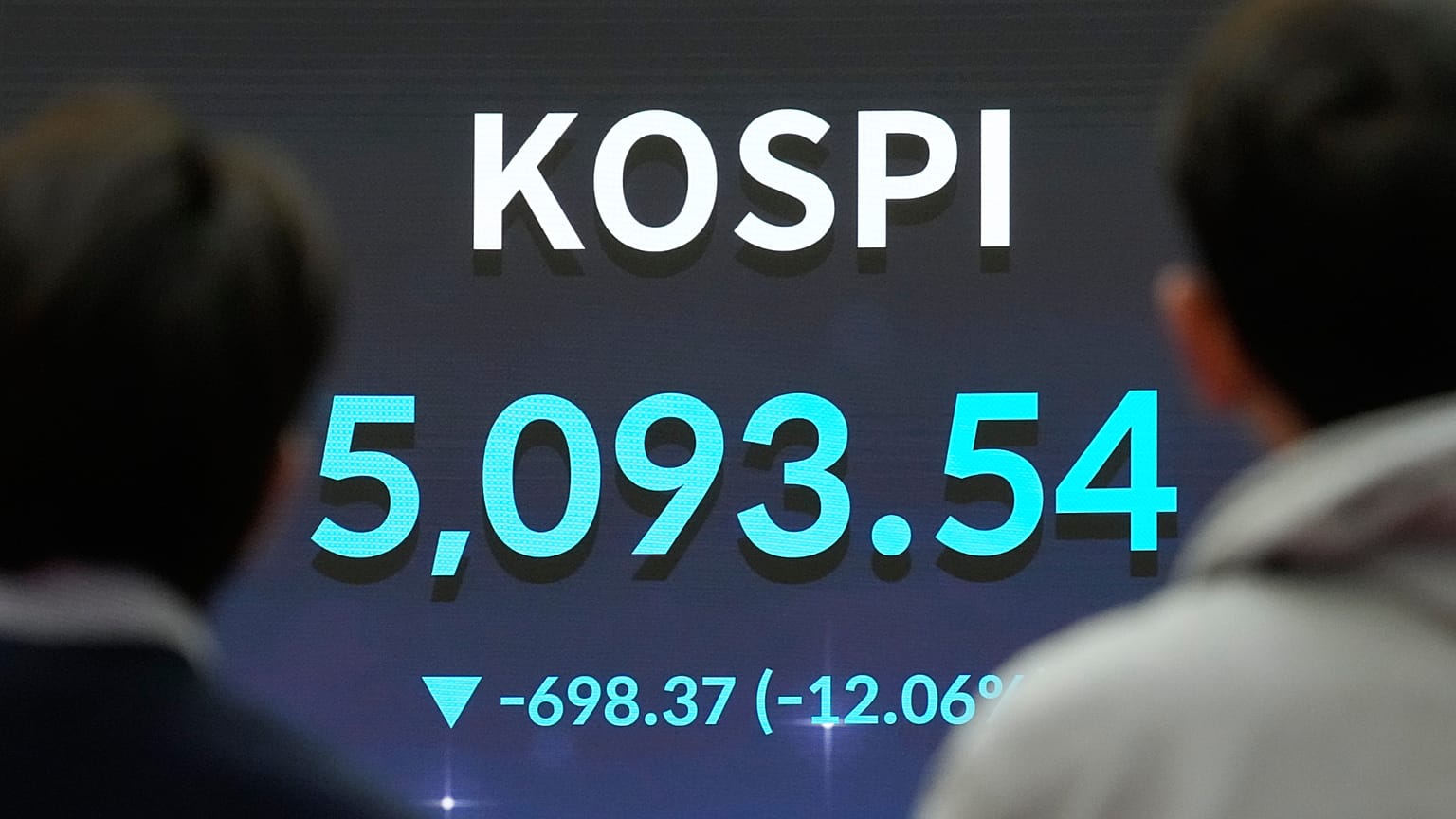
A screen shows the Korea Composite Stock Price Index (KOSPI) at the Korea Exchange in Seoul, South Korea, Wednesday, 4 March 2026
Copyright AP Photo/Ahn Young-joon


By Quirino Mealha with AP
Published on 

Asian markets suffered heavy losses on Wednesday, with South Korea’s main index (Kospi) plunging more than 12%, recording its worst single-day decline in history as the widening conflict in Iran continues to disrupt global markets.

The Kospi in Seoul closed down 12.1% at 5,093.54, triggering a temporary trading halt.

A circuit breaker was also activated on the tech-heavy Kosdaq which saw an even bigger drop of 14%.

Shares in Samsung Electronics fell 11.7% and the semiconductor supplier SK Hynix lost 9.6%, as investor optimism about AI demand for semiconductors was overwhelmed by concerns over energy security.

South Korea, which imports virtually all its crude oil and sources from the Middle East, was one of the world’s best-performing stock markets earlier this year but is now particularly exposed to the interruption in maritime trade caused by the Iran conflict.

The Strait of Hormuz has emerged as a major flashpoint. About 20 million barrels pass through it per day, mainly to energy-hungry economies in Asia including South Korea, Japan, China and India, which account for roughly 75% of the oil flows via the chokepoint, according to the US Energy Information Administration.

Oil prices continued to rise, though gains moderated after President Trump announced measures to safeguard shipping.

At the time of writing, US benchmark crude is trading at $77 per barrel, while international Brent crude is above $84, the highest price since 2024. Both contracts have surged roughly 15% since the start of the week and markets remain highly volatile.

In a post shared by the White House on X, President Trump stated he ordered the US Development Finance Corporation to offer political risk insurance and guarantees for maritime trade.

President Trump announcing maritime security measures

“If necessary, the United States Navy will begin escorting tankers through the Strait of Hormuz, as soon as possible,” President Trump added.

Nonetheless, analysts cautioned that the steps would only partly ease risks.

Higher insurance costs alone could add between $5 and $15 per barrel, with the “war premium” likely to remain in place amid ongoing attacks.

Asian markets slump

In Tokyo, the Nikkei 225 also dropped 3.9% but has since pared most of the intraday decline. However, the index is down more than 6% this week.

Japan, similar to South Korea and Taiwan, depends heavily on oil and natural gas imports from the Gulf region.

Hong Kong’s Hang Seng fell 2% to 25,249.48, while the Shanghai Composite lost around 1% closing at 4,082.47.

Taiwan’s Taiex also shed 4.4% to 32,829.

Francis Lun, chief executive of Venturesmart Asia, a Hong Kong-based financial services company, described the situation as increasingly serious.

“I think the Iran situation is getting out of hand, and I think that US President Donald Trump miscalculated enormously,” the CEO stated while adding that “the situation is very grim”.

The sell-off reflects broader anxiety that prolonged instability in the Middle East could squeeze corporate profits and slow the global economy, particularly for trade-dependent Asian nations.

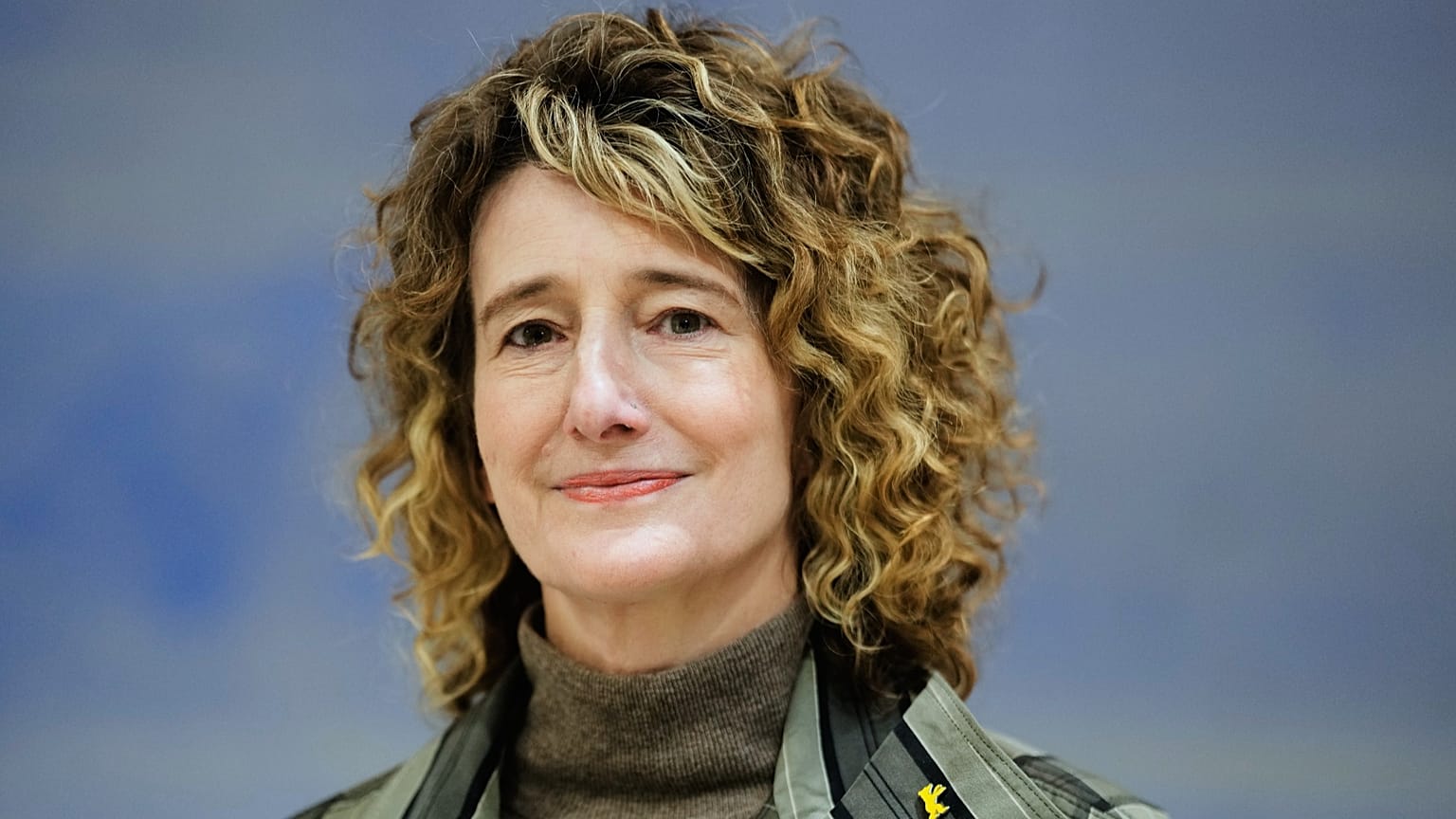
Berlinale crisis: Top film festival directors rally to defend Berlinale boss Tricia Tuttle

fears that she may be fired over filmmakers expressing their support for Palestine

Berlinale crisis: Top film festival directors rally to defend Berlinale boss Tricia Tuttle
Copyright AP Photo

By David Mouriquand
Published on 

“Supporting freedom of expression has never been more important.” Film festival bosses from Cannes, Locarno, London, San Sebastian, Tokyo and Toronto have signed a letter to support Berlinale boss Tricia Tuttle, amid fears that she may be fired over filmmakers expressing their support for Palestine.

Global film festival directors, including Cannes’ Thierry Frémaux, Sundance’s Eugene Hernandez, London’s Kristy Matheson and Toronto’s Cameron Bailey, have published a statement throwing their support behind Berlinale boss Tricia Tuttle, amid reports that she may be getting fired.

Tuttle, who is currently two years into a five-year mandate, faces political backlash following pro-Palestinian speeches at this year’s Berlinale awards ceremony.

“We stand in support of Tricia Tuttle’s wish to continue as Berlinale Festival Director, in full trust and with institutional independence,” began the letter signed by 32 execs at the helm of the world’s most prestigious film festivals.

“A core aspect of our role as cultural custodians is to create and protect the space for filmmakers, artists, professionals and audiences to come together,” the letter continues. “This includes people who bring with them not only a shared love of cinema, but also a huge variety of lived experiences and viewpoints.”

“We must also navigate – with care – the fact that ‘everyone’ can include people with political and personal views that don’t always align, with each other, or with socially accepted or politically mandated positions.”

Scroll down to read the letter in full.

The signatories also include Jung Hanseok (Busan International Film Festival), Ilda Santiago (Festival do Rio), Vanja Kaludjercic (International Film Festival Rotterdam), Karel Och (Karlovy Vary International Film Festival), Giona A. Nazzaro (Locarno Film Festival), Lucía Olaciregui (San Sebastian International Film Festival), Frances Wallace (Sydney Film Festival) and Julie Huntsinger (Telluride Film Festival).

At first, the Berlin Film Festival was accused of censoring political talk when prominent attendees, including jury president Wim Wenders, declined to discuss politics.

The controversy blew up on closing night, when some prize-winners used their acceptance speeches to voice support for Palestine and Gaza.

German Federal Environment Minister Carsten Schneider walked out of the ceremony after Palestinian director Abdallah Al-Khatib, whose film Chronicles From The Siege won the top prize in the Perspectives section, accused the German government of “being partners in the genocide in Gaza by Israel” - referring in part to Germany maintaining a staunchly pro-Israel stance, rooted in the weight of historical guilt.

German conservative tabloid Bild, which is openly pro-Israel, suggested that Tuttle was about to be sacked. A column by right-wing journalist Gunnar Schupelius accused Tuttle of having “posed for Gaza propaganda,” citing a photo of Tuttle with Al-Khatib and the Chronicles From The Siege crew at the film’s Berlinale world premiere. He accused Tuttle of allowing the Berlinale to be used as a tool by “antisemitic” activists.

These accusations were countered by support for Tuttle – not only from the Berlinale but also from more than 3,000 film professionals, who signed an open letter stating that the Berlinale’s strength “lies in its ability to hold divergent perspectives and to give visibility to a plurality of voices.”

Speaking to the German press, Tuttle admitted she and German culture minister Wolfram Weimer “discussed the possibility of my mutual resignation” at a meeting of the festival’s supervisory board last week but that she is determined to stay on the job.

“I am very proud of my team and the festival and want to continue the work we have started together with full confidence and institutional independence,” Tuttle told German press agency dpa.

We need to maintain spaces where discomfort is embraced, where debates can be expansive, where new ideas can propagate and where unexpected – and sometimes conflicting – perspectives are made visible. 
 Letter from international film festival directors 

Here is the full letter of support from the festival heads:

As film festival directors and leaders, we stand in support of Tricia Tuttle’s wish to continue as Berlinale Festival Director, in full trust and with institutional independence.

In the debates that have surrounded the 2026 Berlinale and other cultural and artistic events in preceding months, we recognise the mounting pressures on film festivals everywhere to navigate volatile times while maintaining a safe space for the exchange of cinema, and of ideas.

A core aspect of our role as cultural custodians is to create and protect the space for filmmakers, artists, professionals and audiences to come together. This includes people who bring with them not only a shared love of cinema, but also a huge variety of lived experiences and viewpoints. This is what gives our film festivals their vitality, relevance and value, and it is what festival ‘spirit’ is made from.

We must also navigate – with care – the fact that ‘everyone’ can include people with political and personal views that don’t always align, with each other, or with socially accepted or politically mandated positions. And while film festivals that are long-lived, and well-attended, may appear to be indestructible meeting places, these spaces are often fragile, hard-won and complex to preserve.

Film festivals as we know, and need them, are becoming increasingly challenging to sustain in a climate where the appreciation of nuance is collapsing. Supporting genuine freedom of expression, including the freedom to articulate imperfect or unpopular opinions, has never been more important. We need to maintain spaces where discomfort is embraced, where debates can be expansive, where new ideas can propagate and where unexpected – and sometimes conflicting – perspectives are made visible.

We need all our stakeholders – audiences, creators, festival teams, public and private partners, industry, media, fellow institutions – to show each other grace, respect and solidarity as communities and networks connected through the love of film, or we risk losing these spaces completely. It is so much easier to destroy than it is to build.

 Elon Musk faces court over claims he tanked Twitter stock before buyout


Copyright AP Photo
By Una Hajdari & AP
Published on 04/03/2026

The billionaire faces a shareholder lawsuit alleging he deliberately spread false information about fake accounts to drive down Twitter's stock price ahead of his takeover of the social media platform.


Elon Musk is expected to take the stand in a shareholder trial on Wednesday in San Francisco, where he is accused of making false and misleading statements that drove down Twitter's share price before he bought the social media platform for $44 billion (€37.9 billion) in 2022.

The lawsuit was filed in October 2022 in the US District Court for the Northern District of California on behalf of Twitter shareholders who sold the stock between 13 May and 4 October 2022, a few weeks before Musk's purchase of Twitter was finalised.

It claims Musk violated federal securities laws by making false public statements that "were carefully calculated to drive down the price of Twitter stock".

The billionaire Tesla chief executive reached a deal to buy Twitter and take it private in April 2022.

On 13 May, however, he declared his plan "temporarily on hold" and said he needed to identify the number of spam and fake accounts on the platform.

Twitter's stock tumbled as a result. A few days later, he tweeted that the deal "cannot go forward" and claimed that almost 20% of Twitter accounts were "fake," according to the lawsuit.

Musk's tweet on 13 May, saying "Twitter deal temporarily on hold pending details supporting calculation that spam/fake accounts do indeed represent less than 5% of users" was "false because the buyout was not, in fact, 'temporarily on hold,'" the lawsuit states.

That is because Twitter did not agree to put the deal on hold, and there was nothing in the merger agreement the two parties signed that allowed Musk to do so, according to the lawsuit.

In the following weeks, Musk continued to try to delay or withdraw from the deal, which the lawsuit claims he did through false, disparaging statements about Twitter's business that drove the San Francisco company's share price down sharply.

In July 2022, Musk doubled down on the bots issue and said he would abandon his offer to buy Twitter after the company failed to provide sufficient information about the number of fake accounts.

This was despite the lawsuit noting that Musk had waived due diligence for his "take it or leave it" offer to buy Twitter — meaning he had waived his right to examine the company's non-public finances.

The stock closed at $36.81 (€31.66) on 8 July, when Musk tweeted he was abandoning the deal over the fake accounts issue. That is 32% below Musk's offer price of $54.20 (€46.61) per share.

"To try to renegotiate the price or delay the merger, Musk made materially false and misleading statements and omissions, and engaged in a scheme to deceive the market, all in violation of the law," the lawsuit states.

The problem of bots and fake accounts on Twitter was not new.

The company had paid $809.5 million (€696.2 million) in 2021 to settle claims that it was overstating its growth rate and monthly user figures.

Twitter also disclosed its bot estimates to the Securities and Exchange Commission for years, whilst cautioning that its estimate might be too low.

Twitter sued Musk to force him to complete the deal, and Musk countersued.

On 4 October, Musk offered to proceed with his original proposal to buy Twitter for $44 billion (€37.9 billion), which Twitter accepted. The deal closed later that month.

In the ensuing months, Musk slashed the company's workforce, gutted its trust and safety team and rolled back content moderation policies.

In July 2023, he renamed Twitter to X.

This is not the first time that Musk has been dragged into court to defend himself against allegations of duping investors with his social media posts.

Three years ago, Musk spent around eight hours giving evidence in a San Francisco federal trial about his plans to buy Tesla — the electric vehicle manufacturer that he still runs as a publicly listed company — for $420 (€361.20) per share in a proposed 2018 deal that never materialised.

A nine-member jury absolved Musk of wrongdoing in that case.