Showing posts sorted by relevance for query MITHRAS. Sort by date Show all posts

Wednesday, March 04, 2026


The cult of Mithras: Archaeologists find signs of ancient men-only mysterious religion in Germany

Mithras temple
Copyright ARCTEAM GmbH, Regensburg

By Nela Heidner & Tokunbo Salako
Published on 

German archaeologists have discovered new insights into Bavaria's Roman past from an ancient buried temple where Roman legionaries once worshipped the sun god Mithras.

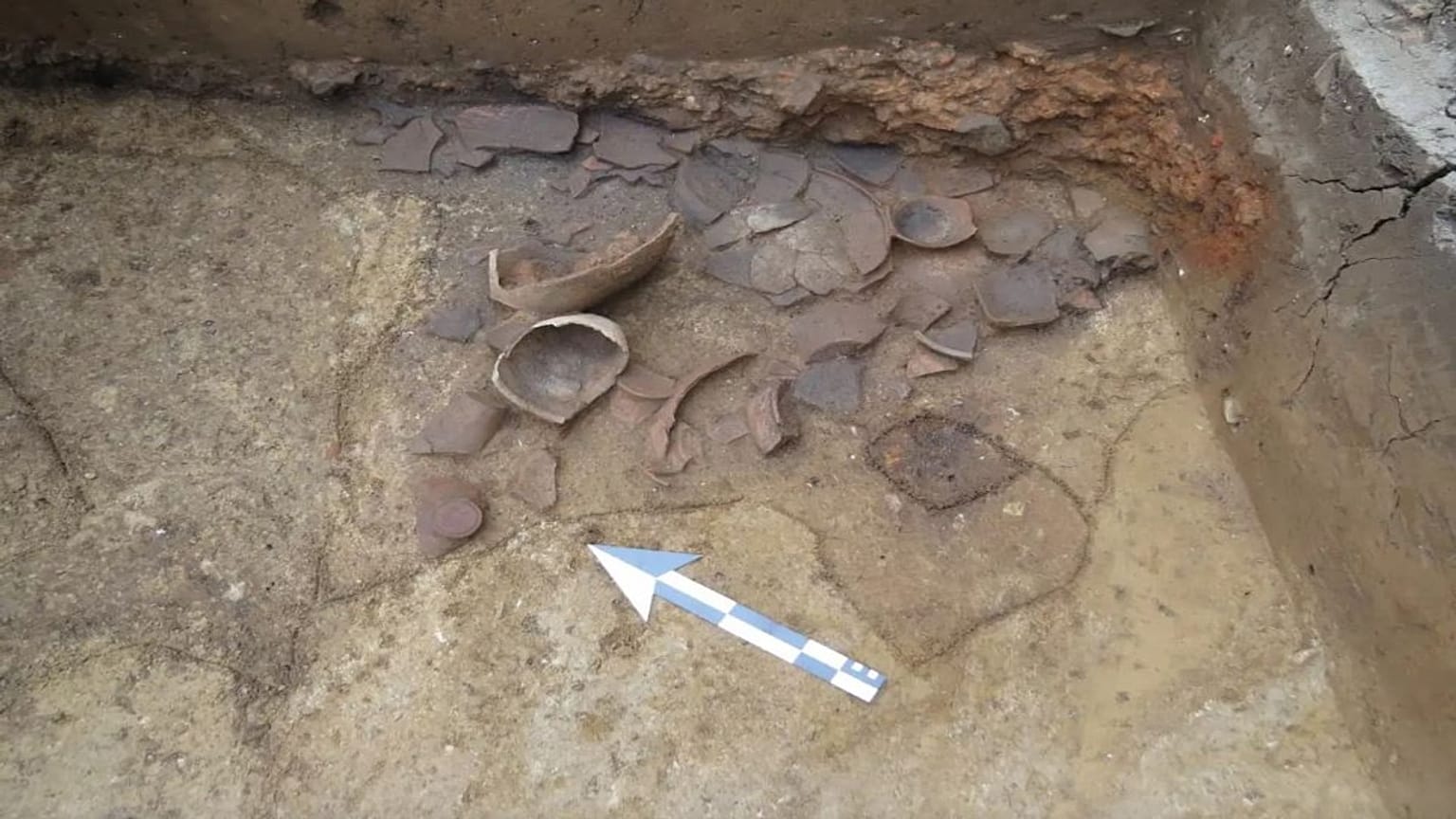
During recent excavations in Regensburg’s old town, German archaeologists uncovered a temple dedicated to the god Mithras

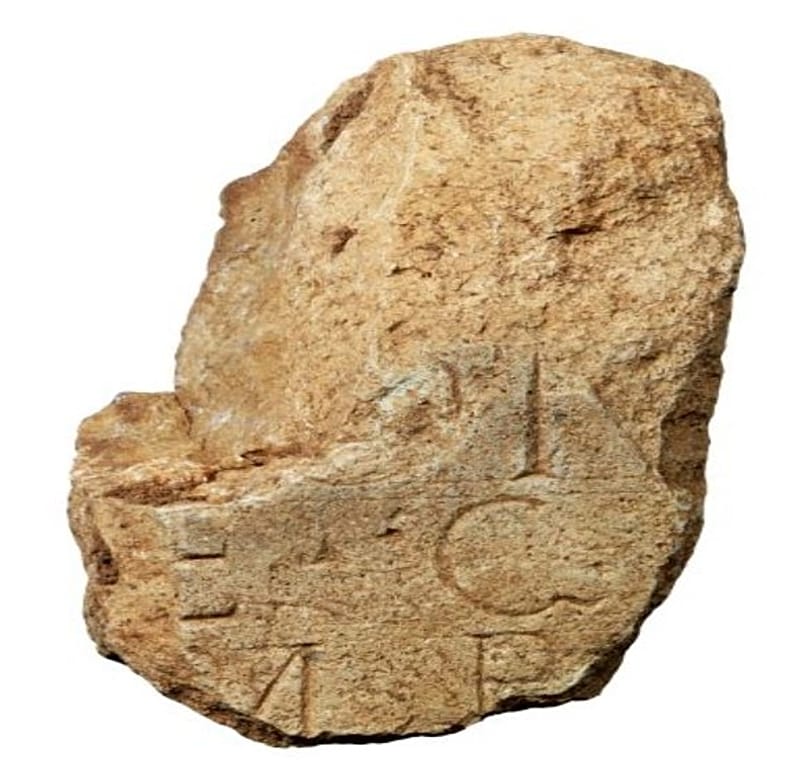
Because the building was originally constructed in wood, only a few structural remains have survived. Finds such as an inscribed votive stone and fragments of metal votive plaques, however, clearly point to its use as a place of worship.

Further evidence of the still enigmatic Mithras cult includes shards of a ceramic vessel decorated with snakes, incense chalices and handled jugs. Experts assume that ritual banquets were an integral part of the cult of Mithras.

Coins, including specimens from the reign of Emperor Hadrian (AD 117–138), make it possible to date the temple to between AD 80 and 171. This makes it the oldest of the nine Mithraea so far known in the Roman province of Raetia, in what is now Bavaria.

Raetia, a Roman province in central Europe that existed roughly from the 1st century BC to the 5th century AD, encompassed parts of what is now southern Germany, Switzerland, Austria and northern Italy.

The cult of Mithras, or Mithraism, was a mysterious religion. It was particularly widespread in military and commercial centres, and Roman legionaries were often among its followers. Only men were admitted. A local community typically consisted of around 15 to 40 members.

In ancient Persia, Mithras was called "Mitra" and was a god of covenants, loyalty and justice. The Romans turned him into a sun god. The Roman Mithras cult adopted many elements from Persian mythology, but also developed its own fundamental rituals and symbols. The motif of the "tauroctony" (from Latin taurus, bull) became central: Mithras kills the bull as an act of cosmic renewal.

The Romans had a graded system of initiation, with seven levels known to us: Corax (raven), Nymphus (bridegroom), Miles (soldier), Leo (lion), Perses (Persian), Heliodromus (sun-runner) and Pater (father), each with its own symbols, rituals and presumably tests or ordeals.

With the spread of Christianity, the secret cult disappeared.

Only now has the significance of the discovery become clear

The finds were made in the run-up to a construction project. In cities with a long history such as Regensburg, archaeologists must first be brought in before new buildings can be erected. Specialists actually made the discovery back in 2023, but only now, after intensive investigations, has its full significance become clear.

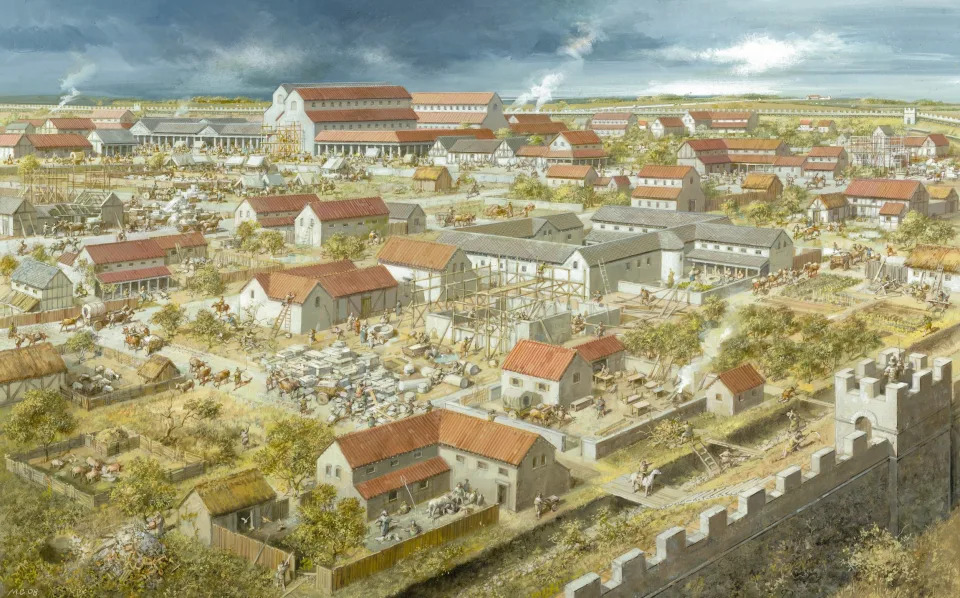
Like other Mithras temples, this roughly seven-metre-long timber structure was designed as an elongated building and partially sunk into the ground. Followers of the mystery cult probably descended via a ramp into the sanctuary.

Fragment of a votive stone with inscription; the text can no longer be deciphered.
Fragment of a votive stone with inscription; the text can no longer be deciphered. Credit: Museen der Stadt Regensburg

In the middle there was a trench-like depression, while raised platforms were built along the sides on which the faithful could sit or recline. Mithras temples were modelled on caves in their design, because one of the central motifs of the mythology is Mithras killing a bull in a cave, explained Stefan Reuter to Bavarian public broadcaster B after he analysed the finds

The temple was once illuminated by candles and oil lamps. The ceramic vessels and handled jugs that have been found suggest there were extensive ritual feasts. Analysis of the food containers is still under way. It already appears certain that high-quality food was consumed.

The finds from the temple are to be put on display at Regensburg’s Historical Museum, which is currently redesigning its Roman galleries. In the new exhibition, the Mithras sanctuary will play a prominent role.

Monday, December 19, 2022

The (Re)Birth of Sol Invictus

It is the month of December, and yet the city is at this very moment in a sweat. License is given to the general merrymaking. Everything resounds with mighty preparations–as if the Saturnalia differed at all from the usual business day!
— Roman philosopher Seneca, ca. 64 C.E.1

Sol Invictus in marble

In the pre-Julian, Roman calendar, December was the tenth and last month (the sun’s annual circle of travel completed). In the Julian calendar, accepted with minor adjustments to the present-day, the two most illustrious Caesars were commemorated with the addition of “July” and “August.” Nonetheless, December remained the final month–when Saturn, a kind of Father Time, finished consuming the preceding twelve months.

Late December was a time of rejoicing and celebration in ancient Rome, the Saturnalia (December 17-23) being a time of festivities, gift-giving, and carnival-esque reversal of roles. In this brief rebellion against the regularity of social norms and roles, Romans reveled in a brief period of dis-order: masters, for instance, adopted the role of slaves and served them at table. Yet this brief reversal only served to legitimate the cyclical return of the cosmically-sanctified social order at the winter solstice.

The Greek historian Plutarch (ca. 46-120 C.E.) tells us that the cult of Mithras, an Indo-Iranian god identified with the Sun, was thriving in Rome before the early Christians had attained any significant following. Mithras was soon assimilated into, or syncretically fused with, the cult of Sol Invictus, whose cyclical rebirth, like that of Mithras, was venerated on–December 25. In the Roman iconography of the time, Mithras is often depicted as sharing the offering of a slain bull with Sol Invictus. This date of rebirth, within their imperfect calculation of seasonal cycles, was joyously affirmed as the “(Re)birth of the Unconquerable Sun.”

After the late autumn harvests, the Sun of course would noticeably begin to wane, decreasing in power and duration as Saturn consumed the remaining weeks of the annual cycle. (Saturn also consumed every week; thus, even today, the final day is of course “Saturday.”) The long winter months meant hardship: cold, illness, and sporadic food shortages. But the Roman astronomers, in their crude calculation of the endless, inexorable cycle of Nature’s regenerative return, heralded December 25 as a rebirth. In a sense, Time was merely cyclical, not linear; the celebration of Natalis Invicti was the renewed birth, not of a Christian “messiah,” but of the life-giving forces of Nature itself.

The veneration of the Sun, as the endlessly regenerative source of all life, was of course much older than the early Roman empire. Possibly the first monotheistic ruler, the visionary pharaoh Akhnaten (reigning ca. 1353-1336 B.C.E) abolished all rival gods and celebrated the solar disc Aten as the source of all life and renewed fertility in his poetic “Hymn to the Sun.” (The elderly Freud, in his final book Moses and Monotheism (1938), even maintained, probably inaccurately, that Moses was actually an Egyptian who brought a revised monotheism–more ethnic-nationalist with an exclusive tribal god–to the subjugated Hebrew people.)

The Roman emperor Aurelian, as late as 274 C.E., proclaimed Sol Invictus as his primal state-god. But the cult of the Christians, after having suffered terrible persecution and torture for three centuries, finally attained a decisive triumph when the Emperor Constantine, around 313 C.E., officially announced his own conversion to the rapidly growing Christian creed, and mandated tolerance toward the religion and its followers. Ironically, within decades the newly-sanctified and officially supported Christians began a campaign of persecution against the now-fading Mithraic cult.

What was lost? A sanctified awareness, and daily affirmation, of the endlessly regenerative cycle of life-giving power, originating from the Sun. In that sense, despite the invalid Ptolemaic model of the motions of sun-and-earth, daily experience was grounded in a pre-scientific recognition of human dependence upon the life-giving Sun and its seasonal cycle of fertility and abundant flora and fauna, all of which co-existed interdependently. In short: an ecological consciousness.

Image creditMythology.net.

  1. “On Festivals and Fasting.” In: Seneca’s Letters from a Stoic (p. 40). Dover Publications. [↩FacebookTwitterReddit
Intellectual historian and psychoanalytic anthropologist, William Manson (Ph.D., Columbia) has published numerous scholarly books and papers, and is a longtime contributor to Dissident Voice. Read other articles by William.

Saturday, December 01, 2007

B-Day

I got a reminder notice today from the nice folks at Blog.ca.

Happy Birthday plawiuk,

today is your birthday and we wish you a day filled with your favourite things, with sunshine and laughter and lots of good cheer.

How about writing something about your birthday in your blog? Your friends and the blog.ca community will certainly be glad to hear about how you have experienced this special day.

Just log in http://www.blog.ca/login.php to write a post on your blog to your friends or to the whole blog.ca community .

We wish you all the best and are looking forward to seeing you again soon.

Your blog.ca-team

As if I would forget. And since they asked me to post about my birthday well shucks who could resist. Here is my post..... from last year; Today In History.

Modest ain't I.


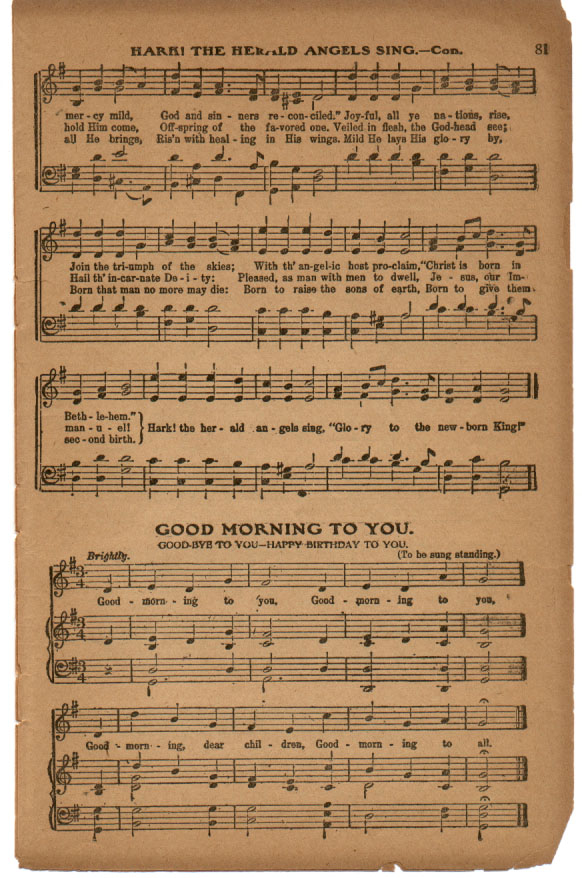
And here are two versions of Beatles doing Happy Birthday. I like the second one best. Both are rockin'. The original Happy Birthday song was called Good Morning To You.


Happy Birthday - The Beatles


Birthday by the Beatles
From The White Album


,


Unfortunately these guys forgot about me;

December 1
Birthdays in History - December 1 Deaths - December 1 Events
And I didn't make the news like these folks.

Today in 1982 Michael Jackson released his autobiographical video;
" I am not like other guys' Narrated by the great Vincent Price. It created the culture of mass music videos.

And of course Birthdays are a pagan celebration.

Birthday

It is thought the large-scale celebration of birthdays in Europe began with the cult of Mithras, which originated in Persia but was spread by soldiers throughout the Roman Empire. Such celebrations were uncommon previously so practices from other contexts such as the Saturnalia were adapted for birthdays. Because many Roman soldiers took to Mithraism, it had a wide distribution and influence throughout the empire until it was supplanted by Christianity. The Jewish perspective on birthday celebrations is disputed by various rabbis.

Celebration of birthdays is not universal. Some people prefer name day celebrations, and Jehovah's Witnesses do not celebrate either, considering their origins to be pagan festivals along with Christmas and Easter

And I have that statue of Mithras at home...coincidence? I think not.

Also 'coincidentally' Mithras shares the same birthday as Jesus, as does Krishna and Horus. Since it is the Sun's Birthday.

They are after all Sun Gods.

The image “http://images.ctv.ca/archives/CTVNews/img2/20060815/160_AIDS_060815.jpg” cannot be displayed, because it contains errors.

And don't forget today is World AIDS Day. I noticed a lot of Harpocrites were not wearing their red ribbons this week neither in the house or while doing interviews on Mike Duffy.

Hmmm.....I guess for them it is still a Gay Disease,

Prime Minister Stephen Harper, left, chats with Foreign Affairs Minister Peter MacKay as he makes a defence spending announcement onboard HMCS Halifax in Halifax on Thursday July 5, 2007. (CP PHOTO, Andrew Vaughan)

despite evidence to the contrary.

Harper also can focus more attention on AIDS in Canada, where more than 62,000 people are living with HIV/AIDS. New infections are often among young people, especially girls 15 to 19 years old.

But at least one Cabinet Minister was wearing his Red Ribbon...why am I not surprised?

Environment Minister John Baird


Find blog posts, photos, events and more off-site about:

, December 1, December 1, 1954,,, , ,

Saturday, May 02, 2020

MODERN YEZIDISM

http://kurdistanica.com/yezidism/


The followers of the Yezidi religion, who have variously referred to themselves also as the Yazidi, Yazdâni, Izadi, and Dasna’i, have often been pejoratively referred to by outsiders as “devil worshippers.” They constitute less than 5% of the Kurdish population. At present they live in fragmented pockets, primarily in northwest and northeast Syria, the Caucasus, southeast Turkey, in the Jabal Sanjâr highlands on the Iraqi-Syrian border, and regions north of the Iraqi city of Mosul.

As a branch of the Cult of Angels, Yezidism places a special emphasis on the angels. The name Yezidi is derived from the Old and Middle Iranic term yazata or yezad, for ,1 angel,” rendering it to mean “angelicans.” Among these angels, the Yezidis include also Lucifer, who is referred to as Malak Tâwus (“Peacock Angel”). Far from being the prince of darkness and evil, Lucifer is of the same nature as other archangels, albeit with far more authority and power over worldly affairs. In fact, it is Malak Tâwus who creates the material world using the dismembered pieces of the original cosmic egg, or pearl, in which the Spirit once resided.

Despite the publication of (reportedly) all major Yezidi religious scriptures, and the availability of their translations, the most basic questions regarding the Yezidi cosmogony are left to speculation. For example, it is left to deductive reasoning to figure out in which epoch of the universal life Lucifer belongs, or what his exact station is. He naturally cannot be the same as the Universal Spirit, as the Spirit does not enter into the act of creation. In Yârsânism and Alevism it is Khâwandagâr, the “Lord God,” who as the first avatar of the Spirit undertakes the task of Sâjnâri-world genesis. It is tempting to concluded that Lucifer replaces Khâwandagâr himself in the Yezidi cosmogony. Two Yezidi holy scriptures, Jilwa and Mes’haf, both discussed later, substantiate this conclusion. The following translations of these texts are adopted almost entirely from Guest (1987). Jilwa reads, “Malak Tâwus existed before all creatures,” and “1 (Malak Tâwus) was, and am now, and will continue unto eternity, ruling over all creatures …. Neither is there any place void of me where i am not present. Every Epoch has an Avatar, and this by my counsel. Every generation changes with the Chief of this world, so that each one of the chiefs in his turn and cycle fulfills his charge. The other angels may not interfere in my deeds and work: Whatsoever I determine, that is.” The implied attributes are all those of Khâwandagâr in Yârsânism and Alevism. Mes’haf asserts> “In the beginning God [which must mean the Universal Spirit] created the White Pearl out of his most precious Essence; and He created a bird named Anfar. And he placed the pearl upon its back, and dwelt thereon forty thousand years. On the first day [of Creation], Sunday, He created an angel named ‘Azâzil, which is Malak Tâwus, the chief of all….” Mes’haf goes on to name six other angels, each created in the following days of this first week of creation in the First Epoch. The names of these angels closely match those of Yârsânism and Alevism, as given in Table 6. The problem is that there are seven rather than six avatars, leaving out, therefore, the Spirit himself from the world affairs. This is, however, the result of the later corruption of the original cosmogony, perhaps under Judeo-Christian influence. The rest of the opening chapter of the Mes’haf provides a version of human origin close to the Judeo-Christian story of Adam and Eve, and their interaction with Satan, even though Satan, here Lucifer, serves them only as an honest councillor and educator. Thereafter, he is left in charge of all creatures of the world.

The real story of the First Epoch however surfaces rather inconspicuously, in a single sentence at the end of the Mes’hafs first chapter. As it turns out, the sentence is very much in agreement with the basic tenets of the Cult of Angels. It reads, “From his essence and light He created six Avatars, whose creation was as one lighten a lamp from another lamp.” It is then safe to assume that the original Yezidi belief was that Lucifer was the primary avatar of the Universal Spirit in the First Epoch, and the rest of the cosmogony of the Cult of Angels remains more or less intact. Lucifer himself, in the form of Malak Tawus, “Peacock Angel,” is represented by a sculptured bronze bird. This icon, called Anzal “the Ancient One,” is presented to worshippers annually at the major jam at Lâlish.

Lâlish and its environs are also the burial site of Shaykh Adi, the most important personage of the Yezidi religion. Adi’s role in Yezidism is similar to those played by Sahâk in Yârsânism and Ali in Alevism. To the Yezidis, Shaykh Adi is the most important avatar of the Universal Spirit of the epochs following the First Epoch. Adi being a primary avatar, he is therefore a reincarnation of Malak Tawus himself. In its modern, garbled form, Adi is assigned a founding role in Yezidism, and interestingly is believed to have lived at about the same time in history, as Sultan Sahâk is believed by the modern Yârsâns, i.e., sometime in the 12-13th centuries. (This is about the same time that Bektâsh of Alevism is believed to have lived and founded that branch of the Cult.) Both Adi and Sahâk are believed to have lived well in excess of a century.

In addition to the main sculptured bird icon Anzal, there are six other similar relics of the Peacock Angel. These are called the sanj’aqs, meaning “dioceses” (of the Yezidi community), and each is assigned to a different diocese of Yezidi concentration. Each year these are brought forth for worship to the dioceses of Syria, Zozan (i.e., Sasoon/Sasun or western and northern Kurdistan in Anatolia), Sanjâr, Shaykhân (of the Greater Zâb basin), Tabriz (Azerbaijan), and Musquf (Moscow, i.e., ex-Soviet Caucasus). The sanjaqs of Tabriz and Musquf no longer circulate, since there are not many Yezidis left in Azerbaijan, and the anti-religious Soviet government did not permit the icon to enter the bustling Yezidi community of the Caucasus.

Like other branches of the Cult of Angels’, Yezidism lacks a holy book of divine origin. There are however many sacred works that contain the body of their beliefs. There is a very short volume (about 500 words) of Arabic-language hymns, ascribed to Shaykh Adi himself and named lilwa, or “Revelation.” Another, more detailed book is the Mes’haf i Resh, “the Black Book” in Kurdish, which has been credited to Adi’s son, Shaykh Hasan ibn Adi (b. ca. AD II 95), a great-grandnephew of Adi.

Mes’haf is the most informative of the Yezidi scriptures, as it contains the body of the religion’s cosmogony, catechises, eschatology, and liturgy, despite many contradictions and vagaries (far more than in the works of the Yârsâns). The Mes’haf may in fact date back to the 13th century. Mes’haf was written in an old form of Kurmânji Kurdish. Kurmânji in the 13th century was primarily restricted to its stronghold in the ultra-rugged Hakkâri highlands (see Kurmânji) . But Hakkâri is in fact exactly were the most ardent followers of Adi and Hasan arose. Adi himself, despite the Yezidi’s belief that he was born in Bekaa Valley of Lebanon, came to be called Adi al-Hakkâri (“Adi of Hakkâri”).

Of the Yezidis’ four major annual celebrations, two are of special interest here, the Jam and the feast of Yezid.

The most important Yezidi feast is the seven-day-long feast of lam, when the bird icon of Anzal is presented to the worshippers. It occurs between the 6th and 13th of October, which is obligatory to all believers to attend, and is held at Lâlish, north of Mosul, the burial site of Adi and other important Yezidi holy figures, including Hasan. It coincides with the great ancient Aryan feast of Mithrâkân (Zoroastrian Mihragân, Nusayri Mihrajân; see Alevism), held customarily around the middle of October. Ancient Mithrâkân celebrated the act of world creation by the sun god Mithras, who killing the bull of heaven, used its dismembered body to create the material world. On the occasion of the feast at Lâlish, riding men pretend to capture a bull, with which they then circumambulate the Lâlish shrine of Shams al-Din (the “Sun of the Faith”), before sacrificing the bull and distributing its flesh to the pilgrims.

Yezid, a puzzling personage, is venerated by the Yezidis in a somewhat confused fashion. Yezid is credited with founding Yezidism (the religion, obviously, shares his name), or to have been the most important avatar of the Spirit after Malak Tâwus (some even claiming he is the same as Malak Tâwus). He is occasionally identified by the Yezidis as the Umayyad caliph, Yazid ibn Mu’awiyya (r. AD 680-683), the arch-villain to Shi’ite Muslims. This faulty identification is encouraged by the Syrian and Iraqi governments (who hopc thus to detach the Yezidis from other Kurds, and to connect them instead with the Umayyads, hencc the Arabs). It has also prompted the leading Yezidi family, the chols, to adopt Arabic costumes and Umayyad caliphate names. Yet, far from being the ‘Umayyad caliph, the name is certainly derived from yezad, “angel,” and judging by its importance, he must be the angel of the Yezidis. This comical confusion, which permeates the Yezidi leadership to the extent that they doubt their own ethnic identity, is not unexpected, given the intensity of their persecution in the past, and the destruction of whatever religious and historical literature Yezidism may have had in the past, in addition to the little that remains today.

Is it possible that Malak Tâwus, who created the material world in Yezidi cosmogony by utilizing a piece of the original cosmic egg or pearl that he had dismembered earlier, originally represented Mithras in early Yezidism, and only later Lucifer? The second most important Yezidi celebration points toward this possibility. It is held between middle and late December and commemorates the birth of Yezid. His birthday at or near the winter solstice, links him to Mithras. (Mithraism did after all expand into the Roman Empire from this general geographical area in the course of the first century BC, and Mithras’ mythical birth was celebrated on December 25 as already has . been discussed.)

The celebration parallels in importance the major jam ceremony in October. It is commemorated with three days of fasting before the jubilees.

In the Yezidi version of world creation, birds play a central role in all major events too numerous in fact to permit summary here. The reverence of the Yezidis for divine manifestations in the form of a bird, the Peacock Angel, and the sacredness of roosters are just two better-known examples. What is fascinating, but less known, is that within 30 miles of the shrines of Lâlish are the Shanidar-Zawi Chami archaeological sites of central Kurdistan, where the archaeologist Solecki has unearthed the remains of shrines and large bird wings, particularly those of the great bustards, dated to 10,800±300 years ago. The remains are indicative of a religious ritual that involved birds and employed their wings, possibly as part of the priestly costume (Solecki 1977).

The representation of bird wings on gods was later to become common in Mesopotamian art, and particularly in the royal rock carvings of the Assyrians, whose capital Nineveh can literally be seen on the horizon from Lalish. The artistic combination of wings and non-flying beings like humans (to form gods), lions (to form sphinxes), bulls (to form royal symbols), and horses (to form the Pegasus), as well as wing-like adornments to priestly costumes, are common in many cultures, but the representation of the supreme deity as a full-fledged bird is peculiarly Yezidi. The evidence of sacrificial rites practised at ancient Zawi Chami may substantiate an indigenous precursor to modern Yezidi practice.

The bird icon of Lâlish has always been readily identified, as the name implies, as a peacock. However, there are no peacocks native to Kurdistan or this part of Asia. In light of the discoveries at Zawi Chami, the great bustard is a much more likely the bird of the Yezidi icon. The great bustard (Kurdish shawtlt) is native to Kurdistan. It too possesses a colorful tail, similar to that of a turkey (similar to, though much smaller than, that of a peacock, which is seen on the icon). The great bustard far more logically suits the archaic tradition of the Yezidis than does the peacock, a native bird of India.

The practice of bowing three times before the rising sun and chanting hymns for the occasion is practiced by the Yezidis, as among the traditional Alevis (Nikitine 1956). The Yezidis also practice the rite of embracing the “very body of the sun,” by kissing its beams as they first fall on the trunks of the trees at the dawn (Kamurân Ali Badir-Khân 1934).

Another Alevi hallmark, the representation of the deity in the shape of a sword or dagger stuck into the ground, is also found among the Yezidis, albeit not for worship but to take oaths upon it (Alexander 1928, Bellino 1816).

In addition to an entrenched aristocracy, the social class system of the Yezidis shows interesting similarities to the rigid social stratification of the Zoroastrian Sasanian Empire. Zoroastrian priests forbade anyone who did not belong to the priestly or princely class to gain literacy, and traditionally Yezidism barred such luxury altogether. (Some Yarsans also believe that this should be so, and also practice it.) In fact, it has been asserted that until the beginning of this century only one man among the Yezidis, the custodian of the Jilwa, knew how to read (Guest 1987, 33). This ban is largely gone now, although through force of habit the Yezidi commoners are still not keen on literacy.

Interestingly, the wealthier Yezidi shaykhs and mullahs wear Arab Bedouin clothes and headdress, speak both Arabic and Kurdish, and usually have Arabic names. The poorer Yezidi social and religious leaders, on the other hand, have Kurdish names, speak only Kurdish, and wear Kurdish traditional clothes and headgear (Lescot 1938).

Leadership of the Yezidi community has traditionally rested with one of the old Kurdish princely houses, the Chols, who took over in the 17th century. They replaced the line of rulers who claimed descent from Shaykh Hasan, the author of Mes’haf. They are supported financially and otherwise by every Yezidi. The priestly duties reside, as in Yârsânism, with the members of the seven hereditary priestly houses, which include the Chols.

The relative smallness of the current Yezidi community can be misleading. At the time of Saladin’s conquest of Antioch, the Yezidis were dominant in the neighboring valleys in the Amanus coastal mountains, and by the 13th and 14th centuries Yezidis had expanded their domains by converting many Muslims and Christians to their faith, from Antioch to Urmiâ, and from Sivâs to Kirkuk. They also mustered a good deal of political and military power. In this period, the emirs of the Jazira region (upper Mesopotamia) were Yezidis, as was one of the emirs of Damascus. A Yezidi preacher, Zayn al-Din Yusuf, established Yezidi communities of converts in Damascus and Cairo, where he died in 1297. His imposing tomb in Cairo remains to this day. Of 30 major tribal confederacies enumerated by the Kurdish historian Sharaf al-Din Bitlisi in Sharafntlma (1596), he contends seven were fully Yezidi in times past. Among these tribes was the historic and populous Buhtans (the Bokhtanoi of Herodotus).

An early Muslim encyclopedist, Shahâb al-Din Fadlullâh al-‘Umari, declares as Yezidi in AD 1338 also the Dunbuli/Dumbuli. This reference carries a very important piece of information, which can be the only known reference to the Cult of Angels before its fragmentation into its present state and the loss of its common name. Since the Dunbuli were a well-known branch of the Alevi Daylamites, and since the reporting by al-‘Umari is normally astute, the declaration of this tribe as Yezidi may indicate that at the time the appellation Yazidi (“angelicans’) was that of the Cult of Angels in general. (The historical designation Yazdtlni here for the Cult of Angels has been used to avoid confusion with the modern Yezidism.)

There have been persistent attempts by their Muslim and Christian neighbors to convert the Yezidis, peacefully or otherwise. The Ottoman government and military schools recruited many Yezidis, who were then converted to Sunni Islam, while in the mountains the Yezidis maintained their faith. A petition submitted in 1872 to the Ottoman authorities to exempt the Yezidis from military service has become the locus classicus on the subject of Yezidi religious codes and beliefs (for the English translation of the text, see Driver 1921-23).

Failing peaceful conversion, the Ottomans carried out massacres against the Yezidis in the course of the 17th and 18th centuries. The massacres recurred in Ottoman domains in the middle of the 19th century, resulting in a great migration of Ottoman Yezidis into the Russian territories in the Caucasus. Twenty major massacres between 1640 and 1910 were counted by Lescot (see Deportations & Forced Resettlements).

Many Yezidis escaped into the forbidding mountain areas, but others converted, at least nominally, to Sunni Islam. The Ottoman Land Registration Law of 1859 particularly pressed for conversion by refusing to honor ownership claims of Yezidis. Many Yezidi shaykhs, who were the primary property owners, maintained their lands and property by converting. The Yezidi leaders whose holdings were in the inaccessible higher mountains were spared the need for conversion, and so were the landless sharecroppers or herders. Before 1858, the Yezidis in the Antioch-Amanus region on the Mediterranean littoral numbered 200,000, constituting the majority of the inhabitants. In 1938, Lescot counted only 60,000-a small minority.

Even today the Yezidis are still subject to great pressure for conversion. There is now also a movement to strip the Yezidis of their Kurdish identity by either declaring them an independent ethnic group apart from the Kurds or by attaching them to the Arabs. Hence, the Yezidis are now called “Umayyad Arabs” by the governments of Iraq and Syria, capitalizing on the aforementioned confusion that exists among the Yezidis with respect to the irrelevant Umayyad caliph Yazid ibn Mu’awiyya.

Most Yezidis are now in Syria, in the Jazira region and the Jabal Sanjar heights, and in the Afrin region Northwest of Aleppo. The next largest population of Yezidis is found in the Caucasus, where up to half the Kurds are followers of Yezidism. In Iraq, where the holiest Yezidi shrines of Lâlish are located, they are found in a band from eastern Jabal Sanjâr toward Dohuk and to Lâlish, northeast of Mosul. There used to be a large number of Yezidis in Anatolia, prior to the massacres of the last century. Those who now live within the borders of Turkey are thinly spread from Mardin to Siirt, and from Antioch and Antep to Urfâ. There are also a relatively small number of Yezidis in Iran, particularly between the towns of Quchdn and Dughâ’i in the Khurâsâni enclave, and in Azerbaijan province.

Further Readings and Bibliography: R.H.W. Empson, The Cult of the Peacock Angel (London, 1928); E.S. Drower, Peacock Angel (London, 1941); G.R. Driver, “The Religion of the Kurds,” Bulletin of the School of Oriental and Studies 11 (1921-23); John S. Guest, The Yezidis (New York: KPI, 1987); Isya Joseph, Devil Worship (Boston, 1919); Alphonse Mingana, “Devil-worshippers: Their Beliefs and their Sacred Books,” Journal of the Royal Asiatic Society (1916); R.C. Zaehner, Zurv4n: A Zoroastrian Dilemma (New York: Oxford University Press, 1955); R. Lescot, Enquete 5ur les Yezidis de Syrie et du Djebel Sindjar, Memoires de L’Institut Francais de Damas, vol. 5 (Beirut, 1938); Hugo Makas, Kurdische Studien, vol. 3, Jezidengebete (Heidelberg, 1900); Ralph Solecki, “Predatory Bird Rituals at Zawi Chemi Shanidar,” Sumer XXXIII.L (1977); Rose Solecki, “Zawi Chemi Shanidar, a Post-Pleistocene Village Site in Northern Iraq,” Report of the VI International Congress on Quaternary (1964); Sami Said Ahmed, The Yazidis: Their Life and Beliefs, cd. Henry Field (Nfiami: Field Research Projects, 1975); E.S. Drower, Peacock Angel: Being Some Account of Votaries of a Secret Cult and Their Sanctuaries. (London, 1941); Cecil 1. Edmonds, A Pikdmage to Lalish (London: The Royal Asiatic Society, 1967); Thcodor Menzel, “Ein Beitrag zur Kenntnis der jeziden,” in Hugo Grother, cd., Meine Vorderasienexpedition 1906 und 1907. Vol. 1. (Leipzig, 191 1); Basile Nikitine, Le5 Kurde5, etude 5ociologique et hi5torique (Paris, 1956); KamurAn Ali Badir Khdn, “Les soleil chez les Kurdes,” Atlantis 54, vii-viii (Paris, 1934); Constance Alexander, Baghdad in Bygone Days, from the Journals of the Correspondence of Claudius Rich… 1808-1821 (London, 1928); Charles Bellino letter, 16 May 1816, to Hammer, included in Fundgruben des Orients 5 (1816).

Sources: The Kurds, A Concise Handbook, By Dr. Mehrdad R. Izady, Dep. of Near Easter Languages and Civilization Harvard University, USA, 1992

Thursday, July 06, 2006

Tantrik Economics


on the social level, the Kartābhajās bring together members of all classes and social factions, rejecting caste distinctions and proclaiming the divinity of all human beings; and third, on the gender level, the Kartābhajās offered a new social space in which men and women could mix freely, even providing new opportunities for women in roles of spiritual authority. The result is a rather ingenious religious fusion – or “subversive bricolage,” which skilfully adapts and reconfigures elements from a wide range of sources – a kind of poaching or pilfering by poor lower-class consumers in a dominated religious market that demanded the subtle use of secrecy, both, as a tactic of appropriation, and as a key social strategy or way of life.
The Economics of Ecstasy - Tantra, Secrecy and Power in Colonial Bengal

Much like the early Agape Feasts of the Christians and their predecesors in the Mithras Cult. Religions of the Ancient Lowly are democratic in nature in their earliest forms, since they exist outside and against the dominantant Religious State. They offer a safe place for a declasse melange of participants, and women are notably amongst them.

These 'Love Feasts' offered the participants the free exchange of goods; potlach, a sharing of communal supper, and after that convivality, socializing, and all that could be found scandalous by the salacious.

In ancient Greece the Bacchanae were a rebellion against the rigid State Religion
(see Themis by Jane Harrison) embracing the life affirming spontaniety of nature, in the form of a dead and ressurected god; Bacchus/Dionysous/Pan.

Once Christianity lost its spontaneous inclusiveness it became a State religion of Constantinople the Byzantine seat of power of the former Hellenic world. The State declared Jesus the one and only dead and ressurected god, no others need apply.

Thus the myth of the death of Pan was created by neccisities of the State. The peoples religion of ancient Rome was now the State religion of Rome, Byzantium and the Holy Roman Empire.


Also see

Wikipedia: Tantra

Sacred Tantrik Texts


Find blog posts, photos, events and more off-site about:
, , , , , , , , , , , , , , , , ,

Sunday, October 20, 2024

ANCIENT INDIA AND THE ROMAN EMPIRE
Published October 20, 2024 
DAWN/EOS
This 4th century CE mosaic in Sicily showcases the cultural impact India had on the region. An Indian-looking goddess, apparently copied from an Indian original, is shown flanked by an elephant and tiger with pepper vines hanging behind her | Villa Romana del Casale

In March 2022, a team of archaeologists was excavating a newly discovered temple of the Egyptian goddess Isis at Berenike, on the shores of the Red Sea, when they unearthed a series of remarkable finds.

Berenike is today a bleak and desolate spot. Here, under pale blue skies, the flat, treeless, red-dust wadis of the eastern desert give way to the windy shores of the Red Sea. There is little to see and, though the site contains the foundations of some once impressive structures — a couple of temples, a Roman aromatics distillery and a fine bath house — the broken walls today rarely rise far above the level of the encroaching sand dunes. Nevertheless, these unprepossessing ruins, easily missed as you drive up the Red Sea coast, were the landing point for generations of Indian merchants travelling to the Roman Empire and were once a place where unimaginable fortunes could be made.

The finds which emerged from the storeroom of the Isis temple included the head and torso of a magnificent Buddha, the first ever found to the west of Afghanistan. It was sculpted from the finest Proconnesian marble, from the island of Marmara off the Turkish coast, in a part Indo-Gandharan, part Palmyran, part Romano-Egyptian style, with rays of the sun beaming out from it on all sides, as if the Buddha had transformed into a Roman solar deity like Sol or Mithras.

From the style of the carving, and what the archaeologists described as the “tortellini-like” curls drilled on to the Buddha’s head, they believed that the sculpture must have been made in a workshop in 2nd century CE Alexandria. It was probably commissioned by a wealthy Indian Buddhist sea captain, in gratitude for his safe arrival in the Roman Empire. Its location in a temple of Isis may not be an accident: one Egyptian papyrus of the period refers to Isis as the mother of the Buddha.


In the storerooms of the Isis temple were also found a stone memorial dedicated to a trinity of early proto-Hindu gods, one of whom, Vasudeva, with his club and discus, would soon evolve into the more familiar form of Krishna; also propitiated was Balarama, with a plough; and the goddess Ekanamsha.


Recent archaeological discoveries are leading to a radical revision by scholars of the intensity, scale and importance of maritime trade between the Subcontinent and the world. For example, one estimate is that one third of the Roman empire’s entire revenue was generated by taxes on trade with ancient India. Historian William Dalrymple’s latest book — The Golden Road: How Ancient India Transformed the World, published by Bloomsbury — presents a fascinating account of this exchange between cultures, civilisations and global wealth. Eos presents, with permission, an excerpt from the book…

There was also a bilingual inscription in Greek and Sanskrit, put up in the 3rd century by a Buddhist devotee from Gujarat: “In the sixth year of King Philip [ie the Roman Emperor Philip the Arab, in 249 CE], the kshatriya [warrior] Vasula gave this image for the welfare and happiness of all beings.”

Out of the sands of Berenike has come pottery from Spain, frankincense and resin from Southern Arabia, beads from Vietnam and Java, statues of the gods of Palmyra and cedar from Lebanon. There have also been letters, receipts and customs passes from Alexandria. But most of all there has been what the excavator described as “just tons” of Indian finds, including gems and pearls, woven mats and baskets, teak from Kerala and even the bones and skulls of elephants and monkeys — specifically, rhesus and bonnet macaques from India.

Indeed a steady stream of finds from the Indian trading community had been emerging from this stretch of Egyptian desert sand for some time. A great many fragments of cotton weave have turned up in Berenike, which the archaeologists believe to be of a variety grown in Gujarat and the Indus delta. A Tamil-Brahmi pottery graffito was written by a Tamil visitor who called himself “the chieftain Korran”, while Prakrit inscriptions recorded the visits of other south Indians.

Deposits of rice, dal, coconuts, coriander and tamarind show that these south Indian merchants preferred their own deliciously peppery cuisine to that of Egypt, much as their successors still do today. Nearby were found huge 22-pound pots containing several thousand imported Indian black peppercorns.

Ever since the first reports of the incredible splendours and riches of India began reaching Europe after the conquests of Alexander the Great in the 4th century BCE, Europeans had fantasised about the wealth of India. Here, according to Herodotus and the Greek geographers, gold was dug up by gigantic ants and guarded by griffins; here, precious jewels were said to lie scattered on the ground like dust.


It was India, not China, that was the greatest trading partner of the Roman Empire. It is also clear that sea travel was the fastest, most economical and safest way to move people and goods in the pre-modern world, costing about a fifth of the price of equivalent land transport.

As the two worlds were gradually brought into regular and direct contact through the ports of the Red Sea in the 1st century BCE, the Romans became increasingly eager consumers of Indian goods and luxuries, particularly the spices of southern India. Indian merchants were only too happy to satisfy these cravings, at considerable profit.

Archaeological evidence for the surprising intensity of contact between early India and Roman Egypt is growing fast. The Indian finds in Berenike have been mirrored by equally striking evidence of Roman trade emerging from excavations in India, particularly the recent dig near the Keralan village of Pattinam, the probable site of Berenike’s Indian counterpart, Muziris.


As a result, the scale and importance of this trade are currently being radically revised by scholars working on both sides of the Indian oceans. Indeed, according to some recent calculations, customs taxes on trade with India may have generated as much as one-third of the entire income of the Roman exchequer. One source for this striking figure is a unique papyrus document of uncertain origin, believed to have been found in an ancient Egyptian rubbish dump.

The debris chucked out by the people of the now-vanished Egyptian town of Oxyrhynchus — the ‘City of the Sharp-Nosed Fish’ — has for a century been providing a series of remarkable literary discoveries. These have ranged from previously unknown lesbian erotica by Sappho to fragments of the collected early Christian Sayings of Jesus and pieces of a new gospel, that of the apostle Thomas. The rubbish dumps first came to the attention of the outside world in 1895, when reports reached the British archaeologists Bernard Grenfell and Arthur Hunt that the area had begun to yield an extraordinary number of papyrus fragments.

What the two men found when they visited the site, however, surpassed their wildest expectations. “The papyri were, as a rule, not very far from the surface,” wrote Grenfell in the Journal of the Egypt Exploration Fund the following year. “In one patch of ground, indeed, merely turning up the soil with one’s boot would frequently disclose a layer of papyri…”

In the first year, the two men found fragments of lost plays by Aeschylus and Sophocles; the earliest papyrus of St Matthew’s Gospel then known; and a leaf of a previously unknown book of New Testament Apocrypha, the Acts of Paul and Thecla. They also unearthed great quantities of historical documents, such as the report of an interview between the Emperor Marcus Aurelius and an Alexandrian magistrate, as well as an entire archive of administrative correspondence and financial documents. Such was the quantity of documents unearthed that many have only recently been properly studied.

A single papyrus, now in Vienna and believed by some scholars to have originated in the rubbish dumps at Oxyrhynchus, turned out to be a fragmentary loan contract and customs assessment that followed the standard template used by Alexandrian importers for such orders. It was taken out by an Alexandria-based Egypto-Roman entrepreneur for the purchase of goods from an Indian merchant in faraway Muziris on the coast of Kerala.

It gave precise details of one cargo that had been sent to Berenike all the way from India, aboard a ship called the Hermapollon. What caught the attention of historians was the jaw-dropping value of the goods in question. It seems that everything that came out of India at the period was unusually expensive by the time it reached the Roman world.

The exports included nearly four tons of ivory, worth seven million sesterces, at a time when a soldier in the Roman army would have earned about 800 sesterces annually, and a would-be senator from the cream of the Roman aristocracy had to demonstrate assets of one million sesterces to stand for office.

The life story of Gautama Buddha, as sculpted in Gandhara, is often accompanied by Roman imagery, such as Corinthian capitals and Diosynian scenes of music, dance and merry-making. There is even a depiction of the Trojan Horse | British Museum

The consignment also included a valuable shipment of 80 boxes of aromatic nard, the precious and much prized aromatic oil of the Himalayan spikenard plant, used in the manufacture of perfume, which makes a brief appearance in the Gospel of John when Lazarus’ sister Martha uses it to anoint the feet of Jesus before wiping them with her hair.

There was, in addition, a consignment of tortoiseshell and 790 pounds of Indian textiles, probably cotton, then considered a luxury product as valuable as silk. The total value of the 150-ton shipment was calculated at 131 talents, “enough to purchase 2,400 acres of the best farmland in Egypt” or “a premium estate in central Italy.”

A single trading ship such as the Hermapollon could possibly carry several such consignments, each worth a small fortune. No wonder then that Pliny the Elder (23–79 CE), the plain-speaking naval commander from northern Italy, mentions that cohorts of archers were carried on board the ships sailing to India, to offer protection against pirates, and that the Muziris papyrus carefully factors in the costs of such private security. One successful shipment of this value could turn the merchants behind it into some of the richest men in the Empire.

That was not all. According to the papyrus, the import tax paid on the cargo worth almost nine million sesterces was over two million sesterces. Working up from these figures and other customs receipts from the period, scholars have estimated that, by the first century CE, Indian imports into Egypt were worth over a billion sesterces per annum, from which the tax authorities of the Roman Empire were creaming off no less than 270 million.

These revenues surpassed those of entire subject countries: Julius Caesar imposed tribute of 40 million sesterces after his conquests in Gaul, while the Rhineland frontier was defended by eight legions at an annual cost of 88 million.

The sea trade along the Golden Road between Rome and India was clearly an immense operation, dangerous and complex, but highly profitable, both to the shippers who operated the trade and to the Roman state that taxed it. The implications of the unprecedented scale of the sea trade between India and Rome from the first century onwards are enormous. It is now clear that historians have been looking at entirely the wrong place when they thought about ancient trade routes.

It was India, not China, that was the greatest trading partner of the Roman Empire. It is also clear that sea travel was the fastest, most economical and safest way to move people and goods in the pre-modern world, costing about a fifth of the price of equivalent land transport. Shipping routes that cut across political and topographical boundaries were always more important than the slow-moving caravan trails, and the overland trade routes always carried much less trade than the sea roads: ships, after all, could carry vastly larger cargoes — often amounting to several hundred tons — and travel much more quickly than donkeys or camels. They could also sail around wars, instability and ambushes.

This Buddha, the first to be found west of Afghanistan, was discovered in 2022 in Berenike, Egypt | S E Sidebotham


The Golden Road of early East–West commerce, in other words, lay less overland, through a Persia often at war with Rome, and much more across the open oceans, via the choppy waters of the Red Sea and the Indian Ocean.

There is evidence of pioneering Indian merchants making remarkable prehistoric trading voyages as early as the seventh millennium BCE, when Afghan lapis first turns up in beads found in northern Syria. Sumerian clay tablets of the late second millennium BCE are full of references to lapis, which is used as a simile to describe the colour of the sky and certain flowers, even the beards of men.

Etched carnelian beads from Gujarat of the same date also turn up in the Royal Tombs of Ur (modern Iraq). Sumerian texts refer to a fabulously rich eastern trading city, an early Eldorado, named Aratta, which scholars have identified with one of the Indus valley cities; the same name also appears in early Sanskrit sources.

Teak from Malabar, red Indian marble and ivory were reaching Ur and the young city states of ancient Mesopotamia and the wider Persian Gulf region by c.2500 BCE. Some may have come overland, with the goods passed from merchant to merchant in a commercial relay race, but the larger and heavier objects, such as tree trunks and large blocks of precious stone, would have been much easier to move by boat.

These valuable cargoes were probably rafted down the Indus, and then ferried on in the larger seagoing boats of Meluhha, as the people of the Indus Valley Civilisation are now believed to have called themselves. The same Meluhhan boats were reaching the Persian Gulf during the reign of King Sargon of Akkad, in modern Iraq, around 2,300 BCE.

Distinctive Indus valley cooking utensils, shell jewellery and toys that have turned up at presumed Meluhhan ‘colony’ sites in Mesopotamia imply that the merchants from the Indus valley were accompanied by their children and womenfolk. Some even seem to have brought their water buffaloes and zebu-humped cattle to provide them with milk, while Indus valley-style gaming boards and dice indicate how these pioneering traders entertained themselves on the long, hot Mesopotamian summer afternoons.

Further evidence of a very early Indian merchant diaspora lies scattered around the Middle East: one cuneiform tablet mentions an entire village of Meluhhan Indians, settled in what is now Iraq, while another references an Indian woman running a tavern; there is even a legal notice about a drunken Meluhhan who was fined ten silver ingots for breaking a man’s tooth in a brawl.

Indians also worshipped at the local temples: one Meluhhan trader donated a piece of agate to the temple in Larsa, while one of his compatriots gave a wooden throne, a lapis axe and a sedan chair to the god Tishpak, at his temple in central Mesopotamia. Around 2000 BCE, merchants from the Indus valley were sufficiently common in Babylonia for there to be a need for at least one professional translator of their language. One king of Ur, Sulgi, claimed to be able to speak the language of the Meluhhans. Indian DNA also turns up in a surprising number of the bones excavated from this period in Mesopotamia.

A millennium later, Indians began to travel beyond the Land of the Two Rivers. Grains of Indian pepper placed up the mummified nose of the Pharaoh Rameses II in 1213 BCE also presumably came by this same Red Sea route, along with the Indian diamonds used in the tools which are believed to have cut the stones of the pyramids. Indian beads, silks and spices got even further — indeed as far as the Aegean, where cinnamon has been found on the island of Samos.

Indian sailors on the east coast of India were trading with their counterparts in South-east Asia by the second millennium BCE, when plant species cultivated by South-east Asian farmers start to appear in the archaeological record of South Asia. The areca nut and the coconut palm were probably introduced to South Asia around this time, together with other South-east Asian crops later regarded as quintessentially Indian, such as ginger, cinnamon, sandalwood, bananas and rice. Domesticated chickens and pigs may also have been imports from the south-east.

Roman gold coins excavated in Tamil Nadu, India. One coin of Caligula (37-41 CE) and two coins of Nero (54-68 CE) | British Museum


By the 4th century BCE, there is evidence that merchants had already established a regular maritime trading network that stretched from the east coast of India across the Bay of Bengal to the small but affluent city states and cosmopolitan ports that had begun to emerge in Java, Indonesia, Malaysia, Thailand and the South China Sea. Gold and spices, sandalwood and eaglewood, and fragrant resins such as camphor, as well as pepper and tin, were among the products which the first Indian traders came to buy.

Sanskrit place names such as Takkola (‘Market of Cardamom’), Karpuradvipa (‘Island of Camphor’), Narikeladvipa (‘Island of Coconut Palms’) give us hints of the other goods that attracted Indian merchants to these ports. In return, they traded the many Indian products found by modern archaeologists scattered in the early sites across the region: glass beads, bronze bowls and precious stones formed into simple jewellery, such as carnelian ornaments, some shaped into tiny tiger figurines or lions of translucent rock crystal. Around this time, there is evidence of Indian glassmakers setting up workshops on the Isthmus of Kra, the narrowest point on the Thai-Malay peninsula.

Around the same time, we get the first evidence of peoples from the Mediterranean world sailing eastwards to India. In 510 BCE, a captain named Scylax from Caryanda, on what is now the coast of Turkey, was commissioned by the Persian Shah Darius to sail down the Kabul river, through the mouth of the Indus and hence, hugging the coastline, through the Arabian and Red seas as far as Egypt.

Along the same route came the Indian gemstones, especially beryls and rubies that were used to decorate the exquisite public rooms of the great Achaemenid palace of Persepolis. One 3rd century BCE Greek historian described how “the gold plane-trees and the gold grape-vine under which the Persian kings commonly sat to conduct their business” were made with “grapes of emeralds as well as of Indian rubies.” Some of these were maybe gifts from the Indian envoys, who regularly brought presents to the Persian kings. The same Greek observer also spotted Indian mahouts riding the Shah’s elephants, and other observers remark on Indian magicians, entertainers and cooks at work in the great Persian palaces.

An early Buddhist Jataka tale of this period tells the story of Indian merchants in Babylon astonishing the citizens with a dancing peacock. Another early Buddhist text talks of the expansive trading world of Indian merchants, stretching from “the Lands of Gold” in South-east Asia to “the country of the distant Greeks [and] Alexandria [in Egypt].” It is probably this network that allowed a 1st century BCE Parthian craftsman sculpting a statuette of a goddess from Babylonia to use Burmese rubies to make her eyes vibrant and alive.

By the 3rd century BCE, Alexander the Great’s successors in Egypt, the Ptolemies, had established the ports of Berenike and Myos Hormos, initially to facilitate the import of elephants for warfare and, for the first time, regular voyages down the Red Sea to and from India became feasible. A now-lost early Buddhist gravestone, dating from the Ptolemaic era of Alexandria, may once have portrayed the Buddhist icons of the triratna and the Wheel of the Law, the dharmachakra. In the 2nd century BCE, Callixeinus of Rhodes reported seeing Indian women, cattle, dogs and carts full of Indian gems on display in a procession in Alexandria.

According to the Greek geographer Strabo, the first European to attempt a regular commercial relationship with India was an Alexandrian merchant named Eudoxus of Cyzicus. Eudoxus was an entrepreneurial Ptolemaic Greek who went into business with an Indian sailor who had been shipwrecked on the shores of the Red Sea. Having given his new friend a lift home around 118 BCE in return for directions, Eudoxus made two further trips to South Asia, bringing back a great haul of aromatics, spices and other luxuries.

He was last seen disappearing through the Pillars of Hercules, past what would become Gibraltar, with a boatload of singing boys and dancing girls, in an attempt to reach India by a new route, circumnavigating Africa via the Canary Islands. He was never heard of again.

Sailings to and from India began to accelerate after sailors got the hang of using the monsoon to cross the open oceans, a feat that Western authors say was first accomplished by a Greek sea captain named Hippalus, in the 1st century BCE. But it was the defeat of the fleets of Cleopatra and Mark Antony by the future Emperor Augustus, at the fateful sea Battle of Actium on September 2, 31 BCE, that changed everything.

Excerpted with permission from The Golden Road: How Ancient India Transformed the World by William Dalrymple, and published recently by Bloomsbury

The author is a writer and historian. Some of his previous books include The Anarchy: The Relentless Rise of the East India Company, The Last Mughal: The Fall of a Dynasty, and Return of a King: The Battle for Afghanistan. X: @DalrympleWill

Published in Dawn, EOS, October 20th, 2024
Wednesday, March 08, 2023

Legend may be true as Roman shrine found under Leicester Cathedral


Sarah Knapton
Tue, 7 March 2023 

Archaeologists have found the remains of a Roman place of worship at Leicester Cathedral

For centuries rumours have abounded that Leicester Cathedral was built on the site of a Roman temple.

Now, the source of the folklore may have been uncovered.

Archaeologists working at the cathedral have discovered evidence of a Roman shrine hidden beneath the structure, which may have been used by worshippers of a fertility or mystery cult.


The small chamber, 13ft by 13ft, was painted and contained an altar stone where sacrifices to the pantheon of Roman gods may have taken place.

It means that the Christian site may have been chosen because it was already a sacred location for pagans, and that worship has been happening at the spot for 1,800 years.

Mathew Morris, project officer at University of Leicester Archaeological Services (ULAS) who led the excavations, said: “Given the combination of a subterranean structure with painted walls and the altar we have found, one interpretation, which seemed to grow in strength as we excavated more, could be that this was a room linked with the worship of a god or gods.

“For centuries there has been a tradition that a Roman temple once stood on the site of the present Cathedral. This folktale gained wide acceptance in the late 19th century when a Roman building was discovered during the rebuilding of the church tower.

“The origins of this story have always been unclear but given that we’ve found a potential Roman shrine, along with burials deliberately interred into the top of it after it’s been demolished, and then the church and its burial ground on top of that, are we seeing a memory of this site being special in the Roman period that has survived to the present day?"


The remains of an altar stone and evidence of sacrifice have been found

The archaeologists believe the room was a private place of worship of either a family, or a cult room where a small group would meet together.

Similarly, underground chambers like this have often been linked with fertility and mystery cults and the worship of gods such as Mithras, Cybele, Bacchus, Dionysius and the Egyptian goddess Isis.

No evidence of an inscription survived on our altar, so it is unclear which gods were being honoured. Excavations have been ongoing ahead of the construction of a new heritage centre in the Cathedral Gardens.

In the final stages of the dig, when the team was ten feet down, they uncovered evidence of a well-made semi-subterranean structure with painted stone walls and a concrete floor.

The sunken room was probably built in the 2nd century AD, when Leicester was the roman town Ratae Corieltavorum and was deliberately dismantled and infilled, probably in the late 3rd or 4th century.

Within that space, lying broken and face down amidst the rubble, they also found the base to an altar stone, carved from local Dane Hills sandstone and measuring approximately ten inches by six inches, with decorative mouldings on three sides.

The back is plain, showing that it would have been placed against a wall. Archaeologists believe it would have originally stood around 2ft tall but it is broken mid-shaft and the upper part of the pedestal and the capital are missing.


Leicester was called Ratae Corieltavorum during the Roman era

Their excavations also uncovered over 1,100 burials ranging in date from the 11th century through to the mid-19th century.

John Thomas, deputy director at ULAS, said: “This excavation has produced a remarkable amount of archaeological evidence from a modestly sized area. The project allowed us to venture into an area of Leicester that we rarely have the opportunity to investigate, and it certainly did not disappoint.

“Fortunately, the archaeology was very well-preserved and whilst there is still a lot of analysis work still to do, we are confident that we’ll be able to address all of our questions and more.

“We’ll have a much clearer idea of what was happening on the site in the Roman period, when the parish church of St. Martins was founded, and a unique insight into the story of Leicester through its residents who were buried here for over 800 years.”