Saturday, March 21, 2026


Fincantieri Floats for Viking "First Hydrogen-Powered Cruise Ship"

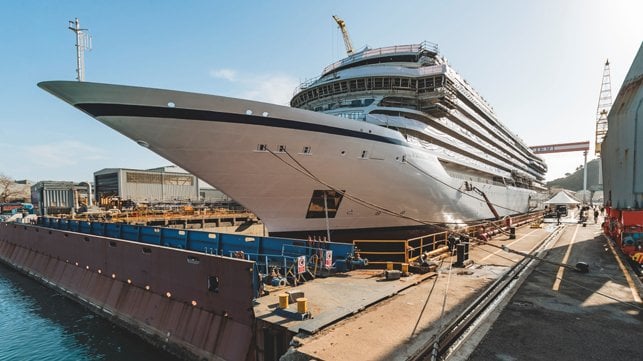
cruise ship launch
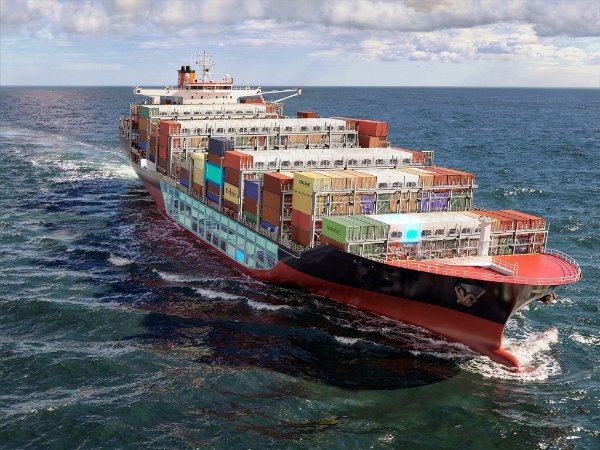
Viking Libra continues the cruise ship design but adds the first large liquefied hydrogen and fuel cell propulsion

Published Mar 19, 2026 7:52 PM by The Maritime Executive


Fincantieri marked another milestone in cruise ship development as it floated out the Viking Libra (54,300 gross tons), which is being billed as the “world’s first hydrogen-powered cruise ship.” It advanced the ambitions for zero-emission shipping and the long-held vision of Viking CEO Torstein Hagen to produce a hydrogen-powered ship.

According to the companies, the project has been developed with strong attention to environmental aspects to ensure the ship will be capable of navigating and operating with zero emissions, allowing it to access even the most environmentally sensitive areas. The Viking Libra will have a propulsion system based partially on liquefied hydrogen and fuel cells. 

The project was announced in April 2025 as the next step in the work between Fincantieri and Viking on advancing future technologies. It is being fitted with fuel cells producing up to six megawatts of power, equivalent to roughly 8,000 horsepower of generator capacity. The PEM fuel cell technology and related equipment are supplied by the Fincantieri subsidiary Isotta Fraschini. To solve the supply chain problems of hydrogen bunkering, it uses a containerized fuel storage system to load and store the fuel.

Viking believes the project will illustrate a path forward for the industry to address environmental concerns. They noted last year the high price for H2-powered operations, while saying they believed it would come down over time. The Viking Libra, which is scheduled for delivery at the end of 2026, is scheduled to be followed by the Viking Astrea, which will also be outfitted with the hydrogen system.

The companies report they have consistently worked together to design, deliver, and operate environmentally friendly cruise vessels. In November 2022, they delivered the ninth cruise ship, Viking Neptune, which was equipped with a small hydrogen fuel system for onboard power. They said the system would be used as a test to determine how hydrogen fuel could be developed at a larger scale in future newbuilds.

Fincantieri said the system on the Viking Neptune was an experimental hydrogen fuel cell module that would provide a nominal power of 100 kW. The cells are low-temperature PEM-type fueled with hydrogen gas and room air. They set as a goal the next step of achieving a hydrogen generation system with a total power of approximately six to seven MW, which will be achieved with the Viking Libra.

Viking recently expanded its orders with Fincantieri, which has already delivered 11 ocean cruise ships that Viking has in operation, as well as two expedition cruise ships. The company ordered two more expedition cruise ships and placed an option for two additional ocean cruise ships. Fincantieri is currently building three ocean cruise ships for Viking, including Viking Libra, as part of 10 committed orders for cruise ships and an additional four options before the latest agreement.

ESG

Matson Contributed $8.6 Million to Community Programs in 2025

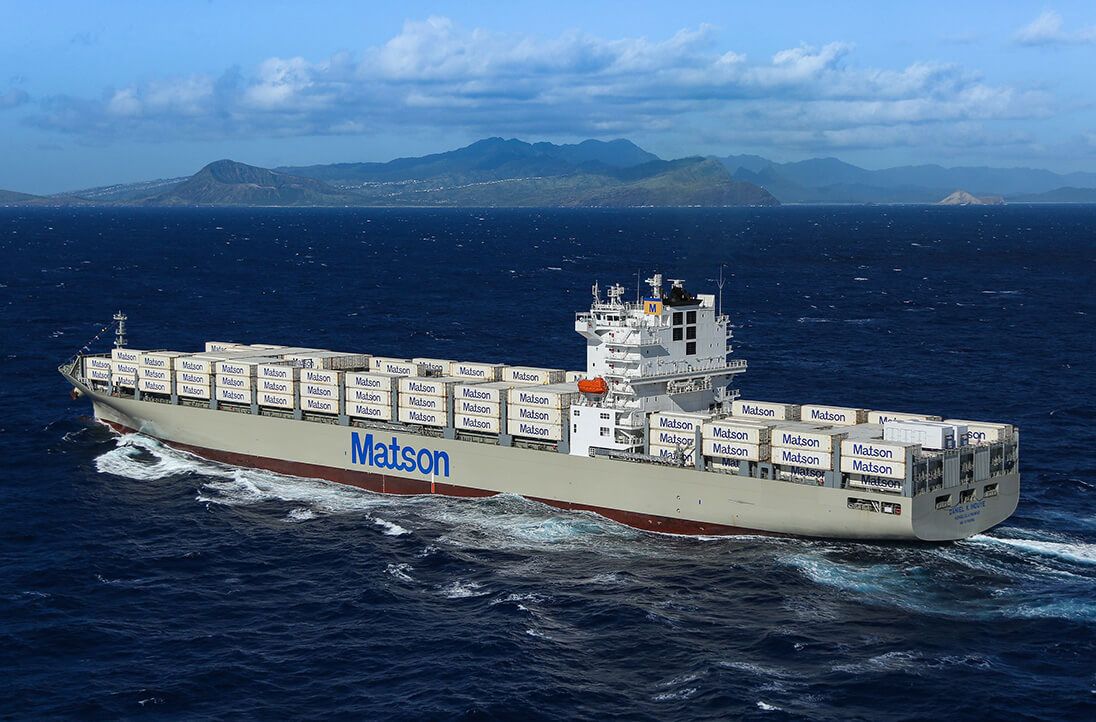
Matson containership at sea

Published Mar 20, 2026 10:17 PM by The Maritime Executive


[By Matson]

  • $3.1 million to Food Security programs
  • $ 1.8 million to Health & Human Services
  • $871K to Environmental programs

Matson contributed a total of $8.6 million in cash and in-kind support in 2025 to 709 charitable organizations and non-profit programs across the communities it serves. 

Cash contributions, including funds directed by employees through the company's Matching Gift program, added up to $3.7 million in 2025, while the value of donated services and equipment totaled $4.9 million.

The biggest categories of giving for the year were Food Security programs, with $3.1 million in cash and in-kind support; Health & Human Services with $1.8 million in cash and in-kind support; and Environmental programs with $871,000 in cash and in-kind support.

As part of its pandemic response plan in 2020, Matson made a multi-year commitment of $5 million in cash and in-kind services to support food bank networks in Hawaii, Alaska and Guam. In 2023, the company committed to providing another $5 million in cash and in-kind services to continue supporting community food bank networks through 2026.

In 2025, Matson contributed $5.8 million in cash, services and equipment support to organizations in Hawaii, Guam/Micronesia and the South Pacific, with the largest category of giving in Food, Agriculture & Nutrition program support at $2.6 million. The company donated $1.9 million in cash and services to organizations in Alaska, and more than $897,000 in cash donations to community organizations on the continental U.S.

Substantial contributions from donated or discounted shipping supported food banks and food security programs in Hawaii and Alaska as well as environmental and recycling programs in Alaska.

In Hawaii, Matson added 100 containers to its existing pledge of 400 containers of in?kind shipping services annually through 2026 to help Hawaii Foodbank meet rising demand, equating to 3.5 million additional meals for Hawaii families. Matson also donated $25,000 in cash to The Food Basket, Hawaii Island's Foodbank, and $25,000 in cash to Hawaii Foodbank Kauai.

Larger contributions of in-kind services or cash in Hawaii include:

  • Hawaii Foodbank - $1.9M
  • Maui Foodbank - $ 555,000
  • Maui Wildfire Recovery - $ 526,000
  • Hawaii Pacific Health - $116,000
  • Big Brothers Big Sisters Hawaii - $100,000
  • PBS Hawaii - $100,000
  • Children's Discovery Center - $100,000

Larger contributions of in-kind services or cash in Alaska include:

  • Alaskans for Litter Prevention and Recycling - $658,700
  • Food Bank of Alaska - $254,000
  • University of Alaska Foundation - $66,000
  • Seward Association for the Advancement of Marine Science - $65,000

Larger contributions of primarily in-kind services in Guam and Micronesia include:

  • University of Guam Endowment Foundation - $70,000
  • Ayuda Foundation - $67,000
  • Canvasback Missions - $25,000
  • Pacific Mini Games - $21,000
  • 500 Sails - $17,000

Contributions supporting social service programs include:

  • $100,000 in targeted annual grants supporting 10 social service focused nonprofit programs in Matson communities
  • $87,000 in higher education scholarships aimed at supporting student leaders pursuing fields of study in maritime and supply chain logistics

Led by employee committees in Hawaii, Alaska and Guam, Matson focuses its community support on local programs providing vital health care and human services; youth development / recreation; disaster preparedness and recovery; education; cultural and environmental preservation; the arts; agriculture and nutrition; and maritime safety.

Additional information on Matson's community support activities is available in the company's Sustainability Reports posted online at: https://www.matson.com/sustainability/sustainability-reports.html
 

The products and services herein described in this press release are not endorsed by The Maritime Executive.
 

Chubb Details Structure of the Gulf Maritime Insurance Facility with DFC

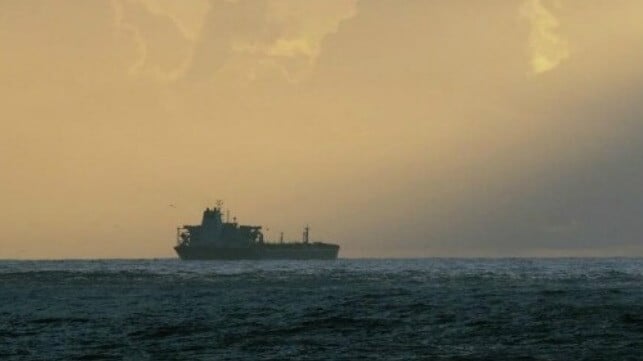
tanker in sunset

Published Mar 20, 2026 10:12 PM by The Maritime Executive


[By Chubb]

 
Chubb (NYSE: CB), the world's largest publicly traded property and casualty insurer, today outlined the structure and scope of the maritime insurance facility created in partnership with the U.S. Government through the U.S. International Development Finance Corporation (DFC), which on March 11 announced Chubb as lead underwriter for its $20 billion Maritime Reinsurance plan.


Details of the facility include:

•    Commercial shipping plays a vital role in the global economy. To help restore market confidence and facilitate the world's critically important energy and commercial trade, the United States Government, through DFC, is partnering with Chubb to create a maritime insurance facility.
•    Chubb, acting as lead underwriter, will manage the facility, determine pricing and terms, assume risk, and issue policies for eligible vessels and cargo. Chubb will also manage all claims.
•    DFC will help coordinate the consortium of American reinsurers and set certain criteria for ships accessing the program.
•    The initiative is a public-private partnership between DFC, Chubb and other name-brand American insurance companies who will act as reinsurers. Participating insurers bring deep underwriting experience in marine and marine war coverage. 
•    The facility will provide war marine risk insurance for hull & liability as well as cargo. Coverage will be offered for war hull risk insurance, for war P&I insurance and war cargo insurance. 
•    The offering will apply to vessels that meet eligibility criteria provided by the U.S. Government.
•    This insurance will be available to ships transiting the Strait of Hormuz and only under certain conditions. 
•    The additional American insurance companies will be disclosed in the coming days.
 

The products and services herein described in this press release are not endorsed by The Maritime Executive


Report: Trump Administration Offers $1B to Cancel Two Offshore Wind Leases

CUTTING NOSE TO SPITE FACE

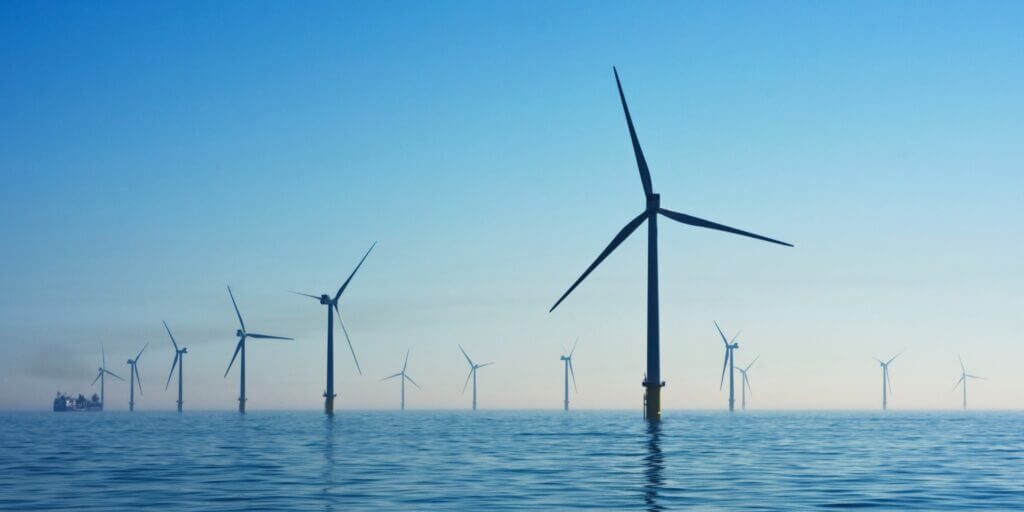
offshore wind farm
TotalEnergies has offshore wind power leases in the NY Bight and off North Carolina which would be canceled (Attentive Energy concept rendering)

Published Mar 17, 2026 1:35 PM by The Maritime Executive


In its latest move to derail the offshore wind energy industry, the Trump administration is reportedly proposing to buy back offshore wind power leases in exchange for investments in natural gas. In an exclusive report from The New York Times, they write that the Department of the Interior is offering to reimburse TotalEnergies nearly $1 billion if the company relinquishes leases in the New York Bight and off the coast of North Carolina.

The newspaper reports it saw copies of the draft settlement agreements, which are currently under negotiation, while noting it is unclear if TotalEnergies will accept the deal. The U.S. Government would pay TotalEnergies more than $928 million, which is being called a “reimbursement” for relinquishing the leases it has held since 2022. The company would, in exchange, agree to “accelerate investments” for gas plants and gas production sites in Texas, reports The New York Times.

The two projects involved are both earlier-stage wind farms that have not yet received their government approvals and have not completed power agreements. TotalEnergies could reject the settlement, but for the projects to proceed, it would still need the Trump administration to approve the environmental and construction plans, which is unlikely. The Trump administration could also attempt to cancel the leases, which it has threatened on other projects. Either scenario would likely result in costly legal battles.

TotalEnergies won a lease in the hotly contested 2022 auction for properties in the New York Bight, an auction that set a financial record. TotalEnergies paid $795 million for a large area approximately 36 miles from New Jersey and 47 miles from New York. Called Attentive Energy, and in partnership with Rise Light & Power and Corio Generation, it has proposed two projects, one for each state. New York selected the project in its third round, which was later canceled. Attentive Energy submitted its Construction Operation Plan to the Bureau of Ocean Energy Management in September 2024, but the Trump administration has paused the reviews.

The second project is known as Carolina Long Bay, and the lease was awarded in May 2022 for a cost of $160 million. The lease area is approximately 22 miles from the North Carolina coast near Bald Head Island. The company has said the area could provide more than 1 GW of electric power.

The Department of the Interior reportedly would pay $795 million for Attentive Energy’s lease and more than $133 million for Carolina Long Bay. It would cancel both leases.

TotalEnergies had indicated in November 2024 that it was putting the projects “on pause” after the Trump election. It said it would be pursuing projects elsewhere and could reconsider the U.S. projects after the Trump administration.

The Department of Justice has been working to challenge other leases awarded by the Biden administration, including for a project in Maryland and others in the Northeast. It has repeatedly claimed the Biden administration rushed the reviews and did not consider all the factors. When Trump returned to the White House, he immediately signed an Executive Order pausing the leasing process and putting it under review. A court last year overturned the Executive Order, saying it violated U.S. administrative law. 

Courts also awarded preliminary restraining orders against five stop-work orders against the projects currently under construction. Able to resume work by late January, two of the projects, Revolution Wind and Vineyard Wind 1, reached milestones last week. Revolution Wind delivered its first power to the New England power grid, and Vineyard Wind completed its installation and is completing its commissioning. The three other projects are also reporting progress with their installations while still awaiting their court battles with the Trump administration, which alleges new research showed a danger from the blades and towers causing radar interference. The Department of Justice has vowed to appeal the cases where it was overturned, while it continues to battle various cases to stop additional offshore wind energy leases.


CSM Energy Marks Milestone for Next-Gen Onshore and Offshore Wind Vessel

CSM Energy
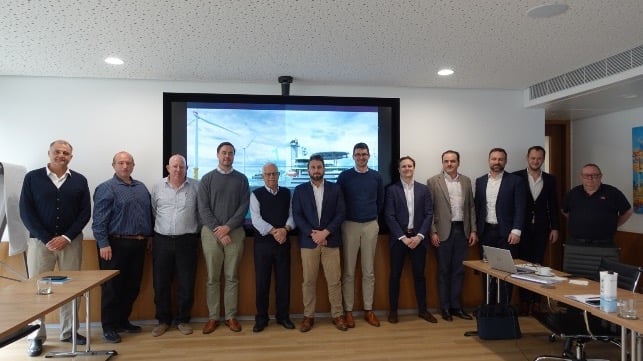
Picture taken from the CSM Energy workshop.

Published Mar 20, 2026 1:53 PM by The Maritime Executive


[By: CSM Energy]

CSM Energy has marked a significant milestone in the development of the next generation of onshore and offshore wind service vessels, following a strategic project workshop and the successful steel cutting of the C-CSOV (Commissioning Service Operation Vessel) JOULE.

CSM Energy, part of Columbia Group, recently hosted the workshop in Limassol, Cyprus, which brought together key project partners including Deutsche OffshoreSchoeller Holdings, CSM Energy (CSME), CSM Cyprus (CSM CY), and Columbia Signature.

The workshop provided an important platform for collaboration and technical alignment as partners reviewed critical aspects of the next-generation vessel, designed to set new standards for the offshore wind sector. Discussions focused on the vessel’s design and specifications, chartering requirements, preparations for the new build phase, and planning for the eventual delivery of the vessel.

The sessions reinforced the strong cooperation between the participating organisations and ensured that all stakeholders remain aligned as the project progresses.

Following the workshop, the project reached a significant construction milestone with partners taking part in a steel-cutting ceremony for the C-CSOV DO JOULE vessel, taking place at CSSC Huangpu Wenchong Shipyard in China.

The ceremony marked the official start of construction for the vessel and was attended by representatives from the shipyard, SDARI, SALT Ship Design, the classification society, Deutsche Offshore, MOL, and members of the project supervision team. This milestone represents a key step forward in the development of the C-CSOV DO JOULE and reflects the continued commitment of all partners to delivering a high-quality vessel that meets the project’s technical and operational requirements.

Managing Director of CSM Energy, Kryiacos Tsangaris said: “The successful completion of our workshop demonstrates the strong collaboration between all project partners as we move forward with the development of the C-CSOV DO JOULE.

“The steel cutting milestone marks the official start of construction and represents an important step towards delivering a high-quality, next-generation vessel that will support the growing onshore and offshore energy sector. We are proud to work alongside our partners and the shipyard team to bring this project to fruition.”

The C-CSOV DO JOULE vessel will be used to support commissioning of new offshore wind farms, transport and accommodate offshore technicians, provide maintenance and service operations, and enable the safe transfer of personnel and equipment to turbines and offshore platforms. It is due for delivery in 2027.

The products and services herein described in this press release are not endorsed by The Maritime Executive.
 

Hornblower Announces Steelpointe Shipyard Expansion and New Vessel Services

Hornblower Marine

Published Mar 20, 2026 10:02 PM by The Maritime Executive


Bridgeport Facility Significantly Expands Hornblower Footprint to 17 Acres Offering Vessel Construction, Propulsion, Management, Consulting, and Yachting Services


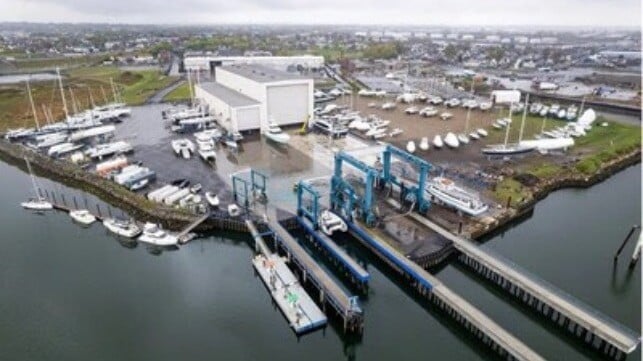
Hornblower Group today announced the expansion of its industry-leading facilities and extensive offerings on the historic Bridgeport waterfront, building on the firm's continued maritime success and commitment to the region while growing from 1 acre to 17 acres with equipment and crew offering services across vessel classes and specializations, now including yachts and recreational craft.

Bridgeport Facility Significantly Expands Hornblower Footprint to 17 Acres Offering Vessel Construction, Propulsion, Management, Consulting, and Yachting Services

The expanded location at 731 Seaview Avenue in Bridgeport, CT will now be titled Steelpointe Shipyard by Hornblower, reflecting the new scale and capabilities of the full-service shipyard and Hornblower's long-term commitment to building on Bridgeport's central location, experienced workforce, and maritime legacy to serve the growing maritime industry across the East Coast.

"Hornblower is excited to extensively expand our Bridgeport, CT footprint and community impact by pairing our 100-year history in the maritime industry with the unique features and benefits of such an historic port," said Shull Autin, Chief Maritime Officer, Hornblower Group. "With this tremendous expansion in available facility space and equipment capabilities, Steelpointe Shipyard by Hornblower will serve as the East Coast's new hub for maritime expertise and service across commercial, government, and private vessel operators."

With its expansion, Steelpointe Shipyard by Hornblower now includes 45,000 square feet of indoor space, three large-scale Marine Travel Lifts capable of hauling vessels up to 700 tons, a 220' Service Dock, and an array of skilled tradespeople across welding and metal fabrication, joinery and outfitting, piping, mechanics, electrical, and painting.

This unique array of equipment, expert staff across specializations, and deep-water access to Long Island Sound makes Steelpointe Shipyard by Hornblower the industry's premier facility capable of leveraging integrated, onsite vessel design and engineering teams to execute complex projects on time and on budget. Across the site, Hornblower Marine will continue to provide simultaneous vessel servicing, pre-scheduled overhauls and maintenance, emergency repairs, and complex projects for Hornblower's clientele of high-profile public and private third-party clients, as well as yacht owners, captains, and operators.

"As our crew has grown since the local launch of Hornblower Marine in 2021, Bridgeport and the surrounding communities have been a pivotal component in our shared successes developing the industry's premier facilities and capabilities for innovative maritime projects from across the country," said Junior Volpe, Senior Vice President of Vessel Construction & Repair, Hornblower Marine. "Today's announcement builds on this strong foundation to establish the next phase of maritime innovation and careers in Bridgeport while offering premier, industry-leading services to vessel owners of all backgrounds and sizes."

"This expansion represents a big step forward in Hornblower's ability to deliver a truly integrated maritime service offering at one of the east coast's premier deep-water ports, centrally located in some of the country's largest maritime markets," said Timothy O'Brien, SVP of Ferries & Concessions Operations, Hornblower Group. "We are proud to work with property owners RCI and the Christoph family to maximize the use of this premier facility."

Within Steelpointe Shipyard, Hornblower Marine offers these extensive services across six specialized divisions to provide each client with project- and vessel-specific solutions. These divisions include Hornblower Marine Construction, Propulsion, Management, Consulting, Services, and Yachts.

Hornblower Marine Construction builds on the organization's robust history of designing, building, retrofitting, and maintaining vessels across sizes, types, and use cases to support the needs of each partner.

Hornblower Marine Propulsion offers trained in-house diagnostics and propulsion specialists providing repair and repower solutions, system integration, and engine sales, commissioning, and services support. Hornblower Marine Propulsion is the official Northeast Distributor for Baudouin Marine Engines.

Hornblower Marine Management offers third-party support and owners' representation for newbuild programs and services for fleet expansions, technical specification development, shipyard selection, and construction oversight.  

Hornblower Marine Consulting offers strategic advisory services to vessel owners and operators to support vessel operational and route planning, technical feasibility analysis, financial navigation, and approaches to fleet expansion.

Hornblower Marine Services provides operational and technical support across the full lifecycle of vessel ownership, including inspections, maintenance program development, and regulatory compliance to support long-term vessel performance. 

Hornblower Marine Yachts is a newly announced division that will build on Steelpointe Shipyards' expanded space and scope of services to provide yachting and recreational partners and clients top-tier yacht maintenance programs, refit services, seasonal haul-outs, and indoor/outdoor storage previously only available to larger commercial operators. The integration of service and maintenance specializing in these vessels makes Hornblower Marine Yachts especially suited to serve the yachting and recreational craft communities.

"The leadership, expertise, and capabilities of the nation's largest shipyards shouldn't be inaccessible to yacht and recreational vessel owners," said Volpe. "Thanks to this expansion, Hornblower Marine will be able to offer its top-level service to this new class of partners and clientele while providing the customer service that would be expected of smaller, boutique service facilities. We look forward to bringing these services to the yachting market."
 

The products and services herein described in this press release are not endorsed by The Maritime Executive.
 

Could Earlier Warning Systems be the Answer to Risk Reduction in Terminals?

Real-time intelligence is transforming how ports think about risk

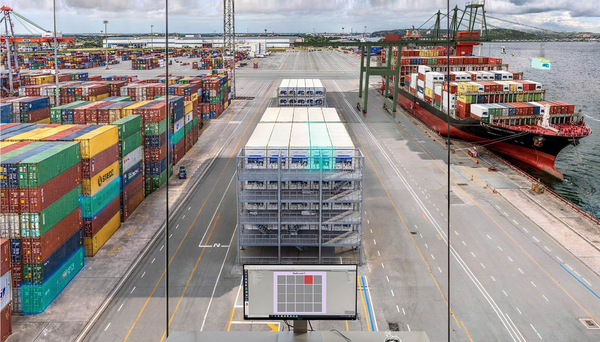
container yard

Published Mar 18, 2026 10:02 AM by Net Feasa


The container terminal is one of the most complex operational environments on earth. Running around the clock, 365 days a year, with little room for downtime or disruption. 

It is also one of the most exposed to risk. Security breaches. Hazardous goods handling. Occupational safety. Cargo spoilage. These are everyday realities that operators must carefully manage, yet many of the processes involved remain reactive.

Continuous reefer monitoring to become the norm 

Container terminals occupy an interesting position in the supply chain. They don’t own the boxes passing through their gates, but they are responsible for them while there. That distinction has created something of a visibility gap in container monitoring. 

The cold chain market is projected to exceed $400 billion this year, and a meaningful portion of that value moves through container terminals every day in refrigerated units. With these temperature-sensitive goods, the margin for error is thin. Most operators, therefore, dedicate resources to manually monitor reefers at regular intervals. This provides only a snapshot of information, meaning that alarms can be missed and reaction times can be slow. 

A single container of high-value pharmaceuticals can be worth anywhere from several hundred thousand to several million dollars. Some shipments of advanced biologics can exceed $10 million per container. When an anomaly occurs, it's essential that data is communicated in real time from the reefer. Beyond cargo value, the industry carries enormous responsibilities related to regulatory compliance. This can prove a significant burden, particularly when accurate historical data on cargo handling is unavailable. 

Manual monitoring in the yard also contributes to the risk of injury. Inspecting hundreds to thousands of reefer points several times a day takes hours and can involve climbing up several stacked boxes high on a rack. Globally, the International Labour Organization has cited port environment accident rates that run five to seven times higher than manufacturing. With many new reefers coming out of the factory with telematics as standard, terminal operators stand to significantly reduce the risk and cost associated with reefer monitoring by adopting continuous visibility. 

Earlier heat detection is an urgently needed layer of protection 

According to the 2025 Allianz Safety and Shipping Review, 2024 data saw a decade-high 250 reported incidents of vessel fires. The consequences are severe: a single incident can run into hundreds of millions of dollars in cargo loss, vessel damage, environmental clean-up, and port disruption, on top of the risk to human life. 

The impact extends beyond the ship. Two-fifths of vessel fires occur in the port, according to the US National Fire Protection Association. Berthed vessels are not the only considerations, however, with stored cargo in the yard also a concern. Dangerous goods have permissible dwell times within port boundaries that are often exceeded due to congestion or bottlenecks. It’s estimated that between 10 and 12 percent of all containers carry dangerous goods (TT Club). A significant proportion, some estimates suggest as many as one in five, are misdeclared. The result is incorrect handling, with the people involved blind to the dangers posed. 

Lithium-ion batteries present added complexity. Increasingly common in EVs and electronics passing through ports, as well as in the port equipment itself, operators are grappling with how to handle high volumes safely. Capable of thermal runaway, these types of fires are notoriously difficult to extinguish.

Earlier heat detection is fast becoming an added layer of augmented safety strategies on the vessel, tapping into sensor technology to detect anomalies. Terminals are expected to follow suit, with many leading operators already trialing similar solutions.
 

“Container terminals occupy an interesting position in the supply chain. They don’t own the boxes passing

through their gates, but they are responsible for them while there.”


(Source Net Feasa)


Learnings from On-the-Water Visibility

The maritime industry has witnessed a step-change in connectivity in recent years, trending towards fleet-wide digitalization of containers, reefers, and vessels. As a leading provider of wireless vessel networks, with a long history of enabling reefer connectivity onboard, Net Feasa has played a pivotal role in this transformation, and the results have been striking. Its flagship Agentic Control Tower™ (ACT) platform consolidates essential sensor information that enables real-time, mixed-fleet reefer and dry box monitoring and earlier heat detection from the vessel bridge. 

The industry response has been significant, not just in adoption, but in a dawning recognition that connected cargo fundamentally changes the nature of risk management. The connected vessel is proving that safer, more efficient operations are not only achievable, but can be done at a lower cost, with immediately measurable ROI. 

Bringing the Lesson Ashore

Net Feasa is now bringing Agentic Control Tower™ to ports and terminals. The platform allows operators to immediately identify telemetry-enabled reefers, delivering actionable data into TOS. This results in an immediate reduction of over 50 percent in direct monitoring costs. Additional benefits include improved reaction times to alarms, reduced risk of cargo loss, and lower incidents of stevedore injury. 

The use cases for ACT in the terminal are numerous. Open-door alerts with timestamped records actively deter illicit activities such as theft and smuggling. Dangerous goods exceeding their dwell times are flagged. Heat anomalies in hazardous cargo generate real-time alerts well before smoke appears. Whether terminal operators want to integrate ACT into their existing control towers or take advantage of its own powerful visualization, the platform meets them where they are and evolves with their ambitions.


Source: Net Feasa


The Bigger Picture

The momentum is real: Ports that position themselves well in the digital transition will not just stand to reduce risk, they will build a competitive advantage that compounds over time. Connectivity is reaching critical mass in the port, on the vessel, and on the container. We have reached a tipping point in supply chain digitalization, where operators now have the tools necessary to shift from analyzing data to acting on it. 


This article is sponsored by Net Feasa, which is headquartered in Ireland, with offices across the United States and Asia Pacific. To learn more, visit www.netfeasa.com
 

The opinions expressed herein are the author's and not necessarily those of The Maritime Executive.


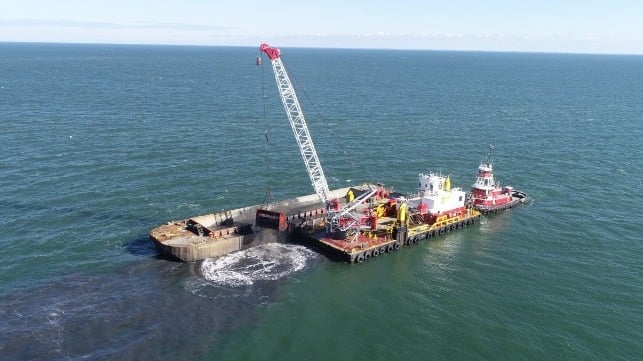
Port of Virginia Completes Project to Dredge East Coast's Deepest Harbor

Port of Virginia file
Press handout courtesy Port of Virginia

Published Mar 18, 2026 8:38 PM by The Maritime Executive


The Port of Virginia and its contractors have finished work on the deepest shipping channel and harbor on the U.S. East Coast, the linchpin of the port's ambitions to become the most modern and competitive container port on the Eastern Seaboard. 

The gigantic dredging project was approved by the USACE in 2018, and construction started in 2023. The long-term objective is to make the port hospitable for ultra-large container vessels, the biggest boxship class in the Atlantic trade lanes. ULCVs are common on Asia-Europe routes but not generally used for the East Coast because of various infrastructure restrictions, including harbor depth, air draft and crane capacity. 

The dredging work finished at the end of February, and surveys and final maintenance work are under way. Once depth has been fully verified, the navigational charts will be updated, and Virginia will officially have a channel capable of handling two-way, fully laden ULCV traffic. 

The investment in harbor depth is part of a $1.4 billion plan to future-proof the port. Other elements include expansion of intermodal rail yard capacity to 1.8 million TEU per year, the largest ship-to-rail capability on the East Coast. The Norfolk International Terminal is also getting new semi-automated RTGs and new STS cranes to modernize cargo movement. 

Taken together with the harbor's unrestricted air draft, the port believes these investments will check all the boxes for the next generation of larger, more efficient vessels. 

"Delivering projects like the 55-foot channel are important today, but the real value is in how these projects position us for the future," said Sarah McCoy, interim executive director of the Virginia Port Authority. "With all of our foundational elements in place, we are assuring our customers and port users that they will be able to expand their operations and cargo volumes at The Port of Virginia without concern for outgrowing our capabilities. We’re prepared today for the demands of the next five, ten or fifteen years."


Saudi Arabia Loses Patience as Red Sea Terminal and Refinery are Targeted

smoke rising from oil refinery
Smoke seen rising reportedly from the SAMREF refinery on the Red Sea

Published Mar 19, 2026 3:29 PM by The Maritime Executive


Saudi Arabia’s Foreign Ministry spoke out on Thursday, March 19, saying that any “trust with Tehran has been shattered” after reporting that the capital of Riyadh, along with the critical Yanbu oil terminal on the Red Sea and the neighboring refinery, had all been targeted. The state-owned oil company Aramco has been rushing to increase exports from Yanbu to offset its lost capacity on the Persian Gulf.

The Ministry of Defense confirmed that a drone “crashed in the SAMREF refinery.” It said that a damage assessment was underway, while images circulating online showed a large plume of smoke rising from the facility. Reuters is quoting sources, however, saying that there was “minimal impact” on the refinery. A joint project between Aramco and ExxonMobil, it is located adjacent to the Yanbu port and is served by a 750-mile pipeline stretching across the Saudi desert from the main oil fields at Abqaiq.

Security consultants had warned last week that the port could be targeted either by Iran or its proxies, the Houthis. The Ministry of Defense blamed a drone for the damage at the SAMREF while saying they had also intercepted and destroyed a ballistic missile launched toward the Yanbu port. 

It is the first confirmed attack on the facilities. Reuters reported that the port was briefly evacuated but that operations were quickly resumed. 

Attacks on the Eastern Region have become a daily occurrence for Saudi Arabia, with reports saying there have been hundreds of missile and drone attacks. Saudi Arabia claims to have destroyed most of the attacks, but today, the air raid alerts were triggered in Riyadh for the first time.

Saudi Foreign Minister Prince ?Faisal bin Farhan reportedly told the media at the conference, “We reserve the right to take military actions if deemed necessary."  He called the attacks from Iran “premeditated hostile actions.” He said the trust had been shattered, but so far, Saudi Arabia and neighboring countries have only mounted defensive actions despite having well-equipped military capabilities.

The targeting of Yanbu and SAMREF came after Donald Trump lashed out at Iran after it attacked the Qatar gas infrastructure. Trump demanded that Iran stop these attacks or threatened that the United States would finish what he said Israel started and destroy Iran’s South Pars gas operations. Last week, Trump threatened to return to Kharg Island and destroy the oil infrastructure after saying the U.S. had strategically limited its strikes to the military operations on Kharg Island.

Saudi Arabia has reportedly more than doubled oil shipments at Yanbu since the start of March. The terminal typically handled between 1 and 1.5 million barrels a day, with the International Energy Agency reporting that by March 9, volume was approaching 5.9 million barrels a day moving through the pipeline. Aramco has said around 5 million barrels would be for export, and the remainder of the volume would go to SAMREF for processing. The pipeline is believed to be able to move as much as 7 million barrels a day at maximum capacity.


China Floats Second Cruise Ship and Orders Ships for International Market

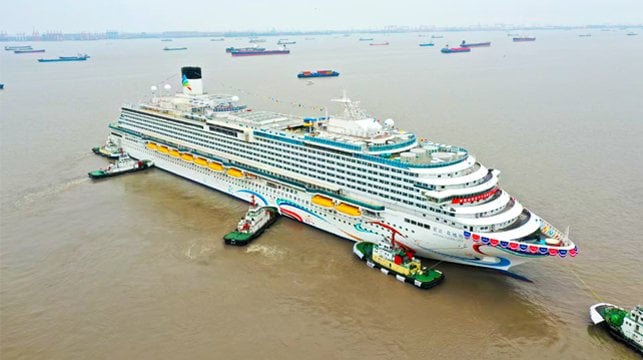
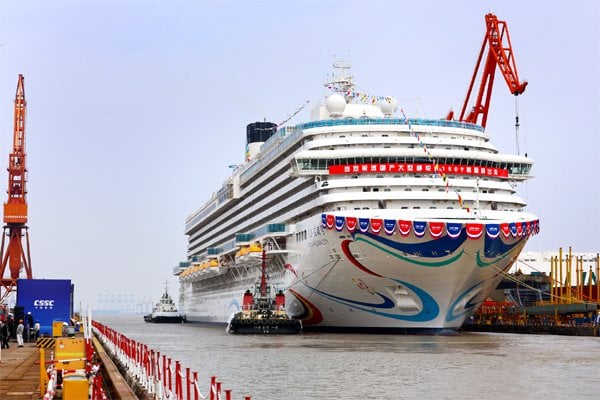
Chinese cruise ship float-out
China's second large, domestically built, cruise ship was floated from the dry dock (Adora)

Published Mar 20, 2026 6:47 PM by The Maritime Executive


China marked the next milestone in its efforts at expanding the domestic cruise industry with the float-out of its second large domestically built cruise ship. Built for China’s Adora Cruises, the ship will enter service this year, and the company reported it intends to order two more cruise ships and take an option for a third newbuild.

The second cruise ship, named Adora Flower City, is an enlarged version of the first domestically built ship, which was based on a design developed by Carnival Corporation and Fincantieri. As is typical in the cruise industry, the design was enlarged to increase passenger capacity and add amenities. The Adora Flower City will be 141,900 gross tons when completed, with a length of 341 meters (1,119 feet), compared to the first cruise ship, Adora Magic City, which is 136,200 gross tons with a length of 324 meters (1,063 feet).

The extra 17 meters (56 feet), the company says, gives the ship a more elegant and slender look. The space permitted them to increase the number of passenger cabins to 2,130 (5,232 maximum passenger capacity) compared to the first ship, which has 2,125 passenger cabins (5,246 maximum passenger capacity), and to redesign the cabins. They highlight the extra size permitted by doubling the size of the central atrium and a redesign of public spaces.

The Adora Flower City will feature 26 restaurants and bars, a theater, a gym/spa, enlarged shopping mall, and children’s spaces. Adora says it is a comprehensive upgrade from the first ship, both in space and technology, including interactive technology in the cabins. The design features a flower theme in keeping with the vessel’s name and association with Guangzhou in Southern China, which is known as the Flower City. Adora reports that it increased the essence of the Chinese culture and the Chinese cruise experience aboard the ship.

The company also entered into a memorandum of understanding with China State Shipbuilding Corporation for the design and construction of two additional cruise ships and an option for a third newbuild. CSSC’s Shanghai Waigaoqiao Shipbuilding built the company’s first two cruise ships. It said the new ships will be a Chinese design with the goal of delivering the first ship by 2030.


The ship was floated last weekend and today moved out of the dry dock to the outfitting berth (Adora)


The Adora Flora City is reported to be 95 percent complete. It was floated last Saturday, March 14, and underwent incline testing, and the loading for test and release of the 18 lifeboats before being floated out to the outfitting berth. CSSC highlights the complexity of the construction, noting the ship has over 4,700 kilometers of cabling, nearly 40,000 square meters of public space, and thousands of systems with more than 20,000 pieces of equipment and over 25 million components.

Construction for the second cruise ship began in August 2022. CSSC highlights that it shortened the construction period by eight months compared to Adora Magic City. It says efficiency was improved by more than 20 percent during the construction.


The new ship is scheduled to start sea trials in May. It will be delivered in late 2026 and will homeport at the Guangzhou Nansha International Cruise Home Port in southern China near Hong Kong. The Adora Magic City is homeported in central China at Shanghai, and the former Costa cruise ship, now Adora Mediterranea, mostly sails from Xiamen. 

The company reports the new ships will permit it to continue to plan its overseas homeport operations. It said it will accelerate the pace of Chinese cruise expansion to the international markets.