Tankers U-Turn in Persian Gulf as Iran Closes Hormuz Again
- Iran's IRGC declared Saturday that control of the Strait of Hormuz has 'returned to its previous state,' effectively re-closing the waterway hours after Trump announced it was fully open.
- Tehran says the continued U.S. naval blockade of Iranian ports -- which Trump vowed to maintain until a nuclear deal is reached -- constitutes a violation of the ceasefire and amounts to 'piracy.'
- Ship tracking data shows minimal traffic through the strait despite conflicting claims, with some tanker convoys attempting passage while others turned back in the Persian Gulf.
...and it's closed.
Iran's Islamic Revolutionary Guard Corps declared Saturday that control of the strait has "returned to its previous state," walking back a brief opening announced Friday and directly contradicting a claim from President Donald Trump that the world's most critical oil chokepoint was fully open for business.
Tehran's joint military command said the strait is now under "strict management and control of the armed forces" and accused the U.S. of "piracy" -- a reference to Washington's ongoing naval blockade of Iranian ports, which the IRGC says violates the terms of the ceasefire. Until that blockade is lifted, the strait stays shut.
The reversal came just hours after oil markets had already priced in the opening. Brent crude fell roughly 9.5% to around $89.89 a barrel Friday after Trump announced the strait was open. WTI slid more than 10% to $84.89. Those moves are likely to reverse when markets open.
The back-and-forth traces a familiar arc from this conflict. The war began Feb. 28 when the U.S. and Israel struck Iranian military targets. Iran shut the strait within days. After weeks of aerial bombardment and failed negotiations, the U.S. imposed a full naval blockade of Iranian ports on April 13 following the collapse of Islamabad talks. Iran agreed to limited reopening after a Lebanon ceasefire took hold -- then reversed course Saturday after Trump said the American blockade "will remain in full force" until Tehran signs off on a nuclear deal.
"As President Trump said, the Strait of Hormuz is completely open for business, and Iran has agreed to never close the Strait again," White House deputy press secretary Anna Kelly said in a statement. The statement made no reference to the IRGC's announcement.
On the water, the picture is murky. Reuters reported a convoy of liquefied petroleum gas carriers and product tankers departing the Gulf and transiting the strait. Bloomberg, meanwhile, reported several oil tankers had turned back in the Persian Gulf after appearing to attempt passage. Ship tracking data confirms minimal traffic in the region.
The conditions Iran has set for transit haven't changed: commercial vessels only, no cargo or ships linked to "hostile countries," movement along Iranian-designated routes, and coordination with IRGC forces. Military vessels are barred. In practice, that means most Western-linked shipping still can't move freely.
The strait handles roughly 20% of global oil supply -- around 20 million barrels per day. The IEA has warned recovery of Middle East oil output could take up to two years. Pakistan's army chief wrapped up a three-day visit to Tehran on Friday aimed at arranging a second round of nuclear talks after Islamabad produced no deal.
For now, the strait is closed, the blockade holds, and the gap between what Washington is saying and what Tehran is doing is as wide as it has been since the conflict began.
By Michael Kern for Oilprice.com
Cruise Ship Reports “Splash” in Strait as Five Ships Escape Persian Gulf
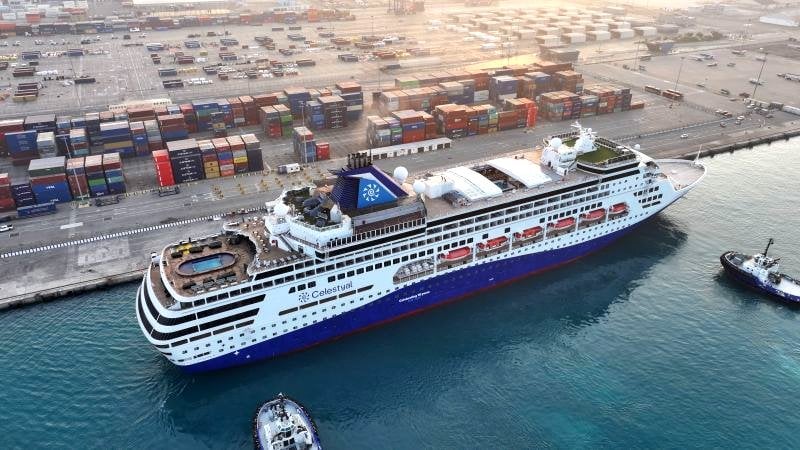
Taking advantage of the relative calm with the current ceasefire and reports that the Strait of Hormuz is open, the first of the cruise ships began their outward journey. Six cruise ships had been caught inside the Persian Gulf when hostilities began and have remained for the past 47 days alongside at ports including Port Rashid, UAE, and Doha, Qatar, while their passengers were repatriated.
Three cruise ships, MSC Cruises’ MSC Euribia (184,000 gross tons), and the sister ships Mein Schiff 4 and Mein Schiff 5 (each 99,000 gross tons) were seen on AIS sailing together on Saturday through the Strait of Hormuz. The ships were staying on the southern side, remaining in Omani waters.
The master of one of the cruise ships reported to the monitoring operation UKMTO (UK Maritime Trade Operations) that it saw a “splash” close to the ship. It happened when they were approximately three nautical miles east of Oman. It is unclear if a missile or drone was fired, but it came after UKMTO received reports that a containership was struck in the Strait and IRGC speedboats shot at a tanker. Iran said on Saturday that the Strait is again closed due to violations in the ceasefire, just a day after both the Iranians and Donald Trump declared the Strait open.
The first of the cruise ships to begin the exit sailings was the Celestyal Discovery (42,289 gross tons), which departed from Port Rashid on April 17 and successfully transited the Strait into the Gulf of Oman on her way to Muscat. Built in 2003, the ship was acquired by Celestyal in 2024 as part of its two-ship fleet. Her running mate, Celestyal Journey (55,819 gross tons), began the transit several hours later, departing from Doha, on her way to the Strait and then to Oman.
For a small company, getting its two ships out of the Persian Gulf and starting the repositioning is critical for Celestyal. The company was forced to cancel its revenue trips through the end of April and hopes to resume commercial service at the beginning of May in the Greek Islands. Celestyal Journey has a capacity for a total of 1,360 passengers, and Celestyal Explorer has a capacity for 1,260 passengers. The two ships in total have a normal complement of just over 1,000 crew.
While making statements to assure the travel community that it was still financially strong, Celestyal also told UK regulators that it was reviewing parts of its business. It had said that due to the financial strain and the uncertainty on the restart, it was looking at possibly a small downsizing of parts of its business.
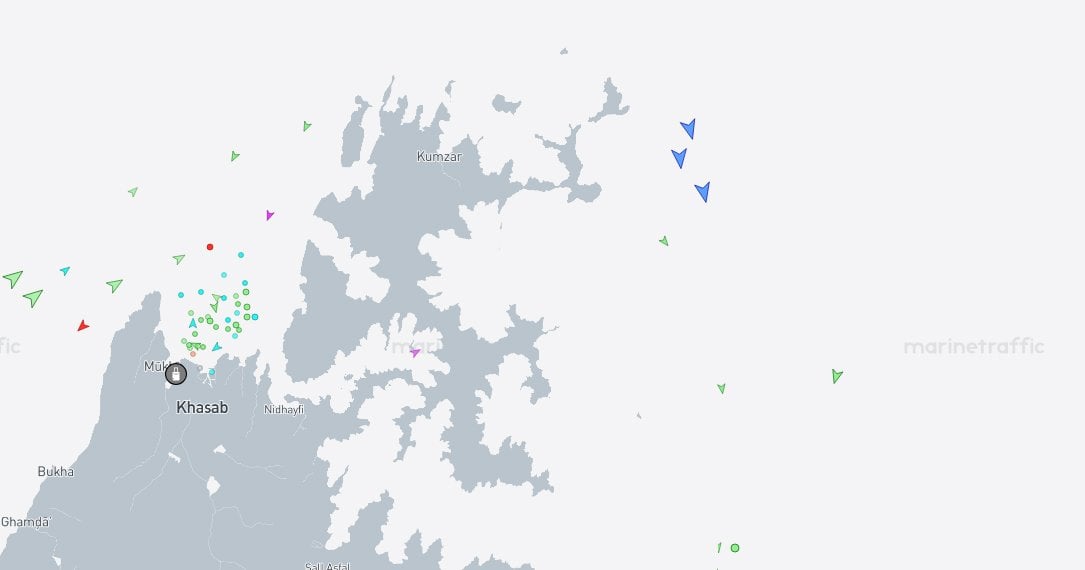
Mein Schiff 4, Mein Schiff 5, and MSC Euribia sailing together through the Strait of Hormuz staying in Omani waters on Saturday, April 18 (MarineTraffic)
Hours after the first Celestyal ship appeared to have made the transit, and Donald Trump and the Iranians said the Strait of Hormuz was open to all ships, more cruise ships also got underway. Reports are that the MSC Cruises’ MSC Euribia had to first refuel before she got underway. Similarly, Mein Schiff 5 (99,000 gross tons), operated by the partnership between TUI Group and Royal Caribbean Group, also got underway from Doha bound for Oman, and was followed by her sister ship, Mein Schiff 4.
One other cruise ship, Aroya (150,695 gross tons), has not gotten underway, although its AIS shows that it would be repositioning from Dammam to outside the Strait, going to Fujairah, both in Saudi Arabia. Aroya, registered in Malta, is operated by a company set up by Cruise Saudi. She had been scheduled to reposition to the Mediterranean for the summer season.
MSC days ago proposed that its cruise ship could possibly be used to evacuate stranded crewmembers or others from the Gulf region. As late as the beginning of this week, it said it was uncertain when the ship would be able to leave the Persian Gulf.
All the ships were able to repatriate their passengers, but it is unclear what the different cruise lines did with their crews. TUI had reported that it repatriated the crews from its two ships, leaving only skeleton crews aboard.
Once the ships exit the Persian Gulf, the cruise line faces another safety decision. Celestyal and Aroya had run their ships through the Red Sea and the Bab al-Mandeb despite the safety concerns from the Houthis. TUI, however, had sent its ships around Africa. All the ships will be sailing just with crew, but so far, only Celestyal Discovery is showing a route to the Suez Canal. TUI and MSC have not said how they will route the ships to the Mediterranean.
The Middle East had been a strong market for the cruise industry, especially for repositioning ships from Europe for winter season cruises. MSC Cruises, however, has already announced its plan to reposition its ships for next year away from the Persian Gulf and the Middle East. MSC World Europa (215,863 gross tons), which was scheduled to sail between November 2026 and April 2027 in the Persian Gulf, will make her first appearance in the Caribbean for a replacement season sailing from Martinique and Guadeloupe.
It is anticipated that other cruise lines that had planned to sail next year in the Persian Gulf will also reposition their ships for alternate destinations.
Iran Fires on Containership, Tanker and Cruise Ship Saying Hormuz is Closed
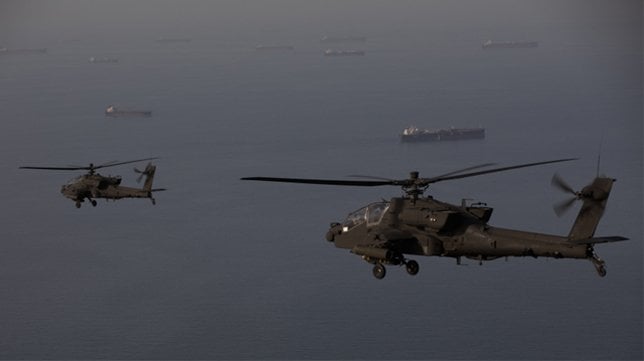
Iranian officials on Saturday reversed the previous statements and once again declared the Strait of Hormuz is closed, along with renewing their strict conditions. Several ships are reporting they were fired upon, while others said they were told the Strait is closed and were forced to turn back from their attempts to exit the Persian Gulf.
The monitoring operation UKMTO (UK Maritime Trade Operations) has received reports of a series of incidents taking place on Saturday in the Strait of Hormuz. An unidentified containership reported that it was struck by a projectile while it was sailing 25 nautical miles northeast of Oman in the Strait. The report says that containers were damaged, but there was no fire, and the crew was not injured.
This incident happened after an unidentified tanker also reported that it had been attacked. Two IRGC gunboats approached the tanker and opened fire with no VHF contact or challenge. The crew and vessel reported no damage.
UKMTO also received a report from a cruise ship of a “splash” near the ships as they were transiting the Strait of Hormuz. Yesterday, two cruise ships operated by Celestyal Cruises made it out of the Persian Gulf without incident. Two cruise ships from Germany’s TUI Group, Mein Schiff 4 and Mein Schiff 5, along with MSC Cruises’ MSC Euribia, were showing on AIS as sailing together in Omani waters as they were exiting the Persian Gulf. A total of five cruise ships were attempting to escape the Persian Gulf.
Iranian officials accused the United States of violations of the ceasefire and negotiations. Yesterday, Iran said the Strait would be open to all traffic for the remainder of the ceasefire. Today, they announced that because the United States continues to blockade its ships and ports, the Strait will be immediately closed.
“Two Indian vessels were forced back west out of the Strait of Hormuz by Iran's Sepah (IRGC) Navy,” reports TankerTrackers.com in a social media posting. “Firing was involved. One of the vessels is an Indian-flagged VLCC supertanker carrying two million barrels of Iraqi oil.”
The latter reports, apparently coming from the hardliners in Iran, said they would continue to assert total control and require all ships to receive permission from the IRCG and that the ships would be subject to inspections. Iran also reported its assertion that it will charge a toll for all ships to transit the Strait.
This came after Trump reported the Strait was open and typed “thank you” to the Iranians on social media. He continues to assert that "It's working out very well," referencing the blockade and the negotiations. He asserted they were close to further announcements after there were reports of a new round of negotiations scheduled for Monday.
Traffic Confusion in the Strait of Hormuz
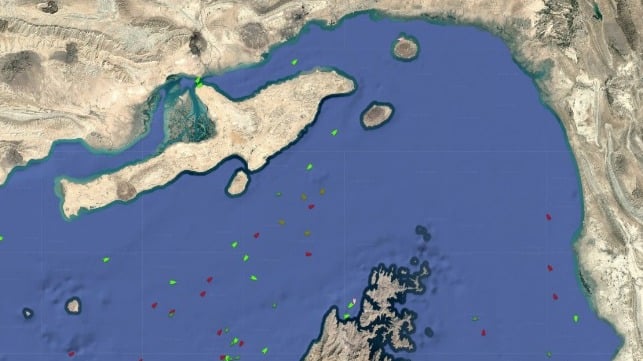
Iranian Foreign Minister Abbas Araghchi said in a post on X on April 17 that the Strait of Hormuz ‘is open for all commercial vessels for the remainder of the U.S.-brokered 10-day truce between Israeli forces and Iran-backed Hezbollah agreed between Israel and Lebanon’. He said ships would need to follow the Iranian routing past Larak Island, which had been prescribed by Iran's Ports and Maritime Organisation.
Based on AIS data, it appears that there was a small increase in movements early afternoon, but by midnight traffic had eased off. Most traffic was sticking to Iranian waters on the eastern side of the approaches to the Strait. No traffic was seen using the internationally-recognized Traffic Separation Scheme (TSS), but some ships were transiting the Strait on a direct east-west route through Omani waters close in to the Musandam peninsula, and through what Iran has designated a danger area. Amongst these ships was the Maltese-registered cruise liner Celestyal Discovery (IMO 9221566). The multiplicity of routes being followed by different vessels in restricted waters, some moving in opposite directions, inevitably raises the danger of collision when compared to a TSS.
The IMO Secretary-General Arsenio Dominguez, in a speech made at the second French/British-led Hormuz security summit in Paris on April 17, has called for the restitution of previous arrangements in force in the Strait of Hormuz governing the transit of shipping. Both Iran and Oman are legally committed to maintaining the IMO’s Traffic Separation Scheme established in 1968, to which all nations who are signatories to the IMO’s Convention on Safety of Life and Sea are obliged to follow. The Convention has been ratified by 164 nations, including the United States, Iran, Oman plus the remainder of the GCC countries.
The Secretary-General told the conference that until the current war the scheme had worked successfully without interruption, and that the scheme specifically rejects “any imposition of tolls, fees or discriminatory transit measures for the passage through a strait used for international navigation.” Oman, as the owner of the territorial waters in the narrows through which both inward and outward TSS channels pass, has been a strong advocate for maintaining this status quo. As a free navigational service for the international maritime community, Oman maintains a naval station on Didamar Island in the Strait from which ships using the TSS are controlled.
France Opposes U.S. Involvement in Post-War Hormuz Security Mission
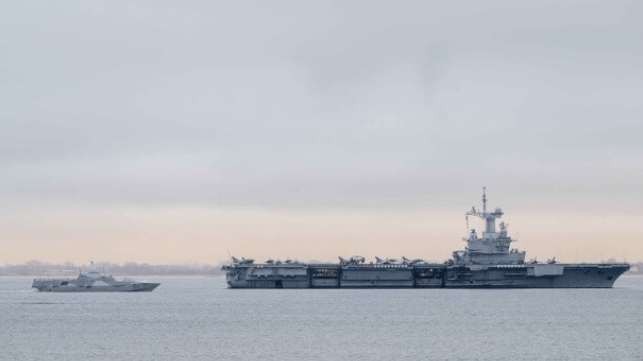
France is uninterested in allowing American forces to join a European-led coalition to police the Strait of Hormuz in a post-conflict scenario. This could put it at odds with Germany, where leaders have publicly stated a preference to take a cooperative approach with the U.S. Navy, Politico reports.
"We won’t enter into a coalition with the U.S.," an official close to the French presidency, speaking to the outlet, "and I don't think the Germans will either."
France has explicitly voiced its intention to launch the mission without American involvement, despite the U.S. Navy's abundant resources. French President Emmanuel Macron has said that only "non-belligerent countries" can join the coalition, ruling out the prospect of recruiting the U.S. forces currently involved in the naval blockade of Iranian seaports.
Part of the European concern is that EU naval forces could end up getting drawn into the U.S. blockade, or (at minimum) perceived as acting as a part of it. For this reason, the alliance has been at pains to emphasize that its activities would be strictly defensive, aimed solely at restoring shipowner confidence in the safety and security of the strait. The multinational patrol mission would not begin work until after a negotiated peace settlement between Iran and the U.S.
"Whatever the pressure, and there's been some considerable pressure, we're not getting dragged into the war," UK Prime Minister Keir Starmer said Monday in an address to Parliament.
On Friday, the leaders of Italy, France, Germany and the UK will meet again in Paris to discuss the Hormuz security coalition further. They will be joined by more than two dozen other nations (virtually) for a broad dialogue.

No comments:
Post a Comment