Tuesday, March 24, 2026

MAGA pins Iran on 'handy fall guy' to avoid blaming Trump: foreign policy expert

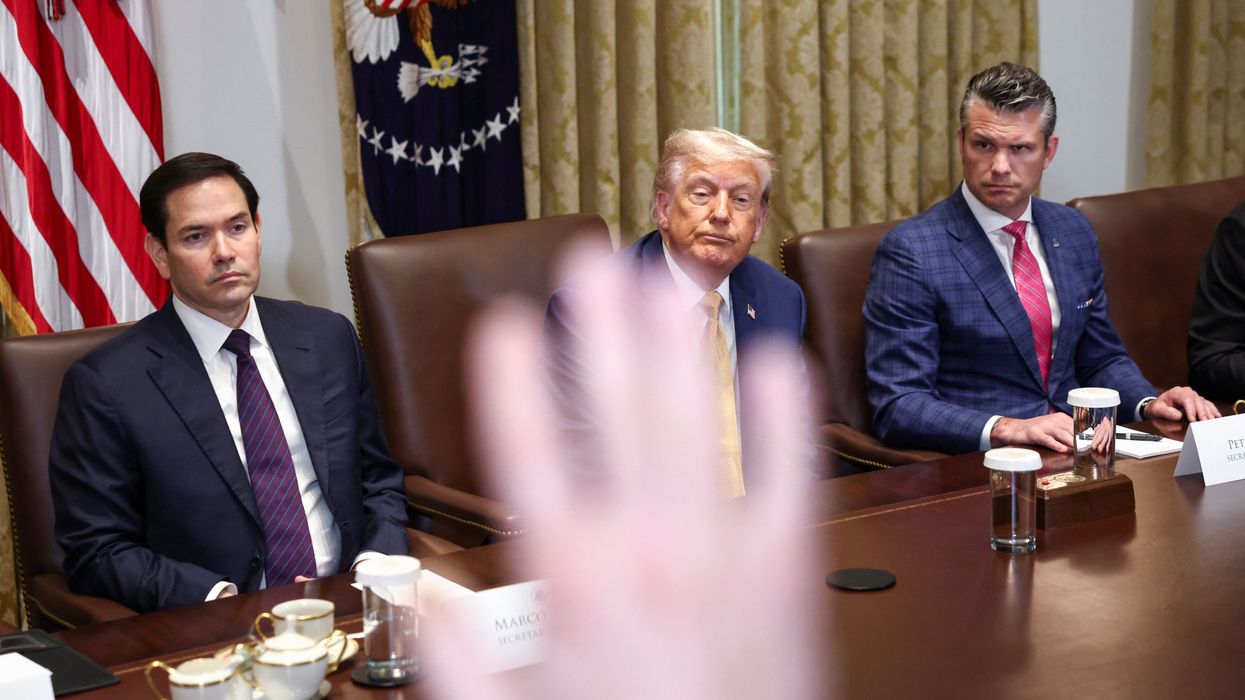
A reporter raises a hand to ask a question as U.S. Secretary of State Marco Rubio, U.S. President Donald Trump and Defense Secretary Pete Hegseth attend a cabinet meeting at the White House in Washington, D.C., U.S., July 8, 2025. REUTERS/Kevin Lamarque
March 23, 2026
ALTERNET

President Donald Trump is solely to blame for America declaring war on Iran, but a distinguished military historian believes many of his supporters are instead blaming a “handy fall guy” — one that has been viciously persecuted throughout history.

“When a nation starts a war for dubious reasons and then suffers the consequences, there is inevitably a search for scapegoats,” military historian Max Boot wrote for The Washington Post on Monday. “Conspiracy theories abound. It happened after World War I, when the favorite villains were ‘merchants of death’ and international bankers. It happened again after the Iraq War, which some blamed on ‘neoconservatives’ and Halliburton, the oil-services giant led by Dick Cheney before he became vice president.

All of these scapegoats — the so-called “merchants of death, “international bankers,” “neoconservatives” and so on — are code words for “Jews,” Boot observed. Now the longtime editorialist opined that this is happening again because of Israel’s alliance with America in Trump’s “foolhardy war against Iran.”

“As so often happens, the Jews — or, if you prefer a polite euphemism, ‘Zionists’ or ‘the Israel lobby’ — make a handy fall guy,” Boot wrote. “What the right-wing fringe once whispered — that this was ‘a war for Israel’ — suddenly burst onto the front pages last week thanks to Joe Kent’s resignation as director of the National Counterterrorism Center. In a blistering public letter, Kent wrote that ‘Iran posed no imminent threat to our nation’ and that ‘we started this war due to pressure from Israel and its powerful American lobby."

Jonathan Sarna, emeritus professor of American Jewish history at Brandeis University and author of “Lincoln and the Jews: A History” and “When General Grant Expelled the Jews,” told AlterNet that he shares Boot’s concerns. To provide historical context, Sarna explained that anti-Semitic conspiracy theories which claim Jews control the world can be linked to an infamous 1903 hoax, one that involved forged documents published in Imperial Russia and called “The Protocols of the Elders of Zion.”


“If you go back to ‘The Protocols of the Elders of Zion’ — the great antisemitic forgery of the turn of the last century — that really began this sense that Jews are all-powerful, that they operate behind the scenes, and that whatever happens is ultimately their fault,” Sarna told AlterNet. “Before then, for centuries, the prevailing view was that Jews were persecuted and lowly because they had killed Christ, and that was what they deserved — they were powerless. That was their punishment. But ‘The Protocols’ flipped that.”

Sarna added that “especially as Jews in modernity have begun to succeed economically, it doesn't much matter what the issue is — whether it is 9/11, which some blame on the Jews, or the crash of 2008, or now the war with Iran. You can predict before it happens that people will blame Jews, because as The Protocols taught people, it's always the Jews. It's the great conspiracy theory. And even many people who have never read The Protocols believe many of the things in it — just as many people have never read Darwin, but they know the word ‘evolution.’ This is simply the latest iteration.”

As Boot pointed out in his editorial, Kent was correct to say Iran posed no imminent threat to the United States. Yet not only is Kent a tainted source (he has white supremacist ties and spread conspiracy theories intended to minimize Trump's attempted coup and the January 6th insurrection), but he ignored that Trump is surrounded by many pro-Arab and pro-oil advisers that emphatically did not want war with Iran. Boot quoted a Foreign Affairs essay by Nate Swanson.


“Trump seems interested, in no particular order, in demonstrating the prowess of the U.S. military, strengthening his negotiating position, showing he was serious when he vowed in a January Truth Social post to protect Iranian protesters, and differentiating his approach from President Barack Obama’s,” Swanson wrote per Boot. Indeed, Trump threatened war against Denmark to conquer Greenland and actually waged an unprovoked war against Venezuela before his attacks against Iran, and neither of those campaigns had anything to do with Israel.

Boot then lamented that “Trump and his aides inadvertently helped foster conspiracy theories about Israel” when Secretary of State Marco Rubio pointed out on March 2 that Israel was going to attack Iran anyway so the U.S. thought it should go along with it.

“The administration then tried to walk this back — and rightly so,” Boot wrote. “It’s absurd to imagine that Netanyahu would have bombed Iran if Trump had told him not to and threatened to withhold military aid if he did.”


Despite the absurdity of blaming the Iran war on “the Jews,” however, Boot predicted this will happen more frequently as the Iran war turns into a quagmire.

“The more the Iran war is blamed on Israel, the more it will do to turn public opinion against the Jewish state,” Boot wrote. “A recent Gallup poll already found that more Americans sympathize more with the Palestinians than the Israelis. According to a YouGov poll, younger Republicans are turning against the Jewish state — a trend that’s doubtless been driven by Israel’s actions in Gaza and the West Bank. Now imagine what will happen if American motorists blame Israel — however unfairly — for the high cost of gasoline.”

Sarna argued that many people with latent anti-Semitic tendencies struggle to apply the same logic to Israelis and the Israeli government that they regularly apply to Americans and the American government.

“I think that for a lot of people, their knowledge of Israel is so limited that it's very difficult for them to engage with it the way we would with any democracy,” Sarna told AlterNet. “But I always remind audiences: I can be critical of President Trump without being un-American. Most people who criticize President Trump or the Republicans would assure you how much they love America and hold a fundamentally positive view of it. It seems to me that it's deeply important for us to do the same with Israel — that is, to make clear that there is a huge difference between disliking the policies of the Prime Minister of Israel and hating Israel itself. If you wouldn't equate criticism of the President with hating America, there is no reason — and indeed it is wrong and wicked — to do so with regard to Israel.”


Boot and Sarna are not the only intellectuals to raise the alarm about rising anti-Semitism. New York Times columnist Michelle Goldberg made a similar argument earlier in March.

“For those who suspect that Israel manipulated America into war, the resignation of Joe Kent, Donald Trump’s director of the National Counterterrorism Center, surely seems like confirmation,” New York Times columnist Michelle Goldberg wrote on Wednesday. She added that Kent’s claims “taps into old antisemitic tropes about occult Jewish control” and is easier to believe for many Americans as Trump bungles the Iran war.

“This conflict, whose timing and purpose Trump barely bothered to explain to the American people, was probably always going to increase anti-Jewish animosity among Americans, especially when Prime Minister Benjamin Netanyahu of Israel gloats that he’s ‘yearned’ for such a war for 40 years,” Goldberg explained. “But the more it drags on, the more I worry about a full-blown American ‘dolchstoßlegende,’ a modern version of the stab-in-the-back myth that German nationalists used to blame Jews for their humiliation in World War I.”

Ironically, despite the argument that Trump waged war against Iran for “the Jews,” Jews have been an overwhelmingly Democratic voting bloc since the late 1920s. For the past century, Jews have consistently voted between 60 and 80 percent Democratic, with the number reaching as high as 90 percent for presidents unusually beloved by Jews (Franklin Roosevelt, Lyndon Johnson) and only falling below 50 percent once (during Jimmy Carter’s losing 1980 campaign). The Democratic candidates running against Trump in 2016, 2020 and 2024 garnered between 66 and 71 percent of the Jewish vote, while Trump only garnered between 24 and 32 percent in those elections. Trump himself denounced Jewish Democratic tendencies in controversial 2019 remarks.


“I think any Jewish people that vote for a Democrat, I think it shows either a total lack of knowledge or great disloyalty,” Trump said at the time, arguing that Republicans are more pro-Israel than Democrats. The president added that “five years ago, the concept of even talking about this . . . of cutting off aid to Israel because of two people that hate Israel and hate Jewish people — I can’t believe we’re even having this conversation. Where has the Democratic Party gone? Where have they gone where they’re defending these two people over the State of Israel?”
General McChrystal warns Trump's in over his head


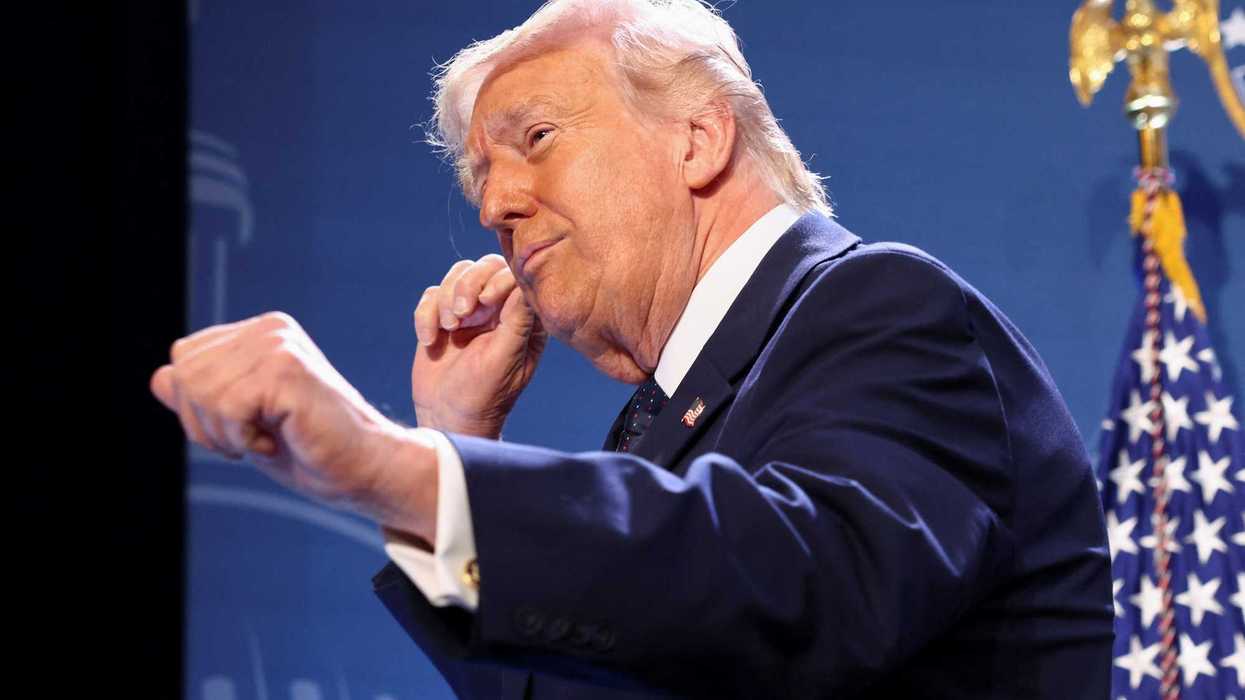
U.S. President Donald Trump dances after delivering remarks to members of the Republican Party, at Trump National Doral Miami in Miami, Florida, U.S., March 9, 2026. REUTERS/Kevin Lamarque
March 23, 2026
ALTERNET

President Donald Trump’s “recent adventurism” in Iran is likely to fail, warned a retired four-star general on Monday — and it is because he does not understand the magnitude of what he has done in Iran.

Speaking with David French of The New York Times, retired General Stanley A. McChrystal linked Trump’s invasion of Iran with his unilateral tariffs, economic confrontation with China and threats toward Canada and Denmark

“Now, there was no military action taken. But there was no cost to it,” McChrystal told French. “And then shooting at the drug boats in the Caribbean was a muscular way to do something. I don’t think it had any effect. But the Maduro raid, I think, crossed a point in which the president got seduced by one of the things I mentioned — the idea that you can do something on the cheap if you’re clever enough and you can pull it off.”

Yet even though Trump succeeded in Venezuela, that does not mean the same tactics will work elsewhere.

“The thing about Special Operations missions is they are high risk,” McChrystal told French. “We say, ‘Well, they’re high risk, but they always work.’ No, they don’t. That’s what makes them high risk.”

Despite this drawback, Trump “got emboldened” by his success in Venezuela, and that made him more susceptible to the arguments made by Israeli Prime Minister Benjamin Netanyahu for invading Iran.

“I think he got caught up in the current of it,” he concluded.

At another point in his conversation with French, McChrystal addressed the argument that the military today is more sophisticated than it was when McChrystal served, and that he therefore may be underestimating its ability to quickly win in Iran.

“I have to keep an open mind that it is possible that the dynamic has changed so much that we finally hit a tipping point where it will be decisive,” McChrystal acknowledged. “But I’m not seeing that, and I don’t feel that. The other part that I would bring out is we thought really early in Afghanistan that the people on the ground who we were targeting would be awed and intimidated by the bombing and that they would respect our capability. In many ways, what we found, particularly with the tribal members, is that they were disdainful of it.”

For his part, French argued earlier in March that Trump would need a “military miracle” to win in Iran quickly and permanently.

“Here is the present situation, in a nutshell: The United States and Israel have established absolute air dominance over the nation of Iran,” French opined. “In a few short days, our combined forces have destroyed Iran’s ability to protect its own airspace, have killed much of Iran’s senior military and civilian leadership, and have sunk much of Iran’s navy.”

Citing the Institute for the Study of War, French said America cannot afford to leave Iran without reopening the Strait of Hormuz, lest Iran view its shutdown as a tactical victory.

“That’s the logic that leads to a quagmire,” French explained. “If America declares victory now, when the Iranian regime is still in power and the strait is closed, then Iran perversely can claim that it won. It took a huge punch, absorbed the blow, and still forced America to climb down. It employed its ultimate weapon — closing the strait — and America had no effective answer.”

He added, “Commit to opening the strait (and keeping it open) by force, and the U.S. may well find itself in yet another open-ended, costly conflict with at least some American soldiers on Iranian soil. This would be war on our enemy’s terms and terrain, with the potential of slowly but surely inflicting casualties and costs on the American military until we grow tired of the conflict and leave.” Only a “military miracle” can stave off both, “a fast campaign with minimal casualties that can quickly reopen the strait, minimize harm to the international economy and leave Iran almost entirely toothless, unable to inflict military or economic damage on its foes.”

Brett McGurk, the Special Presidential Envoy for the Global Coalition to Counter the Islamic State of Iraq and the Levant under both President Barack Obama and Trump himself, told CNN’s Kasie Hunt on Monday that his various war gaming for the US-Iran war did not account for America killing most of Iran’s previous leadership.

“Kasie, I've war-gamed the Iran war plan a number of times across multiple administrations,” McGurk explained. “And I think what the administration said earlier — a 4-to-6-week military campaign — was about right. If you're going to degrade Iran's defense industrial base, the missiles, the drones, everything, it takes 4 to 6 weeks.”

Yet “the one thing that usually did not happen in those war games was that on Day One of the campaign, you took out the entire Iranian leadership,” McGurk added. “That brought this to a whole new level. And therefore the fact that Iran is turning everything on — I think that's not particularly surprising. But we're only about halfway through from where it was originally planned.”


War-gamer exposes Trump's fatal miscalculation in Iran
March 23, 2026 
ALTERNET

President Donald Trump’s surprise war against Iran did not factor in the implications of an important consideration, and a foreign policy expert who “war gamed” this conflict is calling it out.

“Kasie, I've war-gamed the Iran war plan a number of times across multiple administrations,” Brett McGurk, the Special Presidential Envoy for the Global Coalition to Counter the Islamic State of Iraq and the Levant under both President Barack Obama and Trump himself, told CNN’s Kasie Hunt on Monday. “And I think what the administration said earlier — a 4-to-6-week military campaign — was about right. If you're going to degrade Iran's defense industrial base, the missiles, the drones, everything, it takes 4 to 6 weeks.”

Yet there is one variable that did not happen in those war games, and it makes a big difference.

“The one thing that usually did not happen in those war games was that on Day One of the campaign, you took out the entire Iranian leadership,” McGurk told Hunt. “That brought this to a whole new level. And therefore the fact that Iran is turning everything on — I think that's not particularly surprising. But we're only about halfway through from where it was originally planned.”

Earlier in his interview with Hunt, McGurk criticized Trump’s press conferences about the Iran war for their “stream of consciousness” quality and added that Trump is probably trying to buy time to resolve the ongoing crisis over Iran blocking the Strait of Hormuz.

“I think here, this is the president buying some time — calming the economic situation in markets and energy prices — because that buys you time,” McGurk told Hunt. “And that is the one tool the Iranians are playing. It's also buying some time to get forces into place. We still have forces moving as we try, over this five-day period, to see if diplomacy has a chance. I hope it does. I hope an Iranian can come forward and say, ‘I'm speaking now for what's left of our system, and we're prepared to sit down and do a deal.’”

Yet he added, “I'm just — I don't see that happening. So I suspect that by the end of this week, the military campaign is continuing. We're not hitting energy sites, but we're hitting everything else that was on the target list. That will continue through the week, and by the weekend, we might be kind of back to where we started — with Marine Expeditionary Units moving in and other things that give the president a number of options. So I don't see this ending anytime soon, Kasie. I'm just trying to analyze it as best I can in a neutral way.”

Hunt then asked Marc Short, who served as Trump's legislative affairs director from 2017 to 2018, about the president's mindset in approaching this war. He agreed with McGurk's analysis, adding that "he's giving himself five days to see if any negotiations happen."

Trump’s problems do not end with the chaos caused by assassinating Iran’s leadership. Phil Klay, a novelist and Marine Corps veteran from President George W. Bush’s Iraq war, explained in The New York Times earlier this month that the war’s prosecution has been inherently demoralizing.

“I have plenty of complaints about the war I served in two decades ago: the Iraq war was ill-conceived, hubristic and marred by poor leadership at the highest level,” Klay wrote. “But I did know why I was there. What exactly do our service members think we’re trying to do in Iran?”

Denouncing the Trump administration’s “stunningly incoherent” explanations for the war, Klay concluded that “in President Trump’s America, there may be only two genders, but our military adventures can identify however they please.” Noting that they seem to exult in “mixing images of death and destruction with footage from video games or sports highlights,” Klay described the president’s actions as “macho posturing.”

Similar to McGurk and Klay, former U.S. ambassador to Lebanon Jeffrey Feltman and Levant director for the Pentagon Mara Karlin wrote in The New York Times earlier in March that Trump’s “cavalier approach” in Iran is putting Americans and others in danger. In addition to leaving U.S. diplomats and their families on their own to evacuate the Middle East, they also pointed out that America is not accounting for the scale of the Iranian response, which has shut down travel across the region and increases the risk of retaliatory acts of terrorism.

OPINION

The WSJ investigation that changes everything

Robert Reich


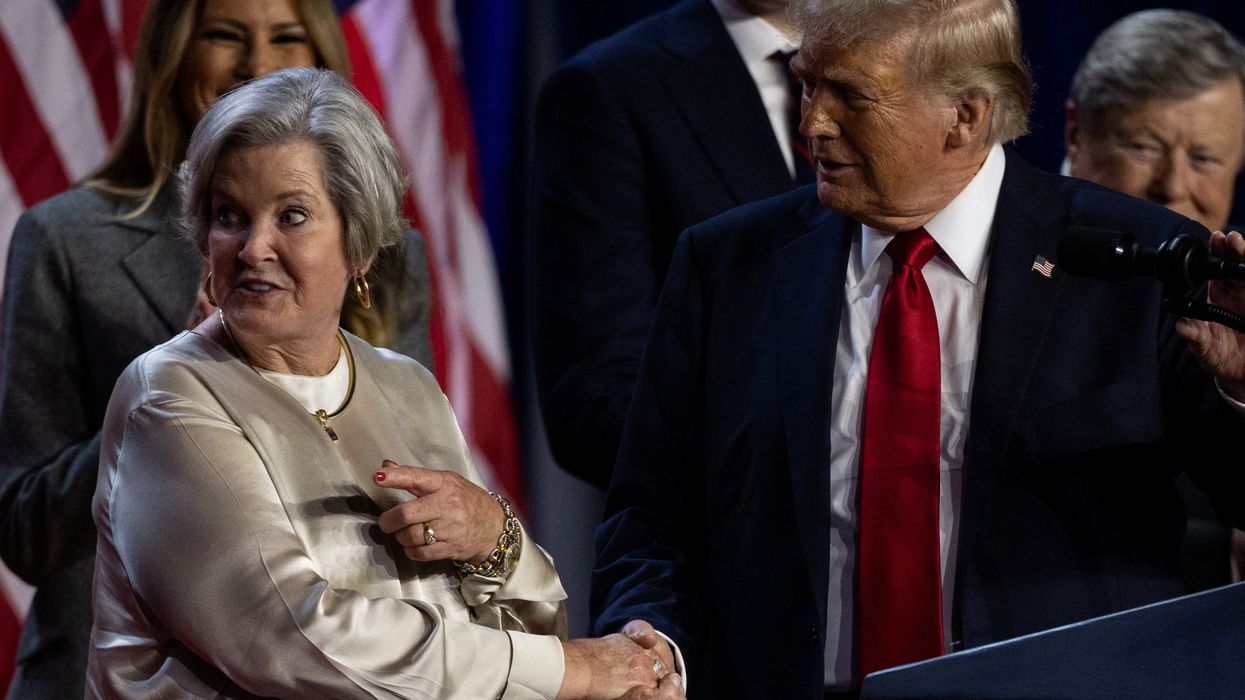
Susie Wiles as he speaks, following early results from the 2024 U.S. presidential election in Palm Beach County Convention Center, in West Palm Beach, Florida, U.S., November 6, 2024. REUTERS/Carlos Barria

March 24, 2026 
ALTERNET

The Wall Street Journal — hardly an outpost of left-wing propaganda — reported yesterday on the results of an investigation conducted by the Journal’s Hannah Critchfield and her team.

I’m summarizing it below because it deserves your attention.


Critchfield and her team found that 279 people have been accused online by the Trump administration of assaulting federal ICE and Border Patrol agents, and more than half of these people — 64 percent — are American citizens.

Of the 181 American citizens that the Trump administration has accused of attacking federal ICE and Border Patrol officers, close to half have never been charged, and none have been convicted at trial. But the public charges alone have caused them significant harm.


The investigation


The Journal’s team analyzed more than 200 videos associated with allegations of assault against ICE and Border Patrol agents, using both police body camera footage and bystander recordings from social media. Many of the videos cast doubt on the federal government’s claims that agents were assaulted.

The Journal also reviewed more than 100,000 posts on X, posts made in the last year by accounts linked to government agencies and senior government officials.

Each time the government identified a person on a post, the Journal tracked that case through the legal system to see what charges were brought, under what statute, whether the charges were later modified, and what happened to the person in the case.


One of the cases they investigated was that of Sydney Lori Reid, a 44-year-old veterinary assistant in D.C. and a U.S. citizen.

In July, Reid went to a jail to witness an immigration enforcement action. Federal officers had gone there to arrest two migrant men, and Reid said she felt a duty to document it.

As Reid began videotaping, an agent grabbed her and pinned her to a wall. Reid was then surrounded by several federal law enforcement officials. One of them was an FBI agent wearing a face covering and an FBI vest. Two others were ICE officers, dressed in plain clothes, plaid shirts, and khaki pants.


Reid was handcuffed and told she was being arrested for interfering with their operation. Videos reviewed by Critchfield and her team cast doubt on the agents’ claims.

Reid was then placed in a government vehicle and transferred to federal custody. Like many American citizens who wind up in the crosshairs of DHS, she was accused of assault.

The government alleges she assaulted an FBI agent on the basis of scrapes on the agent’s hands, but the scrapes occurred in the process of putting handcuffs on Reid.

The government later charged Reid with felony assault of a federal official, a charge punishable with up to 20 years in prison — a serious federal charge that’s being applied far more broadly now than at any time in recent history.


When Reid was being arrested, she dropped her phone, but the phone was still recording. An agent picked up the phone and put it into the same vehicle that she was riding in on her way to detention.

One officer says: “We’re at the D.C. jail. We’re at the D.C. jail. We have an agitator in custody for ...”

Reid was handcuffed in the backseat. You can hear agents going back and forth about exactly how Reid had assaulted them. First, it was a raised knee, then an elbow.

Another officer: “Yeah, it appeared that there was an elbow that was ... When she was resisting, but she definitely interfered. So we have interfering and I’m going to get ...”


One of the ICE agents called her a stupid female as he was talking to a colleague: “Hey brother, are you good? I have to return to 1D and process this stupid female now that I f------ don’t want to process her.”

Reid was held by federal authorities for roughly two days. She wasn’t allowed to make a phone call during that time.

In the aftermath of her arrest, prosecutors tried to indict her, but that needed to be done through a grand jury, and the grand jury declined to indict her. They tried again before another grand jury, which also declined to indict her. Then they went back to a third grand jury, which declined to indict her.

This is almost unheard of. It showed both the resistance from the public to charge her based on the evidence and the government’s determination to bring charges in this case.


Prosecutors ultimately charged Reid with misdemeanor assault of an officer, a lesser offense that doesn’t require going through a grand jury. Reid was acquitted of that misdemeanor charge at trial.

The Trump Administration’s Strategy

Critchfield and her Journal team found that the push to charge more people for assaulting federal officers — as happened to Reid — is an administration-wide strategy.

Attorney General Pam Bondi and her Department of Justice have pledged to prosecute these cases aggressively. From the very beginning of Bondi’s tenure, starting on her first day in office, she issued a flurry of memos, including one that encouraged prosecutors to aggressively investigate any instances of violence against law enforcement or obstruction of law enforcement.

Gregory Bovino, then the head of Border Patrol, directed his agents to arrest anyone who touched them. “Arrest as many people that touch you as you want to. Those are the general orders all the way to the top, everybody f------ gets it if they touch you. You hear what I’m saying?”

In addition to an increasing number of prosecutions, the Department of Homeland Security has been using social media to exaggerate these alleged attacks, often with a warning to the public: “Don’t be like this person. If you behave in this way, we will come for you.” And they have posted people’s pictures and their full names, seeking to make an example out of these people even before they’re convicted of a crime.

This happened to Reid. A week after she was arrested, her mug shot and name went up on the official ICE account on X, along with the fact that she’s based in Washington, D.C., and a post that said, “Assault an officer or agent get arrested. It’s not rocket science.”

ICE also publicly alleged that Reid assaulted federal agents on behalf of two alleged international gang members.

The Purpose of This Strategy


The Journal’s investigation makes clear that the purpose of this strategy has been to intimidate and silence Americans who might otherwise protest what ICE and Border Patrol are doing.

ICE publicly describes many of these protesters as rioters, agitators, thugs, and terrorists.

Here’s Vice President JD Vance speaking of Renee Good’s death:
“I can believe that her death is a tragedy while also recognizing that it’s a tragedy of her own making and a tragedy of the far left who has marshaled an entire movement, a lunatic fringe against our law enforcement officers.”


And here’s then-DHS Secretary Kristi Noem on the death of Alex Pretti:
“This individual who came with weapons and ammunition to stop a law enforcement operation of federal law enforcement officers committed an act of domestic terrorism, that’s the facts.”


Renee Good was in her car when she was killed. Critchfield and her team found that federal government officials have accused 32 U.S. citizens of intentionally using their vehicles as weapons. DHS considers a vehicle to be a deadly weapon, justifying the use of force. Of those 32 drivers, only one pleaded guilty to an assault charge. Three had their cases dismissed; the rest were never charged.

The Journal investigation found that in most cases where citizens were accused by the government, the outcome was similar to Reid’s.

181 citizens were accused by the government on X of attacking federal officers, but close to half of them were never even charged at all. When people were charged, more often than not, the cases fell apart. Either they were acquitted or found not guilty at trial.

Fifteen people mentioned in government posts pleaded guilty before going to trial. Ten of whom pleaded guilty for lesser offenses than what the government initially charged them with.

Videos have often played major roles in contradicting the government’s case. Critchfield and her team viewed videos that repeatedly cast doubt on the government’s allegations. Protesters were often called violent rioters or professional agitators and accused of making physical contact in some way with agents, but video footage often showed immigration agents being the first to lay their hands on demonstrators.

The Journal found that most of the government’s assault allegations against American protesters posted on X were unsubstantiated. Even federal prosecutors themselves acknowledged that in some cases, the evidence to back up these charges wasn’t there.

Federal prosecutors across the nation told Critchfield and her team that they are facing intense pressure to charge demonstrators and bystanders with crimes even when video evidence contradicts what officers initially claimed about what occurred, or in situations where they wouldn’t normally pursue federal charges.

The costs to those who are arrested are substantial. Even in cases where the person is exonerated, they must still deal with posting bail, securing defense attorneys, and taking days off from work to appear in court. In more extreme cases, people are doxed online and face death threats.

Reid says she’s been more hesitant about engaging in political speech, even though, as she put it, “Those are our rights as U.S. citizens and they’re being stifled.”

Conclusions


The Journal’s investigation concluded that:
“U.S. citizens are caught in the crosshairs of an aggressive government campaign to detain and demonize detractors, including by calling them terrorists, rioters, and agitators. The Department of Homeland Security, which was created in 2002 to protect Americans, has turned its force against U.S. citizens.”


By putting a public bull’s-eye on Americans whom the government accuses of assault, the Journal also found that the Trump administration is chilling First Amendment expression:
“People who had been accused publicly by the federal government of assaulting federal officers … are less likely to participate in protests and less likely to put themselves in situations where their name might be tracked…. There is a real pressure to crack down and send a message to people who the government views as perceived dissenters, even if video contradicts what agents have initially claimed happened.”


Again, let me remind you that this comes from The Wall Street Journal.

Robert Reich is a professor of public policy at Berkeley and former secretary of labor. His writings can be found at https://robertreich.substack.com/.


Remembering Fukushima... the Other Road to Nuclear Nightmare

With nine nuclear-armed nations and roughly 12,000 nuclear warheads on this planet, worries about nuclear war are unavoidable. However, the danger of a nuclear disaster at a seemingly “peaceful” nuclear facility is often ignored.


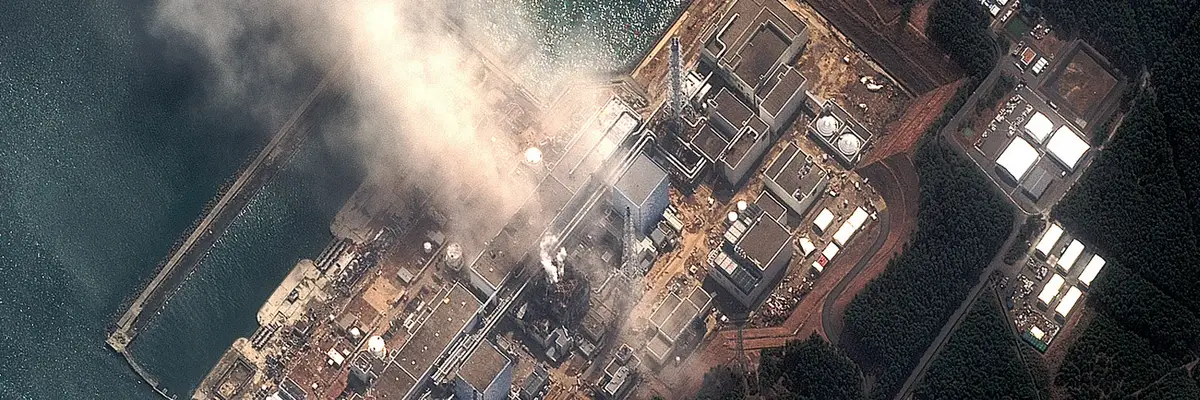
In this satellite view, the Fukushima Dai-ichi Nuclear Power plant is shown after a massive earthquake and subsequent tsunami on March 14, 2011 in Futaba, Japan.
(Photo by DigitalGlobe via Getty Images via Getty Images)

Joshua Frank
Mar 23, 2026
TomDispatch


Nine countries now possess nuclear weapons and we have just seen the start of a new war in the Middle East over one more nation supposedly trying to acquire them. While we consider the dangers of such weapons and their capacity to cause massive destruction, we often overlook the risks associated with what still passes for “peaceful” nuclear power. With that in mind, let me revisit a moment when that reality should have become far clearer.

I had crawled into bed on March 10, 2011, opened my phone, and scrolled through my Instagram feed. The app was still fairly new then, and I was only following a dozen or so accounts, several from Japan. One amateur photographer there had posted photos minutes earlier of a fractured sidewalk and a toppled bookshelf. A massive earthquake had just rattled Tokyo.


‘Apparently, I’m an Idiot’: A Trump Voter’s Confession


Pete Hegseth: Trump’s Dumbest Cabinet Member

A news article confirmed that a magnitude 7.9 quake had indeed struck 80 miles off the coast of Japan. Later, it was upgraded to 9.0, 1,000 times more powerful in terms of energy released. Holy shit, I thought. That’s huge! Worried, I emailed my old college friend Ichiro, who lived in Tokyo, to make sure his family was safe. A short while later, he replied that they were fine, but that a massive tsunami had indeed flooded the Tohoku region north of Tokyo. Many were dead.

“It’s horrible. It’s chaos,” he wrote me.

The nuclear industry has a reasonably polite name for a disaster like the one that was rocking Fukushima. They refer to it as a “beyond design-basis accident” because no single nuclear plant design can account for every possible problem it might encounter in its lifetime.

By the time Ichiro’s message arrived, distressing images of the tsunami were already circulating online and the death toll was rising fast, though the floodwaters were by then receding. As I watched heartbreaking videos of screaming onlookers, capsized boats, floating debris, and cars submerged like toys in a bathtub, another tragedy was unfolding that few, even inside the Japanese government, were aware of. A nuclear plant in Fukushima, operated by TEPCO (the Tokyo Electric Power Company), had been swamped by the tremendous flooding and lost all power.

The Fukushima Daiichi nuclear plant, built by General Electric (GE) in the mid-1960s, was designed to withstand natural disasters, but its creators never foresaw an earthquake like that. When the plant’s sensors detected the quake, its reactors automatically shut down. That emergency shutdown (or scram) halted its fission process, triggering backup power to keep cold seawater flowing through the reactors and spent-fuel containers to prevent overheating. Things at Fukushima were going according to plan until that massive tsunami battered the plant, washing away transmission towers and damaging electrical systems. There were backup generators in the basement, but those, too, had been inundated by waves of seawater, and an already bad situation was about to get far worse.

A power outage at a nuclear power plant is known as a “station blackout.” As you might imagine, it’s one of the worst scenarios any nuclear facility could possibly experience. If all electricity is lost, that means water is no longer being pumped into the reactor’s scalding-hot core to cool it down. And if that core isn’t constantly being cooled, one thing is certain: Disaster will ensue. The fission process itself may be complicated, but that’s basic physics. To make matters worse, there were three operating reactors at Fukushima Daiichi. Luckily, three others had already been shut down for maintenance. If power wasn’t restored in short order, that would mean that all three of Fukushima’s reactors were in very big trouble.

We would later learn that no one—not at TEPCO, GE, or among Japanese regulators—had ever considered the possibility that all the reactors might lose electricity at once. They had only drawn up plans for one reactor to go down, in which case the others could keep the plant running. But all of them offline, and every generator out of commission? There was no precedent or playbook for that.

The nuclear industry has a reasonably polite name for a disaster like the one that was rocking Fukushima. They refer to it as a “beyond design-basis accident” because no single nuclear plant design can account for every possible problem it might encounter in its lifetime. The fact that there’s a term for this should make you anxious.
Meltdowns and Fallout

Over the next several days, the emergency at Fukushima Daiichi only worsened. Every effort to restore power to its reactors hit a dead end. On-site radiation-detection equipment, which would have triggered warnings and guided evacuation efforts for those in danger, was no longer functioning. Plans to pump water into the reactors to cool them had faltered. Their cores kept overheating, and the boiling pools of spent fuel were at risk of drying out, potentially triggering a massive fire that would release extreme amounts of radiation.

Within three days, following a series of fires, hydrogen explosions, and panic among those aware of what was happening, Fukushima’s Units 1, 2, and 3 experienced full-scale core meltdowns. Over 150,000 people within an 18-mile radius had already been forced to evacuate, and radiation plumes would take two weeks to spread across the northern hemisphere, although the Japanese government wouldn’t admit publicly that any meltdown had occurred until June 2011, three months later.

The only good news for the 13 million people living 150 miles south in Tokyo was that, during and immediately after the meltdowns, prevailing winds carried much of Fukushima’s radioactive material away from the smoldering reactors and out to sea. It’s estimated that 80% of the fallout from Fukushima ended up in the ocean, meaning most of it headed east rather than toward population centers to the south and west. The other fortunate news was that the spent fuel containers had somehow survived it all. If their water levels in the pools had been drained, far more radiation would have been released.

But Tokyo wasn’t completely spared. After years of research, scientists discovered that cesium-rich microparticles had blanketed the greater Tokyo area, an unpopular discovery that drew backlash and threats of academic censorship. Areas around the Fukushima exclusion zones recorded the highest radiation levels. Japanese government officials continually downplayed the dangers of the accident and were reluctant to even classify the event as a Level 7 nuclear disaster, the highest rating on the International Nuclear Event Scale, which would have placed it on a par with the 1986 Chernobyl nuclear disaster. Japanese officials have also failed to conduct long-term epidemiological studies that would include baseline measurements of cancer rates, which has cast doubt on thyroid screenings that found troubling incidents of cancer far higher than researchers expected.
Radioactive Fish

Prior to the earthquake, the ocean’s cesium-137 levels near Fukushima were 2 Becquerels (a unit of radioactivity) per cubic meter, well below the recommended drinking water threshold of 10,000 Becquerels. Just after March 11, 2011, cesium-137 levels there spiked to 50 million before decreasing as sea currents dispersed the radioactive particles away from the coast. The ocean, however, had been poisoned.

In the years that followed the Fukushima nuclear disaster, researchers documented a frightening, yet predictable trend. Radioactive isotopes in seawater were taken up by marine plants (phytoplankton), which then moved up the food chain into tiny marine animals (zooplankton) and, eventually, to fish. Cesium-137 consumed by fish can reside in their bodies for months, while Strontium-90 remains in their bones for years. If humans then eat such fish, they will also be exposed to those radioactive particles. The more contaminated fish they eat, the greater the radioactive buildup will be.

In 2023, over a decade after the incident, radiation levels remained sky-high in black rockfish caught off the Fukushima coast. Other bottom-dwelling species have been found to be laden with radioactivity, too, including eel and rock trout. Further concerns have been raised about the treated radioactive water that TEPCO continued to release into the ocean, prompting China to suspend seafood imports from Japan. Aside from those findings, there have been very few studies examining the effects of Fukushima’s radiation on ecosystems or on the people of Japan.

The world is unpredictable, and even the safest nuclear power plant can’t guarantee that it will hold up against whatever tragedy is coming next.

“Japan has clamped down on scientific efforts to study the nuclear catastrophe,” claims pediatrician Alex Rosen of International Physicians for the Prevention of Nuclear War. “There is hardly any literature, any publicized research, on the health effects on humans, and those that are published come from a small group of researchers at Fukushima Medical University.”

Recognizing such levels of radiation, even if confined to the waters near Fukushima, would cast the country’s nuclear industry as a significant threat—not only to Japan but globally. Any admission that Fukushima’s radiation is linked to increased cancer rates would raise broader concerns about nuclear power’s future viability. Radiation exposure is cumulative and, although Fukushima didn’t immediately cause mass casualties, it wasn’t a benign accident either. It took decades before it was accepted that Chernobyl had caused tens of thousands of excess cancer deaths. It may take even longer to completely understand Fukushima’s full effects. In the meantime, the still ongoing cleanup of the burned-out facilities may cost as much as 80 trillion yen ($500 billion).

It’s been 15 years since Fukushima’s reactors experienced those meltdowns, and we still don’t fully understand their long-term repercussions. Nuclear power advocates will argue that Fukushima wasn’t a serious incident and that nuclear technology is still safe. They’ll minimize radiation threats, remain optimistic that new reactor designs will never falter, dismiss the fact that there’s simply no permanent solution for radioactive waste, and overlook the inseparable connection between nuclear power and atomic weapons. After all, among other things, we’ll undoubtedly need nuclear energy to help power the artificial intelligence craze, right?

The operators and regulators at Fukushima were wholly unprepared for what unfolded on that fateful day in 2011. They never imagined that an earthquake of such magnitude could trigger a tsunami so immense that it would destroy the power grid, knock out water pumps, and disable backup generators. Likewise, no one can guarantee that nuclear plants or radioactive storage tanks are safe in war zones, or that the rivers and lakes needed to cool reactors globally won’t one day run dry or become too hot to do so—something that has already happened in Europe. Ultimately, we can’t anticipate every mishap, human error, or—especially in the age of climate chaos—every natural disaster that may come down the pike. The world is unpredictable, and even the safest nuclear power plant can’t guarantee that it will hold up against whatever tragedy is coming next.

Fifty miles south of where I live in Southern California, an old nuclear facility sits idle on the Pacific Coast in an earthquake-and-tsunami-hazard zone, not unlike the site where Fukushima was built. It’s not the only such plant in California, but it’s the one I often visit. When I’m there, I think about Fukushima and imagine what would happen if a similar, unexpected disaster reached California’s shores and how such an event would forever alter this land.
Searching for Solace at San Onofre

The morning light was peaking over the sandstone bluff, and the offshore breeze was soft and brisk. I’m barefoot in a wetsuit, trudging my surfboard down a dirt road at San Onofre, a state park in northern San Diego County, for a “dawn patrol” surf session. A series of high tides—likely made more extreme by rising sea levels—has eroded a large portion of the parking lot below, so the beach can only be reached on foot or by bike. I’m not complaining. It’s worth the short trek. The absence of vehicles down here also means fewer surfers in the water.

San O, as it’s lovingly referred to, has a rich surf history spanning 100 years. Duke Kahanamoku, the “father of modern surfing,” who popularized the ancient Hawaiian sport in Southern California and often visited San O in the 1940s, helped to solidify it as one of the region’s premier breaks and an early hub of SoCal surf culture. The waves are long and rolling thanks to an extensive cobblestone reef. It’s a magical place.

Things around here have changed quite a bit, however, since “The Duke” first paddled his heavy wooden board into the surf. Just down the beach, the San Onofre Nuclear Generating Station sits precariously perched 100 feet from the water. Its two large domes are an ominous sight. Constructed in the 1960s, the plant is no longer producing electricity, but the station’s 123 large concrete-and-steel storage vessels remain, housing 3.6 million pounds of highly radioactive waste. Since nobody wants the toxic stuff, it just sits there, looming, awaiting the next big earthquake like the one that shook Fukushima. San Onofre is designed to withstand a 7.0 shaker, but scientists believe the area is capable of producing one 10 times larger and 32 times stronger. With 8.4 million people living within a 50-mile radius, any geological upheaval at San O could make a hell of a mess. It’s a worrisome thought I’d rather not dwell on.

Although it is a state park, the ground that San Onofre sits upon is leased from the federal government because it lies within the 195-square-mile boundary of the Camp Pendleton Marine Corps base. More than a base, Camp Pendleton is a testing ground, where heavy artillery often booms in the distance. An occasional mock raid can occupy the beaches; helicopters sometimes swarm, and Amphibious Combat Vehicles crawl ashore. There’s even a faux Afghan village that was built at Camp Pendleton, costing taxpayers $170 million, where Marines can imagine terrorizing towns from Iran to Gaza. So strange that amid all this madness, San Onofre is where I search for solace.

In 2013, a radioactive gas leak from one of the nuclear plant’s steam generators, which are also within the military reserve, led to its closure. Southern California Edison (SCE), which operates the facility, reassured the public that there was nothing to be concerned about. Few, however, would consider SCE a trustworthy source. Over the years, the company has been caught in a series of lies about the safety of San Onofre, including falsifying firewatch records and grossly mishandling waste. Not dissimilar to TEPCO’s Fukushima deceit.

Like all nuclear power plants, San Onofre needed a lot of water to cool its three reactors, sucking in an astonishing 2.4 billion gallons of seawater a day. As you can imagine, that thirst had a serious impact on ocean ecology, killing fish and wrecking kelp beds. It’s taken over a decade, but some of what was destroyed is finally coming back to life after years of restoration. Despite the progress, discharge pipes still release radioactive effluent laced with cesium-137, cobalt-60, and tritium—a mile offshore 170 times a year. But SCE says there’s nothing to worry about. They also insist they don’t have much of a choice. All that leftover waste needs to be kept from overheating, and using seawater is the only option available.

It’s better not to think too much about a future Armageddon or what might be swimming beneath me while I’m out there bobbing between sets of waves. Surfing is supposed to help relieve my anxiety, not exacerbate it. It’s a little like backpacking in the wilds of Montana, which I also love to do, without constantly worrying about being chomped by a grizzly bear while in my sleeping bag. There are hazards to living in this crazy world—the worst of which, I’ve come to believe, are of the man-made variety.

As I slide my surfboard into the back of my van and peel off my wetsuit, I glance at San Onofre’s domes, which will start to be dismantled this year, and ponder the horrors still affecting Japan, fearing that someday a destructive tsunami may batter this beach, too. Sadly, it’s almost inevitable.

With nine nuclear-armed nations and roughly 12,000 nuclear warheads on this planet, worries about nuclear war are unavoidable. However, the danger of a nuclear disaster at a seemingly “peaceful” nuclear facility is often ignored. The future of atomic energy remains uncertain, but it is our duty to eliminate this hazardous energy source before another Fukushima triggers a war-like catastrophe all its own.


© 2023 TomDispatch.com


Joshua Frank
Joshua Frank is an award-winning California-based journalist and co-editor of CounterPunch. He is the author of the new book Atomic Days: The Untold Story of the Most Toxic Place in America (Haymarket Books).
Full Bio >
‘A Revolting Moral Outrage’: Israeli Soldiers Reportedly Torture Gaza Toddler

Reports of 1-year-old Karim Abu Nassar being burned with a cigarette and pierced with a nail followed the publication of a United Nations analysis detailing Israel’s “systematic” torture of Palestinians since October 2023.


Karim Abu Nassar is held by his mother after he was reportedly tortured by Israeli occupation forces in Gaza.

(Photo by Osama Al-Khalout/X)

Brett Wilkins
Mar 23, 2026
COMMON DREAMS

Israeli soldiers in Gaza allegedly tortured an 18-month-old Palestinian toddler in an effort to force a confession from his father, local and international media outlets reported Monday.

According to Al Jazeera, Karim Abu Nassar was with his father, Osama Abu Nassar, near the al-Maghazi refugee camp in central Gaza on Saturday when they came under Israel Defense Forces fire. Eyewitnesses told Palestine TV that IDF troops ordered the man to leave the child on the ground and advance to a nearby checkpoint, where he was stripped naked and searched.


‘Of Course’: IDF Drops Case Against Soldiers Accused of Raping Palestinian Prisoner


Witnesses said IDF soldiers then tortured Karim in front of his father to pressure him to confess to something. Journalist Osama Al-Kahlout interviewed the child’s mother, who said the toddler suffered a cigarette burn to one leg and a nail puncture to the other. Al-Kahlout’s video shows wounds on the child’s legs—injuries reportedly confirmed by an unspecified medical authority.


Karim was reportedly released to relatives via the International Committee of the Red Cross after 10 hours of detention. The ICRC has not issued a statement regarding the matter and rarely does so absent an investigation.

The Palestine Chronicle reported that Osama Abu Nassar remains in custody, in a system rife with torture—sometimes deadly—and other abuse.

The IDF has not commented on the alleged incident.

In the United States, the story is being amplified by prominent figures including Congresswoman Rashida Tlaib (D-Mich.) and the Council for American Islamic Relations (CAIR), which issued a statement calling the accusations “revolting.”

“Israel’s use of a nail and cigarette burns to torture a 1-year-old child and force a confession from his father is a revolting moral outrage that demands immediate action from Congress,” the group said. “No child, anywhere in the world, should be subjected to such cruelty, especially with American taxpayer dollars. These actions constitute grave violations of international law and basic human decency.”

“Our nation must end its complicity in these crimes,” CAIR added. “Congress has a responsibility to ensure that American taxpayer dollars are not used to support the torture or slaughter of more children. Every lawmaker with a conscience must vote to end military aid for the out-of-control Israeli regime.”

The US has given Israel hundreds of billions of inflation-adjusted dollars in aid to Israel since the country was established in 1948, including more than $20 billion since October 2023.

A new report published by UN Palestine expert Francesca Albanese examines the “systematic use by Israel of torture against Palestinians,” finding “practices that meet the threshold for genocide” under the Genocide Convention—the basis of the ongoing International Court of Justice (ICJ) case brought by South Africa.

A summary of the report states:
Torture has become integral to the domination of and punishment inflicted on men, women, and children—both through custodial abuse and through a relentless campaign of forced displacement, mass killings, deprivation, and the destruction of all means of life to inflict long-term collective pain and suffering. A continuous, territorially pervasive regime of psychological terror is being imposed, designed to break bodies, deprive a people of their dignity, and force them from their land. This is not incidental violence. It is the architecture of settler-colonialism, built on a foundation of dehumanization and maintained by a policy of cruelty and collective torture.

Palestinian victims—including minors—and witnesses, as well as Israeli soldiers, veterans, and medical professionals have described widespread torture and other abuses including rape and sexual assault by male and female soldiers, electrocution, mauling by dogs, beatings, denial of food and water, sleep deprivation, stress positions, and exposure to loud music and temperature extremes.

At least scores of Palestinian detainees have died or been killed in Israeli custody, including one who died after allegedly being sodomized with an electric baton. Many bodies of former Palestinian prisoners returned by Israel have shown signs of torture, execution, and mutilation.

Since the Hamas-led attack of October 2023, Israeli forces have killed or wounded at least 250,000 Palestinians, including more than 65,000 children. Israeli troops have been accused by Palestinians, Western medical volunteers, and their own colleagues of deliberately targeting children with sniper fire and executing them along with their adult relatives during massacres.

In addition to facing the ICJ genocide case, Israeli Prime Minister Benjamin Netanyahu and his former defense minister, Yoav Gallant, are fugitives from the International Criminal Court, where they are wanted for alleged crimes against humanity and war crimes in Gaza, including murder and forced starvation.
‘Apocalyptic Wasteland’ for GOP as Trump’s Iran War Sends Economy Spiraling: Polling Analyst

“Trump’s numbers on the economy are radioactive.”


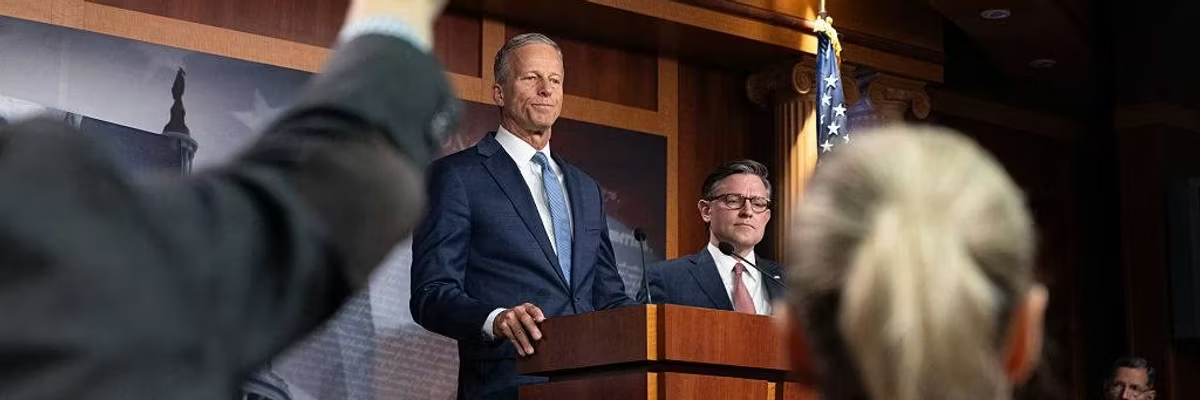
Senate Majority Leader John Thune (R-SD) and House Speaker Mike Johnson (R-La.) take questions during a press conference at the US Capitol on October 10, 2025 in Washington, DC.
(Photo by Anna Rose Layden/Getty Images)


Brad Reed
Mar 23, 2026
COMMON DREAMS


As President Donald Trump’s unconstitutional Iran war drags on into its fourth week, fresh polling analysis shows the president and his Republican Party are politically at their weakest point ever in the eyes of the American public.

Writing in The Argument on Monday, polling analyst Lakshya Jain made the case that Trump has created an “apocalyptic wasteland” for the GOP by combining “a cost-of-living crisis with an unpopular war and tariff policies from the 1930s.”

Jain noted that Trump’s approval rating in The Argument’s latest monthly survey had fallen to 40%, while his disapproval rating has soared to 58%, resulting in the lowest net approval for the president so far in his second term.

What should be particularly disturbing to the president, Jain said, is that disapproval of Trump is being driven by dissatisfaction with the state of the economy, the only area in which he was rated positively by voters throughout most of his first term.

“Trump’s numbers on the economy are radioactive,” Jain explained. “Every major demographic group of voters disapproves of his economic stewardship, including supermajorities of young and nonwhite voters. He’s even underwater on this issue with white, non-college voters, a group he won in 2024 by more than 20 percentage points.”

Voters are increasingly pessimistic about the future as well, as 50% of voters believe the economy will get worse over the next year, while just 37% say it will get better.

To top it all off, Jain said, Trump’s wounds on the economy are self-inflicted, including his tariff policies that have raised prices for consumer goods and his war on Iran that has sent energy prices skyrocketing.

“Trump is doing the exact opposite of what people asked for,” Jain said. “Tariffs have resulted in global economic upheaval. The war in Iran—which began before the fielding of this survey—resulted in an oil shock that has sent gas prices soaring. And Trump’s actions on immigration have shrunk the labor pool, leading voters to partially blame the administration’s immigration policies for exacerbating the cost of living crisis.”

Jain wasn’t the only polling analyst to find Trump’s public standing at a record low, as Real Clear Politics revealed on Monday that the president’s job approval in its average of polls had hit a second-term low of 41.6%.

Trump’s net approval also reached its lowest level ever in polling analyst Nate Silver’s polling average, and Silver said that it could go even lower in the coming days as gas prices continue to rise.

“Still going to be some lagging effects as polls catch up, but gas has increased from $2.93 per gallon to $3.94 over the past month,” Silver commented on Sunday, “and Americans aren’t liking that.”
The Costs of Trump’s Unnecessary, Illegal War on Iran Keep Mounting

The US and Israel may have started this war, but it won’t be so easily ended. The damage done to Iran, Lebanon, and Palestine will be with us for a generation.


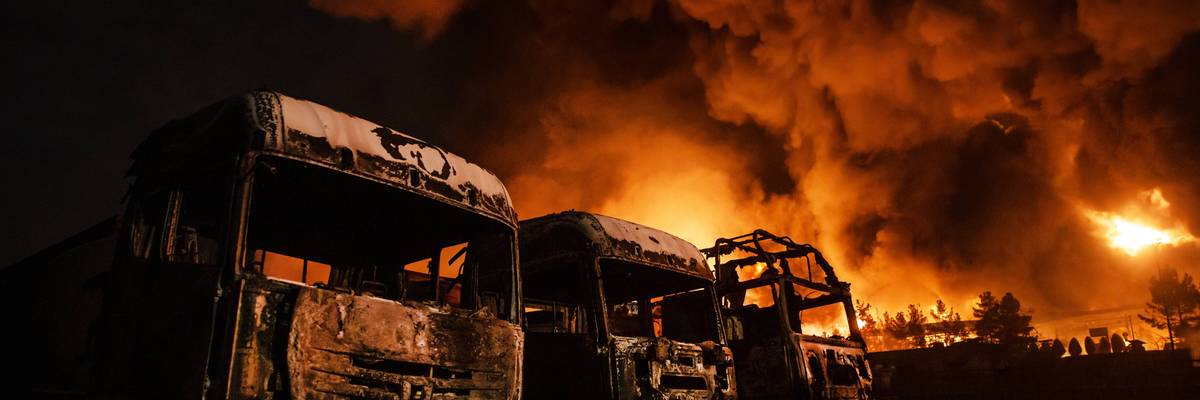
Fire breaks out at the Shahran oil depot after US and Israeli attacks, leaving numerous fuel tankers and vehicles in the area unusable in Tehran, Iran on March 8, 2026.
(Photo by Hassan Ghaedi/Anadolu via Getty Images)


James Zogby
Mar 23, 2026
Common Dreams

The costs associated with any war—losses of lives, treasure, and security—are to be expected. And so it is with the US-Israel war on Iran. It was unnecessary. It has been massive. And it has been waged without any clear objective or strategic purpose. Though only a few weeks old, and still too early to project how it will play out, early signs of this war’s costs and consequences are worrisome.

The amounts of weapons that the US and Israel have dropped on Iranian targets have had a devastating impact on Iran’s people and the country’s infrastructure and resources. It is difficult to imagine that this situation can be remedied any time soon. As a result, Iran, which was already struggling with a flagging economy and a reform-minded and restive population, will most likely endure years of political unrest met by massive repression.

Once illegally attacked by the US and Israel, instead of seeking support from neighboring Arab countries, Iran has struck out at them with a vengeance, destroying some of their infrastructure and economic resources. While the Arab Gulf states can recover, the fragile rapprochement that had been developing between them and Iran has been shattered and will not be easily rebuilt.

A disruption in the supply of oil and gas has resulted from Iran’s choking of the Straits of Hormuz and Israel’s and Iran’s bombings of oil and gas facilities on both sides of the Gulf. This has caused a steep rise in the price of fuel, a sharp decline in the stock market, and the loss of hundreds of billions in overall wealth of investments and pension funds. The war’s economic impacts will continue to reverberate throughout the remainder of the year.

This isn’t the first time that Israel or the US have looked at what they had done to these countries and their peoples and said, “Well, that’s finished,” only to find that the devastating toll of the losses they inflicted and dislocation they created produced a festering bitterness that didn’t dissipate in time.

Meanwhile, the excessive amounts of weaponry so far expended in the war has resulted in reported shortages in both the US and Israel, with President Donald Trump asking Congress to approve an additional $200 billion for the Pentagon and a substantial increase in Israel’s military assistance. As with Ukraine and Gaza, the only winners of this war appear to be the US arms manufacturers.

The damage done doesn’t stop there. The Lebanese Hezbollah forgot that Israel never plays by the rules. They responded to Israel’s murder of Iran’s Ayatollah—a spiritual leader for many Shi’a Muslims—by firing a few shells across their border. Despite the fact that Israel has daily violated its five-month-old ceasefire with Lebanon, Israel used Hezbollah’s shelling to launch a sustained and disproportionate attack on Lebanon. To date, Israel has killed over 1,000 Lebanese, has destroyed entire neighborhoods in Beirut, and has ordered almost one-quarter of Lebanon’s people to flee their homes, exacerbating existing sectarian divisions in the country. Israeli forces now appear to be preparing for a longer-term Israeli occupation of Lebanon’s south. This occupation will likely fare no better than the last time Israel attempted it from the late 1970s to 2000.

As if this weren’t enough, Israel’s far-right government has used the cover of war to consolidate annexation of the West Bank. Plans have been accelerated to evacuate and destroy Palestinian communities in the Jordan Valley to build a “security wall.” Since the war began, the number of attacks by settlers (with the support of Israeli troops) on Palestinian villages has dramatically increased, now averaging 10 a day. These military and vigilante actions have involved deaths and injuries, land theft, and destruction of homes and properties (including orchards and livestock). While Israel’s intent to take full control of all of Palestine has been steadily proceeding in recent years, the actions of the past few weeks are making it all but irreversible.

Meanwhile, the Gaza genocide continues. The attention of the world may be focused elsewhere, but the nearly 2 million Palestinians who remain in that devastated strip continue to suffer from hunger, lack of proper shelter, sanitation, and medical and other essential support services. There is no way to understand the long-term impact this “hell on earth” existence will have on Gaza’s children. But an educated guess would be that it won’t be good.

At this point, Israel’s Prime Minister Benjamin Netanyahu is strutting around as if he were the “Middle East Overlord.” At the same time, there are conflicting reports that the US is either attempting to “wind down” the war or to send ground troops to Iran to “finish the job.” Both are ill-founded. Whatever Trump’s intention, it is a fool’s errand. There is no winding down, nor is there a job to finish.

The US and Israel may have started this war, but it won’t be so easily ended. The damage done to Iran, Lebanon, and Palestine will be with us for a generation. This isn’t the first time that Israel or the US have looked at what they had done to these countries and their peoples and said, “Well, that’s finished,” only to find that the devastating toll of the losses they inflicted and dislocation they created produced a festering bitterness that didn’t dissipate in time. Beware the reckoning.


Our work is licensed under Creative Commons (CC BY-NC-ND 3.0). Feel free to republish and share widely.


James Zogby
Dr. James J. Zogby is the author of Arab Voices (2010) and the founder and president of the Arab American Institute (AAI), a Washington, D.C.-based organization which serves as the political and policy research arm of the Arab American community. Since 1985, Dr. Zogby and AAI have led Arab American efforts to secure political empowerment in the U.S. Through voter registration, education and mobilization, AAI has moved Arab Americans into the political mainstream. Dr. Zogby has also been personally active in U.S. politics for many years; in 1984 and 1988 he served as Deputy Campaign manager and Senior Advisor to the Jesse Jackson Presidential campaign. In 1988, he led the first ever debate on Palestinian statehood at that year's Democratic convention in Atlanta, GA. In 2000, 2008, and 2016 he served as an advisor to the Gore, Obama, and Sanders presidential campaigns.
Full Bio >
IT'S TACO TUESDAY
'He folded': Trump ridiculed for sudden reversal as report blows hole in Iran claim

Alexander Willis
March 23, 2026 
RAW STORY


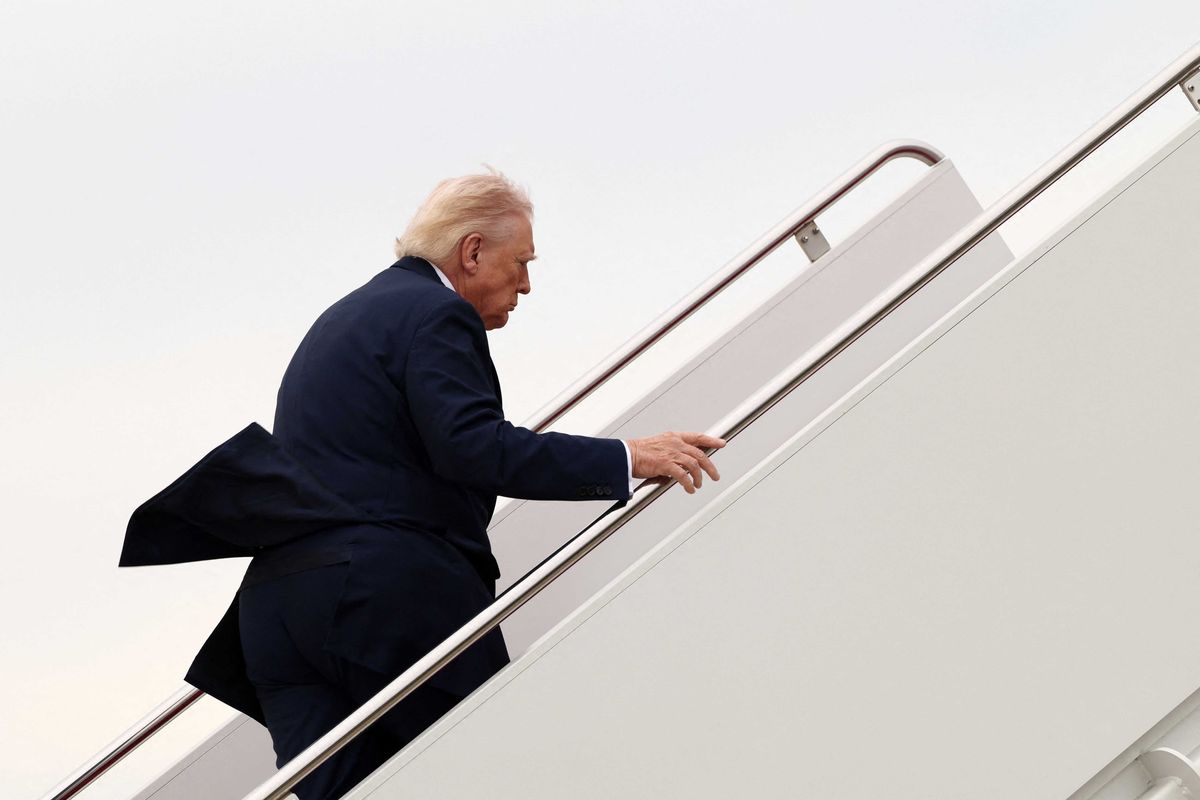
U.S. President Donald Trump boards Air Force One as he departs from Joint Base Andrews in Maryland, U.S., March 20, 2026. REUTERS/Kevin Lamarque

While President Donald Trump cited “productive conversations” with Iranian officials as reason for his sudden reversal Monday in his administration’s war against Iran, new reporting appeared to directly contradict those claims, prompting critics to argue the announcement was an attempt to “save face” after effectively folding under pressure from Tehran.

“Iran called his bluff on the Strait and he folded,” noted journalist and professor Adam Cochran in a social media post on X Monday.

On Saturday, Trump warned Iran that unless U.S. vessels were allowed to traverse the Strait of Hormuz – a crucial shipping channel through which 20% of the world’s oil trade flows – he would authorize strikes on Iranian power plants, a threat that one international security expert warned could spark “global economic disaster of historic scale.”

Trump issued Iran a deadline of Monday evening to comply with his demand, but on Monday morning he extended the deadline by five days after claiming to have had “very good” conversations with Iranian leadership.

Shortly after Trump’s announcement, however, Iran’s foreign ministry said that no such talks had taken place between Tehran and the Trump administration, and “described Trump’s remarks as part of an effort to influence energy markets and gain time,” the Indian news outlet WION reported. Past reporting also suggests that Iran has been effectively ignoring the Trump administration's pleas to restart negotiations.

The revelation led several prominent Trump critics to theorize, much like Iran’s foreign ministry, that Trump’s sudden reversal was merely a ploy to buy time and “save face.”


“Iranian media already claiming that there have been no talks with Trump,” Cochran wrote in another social media post on X to their more than 285,000 followers. “As I suggested – it looks like they called his bluff on the ultimatum, and he is trying to save face before markets open. He’ll postpone only to re-escalate later this week with the risk of these strikes landing next weekend.”

Author and journalist Ali Abunimah came to a similar conclusion as Cochran, arguing that Trump’s reversal was further evidence that the president had succumbed to pressure and was attempting to reframe the retreat as a diplomatic breakthrough.“Either Trump is backing down or he’s lying. Probably both,” Abunimah wrote Monday in a social media post
on X to their more than 270,000 followers.


Denying Claim of Talks, Iran Says Trump ‘Backed Down’ After Threat of Power Plant Retaliation

Iran’s foreign ministry accused the US president of cynically trying to “reduce energy prices and gain time to implement his military plans.”


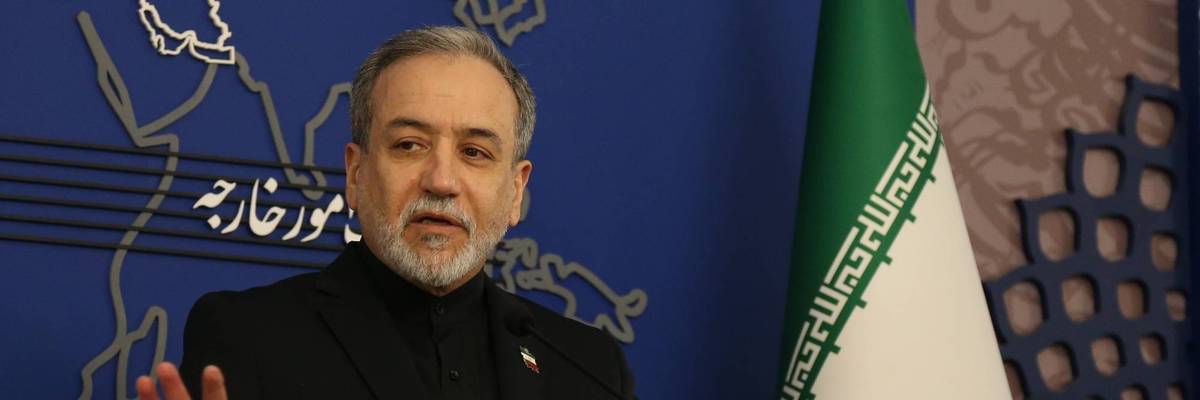
Iranian Foreign Minister Abbas Araghchi speaks at a weekly news conference in Tehran, Iran on March 16, 2026.
(Photo by Shadati/Xinhua via Getty Images)


Jake Johnson
Mar 23, 2026
COMMON DREAMS


Iran’s foreign ministry on Monday denied US President Donald Trump’s claim that the two sides were engaged in “productive” talks over a possible end to the conflict started by the US and Israel late last month.

According to Iranian news agencies, Iran’s foreign ministry said Iranian forces’ pledge to retaliate in kind against any US strikes on Iran’s power plants forced the president to acquiesce. In a Truth Social post early Monday, Trump said he instructed the Pentagon to “postpone any and all military strikes against Iranian power plants and energy infrastructure for a five-day period.”

Over the weekend, Trump vowed to “obliterate” Iranian power plants if the Strait of Hormuz was not fully reopened by Monday night. Iran said in response that it would hit power plants serving US military installations in Gulf nations.

“Trump, fearing Iran’s response, backed down from his 48-hour ultimatum,” Islamic Republic of Iran Broadcasting reported Monday following the US president’s Truth Social post.

In a statement reported by Iran’s semi-official Mehr news agency, the nation’s foreign ministry said that Trump’s Monday statement was “within the framework of efforts to reduce energy prices and gain time to implement his military plans.”

“There are initiatives by regional countries to deescalate tensions, and our response to all of them is clear: We are not the party that started this war, and all these requests should be referred to Washington,” the statement added. Iranian officials maintained that there have been no direct or indirect talks with the Trump administration over an end to the war.

Since the US and Israel started bombing late last month, Tehran has publicly rejected diplomatic talks with the US, saying Trump’s decision to wage war on Iran sabotaged previous nuclear negotiations that had been progressing.

“We don’t ask for ceasefire, but this war must end, in a way that our enemies never again think about repeating such attacks,” Iranian Foreign Minister Abbas Araghchi said last week.

Trump’s announcement that he would hold off on striking Iranian power plants for at least five days was seen by some in the US as a cynical attempt to calm shaky global markets, not an indication of movement toward a diplomatic resolution.

“Trump isn’t announcing a pause on strikes. He’s saying he’s postponing a possible war crime—strikes on Iran’s civilian energy infrastructure,” said US Sen. Chris Murphy (D-Conn.). “Also, this isn’t a message to Iran. It’s a panicky message to the markets: ‘No war escalation until markets close on Friday.’”

Jamal Abdi, president of the National Iranian American Council, said in a statement Monday that “we hope the president isn’t negotiating with himself for social media and TV cameras to calm the markets while there is really no end to this war in sight.”

“It should shock Americans that, before this apparent pullback, our commander-in-chief is threatening war crimes and to blow up power plants in Iran,” said Abdi. “While this may be an attempt by the president to seize escalation dominance back from Iran, this notion is punctured by the fact that Iran would likely respond to such crimes with its own heinous attacks on power plants and civilian infrastructure in the region, upping the ante even further against the US, its partners, and the global economy.”

“That’s why diplomacy is critical right now,” Abdi added. “However, the president has severely undermined the US power of diplomacy as well. President Trump’s past two attempts at diplomacy with Iran ended in surprise attacks by Israel, supported by the US, and has created the impression that the president uses talks as cover for Israel to launch military strikes. Unless the president is willing to seriously negotiate and can also restrain Israel from sabotaging an agreement, the war will continue and the possibility of escalation, whether by putting boots on the ground or committing war crimes, will take this war even further from a possible endpoint.”