Tuesday, April 21, 2026

Why You Paid $29.99 for Those Levi’s, Not $25.47: Amazon Price-Fixing Scheme Exposed

Evidence released by California’s attorney general shows “blatant price-fixing” by the retail giant, said one consumer advocate.



Levi’s clothing is displayed at a Kohl’s store in San Rafael, California.
(Photo by Justin Sullivan/Getty Images)

Jake Johnson
Apr 21, 2026
COMMON DREAMS

California’s top law enforcement official on Monday released a legal filing packed with evidence that Amazon is leveraging its dominance of the online retail market to artificially drive up prices for a range of goods, fueling a nationwide affordability crisis while padding its profits.

The filing was first submitted to the San Francisco Superior Court in February as part of California Attorney General Rob Bonta’s broader legal effort to halt what he described as Amazon’s “illegal price-fixing scheme.” At the time, the filing was heavily redacted, obscuring specific examples of Amazon conspiring with vendors and competing retailers to drive up prices for apparel, pet treats, fertilizer, and other items. California’s case against Amazon is set to go to trial next year.

“The evidence we’ve uncovered is clear as day: Amazon is working to make your life more unaffordable,” Bonta said in a statement. “The company is price-fixing, colluding with vendors and other retailers to raise costs for Americans beyond what the market requires—beyond what is fair.”

“Amid a crisis of affordability,” Bonta added, “Amazon is illegally working to rake in profits by making sure consumers have nowhere else to turn to for lower prices. We’ll see them in court.”

The filing identifies three specific tactics Amazon uses to fix prices—“breaking the price match,” “increasing the competitor retail price,” and “removing the product”—and offers concrete examples, backed by email evidence, of the company deploying each method.

In one instance from 2021, Amazon alerted Levi’s that Walmart.com had some of the clothing company’s pants listed at a price of $25.47-$26.99—which Amazon indicated was too low for its liking. At Amazon’s request, Levi’s connected with Walmart, which agreed to price one of the identified products at $29.99. Amazon then matched that higher price for Levi’s Easy Khaki Classic fit on its platform, locking in the cost increase for online shoppers.

“This should make your blood boil. Amazon is using its market power to coerce major retailers to hike prices,” said Lee Hepner, senior counsel at the American Economic Liberties Project. “It is pouring kerosene on an affordability crisis. Forcing price hikes to preserve market share is illegal monopoly maintenance, clear as day.”

Bonta’s filing also details a case in which Amazon, the vendor GlobalOne, and the pet supplies company Chewy agreed to fix prices on more than 10 pet treat products.

As Bonta’s office summarized:
The plan was written in an email between Amazon and its vendor, GlobalOne. For its part, Amazon would raise GlobalOne’s Canine Naturals pet treat prices to get Chewy to follow, then GlobalOne would “reach out to Chewy” to let them know that Amazon was increasing the pricing and “would ask that [Chewy] follow.” In other words, if Chewy agreed, Amazon would increase its retail pricing for the Canine Naturals pet treats and Chewy would match the price increase. The plan materialized. Amazon told GlobalOne that the pricematch override was in place, and to “let Chewy know to update [pricing] immediately.” That same day, GlobalOne confirmed the “ones that went up on Amazon immediately went up on Chewy [happy face emoji] … Overall this looks like it’s working!” The result of Amazon, Chewy and GlobalOne’s price fixing agreement was to increase the retail prices of over ten Canine Naturals pet treat products on Amazon and Chewy.

“The examples above are not outliers and are not exhaustive,” Bonta’s office stressed in a statement. “They are illustrative of countless interactions—spanning years and product lines—in which Amazon, vendors, and Amazon’s competitors agree to increase and fix the prices of products on other retail websites. As Amazon told one vendor explicitly: ‘I am very determined to help you hunt the disrupters in the market.’”


Stacy Mitchell, co-director of the Institute for Local Self-Reliance, said Bonta’s filing shows “blatant price-fixing” by Amazon that is “almost certainly the tip of a much bigger price-fixing operation.”

In a piece published at Washington Monthly on the same day that Bonta’s largely unredacted filing was released, Mitchell highlighted a Biden-era federal complaint accusing Amazon of using “sophisticated AI-driven pricing systems that draw on torrents of real-time data” to raise prices. (That case, backed by 17 states, is set to go to trial next March.)

“Here’s how it allegedly worked: Amazon’s anti-discounting algorithm immediately matched competitors’ price changes to the penny, but never undercut them,” Mitchell wrote. “When a rival offered a discount, Amazon’s algorithm matched it; when rivals raised prices, Amazon’s algorithm followed. This denied competing retailers a crucial tactic for luring customers from Amazon. If other retailers could never offer lower prices, Amazon’s roughly 200 million paying subscribers had little reason to shop elsewhere.”

“These allegations point to a novel form of monopoly power: The ability of a dominant platform to use algorithms to lift prices across an entire market,” Mitchell added.
Report Details Israeli Use of Sexual Violence to Force Palestinians From West Bank Homes

“Sexual violence is not incidental to this crisis. It is one of the mechanisms driving people from their land,” said one contributor to the new report.


Israeli soldiers back up a masked Israeli armed with a slingshot during an attack on the Palestinian village of Beita, south of Nablus, in the illegally occupied West Bank, on October 10, 2025.
(Photo by Jaafar Ashtiyeh/AFP via Getty Images)


Brett Wilkins
Apr 21, 2026
COMMON DREAMS

A report published Tuesday by an international human rights consortium details how Israeli soldiers and settlers are weaponizing sexual violence to facilitate the forced expulsion of Palestinians from the illegally occupied West Bank.

The report, published by the West Bank Protection Consortium (WBPC)—which is led by the Norwegian Refugee Council (NRC) and funded by donors including 13 European nations—found that “more than 70% of displaced households interviewed identified threats to women and children, particularly sexualized violence, as the decisive reason for leaving” their homes in the West Bank of Palestine..

The West Bank, which includes East Jerusalem, has been occupied by Israel since 1967 and is the site of an accelerating campaign of US-backed deadly ethnic cleansing dating back to 1947.

Palestinians interviewed for the report described “escalating patterns of sexual harassment in Area C”—the roughly 60% of the West Bank that, under the 1995 Oslo II Accord, is under full Israeli control—“including sexualized insults and gestures, indecent exposure, intimidation, threats of sexual violence, and surveillance of intimate spaces such as bedrooms.”


“Participants in multiple locations described settlers exposing themselves, making threats of rape, and stalking women as they walked to latrines,” the report continued.

“Men and boys also experience sexualized humiliation, forced nudity, and sexualized threats,” the publication notes. “In Wadi al-Seeq, after the community was forcibly displaced, three men reported that settlers detained them and attempted to sexually assault one man with a broomstick while he was blindfolded. They described forced stripping, beatings, burning and being urinated on, and said perpetrators circulated images of the abuse.”

“Similar abuses have also been reported elsewhere,” WBPC continued. “In the Bethlehem governorate, testimony collected during a key informant interview described two 15-year-old boys herding cattle whom settlers attacked, beat, blindfolded, and stripped. The account said one boy was urinated on and the other sustained a leg fracture.”

“In another Palestinian Bedouin community in the Jordan Valley... a violent settler raid was reported in which witnesses state that a Palestinian man was subjected to severe sexual assault in front of his family,” the report states. “Testimonies further indicate that women and girls were beaten, children were threatened with death, and threats of rape were made.”

Allegra Pacheco, WBPC’s chief of party, said in a statement Monday that “this is how communities are emptied: not in a single moment, but through repeated attacks, fear inside the home, and pressure that makes ordinary life impossible.”


In Khirbet Wadi al-Rakhim, one Palestinian reported that “an identified settler sexually harassed them and threatened them with reference to the Sde Teiman detention facility,” the notorious prison in the Negev Desert where former Palestinian prisoners, Israel Defense Forces (IDF) soldiers, and Israeli medical professionals have said they witnessed torture and other abuse of detainees ranging in age from children to the elderly.

These abuses include severe injuries caused by 24-hour shackling of hands and feet that sometimes required amputations, alleged rape and sexual assault by male and female soldiers, electrocution, mauling by dogs, denial of food and water, sleep deprivation, and other torture. The IDF is investigating the deaths of dozens of Palestinians at Sde Teiman, including one man who died after allegedly being sodomized with an electric baton.

NRC said Monday that in the West Bank, “displacement reshapes every aspect of life.”

“Households reported the impact of prolonged exposure to settler violence, including the sexualized abuse documented in the report,” the group noted, adding that “92% of affected households interviewed lost access to land, 88% lost their homes, and 84% lost essential assets.”

“More than half lost livelihoods, while 40% of children lost access to education,” NRC added. “Women report severe psychological distress at striking rates, alongside ongoing fear, instability, and exposure to further violence after relocation.”

Pacheco said that “sexual violence is not incidental to this crisis. It is one of the mechanisms driving people from their land.”

“The report documents how perpetrators target women, men, and children in ways that fracture families and deprive communities of the ability to remain,” she added. “When coercive conditions leave people with no genuine choice but to leave, this amounts to forcible transfer under international law.”

The WBPC report also highlights that “these abuses occur within a broader environment shaped by systematic discrimination and persistent impunity,” an observation underscored by the lack of punishment or slaps on the wrist for Israeli soldiers and settlers who harm Palestinians.


Previous reports by groups including United Nations agencies have detailed Israeli sexual violence against Palestinians, including a March 2025 UN publication that found “sexual and gender-based violence—which has risen in frequency and severity—is being perpetrated across the occupied Palestinian territory as a strategy of war for Israel to dominate and destroy the Palestinian people.”

An August 2025 investigation by the Australian Broadcasting Corporation featured Palestinian boys kidnapped by Israeli occupation forces in Gaza who said they suffered or witnessed sexual torture committed by their jailers.

Last year, Israel blocked a request from UN sex crimes experts to probe alleged sexual violence perpetrated by Hamas fighters during the October 7, 2023 attack, reportedly to avoid attendant scrutiny of rapes and other abuses allegedly committed by Israeli forces against imprisoned Palestinians.

Sexual violence committed by Israelis against Palestinians is as old as the modern state of Israel itself.

Israeli filmmaker Alon Schwarz’s 2022 documentary Tantura—which concerns the 1948 massacre and ethnic cleansing of Palestinian residents from the village after which the film is named—features interviews with Israeli veterans who described the rape of Palestinian women and children. One of the Israelis gleefully recounted the rape of a child.


When IDF reservists were arrested on suspicion of gang-raping of a Palestinian prisoner at Sde Teiman after video footage of the alleged assault went viral, a mob of right-wing Israelis whose members included senior government officials stormed the prison in a failed bid to free the suspects.

Others, including Finance Minister Bezalel Smotrich, demanded a probe—not to seek justice for the victim, but rather to find and punish whoever leaked the video. Meanwhile, Israelis advocating legalized torture and rape of Palestinian prisoners were given nationwide platforms to air their views during the Sde Teiman scandal.

The IDF later dismissed the indictments of the accused Sde Teiman rapists.
‘Shame!’: Germany, Italy Block Effort to Suspend EU-Israel Trade Pact Over Gaza Genocide, West Bank Attacks

“The European Union can no longer remain on the sidelines,” said three foreign ministers who called for a suspension of the deal.


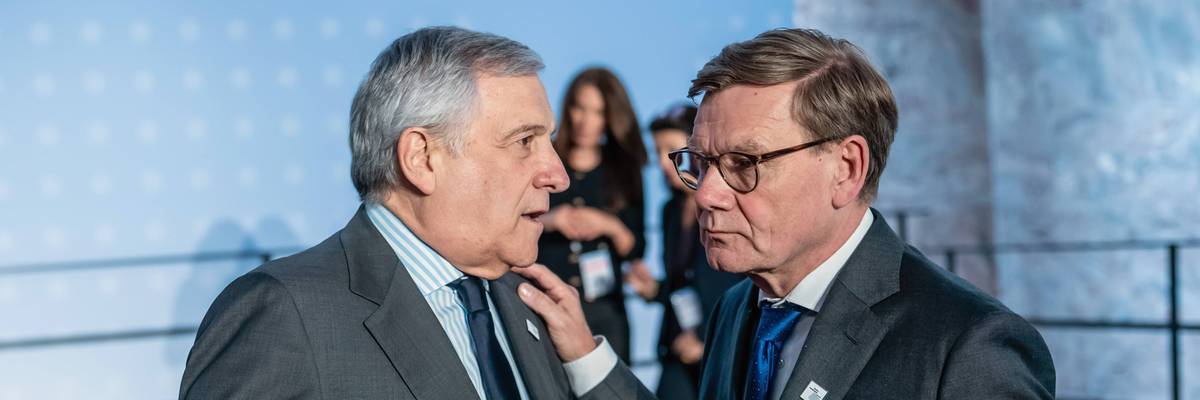
German Foreign Minister Johann Wadephul (R) speaks with Antonio Tajani, foreign minister of Italy (L), at the International Sudan Conference in Berlin on April 15, 2026.
(Photo by Michael Kappeler/picture alliance via Getty Images)

Julia Conley
Apr 21, 2026
COMMON DREAMS

Calls have steadily intensified in recent weeks for the European Union to suspend a trade agreement with Israel as the country’s right-wing government has ignored growing condemnation over its anti-Palestinian policies and its assaults on Gaza, the West Bank, and Lebanon—but on Tuesday, German and Italian officials blocked an effort to pause the trade deal, with Germany’s foreign minister saying the move would be “inappropriate.”

The foreign minister, Johann Wadephul, suggested that world governments have not yet appealed enough to Israel in an attempt to stop it from attacking civilian infrastructure in Lebanon and Gaza; backing settlers who wage violence on Palestinians as Prime Minister Benjamin Netanyahu’s government seeks to illegally annex the territory; and passing a death penalty law that makes death by hanging the default punishment for Palestinians convicted of killing Israelis.

“We have to talk with Israel about the critical issues,” Wadephul said at a meeting of EU foreign ministers in Luxembourg, which was called by his counterparts from Ireland, Slovenia, and Spain. “That has to be done in a critical, constructive dialogue with Israel.”

Italian Foreign Minister Antonio Tajani added that “no decision will be taken today” and said that “other possible initiatives will be discussed at the next ministerial meeting on May 11.”


The Irish, Spanish, and Slovenian officials wrote to EU foreign affairs chief Kaja Kallas last week, saying that Israel has breached Article 2 of the EU-Israel Association Agreement, which stipulates that “relations between the parties, as well as all the provisions of the agreement itself, shall be based on respect for human rights and democratic principles.”

A European Commission review last year found “indications” that Israel is breaching its human rights obligations under the 1995 agreement.

The death penalty law, said the foreign ministers, is a “grave violation of fundamental human rights,” while settlers and Israel Defense Forces soldiers act “with absolute impunity” in the West Bank.

“The European Union can no longer remain on the sidelines,” they said.


Ahead of Tuesday’s meeting in Luxembourg, Spanish Foreign Minister Jose Manuel Albares called on every European country “to uphold what the International Court of Justice and the UN say on human rights and the defense of international law” and that failing to do so regarding Israel “would be a defeat for the European Union.”

Irish Foreign Minister Helen McEntee called on the EU to “move in unison” to pressure Israel to meet its human rights obligations. Suspending the trade agreement requires unanimous support from the bloc’s 27 member countries.

McEntee said that she was urging “all of our colleagues today to support our call for the suspension of the overall agreement but, at the very least, if we can’t reach that full agreement, that we would have suspension of the overall trade elements of it.”


But Germany and Italy’s refusal to back the suspension of the agreement, said Irish author Andrew Madden, suggested “a preference for the ongoing slaughter of innocent people” over angering Israel.
This Is a Fight for Humanity’: Meet the 2026 Winners of the Goldman Environmental Prize

“The 2026 prize winners are proof positive that courage, hard work, and hope go a long way toward creating meaningful progress,” one foundation leader said.


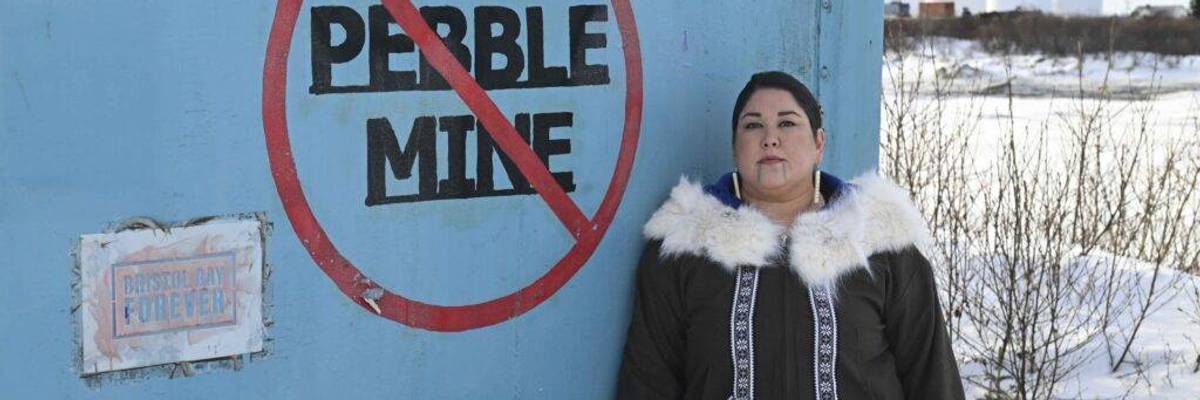
2026 Goldman Environmental Prize winner Alannah Acaq Hurley poses for a photo.
(Photo by Goldman Environmental Prize)


Olivia Rosane
Apr 20, 2026
COMMON DREAMS


The Goldman Environmental Foundation announced the six winners of the 2026 Goldman Environmental Prize on Monday, honoring an all-female slate of advocates who protected wildlife, took on extractive industries, and won important legal victories in the movement to halt the climate crisis.

The announcement comes as world leaders have failed to make progress in addressing environmental challenges, and President Donald Trump, leader of the world’s largest historical climate polluter, has withdrawn the US from the Paris Agreement, rolled back climate and environmental regulations domestically, and made efforts to supercharge the extraction and use of fossil fuels.

“While we continue to fight uphill to protect the environment and implement lifesaving climate policies—in the US and globally—it is clear that true leaders can be found all around us,” John Goldman, vice president of the Goldman Environmental Foundation, said in a statement. “The 2026 prize winners are proof positive that courage, hard work, and hope go a long way toward creating meaningful progress.”

The 2026 prize is notable because it marks the first time that all of the winners—Iroro Tanshi of Nigeria, Borim Kim of South Korea, Sarah Finch of the United Kingdom, Theonila Roka Matbob of Papau New Guinea, Alannah Acaq Hurley of the US, and Yuvelis Morales Blanco of Colombia—are women.

‘There’s lots of people doing really good things and, together, we are going to make the world a better place than it would otherwise have been.“

“I am especially thrilled to honor our first-ever cohort of six women, as this is a powerful reflection of the absolutely central role that women play in the environmental community globally,” Goldman said.

The winners also exemplify the prize’s 2026 theme “Change Starts Where You Stand,” as each of them began with a fight to protect a local community or ecosystem that has global implications for the climate, biodiversity, and environmental justice.

As US-based winner Alannah Acaq Hurley said, “At the end of the day, this is a fight for humanity, and, honestly, our ability to continue as humans on this planet.”

Here is how six remarkable women waged this fight and won.


Iroro Tanshi


Iroro Tanshi is a Nigerian conservation ecologist who has worked successfully with local communities to protect endangered bats and their rainforest habitat from wildfires.

Tanshi was elated in 2016 when she discovered the short-tailed roundleaf bat, previously believed to be extinct in the area, living in Nigeria’s Afi Mountain Wildlife Sanctuary. However, two weeks later, a devastating wildfire ignited, forcing Tanshi to evacuate and ultimately impacting around half of the park.

Tanshi then turned her attention to preventing wildfires, which are sparked by traditional farming practices rubbing against the climate crisis.

“The way people manage these farms is they use fire to clean the farms every year, but climate change has completely toppled the pattern of rainfall and people can no longer predict when to burn safely,” she explained in a video.

Tanshi and her team worked with local communities on a Zero Wildfire Campaign, which includes educating farmers on when it is safe to burn and forming a team of “forest guardians” to patrol and fight fires on high-risk days. Due to her efforts, these guardians put out 74 fires between 2022 and 2025, preventing any of them from becoming major blazes.

“My hope for the future is that people would take these small-scale projects as signals for what the future should look like,” she said. “Let’s stay nimble. Let’s try to work in our small communities and solve those problems there on the ground.”


Borim Kim


Borim Kim helped win Asia’s first successful youth climate lawsuit, inspiring people across the region to demand government action on climate.

Kim was first motivated to take collective action when a heatwave baked Seoul in 2018, killing 48 people including a woman near her mother’s age, who died in her home.

“I realized that even home wasn’t safe from the climate crisis,” she said in a video. “I started looking for what I could do.”

Inspired by the international youth climate movement, she founded Youth 4 Climate Action (Y4CA) and helped organize school strikes and walkouts. After her activism led to meetings with policymakers, she realized that national leaders had no real plans to address the climate crisis. In 2020, she and Y4CA mobilized 19 young people to sue the South Korean government for violating the constitutional rights of future generations. Once the case was launched, she also continued to build a social movement for climate action.

In August 2024, the country’s Constitutional Court ruled in favor of the young people, mandating that South Korea reduce its emissions in line with the scientific consensus, a decision the environmental minister accepted. The ruling is projected to prevent between 1.6-2.1 billion tons of carbon dioxide from reaching the atmosphere.

“Youth may be seen as having a lower position in society, but now this decision has affirmed our right to live safely and the state’s duty to protect us,” Kim said.


Sara Finch


On the other side of the world, Sarah Finch also secured a precedent-setting legal climate victory.

Finch lives in a part of southeastern England called the Weald. While it is currently a rural area, it hosts oil and gas reserves that were eyed for exploitation during the fracking boom of the 2010s. Finch helped form the Weald Action Group to push back against many potential wells, but they were not able to stop the Surrey County Council from approving the operation and expansion of a drilling site called Horse Hill in 2018.

In gearing up to challenge the decision, Finch discovered that the council’s environmental impact statement had only considered emissions from direct drilling at the site, but not the emissions generated from the burning of the fuel once it was extracted, also known as Scope 3 emissions, which make up around 90% of oil and gas’ contribution to the climate emergency.

“It became apparent that it was actually the norm that Scope 3 emissions were being emitted from these kinds of decisions, and we realized that actually it was happening everywhere and in much bigger developments than Horse Hill,” Finch said in a video.

She and her team challenged the environmental impact statement over its failure to consider Scope 3 emissions, losing multiple times before finally securing a groundbreaking victory from the UK Supreme Court in 2024, which has come to be known as “the Finch ruling.”

The UK government cited the “Finch ruling” when it revoked its backing of two North Sea oil developments. Overall, the projects canceled or delayed in 2024 due to the ruling would have generated enough Scope 3 emissions to equal the UK’s domestic greenhouse gas emissions that year.

“It wasn’t just a win on Horse Hill,” Finch said. “It wasn’t even just a win on a handful of sites. It was a win on the whole future of the UK oil and gas industry. And I feel like, there’s lots of people doing really good things and, together, we are going to make the world a better place than it would otherwise have been.”


Theonila Roka Matbob


Theonila Roka Matbob was born into an environmental disaster. Rio Tinto’s Panguna Mine had devastated the ecosystem of Bougainville in Papua New Guinea’s (PNG) Autonomous Region of Bougainville (ARB), destabilized its society, and led to a civil war that killed 15,000-20,000 Bougainvilleans, including her father.

“Our environment was tortured, and then the land was tortured, and the third party that was tortured were my people,” Roka Matbob said in a video.

Rio Tinto closed its copper, silver, and gold mine in 1989 due to the war, but had done nothing to clean up the 150,000 tons of tailings it had dumped into local rivers or take responsibility for the havoc the mine had caused. As an adult, Roka Matbob began to wonder why justice had not been done and to gather testimony from people impacted by the mine.

This led to a successful campaign that persuaded Rio Tinto first to fund an assessment of the mine’s impacts and then to sign a memorandum of understanding in 2024 to act on the assessment’s findings and develop a plan with local communities to remediate the area.

“It doesn’t mean we will restore everything as it was, but at least the story that my grandchildren and my great-grandchildren can remember [is] that our grandparents fought,” she said.


Alannah Acaq Hurley


As Theonila Roka Matbob secured justice for the impacts of one major mine, Alannah Acaq Hurley helped prevent another one from being dug in the first place.

Hurley grew up as a member of the Yup’ik Indigenous group in Alaska’s Bristol Bay, a haven of biodiversity that also hosts the world’s largest wild sockeye salmon run. But in 2001 a new danger emerged: Canadian company Northern Dynasty Minerals announced plans to construct the Pebble Mine, the largest open-pit mine in North America.

“The pit would be so big, you could literally see it from the moon,” Hurley said in a video. “It didn’t take long for us to understand the level of threat that this mine posed—acid mine drainage, toxic tailings left in perpetuity. It was not a matter of if something goes wrong, it was a matter of when.”

Chosen to lead the United Tribes of Bristol Bay in 2013, Hurley built a coalition to oppose the mine, uniting tribes, commercial fishers, and environmentalists to make their cause to the US Environmental Protection Agency and push back against the company’s multiple attempts to move forward with the copper-and-gold mining project. Finally, in 2023, the EPA canceled the project via its rarely used veto power.

“It’s just really a testament to the power of the people,” she said. “We just never stopped until we were heard.”

Yuvelis Morales Blanco


Yuvelis Morales Blanco also defended her community from an extractive industry.

Blanco was born to subsistence fishers on Colombia’s Magdalena River in the Afro-Colombian community of Puerto Wilches.

“We had nothing but the river—she was like a mother who took care of me,” she said in a statement.

However, even as a child she saw the river was threatened by oil spills from Ecopetrol, Colombia’s leading oil company headquartered nearby. The potential threat level was raised even further when she learned while attending college in 2019 that Ecopetrol planned to build two pilot fracking projects near Puerto Wilches.

“Man, I’m like, ‘They’re going to do that in Wilches?’ No sir!’” she recalled in a video.

Blanco joined the Colombia Free from Fracking Alliance and began to raise awareness in her community about the plans. As the campaign’s momentum grew, so did her reputation as a spokesperson. This ultimately led to threats of violence against her that forced her to seek asylum in France in 2022, yet she continued to mobilize against the fracking plans from abroad.

She and the alliance saw success in 2022, as a local court halted the permitting process, newly elected President Gustavo Petro pledged there would be no fracking during his administration, and Ecopetrol suspended its contracts. In 2024, the Colombian Constitutional Court further ruled that the fracking projects had violated the Afro-Colombian community of Puerto Wilches’ right to free, prior, and informed consent.

Blanco continues to fight for a ban on fracking and for legal protections for environmental defenders—over 140 of whom were reported missing or killed in 2024, the most recent year for which Global Witness has a full tally. Colombia was also the most dangerous countries for defenders that year, with 48 deaths.

“I am very hopeful because I have a river that always accompanies me, and I know we’re going to win,” she said.

The Goldman Environmental Prize was founded in 1989 by Rhoda and Richard Goldman, and has since honored 239 winners in 37 years. The 2026 awards will be presented live in San Francisco on Monday evening at 8:30 pm ET. Watch it on YouTube here.
‘Threats of War Crimes Cannot Be Normalized’: Trump Ripped for Renewed Iran Genocide Threats


“Trump’s repeated threats to destroy civilian infrastructure are not negotiation, they’re reckless escalations that endanger millions,” said one group.


Brett Wilkins
Apr 20, 2026
COMMON DREAMS

As Iran reversed course on reopening the Strait of Hormuz amid continued US and Israeli provocations, President Donald Trump renewed threats to destroy Iran and its civilian infrastructure, prompting calls on Monday for the US leader to stop threatening to commit war crimes—and for Americans to not normalize such criminal behavior.

Trump was embarrassed on the world stage after declaring Friday that it was “A GREAT AND BRILLIANT DAY FOR THE WORLD” because “Iran has agreed to never close the Strait of Hormuz again.”


All Nations, World Bodies ‘Must Urgently Intervene’ to Stop Trump From Wiping Out Iran: Amnesty

While Iran’s government did agree to fully reopen the vital Mideast waterway—through which around 20% of the world’s oil is shipped—on Friday, Trump’s continued blockade of Iran’s ports and rampant Israeli ceasefire violations in Lebanon led to Tehran shutting down the strait again and accusing the United States of “acts of piracy and maritime theft.”

Iranian naval vessels subsequently opened fire on a pair of Indian-flagged ships attempting to travel through the strait Saturday, allegedly after giving at least one of them permission to transit the waterway.

The following day, US forces attacked and seized an Iranian-flagged cargo ship in the Gulf of Oman.

Two weeks after his genocidal threat to wipe out the “whole civilization” of Iran, Trump took to his Truth Social network on Sunday to renew vows to commit war crimes if the Iranian government does not sign a peace deal by Wednesday.

“If they don’t sign the deal, then the whole country is going to get blown up,” the president said. “We’re offering a very fair and reasonable DEAL, and I hope they take it because, if they don’t, the United States is going to knock out every single Power Plant, and every single Bridge, in Iran. NO MORE MR. NICE GUY!”

Responding to Trump’s post, the National Iranian American Council (NIAC) said Monday on social media: “Threats of war crimes cannot become normalized. Trump’s repeated threats to destroy civilian infrastructure are not negotiation, they’re reckless escalations that endanger millions.”

“The president must abandon this pattern immediately and pursue a serious, lawful, diplomatic strategy grounded in legitimate de-escalation,” NIAC added.

Threats to commit war crimes such as blowing up entire countries or destroying civilian infrastructure can, like the acts themselves, be illegal under international law.

“If you follow illegal orders to commit war crimes, you will be prosecuted by a future administration,” Congressman Ted Lieu (D-Calif.)—who served in the Air Force Judge Advocate General’s Corps—said in a Sunday message to the US Joint Chiefs of Staff. “Bombing ‘every single power plant, and every single bridge’ would violate proportionality principle and cause excessive civilian harm, which is a war crime.”

However, US Ambassador to the United Nations Mike Waltz on Sunday defended Trump’s statements, citing American actions in World War II—which included waging the world’s only nuclear war and carpet-bombing of German and Japanese cities that killed more people than the atomic bombs—to justify the president’s threats.

Waltz also claimed that “the Iranian regime... and its terrorist proxies have a long history of actually deliberately hiding military infrastructure in hospitals, schools, neighborhoods, and other civilian assets,” comments that came as Israeli forces continued their attacks on all of those civilian structures and more in Gaza and Lebanon. Iranians are also reeling from US and Israeli attacks, many of them on civilian infrastructure, that officials in Tehran and human rights groups say have killed as many as 1,700 noncombatantas, including hundreds of women and children.

Trump’s continued blockade and renewed threats come as Pakistan on Monday pushed for a resumption of peace talks, with Pakistani officials saying Iran has signaled its willingness to send a delegation to Islamabad for negotiations. If Tehran agrees to new talks, Vice President JD Vance is expected to lead a US delegation to Pakistan whose members would likely include Mideast envoy Steve Witkoff and Trump son-in-law Jared Kushner.

Iranian officials have slammed the unreliability of the Trump administration—which has twice waged war on Iran right when deals were in sight, according to international mediators.

“Iranians do not submit to force,” Iranian President Masoud Pezeshkian said Monday.


‘Hateful, Bigoted’ Chip Roy Introduces MAMDANI Act in Congress

“Blatant Islamophobia aside, Roy’s staff probably wasted days trying to land this acronym,” said one observer.


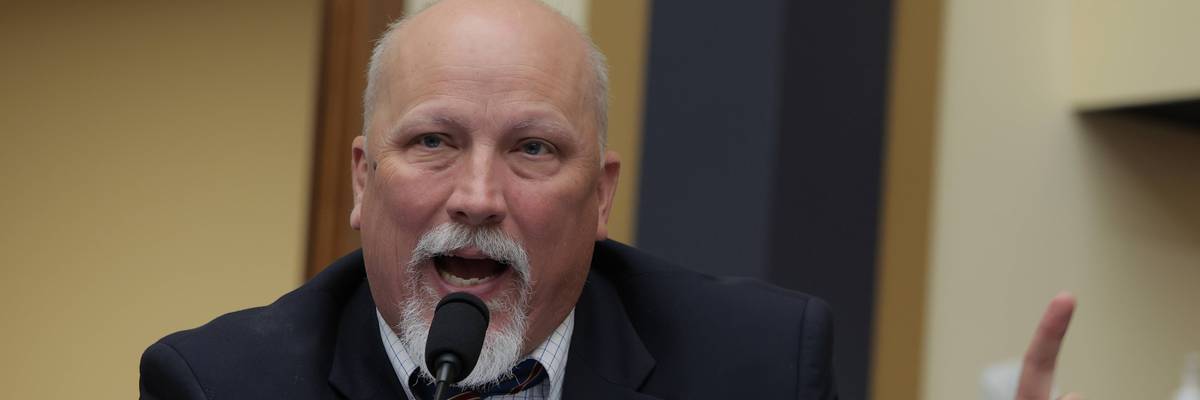
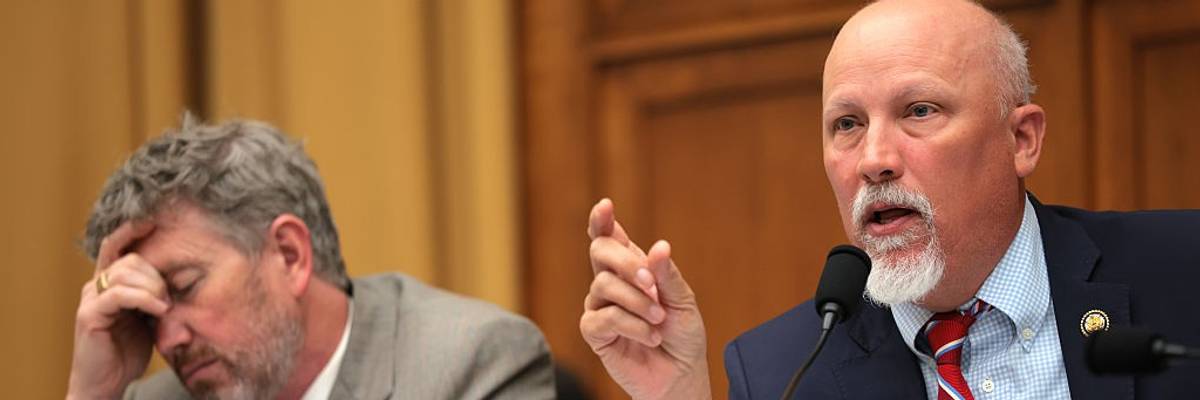
Rep. Chip Roy (R-Texas) speaks at a House Judiciary Committee hearing in the Rayburn House Office Building on March 4, 2026 in Washington, DC.

(Photo by Heather Diehl/Getty Images)

Julia Conley
Apr 20, 2026
COMMON DREAMS

Journalists and rights advocates reacted on Monday with a mix of bemusement and anger over US Rep. Chip Roy’s display of “blatant Islamophobia” as the Texas Republican introduced a bill that appeared as intent on personally targeting New York City Mayor Zohran Mamdani as it was on unconstitutionally expelling immigrants from the US over certain political and religious views.

“Blatant Islamophobia aside, Roy’s staff probably wasted days trying to land this acronym,” said Ravi Mangla, press secretary for the Working Families Party, after Roy unveiled the Measures Against Marxism’s Dangerous Adherents and Noxious Islamists (MAMDANI) Act.

According to Roy, the legislation would enact “sweeping” changes to US immigration law that would deport, denaturalize, and deny US citizenship or entry to any immigrant “who is a member of a socialist party, a communist party, the Chinese Communist Party, or Islamic fundamentalist party, or advocates for socialism, communism, Marxism, or Islamic fundamentalism.”


The bill was introduced nearly four months after Mamdani was sworn in to office. Roy had suggested that the political rise of the democratic socialist, who is a Muslim immigrant from Uganda, risked bringing what he believes to be “Sharia law”—actually a broadly defined set of personal theological and ethical guidelines rather than a national law—to the US.

In reality, Mamdani has taken steps toward enacting a universal childcare program, opening a network of city-owned grocery stores to compete with corporations, and convincing the state to tax the second homes of wealthy New Yorkers.

The legislation introduced Monday comes days after a Washington Post analysis found that Roy has been particularly fixated on promoting the view that allowing Muslims to immigrate to the US and practice their religion—in accordance with the US Constitution—will harm the nation.

Including one recent post that explicitly said, “No more Muslims,” Roy has posted from his campaign and official accounts about Muslims, Islam, and “Sharia law” more than 244 times since January—more than any other member of Congress, including Rep. Randy Fine (R-Fla.), who has faced called to resign for numerous anti-Muslim comments that have attacked public figures like Rep. Ilham Omar (D-Minn.).

The Council on American Islamic Relations said in a report last month that last year, it received 8,683 complaints from people facing anti-Muslim bias or attacks—the highest number of complaints in a single year since the group began compiling civil rights reports in 1996. Employment discrimination was the most common complaint, with immigration and asylum discrimination and hate incidents rounding out the top three.


Gun control and human rights advocate Cameron Kasky said that “many moderate Democrats and the mainstream media have played a pivotal role in normalizing this dangerous, escalatory Islamophobia.”

A number of influential establishment Democrats suggested Mamdani’s victory in the mayoral race last year could endanger Jewish New Yorkers, and refused to endorse him. Party leaders also continue to support arming Israel—which has spent the last two-and-a-half years attacking Palestinians in Gaza and has now returned to assaulting Lebanon—claiming the Israeli government needs US weapons to defend itself against other countries and groups in majority-Muslim countries in the Middle East.

Rep. Delia Ramirez (D-Ill.) warned that while Roy’s bill targets socialists and Muslims whom the congressman says subscribe to “fundamentalism,” the party will likely “expand their list of targets—little by little, hoping you do not notice—until their is no one left to stand against their agenda.”

Fascism,” she said, “ALWAYS requires a public enemy.”

Named for Mamdani, GOP Bill Would Strip Citizenship From People Who Advocate for Socialism

History tells us, over and over again, that once you give the government the power to disappear people for what they read, write, believe, or advocate that power never stays trained just on the original targets.


US Rep. Chip Roy (R-TX) and Rep. Rep. Thomas Massie (R-KY) participate in a House Judiciary Subcommittee hearing in the Rayburn House Office Building on April 01, 2025 in Washington, DC. The House Judiciary Subcommittee on Courts, Intellectual Property, Artificial Intelligence, and the Internet and the Subcommittee on the Constitution and Limited Government held a joint hearing to investigate judicial overreach and limits on federal courts.
(Photo by Kayla Bartkowski/Getty Images)


Thom Hartmann
Apr 21, 2026
Common Dreams


Republicans are at it again, and it’s hard to overstate how chilling this is and what it tells you about the direction people in this Party want to take America.

Texas Congressman Chip Roy is preparing to introduce legislation he’s calling the “MAMDANI Act,” named after Zohran Mamdani, the recently elected democratic socialist mayor of New York City, that would let the federal government bar entry to, deport, and strip naturalized citizenship from any person who advocates for or is “affiliated with” what Roy calls “totalitarian” movements. The list includes, from Rep. Roy’s webpage:
“[A] socialist party, a communist party, the Chinese Communist Party, or Islamic fundamentalist party, or advocates for socialism, communism, Marxism, or Islamic fundamentalism.”

The bill targets people who “write, distribute, circulate, print, display, possess, or publish” material supporting socialism or any of those other ideas.

“Possess?” That single word means that owning a copy of Marx’s Das Kapital, or a pamphlet from a Palestinian solidarity group, or a battered paperback of Howard Zinn — or maybe even one of my books on the New Deal — would be enough to make a green-card holder or a naturalized citizen “inadmissible or deportable.”

“Affiliated with?” That would prevent anybody who’s ever affiliated themselves with the Democratic Socialist Party in New York that Mamdami ran on behalf of (along with the normal Democratic Party; New York has fusion voting so you can run on two parties simultaneously) from staying in America. Gone to a meeting, rally, or put yourself on their mailing list? You’re toast.

“Write?” That means they’re coming for me, and for you if you’ve ever echoed in writing the kind of sentiments that Republicans call socialism, including food stamps and school lunches, free college, public libraries, a national healthcare system, police and fire, and highways that don’t have tolls. (When billionaire David Koch ran for vice president in 1980 on an antisocialism agenda, he called for the end of all these forms of “socialism”.)

“Distribute?” And they’d be coming for Substack, too, it appears. Along with your local bookstore or library.

We haven’t seen anything this sweeping since the Alien and Sedition Acts of 1798, when then-President John Adams had roughly 30 newspaper editors and publishers thrown in prison for attacking him. Ben Franklin’s grandson was arrested for publishing an op-ed calling the president “old, querulous, Bald, blind, crippled, Toothless Adams.” A town drunk in New Jersey was arrested for criticizing him while imbibing in a bar. Adams’ overreach lost him the election of 1800 to his then-political enemy Thomas Jefferson, who openly opposed the Acts.

But here we are again, and here’s another dangerous overreach on the GOP’s part in this legislation: Roy’s bill explicitly forbids judicial review of any inadmissibility, deportation, or denaturalization decision made under it.

In other words, if this law passes then no court can stop or second-guess the government: no habeas corpus, no meaningful appeals; just an order from the Attorney General or some twit at ICE or Homeland Security and you’re on a plane or stuck in a hellhole “detention facility,” possibly for the rest of your life.

That’s not immigration policy, that’s the architecture of a police state, and it’s modeled on how the Nazis stripped citizenship from German Jews and political dissidents in 1935 under the Reich Citizenship Laws.

I’ve walked through Berlin’s Topography of Terror museum, and the documents on display tell the horrific story of how that the lawyers who drafted those Nazi laws studied America’s own racial and political exclusion laws for inspiration.

Now Republican Chip Roy wants to bring them back to America as Republicans try to reinvent or country in the image of Trump’s mentor Putin’s Russia or — as the authors of Project 2025 openly suggest — Orbán’s Hungary.

The bill’s namesake, Mayor Mamdani, became a U.S. citizen in 2018 after moving here from Uganda as a child. He hasn’t been credibly accused of any crime, and as the Brennan Center for Justice meticulously documents, the Supreme Court has repeatedly rejected the use of stripping people of their citizenship as a political weapon like Putin now routinely does and Trump loves to threaten.

That goes all the way back to trying to overturning the 1943 Schneiderman Supreme Court ruling, which held the government must prove “lack of attachment” to the Constitution by “clear, unequivocal, and convincing” evidence. Disagreeing with someone’s politics doesn’t cut it by a long shot. But Roy and his allies aren’t interested in the existing jurisprudence; they want to write new laws that nullify that decision (and common decency) altogether.

Roy told Breitbart his target is what he calls a “Red-Green Alliance” of socialists and Islamists, and a summary from his office goes further, claiming current immigration policies — echoing clearance Thomas’s recent speech that I wrote about yesterday — have produced “dangerous levels of opposition to classical American political doctrines, like free-market capitalism.”

That’s an extraordinary admission, because Roy isn’t proposing to deport people who commit crimes, or who support terrorism, or even who lied on their citizenship applications. He wants, instead, to strip of citizenship and then deport people who don’t sufficiently believe in the unregulated, low-tax version of the so-called free market capitalism advocated by the rightwing billionaires who now own the GOP.

This is a loyalty test for an ideology rather than a country, and, as I lay out in The Hidden History of American Oligarchy, it’s the kind of legislation the robber barons of the 1920s and the John Birchers and McCarthy movement of the 1950s dreamed of but could never ram through Congress and neither Taft nor Eisenhower would ever have signed.

We’ve actually run a smaller, more local version of this experiment before, and it ended in disgrace. The Palmer Raids of 1919 and 1920 saw roughly 10,000 immigrants rounded up without warrants and 556 of them deported, including the anarchist Emma Goldman, all for the crime of holding the wrong politics.

The Communist Control Act of 1954 put into law by Republicans at the height of McCarthyism, was eventually declared unconstitutional by the Supreme Court in 1973 and most of its provisions repealed. Each time we’ve tried this sort of neofascist thing the country looked back in shame, having relearned that the First Amendment doesn’t have an exception for people who say we should tax the morbidly rich to build and support a middle class.

History tells us, over and over again, that once you give the government the power to disappear people for what they read, write, believe, or advocate that power never stays trained just on the original targets.

There are nearly 25 million naturalized citizens and 12.8 million green-card holders living in the United States today, and every single one of them would, under Roy’s bill, be subject to having their citizenship reviewed and potentially revoked based on some rightwinger complaining about them to a federal bureaucrat or police agency or the discovery of a book in their house.

It would threaten millions of legal permanent residents and visa holders working in our hospitals, building our houses, teaching our children, designing our electronics, and even farming our food. The fear alone is the point: if you’re a naturalized citizen or green-card or visa holder and you want to attend a Free Palestine rally, a labor union meeting, or a tenants’ rights organizing session, you’d now have to ask yourself whether some aide in Stephen Miller’s office might decide that constitutes “advocacy for socialism.”

And it’s one of dozens of similar laws that have been proposed by Republicans in recent years.

Presumably, this is the sort of thing that the billionaire who funded JD Vance’s rise to the Senate and vice presidency meant when he famously said, “I no longer believe freedom and democracy are compatible.” That’s the billionaire whose company now compiles information on Americans on behalf of the Trump regime.

Call your member of Congress through the Capitol switchboard at (202) 224-3121 and tell them you oppose the MAMDANI Act and any legislation that creates thought, publishing, and speech crimes, then use the ACLU’s action tool to make sure your senators hear from you, too.

Support the Council on American-Islamic Relations, which has been on the front lines fighting Roy’s earlier “Sharia-Free America Act,” and back the American Immigration Council as it readies the inevitable legal challenges. Get involved with Indivisible and your local Democratic Party to make sure the 2026 midterms send Roy and every co-sponsor of this bill back home permanently.

The Constitution doesn’t defend itself and neither does freedom; that work belongs to us, and the time to engage with it is right now.


Our work is licensed under Creative Commons (CC BY-NC-ND 3.0). Feel free to republish and share widely.


Thom Hartmann is a talk-show host and the author of "The Hidden History of Monopolies: How Big Business Destroyed the American Dream" (2020); "The Hidden History of the Supreme Court and the Betrayal of America" (2019); and more than 25 other books in print.
Full Bio >


Why a Feminist and Just Energy Transition Is the Only Way Out of the Climate Crisis

As we look toward Santa Marta, the message is both simple and profound: We cannot solve the climate crisis with the same logic that caused it.


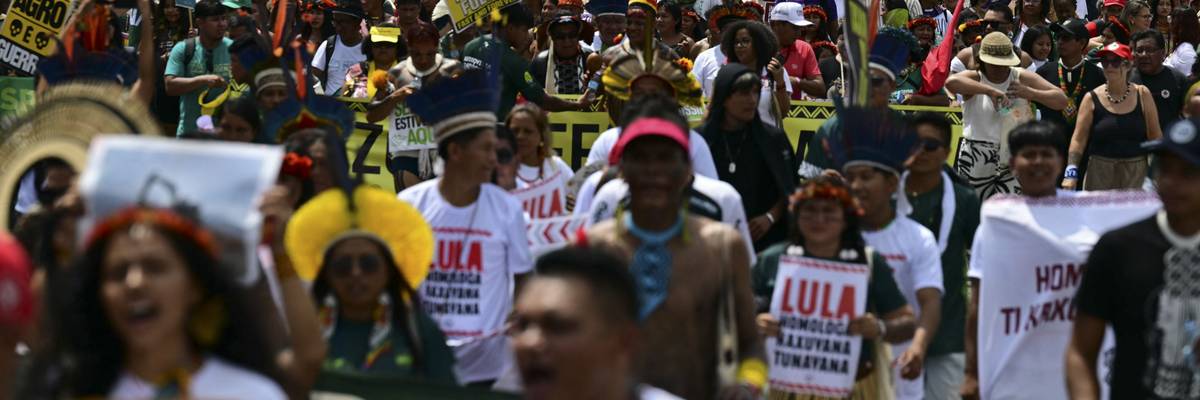
Thousands of people take part in the so-called “Great People’s March” in the sidelines of the COP30 UN Climate Change Conference in Belem, Para State, Brazil on November 15, 2025.
(Photo by Pablo Porciuncula/ AFP via Getty Images)

Theiva Lingam
Apr 21, 2026
Common Dreams


Wars, invasions, blockades, and genocide from Venezuela and Iran to Palestine have ripped the curtain off the inherent volatility and violence of the fossil energy system. We need a rapid and just scale-up of socially controlled renewables to end the era of fossil fuels. But ensuring a just transition requires deeper conversation. Who benefits from the energy transition? Who bears the cost? Who gets a say in how energy is produced? These are also feminist questions about power, labor, care, and whose lives are valued.

To answer them, grassroots leaders, Indigenous communities, trade unions, and environmental justice activists will gather in Santa Marta, Colombia for the Peoples’ Summit and First Conference on Transitioning Away from Fossil Fuels this week. For many of us in environmental and social justice movements, this gathering represents both urgency and possibility. This will be a critical space because, without justice, the energy transition will reproduce the same systems of extraction, control, and violence.

So We Must Ask: an Energy Transition for Whom?

The transition narrative sold by corporations and rich countries today tells us we can scale up corporate, market-led renewable energy technologies without questioning who controls them, who benefits, and who bears the cost. This risks the transition becoming nothing more than the old model in greener packaging. In Malaysia, for example, the energy transition policy largely rebrands the old growth-and-extraction model. It uses green rhetoric, prioritizing corporate-led false solutions like carbon capture and storage and carbon capture, utilization, and storage. Copying Western-style developments through corporate-driven trade and investment patterns sustains fossil fuel dependence and continues to entrench structural inequalities both nationally and internationally. Without systemic change, the transition becomes another chapter in a long history of resource plunder, particularly in the Global South.

Consider the surge in demand for minerals like lithium, cobalt, nickel, and rare earth elements. These are essential components of batteries, solar panels, and wind turbines. Governments and corporations in the Global North are racing to secure these materials, often greenwashing extraction as necessary for climate action, while diverting these minerals into military, aerospace, AI, and data centers. For communities across Latin America, Africa, and Asia, this rush is already translating into land grabs, water depletion, labor exploitation, and violence. Lithium extraction threatens fragile ecosystems and Indigenous Peoples’ livelihoods; cobalt mining has been linked to dangerous working conditions and child labor. As with oil before them, critical minerals are becoming objects of geopolitical competition—backed by military power and strategic control.

If this transition is not rooted in justice, it will not be a solution. It will be the next phase of the crisis.

The military is among the world’s largest consumers of fossil fuels, yet its emissions are routinely excluded from national reporting. At the same time, states and corporations work together to secure control over oil, gas, and critical minerals—profiting from war and devastation from Lebanon to Venezuela and Cuba.

These are the very predictable outcomes of a system that prioritizes profit over energy as a right for people. A just transition must go far beyond emissions reductions. It must actively confront inequality, redistribute power, and wealth, and repair historical and ongoing harms. It must center those who have been marginalized and exploited—not as victims but as leaders.

A Just Transition Must Be Based on Peoples’ Sovereignty and Energy Sovereignty

At the heart of this vision are peoples’ sovereignty and energy sovereignty: the right of communities to control their lands, resources, and energy systems, and to shape the decisions that affect their lives. This means treating energy as a common good that is managed for collective well-being rather than private profit, while building energy democracy, where communities have real decision-making power over how energy is produced and used. It also requires energy sufficiency, prioritizing meeting people’s needs over excessive and wasteful energy use. Together, these principles challenge the concentration of power in corporations and wealthy countries, and point toward energy systems that are locally rooted, democratic, and aligned with social and ecological needs.

Achieving this also requires that we confront imperialism. The current global order allows wealthy countries to externalize the social and environmental costs of their consumption to the Global South, while maintaining control over finance, technology, and trade. This imbalance shapes the terms of the energy transition, devastating communities and often locking countries in the Global South into roles as raw material suppliers rather than equal partners.

Policies that ignore power dynamics may deliver short-term emissions reductions, but they will ultimately fail as communities resist exploitation and inequity deepens. A transition rooted in justice, however, can build the broad-based support needed for transformative change.

Around the world, communities are already practicing energy sovereignty, from managing decentralized renewable systems in Palestine to asserting their rights against extractive projects in Mozambique. Alternatives are not only possible, but underway.

A feminist and just energy transition must challenge the structures that perpetuate dependency and inequality, including unfair trade agreements, debt regimes, and corporate impunity. It must also recognize and address the intersecting forms of oppression based on gender, race, class, and colonial history that shape how the climate crisis is experienced and resisted.

As we look toward Santa Marta, the message is both simple and profound: We cannot solve the climate crisis with the same logic that caused it. If this transition is not rooted in justice, it will not be a solution. It will be the next phase of the crisis.

The path forward will require confronting entrenched interests and reimagining our economies and societies. From Santa Marta and beyond, communities are showing us the way. The task now is to listen, to act, and to ensure that the transition ahead is truly just—for people, for the planet, and for future generations.


Our work is licensed under Creative Commons (CC BY-NC-ND 3.0). Feel free to republish and share widely.


Theiva Lingam is chair of Friends of the Earth International, the world’s largest grassroots environmental federation. She is also a public interest lawyer, environmental activist, and legal adviser to Sahabat Alam Malaysia-Friends of the Earth Malaysia, as well as a legal consultant at Third World Network.
Full Bio >