Wednesday, April 29, 2026


Rift surfaces in BRICS over West Asia conflict

Rift surfaces in BRICS over West Asia conflict
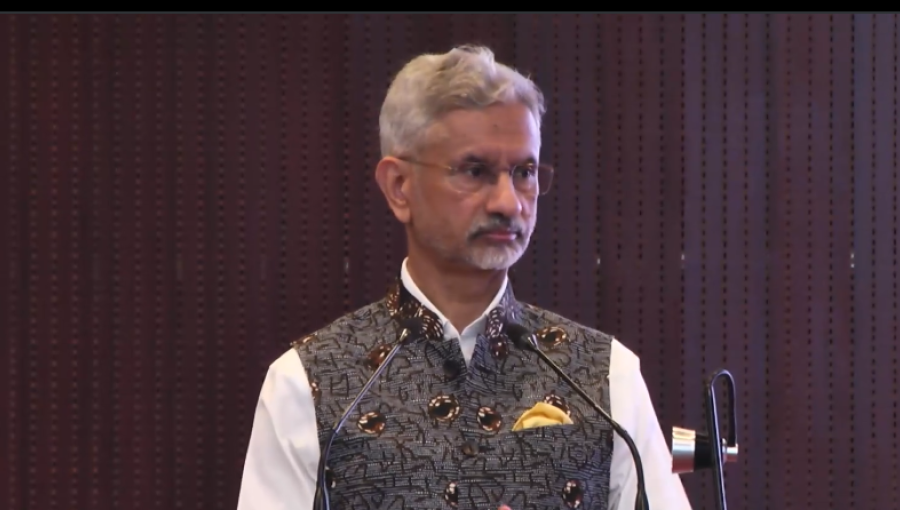
/ Dr. S. Jaishankar - External Affairs MinisterFacebook
By IntelliNews April 29, 2026

A routine meeting has revealed sharp divisions among BRICS member states over the West Asia conflict. The divergences reportedly prevented the representatives of the states involved from agreeing on a unified communiqué at the bloc's annual Middle East and North Africa consultations, held in New Delhi on April 23 and 24, 2026. As an alternative the meeting chair's statement was released in lieu of the customary joint declaration, Deccan Herald reported.

Purportedly, the two-day meeting of BRICS Deputy Foreign Ministers and Special Envoys on the Middle East and North Africa was chaired by India, represented by Secretary South Dr Neena Malhotra of India's Ministry of External Affairs.

While the various delegations exchanged assessments on the deteriorating regional situation, covering the Gaza crisis, Lebanon, Syria, Yemen, Sudan and Libya, consensus broke down over how to characterise the conflict stemming from US and Israeli strikes on Iran, and Iran's subsequent response, with member states holding materially divergent positions on attribution and resolution.

In follow-on unilateral press briefings though, India's Ministry of External Affairs moved to address reports suggesting New Delhi had softened its position on Palestine, stating explicitly that its long-standing stance on the issue remains unchanged and that no dilution of any kind had occurred.

Unconfirmed social media reports and claims were also denied by India suggesting that all other BRICS member states were unhappy with New Delhi’s closeness to the US and Israel and its perceived neglect towards supporting Iran.

In line with this, at least one social media influencer peddling a pro-Pakistan line was observed repeating unfounded claims that other members of BRICS were even looking to expel India from the grouping while inviting Pakistan in as a replacement.

However no formal mechanism exists by which any of the members can be expelled, although new members being admitted does require a full consensus among all current members, with India’s objection to Pakistan being admitted immediately dousing Islamabad’s hopes of joining the grouping.

In spite of the diplomatic impasse at the declaration level, the consultations reportedly addressed humanitarian conditions across several conflict-affected states and examined prospects for post-conflict stabilisation in the broader MENA region.

While the failure to produce a joint communiqué is a visible signal of the stress that the West Asia conflict is placing on BRICS cohesion, the members states including India, China and Russia realise that while not economically competitive on the same scale as the US and EU, the grouping represents the majority of the world’s population, natural resources and industrial base.

Any wedges or divisions among the group will derail the goals of its members to project a joint front against the economic dominance and policy hegemony of the collective West.


With Washington’s reliability shifting daily, Northeast Asia’s security order frays

With Washington’s reliability shifting daily, Northeast Asia’s security order frays
/ Darren Halstead - UnsplashFacebook
By Mark Buckton in Taipei April 29, 2026

Japan and South Korea sit smack bang in the centre of a tightening strategic vice in Northeast Asia, where the long-standing parity between decades old US security guarantees and being dragged into China’s economic orbit is being tested by both Beijing’s growing regional aggression and Washington’s increasingly erratic modus operandi.

For decades, the regional order has rested on a clear division of labour. The United States has provided hard security through formal alliances, forward area troop deployments and nuclear deterrence. At the same time, both Japan and South Korea have leveraged access to global markets - most notably China - to help drive export-led growth. That model as well as once steady links to the US are both under strain.

An estimated 28,500 US troops remain stationed in South Korea under the Mutual Defense Treaty, according to the US Department of Defense, while Japan hosts over 50,000 American troops and support personnel across a network of bases from Okinawa in the south, just east of Taiwan, to Misawa Air Base in the north, 600 miles from North Korea. Together these permanent US troop placements underpin Washington’s Indo-Pacific Command operations.

Crucially, these deployments are not simply legacy arrangements, however, as they also form the operational backbone of deterrence against North Korea and, increasingly, China. It is a reality in Northeast Asia that has repeatedly been seen as key to maintaining a balance of power across the region.

Yet that balance is shifting, and it is only partially the result of Chinese actions. Beijing’s military modernisation, documented in annual Pentagon reports, has accelerated across naval, missile and air capabilities in recent years, with a clear focus on denying US access to the Western Pacific. At the same time, China has long worked at economic integration with both Japan and South Korea – so much so that as of 2026, China is now the largest trading partner for South Korea while Japanese exports to China are approaching 20% of its total and could overtake US exports in the next few years.

This dual dependency in the form of Washington providing the security, with Beijing a key player in regional prosperity, has become increasingly difficult to manage.

And the flashpoint, if it comes, will be Taiwan, the self-governing nation of 24mn still claimed as part of China by Beijing.

US and Japanese defence planning now routinely treats a Taiwan contingency as the primary scenario around which force posture and alliance expectations in the Indo-Pacific should rotate. The Pentagon’s National Defense Strategy identifies Taiwan as the most likely trigger for any major conflict in the region and geography only reinforces that. With Taiwan just over 100 km west of Japan’s Yonaguni Island, a speck of land Tokyo is working to reinforce as a perimeter defence outpost of sorts, sea lanes connecting Japan and South Korea as well as Taiwan to global energy routinely supplies pass through waters already watched day and night by Chinese naval forces.

In the event of such a crisis, neutrality would be almost impossible to sustain as Japanese defence white papers have explicitly linked Taiwan’s security to Japan’s own. Prime Minister Sanae Takaichi in late 2025 also said that any instability in the Taiwan Strait would directly threaten Japanese territory and trade routes. This was a comment that did not go down well in Beijing.

As such, while Japan’s status on any future Taiwan-related conflict is clear, South Korea’s position is more ambiguous even if US bases on the southern half of the peninsula would almost certainly be drawn into logistical or operational support roles.

This creates a structural dilemma for both countries. Both Seoul and Tokyo would face a significant economic punch in the guts should China opt to put a block on imports in the event of conflict – a method Beijing has used in the past with restrictions on South Korean goods coming into the country following the deployment of the THAAD missile defence system by the US in 2017.

Economic coercion by China aside, uncertainty over US policy itself is a major issue both Japan and South Korea are now being forced to ponder, especially in light of US insults aimed at long-standing allies it has failed to pull into its latest military quagmire in the Middle East.

Under Donald Trump’s previous administration, alliance commitments were frequently framed in transactional terms, with demands for increased host-nation support payments and periodic suggestions that troop withdrawals were under consideration. While many of these proposals were not fully implemented, they did introduce a degree of doubt about the long-term reliability of US guarantees.

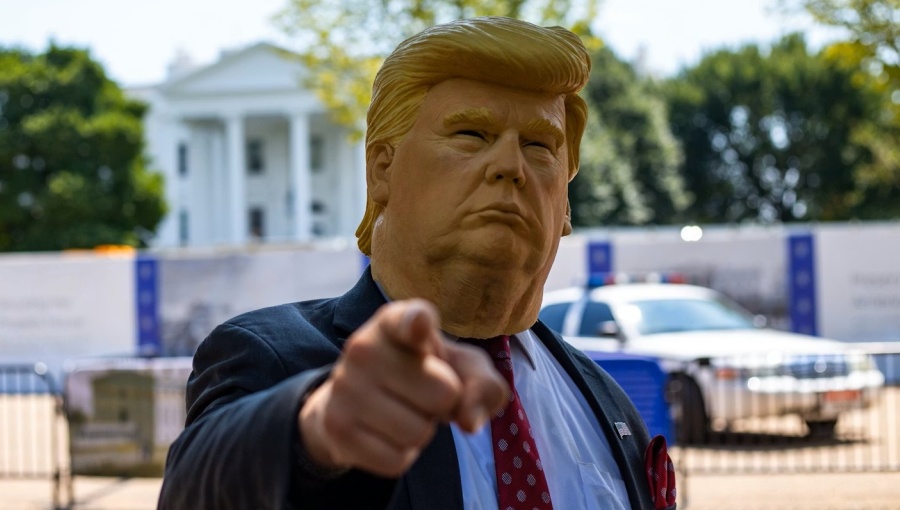
And now, under Trump’s second administration, one built atop a tower of diplomatic playing cards always wobbling and looking like collapse is imminent, grandstanding is too often given priority over structural discipline. Because of this, things look a lot worse.

Even limited ambiguity in US commitments and statements of intent criticising allies, can have outsized effects on planning. Concepts such as whether or not the current US assets stationed in Korea would remain dedicated to peninsula defence in the event of an attack by North Korea are being openly questioned – and doubted.

If US engagement remains consistent, both Japan and South Korea as well as Taiwan are likely to remain embedded within a US-led deterrence plan. All three countries would expand their roles as operational partners.

However, a much more volatile possibility emerges if US policy becomes less predictable - as is being seen. Should any level of US troop withdrawal take place or inconsistent signalling from Washington continue, both Japan and South Korea would, sensibly, start to look to a time when the US can no longer be trusted.

Japan would likely accelerate its ongoing military build-up and deepen ties with other regional partners such as Australia and India, as seen in frameworks like the now largely defunct Quad, an informal grouping essentially put out of action by the US. South Korea meanwhile would face a much sharper trade-off, given its proximity to North Korea and deeper economic links to China.

Tokyo could even reconsider its self-imposed long-standing constraints on military power, including debates over nuclear deterrence. South Korea, already within range of North Korean artillery and missiles, is one of the world’s leading nations in terms of nuclear know-how and may be forced to walk down the same path.

For China though, any reduced US presence in Northeast Asia would essentially signal victory while expanding Beijing’s strategic space. The deterrence balance in the Taiwan Strait would shift, increasing the feasibility of coercive measures against Taipei and the possibility of outright invasion would not be such a remote concept.

Northeast Asia, thanks to the ever erratic 47th occupant of the White House, is fast becoming a region where stability depends less on alliances and more on perceptions of credibility.

The role of Japan and South Korea is becoming more fluid and more precarious. China’s rise is a constant, measurable in defence budgets and industrial capacity, but US policy is increasingly variable, shaped by domestic politics, transactional needs, and at times which side of the bed its leader wakes up on.

Europe buys the most Russian LNG in history, just as first bans on imports come into effect

Europe buys the most Russian LNG in history, just as first bans on imports come into effect
European energy traders rushed to buy up every tanker of Russian LNG they could get their hand on as a gas crisis unfolds, which will be made worse as European bans on importing Russian gas start to go into effect. / bne IntelliNewsFacebook
By Ben Aris in Berlin April 29, 2026

Despite threatening to end Russian LNG imports completely next year, prompting the Kremlin to threaten to cut off gas exports to Europe before then, the EU just imported the most LNG in history as it slides into an expanding gas crisis.

The EU is caught in a contradictory bind between the need to power industry and the politics of trying to crush the Russian economy. Since the end of cheap Russian gas, the increasingly dysfunctional European economy has been deindustrialising due after long-term average energy prices doubled.

A bad situation has been made worse as it goes into the summer restocking season with record low gas storage levels. And then there was the removal of Qatari LNG exports from the market on top of that. Europe is scrambling to get gas anyway it can just as the European Commission (EC) is equally determined to “increase the pressure” on Russia’s economy to force an end to the Ukraine war. The two goals are at loggerheads as disunity in the EU grows as policy increasing clashes with the economic realities.

Ironically the new record import figures comes just as the first of the sliding sanctions on the proposed complete ban on imports of Russian gas by January 1 come into effect.

Sanctions preventing short-term import contracts for Russian liquefied natural gas came into force on April 25. In the run up, European utilities were completing the largest monthly purchase of Russian LNG ever recorded before that source of gas is cut off.

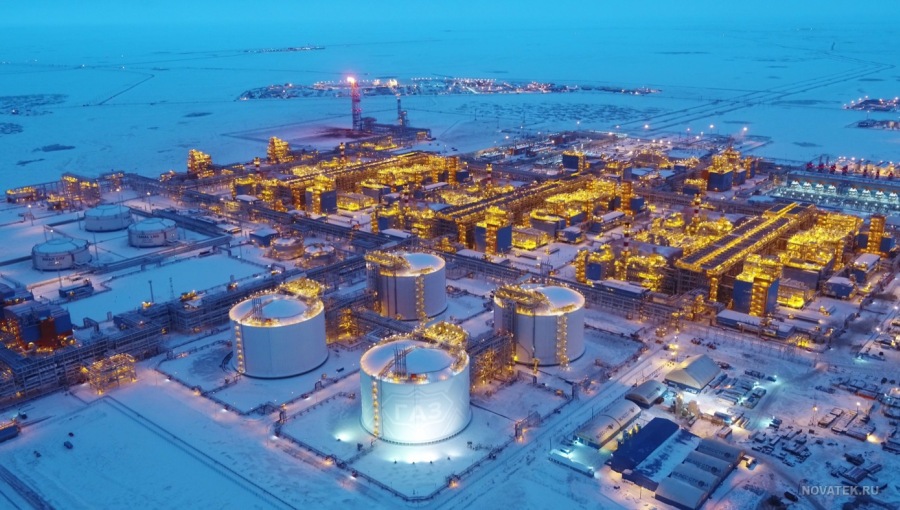
The EU imported approximately 2.45 to 2.46bn cubic metres of Russian LNG in March 2026 — a 20% increase on February and a 38 to 40% increase y/y, according to data compiled by advocacy group Urgewald based on Kpler ship-tracking. European energy traders snapped up every single cargo exported by Russia’s Arctic Yamal LNG plant managed by Russian private firm Novatek. European terminals fully unloaded 25 cargoes in March alone.

The story was the same in February. That month also set a new record that was just broken a month later. In February, 100% of all Yamal LNG exports went to the EU — 21 of 21 cargoes, totalling 1,543,347 tonnes. It was the first February since Yamal began operations in 2017 in which every single cargo was delivered to a European port. Zero shipments went to China or Asia, compared with four Asia-bound cargoes in February 2025.

January was barely different. In January 2026, 92.6% of Yamal cargoes — 23 of 25 tankers — were delivered to EU ports.

Europe remains addicted to Russian gas despite the tough man rhetoric coming out of Brussels. March was not an anomaly but the norm. Europe has a sustained structural dependence that no amount of “stand with Ukraine” grandstanding can undo. Across the first quarter 2026, the EU imported 69 of the 71 cargoes that Yamal LNG shipped globally — 97% of the project's total production — paying an estimated €2.88bn for the privilege, equivalent to approximately €32mn per day flowing into Moscow's accounts. China, which Russia has spent two years positioning as its alternative LNG customer, received only two cargoes in January and none at all in February or March.

Why the market overwhelmed the policy

The immediate trigger for the March surge is not hard to identify. The TTF benchmark for European gas prices jumped from around €35 per megawatt hour in January and February to €52.87 in March — an increase of more than 51% — as the Hormuz closure rippled through global energy markets.

QatarEnergy declared force majeure on production after Iranian strikes damaged Ras Laffan LNG plant facilities. The US, which had been growing as Europe's LNG supplier of choice, saw its export reach constrained by the same disruptions.

With the US now the only unfettered supplier of global LNG it has become the swing supplier. However, as the US sells its LNG FOB (free on board) and not under long-term contracts, Europe is now in direct competition for supplies of US gas and getting outbid by Asia which is even more heavily dependent on gas than Europe is. Several LNG tankers bound for Europe this month have already been diverted to Asian customers that were willing to pay more. Russia remains one of the few reliable sources of LNG for European customers.

But that might change as the Kremlin eyes LNG supplies as a new source of pressure on Brussels. Russian President Vladimir Putin turned the tables on Europe in March, threatening to ban LNG exports to Europe sooner than the EU intended to ban the imports at the end of this year to stoke the mushrooming economic crisis in Europe by making the unfolding energy shock worse.

Utilities and traders were already stockpiling Russian LNG ahead of the April 25 ban on spot contracts — a precautionary impulse that the Hormuz closure converted into an urgent one. Utilities and traders likely rushed to secure Yamal LNG volumes before legal access became restricted, with March representing a total bill of €1.33bn for European purchases of Russian LNG.

A second threat is the new twentieth sanctions package passed last week, that will also restrict EU imports of Russian gas by targeting Russian shadow fleet tankers.

Of the 14 Arc7 ice-class vessels serving Yamal LNG, 11 are operated by Seapeak of the UK and Dynagas (NASDAQ: DYNS) of Greece. Without the European-operated fleet, Yamal LNG operations would halt almost entirely during the winter months, RBC-Ukraine reports.

European port infrastructure, European maritime services, European insurance and European long-term contracts — some running to the 2040s — form the operational backbone of Russia's Arctic gas export capacity. "Europe is not simply a buyer. It is the logistical backbone of the project," Urgewald concluded.

Russia meanwhile posted record Yamal production in March — 3.3mn tonnes, up 13% y/y — adding a new Arc7 ice-class carrier to keep Arctic routes flowing despite Western sanctions on the vessels. Each shipment from the Arctic port of Sabetta to Europe takes an average of 8.3 days, enabling rapid turnaround for Yamal's fleet. With each vessel delivering a cargo roughly every 22 days, the project relies heavily on quick access to European terminals to maintain output during winter months when ice conditions limit operations.

France: the EU's biggest Russian gas customer

French President Emmanuel Macron has been a stalwart supporter of Ukraine and one of the most aggressively anti-Russia opponents, yet France remains the biggest buyer of Russian gas, accounting for 41.7% of EU imports.

In 2025, 87 tankers delivered 6.3mn tonnes of Russian gas to the French ports of Dunkirk and Montoir. France's intake exceeded Belgium's Zeebrugge — itself the single largest individual terminal — which received 58 ships carrying 4.2mn tonnes. Zeebrugge alone imported more Russian LNG from Yamal than China's entire country over the same period.

France’s TotalEnergies (NYSE: TTE) owns 20% of Yamal LNG and purchases 4mn tonnes annually — more than any other single buyer in the world. The same TotalEnergies whose chief executive Patrick Pouyanne was announcing new exploration deals in Lebanon's Block 8 in January was simultaneously purchasing more Russian Arctic gas than any other company on earth.

Macron leads a country whose energy giant is Russia's single largest LNG customer – a fact he has turned a blind eye to. Macron has described remaining Russian LNG imports as "very marginal," stating he saw no need for accelerated action to phase them out.

Urgewald calculated that at €32mn per day, EU payments for Yamal Arctic LNG in the first quarter 2026 could fund approximately 1,050 Shahed 136 drones every 24 hours, based on the widely cited Centre for Strategic and International Studies estimate of $35,000 per drone.

EU Energy Commissioner Dan Jørgensen continues Europe’s Doublethink on Russian energy. He has ruled out any reconsideration of the ban, hinting that the EC is aware of the ballooning European energy crisis but not willing to address it out loud.

"We've decided in the EU that we do not want to re-import Russian energy," he told reporters. "It's extremely important that we stick to this line — we cannot in Europe help indirectly finance Russia's brutal, illegal war." He added: "It would be a mistake for us to repeat what we did in the past. In the future, we will not import as much as one molecule from Russia."

"The attack on Iran must not be used as an excuse. By maintaining its dependence on gas, the EU has knowingly risked another energy crisis," said Sebastian Rötters, Sanctions Campaigner at Urgewald.

The phasing: the ban on spot and short-term contracts came into force on April 25. Long-term contracts — covering most Yamal deliveries to Europe — follow from January 1, 2027. Sticking with the ban means the EU will need to replace around 15mn tonnes of Russian Arctic LNG in 2027. 

The replacement problem

The EU is cutting its second-largest LNG supplier while its largest Gulf alternative remains partially offline and the Strait of Hormuz remains contested. A recent study suggests Russia currently has less than half the shipping capacity needed to redirect Yamal volumes to more distant Asian markets without access to the much more lucrative European ports. Without that access, annual shipments from Yamal could fall from around 270 cargoes to just 120 to 130 — sharply reducing revenues. The loss of the Russian LNG tanker Arctic Metagaz in the Mediterranean earlier this month adds further operational pressure on the Yamal fleet.

Over the last four years, Europe alone has spent over $230bn on Russian oil and gas imports. This is a structured market relationship, with some contracts running into the 2040s. The policy says phase out Russian energy. The market said there is nothing else to buy.
MONOPOLY CAPITALI$M

Mega elevator deal: Finnish lift maker Kone acquires German rival TKE in €29.4bn deal

Kone headquarters
Copyright Kone/All right reserved

By Doloresz Katanich with AFP
Published on 

Finnish lift maker Kone nearly doubles its size in what the Finnish media described as the largest corporate acquisition ever carried out in Finland.

Finnish lift maker KONE on Wednesday announced the acquisition of its German rival TKE in a giant share-and-cash deal valuing TKE at €29.4 billion.

The group formed by the merger will be nearly twice the size of the current KONE group, with more than 100,000 employees in over 100 countries and an annual revenue of around €20.5bn, the two companies said in a statement.

A consortium including the private equity groups Advent and Cinven owns TKE.

The new group will be based in Finland and led by KONE’s current French chief executive, Philippe Delorme.

“This industry-revitalising transaction brings together two exceptional global businesses with highly complementary geographic footprints and innovation platforms,” the joint statement said.

The acquisition makes KONE gain strong access to markets in the Americas and to profitable service and maintenance contracts.

“KONE’s presence in Asia is complemented by TKE’s footprint in the Americas, and TKE opens new geographies for KONE, resulting in a well-balanced global presence.”

The takeover is the largest corporate acquisition ever carried out in Finland, according to Finnish media.

The consortium that owns TKE will receive €5bn and 270 million shares in the new KONE, valued at €15.2bn, and will hold 33.8% of the new entity, according to the statement.

The two groups expect annual synergies in the form of extra profit or cost savings of €700 million from the acquisition. The new company is expected to have a strong investment-grade credit rating while generating strong cash flow.

The deal still needs regulatory and shareholder approval and will likely finish in 2027.


That's so Gen Z: One third of younger people believe they're psychic, according to survey

One third of Gen Z believe they possess psychic abilities...
Copyright Canva

By Amber Louise Bryce
Published on 

Can you see into the future? If not, maybe you're just too old...

In a world of constant uncertainty, psychic abilities have never seemed so appealing.

Fortunately, if you were born between 1997 and 2012, you might already possess such powers - or at least believe yourself to.

One third of Gen Z Americans claim to have had twice as many psychic moments as Boomers, according to a survey by Talker Research. This means their sixth senses only tingle about once or twice a month - but you can't always be on the crystal ball.

While psychic abilities can include anything from communicating with the dead (mediums) to gleaming visions from objects and places (clairvoyance), the Gen Z respondents claimed theirs refer to a strong intuition for knowing how situations will unfold.

In the survey, 33 per cent said they knew when something was "off", 28 per cent cited being able to sense dishonesty, and 26 per cent reported a gut feeling about when to walk away from a situation.

For those over the age of 29 and feeling left out, rest assured that some psychic intuitions also crossed generations. Both Boomers and Gen Z shared a sixth sense for finances, while Millennials tied on dating.

Gen X were also the likeliest generation to correctly predict outcomes, according to the survey.

Although some of you might be shaking your head and muttering, "that's not psychic ability, that's just common sense", these New Age beliefs have become increasingly prevalent since the rise of social media.

Interest has spiked in tarot cards, crystals and astrology, while buzzy theories like manifestation and ‘delulu’ have also gone viral - both centred around the idea that believing something enough will make it happen.

A 2025 study by Pew Research Center found that 30 percent of Americans consulted astrology, tarot cards or fortune tellers at least once a year, with most claiming to do this just for fun.

It coincides with growing anxieties about the state of the world. Socioeconomic instability, geopolitical turmoil, climate anxieties and a lack of mental health support mean some younger people are searching for a sense of control elsewhere.

But while psychic intuitions might provide illusions of guidance, the majority of young people still remain sceptical - or at least unsure about their validity.

Of all the survey's respondents, 35 per cent said they did not feel confident in differentiating between their instincts and anxiety.

And maybe that uncertainty isn't such a bad thing. It means anything is still possible and endless riches and world peace could be just around the corner.

But hold on, we'd better consult our crystal ball to be sure.


From Italian courts to TikTok: How tarot became a tool for reflection and resistance

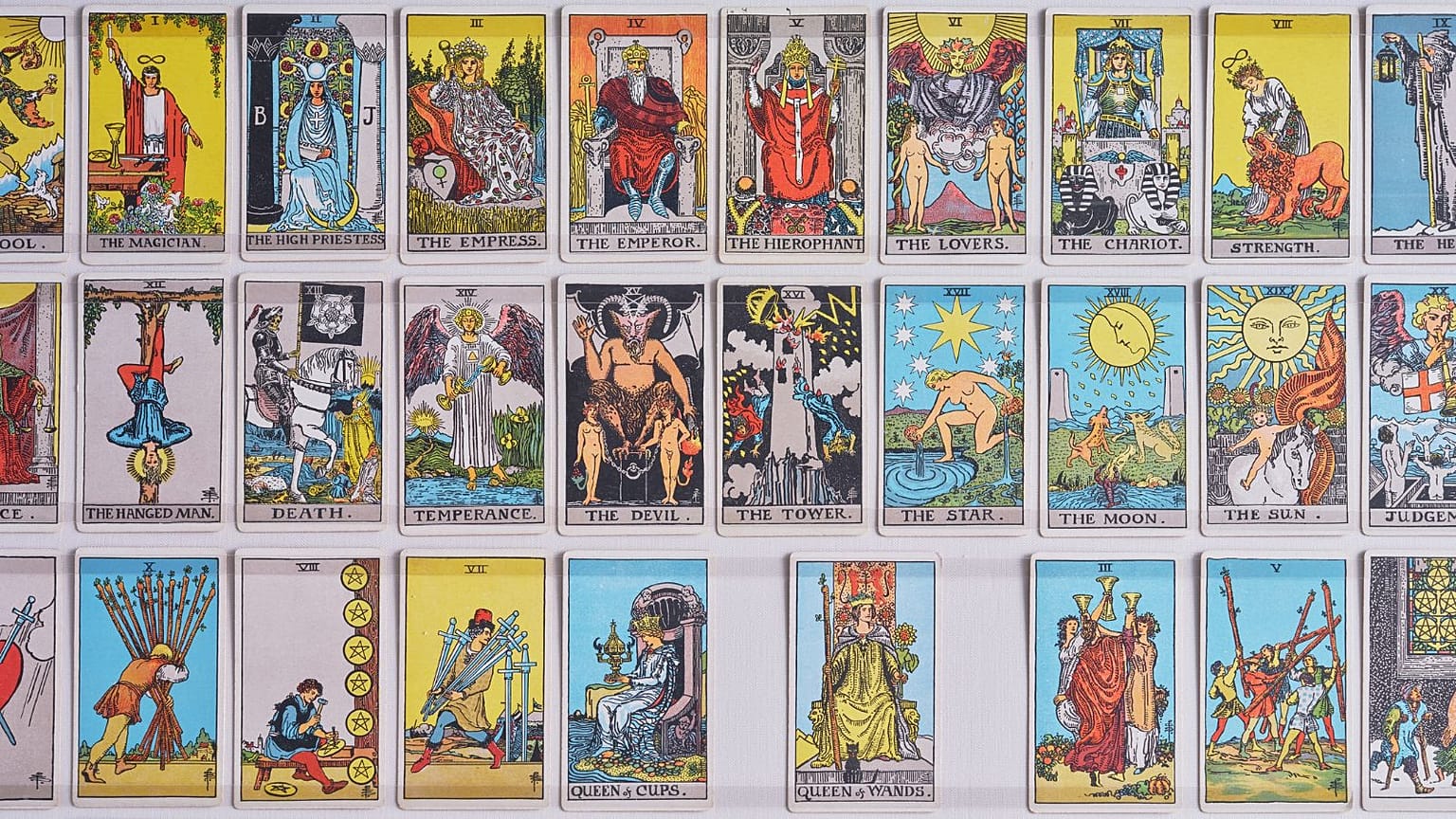
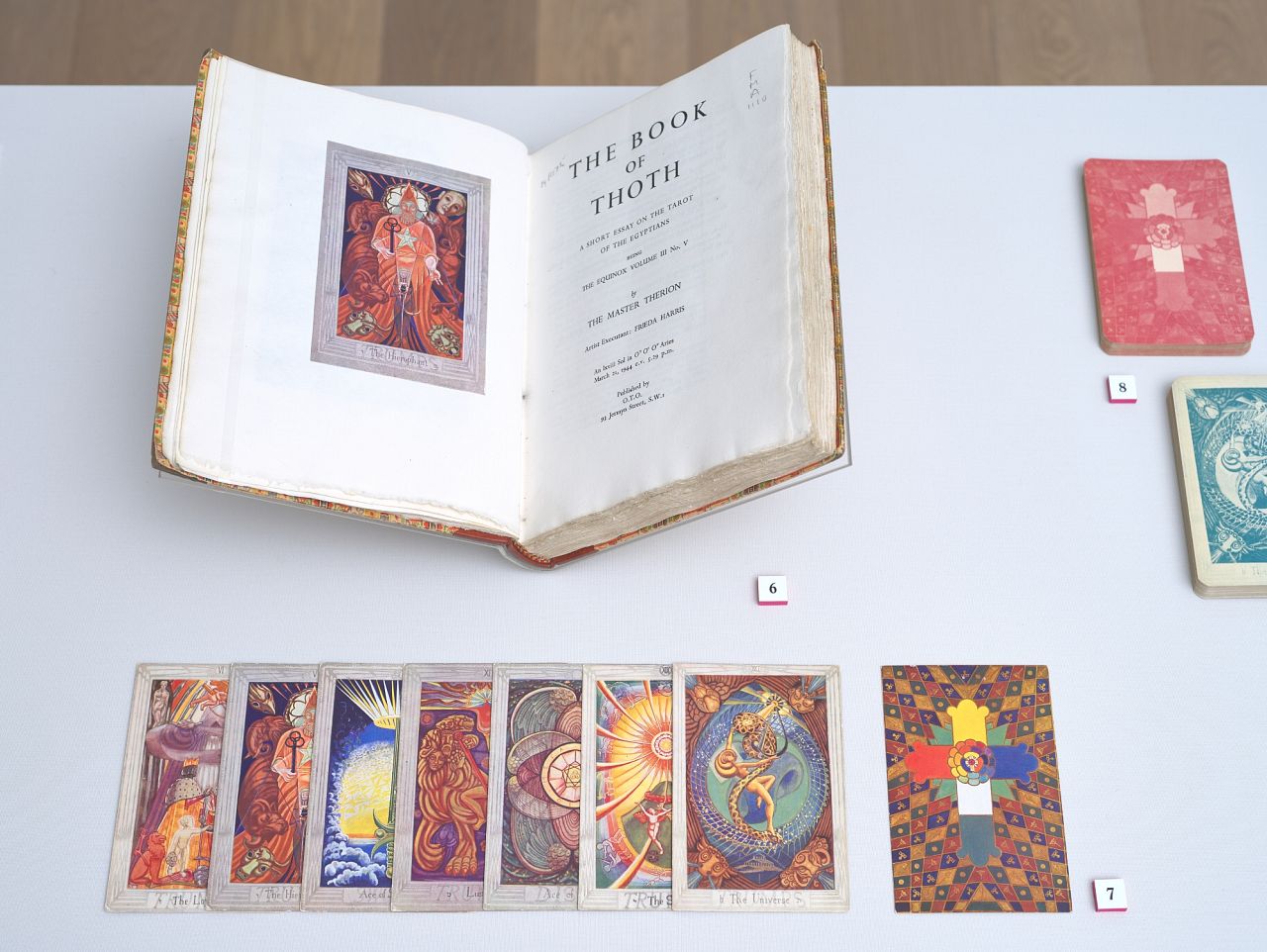
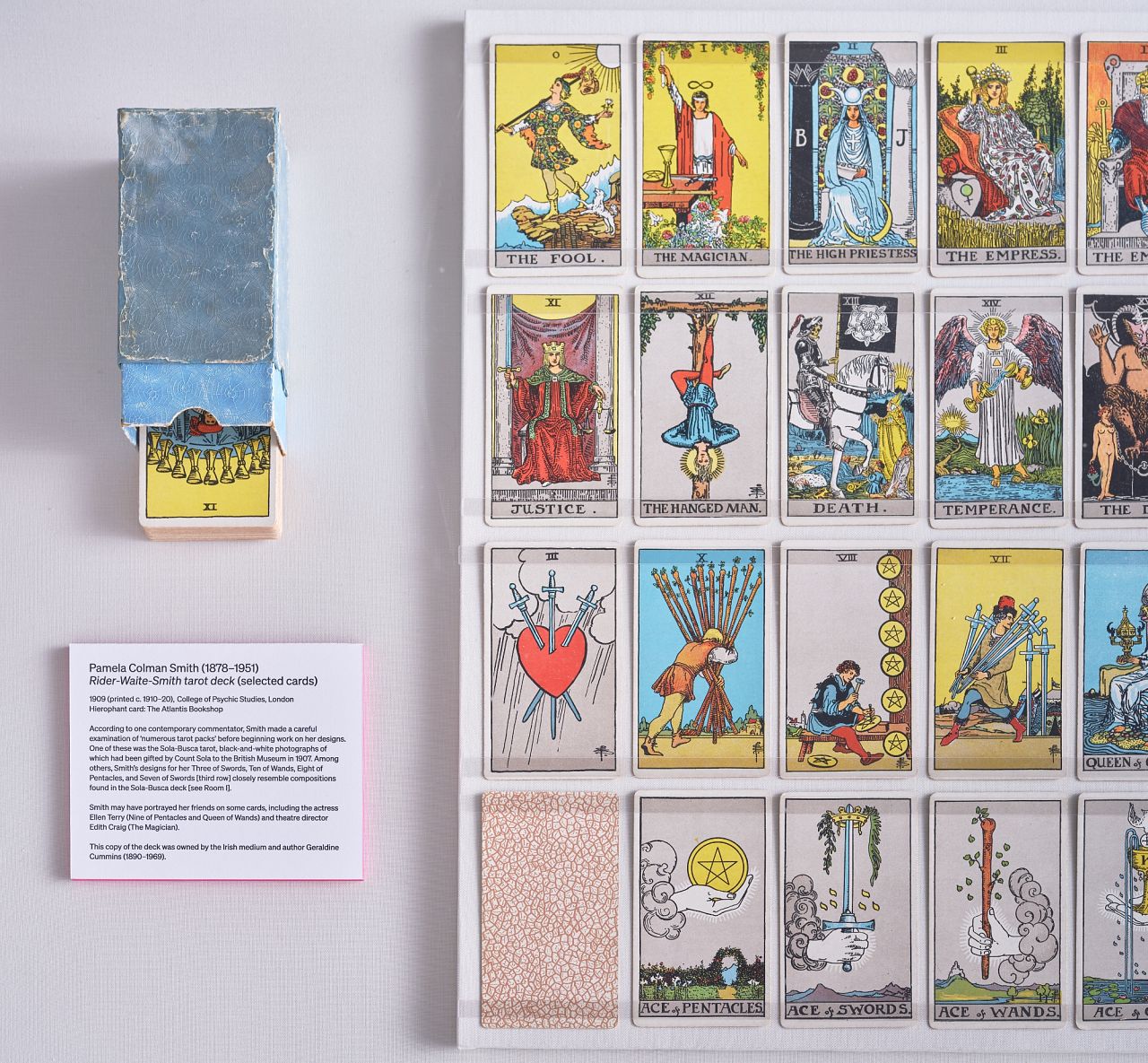
A selection of cards from the Rider–Waite Tarot deck.
Copyright Courtesy of The Warburg Institute


By Amber Louise Bryce
Published on 

What began as a set of playing cards evolved into tools of divination that continue to captivate modern generations, but our enduring fascination with tarot reveals more about the present than the future.

Melissa, a professional tarot reader in the UK, recalls attending an event at which a man drew the Justice card — often associated with balance, fairness, and truth. He began to cry. Then, quietly, he admitted he had been cheating on his wife. 

“He probably hadn't spoken to anybody about this,” Melissa told Euronews Culture. “But because there was an opportunity to talk to somebody, that was the moment he needed to tell his secret.”

Moments like this have shaped Melissa’s practice, and reflect a society still drawn to mysticism as a form of release. From TikTok readings to subversive decks, tarot has re-emerged as a modern tool for introspection — its iconic imagery an echo through time that mirrors, rather than predicts.

“It’s using old system symbology to check in on what's going on in your life,” said Melissa. “To see if there are any blockages and create a plan or guidance.”

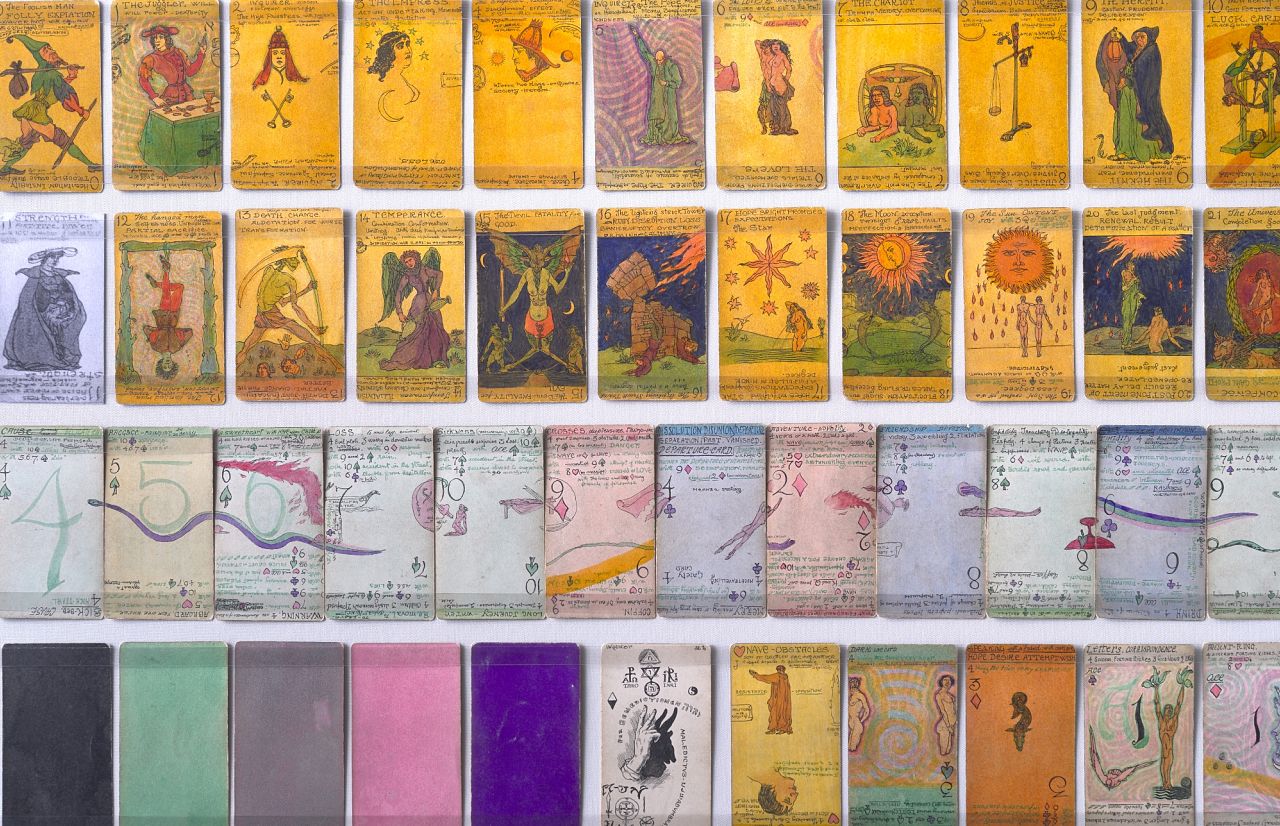
Hand-painted tarot cards on display at The Warburg Institute's 'Tarot - Origins & Afterlives' exhibition.
Hand-painted tarot cards on display at The Warburg Institute's 'Tarot - Origins & Afterlives' exhibition. Courtesy of The Warburg Institute

But long before it became a mainstay of spiritual wellness, tarot’s origins — much of which remain shrouded in mystery — were surprisingly secular. The earliest known decks appeared in 15th-century Italy, exquisitely hand-painted and used as playing cards among nobility. 

“What we now know as the Major Arcana, which includes more symbolic cards like The Hanged Man, The Star and The World, [were] used as trump cards within different forms of play,” explained Phoebe Cripps, an associate curator at The Warburg Institute in London, which is displaying an exhibition on tarot’s ‘Origins & Afterlives’ until 30 April.  

The Renaissance imagery of these early Milanese decks is core to tarot’s magic; a bridge between the past and present, religion and individualism. Within their ambiguity, different interpretations flourished: “The cards began to evolve, moving between places in Europe,” said Cripps. "After wars between Milan and France, soldiers brought them into France, particularly to Marseille, and developed their own form of them."

Tarot was transformed into the esoteric by a French clergyman that believed it held the secrets of an Ancient Egyptian text.
Tarot was transformed into the esoteric by a French clergyman that believed it held the secrets of an Ancient Egyptian text. Courtesy of The Warburg Institute

By the 18th-century, tarot had arrived in Paris — and caught the attention of two spiritually-inclined clergymen. The first, Antoine Court de Gébelin, was reportedly struck by a vision that the cards came from Ancient Egypt, encoded with the secrets of an Ancient text known as The Book of Thoth. This theory was then expanded on by occultist Jean-Baptiste Alliette, who published guides that redefined tarot as a tool for divination, laying the foundations for its mystical rebirth.

“Occultists attach themselves to tarot and tarot attaches itself to them,” said Cripps. “And [the cards] eventually take on this Victorian, kind of moralistic view, every time they get redrawn.”

It was the Rider-Waite Tarot deck, however, that reimagined tarot for the 20th-century — and cemented its power to evolve across generations. Illustrated by Pamela Colman Smith and commissioned by Arthur Edward Waite for the Hermetic Order of the Golden Dawn (a secret society specialising in occultist study), its rich allegorical imagery made tarot more visually engaging and accessible than ever before.

The Rider–Waite Tarot deck remains one of the most popular and widely-imitated.
The Rider–Waite Tarot deck remains one of the most popular and widely-imitated. Courtesy of The Warburg Institute

“Arthur Edward Waite and Pamela Colman Smith were the first people that decided the Minor Arcana should be illustrated,” said Melissa, whose favourite deck is the Rider–Waite. “So before, we had all the cups, pentacles, wands, and sword cards just as numbers with the objects. But now we have full scenes.”

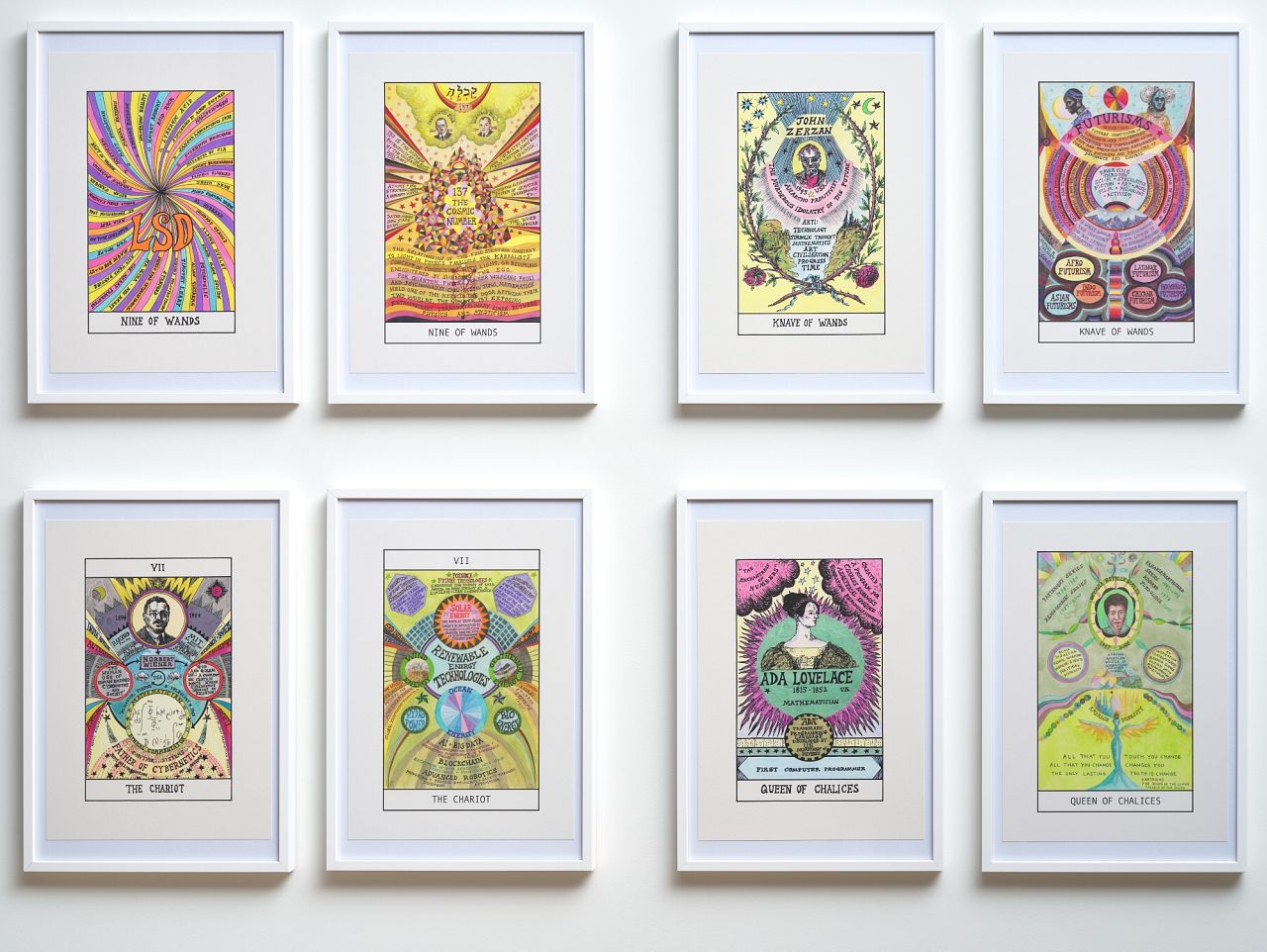
From decks themed around feminism and queer identity, to the movie poster art of Alice Rohrwacher's La Chimera, pop culture continues to reinterpret tarot’s iconography to tell new stories, and reflect the shifting values and anxieties of modern life.

Younger generations in particular are driving its rise, with more than 13 million posts under #tarot on TikTok, and a 2021 survey revealing that 51 per cent of 13–25-year-olds in the US have engaged in tarot or fortune telling. It reflects a broader cultural fascination with astrology, manifestation, and other spiritual ideologies — not just as therapeutic outlets, but as subtle forms of revolt against societal norms. 

In a world overwhelmed by political turmoil, economic instability and all-encompassing uncertainty, there’s a sense of control to be found beyond traditional structures. 

Contemporary interpretations of tarot.
Contemporary interpretations of tarot. Courtesy of The Warburg Institute

“Tarot highlights that people still want to leave space in society and in culture for a kind of magic. Something that is unknowable, that can't be neatly ordered,” said Cripps. “It's got a kind of rebellious underside to it, woven in, and I think that's what people gravitate towards.”

Yet its proliferation on social media has also sparked growing concerns about the exploitation of vulnerable people, some of whom can develop unhealthy dependencies on tarot as a source of false hope. 

“Especially on TikTok, I've noticed the question I get asked most in my readings is: ‘Is my ex coming back? How can I get my ex back?’,” said Melissa. “And I won't answer that question. I'll reframe it, and we'll look at what's going on in the person's life and help them feel really empowered to move forward.”

Whether used as a source of aesthetic cool, artistic inspiration, political commentary or self-help, Melissa sees contemporary tarot as a playground for curiosity — the kind that utilises mysticism without relying on it.

"I would encourage anyone who's interested to pick up a tarot deck. It doesn't have to be one of the old school ones — it can be something that you relate to, like a Buffy the Vampire Slayer deck," she said. "It's just a way of exploring and connecting with yourself."

Throughout its centuries of evolution, one thing remains true: Tarot has always helped us make sense of the present. When the internal knots of life can’t be undone by logic, its cards give us space to dream, reflect and conjure meaning from what already exists. Perhaps this is where their real magic lies