That's so Gen Z: One third of younger people believe they're psychic, according to survey

Can you see into the future? If not, maybe you're just too old...
In a world of constant uncertainty, psychic abilities have never seemed so appealing.
Fortunately, if you were born between 1997 and 2012, you might already possess such powers - or at least believe yourself to.
One third of Gen Z Americans claim to have had twice as many psychic moments as Boomers, according to a survey by Talker Research. This means their sixth senses only tingle about once or twice a month - but you can't always be on the crystal ball.
While psychic abilities can include anything from communicating with the dead (mediums) to gleaming visions from objects and places (clairvoyance), the Gen Z respondents claimed theirs refer to a strong intuition for knowing how situations will unfold.
In the survey, 33 per cent said they knew when something was "off", 28 per cent cited being able to sense dishonesty, and 26 per cent reported a gut feeling about when to walk away from a situation.
For those over the age of 29 and feeling left out, rest assured that some psychic intuitions also crossed generations. Both Boomers and Gen Z shared a sixth sense for finances, while Millennials tied on dating.
Gen X were also the likeliest generation to correctly predict outcomes, according to the survey.
Although some of you might be shaking your head and muttering, "that's not psychic ability, that's just common sense", these New Age beliefs have become increasingly prevalent since the rise of social media.
Interest has spiked in tarot cards, crystals and astrology, while buzzy theories like manifestation and ‘delulu’ have also gone viral - both centred around the idea that believing something enough will make it happen.
A 2025 study by Pew Research Center found that 30 percent of Americans consulted astrology, tarot cards or fortune tellers at least once a year, with most claiming to do this just for fun.
It coincides with growing anxieties about the state of the world. Socioeconomic instability, geopolitical turmoil, climate anxieties and a lack of mental health support mean some younger people are searching for a sense of control elsewhere.
But while psychic intuitions might provide illusions of guidance, the majority of young people still remain sceptical - or at least unsure about their validity.
Of all the survey's respondents, 35 per cent said they did not feel confident in differentiating between their instincts and anxiety.
And maybe that uncertainty isn't such a bad thing. It means anything is still possible and endless riches and world peace could be just around the corner.
But hold on, we'd better consult our crystal ball to be sure.
From Italian courts to TikTok: How tarot became a tool for reflection and resistance
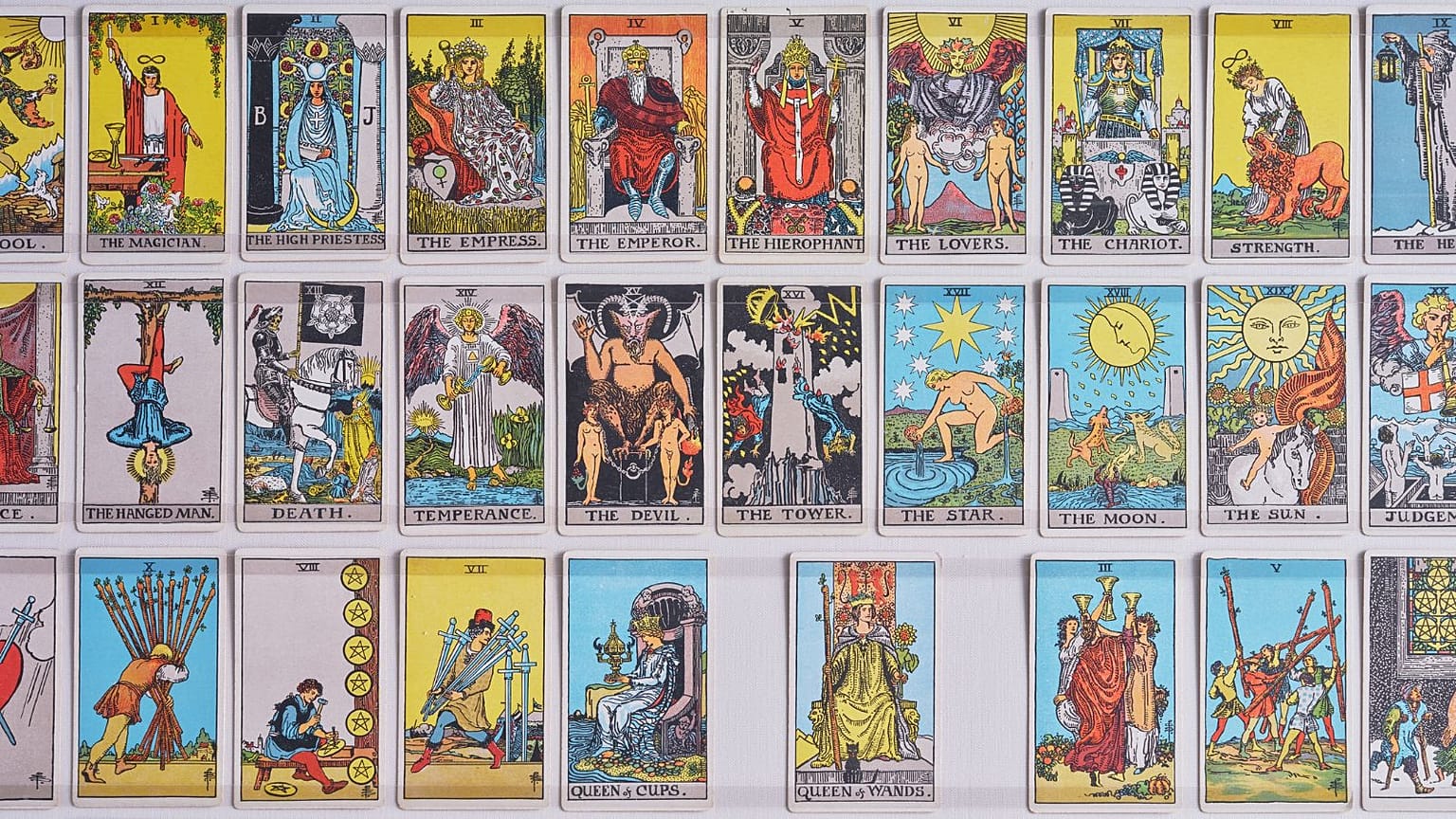
What began as a set of playing cards evolved into tools of divination that continue to captivate modern generations, but our enduring fascination with tarot reveals more about the present than the future.
Melissa, a professional tarot reader in the UK, recalls attending an event at which a man drew the Justice card — often associated with balance, fairness, and truth. He began to cry. Then, quietly, he admitted he had been cheating on his wife.
“He probably hadn't spoken to anybody about this,” Melissa told Euronews Culture. “But because there was an opportunity to talk to somebody, that was the moment he needed to tell his secret.”
Moments like this have shaped Melissa’s practice, and reflect a society still drawn to mysticism as a form of release. From TikTok readings to subversive decks, tarot has re-emerged as a modern tool for introspection — its iconic imagery an echo through time that mirrors, rather than predicts.
“It’s using old system symbology to check in on what's going on in your life,” said Melissa. “To see if there are any blockages and create a plan or guidance.”
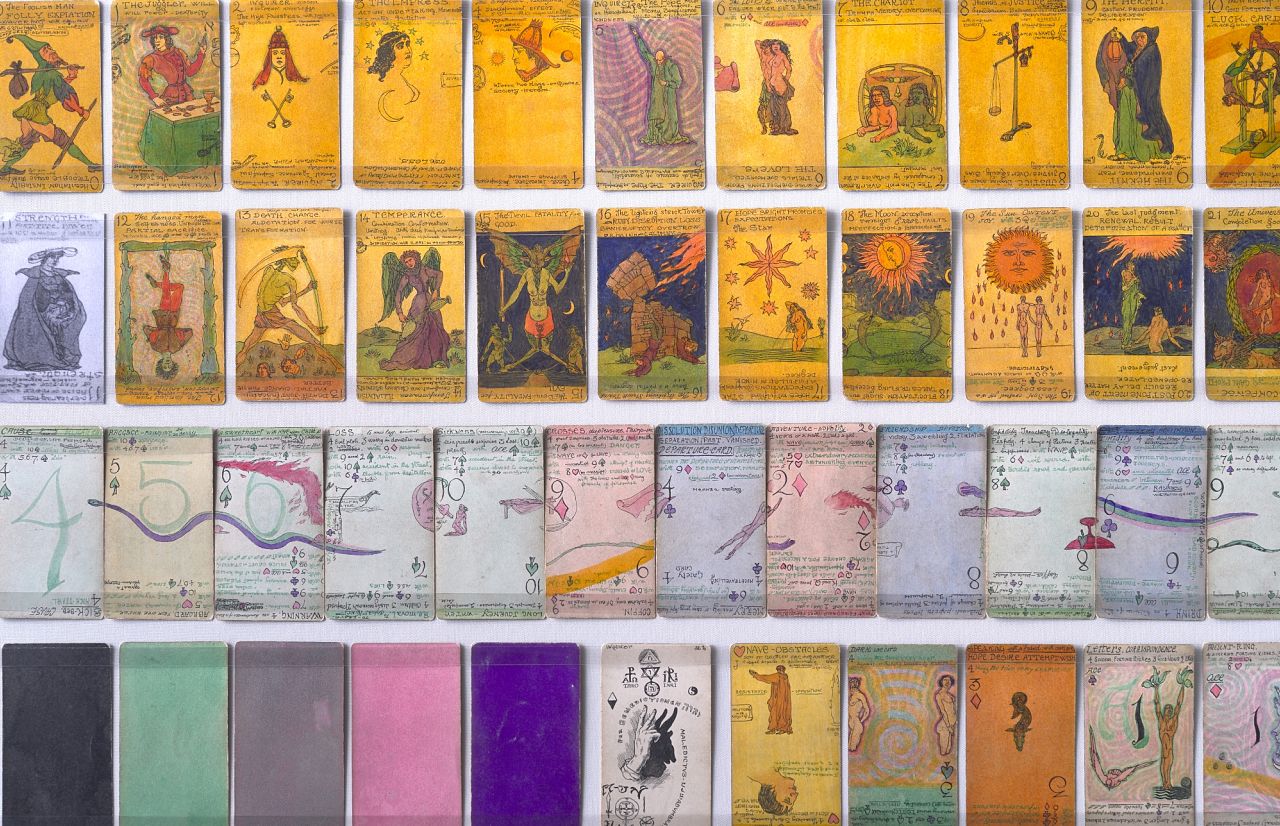
But long before it became a mainstay of spiritual wellness, tarot’s origins — much of which remain shrouded in mystery — were surprisingly secular. The earliest known decks appeared in 15th-century Italy, exquisitely hand-painted and used as playing cards among nobility.
“What we now know as the Major Arcana, which includes more symbolic cards like The Hanged Man, The Star and The World, [were] used as trump cards within different forms of play,” explained Phoebe Cripps, an associate curator at The Warburg Institute in London, which is displaying an exhibition on tarot’s ‘Origins & Afterlives’ until 30 April.
The Renaissance imagery of these early Milanese decks is core to tarot’s magic; a bridge between the past and present, religion and individualism. Within their ambiguity, different interpretations flourished: “The cards began to evolve, moving between places in Europe,” said Cripps. "After wars between Milan and France, soldiers brought them into France, particularly to Marseille, and developed their own form of them."
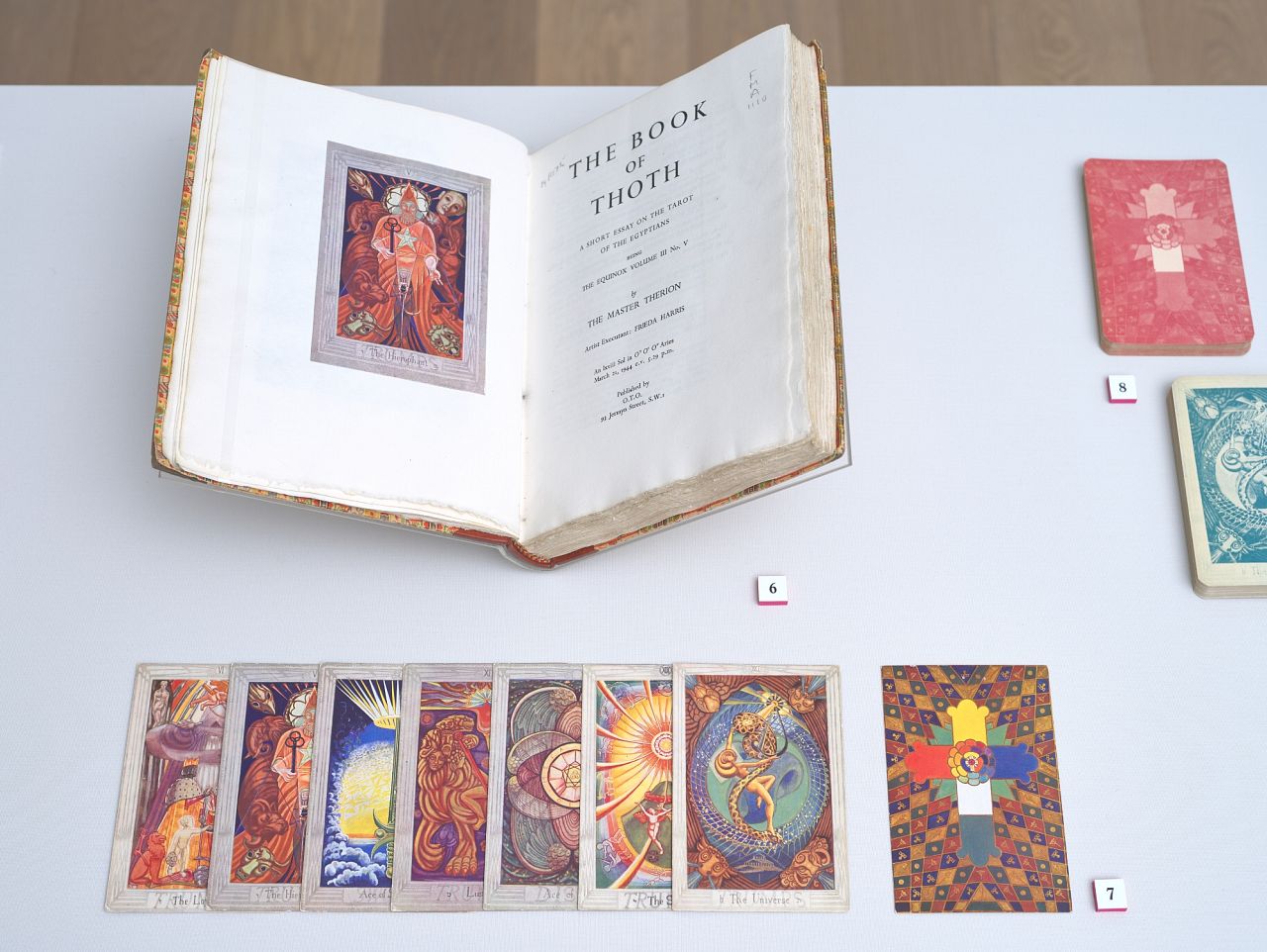
By the 18th-century, tarot had arrived in Paris — and caught the attention of two spiritually-inclined clergymen. The first, Antoine Court de Gébelin, was reportedly struck by a vision that the cards came from Ancient Egypt, encoded with the secrets of an Ancient text known as The Book of Thoth. This theory was then expanded on by occultist Jean-Baptiste Alliette, who published guides that redefined tarot as a tool for divination, laying the foundations for its mystical rebirth.
“Occultists attach themselves to tarot and tarot attaches itself to them,” said Cripps. “And [the cards] eventually take on this Victorian, kind of moralistic view, every time they get redrawn.”
It was the Rider-Waite Tarot deck, however, that reimagined tarot for the 20th-century — and cemented its power to evolve across generations. Illustrated by Pamela Colman Smith and commissioned by Arthur Edward Waite for the Hermetic Order of the Golden Dawn (a secret society specialising in occultist study), its rich allegorical imagery made tarot more visually engaging and accessible than ever before.
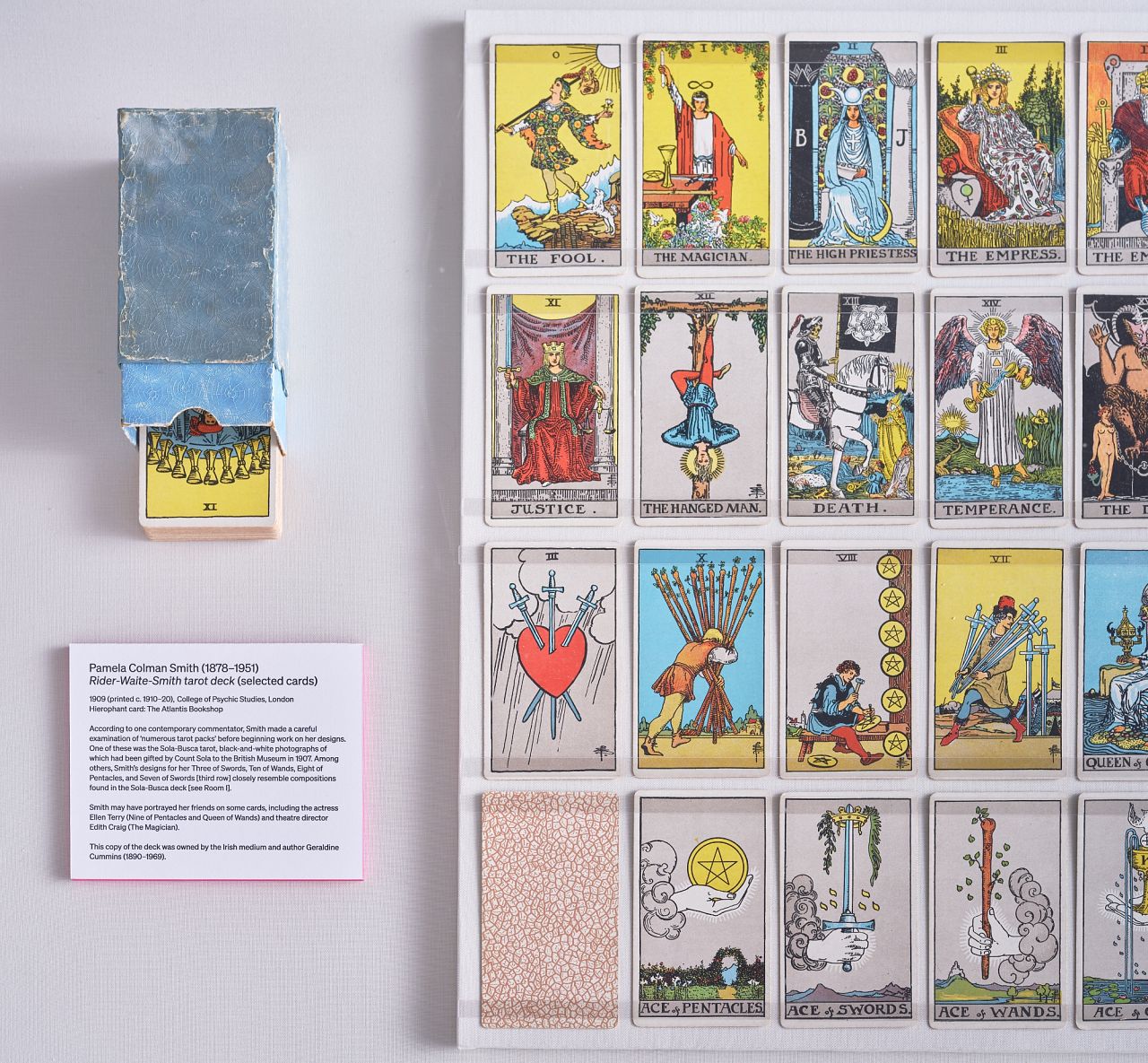
“Arthur Edward Waite and Pamela Colman Smith were the first people that decided the Minor Arcana should be illustrated,” said Melissa, whose favourite deck is the Rider–Waite. “So before, we had all the cups, pentacles, wands, and sword cards just as numbers with the objects. But now we have full scenes.”
From decks themed around feminism and queer identity, to the movie poster art of Alice Rohrwacher's La Chimera, pop culture continues to reinterpret tarot’s iconography to tell new stories, and reflect the shifting values and anxieties of modern life.
Younger generations in particular are driving its rise, with more than 13 million posts under #tarot on TikTok, and a 2021 survey revealing that 51 per cent of 13–25-year-olds in the US have engaged in tarot or fortune telling. It reflects a broader cultural fascination with astrology, manifestation, and other spiritual ideologies — not just as therapeutic outlets, but as subtle forms of revolt against societal norms.
In a world overwhelmed by political turmoil, economic instability and all-encompassing uncertainty, there’s a sense of control to be found beyond traditional structures.
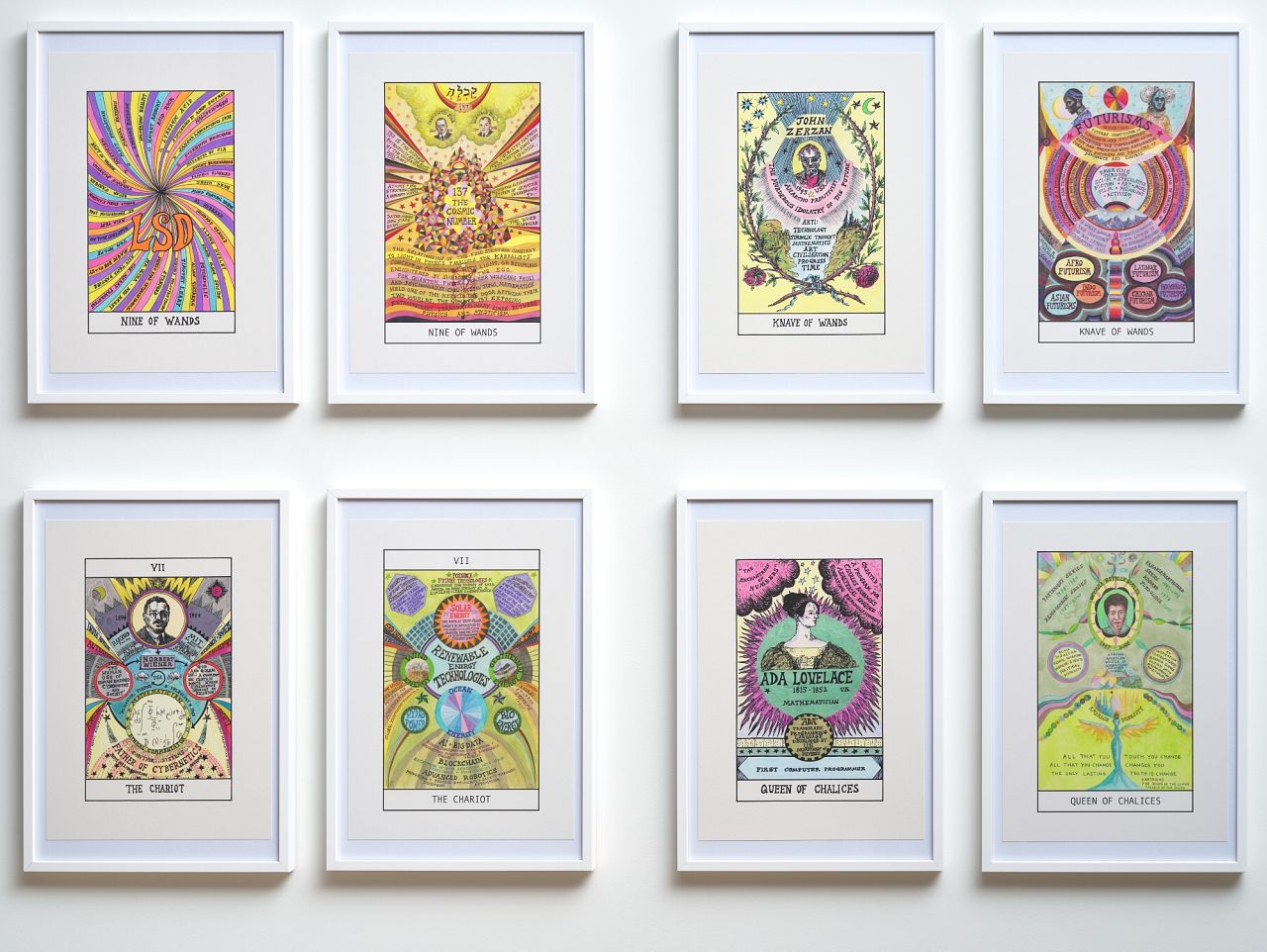
“Tarot highlights that people still want to leave space in society and in culture for a kind of magic. Something that is unknowable, that can't be neatly ordered,” said Cripps. “It's got a kind of rebellious underside to it, woven in, and I think that's what people gravitate towards.”
Yet its proliferation on social media has also sparked growing concerns about the exploitation of vulnerable people, some of whom can develop unhealthy dependencies on tarot as a source of false hope.
“Especially on TikTok, I've noticed the question I get asked most in my readings is: ‘Is my ex coming back? How can I get my ex back?’,” said Melissa. “And I won't answer that question. I'll reframe it, and we'll look at what's going on in the person's life and help them feel really empowered to move forward.”
Whether used as a source of aesthetic cool, artistic inspiration, political commentary or self-help, Melissa sees contemporary tarot as a playground for curiosity — the kind that utilises mysticism without relying on it.
"I would encourage anyone who's interested to pick up a tarot deck. It doesn't have to be one of the old school ones — it can be something that you relate to, like a Buffy the Vampire Slayer deck," she said. "It's just a way of exploring and connecting with yourself."
Throughout its centuries of evolution, one thing remains true: Tarot has always helped us make sense of the present. When the internal knots of life can’t be undone by logic, its cards give us space to dream, reflect and conjure meaning from what already exists. Perhaps this is where their real magic lies


No comments:
Post a Comment