'COP of truth': Countries commit to tackling climate disinformation at UN climate summit
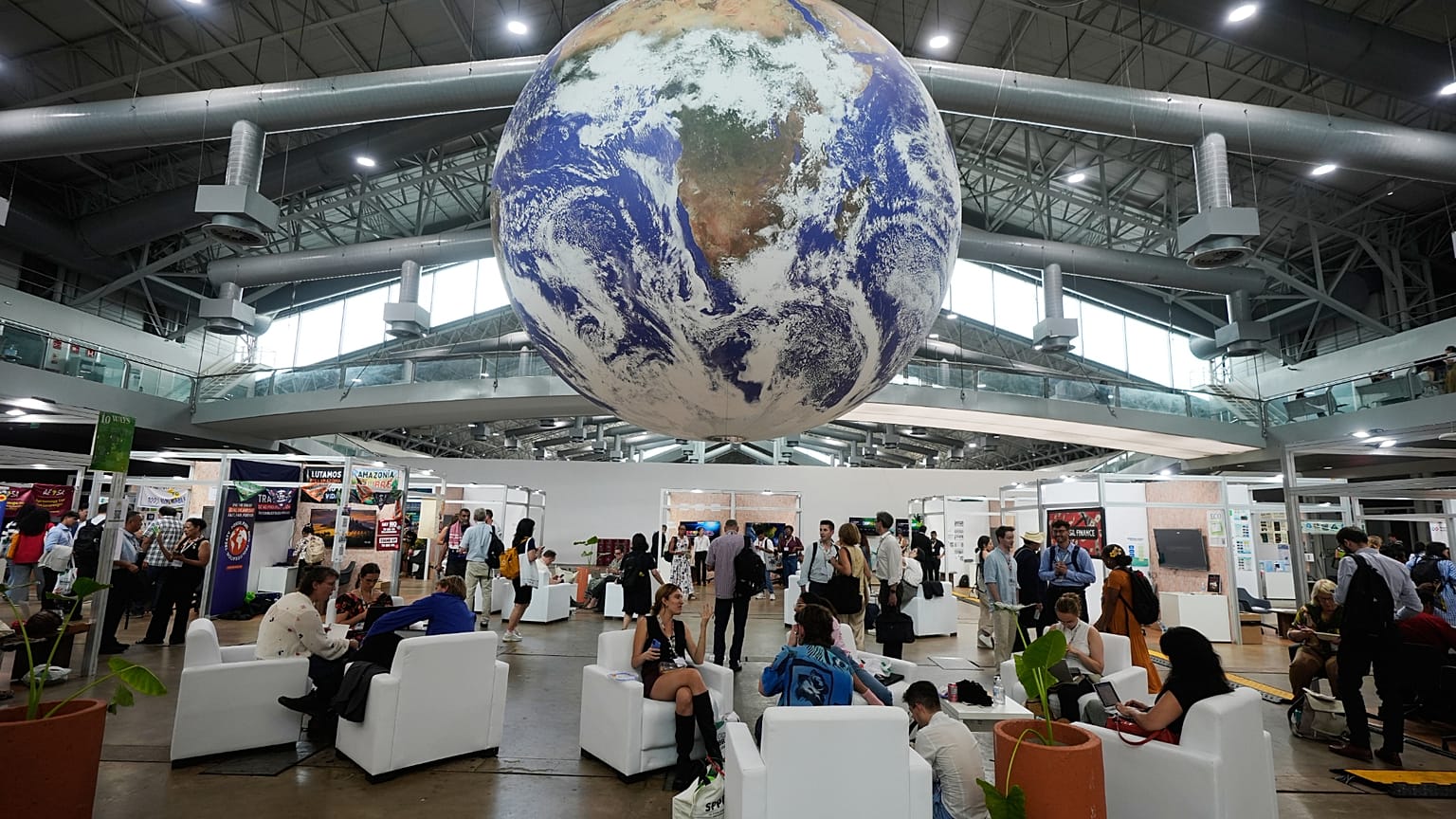
It is the first time states have formally committed to information integrity and fighting back against climate disinformation.
Climate disinformation and information integrity are on the agenda at the UN climate summit for the first time this year.
Brazilian President Luiz Inácio Lula da Silva opened COP30 on Monday in the Amazonian city of Belem with a call for world leaders to "defeat" climate deniers.
"We live in an era in which obscurantists reject scientific evidence and attack institutions. It is time to deliver yet another defeat to denialism," Lula said, adding that COP30 will be the "COP of truth" in an era of "fake news and misrepresentation".
In the lead-up to COP30, UN Secretary-General António Guterres also put the fight against climate disinformation in the spotlight. He said the world must "fight mis- and disinformation, online harassment and greenwashing."
"Scientists and researchers should never fear telling the truth," Guterres added.
On Wednesday, the Global Initiative for Information Integrity on Climate Change launched its Declaration on Information Integrity on Climate Change at the Belem summit. It is the first time states have formally committed to information integrity and fighting back against climate disinformation.
Why does it matter?
The world was at a "critical juncture where two of humanity's most pressing challenges have become quite dangerously intertwined," Charlotte Scaddan, senior advisor on information integrity for UN Global Communications, said at the launch of the declaration.
She added that a lack of trust in information was a "deeply concerning trend" around the world, with climate change being "weaponised" as a wedge issue to polarise entire societies and undermine democratic processes.
"The winners in this disinformation economy...are fossil fuel interests, they are certain political actors and they are digital influencers online who are monetising outrage and lies."
Climate disinformation surged ahead of COP30, according to a report from Climate Action Against Disinformation and the Observatory for Information Integrity. It found a 267 per cent increase in COP-related disinformation between July and September this year. Keywords related to the UN climate summit appeared 14,000 times alongside words like "failure", "catastrophe", "disaster" and "joke".
Earlier on Wednesday, hundreds of civil society organisations, individuals, Indigenous groups, and global leaders signed an open letter calling for national governments to champion a strong, ambitious, and mandatory decision at COP30 to uphold information integrity.
Signatories include Paris Agreement architect Christiana Figueres, of the European Climate Foundation Laurence Tubiana, Climate Action Network International, and 350.org.
The letter says that the degradation and pollution of the information ecosystem is not just a climate crisis but is a "multi-faceted global emergency".
It points to recent studies by the International Panel on the Information Environment (IPIE) and Climate Social Science Network,which show that organised climate obstruction activities are "actively delaying the human response to the crisis, directly sabotaging international cooperation, making the Paris Agreement goals unattainable, and putting the lives of millions at risk."
What have countries committed to?
Nations signing the declaration commit to tackling false and misleading information about climate change.
There are six commitments in total, including ensuring climate information is accurate while protecting free speech, supporting independent media to report accurately on environmental issues, making evidence-based information accessible to everyone and building capacity to identify threats to information integrity.
The declaration also calls on the private sector to commit to integrity of information on climate change in their business practices and ensure transparent, human rights-responsible advertising practices.
"In endorsing this Declaration, we reaffirm our shared responsibility to ensure that societies around the world are empowered with the knowledge and information they need to act urgently and decisively in the face of the climate crisis," it concludes
So far, it has been signed by 12 countries - Belgium, Brazil, Canada, Chile, Denmark, Finland, France, Germany, the Netherlands, Spain, Sweden and Uruguay.
What is the Global Initiative for Information Integrity on Climate Change?
The Global Initiative for Information Integrity on Climate Change is a partnership between the Brazilian government, the UN and UNESCO that aims to combat climate disinformation. It was announced at the G20 Leaders Summit in Rio de Janeiro in November 2024.
"Without access to reliable information about climate disruption, we can never hope to overcome it," UNESCO’s Director-General Audrey Azoulay said at its launch.
"Through this initiative, we will support the journalists and researchers investigating climate issues, sometimes at great risk to themselves, and fight the climate-related disinformation running rampant on social media."
The initiative is backed by member countries such as Brazil, Chile, Denmark, France, Morocco, Spain, Sweden, the United Kingdom and Uruguay.
Four countries have also just joined as new members - Belgium, Canada, Finland and Germany - bringing its total membership of states to 13.

November 13, 2025
By UN News
Negotiators in Belém, Brazil, opened COP30 with a stark warning: the race to avert catastrophic global heating is being sabotaged by a surge of climate disinformation. The falsehoods, spreading faster than ever online, threaten to derail fragile progress on climate action.
Brazil’s President Luiz Inácio Lula da Silva set the tone at the opening session, declaring that the battle for truth has become just as critical as the fight to cut emissions. COP30 must mark “a new defeat for climate denialists,” he said.
On Wednesday, 12 nations – including Brazil, Canada, France, Germany and Spain – signed onto the first-ever Declaration on Information Integrity on Climate Change, pledging to fight back against the flood of false content and protect those on the frontlines of truth: environmental journalists, scientists and researchers.
The declaration, unveiled under the Global Initiative for Information Integrity on Climate Change, calls for concrete steps to dismantle networks of climate lies and shield evidence-based voices from harassment and attacks.
João Brant, Brazil’s Secretary for Digital Policies, said the goal is simple but urgent: to “create a wave of truth.”
The initiative, launched in June, is a partnership between Brazil, the UN Department of Global Communications and UNESCO.
Disinformation: a direct threat to COP30
Frederico Assis, COP30’s Special Envoy for Information Integrity, warned that the stakes could not be higher. “Disinformation, driven by obscurantist worldviews, fuels political extremism and puts lives at risk,” he told UN News, adding that there is a real danger of interference in climate negotiations.
“There is broad recognition that disinformation can affect and compromise every part of the COP process – process diplomatic negotiations, the action agenda, or mobilization and summits. All our efforts will be at risk if we fail to tackle disinformation properly, which stems from denialism,” Mr. Assis said.
He flagged the role of algorithms amplifying “conspiratorial and manipulative” content, often using “sophisticated tactics to spread false messages.” His mandate: keep the issue in the public eye and mobilize political, religious and social leaders, civil society and the media to push back.
Cracking the code behind climate lies
For the first time, information integrity has made it onto the official COP agenda – a milestone UNESCO’s Guilherme Canela says is long overdue.
Speaking to UN News, Mr. Canela stressed that the global initiative aims to expose the machinery driving climate disinformation.
“We still know very little about what’s behind this. For example, who funds these posts, and why do they spread faster than other types of content? How does that happen? If we don’t understand these mechanisms, it’s very difficult to design effective strategies to combat this phenomenon. The core of this global initiative is precisely to finance, especially in the Global South, investigative journalism and research projects to uncover what’s really happening,” he said.
The Global Fund for Information Integrity on Climate Change, created under the initiative, has already attracted 447 proposals from nearly 100 countries. Backed by an initial $1 million from Brazil, the fund is supporting its first round of projects – almost two-thirds from developing nations.
Mr. Canela called it “very rewarding” to see the issue “embraced so strongly at COP30.”
Disinformation’s shape-shifting tactics
Maria Clara Moraes, a UN Verified Champion and co-founder of the Marias Verdes platform, knows the battle well. With over half a million TikTok followers, she says the fight against climate disinformation is “completely possible, but also extremely challenging.”
She warns that these campaigns are highly organized and “backed by powerful forces, particularly the fossil fuel industry.” Their narratives, she says, “change their disguise” over time.
“There are several types of disinformation. One of the most powerful is saying that it’s too late – that nothing can be done, or that these events like COP30 don’t make a difference. That’s also disinformation. Saying, ‘This isn’t working, it’s too slow, too complex, too frustrating.’ But yes – it’s important. We must constantly reaffirm the value of multilateralism and the importance of spaces like this one,” she said.
A generation that refuses to give up
Despite the challenges, Ms. Moraes told us that she sees hope in younger generations. By producing content rooted in science and sustainability, she says awareness of the climate emergency is growing fast.
According to her, young people are “a great source of hope and optimism.” She urges everyone to play their part in creating “micro-revolutions” through everyday choices that support climate action and drive systemic change.
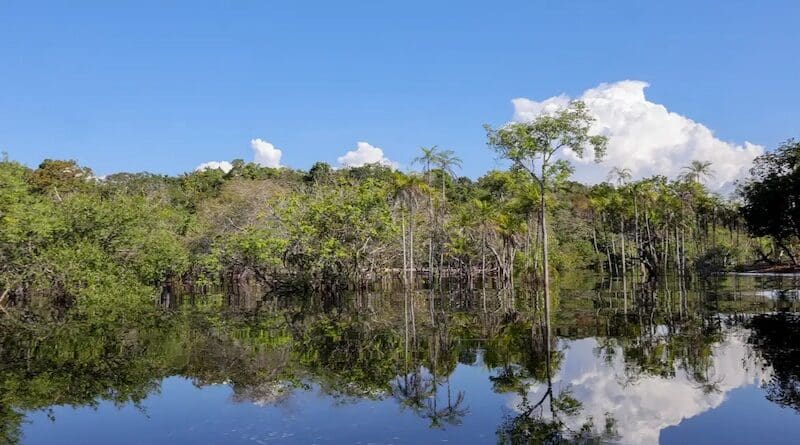
The Amazon in Brazil. Photo Credit: © FABIO RODRIGUES-POZZEBOM/AGÊNCIA BRASIL
By ABr
By Rafael Cardoso
Researchers at the Planetary Science Pavilion of the 30th United Nations Climate Change Conference (COP30) on Tuesday (Nov. 11) launched the Amazon 2025 Assessment Report, with the heading Connectivity of the Amazon for a Living Planet.


The document brings together scientific evidence on the importance of ecological and socio-cultural connectivity as a central strategy for conserving ecosystems, driving sustainable development, and promoting human and environmental well-being.
“The Amazon is on the brink of no return, so we have to save the Amazon. We have to maintain ecological and socio-cultural connectivity. And that’s what we present in this report. Indigenous peoples arrived here 14 thousand years ago, and 11 thousand years ago they could already be found throughout the Amazon. They have always had biodiversity, developed indigenous science – especially women, who were indigenous scientists. We need to value this history,” said Carlos Nobre, scientist and co-chair of the Scientific Panel for the Amazon.
The document defines connectivity as the interconnection between ecological and social systems, involving the flow of resources, information, and people within and beyond geopolitical borders.
The report is organized in eight chapters:
Amazon Connections from Regional to Global: Impacts and Vulnerabilities;
The Disruptive Connectivity of Illegal Economies: Multidimensional Threats to Human and Ecological Systems in the Amazon
Conserving Ecosystems and their Connectivity for Health Promotion in the Amazon;
The Amazon Beyond Borders: Regional Collaboration to Manage Shared Resources and Address Common Challenges;
Connectivities and Territorialities from the Perspectives of Indigenous Peoples, Afro-descendant Peoples, and Local Communities in the Amazon;
Fostering Connectivity in Production Landscapes: Supporting Multifuncional Systems for Biodiversity and Well-Being;
Connecting Healthy Forests and Flowing Rivers with the Collective Well-Being of Amazonian Peoples: The Socio-Bioeconomies We Want; and
Knowledge Connectivity in the Amazon: Bridging Scientific, Technological, Indigenous, and Local Perspectives for Sustainable Development.
Each chapter is accompanied by Calls to Action, with diagnoses and solutions already underway in Amazonian territories. The report was prepared by an international network of scientists, indigenous leaders, and representatives of local communities – including Emma Torres, Marielos Peña-Claros, Sinéa do Vale, José Marengo, Marina Hirota, Roberto Waack, Gregorio Mirabal, and Fany Kuiru.
“For us, connectivity means connecting academic science with indigenous science, because without this connectivity we cannot save the Amazon. We, the indigenous peoples, have our own science and we have to guarantee indigenous territories. That is part of the solution. If we do not guarantee life on the planet, high temperatures will continue to kill plants, animals, rivers, our culture, and our rights. We need to work collectively to save the planet,” said Sineia do Vale, an indigenous scientist and member of the Scientific Panel for the Amazon.
The document suggests a new way of thinking about public policies that connect biodiversity, climate, health, the economy, and traditional knowledge, highlighting the Amazon’s role as an interdependent system crucial to keeping the planet balanced.
“The Amazon is not a single entity. It is a set of ecosystems, all incredibly rich in biodiversity, but interconnected and dependent on each other to function properly. Indigenous populations, Afro-descendant communities, and local communities have a deep relationship with these ecosystems. There is no separation between humanity and nature. We are all part of the same whole, and only by understanding this interconnection can we conserve the Amazon,” said Marielos Peña-Claros, Bolivian scientist and co-chair of the Scientific Panel for the Amazon.
ABr
Agência Brasil (ABr) is the national public news agency, run by the Brazilian government. It is a part of the public media corporation Empresa Brasil de Comunicação (EBC), created in 2007 to unite two government media enterprises Radiobrás and TVE (Televisão Educativa).

No comments:
Post a Comment