
By Ray Furlong and RFE/RL’s Ukrainian Service
Ukraine has been rocked by a corruption scandal in which suspects allegedly discussed millions of dollars worth of kickbacks on protection for energy plants, even as Russian bombs raining down on them plunged citizens into cold and darkness.
But it’s not only the allegations that are explosive. The cast list includes people at the highest levels of government centered around a longstanding close collaborator of President Volodymyr Zelenskyy himself.
Worse still, the investigation has been carried out by anti-corruption institutions that Zelenskyy tried to muzzle before the biggest street protests since Russia’s full-scale invasion forced him to back down in the summer.
Meanwhile, corruption is a hot-button issue for Ukraine’s international reputation.
Critics of Western support for the embattled nation, fighting Europe’s biggest conflict since World War II, have sought to play down its measures to improve transparency since breaking free of Moscow’s orbit after mass street protests in 2014.
There’s a huge amount at stake.
Who Are The Suspects?
Several people have been implicated in Operation Midas, an ongoing investigation.
The alleged ringleader is Tymur Mindich, a co-owner of the Kvartal 95 comedy troupe that Zelenskyy also co-owned before he became president. The business was an important vehicle for Zelenskyy to gain popularity as a comedian and actor before entering politics.
Mindich, 46, was also a business partner with billionaire Ihor Kolomoyskiy, who backed Zelenskyy’s 2019 presidential campaign and who has been in pretrial detention since 2023 on fraud and money-laundering charges.
Law enforcement sources said Mindich left Ukraine shortly before his home was searched by police on November 10.
He has not commented on the case.
Who’s Who In The Ukrainian Energy Corruption Scandal
Suspects allegedly discussed millions of dollars worth of kickbacks on protection for energy plants, laundered through an office owned by the family of a former Ukrainian lawmaker now in Russia’s Senate.
Viktor Chumak, chief military prosecutor in 2019-20 and acting prosecutor-general in 2020, told RFE/RL’s Ukrainian Service “it is absolutely impossible, unless you are helped by law enforcement officers” to exit the country quickly amid Ukraine’s wartime travel restrictions.
Another high-profile figure involved in the case is Herman Halushchenko, who was suspended from his position of justice minister on November 12. He previously served as energy minister.
Halushchenko said he would defend himself in court from claims he had received “personal benefits” from Mindich in the alleged kickback scheme.
Former Defense Minister Rustem Umerov, who is currently secretary of the National Security and Defense Council, and former Deputy Prime Minister Oleksiy Chernyshov, are also implicated in the case.
Umerov has denied involvement. Separate corruption charges were brought against Chernyshov in June.
On recordings made by the National Anti-Corruption Bureau of Ukraine (NABU), the suspects used nicknames among themselves. Mindich was Karlson, Chernyshov was Che Guevara.
On November 12, Energy Minister Svitlana Hrynchuk tendered her resignation, following a call by Zelenskyy for her to go. She insisted she had not broken the law.
What Are The Allegations?
NABU and the Specialized Anti-Corruption Prosecutor’s Office (SAPO) allege $100 million of graft in the energy sector by “a high-level criminal organization.”
The focus is on Energoatom, the state-owned nuclear power operator with around $4.7 billion in annual revenue. The suspects allegedly charged 10-15 percent kickbacks from Energoatom’s private subcontractors in return for keeping their contracts running.
In one NABU tape, former energy minister adviser Ihor Myronyuk is heard apparently threatening to cancel such contracts.
“You’ll be wiped out completely…. All your employees will be conscripted into the army,” he is heard saying. Myronyuk denies any wrongdoing.
At another point, participants are heard discussing giving contracts for protective structures against air attacks at energy installations.
NABU has carried out 70 house searches and made 1,000 hours of secret audio recordings as part of the investigation.
How Bad Is This?
The potential fallout is huge.
Millions of Ukrainians are enduring untold hardships as Russia’s full-scale invasion approaches its fourth anniversary. This includes frequent power cuts as Russia targets energy infrastructure to degrade Ukraine’s war effort and drain morale.
With winter approaching, these pressures are increasingly acute.
Tymofiy Mylovanov resigned from Energoatom’s supervisory board on November 11, saying his proposals for the company’s response to the scandal were being ignored.
“Every hryvnya that is spent ineffectively, whether it is stolen, or simply spent ineffectively, is a loss of life on the front line,” he told RFE/RL.
EU foreign policy chief Kaja Kallas called the scandal “extremely unfortunate,”adding that it was important Kyiv takes it seriously.
As noted, the allegations run extremely close to Zelenskyy.
In Ukraine, it hasn’t escaped notice that he moved to curtail the independence of NABO and SAPO just a few months ago.
At that point, investigators were already well advanced into a 15-month operation that has only now been made public.
The move against the two agencies led people to take to the streets in protest despite making themselves potential targets for Russian air strikes. The sensitivity of the issue was underlined by a protester who linked it to the war, with a poster reading, “This is not the future my brother died for.”
Ukraine’s Western backers, who have long pressured Kyiv to improve its record on fighting corruption, added to the pressure — urging Zelenskyy to backtrack. Less than 72 hours after signing the law that removed the autonomy of NABU and SAPO, he submitted a bill restoring it.
“I do not rule out that this [investigation] was the reason for the pressure imposed on NABU in the summer. I can’t rule it out,” said Chumak, the former prosecutor.
“It was an attempt to transfer all the cases — first of all, to get the materials from all the cases, and secondly, to transfer them to another entity.”
Mylovanov said he did not believe Zelenskyy attempted a cover-up. “The president clearly said that there should be sentences,” he said.
But perceptions are important, and not only in Ukraine.
Western governments providing military and economic support to Kyiv need to justify it to their electorates, and this scandal doesn’t make that any easier.
“Trust is at stake — among the population, the army, and international partners. No dissolution of a supervisory board, no sentencing of a few individuals, and no new audits will undo the damage that is unfolding,” said Mattia Nelles, co-founder and executive director of the German-Ukrainian Bureau, a think-tank that promotes stronger support for Ukraine in Germany.
“Minor changes here and there will no longer be enough to bridge the gulf of distrust. Otherwise, this risks becoming a turning point in Zelenskyy’s presidency.”Ray Furlong is a Senior International Correspondent for RFE/RL. He has reported for RFE/RL from the Balkans, Kazakhstan, Georgia, and elsewhere since joining the company in 2014. He previously worked for 17 years for the BBC as a foreign correspondent in Prague and Berlin, and as a roving international reporter across Europe and the former Soviet Union.
RFE/RL’s Ukrainian Service has seen its audience grow significantly since Russia’s full-scale invasion in February 2022 and is among the most cited media outlets in the country. Its bold, in-depth reporting from the front lines has won many accolades and awards. Its comprehensive coverage also includes award-winning reporting by the Donbas.Realities and Crimea.Realities projects and the Schemes investigative unit.
RFE RL
RFE/RL journalists report the news in 21 countries where a free press is banned by the government or not fully established.
Ukraine's justice and energy ministers resign amid ongoing corruption probe
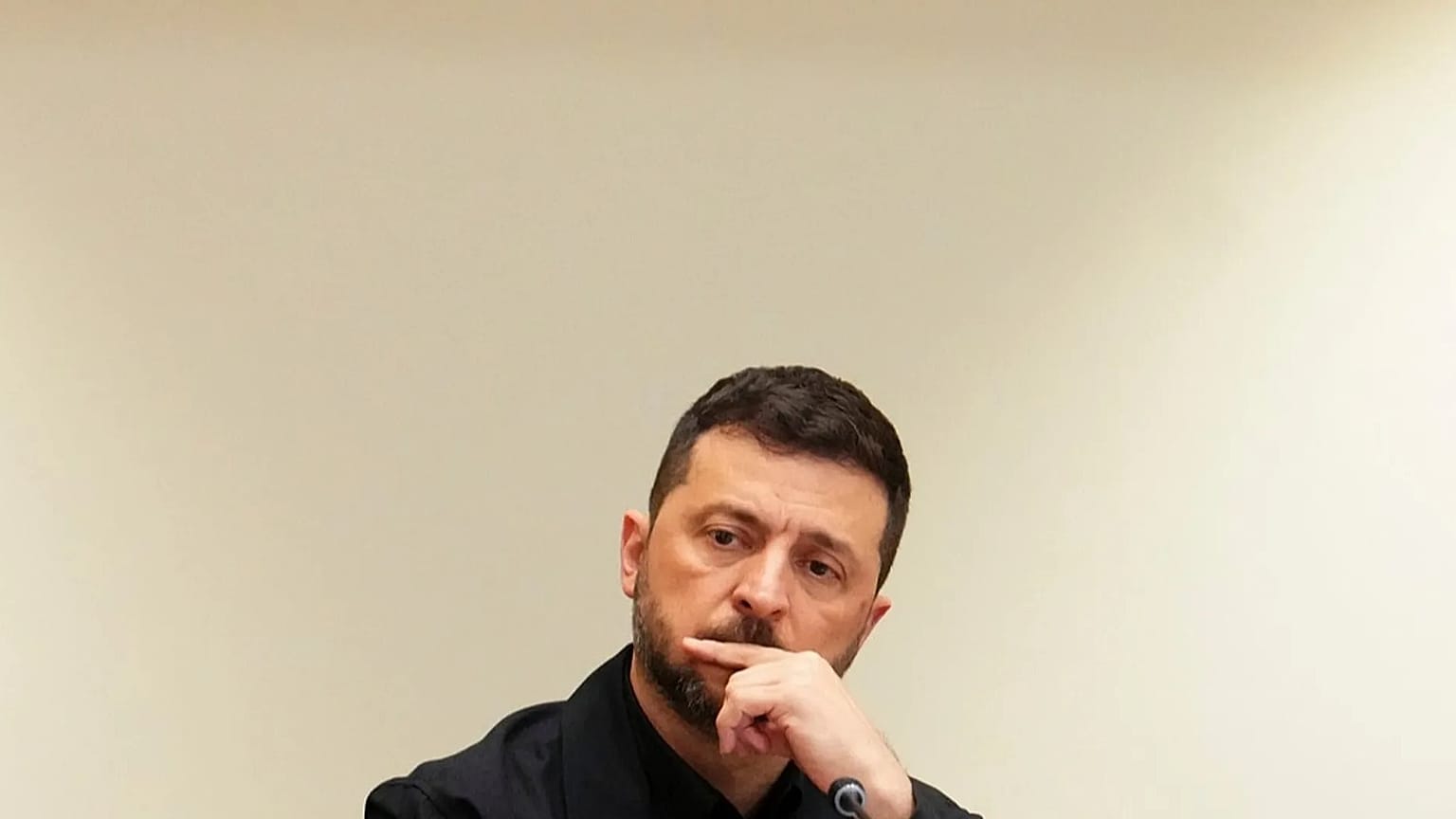
Earlier on Wednesday, the Ukrainian president called for the two ministers to leave office amid a major investigation into alleged corruption in the energy sector, calling it a "matter of trust".
Ukraine's Minister of Justice Herman Halushchenko and Minister of Energy Svitlana Hryshchuk have submitted their resignations following revelations of a major corruption probe, Prime Minister Yulia Svyrydenko announced.
Earlier on Wednesday Ukraine’s President Volodymyr Zelenskyy called for the resignation of the country’s justice and energy ministers, saying "they cannot stay in office”.
“It is a matter of trust”, Zelenskyy said on Wednesday, adding, “If there are accusations, they must be answered.”
“The decision to remove them from office is an operational one, the quickest possible. I have asked the prime minister of Ukraine to request these ministers' resignations," he explained.
"I ask the members of the Verkhovna Rada to support these requests. Everything else must be decided in the legal sphere.”
Meanwhile, Svyrydenko also said that the government initiated the sanctions procedure against Oleksandr Tsukerman and Zelenskyy's former business partner and close associate Timur Mindich.
Zelenskyy is expected to sign the sanctions into force following the council's approval.
Halushchenko first served as Ukraine’s energy minister since 2021 and was then appointed justice minister this July. He is now being investigated by the National Anti-Corruption Bureau (NABU) as part of a large-scale corruption scheme involving Energoatom.
Earlier, Halushchenko said he supports the government’s initial decision to suspend him, adding that he had a conversation with the prime minister.
"I fully agree: a political decision needs to be made first, and only then should we deal with all the details," he said on Facebook.
“I am not clinging to the position of minister and will not cling to it. I believe that suspension during the investigation is a civilized and proper course of action. I will defend myself in the legal domain and prove my position.”
Earlier, the Ukrainian government also announced its decision to dissolve Energoatom's supervisory board.
NABU probe continues
On Tuesday, Ukraine’s anti-corruption bureau charged eight people with bribery, abuse of office and illicit enrichment.
It also published tapes where the group, using code names and encrypted language, discussed alleged kickbacks and bribes.
According to NABU, the main organiser of the alleged corruption scheme is believed to be Timur Mindich, a former business partner of Ukraine’s President Volodymyr Zelenskyy.
He is the co-owner of Kvartal 95, a production company founded and formerly part-owned by the president of Ukraine.
Anti-corruption prosecutor Serhiy Savytskyi said at a court hearing on Tuesday that Mindich allegedly committed a crime by unlawfully influencing Halushchenko.
NABU said the investigation lasted for 15 months and resulted in 1,000 hours of wiretapping and 70 raids.
Halushchenko is also featured in the NABU tapes.
The Corruption Probe Rocking Ukraine’s Wartime Government
- Anti-corruption agencies uncovered an alleged $100 million kickback scheme involving top officials and business associates close to President Zelenskyy.
- The investigation, Operation Midas, centers on Energoatom contracts and includes leaked audio, dozens of raids, and high-profile resignations.
- The scandal threatens domestic trust and international support for Ukraine as it fights Russia’s invasion.
Ukraine has been rocked by a corruption scandal in which suspects allegedly discussed millions of dollars worth of kickbacks on protection for energy plants, even as Russian bombs raining down on them plunged citizens into cold and darkness.
But it's not only the allegations that are explosive. The cast list includes people at the highest levels of government centered around a longstanding close collaborator of President Volodymyr Zelenskyy himself.
Worse still, the investigation has been carried out by anti-corruption institutions that Zelenskyy tried to muzzle before the biggest street protests since Russia's full-scale invasion forced him to back down in the summer.
Meanwhile, corruption is a hot-button issue for Ukraine's international reputation.
Critics of Western support for the embattled nation, fighting Europe's biggest conflict since World War II, have sought to play down its measures to improve transparency since breaking free of Moscow's orbit after mass street protests in 2014.
There's a huge amount at stake.
Who Are The Suspects?
Several people have been implicated in Operation Midas, an ongoing investigation.
The alleged ringleader is Tymur Mindich, a co-owner of the Kvartal 95 comedy troupe that Zelenskyy also co-owned before he became president. The business was an important vehicle for Zelenskyy to gain popularity as a comedian and actor before entering politics.
Mindich, 46, was also a business partner with billionaire Ihor Kolomoyskiy, who backed Zelenskyy's 2019 presidential campaign and who has been in pretrial detention since 2023 on fraud and money-laundering charges.
Law enforcement sources said Mindich left Ukraine shortly before his home was searched by police on November 10.
He has not commented on the case.
Viktor Chumak, chief military prosecutor in 2019-20 and acting prosecutor-general in 2020, told RFE/RL's Ukrainian Service "it is absolutely impossible, unless you are helped by law enforcement officers" to exit the country quickly amid Ukraine's wartime travel restrictions.
Another high-profile figure involved in the case is Herman Halushchenko, who was suspended from his position of justice minister on November 12. He previously served as energy minister.
Halushchenko said he would defend himself in court from claims he had received "personal benefits" from Mindich in the alleged kickback scheme.
Former Defense Minister Rustem Umerov, who is currently secretary of the National Security and Defense Council, and former Deputy Prime Minister Oleksiy Chernyshov, are also implicated in the case.
Umerov has denied involvement. Separate corruption charges were brought against Chernyshov in June.
On recordings made by the National Anti-Corruption Bureau of Ukraine (NABU), the suspects used nicknames among themselves. Mindich was Karlson, Chernyshov was Che Guevara.
On November 12, Energy Minister Svitlana Hrynchuk tendered her resignation, following a call by Zelenskyy for her to go. She insisted she had not broken the law.
What Are The Allegations?
NABU and the Specialized Anti-Corruption Prosecutor's Office (SAPO) allege $100 million of graft in the energy sector by "a high-level criminal organization."
The focus is on Energoatom, the state-owned nuclear power operator with around $4.7 billion in annual revenue. The suspects allegedly charged 10-15 percent kickbacks from Energoatom's private subcontractors in return for keeping their contracts running.
In one NABU tape, former energy minister adviser Ihor Myronyuk is heard apparently threatening to cancel such contracts.
"You'll be wiped out completely…. All your employees will be conscripted into the army," he is heard saying. Myronyuk denies any wrongdoing.
At another point, participants are heard discussing giving contracts for protective structures against air attacks at energy installations.
NABU has carried out 70 house searches and made 1,000 hours of secret audio recordings as part of the investigation.
How Bad Is This?
The potential fallout is huge.
Millions of Ukrainians are enduring untold hardships as Russia's full-scale invasion approaches its fourth anniversary. This includes frequent power cuts as Russia targets energy infrastructure to degrade Ukraine's war effort and drain morale.
With winter approaching, these pressures are increasingly acute.
Tymofiy Mylovanov resigned from Energoatom's supervisory board on November 11, saying his proposals for the company's response to the scandal were being ignored.
"Every hryvnya that is spent ineffectively, whether it is stolen, or simply spent ineffectively, is a loss of life on the front line," he told RFE/RL.
EU foreign policy chief Kaja Kallas called the scandal "extremely unfortunate," adding that it was important Kyiv takes it seriously.
As noted, the allegations run extremely close to Zelenskyy.
In Ukraine, it hasn't escaped notice that he moved to curtail the independence of NABO and SAPO just a few months ago.
At that point, investigators were already well advanced into a 15-month operation that has only now been made public.
The move against the two agencies led people to take to the streets in protest despite making themselves potential targets for Russian air strikes. The sensitivity of the issue was underlined by a protester who linked it to the war, with a poster reading, "This is not the future my brother died for."
Ukraine's Western backers, who have long pressured Kyiv to improve its record on fighting corruption, added to the pressure -- urging Zelenskyy to backtrack. Less than 72 hours after signing the law that removed the autonomy of NABU and SAPO, he submitted a bill restoring it.
"I do not rule out that this [investigation] was the reason for the pressure imposed on NABU in the summer. I can't rule it out," said Chumak, the former prosecutor.
"It was an attempt to transfer all the cases -- first of all, to get the materials from all the cases, and secondly, to transfer them to another entity."
Mylovanov said he did not believe Zelenskyy attempted a cover-up. "The president clearly said that there should be sentences," he said.
But perceptions are important, and not only in Ukraine.
Western governments providing military and economic support to Kyiv need to justify it to their electorates, and this scandal doesn't make that any easier.
"Trust is at stake -- among the population, the army, and international partners. No dissolution of a supervisory board, no sentencing of a few individuals, and no new audits will undo the damage that is unfolding," said Mattia Nelles, co-founder and executive director of the German-Ukrainian Bureau, a think-tank that promotes stronger support for Ukraine in Germany.
"Minor changes here and there will no longer be enough to bridge the gulf of distrust. Otherwise, this risks becoming a turning point in Zelenskyy's presidency."
By RFE/RL

No comments:
Post a Comment