COP30 climate pledges favour land-based carbon removal over emission cuts
An analysis of national climate plans released today at the COP30 climate summit in Brazil warns that countries are failing to reduce emissions by halting and reversing deforestation and forest degradation, instead pushing unrealistic carbon removal.
University of Melbourne
image:
'Firebombing' in Tasmania, Australia, a practice in the logging industry to incinerate the remains of forests after logging.
view moreCredit: Image supplied
An analysis of national climate plans released today at the COP30 climate summit in Brazil warns that countries are failing to carry out core work required to reduce emissions by halting and reversing deforestation and forest degradation, and are instead pushing unrealistic carbon removal schemes, such as large-scale tree planting.
The Land Gap 2025 report, led by the University of Melbourne alongside a global consortium of experts, explains why countries are relying on impractical levels of land-based efforts to achieve net-zero emissions, rather than pursuing more realistic climate solutions that involve protecting existing forests and phasing out fossil fuels.
While forest advocates often link the lack of action to a lack of finance for forest protection, authors say the real impediment is a global system that pits economic development against preservation.
Lead author, University of Melbourne Dr Kate Dooley, explained the new report outlines a series of reforms, many of which are already underway, that can resolve this fundamental conflict and align critical climate and biodiversity goals with economic goals.
“Why are so many countries ignoring forest protection as a key pillar of climate targets? The answer is that they live in a world where heavy sovereign debt burdens and industry-friendly tax and trade policies force many of them to exploit forests to keep their economies from crashing,” Dr Dooley said.
“Yet the bitter irony is that, over the long-term, healthy forests are essential to healthy economies due to the climate benefits, job opportunities and ecosystem services they provide.”
The 2025 Land Gap covers climate pledges from all countries, with updates based on new submissions to the United Nation’s climate secretariat leading up to COP30 (as of Oct 31, 2025), including climate plans known as “nationally determined contributions,” or NDCs, and long-term strategies for 2050.
The report identified two essential flaws in national climate plans submitted for COP30.
Firstly, a “land gap” between governments’ reliance on land to achieve their carbon mitigation goals and what is achievable, and secondly, a “forest gap” between global commitments to halt deforestation and forest degradation by 2030 and the likely outcomes of country pledges.
The report focuses on country pledges to use land-based carbon removal initiatives, such as large-scale tree planting, forest restoration, and bioenergy capture and storage projects, to meet obligations under the 2015 Paris Agreement.
It warns the land required to achieve such levels of carbon removal would put lands critical to marginalised groups at risk, like Indigenous Peoples, local communities and smallholder farmers.
The annual rate of deforestation globally would still be four million hectares in 2030, with another 16 million hectares of forests being degraded – a forest gap of 20 million hectares.
Dr Dooley said it was hugely disappointing to see that less than 40 per cent of parties to the Paris Agreement submitted a new climate plan and that pledges for reducing emissions through halting and reversing deforestation and degradation were limited in national plans.
“This reflects that countries have not been ambitious enough in their pledges to meet the Paris Agreement of a 1.5C warming threshold, and are now relying on land-based carbon removals which may take decades to materialise,” Dr Dooley explained.
The researchers found that countries would have to devote just over one billion hectares of land – an area larger than the size of Australia – to carbon removal to achieve their targets. This represents a slight increase compared to the Land Gap 2022 report.
Co-author and Senior Research Analyst at Climate Resource Dr Alister Self said based on current assessments, best estimates of future rises in global temperature are between 1.8°C– 2.0°C above pre-industrial levels.
“This is only if countries meet their emissions targets on time and in full, and do not backslide further on current policy commitments, in which case these estimates would rise further,” Dr Self said.
Method of Research
Meta-analysis
A clearcut forest in northwest Ontario, Canada
Credit
Image supplied
Ethiopia said on Tuesday it would host the United Nations' COP32 climate summit in 2027, fending off a rival bid from Nigeria to land an influential role that will allow it to shape the agenda and outcomes of the event.
Issued on: 12/11/2025 - RFI

The news broke on the second day of COP30, the 30th UN climate change conference held in Belem, in the Brazilian Amazon.
Richard Muyungi, chair of the Africa Group of Negotiators told AFP the group "has endorsed Ethiopia." The Brazilian presidency of COP30 confirmed the African countries' choice to French press agency AFP.
It's not yet official -- the decision still needs to be officially adopted by all participating nations during the conference, which ends on November 21 -- but that should be a formality.
"We welcome the announcement of COP32 in Ethiopia and look forward to elevating Africa's climate priorities and leadership," said Rukiya Khamis, Africa senior organiser at the nonprofit 350.org.
UN climate conferences are organized in rotation among five regional blocs, which must select the host country by consensus within their group. The process can lead to power struggles.
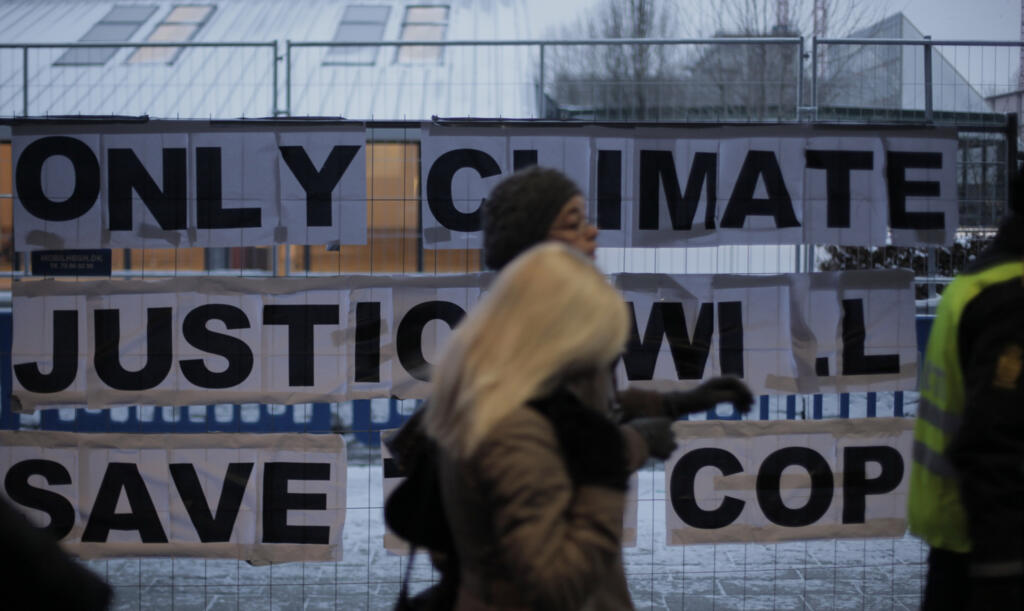
This year, Brazil was chosen to host COP30 on behalf of the Latin American and Caribbean states. Africa's turn is scheduled for 2027, and Ethiopia was selected as the host country over Nigeria, another African giant.
"We look forward to welcoming all of you to Addis Ababa for COP32," Ethiopian Ambassador to Brazil Leulseged Tadese Abebe said in response, during a plenary session, adding his country had begun initial preparations.
Cop30 opens in Brazil, exposing global rifts on fossil fuels and finance
As the headquarters of the African Union (AU), the Ethiopian capital is well-versed in hosting major global events -- from AU annual meetings to numerous international conferences.
COP31 deadlock
While the decision regarding the 2027 COP32 is awaiting official ratification, obstacles remain for COP31 next year.

Australia wants to host it in Adelaide and has more support, but Turkey refuses to concede and abandon its bid for Antalya.
Both countries belong to the "Western Europe and Other States" group.
Negotiations are ongoing, and a decision must be reached in Belem, otherwise COP31 will be held by default at the UN Climate Change headquarters in Bonn, Germany.
Such a deadlock would be unprecedented in the history of UN climate conferences.
(with newswires)

No comments:
Post a Comment