U.S. Sanctions Strand a Third of Russia’s Crude Exports at Sea
Nearly a third of Russia’s current seaborne oil export potential is now stuck in tankers as the U.S. sanctions upend crude flows and Russia’s top buyers, China and India, are still struggling to assess the implications of the sanctions, according to JPMorgan.
“Russia’s oil exports are entering a new phase of disruption as sanctions targeting Rosneft and Lukoil are set to take effect, prompting its two largest customers — India and China — to sharply reduce their December purchases,” the Wall Street bank said in a note, as carried by Reuters.
According to JPMorgan’s estimates, as many as 1.4 million barrels per day (bpd) of Russian crude oil, or nearly a third of its exporting potential, are on tankers at present, amid re-routing and slowed unloading as buyers are hesitant following the U.S. sanctions on Russia’s top oil producers and exporters, Rosneft and Lukoil.
Due to the sanctions, the discount of Russia’s flagship crude Urals to Brent has widened in recent days to the highest this year at $20 per barrel.
As of Monday, Urals was priced $19.40 per barrel below Brent on a free-on-board (FOB) basis at the Russian Baltic Sea port of Primorsk and at the port of Novorossiysk on the Black Sea, widening from $13-$14 per barrel discount at the beginning of November, an industry source told Russian daily Kommersant earlier this week, citing data by Argus.
All but two Indian refiners have skipped placing orders for Russian crude for December after the U.S. sanctioned Rosneft and Lukoil, sources with knowledge of the purchases told Bloomberg earlier this week.
In China, major state-owned refiners have reportedly suspended purchases of Russian crude oil, but the independent refiners in the Shandong province, the so-called teapots, are unlikely to halt imports of the cheap crude that has become a staple for their refineries.
By Charles Kennedy for Oilprice.com
U.S. Treasury Sanctions Iran's Rocket Fuel Supply Chain
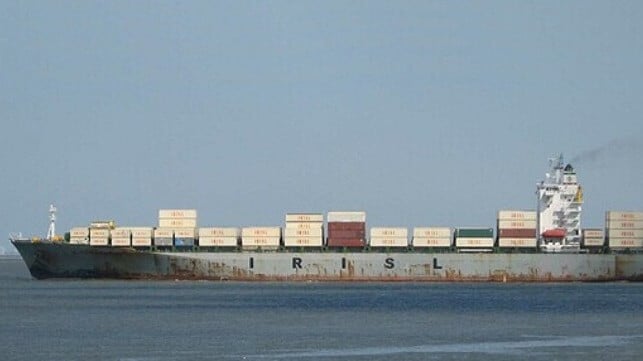
The U.S. Office of Foreign Asset Control (OFAC) has sanctioned the procurement network that helps Iran's military import rocket fuel ingredients from China, an essential logistics arrangement for the Iranian ballistic missile program.
The import scheme first came into public view in January, when intelligence sources tipped off the Financial Times to two Iranian ships that were loading chemical ingredients for ballistic missile propellant off Shanghai. The boxships Golbon and Jairan, owned and operated by the sanctioned Islamic Republic of Iran Shipping Lines (IRISL), were believed to be carrying about five dozen containers of Chinese-made sodium perchlorate. The substance is a precursor for ammonium perchlorate, the main ingredient in the solid rocket propellant that is used by Iran's prolific missile industry. The consignment later detonated in storage at the port of Bandar Abbas under unclear circumstances, killing dozens and injuring more than 1,000 people.
Iran's rocket fuel supply network is centered around a small, three-person business called the "MVM partnership," according to the U.S. Treasury. For the last two years, this network has arranged for the international procurement of sodium chlorate, sodium perchlorate, and sebacic acid - all useful for rocket propellant - for Iran's Parchin Chemical Industries (PCI). PCI is under an asset freeze imposed by the UN Security Council, and has been sanctioned by the U.S. for the last 17 years.
According to OFAC, German national Marco Klinge handled the MVM network's procurement of rocket materials from India and China from an office in the UAE. Iran/Turkey-based partner Majid Dolatkhah handled procurement from Turkish suppliers and liaised between the Iranian buyers and Klinge. Vahid Qayumi, an Iranian national, conducted the business within Iran. They and their firm, MVM Amici Trading, have been added to OFAC's sanctions list.
Several affiliated firms - Zagros Shimi Fars Manufacturing Industries Company, Furqan Novin Pars Manufacturing and Vahid Ghayoumy Goods Wholesalers - have been added to the list for similar activities.

No comments:
Post a Comment