After Ceasefire, Iranian Attacks Cut Saudi Oil Production
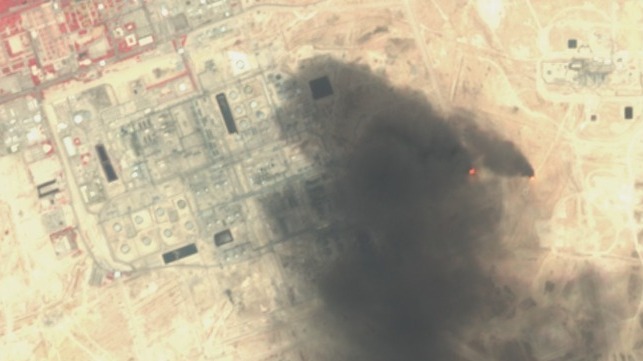
Official Saudi sources have confirmed that recent Iranian attacks caused extensive damage to oil and gas facilities, killing at least one person and leading to a substantial cut in production capacity. Argus Media reports that all of the strikes occurred within the past 48 hours.
The official Saudi Press Agency detailed out the effects of the drone strikes in an extensive list released Thursday. The most serious issue is yesterday's attack on a pumping station for the East-West Pipeline, which has become a lifeline for moving Saudi crude from the bottled-up Gulf to a secure loading terminal on the Red Sea. It is the largest pipeline carrying GCC crude oil to market, and the strike reduced its throughput by about 700,000 barrels per day, according to SPA.
Saudi upstream operations have also suffered. An oil production facility at the Manifa offshore field was hit, cutting output by 300,000 barrels per day, and the Khurais facility as well, cutting another 300,000 bpd (a total production cut of 600,000 bpd).
In addition, other Iranian strikes hit the giant refinery and petchem complexes operated by Saudi Aramco and foreign partners. The list includes refining sites in Jubail, Ras Tanura, Yanbu and Riyadh - all affecting exports of refined products (though officials did not provide an exact amount).
In nearby Qatar, one of the world's leading producers of LNG, contractors are beginning intensive work to prepare for the restart of the working liquefaction trains at Ras Laffan. These facilities process the output from Qatar's gigantic North Dome complex and ship it to the world, accounting for about 20 percent of the total global supply of gas traded over the water. Iran's ballistic missiles hit two out of the 14 trains at Ras Laffan, taking them out of commission for up to five years, according to operator QatarEnergy.
WoodMac assesses that the north half of Ras Laffan could be brought back online within a month. The south side of the site was damaged in an Iranian strike and could take until August to return its surviving four trains to operation, the consultancy said in a research note. It is unclear if QatarEnergy will want to begin restarting production before a permanent truce is agreed between the U.S., Iran and Israel, Wood Mac noted.
For the region's shut-in oilfields, now totaling some 11 million barrels per day of lost production, the restart timeline could be even longer. Wood Mac predicts a 6-9 month timeline for bringing wells and upstream infrastructure back online, accounting for unforeseen repairs and setbacks during the reactivation process.
"All this comes with a health warning," said Fraser McKay, Head of Upstream Analysis at Wood Mackenzie. "Operators hastened by regulators and governments to restore production too rapidly, will risk doing more long-term damage to foundational assets."
Opening Hormuz to Be Key Issue of Negotiations as Transits Remain Low
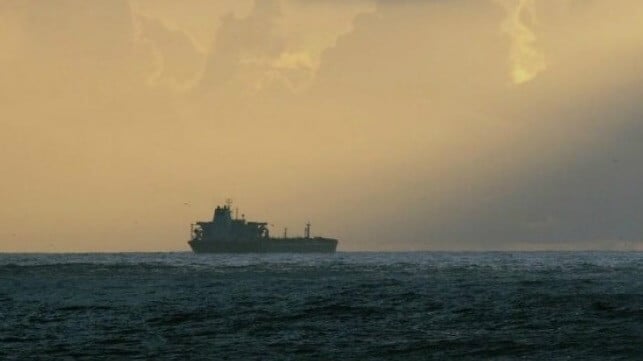
Three days into the announced ceasefire, the military portion appears to largely be holding, but Donald Trump’s demand that the Strait of Hormuz be open for “complete, immediate, and safe” operations remains elusive. The expectation is that it will be front and center as the U.S. and Iranians start talks in Pakistan this weekend.
Donald Trump again lashed out on social media Thursday evening, calling Iran’s efforts “dishonorable” and saying it was doing “a very poor job” of allowing oil to go through the Strait of Hormuz. He said it was not the agreement, and responding to reports of fees being charged to tankers, Trump wrote, “If they are, they better stop now.” This was after he earlier said maybe the U.S. and Iran might jointly control the Strait and split the fees.
Despite the demands on social media, the reality remains that only a handful of ships have transited for a third day. First reports said it was six ships on Thursday, but Kpler later revised it, saying the total was nine, up from five on April 8. Early expectations and indications of a slight uptick after the announcement of the ceasefire largely did not pan out.
All the sources agreed it was fewer than 10 ships in the last 24 hours based on AIS transmissions, with NBC reporting it was 19 ships in total since the start of the ceasefire. However, some vessels are still believed to be going dark for the transit, meaning the actual number might be higher, but nowhere near the 100 to 120 vessels a day before the hostilities began.
(Animation from MarineTraffic showing th continued lack of traffic through the Strait of Hormuz)
One notable transit late on Thursday tracked by Bloomberg was the Russian-flagged VLCC Arhimeda. Built in 2000, the 309,497-dwt tanker took on this latest identity and the Russian flag at the start of 2026. It was previously sanctioned by the United States in July 2025 for its involvement with the Iranian oil trade and linked to a sanctioned manager. Bloomberg reports the tanker appears to be heading to Iran’s Kharg to load a cargo.
While U.S. negotiators are expected to demand Iran immediately open the Strait, a top economic advisor to the White House said in interviews on Thursday, there were backup plans. Kevin Hassett, director of the White House’s National Economic Council, admitted that traffic on the route remained “tightly throttled.”
Hassett said they hoped for clarity from the negotiations, but said it could take two months for the oil flow to return to normal levels through the Strait. He also said the Trump administration had a backup plan, while Reuters reported that UK Prime Minister Keir Starmer discussed plans to reopen the Strait with Donald Trump and in meetings with Bahrain and the United Arab Emirates.

No comments:
Post a Comment