When Declaring Independence From Empire, Declare Our Interdependence With Each Other

This graphic from Stockholm Resilience Institute depicts how humanity has breached 7 of 9 planetary boundaries that provide it a safe operating space. Most recently, the ocean acidification boundary was crossed. This demonstrates our failure to recognize the common good, the element which links the crises now facing us.
The Common Root of Our Multiple Crises
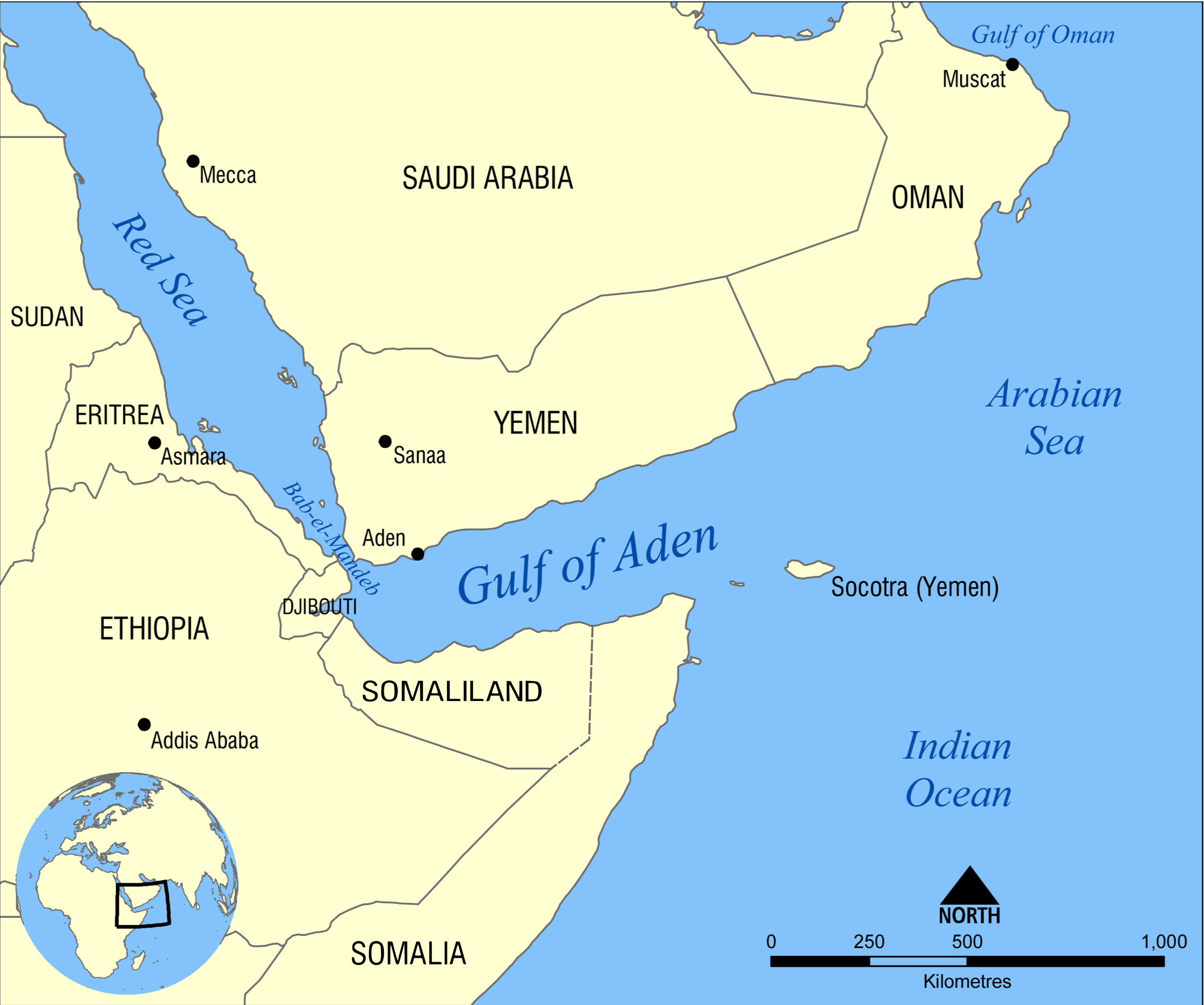
The world is confronted by a boggling array of crises, testing the limits of human comprehension, let alone hope. In the immediate moment, a crisis of global supply chains caused by the shutdown of the Hormuz Strait threatens not only the greatest energy shock in history – It also imperils food supplies with the cutoff of a substantial portion of global fertilizers.
Lesser known supply streams flowing out of the Persian Gulf are also coming to the fore. Helium vital for making semiconductors and operating medical equipment. Sulphur that is used for fertilizer and industrial processes. Aluminum that taps the cheap energy of the Gulf. Meanwhile, the war itself could escalate uncontrollably. The use of nuclear weapons is discussed as a real possibility. Greater proliferation of nuclear weapons is a likely outcome.
In the backdrop, too much so, the climate crisis sizzles along. 2026 setting up to be hottest year on record after a series of record or near record years. Winter Arctic icepack at the lowest extent before melt season. An El Nino some scientists fear may be the hottest in history, disrupting weather patterns around the world. Shutdown of the North Atlantic circulation seen as increasingly probable, spelling climate chaos around the world. And climate is only one element of an overall global ecological crisis in which multiple planetary boundaries are being breached, making the planet less habitable overall for humanity and all forms of life.
Piling on top of that is the rise of AI and the surveillance state led by Bond-villain-level techlords running corporations such as Palantir. We question who will have a job in a few years, even as wealth increasingly flows to the very top, leaving most behind. Just affording the basics of life is becoming difficult, verging on impossible, for growing numbers.
These are only the highlights of a world seemingly headed for apocalyptic outcomes. Yet if each individual crisis is wrapped in what appears to be irresolvable complexity, there is a common element in all of this. The global political crisis, the ecological crisis, the social-economic crisis, have a singular root – failure to recognize the common good and pursue it as the top priority. Nations, political and economic institutions, and powerful individuals pursue their own interests in a predatory manner, with little regard for the greater whole.
So the ecological commons is polluted and torn up. The atmosphere is made a dump for the spew of industrial civilization. The survival interests nations have in cooperation and peace are ignored in favor of foolish competitions led by national security elites, even as Skynet-like robotic weapons emerge. Corporations and oligarchs pursue their own profit and wealth no matter what the cost to society, while more people are kicked off the bus and to the streets.
This points the way toward the common solution for our converging crises. We must re-focus the common good. We must re-create the commons in our economies, societies and political institutions, and seek the social and political levels at which the common good can most feasibly be realized. In a paradoxical way, this might mean dissolving larger structures that pose impediments to the process. That plays into the larger political questions facing the U.S. and the world.
Toward a Declaration of Interdependence
In my most recent post, I called for a Declaration of Moral Independence from Empire. To say we can no longer affiliate with the increasingly visible evils of empire, with its corruptions, exploitations, wars and genocides. In this is a recognition that the global structure of empire extending its tentacles in all corners of the world acts as an obstacle to the common good. In fact, because empire concentrates power in the hands of the relative few at the expense of the many, it is really the opposite of the common good.
Increasingly, confronted with the lock powerful interests have on the federal government of the U.S., and the deep corruption that possesses federal institutions, people are asking if we might better pursue the common good in different political forms. The new Supreme Court decision gutting the Voting Rights Act and opening the way to Jim Crow congressional redistricting only adds to this sense. Ideas of independence for states such as California, historic regions such as New England, and bioregions such as Cascadia are discussed with a seriousness that was not conceivable a few years back. A nation that could elect Donald Trump twice does not, in the eyes of many, seem to have a united future. Trump has unleashed centrifugal tendencies on the left. If the Democrats sweep back to power, similar tendencies will surge on the right, led by states such as Texas where ideas of secession are strong.
The question through which all efforts must be filtered is interdependence. This is the very root of the common good, a recognition we all need each other. We live in a world of interconnected systems. When they are disrupted, people suffer and die, as we are learning with the Hormuz crisis. I fear most of us have no comprehension of the global food crisis that loss of fertilizer will cause, even as El Nino is disrupting harvests.
We should study the Soviet collapse, how the implosion of its systems led to sharply diminished life expectancy, mass unemployment, and the rise of criminal gangs and oligarchs. If the U.S. broke up in conflict, the results could be at least equally catastrophic. In the U.S., we rely on supply chains that span the continent and the world. Re-localization is a worthy goal and should be pursued, but not as an emergency response.
That is why I have proposed a Declaration of Moral Independence from Empire as a step which potentially preserves our commonalities while setting a path to a different political order. While declaring independence, we must also recognize our interdependence. We must see what draws us together, the common good we must jointly pursue.
As a thought process, consider what Trump and his cronies have cut from the federal budget. Scientific research across many fields, from health to climate and energy. Aid to support poor people in the U.S. and across the world. Public health both internationally and domestically. Disaster response. These cuts undermine the capacity of the federal government to “promote the general welfare” for which the Preamble to the Constitution calls. How can we re-create these vital functions?
Personally, as an inhabitant of Cascadia, I am acutely aware that before it was the name of a bioregion, it was the descriptor for the Cascadia Subduction Zone, a fault line off the coast capable of generating the most powerful type of earthquakes. Someday across Cascadia bridges will be down, power grids collapsed, all the circulatory systems on which we rely for daily life shattered. We’re going to need a lot of help from beyond. While ideas of independence are as strong on the U.S. side of Cascadia as anywhere in the country, we also need to look to networks of interdependence with our neighbors across the continent.
The common good where we can pursue it
A fundamental concept of governance is principle of subsidiarity. Accomplish tasks as close to home as possible. Do locally what can be achieved locally, or even hyperlocally. Situate everything at the most appropriate level, avoiding over-centralization, but centralizing where necessary. Where can we best concentrate the necessary resources? In some cases, such as marshaling response to disasters or building high-speed rail networks, larger structures will be needed. Especially living in a world fraught with increasing climate stress, we will need ways to help each other, in particular to share food when famines break out, as they will.
Through all of this, the key principle must be the common good. At what level can we best pursue it? In some cases it might be the neighborhood. In others the city or state. We are still learning what it means to organize at the bioregional level, though that will be increasingly important as we adapt to our climate-wracked world in our natural settings. And for some issues we will need broader alignment in some form, a reformed national government or new confederation. Of course, on some matters global alignment would be ideal, such as climate action, AI regulation and pandemic response. As we have seen, the Trump Administration is systemically stripping out the federal government’s capacity to pursue the common good in these and other areas. States and cities are stepping up to fill in the gaps, as interstate public health and climate alliances are now doing. It may be that the divisions between people and regions have grown so great that we must seek the common good closer to home, in our states and cities, bioregions and communities. We must seek alignment on the common good wherever we can, at whatever level we can.
If we understand the common root of our multiple global and national crises is the failure to recognize and work together for the common good, we understand the overarching project. To restore the commons, ecologically, politically, socially, economically. To build the institutions of commonality wherever we can, and to instill the principle of commonality in all our institutions. When seeking independence from old structures which have held us back, we must also seek to build and restore structures which strengthen our interdependence. When declaring independence from empire, we must also declare our interdependence upon each other. This is the basis of an order through which we can grapple with our multiple crises and find ways to work and live together. In the end, we survive together or not at all.
This first appeared on Patrick Mazza’s Substack page, The Raven.