Showing posts sorted by relevance for query FALSE FLAG. Sort by date Show all posts

Saturday, March 21, 2026

French navy boards tanker in Mediterranean suspected of being part of Russia's shadow fleet


By Nathan Joubioux
Published on 

The interception took place in the Western Mediterranean and was carried out in cooperation with allies, including the United Kingdom, which monitored the ship.

The French navy intercepted and boarded a tanker in the Mediterranean Sea on Friday that President Emmanuel Macron said is linked to Russia's sanctioned shadow fleet shipping oil in violation of international sanctions over the war in Ukraine.

According to the French maritime authorities for the Mediterranean, the tanker Deyna is suspected of operating under a false flag designation.

The interception took place in the Western Mediterranean and was carried out in cooperation with allies, including the United Kingdom, which monitored the ship, the authorities said.

"This operation aimed to verify the nationality of the vessel," which was flying the flag of Mozambique and was coming from the Russian port of Murmansk, the maritime authorities said in a statement.

The documents found onboard "confirmed doubts about the validity of the flag," they said.

The tanker was diverted and escorted by the French navy to an anchorage point for further checks, the statement said and the case was referred to a prosecutor in the port of Marseille.

In a post on X, Macron called the Deyna a "shadow fleet" vessel.

"These vessels, which circumvent international sanctions and violate the law of the sea, are war profiteers. They seek to generate profits and finance Russia’s war effort," Macron said. "We won't let this happen."

Russia is believed to be using a fleet of hundreds of ships to evade sanctions over its war against Ukraine. France and other countries have vowed to crack down.

In January, France's navy intercepted an oil tanker in the Mediterranean sailing from Russia. The vessel was released last month after paying a multimillion-euro penalty.

Last September, French naval forces boarded another oil tanker of France's Atlantic coast that Macron also linked to the shadow fleet.

Russian President Vladimir Putin denounced that interception as an act of piracy.


French Navy Stops Sanctioned Shadow Fleet Tanker Sailing Under False Flag
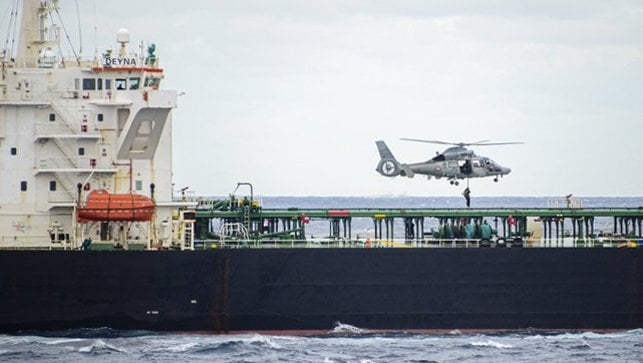
French troops boarding tanker
French forces boarding the tanker in the Western Mediterranean (Emmanuel Macron)

Published Mar 20, 2026 11:31 AM by The Maritime Executive


The French Navy, working with the UK, has stopped another sanctioned shadow fleet tanker sailing in the Mediterranean. The Navy reports the tanker Deyna (111,808 dwt) was stopped midday on March 20 for verification due to the suspicion that it was operating under a false flag.

French forces boarded the tanker by helicopter after reporting, along with the British, that they had been tracking the vessel, which sailed from Murmansk, Russia. The tanker’s AIS signal showed it was heading to the Suez Canal and likely to China. Images show the ship low in the water, laden with a cargo of crude.

The Deyna, built in 2005, is listed as having had its class withdrawn in March 2024 and does not show an inspection record since August 2024. It is listed as owned by Chinese interests, with the French reporting the vessel claimed to be operating under the flag of Mozambique. Equasis lists the flag as Tonga. Africa has become a recent hot spot for false flag operations, with both Madagascar and landlocked Zimbabwe warning the IMO last month of false flag claims.

The tanker was sanctioned by the United States in January 2025 for its involvement with the Russian oil industry and links to a company called Sino Ship Management. The European Union and the UK also sanctioned this tanker in 2025.


Armee Francaise reports that the initial verification efforts this morning confirmed its suspicion regarding the legitimacy of the flag, and the case was referred to the public prosecutor in Marseille. At the prosecutor’s request, the tanker is being escorted to an anchorage for continued inspections.

“These vessels, which evade international sanctions and violate the law of the sea, are profiteers of war. They line their pockets while helping finance Russia’s war effort,” declared French President Emmanuel Macron. “We remain resolute… The war involving Iran will not deflect France from its support for Ukraine, where Russia’s war of aggression continues unabated.”

It marks the third instance where French has reported detaining a shadow fleet tanker. In January, it stopped another tanker off Marseille but released it after paying several million euros in fines. Similarly, last September, France detained another tanker off the Atlantic coast. The captain of that tanker was being tried in France for disobeying instructions from the military.

Across Europe, there are increasing efforts to crack down on false-flag vessels. The French military assisted Belgium in stopping another tanker earlier in March. It was also released after paying a fine. Sweden this month has detained two vessels that it reports were sailing under false flags. Both cases are currently under investigation, with the captains placed under detention and facing possible felony charges for presenting false papers. Denmark is also detaining a containership linked to Iran after reporting it was also flying a false flag, but quickly changed to Iran when it was challenged.


French navy boards Russia-linked tanker

in Mediterranean


The French navy has boarded and seized an oil tanker sailing in the Western ‌Mediterranean from the Russian port of Murmansk accused of belonging to what has been dubbed Moscow's "shadow fleet", vessels of opaque ownership suspected of dodging Western sanctions on the country's crude oil exports.


Issued on: 20/03/2026

FRANCE 24


A French Navy helicopter hovers over the Deyna vessel, accused of belonging to Russia's "shadow fleet", during an operation in the Western Mediterranean Sea, on March 20, 2026. © Préfecture maritime de la Méditerranée via Reuters

The French navy intercepted an oil tanker sailing from Russia in the Mediterranean on Friday, as President Emmanuel Macron insisted France would press ahead with efforts to back Ukraine despite the Iran war.

This is the third such suspected "shadow fleet" tanker intercepted by France in recent months.

"This morning in the Mediterranean, the French Navy intercepted and boarded another vessel from the shadow fleet, the Deyna," Macron said on X.

Several European countries have targeted Moscow's so-called "shadow fleet" of tankers used to transport oil in breach of Western sanctions imposed over Moscow's invasion of Ukraine, now in its fifth year.

Local authorities said the navy intercepted the Mozambican-flagged vessel – which sailed from Murmansk in northwestern Russia – over its registration.

The operation was carried out in coordination with other countries, including Britain, "which participated in tracking the vessel," the maritime prefecture said.

The ship will undergo further checks once anchored, it added.

The 250-metre (820-feet) tanker, which is on an EU sanctions list, was located near Spain's Balearic Islands and will be escorted to French waters in coming days, according to a source close to the investigation.

'Line their pockets'

Macron has pledged that France would maintain pressure on Russia to end its invasion of Ukraine.

The president on Friday labelled "shadow fleet" vessels "profiteers of war," accusing them of bypassing international sanctions and violating maritime law.

"They line their pockets while helping finance Russia's war effort," he said.

With global attention focused on the US-Israeli war with Iran, France will keep supporting Ukraine, Macron added.

"We remain resolute," he wrote in English.

"The war involving Iran will not deflect France from its support for Ukraine, where Russia's war of aggression continues unabated."

The United States has eased some restrictions on Russia's oil sales as it tries to stabilise global energy markets, upended by Iran blocking the Strait of Hormuz.

The move was criticised by Macron who pledged Russia would get no "respite" while German Chancellor Friedrich Merz said easing sanctions was "wrong".
Multi-million euro fine

French forces boarded another suspected Russian tanker, the Grinch, in January. But the ship was later let go after its owner paid a multi-million-euro fine.

In February, it was revealed that two employees of a Russian private security company were on another suspected Russian "shadow fleet" tanker seized by France in September, the Boracay.

The Chinese captain of the vessel went on trial in absentia, with prosecutors demanding he serve a one-year jail sentence for failing to follow orders to stop the ship.

Other European nations have also ramped up efforts to seize Russia-linked vessels.

In early March, Belgian special forces intercepted a tanker in the North Sea, with aerial support from France.

The Swedish coast guard last week arrested the Russian captain of a suspected "shadow fleet" vessel on suspicion of forging documents and violating the maritime code.

Nearly 600 vessels suspected of being part of Russia's "shadow fleet" are subject to European Union sanctions.

(FRANCE 24 with AFP)

Thursday, October 09, 2025

Russia’s ‘false flag’ claims spark fears of pre-war posturing

Analysis


In a series of escalating statements, Russia’s foreign intelligence service has accused Western countries of plotting “false flag” operations to discredit Moscow. While the claims lack evidence, analysts warn they may reflect something more serious: an intensifying hybrid warfare strategy – and signs that the Kremlin is preparing the narrative ahead of a potential conflict with NATO.


Issued on: 08/10/2025 
FRANCE24
By: Sébastian SEIBT

Russia recently accused several NATO countries of "false flag" operations in order to pin the blame on Moscow. © France Médias Monde graphic studio

Russia’s foreign intelligence service (SVR) has ramped up accusations against the European Union, the UK and Poland in recent weeks, claiming they are orchestrating covert operations designed to frame Moscow for acts of sabotage.

The allegations – largely dismissed by Western officials as disinformation – have led some analysts to warn that the Kremlin may be laying the groundwork for a future escalation with NATO.

The SVR alleged on October 6 that the UK was recruiting Ukrainian agents to stage a maritime attack that would appear to have been carried out by Russia. The supposed plan included the use of Chinese equipment, which the SVR said was intended to implicate Beijing as well. The agency claimed the operatives were instructed to get arrested by Western authorities and then claim they had acted on orders from Moscow.

That was one in a rapid series of accusations. Russia accused Polish intelligence on September 30 of working with Ukrainian agents to create a fake Russian-Belarusian special forces unit aimed at attacking Polish infrastructure. A week earlier, the SVR claimed that NATO and EU officials were planning provocations in Moldova’s pro-Russian breakaway region of Transnistria.

While Western governments have largely dismissed or mocked these unverified claims, experts say their frequency – and timing – warrant close attention.

“There’s clearly been a surge in Russian claims of false flag operations by NATO countries, especially since late September,” said Patrick Rene Haasler, an intelligence analyst at the International Team for the Study of Security Verona.
Pre-war signalling?

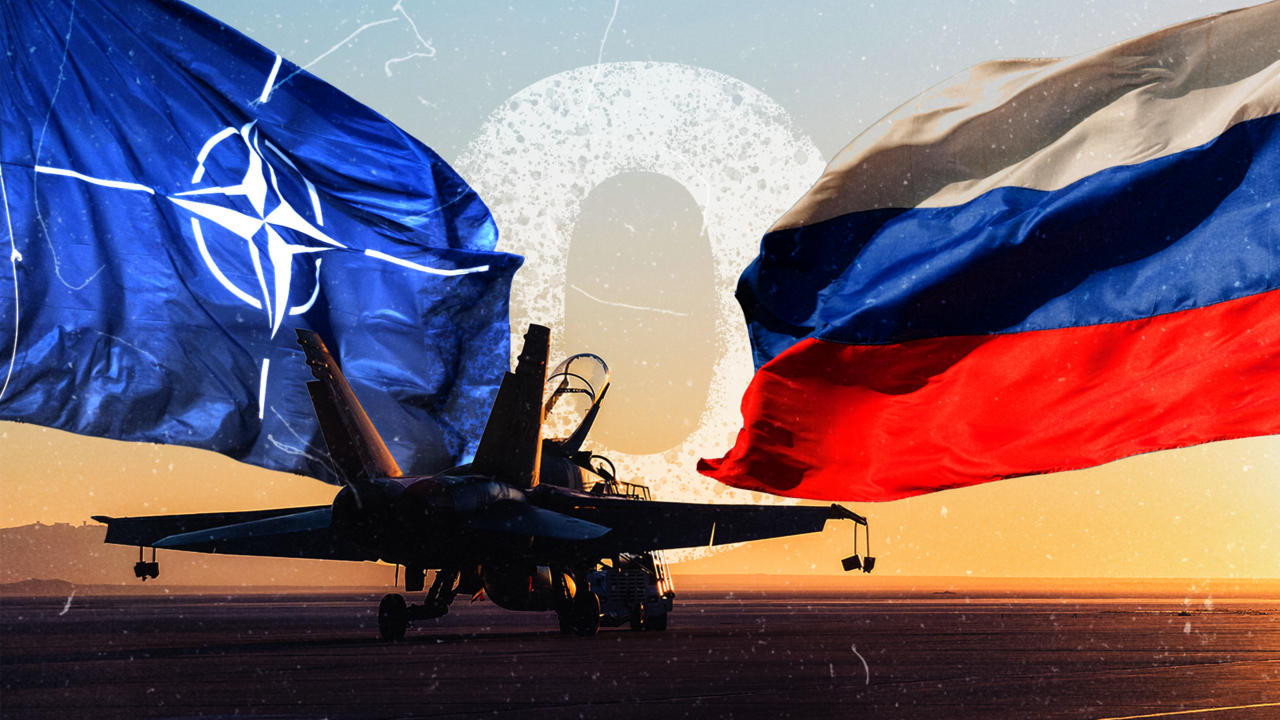
According to the Washington-based Institute for the Study of War, Russia’s recent wave of accusations may signal that the Kremlin has entered what military analysts call “Phase 0” – a stage marked by covert operations, psychological warfare and disinformation that precedes open conflict.

Read more Drones, sabotage, surveillance: Moscow’s hybrid warfare takes to the high seas

“Phase 0 is Western terminology,” said Kevin Riehle, an intelligence expert at Brunel University in London. He explained that in Russian military doctrine, it corresponds to a “special period” – a concept inherited from the Soviet era – describing a phase of heightened tensions immediately before war breaks out.

During this “special period”, Russian doctrine focuses on sowing confusion, justifying future military actions and solidifying domestic support.

“It’s part of the broader Russian modern warfare doctrine, which is based on that kind of fog-of-war confusion, hybrid operations,” said Jeff Hawn, a Russia specialist at the London School of Economics.

He said it is a time used to “create a legal justification, or legal cover, for some kind of conflict – but also bolster domestic support”.
Familiar patterns

For many observers, these recent false flag claims echo tactics seen ahead of previous Russian military actions.

“The narrative that was used to justify Russia’s actions after the successful 2014 annexation of Crimea was that the Russian population was threatened by Ukrainian Nazis – literally,” said Yevgeniy Golovchenko, a researcher on Russian propaganda at the University of Copenhagen. Russia claimed that a group of Ukrainian Nazis was on its way to Crimea to kill anyone who spoke Russian.

In reality, such supposed threats were staged by Russian mercenaries or soldiers who carried out aggressive acts themselves.

Read more' Drone wall': Can Europe shield itself from Russian threats?

A similar storyline unfolded just before Russia’s full-scale invasion of Ukraine in 2022.

“A few days before the full-scale invasion, there were multiple explosions and other events in Donbas, which were used by Russia to say, ‘See? Ukrainians are aggressive, Donbas is threatened.’ So we have to carry out the special military operation to protect Russians defensively,” said Golovchenko. “They were trying to create an urgent threat against Russia that had to be dealt with – not tomorrow, but today.”

Moscow has tried to blame the West for staging false flag operations in the past. After the 2018 attempted poisoning of former double agent Sergei Skripal in the UK, Russian officials accused British intelligence of staging the attack to blame Moscow.

“Russia called that a false flag operation, saying that was MI6 trying to kill Skripal so it could blame Russia,” said Riehle.
Domestic audience

While these accusations are directed at Western governments, their primary audience appears to be domestic.

The target audience for such claims is the Russian population, Riehle said, noting that they are broadcast primarily through Russian media outlets to shape public opinion at home.

Golovchenko explained that these narratives are also designed “to vilify NATO” and portray the alliance as “threatening and aggressive” – in contrast to Russia, which is depicted as merely “trying to defend itself”.

Watch moreExclusive investigation: Is the Russian Orthodox Church in Sweden a platform for espionage?

This messaging strategy – portraying Russia as perpetually under siege – helps maintain internal support and frame any future military action as a necessity.

“Russia always invariably claims to be on the defence. It never accepts any allegations that it is being offensive. It’s always the other guy who started it,” Riehle added.

At the same time, the Kremlin remains sensitive to how it is perceived globally.

“Believe it or not, [Russia] actually does care very deeply about international legitimacy, even now,” said Hawn. “It’s all part of the hybrid warfare playbook – meant to sow confusion and blur the line between peace and wartime.”

Escalation or intimidation?

While the rising number of accusations could suggest that Russia is laying the groundwork for an escalation, some analysts say that the Kremlin is likely posturing rather than preparing for immediate military action. 
“One of the foundations of hybrid warfare is the ability to deny responsibility,” Haasler said. “These false flag claims could be part of a strategy to pre-emptively discredit Western narratives – or to justify real acts of sabotage later on.”

According to Riehle, Moscow’s objective may be less about striking first and more about signalling the potential cost of any future confrontation. Instead of planning an outright offensive, Russia appears to be shaping the narrative – offering the West a preview of what open conflict with Moscow might look like, while positioning itself to deny accountability if escalation occurs.

This article has been translated from the original in French by Natasha Li.

Wednesday, January 15, 2025


False Flag Shadow Tanker Detained in Venezuela

tanker at sea
Venezuela is detaining a tanker identified as flying a false flag (file photo)

Published Jan 15, 2025 1:05 PM by The Maritime Executive


The Maritime Authority in Guyana is confirming media reports that a tanker being detained in Venezuela was flying a false flag and not legitimately linked to Guyana. The Venezuelan military authorities reportedly detained the vessel over the weekend for sailing in the country’s waters without permission.

According to the Venezuelan newspaper Ultimas Noticias, the incident occurred on January 12 at the port of Guamache on Margarita Island, which sits about 25 miles off the coast of Venezuela. The authorities inspected the vessel and ordered the detention claiming the vessel was “not authorized to navigate” in Venezuela. 

News reports published pictures of the vessel identified as Four Plus, a 45,000 dwt product tanker built in 2000. The reports said the ship has a crew of Chinese nationals aboard.


The Equasis database reports the vessel is operated by Shanghai Xuanrun Shipping Co. of Shanghai and has been in Chinese hands since 2018. It changed names in 2024 with its class listed as unknown and its last known flag as Hong Kong in 2018. Its last inspection was in China in early 2024 when safety issues with fire prevention and structural issues with railings and walkways were flagged.

The vessel’s AIS signal shows it departing Ningbo, China on November 22 and arriving at the Point Lisas Anchorage in Trinidad & Tobago on January 5. That is the last position shown on its AIS signal.

Guyana’s Maritime Authority issued a statement on January 13 reporting, “The vessel is not registered in Guyana, so it is not authorized to fly the Guyana flag or claim Guyanese nationality. MARAD wishes to remind stakeholders and the public that it operates a closed Ships’ Registry, and does not offer a flag of convenience.”

It is the second time in recent weeks Guyana has reported false flag operations highlighting that it only offers registry for vessels owned by citizens, residents, and the Caribbean Community states. The United States sanctioned five tankers claiming registry in Guyana that the U.S. authorities said were operated by a company in Syria with ties to Iran and Venezuela. Guyana reported none of the vessels were legally flagged in the country.

The Government of Guyana three years ago broke ties with a company calling itself International Maritime Safety Agency of Guyana. At the time Guyana accused the company of “fraudulent representations and illicit conduct.” The government reports it has been working with Interpol and brought to the attention of the International Maritime Organization the criminal activities saying it is one of several countries that have been victimized by false flag operations.

The authorities in Venezuela have not provided additional details other than confirming an investigation was underway into the tanker. 

Sunday, April 12, 2026


France Targets Shadow Tankers with Stiffer Penalties for False Flag

French troops boarding tanker
French forces boarding a suspected false flag tanker in the Western Mediterranean (Emmanuel Macron)

Published Apr 9, 2026 4:55 PM by The Maritime Executive


France is reported to be pursuing legislation to stiffen the penalties for vessels flying false flags or failing to comply with the instructions of the authorities. It comes after France has detained three shadow fleet tankers in the past seven months in an effort to crack down on violations of the sanctions on the Russian oil industry.

The French news agency Agence France-Presse (AFP) reported on Wednesday that it had seen draft legislation that calls for the tightening of the penalties against ships suspected of operating under a false flag. According to the report, the fines would be doubled to €300,000 ($350,000) and could result in up to two years in prison. If the lives of the individuals boarding the vessel are placed in danger, the new legislation would increase the fines to €700,000 ($818,000) and a prison sentence of up to seven years. 

In addition to increasing the penalties, the law also clarifies responsibility. It extends the definition to any person “who exercises power of control or management” over the vessel’s operations, AFP reports.

This appears to be a direct outgrowth of the incident in September 2025 when France moved to stop a notorious shadow fleet tanker, which at the time was using the name Boracay. Reports said the captain refused to obey orders and initially tried to block the boarding of the vessel by French troops. Ultimately, they were able to stop the ship and direct it into territorial waters, where it was held for several days.

The master of the Boracay, a Chinese citizen, was arrested and ordered to stand trial in February 2026. He was sentenced in absentia to one year in prison, and an arrest warrant was issued.

French President Emmanuel Macron has spoken out about the need to intervene to curtail the shadow tanker fleet. He said stopping the vessels even for a few days would disrupt the economics, and is reported to have been advocating that the European Union become more active in its efforts to enforce regulations on the shadow fleet.

In January 2026, France detained another shadow fleet tanker, the Grinch, but later released it with a fine. Two months later, it again stopped a tanker, the Deyna, in the Mediterranean. This tanker, which reported it was sailing under the flag of Mozambique, shows that it is still in the Fos Sur Mer anchorage three weeks after it was detained.

AFP reports the legislation is currently being reviewed by the French Parliament.  It is expected to come up for debate and then a vote for adoption on July 14.

Estonia and Germany were leaders in the efforts, having challenged and detained tankers last year. Sweden has also recently acted, stopping two vessels last month that it suspected were operating under false flags. Both remain under detention until they can provide proof of legitimate registries and insurance, and one was also found to have deficiencies during a Port State inspection. Sweden also briefly held a tanker suspected of causing an oil spill in the Baltic but released it, saying it could not confirm the details and citing the limitations of international treaties.

Belgium, also with France’s assistance, recently detained a product tanker that it believed was operating under a false flag, but released it with a fine. The United Kingdom recently said it completed its legal review and has threatened, but so far has not acted, to seize tankers transiting the English Channel sailing under a false flag.

Tuesday, February 17, 2026


Madagascar and Landlocked Zimbabwe Warm IMO of False Flags

tanker
More countries are warning of false flag claims mostly by shadow fleet tankers (file photo)

Published Feb 17, 2026 3:13 PM by The Maritime Executive


The scourge of false flag operations continues to pop up, moving from country to country, with Madagascar and Zimbabwe being the latest to issue alerts to the International Maritime Organization and other regulatory bodies. They follow the African nation of Cameroon, which said it was suspending international registrations, and recent warnings from South Pacific nations, including Vanuatu, the Cook Islands, and Tonga. 

Madagascar, in its notice to the IMO dated February 9, highlights that the “common characteristics” of the effort, including fraudulent telephone numbers and email addresses, “suggested an organized operating method.” It notes that there are no links to any of the authorized organizations that Madagascar uses for statutory certificates.

Observers have recently noted shadow tankers displaying Madagascar as their registry, and the government reports it became aware of the situation at the end of 2025. It says organizations, including Starshell Marine, S&P Global, the Tokyo MOU, and the Turkish MRCC, had submitted documents for verification. Madagascar identified them as “forged certificates” and false registrations claiming the Malagasy flag. 

It notes the common identification of “International Maritime Registry,” while no such entity exists under Malagasy law. It warns that these documents have no legal basis. 

Reviewing the situation, it identified nine tankers that specifically have made the claim to its flag. It further warns that there could be additional vessels.

The government reports it is monitoring the registration fraud and lodged a complaint with its judicial authorities. It has also handed the matter over to its ministries of justice and foreign affairs.

The Equasis database currently lists 25 vessels, almost exclusively tankers, as claiming a false Malagasy flag. Madagascar has 136 ships that are legitimately registered, according to the database.

Zimbabwe, which is a landlocked nation in central Africa, has no legally registered ocean-going ships and does not have a Registrar of Ships or a Zimbabwe Maritime Authority. However, it received inquiries about a tanker named Range Vale claiming to be registered in the country. It declares to the IMO that there is no such organization as a “Maritime Authority” in Zimbabwe.

The Range Vale (111,775 dwt) tanker, built in 2005, is reported to be owned by a company in St. Kitts & Nevis. Equasis lists the vessel as flag-hopping through a series of false flags since last September, when it took on this identity. It reported Comoros, then Zimbabwe, and now Sierra Leone, all listed as false. The ship’s AIS signal shows that today (February 17), it is anchored off Port Said, Egypt, waiting for a Suez Canal transit, declaring it is heading to Singapore.

While Range Vale appears to have dropped its claim to the Zimbabwe flag, Equasis lists another tanker, Ruby Cross (110,500 dwt), currently falsely claiming Zimbabwe. Built in 2007, it is listed as owned by a company registered in the Marshall Islands, while it has had its classification withdrawn by the China Classification Society. Previously, it also falsely claimed the flag of Comoros, according to Equasis. Its AIS signal reports that this tanker is anchored off China.

Zimbabwe’s alert to the IMO, dated February 11, came less than a week after Cameroon’s Ministry of Transport issued an official communique dated February 6 saying that it was suspending registrations for vessels intended to navigate outside Cameroonian waters until further notice. It says the action was pending reforms aimed at strengthening the legal framework governing registrations after it became aware of fraud.

Tuesday, December 31, 2024

Guyana Won’t Ask Exxon to Renegotiate Contract, President Says


(Bloomberg) -- Guyana’s President Irfaan Ali on Tuesday firmly ruled out formally asking Exxon Mobil Corp. to renegotiate its production contract, resisting calls from his political opposition and activists in the country. 

“We don’t need any official response,” he said in a news conference, referring to whether the country would seek consent from the oil major to renegotiate the terms, as outlined in the 2016 Production Sharing Agreement.

“We respect the sanctity of contracts,” Ali said, adding that his government was keen on ensuring investors not to pull out from investments in the nation. 

ExxonMobil Guyana President Alistair Routledge had already publicly stated that there would be no renegotiation. His comments were in response to plans by the opposition to do so if it wins the 2025 general elections.

©2024 Bloomberg L.P.


Tankers Sanctioned by U.S. are Part of a False Flag Operation Says Guyana

tanker at sea
Guyana links five tankers to false flag operation (file photo)

Published Dec 30, 2024 1:54 PM by The Maritime Executive


The Maritime Administration Department of the South American country of Guyana declared that five tankers recently sanctioned by the United States are “false and fraudulent registrations.” The government reports it is aware of the operation saying the perpetrators are targeting several countries and that it has alerted maritime authorities.

The U.S. Department of the Treasury’s Office of Foreign Assets Control sanctioned on November 14, 26 companies, individuals, and vessels that it said were associated with a Syrian company responsible for generating hundreds of millions of dollars for Iran through the sale of oil to Syria and China. Among the 13 tankers listed were five that were identified as registered in Guyana.

“These ships are not registered in Guyana,” the Maritime Administration Department declared in a statement dated December 26. “They are false and fraudulent registrations,” they reported.

The authorities in Guyana highlighted that the country operates a closed registry. They state that the registry is limited to ships owned by Guyanese nationals, residents, citizens of the Caribbean Community states, and corporations established under the laws of Guyana. They reported none of the five tankers that claimed to be under the flag of Guyana falls into any of those categories. 

The U.S. stated that the vessels were controlled by the Syria-based Al-Qatirji Company, which was arranging for the export of millions of barrels of Iranian oil. They said the oil was traced to Syria and East Asia, including China, and the proceeds were being used to finance Iran and the Houthis. The U.S. called the company one of the main financial channels for Iran’s Islamic Revolutionary Guard Corps-Qods Force. They said the company was also involved in money laundering through major cities such as Istanbul and Beirut.

Four aging crude oil tankers were listed as under the flag of Guyana as well as a product tanker. One crude oil tanker, Ramona I (164,445 dwt) built in 2002, was reported to be owned by a company registered in Panama. Another of the tankers, Mia (149,686 dwt) built in 1993, was listed as owned and operated by a company based in the Seychelles. The third crude oil tanker Lia (146,273 dwt) built in 1996 was traced to a company in the Marshall Islands. The ownership of the last crude oil tanker, Chloe (159,539 dwt) built in 1999 was not identified.

The product tanker was the most mysterious of the group with the U.S. identifying it as Baron (46,166 dwt) built in 1995 and managed by a company in Lebanon. Databases such as Equasis list the vessel as Daran and report it is registered in Iran. Equasis flags the four crude oil tankers as all displaying a false flag.

The officials in Guyana reported that they have been aware of incidents of false registrations since 2021. It is not the first time they have warned of fraudulent registrations. In May 2024, the authorities blamed an unauthorized group for placing ships in the registry without proper authorization.

“The perpetrators of this fraud have targeted several countries including Guyana, Panama, and regional states,” the Maritime Administration Department reports. They said they are sharing details about these false registrations with relevant regional and international maritime associations.

The government of Guyana asserts that there is no effort to operate or have a separate ship registry. They asserted the country does not offer a flag of convenience and that it continues to take steps to protect the sovereignty and integrity of Guyana.
 

Friday, December 05, 2025


Gambia Joins Comoros and Others in False Flag Crackdown

tanker at sea
Crackdown is accelerating on false flag ships under flags of convenience (file photo)

Published Dec 3, 2025 7:34 PM by The Maritime Executive


Gambia’s maritime administration has begun removing tankers flagged through its privately run ship registry, reports Maritime AI data analytics firm Windward. It says the effort is part of a broader crackdown on weak governance and follows similar efforts by other governments against false flag and shadow fleet tankers.

Windward’s analysis says that there are 20 tankers now listed in the IMO’s database as falsely flagged with Gambia in the International Maritime Organization’s database. Gambia it notes has reportedly deflagged 72 ships for fraudulently issued certificates, according to public reports. That number, however, is yet to appear in IMO records, which still list 104 ships flying Gambia’s flag, including nearly 40 dark-fleet tankers.

According to Windward, Gambia played a central role in facilitating Russian oil shipments after outsourcing management of its international registry to a private contractor in mid-2023. The flag expanded by more than 1,000 percent in 12 months, jumping from fewer than 40 domestic vessels totaling 47,000 gross tons to more than 110 ships of 2.1 million tons by mid-2025. Growth came largely from sanctioned tankers within the dark fleet.

Gambia’s move against the shadow fleet follows similar steps by Comoros, which began removing more than 60 tankers in July that it determined were falsely flying its flag. 

Tankers flying the Gambia and Sierra Leone flags — both run by the same private contractor in Cyprus — made up 40 percent of all tanker calls at Russia’s Baltic ports between October 1 and November 10, according to Windward analysis. Falsely flagged ships accounted for an additional 19 percent, putting more than two-thirds of tanker traffic through the Baltic Sea during that period under minimal governance or regulatory oversight.

Flag-hopping to avoid due diligence and regulatory scrutiny reached new highs in the third quarter of 2025, reports Windward. As an example, it cites several Gambia-flagged ships that cycled through as many as five other flags within six months. One tanker, Windward reports, that was previously flagged to Gambia has already shifted to Cameroon — its fifth flag since February.

Despite pressure from the EU and UK, Windward notes that there are more than 550 sanctioned, Russia-trading vessels that are now active, and Windward has identified 17 fraudulent registries servicing them. 

“Gambia’s actions mark meaningful progress, but hundreds of sanctioned tankers continue to exploit an expanding network of fraudulent registries,” says Windward. “For now, the dark fleet remains more agile than the regulatory system designed to oversee it,” they concluded.
 

Saturday, January 10, 2026

Beyond the seized oil tanker Marinera: Growing fleet reflags to Russia


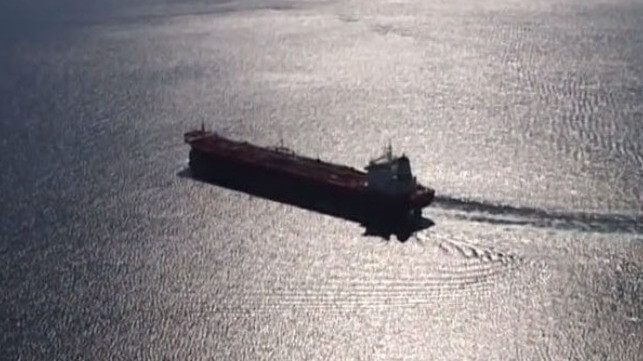
The United States announced on Wednesday that it had “seized” the Marinera, an oil tanker with links to Venezuela, in the North Atlantic. During the US pursuit of this boat, the Marinera changed its name (from the Bella 1) and swapped out its former flag for the Russian flag. Turns out, this isn’t a first: experts say that Moscow has agreed to lend its flag and its protection to other so-called “dark fleet” ships attempting to circumnavigate the US blockade.


Issued on: 09/01/2026 - 
By: The FRANCE 24 Observers/Lise KIENNEMANN


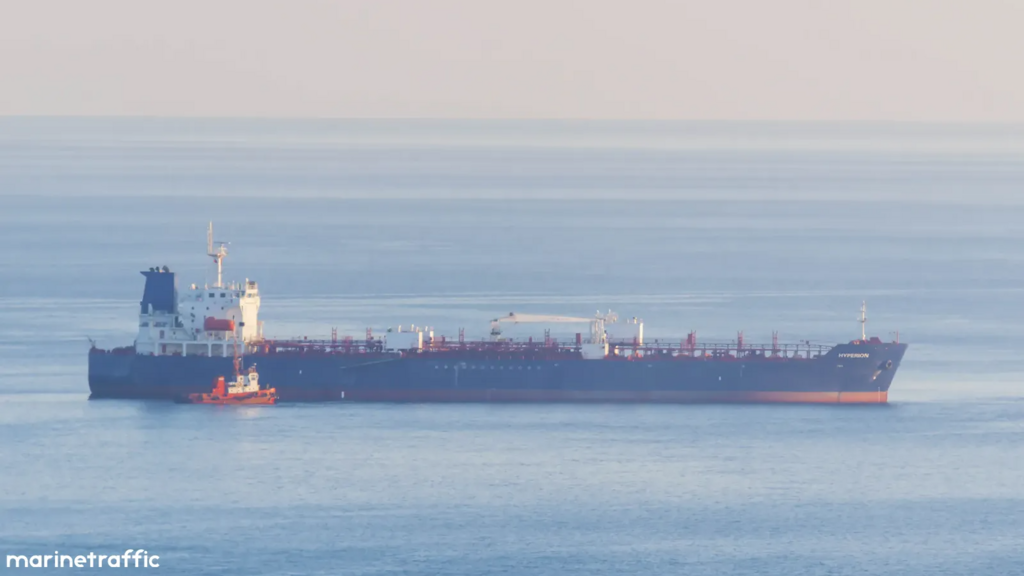
Just like the Marinera, the oil tanker Hyperion recently adopted the Russian flag. © MarineTraffic / Sergei Skriabin

The United States announced on January 7 that it had “seized” a Russian oil tanker with links to Venezuela as it sailed across the North Atlantic. This news is the latest twist in a drama that began late in December in the Caribbean.

The United States announced on December 21 that it would pursue the oil tanker, then known as the Bella 1, for trying to get around the blockade they imposed in mid-December on oil tankers under sanctions entering or leaving Venezuela.

The Bella 1 has been subject to US sanctions since June 2024 because of its apparent links to Iran and the Lebanese Shiite group Hezbollah. Maritime company Windward reported that the tanker had been participating in trading with Iran and Venezuela since 2021. Windward also tracked multiple instances of deceptive shipping practices.

TankerTrackers, a site specialised in maritime transport, reported that the tanker was not carrying oil when the United States began its pursuit. Analysts say that it was likely going to Venezuela to pick up oil.

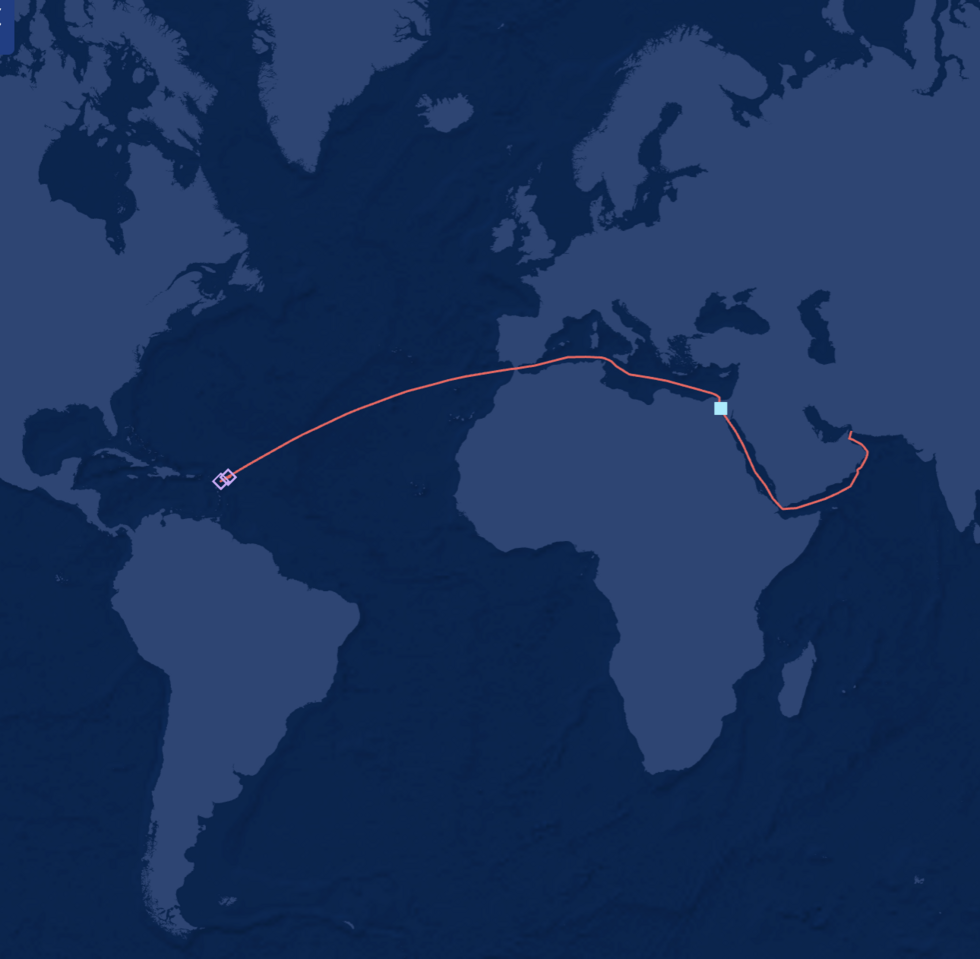
This is the path taken by the Marinera (formerly known as the Bella 1) between November 13 and December 17, 2025, when the ship stopped transmitting its location. © Global Fishing Watch

From 'false' flag to Russian flag

The US suspected the Marinera of being part of what’s called a dark or shadow fleet. These are fraudulent or unregistered vessels that smuggle goods that are illegal or subject to sanctions.

American authorities claimed that the tanker, which was flagged to Guyana, was “falsely flagged”. If a boat is stateless or flying under a false flag, then it is not protected under international law and can be boarded. The United States used this legal argument to seize two oil tankers in mid-December as well as the oil tanker M/T Sophia on Wednesday.

The Coast Guard said that they initially attempted to intercept the Bella 1, but it continued on its path.

American authorities interviewed by the New York Times said that the crew of the recently christened Marinera had painted a crude Russian flag on the side of the ship. An officer on the ship also made contact with the Coast Guard via radio to say that the ship was now flagged to Russia.

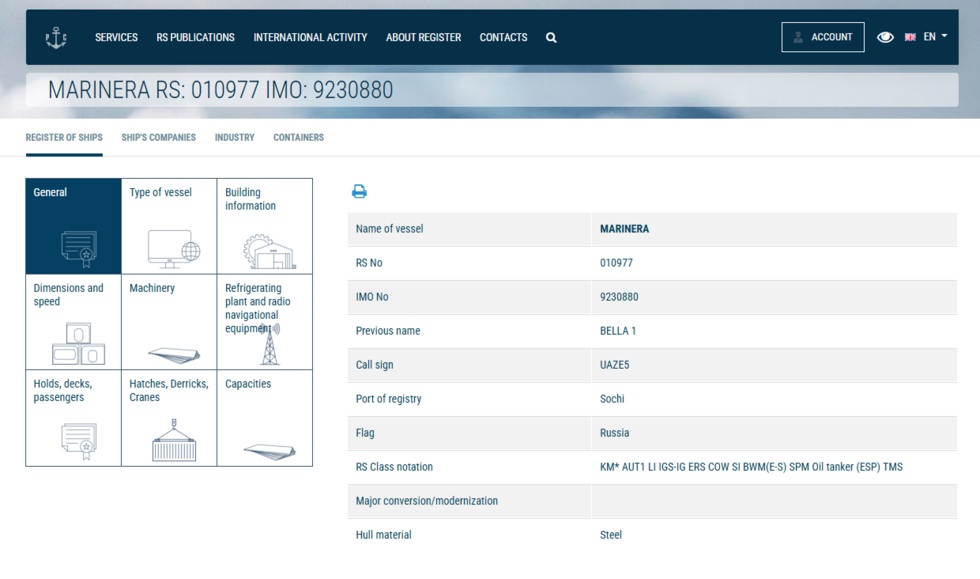
The oil tanker also now appears in the Russian maritime registry, under the name Marinera, with its home port listed as the Russian city of Sochi. The database Equasis also indicates that the ship’s owner and manager live in Russia.
The Marinera appears in the Russian maritime registry. © Russian maritime registry


The Russian government then sent a formal demand for the United States to end their pursuit of the ship, according to the New York Times.

An American official told the New York Times that the United States still considered the ship “stateless” because it was not flying a valid flag when it was approached for the first time by the Coast Guard.

Chase across the Atlantic Ocean

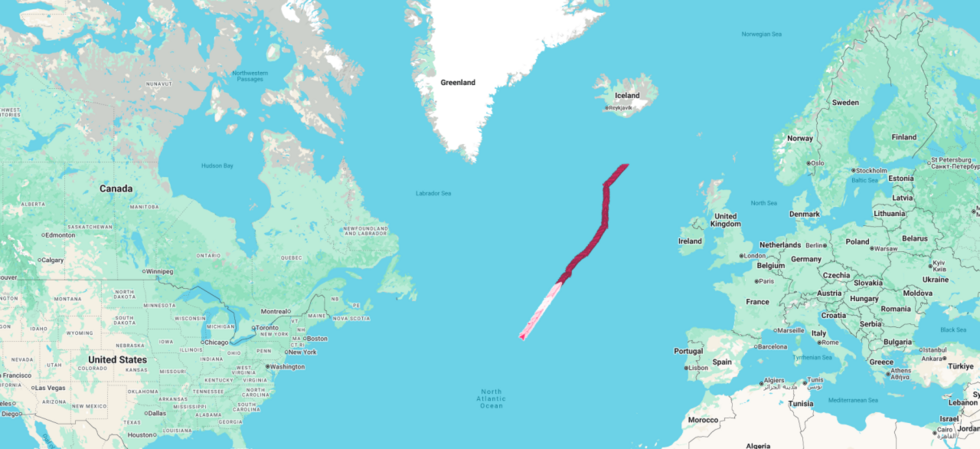
The oil tanker then headed northeast, setting out across the Atlantic Ocean. On January 7, it was located to the south of Iceland, according to information provided by Lloyd’s List Intelligence. A number of analysts interviewed by our team said they believed that the boat was heading towards a Russian port.

This map shows the Marinera’s trajectory between January 1 and 7, 2025. © Lloyd’s List Intelligence

In recent days, aviation data seemed to indicate that the Marinera was being closely surveilled by two American P-8 spy planes, who took off from Mildenhall air base in the United Kingdom.

“The vessel is being shadowed by a United States Coast Guard cutter, with supporting surveillance including an RAF Rivet Joint mission and RFA Tideforce operating in the area,” Martin Kelly, head of advisory at the British security company EOS Risk Group, told our team a few hours before the operation took place.

The RAF is an abbreviation for the Royal Air Force, the British Air Force. A Rivet Joint is a spy plane. And the RFA Tideforce is a refuelling ship that belongs to the RAF.

A video posted on January 6, 2026 by Russia Today, which was said to have been filmed by the crew of the Marinera, shows a US Coast Guard Patroller following them. It is impossible to know when and where this video was filmed.


'The United States cannot allow this to become a template for dozens of other sanctioned tankers'

The Bella 1 is not the only ship operating in Venezuela that has reflagged to Russia in recent days.

“Reflagging to Russia is increasingly being used by these tankers to allow them to continue operating and gain some sort of legitimacy and protection,” said Mark Douglas, a maritime analyst with Starboard Maritime Intelligence.

After having dropped off its cargo of Russian naphtha – used to refine crude oil – in Venezuela, the Hyperion oil tanker, which is also under sanction, dropped the false Gambian flag that it was operating under on December 25 and announced that it was now flagged to Russia, according to the publication gCaptain. It then managed to travel into the Atlantic Ocean, making it seem as if it had escaped American seizure.

The oil tanker the Premier also indicated that it had reflagged in late December, going from the Gambian flag to the Russian flag, according to Windward. On Wednesday, it was located in the Caribbean.

According to the New York Times, three other boats under sanction that were recently located in Venezuelan waters have reflagged to Russia in recent days. They are all now also listed in the Russian maritime registry.

“Over the past six months, a dozen or more of the darkest tankers operating globally have switched from open registries to Russia. This trend accelerated in December as the flag state emerged as a critical shield against drone strikes and vessel seizures,” Windward wrote.

Vessels also began to reflag to Russia in the Black Sea after Ukrainian drone attacks on oil tankers carrying false flags.

“This is ultimately about principle,” says Kelly. “The United States cannot allow this to become a template for dozens of other sanctioned tankers off Venezuela to evade enforcement by simply changing flags.”

After Venezuelan President Nicolas Maduro was arrested, US Secretary of State Marco Rubio said that the blockade on sanctioned oil tankers would remain in place.

The risk is also that other boats in the so-called dark or ghost fleet, operating in other regions, will also adopt this strategy.

“If the vessel doesn't get seized, then the remaining near 1,500 dark fleet tankers worldwide will resort to keeping a Russian flag handy in their closet,” said Samir Madani, co-founder of the site TankerTrackers.com, ahead of the US operation.
'The presence of Russian warships… significantly increases the risk of miscalculation and escalation'

However, an operation like the seizure of the Marinera is not without risk. The New York Times said Wednesday that Russia had sent a warship to escort the oil tanker.

Kelly explains:


“The presence of Russian warships ‘defending’ a vessel that now declares itself Russian-flagged significantly increases the risk of miscalculation and escalation.

The Russian warship will have specific rules of engagement and is unlikely to use force to oppose any boarding, but it may seek to disrupt or obstruct boarding operations, potentially through unsafe manoeuvring or using laser devices to target aircraft. Any Russian submarine nearby will highly likely conduct surveillance without playing an active part in the incident.”
'Russia has an interest in maintaining the shadow fleet in activity'

But why is Russia getting so involved? We spoke to Eric Orsini, global head of compliance at Lloyd's List Intelligence:


What you're seeing is sanctioned actors working together. They're forming their own little ecosystem.

Russia has been providing Venezuela with condensate or diluents [Editor’s note: like naphtha]. Venezuela's oil is heavy crude and it needs to be mixed or blended with diluents in order for it to be refined. So it’s in Russia's interest to continue the flow of their diluents to Venezuela, because Venezuela is buying it.

Russia has an interest in also keeping the shadow fleet on the water. The Marinera is a VLCC – a very large crude carrier, which has a lot of capacity to move oil. The more vessels that come out of the shadow fleet, the less capacity the sanctioned actors have to continue moving the oil and storing it.

It remains to be seen how Western countries will adapt to this new world.

“The reflagging will likely lead to an evolution of the approach taken to these vessels by the likes of Ukraine and the US as they consider what additional actions Russia might be willing to take to protect the tankers and the oil they carry,” concludes Douglas.