Showing posts sorted by date for query BINANCE. Sort by relevance Show all posts

Monday, February 23, 2026

THE EPSTEIN CLASS


UK journalist attacks America's 'culture of complete impunity'
February 21, 2026 

British police released former Prince Andrew on Thursday after 11 hours in custody, with his shocking arrest earlier in the day making him the first senior British royal to be arrested in nearly 400 years. Police are probing his connections to the deceased sexual predator Jeffrey Epstein and whether he shared classified government information with him while serving as a U.K. trade representative from 2001 to 2011. King Charles’ brother, now known as Andrew Mountbatten-Windsor after being stripped of his royal title, is the most high-profile figure in the U.K. to be implicated in a widening scandal over ties to Epstein, who died in a New York jail in 2019 awaiting trial on sex trafficking. Authorities did not reference sexual abuse allegations against Mountbatten-Windsor or Epstein’s sex trafficking case; Mountbatten-Windsor settled a lawsuit with Epstein survivor Virginia Roberts Giuffre in 2022 and has denied all wrongdoing.

Investigative journalist Carole Cadwalladr says this week’s arrest feels like a “rupture” in British society because the royals are seen as “sacrosanct” and rarely subjected to such treatment. “And in America, what are we seeing? We’re seeing this sort of culture of complete impunity, where it appears the law is not equal, where there are people who are above it.”


This is a rush transcript. Copy may not be in its final form.

AMY GOODMAN: This is Democracy Now!, Democracynow.org, the War and Peace Report. I’m Amy Goodman. We begin today’s show in London following the arrest of former Prince Andrew on Thursday. He was held in police custody for 11 hours before being released in the latest fallout from the release of the Jeffrey Epstein files. Andrew is the brother of King Charles and the son of the late Queen Elizabeth. The former prince is the first senior member of the royal family to be arrested in almost 400 years.

Police are investigating whether he committed misconduct in public office by sharing confidential government documents with Jeffrey Epstein while serving as U.K. trade envoy, a breach of the Official Secrets Act. King Charles has said he will give his “full and wholehearted support” to the investigation, saying “the law must take its course.” Andrew’s ties to Epstein have been known for years.

Virginia Roberts Giuffre, who died last year in an apparent suicide, said she was forced to have sex with the prince three times beginning when she was 17. On Thursday, Virginia’s brother Sky Roberts and his wife Amanda responded to the arrest of the former prince.

SKY ROBERTS: Moving forward, we don’t know but we we are hopeful. I think we’re very hopeful that this is the start of the domino effect. This is where the house of cards starts falling. And kudos to the U.K. for taking the first step. For saying, you know what? We are going to arrest somebody who is held to one of the highest esteems out there, somebody who was a former prince. I mean, this hasn’t been before, and so to know what we should expect, it’s really naive to say that we do. But we won’t stop. Virginia said it so clearly in her statements and I will say it again here today: We won’t stop until justice is served.

AMANDA ROBERTS: We are trailing too far behind in justice, especially when we are sitting on the mountains of information that we have. Whether this administration likes it or not, it is sitting at your doorstep. You do not have a choice now, OK? The world is looking at us to do the right thing here. And if they can’t do the right thing, they should resign.


AMY GOODMAN: That was Amanda Roberts and her husband Sky Roberts, the brother of Virginia Roberts Giuffre. We go now to London where we are joined by Carole Cadwalladr, award-winning investigative journalist whose Substack is How to Survive the Broligarchy. She gained international recognition for her exposé on the Facebook-Cambridge Analytica data scandal in 2018. Carole is also the co-founder of an independent news outlet called The Nerve launched with five former Guardian journalists. Carole, welcome back to Democracy Now!

First, this news of the last 24 hours that the former Prince Andrew, the brother of the king, was arrested on his 66th birthday. The picture of him as he was released after 11 hours, now under investigation with his homes being raided, is startling. It’s stunning. To say the least, a deer caught in headlights. Explain the significance of this moment for British society when a senior royal has not been arrested in, what, over 400 years.

CAROLE CADWALLADR: Hi Amy. Thanks so much for having me back. Yeah, it feels like a really significant moment in Britain. And almost a rupture, because the royals have been sacrosanct in Britain. They are treated with such reverence and respect by the British media. I think in all honesty, we didn’t see this coming because it just hasn’t happened before. So it was definitely a sort of incredible moment in Britain. That image that you refer to, that is splashed across every single newspaper in Britain this morning, across the tabloids. I think it is sort of indelible now, that photo. It is going to be a sort of a moment in time, I think.

But I think the thing that I would say is that this isn’t just an incredible moment in Britain. It is an even more incredible moment in America. Because we are the old country, we are the country with a monarchy, with absolute rule that you had to have a revolution to get away from. And yet here we are, arresting an only very recently former prince. And in America, what are we seeing? We are seeing this sort of culture of complete impunity where it appears the law is not equal, where there are people who are above it. So I think it is less a moment of reckoning for Britain, because we are doing the right thing. I mean, I think we are proud of it. It shows that we are equal before the law. I think in America, it is hugely embarrassing, it’s significant, and it should be a wake-up call.

AMY GOODMAN: Interestingly, the former prince, Andrew, was not arrested over assaulting this teenager, assaulting Virginia Giuffre. In her book Nobody’s Girl and when she was alive, she talked about how he knew she was underage because someone said to him, “Do you know how old she is? What’s your guess?” And he said, “17.” But he has been arrested for passing on information that could financially benefit Jeffrey Epstein. The same is the case with Peter Mandelson, who is the former U.K. ambassador to Washington, D.C. Very close to the prime minister, Starmer, leading to questions in British society, the possibility of the toppling of Starmer for not having Mandelson investigated properly. But he, too, was a trade envoy for Britain and he, too, now that these emails have come out, is being investigated for passing on financial information, something that really increased Epstein’s power over so many as he networked both bringing in underage girls and women to be assaulted in the United States or in the U.S. Virgin Islands, but also just creating this network of people that gained financially from knowing Epstein.

CAROLE CADWALLADR: Sorry, Amy, you are absolutely completely right there. The tragedy of it is the thing I think to really hang onto in this moment. As you say, the police did not arrest and question Prince Andrew for the alleged crimes which Virginia Giuffre retold in that book. I mean, it’s heartrending, really, because what if they had? What if she had been believed? What if there had been accountability while she was still alive? So I think the debt that we owe to Virginia Giuffre, her courage, her strength in telling this story, it is why we are here now. And it’s just a terrible, terrible indictment that it wasn’t because a woman’s word was sufficient for this investigation to take place; It was what on the surface of it are lesser, less significant crimes that we are now having sort of the wheels of justice turning.

AMY GOODMAN: Interestingly, as you are talking, Carole, we are showing that famous, famous photograph of Andrew, the man formerly known as Prince, with his arm around Virginia Giuffre standing next to Ghislaine Maxwell. I think it was in Ghislaine Maxwell’s apartment in London when she was first assaulted by the former prince. And you see a flash in the window reflected beyond them because Epstein is taking this picture on Virginia’s own camera. She asked for it—incredibly, prophetically—and this is what has taken him down.

You also have, here in the United States, Les Wexner, who is the former head of Victoria’s Secret, Limited, L Brands, being questioned at his Ohio mansion by the House Oversight Committee. Interestingly, no Republican went for that questioning even though when they put out the video yesterday I think there was a picture emblazoned across the video—”GOP oversight.” I want to go to the clip. You can hear Wexner’s lawyer, as he is being questioned by the congressmembers, saying, “I’ll effing kill you if you answer another question in more than five words.”

LES WEXNER: It was just regularly done.

MICHAEL LEVY: I will [bleeping] kill you if you answer another question with more than five words, OK?

LES WEXNER: [laughs]

MICHAEL LEVY: Answer the question. OK.

PERSON: A discrete question on a different topic.

AMY GOODMAN: I mean, amazing that we can hear this over the mic, the lawyer warning him. But this goes to a bigger point and it goes to the word, part of the title of your Substack, the Broligarchy. On the one hand you have Andrew being arrested, and in this country the man that bankrolled him, possibly to the tune of billions of dollars, how he had his mansion in New York, how he had his island in the U.S. Virgin Islands, and his mansions now being investigated, the Zorro Ranch in New Mexico, and using Ohio, the mention of Les Wexner. He could possibly maybe have had even this huge sex trafficking network that has led now to a sex trafficking investigation in as far as Latvia, and the former prime minister of Norway being investigated, two investigations in France being opened. But this, Les Wexner hearing this and having the U.S. Attorney General saying “There are no investigations, the case is closed,” even though they haven’t released another 3 million pages, and President Trump saying, “See? I’ve been exonerated.”

CAROLE CADWALLADR: Amy, you are so completely right. I think that if you don’t look at this story about Epstein and see that it is part of something much, much bigger, if you don’t connect it to the political moment that America is in and the absence of inquiry and leadership and actual accountability in any sense around this story—I wrote a piece and I said, “It’s the dog that doesn’t bark.” And if it doesn’t bark now, it is not going to bark when the midterm elections come and what many people I think see is going to be a sort of authoritarian assault on them. I think you don’t want to look back and look back at this moment and see that there is this moment in which Congress didn’t act, in which the press didn’t summon the necessary sort of fire and fury, and realize that, actually, it’s a bellwether, it’s a sign, it’s this culture of impunity.

And so I think that’s my sort of message from here in Britain, in this old class-ridden society that, as I say, you had to have a revolution to get away from. We are actually able in this moment to show that there is accountability, to show that people are equal before the law, and you are not. You no longer can. America is no longer the land of the free. Your constitution is breaking down in real time. And I think Epstein is such a symbol of this. And I think in exactly the same way that these women were not believed, that it took these files to come out for suddenly people to go, oh, actually, it turns out that it was not only true that it went to a far, far, far bigger scandal and story than we realized. It feels like a parallel moment in that you’re not actually believing what they are telling you now, what the story is telling you now. You are still in complete denial over it.

I am speaking here, as I say, from this vantage point in London and saying this should be the moment when you realize that—you know this thing, “The call is coming from inside the house”? That actually you really need to step up now. And if you cannot realize that this huge, vast, money laundering, international sex trafficking operation that involves every single institution in your country—it involves banks, it involves people who are part of the government, it involves people who are part of the press. It’s everywhere. And I know it must feel kind of overwhelming because it is so pervasive, but I think really the thing which is missing I suppose is this sort of leadership in being able to signal this and call it out and to demand that the steps are taken now.

AMY GOODMAN: Finally, we just have 30 seconds, but you just republished “The US Coup: one year on.” Explain why.

CAROLE CADWALLADR: Because, well, a year ago I published this article in which I put what I thought should have been the headline on the front pages of The New York Times which was, “It’s a Coup.” And I did that because historians of authoritarianism—Tim Snyder, Ruth Ben-Ghiat—they were calling it out. They were saying that the overturning of the rule of law and this sort of blitzkrieg of executive orders that Trump was doing, they said, “This is a coup.”

The thing which, the vantage point that I came from in my work of looking at the way that data is used, it was the assault by DOGE, the illegal assault by DOGE on the U.S. Treasury in which they illegally captured and data harvested the personal data of the entire U.S. population. Then they went to do that across the U.S. government. Now in the age in which we live, knowledge is power and data is knowledge, and that power was being concentrated in, as I said, this totally illegal data gathering operation. That for me is the foundation of a surveillance state. That is what we can see now coming into being. That is what is happening in Minnesota.

And I think it’s really important to mark these landmarks, that we are a year on from that moment and nothing has got better, everything has got worse. This is now consolidating and you’re now in the final stretch. You now have—it is months now, not years, in terms of the midterm elections, really. Is that going to be a performative election in which it is going to look like democracy as it is in Hungary, as it is in Turkey? Or do you have a chance now to save your country? I think it is really, really uncertain. There is still time, but you have to recognize the moment that you’re in, and I think there’s a lot of people out there who still aren’t.

Carole Cadwalladr, thank you for being with us, award-winning investigative journalist. We will link to your Substack, How to Survive the Broligarchy:https://broligarchy.substack.com/. Gained international recognition for her exposé on the Facebook-Cambridge Analytica data scandal in 2018. Co-founder of independent news outlet The Nerve, launched with five former Guardian journalists.


OPINION
If Prince Andrew can be arrested, so can King Trump


(REUTERS)

February 19, 2026 
ALTERNET


Police in the United Kingdom have arrested Andrew Mountbatten-Windsor, the former Prince Andrew and Duke of York, on suspicion of misconduct in public office—after the disclosure of emails between Mountbatten-Windsor and the late disgraced banker Jeffrey Epstein. As I write this, Mountbatten-Windsor remains in custody.

We don’t know yet the specific charges. But we do know that the late Virginia Giuffre, an Epstein victim, accused Mountbatten-Windsor of raping her.

We also know that Mountbatten-Windsor was the UK’s trade envoy between 2001 and 2011, and appears to have forwarded to Epstein confidential government reports from visits to Vietnam, Singapore, and China, including investment opportunities in gold and uranium in Afghanistan.

Prime Minister Keir Starmer says, “No one is above the law.” The family of Virginia Giuffre says, “No one is above the law, not even royalty.” Britain’s chief prosecutor says, “No one is above the law.”

Instead of bureaucracies, America now has a royal entourage. Instead of institutions, we now have royal prerogative.

All of which raises awkward questions about the people implicated on this side of the pond, including the person in the Oval Office who loves to be treated like a king, and who appears in the Epstein files 1,433 times (that is, the files that have been released so far). Prince Andrew appears in them 1,821 times.

America likes to believe we gave up kings almost 250 years ago and adopted a system in which “no one is above the law.”

But President Donald Trump’s foreign policy has become a personal tool for him to channel money and status to himself and his closest associates. Since the 2024 election, the Trump family’s personal wealth has increased by at least $4 billion.

As with the British royalty of the 16th century, it’s all personal with Trump—all about expanding his power and enlarging his and his family’s wealth. Proceeds from the sale of Venezuelan oil? “That money will be controlled by me,” he says. The gift of a plane from Qatar? “Mine.” Investments by Middle-East kingdoms in his family’s crypto racket? “Perfectly fine.”

Like the British royalty of yore, King Trump has arbitrary power. He raises Switzerland’s tariff from 30-39% because its former president Karin Keller-Sutter “just rubbed me the wrong way.” He imposes a 50% tariff on Brazil because Brazil refused to halt its prosecution of Trump’s political ally, the former Brazilian President Jair Bolsonaro, who was found guilty of plotting a coup. Vietnam fast-tracks approval of a $1.5 billion Trump family golf course at the same time it seeks to reduce its tariff rate.

Trump claims that Greenland is “psychologically needed,” although the United States already has a military presence there and an open invitation to expand its bases. He muses about making Canada the “51st state.” These are throwbacks to the 16th-century age of empire.


***

Meanwhile, Trump has created a system of tribute and allegiance that would make Henry VIII jealous.

Apple’s Tim Cook delivers a gold-based plaque and a donation to Trump’s planned ballroom. Swiss billionaires bring a gold bar and a Rolex desk clock to the Oval Office. Jeff Bezos backs a vapid movie of Melania and hands her a check for $28 million.

Trump pardons Changpeng Zhao, the billionaire mogul who pled guilty to money-laundering violations in 2023, after which time Zhao’s Binance digital-coin trading platform becomes the engine of the Trump family’s crypto business, World Liberty Financial.

King Trump was evidently involved in Jeffrey Epstein’s nefarious doings. We don’t know exactly how because there’s been no criminal investigation. But shouldn’t there be?

Elon Musk’s humongous quarter-billion-dollar contribution to Trump’s 2024 campaign earns Musk a dukedom—a “department of government efficiency”—and the keys to the kingdom in the form of sensitive US Treasury Department software systems used to manage federal payments.

But when the Duke of DOGE starts becoming more visible than King Trump, the king banishes him and revokes his dukedom. When the banished Musk begins openly criticizing Trump, the king threatens to cut off Musk’s head in the form of cutting him and his SpaceX off from valuable government contracts. This puts an end to Musk’s impertinence.

The new TikTok (on which Trump has more than 16 million followers) will continue operating in the United States—but now with the financial backing of Trump ally Larry Ellison’s Oracle;Trump’s allied Emirati investment firm MGX (which has already invested in the Trump family’s cryptocurrency company); and Silver Lake, teamed up with the private equity firm founded by Trump’s son-in-law Jared Kushner.

Trump allows Nvidia to sell chips to the United Arab Emirates and Saudi Arabia and extends military guarantees to Qatar—all of which have invested in the Trump family empire. (Emirati-backed investors plowed $2 billion into World Liberty Financial.)

Instead of national glory, Trump demands personal glory—to get the Nobel Peace Prize, to put his name on the Kennedy Center and Penn Station, and other major monuments and buildings.

If his commands are not met, he punishes. Because Norway didn’t give him a Nobel (it wasn’t Norway’s to give anyway), he “no longer feels obliged to think only of peace.” Because performers refuse to appear at the “Trump-Kennedy” Center, he shutters it.

Instead of bureaucracies, America now has a royal entourage. Instead of institutions, we now have royal prerogative. Instead of legitimacy based on the will of the people, there’s divine right (“I had God on my side,” “God was protecting me,” “God is on our side”).


***

We will march against King Trump on the next “No Kings Day” on March 28—hopefully making it the biggest protest in American history.

But the arrest of the former Prince Andrew raises an issue that goes way beyond protesting and marching. King Trump was evidently involved in Jeffrey Epstein’s nefarious doings. We don’t know exactly how because there’s been no criminal investigation. But shouldn’t there be?

Pam Bondi obviously won’t investigate Trump because she’s part of King Trump’s court. But what about a group of state attorneys general?

Trump has also been enriching himself and his family through his public office, violating multiple laws about conflicts of interest.

If the UK can arrest the former Prince Andrew on evidence of such wrongdoing, why shouldn’t America arrest King Trump? If no one is above the law in the UK, not even royalty, presumably no one is above the law in the US, not even a president.

Pam Bondi obviously won’t investigate Trump because she’s part of King Trump’s court. But what about a group of state attorneys general?

Almost 250 years after we broke with George III, the question must now be faced: Are we a monarchy or a nation of laws?

Robert Reich is a professor of public policy at Berkeley and former secretary of labor. His writings can be found at https://robertreich.substack.com/.


There's a reason why powerful people in America remain above the law


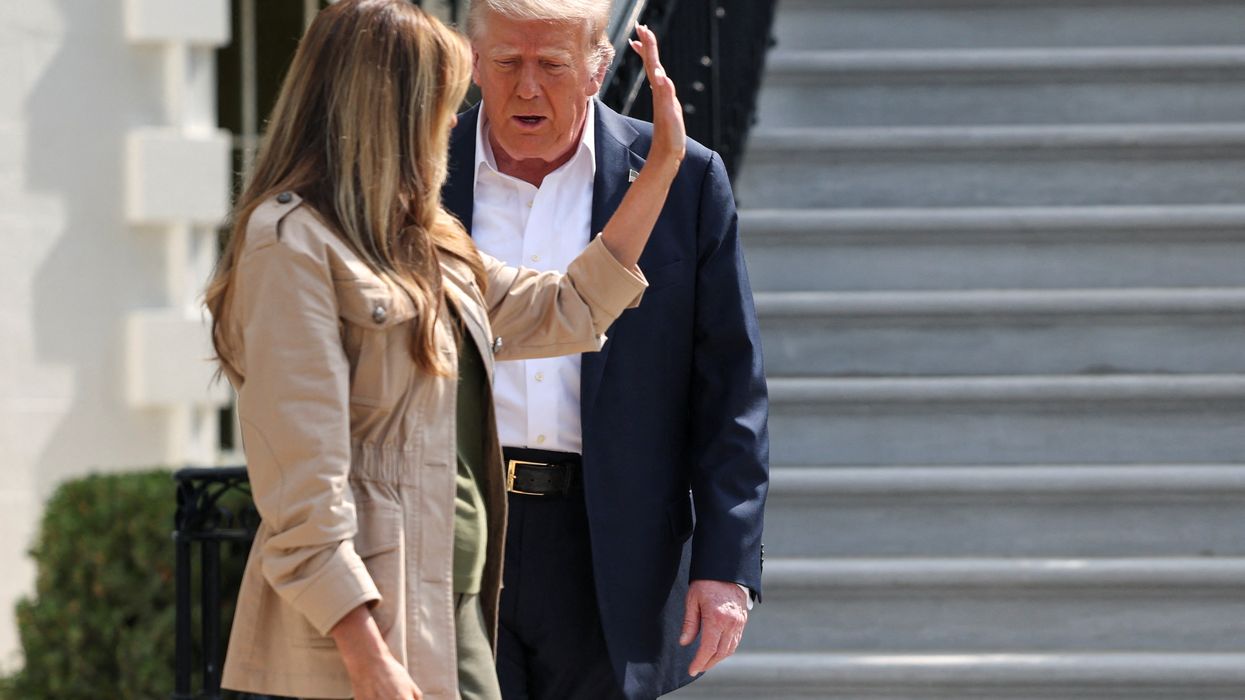
U.S. President Donald Trump and lady Melania Trump depart for travel to Texas to tour areas affected by deadly flash flooding, from the South Lawn of the White House in Washington, D.C., U.S., July 11, 2025. REUTERS/Jonathan Ernst

February 19, 2026  
ALTERNET

Here in America, before the royal formerly known as Prince Andrew was arrested in the UK, Reuters reported the results of a new public survey. Ipsos, the pollster, found nearly 70 percent of Americans believe the system is rigged, allowing elites to act with impunity.

Some 69 percent of respondents in the four-day poll, which concluded on Monday, said their views were captured "very well" or "extremely well" by a statement that the Epstein files "show that powerful people in the U.S. are rarely held accountable for their actions."

Then came news this morning of Andrew Mountbatten-Windsor, the brother of King Charles III, being arrested “on suspicion of misconduct in public office” – what American media might call insider trading.

Andrew allegedly shared “confidential trade reports” with Jeffrey Epstein in 2010 when the former prince was the UK’s special envoy for international trade. Their correspondence was part of the latest cache of Epstein-related emails released by the US Department of Justice.

The news appears to be the beginning of a kind of accountability. There’s probably enough evidence for British authorities to bring a massive sex-crimes case against Andrew. But that would be devastating to the king’s image. Better to bring Andrew up on discrete and boring white collar crimes than risk greater public scrutiny of who in the royal family knew about his reputed predilection for underaged girls.

In other words, it’s justice through the backdoor, if you can call it justice, but even that is more than anyone can say in America.

In Europe, “heads are rolling over the Jeffrey Epstein revelations,” according to Politico earlier this month. A prominent diplomat in Norway was suspended. A member of the British House of Lords was forced to resign. Andrew can no longer be called the Duke of York.

The British prime minister apologized for hiring Lord Peter Mandelson as ambassador to the US after it was revealed that Mandelson, in addition to keeping up his relationship with Epstein after Epstein’s 2008 conviction, gave him “sensitive government information.”

But the fallout faced by political elites over their association with a convicted sex offender and alleged child-sex trafficker has stood in contrast to the near-total absence of accountability in America. The taint of Epstein can rock the European continent, but not American elites, especially those close to the president of the United States.

And, per Reuters, Americans are noticing the difference. We don’t agree on much of anything, but a vast majority of us agree “powerful people in the US are rarely held accountable for their actions”

Here, I want to suggest a few things.

One, that this and other polls point to a growing awareness of the gathering unfairness that has shaped American life since at least the 2007-2008 financial crisis and proceeding Great Recession.

Two, that this awareness has been gaining momentum over those years and has now reached a tipping point. Data journalist G Elliott Morris said the new swing voter is an “anti-system voter.” In his latest, he cites new research identifying “a key bloc of swing voters who distrust both parties, believe elites are corrupt and think the political system is rigged against people like them.”

Third, that a majority, or a near-majority, now equates unfairness with Epstein and is opposed to a rigged system that rewards elites, including Donald Trump, while despoiling everyone else.

I don’t think voters have a full understanding of the various forces bearing down on them. But unlike when we had mostly abstractions to argue for change, we now have, for the first time in the 21st century, a human face to put on an inhuman system rigged against the people.

Here’s how US Senator Jon Ossoff put it recently:

“Now you remember, we were told that maga was for working-class Americans. But this is a government of, by and for the ultra rich. It is the wealthiest cabinet ever. This is the Epstein class” (my italics).

He went on:

They are the elites they pretend to hate. Prices are up. Jobs are going away. Medicaid and school lunches are slashed. Nursing homes are getting defunded. If you’re Steve Bannon and your pitch was Trump for “the forgotten man and woman,” how do you sell any of this?

Trump was supposed to fight for the working class. Instead, he’s literally closing rural clinics and hospitals to cut taxes for George Soros and Elon Musk. He was supposed to end globalist world police foreign policy. Instead, we’re doing war-for-oil and nation-building again, and threatening to conquer Greenland. He was supposed to “drain the swamp.” Instead, this is the most corrupt administration of all time and everybody knows it. Everybody knows it.

Will there be justice for Epstein’s victims? Will the elites who conspired to bring us despoliation face a jury? Frankly, I doubt it. In South Korea, justice means leaders of insurrections go to prison for life. Here, it means they get criminal immunity to continue their insurrections.

That said, there is some hope. As the Democrats prosecute their political case against the president, binding him and his allies ever more tightly to Jeffrey Epstein, they are probably going to end up grinding to dust the reputations of elites associated with his crimes.

For instance, Les Wexner. The billionaire former owner of Victoria’s Secret was named in the Epstein files as a “co-conspirator,” though he never faced criminal charges. Epstein managed his fortune until nine months before his 2008 conviction on sex-with-minors charges. This week, House Democrats deposed Wexner as part of their investigation.

This is what Robert Garcia, ranking member of the House Oversight Committee, said about Wexner: “We should be very clear that there would be no Epstein island. There would be no Epstein plane. There would be no money to traffic women and girls. Mr. Epstein would not be the wealthy man he was without the support of Les Wexner.”

With sufficient time, Les Wexner’s reputation could become collateral damage in the Democrats’ larger fight against Trump and his party.

That’s not enough justice. No one should be satisfied.

But like the white-collar charges against Andrew for giving Epstein secret trade reports, it is the beginning of a kind of accountability.


'Quick to defend your pal': Piers Morgan faces pushback over Trump-Epstein defense


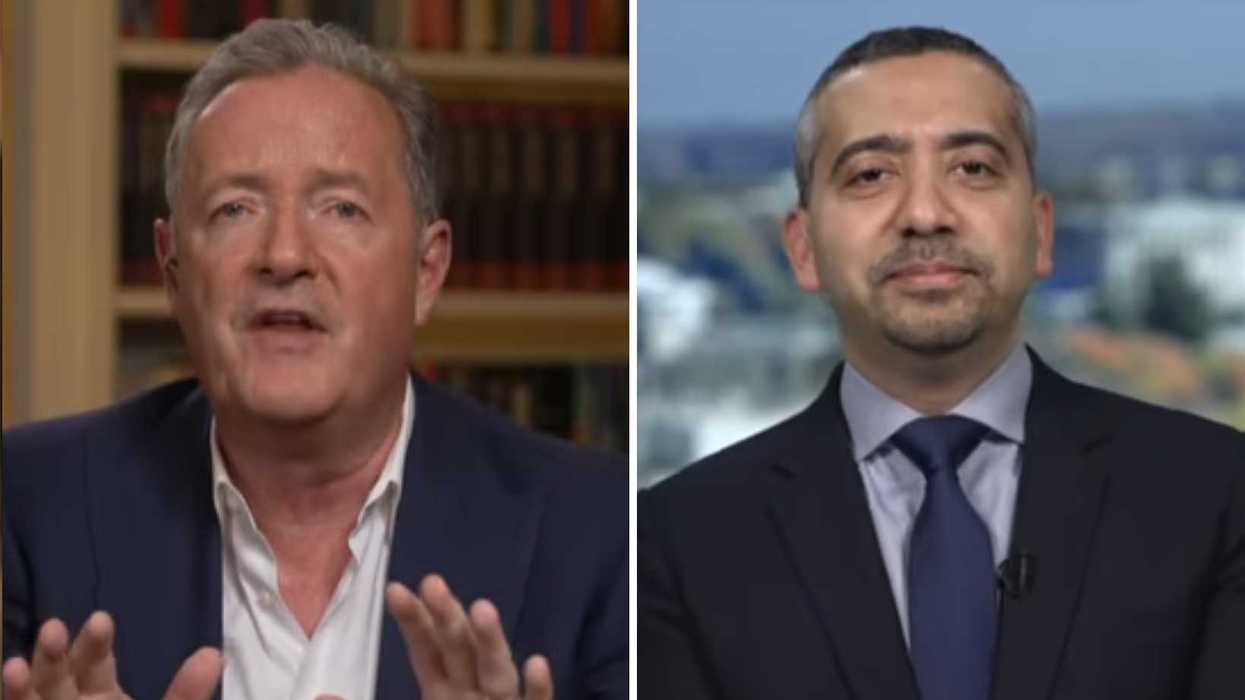
British Broadcaster Piers Morgan and Zeteo Founder Mehdi Hassan
 (YouTube Screengrab)
February 19, 2026
ALTERNET

Zeteo founder Mehdi Hassan battled British conservative Piers Morgan into agreeing that the U.S. Justice Department must investigate the connection of President Donald Trump to his close friend, convicted sex-trafficker Jeffrey Epstein.

Hassan pushed Morgan to grudging agreement after pointing out the numerous times Trump lied about the facts of his relationship with Epstein.

“Donald Trump travelled on Epstein’s private jet many more times than has previously been reported or that we were aware: That’s an email from one of his own DOJ lawyers in 2020,” Mehdi told Morgan. “Trump lied, Piers, when he said he ‘never’ went on the plane. He went on the plane eight times. We know for example that Epstein wrote in 2011 that ‘Donald Trump spent hours at my house with a victim.’ He referred to Trump being at his house as ‘the dog that hasn’t barked.’ He said in 2019 that Trump knew about the girls.”

“Now, Epstein could be lying,” added Hassan. “He was a horrible convicted sex offender but the point is we’ve not had full investigations. The media has barely touched this, Piers. There’s been a lot of coverage of Prince Andrew … Peter Thiel and Elon Musk and all sorts of people … but if this was any other president or politician this would be a huge scandal.”

Morgan pointed out that there is no outright evidence of Trump’s criminality, however much the president’s name saturates the Epstein files.

“Oh, I agree that we haven’t got evidence of criminality,” agreed Hassan, before pulling out a 21-page FBI PowerPoint presentation entitled: “Prominent Names.”

“Donald Trump’s at the top here with two allegations on there. I’m not saying there’s a proven allegation, but the idea that the American public’s not even familiar with those allegations [we in the media] need to be talking amore about what a huge scandal this is and how many lies have been told by the people in power. Not just Donald Trump,” Hassan said, adding that “I can no longer just laugh at people who come up with conspiracy theories anymore.”

Morgan conceded that he also “would be prepare to believe any conspiracy theory related to the Epstein scandal because so much of it is actually coming true.”

“Although you’re quick to defend your pal Donald Trump, who was close to him,” Hassan quipped.

“I’m only quick to defend him about one part of it,” insisted Morgan, adding that “a lot of stuff in those files that are clearly fantastic and malicious.”

“And there’s A lot of it is also redacted, Piers, so how do we know?” Hassan said “… There hasn’t been a full investigation with [FBI Director] Kash Patel and [US AG] Pam Bondi shutting it down. Why are they shutting it down?”

“I agree! Buddy, you’re preaching to the choir,” Morgan said, adding “I always feel a bit disconcerted when we agree.”


'Just read the files!' Dem lawmaker scolds irate host over Trump-Epstein ties

Alexander Willis
February 22, 2026  
RAW STORY


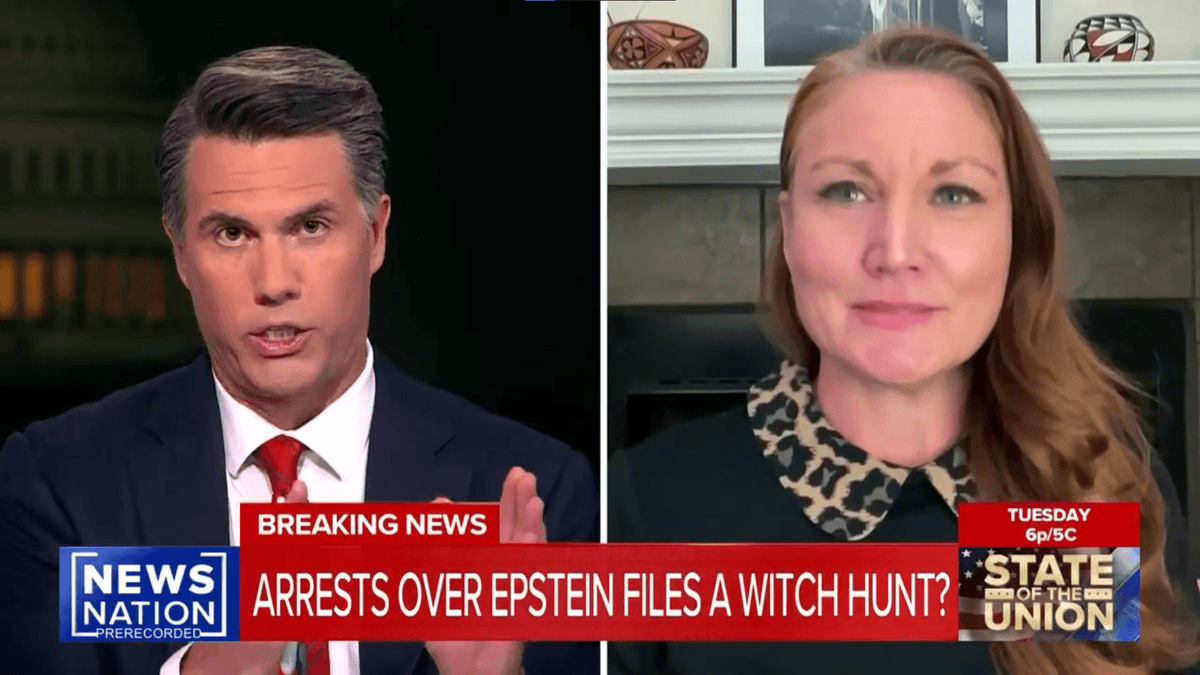
Rep. Melanie Stansbury (right) appears on News Nation with Leland Vittert (left), Feb. 20, 2026. (Screengrab / News Nation)

Rep. Melanie Stansbury (D-NM) held her own in a recent interview with NewsNation’s Leland Vittert in defending her calls for accountability with respect to President Donald Trump and the serious allegations leveled against him involving Jeffrey Epstein.

Stansbury was confronted Friday by Vittert over a social media post she made last week that referenced the recent arrest of Andrew Mountbatten-Windsor, the former British prince who was briefly jailed over his past ties to Epstein.

“If a Prince can be held accountable, so can a President,” Stansbury wrote in a social media post on X last Thursday.

“What crime should Donald Trump be charged with?” Vittert asked Stansbury in an aggressive tone, as seen in a clip of the exchange that went viral on Sunday.

“Donald Trump was investigated by the FBI for abuse of a minor, and there are multiple statements from witnesses that the FBI took as tips, and they investigated as allegations,” Stansbury said. “Those, as far as we know, were never taken to the fullest extent of their investigation.”

Vittert, visibly frustrated, continually tried to interject as Stansbury continued speaking, interjections that rose to the level of shouting. In response, Stansbury offered Vittert some advice.

“Sir, I didn’t come on your program to argue. I came to present the facts to the American public," she said. "The files are there. I don’t have to argue with you on the air. Just go read the files, my friend!”


A key Epstein associate quit her job but evades real scrutiny. Why?

John Casey
February 22, 2026
RAW STORY

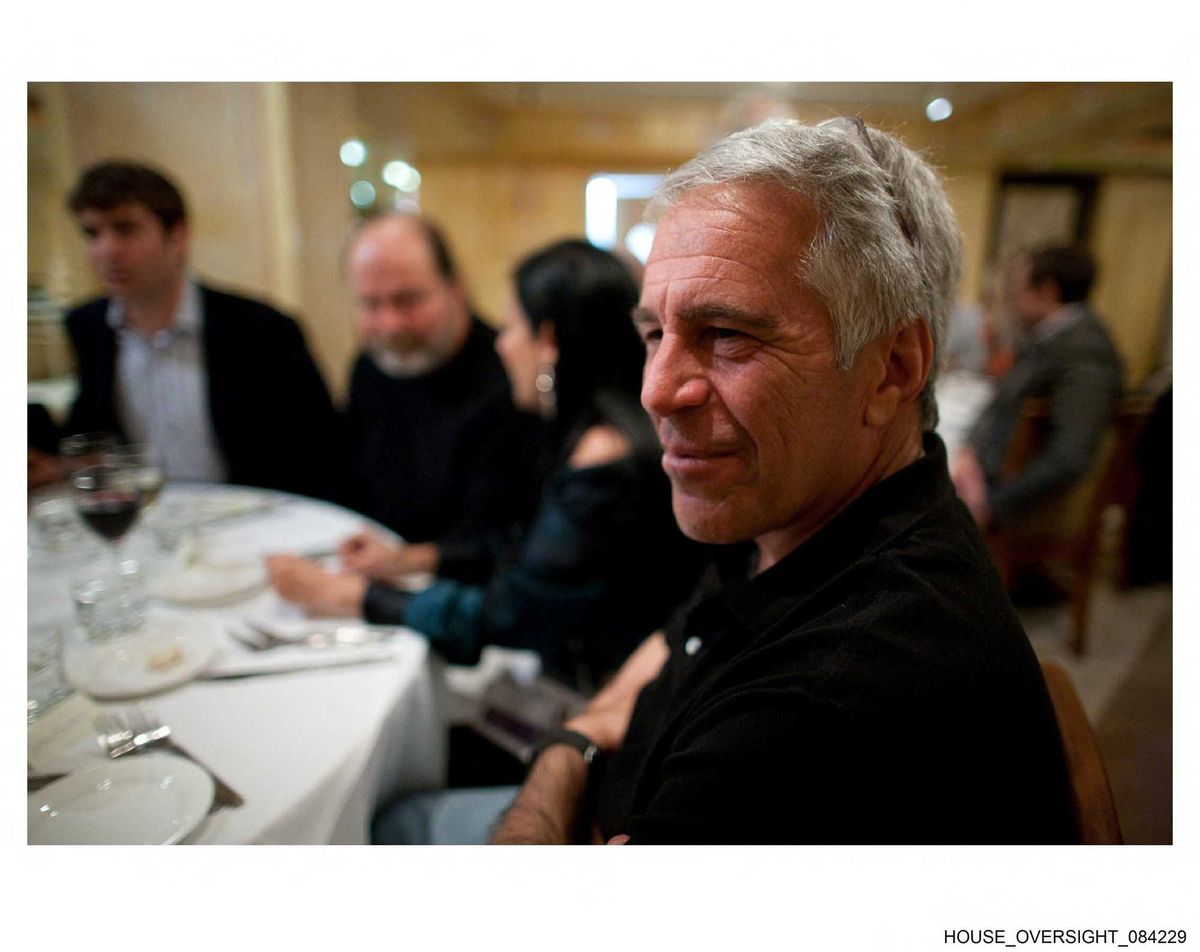
Jeffrey Epstein is seen in an released by House Oversight Committee Democrats. Handout via REUTERS

Working in corporate America for nearly three decades, I learned that the most feared person in any organization isn’t necessarily the CEO. It’s the chief counsel. They’re the ones who know where the bodies are buried.

That’s why one name in the Epstein files has consistently given me pause. Perhaps more than anyone besides Ghislaine Maxwell, Epstein's convicted sometime partner, this person may know where the proverbial bodies are buried. Certainly her association with the late financier and sex offender has proved close enough that she was prompted to quit as chief counsel to one of the most powerful financial firms on the planet — though shockingly, she will still serve until June.

For years, the Epstein narrative has centered on men: a parade of shielded billionaires, aging politicians, and pampered royals pretending they didn’t know the man was a child predator. Their excuses would be laughable if the subject weren’t so serious.

No one enabled Epstein like Maxwell, chief architect of his evil. But the latest — and shockingly, perhaps final — tranche of released Department of Justice files revealed a more sophisticated adjunct to Epstein’s depravity: Kathryn Ruemmler.

Ruemmler wasn’t a fringe associate angling for a free ride on a private jet. She was Barack Obama’s White House Counsel, the lawyer for the office of the presidency, charged with safeguarding the constitutional integrity of the executive branch. After that, she became Chief Legal Officer at Goldman Sachs, arguably the most influential investment bank in the world.

By any measure, Ruemmler reached the pinnacle of the American legal establishment.

Yet emails from a period between those posts, when she was in private practice, show her gushing over “Uncle Jeffrey” and his gifts: luxury handbags, Fendi furs, Bergdorf Goodman cards.

Though she has insisted the connection was strictly professional, the emails paint a different picture.

She said Epstein was “like another older brother.” They exchanged dozens of messages, ranging from dating advice to crude jokes.

This was not cold legal counsel to a problematic client. It was a high-powered attorney cozying up to a convicted sex offender. For what? Social access? Designer goods? Proximity to power? She had all of that. It is beyond belief that a lawyer of her stature would associate with someone she knew to have pled guilty to a state charge of soliciting prostitution from someone under 18.

It gets worse.

Wall Street Journal report details a 2016 episode involving French modeling agent Jean-Luc Brunel. Brunel was reportedly prepared to cooperate with federal authorities and testify against Epstein. Epstein alerted Ruemmler that a friend of Brunel was seeking $3 million to keep him quiet.

Ruemmler, the Journal reported, asked Epstein to explain, then when he did, said she was about to talk to an Epstein lawyer in Washington, D.C.

Brunel soon went “dark.” He would die in jail in France. Epstein remained free for three years, before dying while jailed himself.

David Boies, a lawyer for Epstein’s victims, told the Journal the Brunel episode “set us back a couple of years.”

“We know from our lawsuits that there were more than 50 girls that were trafficked after this,” Boies said.

A spokesperson for Ruemmler told the Journal: “This was another instance of Epstein attempting to engage Ms. Ruemmler on a matter about which she had no knowledge, and she appropriately directed him to his legal counsel.”

Ruemmler, the Journal added, “has said she never represented Epstein and regretted her association with him.”

Epstein’s D.C. lawyer told the paper he never talked to Ruemmler or Epstein about Brunel, though he did say he scheduled a call with Ruemmler on the day in question to talk about “quash[ing] a subpoena directed at Epstein.”

So many questions remain. Why would a former White House Counsel even respond to a convicted sex offender seeking the silence of a key witness? Why has Ruemmler not faced questioning herself?

The concerns don’t end there. While serving in the White House, Ruemmler shared non-public information with Epstein about the 2012 Secret Service prostitution scandal and even allowed him to review draft responses to journalists.

A convicted sex offender as a sounding board on ethics breaches. Let that sink in.

The DOJ has long known about Ruemmler’s association with Epstein. Yet she is untouched, bar announcing her resignation from Goldman Sachs. If anyone needs an example of how the rich and powerful evade scrutiny in this saga, look no further.

This represents a staggering betrayal of public trust. For elites, the law often appears less a boundary, more like a lever, something a ridiculously meticulous and unscrupulous person can manipulate.

Now comes what might be called the “Goldman Sachs Golden Pass:” a carefully timed resignation, effective months from now. She says media attention has become a “distraction” — that familiar phrase that signals an implication of guilt.

The Epstein case has always raised disturbing questions about accountability. Ruemmler’s role adds another layer. When you’ve served as White House Counsel, you aren’t being asked to fix parking tickets. You’re consulted because you understand systems of power, how to navigate them at the caller's behest.

Ruemmler may have been among the most consequential figures in Epstein’s orbit. She operates at the intersection of law, politics, and finance. She knows where secrets reside and how to keep them buried.

The emails we have, the “Uncle Jeffrey” familiarity and the gifts, suggest closeness that demands scrutiny. Her involvement in the Brunel episode should be investigated too.

If she were compelled to testify, she might well invoke the Fifth Amendment, as Maxwell recently did. In such a situation, she would prove cut from the same cloth as Maxwell and Pam Bondi, women who defy every fiber of human decency by ignoring the hollowed-out lives and desperate pleas of Epstein’s victims.

The DOJ needs to stop treating Ruemmler like a prestigious colleague and start treating her like what the Epstein files suggest: an associate of a monster, maybe also an advisor.


John Casey was most recently Senior Editor, The Advocate, and is a freelance opinion and feature story writer. Previously, he was a Capitol Hill press secretary, and spent 25 years in media and public relations in NYC. He is the co-author of LOVE: The Heroic Stories of Marriage Equality (Rizzoli, 2025), named by Oprah in her "Best 25 of 2025.”


Thursday, February 05, 2026

THE GRIFT
Why President Trump’s latest crypto scandal could spell disaster for the blockchain industry

Leo Schwartz
Tue, February 3, 2026 
FORTUNE


Just over a year ago, I stood in a gilded Washington, D.C. ballroom during inauguration weekend, surrounded by the blockchain industry’s top executives and investors. They had traded in their hoodies for tuxedos and gowns, celebrating the ascension of the first “crypto president,” Donald Trump, who had embraced the once-renegade sector on the campaign trail. But halfway through the night, whispers began spreading through the crowd that Trump, who was not in attendance, had launched his own memecoin. Around the end of a DJ set by Snoop Dogg, the Trump coin had crossed $1 billion.

Some of the shrewder members of the audience immediately clocked what was happening. Trump, who has made a career out of branding everything from casinos to steaks to unaccredited colleges, was doing the same with crypto. Would Trump’s latest business venture go the way of Trump Tower or Trump University?

As we quickly found out, the quality of the Trump family’s crypto endeavors was almost a red herring (though we have reported closely on it, including in my colleague Ben Weiss’s terrific new feature on American Bitcoin). Instead, ethics watchdogs have argued that Trump has used his blockchain businesses as a way to sell access. But unlike concerns during his first term that foreign dignitaries could book rooms in Trump hotels, which taught the term “emoluments” to millions of Americans, now anyone with an internet connection could effectively wire Trump millions of dollars by setting up a digital wallet and reap the rewards. His top memecoin holders enjoyed a private audience with the president last May, though they weren’t all pleased by the food they were served.

In hindsight, those ethics concerns also look quaint. On Saturday night, the Wall Street Journal published a bombshell report that two lieutenants to a member of the Abu Dhabi royal family signed a contract to funnel $500 million into World Liberty Financial, the Trump family’s crypto platform, in exchange for a 49% ownership stake, just days before his inauguration. As the Journal plainly stated, this was something unprecedented in American politics: “A foreign government official taking a major ownership stake in an incoming U.S. president’s company.” And just a few months later, the Trump administration granted the United Arab Emirates access to advanced U.S. chips despite widespread security concerns (though a World Liberty spokesperson told Fortune that the deal had nothing to do with the administration’s actions on chips).

As the shockwaves of the scandal reverberate, an awkward question lingers: Is Trump bad for blockchain? The industry spent hundreds of millions of dollars on the 2024 election, culminating in the coronation of Trump, who has championed digital asset regulation, hosted summits, and appointed czars. But now, the landmark Clarity Act is stalled in the Senate as Democrats call for ethics provisions that would prohibit the president from profiting off crypto holdings, and that groundswell of opposition is only likely to grow. And despite Trump’s cheerleading, Bitcoin prices are nearly at their lowest price in a year, with many retail traders staying away.

For many Americans, crypto is now inextricably linked to the Trump family. Be careful what you wish for.

Merger madness…SpaceX completed a long-rumored acquisition of xAI, both Elon Musk companies, in a stunning deal that could set the joint venture up for one of the largest IPOs in history by market value. This comes months after xAI acquired X, another Musk venture, in a $33 billion, all-stock deal, and a month after Tesla revealed it had invested $2 billion in xAI. According to reporting in Bloomberg, the new deal will lead to a combined enterprise value of $1.25 trillion. You can read all about it here.

Leo Schwartz
X: @leomschwartz
Email: leo.schwartz@fortune.com

This story was originally featured on Fortune.com

Trump Meme Coin’s First Year Leaves Crypto Policy in Limbo


Vismaya V
January 18, 2026

It was a Friday night bombshell that nobody saw coming.

Three days before his second inauguration last January, President Donald Trump's social media accounts lit up with news of the launch of Official Trump (TRUMP), a Solana-based meme coin bearing his name and political brand.

The token jumped to a $10 billion market cap within hours, reaching a peak of $73 and sending degen traders into a frenzy, triggering more than 8 million requests per minute that overwhelmed Phantom Wallet’s infrastructure.


A year on, and the TRUMP token is trading just below $5, down about 93% from its all-time high, with a market cap exceeding $987 million, according to CoinGecko data.

As TRUMP turns one, conflict-of-interest questions remain unresolved—the Trump family continues to run multiple crypto ventures while the President is in office, and Democrats increasingly cite his personal enrichment as a reason to block digital asset reform.

"Trump's meme coin launch has done more harm than good to the industry as his political opponents are citing his personal gains from the meme coin launch as a reason to block or slow down the crypto's legislative process," Peter Chung, head of research at Singapore-based Presto Labs, told Decrypt. "It's an unnecessary distraction."

Trump’s crypto conflicts have dominated debate and even delayed the passage of the stablecoin GENIUS Act.

In May, Rep. Maxine Waters (D-CA) led a Democratic walkout over “Trump’s crypto corruption” in a bid to force divestment language into the bill.
Crypto connections

The president's crypto connections stretch from the meme coin to World Liberty Financial and its USD1 stablecoin.

His family's crypto empire has mushroomed to generate more than $1 billion in profits, according to his son, Eric Trump, who told the Financial Times in October that the figure was "probably more."

Last May, Rep. Waters introduced the "Stop TRUMP in Crypto Act of 2025," aimed at targeting the president's ability to profit from digital assets while in office.

That same month, the president held a closed-door dinner for the top 220 TRUMP holders (press barred), including Tron founder Justin Sun, who bought over $22 million in TRUMP and invested tens of millions in World Liberty.

Senator Elizabeth Warren (D-MA) called the dinner "an orgy of corruption" during a press conference, while hundreds of protesters gathered outside the venue.

World Liberty Financial has drawn similar scrutiny, with the Trump family’s WLFI stake swelling their net worth by over $6 billion since trading began. Trump disclosed $57.3 million in earnings in June that lawmakers called “open corruption,” and Sen. Warren labelled a $2 billion UAE investment tied to the project’s stablecoin USD1 “shady.”

Decrypt has reached out to the White House for comment.


Inside The $187M Deal Between The Trump Family And The UAE's 'Spy Sheikh'

Parshwa Turakhiya
Tue, February 3, 2026 
BENZINGA

The Trump family reportedly received $187 million from an Abu Dhabi royal-backed investment firm four days before Trump’s inauguration and months before the UAE secured access to 500,000 advanced AI chips annually.
Sheikh Tahnoon Invests $500M In WLFI

According to the Wall Street Journal, Sheikh Tahnoon bin Zayed Al Nahyan, the UAE’s national security adviser, backed a $500 million investment for 49% of World Liberty Financial (CRYPTO: WLFI) through his firm Aryam Investment 1 on January 16, 2025.

Eric Trump signed the agreement. Trump family entities received $187 million of the first $250 million installment.

Meanwhile, $31 million went to Steve Witkoff’s family entities and another $31 million went to co-founders Zak Folkman and Chase Herro.

The timing raised red flags.

Weeks earlier, the administration named Witkoff U.S. envoy to the Middle East, marking the first time a foreign government official bought a major stake in an incoming president's company.

The AI Chip Push

Sheikh Tahnoon—called the “spy sheikh”—oversees a $1.3 trillion empire spanning AI and surveillance operations.

His top priority was securing the U.S. AI chips that Biden had blocked over fears the technology could reach China through his AI firm G42, which had close ties to sanctioned Chinese tech giant Huawei.

However, Trump’s election reopened negotiations.

Trending: Deloitte's #1 Fastest-Growing Software Company Lets Users Earn Money Just by Scrolling — Accredited Investors Can Still Get In at $0.50/Share.

Following the World Liberty investment, Tahnoon met multiple times with Trump and Witkoff.

In March, he visited the White House and pledged $1.4 trillion in U.S. investment over a decade.

Two months later, the payoff arrived. The administration committed to give the UAE 500,000 of the most advanced AI chips annually. This is enough to build one of the world’s biggest AI data center clusters.

Notably, roughly one-fifth would flow to G42.


The Board And Binance Deal

The deal placed two Aryam executives—Peng Xiao and Martin Edelman, both G42 officials—on World Liberty’s five-person board alongside Eric Trump and Zach Witkoff.

In May, Zach Witkoff announced MGX, a Tahnoon-led firm, would use World Liberty’s USD1 stablecoin to complete a $2 billion investment in Binance (CRYPTO: BNB)—the largest-ever crypto company investment.

What wasn’t disclosed: MGX and World Liberty shared leadership through the same G42 executives on both boards.

The $2 billion commitment boosted USD1’s ranking and gave World Liberty a cash reserve generating about $80 million annually in Treasury interest.

See Also: This ETF issuer isn't chasing the index — it's building tools for income, leverage, and conviction

The Constitutional Question

Legal experts said the deal could violate the Constitution’s emoluments clause. This provision prevents government officials from being controlled by foreign governments.

Kathleen Clark, a law professor and former ethics lawyer, called it a potential bribe and warned it signals the federal government is for sale.

Moreover, Ty Cobb, who served as White House lawyer in Trump’s first term, said don’t do business deals with families of foreign country leaders because it damages American foreign policy credibility.

The White House pushed back.

David Wachsman, a World Liberty spokesman, said the investment had nothing to do with the chip deal.

President Trump and Witkoff had no involvement since taking office, and the deal didn’t grant access to government decision-making.

Image: Shutterstock


UAE Royals Take 49% of Trump-Linked WLFI in $500M Deal


Fatima


Mon, February 2, 2026
99Bitcoins 

To make money in crypto, you need to be early. What better way to be early than a deal between UAE royals and the WLFI team? According to WSJ, just four days before Donald Trump’s second inauguration in January 2025, representatives tied to Abu Dhabi royal Sheikh Tahnoon bin Zayed Al Nahyan quietly signed an agreement to buy a 49% stake in the Trump family’s crypto project, World Liberty Financial (WLFI), for $500 million, according to company documents and people linked to the project.

The buyers paid half the amount upfront, directing about $187 million straight to Trump family entities.

The Timing and Growing Influence of the UAE in American Politics: $500M WLFI Deal

The timing of the UAE WLFI deal is what people found critical. The agreement came shortly before the U.S. approved the UAE’s access to a large annual allocation of advanced American AI chips, which are subject to strict export controls. Sheikh Tahnoon, who heads UAE national security efforts and oversees major investment funds, backed the purchase through Aryam Investment. Reports note that two of his associates joined the WLFI board following the investment.

President Trump has stated he was not directly involved in the arrangement, but this seems to be his default answer for everything. However, the deal directed substantial proceeds to family members and entities they control, leading to ongoing questions about the separation between personal business and government decisions.

Sheikh Tahnoon oversees more than $1.5 trillion across UAE sovereign funds. He has steadily increased exposure to U.S. tech, AI, and now crypto. This deal links finance, politics, and technology in one bet.

This follows earlier headlines around the UAE stake in Trump crypto, but the WLFI deal goes further by handing over near-control.

Longstanding Connections Between the UAE and the Trump Family

Connections between the UAE and the Trump family extend beyond this single transaction. Relationships include past real estate dealings, diplomatic interactions, and business partnerships. Steve Witkoff, a longtime Trump associate now serving as a Middle East envoy, helped establish WLFI, linking private projects to official policy roles.

WLFI chart shows a clear long-term downtrend from its early spike, followed by months of consolidation. Price is currently trading near a key horizontal support around $0.12–$0.13, with recent candles showing a weak bounce attempt. The structure suggests lower highs and fading momentum, so sellers still control the trend.

A breakdown below this support could open further downside, while a sustained move above $0.18 would be needed to signal a meaningful trend reversal.

The UAE WLFI deal fits into a broader pattern where foreign entities invest in Trump-related ventures while U.S. policy developments appear to benefit those same parties. This overlap continues to generate debate about transparency and potential conflicts in an administration where family enterprises and national interests intersect closely.


Trump Says He Was Unaware of $500M UAE Investment in World Liberty Financial

WSJ reported an Abu Dhabi royal agreed to buy a 49% stake in the crypto platform.


Amin Ayan
Cryptonews.com
Tue, February 3, 2026

US President Donald Trump said he was unaware of a reported multimillion-dollar investment by an Abu Dhabi royal into the crypto platform World Liberty Financial, distancing himself from a deal that has drawn fresh scrutiny over foreign influence and presidential family business ties.

Key Takeaways:

Trump said he was unaware of a reported $500M UAE royal investment in World Liberty Financial.


WSJ reported an Abu Dhabi royal agreed to buy a 49% stake in the crypto platform.


The deal has drawn scrutiny over foreign influence and Trump family ties.


“I don’t know about it,” Trump told reporters on Monday when asked about the transaction.

“My sons are handling that — my family is handling it,” he added. “I guess they get investments from different people.”
UAE Royal Agreed to Buy 49% Stake in World Liberty Financial

The comments followed a report by The Wall Street Journal that Sheikh Tahnoon bin Zayed Al Nahyan, a senior member of the United Arab Emirates royal family, agreed to acquire a 49% stake in World Liberty Financial for $500 million just days before Trump’s inauguration.

The Journal cited company documents and people familiar with the matter.

According to the report, the investment was made through Aryam Investment 1, an entity backed by Sheikh Tahnoon, with an initial $250 million installment.

Of that amount, $187 million was directed to Trump-family entities, while another $31 million went to an entity linked to World Liberty Financial co-founders Zak Folkman and Chase Herro.

If completed as described, the deal would make Aryam the largest shareholder in World Liberty Financial, a US-based crypto venture founded by nine individuals, including Trump and his sons Donald Trump Jr., Eric and Barron.

The structure has raised questions among lawmakers and commentators about governance and foreign capital exposure in a company closely associated with the sitting president.

Sheikh Tahnoon maintains close diplomatic ties with Washington and chairs Group 42, an Abu Dhabi-based artificial intelligence conglomerate.

In December, Group 42 secured approval from the US Department of Commerce to purchase advanced chips from Nvidia and Advanced Micro Devices, underscoring its standing with US regulators.

The reported investment has added to broader political debate over Trump’s crypto links.

In January, Democratic Senator Elizabeth Warren urged federal banking regulators to pause consideration of World Liberty Financial’s application for a bank charter until Trump divests his stake.

The Office of the Comptroller of the Currency later rejected that request, saying the application would undergo the same “rigorous review” as any other and that political ties would not affect the process.

Bitcoin Loses 25,000 Millionaire Addresses Despite Pro-Crypto Turn Under Trump

As reported, Bitcoin has shed roughly 25,000 millionaire addresses in the year since Donald Trump returned to the White House, even as US policy shifted toward a more crypto-friendly stance.

Blockchain data shows the number of addresses holding at least $1 million in BTC fell about 16% year over year, suggesting regulatory optimism has not translated into sustained on-chain wealth growth.

The pullback was less severe among the largest holders. Addresses with more than $10 million in Bitcoin declined by about 12.5%, indicating that top-tier investors were better able to withstand price volatility, while wallets near the millionaire threshold were more exposed to market swings.

Much of the increase in Bitcoin millionaire addresses occurred before Trump took office, driven by a late-2024 rally fueled by election-related optimism and expectations of deregulation.


How a ‘spy sheikh’ bought 49% of the Trump family’s flagship crypto company: ‘We’ve got some pretty meaningful investors’

President Donald Trump has repeatedly claimed that his crypto businesses pose no conflicts of interest. · Fortune · Al Drago—Getty Images
Ben Weiss
Mon, February 2, 2026 at 10:37 AM MST 3 min read

Just four days before President Donald Trump took office in January 2025, two lieutenants to a member of the Abu Dhabi royal family signed a contract to funnel $500 million into a Trump family crypto company. The investment into World Liberty Financial was backed by Sheikh Tahnoon bin Zayed Al Nahyan, brother of the president of the United Arab Emirates, the Wall Street Journal reported. A spokesperson for the Trump family crypto company confirmed to Fortune that the transaction had occurred.

In exchange for half a billion dollars, a company tied to the politician, who’s an Emirati national security advisor and sometimes referred to as the “spy sheikh,” received 49% in equity in World Liberty Financial. The company was founded in 2024 as a DeFi platform, or business that puts banking activities like lending and borrowing on the blockchain. It’s one of the Trump family’s main crypto businesses.

Meanwhile, the two sheikh lieutenants who signed onto the World Liberty deal also hold top positions at G42, a technology and venture capital firm backed by the Abu Dhabi royal family. When asked by Fortune in May whether G42 backed the Trump family crypto company, Eric Trump, son of the president and cofounder of World Liberty Financial, said: “I’m not going to get to who the investors are, but we’ve got some pretty meaningful investors.”

The investment comes amid scrutiny over a landmark AI deal that saw the U.S. agree to give access to advanced AI chips to the Abu Dhabi–based G42, which is also a significant investor in AI. Fiacc Larkin, a senior executive at G42, is an advisor to World Liberty Financial, according to his LinkedIn and first reported by the New York Times.

“Any claim that this deal had anything to do with the administration’s actions on chips is 100% false,” said a spokesperson for World Liberty Financial. “The idea that, when raising capital, a privately held American company should be held to some unique standard that no other similar company would be held is both ridiculous and un-American.”

Anna Kelly, a spokesperson for the White House, said: “President Trump’s assets are in a trust managed by his children. There are no conflicts of interest.”


A spokesperson for G42 did not immediately respond to a request for comment.
Tokens, stablecoins, and DeFi

The deal follows broader worries over conflicts of interest concerning the president’s policies and his family’s crypto businesses, which continue to lean heavily on the commander-in-chief’s likeness and brand. He and the first lady have both promoted their own memecoins. Trump Media & Technology Group, which is behind the Trump-affiliated social media platform Truth Social, has also leaned into crypto. And Eric Trump and his brother Donald Trump Jr. have both backed a Bitcoin mining business called American Bitcoin.

But, among the Trump family’s sprawling crypto empire, World Liberty Financial stands out as the most ambitious and potentially lucrative.

In October 2024, the Trumps announced the launch of the business, which they called a DeFi platform. DeFi is shorthand for decentralized finance—a term those in the crypto industry use to refer to taking traditional banking activities like lending and borrowing and putting them on the blockchain.

When first launched, the company had no products—except for a cryptocurrency that it sold to investors for $550 million. In March, the company launched its own stablecoin, or cryptocurrency pegged to underlying assets like the U.S. dollar. The coin got an immediate bump in market capitalization after MGX, another venture firm tied to the Abu Dhabi royal family, invested $2 billion into the crypto exchange Binance with USD1, the stablecoin.

In January, the company finally released its own DeFi product, which lets users borrow and lend cryptocurrency using USD1.

This story was originally featured on Fortune.com


Huge Shock as UAE Firm Buys Secret $500M Stake in Trump Crypto Firm


Alex Ioannou
Sun, February 1, 2026 


A UAE-backed investment vehicle reportedly bought a 49% stake in the Trump-linked crypto startup World Liberty Financial for $500M just before Trump returned to the White House in January 2025.

A year on from this investment, we take a look at what effect it has had on World Liberty Financial and the broader Trump-linked crypto ecosystem.


It also comes at a time when global funds are pushing deeper into DeFi and the broader crypto space, betting that continued friendlier US policy will unlock more growth.

The crypto market has taken a battering over this weekend, with over $300Bn wiped off the total market cap as the Bitcoin price crashed below $80,000 and is currently trading at $78,250.
(SOURCE: CoinGlass)

What is the Significance of Abu Dhabi’s $500M Investment into Trump-Backed World Liberty Financial?

The Wall Street Journal reports that Aryam Investment 1, an Abu Dhabi vehicle backed by Sheikh Tahnoon bin Zayed Al Nahyan, agreed to buy a 49% stake in the company just days before Donald began his second term as US President.

Half the money arrived upfront. About $187M flowed to Trump family-controlled entities, with more paid to groups tied to the project’s founders. Donald’s son, Eric Trump, reportedly signed the agreement.

The deal with World Liberty Financial, which hasn’t previously been reported, was signed by Eric Trump, the president’s son. At least $31M was also slated to flow to entities affiliated with Steve Witkoff’s family, a World Liberty co-founder who, weeks earlier, had been named US envoy to the Middle East, the WSJ said.

Sheikh Tahnoon’s involvement is significant as the Abu Dhabi royal has reportedly been pushing the US for access to tightly guarded artificial intelligence chips. Tahnoon is the brother of the United Arab Emirates’ president, the government’s national security adviser, and the leader of the oil-rich country’s largest wealth fund.

He oversees an empire valued at more than $1.3 trillion, funded by his personal fortune and state money, spanning everything from fish farms to AI to surveillance, making him one of the most powerful single investors in the world.

The deal marked something unprecedented in American politics: a foreign government official taking a major ownership stake in a company linked to the incoming US President.

Why Does Big UAE Money Matter Here?

This is not retail speculation. This is state-linked capital stepping into crypto on a large scale. For everyday investors, that signals confidence that crypto will sit closer to the financial mainstream under Trump.

It also fits a bigger pattern. The UAE has pushed hard into digital assets, from exchanges to stablecoins. Recent moves in the UAE’s crypto expansion show the country wants to influence where finance and tech intersect.

Weeks before the deal surfaced, another Tahnoon-led firm used World Liberty’s USD1 stablecoin to settle a $2Bn investment into Binance. That connects Trump Crypto, the world’s leading crypto exchange, with sovereign capital in a single deal.

Trump Crypto Projects are Currently in the News for All the Wrong Reasons
(SOURCE: CoinGecko)

This story, reported by the Wall Street Journal, comes during a period of extreme volatility in the crypto market, especially for projects associated with the President.

The Official Trump memecoin is down over -94% from its all-time high and is currently trading at just $4.15, after briefly trading above $40 in January 2025.

Then there is the President’s wife, Melania, and her official memecoin. MELANIA is down -99% from its January 2025 high of more than $7 and is trading today for just $0.12.


Finally, the native token for Trump’s DeFi platform, World Liberty Financial, is down -63% from its September 2025 high. WLFI is trading for $0.125, down -17% on the day, and its market cap has fallen to $3.2Bn from $6.6Bn just six months ago.

EXPLORE:

16+ New and Upcoming Binance Listings in


99Bitcoins’ Q4 2025 State of Crypto Market Report

Follow 99Bitcoins on X For the Latest Market Updates and Subscribe on YouTube For Daily Expert Market Analysis.

Read original story Huge Shock as UAE Firm Buys Secret $500M Stake in Trump Crypto Firm by Alex Ioannou at 99bitcoins.com

Saturday, January 31, 2026

New US TikTok Spinoff Will Be Controlled by Trump-Aligned Billionaires


Trump-aligned tech barons are now set to control nearly all major US social media platforms.
PublishedJanuary 28, 2026

Oracle co-founder, CTO, and Executive Chairman Larry Ellison speaks during a news conference with Donald Trump in the Roosevelt Room of the White House on January 21, 2025, in Washington, D.C.Andrew Harnik / Getty Images


Honest, paywall-free news is rare. Please support our boldly independent journalism with a donation of any size.

After years of bipartisan attacks on TikTok and its parent company ByteDance, which for a time included an effort to potentially ban the social media app in the U.S., a new U.S. TikTok spinoff has been announced, set to be owned and overseen by a tight-knit consortium of tech and financial megabillionaires, many of whom have had direct business relationships with Trump and members of his administration and family.

The deal puts Trump-aligned tech barons — Oracle’s Larry Ellison, X’s Elon Musk, Meta’s Mark Zuckerberg — in firm control of virtually all major U.S. social media platforms.

In addition to its ominous bodings for media freedom in the U.S. — one-fifth of Americans get their news from TikTok — the deal comes as many TikTok users are already alleging censorship of content ranging from criticisms of federal immigration agents’ killing of Alex Pretti to rebuttals of the Department of Homeland Security’s rationales for entering homes without judicial warrants.

Moreover, many of the key owners of the new U.S. TikTok spinoff have professed and demonstrated commitments to Israel and its Prime Minister Benjamin Netayahu and have donated prolifically to pro-Israel groups — a fact worth noting since U.S. politicians have openly criticized TikTok for exposing users to Israel’s genocide in Gaza, in addition to the prime rationale behind the attacks on TikTok tied to inter-imperial rivalry with China.
TikTok’s New Algorithm Oligarch

A coterie of U.S. megabillionaires — including three of the world’s very wealthiest oligarchs, whose combined wealth is inching toward a half-trillion dollars — sit atop the new TikTok spinoff.


From AI to TikTok to TV, This Pro-Israel Billionaire Is Expanding Power in US
One of Trump’s advisers once called megabillionaire Larry Ellison a “shadow president of the United States.”  By Derek Seidman , Truthout October 11, 2025


First among them is Larry Ellision, the Trump-tied tech mogul whose conglomerate, Oracle, has a 15 percent stake in U.S. TikTok and a seat on its seven-member board.

Most critically, Ellison and Oracle will oversee U.S. TikTok’s algorithms and data management. The New York Times put it bluntly: “The new venture will moderate content in TikTok’s feed, deciding which posts to leave up and which to take down.”

No person will have more power “deciding which posts to leave up and which to take down” than Ellison.

Ellison is a close ally of Donald Trump and has significant influence with the president. As Truthout previously noted, he has personally hosted Trump fundraisers and was called a “shadow president of the United States” by one Trump adviser.

Ellison helped Trump claim a win early in his second term by partnering with OpenAI and SoftBank to invest $100 billion in the Stargate AI infrastructure project, which Trump announced with great fanfare immediately after his inauguration, calling it a venture that will “[build] the physical and virtual infrastructure to power the next generation of advancements in AI” as his administration seeks “AI dominance.” Oracle’s billionaire former CEO and current board member, Safra Catz, donated over $130,000 to Trump in 202.

Ellison is already a media baron, having recently acquired Paramount Global, overseen by his son, David Ellison. The father-son duo immediately signaled the company’s rightward, Trump-aligned turn by hiring Bari Weiss to run CBS News, whose new rollout has faced intense ridicule for its ineptitude and fawning attitude toward the Trump administration.

Ellison is currently worth around $223 billion. He owns luxurious properties across the world, including virtually an entire Hawaiian island, and a collection of superyachts, private jets, and invaluable art works. While Oracle began as a database software company whose first customer was the CIA, it’s boomed into a massive conglomerate with major business in cloud services and AI.

Now firmly at the helm of TikTok’s algorithms, Ellison’s sway over the news and entertainment content of tens of millions of people is only set to expand.
Trump-Tied Megabillionaire Owners

Another pro-Trump megabillionaire, Jeff Yass, worth around $65 billion, is set to profit big from the new U.S. TikTok.

Yass is the cofounder and CEO of Susquehanna International Group, an investment firm with a 15 percent stake in ByteDance, TikTok’s parent company. The Wall Street Journal reported in 2023 that Yass has a 7 percent personal stake in ByteDance worth $21 billion.

In 2024, Yass reportedly played a direct and pivotal role in reversing Trump’s previous support for a U.S. ban of TikTok. Yass started donating to Trump after his November 2024 reelection, having since given millions of dollars to Trump’s White House ballroom, presidential transition and the Trump-aligned MAGA Inc. super PAC.

Indeed, Yass is one the most prolific donors in U.S. politics. Like Ellison, he supports a pro-corporate, right-wing agenda, with his prime issue being school privatization and so-called education reform, which he’s splurged tens of millions on nationally.

Given Yass’s preexisting stake in ByteDance, it appears that he’ll be profiting from the new U.S. TikTok from two sides: first, through Susquehanna’s subsidiary, Vastmere Strategic Investments, which is part of the new U.S. TikTok consortium; and second, through ByteDance, which will have a 19.9 percent stake in U.S. TikTok.

Another tech mogul joining the ownership consortium of U.S. TikTok is Michael Dell, chairman and CEO of Dell Technologies.

Dell is among the world’s richest people, worth around $133 billion. His wealth skyrocketed over the past decade through a series of business deals. His investment firm, the Dell Family Office, is part of the new TikTok consortium, and his close business ally, the private equity firm Silver Lake, has a 15 percent stake in U.S. TikTok, with its co-CEO Egon Durban sitting on its new seven-member board.

Like Ellison and Yass, Dell has enamored himself to Trump — in his case, by donating $6.25 billion last December into “Trump accounts,” investment accounts for U.S. children created by Trump’s “One Big Beautiful Bill” Act, which critics accuse of being new tax shelters for the wealthy and potential rationales for stripping away social safety protections.
Web of Trump Family Deal Makers

Many of the remaining U.S. TikTok investors are tied to Trump and to each other through a knotty web of alliances, further suggesting that the new TikTok spinoff will be run by a tight-knit clique.

MGX, an Emirati investment firm focused on tech and AI, will have a 15 percent stake in U.S. TikTok and a seat on its board. MGX has been involved in business deals tied to the Trump family. For example, it used a stablecoin backed by World Liberty Financial, the Trump family’s cryptocurrency firm, in a $2 billion deal with Binance, the world’s largest cryptocurrency exchange. It also has partnerships with a range of powerhouse U.S. companies, including Nvidia, Microsoft, BlackRock, OpenAI, and Elon Musk’s xAI. MGX, like Dell Technologies, also has close interlocks with Silver Lake, a private equity firm overseeing $116 billion in assets.

The ties between MGX, Silver Lake, and other U.S. TikTok consortium members are manifold. For example, Silver Lake’s Durban serves on the board of G42, a “foundational partner” of MGX, and Silver Lake and MGX have partnered on major business deals. Silver Lake’s Durban currently sits on the board of Dell Technologies. A Silver Lake-owned data center firm has partnered with Ellison’s Oracle.

U.S. TikTok’s new owners also have long histories of partnering with Trump’s son-in-law Jared Kushner and his family.

In 2025, Durban and Silver Lake made the largest-ever private equity buyout — of video games corporation Electronic Arts for $55 billion — in partnership with Jared Kushner. (Silver Lake also owns the parent company of Ultimate Fighting Championship [UFC] and World Wrestling Entertainment [WWE] — favorites of Donald Trump).

Another U.S. TikTok backer, Yuri Milner, invested $850,000 in 2015 in a real estate startup established by Kushner.

Private equity giant TPG Global, overseeing $286 billion in assets, is also represented on U.S. TikTok’s seven-person board. TPG’s billionaire CEO Jon Winkelried previously served as a strategic adviser and partner at Thrive Capital, a venture firm run by billionaire Josh Kushner, Jared Kushner’s brother.

Additionally, Vice President JD Vance was previously a partner at another U.S. TikTok consortium member, the venture firm Revolution.
Pro-Israel Ties

The driving political rationale around the TikTok deal has revolved around U.S. imperial rivalry with China, but a key factor has also involved claims — repeated by U.S. politicians from former secretary of state Hillary Clinton and Rep. Josh Gottheimer, to Marco Rubio and Sen. Josh Hawley — that TikTok was responsible for fomenting protest against Israel by showing viewers content of Israel’s genocide in Gaza.

Israeli Prime Minister Benjamin Netanyahu bluntly acknowledged this in 2025 when he called negotiations over TikTok “the most important purchase going on right now” and stated that “we have to use the tools of battle” and that “the most important ones” today were “on social media.” Anti-Defamation League President Jonathan Greenblatt claimed in late 2023 that “we really have a TikTok problem, the Gen-Z problem.”

That “TikTok problem” could now be addressed: Core owners of the new U.S. spinoff are starkly aligned with the Israeli regime.

Ellison, who will have more power than anyone over U.S. TikTok’s algorithms, is extremely close with Netanyahu, who has vacationed on Ellison’s Hawaiian island, and who Ellison has supported during his corruption trials.

Ellison has spoken of his “deep emotional connection to the State of Israel” and said Oracle will “do everything we can to support the country of Israel.” Israeli-born former Oracle CEO Safra Catz worked to create pro-Israel TV shows to influence U.S. public opinion.

Ellison is also a massive donor to the Friends of the Israel Defense Forces (FIDF), a U.S. nonprofit that effectively subsidizes the Israeli military. Ellison’s reported donations to the FIDF include $10 million in 2014 and $16.6 million in 2017.

Michael Dell also gave $1.8 million to the FIDF in 2014, and in 2024 he gave $250,000 to the Israel on Campus Coalition, an Israeli-tied group that has targeted pro-Palestine activists and supported Canary Mission, which “outs” pro-Palestine organizers and whose database has reportedly been used by the Trump administration to flag activists for potential deportation. Dell has also had a decades-long business relationship with Israel and its military.

Another investor in the U.S. TikTok consortium, Yuri Milner, is also an FIDF donor; and Yass has donated to pro-Israel groups and is a benefactor of “a conservative Israeli think tank at the helm of the country’s rightward lurch,” according to The Intercept.
Surveillance and Propaganda

The new reality for TikTok users in the U.S. could not be starker: Their feeds will now be overseen and shaped by a clique of billionaire oligarchs firmly committed to a Trump-aligned agenda.

Worries that Ellison will bend the U.S. TikTok’s algorithms to align with MAGA’s political agenda are compounded by his excitement about tech surveillance. In 2024, speaking about AI, Ellison shockingly said out loud that “citizens will be on their best behavior because we are constantly recording and reporting everything that’s going on.”

The agenda and alliances of the billionaire clique ruling over the U.S. TikTok spinoff are causing fears of a potential dual threat from the new app. First among them is the concern that its algorithms, now under the purview of Ellison, will be altered to support the Trump administration and Ellison’s own agenda to limit or censor content.

“My worry all along is that we may have traded fears of foreign propaganda for the reality of domestic propaganda,” Georgetown University professor Anupam Chander told The New York Times.

Second, and perhaps more ominously, there’s growing alarm over the app’s collection of personal data, which precedes the new spinoff deal. App disclosures, which are required by state privacy laws, have said TikTok can gather data such as location data and data on “sexual life or sexual orientation,” “status as transgender or nonbinary,” and “citizenship or immigration status,” leading to fears that such data could be weaponized to operate as a veritable arm of the Trump regime’s apparatus of detention, deportation and repression, now that the app will be overseen by close Trump allies who are on record as openly praising tech surveillance.

“I worry about all online services collaborating with the administration, and when one is friendly, you have greater concerns,” David Greene, senior counsel for Electronic Frontier Foundation, a digital rights group, told Truthout. “Given the political affiliations of the new owners and the current administration’s data practices itself in terms of sharing — what we’ve seen with ICE enforcement, seeking information from all available sources, even if there are supposed to be legal barriers protecting it, to identify base targets — we don’t see a lot of respect for data privacy administration or those who work with it.”