Showing posts sorted by date for query KEVIN O LEARY. Sort by relevance Show all posts

Friday, May 08, 2026

‘Shame! Shame! Shame!’: Local Residents Furious After Shark Tank Billionaire’s Data Center Approved in Utah

The project, which residents were informed of just last week, is expected to more than double Utah’s electricity usage, hike its carbon footprint by 50%, and potentially drain more water from the depleted Great Salt Lake.


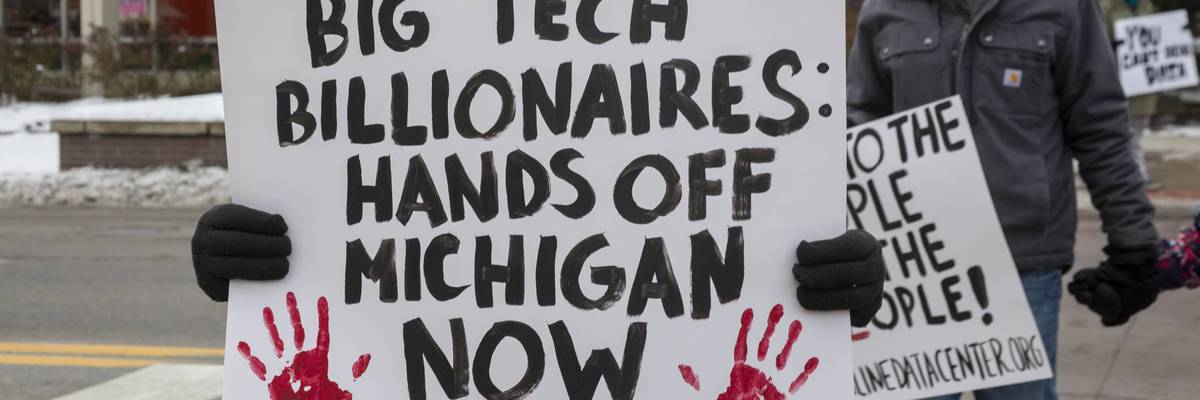
Protesters react as the Box Elder County commission announces approval of a large data center on May 4, 2026 in Tremonton, Utah.
(Photo by Natalie Behring/Getty Images)


Stephen Prager
May 05, 2026
COMMON DREAMS

County commissioners in Box Elder County, Utah, were deluged with chants of “Shame! Shame! Shame!” from a crowd of hundreds on Monday night as they voted unanimously to move forward with a sprawling “hyperscale” artificial intelligence data center project that many residents fear will cause energy prices to soar and imperil water access.

The project, known by state officials as “Stratos,” was proposed by the celebrity venture capitalist Kevin O’Leary and has been rushed along by Utah’s Military Installation Development Authority, which recently approved a gigantic energy tax break for the program to help “lure” the billionaire “Shark Tank” investor.


Citing ‘Irreversible Harm,’ 100+ Groups Urge Congress to Reject Rushed Data Center Approvals


The development, dubbed “Wonder Valley” after O’Leary’s “Mr. Wonderful” TV persona, would span more than 40,000 acres of northern Utah—more than two and a half times the size of Manhattan—and would consume more than twice the electricity currently used by the entire state if approved, according to Axios.

CBS 2 KUTV called it “the biggest thing in the region since the completion of the first transcontinental railroad.” And yet Utahns say they’ve been given little information about the plan and few opportunities to voice their concerns.


Residents were given short notice before Box Elder commissioners gathered at the county fairgrounds on Monday for a “special” meeting to vote on the project, but an estimated 500 still showed up to voice their displeasure.

They raised fears that they’d have to endure the same dramatic energy price spikes as other states with high concentrations of data centers. Residential utility costs have jumped 13-20% year over year in Virginia, Illinois, Ohio, and New Jersey, a trend attributed to the rollout of data centers in these states.

The developers of the Utah project have emphasized that it will be powered by an on-site natural gas plant, which they claim would limit the impact on utility bills.

However, that still leaves the massive environmental concern, especially since natural gas is almost entirely made of methane, one of the worst planet-heating pollutants.

Kevin Perry, a professor of atmospheric sciences at the University of Utah, has said that the estimated nine gigawatts of power the center would require, “would increase the carbon dioxide emissions for the state of Utah by more than 50%,” meaning “there’s a huge climate footprint associated with that proposal.”

Environmental advocates also warn that the facility will further drain water from the Great Salt Lake amid an already severe drought.

The Salt Lake Tribune has found that Utah’s dozens of other data centers consume wildly different amounts of water depending on the technology they use.

The developers of the Box Elder facility have claimed the project will use “zero water turbine” technology that allows it to recycle water, resulting in “net zero” consumption.

But Samantha Hawkins, the communications director for Grow the Flow Utah, a group dedicated to protecting the Great Salt Lake, said it’s impossible to know if the developers are telling the truth when they say their facility is designed to limit water usage.

“So far, there’s no publicly available hydrologic analysis or independent review to support those claims,” she said, “and there haven’t been any manufacturers, technologies, or contracts cited in relation to the ‘zero water turbine’ technology.”

Even if the centers limit water use, they still need to remain cool, which the Tribune said often requires more energy.


Many of the Utahns who showed up to protest Monday’s vote felt they were being kept in the dark about the facility’s potential harms and that the plans for the facility, which were not made public until last week, were being kept from them.

“I’m outraged,” said Colleen Flanagan, a resident of Sandy who spoke with Fox 13 Salt Lake. “I am absolutely angry that there was no studies done—it just came up out of the community. Nobody knew about it.”

Mitchell Tousley, who drove more than an hour from Draper to protest the decision, said, “A project of this scale just absolutely requires public input, and there really hasn’t been.”

Deals to build these facilities have often been made in secret, with contract details hidden from the public by nondisclosure agreements that stifle dissent until the project has already been approved. Despite this, these projects have often drawn fearsome backlash from the communities where they are planned. In some cases—like in Virginia late last month, where a 2,100-acre center was set to be built—it has led developers to pull out.

But the commissioners in Box Elder County, who said they’d reviewed more than 2,500 public comments on the proposal, appeared unmoved by the outpouring of public concern on Monday night. They said water and air quality issues were not factors in their vote and that the water rights were held by the private landowners.

As the crowd jeered, with chants of “cowards” and “people over profits,” Commissioner Boyd Bingham, a Republican, shouted them down.

“For hell’s sakes, grow up,” he yelled. “This is beyond a joke.” The commissioners then left the room and addressed the crowd via a virtual meeting.


In a video response to Monday night’s protest, O’Leary said: “I’m the only developer of data centers on Earth that graduated from environmental studies. I’m pretty aware of what these concerns are. They are around air, water use, heat, noise pollution. So sustainability is at the heart of what we do in terms of all these proposals.”

He claimed without evidence that 90% of the opponents of the data center project were “being bused in” from out of state. He also claimed that the facility would be powered in part by “solar, wind, and batteries,” when it is actually powered entirely by natural gas.

Opponents continue to characterize Stratos as a billionaire vanity project to loot Utah’s vast natural resources with little consideration for how it will affect residents.

Utah State University physics professor Robert Davies told Fox 13 that the Great Salt Lake “is occupied by amazing living systems” and that “projects like this go into environments like this and scrape the living systems right off the face of the Earth.”

He said, “This is a private enterprise that is coming in to extract from our natural wealth and pipe it out of the state… and leave us with a few crumbs.”

Thursday, May 07, 2026

​Bessent confronted by airline exec over damage Trump is inflicting on industry: WSJ

Tom Boggioni
May 7, 2026 
RAW STORY


U.S. Treasury Secretary Scott Bessent speaks during a press briefing in the James S. Brady Press Briefing Room at the White House in Washington, D.C., U.S., April 15, 2026. REUTERS/Evan Vucci/File Photo

Treasury Secretary Scott Bessent, who has been making the rounds reassuring the public that the economic hardships from Donald Trump's Iran war will eventually subside, received a sobering reality check from the airline industry — one of the sectors being hit hardest by skyrocketing fuel costs.

According to reporting from the Wall Street Journal, former New Hampshire Gov. Chris Sununu, now president of Airlines for America, delivered a stark warning to the Trump administration that jet-fuel costs have become unsustainable.

According to the Journal's Brian Schwartz and Alison Sider, Sununu "delivered a warning to Treasury Secretary Scott Bessent during a recent visit to Washington."

Sununu has spent weeks sounding the alarm to Trump administration officials about the economic fallout from elevated fuel prices, arguing that the war must end soon or conditions will deteriorate further. His message appears to be landing.

Privately, Trump's advisers are said to be growing concerned that Republicans will pay a significant political price for the rising fuel costs ahead of November's midterm elections. Many administration officials are now eager to end the conflict in hopes that prices will moderate before voters head to the polls, the Journal is reporting.

"They get it…and I think that's why they're trying to get through the war as fast as they can," Sununu told the Journal.

Since Trump's initial U.S.-Israeli attack on Iran in late February, Sununu has met in Washington with National Economic Council Director Kevin Hassett, representatives from the Transportation Department, and senior White House officials. A White House official confirmed that Hassett and Sununu have discussed the impact of increased fuel prices on the airline industry and how the sector can blunt the cost for consumers.

However, Sununu cautioned that recovery will be slow. Even after the Strait of Hormuz is fully reopened, ticket prices won't drop immediately. "You're looking at elevated ticket prices through the summer and fall because it takes a while for the prices to go down," Sununu warned.


'You just said a bunch of nothing!' Kevin O'Leary sparks uproar on CNN over war costs

O'LEARY IS A FAUX CANUCK
HE LIVES HERE JUST FOR THE UNIVERSAL HEALTHCARE 

Robert Davis
May 6, 2026 
RAW STORY


CNN screenshot


Canadian businessman and star of CNBC's "Shark Tank," Kevin O'Leary, sparked an uproar on CNN on Wednesday after he defended the costs of President Donald Trump's war in Iran.


O'Leary argued during a segment on CNN's "NewsNight" with host Abby Phillip that waging the war in Iran is worth the associated costs because it will allow American businesses to sell products in an emerging region, and that the Strait of Hormuz will be policed by another nation in the region. O'Leary added that the short-term rise in oil and fertilizer prices is just part of the deal for Americans.

"I guarantee you two things before this has worked out: the Strait will be open and probably policed by people around that region because it's in their best interest, and secondly, there are no friends in the world left for Iran," O'Leary said.

Bakari Sellers, a political analyst, sharply rebuked the "Shark Tank" star's comments.

"You just said a bunch of nothing!" Sellers said. "Explain to me, right now, somebody who lives in South Carolina, Nebraska, or Ohio, what is good right now for the American public going into a war where you do not understand that they're going to close the Strait of Hormuz. Explain to somebody watching right now where they're from."

"It's been 78 days ..." O'Leary began.

"So you don't have an answer?" Sellers shot back.


Wednesday, July 16, 2025

US Campuses Have Become the Newest Laboratories for Surveillance Technology

From Gaza to the US, military-grade surveillance tools are being deployed to monitor and punish student dissent.
July 10, 2025

Police stand guard as they clear a pro-Palestinian encampment after students occupied the Physical Sciences Lecture Hall at the University of California, Irvine, on May 15, 2025.Patrick T. Fallon / AFP via Getty Images

In early June 2025, The Guardian revealed that the University of Michigan paid over $800,000 to Amerishield, parent company to a private security company called City Shield. It was part of a broader $3 million public‑security budget, which included surveillance of pro‑Palestinian student activists. The university hired plainclothes agents who trailed students into cafés, harassed them, and even staged confrontations, including faking a disability to falsely accuse them of theft. City Shield, a private security agency based out of Detroit, used the supposed evidence collected by their agents against these students to prosecute them and send them to jail.

Massive Blue, a company based in New York, has created a surveillance tool called Overwatch that uses AI to monitor online spaces. Although this tool is sold and marketed as a public safety tool, the technology uses AI-generated virtual characters that infiltrate online groups, take part in conversations, and collect intelligence, particularly targeting college protesters and activists labeled as “radicalized.” These bots are created to imitate human behavior, making them very hard to detect.

The tech stack these agencies deploy is formidable: geofencing tools, license plate readers, real-time social media surveillance, predictive analytics. Even Radian6, a Salesforce product, has been linked to student protest monitoring. These tools don’t just observe behavior, they anticipate it, allowing administrators and police to intervene before a rally even begins.

This surveillance is not merely bureaucratic overreach. It is an act of intimidation, one that reflects an ideological alignment with systems of repression abroad. In Gaza, for example, humanitarian aid is increasingly distributed only through biometric registration, leaving starving Palestinians with no choice but to submit to facial and fingerprint scans to access food. Although aid agencies and occupying forces justify this as a form of “efficiency,” it can only be seen as coercive surveillance, stripping Palestinians of dignity and autonomy under the guise of relief.

Within the United States, university officials have increasingly turned to firms like ShadowDragon, Skydio, and Stellar Technologies, whose tools are capable of profiling, analyzing, and geolocating social media posts, drone-mapping encampments, and even identifying masked protestors through AI-enhanced facial recognition. These companies aren’t developing tools for student safety. They’re developing battlefield tech and students are the new targets.

Related Story

Trump Is Rapidly Expanding the Surveillance State as Protests Grow
Immigrants are only the first target of a rapidly expanding digital dragnet that can track our individual movements.  By Mike Ludwig , Truthout June 13, 2025


In April 2024, when students at Columbia University set up a peaceful encampment to protest the genocide in Gaza, few expected the administration to respond with mass arrests. Fewer still understood the extent to which military-grade surveillance technologies were already in place to track them. In the same month, Jewish Currents reported on Yale University’s use of drones, surveillance cameras, and plainclothes officers to monitor pro-Palestine student activists. Surveillance footage was used to identify students who had not violated any laws but had simply been present.

The technology uses AI-generated virtual characters that infiltrate online groups, take part in conversations, and collect intelligence.

Meanwhile, in May 2025, it was revealed that LAPD used Dataminr to track the social media activity of students organizing pro-Palestine events. Surveillance reports included screenshots of Instagram stories, private group chats, and Twitter threads. Some of this data was sourced using tools built by Dataminr and Social Sentinel, both of which specialize in identifying “emerging threats” by combing through vast amounts of social media data tools originally developed for use by law enforcement and intelligence agencies. In addition, in March 2024, it was revealed that Elon Musk’s X was also selling user data to Dataminr.

The logic is chillingly consistent: Dissent is pathologized, monitored, and neutralized while capitalists keep making money. And universities have become willing partners in this process.

In my Ph.D. research, I studied surveillance infrastructures, particularly in contexts where settler colonial regimes seek to erase dissent. What we’re seeing on U.S. campuses today mirrors repression models from places like East Turkestan (Xinjiang), where everyday resistance is quelled through predictive monitoring and data extraction. What this tells us is that surveillance isn’t about protection, it’s about power. And American universities are rapidly becoming test beds for the kind of repressive technology we associate with authoritarian states abroad.

The money behind these technologies flows through a familiar nexus of venture capital firms, defense contractors, and government agencies. ShadowDragon, for example, has been celebrated by the World Economic Forum and boasts contracts with U.S. law enforcement and military branches. Cobwebs Technologies, Xtend, and Oosto are Israeli surveillance companies whose products are now being deployed against student activists in the U.S. These firms have marketed their tools based on effectiveness in tracking Palestinians and other “high-risk” populations. Now, they are used on American campuses to monitor solidarity.

There is a historical precedent to this kind of repression. During the civil rights and antiwar movements of the 1960s and 70s, FBI programs like COINTELPRO targeted student activist groups like the Student Nonviolent Coordinating Committee (SNCC) and Students for a Democratic Society (SDS), and organizations like the Black Panther Party, with infiltration, wiretaps, and blackmail. The FBI’s targeting of student and civil rights activists through COINTELPRO is well-documented, as explored in this Yale News interview with historian Beverly Gage, who says J. Edgar Hoover’s tactics were both coercive and widely normalized. Hoover was the first director of the FBI, serving from 1924 until his death in 1972. However, the difference today is scale and automation. Rather than needing a human informant in every room, university administrators can now rely on machine learning algorithms to scan student emails, monitor group chats, and alert authorities to so-called “escalation indicators.”

This surveillance is not merely bureaucratic overreach. It is an act of intimidation.

Recently, billionaire investor Kevin O’Leary called for permanently destroying the digital lives of student protesters using AI-based doxxing campaigns. While O’Leary was widely condemned, his dystopian vision isn’t far from the reality already taking root. Companies like Babel Street and Stellar Technologies offer tools with the explicit promise of identifying individuals based on minimal data inputs like a partial image or a Twitter handle.

Tools like NesherAI claim to identify masked individuals in a crowd using behavioral and gait analysis. Corsight AI advertises facial recognition that works through masks, hoods, and sunglasses. These are not theoretical tools. They’re being piloted now, often in secret, and often in tandem with increasing police presence on campuses.

These developments must be viewed in the broader context of the militarization of civilian life. The pipeline between Gaza and Georgia Tech is not rhetorical. Technologies field-tested in war zones are refined and normalized on American campuses, where students are reduced to data points in behavioral prediction models. Israeli firms developed surveillance for use in Gaza and the West Bank are now contracted domestically.

Surveillance technologies once reserved for military and foreign operations are now being deployed on U.S. university campuses, targeting student protestors, particularly those demonstrating for Palestine. These tools are not isolated innovations. Many were tested on Palestinians and Uyghurs before being repurposed for U.S. settings. This is not a breakdown of democratic norms but their systematic redirection using universities as testbeds for next-generation policing.

University administrators often claim that surveillance is about safety. But whose safety? Lately, surveillance tools have mostly targeted the most vulnerable in our communities: Muslims, Indigenous people, undocumented immigrants, Black people, and anyone who supports Palestinian liberation and an end to the U.S.-sponsored genocide in Gaza. They claim that these tools are here to protect us, but in truth, they only serve to erase us, discipline us, and punish us.

It doesn’t have to be this way. Campuses have historically been sites of inquiry, dissent, and transformation, not laboratories for digital repression, and we must fight to keep them that way. We must reject the narrative that surveillance is inevitable. It is not. It is a political choice, made behind closed doors, mostly without consent or oversight of those who are affected the most.

Surveillance Watch is one intervention in this landscape, an attempt to shift the power back to those being watched. It is a community‑driven project that deploys interactive maps and databases to reveal the web of surveillance companies, their funders, subsidiaries, affiliations, and global operations in an effort to make opaque surveillance networks transparent. However, we need more. We need more public and legal accountability, more student organizing, more media scrutiny, and way more institutional courage. We need to say, unequivocally, that resistance is not a threat. It is a right.


This article is licensed under Creative Commons (CC BY-NC-ND 4.0), and you are free to share and republish under the terms of the license.

Elham Azad is a Ph.D. scholar and a senior research fellow with Surveillance Watch.


Monday, June 16, 2025

Ancient miasma theory may help explain Health Secretary Robert F. Kennedy Jr.'s vaccine moves

June 14, 2025
Heard on Weekend Edition Saturday
Rob Stein
NPR/PBS NEWS


Health and Human Services Secretary Robert F. Kennedy Jr. (R) and Food and Drug Administration (FDA) Commissioner Martin Makary at the White House in May, when Kennedy released a Make America Healthy Again Commission report that blamed the rise in chronic illnesses on ultraprocessed foods, chemical exposures, lifestyle factors and excessive use of prescription drugs
.Kevin Dietsch/Getty Images

Health Secretary Robert F. Kennedy Jr. has upended medical research and public health in the U.S. in many ways. One of the ideas that could be influencing his overhaul of federal health agencies dates back to ancient Greece.

The miasma theory is one of the first ideas that civilization hatched to try to explain why people get sick.

"It goes back to Hippocrates," says Dr. Howard Markel, an emeritus professor of medical history from the University of Michigan, Ann Arbor. "He wrote in a book called Epidemics, that epidemics came from some type of pollution – some pollution of the atmosphere, of the air that we breathe. And hence we got terrible infectious diseases."

This idea that, in essence, bad air caused illness was later championed by many others, including Florence Nightingale. It also led to some things that did help fight diseases, like cleaning up sewage.

But then came the germ theory — one of humanity's big eureka moments. Scientists like Louis Pasteur and Robert Koch discovered it wasn't some mysterious stench in the air from rotting garbage that spread diseases. Instead, it was living microscopic entities.

"They discovered what we know as germs – microbes," says Melanie Kiechle, a historian at Virginia Tech. "Bacteria and viruses and other microscopic materials were actually what caused illness and also explained the spread of illness from one person to another. So miasma theory is debunked, essentially."

The discovery of germs led to breakthroughs like antibiotics and vaccines.

But in a book Kennedy published about four years ago, The Real Anthony Fauci: Bill Gates, Big Pharma, and the Global War on Democracy and Public Health, the now- health secretary harkens back to the miasma theory.

"Miasma theory emphasizes preventing disease by fortifying the immune system through nutrition and reducing exposures to environmental toxins and stresses," Kennedy writes.

But experts say one problem is how Kennedy defines miasma theory.

"I will categorically say that miasma theory, as historians of medicine and science understand it, is not what he is saying it is, period," says Nancy Tomes, a historian of germ theory at Stony Brook University, who wrote The Gospel of Germs: Men, Women and the Microbe in American Life.

But Kennedy's take may help explain some of his policies, especially about vaccines.

"The miasma theory is the notion that there are environmental poisons, not necessarily rotting organic matter," says Dr. Paul Offit, a vaccine expert at the University of Pennsylvania. "For him, those environmental poisons are electromagnetic radiation, pesticides, vaccines. Vaccines are, for him, a modern-day miasma."

And that's dangerous, many experts say.


"Can stress, air pollution, other things, make infections worse? Yes. But the cause of infections is a microorganism," says Dr. Tina Tan, who heads the Infectious Disease Society of America. "It's the microorganisms that are making people sick."

And vaccines have clearly been shown to safely and effectively protect people against dangerous microorganisms, Tan and others say.

"He's trying to give this false veneer of intellectualism by saying, 'Oh, the miasma theory,'" says Dr. Amesh Adalja, a senior scholar at the Johns Hopkins Bloomberg School of Public Health Center for Health Security. "This all just obfuscation to support his idea that vaccines are not valuable."

But some other observers argue that Kennedy's ideas about the miasma and germ theories aren't necessarily mutually exclusive.

"The real debate here is whether we can solve public health problems by developing treatments like vaccines, antibiotics, or other drugs? Or whether we will solve these problems by strengthening people's immune systems through healthier habits?" says Gregg Girvan, a resident fellow at the Foundation for Research on Equal Opportunity, a Washington think tank. "And my response is, 'Why can we not acknowledge that there is truth in both positions?'"

Kennedy's office did not respond to NPR's request for more information about his views about the miasma and germ theories.

Kennedy’s HHS Sent Congress ‘Junk Science’ To Defend Vaccine Changes


June 14, 2025
By Jackie Fortiér, 
KFF Health News

A document the Department of Health and Human Services sent to lawmakers to support Secretary Robert F. Kennedy Jr.’s decision to change U.S. policy on covid vaccines cites scientific studies that are unpublished or under dispute and mischaracterizes others.

One health expert called the document “willful medical disinformation” about the safety of covid vaccines for children and pregnant women.

“It is so far out of left field that I find it insulting to our members of Congress that they would actually give them something like this. Congress members are relying on these agencies to provide them with valid information, and it’s just not there,” said Mark Turrentine, a professor of obstetrics and gynecology at Baylor College of Medicine.

Kennedy, who was an anti-vaccine activist before taking a role in the Trump administration, announced May 27 that the Centers for Disease Control and Prevention would no longer recommend covid vaccines for pregnant women or healthy children, bypassing the agency’s formal process for adjusting its vaccine schedules for adults and kids.

The announcement, made on the social platform X, has been met with outrage by many pediatricians and scientists.

The HHS document meant to support Kennedy’s decision, obtained by KFF Health News, was sent to members of Congress who questioned the science and process behind his move, according to one federal official who asked not to be identified because he wasn’t authorized to discuss the matter publicly.

The document has not been posted on the HHS website, though it is the first detailed explanation of Kennedy’s announcement from the agency.

Titled “Covid Recommendation FAQ,” the document distorts some legitimate studies and cites others that are disputed and unpublished, medical experts say.

HHS director of communications Andrew Nixon told KFF Health News, “There is no distortion of the studies in this document. The underlying data speaks for itself, and it raises legitimate safety concerns. HHS will not ignore that evidence or downplay it. We will follow the data and the science.”

HHS did not respond to a request to name the author of the document.
‘RFK Jr.’s Playbook’

One of the studies the HHS document cites is under investigation by its publisher regarding “potential issues with the research methodology and conclusions and author conflicts of interest,” according to a link on the study’s webpage.

“This is RFK Jr.’s playbook,” said Sean O’Leary, chair of the Committee on Infectious Diseases for the American Academy of Pediatrics and an assistant professor of pediatrics at the University of Colorado School of Medicine. “Either cherry-pick from good science or take junk science to support his premise — this has been his playbook for 20 years.”

Another study cited in the document is a preprint that has not been peer-reviewed. Under the study’s title is an alert that “it reports new medical research that has yet to be evaluated and so should not be used to guide clinical practice.” Though the preprint was made available a year ago, it has not been published in a peer-reviewed journal.

The FAQ supporting Kennedy’s decision claims that “post-marketing studies” of covid vaccines have identified “serious adverse effects, such as an increased risk of myocarditis and pericarditis” — conditions in which the heart’s muscle or its covering, the pericardium, suffer inflammation.

False claims that the 2024 preprint showed myocarditis and pericarditis only in people who received a covid vaccine, and not in people infected with covid, circulated on social media. One of the study’s co-authors publicly rejected that idea, because the study did not compare outcomes between people who were vaccinated and those infected with the covid virus. The study also focused only on children and adolescents.

The HHS document omitted numerous other peer-reviewed studies that have shown that the risk of myocarditis and pericarditis is greater after contracting covid for both vaccinated and non-vaccinated people than the risk of the same complications after vaccination alone.

O’Leary said that while some cases of myocarditis were reported in vaccinated adolescent boys and young men early in the covid pandemic, the rates declined after the two initial doses of covid vaccines were spaced further apart.

Now, adolescents and adults who have not been previously vaccinated receive only one shot, and myocarditis no longer shows up in the data, O’Leary said, referring to the CDC’s Vaccine Safety Datalink. “There is no increased risk at this point that we can identify,” he said.

In two instances, the HHS memo makes claims that are actively refuted by the papers it cites to back them up. Both papers support the safety and effectiveness of covid vaccines for pregnant women.

The HHS document says that another paper it cites found “an increase in placental blood clotting in pregnant mothers who took the vaccine.” But the paper doesn’t contain any reference to placental blood clots or to pregnant women.

“I’ve now read it three times. And I cannot find that anywhere,” said Turrentine, the OB-GYN professor.

If he were grading the HHS document, “I would give this an ‘F,’” Turrentine said. “This is not supported by anything and it’s not using medical evidence.”

While members of Congress who are physicians should know to check references in the paper, they may not take the time to do so, said Neil Silverman, a professor of clinical obstetrics and gynecology who directs the Infectious Diseases in Pregnancy Program at the David Geffen School of Medicine at UCLA.

“They’re going to assume this is coming from a scientific agency. So they are being hoodwinked along with everyone else who has had access to this document,” Silverman said.

The offices of three Republicans in Congress who are medical doctors serving on House and Senate committees focused on health, including Sen. Bill Cassidy (R-La.), did not respond to requests for comment about whether they received the memo. Emily Druckman, communications director for Rep. Kim Schrier (D-Wash.), a physician serving on the House Energy and Commerce Committee, confirmed that Schrier’s office did receive a copy of the document.

“The problem is a lot of legislators and even their staffers, they don’t have the expertise to be able to pick those references apart,” O’Leary said. “But this one — I’ve seen much better anti-vaccine propaganda than this, frankly.”

C.J. Young, deputy communications director for the House Energy and Commerce Committee, confirmed that Democratic staff members of the committee received the document from HHS. In the past, he said, similar documents would help clarify the justification and scope of an administration’s policy change and could be assumed to be scientifically accurate, Young said.

“This feels like it’s breaking new ground. I don’t think that we saw this level of sloppiness or inattention to detail or lack of consideration for scientific merit under the first Trump administration,” Young said.

On June 4, Rep. Frank Pallone (D-N.J.) and Schrier introduced a bill that would require Kennedy to adopt official vaccine decisions from the Advisory Committee on Immunization Practices, or ACIP.

Young said the motivation behind the bill was Kennedy’s decision to change the covid vaccine schedule without the input of ACIP’s vaccine experts, who play a key role in setting CDC policies around vaccine schedules and access.

Kennedy announced June 9 on X that he would remove all 17 members of ACIP, citing alleged conflicts of interest he did not detail, and replace them. He announced eight replacements June 11, including people who had criticized vaccine mandates during the covid pandemic.

KFF Health News is a national newsroom that produces in-depth journalism about health issues.

KFF would like to speak with current and former personnel from the Department of Health and Human Services or its component agencies who believe the public should understand the impact of what’s happening within the federal health bureaucracy. Please message KFF Health News on Signal at (415) 519-8778 or get in touch here.


Kennedy appoints vaccine deniers to vaccine advisory committee


by Michael Simpson
2025-06-15
Skeptical Raptor

As I previously wrote, HHS Secretary Robert F Kennedy Jr fired all of the vaccine scientist members of the Advisory Committee on Immunization Practices (ACIP) and replaced them with what appears to be a complement of anti-vaccine activists. Who would have predicted this?

As I previously discussed, ACIP recommendations are crucial for parents and physicians in determining which vaccines are recommended at various ages throughout adulthood. Moreover, ACIP recommendations are used by health insurance companies and the Vaccines for Children Program to determine what vaccines will be covered for children and adults.

Until last week, the ACIP included vaccine scientists and public health experts who reviewed the scientific data to determine which vaccines were safe and effective for American children and adults. ACIP was respected across the world for providing information on how best to protect everyone from dangerous infectious diseases.

Now this has all disappeared with the eight new appointees to ACIP representing what can be described as mostly anti-vaccine opinions and viewpoints. Kennedy tried to gaslight us with the “scientific” backgrounds of these appointees, but with just a little digging, we can easily find their anti-vaccine points of view.

So that you are up-to-speed on each of the new Advisory Committee on Immunization Practices members appointed by Kennedy, this post will review each of them and their anti-vaccine credentials.

Photo by Artem Podrez on Pexels.com


The Kennedy anti-vaccine committee members


I will go through each Kennedy appointment to the Advisory Committee on Immunization Practices and discuss their public anti-vaccine viewpoints. If you were worried that vaccine recommendations would be harmed by Kennedy’s actions, you now have more reason to worry.


Joseph R Hibbeln, MD

Hibbeln retired from the National Institutes of Health in 2020. His research portfolio previously covered the nutritional intake of fatty acids, including omega-3. He has no experience in vaccine research, but co-authored a study probing whether mercury exposure during pregnancy was linked to autism, which is a big issue for RFK Jr.

He is probably not an anti-vaxxer at the level of other Kennedy appointees to the vaccine committee, although he has had zero experience in vaccine research.


Martin Kulldorff, PhD


Kulldorff was a co-author of the “Great Barrington Declaration,” which advocated for an approach to the COVID pandemic with few or no public health mitigation measures. They wanted them instituted only for those at high risk for severe disease and death (such as the elderly or diabetics). He believed that we could create herd immunity to COVID through his radical “public health” measures.

He was probably dismissed as a professor of medicine at Harvard because of his public health views, along with his refusal to get the COVID vaccine.

Kulldorf also served in the past as an “expert witness” in litigation against Merck’s Gardasil (HPV vaccine). He is currently still an expert in another large HPV vaccine case.

There is simply no way to consider Kulldorff a real vaccine scientist who examines the science to come to his conclusions. Instead, he has anti-vaccine beliefs and looks to find evidence that supports his beliefs.

Retsef Levi, PhD

He is a risk analytics professor at MIT. He considers mRNA vaccines unsafe and urged an “immediate suspension” of them, citing cardiac death signals, which have been debunked. His “research” on COVID vaccines has been criticized by many others.

He is another vaccine denier.


Robert W Malone, MD

Malone has made a name for himself by claiming that he invented the mRNA vaccine, which is just not true. He uses that claim to cast doubt on the safety and effectiveness of mRNA-based COVID vaccines.

Recently, he has passed on misinformation about the recent measles outbreak and states that the MMR vaccine has the same dangers as measles itself.


Malone brings nothing but anti-vaccine credentials to ACIP.

H Cody Meissner, MD

Meissner is a pediatric infectious disease specialist, and he is probably the most pro-vaccine of all of the new appointees. He has relevant experience in pediatric infectious diseases and analyzing the illnesses and deaths prevented by vaccines. 

James Pagano, MD

Pagano is a retired emergency medicine physician with no background in vaccine science. He did advocate for ivermectin and hydroxychloroquine during the COVID pandemic, so he’s not exactly science-based.

Vicky Pebsworth, PhD, RN

Pebsworth is a long-time research director for the anti-vaccine National Vaccine Information Center (NVIC). She has said that any “coercion and sanctions to persuade adults to take an experimental vaccine, or give it to their children, is unethical and unlawful.”

Pebsworth has also stated:

In particular, [The Control Group American Survey] strongly suggests that increases in the number of vaccines in the CDC schedule may be causally related to increases in the rates of chronic illness, and as a result, the unvaccinated would be healthier than the vaccinated as shown by the pilot survey results.

She is definitely anti-vaccine.

Michael A Ross, MD

Kennedy described Ross as an obstetrics and gynecology professor at George Washington University and Virginia Commonwealth University. However, Ross does not appear in the directories for either university. The investment firm Havencrest Capital Management lists Ross as a partner and describes Ross as a pediatrics professor.

Like some others, Ross has no background in vaccine science research, but he criticized research on ivermectin that it was useless for the treatment of COVID.

Photo by cottonbro studio on Pexels.com


Summary

Other than one or two, these new members appointed by Kennedy to the ACIP vaccine committee are best categorized as anti-vaccine activists.

With their anti-vaccine tilt, they will change the longstanding independent scientific discussion that supported the fact that vaccines were safe and effective. And they will probably start changing recommendations for vaccines for children and adults, and they could even remove key vaccines from the CDC recommendations.

I hope physicians ignore whatever may come out of ACIP these next few weeks — they should give the vaccines necessary to protect children and adults from infectious diseases.

I’m also worried about future vaccines. For example, there is a Lyme disease vaccine in clinical trials, and it is a vaccine we need. What if this new ACIP decides not to recommend it? I can’t even imagine that.


CitationsGolding J, Rai D, Gregory S, Ellis G, Emond A, Iles-Caven Y, Hibbeln J, Taylor C. Prenatal mercury exposure and features of autism: a prospective population study. Mol Autism. 2018 Apr 23;9:30. doi: 10.1186/s13229-018-0215-7. PMID: 29713443; PMCID: PMC5914043.

Help the Skeptical Raptor keep writing RFK Jr’s attacks on vaccines

There are four ways you can help contribute to keeping this website running at full speed:Sharing this article on Social Media.

GoFundMe.
Contributing via Patreon.
Buying on Amazon.


Michael Simpson
Chief Executive Officer at SkepticalRaptor
Lifetime lover of science, especially biomedical research. Spent years in academics, business development, research, and traveling the world shilling for Big Pharma. I love sports, mostly college basketball and football, hockey, and baseball. I enjoy great food and intelligent conversation. And a delicious morning coffee!


Monday, May 05, 2025

Alberta premier's (GOVERNOR'S) Mar-a-Lago visit cost more than $10,000, documents reveal

ALBERTA THE 51st STATE

Story by Julia Wong
• CBC

A clearer picture is emerging of Alberta Premier Danielle Smith's visit to Mar-a-Lago to meet then president-elect Donald Trump in January, as a trade war with the United States loomed.

The unexpected trip cost $10,101.87 and included three others — one of whom flew home in business class — according to documents obtained by CBC News through a Freedom of Information request and a routine disclosure stating both who travelled with the premier and the total cost of the visit.


The trip, which Smith announced shortly after the fact on social media, prompted criticism that she was not part of the unified "Team Canada" response to the threat of Trump's tariffs.

Smith was the only premier who visited Trump's golf club at the time and has previously said they had a "constructive" conversation in which she "emphasized the mutual importance of the U.S.-Canadian energy relationship."


Now, records show Smith visited the Palm Beach, Fla., club from Jan. 10 to 12, joined by chief of staff Rob Anderson, principal secretary Rebecca Polak and James Rajotte, Alberta's senior representative to the United States.

The cost of flights, hotels, meals and other expenses totalled $10,101.87 for the approximately 48-hour trip.


Smith, left, Trump and investor Kevin O'Leary are seen during a recent visit to Mar-a-Lago, in Palm Beach, Fla. (Danielle Smith/X)

Travel was billed at $7,935, and included a one-way flight for Anderson in business class from Fort Lauderdale, Fla., to Calgary, connecting through Montreal, that cost $2,848.70. All four stayed at a Marriott during the trip.

The documents, when cross-referenced with the province's publicly accessible travel and expense disclosure table, also show that Smith, Polak and Anderson travelled to Florida from Punta Cana, Dominican Republic.

In a travel policy form that outlined the details of the Florida visit, the proposed mission objective and key initiatives were redacted.

A second mission objective was stated as: "Engage key incoming administration allies and gain insights on international trade, and political/administration/policy changes which may affect Alberta and Canada."

Later in January, on inauguration day, Smith was asked about the trip by CBC News chief correspondent Adrienne Arsenault.

"What I asked the president was, do you want to buy more oil and gas from Canada? And he said yes," Smith said.


Response from premier's office

CBC News sent a list of questions to the premier's office seeking clarity on the details of the visit.

Sam Blackett, the premier's press secretary, pointed to comments Smith has previously made, including the premier's Jan. 12 social media post about the trip and at a routine committee meeting in March, when she explained she was in Punta Cana on holiday for Anderson's wedding.


Smith announces proposed changes to several pieces of democratic process legislation, in Edmonton on Tuesday. (Jason Franson/The Canadian Press)

"The opportunity to go to Florida emerged at that time. Because it was government business, there was a one-way flight from Punta Canada to Florida for each of us," Smith said, according to a transcript.

She also stated that Anderson has a doctor's note about a blood condition that requires him to travel business class.

Smith also explained her approach.

"I can tell you that the number of meetings that we have had - the strategy that we're taking is that we are meeting with influencers on the U.S. President," she told the committee.

Blackett did not respond to questions about how long the premier met with Trump, whether it justified the overall price tag of the trip and its return on investment and why Smith was accompanied by three others.

Lori Williams, a political science professor at Mount Royal University in Calgary, said the January visit raises questions.

"It makes sense that James Rajotte would be part of this but it isn't as clear to me why two other personnel in addition to the premier would have been needed at this particular visit," she said.

The lack of clarity over how long Smith met with Trump raises other inquiries for Williams.

"We're talking about a large sum of money, $10,000, to be spent for perhaps more people being involved than were necessary, for what might have been a very brief exchange and had very little impact," she said.

Williams points to other engagements the premier has been a part of, including speaking at conferences with U.S. governors and appearing on U.S. media outlets, saying they're effective ways to share Canada's concerns.

"It's not clear that this relatively expensive opportunity would have been one of them," she said. "It's this sort of bigger question about whether you're spending more in the way of tax dollars in ways that doesn't sufficiently respect the hard work that went into earning those dollars by the people of Alberta."

Tuesday, March 04, 2025


Trump scrambling to 'work something out' with Canada and Mexico after markets melt down


U.S. President Donald Trump makes an announcement about an investment from Taiwan Semiconductor Manufacturing Company (TSMC), flanked by C.C. Wei, Chairman and CEO of TSMC and Commerce Secretary Howard Lutnick, in the Roosevelt Room at the White House in Washington, D.C., U.S., March 3, 2025. REUTERS/Leah Millis

Carl Gibson 
ALTERNET
March 04, 2025


Ever sincePresident Donald Trump announced new tariffs on the United States' neighbors, financial markets have been reeling. His administration is now signaling that Trump may be willing to somewhat back off from the new duty fees soon if he can work out a deal.

NBC News reported Tuesday that Commerce Secretary Howard Lutnick is now indicating that Trump may be willing to meet the leaders of Canada and Mexico "in the middle" following two consecutive disastrous days of trading. Lutnick's announcement that Trump would "probably" consider a compromise came after Trump re-introduced 25% tariffs on Canada and Mexico after previously walking them back.

"Both the Mexicans and the Canadians are on the phone with me all day today, trying to show that they’ll do better," the commerce secretary told Fox Business. "And the president is listening because, you know, he’s very, very fair and very reasonable. So I think he’s going to work something out with them."

Trump's desire to bring Canadian Prime Minister Justin Trudeau and Mexican President Claudia Sheinbaum to the negotiating table comes on the heels of the Dow Jones Industrial Average dropping by more than 1,300 points over the past 48 hours. CNBC reported that the S&P 500 and the Nasdaq Composite also posted losses, with the former seeing its biggest one-day drop since December this week.

It initially appeared as if the U.S. was poised for a crippling trade war with Canada, as Trudeau said he intended to add a retaliatory 25% tariff to imported American goods. Trump responded that if Trudeau imposed new tariffs, he would hit Canada again with subsequent duty fees. "Shark Tank" star Kevin O'Leary told Fox News this week that the threat of a trade war spooked investors, as the higher prices that the tariffs would bring would result in consumer spending trending downward.

The threat of new tariffs could also result in Americans delaying expensive purchases, like buying new vehicles. Flavio Volpe, who is the president of the Automotive Parts Manufacturers' Association, recently said that the tariffs would not only raise prices, but also endanger jobs both in the U.S. and in Canada.

"[Manufacturers] can't go buy a crank shaft or car seats at a Walmart," Volpe told Canada's CTV News. "So, the industry, like it did in those first two incidents, will close within a week and that includes Ontario and Michigan all the way down to Kentucky, Alabama and Texas."

Click here to read NBC's report in full.


'He’s going to work something out': Trump reportedly already walking back tariffs

Matthew Chapman
March 4, 2025 
RAW STORY

Donald Trump (Reuters)

Not even a day into the new tariffs against Canada and Mexico, President Donald Trump is considering some form of compromise on them — but not a full repeal or another total delay, reported Bloomberg News on Tuesday.

“Both the Mexicans and the Canadians were on the phone with me all day today trying to show that they’ll do better, and the president’s listening, because you know he’s very, very fair and very reasonable,” Lutnick told Fox Business. “So I think he’s going to work something out with them — it’s not going to be a pause, none of that pause stuff, but I think he’s going to figure out: you do more and I’ll meet you in the middle some way and we’re going to probably announcing that tomorrow.”

However, Lutnick stressed that a full rollback of the tariffs was not on the table.

“If you live under those rules, then the president is considering giving you relief,” he said. “If you haven’t lived under those rules, well, then you have to pay the tariff.”

The tariffs were initially to take effect in February. Trump agreed to a 30-day pause in exchange for Canada and Mexico taking border security measures they had already committed to.

This comes as the Dow Jones Industrial Average has plummeted in response to the tariffs, which business leaders and economists broadly fear will raise prices for consumer goods and materials and slow down the economy, particularly if the targeted countries retaliate with tariffs of their own.

Lutnick, for his part, has adamantly denied tariffs can cause inflation — something that puts him at odds with the consensus of economists studying the issue, as well as business owners who are already warning they are forced to raise prices.

Sunday, February 02, 2025

YOU TELL 'EM CHARLIE

Canadian Lawmaker Hits Back At Trump, Mar-A-Lago's 'Gangster Class' Over Tariff Threats

CHARLIE IS A SOCIALIST

Ben Blanchet
Updated Sat, February 1, 2025
HUFFPOST


Canadian lawmaker Charlie Angus on Friday blasted Donald Trump over his tariff threats to the northern nation, declaring that his country won’t let the U.S. president chip away at his country’s “values of decency and inclusion.”

“He’s threatening massive tariffs to try and break us as a people. But the threat is also being driven by the hate algorithms of oligarchs like Elon Musk,” said Angus — a member of the left-leaning New Democratic Party who serves in the Canadian Parliament at a press conference.

“And there is the threat from people in our own country who would sell out our birthright to appease the gangster class from Mar-a-Lago. That is not going to happen.”

Angus has previously told Trump to “piss off” over his “juvenile” threats to his country and slammed “loser” Canadian businessman Kevin O’Leary for snuggling up to the U.S. president in an attempt to broker a deal to create an “economic union” between the two nations.

On Friday, White House Press Secretary Karoline Leavitt told reporters that Trump would put 25% tariffs on imports from Canada and Mexico — as well as 10% tariffs on goods arriving from China — effective Saturday.

“These are promises made and promises kept by the president,” she said of the move that experts warn could cause prices to climb on a “very, very long” list of products.

Canadian officials have entertained puttingtariffs on goods imported from the U.S. in response to Trump’s threats.

Chrystia Freeland, a member of the center-left Liberal Party who serves in the Canadian Parliament, suggested putting 100% tariffs on all Tesla vehicles coming from the U.S. in an effort to target those supporting Trump to “make them pay a price” for the “attack” on her nation.

Angus, at the press conference backing a “Pledge for Canada” to respond to challenges facing the nation, suggested putting “200%” tariffs on Musk’s “douche Panzer” should Trump go forward with his plans.

“I would throw as much heat on Elon Musk as possible because he’s a deplorable, disgraceful human being,” Angus said.

Angus — elsewhere in the press conference on the “pledge” — called for Canada to lessen its dependency on its southern neighbor, build the country that its people want and reach out to its “Democratic allies around the world who are determined to protect democracy from the likes of Trump and Putin.”

“And we cannot turn away from our historic role of being a humanitarian friend fort those suffering in this world,” he declared.

“Our borders must continue to welcome and protect those seeking and deserving shelter in our lands.”


Sunday, January 26, 2025

Opinion

The war on fake news has backfired


Nolan Higdon
SALON
Sun, January 26, 2025 

Mark Zuckerberg; Facebook 
Photo illustration by Salon/Getty Images

Brian Stelter, CNN's chief media analyst, recently tweeted that “fact-check” had become a dirty word. Stelter’s assessment followed Meta’s announcement that it would scrap its fact-checking processes—once central to the post-2016 response to the proliferation of so-called fake news. Now, with Donald Trump preparing for a second term, many former critics of fake news have curiously dropped their concerns over disinformation and aligned with him. This shift exposes Big Tech and legacy media’s anti-fake-news campaigns as, at best, PR fluff, and at worst, efforts to outright silence dissent.

These fake news flip-floppers include a self-described Democrat, Elon Musk, who endorsed Trump and donated a staggering $250 million to his campaign. By allying himself with Trump, Musk reaped the rewards with an appointment to co-lead the newly created Department of Government Efficiency (DOGE). In 2022, Musk claimed he acquired Twitter - which he renamed X - in order to protect and promote free speech by ending what he saw as Twitter’s suppression of truth. Instead, Musk seems poised to use his platform as a tool of propaganda that promotes a positive image of Trump's presidency. After Trump was elected, Musk announced that he would change his platform’s algorithm to promote "positive, beautiful content,” suggesting that since Trump is president, Musk sees no need for negative content on X.

The shift reveals an uncomfortable truth: content moderation was never about eradicating fake news. Rather, it’s a tool wielded by those in power to shape narratives and consolidate influence. This is why it is somewhat concerning that other Trump-friendly billionaires have also expressed an interest in taking control over social media platforms, like Kevin O’Leary, a Trump ally of “Shark Tank” fame who is now attempting to purchase TikTok. Social media platforms often resist moderation for business purposes, but under political pressure, they will act upon moderation marching orders from whoever is in power. What this means for users is that the platform is always biased, showing you what they want you to see, nothing more, and nothing less.

The concerns about fake news and its impact on democracy were and remain well-founded. Disinformation erodes public trust, distorts reality, and weakens democratic systems. Yet the post-2016 solutions offered to combat it, largely centered around entrusting billionaires with the reins of information dissemination. This approach not only failed to mitigate the spread of fake news but also emboldened a small group of elites to expand their wealth and influence globally.

Since Trump’s emergence as a political figure in 2015, the media’s warnings about his attacks on journalists as purveyors of "fake news" were loud and persistent. These warnings were not baseless. Trump’s rhetoric undermined the press and raised fears about threats to a free media—especially when he floated ideas like revoking broadcasting licenses. These concerns escalated during the pandemic, with misinformation about COVID-19 spreading like wildfire. The World Health Organization even labeled the crisis an "infodemic."

In response, liberals and media personalities pushed for increased content moderation on Big-Tech platforms. Congressional hearings pressured tech giants to act and companies capitulated by minimizing the reach of conservative and progressive news outlets (referred to as the ‘adpocalypse”), banning controversial users, and taking part in developing tools such as NewsGuard—a tool promising to identify fake news, but often criticized for having an establishment bias. Post-January 6, 2021, as violence erupted at the U.S. Capitol, tech platforms were urged to clamp down further, leading to Trump’s ban and the suppression of controversial topics like election fraud claims.

President Joe Biden continued the crusade with measures like banning the social media platform TikTok (allegedly in part to curb disinformation) and proposing a Department of Homeland Security Disinformation Governance Board, which was ultimately scrapped after public outcry. Media platforms aligned with these efforts by removing content from Russia Today, which is owned by the Russian government, in response to Russia’s invasion of Ukraine.

After Trump was elected in 2024, everything changed. Big Tech companies, which had previously moderated Trump or content he favored, now faced a president who could potentially push for regulations, increased taxes, or the cancelation of government contracts they relied on. In response, Meta’s Mark Zuckerberg announced that his company would abandon fact-checking entirely in 2025. It was the final blow to those who lived under the delusion that billionaire tech firms would marginalize disinformation and promote truth. Instead, Meta pledged to work with the Trump administration on combating foreign threats and promoting "civil content.” In addition, Dana White, the CEO and president of Ultimate Fighting Championship and a Trump supporter, was added to Meta’s board, and Meta moved some of its content moderators from California to Texas.

Meta’s attempt to curry favor with the incoming Trump administration reveals that power and profits, not a concern for truth or democracy, is what motivated billionaires to signal they were fighting fake news. In the process, the very strategies designed to combat misinformation have strengthened the systems that perpetuate it. Indeed, a handful of powerful people, often allied with the incoming administration, control the flow of information in the US, and they interact with a public that has been conditioned to believe that the way to save democracy and eradicate fake news is by pleading with billionaires. This approach is not only anti-democratic, but it is also a fool’s errand. Fake news cannot be eradicated; it is a byproduct of human creativity and imagination. Attempts to eliminate it often result in greater censorship and concentration of power, leaving societies more susceptible to manipulation.

The only effective solution is critical media literacy. Critical media literacy teaches people how to think, not what to think. It aims to give students the skills, terms, questions, and knowledge necessary to not only determine the veracity of information, but be empowered and autonomous users who can negotiate their relationship with media. In order to make the nation more critically media literate, schools, communities and homes will need to treat media literacy with the same seriousness that they treat a citizen’s need to be able to read, write, and perform mathematics.

The lessons of the last decade are sobering. Trusting billionaires and tech companies to act as gatekeepers of truth has not protected democracy; it has endangered it. Instead of empowering the public to critically engage with information, these efforts have built stronger tools for controlling and distorting narratives. The war on fake news has backfired, entrenching the systems it sought to dismantle and deepening public skepticism of information. The lesson is clear: in a democracy, real resistance to fake news comes from a critically media literate citizenry, not the power of billionaire gatekeepers.