Showing posts sorted by date for query MALI. Sort by relevance Show all posts

Thursday, June 18, 2026


Moscow uses 'Russian Houses' in Africa to lure recruits into war in Ukraine, investigation shows
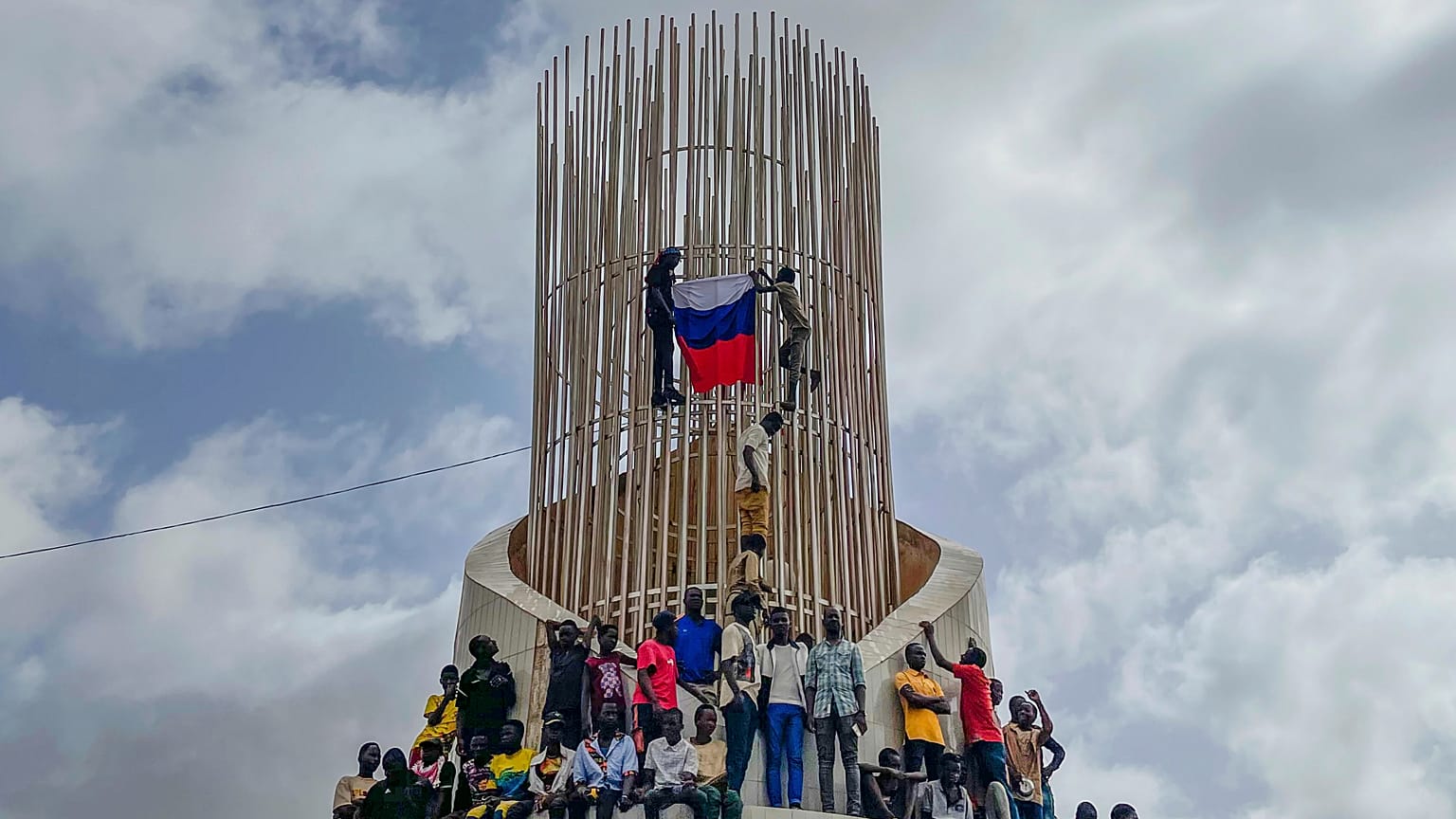
FILE - Supporters of Niger's ruling junta hold a Russian flag in Niamey, Niger, on Aug. 3, 2023.
Copyright AP Photo

By Sasha Vakulina & Aleksandar Brezar
Published on

Ukrainian military intelligence has revealed that Russia's expanding network of "Russian Houses" functions as a recruitment pipeline for its war, luring young Africans with promises of education and jobs before some are sent to the front lines or into drone factories.

Moscow is waging “a war for the minds” of Africans by rolling out a hybrid network of so-called "Russian Houses" in addition to arms supplies and direct military aid to military juntas in Africa, Ukraine’s military intelligence (HUR) revealed in its recent investigation.

According to earlier research, “Russian Houses” in Africa, targeting above all the youth, are already operating or opening in at least 22 countries, as part of Russia’s strategy to consolidate its influence on the continent.

HUR now revealed that Moscow is currently planning to open centres of influence in eight African countries: Nigeria, Senegal, Liberia, Sierra Leone, Togo, Mali, Mozambique, and São Tomé and Príncipe.

This is being carried out through Russia's federal cooperation agency, Rossotrudnichestvo, in collaboration with the Centre for Public Diplomacy (CPD), an organisation founded in 2024 with the stated aim of expanding the existing network, specifically targeting Africa.

The CPD’s official mission is to convey "accurate" information about Russia to Africans.

Brussels has sanctioned Rossotrudnichestvo, freezing its assets in July 2022 for spreading disinformation tied to the invasion of Ukraine.

Yet it has continued to expand its African footprint despite the penalties, operating more than 85 official branches abroad.

Ukraine's Foreign Intelligence Service said Russia allocated $1.85 billion (€1.6bn) for foreign propaganda operations in its 2026 federal budget, a 54% increase on the previous year — a sum exceeding the entire annual education budgets of several West African states.

What goes on inside Russian Houses in Africa?

According to available information, the centres screen Soviet and Russian films, often on patriotic themes, and distribute ideologically vetted literature.

They also teach the Russian language and coach young people on how to move to Russia as students or workers.

Organisers sell an image of a "happy Russia,” but according to HUR, in practice that promise often curdles: some recruits sign contracts with the Russian military and are sent straight to the deadliest parts of the front lines in Ukraine.

In 2025, then-head of Rossotrudnichestvo Yevgeny Primakov Jr announced that the government would fund more than 5,000 African students to attend university in Russia.

The educational opportunity is often the most salient motivator for locals to engage with the organisation.

Most strikingly, in January of this year, Primakov Jr himself publicly admitted that a "well-known African private military company" — widely understood to mean Wagner Group, rebranded as Africa Corps following the death of founder Yevgeny Prigozhin — had been directly involved in establishing Russian Houses in Mali and the Central African Republic, and that some of its members had since moved into formal Russian state positions.

Ukraine's Centre for Countering Disinformation described the admission as confirmation that the centres function as elements of hybrid operations rather than neutral cultural institutions.
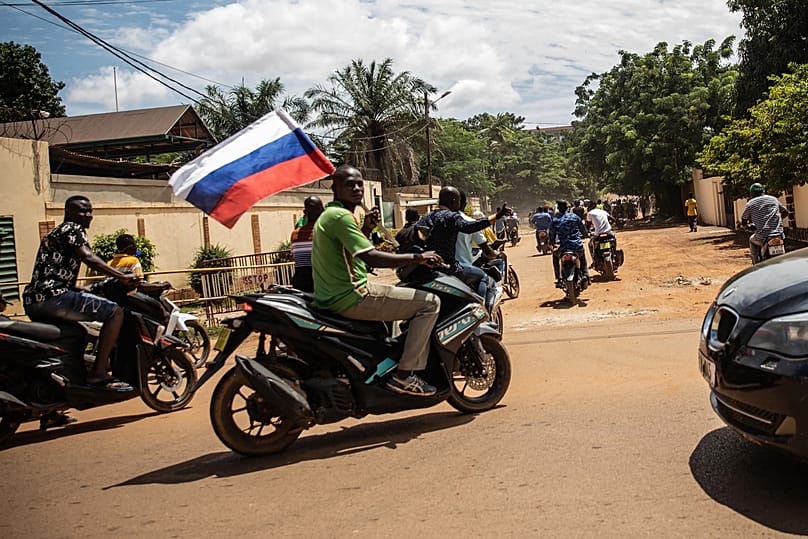
FILE: Supporters of Captain Ibrahim Traore parade wave a Russian flag in the streets of Ouagadougou, Burkina Faso, 2 October 2022
FILE: Supporters of Captain Ibrahim Traore parade wave a Russian flag in the streets of Ouagadougou, Burkina Faso, 2 October 2022 AP Photo

The Bangui Russian House in the Central African Republic is run by Dmitry Sytyi, a figure who also controls Wagner's operations in the country and reportedly uses the centre as a logistics hub for the group's gold, diamond and timber trafficking, according to media reports.

The expansion of Russian Houses has closely followed the rise of pro-Russian military juntas, particularly in West Africa: centres opened in Mali in 2022, Burkina Faso in January 2024 and Niger in October 2024, all following coups in which Wagner or its successor forces became the new regimes' primary security providers.

Wagner and Africa Corps, which is controlled by the Russian Ministry of Defence, are among the most ruthless armed groups on the continent and are directly implicated in mass civilian killings and other war crimes.

In April, three human rights organisations — TRIAL International, the Pan-African Lawyers Union and the International Federation for Human Rights — filed the first case of its kind before the African Court on Human and Peoples' Rights, seeking to hold Mali's government responsible for hosting and failing to prevent abuses by Wagner and its successor force.

Run by friends of Putin

Journalist and former Duma member Primakov Jr is the grandson of former Russian Prime Minister Yevgeny Primakov, who also served as head of the KGB First Chief Directorate, overseeing its transition to Moscow's foreign intelligence service, the SVR.

The elder Primakov was a staunch advocate of the theory of Russian supremacy and one of the main architects of the Kremlin's idea of multilateralism, a thin ideological veneer meant to act as a cover to Moscow's aspirations for control over former Soviet republics and elsewhere and a key cog of Russian President Vladimir Putin's influence machine abroad.
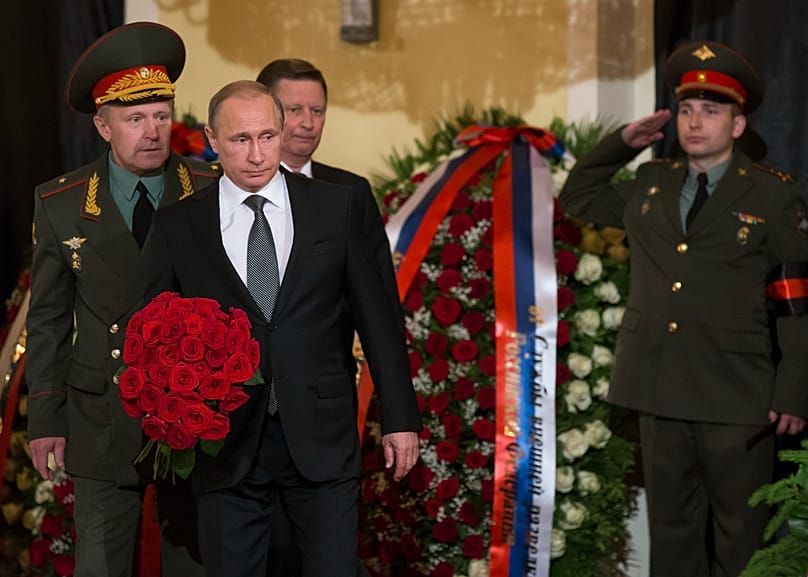
FILE: Russian President Vladimir Putin arrives to attend a civil funeral for former Russian Prime Minister Yevgeny Primakov, in Moscow's House of the Unions, 29 June 2015
FILE: Russian President Vladimir Putin arrives to attend a civil funeral for former Russian Prime Minister Yevgeny Primakov, in Moscow's House of the Unions, 29 June 2015 AP Photo

Primakov Jr has direct ties to Putin. He served as one of Putin's official "trusted representatives" during the 2018 presidential campaign and was elected to the Duma that same year on the ruling United Russia party's list before being appointed chief of Rossotrudnichestvo in 2020.

He is under EU, UK, Canadian and Australian sanctions for his role in promoting the annexation of occupied Ukrainian territories.

Putin dismissed Primakov Jr as head of Rossotrudnichestvo in April of this year, replacing him with Igor Chaika, son of Russia's former prosecutor general Yuri Chaika and a figure separately sanctioned by the US Treasury in 2022 for developing plans, reportedly with the assistance of Kremlin spokesperson Dmitry Peskov, to destabilise Moldova's pro-Western government, according to a report by think tank CEPA.

Igor Chaika and his elder brother Artem were the subject of Alexei Navalny's corruption investigation.

In a 2015 film, Navalny's foundation found that the two had used their father's position to amass fortunes through rigged state contracts, the seizure of a state-owned shipping company whose director was later found dead, and undisclosed property abroad, including villas in Switzerland and Greece.

Artem was placed under US Magnitsky Act sanctions in 2017 for using his father's position to "dishonestly obtain state property and state contracts." Yuri Chaika, who served as prosecutor general for 17 years, was never removed from office over the allegations and later joined Russia's Security Council as Putin's presidential envoy.

Recruiting Africans into Russian military

According to a report by the Danish Institute for International Studies (DIIS), Russian information warfare has expanded significantly in the Global South since 2022, particularly in Africa.

DIIS said Russia brands itself in Africa as an anti-colonial partner to sway political elites and publics through “regime survival packages," which include weapons, political advisors and influence campaigns

“Between June and September 2025, the number of Russian military service promotion posts aimed at foreigners on the platform VK increased from 621 to 4,600. This meant that by mid-2025, one in three contract announcements targeted foreigners, compared to only 7% in 2024," the DIIS report said.

According to the Washington-based Africa Centre for Strategic Studies, through a shadowy network of online recruiters, Russia has quietly assembled a pipeline funnelling thousands of Africans from nearly every country on the continent into the front lines and factories supporting Moscow’s war effort in Ukraine.

“These were not the destinations the young Africans thought they had signed up for. Many were looking for jobs, training, or opportunities abroad. Drawn by promises of life-changing salaries, they instead found themselves trapped in a war far from their home countries," the Africa Centre said.
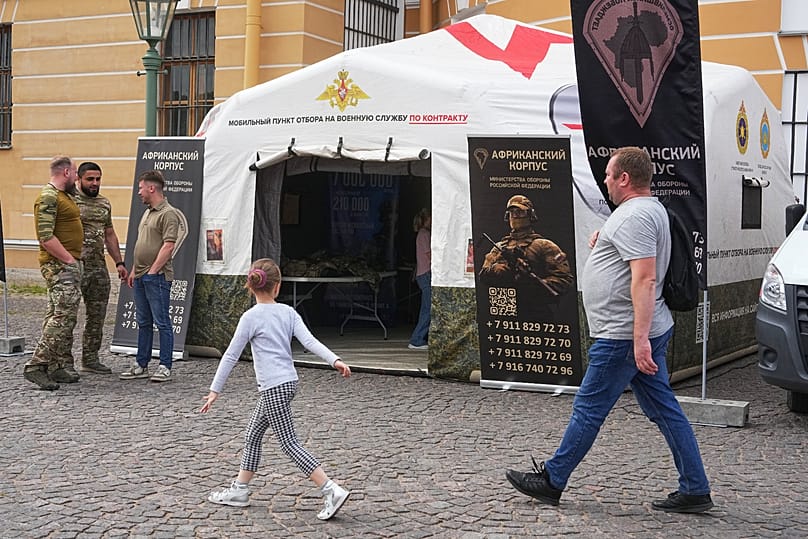
A child walks past a mobile recruiting centre in St Petersburg with a poster promoting contract military service in the African Corps, 12 June 2026
A child walks past a mobile recruiting centre in St Petersburg with a poster promoting contract military service in the African Corps, 12 June 2026 AP Photo

Misled by Moscow’s recruiters, some have been pressed into military service and forced at gunpoint toward the front lines, where casualty rates are exceptionally high, according to the Africa Centre.

Majority Leader of the Kenya National Assembly Kimani Ichung’wah testified in February that once they arrive in Russia, these recruits are “basically just given a gun to go and die."

Others have been trapped in drone factories, like the Russian Alabuga Special Economic Zone (ASEZ) in Tatarstan, a republic in the east-central part of European Russia.

ASEZ is a public-private industrial complex known first and foremost for producing Shahed-136 drones for Russia’s military.

DIIS revealed that Russian recruitment is also increasingly targeting young African women — Nigerian students in particular — to work in drone factories, including Alabuga, supporting Russia’s military war machine.

'Ideological weapon of slow-acting harm'

Ukraine’s military intelligence stated that with more Russian Houses opening in Africa, Moscow’s recruitment on the continent will only intensify.

The final goal, according to HUR, is “to cultivate an entire generation of ideologically loyal Africans in order to conceal its colonial exploitation of their countries while using people as a cheap source of military manpower”.
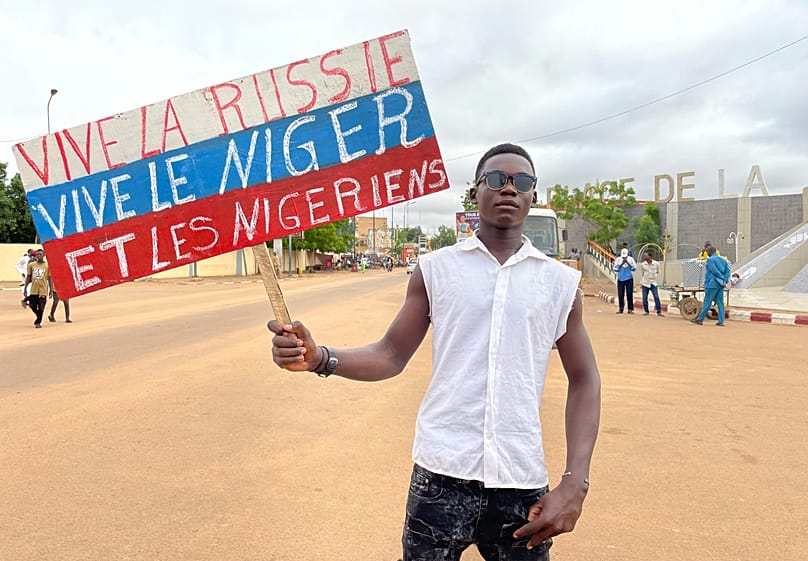
FILE: A supporter of Niger's ruling junta holds a placard in the colours of the Russian flag at the start of a protest in Niamey, Niger, 3 August 2023
FILE: A supporter of Niger's ruling junta holds a placard in the colours of the Russian flag at the start of a protest in Niamey, Niger, 3 August 2023 AP Photo

“An illustrative example is Sudan, where Kremlin-controlled groups polluted water resources with mercury due to predatory artisanal gold mining,” HUR said, pointing out that “pollution of this scale cannot be eliminated for years – it is an ecological weapon of slow-acting harm."

“The local population in this scheme is viewed solely as cheap labour – both at Russian enterprises within African countries, and at the factories in Russia itself, where Africans end up after ‘training’ in the 'Russian Houses.'”

How many Africans have already been recruited?

In April, HUR revealed the Kremlin's plans to recruit at least 18,500 foreign mercenaries to fight against Ukraine by the end of 2026.

Ukraine's Center for Countering Disinformation stated that Russian Houses serve as key hubs within this shadow recruitment infrastructure.

In June, Ukraine's Ministry of Foreign Affairs confirmed that at least 2,965 citizens from 36 African countries had taken part in combat on Russia's side.

Recruitment of Africans escalated in 2024, according to the Africa Centre, which stated that African recruits appear to be assigned to especially expendable battlefield roles.

This was backed by the testimonies of survivors and evidence found by investigators, both of whom showed that Africans were commonly used in high-risk assaults.
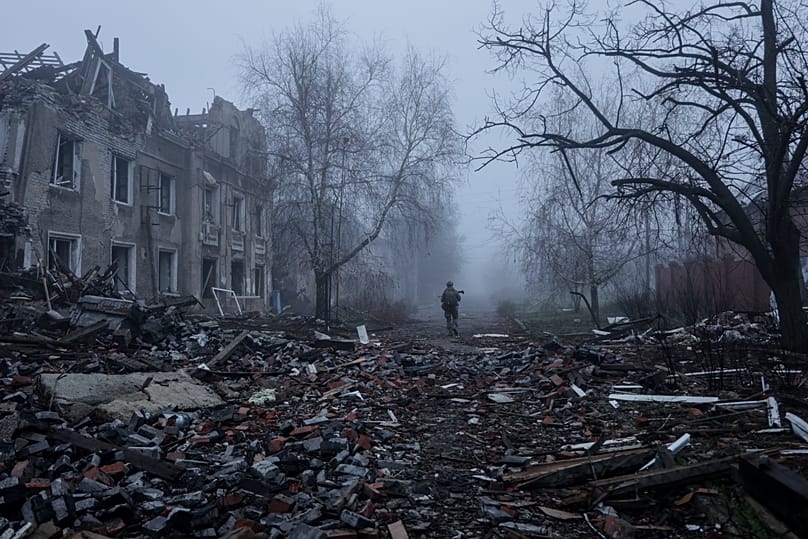
FILE: A Ukrainian soldier goes along a street in the frontline town of Kostyantynivka, the site of heavy battles with the Russian troops in the Donetsk region, Ukraine, 28 Nov
FILE: A Ukrainian soldier goes along a street in the frontline town of Kostyantynivka, the site of heavy battles with the Russian troops in the Donetsk region, Ukraine, 28 Nov AP Photo

Not every expansion attempt has succeeded. In September 2024, authorities in Chad arrested Russian operatives immediately after the opening ceremony of a planned Russian House in N'Djamena, having already detained two others at the airport days earlier, a rare instance of government intervention against Russia's attempts to harden its presence.

Separately, an investigation published in Nigerian outlet TheCable identified 272 Nigerian nationals who had enlisted through associated channels, of whom 55 were reported dead. Russian Ambassador to Nigeria Andrey Podyelyshev dismissed reports of recruitment through these channels as "misleading" in February.

Several African states, including Kenya, Ghana and Nigeria, have repeatedly demanded explanations from Moscow and called for an end to the illegal recruitment of their citizens, but the Russian foreign ministry has continued to ignore those demands**.**

When asked about Russia’s deceptive recruitment of Africans for Moscow’s war in Ukraine, Peskov denied involvement, stating in May that “We are unaware of any such cases.”

Friday, June 12, 2026

Pope Leo XIV makes heartfelt appeal for migrants: ‘Human dignity has no passport’

LAS PALMAS, Spain (RNS) — At a Canary Islands port marked by migrant suffering, Pope Leo XIV told survivors of trafficking that their dignity cannot be taken from them and warned Europe that every boat arriving on its shores poses a question about what remains of its humanity.


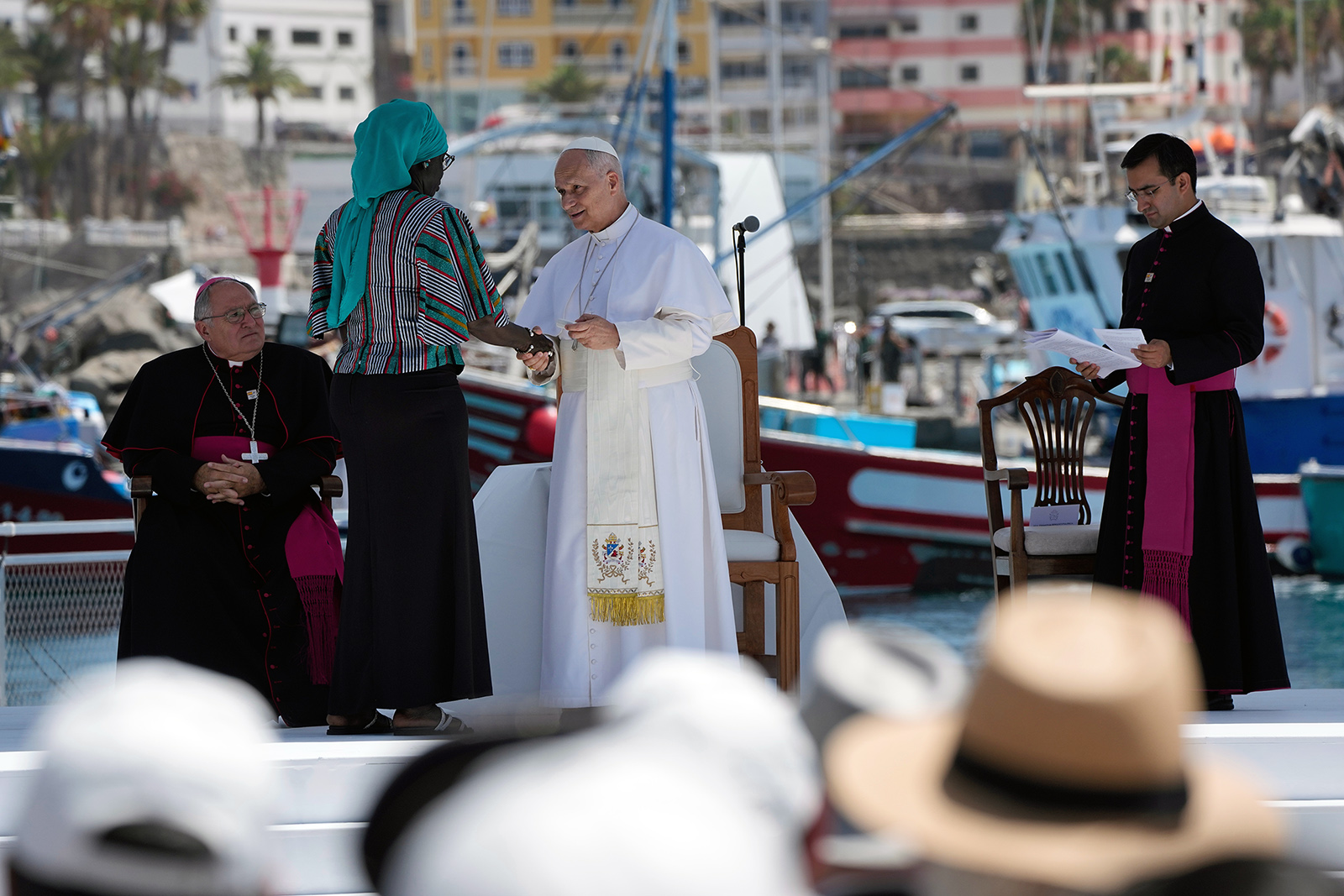
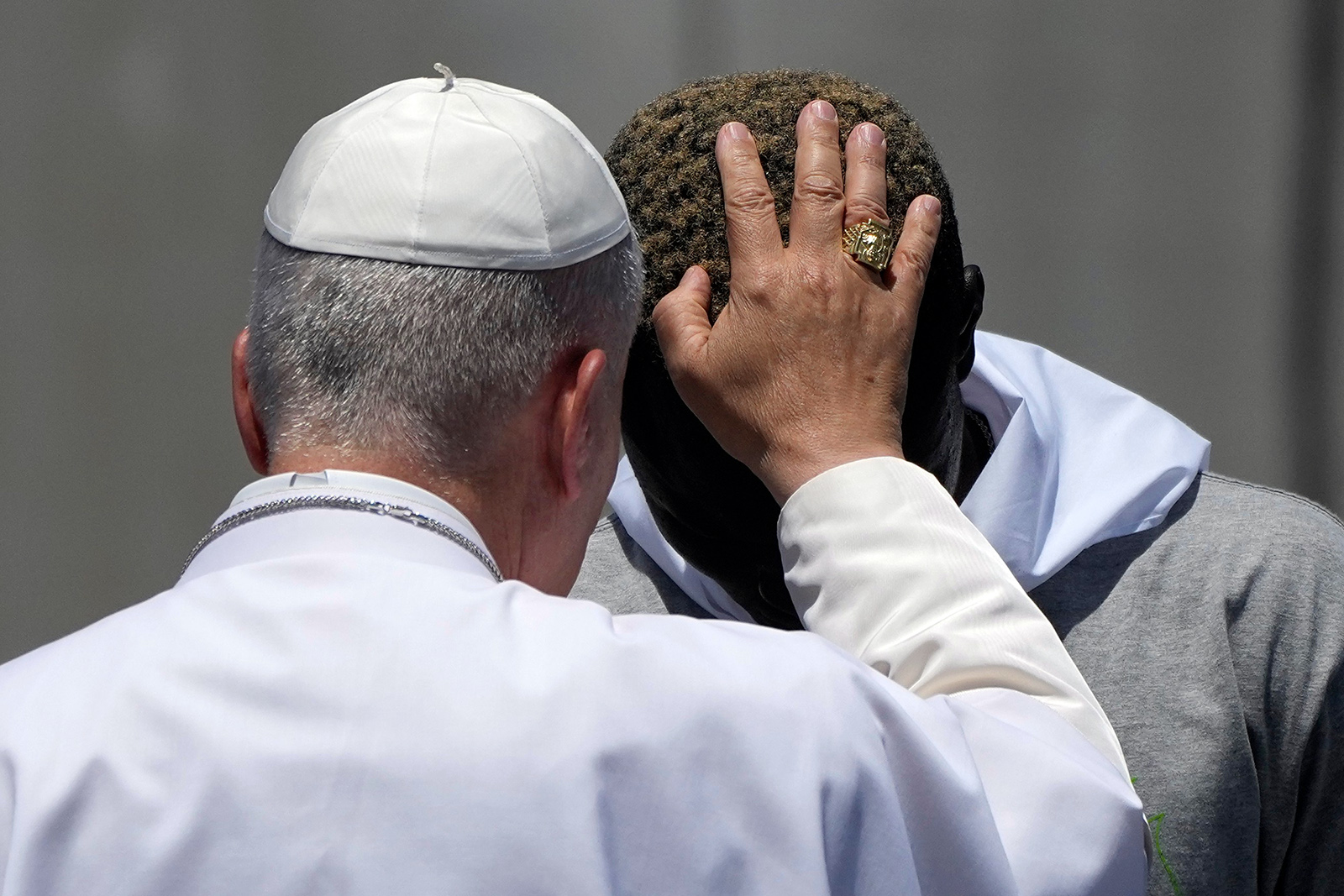
Pope Leo XIV blesses a migrant during a meeting with organizations working with migrants in Arguineguín at the Canary Islands, Spain, Thursday, June 11, 2026. (AP Photo/Alessandra Tarantino)

Claire Giangravè
June 11, 2026 
RNS

LAS PALMAS, Spain (RNS) — Pope Leo XIV delivered a heartfelt speech addressing migrants on Thursday (June 11), reminding them of their worth and dignity even as they suffer at the hands of traffickers and mafias. He also spoke directly to the church and states — especially in Europe — underlining their duty to promote and protect migrants.

Leo said those who exploit migrants are “monsters” — as are people who are indifferent to their suffering. He called for a “conversion,” allowing people to see migrants beyond mere statistics.

“Only then can we understand that that little girl could be our daughter, and that those faces could be part of our family. Then, our conscience is left with no excuses,” he said. “Human dignity has no passport and does not lose its value when crossing a border.”

He made his remarks at the port of Arguineguín, in Las Palmas in Gran Canary Island, where he listened to the stories of migrants and people who help them. Leo is visiting the Canary Islands for the last leg of his weeklong visit to Spain.

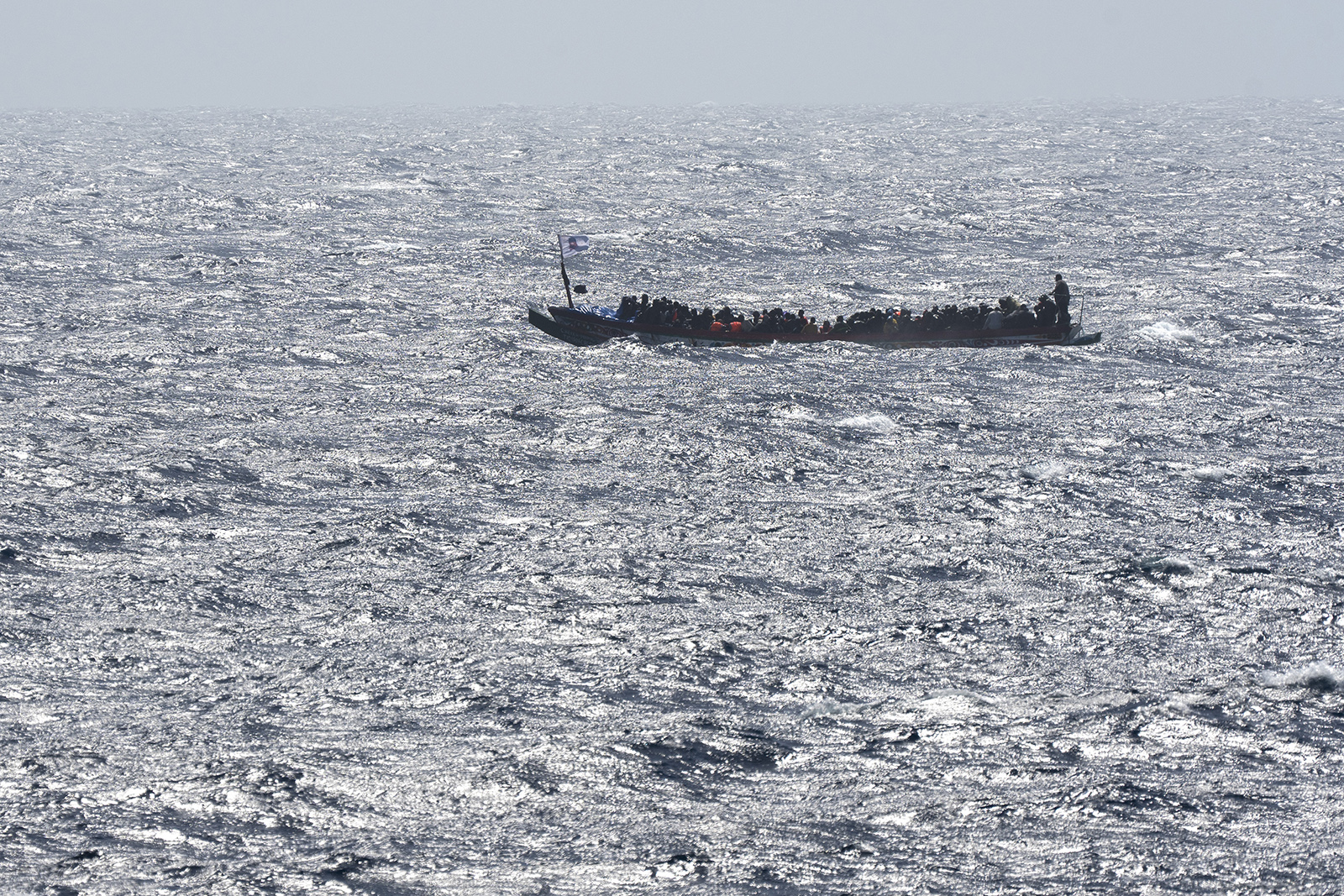
While the Canaries, eight islands roughly 60 miles from the African coast, may be considered a vacation spot for wealthy Europeans, the reality on the ground tells a deadlier tale, where tens of thousands of migrants arrive each year stranded on its rocky shores and thousands more die in its surrounding waters.

Arguineguín became known as the port of shame in 2020, when more than 3,000 migrants crammed into a space meant for 500. Photos of exhausted migrants, who had traveled the deadly Atlantic route from West Africa, sleeping on concrete exposed an inability to manage the crisis.


A volunteer meets Pope Leo XIV during a meeting with organizations working with migrants in Arguineguín at the Canary Islands, Spain, Thursday, June 11, 2026. (AP Photo/Alessandra Tarantino)

Today, Arguineguín wants to rebrand itself as a “port of hope” as volunteers and Catholic charities work to help the migrants and refugees, who arrive in the islands aboard makeshift boats called “cayucos” and “pateras.”

Tito Villarmea, captain of the salvage boat Guardamar Urania, has reportedly saved more than 20,000 people as he patrols the ocean near the islands. Addressing the pope at the pier, he recalled saving a woman who cried desperately over the body of her teenage daughter, who had died on the journey.


“I wish we didn’t have to save anyone again,” he said. “Let’s work as a society to reduce this tragedy and build a more just world.”

In 2024, the Canaries received a record 46,843 migrants. Arrivals have declined in recent years after Spain and the European Union struck deals with Mauritania, Senegal and Morocco to intercept departures and increase patrols. The crossing has also grown proportionally deadlier, with a greater number of those attempting the journey perishing; last year, nearly 3,090 people died trying to reach Spain, through the Canary Islands or the Balearic route, and 1,300 have already died in the first six months of 2026, according to the Spanish nongovernmental organization Caminando Fronteras.

Just over 3,000 migrants have arrived to the islands this year, most from Senegal, Mali, Mauritania, Gambia and other regions of sub-Saharian Africa. Other immigrants arrive via air from Latin America, especially Venezuela and Cuba.

In his address, Leo called migrant deaths and exploitation a tragedy and said they “must serve as an appeal to the conscience of the nations of origin,” which have an obligation to provide the conditions for human flourishing. He also urged transit nations to protect the vulnerable from criminal networks and said the international community should promote cooperation.

The pope made an “appeal to the conscience of Europe, which cannot claim to uphold human dignity while growing accustomed to the Mediterranean and the Atlantic becoming unmarked graves.”

The EU Pact on Migration and Asylum, a new legal framework for how European countries manage immigration, takes effect Friday. Human-rights organizations warn that the pact, a set of 10 pieces of legislation adopted in 2024, opens the door for large deportation efforts to migrant camps in Africa. “We are worried because European politics is restrictive, it’s not aimed at building bridges but at building walls,” said the Rev. Fernando Redondo, who oversees the migration office of the Spanish bishops’ conference.


Critics have likened the policy to U.S. President Donald Trump’s recent limitation on green card applications, which must now be filed from outside the U.S.

Ahead of the implementation of the EU Pact on Migration and Asylum, Spain granted one year of legal status to immigrants lacking authorization, benefiting potentially 500,000 migrants living in the country. In January, when the initiative was announced, Spanish Minister of Migration Elma Saiz told journalists the government is ”dignifying and recognizing people who are already in our country.”


Migrants crowd a wooden boat as they sail to the port in La Restinga on the Canary island of El Hierro, Spain, Sunday, Aug. 18, 2024. The migrants sailed for seven days from the coast of Senegal. (AP Photo/Maria Ximena)

At the event, Leo addressed immigrants directly. “I want to bow before your dignity,” he said. “You are not just numbers or files. You are people who have left behind families and homes. You have dreams that no one has the right to despise.”

He told migrants they “have a right to be protected” and to not fall for the “siren songs” of those who want to exploit them. “They are industries of death,” he said.

The pope heard the testimony of Blessing, a victim of sexual trafficking, which was read by another woman to protect her identity. Born in Nigeria, Blessing sought to leave the abject conditions of her life. She said the mafia performed a “juju” ritual on her, commonly used in West Africa to bind and “curse” people into submission. After, they told her she had a 25,000 euro debt.

“So, my captivity began,” the testimony said, recounting years of abuse, violence and rape. She told of her journey to the Canaries, when one of her captors got her pregnant, later taking her child away and forced her into prostitution. She thanked the Catholic charities for freeing her from the cycle of violence she endured and for reuniting her with her son.

Catholic charities assist over 220,000 migrants in the Canaries, including more than 2,000 minors, according to the secretary-general of the local Caritas charity network. The local church also signed an agreement in 2023 of “Atlantic hospitality” to work together with African countries to help migrants.

Leo said that even though some put a price on the body of migrants, trap them in their past or treat them like objects, God sees their intrinsic humanity.

“Your life does not belong to those who harmed you; your body does not belong to those who took advantage of you; your days do not belong to those who wanted to chain you to fear,” he said. “Your life belongs to God, who has given you a dignity that cannot be taken from you. We want to walk with you until that truth feels stronger than the pain.”

Between 2024 and 2025, Spanish police uncovered a network responsible for trafficking minors in the Canary Islands, to bring them to France. And in 2021, more than 150 boat drivers were arrested in Gran Canary for smuggling, even though they are often migrants themselves and victims of human trafficking rings.

“Even today, monsters lurk in these seas: mafias that profit from despair, traffickers who enslave women and children, and those whose indifference allows the poor to be swallowed up by exploitation or forgetfulness,” Leo said. Repeatedly, the pope stated that the church and believers “cannot remain silent” before the suffering of immigrants and refugees.

“Every boat that arrives brings a question along with the migrants: What kind of world have we built, if so many brothers and sisters must risk death to seek life?” he said.

The pope questioned how people today will be judged by history for becoming accustomed to migrant suffering and death, an echo of his recent encyclical, “Magnifica Humanitas” (Magnificent Humanity), where he stated that the treatment of migrants is a “litmus test” for democracies.

“Today, here by the sea, every individual that arrives asks us what remains of our humanity. Sooner or later, it will be known whether we protected life or whether we yielded to indifference,” he said.

Leo concluded the ceremony by throwing a wreath into the water to honor migrant deaths, followed by a moment of silent reflection.


Thursday, June 11, 2026

Illicit gold networks fuelling conflict, organised crime across Africa and global south, GI-TOC warns

Illicit gold networks fuelling conflict, organised crime across Africa and global south, GI-TOC warns
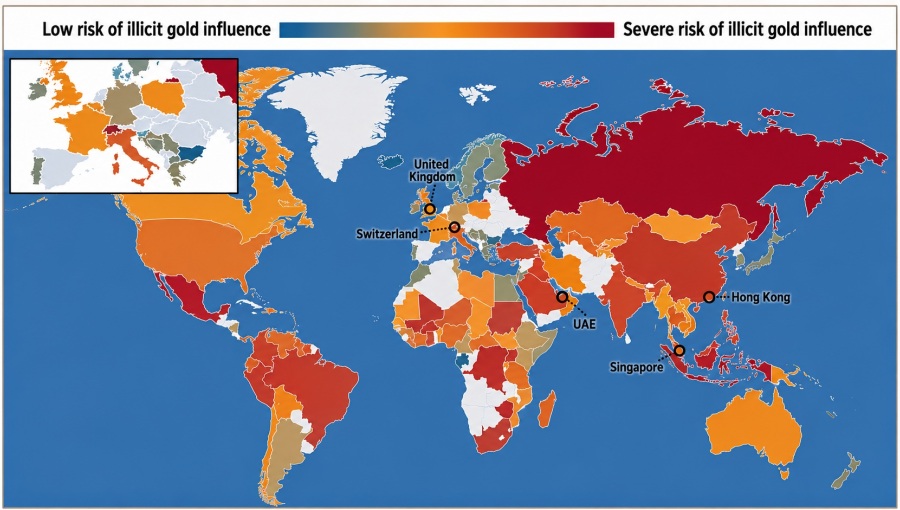
The GI-TOC’s global risk assessment of illicit gold influence / GI-TOCFacebook
By Brian Kenety June 11, 2026

Gold is increasingly being weaponised by states, criminal networks and sanctioned regimes as a strategic financial tool, while regulatory systems are failing to keep pace with rapidly evolving illicit supply chains, according to a new report from the Global Initiative Against Transnational Organized Crime (GI-TOC).

The report, Commodity, Currency, Crime: How Illicit Gold Markets are Outpacing Global Responses, argues that illicit gold has become one of the world's most consequential criminal markets, acting as a financial backbone for organised crime, sanctions evasion, conflict financing and corruption. The authors contend that criminal actors increasingly control entire gold supply chains, from extraction and processing to logistics and trade, making illicit flows harder to detect and disrupt.

Released in Geneva on June 9, the 72-page report comes amid record central bank gold purchases and a sharp rally in bullion prices. According to data cited by GI-TOC, gold prices have risen nearly 587% over the past two decades, reaching record highs as investors and governments seek protection from geopolitical uncertainty and currency volatility.

Africa accounts for a significant share of global gold production, with major producers including Ghana, South Africa, Mali, Sudan, Burkina Faso, Tanzania and the DRC. The report argues that the continent's combination of extensive mineral resources, weak governance in some jurisdictions and expanding informal mining sectors has made it particularly vulnerable to illicit gold flows.

The organisation warns that gold is increasingly being used as an instrument of "geocriminality" — the deployment of illicit financial networks by states to achieve geopolitical objectives. Russia, Iran, Venezuela and Sudan are identified as examples of countries that have used gold to circumvent sanctions, access hard currency and sustain governments that might otherwise face financial isolation.

“However, in practice, it can be difficult to differentiate between policy, selective enforcement of regulations and laws, and geocriminality. For example, although Chinese private sector entities have been implicated in the expansion of illicit gold mining in Ghana, Beijing has repeatedly denied involvement or support for illicit operations. In June 2025, the Chinese ambassador to Ghana asserted that it was a ‘significant injustice’ to blame Beijing for the spread of illegal gold mining,” the report says.

Ghana, Africa's leading gold producer in recent years, has struggled with illegal small-scale mining, known locally as galamsey. The issue has become a major political and environmental concern because of its impact on rivers, forests and agricultural land, while authorities have repeatedly linked parts of the sector to foreign-backed illicit mining operations.

GI-TOC said Russia has systematically expanded its use of gold following its invasion of Ukraine, including through military-linked networks operating across Africa. The report notes that Russian-linked entities, including Wagner Group and Russian military-linked structures including Africa Corps, have secured access to gold resources in countries such as Sudan, Mali and the Central African Republic.

Criminal networks industrialise illicit mining

The study argues that conventional approaches to tackling illicit gold remain too narrowly focused on artisanal and small-scale mining. Instead, the report identifies systemic vulnerabilities throughout the entire gold ecosystem, including industrial-scale illegal mining operations, opaque refining networks, under-regulated commodity markets, recycled gold channels and emerging cryptocurrency-linked gold transactions.

“Illicit gold operations also drive demand for other illicit markets. In South Africa, for example, the same syndicates that control illegal mining operations are linked to human trafficking, with miners recruited under false pretences or coerced into working in lethal conditions, as the 2024 Stilfontein mine standoff revealed,” the report states.

“The syndicates are also connected to arms trafficking and Lesotho organized crime groups with political links. A secondary informal economy has emerged around the mines, with syndicates supplying food, liquor, drugs and sex workers to underground operations, compounding the human exploitation. Consequently, illegal gold mining in South Africa anchors an entire criminal ecosystem.”

The organisation also highlighted the growing industrialisation of illegal mining operations across Africa, Latin America and Asia. Foreign financing, weak governance and regulatory capture have transformed many illicit mining activities into large-scale enterprises that bear little resemblance to traditional artisanal mining. Criminal groups are increasingly controlling processing facilities, logistics networks and other strategic bottlenecks across supply chains.

A major concern identified by the report is the lack of transparency across global bullion markets. GI-TOC described international bullion centres such as the United Kingdom, Switzerland, the United Arab Emirates (UAE), China and the United States as significant blind spots because they handle large volumes of global gold trade while maintaining limited transparency over bullion activities and gold provenance.

The report further argues that central banks are among the least scrutinised participants in the gold market despite record levels of purchasing. Domestic buying programmes in some producing countries risk absorbing illegally mined gold, while gold swaps and reserve accumulation programmes can introduce additional provenance concerns.

GI-TOC warned that illicit gold should not be viewed as a niche commodity crime but rather as an accelerant economy that amplifies broader criminal activity. The proceeds from illicit gold mining and trading are linked to environmental destruction, deforestation, mercury pollution, wildlife trafficking, illicit cattle ranching, arms purchases, conflict financing and human rights abuses.

“Links between gold and conflict have been well documented and are the focus of a multitude of regulatory instruments. While gold can be an important source of revenue for armed groups, a focus on conflict financing and restrictive application of terms such as ‘conflict mineral’ often produces a narrow view centred on non-state armed group revenues,” the report says.

“This obscures understanding of the broader political economy of gold and the state and other actors embedded within it, while overlooking the root causes of conflict and the more nuanced roles gold plays in conflict. For example, efforts to cut off conflict financing can have the effect of building the legitimacy of non-state armed groups among local populations. Securing livelihoods and other forms of service delivery has long been a tactic of organized crime groups to undermine state legitimacy while building their own.

“Such is the case in West Africa, where ASGM is a major economic driver and a critical source of livelihoods. Jama’at Nasr al-Islam wal Muslimin (JNIM), the most powerful violent extremist organization in the Sahel, primarily profits from gold through taxation of mining sites and transport routes, and has engaged in gold-for-weapons barter exchanges. By defending miners’ access to sites against state crackdowns, JNIM also builds legitimacy with local populations. Heavy-handed state security responses, including the targeting of mine sites, have compounded the security challenge.”

GI-TOC is calling for a fundamental overhaul of the international response, including mandatory supply-chain due diligence, stronger anti-money laundering oversight, enhanced scrutiny of international bullion centres, improved customs and trade data collection, and legally binding global standards governing gold supply chains. Existing voluntary frameworks, it argued, have proven insufficient to address increasingly sophisticated criminal activity.

"The gold market can become more resilient to crime, but only if the actors with the greatest systemic influence accept that their economic interests are better served by a more transparent, rules-based market than by the opacity that currently prevails," GI-TOC senior expert Sophia Pickles said.

Africa emerges as a frontline of illicit gold flows

Zimbabwe is emerging as an increasingly important node in Africa’s illicit gold economy, where organised crime, arms trafficking, insurgent financing and cross-border smuggling are becoming deeply interconnected, according to GI-TOC.

The report argues that illicit gold has evolved into a strategic source of financing for organised crime, armed groups and corrupt political networks. It warns that gold is no longer merely a commodity but increasingly functions as "a weapon of war and geopolitics", financing conflict, sanctions evasion and transnational criminal activity across multiple continents.

The study places several other African countries among the world's highest-risk jurisdictions for illicit gold influence, including Sudan, Mali, Burkina Faso, Ghana, South Africa and the DRC. According to GI-TOC's new risk framework, these countries combine substantial gold production with elevated levels of organised criminal activity linked to natural resources.

The report finds that criminal convergence around gold is accelerating across Africa. Gold trafficking increasingly intersects with arms smuggling, human trafficking, drug trafficking, financial crime and corruption, involving not only criminal syndicates but also politically connected actors and private-sector facilitators.

"Criminal convergence is increasingly a central feature of organized crime operations in gold-rich regions," the report states.

For southern Africa, the findings are particularly relevant to Zimbabwe. The report identifies the country as part of a regional network of illicit gold flows that stretches from South Africa through Zimbabwe and onward to international trading hubs. Zimbabwe is identified by the report's risk-assessment framework as a jurisdiction facing elevated exposure to illicit gold-market influence despite comparatively modest officially recorded gold trade volumes, reflecting concerns that significant illicit flows may be escaping official statistics.

The report argues that African conflicts are increasingly shaped by competition over gold resources. In the Sahel, militant organisations such as Jama’at Nasr al-Islam wal Muslimin (JNIM) and Islamic State Sahel Province have expanded their influence over mining regions, taxing production, controlling transport corridors and using gold revenues to finance military operations.

"Gold plays a critical role in armed groups' efforts to build legitimacy, exemplified in West Africa," the report notes, adding that foreign actors are increasingly influencing African conflicts through financing arrangements and gold sourcing networks.

The report also links African gold markets to broader geopolitical competition, arguing that states are increasingly using illicit commercial networks to pursue strategic objectives. Russia's activities in Sudan, Mali and the Central African Republic receive particular attention. The report notes that Russian-linked entities have secured privileged access to gold resources in exchange for security support and military assistance.

Sudan is cited as one of the clearest examples of gold's strategic role in modern conflicts. According to the report, both the Sudanese Armed Forces and the Rapid Support Forces have benefited from external backing linked to gold revenues, while international actors have sought access to Sudanese gold through refining, trading and investment arrangements.

Dubai and regional hubs under scrutiny

The study also identifies Rwanda, Uganda, Kenya, Cameroon and Egypt as important transit or laundering hubs where gold originating in conflict zones can enter formal international supply chains with limited scrutiny. Rwanda receives particular attention because official export volumes have significantly exceeded estimated domestic production in recent years, raising questions about the origin of some exports.

Dubai remains the dominant destination for much of Africa's artisanal and small-scale gold output. The report notes that the UAE continues to receive substantial volumes of African gold, including material linked to conflict zones and illicit supply chains. Despite regulatory reforms introduced in 2023, GI-TOC argues that implementation gaps remain significant.

Global oversight struggles to keep pace

One of the report's central conclusions is that current international responses remain inadequate because they focus too narrowly on artisanal mining and conflict minerals. Instead, the organisation argues that illicit gold now permeates the entire ecosystem, from extraction and processing to international bullion trading, financial markets and even central-bank purchasing programmes.

"The systemic vulnerabilities that enable its circulation span physical and financial supply chains," the authors write.

The report warns that foreign financing is driving the industrialisation of illicit mining operations across Africa, allowing criminal groups to control processing plants, logistics networks and export channels.

"Criminal mining operations are increasingly industrialized and growing in scale," GI-TOC states, adding that foreign investment is a key driver of this trend across Africa, Latin America and Asia.

The GI-TOC identifies four distinct clusters of risk:

High-production, high-criminality producer countries. Russia, China, Ghana, Indonesia, Peru, Mexico, Sudan, Mali, Burkina Faso, Colombia, Brazil, South Africa, Venezuela and the DRC produce substantial volumes of gold under conditions of significant criminal influence. Several other countries are closely clustered in this group, reflecting the visibility and reach of non-renewable criminal influence in gold-producing states.

High-import, high-criminality hubs. The UAE, Switzerland, China, Hong Kong SAR, Turkey and India sit at the top centre of the chart, where large refining and trading volumes meet high resource crime exposure.

High-impact destination markets with moderate criminal influence. The UK, the US and Singapore sit further to the right of the chart, lower on the criminal influence axis but with import volumes large enough that any illicit gold entering these markets has outsized downstream consequences. Countries on the fringe can also play a key role as transit or laundering hubs. For example, Armenia was reported to be key to Russian sanctions evasion, importing billions of dollars’ worth of Russian gold in 2023 and 2024.

High-criminality jurisdictions with low recorded flows. The scoring also accounts for countries where highly organised crime scores coincide with low recorded gold production and import volumes. The absence of recorded volumes is not evidence of low risk but its opposite: criminality is extensive enough for substantial illicit flows to escape official statistics; for example, known gold producers and transit hubs Myanmar, South Sudan, Rwanda, Chad and Cameroon.

GI-TOC concludes that Africa sits at the centre of a rapidly evolving global gold economy in which criminal organisations, insurgent groups, foreign governments and international traders increasingly intersect. Without stronger transparency requirements, more rigorous due diligence and tighter oversight of global bullion centres, the organisation warns that illicit gold markets will continue to outpace enforcement efforts and undermine efforts to improve transparency across global commodity supply chains.

Wednesday, June 10, 2026

Is US Influence In Africa At A Crossroads? – Analysis

June 10, 2026 
Published by the Foreign Policy Research Institute
By Charles A. Ray

(FPRI) — The United States enters the second half of the 2020s facing a fundamental question in Africa: Is Washington still seen as a strategic partner of choice, or is it becoming a transactional power whose engagement is seen as narrow, punitive, and unpredictable? This is no longer a theoretical question. It is now being tested in southern Africa, West Africa, the Sahel, and in the mineral-rich heart of the African continent.

Strained US-South African relations, friction with Nigeria over claims of religious persecution, renewed efforts to regain some counterterrorism footing in the Sahel, and the controversies around third-country deportation deals and minerals diplomacy all point to a larger issue. While the United States is not pulling away from Africa altogether, it is redefining its presence in ways that could either sharpen its influence or erode it.

For decades, American influence in Africa has been based on a mix of security cooperation, development assistance, diplomatic engagement, and support for good governance and public health. Such support was never without contradictions, but it did give Washington a broader identity than that of a purely extractive or coercive actor. Currently, the pattern of US engagement looks different. It is more selective, more openly associated with immediate political priorities, and much more willing to link diplomatic engagement to issues such as migration control, ideological signaling, or commercial access to strategic minerals. On a continent where governments already have alternatives to China or Russia, such as the Gulf states, Turkey, India, and the European Union, this shift matters. African leaders are increasingly able to hedge, diversify, and resist external pressure. If the United States appears to them to be mainly interested in punitive actions, one-off deals, or symbolic confrontations, it risks losing not just goodwill but also long-term leverage.

South Africa: From Strategic Disagreement to Diplomatic Rupture

The most visible and significant deterioration has been in US relations with South Africa. President Donald Trump’s move to disinvite South Africa from the 2026 G20 Summit in Miami followed an already dramatic breakdown, in which US officials boycotted the South African-hosted Johannesburg summit. In addition, the Trump administration escalated claims that white Afrikaners were being persecuted or subjected to “genocide,” allegations that South African officials, and even groups representing Afrikaners, have strongly rejected. Despite no substantiation of the claims, the US administration prioritized refugee admissions for white South Africans even as refugee access was curtailed for many other groups. Whether these steps are viewed as moral positioning or domestic political theater, the effect is the same in Africa: The United States looks willing to rupture ties with one of the continent’s most important powers on the basis of a narrative that many Africans see as ideologically loaded and factually questionable.


Feelings like this matter because South Africa is not just another bilateral partner. It is a leading voice in the African Union, Africa’s largest economy, a member of numerous multilateral organizations, and a country whose positions often shape broader African perceptions. A rupture with Pretoria, therefore, has an impact beyond trade or bilateral diplomatic relations. It signals to other African governments that Washington might be prepared to downgrade relations with an influential African nation not over conventional disputes such as sanctions, military alignment, or treaty obligations, but over a polarizing culture war issue. Many are likely to read this less as principled diplomacy than as evidence that domestic American policies can redefine foreign policy priorities toward the continent.

This could have significant consequences. In the first place, the dispute with South Africa weakens US credibility as a defender of multilateralism at a time when African governments are skeptical of Western selectivity. Secondly, it risks pushing South Africa to deepen cooperation with other powers, including China and Russia, not necessarily out of ideological agreement but as a hedge against US hostility and unreliability. Thirdly, it might reinforce a broader continental impression that the United States is comfortable engaging African countries only when they align with US domestic priorities. Even those governments that disagree with South Africa on some issues might still resent what they see as public humiliation of an African power at the first African-hosted G20 Summit.


In diplomacy, symbolism is important, and it can be costly for the United States.
Nigeria: An Ideological Cloud Over Security Cooperation

While South Africa is an example of an increasing diplomatic rupture, Nigeria is a more complicated situation. It is an illustration of deep strategic importance combined with rising political distrust. Nigeria is central to any serious American engagement in West Africa. With over 240 million people, it is the most populous country in Africa; it is one of its largest economies; it is a major security player in the Lake Chad Basin; and it is a critical player in regional diplomacy. But US-Nigerian relations are strained because the Trump administration has redesignated it as a Country of Particular Concern, based on what the US government describes as mass-scale persecution of Christians, and the increasingly heated rhetoric from Washington that frames violence in Nigeria primarily through the lens of Christian persecution. While this framing resonates strongly with segments of the American right’s political base, in Nigeria it is viewed by many as incomplete, politicized, and dangerously provocative.


Violence in Nigeria is real and serious, and Christian communities have suffered grievously in parts of the country. But Nigerian officials credibly argue that the violence also involves jihadist insurgency, banditry, communal conflict, weak policing, and governance failures rather than a single, state-directed campaign of religious persecution. In a country whose population is almost evenly split between Christians, who live in the south, and Muslims, mostly in the north, where attacks have been concentrated, and where the religion of victims is not often reported—or relevant—it is impossible to conclusively attribute religious persecution as a motive. When Washington ignores these distinctions, it risks alienating Abuja and oversimplifying a crisis that requires careful analysis and cooperation rather than mere denunciation. Washington’s calls for aid conditionality, sanctions, visa restrictions, and pressure against sharia and blasphemy laws might appeal to some audiences in the United States, but they risk making Nigerian leaders more defensive and less willing to coordinate closely with the United States on security matters.

Neither side, though, can afford a complete breakdown of the relationship. The United States needs Nigeria’s cooperation on intelligence, regional stabilization, energy, maritime security in the Gulf of Guinea, and counterterrorism activities in the Lake Chad corridor. Nigeria, on the other hand, benefits greatly from US training, intelligence, diplomatic support, and economic ties. For this reason, outright rupture of the relationship is not the main risk. What is more probable is a more corrosive relationship, one that remains functionally intact, but that is less trusting, less open, and more transactional. If the United States is seen as lecturing Nigeria from a narrow ideological frame while simultaneously asking for deeper security cooperation, its leverage will be weaker. Abuja might continue to work with the United States where interests overlap, but it might also diversify its partnership and resist American pressure more openly and directly.


The Sahel: Counterterrorism Cooperation Returns, But With Tighter Constraints

The Sahel is another stress test of US influence in Africa. After the loss of key access points, particularly in Niger, where Washington had a drone base, the United States has been looking for ways to reestablish a viable counterterrorism posture, not just in West Africa, but in the broader Sahel.

The current Trump administration appears to be renewing its focus on the Sahel, as it seeks to renew ties with the Alliance of Sahel States (AES), Mali, Niger, and Burkina Faso, with delegations to the capitals of the three countries discussing US military support in exchange for access to their natural resources. Washington would consider providing weapons, equipment, and potentially personnel to aid local forces fighting extremists. In return, the United States would get priority access to uranium, gold, and other critical minerals. This approach emphasizes intelligence sharing, training, and advisory missions, rather than large-scale deployments of US military forces. While this is, on the surface, a pragmatic-sounding adjustment to current political realities, the AES, which was formed in 2023, already has strong ties to Russia, including the presence of military advisors, training support, and supply of arms, and since 2025 AES foreign ministers have concluded agreements with Russia on security, energy, and higher education. This limits America’s freedom of action in the region.


Some progress has been made on moving this new agenda forward, with an intelligence cooperation agreement with Mali near completion and the removal of sanctions on some senior Malian defense personnel, but despite the potential of getting Washington back in the good graces of Sahelian countries, these changes in US policy are unlikely to offset Russian or Chinese influence in the region. Unfettered US access to the Sahel will be difficult because the environment has changed in three significant ways. First, access to the region is now contested. Governments that have survived coups or insurgencies are more suspicious of Western intentions and more willing to use anti-Western rhetoric to bolster regime legitimacy. Second, the external competition is greater. Russia offers assistance with fewer political conditions attached, while China and the Gulf states expand their economic influence through infrastructure construction, mining, and commercial deals. Even Turkey and Europe are ahead of the United States in terms of trade with the Sahel. Third, the populations of the Sahel are disillusioned with security agreements that promised stability but failed to deliver, and US competitors, Russia in particular, have used this in their propaganda campaigns. In this context, even a small US footprint can be portrayed as neo-imperialism rather than a mutually beneficial partnership.

This presents the United States with a serious strategic dilemma. If Washington’s focus is narrowly on counterterrorism, it might regain some operational advantage but lose credibility with countries on the continent on governance and democratic norms. If, on the other hand, it insists too heavily on constitutional order and political reform, it might find itself excluded from the security spaces it considers vital.

A logical hybrid strategy, which the current administration shows no sign of pursuing, would be to intensify work with cooperative countries like Nigeria, other coastal West African partners, and perhaps even northern anchor states outside the coup belt, while monitoring Sahelian threats from the periphery. While this is the most practical and realistic option, it’s not the same as influence. It’s damage limitation, which African leaders will recognize. On the Sahel, the United States seems to be in a damned if you do, damned if you don’t situation. The question then becomes, does it focus on short-term gains, or swallow the pain and focus on long-term credibility in the rest of the continent? We can only wait and see.


Assistance, Minerals, and Deportation Deals: The Cost of Transactionalism

A recent issue that highlights the current administration’s approach to Africa is the growing overlap among strategic minerals diplomacy, aid leverage, and domestic immigration enforcement.

The DRC has drawn a lot of attention because of US efforts to secure access to the critical minerals in its conflict-ridden eastern region, and because it has become part of a network of African countries accepting third-country deportees from the United States. There are reports of similar agreements with countries such as Rwanda, Eswatini, and Sierra Leone. Critics of the deportation agreements, such as Human Rights Watch(HRW), argue that these opaque deals violate human rights law and are “part of a policy that is designed to instrumentalize human suffering as a deterrent to migration.” The governments implementing such deals risk violating international law. Human Rights Watch claims to have seen a copy of the agreement with Rwanda that includes an inducement of approximately $7.5 million in US financial support in exchange for Rwanda’s acceptance of third-country deportees. The agreement with Eswatini, according to HRW. Offers $5.1 million to build Eswatini’s border and migration management capacity in exchange for the country accepting up to 160 deportees from the United States. These agreements effectively turn African governments into subcontractors for US immigration control operations, and, even where they are accepted willingly, the public optics can be damaging in the long term.


Though not as serious in human rights terms as the deportation deals, the reported use by Washington of assistance funding as leverage to secure access to critical minerals is just as controversial.

In November 2025, according to a report in Al Jazeera, the United States approached Zimbabwe with an offer of $300 million in funding in exchange for sensitive health data, which Harare rejected, and around the same time, Washington announced $1 billion in health funding for Zambia, which Lusaka said was problematic because the United States sought access to the country’s minerals. In the minerals deal with the DRC, as mentioned above, the situation is even shakier due to the DRC’s security situation and the weakness of the DRC government. The deal could possibly entail the commitment of US security resources, including ‘boots on the ground’ in one of the least stable countries in the world.

Diversifying and securing US mineral supply chains is essential for economic and national security. It is also important to support African nations’ efforts to exploit mineral wealth for sustainable growth and to reduce extremist violence. But African audiences are unlikely to appreciate the nuances of these policy issues. If a country appears to be receiving security support or mineral investments at the same time it agrees to accept deportees who are not nationals of the country, or there is a sudden influx of American mining companies where there were none before, many will conclude that Washington is monetizing vulnerability. That impression is intensified by Washington’s perceived shift away from traditional development assistance and toward dealmaking framed explicitly around US gain. From the American perspective, this might be candid realism. But, from African perspectives, it looks like coercive diplomacy dressed up as partnership. The difference is not semantic. It goes directly to whether the United States is seen as a trusted and reliable actor or a neo-colonial exploiter to be used when unavoidable.

That doesn’t mean that the United States should not be interested in African critical minerals. Quite the contrary. Competition over cobalt, lithium, copper, tantalum, and rare earth supply chains will be central to global industrial policy and security for a long time to come, and the United States has compelling reasons to avoid overdependence on Chinese-dominated systems. But there is a difference between building mutually beneficial mineral partnerships and appearing to tie security guarantees, diplomatic mediation, or migration deals to access to extract these minerals. If Africans believe that every American initiative ultimately serves a narrow resource agenda, Washington’s strategic reach might become shallower even in areas where its commercial footprint is large. Influence is not measured by contracts signed; it’s measured by whether partners believe the relationship has mutual value.


What Does All This Mean for US Influence in Africa in the Future?

In the coming years, US influence in Africa is likely to fluctuate rather than simply grow stronger or weaker. The United States will remain consequential because it offers many African states access to finance, technology, military training, intelligence, higher education, health partnerships, and diplomatic clout. In times of crisis, the United States can still make an enormous difference. But influence will increasingly depend on whether African governments see US engagement as broad-based and dependable, or as selective and punitive. The current trend points toward selective influence: stronger in nations or sectors where American interests are immediate, weaker in the broader contest for legitimacy and long-term political trust.


This loss of legitimacy and trust matters because the United States no longer operates in an arena where African governments have few alternatives, and where it provided a clear alternative to extractive countries like China and Russia. China is still deeply entrenched in infrastructure, trade, and mining. Russia continues to exploit security vacuums and elite insecurity, particularly in fragile states. The countries of the Persian Gulf are expanding investment, logistics, and political influence, and Turkey and India are also broadening their footprints. In such a competitive environment, an American strategy centered on coercive pressure, punishment, or one-sided dealmaking is unlikely to generate durable alignments. Some African governments might still accept American offers, but they will do so for short-term tactical reasons rather than long-term loyalty. They are likely to shop around, compare offers, and push back when US demands seem politically costly at home.

There is, therefore, considerable reputational risk for Washington. If the United States is seen as championing refugee protection for white Afrikaners while restricting other refugee channels, invoking religious freedom in Nigeria in ways that are viewed as partisan, seeking renewed counterterrorism access without broader political vision, and using aid to achieve mineral access or support for America’s deportation problems, a coherent image begins to emerge. It is an image of a powerful country that is interested in Africa less as a community of sovereign partners than as a set of problems to manage and assets to acquire. That image might be inaccurate and unfair in some respects, but perceptions often matter more than official intent. And in international affairs, reputational damage accumulates quietly before it becomes strategically obvious.

The decline in US influence is not inevitable, at least not permanent. The United States could still preserve, and in some areas even rebuild or increase its influence if it recalibrates its approach to Africa in three ways. First, it would need to treat major African states such as South Africa and Nigeria as strategic interlocutors, even when there are sharp disagreements, instead of turning disputes into public tests of ideological loyalty. Second, it needs to embed security cooperation within a broader framework that includes trade, governance support, education, and health, so that military engagement doesn’t become the only face of US official policy. Third, it would need to ensure that mineral partnerships and migration agreements are transparent, legally defensible, clearly reciprocal, and they are not linked to humanitarian programs. In short, Washington must show that it is not merely transacting with Africa but is investing in relationships.

The disputes now unfolding in Africa are not isolated controversies. Taken together, they reveal a broader transition in US policy from a relatively broad, if at times imperfect, model of engagement to a narrower, more transactional one. The clash with South Africa shows just how quickly political symbolism can wreak havoc with strategic relationships. The strain with Nigeria shows the danger of reducing complex insecurity to a single ideological narrative. The push to regain a foothold in the Sahel for counterterrorism operations shows that military relevance can survive even as political influence fades. And the convergence of minerals diplomacy, aid pressure, and deportation deals shows how easily hard-nosed realism can become reputational self-harm.

The United States is unlikely to pull back completely from Africa in the coming years, if for no other reason than the need to address the counterterrorism issue. But it risks becoming less admired, less trusted, and less able to shape outcomes beyond narrow areas of immediate interest. For some in Washington, that might be acceptable if concrete short-term gains in security, mineral access, and migration control are achieved. But great power influence is not sustained by transactions alone. It depends on credibility, predictability, and partners’ belief that the relationship serves more than one side’s short-term aims. If the United States wants lasting influence in Africa, it will have to prove that it still sees African states not just as instruments of policy or powerless pawns in great-power competition, but as consequential partners in shaping and preserving the international order.


About the author: 
Charles A. Ray, a member of the Board of Trustees and Chair of the Africa Program at the Foreign Policy Research Institute, served as US Ambassador to the Kingdom of Cambodia and the Republic of Zimbabwe.

Source: This article was published by FPRI

About the Foreign Policy Research Institute
Founded in 1955, FPRI is a 501(c)(3) non-profit organization devoted to bringing the insights of scholarship to bear on the development of policies that advance U.S. national interests and seeks to add perspective to events by fitting them into the larger historical and cultural context of international politics.
View all posts by Published by the Foreign Policy Research Institute →