It’s possible that I shall make an ass of myself. But in that case one can always get out of it with a little dialectic. I have, of course, so worded my proposition as to be right either way (K.Marx, Letter to F.Engels on the Indian Mutiny)
Monday, March 09, 2026
To Penalize Iran, Azerbaijan Could Interdict its Caspian Sea Trade
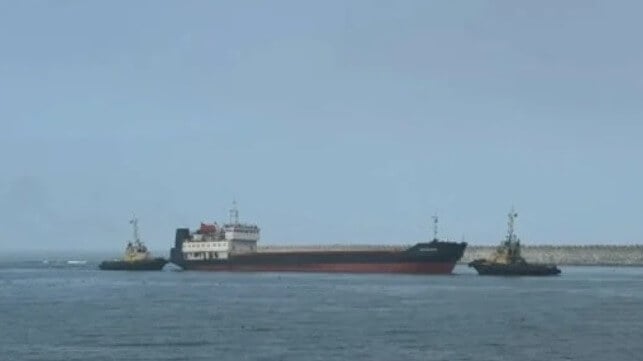
Iranian-flagged cargo ship Caspian Shiva (Port of Makhachkala)
On March 6, Iran’s President Masoud Pezeshkian announced that ‘There will be no further attacks or missile launches towards neighbouring countries, unless attacks against Iran originate from those countries. President Pezeshkian’s influence over the decentralised IRGC command structure which appears to running Iran’s war is unclear, but it should be noted that both the Armed Forces General Staff (separate from the IRGC) and Iran’s Foreign Minister Abbas Araghchi have been denying that Iran has been attacking Gulf countries, despite ample evidence to the contrary, but indicative of the IRGC’s unwillingness to accept political coordination.
Whether Gulf countries accept Pezeshkian's implicit apology, notwithstanding the impact that the attacks will have on the GCC economic model in the long-term, is one matter. What may be even more challenging is whether Azerbaijan will accept Iran’s U-turn, after Iran launched an Arash-2 drone attack on Azerbaijan’s Nakhchivan International Airport, which caused damage to a terminal building and injured two civilians. Azerbaijan responded immediately by closing its land border with Iran, in advance of deciding what other retaliatory measures might be appropriate.
Iran and Azerbaijan have had a fraught relationship in recent years – friendly in a formal sense, but with barely-concealed bitterness beneath the surface. Iran treats Azerbaijan with some arrogance, as if it is within its sphere of influence and should obey orders. It occasionally threatens or issues Azerbaijan instructions, which are ignored, or makes policy announcements affecting both countries without coordination beforehand – as when Iran announced that road and rail routes to Russia were to be opened, without noting they would need to pass through Azeri territory.
There have been two particular incidents – an attack in January 2023 on the Azeri Embassy in Tehran which killed a member of staff, and thwarted attempts to set up a Hezbollah-type organization in Azerbaijan. The Azeris suffer these insults stoically, borne of nationalist sentiment and confidence, particularly boosted since the successful war in 2023 to re-integrate Armenian-populated Nagorno-Karabakh. Nor has Azerbaijan sought to inflame tensions amongst the Azeri ethnic minority – Iran’s largest – in Northern Iran.
More generally, Iran is worried that Azerbaijan may impede its truck route through the Lachin Corridor in Armenia, and that Azerbaijan enjoys good relations with Israel – which is one reason why they won their war against Armenia.
Why should the maritime community have an interest in this Caucasian tale of intrigue and fraught relationships? Firstly, Azerbaijan may decide enough is enough, and actively support the Azeri separatist cause in Iran. This could be highly dangerous for Iran.
The other possibility is that Azerbaijan will extend the closure of its land borders with Iran to include the right of Iranian shipping to pass through Azeri territorial waters, disrupting Iran’s main means of transport with Russia – both for arms and ammunition, and other crisis-essentials which will soon run short in an Iran where maritime trade via the Gulf is at a standstill.
There has never hitherto been a major dispute interrupting good relations between the five countries bordering the Caspian Sea. But should Azerbaijan decide on this course of action, Israel might see an opportunity to take an active part in enforcing it. Ukraine as well would certainly like to interdict the flow of Iranian weaponry to Russia, as it has done previously. But Azerbaijan has means of its own to interrupt traffic. Its American and Turkish-trained navy has Osa-class missile boats, a modernized Petya-class corvette – and four Triton-class midget submarines. The air force has MiG 29s, attack helicopters and Israeli drones, which proved decisive in the 2023 war with Armenia.
Collectively, Azeri force are more than a match for a depleted and otherwise preoccupied Iranian Northern Fleet.
Video: U.S. Forces Hit Iranian Drone Carrier
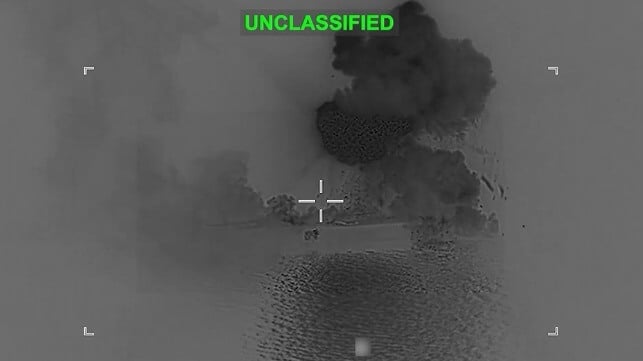
Debris cascades off the stern of IRIS Shahid Bagheri after a direct hit, March 5 (US Central Command)
U.S. forces have released new footage of a strike on one of Iran's "drone carriers," the converted merchant vessels that Iranian forces have rebuilt to launch ballistic missiles, suicide drones and other unmanned munitions. The vessel's appearance matches IRIS Shahid Bagheri, which U.S. Central Command previously claimed to have struck on the first day of the conflict.
An accompanying statement by CENTCOM appears to confirm that an attack occurred on March 5. The footage released by U.S. Central Command shows that one of Iran's flat-deck conversions was hit twice - once amidships on the port side, and once again on the port quarter. The ship was hit Thursday and continued to burn as of Thursday night (EST), according to Central Command.
The vessel can be identified as the Bagheri thanks to its ski-jump ramp, unique among Iran's drone-carrier fleet. Other comparable vessels in Iran's arsenal - IRIS Shahid Roudaki and IRIS Shahid Madhavi - have unmodified, conventional bows, limiting them to vertical takeoff and landing operations. Base ship IRIS Makran, a larger multipurpose vessel constructed on the hull of a tanker and fitted with a helideck, was hit in the deckhouse in a previous round of strikes.
Adm. Brad Cooper, commanding officer of Central Command, said Thursday that the U.S. has now eliminated more than 30 Iranian warships. The tally includes IRIS Dena, the frigate torpedoed by a U.S. Navy attack submarine off the coast of Sri Lanka earlier this week.
Iran Claims to Strike Tanker for Running Strait of Hormuz Blockade
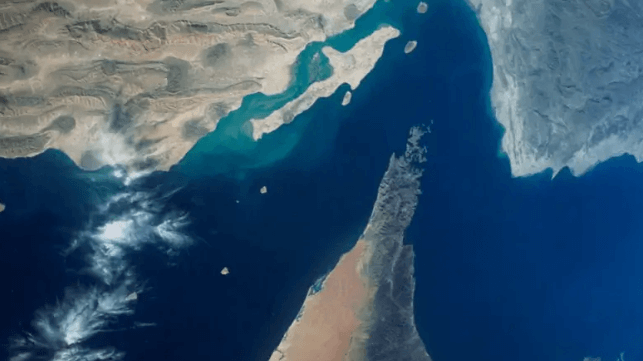
On Saturday morning, the Islamic Revolutionary Guard Corps (IRGC) claimed to have struck an oil tanker for failing to abide by Iran's "closure" of the Strait of Hormuz.
Iran declared the strait to be shut more than a week ago, and has repeatedly attacked vessels that attempt to operate it, including one boxship and one rescue tug. Eight seafarers aboard the tug may have lost their lives, though the outcome of the attack has not been confirmed.
Industry sources confirm that a small number of tankers continue to continue to transit the strait with transponders off, though the waterway looks entirely empty on AIS tracking. War risk insurance is available, if exceptionally expensive, and day rates for tankers are high enough for some owners to justify the risk to their crewmembers and their tonnage.
That risk appeared to be confirmed Friday when the IRGC Navy claimed to have used a drone to attack the tanker Prima, "due to its disregard for repeated warnings . . . regarding the prohibition of passage." Other IRGC-linked sources have identified the target vessel as the Louis P, a product tanker currently located near Al Jubail.
The attack has not been confirmed by official sources, but at about the same time, UK Maritime Trade Operations (UKMTO) reported a drone strike on an unnamed vessel at a position about 10 nautical miles to the north of Jubail, Saudi Arabia. The majority of the crew was safely evacuated, and a small number of personnel remain on board. An investigation into the circumstances of the attack is under way.
The U.S. Maritime Administration has advised vessels to "keep clear" of the strait for now, given the hazard. Most other industry and government bodies have given a less stringent advisory, recommending that owners should make a thorough risk assessment and take appropriate precautions.
Salvage Tug Reported Attacked Near Straits of Hormuz with Crew Feared Dead
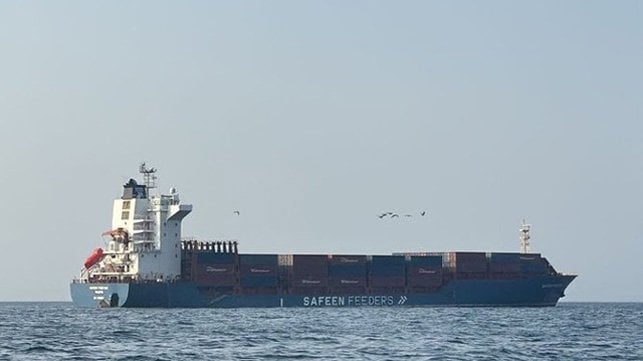
Tug was reported heading to the disable containership Safeen Prestige (Oman News Agency)
A salvage tug sent to aid one of the vessels that had been attacked in the area around the Straits of Hormuz has apparently been attacked as well. At least several of the crewmembers from the tug were feared killed in a missile attack.
UK Maritime Trade Operations (UKMTO) said it received a report from a third party of an apparent attack on a tug six nautical miles to the north of Oman. They reported the incident was being investigated.
The tug is being identified by multiple security consultants as the UAE-flagged Mussafah 2. Built in 2012, it is reported to be 134 gross tons with a length of 26 meters (85 feet). The vessel’s AIS has been dark since departing the Mina Zayed port in the United Arab Emirates yesterday.
The tug was believed to be heading to the disabled UAE-controlled containership Safeen Prestige. The vessel was struck on Wednesday and reported an engine room fire while off the coast of Oman.
Vanguard Tech is reporting that the tug was struck by two missiles today while approximately 18 nautical miles from Khasab, Oman. The report says there were eight crew aboard the tug and they are feared killed in the attack. Later in the day, the Secretary-General of the International Maritime Organization, Arsenio Dominguez, issued a statement that said that "at least four seafarers have reportedly lost their lives and three severely injured," without providing details on the incident. Dominguez called the situation "unacceptable and unsustainable," while noting that "Around 20,000 seafarers remain stranded in the Persian Gulf, onboard ships under heightened risk and considerable mental strain."
There is no official confirmation or statement from the Oman News Agency regarding the incident. On Wednesday, it confirmed that the Omani navy had organized the evacuation of the crew from the Safeen Prestige.
Reports indicate that the tug was also owned by AD Ports, which owns the containership. Dubai has been one of the areas heavily attacked by the Iranians in their revenge efforts in the Gulf.
This was one of several salvage efforts believed to be underway after the Iranians had struck approximately 10 large commercial ships in the Gulf region. VShips, which managed the product tanker MKD Vyom that was attacked earlier in the week, also reported that a salvage tug had been sent to the vessel. It said the tug assisted in putting out the fires, and efforts were underway to move the vessel to a port of refuge.

No comments:
Post a Comment