Column: Iran war exposes fragility of Western aluminum market
The Iran war is exposing a growing vulnerability in the West’s supply of aluminum, a metal classified as a critical manufacturing input by both the United States and the European Union.

The London Metal Exchange (LME) aluminum price hit a four-year high of $3,418 per metric ton on Wednesday after one Gulf producer, the Qatalum joint venture between Norsk Hydro and Qatar Aluminum Manufacturing, started powering down its smelter and another, Aluminium Bahrain, declared force majeure.
The continued closure of the Strait of Hormuz risks further disruption to a regional production hub that accounts for 23% of non-Chinese supply.
Aluminum has historically been cushioned against such unforeseen supply hits by high inventory and excess smelter capacity in China, where producers would lift run-rates at the first sign of rising prices.
Inventory cover is now much reduced and China no longer has much spare capacity to flex, rendering the market much more sensitive to the sort of disruption currently unfolding in the Middle East.

Dwindling stocks
The LME’s daily stocks reports show that aluminum has been leaving LME warehouses in Malaysia’s Port Klang at a daily rate of 2,000 tons since the start of January.
No one has paid much attention.
LME aluminum stocks lost much of their signalling power over the last 10 years as traders and banks tussled for metal to lock into lucrative warehouse deals.
The resulting churn, shifting metal in and out of the LME’s warrant system, served to obscure any read-through to what was happening in the physical supply chain.
But the daily stocks noise has been masking a steady depletion of what was a 3-million-ton aluminum mountain at the start of the decade.
Combined registered and off-warrant stocks ended February at 583,000 tons, the lowest level since the LME started publishing off-warrant inventory figures in 2020.
Moreover, a significant amount of what remains is Russian aluminum, which accounted for 58% of warranted stocks at the end of January.
That’s not a lot of use to many Western buyers. The US and Britain banned the import of Russian metal in 2024 to prevent Moscow from funding its war in Ukraine, and the EU will follow suit this year.
The pool of usable metal in the LME system is therefore far smaller than even the falling headline figure suggests.

China hits the brakes
The shift in stock dynamics is a reflection of profound structural changes in aluminum’s supply landscape.
Chinese producers are now running up against the government’s mandated annual capacity cap of just over 45 million tons.
Chinese production growth slowed from 4% in 2024 to 2% last year, with smelters running at an annualized rate of 44.5 million tons in December, according to the International Aluminium Institute (IAI).
The production slowdown is causing China’s trade with the rest of the world to change.
Chinese manufacturers have been importing more primary metal, particularly from Russia. The world’s largest producer imported a record 2.5 million tons last year together with just over 1 million tons of unwrought alloy, according to the World Bureau of Metal Statistics, which sources data from official customs figures.
And China has been exporting less semi-manufactured products such as tube, sheet and foil. Outbound shipments fell by almost 10% year-on-year in 2025, equivalent to a Western market loss of almost 600,000 tons.
In other words, China is importing more aluminum metal and exporting fewer finished products, tightening Western supply at both ends of the chain.
Flat-lining
Western smelters have even less capacity flex than their Chinese peers
Production outside of China did no more than flat-line last year, according to the IAI.
Here the core problem is the price of energy, a crucial cost component in the electrolytic smelting process.
There is significant idle smelter capacity in both the US and Europe but restarts need to compete with other sectors, particularly data centres, for scarce long-term power supplies.
Indeed, high power prices continue to take their toll on existing plants. South32 is currently in the process of placing its Mozambique smelter on care and maintenance after failing to negotiate an economically viable power contract.
While Gulf producers are currently in the firing line, the evolving energy shock from the Iran war risks further undermining the West’s ability to build longer-term supply resilience.
New volatility
Aluminum is a ubiquitous feature of modern life, used in everything from homes to cars to food packaging.
It is also key to the energy transition.
Back in 2020 the World Bank identified aluminum as a “high-impact” and “cross-cutting” metal in all existing and potential green energy technologies.
However, it is a metal facing ever more price volatility as the global market emerges from a prolonged period of surplus to one where supply looks a lot more problematic and stocks are much lower.
The Iran war is a wake-up call for a very important metal.
(The opinions expressed here are those of the author, Andy Home, a columnist for Reuters.)
(Editing by Marguerita Choy)
Mideast-bound bauxite, alumina vessels divert due to Hormuz blockage
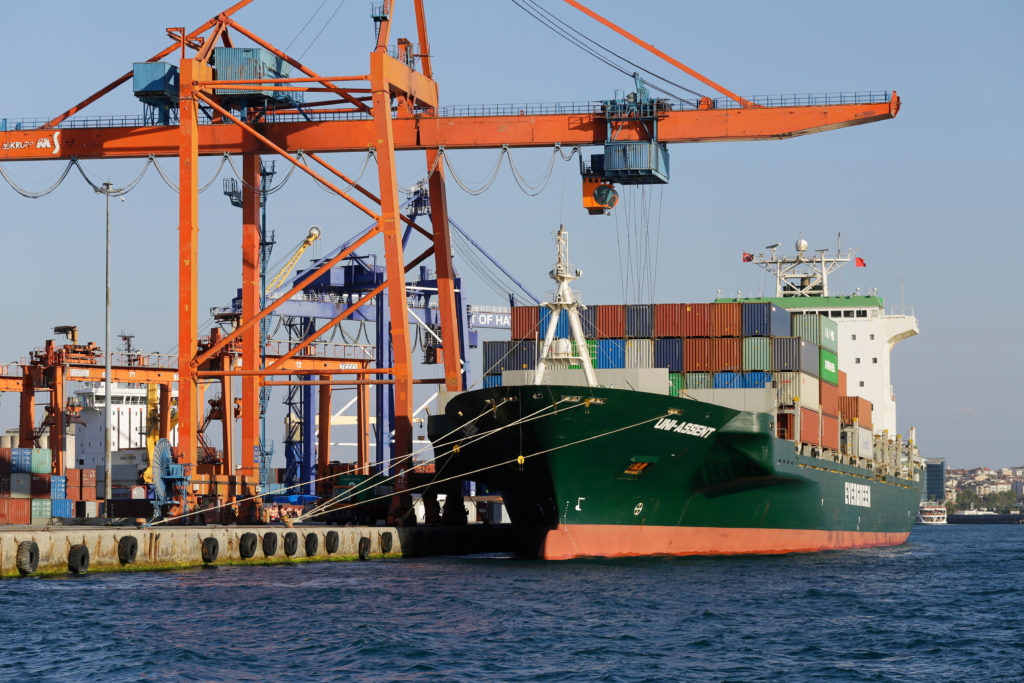
Ships carrying aluminum raw materials to the Middle East are changing course and making for new destinations as the closure of the Strait of Hormuz makes it impossible for them to complete their voyages as intended, vessel-tracking data shows.
The Middle East accounts for around 9% of global aluminum supply, and its smelters have been unable to export their metal or import the bauxite and alumina they need to keep producing since the US-Israeli attacks on Iran began on February 28.
Three bauxite carriers – the Richmond, the Glory Energy and the Penelope Oldendorff – were veering away from their intended destination of the United Arab Emirates, data from Kpler’s MarineTraffic.com platform showed on Monday. Their combined cargo sizes are 371,000 metric tons, according to LSEG data.
Bauxite ore is refined into alumina, which is then smelted to make aluminum used in the transport, construction and packaging industries. Emirates Global Aluminium has an alumina refinery at Al Taweelah near the UAE port of Khalifa and is the region’s main bauxite importer.
The Richmond left Freetown in Sierra Leone on January 24 bound for Khalifa but came to an abrupt halt off the coast of Oman in early March as the war escalated, LSEG data shows. It reversed course to move east towards India on Friday but has since stopped again, with its new destination unclear.
The Glory Energy and the Penelope Oldendorff, which both left Ghana in February, had been heading for the Gulf after coming up the coast of East Africa but have moved further east, suggesting they may be diverted to Asia.
Kpler’s lead metals analyst Ben Ayre said another vessel, the Alisios, had been taking bauxite from Amrun in Australia to the Gulf but was now heading north for China. The vessel, carrying 79,000 tons, was last east of the Philippines.
Reuters is seeking to identify the owners of the vessels to request comments.
Alumina available
Two vessels carrying alumina meant for the Gulf also appear to be changing course.
The Timorsun and the African Sanderling left Australia in February for the Bahraini port of Sitra, according to LSEG data. The African Sanderling was last off the coast of Sri Lanka, while the Timorsun was slightly further west.
Aluminium Bahrain, the kingdom’s sole aluminum smelter and which declared force majeure on its contracts last week, did not immediately respond to a request for comment.
(By Tom Daly and Lewis Jackson; Editing by Pratima Desai and Mark Potter)

No comments:
Post a Comment