Showing posts sorted by date for query Thalidomide. Sort by relevance Show all posts

Sunday, September 14, 2025

UK

What has the European Convention on Human Rights ever done for us?


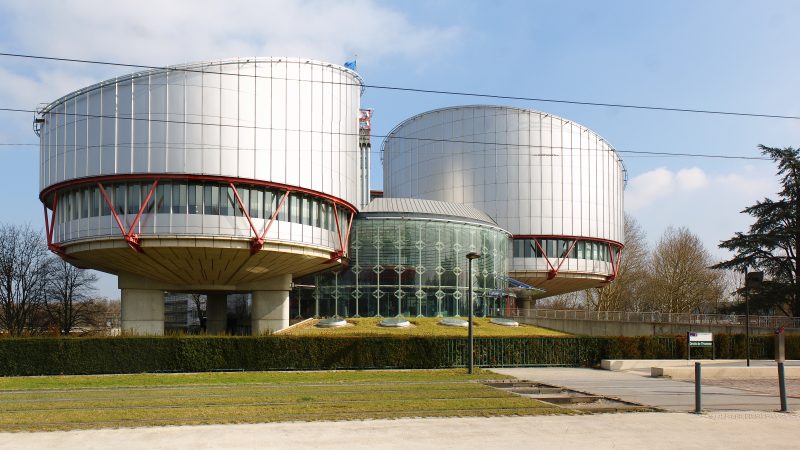
European Court of Human Rights

Every week seems to bring a new politician saying that they think the UK should leave the European Convention on Human Rights (ECHR). But few of them explain what it is, how it works, or how it benefits each and every one of us in the UK.

Where did the European Convention on Human Rights come from?

The ECHR rose from the ashes of Europe after the horror of WWII. It was part of the postwar settlement which said ‘never again’ –  never again should countries be able to abuse their own people with impunity. 

In the words of the famous jurist RenĂ© Cassin: “we do not want a repetition of what happened in 1933, where Germany began to massacre its own nationals and everybody bowed, saying ‘Thou art sovereign and master in thine own house.’” 

In 1950, an international agreement was put in place that everyone in Europe should have a minimum of fundamental legal rights. That is the ECHR.

READ MORE: Labour Party Conference 2025: Full LabourList events programme, revealed

These rights would be for everyone, no matter their race, class, creed or citizenship, and no matter the political inclinations of the government of the day. 

A court was also set up in Strasbourg – the European Court of Human Rights – to enable people to enforce these rights where necessary.

Did the UK support the ECHR?

You might be surprised to learn that the UK was at the forefront of this international effort. David Maxwell-Fyfe – a Conservative Home Secretary – essentially wrote the entire agreement. 

No lesser figure than Winston Churchill regarded the ECHR as fundamental to Europe’s peaceful future. 

Churchill declared in a speech in 1948: “In the centre of our movement stands the idea of a Charter of Human Rights, guarded by freedom and sustained by law.” 

What kinds of things are protected under the ECHR?

The ECHR was founded on reciprocity – each nation promised to all the others that they would protect an irreducible minimum of human rights. 

Those rights protect and benefit everyone.

It is because of the ECHR and the Strasbourg Court that corporal punishment is not permitted in the UK any more, after a case where a youth court ordered the 15-year-old Anthony Tyrer to be ‘birched’.

The shocking thalidomide scandal could only be reported after the Sunday Times newspaper fought for its ECHR right to free speech.

Arbitrary police phone-tapping was widespread until an antiques dealer from Dorking called James Malone successfully argued that it breached his right to privacy.

Gay people were only allowed to serve in our military after soldiers successfully relied on their rights to privacy and non-discrimination.

Of course, cases in Strasbourg do not just involve the UK. Women have a right under the ECHR to be protected against domestic violence. Journalists cannot be required to disclose their sources.

These cases involve normal people like you and me. The ECHR is for all of us just as much as it is for each of them.

They also mean that European countries can cooperate on issues like extraditing criminals and fighting terrorism, knowing that they will all respect rights to a fair trial and to privacy.

What is the Human Rights Act?

Recognising the importance of the ECHR, the New Labour government enacted the Human Rights Act in 1998. For the first time, this enabled you or me to rely on our ECHR rights in UK courts without having to go to Strasbourg. It was about ‘bringing rights home’.

The Human Rights Act is also entirely independent of the ECHR and the Strasbourg Court. It is simply a piece of UK primary legislation like any other. 

In the UK, the Human Rights Act enabled families of Hillsborough victims get a proper investigation of what went wrong. 

It also enabled gay people to keep their home after the death of their long-term partner.

Is the ECHR anti-democratic?

The point of the ECHR is that the minimum baseline of rights should be protected from an over-mighty legislature or executive. 

But of course government has to be able to govern. We need effective government, with real power, in order to solve the problems we face.

That is why the baseline was set very low. For example, the right to life, the right not to be tortured, the right not to be enslaved, the right to a fair trial, the right to vote, and the right to privacy and family life. 

Would you want to live in a society where those minimum rights weren’t protected? Where they could be overridden at the whim of the Government of the day? Would such a society even be a real democracy?

It is absolutely wrong to say, as critics of the ECHR often do, that ‘human rights are overriding democracy’ or that the ECHR is in some way ‘anti-democratic’.

Above its low minimum baseline, the ECHR is silent. It leaves government huge room to manoeuvre. Democratic governments and parliaments, including the UK government, can enact whatever policies or laws they want. 

Any notion that democracy is ‘overridden’ by the ECHR in some way is rubbish. 

Doesn’t the Human Rights Act allow judges to override Parliament?

No. Contrary to what some politicians seem to think, the Human Rights Act does not allow judges to override Parliament. That is simply wrong.

A judge can stop a minister or official from doing something that infringes an ECHR right, unless Parliament has made it clear in legislation that ECHR rights can be overridden. 

Subscribe here to our daily newsletter roundup of Labour news, analysis and comment– and follow us on BlueskyWhatsAppX and Facebook.

But judges have no power to quash an Act of Parliament. All they can do is declare that the Act is not compatible with human rights. The Act still remains fully in force. It is not ‘quashed’ in any way. 

It is then up to Government and Parliament to decide whether they want to change the law or not, but that is entirely their choice. The courts have no role there.

In short, Parliament can always decide to breach ECHR rights. But unless it has clearly decided to do that, ministers and bureaucrats have to respect those rights. There is nothing undemocratic about that.

So why do some people always complain about the ECHR?

Politicians who complain that the UK should leave the ECHR either don’t understand it or are trying to distract you from other issues. 

Some of them want to move to a less democratic system where the government can take away basic rights from people who disagree with them, or who get in the way of their plans. That could be any of us.

Every single country in Europe is a member of the ECHR, with only two exceptions – Russia and Belarus. 

Do we really want the UK to be like Russia and Belarus, the last two dictatorships in Europe, who brutally invaded Ukraine? 

Or should we stand with the other 45 European countries, our international neighbours and partners, and keep the fundamental rights and protections that we fought for in WWII?

Sunday, July 13, 2025

Taming corporations is the key issue of our times

11 July, 2025 
Left Foot Forward

To appease corporations, people may raze mountains, divert rivers, clear forests, cover countryside in tarmac and shower subsidies upon them, but they have no loyalty to any place, people or product.


There is a crisis of democracy. People can vote for whichever political party they want, but corporations always win as they fund the parties and legislators; control media and almost everything else. Their interests are promoted by obedient governments. People may elect a party that promises greater investment in education, healthcare and the environment or promises of redistribution of income and wealth but they are soon disciplined by threats of economic turbulence caused by flight of capital.


Taming the corporations is a key issue of our times. They wield enormous power over our lives, but people have little or no say in their affairs. The state gives birth to corporations and nurtures them through legal frameworks, social infrastructure, property rights, subsidies, tax perks and limited liability which enable privatisation of profits and socialisation of losses. The supposed bargain is that corporations will serve society, but that is not the case.

To appease corporations, people may raze mountains, divert rivers, clear forests, cover countryside in tarmac and shower subsidies upon them, but they have no loyalty to any place, people or product. Dodging taxes, abusing customers, exploiting workers, violating human rights and environmental damage are all normalised. Corporations remain the private fiefdom of executives.

At every stage of life, we are abused. Companies like NestlĂ© and Danone dominate 85% of the baby formula market and hike prices at will to boost profits and dividends. 15 largest children’s home providers make an average 23% profit per year, leaving little for front line services. Supermarkets profiteer from high food and fuel prices. Big pharmaceutical companies have made over £12bn excess profit from just 10 NHS drugs, which had profit mark-ups of up to 23,000%.

Instead of competing corporations such as Barratt Redrow, Bellway, Berkeley Group, Bloor Homes, Persimmon, Taylor Wimpey and Vistry exchanged details about house sales including pricing, number of property viewings and incentives to disadvantage customers. Companies such as Brown and Mason, Cantillon, Clifford Devlin, DSM, Erith, JF Hunt, Keltbray, McGee, Scudder and Squibb colluded to rig bids for demolition and asbestos removal contracts. In 2017, faulty cladding killed 72 people in the Grenfell Tower fire. No one has been charged and thousands of people are stuck with faulty cladding and unsaleable houses.

For most people, earning a decent living is a struggle whilst company execs collect up to 575 times the median employee pay. The case of P&O Ferries illegally sacking 800 workers shows that companies have no qualms about violating laws because governments don’t inconvenience large corporations. The average real wage is unchanged since 2008. Between 2016 and 2023, some 3m workers were denied the minimum wage. Culprits are rarely prosecuted. Trade unions can help but their members are targeted. Balfour Beatty, Carillion, Costain, Kier, Laing O’Rourke, Sir Robert McAlpine, Skanska UK and VINCI PLC collaborated to secretly blacklist trade unionists and deprive them of employment. Abused employees are silenced and bullied into agreeing out of court settlements and signing non-disclosure agreements.

A cost of living crisis is caused by unchecked profiteering. Since the pandemic, electricity and gas supply companies have increased their profit margins by a whopping 363%. Since 2020, big energy companies have made operating profits of £514bn, a major cause of poverty and destruction of industries. Since privatisation in 1989, water companies have levied inflation-busting charges on customers, but haven’t built a single new reservoir. Instead, they paid nearly £85bn in dividends. They dump raw sewage in rivers and flout laws to boost profits. Despite over 1,135 criminal convictions they remain in control of a vital resource.

Thalidomide, mad cow, cancers and obesity epidemic caused by food high in fat, salt, sugar and chemical additives, are some examples of diseases and disabilities manufactured in corporate boardrooms by wealthy executives living in leafy suburbs. Companies don’t bear the social cost of irresponsibility.

The finance industry is riddled with frauds and fiddles. Numerous financial products, including pensions, endowment mortgages, precipice bonds, mini-bonds, split capital investment trusts, interest-rate swaps, car loans and payment protection insurance have been missold, leaving millions in misery. JPMorgan, HSBC, Standard Chartered, Deutsche Bank and Bank of New York Mellon have defied money laundering crackdowns by moving staggering sums of illicit cash for shadowy characters and criminal networks. Puny fines are ineffective.

40% of the world’s dirty money is routed through the UK and its offshore satellites. Governments can check it by taking out Unexplained Wealth Orders (UWO) and prosecuting the beneficiaries. Since 2018 only seven UWOs have been issued to recover just £22m. No one has been prosecuted. No government has sought to cleanse the finance industry. Instead of strengthening public interest protection duties of regulators, the UK government now requires regulators to promote growth of the finance industry.

Auditors, the self-appointed police force of capitalism, are mired in scandals. None noticed that the Post Office didn’t keep proper accounting records and prosecuted innocent postmasters. The audit quality reports show that major accounting firms still don’t meet the feather-duster UK standards. Malpractices only come to light after scandals. For example, PwC programmed its audit partner to spend just two hours on the audit of BHS. KPMG submitted false information and documents to the regulator investigating audit failures at Carillion.

Pandora Papers, Paradise Papers, Bahamas Leaks, LuxLeaks, Swiss Leaks and Panama Papers are some of the episodes that shed light on the destructive tax abuse and illicit financial flows industry dominated by accounting and law firms and banks. They face little retribution. In 2023-24, fewer than five criminal cases were brought against those who aid tax dodgers. The Criminal Finances Act 2017 gave government powers to prosecute companies for tax evasion. Since its introduction, there have been no prosecutions or convictions of corporations”.

The privatisation of healthcare created new exploitative opportunities for corporations. Newmedica, Optegra, SpaMedica, CHEC and ACES are major beneficiaries as the NHS doles out cataract surgery contracts to the private sector. In 2023-24, they made a profit of £169m on the back of profit margins of 32%-43%. Care services for senior citizens are dominated by corporations. Some £1.5bn a year is taken out of the care sector in the form of shareholder returns, leaving less for front line services.

Death is the last chance for corporations to exploit people and they don’t miss it. Regulators complain that funeral directors don’t clarify the prices and bereaved relatives can’t easily haggle.

The above examples are a tiny glimpse of corporate power and abuses. Governments do little to make corporations accountable to the people. Companies such as Alphabet, Apple, Amazon, ExxonMobil, Microsoft, Nvidia, Shell, Walmart and others employ thousands of workers and their revenues exceed the gross domestic product (GDP) of many a nation state. This gives them enormous clout to discipline elected governments by withholding investment, shifting production and tax dodges through complex structure. Corporate hunger for profits knows no limits. In the 1930s Giant corporations and banks collaborated with Nazi Germany as it was profitable. US corporation IBM directly supplied the Nazis with technology which was used to transport millions of people to their deaths in the concentration camps at Auschwitz and Treblinka. In the1950s Anglo-Iranian Oil Company, now part of BP helped to overthrow the government of Iran. Any government resisting corporations can always be toppled. Elon Musk, the controller of Tesla Corporation, is willing to fund Reform UK to advance his ideological project and erode remnants of democracy in the UK.

We have a choice. We can have either democracy and public accountability or rampant corporate power with enormous wealth and power concentrated in the hands of a few business executives, but not both. Corporations must be brought under democratic control. Yet the political system is unable or unwilling to call them to account. Political parties, governments and pressure groups are bought off. Unaccountable corporate power is damaging the fabric of society, the structure of families, the quality of life and the very future of the planet.

A proportional representation voting system has a better chance of enabling people to speak. This must be accompanied by a total ban on receiving and giving of political donations to parties and spurious corporate consultancies for legislators. No one should be allowed to own more than one media outlet. All large corporations must have worker elected directors on their boards and employees must vote on executive pay. Directors must be made personally liable for abuses. Essential industries must be in public ownership with workers and consumer elected directors on boards. Section 172 of the Companies Act 2006 must be reformed so that directors advance the welfare of stakeholders, not just shareholders. Giant corporations must be broken-up to increase competition and reduce their threat to the people. The libel laws need to be changed to favour the citizen rather than powerful corporations. Companies should not be able to conceal any information that could prevent injury, disease and harm to people. The public’s ‘right to know’ should take priority over concerns about corporate secrecy and confidentiality.

The above suggestions are not a panacea but provide a modest start to build a democratic society.


Prem Sikka is an Emeritus Professor of Accounting at the University of Essex and the University of Sheffield, a Labour member of the House of Lords, and Contributing Editor at Left Foot Forward.

Thursday, May 08, 2025

Opinion
Women's health


The Guardian view on bias in medical research: disregard for women’s health belongs in the past

Editorial

It is shocking that while illnesses specific to men are studied, those affecting women are ignored


Wed 7 May 2025


Six years after Caroline Criado Perez’s bestselling book Invisible Women drew a mass readership’s attention to the long history of sexist bias in medical research, it is shocking that women and their illnesses are still underrepresented in clinical trials. Analysis by the Guardian of data gathered for a new study showed that from 2019 to 2023, 282 trials involving only male subjects were submitted for regulatory approval in the UK – compared with 169 focused on women.

Health inequality is a complex and multifaceted problem. There are massive socioeconomic differences in life expectancy and infant mortality, as well as race inequalities – for example, in maternity and mental illnesses. These and other disparities, along with those relating to disability, can also be mapped geographically.


Women, on average, live longer than men, so in this sense men can be said to be disadvantaged. But in addition to the risks associated with pregnancy and childbirth, far more women have dementia, while survival rates from female- and male-specific cancers – and other diseases that affect the sexes differently – are highly variable.

The five-year period in this study, which was carried out by the University of Liverpool and the Medicines and Healthcare products Regulatory Agency (MHRA), was not necessarily typical. It does not reveal how funding was divided up. But taking on board these caveats, it is hard to see a benign explanation for there being 67% more trials investigating men’s health than women’s. This gap in research inputs could reasonably be expected to contribute to a disparity in outcomes further down the line.

This is all the more disappointing given recent progress in tackling women’s exclusion from health research. For decades, as Ms Criado Perez and others have documented, many clinical trials were conducted on male subjects only. Researchers preferred to avoid what they saw as complications associated with the female reproductive system, especially pregnancy – although experts now regard concerns that women’s hormones might skew results as having been wrong.

Ninety per cent of the UK trials in the MHRA study involved both sexes. It is not possible to compare this precisely with past practice, as the data has not been scrutinised in the same way before. But increased recognition of the variable effects of medicines on males and females has led regulators and funders to change their policies. In the US, the National Institutes of Health has required investigators to consider sex as a variable since 2016. In the UK, the Medical Research Council changed its rules in 2022. Since then, experiments conducted on animals have been expected to include both sexes – with limited exceptions (such as when the condition being studied affects one sex only).

The lack of medical research on pregnant women came to the fore during the pandemic, when many were unvaccinated and alarming numbers ended up in intensive care. Reluctance to test drugs on pregnant women is often linked to the thalidomide scandal of the 1960s, when thousands of babies were damaged by a drug given to their mothers for morning sickness. But while caution may be merited, among pregnant women themselves as well as researchers, there is no shortage of women who are not pregnant. The disparity in sex-specific research points to an anti-female bias. Ministers, funders, hospitals and the pharmaceutical industry should all be concerned.

Wednesday, December 11, 2024

Today’s Science Skepticism Goes Back to the Scientific Revolution


 December 11, 2024
Facebook

Nikolaus Kopernikus beim Beobachten der Gestirne (Detail von Jan Matejkos Gemälde)

Most of us are aware of the deep problems in the current US pharmaceutical industry. Yet few may realize that today’s issues stem from changes that occurred centuries ago.

As I explain in The Apothecary’s Wife: The Hidden History of Medicine and How it Became a Commodity, the current medication system was established between 1650 and 1740, when professionals used the scientific revolution to push women out of the medical space. At that time, domestic medicine was dominant. Women were the primary sources of medicine in their communities, making medication from organic ingredients at home. Despite using the exact same ingredients for their own medicines, apothecaries and physicians persuaded the public of the superiority of their treatments and began charging for them. Medicinal substances transformed from free, household goods for everyone into commodities available only to those with means. This transformation normalized the practice of withholding life-saving medications from people who could not afford it — and valuing the economic success of corporations over the lives of some citizens.

The forces that transformed medication into a commodity are still with us. For example, domestic medicine encouraged sharing recipes to maximize healing, but today’s commercial medicine attempts to keep recipes secret to maximize profit. The US patent system and the battles between corporations making generic and brand-name drugs is a logical result, even when those mechanisms imperil patients’ health and lives. (See also Victor Roy’s Capitalizing a Cure: How Finance Controls the Price and Value of Medicines.)

Regulation is another legacy of medication’s economic transformation. In an attempt to exclude quacks from the medical marketplace and to protect consumers, 17th- and 18th-century professionals began testing competitors’ medicines to prove their inferiority and then publicizing the results. Joshua Ward (ca. 1685-1761), for instance, widely sold “medications” made of metals such as lead and antimony despite knowing that ingesting them could be fatal (Chapter 7 in The Apothecary’s Wife has a lot to say about him). Regulatory entities such as the Food and Drug Administration and European Medicines Agency should do this work now. History provides ample proof that when guided by science, regulation works. It has also shown us that lax oversight, such as in the famous case of thalidomide, the furor over aduhelm, and today’s generic drug industry, endangers patients.

We also continue to experience the fallout from the campaign to elevate “the New Science.” Its 17- and 18-century advocates made it seem more impressive by casting this new way of thinking and discovering as too difficult for ordinary people. That strategy generated an ongoing suspicion of science and a profound misunderstanding of how science functions. Although particularly virulent in the United States, this skepticism and ignorance of science abounds worldwide.

For the United States, this legacy will be even more obvious and determinative after the new government is sworn in on January 20, 2025. The Affordable Care Act of 2010 (ACA) is America’s only attempt so far at a public health system. For decades, the Republican party on the whole has been opposed to the ACA and national health care more broadly, drawing on the value system that displaced domestic medicine’s ethos with one that prioritizes corporate health over human health. 17- and 18-century professionals recognized this issue in converting medication into a commodity, but decided against adding a mechanism for treating the impoverished. Repealing the ACA would be returning to the three-hundred-year-old roots of today’s system. Similarly, the current nominee to lead the Center for Medicare and Medicaid Services (CMS), Mehmet Oz, has pursued profit opportunities in medicine with disregard for science and the health of ordinary people. He has even promoted colloidal silver (more upscale than Joshua Ward, but an equally ancient claim). It is likely that the provisions in the Inflation Reduction Act of 2022 requiring the CMS to negotiate the prices that it pays for pharmaceuticals will be ignored or removed.

Skepticism and suspicion of science undoubtedly will bear down on federal divisions, departments, and institutes responsible for health care and science. Regulation is a probable early casualty. The nominee for Secretary of Health and Human Services (HHS), Robert F. Kennedy, Jr., harbors these views, exemplified by his opposition to vaccines, fluoridated water, and pasteurized milk. Kennedy’s misunderstanding of how science works, not to mention the role of regulation, leads to a hostility toward scientists that has much in common with witchcraft fears. History suggests that under such leadership, HHS and the CMS will authorize the use of unscientifically tested treatments, reject the scientific foundations of the regulation process, and nurture a national hostility to science and scientists.

The consequences of this approach will appear quickly. Federal opposition to vaccines, for instance, will swiftly raise the mortality rate, especially the infant and child mortality rates, to spectacular highs. As Olivia Craighead drily wrote after Mehmet Oz’s nomination, “Fingers crossed colloidal silver works for measles.” Outbreaks of easily prevented, highly communicable, frequently fatal or permanently debilitating diseases such as measles and pertussis (whooping cough) will likely negatively impact the economy. Tourism will drop as visitors choose to avoid such a perilous environment. The national failure to provide a reliably healthy, sound workforce will curtail domestic productivity and obstruct foreign investment.

Prognostication in this case is fairly easy. Addressing these values and beliefs about the role of medication is not. They are rooted in medication’s transformation into a commodity. Knowing where these ideas came from, however, offers insight into the current system, and as history shows, insight is a step toward action.

This post was originally published on the University of California Press blog and is reprinted here with permission.

Sunday, December 31, 2023


RIP John Pilger


A bright star in the firmament of justice has gone out.  One of the greatest journalists of our era has passed away.

John Pilger was always on the side of the oppressed. He denounced Imperialism and all its violent predations–war, genocide, exploitation–as well as its endless lies and propaganda.  Till his death, he fought tirelessly for the freedom of Julian Assange, and his last article was a call to solidarity.

John gave voice to the invisible and the voiceless: the hungrythe poorthe handicappedthe conscripted, the sanctioned & bombed the dispossessedrefugees, the chemically experimented onthe structurally adjustedthe coup’edthe famine-expendable, the colonizedthe genocidedthe silenced, shining a light in the hidden, dark recesses of the hell of Empire and Capital.

He denounced and fought racismwarprivatizationneocolonialismneoliberalism, globalization, propaganda, advertisingnuclear madnessUS coups,

His filmography and writing is a rap sheet of the unceasing criminality of Empire.

Arguably giving him the best homage it could render, the British Television Authority described him as “A threat to Western Civilization.”

John was also prophetic: in 1970, he chronicled the insurrection of troops against the Vietnam war in The Quiet Mutiny.  In 1974, and again in 2002, he spoke out that “Palestine was still the Issue,” demanding that “the occupation of Palestine should end now”.  He warned about Japanese militarism and revisionism. In 2014, he warned that Ukraine, a “CIA theme park”, was preparing  “a Nato-run guerrilla war that is likely to spill into Russia itself”. Seven years ago, when only a few were aware, and even fewer were speaking out–in short words and articles–he released a full-length, full-throated documentary warning the world that the US was escalating catastrophically to War with China.

John was not only a powerful critical journalist and world-changing filmmaker–Cambodia Year Zero is considered one of the most influential documentaries of the 20th century.  He was also a craftsman, a poet, artist–he understood the power of language but also understood that in a medium restricted by word counts, what it meant to make every word count.

But it was John’s rich, resonant delivery–like a Shakespearean actor–that always struck me.  It contained the unmistakable, unimpeachable courage of moral integrity: a voice that knows it is speaking the truth.

You will hear many things about him in the days to come–as we speak, the MSM are retrieving their pre-written, canned obituaries from the deep freeze–but John’s own words are most insightful.

On the form of journalism:

In all these forms the aim should be to find out as many facts and as much of the truth as possible. There’s no mystery. Yes, we all bring a personal perspective to work; that’s our human right. Mine is to be skeptical of those who seek to control us, indeed of all authority that isn’t accountable, and not to accept “official truths”, which are often lies. Journalism is or ought to be the agent of people, not power: the view from the ground.

On making a difference:

… the aim of good journalism is or ought to be to give people the power of information – without which they cannot claim certain freedoms. It’s as straightforward as that. Now and then you do see the effects of a particular documentary or series of reports. In Cambodia, more than $50 million were given by the public, entirely unsolicited, following my first film; and my colleagues and I were able to use this to buy medical supplies, food and clothing. Several governments changed their policies as a result. Something similar happened following the showing of my documentary on East Timor – filmed, most of it, in secret… Did it affect the situation in East Timor? No, but it did contribute to the long years of tireless work by people all over the world.

On Social Media:

Ironically, they can separate us even further from each other: enclose us in a bubble-world of smartphones and fragmented information, and magpie commentary. Thinking is more fun, I think

On US Foreign Policy:

seldom use the almost respectable term, US foreign policy; US designs for the world is the correct term, surely. These designs have been running along a straight line since 1944 when the Bretton Woods conference ordained the US as the number one imperial power. The line has known occasional interruptions such as the retreat from Saigon and the triumph of the Sandinistas, but the designs have never changed. They are to dominate humanity. What has changed is that they are often disguised by the modern power of public relations, a term Edward Bernays invented during the first world war because “the Germans have given propaganda a bad name”.

On the economy:

With every administration, it seems, the aims are “spun” further into the realm of fantasy while becoming more and more extreme. Bill Clinton, still known by the terminally naive as a “progressive”, actually upped the ante on the Reagan administration, with the iniquities of NAFTA and assorted killing around the world. What is especially dangerous today is that the US’s wilfully and criminally collapsed economy (collapsed for ordinary people) and the unchallenged pre-eminence of the parasitical “defence” industries have followed a familiar logic that leads to greater militarism, bloodshed and economic hardship.

On peace activism:

The current spoiling for a fight with China is a symptom of this, as is the invasion of Africa….I find it remarkable that I have lived my life without having been blown to bits in a nuclear holocaust ignited by Washington. What this tells me is that popular resistance across the rest of the world is potent and much feared by the bully – look at the hysterical pursuit of WikiLeaks. Or if not feared, it’s disorientating for the master. That’s why those of us who regard peace as a normal state of human affairs are in for a long haul, and faltering along the way is not an option, really.

On the future:

I’m confident that if we remain silent while the US war state, now rampant, continues on its bloody path, we bequeath to our children and grandchildren a world with an apocalyptic climate, broken dreams of a better life for all and, as the unlamented General Petraeus put it, a state of “perpetual war”. Do we accept that or do we fight back?

John Pilger, Presente!

*****
Read and watch more of John Pilger’s work on his website:

 https://johnpilger.com/

https://johnpilger.com/videos

https://johnpilger.com/filmography


John Pilger, Australia-born journalist and filmmaker known for covering Cambodia, dies at 84

Journalist John Pilger, a supporter of Wikileaks founder Julian Assange arrives at the City of Westminster Magistrates Court in London where Julian Assange is in court for his bail hearing, Tuesday, Dec. 14, 2010. John Pilger, the Australia-born journalist and … more >

By Associated Press - Sunday, December 31, 2023

LONDON — John Pilger, an Australia-born journalist and documentary filmmaker known for his coverage of the Khmer Rouge in Cambodia, has died, his family said Sunday. He was 84.

A statement from his family, posted on X, formerly Twitter, said Pilger died on Saturday in London.

“His journalism and documentaries were celebrated around the world, but to his family he was simply the most amazing and loved dad, grandad and partner,” the statement said.

Pilger, who has been based in Britain since 1962, worked for Britain’s left-leaning Daily Mirror newspaper, broadcaster ITV’s investigative program “World In Action” and for the Reuters news agency.

He won an International Academy of Television Arts and Sciences award for his 1979 film “Year Zero: The Silent Death Of Cambodia,” which revealed the extent of the Khmer Rouge’s atrocities. He followed that with a 1990 documentary titled “Cambodia: The Betrayal,” which examined international complicity in the Khmer Rouge remaining a threat.

He also won acclaim for a 1974 documentary looking into the campaign for compensation for children after concerns were raised about birth defects when expectant mothers took the drug Thalidomide.

Pilger was known for his opposition to American and British foreign policy, and he was also highly critical of Australia’s treatment of its Indigenous population.

In more recent years, he campaigned for the release of WikiLeaks founder Julian Assange, who has fought a lengthy battle against extradition to the United States.

Kevin Lygo, managing director of media and entertainment at ITV, described Pilger as “a giant of campaigning journalism” who offered viewers a level of analysis and opinion that was rare in mainstream television.

“He had a clear, distinctive editorial voice which he used to great effect throughout his distinguished filmmaking career. His documentaries were engaging, challenging and always very watchable,” Lygo said.

“He eschewed comfortable consensus and instead offered a radical, alternative approach on current affairs and a platform for dissenting voices over 50 years,” he added.


Campaigning journalist John Pilger dies aged 84


By AFP
December 31, 2023

John Pilger at a 2021 rally in London to mark WikiLeaks founder Julian Assange's 50th birthday - Copyright AFP/File JOHN WESSELS

Australian-born investigative journalist and documentary maker John Pilger, known for his support for WikiLeaks founder Julian Assange and his coverage of the aftermath of Pol Pot’s regime in Cambodia and the Thalidomide scandal, has died in London, his family said Sunday.

Pilger, who had mostly lived in Britain since the early 1960s, had worked for Reuters, Britain’s left-wing Daily Mirror and commercial channel ITV’s former investigative programme World In Action.

In 1979, the ITV film “Year Zero: The Silent Death Of Cambodia” revealed the extent of the Khmer Rouge’s crimes, and Pilger won an International Academy of Television Arts and Sciences award for his 1990s follow-up ITV documentary “Cambodia: The Betrayal”.

Pilger also made the 1974 documentary for ITV called “Thalidomide: The Ninety-Eight We Forgot”, about the campaign for compensation for children after concerns were raised about birth defects when expectant mothers took the drug.

He received Bafta’s Richard Dimbleby Award for factual reporting in 1991.

“It is with great sadness the family of John Pilger announce he died yesterday 30 December 2023 in London aged 84,” it posted on X.

“His journalism and documentaries were celebrated around the world, but to his family he was simply the most amazing and loved Dad, Grandad and partner. Rest In Peace.”

Kevin Lygo, managing director of media and entertainment at ITV, called Pilger a “giant of campaigning journalism”.

He had always “eschewed comfortable consensus” in favour of a “platform for dissenting voices over 50 years”, he said.

Pilger also campaigned for the release of WikiLeaks founder Assange, who has been embroiled in a lengthy battle against extradition to the United States, and put up the cost of his bail.

Former Pink Floyd musician Roger Waters paid tribute, calling him a “friend” and a “great man”.


– ‘Truth to power’ –


On X, WikiLeaks called Pilger a “ferocious speaker of truth to power, whom in later years tirelessly advocated for the release and vindication of Julian Assange”.

During his career, Pilger made a series of remarks criticising American and British foreign policy, and the treatment of Indigenous Australians.

Former leader of Britain’s Labour Party Jeremy Corbyn wrote on X that he had given “a voice to the unheard and the occupied: in Australia, Cambodia, Vietnam, Chile, Iraq, East Timor, Palestine and beyond. Thank you for your bravery in pursuit of the truth — it will never be forgotten”.

Pilger had also expressed controversial views on Russia and its President Vladimir Putin.

In 2018, Pilger called the attempted murder of former Russian spy Sergei Skripal, his daughter Yulia and an ex-police officer in the UK were a “carefully constructed drama” in an interview with Russia Today (RT).

The UK Government and Scotland Yard believe members of a Russian military intelligence squad carried out the attack in southwestern England.

Pilger told RT: “This is a carefully constructed drama as part of the propaganda campaign that has been building now for several years in order to justify the actions of NATO (the North Atlantic Treaty Organisation), Britain and the United States towards Russia. That’s a fact.”

In 2014, in The Guardian, he also said that “Putin is the only leader to condemn the rise of fascism in 21st-century Europe”, and last year called in The South China Morning Post for scepticism on the reporting about the invasion of Ukraine by Russia.

His most recent documentaries included “The Coming War On China”, broadcast in 2016 on ITV.

Assange’s wife pays tribute to John Pilger as ‘consistent ally of dispossessed’

Stella Assange, the wife of Wikileaks founder Julian Assange (Ashlee Ruggels/PA)

By Charlotte McLaughlin, PA Senior Entertainment Reporter

The wife of Julian Assange has paid tribute to campaigning journalist John Pilger as a “consistent ally of the dispossessed”.

Stella Assange, whom the WikiLeaks founder married while in prison, was among those who called the ITV documentary maker “one of the great” journalists.

Pilger had pushed for the release of Assange, who has been in the high-security Belmarsh Prison in London since he was removed from the Ecuadorian embassy, and criticised his friend’s imprisonment.

John Pilger has died aged 84, his family has announced (Ian Nicholson/PA)

The National Union of Journalists (NUJ) also called the 84-year-old documentarian, who died on Saturday according to his family, “a giant of journalism”.

On X, formerly Twitter, Stella Assange wrote: “Our dear dear John Pilger has left us. He was one of the greats.

“A consistent ally of the dispossessed, John dedicated his life to telling their stories and awoke the world to the greatest injustices.

“He showed great empathy for the weak and was unflinching with the powerful. John was one of Julian’s most vocal champions but they also became the closest of friends.

“He fought for Julian’s freedom until the end. ‘We are all Spartacus if we want to be’, he wrote in his last published piece. This was John, challenging us until the end. Let’s always seek to rise to the challenge. Thank you, dear friend.”

Next year, the High Court will hear Julian Assange’s final appeal against being extradited to the US, where he fears a sentence of 175 years.

Michelle Stanistreet, general secretary of the NUJ, said: “John Pilger was a giant of journalism who in his reporting career witnessed momentous historical events such as the assassination of Robert Kennedy and the wars in Vietnam, Cambodia, Bangladesh and Biafra.

“He was also a pioneer of television as a vehicle for investigative journalism, producing groundbreaking work across the BBC and ITV.”

The NUJ member was also a “most redoubtable supporter of progressive campaigns creating work that was the embodiment of journalism that managed to be simultaneously fair and balanced, whilst unequivocally on the side of the underdog”, according to Ms Stanistreet.

Pilger worked to bring to light atrocities in Cambodia, the thalidomide scandal and various conflicts.

Senior BBC journalist John Simpson wrote on X: “Very sad to hear of the death of John Pilger. I was fond of him, and I think it was mutual, even though we disagreed on many things over the years.

“But I admired the force of his writing, even when I often didn’t support what he wrote, and he was always warm when we met.”

Pilger had been outspoken about his views on American and British foreign policy.

Lindsey German, of the Stop the War Coalition, who have organised pro-Palestine protests, called Pilger’s death a “very sad loss to the whole movement”.

She added: “He was a fearless and honest journalist who was a major critic of western imperialism, and whose experience of covering successive wars gave him a real insight into who benefits from the horror of war.

“He was a great friend of the anti-war movement in Britain and lent his powerful voice to a number of campaigns.”

Stop the War has also claimed that Russia’s invasion of Ukraine was partially caused by “Nato expansion” in eastern Europe.


'A Giant of Journalism Has Left Us': John Pilger Dead at 84

"He was a fearless challenger of imperialism and colonialism and used his talents behind the camera to expose genocide and war crimes, including the deceit of mainstream media," said one British MP.


Journalist John Pilger addresses a crowd of Julian Assange supporters demanding his release in London on August 11, 2021.
(Photo: Guy Smallman/Getty Images)

JESSICA CORBETT

COMMONDREAMS
Dec 31, 2023

Legendary Australian journalist and documentary filmmaker John Pilger died Saturday at the age of 84—news that was quickly met with a flood of tributes from fellow reporters, friends, and fans of his impactful work.

"It is with great sadness the family of John Pilger announce he died yesterday 30 December 2023 in London aged 84," says a statement shared on his social media Sunday. "His journalism and documentaries were celebrated around the world, but to his family he was simply the most amazing and loved dad, grandad, and partner. Rest in peace."


His son Sam Pilger said Sunday that "he was my hero."


As The Guardian detailed Sunday:

Born in Bondi, New South Wales, Pilger relocated to the U.K. in the 1960s, where he went on to work for the Daily Mirror, ITV's former investigative program "World in Action," and Reuters.

He covered conflicts in Vietnam, Cambodia, Bangladesh, and Biafra, and was named journalist of the year in 1967 and 1979. Pilger had a successful career in documentary filmmaking, creating more than 50 films and winning a number of accolades.

"His last film, The Dirty War on the National Health Service, was released in 2019 and examined the threat to the NHS from privatization and bureaucracy," the newspaper noted. "It was described by The Guardian's film critic Peter Bradshaw as 'a fierce, necessary film.'"


British Member of Parliament Claudia Webbe, an Independent who represents Leicester East, declared Sunday that "he was a fearless challenger of imperialism and colonialism and used his talents behind the camera to expose genocide and war crimes, including the deceit of mainstream media. His documentaries are epic and are required viewing for a more civilized world."


Fellow MP Jeremy Corbyn, a former Labour leader who now serves Islington North as an Indepedent, said: "I am deeply saddened to hear of the passing of John Pilger. John gave a voice to the unheard and the occupied: in Australia, Cambodia, Vietnam, Chile, Iraq, East Timor, Palestine, and beyond."


"Thank you for your bravery in pursuit of the truth—it will never be forgotten," Corbyn added.

The U.K.-based Campaign for Nuclear Disarmament said that "CND is saddened to hear about the death of the great John Pilger. He blazed a trail for so many through his work as a journalist, filmmaker, and anti-war campaigner. Rest in peace."


Attorney and human rights defender Stella Assange—the wife of WikiLeaks founder Julian Assange, who is jailed in the U.K. while battling his extradition to the United States—called Pilger "one of the greats."

"A consistent ally of the dispossessed, John dedicated his life to telling their stories and awoke the world to the greatest injustices," she said. "He showed great empathy for the weak and was unflinching with the powerful. John was one of Julian's most vocal champions but they also became the closest of friends. He fought for Julian's freedom until the end. "


"'We are all Spartacus if we want to be,' he wrote in his last published piece," she noted. "This was John, challenging us until the end. Let's always seek to rise to the challenge. Thank you, dear friend."

Honoring the veteran journalist as "a ferocious speaker of truth to power, whom in later years tirelessly advocated for the release and vindication of Julian Assange," WikiLeaks contended that "our world is poorer for his passing."


Australian journalist Peter Cronau proclaimed that "a giant of journalism has left us—John Pilger, a heroic truth-teller. Banned by much of the mainstream media, his amazing work is his great permanent legacy."

Cronau praised him for "calling to account the intelligence agencies, the generals, and the governments alike that run the world their way" while also "giving voice to the unheard, the Indigenous, the poor, the occupied, the displaced—and giving hope, courage, and solidarity to the international family of activists."

Pilger was "such a strong role model to so many journalists especially in Australia—a country he loved, but whose media shunned him for his relentless uncompromising stand against imperialism and Australia's slavish obedience to it," he added. "Telling the seldom-heard 'people's history,' his books and films inform our democracy, and it was a pleasure to have had the chance to have worked with him."

British journalist Johnathan Cook said that "John Pilger was an inspiration to young journalists like myself. For decades, he managed to publish searing reports, even in establishment media, that exposed the lies justifying the brutalities of Western foreign policy. We need his voice now more than ever."


Mark Curtis, director and co-founder of Declassified U.K., shared a link to Pilger's website and said that " I cannot believe John has gone. His lifetime's work is a treasure—look at his filmography and articles to remind yourself. "

"A towering figure. Irreplaceable. Authentic and committed. Someone to look up to. Fearless," Curtis concluded. "Thank you, John. Farewell, friend."


Our work is licensed under Creative Commons (CC BY-NC-ND 3.0). Feel free to republish and share widely.


JESSICA CORBETT is a senior editor and staff writer for Common Dreams.