Showing posts sorted by date for query kabbalah. Sort by relevance Show all posts

Monday, November 03, 2025

After Oct. 7, Jews seek healing at kabbalah-informed psychedelic retreats

(RNS) — The nonprofit Shefa integrates Jewish beliefs and rituals with legal psychedelic practices, an approach that’s especially resonated in recent years.


A Star of David mosaic in Jerusalem. (Photo courtesy of Wikimedia/Creative Commons)

Kathryn Post
October 29, 2025
RNS

(RNS) — For nearly two decades, Larry Hertz, a 64-year-old professional, had found healing and spiritual enrichment through underground ceremonies where he and others took psychedelics. But there was a part of him missing: Raised in a culturally Jewish home in California’s Bay Area, he found that few in psychedelic circles knew much about Judaism; if religion was present, it was usually Christianity.

At the same time, his psychedelic practice made him feel as if he were living a double life.

“I think a lot of times when you’re in the medicine world, you can feel very isolated because it’s below ground,” Hertz told RNS. “A lot of my friends, I couldn’t tell them that I was taking medicine.”

That changed last year when an online search led him to Shefa Jewish Psychedelic Support, a spiritual community that, according to its website, bolsters “Jewish psychedelic explorers in North America and abroad.” Shefa does this by conducting psychedelic-fueled retreats that integrate Jewish beliefs and rituals, as well as by hosting a mix of events, from Purim dance parties and Hanukkah gatherings to courses in breath work and other healing techniques.


Rabbi Zac Kamenetz. (Photo courtesy of Shefa)

If its mission statement emphasizes exploration, Shefa’s focus is just as much aimed at healing, especially for American Jews grappling with trauma and fractured identities in a post-Oct. 7 world. “We know people are holding a lot of trauma, whether it’s conscious, unconscious, immediate with their own trauma, or ancestral,” said Shefa’s founder, Rabbi Zac Kamenetz. “We’re not going to resolve a global crisis, but we are going to be ourselves in the pain, the alienation, the anguish, the anger, whatever side you’re taking, or taking no sides.”

Kamenetz came to the world of psychedelics through his participation in a Johns Hopkins-New York University study in which clergy of various faiths took doses of psilocybin, the compound found in hallucinatory mushrooms, to test how spiritually attuned people would respond. While the study itself has generated as much controversy as firm results, it has fostered the launch of at least two other organizations touting its work.

On a hot August night in 2019, Kamenetz, then a director of San Francisco’s Jewish Community Center, stood in the back of a crowded Judaica shop in Berkeley to describe two psilocybin trips he experienced on separate “dose days” during the study. On the first occasion, he saw a vision of the kabbalistic Tree of Life, a diagram central to Jewish mysticism; on the second, he encountered a dark void. “Yes, there is the bliss and color and light, but then there’s a higher reality that falls away to experiencing the void,” Kamenetz said, according to The Jewish News of Northern California.

Kamenetz’s inbox quickly filled with inquiries from people looking to discuss their psychedelic experiences. Months later, as the COVID-19 pandemic triggered a global shutdown and Kamenetz subsequently lost his job at the JCC in the summer of 2020, he saw it as an opportunity to innovate.

At first, Shefa, which in Hebrew means “flowing abundance,” began as a series of Zoom-based integration circles open to Jews across the spectrum of observance. The meetings incorporated short teachings based on the Jewish calendar or weekly Torah reading, and participants shared about previous psychedelic trips.

Shefa began publishing newsletters, hosting courses and in-person events across the country. The point, according to Kamenetz, was not to encourage illegal drug use — a disclaimer on Shefa’s website says: “We do not conduct illegal activities, nor do we refer people toward illegal activity. We also do not provide mental or medical healthcare.” Rather, Kamenetz suggests that adopting a “psychedelic theology” can impact daily life by informing how people understand things such as their interconnectedness with creation or attunement to God’s presence.


A Shefa sticker that says “Judaism Is Psychedelic.” (Courtesy photo)

Shefa attracts Jews from some unexpected corners. “It’s not that I didn’t want to connect to God,” said one person who was raised in ultra-Orthodox Judaism in Brooklyn, who asked to remain anonymous. “It’s just that it didn’t feel like the ultra-Orthodox community was a good fit for where I was at that juncture. When I found psychedelics and specifically Shefa, it was like coming home.”

Kamenetz’s approach reframed his understanding of Judaism, the Brooklynite said: Rather than a system of laws, he now sees Judaism as “a path towards an intimate and transformative connection with God.”

Shefa’s events initially provided only education about psychedelics and Judaism, without involving psychedelics directly. But after Hamas’ attacks on Oct. 7, 2023, Kamenetz, who had trained in ketamine-assisted psychotherapy, began facilitating retreats in Berkeley with the drug, a powerful anesthetic with hallucinogenic effects.

Participants were required to complete a long application and medical screenings before meeting online to prepare in sessions that drew on Hasidic and kabbalistic teachings. The ketamine retreats themselves incorporate Jewish prayers, rituals and music, including a process invented by the 18th-century mystic Ba’al Shem Tov to navigate expanded states of consciousness.


RELATED: Groundbreaking synagogue lures burned-out techies with digital strategies (and ecstatic dance)

Months after Oct. 7, a 30-something researcher in the Bay Area who asked to be identified only by her first initial, A., first met Kamenetz at a Purim party facilitated by Shefa where the rabbi was handing out “Judaism is psychedelic” stickers.

It was a difficult season for A., who has family in Israel. Suddenly, the artistic and political spaces she inhabited no longer felt safe. Intrigued by Shefa, she signed up for an in-person, nine-week course and, later, a ketamine retreat.

“Judaism is going through a dark night of the soul,” A. told RNS. “People are disagreeing fundamentally about what it means to be Jewish right now, and what our relationship with our ancestral homeland means, or should be, or could be, and also how to be in the world post-Holocaust, when you realize that a lot of that negative sentiment towards Jews is still there. It is an existential crisis.”


Sam Shonkoff. (Courtesy photo)

Her previous psychedelic experiences had taken place alone. Now, they were happening in a community that deeply understood her Jewish context.
RELATED: Episcopal Church removes priest who founded Christian psychedelic society

Sam Shonkoff, a professor of Jewish studies at the Graduate Theological Union, connected Shefa to the legacy of Jewish counterculture, spearheaded by leaders such as Rabbi Zalman Schachter-Shalomi, who experimented with LSD alongside psychedelic advocate Timothy Leary in the early 1960s and later founded the Jewish Renewal Movement.

The Jewish counterculture was typically populated by politically progressive Jews who, anecdotally, gathered for underground psychedelic encounters that “sprinkled in” Jewish melodies and prayers, said Shonkoff. Often, he added, “the most potent Jewish reverberation” happened after the trip, through Jewish interpretation.

Despite this tradition, said Shonkoff, “it’s another thing to have a 501(c)(3) that has its explicit purpose to really nourish this integration of Jewish tradition and psychedelics, and to have that be aboveground now for half a decade.”

Some researchers caution that approaching Judaism through psychedelics may dilute the power of the faith, but Shefa hasn’t faced much pushback from establishment Jewish leaders. A Christian group called Ligare, by contrast, has faced significant hurdles.

Founded by another participant in the Hopkins-NYU trial, Ligare aims to help individuals process psychedelic experiences from a Christian worldview. A former Ligare intern has criticized its founder, a former Episcopal priest named Hunt Priest, warning that framing psychedelic trips in religious terms could harm the spirituality of those who have a bad experience. Priest’s enthusiasm for psychedelics also drew an investigation from Episcopal leaders, and earlier this year, Priest agreed to be removed from ordination in his denomination, after the investigation found he’d crossed the line from discussing psychedelics into endorsing them.

A third group inspired by the Hopkins-NYU study and Islam, called Ruhani, is in development.

These groups are hardly the first to fuse psychedelics and spirituality; Indigenous Americans have long fought to protect their right to spiritual practices involving peyote and other compounds, and laid the legal groundwork for psychedelic churches that claim psychedelics as sacraments normative to their religious practice.
RELATED: After a decade of controversy, clergy psychedelic study is published

It’s due in part to Indigenous Americans’ ancient ties to psychedelics that Shefa will be hosting its first legal psilocybin retreat this month in Oregon, with both Jewish and Indigenous facilitators. In preparation, the Indigenous facilitators have learned Jewish and Hebrew songs, and the Shefa facilitators are “making space for Indigenous wisdom,” Kamenetz said.

As Shefa develops its psychedelic programming, Hertz said it’s having tangible impacts. He’s attended two Shefa-facilitated ketamine retreats and plans to attend a third; the Jewish framework, he said, has created a comfortable setting where he can be his authentic self. In fact, after a hiatus from the religious expressions of Judaism, he’s recently been inspired to attend Friday night services again.

“Instead of feeling I was living a dual life,” he said, “I now have one life.”

This story was produced with funding from the Templeton Religion Trust.

Armageddon Instead Of A Global Blowup – OpEd


November 2, 2025 

By Rabbi Allen S. Maller


The Fermi paradox may be explained if the galaxy contains a modest number of very advanced technological civilizations, with technology levels that, while much more advanced than contemporary Earth, are nowhere near the ‘super-science’ levels that could result in readily detectable astro-engineering. But the problem more likely is the hypotheses ‘life is rare’ because they blow themselves up, or the religious idea that life is common but quiet, they exist but we haven’t noticed them (maybe because they are watching us and our wars carefully).

Climate change is one aspect of the man-made environmental catastrophe, which is the biggest world wide crisis humanity has ever confronted. It is unprecedented in seriousness and impact. The speed of change is surprising everyone, including climate scientists.

The Antarctic Circumpolar Current is the strongest ocean current on the planet. It’s five times stronger than the Gulf Stream and more than 100 times stronger than the Amazon River. It forms part of the global ocean “conveyor belt” connecting the Pacific, Atlantic and Indian oceans. The system regulates Earth’s climate and pumps water, heat and nutrients around the globe.

People around the world suffered an average of 41 extra days of very dangerous heat last year because of human-caused climate change, according to a group of scientists who also said that climate change worsened much of the world’s damaging weather throughout 2024.

The majority of Christians, Jews, and Muslims do not believe that all of humanity is moving closer and closer to many catastrophic nature Judgement Days. The minority who do think that Judgement Day is coming soon share the usual negative, fear-filled views of most end-times thinkers: Christians, Jews and especially Muslims, who do believe that: “The hour (of Judgement) is near” (Qur’an 54:1); and ˹The time of˺ people’s judgment has drawn near, yet they heedlessly turn away.” (Qur’an 21:1)

The Greek word Armageddon is a transliteration of the Hebrew Har Megiddo, a small mountain near Megiddo (80 miles north of Jerusalem), a hilltop fortification built by King Ahab, that dominated the Plain of Jezreel. Har Magedon is the symbol of a battle in which, when the need is greatest and believers are most oppressed, God suddenly reveals His power to distressed peoples and the evil enemies are destroyed.

Armageddon is a warning of humanity’s need to change to avoid Armageddon. The term “apocalypse” comes from the Greek word “apokalypsis,” meaning “revelation.” Although often associated today with the end of the world, apocalypses in ancient Jewish thought were a source of encouragement in times of great hardship or persecution.

Like Judaism and Christianity, Islam has a powerful eschatological strain. It anticipates the end to the world as we know it; a final historical confrontation between good and evil (Armageddon); after which, with God’s help, human life will be rewarded and transformed.

As the Qur’an states: “Verily! Those who believe and those who are Jews, Christians, and Sabians, whoever believes in Allah and the Last Day, and do righteous good deeds, shall have their reward with their Lord, on them shall be no fear, nor shall they grieve.” (2:62 and 5:69) Notice that the Qur’an specifically stresses religious pluralism applies on God’s judgment day.

And Pope Francis said: ‘All Religions Are Paths To God’ This is a new and very strong support for religious pluralism.

Yet a Pew Research Center poll found that in South and Southeast Asia 55-60% of all Muslims believe in the Madhi’s imminent return; and in the Middle East and North Africa 51% do.

A hadith says that Jesus will return to a place east of Damascus and will join forces with the Islamic messiah, the Mahdi, in a battle against the false messiah, the one eyed Dajjal, Armilos in Jewish tradition.

As ibn Babuya writes in Thawab ul-A’mal, “The Apostle of God said: `There will come a time for my people when there will remain nothing of the Qur’an except its outward form, and nothing of Islam except its name, and they will call themselves by this name even though they are the people furthest from it. The mosques will be full of people but they will be empty of right guidance.

“The religious leaders (Fuqaha) of that day will be the most evil religious leaders under the heavens; sedition and dissension will go out from them and to them will it return.” This sounds, and indeed is, terrible. But, those who trust in God know that the night is coldest in the last hours before sunrise.

Secularists believe that these apocalyptic visions of a future (Armageddon) are absurd, although many secularists themselves fervently believe that runaway genetic modification of food and/or extreme climate change is going to doom human civilization in future generations.

The basic difference between the pessimistic, humanist secularists and the religious optimists is that those who believe in the God of Abraham also believe that God’s inspiration and guidance guarantees that the spiritual forces of good, will overcome all the world’s evils at the end of days; and justice, peace and religious pluralism will prevail.

Or as Prophet Micah envisions (Micah 4:1-5) “In the end of days the mountain of the Lord’s Temple will be established as the highest mountain; it will be exalted above the hills, and peoples will stream to it. Many (not all) nations will come and say, ‘Come, let us go up to the mountain of the Lord, to the Temple of the God of Jacob. who will teach us his ways, so that we may walk in his paths.

“Torah will be broadcast from Zion, and the word of the Lord from Jerusalem. God will judge between many (not all) peoples and will settle disputes among powerful nations far and wide. They will beat their swords into ploughs, and their spears into pruning hooks. Nation will not take up sword against nation, nor will they train for war any more.


“Everyone will sit under their own vine and under their own fig-tree, and no one will make them afraid, for the Lord Almighty has spoken. All the nations will walk in the name of their gods, and we (Jews) will walk in the name of the Lord our God for ever and ever.”

Thus, the Bible and the Qur’an’s final judgement is the self-destruction of violent, hate filled, religion twisted terrorism and narrow ‘my way or death’ philosophy (Armageddon); and the victory of kindness, love, democracy and religious pluralism.

The Qur’an refers to Prophet Abraham as a community or a nation: “Abraham was a nation-community [Ummah]; dutiful to God, a monotheist [hanif], not one of the polytheists.” (16:120) If Prophet Abraham is an Ummah then fighting between the descendants of Prophets Ishmael and Isaac is a civil war and should always be avoided. Remember: “The very earth itself is a granary and a seminary,” said Henry David Thoreau “and every seed means not only birth; but rebirth.

But there will be no peace until both Palestinians and Israelis declare the chant ‘From the river to the sea’ becomes an aspirational call for freedom, human rights, and peaceful coexistence, and not death, destruction, or hate. We can make it truly aspirational by making it focus on both peoples first, and the land second. “From the river to the sea Palestinians and Israelis should be freed of hatred and suffering by ‘a two state for two peoples sharing of the land peacefully solution.'”

If all Arabs and Jews can live up to the ideal that ‘the descendants of Abraham’s sons should never make war against each other’ is the will of God; we can help fulfill the 2700 year old vision of Prophet Isaiah: “In that day there will be a highway from Egypt to Assyria. The Assyrians will go to Egypt, and the Egyptians to Assyria. The Egyptians and Assyrians will worship together. On that day Israel will join a three-party alliance with Egypt and Assyria, a blessing upon the heart. The LORD of Hosts will bless them saying, “Blessed be Egypt My people, Assyria My handiwork, and Israel My inheritance.” (Isaiah 19:23-5)


Rabbi Allen S. Maller
Allen Maller retired in 2006 after 39 years as Rabbi of Temple Akiba in Culver City, Calif. He is the author of an introduction to Jewish mysticism. God. Sex and Kabbalah and editor of the Tikun series of High Holy Day prayerbooks.

Saturday, October 25, 2025

A Mahdi-Messianic Era Or A Hot As Hell Climate Disaster – OpEd


October 26, 2025 
By Rabbi Allen S. Maller


Electricity consumption from data centers will more than double globally by 2030, according to the International Energy Agency. The U.S.A. accounts for by far the largest share of the projected increase, followed by China.

Our planet has entered a ‘new reality’ as it hits its first climate tipping point. Humans have pushed up temperatures so far they risk triggering a series of climate ‘tipping points,’ which would bring catastrophic changes and could be irreversible on human timescales. First in a series of catastrophic and potentially irreversible climate tipping points is the widespread death of coral reefs, according to a landmark report produced by 160 scientists across the world.

As humans burn fossil fuels and ratchet up temperatures, it’s already driving more severe heat waves, floods, droughts, and wildfires. But there are even bigger impacts on the horizon. Climate change may also be pushing Earth’s crucial systems — from the Amazon rainforest to polar ice sheets — so far out of balance they collapse, sending catastrophic ripples across the planet.

“We are rapidly approaching multiple Earth system tipping points that could transform our world, with devastating consequences for people and nature,” said Tim Lenton, a professor at the Global Systems Institute at the University of Exeter and an author of the report.

Warm water corals are the first, according to the report. Since 2023, the world’s reefs have been enduring the worst mass bleaching event on record as oceans reach record high temperatures, with more than 80% affected. “We have now pushed (coral reefs) beyond what they can cope with,” said Mike Barrett, chief scientific advisor at the World Wildlife Fund UK and co-author of the report. Unless global warming is reversed “extensive reefs as we know them will be lost.”

The impacts will have far-reaching consequences. Coral reefs are an essential habitat for marine species, vital for food security, contribute trillions to the global economy and buffer coastal areas from storms. There’s even worse to come if temperatures continue to rise. Our planet is on the brink of several more tipping points as it’s all but certain to breach the globally agreed goal of limiting warming to 1.5 degrees Celsius above pre-industrial levels, according to the report.


One of the most alarming of these is the potential collapse of the Atlantic Meridional Overturning Circulation, a crucial network of ocean currents. This would have catastrophic global consequences, pushing parts of the world into a deep freeze, heating up others, disrupting monsoon seasons and rising sea levels.

The target of keeping long-term global warming within 1.5 degrees Celsius (2.7 Fahrenheit) is moving out of reach, climate experts say, with nations failing to set more ambitious goals despite months of record-breaking heat on land and sea. Countries agreed in Paris in 2015 to try to keep long-term average temperature rises within 1.5C, but there is now a 66% likelihood the annual mean will cross the 1.5C threshold for at least one whole year between now and 2027, the World Meteorological Organization predicted in May.

Global average sea surface temperatures hit 21C in late March and have remained at record levels for the time of year throughout April and May. Australia’s weather agency warned that Pacific and Indian ocean sea temperatures could be 3C warmer than normal by October.

A warming world is transforming some major snow falls into extreme rain over mountains instead, thus worsening both dangerous flooding like what devastated Pakistan last year, as well as long-term water shortages, a new study found.

Using rain and snow measurements since 1950 and computer simulations for future climate, scientists calculated that for every degree Fahrenheit the world warms, extreme rainfall at higher elevation increases by 8.3% (15% for every degree Celsius), according to lead author Mohammed Ombadi, a Lawrence Berkeley National Laboratory hydrologist and climate scientist in a study in the journal Nature.

Since 1992, global temperatures have increased on average almost 1.1°F (0.6°C), shattering the annual high-temperature record eight times, resulting in extreme weather disasters. Worldwide there have been nearly 8,000 climate, water and weather disasters, killing 563,735, according to the EMDAT disaster database.

NatureServe, a leading conservation research group, found that 40% of animals and 34% of plants in the United States are at risk of extinction, because 41% of ecosystems are facing collapse. Everything from crayfish and cacti to freshwater mussels are in danger of disappearing.

And sperm quality appears to be declining around the world, reported the BBC on the 27th of March 2023. Male infertility contributes to approximately half of all cases of infertility and affects 7% of the whole male population. For most men with fertility problems, the cause remains unexplained and stigma means many men suffer in silence.

Insects pollinate more than 80% of plants and are a major source of food for thousands of vertebrate species—but insect populations are collapsing all around the globe, and they continue to be overlooked by conservation efforts.

And the rate of ground-breaking scientific discoveries and technological innovation is slowing down despite an ever-growing amount of scientific knowledge, according to an analysis of 45 million scientific research papers and patents seeking disruptive discoveries that “break away from existing ideas” and “push the whole scientific field into new territory.” according to results published in the journal Nature.

For Muslims, who especially during Ramadan despair about the terrible state of the modern world, Allah has revealed that prior scriptures were guides for the societies to which they were sent: “He has sent down the Book to you with truth, confirming what was there before it. And He sent down the Torah and the Gospel, previously, as guidance for mankind.” (Qur’an 2:3-4)

“Allah reveals this in another verse about the Torah: “We sent down the Torah containing guidance and light, and the Prophets who had submitted themselves gave judgment by it for the Jews–as did their scholars and their rabbis–by what they had been allowed to preserve of Allah’s Book to which they were witnesses. (Qur’an 5:44) For that reason, Muslims can find in this book, the passages relating the End Times from the Torah and the Gospels as well as the Qur’an.”

“The subject of the Mahdi” has occupied an important place in the Islamic world. Hoping that Hazrat Mahdi will be instrumental in making the afflictions Muslims suffer, the intellectual systems based on denial, unfair and unjust practices, conflicts and wars pervading the world will come to an end, believers have always awaited the coming of this blessed individual in their own times.”

As a Reform Rabbi who also believes that the world wide upheavals we see are part of the birth pains of the Messianic Age, I offer Muslims some insights from the Jewish Prophets and Rabbinic Sages. Many Jews, Christians and Muslims believe the war of Gog and Magog (Gog u-Magog in Hebrew and “Yajuj and Majuj” in Arabic) is coming in the 21st century.

It is true that human society changed more rapidly, violently and fundamentally in the last 150 years than ever before in history. Doctors saved the lives of millions. Dictators sacrificed the lives of millions. Populations are exploding in Africa and populations are declining in Europe. Technology produces both worldwide prosperity and worldwide pollution at the same time.

Should we look upon the future with optimistic hope or with fatalistic trepidation? Is the world and our society heading towards a wonder-filled new age, or toward a doomsday? Or are both occurring almost concurrently because breakdown is always a prelude to breakthrough?

Jews, whose Biblical prophets were the ones who first wrote about a future Messianic Age, recognize that the birth of a Messianic Age must be preceded by its birth-pangs. But the prophets of Israel also emphasize the glories of a future world living in peace and prosperity with justice for all.

Ancient Jewish prophecies did proclaim that there would be an end to the world as we know it. But they did not prophesy that the world will come to an end, nor did the Prophets of Israel offer an exact date for the transition. The exact advent of the Messianic Age is not knowable because humans have free will and thus the exact time and manner of redemption cannot be determined in advance. Much depends on what we humans do.

The beginning of the Messianic Age is a time of transition from one World Age into another. How we move through this transition, either with resistance or acceptance, will determine whether the transformation will happen through cataclysmic changes or by a gradual reform of human society; which will lead to a world filled with peace, prosperity and spiritual tranquility.

The Prophets of Israel conceived redemption as a transformation of human society that would occur through the catalyst of the Jewish community.

This transformation, which will take place in this world at some future time, is called the Messianic Age. The transition to the Messianic Age is called the birth pangs of the Messiah. The birth of a redeemed Messianic world may be the result of an easy or difficult labor. If everyone would simply live according to the moral teachings of his or her religious tradition, we would ourselves have helped bring about the Messianic Age.

But, if we do not do it voluntarily, it will come about through social and political upheavals, worldwide conflicts and generation gaps. The Messiah (Mahdi) refers to one or more human agents of God who help bring about this positive transformation.

The Jewish tradition teaches that this agent of God (together with several forerunners and many disciples) will be a human being, a descendant of Prophets Abraham and David, with great qualities of national leadership similar to Prophet Moses and Prophet Mohammed. The arrival of the Messianic Age is what’s really important, not the personality of the agents who bring it about, since they are simply the instruments of God, who ultimately is the real Redeemer.

The Islamic 1400s we are now living in, is the age of the coming of Hazrat Mahdi. Prophet Jesus will also return to Earth in this century, Hazrat Mahdi will appear, and the moral values of Islam will rule the world. As Prophet Micah proclaims: “In the last days the mountain of the LORD’s temple will be established as the highest of the mountains; it will be exalted above the hills, and peoples will stream to it. Many nations will come and say, “Come, let us go up to the mountain of the LORD, to the temple of the God of Jacob. He will teach us his ways, so that we may walk in his paths.

“The Torah will go out from Zion, the word of the LORD from Jerusalem. He will judge between many peoples and will settle disputes for strong nations far and wide. They will beat their swords into plowshares and their spears into pruning hooks. Nation will not take up sword against nation, nor train for war anymore. Everyone will sit under their own vine and under their own fig tree, and no one will make them afraid, for the LORD GOD has spoken. All the nations may walk in the name of their gods, but we (Jews, Christians and Muslims) will walk in the name of the LORD our God for ever and ever.” (Prophet Micah 4:1-5)

And Prophet Malachi states: “See, I will send Prophet Elijah to you before that great and dreadful [Judgement] day of the Lord comes. He will turn the hearts of the parents to their children, and the hearts of the children to their parents; or else I will come and strike the land with total destruction.”(Malachi 4:5-6)

One of the signs of the End of Days is the arrival and defeat of Gog and Magog (Ya’juj and Ma’juj or Ajuj and Majuj). Gog and Magog appear in the Hebrew Bible, the Christian Bible, and the Islamic Quran as individuals, tribes, or lands.

The Quran mentions Gog and Magog twice: “He said: “This (barrier) is a mercy from my Lord: but when the warning of my Lord comes to pass, He will reduce it to dust (and Gog and Magog—the Colonialist Empires, the Nazis, and the Communists would be released into the world); and the promise of my Lord is true.” (18:98) So Gog and Magog are destructive groups like the Colonialist Empires, the Nazis, and the Communists, who near the time of the end of days will penetrate into every part of the world.

And Prophet Ezekiel states: “God says to Gog (of the land of Magog ), “You will come from your place in the far north, you and many nations with you, all of them riding on horses, a mighty army. You will advance against my people Israel like a cloud that covers the land.” (38:15–16)

Prophet Joel (2:20) provides further details about the demise of the northern alliance of Iran, Iraq, Syria. Lebanon and most of northern Russia. The Lord promises to repel the northern army and have the defeated northern army face the east sea (the Dead Sea) and its rear end towards the utmost sea (the Mediterranean Sea): “But I will remove far off from you (Israel) the northern army, (of the northern alliance of Iran, Iraq, Syria. Lebanon and most north of all, Russia) and will drive him into a land barren and desolate, with his face toward the east sea, and his rear end toward the utmost sea, and his stink shall come up, because he has done great (destructive) things.” (Joel 2:20)

The other mention of Gog and Magog in the Quran is: “But there is a ban on a town which We have destroyed: that they (the people of the town) shall not return (to reclaim that town as their own); until Gog and Magog are let through (the barrier), and swiftly spread out in every direction.” (21:95-96)

This verse refers to Jerusalem, destroyed by the Romans in 70 CE, and only reclaimed 18 1/2 centuries later as the State of Israel’s capital, during the era of the defeat of of the Nazis, the Communists, and the Colonialist Empires, who had been Gog and Magog for generations.

Thus, humanity has so far passed through the most devastating era of human history. However, we have not yet reached the goal of the Messianic Age when “They (all nations) will beat their swords into plowshares and their spears into pruning hooks. Nation will not take up sword against nation, nor will they train for war anymore. Everyone will sit under their own vine and under their own fig tree, and no one will make them afraid, for the LORD GOD has spoken.” (Prophet Micah 4:2-4)

This era will come about when Israelis and Palestinians make a long lasting two state partnership peace; thus fulfilling the 2700 year old vision of Prophet Isaiah: “In that day there will be a highway from Egypt to Assyria. The Assyrians will go to Egypt, and the Egyptians to Assyria. The Egyptians and Assyrians will worship together. On that day Israel will join a three-party alliance with Egypt and Assyria, a blessing upon the heart. The LORD of Hosts will bless them saying, “Blessed be Egypt My people, Assyria My handiwork, and Israel My inheritance.” (Isaiah 19:23-5)

Then, an ancient Jewish legend predicts that when the Messiah-Mahdi comes and resurrection day occurs; the Kaab’a in holy Mecca, will go to join the Temple Mount’s Foundation Stone in holy Jerusalem, bringing with it the inhabitants of Mecca, and they shall all be joined together.

When the Foundation Stone sees the Kaab’a approaching, it shall cry out, “Peace be to the great guest”. (Zev Vilnay, Legends of Jerusalem)
.


Rabbi Allen S. Maller

Allen Maller retired in 2006 after 39 years as Rabbi of Temple Akiba in Culver City, Calif. He is the author of an introduction to Jewish mysticism. God. Sex and Kabbalah and editor of the Tikun series of High Holy Day prayerbooks.

Monday, October 20, 2025

Can A Religion Other Than Islam Ever Be Accepted By Allah? – OpEd


October 20, 2025 
By Rabbi Allen S. Maller


Twelve years ago the United Nations General Assembly proclaimed the first week of February of each year as Interfaith Harmony Week for all religions, faiths and beliefs with a resolution that recognized “the imperative need for dialogue among faiths and religions in enhancing mutual understanding, harmony, and cooperation among people.”

So this Reform Rabbi offers this article on religious pluralism in the Qur’an.


Has Islam been the one true religion acceptable to God since the days of Prophet Muhammad? Does Islam claim to replace Christianity and Judaism, the way Christianity claimed (until recently) to have replaced Old Testament Judaism?

One does frequently hear extremist, and even some non-extremist Muslims, quote the Qur’anic verse: “And whoever seeks a religion other than Islam, it will never be accepted of him, and in the hereafter he will be one of the losers.” (Qur’an 3:85) That sounds pretty exclusive.

But the Qur’an also states, and then repeats: “Verily, those who believe, and those who are Jews and Christians, and Sabians; whoever believes in Allah and the Last Day and does righteous deeds; shall have their reward with their Lord. On them shall be no fear, nor shall they grieve.” (Quran 2:62 & 5:69)

And the Qur’an goes even further, proclaiming that religious pluralism is the will of Allah. “If Allah had so willed, He would have made you a single people, but (God’s plan is) to test (each group of) you in what He has given you: so compete in all virtues as in a race. The goal of you all is to (please) Allah who will show you on judgment day the truth of the matters which you dispute.” (Qur’an 5:48)


This means that religious pluralism is the will of God. Thus, we will not know “the truth of the matters which you dispute” until judgement day. What we can know is who is the kindest and most charitable among us.Yet for centuries many believers in one God have chided and depreciated each other’s religions, and some believers have even resorted to forced conversions, expulsions, inquisitions and massacres to spread their faith even though monotheists all pray to the same God, and all prophets of monotheistic faiths are inspired by the same God.

The two Quran verses above (Quran 2:62 & 5:69) place Jews, Christians, and Sabians alongside Muslims; and say that any one among them who “believes in Allah and the Last Day and does righteous deeds shall have their reward with their Lord, on them shall be no fear, nor shall they grieve”.

Although these two verses (Quran 2:62 & 5:69) seem to be completely contradictory to the first verse (Qur’an 3:85), and it is possible that one view abrogates the other, there is a much simpler explanation.

There are two meanings for the word “Islam”. First, there is basic, fundamental Islam (submission to God) which, according to Islam, was the religion of all the prophets from Adam to Muhammad.

Second, there is the special and unique religion, or more accurate way of life of Islam, taught in Hadith by Prophet Muhammad.

The two verses quoted above refer to basic, fundamental, Islam and not to the special and unique religion of Islam. In today’s terms; basic Islam should be spelled ‘islam’ without a capital letter ‘I’, and special and unique Islam should be spelled with a capital ‘I’. The same is true for the word Muslim, a member of a special and unique community, and ‘muslim’ referring to one who follows the fundamental monotheistic “religion” of living in obedience to the commandments of the one God as taught by Moses, Jesus, or any other prophet of the one God.

Thus, “And whoever seeks a religion other than (monotheistic) islam, it will never be accepted of him, and in the hereafter he will be one of the losers.” (Qur’an 3:85) includes Jews, Christians, and Sabians (whoever they are) but does not include atheists on one hand, and polytheists on the other hand.

Religious pluralism as the will of God is very different from religious, moral or cultural relativism. Relativism teaches that all values and standards are subjective, and therefore there is no higher spiritual authority available for setting ethical standards or making moral judgements. Thus, issues of justice, truth or human rights are, like beauty, just in the eye of the beholder. Most people, especially those who believe that One God created all of us, refuse to believe that ethics and human rights are simply a matter of taste. Religious pluralism as the will of God is the opposite of cultural or philosophical relativism.

The fundamental idea supporting religious pluralism is that religious people need to embrace humility in many areas of religion. All religions have always taught a traditional anti self centered personal egoism type of humility. Religious pluralism also opposes a religious, philosophical, and self righteous intellectual egoism that promotes a tendency to turn our legitimate love for our own prophet and Divine revelation into universal truths that we fully understand and know how to apply.

Religious pluralism teaches that finite humans, even the most intelligent and pious of them, can not fully understand everything the way the infinite One does. This is true, for every human being, even for God’s messengers themselves. When prophet Moses.”who God spoke with face to face, as a person speaks with a friend” (Exodus 33:11) asks to see God face to face, he is told, “You cannot see My face, for no man can see My face and live.” (33:20)

Similarly, in the Qur’an prophet Jesus admits to God, “You know everything that is within myself, whereas I do not know what is within Yourself”. (7:116) In the New Testament when prophet Jesus is asked, in private, by his disciples, “What will be the sign for your coming (back) and the end of the age?” (Matthew 24:3) Jesus warns his disciples about all kinds of upheavals and false Messiahs that will come. Then Jesus concludes by saying, “But about that day and hour no one knows, not even the angels in heaven, not even the son: only the Father”. (24:36)

A similar statement was made by prophet Muhammad when he was asked, “Tell me about the Hour”. Muhammad replied: “The one questioned about it, knows no better than the questioner.” (Muslim book 1:1&4) Prophet Muhammad taught the general principle of epistemological humility to his followers when he said, “I am no novelty among the messengers. I do not know what will be done to me, or to you.” (Qur’an 46:9)

The famous Qur’an verse (2:255) called Ayat Al-Kursi, the “Throne verse” is known for its profound meaning and its inspiring message. Allah is well described, and we are informed that the knowledge of Allah is incomparable to our own humble efforts. The Throne verse begins:

“Allah! There is no god but He, the Living, the Self-Subsisting, Supporter of all.” and ends: “They shall not encompass any of His knowledge except as He wills. His Throne/dominion extends over the heavens and the earth, and He feels no fatigue in guarding and preserving them. For He is the Most High, the Supreme in glory.”

And the very next verse states: “There shall be no compulsion in (acceptance of) the religion (Islam).” (Qur’an 2:256) because all humans have limited knowledge and no one should force anyone else to believe what is knowable only to Allah. Only this kind of modesty can lead us to a more peaceful world.

And when religious modesty eliminates self-righteous readings of verses like: “And whoever seeks a religion other than Islam, it will never be accepted of him, and in the hereafter he will be one of the losers.” (Qur’an 3:85) the religious world will have made a major contribution to Prophet Isaiah’s declaration::

“In that day there will be a highway from Egypt to Assyria. The Assyrians will go to Egypt, and the Egyptians to Assyria. The Egyptians and Assyrians will worship together. On that day Israel will join a three-party alliance with Egypt and Assyria, a blessing upon the heart. The LORD of Hosts will bless them saying, “Blessed be Egypt My people, Assyria My handiwork, and Israel My inheritance.”…(Isaiah 19:23-5)


Rabbi Allen S. Maller

Allen Maller retired in 2006 after 39 years as Rabbi of Temple Akiba in Culver City, Calif. He is the author of an introduction to Jewish mysticism. God. Sex and Kabbalah and editor of the Tikun series of High Holy Day prayerbooks.

Saturday, October 18, 2025

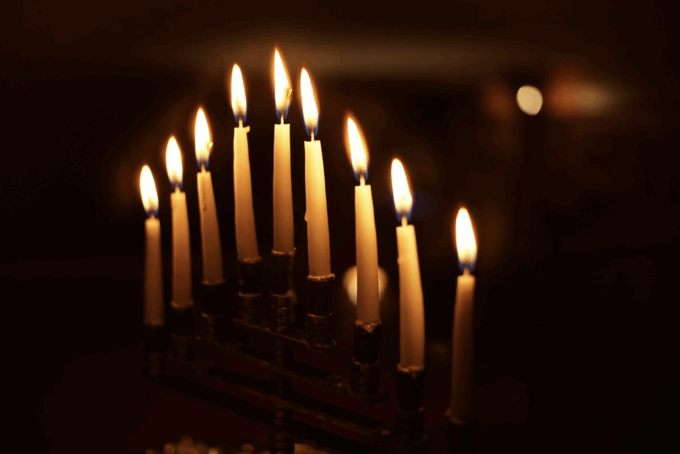
Diwali, Christmas, And Hanukah For All – OpEd


October 18, 2025
By Rabbi Allen S. Maller


A very thoughtful article appeared in the Eurasia Review on October 17, 2025 written by Dr. Fr. John Singarayar said “Every autumn, when millions of clay lamps flicker across India’s rooftops and courtyards, a beautiful paradox unfolds in the homes of Indian Christians. While their Hindu neighbors celebrate Diwali with prayers to Lakshmi and stories of Rama’s return, these followers of Christ find themselves navigating a delicate dance between faith and culture, between standing apart and belonging together.


The question that haunts many Christian families during this season is not whether to celebrate, but how to honor their beliefs while living authentically in the land they call home. Some see Diwali’s rituals as incompatible with their faith, choosing instead to retreat into quiet prayer while the world outside bursts into celebration. Others light their own lamps, not in worship of Hindu deities, but as a cultural embrace of the community around them.

Many Jews have faced similar challenges in Christian lands. I think a third way can be found in the Catholic Bible’s Books of the Maccabees. Every year in December (starting the evening of December 15 this year), Jewish people throughout the world, celebrate the eight day holiday of Hanukah. If you ask any Jew to tell you how Hanukah began, or why Jews celebrate this festival for eight days, they will relate this story.

Once a Syrian Greek king polluted the Holy Temple in Jerusalem by erecting a statue in it. Then, after more than three years of fighting, Judah the Maccabee and his warriors recaptured the holy Temple in Jerusalem, and began to purify it.

But all the pure olive oil for the lamp that should burn continuously had been polluted except for one little jar of oil that miraculously burned for eight days.

This Hanukah story is about two kinds of battle; the physical struggle against others (political and sometimes military); and the spiritual struggle within ourselves to trust in God (the oil).


When the Maccabees recaptured and rededicated (Hanukah) the Temple in Jerusalem in 164 b.c.e. the physical struggle for religious freedom and independence did not end. It went on for another 25 years until full independence was attained.

But the spiritual struggle (oil) miraculously lasted only for eight days.

Look at the oldest written sources. About four or five decades after the first Hanukah, two books were written about the Maccabean Wars and the rededication (Hanukah) of the Holy Temple in Jerusalem.

The First Book of Maccabees, compiled sometime before 130 b.c.e., was originally written in Hebrew. Today all we have is an early Greek translation. Its intended audience was the Jewish community in the Land of Israel. It describes the recapture of the Jerusalem Temple, its purification and rededication (Hanukah).

“They also made new sacred vessels, and they brought the lamp stand … into the Temple. They burned incense on the altar and lit the lights on the lamp stand, and the Temple was filled with light…. For eight days they celebrated the dedication of the altar. … Then Judah, his brothers and the entire community of Israel decreed that the days of rededication of the altar should be celebrated with a festival of joy and gladness at this same time every year beginning on the 25th of the month of Kislev and lasting for eight days. (First Maccabees 4:49-59)

This first ancient source does not mention the “little jar of oil” miracle. At that time, the miracle was the victory itself, that God had enabled the Jews in Israel to physically and militarily defeat the far mightier Syrian Greek Empire.

The Second Book of Maccabees, was compiled a decade or two after First Maccabees, and covers most of the same period, but was written in Greek for the Jewish community outside the land of Israel. That Jewish community, whose primary language was Greek, was concentrated largely in the bustling port city of Alexandria in Egypt.

The purpose of Second Maccabees, clearly stated in the two letters that open the book, is to urge the Jews of Alexandria to adopt this new festival. The author states that his source for the history of the Maccabean war was a (now lost) larger five-volume history by one Jason of Cyrene.

Second Maccabees describes the purification of the Temple, adding significant information that is not found in First Maccabees: “Judah the Maccabee and his men, under the Lord’s leadership, recaptured the Temple and the city of Jerusalem. … After purifying the Temple, they built a new altar; made a new fire; … offered sacrifices and incense … and lit the lamps. … On the anniversary of the very same day on which the Temple had been defiled, the 25th of Kislev, they now purified the Temple.

“They celebrated joyfully for eight days, just as on Hajj Sukkot, knowing that (only two months before) on Hajj Sukkot (google my article on the Biblical holiday of Hajj Sukkot) they had spent the festival (hiding) like wild animals in the mountains and caves. That is why they now came carrying palm fronds and fruit, and singing hymns of praise to God, who had given them the victory that brought about the purification of His Temple.

“By a vote of the community they decreed that the whole Jewish nation should celebrate these festival days every year. (Second Maccabees 10:1-8)

The story of the small jar of oil that lasted much longer than anyone expected, is not mentioned in the early sources because they focus on the physical military battle to liberate the Jerusalem temple from Greek rule and restore Jewish political independence.

However, two and a half centuries later, the Holy Temple and Jerusalem itself were in ruins. In the generations following the destruction of Jerusalem by the Romans in 70 c.e. the Jewish people would have despaired, and become discouraged and depressed. They might even have lost faith in God when the Romans built a new pagan city on Jerusalem’s ruins; with a Roman Temple filled with statues of Roman Gods in its center..

So the rabbis started emphasizing the spiritual internal battle needed for Jewish survival. Everyone, even small children, need to believe in a better future. All of us need to avoid negativeness. Everyone needs to have faith and trust in God.

When the Maccabees realized that it would take a week or more to produce the ritually pure olive oil needed for the lamp that must burn continually before the (Sakina) Holy Ark, most of them wanted to delay the Hanukah celebration because they feared disappointing and dismaying their supporters if the light went out and spoiled the eight day celebration.

Only a minority led by a young girl, favored using the little jar of oil that they had found, and trusting that somehow it would be enough. As the rabbis expressed it in the Talmud (Shabbat 21b): “Why Hanukkah? Our rabbis taught: ‘On the 25th day of Kislev begin the eight days of Hanukkah on which mourning and fasting are forbidden.

“For when the Greeks entered the Temple, they defiled all the oil; and when the Maccabees prevailed and defeated them, they searched and found only one jar of oil with the official seal of the High Priest, but which was only enough for one day’s lighting.

“Yet a miracle occurred, and they lit the lamp with it for eight days. The following year these days were decreed a festival with the recital of Psalms and thanksgiving.”

Notice that the miracle is two fold. That the oil lasted is a physical miracle. That they lit it, knowing it couldn’t last, is the spiritual miracle. To this day we still use one candle to ignite all the other Hanukah candles.

And to this day we acknowledge that the greater jihad is more important than the lesser jihad because the Jewish people are still here; long after the Greek and Roman Empires have disappeared.


Rabbi Allen S. Maller
Allen Maller retired in 2006 after 39 years as Rabbi of Temple Akiba in Culver City, Calif. He is the author of an introduction to Jewish mysticism. God. Sex and Kabbalah and editor of the Tikun series of High Holy Day prayerbooks.


Saturday, September 27, 2025


The Ganges River Drying Worst In Over 1300 Years – OpEd

ganges river india boat people sun hot heat

By 

The Ganges River, a lifeline for 600 million people in India and neighboring countries, is experiencing its worst drying period in over 1,300 years. Using a combination of historical data, paleoclimate records and hydrological models, researchers from IIT Gandhinagar and the University of Arizona discovered that human activity is the main cause. They also found that the current drying is more severe than any recorded drought in the river’s history. 


Not only is the Ganges river drier overall, but droughts are now more frequent and last longer. The main reasons are the weakening of the summer monsoon and global warming. 

In their study, published in the Proceedings of the National Academy of Sciences, researchers first reconstructed the river’s flow for the last 1,300 years (700 to 2012 C.E.) by analyzing tree rings from the Monsoon Asia Drought Atlas dataset. The scientists found that the recent drying of the Ganges River from 1991 to 2020, is the worst Ganges River’s drying in 1,300 years, which occurred during the 16th century. 

The Ganges river’s present drying, as the worst in 1300 years, is a warning for India and neighboring countries similar to the western world’s warning of Armageddon.

The Greek word Armageddon is a transliteration of the Hebrew har mÉ™giddô, a mountain near Megiddo, a hilltop fortification built by King Ahab, that dominated the Plain of Jezreel. Har Magedon is the symbol of a battle in which, when the need is greatest and believers are most oppressed, God suddenly reveals His power to distressed peoples and the evil enemies are destroyed. 

Armageddon is a warning of humanity’s need to change to avoid Armageddon. The term “apocalypse” comes from the Greek word “apokalypsis,” meaning “revelation.” Although often associated today with the end of the world, apocalypses in ancient Jewish thought were a source of encouragement in times of great hardship or persecution.


The majority of Christians, Jews, and Muslims do not believe that all of humanity is moving closer and closer to many catastrophic nature Judgement Days. The minority who do think that Judgement Day is coming soon share the usual negative, fear-filled views of most end-times thinkers: Christians, Jews and especially Muslims, who do believe that: “The hour (of Judgement) is near” (Qur’an 54:1); and ˹The time of˺ people’s judgment has drawn near, yet they heedlessly turn away.” (Qur’an 21:1) 

Like Judaism and Christianity, Islam has a powerful eschatological strain. It anticipates the end to the world as we know it; a final historical confrontation between good and evil (Armageddon); after which, with God’s help, human life will be rewarded and transformed. 

As the Qur’an states: “Verily! Those who believe and those who are Jews, Christians, and Sabians, whoever believes in Allah and the Last Day, and do righteous good deeds, shall have their reward with their Lord, on them shall be no fear, nor shall they grieve.” (2:62 and 5:69) Notice that the Qur’an specifically stresses religious pluralism applies on God’s judgment day. 

As Pope Francis said: ‘All Religions Are Paths To God’ This is a new and very strong support for religious pluralism.

Yet a Pew Research Center poll found that in South and Southeast Asia 55-60% of all Muslims believe in the Madhi’s imminent return; and in the Middle East and North Africa 51% do.

A hadith says that Prophet Jesus, will return to a place east of Damascus and will join forces with the Islamic messiah, the Mahdi, in a battle against the false messiah, the one eyed Dajjal. As ibn Babuya writes in Thawab ul-A’mal, “The Apostle of God said: `There will come a time for my people when there will remain nothing of the Qur’an except its outward form, and nothing of Islam except its name, and they will call themselves by this name even though they are the people furthest from it. The mosques will be full of people but they will be empty of right guidance. 

“The religious leaders (Fuqaha) of that day will be the most evil religious leaders under the heavens; sedition and dissension will go out from them and to them will it return.” This sounds, and indeed is, terrible. But, those who trust in God know that the night is coldest in the last hours before sunrise.

Secularists believe that these apocalyptic visions of a future (Armageddon) are absurd, although many secularists themselves fervently believe that runaway genetic modification of food and/or extreme climate change is going to doom human civilization in future generations. 

The basic difference between the pessimistic, humanist secularists and the religious optimists is that those who believe in the God of Abraham also believe that God’s inspiration and guidance guarantees that the spiritual forces of good, will overcome all the world’s evils at the end of days; and  justice, peace and religious pluralism will prevail. Or as Prophet Micah envisions it: (4:1-5)

“In the end of days the mountain of the Lord’s Temple will be established  as the highest mountain; it will be exalted above the hills, and peoples will stream to it. Many (not all) nations will come and say, ‘Come, let us go up to the mountain of the Lord, to the Temple of the God of Jacob. who will teach us his ways, so that we may walk in his paths.

“Torah will be broadcast from Zion, and the word of the Lord from Jerusalem. God will judge between many (not all) peoples and will settle disputes among powerful nations far and wide. They will beat their swords into ploughs, and their spears into pruning hooks. Nation will not take up sword against nation, nor will they train for war any more.


“Everyone will sit under their own vine and under their own fig-tree, and no one will make them afraid, for the Lord Almighty has spoken. All the nations will walk in the name of their gods, and we (Jews) will walk in the name of the Lord our God for ever and ever.”

Thus, the Bible and the Qur’an’s final judgement is the self-destruction of violent, hate filled, religion twisted terrorism and narrow ‘my way or death’ philosophy (Armageddon); and the victory of kindness, love, democracy and religious pluralism. 

The Qur’an refers to Prophet Abraham as a community or a nation: “Abraham was a nation/community [Ummah]; dutiful to God, a monotheist [hanif], not one of the polytheists.” (16:120) If Prophet Abraham is an Ummah then fighting between the descendants of Prophets Ishmael and Isaac is a civil war and should always be avoided. Remember: “The very earth itself is a granary and a seminary,” said Henry David Thoreau  “and every seed means not only birth; but rebirth.

If all Arabs and Jews can live up to the ideal that ‘the descendants of Abraham’s sons should never make war against each other’ is the will of God; we can help fulfill the 2700 year old vision of Prophet Isaiah: “In that day there will be a highway from Egypt to Assyria. The Assyrians will go to Egypt, and the Egyptians to Assyria. The Egyptians and Assyrians will worship together. 

“On that day Israel  will join a three-party alliance with Egypt and Assyria, a blessing upon the heart. The LORD of Hosts will bless them saying, “Blessed be Egypt My people, Assyria My handiwork, and Israel My inheritance.”  (Isaiah 19:23-5)


Rabbi Allen S. Maller

Allen Maller retired in 2006 after 39 years as Rabbi of Temple Akiba in Culver City, Calif. He is the author of an introduction to Jewish mysticism. God. Sex and Kabbalah and editor of the Tikun series of High Holy Day prayerbooks.

Thursday, June 19, 2025


‘Then Humans Began Invoking YHVH By Name’ (Genesis 4:26) – OpEd

Detail of Creation of Adam, fresco by Michelangelo in the Sistine Chapel. Source: Wikimedia Commons.


By 

Across the globe — in 19 Eastern European countries, 25 Muslim countries and in Israel — low belief in evolution was linked to higher biases within a person’s group, prejudicial attitudes toward people in different groups, and less support for conflict resolution. The researchers theorized that belief in evolution would tend to increase people’s identification with all humanity, due to the common ancestry, and would lead to less prejudicial attitudes.


In eight studies of different areas of the world, researchers analyzed data from the American General Social Survey (GSS), the Pew Research Center and three online crowdsourced samples testing their hypothesis about the associations of different levels of belief in evolution, they accounted for education, political ideology, religiosity, cultural identity and scientific knowledge.

“We found the same results each time, which is basically that believing in evolution relates to less prejudice, regardless of the group you’re in, and controlling for all of these alternative explanations,” Syropoulos says.

The following essay helps open-minded religious people understand why belief in evolution and in religion is synergistic.  Prior to this time humans believed in the local world of spirits. They invoked the spirits of their dead ancestors. The oldest Homo sapiens skulls-160, 000 year-old fossil bones-were polished after death by continuous handling. The earliest examples of ritual burials are from 2 sites in northern Israel dated 90-100,000 years ago. 

Scientists have assembled a database of archaeological sites showing human presence across Africa from 120,000 to 14,000 years ago. There was a really sharp change in the range of habitats that humans were using starting around 70,000 years ago,” Hallet said. “We saw a really clear signal that humans were living in more challenging and more extreme environments. While humans had long survived in savanna and forests, they shifted into everything from dense rainforests to arid deserts in the period leading up to 50,000 years ago, developing what Hallet called an “ecological flexibility that let them succeed.”

The research examined 17 Neanderthal and 15 Homo sapiens burials from various archaeological sites, and revealed both similarities and differences in how these two species treated their dead, including differences in burial location, body posture and specific grave goods. The Levant is of particular interest due to the co-existence of two hominin species at this time. 


While Homo sapiens first arrived in the region between 170,000 and 90,000 years ago and re-entered the region 55,000 years ago from Africa, Neanderthals came into the Levant from Europe around 120,000 to 55,000 years ago. The two species are easily distinguishable based on their biology and morphology, with nearly every bone in the body being unique to either species. Neanderthal infant burials were more common than Homo sapiens infants. 

Homo sapiens burials were very uniform, usually laid out in a flexed (fetal-like) posture. This contrasts with the Neanderthal burials, which were more varied and included individuals buried in flexed, extended (straight), and semi-flexed positions while lying on their left, back, or right. Similarly, some aspects of burial were practiced by Homo sapiens but not by Neanderthals, such as having burials associated with red ocher and marine shells, which were completely absent in Neanderthal contexts.

The researchers also noted a burial outburst during this time. Not only did burials suddenly appear, but they occurred at a very high rate in an equally condensed region, especially compared to later burials in Africa and Europe, of which there are only three in all of Africa and 27, albeit very spatially and temporarily separated for Neanderthals in all of Europe.

This trend of increased burials continued in the region until they suddenly stopped around 50,000 years ago; according to Prof. Been, “The most striking thing is that in later periods, humans in the Levant did not continue the practice of burials. Red ochre is frequently associated with ritual burials. Qafzeh Cave in Israel is a remarkable site that contains many skeletons of humans who lived there about 100,000 years ago. 

Archaeologists have recently discovered 71 fragments of red ochre – a form of iron oxide that yields a pigment when heated alongside bones in the cave. The ochre was only found alongside the bones. 

Early humans worshiped spirits in trees, springs and other natural phenomena. They invoked many different animal spirits. Shamans and medicine women fought the many demon spirits that caused illness and misfortune. A feline-headed human figure from Germany, thought to be 32,000 to 34,000 years old, might be evidence of a belief system in which shamans were thought to have supernatural powers. Most cave art from 15-25,000 years ago features animal figures and probably reflects Shamanistic rituals. 

 Every human band or tribal community had dozens of names for spirits. In some societies hundreds of Gods could be called upon by name. This universal pagan nature religion remained widespread in the Americas, Africa, the Pacific Islands and Europe even after the generation of Enosh. There was little overall order or structure in this spiritual world. There was no awareness of a unified creation, plan, purpose or destiny.

Then in the generation of Enosh, whose uncle built the first town (4:17), humans began to invoke YHVH by name i.e. they formed a hierarchy of Gods with a creator God or high God at the top. Often this high God was remote and later generations of Gods were more important. Rarely was this creator God an ethical lawgiver. 

This became the religious view of the urbanized polytheistic religions of the Far and Middle East as well as parts of Africa and Meso-america. This attempt to perceive an order and system among the spirit forces moved humans closer to the Divine reality: YHVH.

With Abraham (and later Akhenaten) the perception of monotheism begins to take root but that is only part of the whole. The Torah tells us that not until the generation of the Exodus from Egypt, was the one God YHVH known as the lawgiver of sacred scripture. “I am YHVH. I appeared to Abraham, Isaac and Jacob as El Shaddai but I did not let myself be known to them by my name YHVH.” (Exodus 6:3) El Shaddai is the God of the breast or the chest. 

This signifies the divine spirit within each individual, or the maternal nurturing mystical soul that is invoked in most Indian and some East Asian religions; the mystical religions of inner enlightenment and personal rebirth or escape from the corruption of the material world. This is an advance beyond invoking spirits and the hierarchy of sky Gods or a remote high God. 

However, YHVH is a God of history and society; a God of human society’s spiritual and moral growth. YHVH isn’t fully realized until Israel’s covenant with the Divine lawgiver, who is the source of Western society’s ethics and morality. 

Before the end of the Biblical period Jews stopped audibly invoking the name YHVH (today we say simply HaShem- the name) because they feared some people would make an idol of this name; demanding belief only in their own verbal definition of the one God. 

In the final stage (the Messianic Age) YHVH, the unpronounceable HaShem; the one and only God, who should not be represented by any image or incarnation; will be invoked by all humanity, even while each people still retains its own religion and its own name for God. “In days to come…All peoples will walk, each in the name of their God, and we will walk in the name of YHVH our God for ever and ever.” (Micah 4:5)

So does faith in God affect your ability to trust other people? And can religion help build trust in your community and with other people? A new study explores the connection between religion and trust, especially at a time when trust in political leaders and institutions in general is on the decline.

Using data from the General Social Survey, Rubia Valente, assistant professor at Baruch College, and Adam Okulicz-Kozaryn of Rutgers University isolated two aspects of religion: individual religiosity, with a focus on prayer and belief in God, versus community religiosity, measured by attendance at services or membership in a religious group.

They found higher levels of belief predicted less trust, while higher levels of belonging predicted more trust. They also found that those who belong to religious groups or attend services have a lower level of misanthropy, or dislike of other people.

“People that are socially religious, what we classify as belonging, were more likely to like people and have a lower misanthropy level,” said Valente. This is why Judaism says that all public prayer services must have at least a minion of ten Jews present to do or say the most important prayers or rituals during the service. This is also why Judaism places more emphasis on Religious acts of kindness than of Religious truths. 


Rabbi Allen S. Maller

Allen Maller retired in 2006 after 39 years as Rabbi of Temple Akiba in Culver City, Calif. He is the author of an introduction to Jewish mysticism. God. Sex and Kabbalah and editor of the Tikun series of High Holy Day prayerbooks.